


Diet, lifestyle, and chrononutrition: effects on postprandial glycemia and insulin resistance
The study examined summarizes evidence suggesting that the order, composition, and timing of meals modulate post-meal glycemia. For the book, the central point is to consume vegetables and proteins before carbohydrates: small studies show lower glycemic spikes. The confirmation is moderate, especially in the acute phase, and requires further long-term clinical trials.
- Published 10/11/2026
- Updated 13/11/2026
- Article history
ABSTRACT
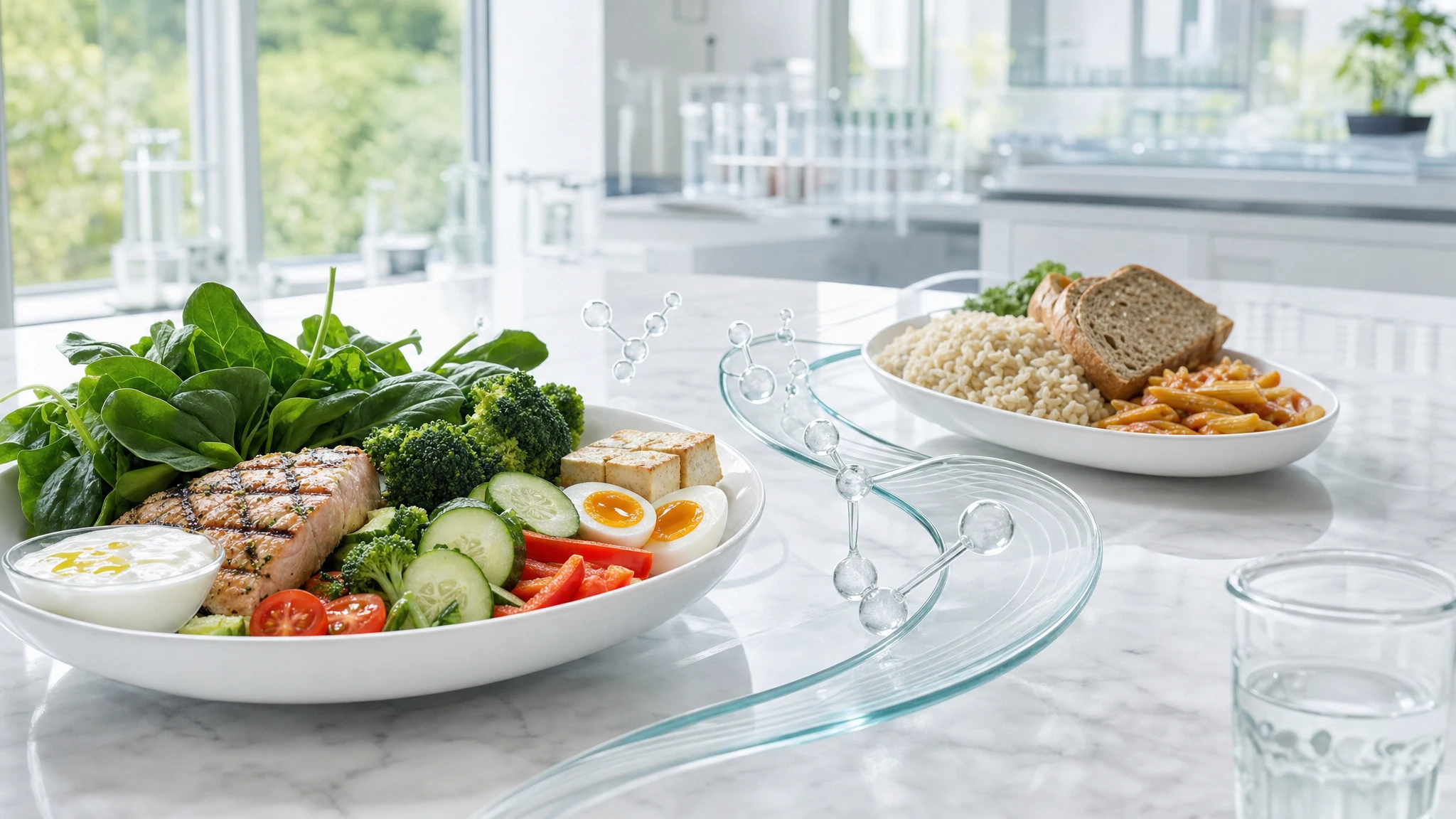
The analyzed publication is a narrative review dedicated to dietary and behavioral factors that can modify blood glucose levels after meals and insulin sensitivity. Within the scope of "The Choice to Live in Health or Illness" by Dr. A. Colonnese and R. Panzironi, its specific contribution concerns food sequencing: starting a meal with vegetables and/or proteins and consuming carbohydrates afterward can attenuate the rise in postprandial glycemia.
The review does not produce new experimental data, but synthesizes studies suggesting that slower gastric emptying and the modulation of gut hormones may contribute to a lower rate of glucose absorption. Independent crossover studies, conducted primarily in people with type 2 diabetes or prediabetes, confirm acute reductions in glycemic spikes when carbohydrates are consumed last. However, the evidence remains based on small samples, experimental meals, and short-term observations. The book's narrative is therefore moderately supported regarding the immediate response to a meal, while long-term preventive or clinical effects require further confirmation.
Analyzed study
Effects of Diet, Lifestyle, Chrononutrition and Alternative Dietary Interventions on Postprandial Glycemia and Insulin Resistance
DOI: 10.3390/nu14040823
PMID: 35215472
PMCID: PMC8878449
The research question concerns which dietary and lifestyle characteristics can reduce post-meal spikes in glycemia and improve insulin resistance, which is the reduced ability of tissues to respond to insulin. The general hypothesis is that it is not just the quantity and quality of carbohydrates that matter, but also the timing of meals, their composition, and the sequence in which foods are consumed.
For the book chapter, the most relevant part is the section dedicated to the order of foods within the same meal. The publication suggests that a fiber-rich food, such as vegetables, followed by protein and finally by starchy foods, may be associated with a lower postprandial glycemic excursion. Glycemic excursion refers to the temporary increase in blood glucose after eating.
As this is a narrative review, the analyzed study synthesizes previously published results and does not directly test a treatment or clinical outcome in a new population. It can therefore describe the biological and clinical consistency of the available evidence, but it cannot, on its own, prove that changing the order of foods prevents diabetes or its complications.
Materials and methods of the original study
The publication is a narrative review of the scientific literature on diet, physical activity, weight loss, chrononutrition, meal composition, food sequencing, and postprandial glycemia. It did not recruit participants, assign interventions, or include its own control group.
In the available material, the authors discuss clinical trials, crossover studies, observational studies, physical activity trials, and previous reviews. A crossover design compares different conditions in the same individuals on different days: this helps reduce some individual variability. The publication describes, among other mechanisms, gastric emptying, intestinal absorption, insulin, glucagon, and incretins, which are gut hormones that help regulate glycemia after a meal.
A systematic search strategy involving consulted databases, time intervals, pre-established inclusion and exclusion criteria, formal risk of bias assessment, and meta-analysis is not reported in the available material. Consequently, the review is useful for reconstructing the physiological framework, but it does not have the same methodological strength as a systematic review with meta-analysis.
Results
The most significant finding for the book is the summary that meal sequencing can modify the glycemic response even when the foods consumed are the same. In simple terms, delaying the Intake of carbohydrates can make their entry into the bloodstream more gradual. The publication links this effect to a slowing of gastric emptying—that is, the passage of stomach contents into the intestine—and to changes in the incretin response.
The review text reports that pre-loading with water, fats, proteins, or fiber can delay glucose absorption and attenuate the rise in blood glucose after a meal. It also describes studies in which consuming vegetables, proteins, or fats first and carbohydrates later reduced postprandial glycemic excursions. However, uniform quantitative values are not available because the cited studies have different participants, meals, intervals between courses, and measurements.
The publication correctly emphasizes that the effect of sequencing does not replace the overall composition of the meal. The amount of carbohydrates, their structure, fiber content, the presence of proteins and fats, the speed at which one eats, and individual metabolic characteristics continue to influence glycemia. The result therefore documents a possible additional factor in the postprandial response, not a rule that applies identically to every person and every Meal.
Interpretation
The practical significance of the analyzed passage is that the body does not process all foods in the same way if they are ingested at different times. Starting with vegetables and a protein source can slow down the availability of carbohydrates for intestinal absorption; consequently, glucose may enter the bloodstream more gradually.
The proposed biological chain is plausible: vegetables and/or proteins before carbohydrates can modify gastric emptying and stimulate intestinal signals, including glucagon-like peptide-1 or GLP-1, a hormone that promotes a glucose-dependent insulin response and slows down stomach emptying. This set of effects can reduce the glycemic spike and, in some studies, even the amount of insulin required during the observed period.
The segment actually supported by the publication subject to the Evidence Review is therefore: food sequence in the meal → modification of digestive and hormonal processes → lower acute increase in glycemia. It does not, however, demonstrate that this strategy, in isolation, reduces the long-term incidence of diabetes, cardiovascular diseases, or other complications. Such outcomes require longer studies conducted in real-life settings.
Independent confirming evidence
Initial direct confirmation comes from a crossover study of 15 people with type 2 diabetes managed through diet alone. Participants consumed rice and salad in the same quantities, changing only the order: vegetables before rice or rice before vegetables. When vegetables preceded carbohydrates, blood glycemia and insulin levels at 30 and 60 minutes were lower compared to the reverse sequence. The study is particularly relevant because it compares the same meal and isolates the order of consumption; however, the small sample size and specific dietary context limit its generalizability [1].
A second crossover study evaluated 16 people with type 2 diabetes who consumed the same meal on different days with carbohydrates first, carbohydrates last, or all foods together. Consuming protein and vegetables first, waiting ten minutes, and then eating carbohydrates at the end reduced the incremental area under the curve for glycemia by 53% over three hours compared to consuming carbohydrates first. The glycemic peak was also 54% lower; the incremental area for insulin decreased, and that of GLP-1 increased. These data confirm both the direction of the effect and the possible involvement of the intestinal response, but they derive from a small-scale acute experiment [2].
A third crossover trial investigated the mechanism. Twelve people with type 2 diabetes and ten healthy volunteers consumed rice before or after fish; in the people with diabetes, the sequence of meat before rice was also evaluated. Fish or meat before rice reduced postprandial glycemic exposure and glycemic variability compared to rice before fish. Gastric emptying was slower, and GLP-1 secretion increased. This result supports the biological pathway indicated in the book, but it does not allow the effect to be attributed solely to protein, because the foods also contained fats and other nutrients [3].
Overall, independent studies show a convergent network: the sequence with carbohydrates last frequently reduces glycemic peaks after a meal, while mechanistic studies suggest the contribution of more gradual absorption and intestinal signals. The evidence is more robust for the immediate effect on glycemia than for the long-term prevention or management of glucose metabolism disorders.
Conflicting evidence
No directly conflicting evidence of sufficient relevance has been identified; this does not prove the absence of contrary findings. The main limitation of the available data is heterogeneity: some studies use vegetables before carbohydrates, others use protein and vegetables before carbohydrates, and others use fish or meat before rice. Furthermore, the intervals between courses, meal composition, medications, degree of glycemic impairment, and duration of observation vary.
In some experiments, the reduction in initial glycemia may be followed by relatively higher values in the later stages of the curve, because the peak is delayed rather than eliminated. For this reason, measuring at a single point after a meal can be misleading: the peak, the area under the curve, and the overall trend over time are more informative. Large-scale studies evaluating adherence, safety, diet quality, and long-term clinical outcomes remain insufficient.
Summary table of evidence
The table distinguishes the publication subject to the Evidence Review from the independent research used to verify the narrative passage of the book.
| Reference | Study type | Population or model | Main result | Direction of evidence | Strength of evidence |
|---|---|---|---|---|---|
| Original study | Narrative review | Literature on diet, chrononutrition, physical activity, and postprandial glycemia | Synthesizes evidence that food sequencing can attenuate glycemic excursions after meals. | biologically consistent evidence | moderate |
| [1] | Crossover RCT | 15 people with type 2 diabetes | Vegetables before rice reduced glycemia and insulin at 30 and 60 minutes compared to rice consumed first. | direct confirmation | moderate |
| [2] | Crossover RCT | 16 people with type 2 diabetes | Carbohydrates last reduced the incremental glycemic area by 53% and the peak by 54% compared to carbohydrates first. | direct confirmation | moderate |
| [3] | Exploratory crossover RCT | 12 people with type 2 diabetes and 10 healthy volunteers | Fish or meat before rice reduced glycemic exposure, slowed gastric emptying, and increased GLP-1. | indirect confirmation | moderate |
Confirmation of the evidence
Claim in the book
In section 2.1 of “The Choice to Live in Health or Illness” by Dr. A. Colonnese and R. Panzironi, the central claim is that postprandial glycemia depends on the interaction between digestion, intestinal absorption, insulin secretion, tissue sensitivity, and hepatic glucose production. The text adds that starting a meal with fiber, protein, or fat and consuming carbohydrates afterward can reduce glycemic spikes and the postprandial insulin response.
Vegetables and/or proteins before carbohydrates → slower gastric emptying and modified intestinal signals → more gradual glucose absorption → lower postprandial glycemic spike
The publication subject to the Evidence Review was used in the book to support the following passage: modifying the sequence of foods within the same meal, by consuming fiber-rich and/or protein-rich foods before carbohydrates, can attenuate the post-meal rise in glycemia and insulin through changes in digestion, gastric emptying, and the intestinal incretin response.
The correspondence between the publication subject to the Evidence Review and the section of “The Choice to Live in Health or Illness” by Dr. A. Colonnese and R. Panzironi is physiologically precise: the book does not attribute the control of the entire glucose metabolism solely to the sequence of food intake, but presents it as one of the factors that can modify the response to a meal. The study on vegetables and rice directly confirms that, with the same foods, consuming vegetables before carbohydrates reduces glycemia and insulin in the first two hours [1].
This confirmation is reinforced by an experiment in type 2 diabetes in which proteins and vegetables consumed before carbohydrates reduced both the peak and the overall glycemic exposure in the following three hours, with a lower insulin response and an increase in GLP-1 [2]. The mechanistic study on fish or meat before rice completes the chain indicated by the book: the sequence slowed gastric emptying, increased GLP-1, and reduced postprandial glycemic exposure [3].
Independent evidence therefore confirms the direction of the narrative, especially regarding the acute response to a controlled meal. However, it does not allow us to conclude that food sequencing alone prevents diabetes or cardiovascular complications, nor to establish a universally superior order for every meal, population, or pharmacological therapy.
Overall level of confirmation
MODERATE CONFIRMATION
This shift is supported by human crossover studies that consistently show an acute reduction in postprandial glycemia when carbohydrates are consumed last. Confirmation of the digestive and incretin mechanism is biologically consistent, but small sample sizes, experimental meals, and the absence of long-term clinical outcomes limit the overall strength of the evidence.
Conclusions
The publication analyzed consistently supports the idea that the glycemic response after meals depends not only on the grams of carbohydrates, but also on the composition and sequence of the meal. Regarding the specific passage covered in the book, independent evidence confirms that consuming vegetables and/or proteins before carbohydrates can reduce acute glycemic spikes, especially in people with type 2 diabetes or glycemic alterations.
The mechanism is fairly well supported: slower gastric emptying and the modulation of intestinal hormones can make the entry of glucose into the blood more gradual. However, the long-term clinical relevance remains preliminary. Food sequencing can be considered a complementary element of meal structure, not a substitute for the overall quality of the diet, physical activity, weight control, or prescribed therapies.
Overall assessment
The narrative is moderately supported. Independent crossover studies show with good consistency that consuming carbohydrates last reduces postprandial glycemic spikes; a mechanistic study links the effect to slower gastric emptying and increased GLP-1. Larger and longer-term studies are still needed to define lasting clinical benefits.
References
[1] Effect of eating vegetables before carbohydrates on glucose excursions in patients with type 2 diabetes
[2] Carbohydrate-last meal pattern lowers postprandial glucose and insulin excursions in type 2 diabetes
[3] Meal sequence and glucose excursion, gastric emptying and incretin secretion in type 2 diabetes: a randomised, controlled crossover, exploratory trial
Editorial note
Artificial Intelligence was used solely as a tool to support editorial and documentary work. All content, interpretations, bibliographic citations and conclusions have been verified, reviewed and approved by the author, who assumes full scientific responsibility for them.
The manuscript was also subject to independent peer review prior to publication.
To ensure maximum transparency, the article's complete history — including the dates of submission, review, acceptance and publication, as well as information on the peer review process — is available on the dedicated Article History page.