


Direct in vivo characterization of delta-5 desaturase activity in humans using deuterium labeling: effect of insulin - Evidence review
The study shows that, in the diabetic patients examined, insulin accompanied the recovery of the conversion of DGLA into arachidonic acid in plasma phospholipids. This supports insulin-mediated regulation of delta-5 desaturase in humans, but the unreported sample size, the pre-post design, and conflicting evidence require cautious interpretation in clinical practice.
- Published 23/11/2026
- Updated 23/11/2026
- Article history
ABSTRACT
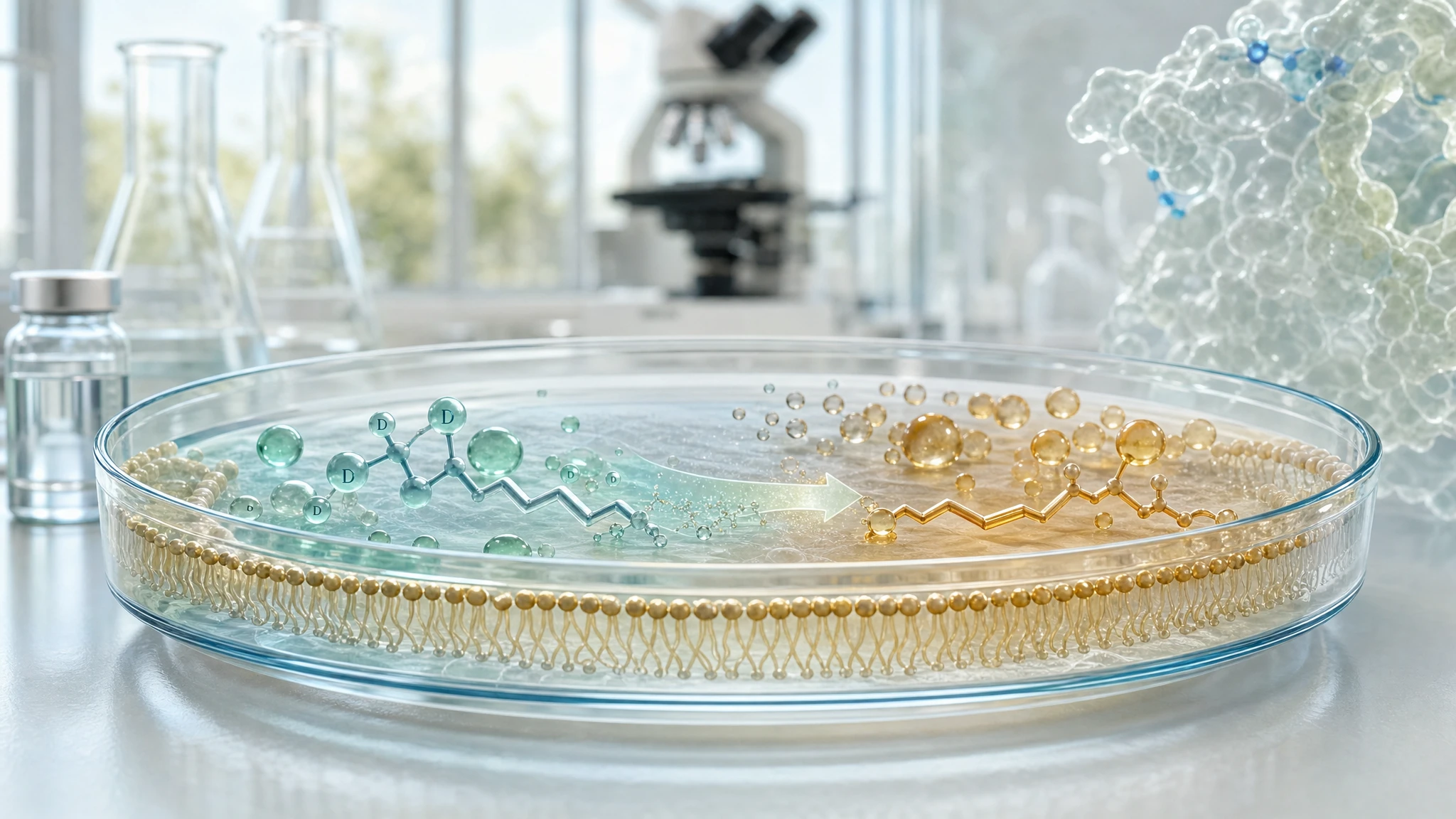
The analyzed study verified in humans whether orally administered dihomo-gamma-linolenic acid (DGLA, referred to in the article as DHLA) can be converted into arachidonic acid (AA), and whether this transformation changes following insulin therapy in diabetic patients. Using deuterium-labeled DGLA, the authors observed the appearance of labeled AA in plasma phospholipids. Before insulin, labeled AA in diabetic patients was less than 1 mg/L; after insulin treatment, it reached an average of 3.5 mg/L, a value close to the 3.2 mg/L observed in non-diabetic subjects.
In section 5.3.3 of “The Choice to Live in Health or Illness” by Dr. A. Colonnese and R. Panzironi, this research contributes to the narrative that insulin status influences the DGLA → AA conversion, which is attributed to delta-5 desaturase. Independent studies support the role of the FADS pathway in the availability of AA and certain eicosanoids, but also show that reducing FADS1 can have divergent metabolic and inflammatory effects depending on diet and tissue. The confirmation is therefore mechanistic and does not constitute a general clinical demonstration regarding inflammatory outcomes in humans.
Analyzed study
Direct in vivo characterization of delta 5 desaturase activity in humans by deuterium labeling: effect of insulin
DOI: 10.1016/0026-0495(89)90117-0
PMID: 2498608
The research question was whether dietary DGLA is actually converted into AA in the human body and whether this conversion differs in diabetic patients before and after insulin therapy. The authors' hypothesis was that the activity of delta-5 desaturase, the enzyme that inserts a double bond and completes the transition from DGLA to AA, depends at least in part on insulin status.
The relevance of this work is both methodological and biological. Instead of merely measuring total fat levels in the blood, the authors tracked the fate of a molecule labeled with deuterium, a stable form of hydrogen. Simply put, the marker allows researchers to determine whether the AA subsequently found is derived specifically from the ingested DGLA. This is the segment of the narrative for which the study is relevant to the book's section: oral DGLA intake → incorporation into plasma phospholipids → appearance of labeled AA, with recovery of metabolic flux after insulin in diabetic patients.
The study can document a measurable metabolic conversion in the blood and its variation observed before and after insulin treatment. However, it cannot establish that insulin acts directly and exclusively on delta-5 desaturase, nor can it demonstrate that every increase in AA necessarily leads to greater inflammation or cardiovascular disease.
Materials and methods of the original study
The study compared subjects considered normal by the authors and diabetic patients evaluated before and after insulin treatment. The total sample size, age, sex, type of diabetes, inclusion and exclusion criteria, duration of insulin therapy, and enrollment period are not reported in the available material, which consists only of the abstract.
All participants ingested 2 g of deuterium-labeled DGLA. At subsequent intervals, the concentration of the labeled precursor and the labeled AA product were measured in plasma triglycerides, plasma phospholipids, and platelet lipids. Phospholipids are fundamental components of cell membranes; platelets are blood cells primarily involved in coagulation. The analyses were performed using gas chromatography-mass spectrometry with selected ion monitoring, a technique that separates molecules and identifies their mass, distinguishing the labeled compound from the unlabeled one.
The primary endpoint was the appearance of labeled AA over time following the intake of labeled DGLA. The available material does not report a placebo-treated control group, random assignment of treatments, P-values, confidence intervals, detailed statistical analyses, or clinical follow-up.
Results
In subjects without diabetes, labeled DGLA appeared first in plasma triglycerides: the concentration rose to 24–69 mg/L between four and nine hours after ingestion. In plasma phospholipids, labeled DGLA reached 20–34 mg/L about four hours later. This shows that the ingested precursor entered the main plasma lipid fractions.
Labeled AA appeared later, after 12 hours. In plasma phospholipids, it reached 2.4–3.8 mg/L between 48 and 72 hours. In plasma triglycerides, it remained at the limit of detection, while it was not detected in platelet lipids. The result most relevant to the book's narrative is therefore the delayed formation of labeled AA in phospholipids, which is compatible with the conversion of ingested DGLA into AA in the human body.
In diabetic patients, the temporal profile of labeled DGLA in plasma triglycerides and phospholipids was described as similar to that of subjects without diabetes, both before and after insulin. Before treatment, however, labeled AA in phospholipids was less than 1 mg/L. After insulin treatment, the mean value rose to 3.5 mg/L, in the same range as that reported in subjects without diabetes, which was 3.2 mg/L. Since the entry of DGLA into lipid fractions appeared preserved while its product, labeled AA, decreased and then increased, the authors interpreted the data as a recovery of DGLA → AA metabolism after insulin.
The abstract does not provide sample sizes, dispersion of results by group, P-values, or confidence intervals. It is therefore not possible to precisely quantify the statistical uncertainty of the difference observed before and after insulin therapy.
Interpretation
In simple terms, the work indicates that DGLA does not necessarily remain an intermediate product: it can be transformed into AA and deposited in circulating phospholipids. Since AA incorporated into membranes can be released when a cell receives certain stimuli, this step changes the amount of material available to produce eicosanoids, local lipid molecules that include prostaglandins, thromboxanes, and leukotrienes.
The segment documented by the study is DGLA → AA in vivo, with a much lower conversion in diabetic patients before insulin and a significantly increased mean labeled AA value after treatment. The interpretation that this represents insulin regulation of delta-5 desaturase is biologically plausible, because FADS1 encodes the delta-5 desaturase enzyme. However, enzymatic activity was not measured directly in the tissue, nor were other insulin-induced changes in the transport, incorporation, or utilization of AA excluded.
Within the scope of “The Choice to Live in Health or Illness” by Dr. A. Colonnese and R. Panzironi, the publication therefore supports the link between insulin status and the DGLA → AA flux in plasma phospholipids. It does not demonstrate the entire sequence proposed in the paragraph, including the insulin–SREBP-1c axis, the coordinated increase of all desaturases, the production of every eicosanoid, or the clinical consequences of chronic inflammation.
Independent confirming evidence
Direct experimental confirmation of the role of delta-5 desaturase in the DGLA → AA pathway comes from a study in ApoE knockout mice, a model genetically predisposed to atherosclerosis. Compound-326, a selective delta-5 desaturase inhibitor, administered orally for 15 weeks at a dose of 3–10 mg/kg per day, reduced AA and increased DGLA in the liver and blood. In parallel, it reduced the production of AA-derived eicosanoids and increased that of DGLA-derived eicosanoids. Aortic atherosclerotic lesions decreased without reductions in plasma triglycerides or total cholesterol [1]. This study causally confirms, in mice, that blocking the enzyme shifts the substrate-to-product ratio and modifies lipid mediators; however, it does not prove that the same intervention would produce identical outcomes in humans.
A second study examined 30 adults genotyped for the rs174537 variant in the FADS cluster, a genetic region that includes FADS1 and FADS2. After stimulating whole blood outside the body, researchers measured eicosanoids using liquid chromatography-mass spectrometry. The genetic variant was associated with the AA/linoleic acid ratio, an indicator of conversion toward AA, and with levels of leukotriene B4 and 5-HETE, two products of the 5-lipoxygenase pathway; it was not, however, associated with the measured cyclooxygenase products [2]. This human evidence is consistent with the AA → some eicosanoids chain segment, but it is observational, involves a small sample, and does not isolate the effect of delta-5 desaturase alone.
Taken together, these independent studies reinforce two specific points of the narrative: delta-5 desaturase causally controls the balance between DGLA and AA in experimental models, and variation in the FADS pathway in humans is associated with the availability of AA and some mediators derived from it. The most direct evidence of the effect of insulin on conversion in patients, however, remains that provided by the publication that is the subject of the Evidence Review.
Conflicting evidence
A significant finding suggests that reducing FADS1 should not be considered automatically beneficial in every context. In mice lacking the low-density lipoprotein receptor, a model of hyperlipidemia, silencing Fads1 with antisense oligonucleotides reduced certain lipid mediators derived from AA, EPA, and DHA, but also promoted liver inflammation and atherosclerosis in a diet-dependent manner [3]. The authors also observed reduced adiposity and improved glucose tolerance alongside atherogenic dyslipidemia, i.e., a lipid profile that promotes atherosclerosis.
This study does not contradict the biochemical pathway DGLA → AA. Instead, it shows that AA is not merely a precursor to potentially pro-inflammatory mediators: the FADS1 pathway also contributes to the formation of pro-resolving lipids, which are involved in the controlled resolution of the inflammatory response. The final effect of inhibition therefore depends on the tissue, the diet, the experimental model, and the overall set of lipid mediators produced. No directly conflicting evidence sufficiently relevant to the original observation of labeled AA recovery after insulin in humans has been identified; this does not prove the absence of contrary results.
Summary table of evidence
The table distinguishes the original study from independent publications that confirm or define the limits of the biological chain discussed in the book's section.
| Reference | Study type | Population or model | Main result | Direction of evidence | Strength of evidence |
|---|---|---|---|---|---|
| Original study | Human metabolic pre-post study with isotopic tracer | Subjects without diabetes and diabetic patients; sample size not reported in available material | After labeled DGLA, labeled AA in phospholipids was less than 1 mg/L before insulin and reached 3.5 mg/L after treatment. | direct confirmation | moderate |
| [1] | Animal, pharmacological interventional | ApoE knockout mice fed a Western diet | Inhibition of delta-5 desaturase reduced AA and AA-derived eicosanoids, increased DGLA, and reduced atherosclerotic lesions. | direct confirmation | moderate |
| [2] | Human observational with ex vivo analysis | 30 adults genotyped for rs174537 in the FADS cluster | The FADS variant was associated with the AA/linoleic acid ratio and with leukotriene B4 and 5-HETE after blood stimulation. | indirect confirmation | moderate |
| [3] | Animal, pharmacological gene silencing | LDL receptor-deficient mice subjected to experimental diets | Reduction of Fads1 decreased some AA-derived lipids but promoted liver inflammation and atherosclerosis in a diet-dependent manner. | discordant evidence | moderate |
Confirmation of the evidence
Claim in the book
In section 5.3.3, “The Choice to Live in Health or Illness” by Dr. A. Colonnese and R. Panzironi, it is stated that the conversion of DGLA to AA is a measurable event in humans, which is significantly reduced in untreated diabetic patients and restored after insulin administration. The section then links the increased availability of AA in phospholipids to the potential to produce eicosanoids in response to inflammatory stimuli.
Insulin status → conversion of DGLA to AA mediated by delta-5 desaturase → AA in phospholipids → substrate availability for certain eicosanoids
The publication subject to the Evidence Review was used in the book to support the following passage: in the diabetic patients examined, the in vivo conversion of labeled DGLA into labeled AA in plasma phospholipids was significantly reduced before treatment and increased after insulin therapy, in a manner consistent with the sensitivity of delta-5 desaturase to insulin status.
The correspondence between the original publication and the paragraph is specific: the tracer showed that ingested DGLA can be converted into AA in plasma phospholipids, and that in diabetic patients, labeled AA increased following insulin administration. This does not directly document the entire insulin–SREBP-1c–desaturase axis cited in the narrative, but it supports its final functional point, namely the DGLA → AA flux.
Independent evidence confirms the biochemical pathway and its consequences at various levels. In mice, selective inhibition of delta-5 desaturase reduces AA and AA-derived eicosanoids and increases DGLA, demonstrating that the enzyme is a causal regulator of this metabolic junction [1]. In humans, variations in the FADS cluster are associated with both the AA/linoleic acid ratio and the production of certain eicosanoids following blood stimulation [2]. However, the overall biological effect is not unidirectional: in another mouse model, the reduction of Fads1 exacerbated atherosclerosis and liver inflammation under specific dietary conditions [3].
For “The Choice to Live in Health or Illness” by Dr. A. Colonnese and R. Panzironi, the appropriate conclusion is therefore limited: the DGLA → AA conversion is regulatable and influenced by insulin status in the original study; the subsequent impact on lipid mediators is biologically consistent and supported by independent studies, but the inflammatory or vascular consequence depends on the context.
Overall level of confirmation
MECHANISTIC CONFIRMATION
The DGLA → AA conversion is directly documented in humans by the analyzed publication and causally confirmed in animal models through delta-5 desaturase inhibition. Independent evidence on eicosanoids in humans is more limited and observational, while inflammatory and vascular outcomes in animal models are not uniform.
Conclusions
The study analyzed provides direct metabolic evidence that ingested DGLA can be converted into AA in humans and that, in the diabetic patients evaluated, the formation of labeled AA in plasma phospholipids is increased following insulin treatment. The link to the regulation of delta-5 desaturase is well-supported mechanistically, but it does not equate to a demonstration of a direct action of insulin on the enzyme in all tissues.
Independent research confirms that the FADS pathway controls the ratio between DGLA and AA and influences certain eicosanoids. However, the reduction of delta-5 desaturase does not necessarily produce uniform benefits, as it may also decrease mediators involved in the resolution of inflammation. The book's narrative is therefore confirmed at a mechanistic level, with a need for further controlled clinical trials in humans.
Overall assessment
The DGLA → AA conversion and the central role of delta-5 desaturase are well-supported at a biological level. The association with insulin status in humans is directly supported by the analyzed study, though with incomplete methodological details. The narrative is confirmed at a mechanistic level; inflammatory and vascular effects remain context-dependent.
References
[1] A Novel Orally Available Delta-5 Desaturase Inhibitor Prevents Atherosclerotic Lesions Accompanied by Changes in Fatty Acid Composition and Eicosanoid Production in ApoE Knockout Mice
[2] Relationship between a Common Variant in the Fatty Acid Desaturase (FADS) Cluster and Eicosanoid Generation in Humans
[3] Δ-5 Fatty Acid Desaturase FADS1 Impacts Metabolic Disease by Balancing Proinflammatory and Proresolving Lipid Mediators
Editorial note
Artificial Intelligence was used solely as a tool to support editorial and documentary work. All content, interpretations, bibliographic citations and conclusions have been verified, reviewed and approved by the author, who assumes full scientific responsibility for them.
The manuscript was also subject to independent peer review prior to publication.
To ensure maximum transparency, the article's complete history — including the dates of submission, review, acceptance and publication, as well as information on the peer review process — is available on the dedicated Article History page.