


International table of glycemic index and glycemic load values: 2002 - Review of evidence
The study collected glycemic index and glycemic load values for over 750 foods, showing that the quality and quantity of carbohydrates modify the post-meal response. It supports the book's nutritional comparison, not the history of refined flours. Independent studies confirm acute effects, but chronic consequences are contextual.
- Published 09/11/2026
- Updated 11/11/2026
- Article history
ABSTRACT
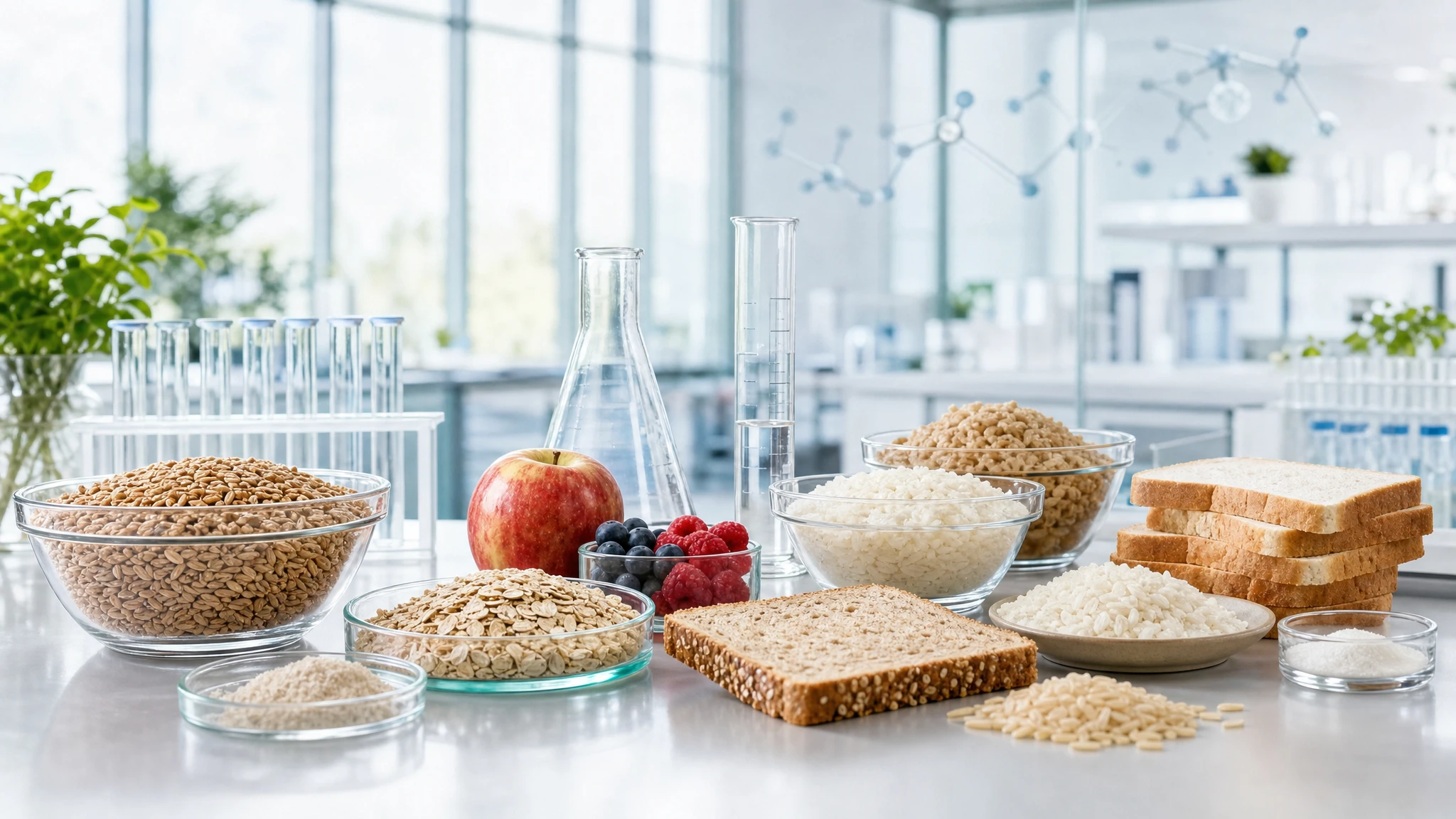
The analyzed study updated a large international table of the glycemic index and glycemic load of carbohydrate-containing foods. It collected nearly 1,300 results related to more than 750 types of food, using verified data obtained through standardized methods. Its goal was not to test a diet or demonstrate clinical effects, but to provide a tool for comparing how different foods can increase glycemia after a meal.
In the section on “The Choice to Live in Health or Illness” by Dr. A. Colonnese and R. Panzironi, the publication contributes to the narrative that vegetables and unrefined fruits generally have lower glycemic loads compared to grains and their derivatives. Independent evidence indicates that replacing refined grains with whole grains reduces average glycemia and insulinemia after a meal; in subjects with type 2 diabetes, dietary patterns with a low glycemic index or glycemic load modestly improve certain indicators of glycemic control. However, the effect is not identical for all grains, and observational studies do not prove that glycemic load alone causes chronic diseases.
Analyzed study
International table of glycemic index and glycemic load values: 2002
DOI: 10.1093/ajcn/76.1.5
PMID: 12081815
The research question was practical: how can reliable values be made available to researchers and professionals to compare the effect of carbohydrate-rich foods on glycemia? The initial hypothesis was that the chemical classification of carbohydrates, such as sugars or starches, does not by itself describe the body's response after a meal. The glycemic index indicates how quickly a carbohydrate-containing food raises glycemia compared to a reference food. The glycemic load, on the other hand, combines the speed of the response with the amount of carbohydrates present in a serving.
The relevance to the section "The Choice to Live in Health or Illness" by Dr. A. Colonnese and R. Panzironi therefore concerns the comparison between foods: the work allows for the classification of vegetables, fruit, grains, and derived products also based on their predictable glycemic response. However, it cannot document when the massive consumption of refined flours began, nor measure the historical consumption of the population, nor demonstrate that a specific food causes insulin resistance, obesity, or chronic diseases.
Materials and methods of the original study
The publication is an update of a reference table, not a clinical study with participants assigned to different diets. The authors collected results from both published and verified unpublished sources. The updated table contains nearly 1,300 data entries relating to over 750 distinct foods, tested using standardized methods.
For each food, where available, the glycemic index and glycemic load associated with specified serving sizes were reported. Only the abstract is available. For this reason, the detailed criteria for source selection, the characteristics of the subjects in the individual tests, the full research period, the quality assessment procedures, and the statistical analyses are not included in the available material.
Results
The main result is the availability of a much broader table compared to the previous version: nearly 1,300 entries, about three times the number of the first table, covering over 750 types of food. The authors report that the glycemic index is useful for moving beyond the distinction between simple and complex carbohydrates, because foods belonging to the same chemical category can produce different glycemic responses.
The publication also includes glycemic load values for defined portions. This is the most relevant step for the book: a food may have a high glycemic index but have little impact if it contains few carbohydrates in a standard portion, whereas a large portion of a starchy food can generate a greater load. The abstract does not report the average glycemic load values attributed in the book to vegetables, fruit, and grains; these specific average values are therefore not verifiable in the available material.
The abstract also recalls that prospective observational studies have associated diets with a high glycemic load over time with a higher incidence of type 2 diabetes, cardiovascular diseases, and certain cancers. This sentence summarizes previous literature, but the publication analyzed does not present new risk data, hazard ratios, or clinical results of its own.
Interpretation
In simple terms, the study provides a map for estimating how much a food might contribute to an increase in glycemia after a meal. The segment of the book's narrative that documents this is: different plant-based foods, and especially different portion sizes, do not have the same glycemic impact. Technically, the glycemic load is derived from the glycemic index and the grams of available carbohydrates present in the portion.
This distinction is important because grains and their derivatives do not constitute a uniform group. The response depends on the type of grain, the structure of the kernel, the milling, the cooking, the added ingredients, and the quantity consumed. The work does not demonstrate that all grains, including whole grains, always produce a higher glycemic load than every fruit or vegetable. Nor does it demonstrate that repeated increases in glycemia after meals inevitably lead to chronic hyperinsulinemia or metabolic diseases.
The relationship with refined flours is therefore indirect: the removal of bran and germ can alter the structure and composition of the product, but the table does not directly compare the technological history of milling nor does it quantify the biological effects of refining in the population.
Independent confirming evidence
The narrative of this section first requires verifying whether the comparison between refined and less refined grain products is reflected in the post-meal glycemic response. A systematic review with meta-analysis of 80 randomized studies in adults compared whole grains and refined grains. Compared to refined products, whole grains reduced postprandial glycemia—that is, blood sugar levels in the hours following a meal—with a standardized difference of −0.30 (95% confidence interval from −0.43 to −0.18; P<0.001). They also reduced postprandial insulinemia, meaning the rise in insulin after a meal, with a standardized difference of −0.23 (from −0.35 to −0.10; P<0.001) [1]. This is direct confirmation of the idea that the degree of refining and the food matrix can modify the acute response; however, it does not prove long-term clinical effects in healthy individuals.
A second level concerns people with diabetes, in whom glycemic regulation is already compromised. A meta-analysis of 29 randomized comparisons, involving 1,617 participants with type 1 or type 2 diabetes, found that dietary patterns with a low glycemic index or glycemic load reduced glycated hemoglobin—an indicator of average blood sugar over the previous two to three months—by 0.31 percentage points compared to control diets. The confidence interval was from −0.42 to −0.19, and the result was statistically significant [2]. The synthesis did not, however, show a significant reduction in fasting blood insulin. It therefore confirms that the overall quality of carbohydrates can influence glycemic control in a clinical setting, without demonstrating that every single grain is a cause of chronic hyperinsulinemia.
Regarding the possible link to the risk of type 2 diabetes, a systematic review and meta-analysis of 21 prospective cohorts, based on 24 publications, found that for every 5-unit increase in the glycemic index, there was an 8% increase in the relative risk of type 2 diabetes. For every 20-unit increase in glycemic load, there was a 3% increase in relative risk [3]. These associations maintained a consistent direction, but heterogeneity between studies was high, and observational cohorts cannot completely exclude the influence of lifestyle, overall diet quality, and other factors.
Conflicting evidence
No directly conflicting evidence of sufficient relevance has been identified; this does not prove the absence of contrary results. However, there is data that precisely defines the limits of generalization. A meta-analysis of randomized trials compared whole grains and refined versions, controlling for food matrix and processing whenever possible. Brown rice, compared to white rice, significantly reduced the postprandial glycemic response. Conversely, ground whole wheat compared to white wheat, and ground whole rye compared to endosperm-only rye, did not show statistically significant reductions in postprandial glycemia [4].
This result does not contradict the utility of the glycemic index and glycemic load. Rather, it indicates that the "whole grain" label alone does not guarantee a lower glycemic response. The physical structure of the grain, the fineness of the milling, the recipe, and the portion consumed can substantially alter the effect. Therefore, the book's statement is more robust if interpreted as an average comparison between food categories rather than an absolute rule for every cereal-based food.
Summary table of evidence
The table distinguishes the study that provided the classification tool from independent studies that evaluate the physiological and clinical effects relevant to the book's narrative.
| Reference | Study type | Population or model | Main result | Direction of evidence | Strength of evidence |
|---|---|---|---|---|---|
| Original study | International reference table | Nearly 1,300 data points for over 750 foods | Compiles glycemic index and glycemic load to compare foods and portions | biologically consistent evidence | moderate |
| [1] | Systematic review and meta-analysis of RCTs | Adults; 80 randomized studies identified | Whole grains compared to refined grains reduce postprandial glycemia and insulinemia | direct confirmation | moderate |
| [2] | Systematic review and meta-analysis of RCTs | 1,617 people with type 2 diabetes or type 1; 29 comparisons | Low glycemic index or glycemic load patterns reduce glycated hemoglobin by 0.31 percentage points | indirect confirmation | high |
| [3] | Systematic review and meta-analysis of prospective cohorts | 21 cohorts; 24 publications | Higher glycemic index and glycemic load are associated with a higher relative risk of type 2 diabetes | indirect confirmation | moderate |
| [4] | Systematic review and meta-analysis of RCTs | Comparisons between whole wheat, rice, and rye and their refined counterparts | Brown rice reduces glycemic response; ground whole wheat and rye do not show significant reductions | conflicting evidence | moderate |
Confirmation of the evidence
Claim in the book
In the section of “The Choice to Live in Health or Illness” by Dr. A. Colonnese and R. Panzironi, the relevant statement is that unrefined wild plant foods have lower average glycemic loads compared to grains and derived products, and that the latter can contribute to repeated increases in glycemia and hyperinsulinemia.
Food and portion characteristics → glycemic index and glycemic load → postprandial increase in glycemia and insulin → possible worsening of glycemic control in the overall dietary context
The publication subject to the Evidence Review was used in the book to support the following passage: carbohydrate-containing foods can be compared based on their glycemic index and glycemic load, and the differences between foods and portions make it plausible that vegetables and fruits have, on average, a lower glycemic impact compared to many portions of grains and derived products.
The scientific correspondence between the original publication and the section of “The Choice to Live in Health or Illness” by Dr. A. Colonnese and R. Panzironi is precise but limited: the work provides the classification basis necessary to discuss the glycemic index and glycemic load of foods. It does not directly demonstrate the entire historical sequence of refining, nor the onset of insulin resistance or obesity.
Independent evidence strengthens the physiological transition. Randomized comparisons show that, on average, replacing refined grains with whole grains reduces post-meal glycemia and insulin [1]. In subjects with diabetes, diets with an overall low glycemic index or glycemic load modestly improve glycated hemoglobin, even without a significant reduction in fasting insulin [2]. Furthermore, prospective cohorts associate higher dietary values of glycemic index and glycemic load with an increased relative risk of type 2 diabetes [3].
This confirmation should not be read as a uniform judgment on all grains. The differences observed for rice, wheat, and rye show that food structure and processing can change the glycemic response [4]. The narrative is therefore confirmed primarily for the comparative principle and the average postprandial response, not as proof that every whole food is metabolically equivalent to fruits and vegetables or that every refined food causes disease.
Overall level of confirmation
MODERATE CONFIRMATION
The original publication directly documents the classification system based on glycemic index and glycemic load. Independent randomized trials confirm an average reduction in the postprandial response when replacing refined grains with whole grains, while prospective cohorts link higher glycemic loads to a higher relative risk of type 2 diabetes. Significant variations remain between foods, processing methods, and populations.
Conclusions
The study analyzed is well-utilized as a source for defining and comparing the glycemic index and glycemic load of foods. Its contribution to the book's section primarily concerns the ability to distinguish the glycemic impact of foods and portion sizes, rather than demonstrating the historical effects of refining or chronic diseases.
Independent evidence moderately confirms that, on average, whole grain products compared to refined ones can reduce post-meal glycemia and insulinemia, and that dietary patterns with a lower glycemic index or load improve certain glycemic indicators in people with diabetes. Associations with diabetes risk are consistent but observational. The response remains dependent on the individual food, processing, portion size, and overall dietary context.
Overall assessment
The narrative is moderately supported. The physiological mechanism of the different postprandial response to carbohydrates is fairly well supported by randomized trials, while the link to chronic outcomes is derived primarily from observational studies. Comparing food categories is useful, but it does not replace the evaluation of individual foods, portion sizes, and processing methods.
References
[1] Whole grain intake, compared to refined grain, improves postprandial glycemia and insulinemia: a systematic review and meta-analysis of randomized controlled trials
[2] Effect of low glycaemic index or load dietary patterns on glycaemic control and cardiometabolic risk factors in diabetes: systematic review and meta-analysis of randomised controlled trials
[3] Glycemic Index, Glycemic Load, Carbohydrates, and Type 2 Diabetes
Editorial note
Artificial Intelligence was used solely as a tool to support editorial and documentary work. All content, interpretations, bibliographic citations and conclusions have been verified, reviewed and approved by the author, who assumes full scientific responsibility for them.
The manuscript was also subject to independent peer review prior to publication.
To ensure maximum transparency, the article's complete history — including the dates of submission, review, acceptance and publication, as well as information on the peer review process — is available on the dedicated Article History page.