


Accuracy of 1-hour plasma glucose during the oral glucose tolerance test in the diagnosis of type 2 diabetes in adults: a meta-analysis - Evidence review
During an oral glucose tolerance test, a one-hour glycemia level of at least 11.6 mmol/L showed good ability to identify diabetes as defined by the two-hour glycemia level. Independent studies link elevated values to reduced pancreatic function and future risk, but prospective diagnostic confirmation in diverse populations is needed.
- Published 12/11/2026
- Updated 12/11/2026
- Article history
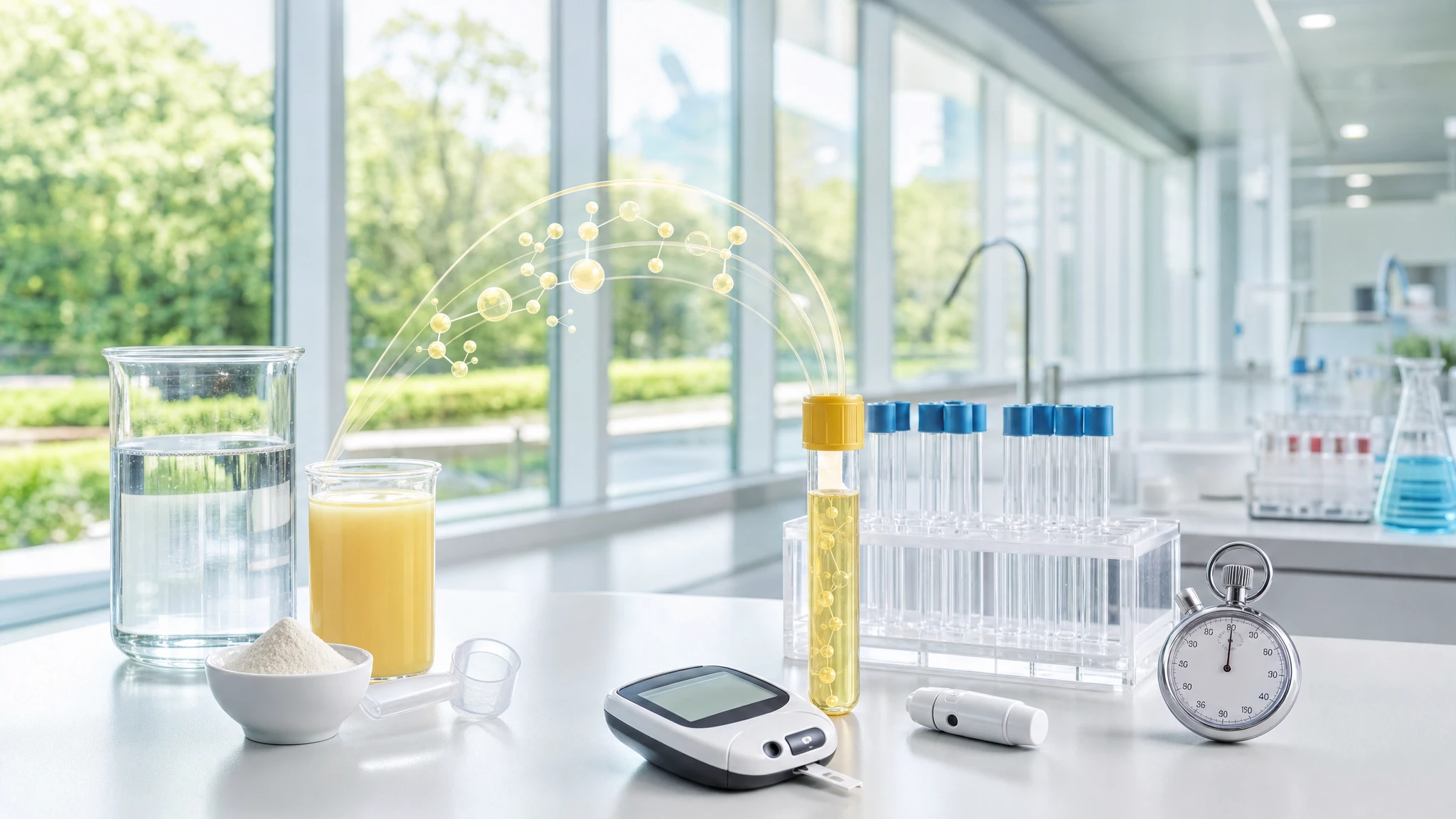
ABSTRACT
The analyzed study pooled 15 studies, totaling 35,551 adults and 2,705 cases of diabetes identified by the two-hour blood glucose level during the oral glucose tolerance test (OGTT, a test performed after the intake of 75 grams of glucose). It evaluated which one-hour blood glucose value was most accurate in identifying diabetes as defined by the two-hour blood glucose criterion.
In the meta-analysis, the value of 11.6 mmol/L, corresponding to 209 mg/dL, had a sensitivity of 92% and a specificity of 91%. In the narrative of “The Choice to Live in Health or Illness” by Dr. A. Colonnese and R. Panzironi, this data primarily supports the diagnostic utility of one-hour blood glucose. Independent studies link elevated values to lower insulin sensitivity, reduced pancreatic beta-cell function, and a higher future probability of dysglycemia. However, the available material from the original study does not directly document all the pathophysiological correlations reported in the book, nor does it demonstrate that every positive result corresponds to clinically confirmed diabetes.
Analyzed study
Accuracy of 1-Hour Plasma Glucose During the Oral Glucose Tolerance Test in Diagnosis of Type 2 Diabetes in Adults: A Meta-analysis
DOI: 10.2337/dc20-1688
PMID: 33741697
PMCID: PMC8578930
The research question was whether plasma glycemia measured one hour after the intake of 75 grams of glucose during an OGTT could accurately identify type 2 diabetes detected using the traditional two-hour glycemia criterion. The hypothesis was that a single one-hour value could offer a useful compromise between the ability to identify cases and the ability to avoid misclassifications.
The study is relevant to the section "The Choice to Live in Health or Illness" by Dr. A. Colonnese and R. Panzironi because it defines the performance of the 11.6 mmol/L threshold value, i.e., 209 mg/dL, for recognizing individuals who met the criteria for diabetes at the second hour of the OGTT. The work can therefore document a diagnostic concordance ratio between the one-hour measurement and the two-hour criterion. However, it cannot, on its own, demonstrate that one-hour glycemia is a more early indicator in every person, nor that elevated values cause diabetes or necessarily derive from a specific alteration in insulin secretion.
Materials and methods of the original study
This is a meta-analysis, which is a statistical analysis that combines results from different studies. It included 15 observational studies with 35,551 participants from multiple ethnic groups; 53.8% were Caucasian. There were 2,705 cases of diabetes considered, identified when the two-hour blood glucose level from an OGTT was equal to or greater than 11.1 mmol/L, or 200 mg/dL.
The authors excluded cases recognized exclusively through elevated fasting glycemia and/or elevated glycated hemoglobin. They then estimated three possible one-hour blood glucose thresholds, assigning different weights to sensitivity and specificity. Sensitivity indicates the proportion of people with diabetes according to the reference criterion that the test is able to identify; specificity indicates the proportion of people without diabetes according to that criterion that the test correctly classifies as negative.
Only the abstract is available. The detailed inclusion and exclusion criteria for the individual studies, recruitment periods, distribution by sex and age, laboratory techniques, follow-up of the individual cohorts, and subgroup analyses are not reported in the available material.
Results
The three identified thresholds showed a different trade-off between detecting more cases and reducing positive classifications not confirmed by the two-hour criterion. At 10.6 mmol/L, sensitivity was 0.95 and specificity was 0.86. At 11.6 mmol/L, sensitivity was 0.92 and specificity was 0.91. At 12.5 mmol/L, sensitivity decreased to 0.87, while specificity increased to 0.94.
The value of 11.6 mmol/L was considered the trade-off with equal weight between sensitivity and specificity. In practical terms, it identified 92% of people with diabetes defined by two-hour glycemia and correctly classified 91% of people without diabetes as non-diabetic according to the same criterion. The area under the curve, or AUC, was 0.939: this is an indicator of the overall ability to distinguish between the two groups, where 1 represents perfect discrimination and 0.5 represents random classification.
The reported positive predictive value was 45%. This means that, in the overall context analyzed, less than half of the people who tested positive at the 11.6 mmol/L threshold met the diabetes criterion based on two-hour glycemia. This value also depends on the frequency of the disease in the population examined and cannot be automatically transferred to every clinic or screening program.
Interpretation
The main result indicates that one-hour glycemia provides useful information for identifying individuals who already have two-hour glycemia within the diagnostic range for diabetes. This data does not automatically replace clinical confirmation: a sensitivity of 92% means that some cases are not identified, while a specificity of 91% means that some people without diabetes according to the reference criterion test positive at the one-hour mark.
The segment effectively documented by the publication subject to the Evidence Review is therefore: one-hour glycemia equal to or greater than 11.6 mmol/L → good ability to identify diabetes as defined by two-hour glycemia. The available material does not report direct analyses of the correlation between one-hour glycemia, the Matsuda index, and beta-cell function. It also does not report data that would allow for direct verification of the claim that many apparent false positives exhibited impaired glucose tolerance. These elements therefore require confirmation from separate research.
From a biological perspective, it is plausible that elevated glycemia after one hour signals a less efficient response to the rapid entry of glucose into the blood. This response depends on both the early insulin secretion of pancreatic beta cells and the sensitivity of tissues to insulin. However, biological plausibility is not equivalent to demonstrating that a single elevated value represents the same alteration or the same stage of the disease in every individual.
Independent confirmatory evidence
Confirmation of this pathophysiological transition comes from a cross-sectional study of 166 people with formally normal glucose tolerance. Compared to subjects with one-hour glycemia below 143 mg/dL, those with higher values showed a reduction in the insulinogenic index—an estimate of early insulin secretion—and lower values of the Matsuda index, which estimates how effectively the body responds to insulin. For example, the Matsuda index decreased from 11.2 in the group with lower one-hour glycemia to 5.5 in the group with values equal to or greater than 155 mg/dL. This confirms the biological consistency of the idea that elevated one-hour glycemia may be associated with a lower efficiency of the insulin response, but the observational study does not prove causality [1].
A retrospective cohort of 1,356 people initially with normal glucose tolerance evaluated the subsequent risk of dysglycemia, i.e., prediabetes or diabetes. During follow-up, 318 participants, or 23.4%, developed prediabetes after a median of 3.5 years, while 134, or 10%, developed diabetes after a median of 5.6 years. One-hour glycemia showed greater discriminative capacity compared to fasting and two-hour glycemia for both prediabetes and diabetes; adding the other glycemic values did not significantly improve this capacity. The result confirms the prognostic association, but it derives from medical records of a specialized center and does not prove that measuring earlier or treating based on this value improves clinical outcomes [2].
Another independent prospective cohort followed 5,703 Korean adults with normal glucose tolerance for 12 years. During this period, 593 people, or 10.3%, developed diabetes. One-hour glycemia had an AUC of 0.74 for predicting incident diabetes, higher than that of fasting glycemia, which was 0.61, and two-hour glycemia, which was 0.63. A one-hour value equal to or greater than 8.0 mmol/L was associated, after adjustment for major risk factors, with a 2.84 times greater probability of developing diabetes and lower beta-cell function. This result reinforces the hypothesis of an early phase of metabolic vulnerability, but the prognostic threshold of 8.0 mmol/L does not coincide with the diagnostic threshold of 11.6 mmol/L from the original study [3].
A Brazilian cross-sectional analysis of 1,797 OGTTs provided verification in a distinct population. Applying the thresholds of 155 mg/dL for intermediate hyperglycemia and 209 mg/dL for diabetes, one-hour glycemia classified 27.8% more people as being at high glycemic risk compared to fasting glycemia, 26.7% more than glycated hemoglobin, and 16.8% more than two-hour glycemia. These data confirm that the one-hour measurement captures a population partially different from that identified by conventional markers. However, they do not prove that all additional cases are undiagnosed diabetes or that they will necessarily evolve toward diabetes [4].
Conflicting evidence
No directly conflicting evidence of sufficient relevance has been identified; this does not prove the absence of contrary results. The main caveats stem from the different purposes of the thresholds studied. The 11.6 mmol/L value from the original study was designed to identify diabetes as defined by the two-hour glycemia, whereas prognostic studies have used lower thresholds to identify a higher future probability of dysglycemia [2,3].
Furthermore, the available studies differ in terms of population, prevalence of metabolic risk, design, and diagnostic criteria. The reduction in insulin function observed in cross-sectional studies is an association and does not allow us to establish whether it is the cause of the increase in one-hour glycemia, a consequence of it, or a parallel phenomenon. Finally, the classification of additional cases in cross-sectional studies requires prospective validation with clinical outcomes and independent diagnostic confirmation [1,4].
Summary table of evidence
The table distinguishes the publication under review from independent evidence that confirms individual biological, prognostic, or diagnostic steps.
| Reference | Study type | Population or model | Main result | Direction of evidence | Strength of evidence |
|---|---|---|---|---|---|
| Original study | Diagnostic meta-analysis | 15 studies, 35,551 adults, 2,705 cases of diabetes defined by two-hour glycemia | The 11.6 mmol/L threshold at one hour showed 92% sensitivity and 91% specificity for diabetes defined at two hours | direct confirmation | moderate |
| [1] | Cross-sectional observational | 166 subjects with normal glucose tolerance | Higher one-hour glycemia associated with lower early insulin secretion and lower insulin sensitivity | biologically consistent evidence | moderate |
| [2] | Retrospective longitudinal observational | 1,356 initially normoglycemic subjects | One-hour glycemia predicted future dysglycemia better than fasting and two-hour glycemia | indirect confirmation | moderate |
| [3] | Prospective cohort | 5,703 normoglycemic Korean adults, 12-year follow-up | One-hour glycemia equal to or greater than 8.0 mmol/L associated with a 2.84-fold higher risk of incident diabetes | indirect confirmation | moderate |
| [4] | Cross-sectional observational | 1,797 OGTTs in a Brazilian cohort | Classification using one-hour glycemia identified more subjects at high glycemic risk compared to conventional markers | indirect confirmation | low |
Confirmation of the evidence
Claim in the book
In the section dedicated to one-hour plasma glycemia, "The Choice to Live in Health or Illness" by Dr. A. Colonnese and R. Panzironi states that one-hour glycemia during an OGTT can detect early metabolic alterations and that the value of 11.6 mmol/L represents an accurate compromise for identifying diabetes. The text also links elevated values to reduced insulin sensitivity, worsening pancreatic beta-cell function, and higher future metabolic risk.
Elevated one-hour glycemia → lower insulin sensitivity and reduced early insulin response → higher probability of future dysglycemia → possible early identification of at-risk individuals
The publication subject to the Evidence Review was used in the book to support the following passage: a one-hour plasma glycemia of 11.6 mmol/L, equal to 209 mg/dL, during an OGTT possesses good sensitivity and specificity in recognizing diabetes as defined by two-hour glycemia.
The correspondence between the original study and the paragraph is direct for the diagnostic segment: the meta-analysis quantifies a sensitivity of 92% and a specificity of 91% for the 11.6 mmol/L threshold compared to the two-hour glycemia criterion. However, the publication does not document, in the available material, the pathophysiological correlations reported in the paragraph. These are supported separately by independent studies: normoglycemic subjects with higher one-hour glycemia showed lower early insulin secretion and lower insulin sensitivity [1]; longitudinal cohorts have associated higher values with an increased future probability of prediabetes or type 2 diabetes [2,3]. In a Brazilian cohort, the one-hour measurement also classified more people with intermediate hyperglycemia or diabetes compared to fasting glycemia, glycated hemoglobin, and two-hour glycemia [4].
Overall, the chain of events narrated in the book is supported by convergent evidence, but each element must be kept at its own level. The 11.6 mmol/L threshold is a diagnostic proposal to be confirmed in the clinical context; the lower thresholds from prospective studies indicate future risk and not a diagnosis; the alterations in insulin function are observed associations, not proof of a single causal relationship.
Overall level of confirmation
MODERATE CONFIRMATION
The diagnostic segment of the original publication is well-defined, and independent studies confirm the biological and prognostic consistency of elevated one-hour glycemia. The confirmation remains moderate because thresholds, populations, and outcomes differ, and definitive prospective evidence demonstrating the clinical benefit of the systematic use of this diagnostic threshold is lacking.
Conclusions
The analyzed publication specifically argues that a plasma glycemia level of 11.6 mmol/L or higher at one hour during an OGTT has good accuracy in identifying diabetes as defined by the two-hour glycemia level. The broader narrative regarding metabolic earliness is moderately supported by independent studies that associate high values with lower efficiency of the insulin response and a higher future risk of dysglycemia. Prospective validations in diverse populations and studies clarifying whether the systematic use of this parameter truly improves diagnosis, prevention, and clinical outcomes remain necessary.
Overall assessment
The correspondence between the study and the paragraph is reasonably well-supported regarding the diagnostic accuracy of the 11.6 mmol/L threshold. The relationship with insulin sensitivity, beta-cell function, and future risk is confirmed by convergent observational evidence, but remains moderately supported as it does not demonstrate causality or the direct clinical benefit of systematic screening.
References
[1] b-Cell Function and Insulin Sensitivity in Normal Glucose-Tolerant Subjects Stratified by 1-Hour Plasma Glucose Values
[2] The 1 h post glucose value best predicts future dysglycemia among normal glucose tolerance subjects
[3] One‐hour postload plasma glucose concentration in people with normal glucose homeostasis predicts future diabetes mellitus: a 12‐year community‐based cohort study
[4] Diagnostic performance of 1-hour plasma glucose and glucose curve shape during oral glucose tolerance test: a cross-sectional study in a Brazilian cohort
Editorial note
Artificial Intelligence was used solely as a tool to support editorial and documentary work. All content, interpretations, bibliographic citations and conclusions have been verified, reviewed and approved by the author, who assumes full scientific responsibility for them.
The manuscript was also subject to independent peer review prior to publication.
To ensure maximum transparency, the article's complete history — including the dates of submission, review, acceptance and publication, as well as information on the peer review process — is available on the dedicated Article History page.