
D.ssa Melania Mondini

Biologist

D.ssa Melania Mondini

Professional profile

Licensed biologist (Section A), with a solid academic background in the biomolecular field and significant experience in scientific research and laboratory analysis. She earned a Master's Degree in Biology with top marks (110/110) at the University of Naples Federico II, developing advanced skills in molecular, cellular and genetic biology.

Professional experience

  • Consultant — Life120
    Consulting in the nutrition and wellness sector.
  • Trainee — Research and clinical-analysis laboratory
    Research and laboratory analysis.

Academic background

  • Master's Degree in Biology LM-6, biomolecular track (110/110)
    University of Naples Federico II. Experimental thesis on the SH-SY5Y human neuroblastoma cell line knockout for the EGR1 factor.
  • Degree in General and Applied Biology, molecular and cellular track (110/110)
    University of Naples Federico II. Thesis on the gene organisation of the cotG/cotH locus in Bacillus licheniformis.
  • Professional qualification as Biologist (Section A)
    University of Naples Federico II.

Articles

Ginger in type 2 diabetes: effects on glycemia and HbA1c levels

Ginger in type 2 diabetes: effects on glycemia and HbA1c levels

D.ssa Melania Mondini; Last updated: September 2026

In brief: Research on ginger in type 2 diabetes offers interesting data, but requires caution. Some trials and meta-analyses indicate possible improvements in glycemia, HbA1c, and the cells' response to insulin. Other studies, however, do not find clear benefits when combining the results. The evidence therefore supports a possible role as nutritional support, not as an alternative to standard treatments. Dose, duration, and the individuals studied explain many differences. Therefore, the topic remains useful, but should be viewed without excessive expectations.

Ceylon or Cassia cinnamon: how to identify them and make more informed choices in the kitchen

Ceylon or Cassia cinnamon: how to identify them and make more informed choices in the kitchen

D.ssa Melania Mondini; Last updated: October 2026

In brief: Research shows that Ceylon and cassia are not equivalent products. They differ in botanical species, aroma, chemical compounds, and how we can identify them. The most useful studies evaluate identity, undeclared additives, and differences in taste and aroma. Powder is more difficult to distinguish. For this reason, clear information on the packaging helps in making a more informed choice.

Eugenol in cloves: why it is the key chemical molecule

Eugenol in cloves: why it is the key chemical molecule

D.ssa Melania Mondini; Last updated: October 2026

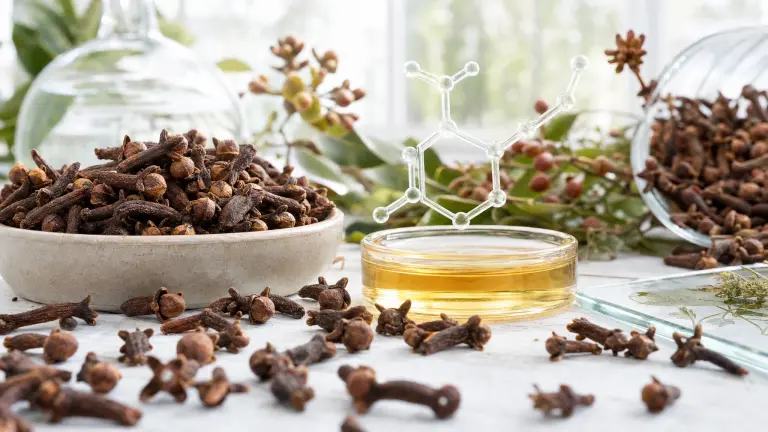
In brief: Research identifies eugenol as the most characteristic molecule of cloves. It is therefore the primary reference for studying their chemical profile. Tests show a consistent interest in antioxidant effects and certain signals against inflammation.These data primarily concern experimental models. However, studies on humans remain few and do not allow for definitive practical conclusions. The form of the product also matters, because whole spice, extract, and essential oil provide different exposures. This molecule is therefore useful as a key compound and as a model for interpreting the available evidence.

Cinnamaldehyde, polyphenols, and eugenol: what makes cinnamon active and its chemical profile

Cinnamaldehyde, polyphenols, and eugenol: what makes cinnamon active and its chemical profile

D.ssa Melania Mondini; Last updated: October 2026

In brief: Research describes cinnamaldehyde as the most recognizable compound in cinnamon, but not the only important one. Polyphenols and eugenol form a complex chemical profile that changes according to species, extract, and processing method. For this reason, science better evaluates the phytocomplex, i.e., the set of cinnamon's constituents. This approach avoids reducing the spice to the study of a single isolated principle.

Cordyceps species: origin, meaning of the name, and differences between the fungi used in studies

Cordyceps species: origin, meaning of the name, and differences between the fungi used in studies

D.ssa Melania Mondini; Last updated: October 2026

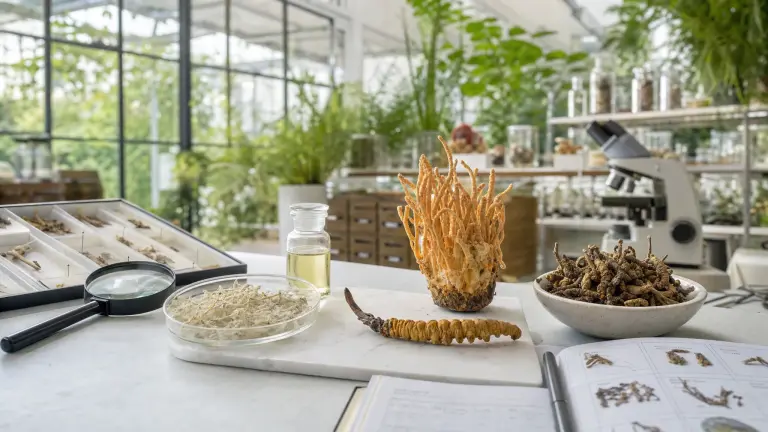
In brief: Research shows that the name cordyceps is only a starting point. Without the species, the part of the fungus, and the type of extract, its meaning changes significantly. Studies describe a broad genus, made up of many different species and materials. Mycelium, fruiting body, and fermented products can, in fact, have distinct profiles. To properly interpret the data, taxonomic precision and attention to the method used to obtain the product are required.