


Ginger in type 2 diabetes: effects on glycemia and HbA1c levels
Research on ginger in type 2 diabetes offers interesting data, but requires caution. Some trials and meta-analyses indicate possible improvements in glycemia, HbA1c, and the cells' response to insulin. Other studies, however, do not find clear benefits when combining the results. The evidence therefore supports a possible role as nutritional support, not as an alternative to standard treatments. Dose, duration, and the individuals studied explain many differences. Therefore, the topic remains useful, but should be viewed without excessive expectations.
- Published 30/09/2026
- Updated 08/10/2026
- Reviewed 30/09/2026
- Article history
ABSTRACT : WHAT THE SCIENCE SAYS
In type 2 diabetes, controlling glycemia helps reduce symptoms. It also helps contain the risk of complications related to the disease. Ginger is attracting interest: it is common and some studies indicate beneficial effects on glucose utilization. However, ginger is not a cure for type 2 diabetes. It can serve as nutritional support, alongside diet, physical activity, and prescribed therapies.
To understand the studies, two measures are needed: glycemia and HbA1c, or glycated hemoglobin. Glycemia indicates the level of glucose present in the blood. HbA1c, on the other hand, indicates the average glycemia of the previous months. This article examines human trials, i.e., studies conducted on people. It also describes possible biological mechanisms (the ways in which ginger might act in the body). Finally, it evaluates the limitations of the evidence currently available on these effects. In particular, the article will address:
- What glycemia and HbA1c indicate in studies on ginger
- Which trials show beneficial effects on glycemic control
- Why results vary between different studies
- Which biological mechanisms are most plausible
- How to incorporate ginger into daily life
Ginger and type 2 diabetes: what studies on glycemia and HbA1c reveal
Data on ginger in type 2 diabetes are useful, but must be interpreted with caution. Studies primarily evaluate glycemia, that is, blood glucose at a given moment. They also examine HbA1c, or glycated hemoglobin, which indicates the average over the last few months. Some studies show favorable outcomes, but the data are not uniform.
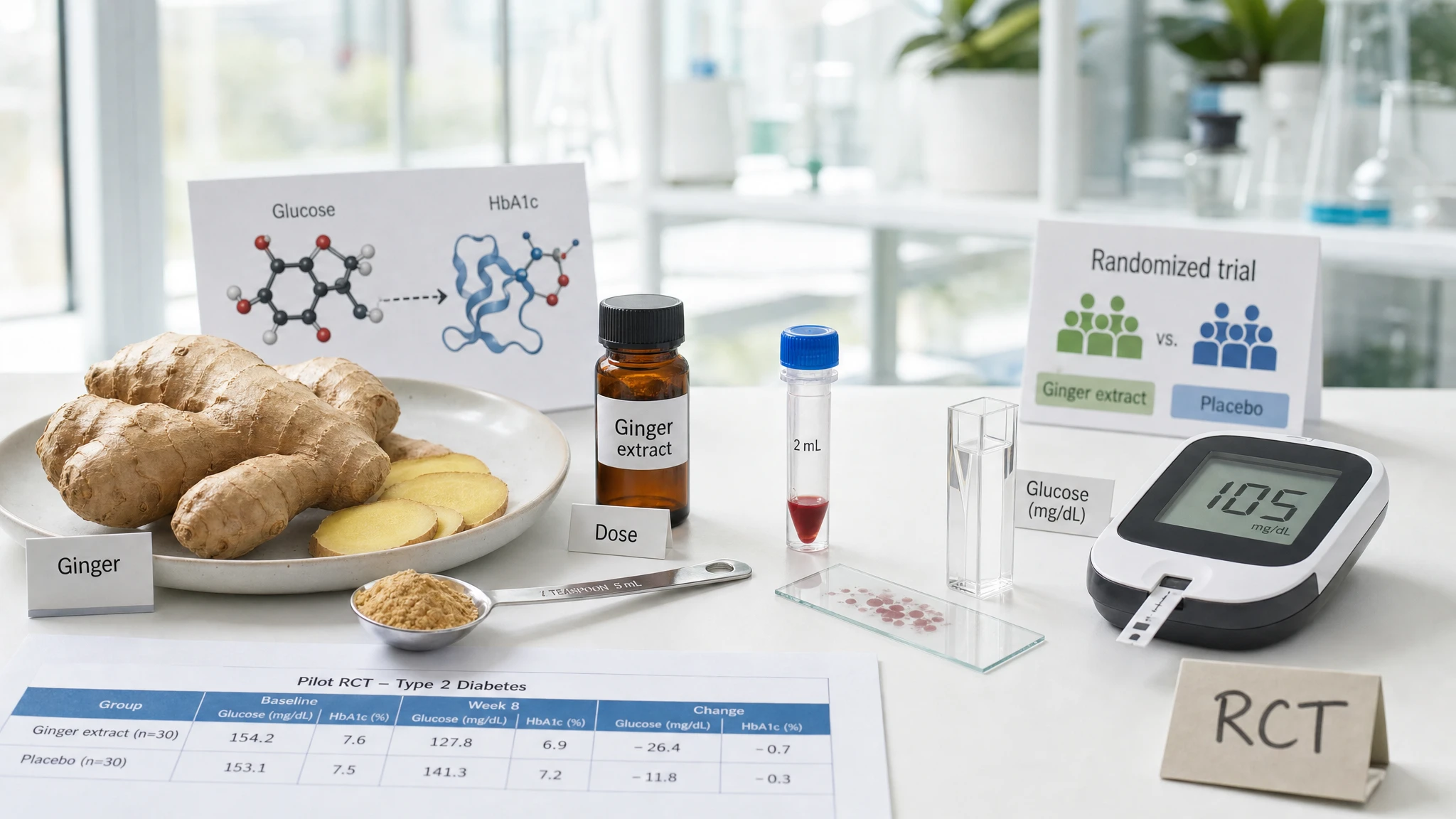
Studies on ginger and type 2 diabetes primarily evaluate two data points: glycemia and HbA1c. The former indicates blood glucose at a given moment. The latter shows its average over time.
Dietary support can influence the most recent data, but not overall control. Ginger may therefore offer nutritional support in diabetes, to be evaluated on a case-by-case basis.
Overall, studies indicate a possible favorable effect on glycemia and HbA1c. However, results vary. Some data are consistent with better use of insulin and glucose. Others show milder effects.
To understand the strength of the data, it is necessary to distinguish initial results from randomized trials and reviews. The key points are as follows:
- How glycemia and HbA1c describe two different aspects of glucose control.
- Which clinical trials have detected an improvement in metabolic values.
- How dosage, duration, and type of sample can change the outcomes.
Studies measure two distinct aspects: current glycemia and its average trend over time.
Glycemia and HbA1c in ginger: what studies are really measuring
In studies on type 2 diabetes, glycemia and HbA1c do not indicate the same thing. Glycemia measures blood glucose at a given moment. HbA1c, on the other hand, indicates its average over the months prior to the test. The two values therefore describe different time windows of the same overall metabolic balance. An intervention may therefore have more of an effect on the short term than on the average value. For this reason, considering them together helps to distinguish an occasional change from a more persistent one. If both data points improve, the signal is more robust. However, its weight depends on the method used and the people included [1][2].
Guidelines remind us that type 2 diabetes requires treatment, monitoring, and clear goals. This intervention therefore remains a nutritional support in diabetes and does not replace medical treatment. It is necessary to understand if the effect is repeatable and if it brings a real health benefit. For this reason, the data must be read in conjunction with trials on fasting glycemia and HbA1c [1][2].
What clinical trials show about glycemic control
Some randomized trials have found favorable effects of ginger on data useful for metabolism. In a double-blind, placebo-controlled study, 64 people with type 2 diabetes took 2 g per day. Both glycemia and insulin response improved. This initial work therefore observed both glucose levels and how the body manages them.
In another trial, 3 capsules of 1 g per day for 8 weeks reduced fasting glycemia and HbA1c. Indices of insulin resistance (poor cell response to insulin) also improved [3][4]. In the latter, the comparison also involved average glucose control over time. The outcomes concern multiple metabolic markers (values related to the use of sugars and energy), not just a single data point. However, the studies included few people and were short in duration. Therefore, they do not show whether the effect remains stable over time. The signal is favorable, but it does not prove a certain benefit for every person with type 2 diabetes [3][4].
Why results on ginger are not the same in all studies
The outcomes change primarily based on the product form, dosage, and study duration. The initial conditions of the participants also matter. Those with poorer glycemic control may respond differently than those with less altered values. These differences make it less straightforward to determine how comparable the results truly are. For this reason, comparing studies is not direct. A favorable outcome in one trial may therefore carry a different weight in another. Caution is needed, especially when evaluating the effects on glycemia and HbA1c.
A summary of several randomized studies found an average reduction in HbA1c of 1.00 point. Another review found, overall, a decrease in HbA1c and glycemia. It also noted an improved response to insulin. However, the outcomes vary significantly and do not always have the same impact on health. There may be a role for nutritional support in diabetes, but the effect depends on the context and should not be overestimated [5][6].
Recent research and updates
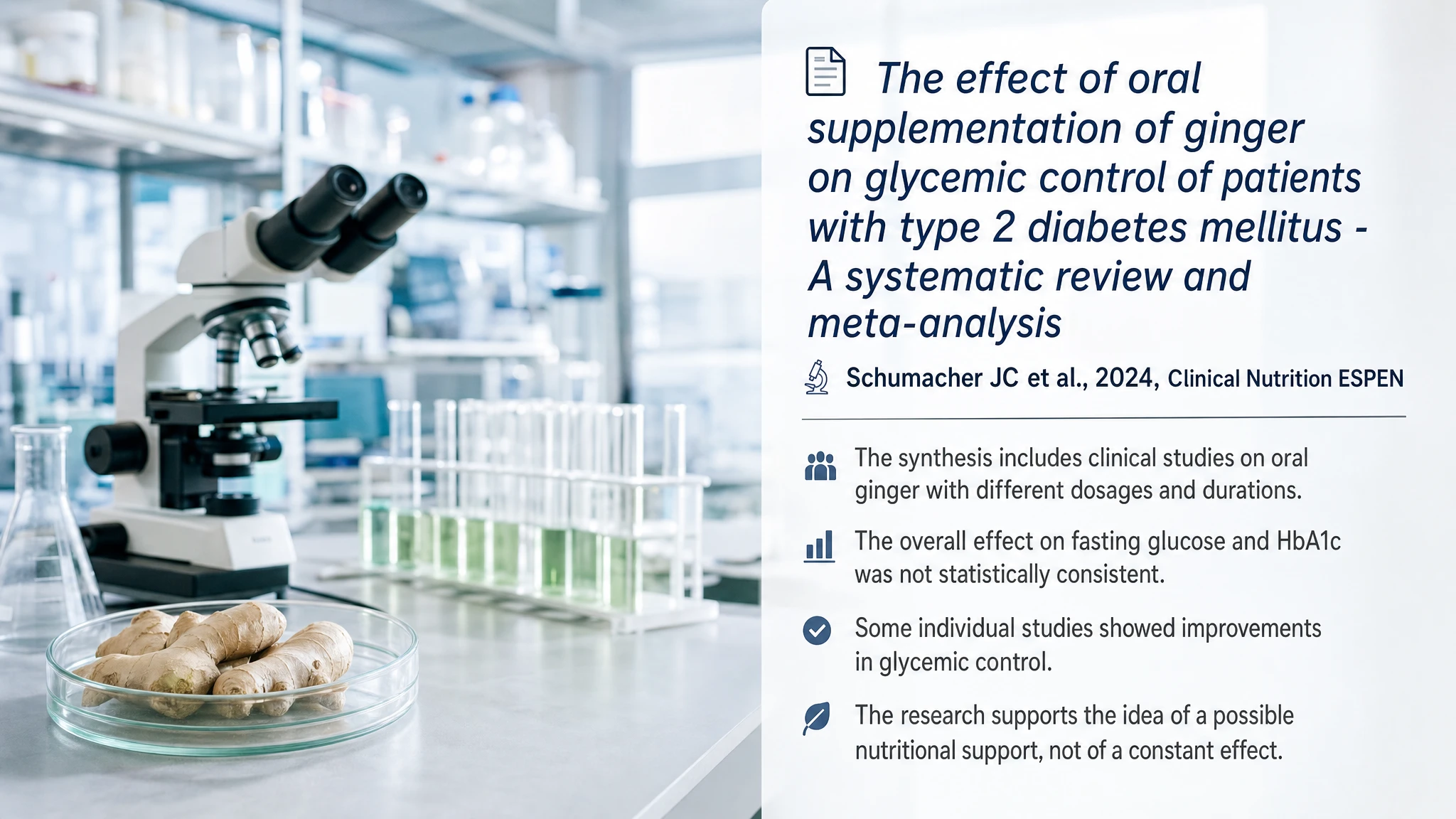
In 2024, Juliana Crystal Schumacher and colleagues in Brazil published a study in Clinical Nutrition ESPEN on ginger in type 2 diabetes. The research evaluated fasting glycemia and HbA1c, or glycated hemoglobin, which indicates average blood sugar levels over time. The data confirm the scientific interest in the subject but show that the effect is not always uniform.
The effect of oral supplementation of ginger on glycemic control of patients with type 2 diabetes mellitus - A systematic review and meta-analysis
- The summary includes clinical studies on orally administered ginger, with varying dosages and durations.
- The overall effect on glycemia and HbA1c was not found to be uniform.
- Some individual studies showed better glycemic control.
- The research supports a possible nutritional benefit, but not a consistent effect.
How ginger may act on glucose metabolism
Interest in ginger for type 2 diabetes goes beyond glycemia. Studies also evaluate how the body uses glucose. What matters most is the tissue response to insulin, inflammation, and metabolic markers (values that describe metabolism). These data help determine whether nutritional support can act in the expected direction.
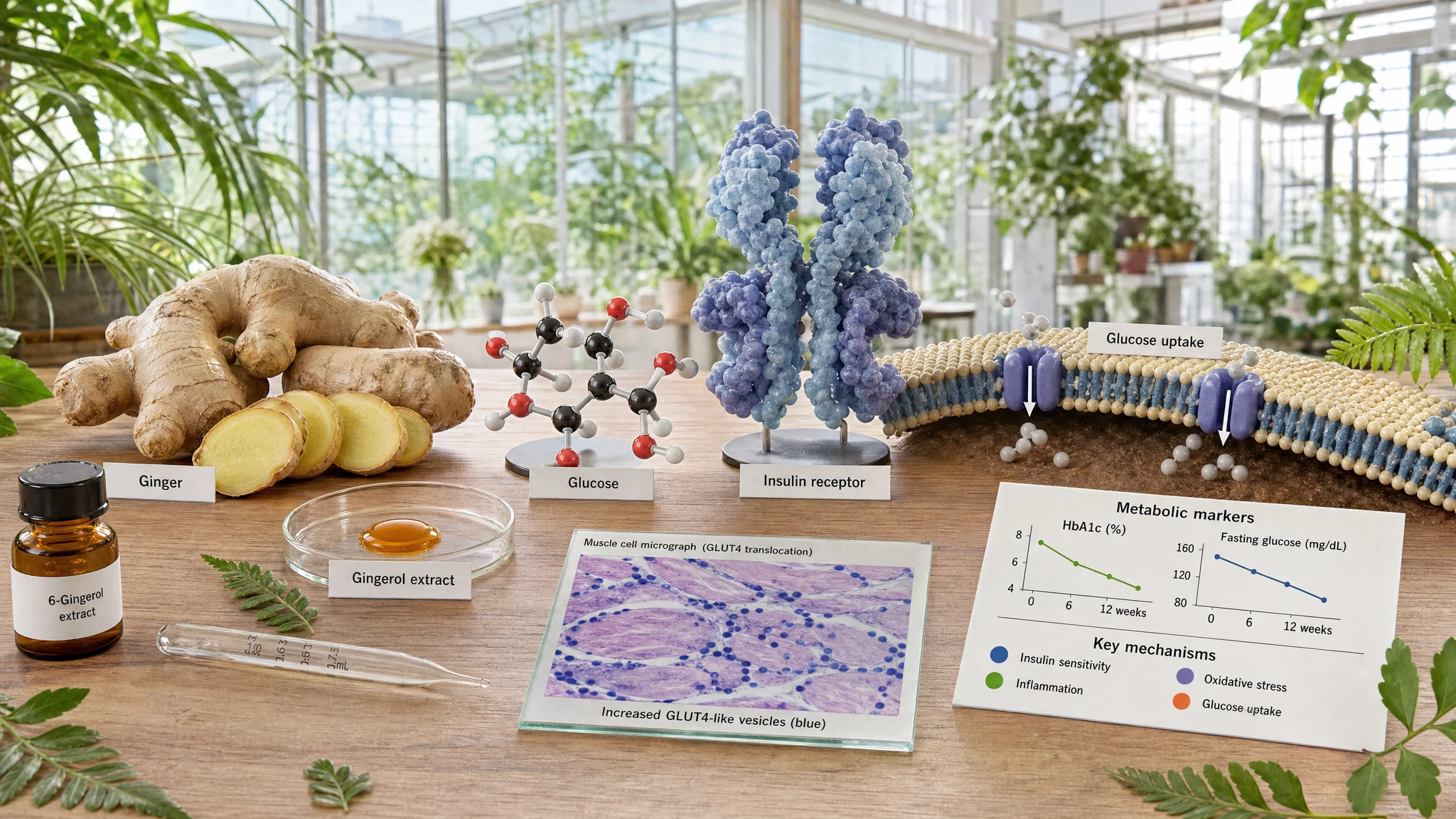
The potential interest in ginger for type 2 diabetes stems from a key point. It is not just about how much glucose is circulating in the blood. It is also about how tissues respond to insulin and use sugars. Certain substances in ginger may promote glycemic control, but they do not replace prescribed treatments.
These aspects explain why ginger is being studied as a possible nutritional support for diabetes. It does not offer a quick fix, but it may act on multiple parts of the same system. The following sections examine these three points separately. This makes it easier to distinguish the hypothesized mechanism from study data and their limitations.
Studies therefore evaluate glycemia and other signals useful for understanding how metabolism functions. The main hypotheses being studied are as follows:
- Effect on insulin response and insulin resistance.
- Possible action on inflammation and oxidative stress.
- A cautious interpretation of the observed metabolic markers.
The potential effect of ginger is best understood by examining three distinct steps. Each section clarifies a part of glucose metabolism, from the hypothesized mechanism to the limitations of the data.
Ginger and insulin resistance: the biological rationale in type 2 diabetes
In type 2 diabetes, the central issue is insulin resistance, which is the reduced ability of tissues to respond to the hormone insulin. The biological rationale for ginger starts here: some of its components may promote a better response to insulin, making glucose utilization more efficient. The phenolic compounds in ginger, such as gingerols and shogaols, have been observed in laboratory models for their ability to interact with cellular insulin receptors. This mechanism could facilitate the entry of glucose into muscle and adipose cells.
This does not mean that ginger acts as a hypoglycemic drug, but rather that it could offer metabolic support in a context of difficult glycemic control. It is against this backdrop that randomized studies should be read, as they have evaluated not only glycemia but also indices such as QUICKI, which is useful for estimating insulin response. In one of these, supplementation showed an improvement in this index, suggesting a reduction in peripheral resistance to the hormone. The limitation is clear: the signal is promising, but it is not enough to say that the mechanism is the same in all people.
Inflammation and oxidative stress: why they matter in glycemic control
In type 2 diabetes, inflammation and oxidative stress can make glucose management more difficult. Ginger has been studied because it may help reduce this biological burden, creating a more favorable environment for metabolic regulation. In this sense, interest in it concerns not only glycemia, but also the context that influences it. Chronic low-grade inflammation, typical of the diabetic condition, actually impairs insulin signaling and worsens the overall metabolic profile. This happens because inflammatory molecules interfere with insulin receptors. The result is a cycle that aggravates both glycemia and general metabolism.
An analysis that brought together five randomized studies reported a reduction in hs-CRP, TNF-a, and IL-6 in people with type 2 diabetes, while another study on 64 participants showed an improvement in metabolic parameters after 2 g of ginger per day [7][3]. These molecules are key markers of systemic inflammation, and their decrease is a signal consistent with an anti-inflammatory effect. The hs-CRP protein, in particular, is often used in clinical practice to estimate overall cardiometabolic risk. These results are consistent with a possible supportive effect, but they do not by themselves demonstrate a broad and stable clinical benefit. Furthermore, different markers do not always have the same practical weight: for this reason, they should be read as useful clues, not as definitive proof. It therefore remains necessary to confirm these signals with larger and longer-term studies.
Metabolic markers in ginger: how to interpret them without overstating
Alongside glycemia and HbA1c, studies on ginger also observe metabolic markers to understand whether its effect goes beyond a single laboratory number. These indicators may include measures of insulin response or signals related to oxidative stress, but they should not be automatically mistaken for proof of clinical efficacy. They serve primarily to describe the biological profile of the change. For example, a reduction in malondialdehyde, an indicator of lipid peroxidation, suggests less oxidative damage, but it is not equivalent to a direct improvement in health.
The limitation is that not all markers have the same significance, and they do not always translate into a concrete advantage for the individual. A laboratory value may improve without the person perceiving a real benefit in daily life. This is why researchers prefer to analyze multiple markers together rather than one in isolation. Only a combined picture allows us to understand if the change is truly significant. In practice, these data suggest an interesting direction, but they do not authorize considering ginger an autonomous solution for type 2 diabetes.
Ginger in type 2 diabetes: what it means in daily practice
In everyday life, ginger can support the diet of those with type 2 diabetes. However, it remains only a nutritional aid and never replaces prescribed treatments or check-ups. It is important to understand how to incorporate it into your routine, which values to monitor, and which limits to keep in mind. These aspects are essential for managing glycemia and maintaining healthy habits over time.
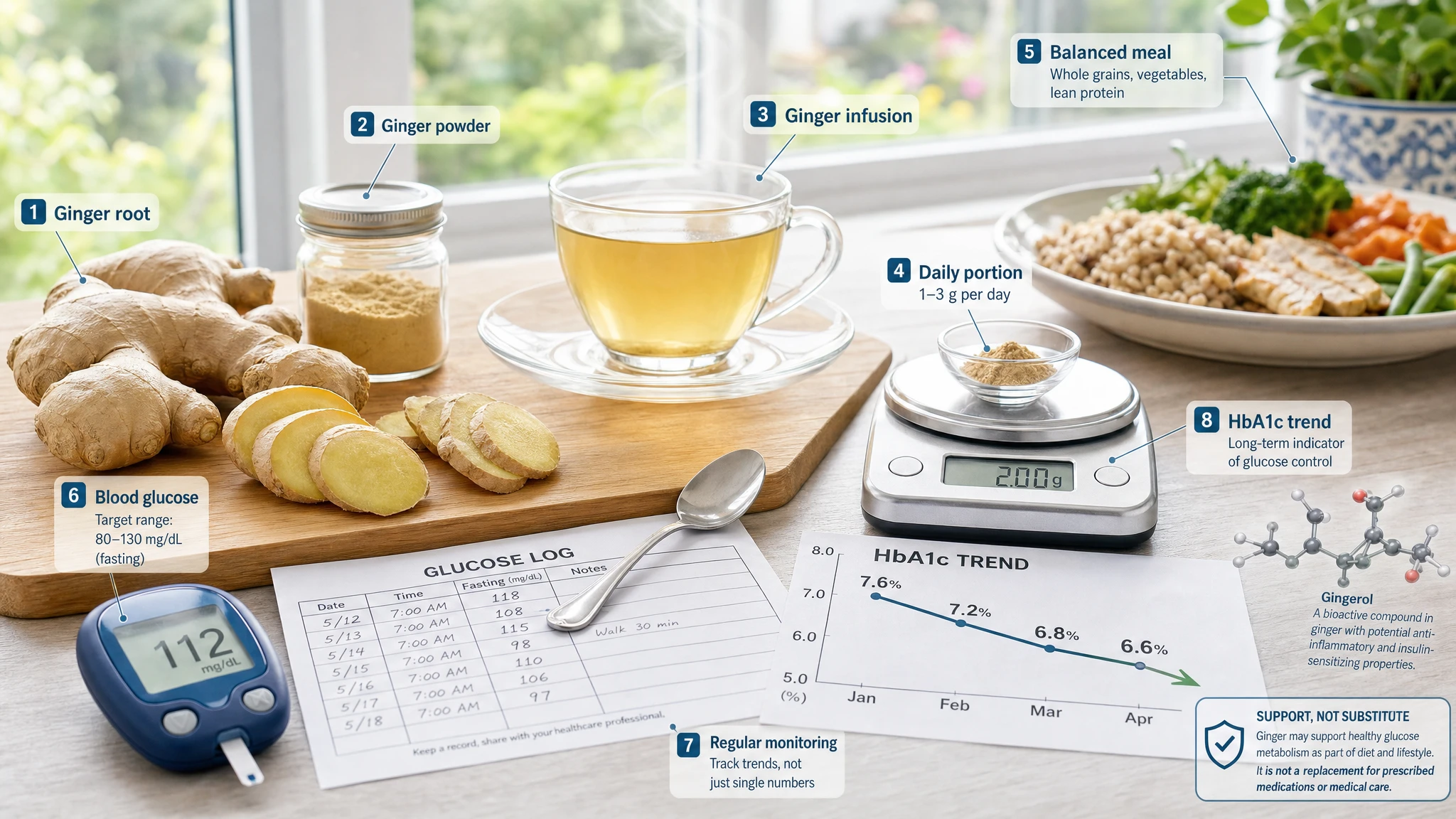
In type 2 diabetes, no single food cures the disease, but some can support the treatment plan. Ginger can play this role, alongside a healthy diet, exercise, and regular check-ups. It should therefore be considered an aid and not a shortcut for managing the disease. Every choice must take into account your health status, risks, and long-term habits.
The practical takeaway therefore requires caution. Any potential benefit comes from a broader plan, not from a rapid or isolated effect. The next step is to interpret the data without attributing a role to ginger that it does not have.
To understand how to use ginger in practice, it is useful to keep these points in mind:
- Ginger can complement prescribed treatments, but it can never replace them.
- Both regular use and the overall quality of your diet matter.
- The response should be evaluated through glycemia and HbA1c (average blood sugar over the last few months).
- The doses studied do not always match those used in everyday life.
In practice, ginger only makes sense within a coherent and easy-to-follow plan. The following three steps distinguish between nutritional support, careful interpretation of results, and the true limitations of its use.
Ginger as nutritional support in type 2 diabetes
Speaking of nutritional support means using an aid that complements treatment, without ever replacing it. Its daily use must accompany diet, exercise, prescribed medications, and monitoring of values. The goal is not to seek a miraculous effect. Instead, we evaluate whether this root can assist with glycemic control (management of blood sugar). However, this use must not distract from primary treatments.
A randomized, double-blind, placebo-controlled study involved 64 people with T2DM (type 2 diabetes mellitus). Participants received 2 g per day for 8 weeks or a placebo [8]. The study helps to understand whether this use is feasible in practice. The small sample size, however, limits the ability to extend the results to other people. The data indicates a possible supportive role, not an alternative to standard therapy. Daily use therefore remains an addition to care and not an autonomous intervention.
How to interpret positive signals without overestimating ginger
A favorable signal is not immediately solid proof, nor is it equally valid for every person. In clinical practice, it is necessary to distinguish an observed datum from a change that is truly useful for the patient. Therefore, fasting glycemia, HbA1c, and other metabolic markers (values related to the use of sugars and fats) are evaluated. If these values improve, the data is useful, but it must be read in conjunction with the rest of the treatment. It is also important to verify whether the change remains consistent over time and within the individual clinical context.
A meta-analysis that combined several randomized studies found average improvements in HbA1c. Other syntheses have observed favorable variations in glycemia and other metabolic values [6][9][10]. These results point in the same direction, but they do not indicate an autonomous solution. Research is often small-scale and uses different doses, timeframes, and groups of people. Therefore, the data require caution and do not allow for conclusions that are valid for everyone.
Ginger and type 2 diabetes management: limitations and context
In daily care, the main limitation is mistaking a potential aid for a comprehensive strategy. This root may support glucose metabolism (the body's use of sugars), but it plays a secondary role. Diet, exercise, proper use of medications, and regular check-ups remain the central aspects. Even in the face of a potential benefit, the data must always be interpreted within the overall treatment framework.
The available summaries have included studies with doses of 1, 3, or 6 g per day [11]. Other works have used 500 mg three times a day for similar periods [4]. Comparing such different regimens makes it more difficult to interpret the available results together. These differences do not allow for a universal rule to be derived. Furthermore, the positive data alone do not show how long the effect might last. They also do not indicate how many people might benefit from it. Ginger therefore remains a potential support, to be used with moderation and realistic expectations.
Summary of scientific evidence
This summary compares the most relevant studies to understand which effects consistently occur regarding glycemia, HbA1c, and the cells' response to insulin.
| Publication year | Area studied | What the studies indicate |
|---|---|---|
| 2013 | RCT on glycemia, HbA1c, and cellular insulin response | evidence indicates a possible improvement in glycemic control [8] |
| 2014 | RCT on insulin resistance and glycemic indices | studies indicate a reduction in FBS and HbA1c and an improved cellular insulin response [4] |
| 2015 | RCT on glycemic markers in type 2 diabetes | glycemia, HbA1c, and certain values related to oxidative stress improved [3] |
| 2018 | Comprehensive analysis of RCTs on type 2 diabetes | the effects on HbA1c, glycemia, and cellular insulin response appear consistent, but vary across studies [6] |
| 2019 | Comprehensive analysis on glycemic control in type 2 diabetes | results vary and the total effect depends on the individual studies included [5] |
| 2020 | RCT on metabolic levels in type 2 diabetes | evidence indicates potential beneficial effects on glycemia and HbA1c [10] |
| 2021 | Comprehensive analysis on inflammatory parameters in type 2 diabetes | certain inflammation values related to the metabolic profile improved [7] |
| 2024 | Comprehensive analysis on glycemic control in type 2 diabetes | results vary and the overall benefit on FBS and HbA1c was not found to be significant [11] |
Editorial interpretation of the evidence
Conclusions and editorial summary
Final critical note
The most delicate point I identified concerns the gap between interesting biological effects and well-proven practical benefits. The studies I read indicate possible effects on glycemia, HbA1c, and the way cells respond to insulin. However, the evidence remains divided between short studies, small samples, and results that are not always consistent.
Therefore, I am concerned that a single trial or a summary of multiple studies might be given excessive weight. The topic deserves attention, but it does not allow me to draw conclusions that are valid for all people with type 2 diabetes.
References
[1] Type 2 Diabetes
[2] Standards of Care in Diabetes—2024
[3] The effect of ginger ( Zingiber officinale ) on glycemic markers in patients with type 2 diabetes
[4] The effect of ginger powder supplementation on insulin resistance and glycemic indices in patients with type 2 diabetes: A randomized, double-blind, placebo-controlled trial
[5] Dietary ginger as a traditional therapy for blood sugar control in patients with type 2 diabetes mellitus
[6] Effects of Ginger (Zingiber officinale Roscoe) on Type 2 Diabetes Mellitus and Components of the Metabolic Syndrome: A Systematic Review and Meta‐Analysis of Randomized Controlled Trials
[7] The effects of the ginger supplements on inflammatory parameters in type 2 diabetes patients: A systematic review and meta-analysis of randomised controlled trials
[8] Effects of ginger ( Zingiber officinale ) on plasma glucose level, HbA1c and insulin sensitivity in type 2 diabetic patients
[9] The Effects of Ginger on Fasting Blood Sugar, Hemoglobin A1c, and Lipid Profiles in Patients with Type 2 Diabetes
[10] Effectiveness of ginger in reducing metabolic levels in people with diabetes: a randomized clinical trial
[11] The Effects of Ginger ( Zingiber Officinale Roscoe) on Non-Alcoholic Fatty Liver Disease in Patients with Type 2 Diabetes Mellitus: A Randomized Double-Blinded Placebo-Controlled Clinical Trial
Editorial note
Artificial Intelligence was used solely as a tool to support editorial and documentary work. All content, interpretations, bibliographic citations and conclusions have been verified, reviewed and approved by the author, who assumes full scientific responsibility for them.
The manuscript was also subject to independent peer review prior to publication.
To ensure maximum transparency, the article's complete history — including the dates of submission, review, acceptance and publication, as well as information on the peer review process — is available on the dedicated Article History page.