


Eugenol in cloves: why it is the key chemical molecule
Research identifies eugenol as the most characteristic molecule of cloves. It is therefore the primary reference for studying their chemical profile. Tests show a consistent interest in antioxidant effects and certain signals against inflammation.
These data primarily concern experimental models. However, studies on humans remain few and do not allow for definitive practical conclusions. The form of the product also matters, because whole spice, extract, and essential oil provide different exposures. This molecule is therefore useful as a key compound and as a model for interpreting the available evidence.
- Published 13/10/2026
- Updated 15/10/2026
- Reviewed 15/10/2026
- Article history
ABSTRACT : WHAT THE SCIENCE SAYS
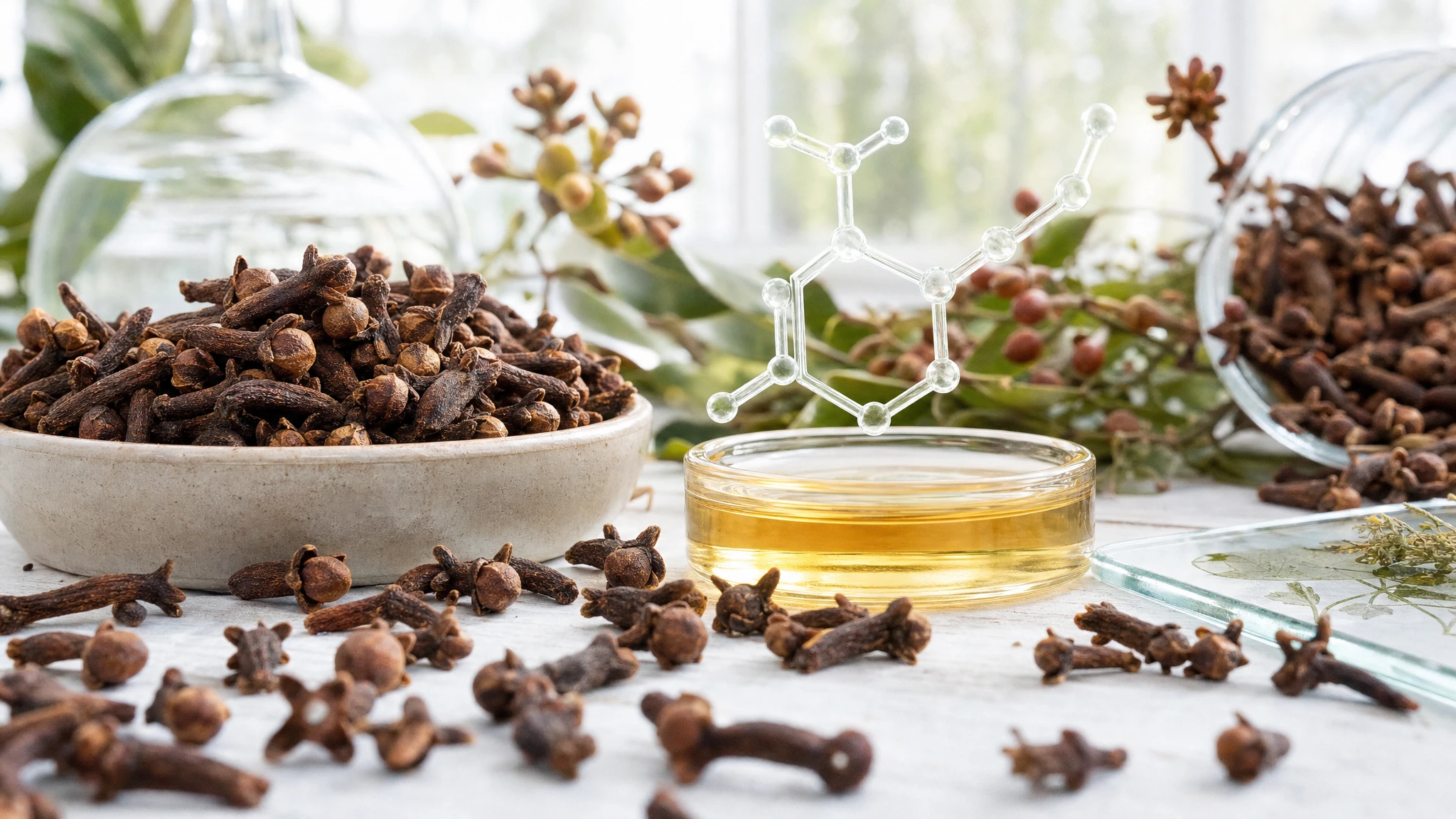
Eugenol gives cloves much of their aroma and their chemical signature. It is a natural molecule and belongs to the phenolic compounds, plant substances that are active in laboratory tests. Because of this role, many studies use eugenol to describe the phytochemical profile, i.e., the substances typical of the plant.
Research also evaluates the volatile fraction, which is the portion of the spice that evaporates easily. It then compares the whole spice with the concentrated products derived from it. Among these products is the essential oil, a mixture rich in the volatile compounds present in the plant.
Understanding this molecule helps to interpret data correctly, without attributing clinical effects to it that have not yet been proven. In this article, we will see why it matters, where it is found, and what role it plays in its various forms. We will also look at the limitations of the evidence that studies have gathered and that we have today. Here, in summary, are the key points that we will explore in the following sections:
- Chemical identity of eugenol and its role in cloves
- Difference between whole spice, extract, and essential oil
- Why the volatile fraction contains more eugenol
- What data indicate regarding biological activity and oxidative stress
- Limitations of the evidence and caution in interpreting it
What is eugenol in cloves and why is it important
Eugenol plays two key roles in cloves. It is central to both the spice's chemistry and its aroma. Furthermore, it helps in understanding its phytochemical profile (the set of compounds present in a plant or food). Knowing about it allows one to distinguish between the aroma and potential biological effects. These always depend on the dose and the type of preparation.
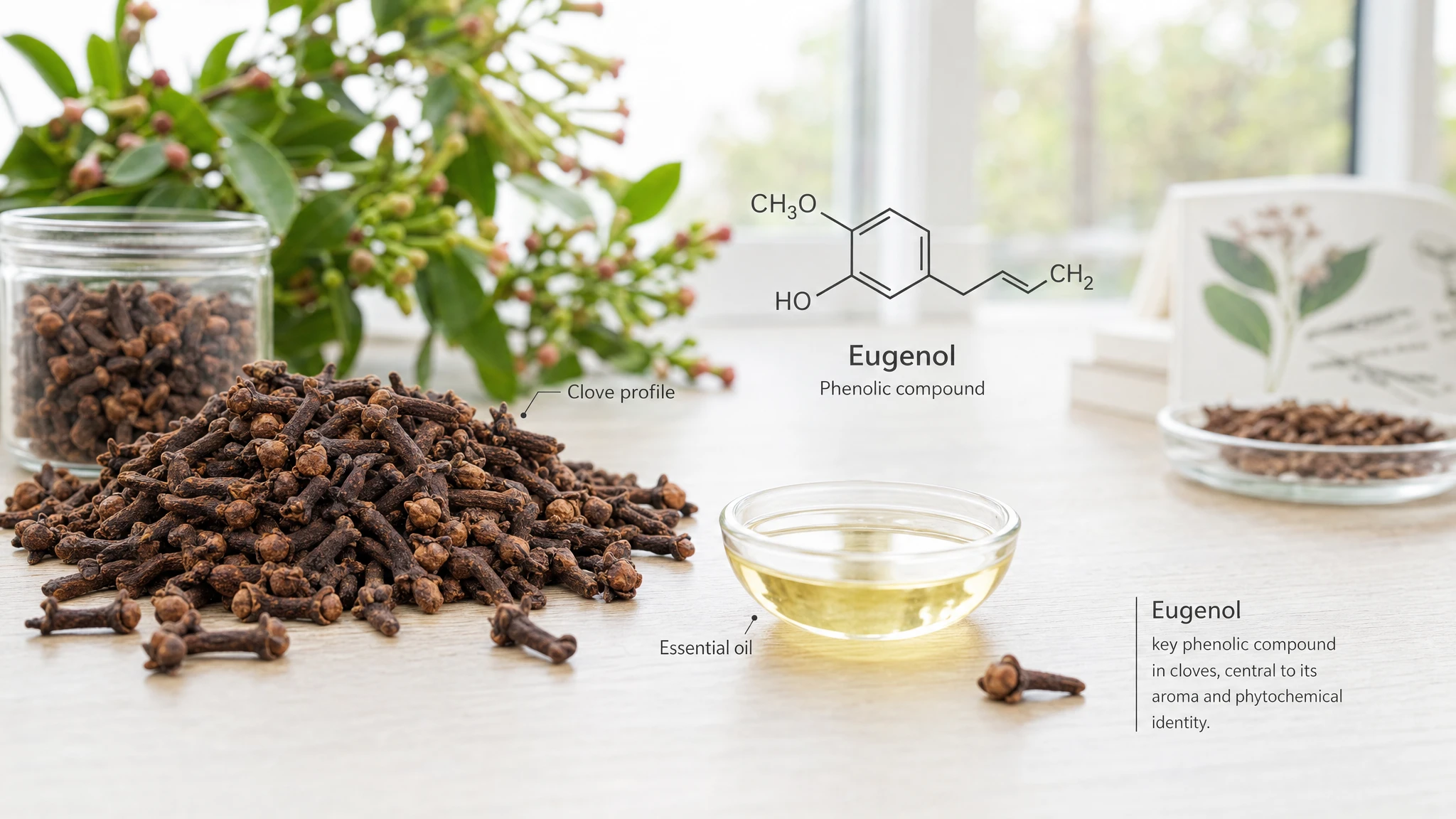
In cloves, eugenol refers to a plant molecule that contributes to their aroma. It is part of the phenolic compounds (molecules with a specific chemical structure). This definition combines three aspects: chemistry, scent, and health interest. A substance can, in fact, provide aroma while also having potential biological effects.
In this context, eugenol alone does not guarantee a health benefit. However, it remains the main aromatic compound in cloves. The spice therefore offers a useful model for studying aroma and chemical composition. This role explains the research interest in eugenol. Studies use it to describe the spice and its phytochemical profile (the set of its compounds).
Studying eugenol therefore helps to understand the phytochemical profile of the spice. Cloves, however, also contain many other compounds. Its strong presence makes it a benchmark for evaluating the spice and its components. Several points help to better understand this role:
- It explains why eugenol dominates the aromatic profile of the spice.
- It helps distinguish the whole spice from its essential oil.
- It shows how the molecule helps interpret scientific data.
- It clarifies the link between aroma, composition, and biological activity.
Before diving into the details, it is necessary to clarify why eugenol is a key molecule. Its chemical family also helps to better understand cloves. The following sections start with the definition and evaluate its weight within the spice. Then, they explain how to interpret the data correctly.
What is eugenol and which family does it belong to
Eugenol is an aromatic molecule, meaning a plant-based substance that contributes to the scent of a food. It belongs to phenolic compounds (molecules with a specific chemical structure). This family helps to understand its role in cloves. The compound provides part of the spice's typical scent. Furthermore, it helps to interpret its phytochemical profile.
Its structure, however, does not by itself prove a clinical effect in humans. First, the role in the plant is studied, then the possible biological effects are evaluated. A World Health Organization guide on aromatic substances considers eugenol in its standards and safety guidelines [1]. A historical review (a review of studies) describes it as a phenolic compound widespread in essential oils. The same source also reports various already known uses [2]. These data explain why it is so widely studied, but they do not prove that it can cure diseases. Furthermore, the food matrix (the combination of parts of a food) can significantly change the results.
Why eugenol is the main constituent of cloves
In cloves, eugenol is the main constituent of the volatile fraction. This is the part that produces the aroma and is released most easily. When analyzing the essential oil, eugenol therefore becomes the primary reference for the phytochemical profile. Its chemical weight helps explain the spice's distinct olfactory identity. For this reason, it is often used as a marker in product analyses.
A synthesis source reports that eugenol accounts for 70% to 90% of clove oil [3]. Another review confirms that it is the major volatile constituent of clove essential oil [4]. The data is solid, but requires caution. It primarily concerns a concentrated preparation, not the spice as a whole food. The result therefore clarifies the chemical weight of the various components. It does not, however, allow for direct conclusions about health to be drawn from composition data alone.
Where eugenol is actually concentrated in the spice
The amount of eugenol varies across different forms of cloves. The molecule is primarily found in the volatile fraction and in clove essential oil. The latter is a highly concentrated aromatic fraction. In the whole spice, other parts of the food reduce the weight of the individual compound. Therefore, a concentrated extract is not equivalent to the spice used in cooking. However, it may contain the same substance.
A small crossover study involved 10 healthy non-smoking men. In this type of study, each participant receives the different treatments. Researchers used 150 mg per day of the compound or a placebo for 7 days [5]. In research on human neutrophils and keratinocytes, the molecule was isolated from the spice [6]. Neutrophils and keratinocytes are cells of the immune system and the skin, respectively. The form used can therefore change what scientists observe. Pure doses and isolated cells aid research, but they do not replicate normal dietary use.
Why eugenol defines the aroma and the interpretation of the spice
Eugenol contributes decisively to the warm, intense, and recognizable aroma of cloves. This aspect is not merely sensory: it helps explain why the molecule has also become a reference point in the scientific literature on the spice. In whole cloves, eugenol binds to other similar molecules. Together, they form the volatile component that the nose perceives first. This volatile component is the same one that scientists measure in laboratories. When a compound dominates the characteristic odor of a food, it becomes easier to link it to its chemical identity. It also becomes easier to use it as a key to interpret the phytochemical profile. For this reason, eugenol often appears in the composition tables of studies. Authors cite it first, precisely because of its aromatic and chemical weight.
The limitation remains fundamental: an intense aroma alone does not equate to a significant biological effect. Two spices can have a similar smell and very different chemistry. Eugenol guides the interpretation of the spice because it combines chemistry and perception into a single data point. The transition to biological activity, however, always requires context, dosage, and type of preparation. Without these elements, aroma alone is not enough to explain a real effect on the body.
How to interpret eugenol in scientific data without oversimplifying
In studies on cloves, eugenol does not always explain the observed effect on its own. Its strong presence suggests an important role in biological activity (effects on cells and tissues). However, the matrix, the type of product, and the study method also matter. The compound is therefore a good chemical marker, but it does not explain every result. It is necessary to distinguish the composition from hypotheses about mechanisms and actual effects in humans.
A review on the antioxidant and anti-inflammatory profile reports studies dedicated to these properties [7]. An ex vivo study (on isolated cells) shows antioxidant and anti-inflammatory effects. Researchers observed them in mononuclear cells from patients [8]. However, this is not a clinical study on nutrition. The experimental data therefore remains distant from daily use. This distance limits what we can conclude about the actual effects on people in everyday life. A correct interpretation acknowledges the possible role of eugenol without going beyond the available evidence.
Recent research and updates
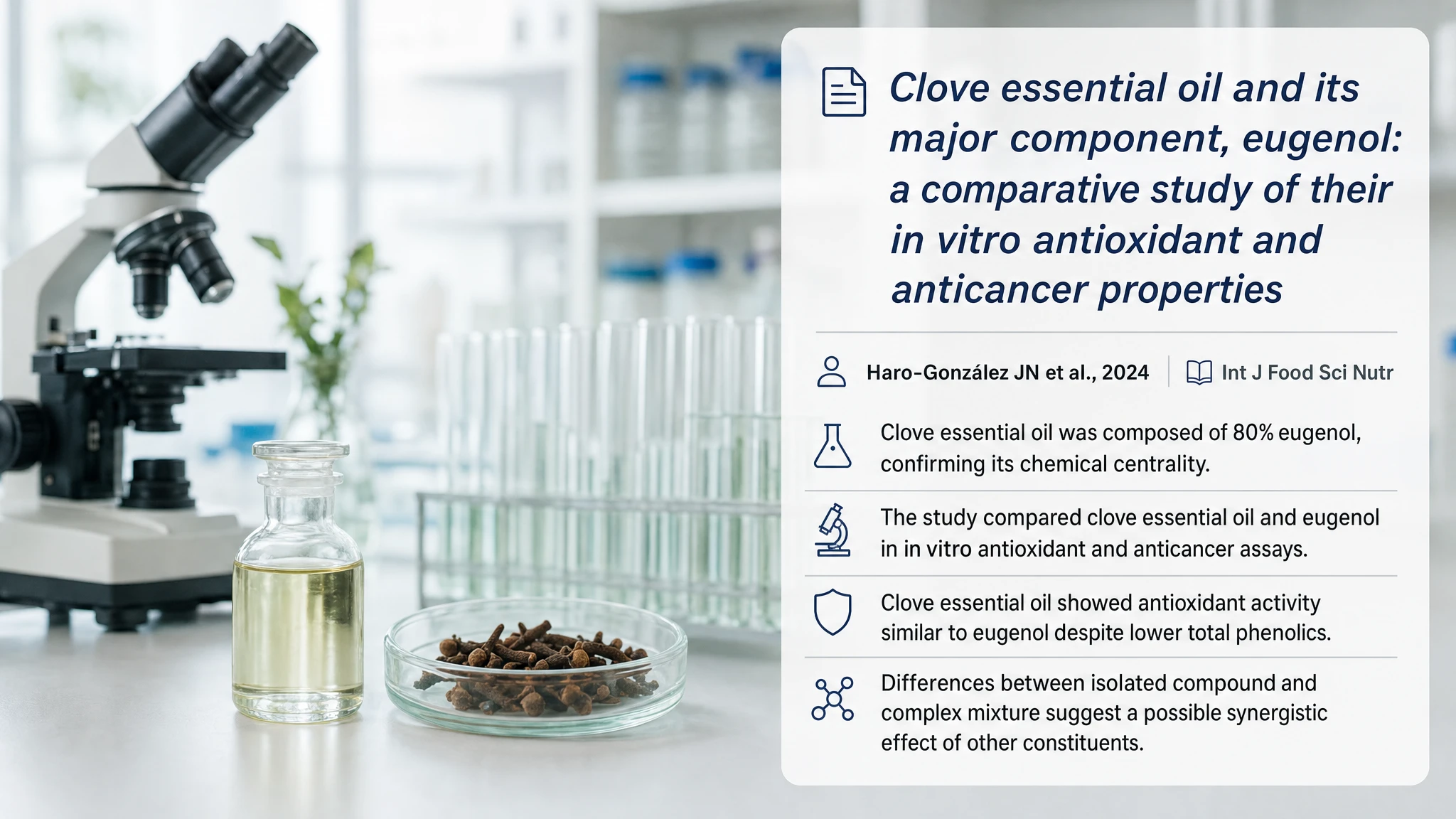
In 2024, José Nabor Haro-González and colleagues published a study in the International Journal of Food Sciences and Nutrition. The authors compared clove essential oil with eugenol, the spice's main aromatic molecule. The work shows that biological effects can change between a concentrated mixture and the isolated compound. The data are derived from laboratory tests and not just theoretical hypotheses.
Clove essential oil and its major component, eugenol: a comparative study of their in vitro antioxidant and anticancer properties
- 80% of the essential oil of cloves was eugenol, confirming its central chemical role.
- The study compared essential oil and eugenol using in vitro tests (outside of an organism) on antioxidant and anticancer activity.
- The essential oil showed antioxidant activity similar to eugenol, despite having fewer total phenolic compounds.
- The differences between the isolated molecule and the mixture indicate that other components of the oil could enhance the biological signal.
Eugenol in the spice and in the essential oil: what really changes
The form of the product matters more than the name of the plant. In cloves, eugenol is found in both the whole spice and the essential oil. The latter, however, contains a much higher concentration. This changes the quantity, the aroma, and the correct way to interpret scientific data.
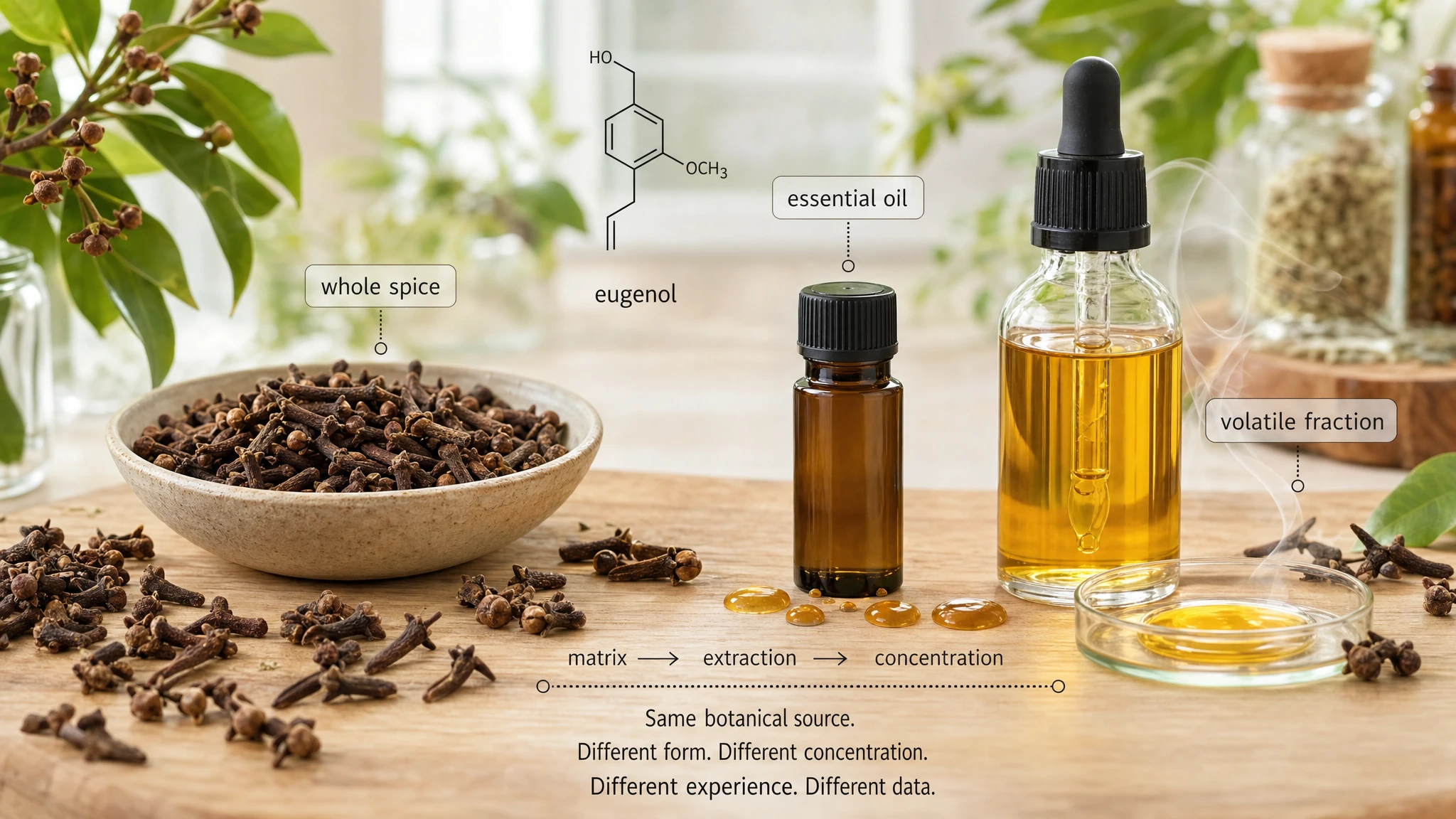
When discussing eugenol, the form used also matters. The whole spice retains fiber and other substances from the plant tissue. A concentrated extract or an essential oil, on the other hand, gathers many aromatic compounds. This changes the phytochemical profile (the collection of plant compounds), the aroma, and the interpretation of the data. Therefore, the same molecule carries different weight in cooking versus in concentrated products.
Discussing the molecule without specifying the product can create confusion. There is a risk of conflating chemical, sensory, and usage-related aspects. Comparing the spice, essential oil, and other concentrates avoids this error. The following sections explain how to interpret these forms without drawing excessive conclusions.
The following sections clarify three aspects: how much active ingredient different forms contain, what the volatile fraction indicates, and why the biological effect may change:
- Essential oil contains much more eugenol compared to the whole spice.
- The volatile fraction provides most of the aroma and is easier to measure.
- Actual exposure changes based on the form used and the dose.
- Biological data must be distinguished from the normal culinary use of the spice.
The forms of use have a different chemical weight and therefore require distinct interpretations. Before discussing bioactivity (action on cells or tissues), it is necessary to distinguish between the whole spice, essential oil, and concentrated preparations.
Difference between whole spice and clove extract
The whole spice and the extract are not the same, even if they derive from the same plant. The former retains fiber and other substances dispersed throughout the plant tissue. The extract, on the other hand, collects a selected portion of phenolic compounds (plant substances with a specific chemical structure). Among these is eugenol. This difference changes the phytochemical profile and the significance of the collected data. A result obtained with a concentrate does not automatically apply to the spice used every day. Therefore, there is no form that is always "better." The chemical and dietary contexts change.
The review by Pramod, Kannissery; Ansari, Shahid H.; Ali, Javed indicates a precise fact. This molecule is the main constituent of clove oil, not of the spice in general [9]. This data explains why many studies use concentrated forms. However, these tests describe a denser and more selective product. They do not directly show what happens when the whole spice is part of a meal. The food matrix and the presence of fiber can modify the release of the molecule during digestion.
Why essential oil concentrates more eugenol than the spice
Clove essential oil is a fraction obtained primarily to collect volatile compounds—those that evaporate most easily and contribute strongly to the aroma. In this form, eugenol becomes much more prominent compared to the whole spice, as the most fragrant and analytically active component is enriched. For this reason, essential oil should not be understood simply as a “stronger” version of the spice: it is a concentrated extract with a different context of use and a different weight of individual constituents.
This data helps explain why the molecule appears so frequently in analyses of essential preparations. The limitation, however, is clear: a higher concentration does not by itself imply a proportional biological effect in the body, because dose, route of exposure, and the overall composition of the preparation also matter. The distillation process that produces the essential oil leaves behind sugars, minerals, and other non-volatile molecules present in the spice.
What the volatile fraction means in cloves
The volatile fraction is the part of the spice made up of compounds that transition most easily into the vapor phase and therefore significantly determine its scent. In cloves, this portion is central because it contains most of the aromatic molecule that characterizes the product's sensory and chemical profile. Speaking of the volatile fraction therefore means describing a precise segment of the plant material, not a generic synonym for potency. It is in this part that eugenol is easier to measure in concentrated preparations and more evident in laboratory analyses.
This helps explain why the volatile fraction is so relevant to the phenolic compound being studied. The interpretative limitation, however, remains the same: the chemical data describes the composition of the oil or extract, not the automatic biological response in humans. The volatile fraction is only one part of the phytocomplex, the set of all molecules present in the plant.
How the biological significance changes between culinary use and concentrated preparations
The biological significance of eugenol changes significantly depending on the form of intake. In culinary use of cloves, the molecule is delivered within a complex matrix and in smaller quantities; in a concentrated preparation, however, it is presented in a much denser form. For this reason, chemical data alone is not enough to describe the effect: the context of exposure also matters. A food and a concentrated extract may contain the same substance, but they do not automatically generate the same level of biological activity.
This is a useful result for understanding the molecule's behavior, but it is not a direct measure of the daily use of the spice. The main limitation is transferability: what happens with a standardized dose does not automatically overlap with a common meal or occasional aromatic use. Bioavailability, i.e., the amount actually absorbed by the body, can vary greatly between a capsule and cooked food.
Why eugenol frequently appears in laboratory studies
Eugenol frequently appears in laboratory studies because it is an aromatic molecule that is easily isolated, making it suitable for observing cellular responses under controlled conditions. This makes it interesting for exploring bioactivity signals, especially when studying antioxidant or anti-inflammatory properties in simple models. The experimental advantage is clear: the compound lends itself well to repeatable tests with a known composition and measurable exposure. Precisely for this reason, however, laboratory results should be read as a first level of evidence, not as a clinical conclusion.
The limitation is fundamental: the observed activity depends on the cell type, dose, and experimental conditions, and therefore does not equate to a universal benefit in the human body.
Why eugenol is so widely studied in cloves
Scientific interest in eugenol does not depend solely on the aroma of cloves. It is the central phenolic compound of the spice and shows biological activity in laboratory tests. Studies are ongoing, but there remain significant limitations in translating these tests to human use.

Interest in eugenol stems from the fact that a single molecule combines chemical identity, intense aroma, and biological activity. It is the primary compound in cloves and also the most studied. It is a phenolic compound, meaning a plant molecule that contains a chemical group known as a phenol. This structure provides clues as to how a phytocompound—a plant-derived substance—interacts with cells.
Research therefore uses it to study the phytochemical profile of the spice. This allows scientists to understand which properties are truly measurable in the laboratory. Studies seek to understand which biological processes it involves and why the theme of oxidative stress recurs. They also evaluate how closely preclinical results might translate to human use.
Before diving into the details, let's look at the three biological axes and the most cited limitation in the literature:
- The biological rationale linking eugenol to cellular processes.
- The reason why oxidation and antioxidant defense are recurring themes.
- The role of the inflammatory response in experimental models.
- The boundary that separates laboratory data from evidence in humans.
Studies examine several central questions. The following sections explain the mechanisms, oxidative stress, inflammation, and the limitations of the evidence.
Which biological processes are involved by eugenol
Eugenol is being studied because, in various experimental models, it is associated with signals related to oxidative stress and inflammatory response. These are two key areas of research on phytochemicals, as they help us understand how a plant-derived molecule can interact with cellular function. The first area concerns the balance between oxidizing substances and cellular defenses. The second concerns the signals that activate or inhibit inflammation in tissues. The interest stems from the biological rationale, not from a promise of clinical effect: observing modulation in a laboratory does not mean demonstrating a benefit in humans. It is a first step, useful but not sufficient on its own.
Researchers use eugenol to map these interactions under controlled conditions. This approach allows for the isolation of cellular mechanisms without the variables of a whole organism. Individual reactions can thus be observed, step by step, with precision. The data is useful because it shows that biological activity depends on the experimental context, the concentration, and the cell type. Results therefore change depending on how the test is set up. For this reason, the topic of biological processes remains central, but it should be read as a map of hypotheses, not as proof of established efficacy.
Why oxidative stress is often cited in studies on eugenol
Oxidative stress is one of the most frequent topics in eugenol literature because many phenolic phytocompounds are evaluated for their potential relationship with cellular defense systems. It involves a delicate balance between substances that damage cells and the mechanisms that protect them. In this context, the interest is mechanistic: researchers study whether and how the molecule influences the balance between reactive species and antioxidant mechanisms. Reactive species are unstable molecules that can damage cellular structures. The important point is not to immediately translate this observation into a therapeutic effect.
Tests measure the ability to neutralize free radicals in test tubes or cell cultures. These are simplified environments, far from the actual complexity of an organism. These experiments provide precise chemical data, but they do not reproduce the complexity of the human body. The molecule is therefore analyzed as a tool to understand bioactivity, not as direct proof of clinical benefit. A laboratory study on the relationship between chemical structure and biological activity describes the antioxidant action of eugenol as a chemically measured property, not as a clinical treatment [10].
Why the inflammatory response often appears in preclinical models
The inflammatory response is also a recurring theme in studies on eugenol, as much research on phytocompounds seeks signs of modulation in cellular pathways involved in maintaining tissue homeostasis. This does not imply that the molecule acts in the same way in every context, nor that it produces a certain clinical outcome. However, the centrality of eugenol in cloves makes it a natural candidate for observing whether there are effects on inflammatory pathways in the laboratory. Preclinical models allow for the isolation of individual steps of the inflammatory cascade. Each step can be observed separately, without the interference typical of a whole organism.
This helps in formulating hypotheses about how the compound might act at the molecular level. The goal is to understand which signals are activated or blocked by the molecule. The picture should therefore be read as a biological hypothesis, not as confirmation of practical use. This type of data is valuable because it indicates that the inflammatory response can be modulated, but also that cellular tolerability matters as much as the desired effect. Indeed, an effect that is too pronounced could prove harmful rather than useful. For this very reason, the literature insists on comparing potential and limitations, rather than a simplified reading of anti-inflammatory effects.
Why laboratory data are not enough to determine the effect in humans
One of the most common mistakes is to assume that results obtained in vitro—that is, in laboratory systems outside the body—or in animals are automatically transferable to humans. In the case of eugenol, this risk is particularly significant because the molecule is studied in highly controlled contexts, using doses and preparations that do not correspond to common dietary use. Laboratory data are useful for building hypotheses, not for drawing final conclusions. The concentrations used in the laboratory are often much higher than those achievable through diet.
Furthermore, absorption and metabolism in the body modify the molecule before it reaches the tissues. The body transforms the substances it consumes, and this often changes their actual effect. For this reason, the transition from cell to person always requires methodological caution. The model using rats made diabetic with STZ shows a metabolic rationale, but it remains an animal model, not proof of human use [11]. Animals, however useful, do not always replicate human physiology. In other words, the results help to understand the possible mechanism, but they are not enough to establish a reliable practical effect. It is precisely this distance between the laboratory and the organism that makes the topic so widely studied and, at the same time, so cautious to interpret.
What the overall evidence says today
Taken together, the available evidence describes eugenol as a well-characterized molecule, with consistent experimental interest regarding oxidation, inflammation, and essential oil composition. The strength of this framework lies in the convergence between regulatory sources, reviews, and laboratory studies, but the limitation remains the scarcity of direct human data. This means that the compound is scientifically relevant without yet being translatable into a solid practical conclusion for the general reader.
Systematic reviews confirm this gap between observed potential and missing clinical evidence. Studies on humans are needed to evaluate safety and efficacy under real-world conditions. These studies should clarify correct dosages, timing of action, and possible side effects. Only then will it be possible to understand if laboratory signals hold up in daily practice as well. For this reason, eugenol is currently studied as a concentrated extract of chemical and biological interest, but the correct interpretation remains cautious: great interest, promising data, and conclusions that are still partial.
Summary of scientific evidence
This summary compares the most representative studies from the available literature. It shows their agreement on the chemical role of eugenol and the main biological effects detected in the laboratory.
| Publication year | Area studied | What the studies indicate |
|---|---|---|
| 1996 | Short-term human exposure | results are inconsistent and primarily concern controlled, short-term exposure [5] |
| 2010 | General pharmacological profile | studies indicate broad interest in the biological activities of eugenol [9] |
| 2012 | Essential oil composition | evidence indicates that eugenol is the dominant volatile compound in cloves [2] |
| 2014 | Animal diabetes model | data indicate a possible effect on glucose utilization in animal models [11] |
| 2018 | Anti-inflammatory and antioxidant profile | studies indicate consistent effects against inflammation and oxidative stress in experimental models [7] |
| 2018 | Human cells and biological tolerability | antioxidant and anti-inflammatory effects have emerged in human cells, but with limitations regarding translation to humans [6] |
Editorial interpretation of the evidence
Overall, the studies I have reviewed show a fairly consistent picture. Eugenol is a key molecule in cloves and is highly present in the essential oil. I have also frequently encountered it in research regarding antioxidant effects and inflammation.
The data primarily come from reviews, cell tests, and a few preliminary human studies. The chemical description is therefore solid. However, the stable effects in the human body are less certain. These effects can vary depending on the product used and the type of test.
The main limitations I encountered are the many non-clinical studies, the often small sample sizes, and the highly varied products. In several cases, the results concern the isolated molecule or the essential oil, not the whole spice.
The studies therefore describe the chemical profile and the potential biological mechanism well. However, they do not allow me to directly apply laboratory results to daily use.
Conclusions and editorial summary
Eugenol is the central point for understanding the aroma, composition, and biological interest of cloves. The studies I have collected here confirm its high presence in the essential oil and show fairly consistent activity in tests. These activities primarily concern oxidation and inflammation.
However, it is necessary to distinguish between the isolated molecule, the complex mixture, and the whole spice, because the meaning of the data changes. This distinction also helps in evaluating the relationship between food and metabolism. An effect measured in the laboratory, in fact, does not always count in daily use.
The compound remains useful for studying phytocompounds, plant substances that can act on biological processes. It helps to understand how a molecule can define the profile of a food or an extract. Cloves are therefore a good example for rigorously evaluating research on plant substances.
Final critical note
The available data clearly describe the chemical identity of eugenol and several biological effects that have been observed repeatedly. However, the evidence is less robust when it comes to linking these effects to consistent outcomes in humans. Even when the data are in agreement, it remains difficult for me to translate them into real-life applications.
The dosages, tests, and forms used in studies do not align with normal dietary consumption. Furthermore, many studies examine the isolated molecule or the essential oil, but rarely study the whole spice. Therefore, caution is needed when moving from chemical data to its general biological value.
References
[1] Safety evaluation of certain food additives and contaminants
[2] Eugenol—From the Remote Maluku Islands to the International Market Place: A Review of a Remarkable and Versatile Molecule
[3] Eugenol (Clove Oil)
[4] Pharmacological Properties and Health Benefits of Eugenol: A Comprehensive Review
[6] Eugenol as a Promising Molecule for the Treatment of Dermatitis: Antioxidant and Anti‐inflammatory Activities and Its Nanoformulation
[7] An Overview on the Anti‐inflammatory Potential and Antioxidant Profile of Eugenol
[8] Anti-oxidant and anti-inflammatory effects of cinnamaldehyde and eugenol on mononuclear cells of rheumatoid arthritis patients
Editorial note
Artificial Intelligence was used solely as a tool to support editorial and documentary work. All content, interpretations, bibliographic citations and conclusions have been verified, reviewed and approved by the author, who assumes full scientific responsibility for them.
The manuscript was also subject to independent peer review prior to publication.
To ensure maximum transparency, the article's complete history — including the dates of submission, review, acceptance and publication, as well as information on the peer review process — is available on the dedicated Article History page.