


Cinnamaldehyde, polyphenols, and eugenol: what makes cinnamon active and its chemical profile
Research describes cinnamaldehyde as the most recognizable compound in cinnamon, but not the only important one. Polyphenols and eugenol form a complex chemical profile that changes according to species, extract, and processing method. For this reason, science better evaluates the phytocomplex, i.e., the set of cinnamon's constituents. This approach avoids reducing the spice to the study of a single isolated principle.
- Published 13/10/2026
- Updated 15/10/2026
- Reviewed 15/10/2026
- Article history
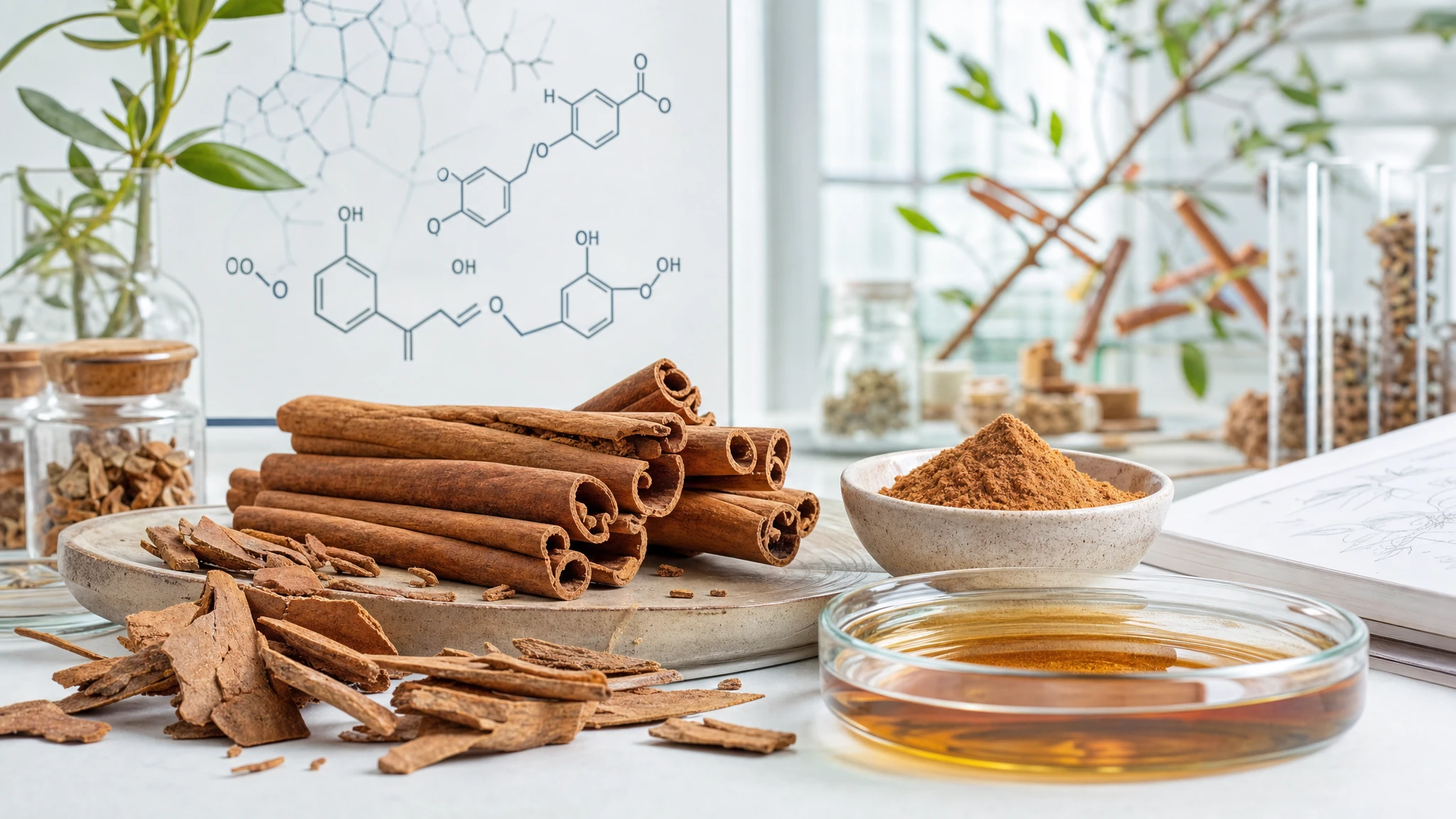
ABSTRACT : WHAT THE SCIENCE SAYS
Cinnamon is known for its strong aroma, but science focuses primarily on its bioactive compounds. These are plant-based molecules that can influence the spice's properties and its overall chemical profile. Cinnamaldehyde is the most well-known; the picture also includes polyphenols (a broad family of plant molecules) and eugenol. Understanding this ensemble helps avoid attributing every property of cinnamon to a single substance.
The spice's profile actually depends on the phytocomplex (the set of its compounds) and the interactions between them. This article explains which molecules matter most and why they vary between different products. It also explains the differences between the whole spice and its extract. In summary, these are the key points we will cover:
- Cinnamaldehyde defines much of cinnamon's typical aromatic profile.
- Polyphenols make the spice's overall chemical profile richer and more complex.
- Eugenol contributes, along with other substances, to the profile of plant compounds.
- The phytocomplex helps explain the properties that derive from the combination of compounds.
- Extract and powder have different compositions and cannot be considered equivalent products.
Which molecules define the biological profile of cinnamon
The biological profile of cinnamon stems from multiple bioactive compounds, not just a single molecule. Cinnamaldehyde is the most well-known compound. Polyphenols, eugenol, and other phenols, meanwhile, complete its aroma and chemical identity. The phytocomplex (the set of compounds in the plant) explains why science studies the spice as a whole.
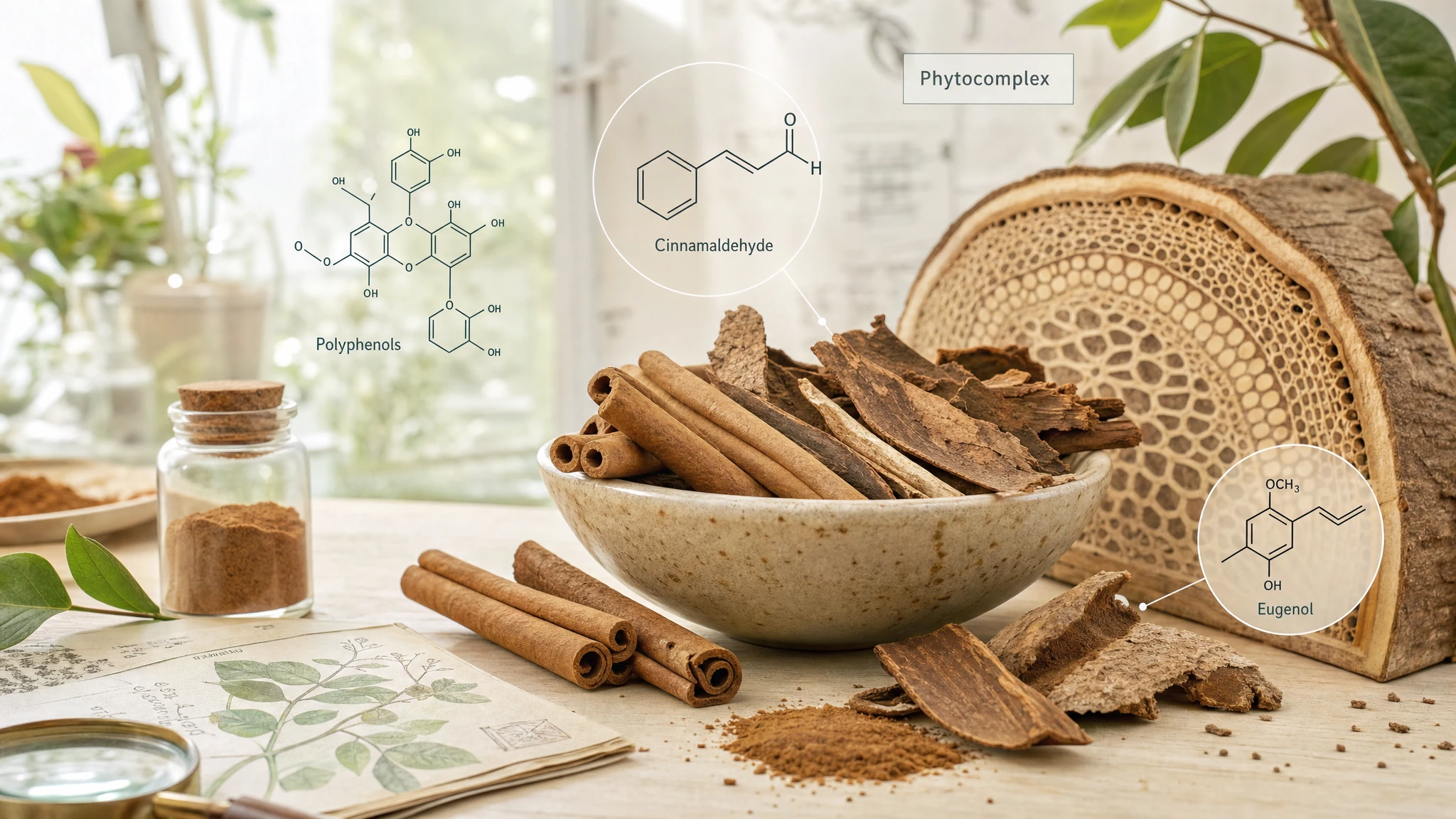
The profile of cinnamon stems from various molecules, which together form its aroma and chemical identity. Cinnamaldehyde is the most well-known compound, but it is not the only one that plays a role. Polyphenols, eugenol, and other phenols enrich the plant matrix. Bioactive compounds (substances that act within biological systems) therefore create a complex mixture. For this reason, the spice cannot be reduced to a single active ingredient.
To understand this framework, it is useful to start with the three most studied chemical groups. Then, one can also evaluate the compounds present in smaller amounts:
- Cinnamaldehyde gives the spice its most typical aromatic note.
- Polyphenols expand the phytocomplex with different types of molecules.
- Eugenol adds a well-defined aromatic and biological note.
- Other phenols complete the spice's chemical profile.
Let us now look at the compounds most often cited in studies on cinnamon. Each section describes a chemical group and its role in the spice's profile.
Cinnamaldehyde: why it is the most recognizable compound in cinnamon
Cinnamaldehyde is the molecule that makes cinnamon instantly recognizable, especially due to its intense aroma. It is often used as a benchmark to describe the spice. In fact, it helps link the perceived sensation to its chemical composition and identity. A Harvard educational fact sheet associates cinnamon with cinnamaldehyde and eugenol. These compounds are identified as being responsible for its typical aroma. This does not mean that cinnamon is synonymous with a single substance. However, cinnamaldehyde is its clearest signal. It also plays a useful role in research, as it helps distinguish between Cinnamomum preparations.
A review on the properties of eugenol, however, suggests evaluating aromatic compounds within the plant matrix. They should not, therefore, be interpreted as isolated elements [2]. The main limitation concerns the differences between products and concentrations. These variations require caution when drawing conclusions from a single molecule. Cinnamaldehyde therefore remains central, but it belongs to a broader whole. On its own, it does not explain the entire spice.
Cinnamon polyphenols: what they add to the phytocomplex
Polyphenols are a vast family of substances found in many plant-based foods. Their chemical structures contain one or more phenolic groups. In cinnamon, these molecules expand the profile beyond just cinnamaldehyde. They are part of the phytocomplex (the set of compounds in the plant), where each substance can have a different weight. They therefore help describe the spice as an active mixture, rather than a single ingredient.
An in vitro study (conducted in a laboratory) examined mixtures of essential oils with cinnamaldehyde and eugenol. The researchers tested the mixtures against Candida spp. (various Candida species) [3]. The research highlights the interest in the combined action of multiple components. However, it does not measure the effect in humans. Furthermore, in real products, the quantities and types of phenols change depending on the species, processing, and extraction. The term therefore indicates a class of substances, not a fixed value. This variety explains why cinnamon is studied as a set of bioactive compounds.
Eugenol in cinnamon: aromatic and biological function
Eugenol is a phenolic compound known for its aromatic profile, but in cinnamon, it is also of interest due to its role within the overall chemical framework. Its presence helps us understand that the character of the spice does not depend solely on cinnamaldehyde: the final bouquet arises from the coexistence of multiple molecules, each with a different weight. In this sense, eugenol is not a secondary detail, but one of the constituents that provide depth to the cinnamon phytocomplex. Its chemical structure places it among phenylpropanoids, a class of aromatic compounds that plants produce for defense and signaling. In cinnamon, eugenol coexists with cinnamaldehyde and modulates its sensory profile, adding a warm and slightly spicy note that completes the primary aroma.
A 2024 update reaffirms its biological interest, especially in the context of anti-inflammatory and antioxidant actions [4]. The interpretive limit is clear: these data do not automatically translate to the whole food, because they depend on concentrations, the matrix, and methods of use. Eugenol should therefore be viewed as an important piece of the cinnamon profile, not as isolated proof of a specific effect.
Other phenolic compounds in cinnamon: beyond the three most well-known
Cinnamon also contains other phenolic compounds, in addition to cinnamaldehyde, polyphenols, and eugenol. These substances are often present in smaller doses. However, they increase the chemical variety of the spice. They can contribute to the aroma, chemical stability, and biological profile of Cinnamomum extracts. A correct description must therefore also include the lesser-known molecules. One cannot attribute everything to the three most cited names.
A review on eugenol indicates that many actions of aromatic phenols emerge primarily in experimental models [5]. In these studies, researchers control the context and use well-defined doses. In real products, however, the composition changes. Even minor substances can be present in very different quantities. This variability makes it necessary to consider the entire profile, without arbitrarily isolating one substance. For this reason, it is difficult to assign a unique and stable role to each one. Their presence, however, shows why cinnamon should be studied as a mixture. It is not a simple sum of separate active ingredients.
Punctuation of the phytocomplex: when the mixture matters more than the individual name
The phytocomplex includes all the molecules present in a plant-based food and their potential combined effect. This concept avoids attributing the profile of cinnamon to a single substance. The other constituents, in fact, form the chemical context in which each molecule is found and acts. The spice should therefore be viewed as a complex matrix. Within it, multiple bioactive compounds contribute differently to the same identity.
A review of dietary guidelines reminds us that no single food can meet all the body's needs on its own. A clinical trial on cinnamon in early menopause also noted outcomes related to the product. The context of use also influenced the results [7]. Therefore, these outcomes cannot be attributed to a single isolated molecule. However, the mixture alone does not guarantee a health benefit. Rather, it helps to understand why different preparations may yield different results. It is a key to interpretation, not direct proof of cause and effect.
Recent research and updates
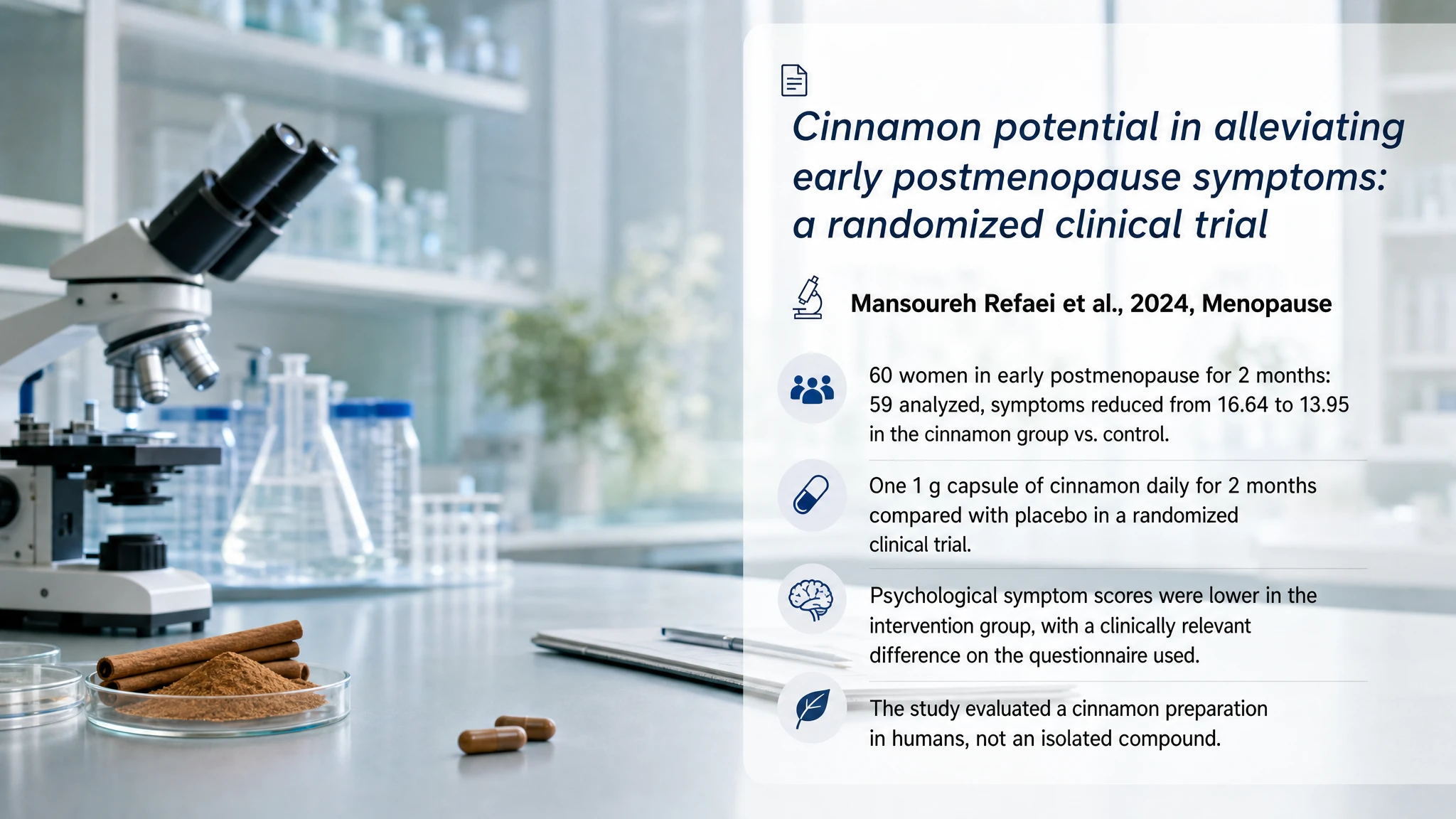
In 2024, Iranian researcher Mansoureh Refaei and colleagues published a study in the journal Menopause. The research evaluated the effects of cinnamon in the early years following menopause, i.e., after the cessation of menstruation. The study links the spice's compounds, such as cinnamaldehyde, to a concrete human case. However, it does not confuse the effects of the whole product with those of an isolated molecule.
Cinnamon potential in alleviating early postmenopause symptoms: a randomized clinical trial
- The study followed 60 early postmenopausal women for 2 months and analyzed data from 59 women. In the cinnamon group, symptom scores dropped from 16.64 to 13.95 compared to the control group.
- A 1 g daily capsule of cinnamon, taken for 2 months, was compared with a placebo. This was a randomized clinical trial, meaning participants were assigned to groups by chance.
- The treated group showed a lower score for psychological symptoms compared to the control group. In the questionnaire used, the difference was clinically significant.
- The study does not evaluate a single isolated compound. Instead, it shows how a cinnamon preparation can be studied in the human body.
Why cinnamon should be interpreted as a matrix and not as a single active ingredient
The properties of cinnamon depend on all its molecules, not just a single chemical marker. In this spice, the synergy between cinnamaldehyde, cinnamon polyphenols, eugenol, and other bioactive cinnamon compounds is what matters. The cinnamon phytocomplex (the set of substances found in the plant) therefore defines the true profile of the food. This approach avoids models that may be useful in the laboratory but are not representative of normal dietary use.
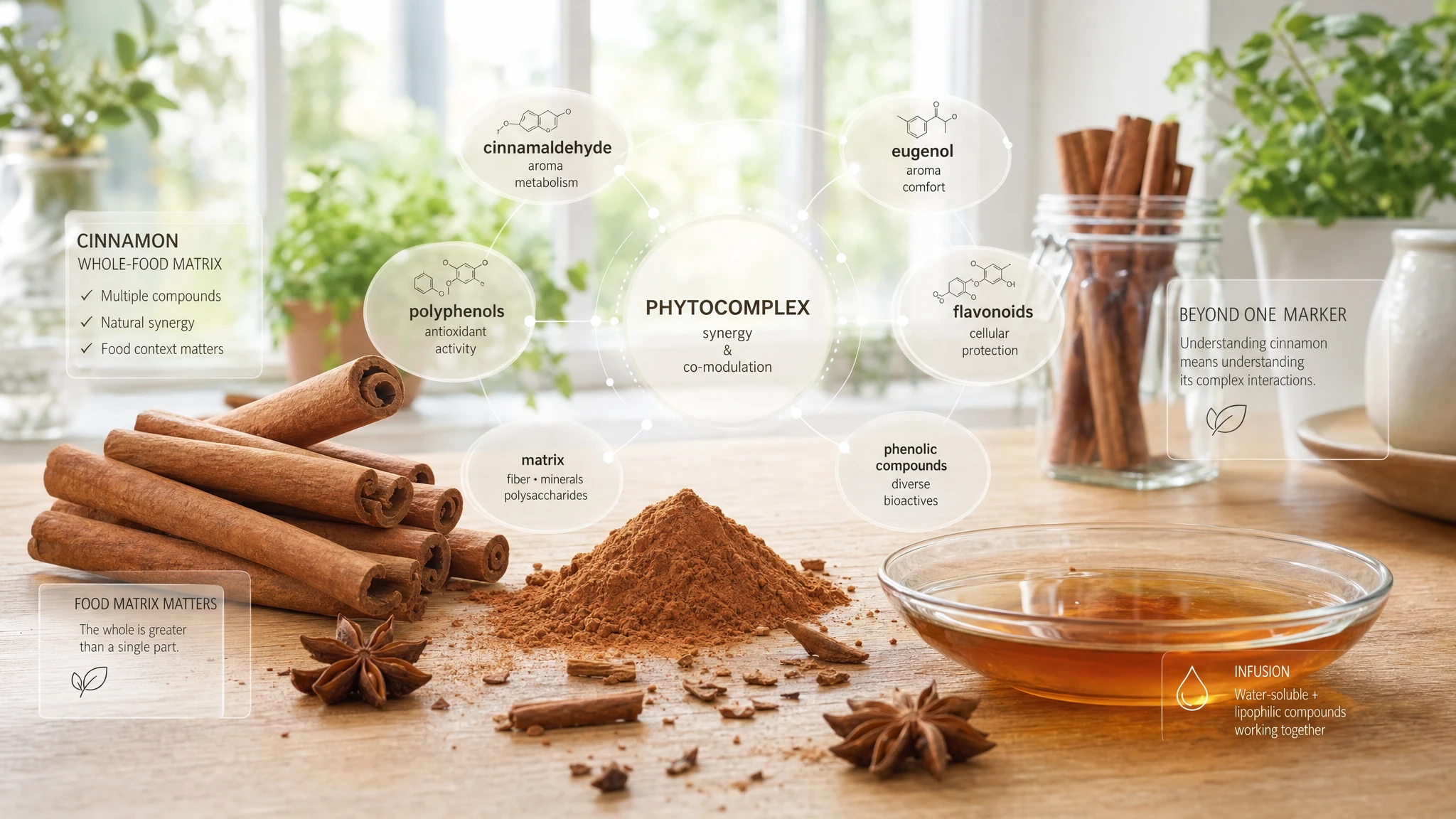
Reducing cinnamon to a single active ingredient does not accurately describe its chemical and nutritional nature. The spice is a food matrix (a structure that binds multiple substances), whose elements can influence one another. Cinnamaldehyde, cinnamon polyphenols, eugenol, cinnamic acid, flavonoids, and other phenolic compounds form a complex profile.
In practice, it is not easy to separate the role played by each molecule. The cinnamon phytocomplex therefore helps to understand the links between chemistry, aroma, and potential biological activity. This method avoids two common errors: attributing every effect to a single molecule or assuming all preparations are the same.
This interpretation does not diminish the scientific value of cinnamon, but rather brings it closer to its real-world use. It is therefore necessary to understand the phytocomplex and evaluate the potential synergy between the molecules. It is also necessary to compare the various forms of the spice with isolated compounds.
To properly interpret the spice, it is necessary to keep a few points in mind:
- The spice matrix guides the general profile of bioactive compounds.
- Potential phytochemical synergy cannot be explained by a single marker.
- The phytocomplex helps distinguish between the food, the extract, and the pure compound.
- The form and processing of the product can change its biological profile.
To understand cinnamon, one must start with the matrix and then evaluate its practical effects. The following sections explain why a single compound is not enough to describe the spice.
Cinnamon phytocomplex: why it matters more than a single compound
The phytocomplex includes all the molecules present in a plant-based food and the context in which they act. In the case of cinnamon, this idea avoids attributing everything to a single substance. It allows for the consideration of the role of other cinnamon bioactive compounds as well. The spice is not a simple sum of separate parts. It is a system in which aroma, composition, and potential biological activity coexist.
This concept helps to interpret data, but it does not prove efficacy on its own. However, it explains why cinnamon is studied as a matrix rather than a simplified ingredient. The phytocomplex alone does not guarantee a precise clinical result. It indicates a connection between substances, not the certainty of an effect. This idea corrects an overly linear interpretation, especially when comparing different preparations. It also helps to interpret experimental results that do not always coincide. Therefore, it is useful in food chemistry and scientific communication. However, it must remain tied to the actual complexity of the spice, without becoming a slogan. The key point is that every compound gains meaning within its own matrix.
Phytochemical synergy in cinnamon: how molecules interact
Phytochemical synergy indicates that multiple substances from the same matrix can contribute together to the final profile. None of them, on their own, expresses the full significance of the food. In cinnamon, cinnamaldehyde, polyphenols, and eugenol are part of a combination that must be evaluated as a whole. Therefore, they do not act as separate and entirely independent blocks. In health communication, however, synergy remains a delicate concept. It does not automatically prove efficacy, but it helps explain the complexity of the phytocomplex. It also allows us to understand why experimental data and sensory perception do not always coincide. The available data indicate possible interactions, but these are difficult to measure in real products.
The main limitation concerns the method used in studies. It is difficult to isolate the effect of a single molecule in a system made up of many substances. These, in fact, can modify each other's behavior. Synergy therefore remains a solid hypothesis for interpretation, not the final proof of a specific benefit. This perspective shows that cinnamon requires an evaluation in its entirety. Even studies on eugenol and trans-cinnamaldehyde show different outcomes depending on the cellular context. The evidence concerns cancer cells and normal fibroblasts (connective tissue cells) [8]. Once this point is clarified, it is necessary to distinguish the whole spice from the extract, because the two forms never fully coincide.
Cinnamon extract and powder: why they are not interchangeable
Extract and powder are not the same, because the dosage and the ratio of elements change. A concentrated form may place more emphasis on certain compounds. Powder, on the other hand, retains a profile closer to that of the common food. The two products are therefore not equivalent, even if they bear the same botanical name. This difference explains why the chemical and nutritional profile does not always correspond to the label's indications. For this reason, the form chosen alters the meaning of the results and prevents overly simple comparisons. Powder, extract, and standardized products (prepared with defined quantities) contain the substances in different ratios.
An extract may concentrate certain markers but lose part of the aroma and the bonds of the whole spice. A comparison therefore only makes sense if it takes into account the starting matrix. Cinnamon can change during processing: it is not a single, unchanging substance. Each preparation must therefore be described by what it retains and what it concentrates most. From this difference arises the comparison with the isolated compound.
Isolated active ingredient and whole spice: what really changes
The isolated active ingredient is useful in pharmacology, that is, in the study of drugs and their effects. However, it is less suitable for a complex spice like cinnamon. In a plant-based food, the food matrix can change the way molecules coexist. Therefore, a single substance does not explain the chemical identity, aroma, and potential biological activity of the product. The pure compound helps to understand a precise mechanism, but it does not reproduce the context of the whole spice.
This compound aids research, but it does not reproduce the normal consumption of the spice. This distinction prevents transferring conclusions obtained by observing only a separate molecule to the spice itself. Outside the matrix, the molecule loses its connection with the other elements and the initial structure. Its value therefore remains analytical, but it does not represent the entire spice. Studies on eugenol and synthetic derivatives clarify the behavior of a specific compound in the laboratory. However, these results do not automatically coincide with the effects of cinnamon consumed in the diet [9]. Caution is therefore needed when moving from analytical data to the interpretation of actual food consumption.
What changes when studying the isolated compound
Studying a pure molecule is useful for understanding part of its behavior, but it is not equivalent to describing the spice it comes from. Cinnamaldehyde or eugenol, taken in isolation, can be observed with greater precision in the laboratory, and this helps to clarify specific mechanisms and activities. However, moving from the pure compound to cinnamon as a food requires caution, because in the natural matrix, the molecule coexists with many other substances. The advantage of isolation is analytical clarity; the cost is the loss of context. The limitation is that these data concern a controlled model, not the spice in the daily diet. Direct observation of the compound allows for a better understanding of its chemical behavior.
For this reason, the isolated compound is useful for measuring a potential, but not for summarizing cinnamon as a whole. Even a review on eugenol emphasizes that many conclusions are derived from experimental systems or medicinal chemistry, therefore from contexts that are important but not equivalent to the food itself [10].
What medicinal chemistry says about isolated eugenol
Medicinal chemistry uses natural compounds as a starting point to determine whether they can be studied or modified in a more targeted manner. In the case of eugenol, this approach clearly illustrates the difference between a pure molecule and a whole spice. The key takeaway is not that cinnamon "does this," but that a single molecule can become the subject of biochemical design. This method helps identify potential activities that must then be verified in more complex contexts.
This confirms the value of isolation as a research tool, not as a substitute for dietary complexity. The interpretive limitation is that synthetic derivatives do not correspond to the spice consumed in the diet. A compound modified in the laboratory may have a different profile than the one found in nature, and its activity should not be automatically attributed to cinnamon. For this reason, focusing on a single active ingredient remains useful but partial. In summary, medicinal chemistry helps us understand the potential of a compound, while the whole spice requires a broader perspective.
How aroma, quality, and scientific interpretation of cinnamon compounds change
The properties of cinnamon do not depend solely on individual compounds. Aroma, storage, and the method used to interpret data also matter. When studying cinnamaldehyde, polyphenols, and eugenol, the quality of the raw material and the extract changes what is measured and compared.

In cinnamon, aroma and quality do not always mean the same thing. Bioactive compounds can be present in different doses and may be preserved to varying degrees. Drying, grinding, and storage times can alter these ratios.
The cinnamon phytocomplex (the sum of the plant's substances) is therefore a dynamic system. Cinnamaldehyde, phenolic compounds, and eugenol contribute differently to the aroma and the final profile.
This distinction avoids inaccurate comparisons between polyphenols, cinnamic acid, and other compounds. Their quantities, in fact, can vary significantly between products.
A Cinnamomum extract should therefore not be evaluated solely based on a single substance. The profile resulting from phytochemical synergy (the combined action of plant compounds) also matters. Measured quality, aroma value, and biological significance do not always coincide. For this reason, they should be read as distinct aspects.
To better interpret studies, it is necessary to distinguish four aspects:
- Aroma depends primarily on volatile compounds, which easily reach the nose.
- Quality varies with stability and the ratio between different molecules.
- Scientific comparison changes when extracts are not equivalent.
- Standardization measures certain markers, but not the entire matrix.
Before diving into the details, it is useful to distinguish three levels: composition, processing, and measurement. Each phase changes the way cinnamon compounds are perceived, analyzed, and evaluated.
The botanical species changes the profile of cinnamon compounds
When looking at the chemical profile of cinnamon, the first point is not the individual compound but the natural variability between samples. The same spice can offer different ratios of aromatic molecules and phenolic compounds, affecting both the scent and the data interpretation. For example, Cinnamomum verum (Ceylon cinnamon) contains less cinnamaldehyde and more eugenol compared to Cinnamomum cassia. This difference changes the aromatic profile and the type of compounds extracted in the laboratory. Data from research conducted on one species cannot be automatically transferred to the other. The initial composition guides the results, but does not rigidly determine them. Even within the same species, the place of cultivation and the harvest period introduce measurable variations.
This is why talking about cinnamon cinnamaldehyde in isolation is only useful to a certain extent: the biological significance depends on the context of the rest of the phytocomplex. The limitation is clear: the species sets the framework, but it does not explain everything on its own, because storage and the supply chain can shift the final proportions.
Processing and grinding: how cinnamon composition is altered
Processing is not a neutral step: drying, crushing, and grinding change aromatic intensity, exposure to air, and the distribution of molecules. This means that the perceived quality can increase or decrease without the starting species changing. In practical terms, finer or more processed cinnamon is not just different to the nose: it can express the bioactive compounds of cinnamon differently, making a comparison with a raw sample less straightforward. Grinding, in particular, breaks down cellular structures and releases essential oils. This process increases the aroma perceived immediately after crushing, but it also accelerates the loss of more volatile compounds. Cinnamaldehyde, for example, oxidizes upon contact with air and transforms into cinnamic acid. A sample that has been ground for some time may therefore have a different chemical profile than one that has just been prepared, even if it comes from the same batch.
This data is useful because it links the transformation of the product to its functional interpretation, but it has a limitation: it describes specific fractions and not the entire range of commercial preparations. Furthermore, a better aroma does not automatically equate to greater biological activity; it often only indicates a different availability of volatile compounds.
Standardization of cinnamon extracts: what it really measures
Standardization serves to make extracts comparable, but it does not provide a complete picture of cinnamon. It typically selects one or more chemical markers and uses them as a quality reference; however, in the cinnamon phytocomplex, the analytical value of a single marker does not capture the behavior of the whole. An extract standardized to 20% cinnamaldehyde, for example, guarantees that concentration but says nothing about the other phenolic compounds present. The latter can vary from batch to batch and influence the overall biological effect. Standardization offers a stable reference point and allows experiments to be replicated. Without this anchor, every study would use different material, and the results would not be comparable. However, the chosen marker is only part of the story. The plant contains hundreds of molecules that interact with each other, and focusing on just one can cause us to lose sight of the phytochemical synergy.
This is why it is important to distinguish what is measured from what is merely assumed. The limitation of standardization is precisely this: it improves comparability, but it narrows the field of observation to a few indicators.
Summary of scientific evidence
This summary reorganizes the previously cited sources and distinguishes the most solid data from descriptive findings. It also shows where evidence on cinnamon still requires caution.
| Publication year | Area studied | What the studies indicate |
|---|---|---|
| 2021 | Eugenol: pharmacological activities | evidence links eugenol to antioxidant, anti-inflammatory, and antimicrobial activities, but these alone do not prove effects in humans [2] |
| 2021 | Eugenol: anticancer potential | results are inconsistent, but indicate a possible biological interest in eugenol in experimental models [10] |
| 2021 | Cinnamaldehyde and eugenol in extracts and oils | studies have detected different activities depending on the species and the extraction method used [5] |
| 2022 | Cinnamaldehyde-eugenol combination | data indicate a possible combined antimicrobial action in vitro (in the laboratory), but do not demonstrate a clinical effect [3] |
| 2023 | Eugenol and anti-inflammatory derivatives | studies indicate that eugenol derivatives deserve attention as chemical and biological models [9] |
| 2024 | Cinnamon in human clinical trial | a 1 g daily cinnamon preparation reduced symptoms in early postmenopause [7] |
Editorial interpretation of the evidence
Conclusions and editorial summary
Final critical note
The literature I have reviewed describes the main compounds of cinnamon well, but is less clear regarding their comparable and consistent effects. The greatest limitation I have encountered stems from the gap between chemical analyses, experimental models, and the consumption of the actual food. Furthermore, different species, extracts, and methods make direct comparison between results more difficult.
The most accurate interpretation I can offer remains cautious: the data primarily clarify the chemical profile. They do not yet prove simple and definitive links between a single compound and the overall properties of the spice.
References
[2] Pharmacological Properties and Health Benefits of Eugenol: A Comprehensive Review
[3] Antifungal Activity of Natural Compounds vs. Candida spp.: A Mixture of Cinnamaldehyde and Eugenol Shows Promising In Vitro Results
[5] Pleiotropic Effects of Eugenol: The Good, the Bad, and the Unknown
[7] Cinnamon potential in alleviating early postmenopause symptoms: a randomized clinical trial
[8] Cytotoxic effects on cancerous and non-cancerous cells of trans-cinnamaldehyde, carvacrol, and eugenol
[9] Novel Derivatives of Eugenol as a New Class of PPARγ Agonists in Treating Inflammation: Design, Synthesis, SAR Analysis and In Vitro Anti-Inflammatory Activity
[10] Anticancer Properties of Eugenol: A Review
Editorial note
Artificial Intelligence was used solely as a tool to support editorial and documentary work. All content, interpretations, bibliographic citations and conclusions have been verified, reviewed and approved by the author, who assumes full scientific responsibility for them.
The manuscript was also subject to independent peer review prior to publication.
To ensure maximum transparency, the article's complete history — including the dates of submission, review, acceptance and publication, as well as information on the peer review process — is available on the dedicated Article History page.