


Amitriptyline at an environmentally relevant concentration alters the metabolite profile beyond monoamines in gilthead seabream - A review of the evidence
In sea bream exposed for seven days to amitriptyline at environmentally relevant concentrations, the study detected metabolic alterations in the brain and liver. These data indicate a possible ecotoxicological effect; they do not demonstrate use in aquaculture nor human dietary consequences. Independent studies confirm effects at low doses, but such relevance requires caution.
- Published 09/11/2026
- Updated 11/11/2026
- Article history
ABSTRACT
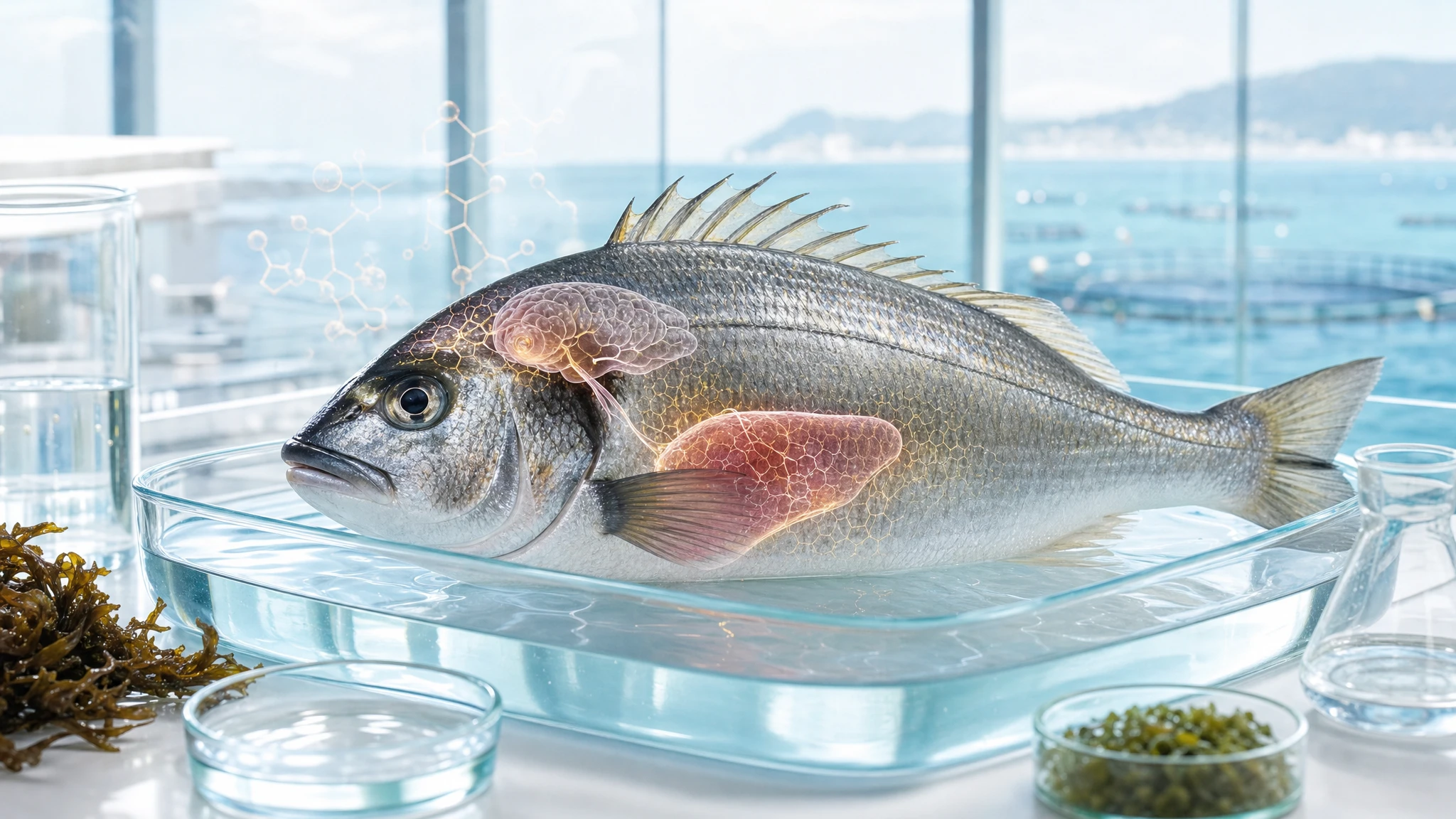
The analyzed study evaluated the effects of seven days of exposure of the gilthead seabream (Sparus aurata) to 0.2 micrograms per liter of amitriptyline. It observed changes in the metabolome—the set of small molecules involved in cellular functions—in the brain and liver. The variations primarily concerned lipid metabolism and certain amino acids, findings consistent with a cellular response to chemical stress. Since only the abstract is available, the number of fish, detailed statistical values, and the direction of individual variations are not reported in the available material.
In the section dedicated to fish in human nutrition in “The Choice to Live in Health or Illness” by Dr. A. Colonnese and R. Panzironi, the publication contributes specifically to the assertion that low environmental concentrations of antidepressants can alter the metabolism of exposed fish. It does not, however, demonstrate that amitriptyline is used in fish farming to increase food intake, nor does it allow for direct inferences regarding nutritional safety for humans. Independent studies document bioaccumulation, modifications of genes involved in serotonergic signaling, and molecular or behavioral changes in fish. Other results, however, show that some effects observable at environmental concentrations may be limited or depend on the model, the dose, and the mixture of contaminants. The confirmation is therefore primarily mechanistic and ecotoxicological.
Analyzed study
Amitriptyline at an Environmentally Relevant Concentration Alters the Profile of Metabolites Beyond Monoamines in Gilt-Head Bream
DOI: 10.1002/etc.4381
PMID: 30702171
The research question was whether a concentration of amitriptyline relevant to the aquatic environment could alter the metabolism of the gilthead sea bream. The hypothesis was that an antidepressant present in the water, even without causing evident acute toxicity, could disrupt biochemical functions in the brain and liver. Amitriptyline is a tricyclic antidepressant: it acts primarily by inhibiting the reuptake of serotonin and norepinephrine in nerve cells. These biological systems are present, with interspecies differences, in fish as well.
The relevance to the section "The Choice to Live in Health or Illness" by Dr. A. Colonnese and R. Panzironi concerns the final segment of the cited sentence: low environmental concentrations of antidepressant drugs can alter the cerebral and hepatic metabolism of fish. The study is not designed to document practices of amitriptyline administration in aquaculture facilities, the presence of the drug in feed, effects on appetite, or consequences for those who consume fish. Instead, it documents a possible biological effect of experimental exposure in a marine species.
Materials and methods of the original study
The study exposed gilthead seabream (Sparus aurata) to 0.2 micrograms per liter of amitriptyline for seven days. This concentration was defined by the authors as environmentally relevant. The exposed animals were compared with control animals not exposed to the drug.
At the end of the exposure, the brain and liver were analyzed using metabolomics, an approach that measures many small molecules present in a tissue to identify changes in metabolic pathways. To distinguish the profiles of the exposed fish from those of the controls, the authors used ANOVA-simultaneous component analysis, a multivariate statistical method that identifies groups of metabolites capable of separating the experimental conditions.
The number of animals, sex, inclusion and exclusion criteria, detailed rearing conditions, randomization procedure, exposure values measured during the experiment, clinical or behavioral endpoints, and detailed statistical values are not reported in the available material, which consists only of the abstract.
Results
The main result was a change in the metabolic profile in both the brain and liver of the exposed sea bream compared to the controls. In simple terms, the drug was associated with variations in the molecules that cells use to manage fats, amino acids, and energy production. The abstract does not report the magnitude of the differences, P values, confidence intervals, or the number of modified metabolites; such data are therefore not reported in the available material.
The authors report alterations in lipid metabolism in the two tissues. This picture was interpreted as being consistent with oxidative stress, a condition in which the production of reactive molecules can exceed cellular defenses. However, the metabolome does not directly measure oxidative damage: the interpretation remains a biologically plausible hypothesis, not a direct demonstration.
In the brain, variations in arginine, asparagine, and methionine were also observed. Arginine can contribute to the production of nitric oxide, a signaling molecule also involved in nerve function. In the liver, molecules related to amino acid metabolism changed, including pantothenate, uric acid, and formyl-isoglutamine/N-formimino-L-glutamate; a perturbation of glutamate was also reported, consistent with an involvement of energy metabolism. The abstract does not specify for each molecule whether the levels increased or decreased.
Interpretation
The most direct implication of the results is that amitriptyline, under the experimental conditions used, was associated with measurable changes in the internal chemistry of the sea bream's brain and liver. The brain is particularly relevant because amitriptyline acts on nerve signaling systems; the liver is relevant because it plays a central role in the transformation of foreign substances and the regulation of metabolism.
The segment documented by the publication subject to the Evidence Review is therefore: aquatic exposure to amitriptyline at 0.2 micrograms per liter → alteration of metabolites in the brain and liver. The study suggests, but does not directly prove, oxidative stress and variations in energy metabolism. It does not demonstrate disease in the fish, a reduction in food intake, an impact on the nutritional composition of the fillet, nor a risk to the human consumer.
An important limitation is access to the abstract only. Without the full text, it is not possible to verify sample sizes, data distribution, corrections for multiple comparisons, individual discriminating metabolites, and their direction. Furthermore, a seven-day experiment in one marine species cannot automatically represent all species, all exposure durations, or the complex conditions of fish farms and natural ecosystems.
Independent confirming evidence
Independent confirmation particularly relevant to the original study's question comes from an experiment on early-life stage zebrafish. After 28 days of chronic exposure, amitriptyline concentrated in the tissues and was transformed into nortriptyline, a metabolite that remains pharmacologically active. At concentrations of 0.03 micrograms per liter and above, the expression of slc6a4a, the gene encoding a serotonin transporter, decreased. In simple terms, even low concentrations produced a biological signal consistent with the drug's nervous system target. This evidence confirms that environmental exposure can reach and modify the biological systems of fish, even if it does not replicate the metabolome of the sea bream's brain and liver [1].
A second study, conducted on zebrafish embryos and larvae, analyzed gene expression after exposure to sublethal concentrations of amitriptyline, fluoxetine, and mianserin. For amitriptyline, 32 genes with expression levels different from the controls were identified after 120 hours. The pathways involved included glycolysis/gluconeogenesis, which are processes that regulate the use of sugars to produce energy, and insulin signaling. This result provides indirect and independent confirmation of the idea that antidepressants present in water can disrupt metabolic and signaling programs in fish [2].
Exposure in a real-world environment added an ecologically relevant element. Male goldfish kept for 21 days along a wastewater discharge gradient accumulated various pharmaceuticals in their plasma, including amitriptyline. Fish closer to the discharge point had higher plasma serotonin levels and were more active, exploratory, and quicker to resume movement after being startled compared to the reference fish. The study confirms that mixtures of drugs at low concentrations can be associated with biological and behavioral changes in fish exposed under realistic environmental conditions [3].
However, this last piece of evidence does not attribute the effect to amitriptyline alone: the fish were exposed to a mixture of contaminants, and the authors emphasize that the causal link for a single compound cannot be isolated. It remains, however, consistent with the section of the book regarding the potential ecotoxicological relevance of drugs present in the aquatic environment.
Conflicting evidence
The study on zebrafish chronically exposed to amitriptyline also offers an important note of caution. Although bioaccumulation and a reduction in serotonin transporter expression were observed at environmentally relevant concentrations, the authors did not detect changes in the physiological and behavioral characteristics measured at concentrations present in the environment. The most evident effects, such as accelerated hatching and reduced locomotor activity, appeared at higher concentrations; the reduced locomotor activity disappeared after 14 days in clean water [1].
Another experiment on juvenile brown trout observed behavioral changes and increased activity of acetylcholinesterase, an enzyme involved in nerve transmission, after exposure to amitriptyline. However, no effects emerged on the markers of oxidative stress evaluated. Furthermore, the nominal concentrations ranged between 1 and 1000 micrograms per liter, and the concentrations actually measured were often lower than the programmed values or below the limit of quantification. This limits direct comparison with the exposure to 0.2 micrograms per liter in the original study [4].
Overall, the studies do not invalidate the metabolic observation in sea bream, but they show that outcomes can depend on species, developmental stage, duration, concentration actually available, chosen endpoint, and the presence of other substances. No directly conflicting evidence sufficiently relevant to the specific metabolomic alteration of the brain and liver in sea bream has been identified; this does not prove the absence of contrary results.
Summary table of evidence
The table distinguishes the original study from independent publications and clarifies the level at which each piece of evidence contributes to the narrative of the book's chapter.
| Reference | Study type | Population or model | Main result | Direction of evidence | Strength of evidence |
|---|---|---|---|---|---|
| Original study | Experimental, metabolomics | Gilthead seabream (Sparus aurata), seven days at 0.2 micrograms/L | Alterations in the metabolic profile in the brain and liver; quantitative details not available in the abstract | biologically consistent evidence | moderate |
| [1] | Experimental, chronic exposure | Zebrafish in early life stage, 28 days | Bioaccumulation and reduction of slc6a4a from 0.03 micrograms/L; absence of many physiological and behavioral effects at the tested environmental concentrations | direct confirmation | moderate |
| [2] | Experimental, transcriptomics | Zebrafish embryos and larvae | Amitriptyline associated with changes in gene expression and energy metabolism pathways | indirect confirmation | moderate |
| [3], [4] | In situ observational and experimental | Goldfish near wastewater discharge; juvenile brown trout in the laboratory | Wastewater mixtures are associated with neurochemical and behavioral changes; no effects on oxidative stress markers emerged in trout | biologically consistent evidence | low |
Confirmation of the evidence
Claim in the book
In the paragraph on fish in human nutrition from “The Choice to Live in Health or Illness” by Dr. A. Colonnese and R. Panzironi, the statement supported by the publication concerns the fact that low environmental concentrations of antidepressant drugs can alter the brain and liver metabolism of fish, with possible ecotoxicological implications. The paragraph also mentions an alleged use of amitriptyline to prevent a reduction in food intake in stressed fish, but this aspect is not documented by the analyzed study.
Amitriptyline in water → absorption/exposure of the fish → molecular and metabolic alterations → possible ecotoxicological effect
The publication subject to the Evidence Review was used in the book to support the following passage: the exposure of fish to an environmentally relevant concentration of amitriptyline can alter metabolism in the brain and liver.
The scientific correspondence is accurate if limited to the metabolic effects of environmental exposure: the original study observes changes in the metabolome of the brain and liver of sea bream after seven days. Independent evidence shows that amitriptyline can bioaccumulate in fish and reduce the expression of a serotonin transporter at low concentrations [1], while embryonic exposure can modify genes linked to energy metabolism and signaling systems [2]. In a real-world environment, a mixture of pharmaceutical products including amitriptyline has been associated with changes in plasma serotonin and the behavior of goldfish [3].
This network of evidence confirms the biological plausibility of the narrative proposed in “The Choice to Live in Health or Illness” by Dr. A. Colonnese and R. Panzironi: neuroactive drugs present in water can produce measurable responses in non-target organisms. However, the data do not allow us to state that every environmental exposure causes clinical or ecological damage, nor that amitriptyline is used in farms for the purpose indicated in the paragraph. The absence of measurable oxidative stress in young trout and the dependence of effects on dose and model reinforce the need for a cautious interpretation [4].
Overall level of confirmation
MECHANISTIC CONFIRMATION
The passage regarding biological alterations induced by exposure to amitriptyline is supported by independent experiments on different fish species. The confirmation primarily concerns bioaccumulation, molecular signaling, and metabolism; evidence of stable ecological consequences or effects relevant to human consumption remains limited.
Conclusions
The study analyzed provides direct, experimental evidence that seven days of exposure to 0.2 micrograms per liter of amitriptyline is associated with changes in the brain and liver metabolome of sea bream. This result is consistent with independent studies showing bioaccumulation, alterations in serotonergic signaling, and changes in gene expression in exposed fish.
The narrative regarding the potential ecotoxicological activity of antidepressants dispersed in water is therefore confirmed, particularly at a mechanistic level. Further studies are needed using real-world exposure measurements, more species, longer timeframes, defined ecological endpoints, and mixtures representative of the environment. The study does not document the use of amitriptyline in aquaculture to modify fish feeding, nor does it allow for conclusions regarding the safety of the fish for human consumption.
Overall assessment
The link between environmental amitriptyline and biological alterations in fish is fairly well supported at a mechanistic level. The consistency with the metabolic passage in the paragraph is good, but the effects vary according to species, dose, and endpoint. The part regarding the use of the drug in fish farming is not demonstrated by the analyzed publication.
References
[1] Exposure Effects of Environmentally Relevant Concentrations of the Tricyclic Antidepressant Amitriptyline in Early Life Stage Zebrafish
[2] Global transcriptomic analysis of zebrafish in response to embryonic exposure to three antidepressants, amitriptyline, fluoxetine and mianserin
[3] Reduced anxiety is associated with the accumulation of six serotonin reuptake inhibitors in wastewater treatment effluent exposed goldfish Carassius auratus
[4] Effects of the Antidepressant Amitriptyline on Juvenile Brown Trout and Their Modulation by Microplastics
Editorial note
Artificial Intelligence was used solely as a tool to support editorial and documentary work. All content, interpretations, bibliographic citations and conclusions have been verified, reviewed and approved by the author, who assumes full scientific responsibility for them.
The manuscript was also subject to independent peer review prior to publication.
To ensure maximum transparency, the article's complete history — including the dates of submission, review, acceptance and publication, as well as information on the peer review process — is available on the dedicated Article History page.