Dott. Armando Colonnese

Nutritional Biologist — Doctor in Human Nutrition Sciences

Dott. Armando Colonnese

Professional profile

Nutritional Biologist and Doctor in Human Nutrition Sciences, registered with the Board of Biologists (OBLA — Order of Biologists of Lazio and Abruzzo, Section A). He combines a solid background in human nutrition and food technologies with several years of experience in scientific information and the promotion of healthy lifestyles.

Areas of expertise

  • Nutritional education and promotion of healthy lifestyles
  • Critical analysis of the scientific literature
  • Application of scientific evidence to nutritional practice
  • Planning and monitoring of nutritional pathways
  • Nutritional support and weight management
  • Scientific literature research

Professional experience

  • Head of the Scientific Information Team — Italian Life Style, Aprilia (LT) (since 2019)
    Management and development of the company's scientific information network, coordination of field information officers, ongoing training on nutrition and dietary protocols, and performance analysis.
  • University internship — «Policlinico» Hospital, Naples (2018–2019)
    Research project on the association between lactose intolerance and inflammatory bowel diseases in clinical remission.

Academic background

  • Master's Degree in Human Nutrition Sciences (107/110)
    University «Federico II» of Naples — Dept. of Molecular Medicine and Biotechnology. Thesis on lactose intolerance and inflammatory bowel diseases.
  • Bachelor's Degree in Food Technologies (87/110)
    University «Federico II», Portici (NA) — Department of Agriculture. Thesis on the use of lipases in the bakery industry.

Qualifications and certifications

Registered with the Board of Biologists — OBLA (Section A, Nutritional Biologist), no. AA_101505 (since 2025).

  • Cambridge English — Level B1 (PET), University Language Centre, Naples (2016)
  • Trinity College London — Grade 8, Level 1 Certificate in ESOL (2009)
  • EIPASS — European Informatics Passport (2013)

Articles

Dietary Fiber: What It Is and Why It's So Important Today

Dietary Fiber: What It Is and Why It's So Important Today

Dott. Armando Colonnese and Roberto Panzironi; Last updated: August 2026

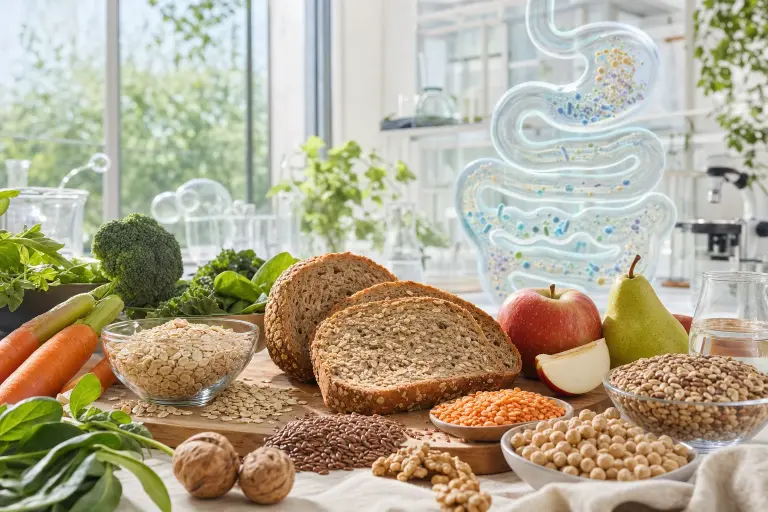
In brief: Research shows that dietary fiber matters a lot for health, but not identically for all people. The strongest evidence links adequate intake to improved bowel regularity, a more stable glycemic response, and a more favorable cardiometabolic profile. The benefit emerges especially when fiber comes from legumes, whole grains, fruits, and vegetables, within an overall balanced and minimally processed diet.

Cinnamon: scientific evidence, mechanisms of action, and applications for human health

Cinnamon: scientific evidence, mechanisms of action, and applications for human health

Dott. Armando Colonnese and Roberto Panzironi; Last updated: August 2026

In brief: Research describes cinnamon as a botanically complex spice, with active compounds that can influence metabolism, glycemia, and certain cellular processes. The strongest evidence concerns its support in metabolic disorders, especially type 2 diabetes and insulin resistance, while other areas remain more exploratory. Safety also depends on the variety, dose, and form of consumption. In summary, the scientific picture is promising but not uniform and requires careful interpretation.

Schisandra: properties, supplementation, treated conditions, and mTOR modulation in metabolism

Schisandra: properties, supplementation, treated conditions, and mTOR modulation in metabolism

Dott. Armando Colonnese and Roberto Panzironi; Last updated: October 2026

In brief: Schisandra chinensis is rich in bioactive lignans and is being studied for its effects on the liver and metabolism. Studies are also evaluating its impact on inflammation and cellular defense. The most robust evidence comes from preclinical studies, while clinical data remain more limited. Furthermore, results often depend on the specific product used. Research therefore indicates a real biological potential, though it is not yet definitive. Caution and precise comparisons between various extracts are necessary.

Ginseng: properties, supplementation, and health benefits

Ginseng: properties, supplementation, and health benefits

Dott. Armando Colonnese and Roberto Panzironi; Last updated: October 2026

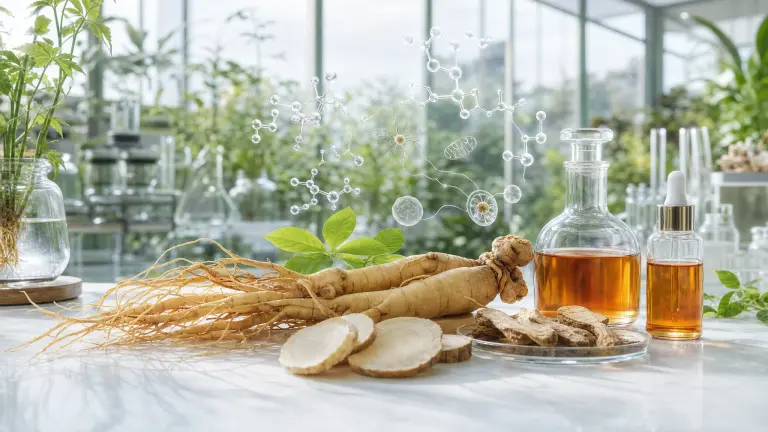
In brief: Research on ginseng offers an interesting, yet inconsistent, picture. Some studies indicate effects on fatigue, sugar metabolism, memory, and stress response. Others find weaker effects or results linked to the type of product used. The quality of the extract, dosage, timing of use, and duration can significantly change the outcome. Safety generally appears good, but still requires careful interpretation of the data. In summary, ginseng is a phytocomplex—that is, a set of active plant substances—that has been widely studied. The evidence makes it more credible as a targeted aid than as a one-size-fits-all solution.

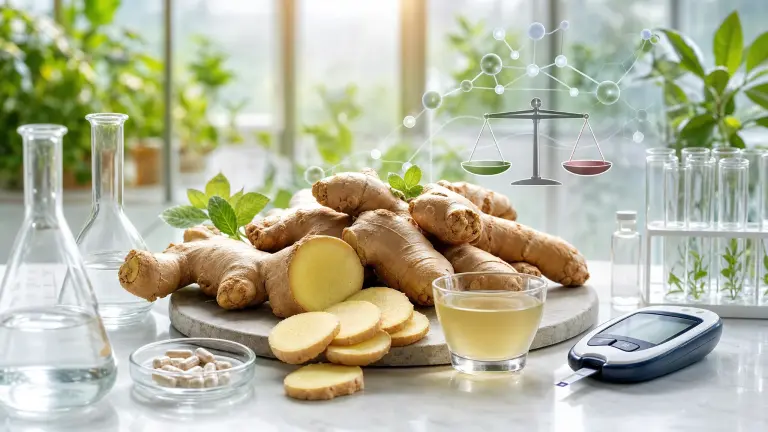
Ginger in fatty liver disease with type 2 diabetes: what a clinical trial shows

Ginger in fatty liver disease with type 2 diabetes: what a clinical trial shows

Dott. Armando Colonnese; Last updated: October 2026

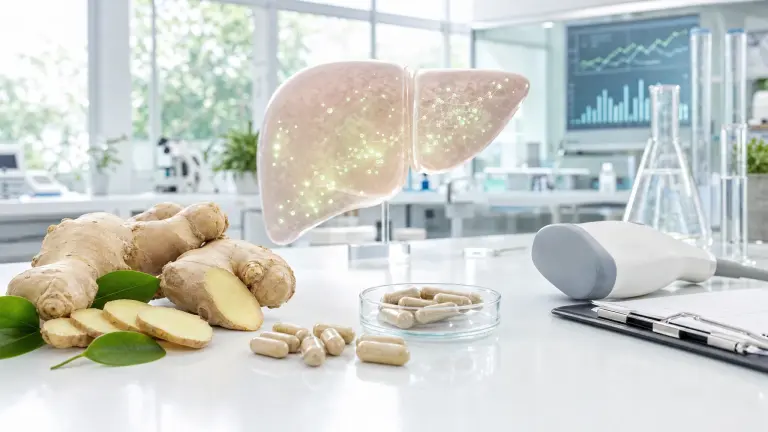
In brief: A clinical study evaluated whether three months of ginger capsules could modify metabolic and liver parameters in people with type 2 diabetes and non-alcoholic fatty liver disease. Some metabolic changes emerged, but there was no documented improvement in the amount of fat in the liver.The authors' summary describes a randomized, double-blind, placebo-controlled study. Randomization assigns participants to groups by chance; the double-blind method prevents both participants and researchers from knowing which treatment is being taken. Seventy-six people with type 2 diabetes and non-alcoholic fatty liver disease—that is, fat accumulation in the liver not attributed to alcohol consumption—received 1,000 mg of ginger twice a day or a placebo for three months. Body circumferences, blood pressure, blood tests, and FibroScan, a non-invasive test that estimates liver fat and stiffness, were measured. In both groups, body mass index, circumferences, and transaminases—enzymes that can increase when the liver is under stress—decreased. In the ginger group, insulin and HOMA-IR, an estimated index of insulin resistance, decreased, and HDL cholesterol increased. Systolic and diastolic blood pressure also improved. However, no significant changes emerged in inflammatory markers or FibroScan indices related to steatosis and controlled attenuation. The work therefore suggests a possible short-term metabolic signal, not proof that ginger reduces liver fat or alters the course of the disease.


Reishi (Ganoderma lucidum): properties, supplementation, treated conditions, and its role in mTOR and AMPK

Reishi (Ganoderma lucidum): properties, supplementation, treated conditions, and its role in mTOR and AMPK

Dott. Armando Colonnese and Roberto Panzironi; Last updated: October 2026

In brief: Research describes Reishi as an interesting medicinal mushroom, though results remain inconsistent. The most promising data concern the immune system, metabolism, and cellular pathways such as mTOR and AMPK. However, direct clinical evidence is more limited. Product quality also matters, as extracts, powders, and spores are not equivalent. In summary, it may play a role as an additional support. It is not, however, a standalone, definitive, or universal solution.

Cordyceps: properties, active compounds, and level of scientific evidence

Cordyceps: properties, active compounds, and level of scientific evidence

Dott. Armando Colonnese and Roberto Panzironi; Last updated: October 2026

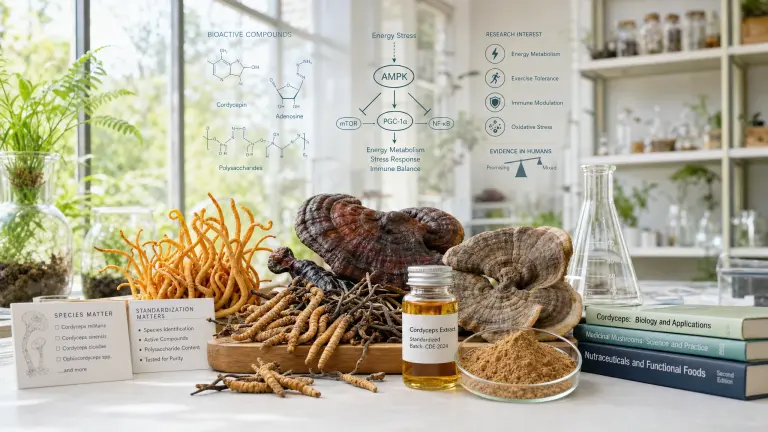
In brief: Research describes cordyceps as a complex fungus. Studies examine compounds such as cordycepin, adenosine, and polysaccharides. Evidence points to genuine interest regarding immune defenses, metabolism, and physical endurance. However, results are not uniform: some clinical studies show promising signs, while others remain neutral. The value of the data therefore depends on the species, extract, dose, and quality of the product used.

Ginger: properties, clinical integration, and role in key metabolic pathways

Ginger: properties, clinical integration, and role in key metabolic pathways

Dott. Armando Colonnese and Roberto Panzironi; Last updated: September 2026

In brief: Research suggests that ginger may offer metabolic support, especially in contexts where glycemia, insulin, and inflammation are already altered. Clinical trials show favorable signals on glycemic control, insulin sensitivity, and some oxidative markers, while experimental studies explain these effects through pathways such as AMPK and mTOR. However, results are not uniform and depend on the dose, form, and population studied.

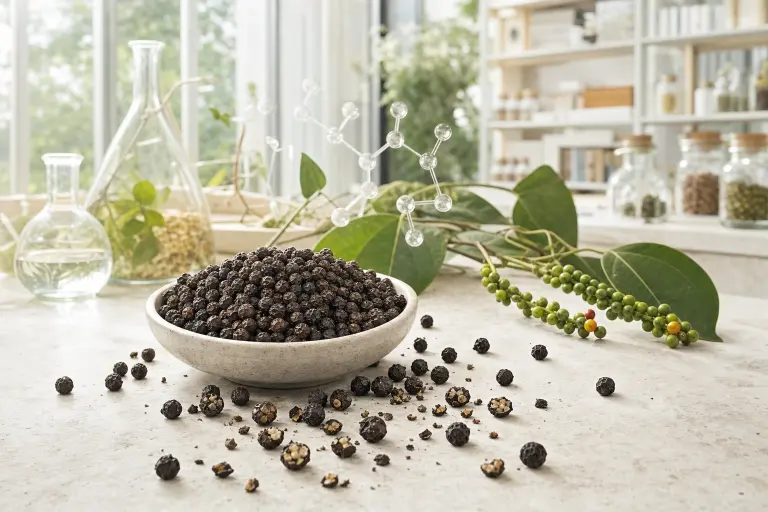
Black pepper and its intrinsic properties

Black pepper and its intrinsic properties

Dott. Armando Colonnese and Roberto Panzironi; Last updated: September 2026

In brief: Research on black pepper shows growing interest in piperine, its most studied bioactive compound. The most convincing evidence concerns its ability to influence the bioavailability of certain substances and to modulate cellular signals related to metabolism, inflammation, and oxidative stress. However, many results remain preclinical or obtained in combination with other compounds, so the clinical significance is not yet precisely defined. Black pepper remains primarily a food spice, while piperine is a research molecule that deserves attention but also interpretive caution.

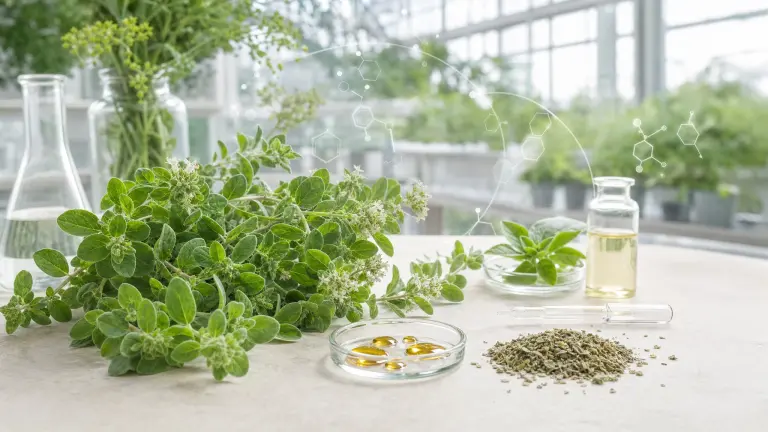
Oregano, much more than a spice

Oregano, much more than a spice

Dott. Armando Colonnese and Roberto Panzironi; Last updated: September 2026

In brief: La ricerca sull’origano mostra un interesse reale, ma ancora non conclusivo. Le evidenze più convincenti riguardano carvacrolo e timolo, composti che spiegano gran parte delle attività antiossidanti, antinfiammatorie e antimicrobiche osservate in laboratorio. Nei modelli sperimentali l’origano è stato studiato anche per metabolismo, insulino-resistenza, mTOR e AMPK, ma i dati clinici nell’uomo restano limitati. La differenza tra spezia, olio essenziale ed estratti concentrati è centrale per interpretare correttamente i risultati.

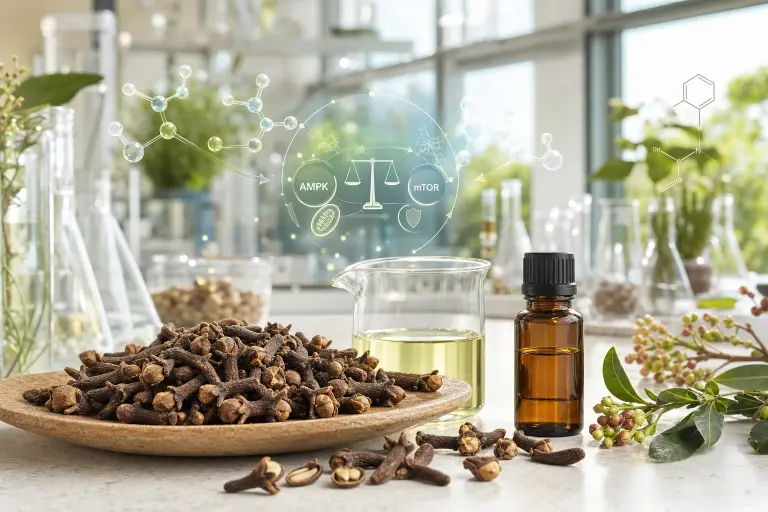
Cloves, Eugenol, and Metabolic Regulation: Properties, Supplementation, and Uses in Chronic Diseases.

Cloves, Eugenol, and Metabolic Regulation: Properties, Supplementation, and Uses in Chronic Diseases.

Dott. Armando Colonnese and Roberto Panzironi; Last updated: September 2026

In brief: Research on cloves suggests a concrete interest in metabolism, inflammation, and oxidative stress. Eugenol and polyphenolic extracts appear to act on glycemia, AMPK, mTOR, autophagy, and peripheral tissues, but the strongest signal comes from experimental models. Human studies are few, small, and still preliminary. For this reason, the spice should be interpreted as a plausible nutritional support, not as an autonomous solution or universal remedy.

Turmeric, Insulin Resistance, and the Metabolic Journey

Turmeric, Insulin Resistance, and the Metabolic Journey

Dott. Armando Colonnese and Roberto Panzironi; Last updated: September 2026

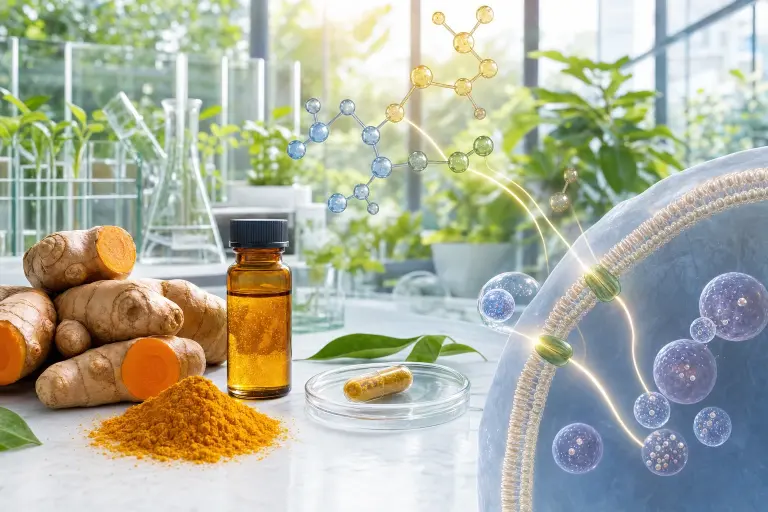
In brief: Research describes curcumin as a molecule of interest for metabolism, especially because it can interact with AMPK, mTOR, and GLUT4, three central nodes in energy management and glucose transport. In human trials and meta-analyses, favorable signals emerge regarding glycemia, insulin resistance, and inflammatory markers, but the effect is not uniform. Bioavailability, dose, and formulation remain decisive for correctly interpreting the results.