


Schisandra: properties, supplementation, treated conditions, and mTOR modulation in metabolism
Schisandra chinensis is rich in bioactive lignans and is being studied for its effects on the liver and metabolism. Studies are also evaluating its impact on inflammation and cellular defense. The most robust evidence comes from preclinical studies, while clinical data remain more limited. Furthermore, results often depend on the specific product used. Research therefore indicates a real biological potential, though it is not yet definitive. Caution and precise comparisons between various extracts are necessary.
- Published 19/10/2026
- Updated 21/10/2026
- Reviewed 21/10/2026
- Article history

ABSTRACT : WHAT THE SCIENCE SAYS
Schisandra chinensis is a plant native to Asia, used for medicinal purposes and currently studied in phytotherapy. Its use is ancient, and medical research is also investigating the plant and its effects. It has a complex phytochemical profile (the set of substances present in the plant), consisting of many types of compounds. Many effects observed in laboratory tests depend on various lignans present in the plant (bioactive plant compounds). These substances are linked to antioxidant and anti-inflammatory effects, as well as effects on metabolism and cellular defense. Schisandra therefore helps us understand how to study a plant without ignoring how it has been used over the centuries.
However, data on the phytocomplex (the set of active molecules) must always be read with caution. Effects can vary depending on the extract, dosage, duration of use, and the individuals involved. Two products sold as Schisandra may therefore contain a different set of substances and yield different results. In this text, we will look at the key compounds, uses, and potential effects on the liver and metabolism. We will also look at the effects on the nervous system and how the body responds to stress. We will examine AMPK (the cell's energy sensor) and mTOR (a pathway that regulates growth, protein synthesis, and autophagy). We must distinguish data from experimental models from those useful in clinical or nutritional practice. In summary, these are the key points we will explore in more depth below:
- Schisandra lignans account for many of the observed biological effects.
- Use requires standardized extracts and a cautious interpretation of results.
- The liver and metabolism are among the most studied areas.
- AMPK and mTOR help explain some cellular mechanisms.
- Safety, limitations, and comparisons with other adaptogens remain central topics.
The properties of Schisandra
The properties of Schisandra chinensis depend primarily on lignans, phenolic compounds studied for their biological effects. Among these, schisandrin B and other active molecules act on oxidative stress (excess of reactive species), the inflammatory response, and cellular adaptation. There is also growing interest in its potential effects on metabolism and the liver.
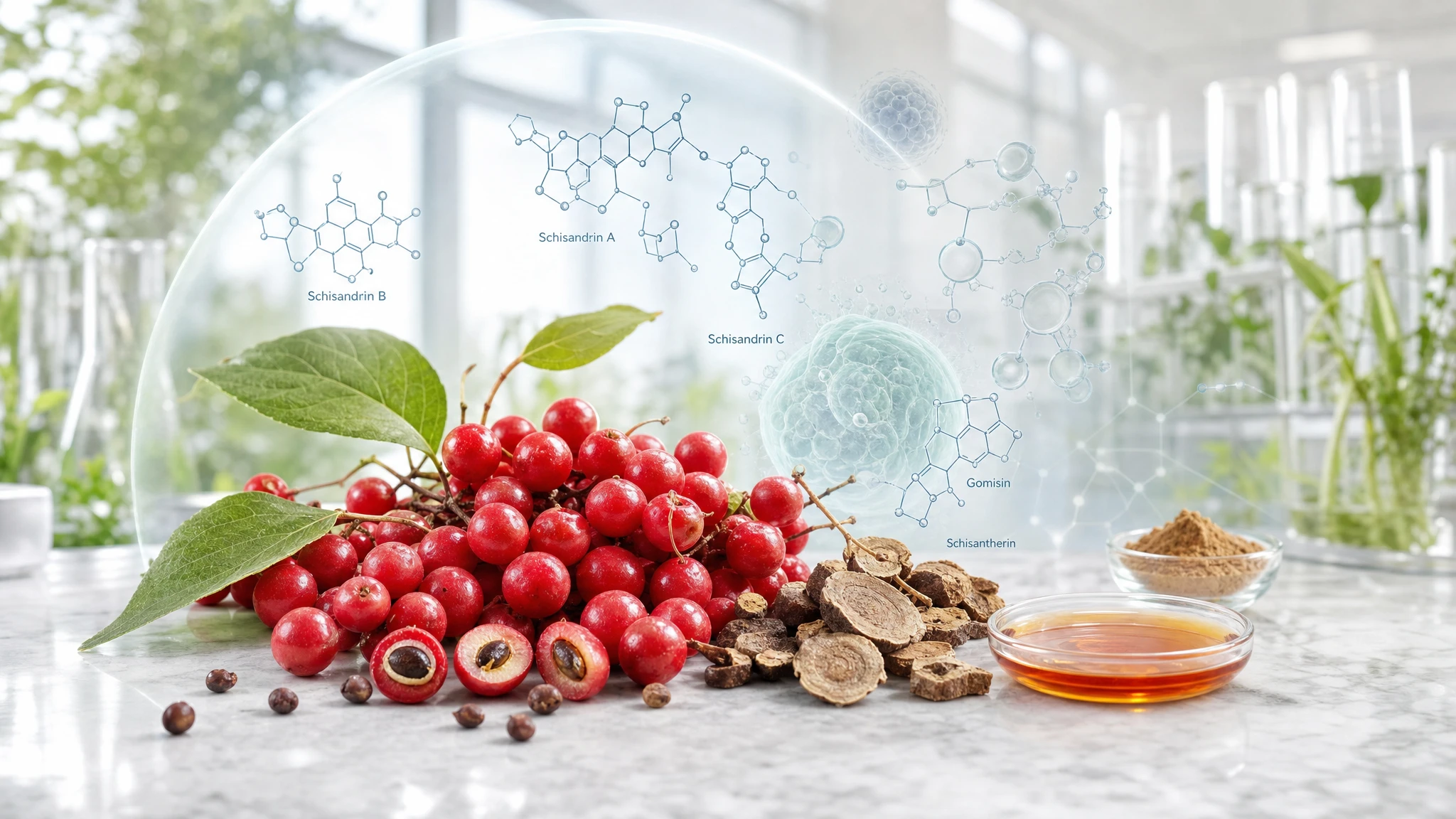
The properties of Schisandra chinensis primarily derive from lignans, a family of phenolic compounds active in experimental models [1,2]. However, the plant does not act as a single molecule: it is a phytocomplex (a group of substances that interact with one another). The most studied compounds are schisandrin A, schisandrin B, schisandrin C, deoxyschisandrin, gomisins, and schisantherins. Flavonoids (active plant compounds), polysaccharides (long chains of sugars), and essential oils may also contribute to these effects [1,2]. The quality of the extract plays a decisive role. The dosage and the ratio between substances change depending on the part used, the preparation, and the extraction method.
The most interesting data, therefore, links the plant's chemical structure to its biological effects. It does not exhibit a single action, but rather a broad profile that changes based on the product. Experimental studies indicate possible effects on cellular defense, energy utilization, and the stress response [3,4]. Discussing the benefits of Schisandra therefore means evaluating multiple properties, not just a single effect. Furthermore, the differences between various preparations remain essential for correctly interpreting the results.
This chemical basis explains why the plant is studied in various fields. These include the liver and the cellular response to stress. Key points emerging from research include:
- the quantity of lignans varies, which changes the biological activity of the extract;
- schisandrin B is widely studied in laboratory tests and animal models;
- some compounds support antioxidant defenses, which limit cell damage;
- others act on pathways related to inflammation and the stress response;
- the combination of substances makes the extract more complex than any single active ingredient.
This first in-depth analysis examines what makes the plant biologically interesting. The starting point is its active compounds and the cellular processes linked to the observed properties. The topics follow a clear thread, from the chemical profile to the most studied functional effects.
What Schisandra chinensis contains and what the main lignans are
The plant contains many dibenzocyclooctadiene lignans, a class of phenolic compounds with various biological effects. In experimental studies, these substances account for much of the observed activity. The main ones include schisandrin A, schisandrin B, schisandrin C, deoxyschisandrin, gomisins, and schisantherins. Flavonoids, phenolic acids, polysaccharides, and essential oils are also present [1,2]. This mixture forms a phytocomplex, not just a single isolated active ingredient.
The quantity of lignans can vary significantly depending on the part used and the extraction method. The final formulation also plays a role. Therefore, two extracts with the same name may have different activities [1]. Recent reviews also examine minor compounds. These substances contribute to both the biological effects and the differences between products [2]. Many results, therefore, do not depend on a single molecule. Instead, they arise from a network of actions on various cellular targets. The practical point is simple: it is not a single ingredient with a consistent effect. It is a complex plant source, the quality of which affects the expected result. This complex composition explains why the plant's effects are broad and not attributable to a single substance.
Schisandra and oxidative stress: why it is considered an antioxidant
The plant is widely studied for its effects on oxidative stress. This state occurs when reactive species overwhelm the body's natural defenses. In experimental models, lignans have shown two types of action. They can help neutralize reactive oxygen species and support the antioxidants produced by the body [3] [1]. Studies have found increases in superoxide dismutase, catalase, glutathione peroxidase, and glutathione reductase. These enzymes help cells limit damage. A greater amount of reduced glutathione, a molecule that defends against oxidative stress, has also emerged. At the same time, a marker of lipid peroxidation (oxidative damage to fats) was reduced.
The observed profile therefore indicates support for cellular defenses. Less oxidative damage can better protect membranes, proteins, and DNA. Biologically, the phytocomplex can promote a more orderly response to stress. Reviews describe these effects as among the most consistent findings in experimental studies [3] [2]. We are not, therefore, talking about a vague action against radicals. The data concern precise systems by which the body limits damage. This topic also helps to understand the possible effects on the liver, brain, and metabolism. The transition from oxidative damage to cellular protection is the bridge to its anti-inflammatory potential.
Schisandra and chronic inflammation: which molecular pathways it modulates
The plant is also being studied for its effects on inflammation. This process accompanies many metabolic diseases and certain degenerative conditions. In preclinical models (tests on cells and animals), lignans have acted on various signaling pathways. These include NF-kB, AP-1, IRF3, Nrf2, and other nodes of the stress response [5] [6] [7]. Overall, studies have observed fewer cytokines, which are molecules that carry the inflammatory signal. Other pro-inflammatory mediators and signs of tissue damage also decreased.
These data do not describe a simple "natural anti-inflammatory." Instead, they indicate an action on multiple cellular pathways. In one study, researchers used macrophages (immune cells) stimulated with lipopolysaccharide. The treatment reduced mediators regulated by NF-kB, AP-1, and IRF3. In another test, an aqueous extract of the fruit reduced pro-inflammatory mediators in RAW264.7 cells [5] [7]. The plant can therefore curb the increase in inflammatory signaling. This does not imply an uncontrolled blockade of the immune system. These effects concern tissues exposed to chronic stress, but they depend on the biological context. Regulating inflammation therefore helps in interpreting the overall action in different organs. Understanding these pathways helps to better interpret the chapters where tissue protection becomes clinically relevant.
Recent research and updates
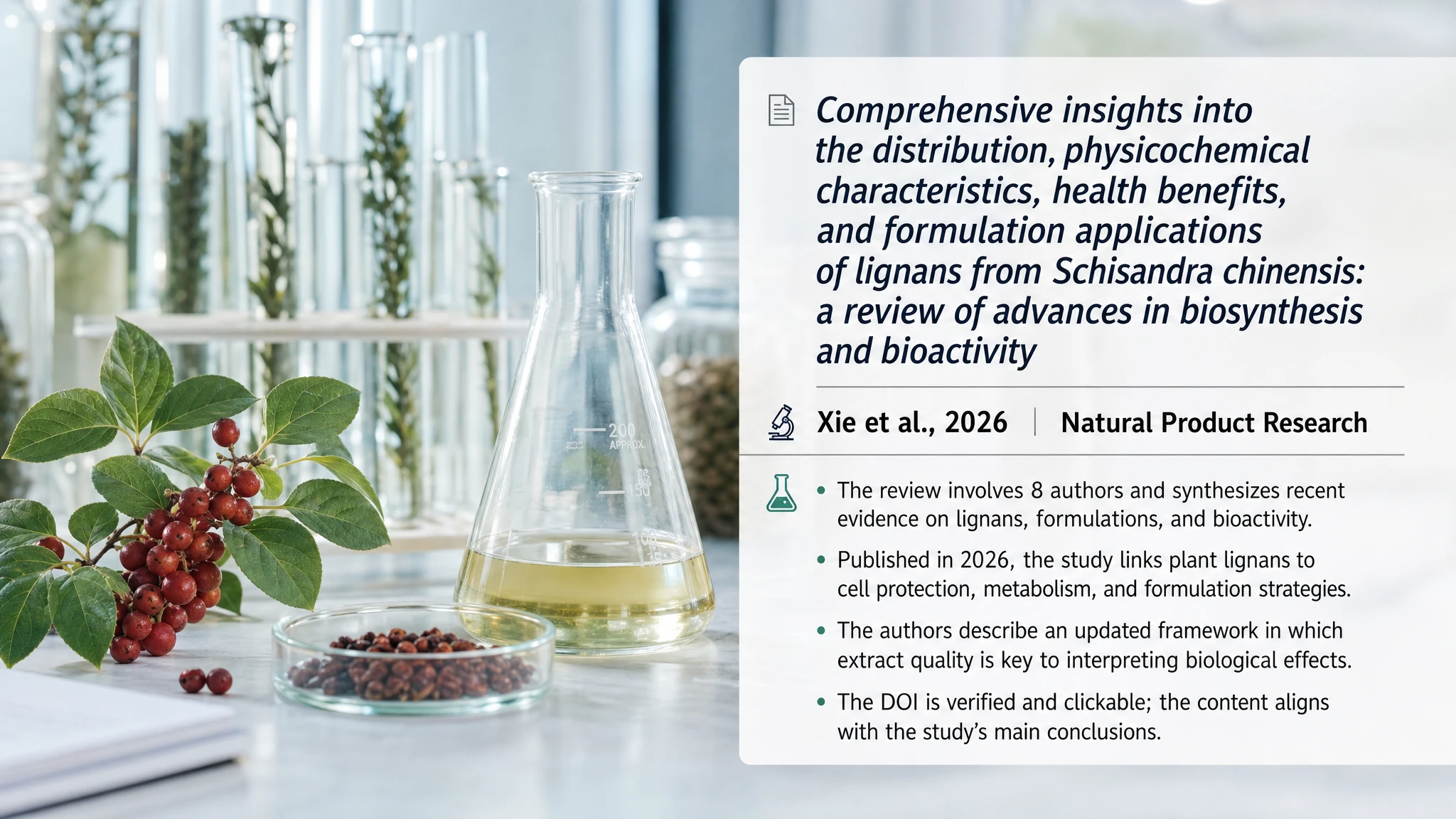
In 2026, Xie and colleagues published a review on Schisandra chinensis in Natural Product Research. The work examines the distribution, physical and chemical properties, biological effects, and use of lignans in formulations. Lignans are the plant's primary active compounds. The review confirms the interest in cellular defense, metabolism, and the standardization of extracts. It also emphasizes the importance of the quality of the product used in studies.
Comprehensive insights into the distribution, physicochemical characteristics, health benefits, and formulation applications of lignans from Schisandra chinensis: a review of advances in biosynthesis and bioactivity
- The review involves 8 authors and summarizes recent data on lignans, formulations, and the biological activity of Schisandra chinensis.
- The work was published in 2026 and links lignans to cellular defense, metabolism, and formulation strategies.
- The authors provide an updated overview, in which the quality of the extract remains decisive for understanding biological effects.
- The study's DOI is verified and clickable; the content is consistent with the main theses of the article.
Schisandra and nutritional supplementation
When using Schisandra chinensis as a supplement, it is not enough to simply ask whether the product works. The form, dosage, and standardization method also matter. The available evidence primarily concerns extracts and blends with adaptogenic activity. However, results vary depending on the formula and the intended purpose of use.
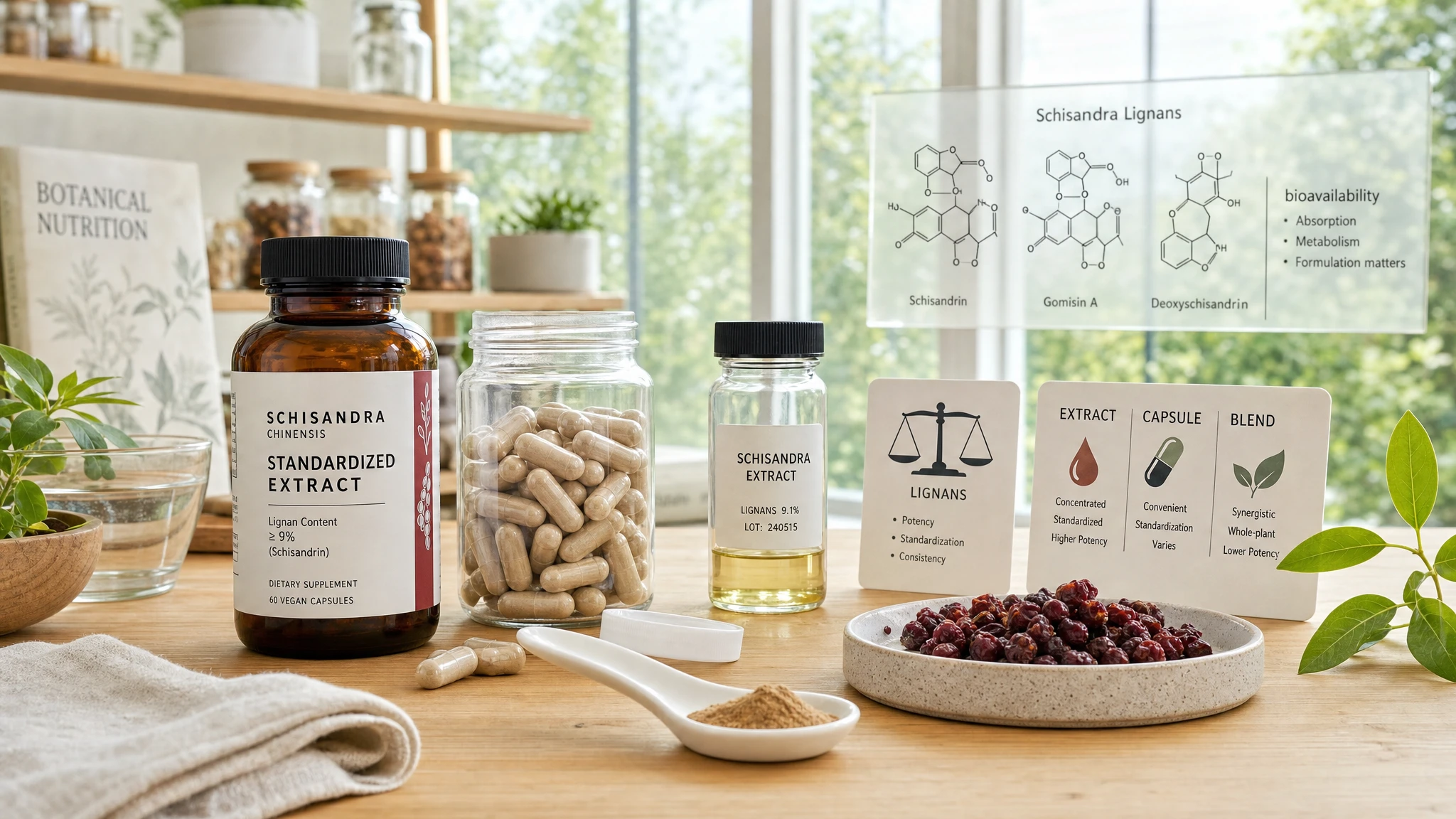
In the field of supplements, Schisandra chinensis does not refer to a single product, but to various forms. Studies use standardized extracts, capsules, multi-ingredient blends, and traditional preparations. Each product contains different doses of lignans, active plant compounds linked to the observed effects [8,9,10]. The same name can therefore refer to preparations that differ in dose and bioavailability (the amount absorbed and used by the body).
To evaluate potential benefits, one must first know which extract was used. Standardization indicates the dose of active compounds present in each product. Among these is schisandrin B, the dose of which varies depending on the raw material and the extraction method. Consequently, the results of a study do not apply directly to every supplement on the market [1,3].
In practical use, the plant can offer targeted support, but it does not replace medical treatment or a suitable diet [8,9]. Studies have examined various purposes, from fatigue management to metabolic support. However, the results require caution and vary based on the type of product.
Quality, titration (the declared dose of active compounds), amount taken, and duration of use are therefore decisive factors. The most useful research also describes the profile of the preparation used. This data helps to understand whether the effect depends on the plant or the entire blend [11,10,12].
Before defining the plant as a natural adaptogen—that is, an aid against stress—practical data is needed. Some points help to better interpret studies and the various formulas:
- Standardized extracts make it easier to compare the results of different studies.
- In adaptogenic blends, the observed effect cannot be attributed to a single substance.
- The dose of lignans can change the potential biological effects produced in the body.
- The duration of use ranges from a single dose to cycles of several weeks.
The use of Schisandra chinensis varies depending on the formula, the clinical profile, and other ingredients. The following sections examine these aspects in a practical way, without combining data obtained from different products.
How Schisandra is taken in clinical studies and formulations
In clinical studies, Schisandra has been administered in widely varying forms and dosages. Standardized extracts, capsules, adaptogenic blends, and formulas combined with other plant-based or food products are commonly found [8] [9] [11] [10]. These differences make direct comparison difficult, but they illustrate how the product is actually used.
Daily doses are in the range of grams or fractions thereof. The duration ranges from a single dose to cycles lasting several weeks. One trial examined Schisandra extract in adult women [11]. Another evaluated an omija blend in a randomized, double-blind study on hyperinsulinemia [10]. In randomized trials, groups are formed by chance; in double-blind studies, neither participants nor researchers know which treatments are being administered.
The standardization of the extract is essential, because the dose of lignans can vary significantly. The value depends on both the raw material and the method used to extract it. The reader must distinguish between traditional use, titrated extract, and adaptogenic blends. One should not automatically attribute the same effects to different preparations. This caution prevents errors and helps in better evaluating the quality of the chosen supplement. Key questions concern the extract used and the duration for which it was taken. Understanding the forms of intake is the first step before evaluating the possible effects on stress and fatigue.
Schisandra for stress and fatigue: what studies show
Schisandra is primarily chosen as a potential aid during periods of stress and fatigue. One trial on adult women was randomized, double-blind, and placebo-controlled. During the observation period, the use of the extract was associated with greater quadriceps strength and less perceived fatigue [11].
Another clinical study evaluated an omija blend in people with hyperglycemia. The blend improved certain metabolic parameters, which are related to how the body uses energy [10]. The result suggests that the plant may be part of broader support for the body's adaptation. Other studies, including those on multi-herb formulas, show signs of effects on perceived stress [13,14]. Often, however, the product examined contained Schisandra along with other plant-based ingredients. These data are important but should be interpreted with caution due to the presence of other ingredients. Therefore, the observed effects cannot always be attributed solely to Schisandra chinensis.
Research evaluates the plant as a potential aid when the body's stress response changes. It is not proposed as an alternative to standard treatments. Research primarily examines the possible effects of Schisandra on fatigue and stress. The correct message is this: the plant is being studied as an aid, not as a universal solution for asthenia (weakness and fatigue). From stress support, the discussion naturally shifts to muscle function and energy metabolism.
Schisandra and muscle function: why it is relevant to energy metabolism
Schisandra is of interest for muscle function because it combines adaptation to stress with energy utilization in tissues. A clinical trial on adult women was randomized, double-blind, and placebo-controlled. During the observation period, the Schisandra chinensis extract improved quadriceps strength and reported fatigue [11]. In simple terms, the data suggests that the plant may help muscle during and after exertion. The effect does not necessarily indicate a classic anabolic action, i.e., a direct push to create muscle tissue. Instead, it may reflect better energy use and greater neuromuscular efficiency (coordination between nerves and muscles).
In parallel, experimental studies on lignans show links to lipid metabolism, i.e., fat metabolism. They also show mitochondrial adaptation, meaning changes in the mitochondria that produce energy, which may explain part of the response [15] [16]. The topic is of interest to those seeking data on Schisandra and sports, but it requires great caution. Clinical data remain scarce and do not allow for certain conclusions regarding athletic performance.
This point connects practical use to metabolic effects, without confusing it with the section dedicated to the AMPK and mTOR pathways. It is a useful step for understanding the interest of those seeking help against fatigue. It also explains why the plant is of interest to those studying energy metabolism. This practical reading of supplementation sets the stage for the chapters dedicated to the main target organs.
Schisandra and liver diseases
Interest in Schisandra chinensis for liver diseases stems from its potential action on harmful processes. The studied benefits primarily concern oxidative stress (an excess of oxidizing molecules), fat metabolism, and certain signs of liver distress. The most robust evidence comes from studies on cells and animals. However, the observed mechanisms are consistent with one another.
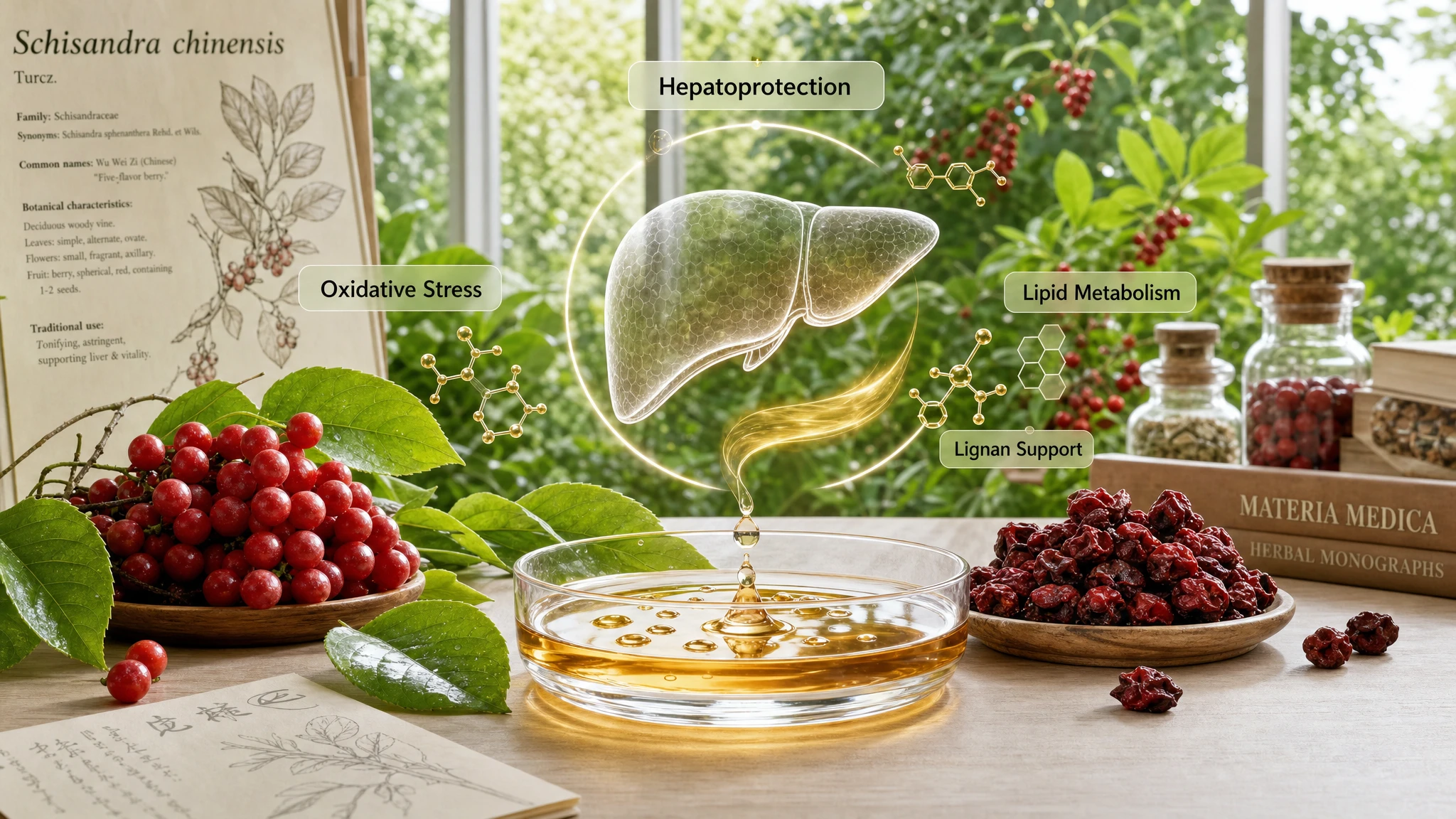
In liver diseases, Schisandra chinensis is studied primarily for its potential hepatoprotection. This term refers to the ability to reduce harmful processes and support liver cells. In experimental models, studies focus on Schisandra lignans, which are active plant compounds. Among these, schisandrin B stands out, as it appears to act on oxidative stress and inflammation. It may also limit alterations in lipid metabolism, i.e., the way fats are processed. This does not mean "repairing" a diseased liver. Instead, it means reducing the processes that fuel liver damage and distress [17] [18] [3].
This hypothesis is consistent with the processes that cause liver damage. Several pathways combine and can reinforce each other. Oxidative stress damages membranes, mitochondria, and proteins, while inflammation increases the injurious response. Altered fat metabolism promotes fat accumulation and makes the hepatocyte—the main liver cell—more fragile. For this reason, a plant with antioxidant and metabolic effects is a useful subject for research. Recent studies indicate an action on various linked cellular signals, rather than on a single target [1] [3] [2].
Overall, studies indicate a possible biological support from Schisandra chinensis against liver damage. However, this interpretation requires caution. The available systematic review notes favorable signals in various models of liver damage. Data on steatosis primarily support a potential metabolic and antioxidant effect [18] [17]. However, there are important differences between extracts, dosages, experimental models, and the populations studied. Therefore, the results cannot be directly transferred to humans. It is more accurate to speak of potential Schisandra properties useful for research. This is not an alternative to established hepatological therapies. Even with favorable results, clinical robustness depends on the quality and reproducibility of the studies [8] [9].
To understand the plant's role in research, it is necessary to distinguish between three levels of observation: damage markers, steatosis, and the metabolic profile that supports both processes:
- The reduction of liver enzymes indicates less cellular distress.
- Steatosis improves when fat oxidation, or consumption, changes.
- The gut microbiota, i.e., the set of intestinal microorganisms, can influence the gut-liver axis.
- Some lignans also act on the signals that regulate energy within cells.
In the liver, Schisandra shows some of the clearest signs of its biological activity. Studies primarily examine damage markers, steatosis, and the gut-liver axis.
Schisandra and the liver: which markers of liver damage can it modulate
In models of liver damage, Schisandra has improved various biochemical markers of liver function. In many preclinical studies, ALT, AST, and alkaline phosphatase levels decreased. These results are consistent with reduced stress on hepatocytes, the primary liver cells [18,19,20]. At the same time, the body's endogenous antioxidant systems increased. Lipid peroxidation—the oxidative damage to cell membrane fats—also decreased. The data therefore indicate a potential defense against immediate damage. They also suggest support in maintaining membrane integrity and regulating cellular metabolism.
This picture may depend on the action of the lignans present in the plant. These compounds can limit free radicals and support the hepatic cell response [1,3,2]. One model studied liver damage caused by carbon tetrachloride. In this case, the plant showed the ability to restore phase I hepatic metabolism. This term refers to the initial reactions by which the liver transforms substances. The observed effect, therefore, does not concern a single biomarker, but the overall functioning of the organ [21].
The practical takeaway is clear: the plant does not "cure" the liver in an absolute sense. In the available models, it appears instead to reduce certain processes that lead to damage. These data also help to interpret biomarkers without overestimating animal studies. The transition from animal models to humans, in fact, is not automatic. The correct message concerns potential hepatoprotection, not a universal solution for every liver disease. The liver remains the most consistent target in studies on Schisandra. This explains the ongoing interest in its lignans. From general liver protection, we move on to the more specific topic of fatty liver.
Schisandra and non-alcoholic fatty liver disease: the role of lipid metabolism
Non-alcoholic fatty liver disease links liver damage to an impaired use of fats. In various experimental models, the extract or individual lignans have reduced liver fat. The effects included better management of blood triglycerides and cholesterol [17,22,19]. Some studies also show changes in the processes that regulate fats within cells. These effects may promote fatty acid consumption and the energy balance of the hepatocyte. Schisandrin B appears to increase fatty acid utilization and reduce steatosis. The action therefore concerns metabolism, not just the visible signs of the disease [17,1].
A recent study also examined hypertriglyceridemia in NAFLD, an excess of triglycerides in the blood. The data suggest a possible role for the gut microbiota and the use of fats in the liver [22]. These results support the possible involvement of the gut-liver axis. The topic also includes fatty liver and dyslipidemia, i.e., altered levels of fats in the blood. However, the strongest evidence remains that obtained from cells and animals. Further studies in humans are needed to confirm these effects. The central point is a system that regulates the storage, consumption, and turnover of fats. For now, this mechanism guides research, but it does not offer a clinical shortcut.
Schisandra and gut microbiota: why it is important for the liver
Recent studies are examining the potential role of the gut microbiota in effects on the liver. A randomized, double-blind, placebo-controlled study involved 28 obese women. The participants consumed the fruits for 12 weeks. The treated group showed a trend toward greater reductions in waist circumference and fat mass. The same trend was observed for fasting glycemia, triglycerides, AST, and ALT compared to the placebo. The researchers also observed some changes in the gut microbiota [23].
The data suggest a possible effect on multiple parts of the body. The liver is affected by substances produced in the gut and their passage through the intestinal barrier. Other studies indicate a possible microbial profile more favorable to metabolic balance. Some signals related to dysbiosis and general inflammation decreased [22]. Dysbiosis is an imbalance of the microbes present in the gut. The liver and gut communicate continuously via the gut-liver axis. Changing gut microbes can therefore influence inflammation and fat utilization. This hypothesis goes beyond a simple direct action on the liver. The effect could involve multiple organs, but studies do not yet allow for certain conclusions. The hypothesis helps in interpreting studies that link the gut, liver, and inflammation.
Schisandra and glucose and lipid metabolism
Schisandra chinensis is being studied for its potential effects on glycemia, fats, and energy use. It may also act on AMPK, a protein that senses how much energy a cell has. Studies are focusing on schisandra lignans (active natural compounds) and schisandrin B, which are among the most researched. Initial data are useful, but not sufficient to replace standard treatments.
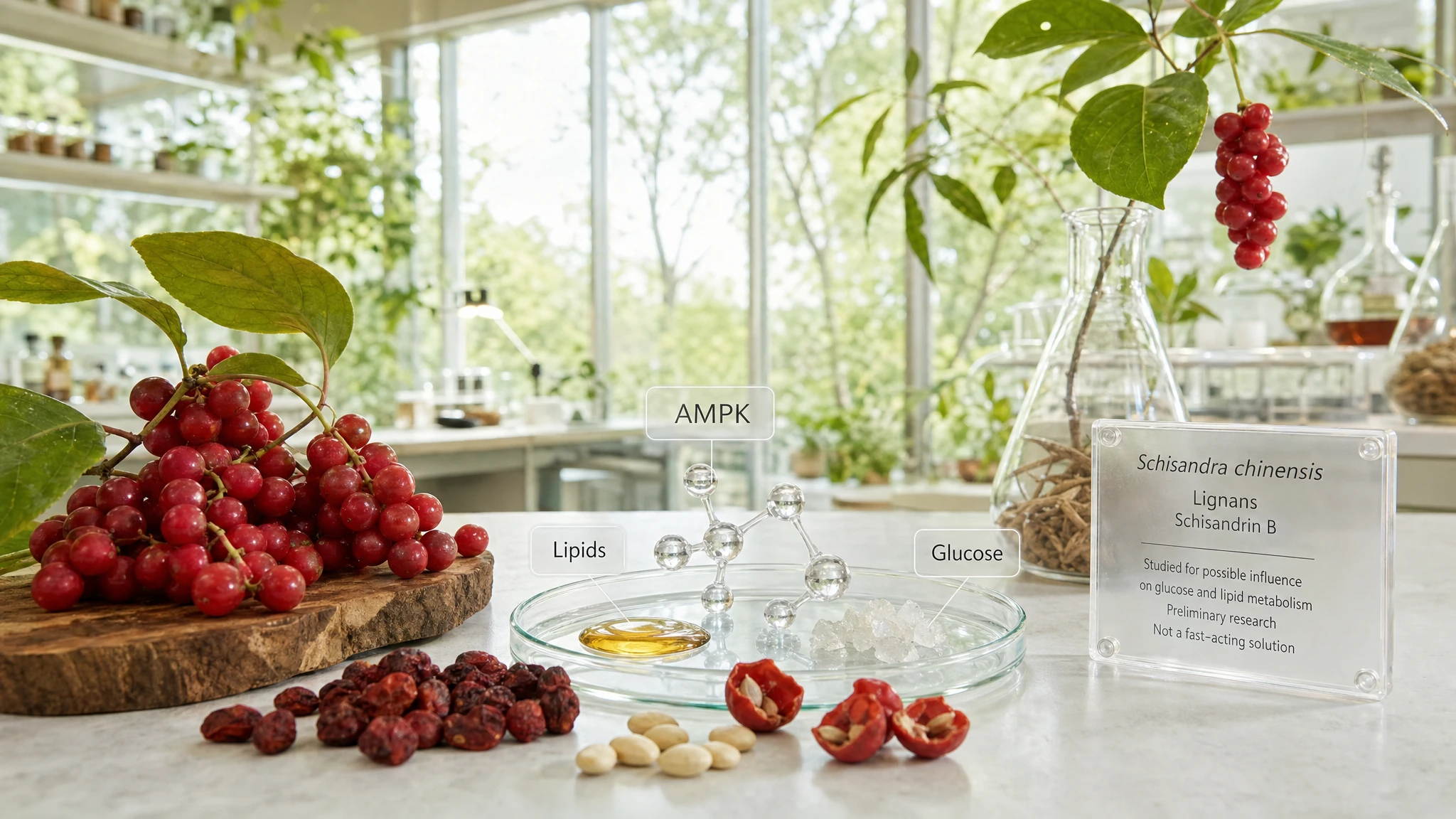
In the metabolism of sugars and fats, Schisandra chinensis may act on glycemia and the use of lipids. Interest stems from certain lignans, which appear to act on key pathways for managing energy. In the laboratory, these effects help the cell manage energy and improve certain metabolic values [1] [24] [25].
The plant does not act like a drug that rapidly reduces glycemia. Instead, it might help balance the use of sugars and fats. However, this data requires caution, because many results are derived from studies on cells or animals. Human studies are still few and often evaluate complex extracts, not a single active ingredient.
Research follows three connected themes: glycemia, blood fats, and pathways that regulate cellular energy. In this framework, schisandrin B is among the most studied compounds, but it is not the only active one. The data therefore show various possible effects, the mechanisms and limits of which remain to be clarified.
A double-blind study analyzed an omija extract containing Schisandra chinensis in people with hyperglycemia. The data show possible assistance in glycemic control, but do not prove the effect of the plant alone [10]. Other research has detected beneficial effects on triglycerides and other blood values.
In experimental models, schisandrin B reduced lipid accumulation and promoted the use of fatty acids [22] [17]. This finding is consistent with its possible role as a natural adaptogen (a substance that helps the stress response). However, the extracts examined vary greatly and clinical studies are still few. Its role in metabolism should therefore be viewed as supportive, not as proof of an independent therapeutic effect [25].
The main lines of investigation concern:
- Effects on fasting glycemia, post-meal glycemia, and insulin response.
- Changes in triglycerides, cholesterol, and other fats present in the blood.
- Role of AMPK, the sensor that detects cellular energy.
- Possible link between fat usage and stress response.
Sugar and fat metabolism are the two most studied areas. Individual data points are clearer when viewed through the energy pathways that connect them.
Schisandra and glycemia: what is known about glucose and insulin
Clinical and experimental studies show possible effects on how the body uses glucose. Researchers measured fasting glycemia, post-meal glycemia, and the insulin response. The latter indicates how insulin helps cells use the sugars present in the blood.
A double-blind controlled study analyzed an omija blend that contained the plant. In people with hyperglycemia, the blend improved certain values related to glycemic control. However, it is not possible to precisely separate the role played by the individual ingredient [10]. Experimental models have also revealed possible effects on insulin release and glucose response [26].
These results are useful, but require caution because many products contained multiple ingredients. Therefore, the effect seen in the study cannot always be attributed solely to the plant. Research evaluates a possible aid in the early stages of impaired sugar metabolism. It does not, however, propose the plant as an alternative to standard treatments.
Many people ask if the plant can lower glycemia, but a rapid effect has not been proven. The most useful hypothesis concerns an action on various systems that regulate energy and oxidative stress. Oxidative stress is an excess of reactive molecules that can cause damage to cells. From glucose control, the next step is the lipid profile.
Schisandra and blood lipids: triglycerides, LDL, and cholesterol
In some studies, the plant has been associated with lower levels of triglycerides, total cholesterol, and LDL [22] [15]. LDL are particles that carry cholesterol in the blood and distribute it to tissues. The data are consistent with a possible effect on the liver and the utilization of fats present in the blood.
Research has examined 3T3-L1 adipocytes (fat cells cultured in the laboratory) and mice with diet-induced obesity. Schisandrin B reduced glycerolipids and increased lipolysis (the breakdown of fats). In some tests, the effect was present at as little as 80 µM. In mice, the volume of fat cells, fat mass, and body weight also decreased [15].
These data are of interest to those seeking natural remedies for cholesterol and triglycerides. However, studies do not always yield the same results, and clinical trials are still limited. Furthermore, this analysis concerns fats in the blood, not their accumulation in the liver. Fatty liver therefore requires a separate assessment based on specific data.
The topic also includes dyslipidemia (altered levels of fats in the blood). Overall, research does not evaluate a single data point, but rather multiple aspects of heart and metabolic health. However, the results remain preliminary and do not prove a therapeutic effect in humans. Finally, lipid management is linked to the energy pathways that regulate cellular metabolism.
Schisandra and AMPK: the connection between cellular energy and metabolism
Research is studying the potential activation of AMPK, a protein that detects the energy available within the cell. This pathway regulates glucose utilization, fat consumption, and energy production. In experimental models, certain lignans have acted on AMPK and helped tissues adapt [24] [27].
In one study, the antidiabetic effect of gomisin N was linked to the activation of AMPK. In another, Schisandrin B reduced damage to renal tubules in a model of diabetic kidney disease. The effect involved the inhibition of Akt (a protein that transmits signals within the cell) and the activation of AMPK [24] [27].
These data suggest a potential role that extends beyond the antioxidant effect. The plant may act on processes that regulate how much energy the cell uses and stores. This topic helps to understand the link to metabolism, without anticipating the analysis of the AMPK-mTOR pathway.
AMPK functions as a fuel sensor within the cell. When energy levels drop, it triggers responses that help the cell conserve energy and adapt. A potential modification of this protein may explain part of the effects on glucose, fats, and metabolic stress. However, this is a hypothesis based primarily on experimental models. The reference to AMPK prepares for the transition to the more technical chapter on mTOR modulation.
Schisandra and mTOR modulation
The relationship between Schisandra chinensis and mTOR is useful for understanding two key functions of lignans. These substances can influence energy management and autophagy, the process by which cells recycle damaged components. In some study models, this action appears to help the cell restore homeostasis (internal balance). However, these data do not prove general clinical effects. The topic remains useful for studying supplementation with schisandra and its potential effects on metabolism.
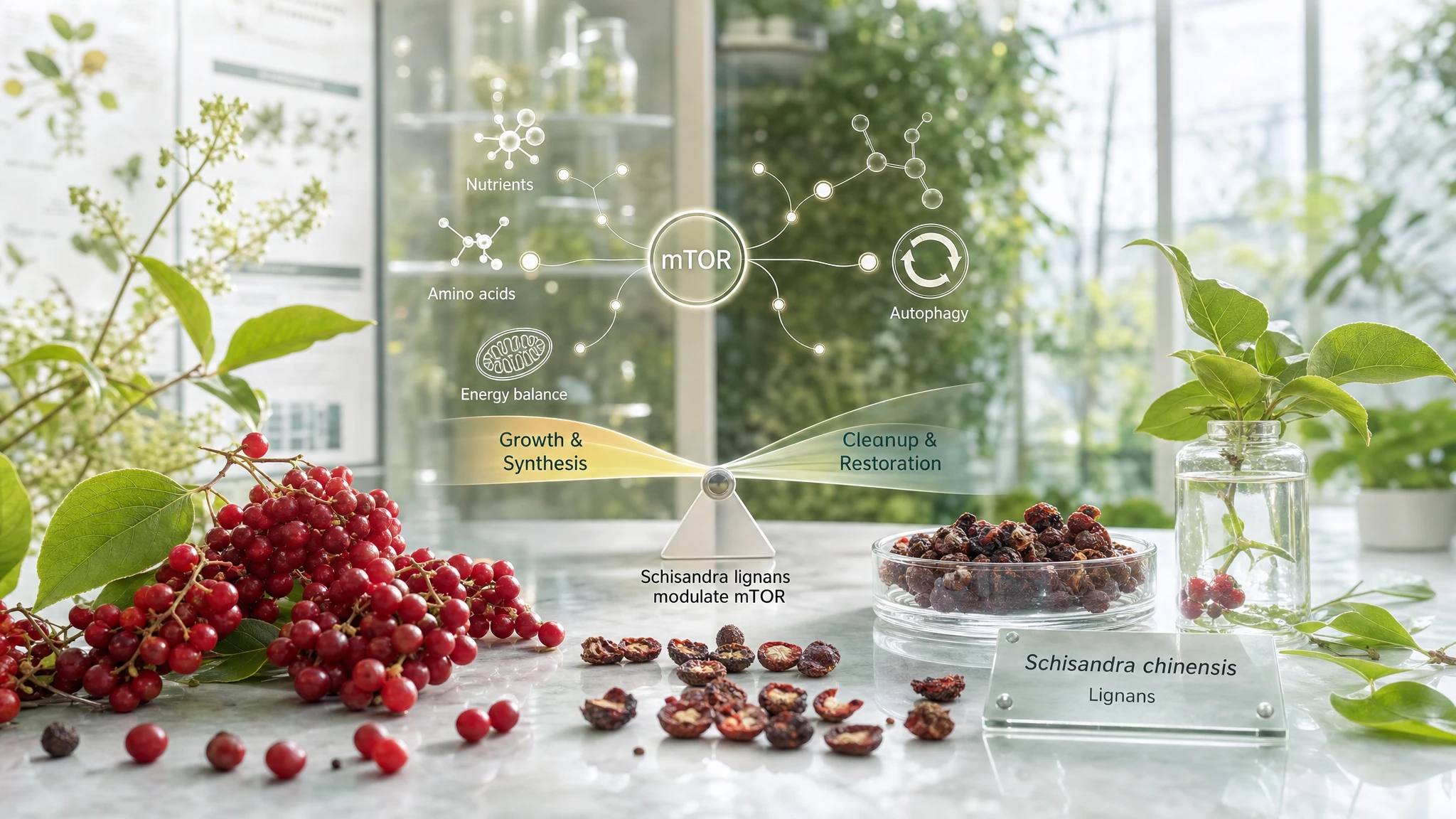
The mTOR pathway is a signaling network that regulates growth, synthesis, and recycling within the cell. It acts like a switch: it indicates whether to use resources for growth or for repairing damage. In Schisandra chinensis, interest focuses on certain lignans (active plant compounds) that appear to act on this network. This effect appears alongside other signals related to energy. This becomes especially evident when a tissue needs to clear out damaged parts and restore its balance [17,28].
Therefore, it is not a matter of always "turning off" mTOR, but of regulating its activity at the right moment. This point is essential because the pathway plays different roles depending on the cell and its state. mTOR receives data on nutrients, growth factors, and energy levels. It also evaluates amino acids, which are the basic units that form proteins. If resources are abundant, the cell favors protein synthesis, growth, and division.
If energy is lacking, mTOR reduces its activity, making room for cellular maintenance. A key process is autophagy, through which the cell breaks down and reuses parts that are no longer efficient. AMPK, a kinase (an enzyme that regulates other proteins) sensitive to energy deficiency, is involved in this system. AMPK and mTOR often act in opposite but coordinated ways. Some lignans appear to shift this balance toward energy conservation and damage repair [17,24,28].
In the liver, regulating mTOR can promote autophagy and the use of energy sources. This can affect steatosis (excess fat in the liver) and lipid accumulation [17,22]. In a mouse model of steatosis, Schisandrin B reduced liver damage. It also promoted the use of fatty acids by activating autophagy via the AMPK/mTOR pathway [17]. This finding indicates that a lipid-rich liver may benefit from improved internal recycling.
Other preclinical studies have observed that schisandrin A and schisandrin B can activate pathways related to AMPK. This kinase signals energy deficiency and tends to curb anabolism (processes that form new molecules). In this way, it can help the cell regain its balance [28,24]. The plant, therefore, does not have a single, simple, and linear action. Its phytocomplex (the set of active substances) can act on central points of metabolism and cellular maintenance. The mTOR pathway thus helps link Schisandra, autophagy, and metabolism, but the data remain preclinical.
The effect, however, does not consist solely of blocking the pathway. In some cases, regulating mTOR can rebalance the cell without completely stopping the signal. This can occur during oxidative stress, caused by reactive molecules that can damage cells. The same applies in cases of excess lipids or mitochondrial damage. Reducing growth signals can therefore be helpful, as it activates maintenance and control pathways.
This clarifies the data on Schisandra. The potential effect emerges when this action helps the cell adapt. It should not, however, be interpreted as a certain outcome for every tissue or disease [17,28,25]. Overall, mTOR links metabolism, stress response, and the control of internal balance. Schisandra is therefore not a "universal mTOR regulator." Instead, it contains molecules that, in specific models, can act on this network through a plausible mechanism.
This interpretation concerns the liver and other tissues. Here, one must consider the relationship between growth, life, and cellular recycling. This is why Schisandra lignans are of interest in research on cellular physiology. They are not, however, a defined clinical treatment.
To better interpret the data, it is useful to keep four points in mind:
- Reducing the signal can promote autophagy and the recycling of cellular parts.
- The AMPK/mTOR axis links energy levels to metabolic response.
- In some tumor models, blocking mTOR slows growth and invasive capacity.
- The biological significance varies greatly between metabolic tissues and tumor cells.
The relationship between Schisandra chinensis and mTOR is context-dependent and varies across different cell types. In currently available models, lignans appear to influence energy levels, autophagy, and cell growth. These data help clarify potential mechanisms, but they do not demonstrate a general clinical effect.
What is mTOR and why is it central to metabolism and autophagy
mTOR is a kinase, which is an enzyme that regulates many functions through phosphate groups. It receives signals from nutrients, energy, and growth factors. Based on this data, it directs growth, protein synthesis, or autophagy. When the system is active, the cell uses resources to grow and form new molecules. If energy levels drop or damaged parts need to be recycled, its activity must instead be reduced.
In this way, autophagy can begin [29,30]. This balance is important in many tissues and in various diseases, from the liver to tumors. Certain lignans in Schisandra appear to act on this pathway (signaling pathway), promoting a return to homeostasis [17,31,32]. This foundation explains why the plant is studied in very different fields. mTOR, in fact, is not a simple on-off switch. It is a dynamic system whose role changes with the cell and the amount of energy available. You can think of it as a director who decides whether to use resources to grow or to repair. Understanding this role therefore helps in interpreting data on its potential regulation.
Schisandra and mTOR inhibition in metabolic tissues
In some models, Schisandra appears to reduce mTOR activity and support metabolic balance. In the liver, this decrease can promote autophagy and lipophagy (targeted fat recycling). These processes help remove lipids accumulated in cells [17] [22]. In a mouse model of steatosis, Schisandrin B reduced liver damage. It also promoted the use of fatty acids by activating autophagy via the AMPK/mTOR pathway [17].
The data indicates an effect linked to the state of the cell, rather than a uniform action in every case. Therefore, it is not accurate to simply say that the plant "lowers mTOR." It is necessary to clarify in which tissue this occurs, under what conditions, and with what outcome. These studies help examine the links to fatty liver, inflammation, and metabolic health. However, these are data obtained in study models and not clinical evidence. In some tissues, reducing the signal may help restore functions. In others, the same action may have a different significance. Finally, the relationship between AMPK and mTOR opens up the study of autophagy and the pathways that drive cell growth.
Schisandra, PI3K/AKT/mTOR, and proliferative diseases
In oncology, interest focuses on the potential effects of lignans on the PI3K/AKT/mTOR pathway. This cascade (an ordered series of signals) regulates cell growth, survival, and invasive capacity. In experimental models, Schisandrin B has inhibited the growth of osteosarcoma cells. It has also promoted apoptosis (programmed cell death) via the PI3K/AKT/mTOR pathway linked to autophagy [31] [33].
Schisandrin C has also been studied for atherosclerosis and the PI3K/AKT/mTOR autophagic pathway. Gomisin A, on the other hand, has reduced the spread of colorectal carcinoma cells in experimental models [32] [34]. These results do not indicate that the plant is a cure for cancer. However, they show that the phytocomplex contains molecules capable of acting on networks important to tumor biology. The data require caution, as they are derived from preclinical studies and do not prove a benefit in patients.
mTOR is therefore a target that unites the control of energy and cell growth. The same network can act on metabolism and on cells that grow abnormally. For this reason, research remains useful, but it is still far from certain clinical outcomes. The study of these pathways ultimately leads to the topic of the cell's defense and recycling systems.
Schisandra, inflammation, and cellular defense
The lignans in Schisandra chinensis are active plant compounds. In studies, they have been shown to act on oxidative stress and the signals that drive inflammation. There is not just one single effect, but a response shared by various cellular defenses. This response can help tissues exposed to long-term damage.

Studies on Schisandra chinensis do not only detect a decrease in inflammation-related signals. Data also indicate potential support for systems that limit cellular damage. Cellular defense includes responses that protect membranes, proteins, and DNA, which is the genetic material. These defenses reduce the effects of reactive oxygen species and pro-inflammatory mediators.
In various models, lignans appear to promote this balance during prolonged stress [3,35,36]. They do not block every biological response, but they can make the cell's internal environment more stable. In this way, damage may spread less easily. For this reason, researchers are studying the plant in different organs, from the liver to the nervous system.
The response seems to change based on the state of the cells. A cell already under stress may receive more help if it can adapt better. In healthy tissue, however, the effects may be less clear. The data therefore indicate that cells could become more resilient, meaning they can resist and recover better. However, this does not prove a certain effect or one that is valid for everyone.
Studies focus on the link between oxidative damage, inflammation, and loss of cellular function. These events can fuel each other and create a vicious cycle. Curbing this cycle could slow down damage and help a more orderly recovery.
Combined with these actions is a potential defense of more fragile cells during chronic damage.
Schisandra therefore seems to act at multiple points in the same chain, rather than on a single step. This finding is significant because many chronic diseases share certain underlying processes. The affected organs change, but oxidative stress and inflammation can follow similar pathways. Much of the interest in the plant stems from this basis.
One of the most frequently studied systems is the Nrf2/HO-1 axis. This pathway helps the cell neutralize reactive compounds. Furthermore, it limits the oxidation of fats present in membranes [3,36]. Another pathway involves NF-kB, which regulates many phases of the inflammatory response. If it remains too active, it can keep tissues in a state of alarm.
Schisandrin B and other lignans appear to act on the link between oxidation, immunity, and cell life. Studies indicate potential hepatoprotective effects, i.e., protection of the liver. They also indicate potential neuroprotection, meaning the defense of nerve cells [37,38,35]. A link with autophagy and metabolism also emerges. Autophagy is the recycling process by which the cell eliminates or reuses damaged parts.
In this context, the plant does not act like a common anti-inflammatory drug. Instead, it seems to regulate the cell's ability to react to stress [35,36]. The action appears closer to rebalancing various pathways than to blocking a single signal. The potential outcome therefore depends on the system returning to a more stable function.
Inflammation and energy use are indeed linked. Cells under stress use more resources and send more alarm signals. If they manage oxidative damage better, they can activate fewer inflammatory pathways. They can thus protect homeostasis, i.e., the internal stability of tissues. This may explain the data obtained in different organs that are exposed to strong biochemical stress.
The clinical value of these results remains to be clarified, even if the mechanism has a coherent basis. Milder initial damage can reduce the inflammatory drive and loss of function. Schisandra thus fits into a multi-level defense model. In this model, oxidation control, immune response, and energy use act together.
However, the data are largely derived from cells and experimental models. They therefore describe possible mechanisms, not clinical benefits already proven in humans. Consistent results support translational research, i.e., the transition from the laboratory to treatment. In tissues affected multiple times, better cellular defense remains a concrete and credible goal.
The plant seems to help an orderly response to stress, rather than acting alone on a single target. This could reduce the risk of inflammation continuing to fuel itself. This common thread unites the various models and explains the interest in lignans. Their profile remains that of broad modulators, but clinical data are needed to define their real value.
Studies indicate three main actions:
- activating antioxidant pathways already present in cells
- reducing cytokines and other pro-inflammatory signals in tissues under stress
- regulating metabolic pathways linked to inflammation and cell life
- effects depend on the type of extract and the formulation used
The key point is not just the potential reduction in inflammation. Studies are also evaluating whether Schisandra chinensis can help cells resist damage. The two central themes are the action of antioxidant systems and the control of inflammatory mediators.
Schisandra and Nrf2/HO-1: the endogenous antioxidant system
Among the mechanisms most closely associated with Schisandra, studies often cite the activation of the Nrf2/HO-1 pathway. It is one of the primary defense systems against oxidative damage. When this cascade is activated, the cell produces more defense enzymes. These enzymes neutralize free radicals and clear metabolites that can cause damage [3] [6].
In experimental models, Schisandra lignans appear to promote this adaptation. At the same time, they can reduce certain proteins that produce reactive oxygen species. A study on schisandrin B linked its anti-inflammatory effect to the regulation of Nrf2 and NF-kB. A model of liver damage and various cellular systems have also shown a more favorable redox status [6] [19]. Redox status refers to the balance between oxidizing substances and antioxidant systems.
This point explains how the plant can offer protection without acting solely as a chemical scavenger. Instead, it appears to regulate how the cell responds to stress. Schisandra, therefore, does not just add external antioxidants. It can also support the network that the body uses to defend itself autonomously. This connection helps bridge laboratory data with normal cell activity. It also helps interpret the effects observed in the liver, kidneys, and nervous system. In practice, the plant seems to support the defense system rather than replace it.
This response also follows the concept of preventing the chain of damage initiated by oxidative stress. If the cell controls free radicals better, it also activates fewer secondary inflammatory signals. This continuity between the two responses makes the mechanism interesting from a biological and clinical perspective. The activation of internal defenses paves the way for regulating inflammation in tissues.
Schisandra and tissue inflammation: what happens to cytokines
In studies, the anti-inflammatory effect of Schisandra primarily coincides with a decrease in cytokines and other mediators. Cytokines are molecules that regulate communication between immune system cells. Other mediators, meanwhile, participate in the tissue response to damage. In the observed models, the treatment reduced the expression of TNF-a, IL-1b, and IL-6. Consequently, the inflammatory signal was also attenuated [5,7].
This does not mean that the plant suppresses the immune system. Instead, it suggests that it can regulate the response when inflammation becomes chronic or too intense. In one study, a fruit extract reduced pro-inflammatory mediators in macrophages. These immune cells had been stimulated with lipopolysaccharide. In another study, lignans acted on NF-kB, AP-1, and IRF3 [5,7]. The data therefore confirm that the plant interacts with multiple nodes of the inflammatory response.
For the reader, this distinction separates physiological support from non-specific blocking. This topic addresses queries regarding cytokines, inflammation, and natural remedies. However, it must be distinguished from content on individual diseases to avoid repetition. This in-depth analysis presents Schisandra as a regulator of cellular signals, rather than an agent acting directly on a single organ.
Overall, fewer inflammatory signals can create a more stable tissue environment. Such a context may also promote the recovery of function. Reducing these cytokines can also limit the continuous recruitment of immune cells. It can further curb the increase of damage in the affected area. This may lead to less fibrosis, meaning less scar tissue, and less loss of function. It may also help to better preserve tissue structure. When the inflammatory signal drops, the potential value of the plant in tissues with chronic damage becomes more apparent.
Schisandra and the nervous system
In the nervous system, Schisandra chinensis is being studied for its potential support for neurons, synapses, and memory. Synapses are the contact points where neurons communicate with each other. Data indicate possible effects on oxidative stress, which is the damage caused by reactive molecules. They also indicate effects on inflammation and on the pathways that help cells survive. However, most of the results come from studies conducted on cells and animals. The plant is therefore a potential biological aid, not a treatment already proven in humans.
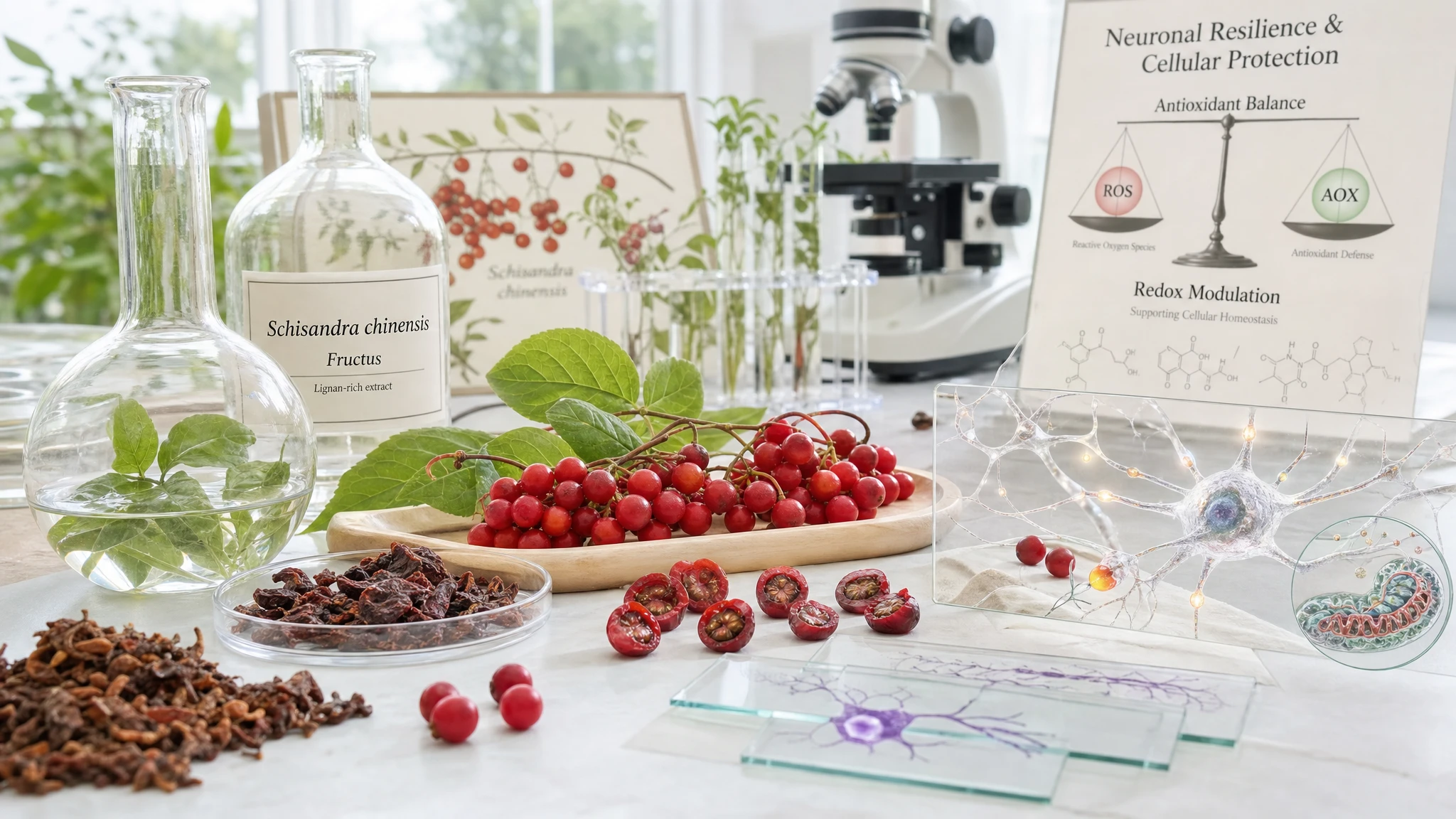
In the nervous system, Schisandra chinensis is being studied for the action of lignans, compounds typical of the plant. These substances act on various processes related to neuronal damage. They can reduce free radicals, support mitochondria, and regulate signals at synapses. They may also curb certain signals that promote inflammation. Interest therefore focuses on multiple effects, which could help neurons against stress and toxic substances.
Many nervous system diseases share these processes, even if they cause different symptoms. In preclinical studies on cells or animals, some extracts and compounds protect memory and membranes. They also protect neuronal plasticity, which is the ability of neurons to adapt [39] [40]. Lignans can regulate redox balance, i.e., the ratio between oxidation and antioxidant defenses. Therefore, they do not act as simple stimulants.
Inflammation, oxygen scarcity, and toxic substances increase reactive oxygen species, which can damage cells. Under these conditions, the plant can support internal defenses and reduce cellular damage. Possible effects concern membranes, mitochondria, and synaptic proteins [3] [2]. The nervous system uses a lot of energy and does not tolerate imbalances well. A compound that promotes cellular homeostasis, i.e., internal balance, can therefore have a useful biological role. However, these data do not yet demonstrate a certain clinical effect in humans.
A central step concerns the link between AMPK and mTOR. AMPK is an enzyme that detects how much energy a cell has. mTOR, on the other hand, is a pathway that coordinates nutrients, growth, and the synthesis of new proteins. When energy is lacking or the neuron is under stress, these pathways regulate various processes. They manage energy use, repair, and autophagy, i.e., the recycling of damaged cellular parts.
Some studies indicate that the plant's compounds can promote neuronal defense. The effect may involve fat oxidation and the antioxidant response [41] [42]. The same mechanism helps to understand the data on inflammation and energy balance. The brain must, in fact, continuously balance energy consumption and defense against damage. However, these results remain experimental and do not prove a benefit in humans. Therefore, one can speak of a possible neuroprotective aid, not a confirmed therapy.
To better understand the study data, four main points must be considered:
- Neuronal defense involves multiple processes and does not depend on a single target.
- Some extracts act on memory and synaptic signals in animals.
- Schisandrin B can reduce oxidative stress and neuronal damage.
- The AMPK and mTOR pathways link energy use to cell life.
Studies on the nervous system examine neuronal defense, memory, and certain models of neurodegeneration. The following sections explain the observed mechanisms and their limitations. In this way, preclinical data do not become promises of a cure.
Schisandra and neuroprotection: how it defends neurons
In experimental studies, plant lignans protect neurons through various pathways. They can reduce reactive oxygen species and support internal antioxidant defenses. They can also curb certain signals that promote inflammation [39,16]. These effects are useful because many neurological diseases share oxidative stress and mitochondrial damage. They also share a loss of synaptic function. Therefore, the plant is not being studied merely as a brain tonic. Research focuses on cellular processes that can help the neuron survive and function.
In animals, fruit extract has acted on memory and synaptic transmission. Schisandrin B, on the other hand, improved the antioxidant defenses of brain mitochondria and tissue structure. The study involved an ischemia/reperfusion model, which is the damage caused by the return of blood flow after an interruption [40,16]. The results indicate less oxidative stress, more efficient energy use, and less fragile synapses. This combination is noteworthy because neurons suffer when mitochondria, defenses, and synaptic signals weaken together. The data help in understanding the potential support for cognitive function. However, they do not prove a therapeutic effect in humans. The general defense of neurons thus opens up the study of specific neurodegenerative diseases.
Schisandra and Alzheimer's disease: which mechanisms have been observed
Alzheimer's disease is among the most studied neurological conditions in relation to the plant. In experimental models, some extracts have improved memory and learning. They have also reduced the deposition of β-amyloid and protected the structure of neurons [40,25]. β-amyloid is a protein that can accumulate in the brain. Some studies have also observed the blocking of acetylcholinesterase, an enzyme that degrades acetylcholine. This neurotransmitter, which is a molecule used by neurons to communicate, helps with memory and attention.
The loss of signals related to acetylcholine contributes to the decline of cognitive functions. β-amyloid and inflammation can also increase damage to synapses. In a pharmacological model on animals, an aqueous extract of the fruits acted on the neurotransmitters of the hippocampus. It also acted on the brain circuits related to memory [25]. The study included network pharmacology, which is the analysis of biological target networks. This method was used to understand the action of the various compounds.
Other data indicate possible effects on inflammation and energy use in the brain. These two processes play a central role in the disease. The value of the studies derives from the effects observed on multiple mechanisms, not on a single target. However, the results come from preclinical models and require confirmation in humans. Therefore, they do not indicate a miraculous effect, but rather possible biological actions that have yet to be verified. After Alzheimer's, research is examining another complex disease: Parkinson's.
Schisandra and Parkinson's: the role of ferroptosis in experimental models
In Parkinson's disease, research primarily focuses on protecting dopamine-producing neurons. These cells can undergo ferroptosis, oxidative stress, and abnormal protein accumulation. Ferroptosis is a form of cell death linked to iron and the oxidation of membrane fats [38]. In a recent study, schisanhenol inhibited this process in dopaminergic neurons exposed to MPTP/MPP+. The effect involved the Nrf2/TrxR1/GPX4 pathway, which regulates antioxidant defenses. This pathway also limits damage to cellular fats [38].
The compound does not appear to be limited to neutralizing reactive molecules. It can also regulate the enzymes that protect membranes and help the cell survive. Other substances from the plant have been studied in models of Huntington's disease. They have also been examined in models of cholinergic deficit [39] [43]. Some have reduced motor problems and protected sensitive brain areas. Studies have also detected favorable effects in systems that inhibit fat oxidation.
The picture therefore shows a possible action on various aspects of nerve damage. However, most of the data comes from cells or animals. These results do not demonstrate a benefit in patients. Ferroptosis therefore helps to understand the link between oxidative stress, membrane defense, and neuroprotection.
Schisandra and psychophysical stress
When mental and physical stress persist over time, Schisandra chinensis can provide adaptogenic support. This means it can help the body manage stressors without acting as a common stimulant. Studies have primarily evaluated fatigue, stress response, alertness, and recovery. However, results vary significantly depending on the product used.
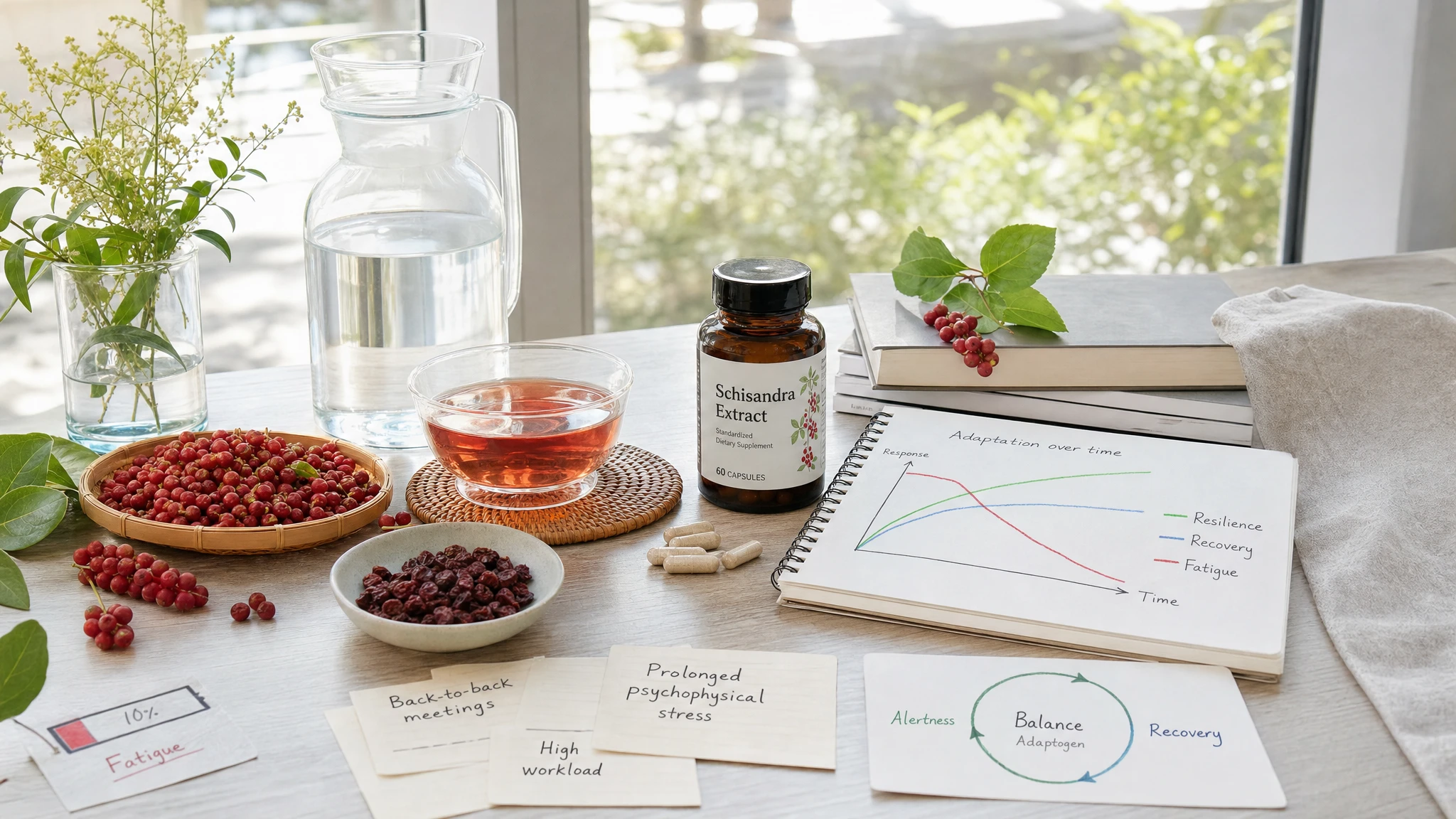
Psychophysical stress arises when mental, emotional, and physical demands accumulate over a long period. It thus becomes more difficult to maintain energy, mental clarity, and good recovery capacity. In this field, Schisandra chinensis is being studied as a natural adaptogen (a substance that helps the body adapt to stress). Therefore, it does not act like a common stimulant, which directly activates the nervous system.
The goal is to support the body's response when the load lasts for a long time. Chronic stress, in fact, does not just cause a feeling of fatigue. It can also be linked to interrupted sleep, irritability, poor ability to handle commitments, and slower recovery. Some studies have noted effects on fatigue, stress response, and performance in selected cases. However, these data must be interpreted based on the product and the context of use [4,11,12].
To understand the studies, it is useful to separate the most common research themes. One theme is the fatigue felt during periods of intense mental work. Another is alertness, which is the ability to remain attentive and ready without strong sedation. Recovery, on the other hand, indicates the return to a good balance after exertion. These aspects are related but describe different phases of the stress response.
The plant might also act on neuroendocrine pathways (links between the nervous system and hormones). These pathways help the body react when physical or mental pressure increases. Lignans (plant compounds) also arouse interest and drive much of the research into its effects. Overall, research is evaluating whether these substances help with adaptation during the most intense periods [4,12,13].
Biologically, research observes the stress response, energy use, and defense against oxidation. A study on Schisandra chinensis extracts noted changes in interleukins (proteins that regulate immune signals). It also observed effects on glucose utilization and the pituitary-adrenal axis (a hormonal circuit linked to stress) [4]. These systems can change when stress lasts for a long time.
In this state, the body may use energy less efficiently and regulate inflammation less effectively. Therefore, the plant is being studied as an aid for endurance, not as an immediate tonic. Glucose utilization is also involved, as a good energy supply can support attention and resistance to fatigue. Many data, however, come from mixtures or tests conducted under specific conditions. We cannot, therefore, apply them directly to everyday life [12,13,14].
The strength of the evidence depends heavily on the type of product examined. Some studies have used the plant in adaptogenic mixtures, while others have tested more defined extracts. It is therefore difficult to link every effect to a single compound. The results show possible biological effects, but do not yet prove a certain benefit in people. This distinction helps to avoid overly high expectations.
The most plausible benefit concerns the management of perceived load and the ability to adapt. It does not, however, indicate a complete cure for insomnia, anxiety, or fatigue using herbs alone. Studies therefore suggest a possible supportive role during the most intense periods. However, a rapid effect that is the same for everyone does not emerge [4,12,13,14].
To understand the possible role of Schisandra chinensis in managing psychophysical stress, it is useful to consider four fundamental aspects:
Schisandra is being studied as a natural adaptogen to support the body's response to prolonged stress.
Possible benefits concern the reduction of perceived fatigue, alertness, and recovery capacity.
Lignans can influence neuroendocrine pathways, energy metabolism, and the inflammatory response.
To evaluate the role of Schisandra in psychophysical stress, it is necessary to distinguish between adaptation, alertness, and recovery. These aspects can act together, but they do not have the same effect on the body.
What it means for Schisandra to be an adaptogen
Defining this plant as an adaptogen means describing a potential aid against physical or mental stress. The expected effect is not a rapid boost in energy, typical of many stimulants. The goal is to support the body's response and its balance during intense strain. This action can involve multiple systems that work together when we react to stimuli.
The term, therefore, does not indicate a product capable of resolving every form of fatigue. An adaptogen does not replace sleep, a suitable diet, or good stress management. Some studies have observed effects on performance, perceived fatigue, and the response to exercise. However, these results often depend on the specific blend used and do not prove the effect of the plant alone [4] [11] [13].
The stress response involves the nervous system, hormones, and energy utilization together. If these circuits remain active for a long time, the body uses more resources and recovers less effectively. The extract is therefore being studied as a potential aid for biological flexibility (the ability to adapt without losing balance). It is a hypothesis based on data that still concerns various products and contexts.
This interpretation also helps to separate traditional use, biological data, and marketing claims. In research, "adaptogen" indicates a possible action on the normal systems with which the body responds. It does not, however, indicate a certain or automatic increase in physical and mental performance. Having clarified this point, we can evaluate the relationship between wakefulness and sleep.
Schisandra, alertness, and sleep: when it can be useful and when it cannot
The relationship between the plant, alertness, and sleep requires a clear distinction. Its use for stress does not, in fact, imply a sedative effect. Some data indicate an improved perception of energy, attention, and the ability to manage mental workload. The effect on sleep appears less direct and varies depending on the product, usage, and individual reaction of the person taking it [12,13,14].
A study on cognition tested a single dose of an adaptogenic formula containing this extract. In the test, certain cognitive functions improved, namely attention, memory, and response speed. Other studies have examined blends with various herbs for managing stress [12,13,14]. Since these were combination formulas, we cannot attribute the outcome with certainty to a single component.
These data explain why the product may support activities performed during the day. They do not, however, show a direct effect in promoting sleep onset. The difference is substantial, because wakefulness, fatigue, and rest are not the same thing. The timing of use can therefore change the response, especially in people who are more reactive to stimuli.
In practice, a substance that supports alertness may be less suitable close to bedtime. Caution is therefore needed for people who sleep poorly or are highly reactive to stimuli. The profile relates more to physiological arousal (a state of vigilant activation) than to a hypnotic or sedative effect. This distinction prevents the product from being presented as a direct remedy for insomnia.
Overall, its use appears more suitable for supporting mental alertness during the day. This effect, however, is not certain, rapid, or the same in every person. The formula, dose, timing chosen, and individual response all play a role. Separating alertness and sleep therefore helps to better evaluate safety as well.
Schisandra and safety in use
The safety of Schisandra chinensis depends on the dosage, duration of use, and health status. Data indicate generally good tolerability, but do not prove it is risk-free. Drug interactions, individual response, and long-term use require caution.

When evaluating Schisandra chinensis, safety is not just about side effects. Data show a generally favorable profile, especially with standardized extracts and for short periods [8,9]. In standardized extracts, the dosage of active components remains more uniform. However, the available evidence does not yet allow for a complete assessment.
A plant may be well-tolerated in studies but yield different responses in common use. Factors such as age, comorbidities (multiple coexisting diseases), medications taken, and product quality are decisive. Therefore, Schisandra is not a simple, neutral product. It is a phytocomplex (a natural combination of multiple active substances) and requires careful use. Safety depends on dosage, duration, type of extract, and health status.
To better understand safety, one can also examine the biological mechanism. A study on rats evaluated Schisandrin B, a lignan (plant compound) present in the plant. The substance was administered for 15 days at doses of 1-30 mg/kg per day. The research found favorable effects on reduced glutathione, alpha-tocopherol, and Mn-SOD. It also observed a reduction in MDA, calcium overload, and cytochrome c release [16].
Reduced glutathione and alpha-tocopherol help defend cells from oxidative stress. Mn-SOD is an enzyme that counteracts certain oxidizing molecules. MDA, on the other hand, signals damage caused by oxidation. Calcium overload indicates an imbalance within the cell. Finally, cytochrome c participates in the initiation of programmed cell death. These data therefore suggest a possible defense for cells and mitochondria, which produce energy.
Oxidative stress and mitochondrial damage can accompany inflammation and organ toxicity. However, research on rats does not prove safety in humans. Absorption, usage within the body, and exposure can vary between species and products. These data therefore help to understand the mechanism but do not guarantee clinical tolerability. In practice, it is advisable to choose reliable products and avoid long-term use without supervision. The supplement should always be evaluated in the context of the individual and their medical treatments.
For responsible use, it is useful to keep some basic criteria in mind:
- General tolerability changes based on dosage and duration of use.
- Possible interactions with medications are the main reason for caution.
- Standardized extracts make the dosage of active components more predictable.
- Those undergoing chronic treatments must ask for an assessment tailored to their specific case.
In practice, the safety of Schisandra depends on its tolerability, usage limits, and potential interactions. The following two points clarify when its use may be reasonable and when more caution is required.
Is Schisandra safe? What we know about tolerability and limits
Overall, the plant generally shows a favorable tolerability profile. This is especially true for standardized products used for limited periods [8,9]. However, this estimate is derived from a few studies, which are often short and do not always have large sample sizes. Furthermore, the participants and products evaluated can vary significantly. Therefore, the absence of relevant signals in some research does not prove complete safety.
Sources on supplements remind us that plant-based products can cause undesirable effects. They can also interact with medications and are not suitable for everyone [8,9]. Even a slight change in how the body processes medications can have significant effects. Observed good tolerability, therefore, does not equate to certain safety in every case.
To demonstrate complete safety, longer and larger studies suitable for diverse groups would be needed. In practice, product quality, duration of use, and existing treatments are important. It is therefore not enough to consider only the name of the ingredient. The product may be well-tolerated in many cases, but it should not be described as always safe. General tolerability does not exclude cases where greater caution is required.
When to avoid or use Schisandra with caution
Although it is a natural supplement, the plant requires caution in certain situations. This applies especially to those taking multiple medications or those with complex health conditions [8,9]. The same level of attention is needed before adding a new product to an already established nutritional plan. Phytocomplexes, in fact, do not act in isolation and can influence various bodily processes.
Some plant compounds can act on the enzymes that help process and eliminate drugs. They can also affect transporters (proteins that move substances between cells and tissues). These effects can change the amount of medication present in the body. NIH sources also remind us that herbal supplements can interfere with medications and laboratory tests [8,9]. The risk must therefore be assessed for each individual.
Caution is very useful for those following a chronic therapy. It is also necessary after adverse effects caused by other supplements. The same applies when small changes in metabolism can have significant consequences. This does not imply a general ban, but rather encourages avoiding automatic and unsupervised use. Prudence helps to distinguish a potential benefit from a truly suitable application.
Carefully evaluating the most vulnerable individuals does not mean causing alarm. Instead, it is a choice consistent with the responsible use of supplements. Before intake, medications, health status, dosage, and expected duration must be considered. This analysis reduces risks and prepares for a discussion regarding other natural approaches.
Schisandra and comparison with other natural approaches
The properties of Schisandra chinensis emerge more clearly when compared with other natural remedies. These products are used for stress, metabolism, and cellular defense. However, there is no need to create an absolute ranking among the various remedies. It is necessary to understand when this plant can offer a more targeted action. Its profile depends primarily on lignans, which are active plant compounds. Its effect on cellular signals that regulate energy and recovery is also significant.

When compared with other natural remedies, Schisandra chinensis stands out primarily for its bioactive lignans. These are plant compounds that perform specific biological activities. For this reason, the plant differs from many remedies used in a generic way for wellness. Its interest does not stem solely from its role as a natural adaptogen. An adaptogen helps the body adapt to stress. Schisandra can also act on cellular pathways related to oxidative stress and energy metabolism. These pathways also participate in the body's response to stress. This profile distinguishes Schisandra from remedies that act primarily on perceived mood or relaxation.
However, these approaches should not be rigidly contrasted. Pharmacological data indicate that lignans act on well-defined molecular targets. These targets concern cellular defense, energy management, and redox control. Redox control maintains the balance between oxidation and antioxidant defenses [1,3,2].
The comparison is even more useful because studies have evaluated Schisandra in different forms. Some have used a single extract, while others have studied complex mixtures. In mixtures, the result may depend on multiple components rather than a single phytocompound. This point is central to interpreting studies on stress, performance, and recovery. The same plant, in fact, can appear in very different formulas [13,14]. Therefore, it is not enough to read the name of Schisandra on the packaging or in a study. One must verify the type of extract, the dose, and the purpose of the treatment. The difference between an isolated extract and a mixture helps to understand if the results are valid in practice. This aspect is especially valid when comparing products created for different purposes.
A useful example comes from studies on metabolism. Schisandra appears to act on pathways such as AMPK, a sensor that controls energy in cells. AMPK regulates fatty acid oxidation and the response to metabolic stress. It also contributes to the balance between the storage and consumption of substances used to produce energy [24,28]. In experimental models, Schisandrin B reduced hepatic steatosis, i.e., the accumulation of fat in the liver. It also promoted fatty acid oxidation by activating pathways related to mitochondrial biogenesis [17]. Mitochondrial biogenesis is the process by which cells form new mitochondria.
This finding distinguishes Schisandra from many plants used primarily to relax or feel more energetic. In this case, the potential effect concerns cellular physiology rather than generic stimulation.
Schisandra also shows a specific profile in cell defense. In various models, its lignans have regulated oxidative stress, inflammation, and cell survival signals [3,2]. Schisandrin A reduced inflammation and oxidative stress in a model of neurodegeneration [36]. Neurodegeneration is the gradual damage that alters nerve cells. Schisandrin C has been studied for its possible role in atherosclerosis. This condition involves the hardening of the arteries and the accumulation of plaques within them. The compound appears to act by regulating certain metabolic and inflammatory pathways [32]. These data explain why Schisandra is viewed as a remedy that regulates multiple biological processes. The comparison with other plants, therefore, does not only concern the perceived effect.
Another important point concerns tolerability and a realistic use of the plant. Institutional sources remind us that herbal supplements are not the same as drugs. Their quality, purity, and potential interactions have significant weight [8,9]. This principle also applies to Schisandra. A "natural" product is not necessarily simple or risk-free. If the goal is to manage stress, a combined approach may be more consistent. If it concerns metabolism or cellular defense, Schisandra can offer more targeted foundations [13,14,24]. The choice therefore depends on the clinical or functional problem one wishes to address. It does not derive from an absolute superiority of Schisandra over other plants.
In comparison with other adaptogens, Schisandra combines antioxidant action and metabolism control. It can also support cellular resilience, i.e., the ability of cells to respond to stress. This does not mean it is always the best choice. Its profile, however, is more defined compared to many alternatives used in a generic way [1,2]. The practical message for the reader is simple. Other plants may be more suitable for perceived mood or stress management. Schisandra may be more interesting when considering cellular energy, recovery, and defense against oxidative damage [12,13,14]. The differences between adaptogens therefore show that Schisandra is a specific option, not a generic category.
The main distinction therefore concerns the use of Schisandra alone or in formulas with multiple ingredients. To navigate this, it is useful to distinguish some aspects of the scientific and practical comparison:
- Adaptogenic mixtures can enhance or obscure the effect of Schisandra.
- Some extracts focus more on perceived wellness than on cellular mechanisms.
- Comparison with other phytocompounds requires attention to the purpose and context.
- The benefits of Schisandra depend heavily on the quality of the extract used.
Comparing it with other natural remedies requires three pieces of information: the type of extract, the formula, and the biological target. The following points show how these factors change the interpretation of studies. The journey starts with blends, moves on to other adaptogens, and leads to practical choices.
Schisandra alone or in a blend: why the interpretation of studies changes
Many studies do not use an isolated extract, but rather formulas containing other plants or active substances [13,14]. In these mixtures, lignans act in conjunction with various other compounds. The observed benefits may therefore stem from their combined action, known as synergy. For this reason, products bearing the name of the same plant are not all the same. The type of extract, the dosage, and the other ingredients can change the effect. They can also alter the significance of the results.
This distinction prevents attributing the effect produced by the entire mixture to a single compound. A clinical study involving multiple herbs observed an effect on the stress response. However, the formula does not allow for determining the specific contribution of each ingredient. In other studies, the extract is included in broader adaptogenic protocols [13,14]. The result, therefore, pertains to the specific product studied. It does not automatically apply to every supplement containing the same plant.
This difference also has practical implications. A single extract helps link effects to more precise components. A mixture, on the other hand, may act on different aspects of stress. However, it makes it more difficult to determine which substance produced the effect. The choice between a pure extract and a combined formula is therefore not just a commercial detail. It changes how data should be interpreted and applied to daily life.
Schisandra and other adaptogens: practical and scientific differences
Comparing it with other adaptogens is not a matter of absolute potency. Some plants are studied primarily for their stress response. Others relate to attention, sleep, or feelings of energy. Schisandra lignans have shown effects on antioxidant, inflammatory, and metabolic systems [1,2]. This profile indicates specific cellular targets. This helps distinguish the plant from other options.
Therefore, there is no single best adaptogen for every person and situation. In experimental and clinical studies, Schisandra has been linked to recovery, metabolism, and stress control. For other remedies, clearer signals have emerged regarding sleep, anxiety, or perceived fatigue [11,10,12]. These different purposes make it impossible to create a direct ranking. The type of extract, dosage, and duration can also change the observed result.
In practice, comparison helps to find the profile best suited to individual needs. For cellular energy and defense against oxidative stress, Schisandra offers specific research foundations. If the primary need concerns other symptoms, it may be more consistent to evaluate different approaches. The differences between adaptogens show that each remedy is a targeted option. They are not part of a category with identical effects.
Schisandra and scientific evidence
Studies on Schisandra chinensis use different doses, products, and methods, so they must be interpreted with caution. Overall, a useful signal emerges regarding the liver, metabolism, and oxidative stress. The mTOR pathway (which regulates cell growth and synthesis) and AMPK (a protein that senses cellular energy) are also involved. However, these data are not yet sufficient to confirm a clinical effect.

To evaluate Schisandra chinensis, it is not enough to look for a single piece of evidence considered decisive. It is necessary to compare data obtained from cells, animals, and humans. The current picture appears promising, but remains inconsistent. Some studies examine schisandra lignans (active compounds typical of the plant). Others evaluate its antioxidant action (defense against damage caused by free radicals).
Other studies investigate pathways such as mTOR (an axis that regulates growth and protein synthesis). They also examine AMPK (a protein that senses cellular energy). The plant shows biological activity, but the effects vary according to the extract, dose, and type of research. This point is important, because its compounds seem to act on multiple interconnected biological networks.
An effect on the liver may depend on two actions: less oxidative stress and better use of fatty acids. The effects on stress may involve neuroendocrine pathways (links between the brain, hormones, and stress). The balance between available energy and energy used by cells may also play a role. These processes help to understand the results, but they do not, on their own, prove a benefit in humans.
Reviews indicate a common point: the plant has a broad, but not uniform, profile. Possible effects concern cellular defense, energy use, and stress response [1,3,2]. However, the weight of this data depends on the quality of the evidence. Research on humans is limited compared to that on cells and animals. Furthermore, they use different products: it is therefore correct to speak of potential, not certainty.
Scientific value arises from consistent signals and mechanisms compatible with available data. Practical use, however, requires further confirmation, with standardized extracts and more similar methods [18,1]. Overall, it is an interesting phytotherapeutic agent (a plant-based product used for health), but one that is still to be defined clinically. This is especially true for the effects attributed to individual lignans or complex mixtures.
To compare data obtained in humans with those derived from animal or cell studies, it is useful to distinguish three levels. The first includes the most consistent data, the second includes preliminary data, and the third includes data to be confirmed in humans. This distinction makes the weight of individual observations clearer:
- Reviews reorganize scattered results that are often difficult to compare.
- Studies on cells clarify the plant's possible mechanisms.
- Research on humans provides useful, but not yet definitive, signals.
- The quality of the extracts influences the ability to replicate results.
Reviews and experimental studies do not offer evidence of the same strength, so they should be read in order. The two key levels are the general overview and the verification of mechanisms.
What reviews and meta-analysis say about Schisandra
The available systematic reviews and meta-analyses provide a useful, though not definitive, overview of Schisandra [1] [44] [45] [46] [47]. They often identify consistent biological signals regarding the liver, oxidative stress, inflammation, and metabolism. However, they also highlight differences in dosages, formulations, duration, and the populations studied. These works help organize a highly fragmented body of literature. Furthermore, they distinguish the most robust data from those that are still preliminary.
Some recent reviews have focused on lignans and their pharmacokinetics. This term refers to how the body absorbs, distributes, and eliminates a substance. Others have studied polysaccharides, while some have evaluated multi-organ protection. They have also examined mitochondrial regulation—that is, the control of the mitochondria, which produce energy within cells [1] [2] [45] [46] [47]. A review does not automatically transform preclinical data into definitive clinical evidence. Its primary task is to organize knowledge and indicate the areas best supported by data.
These summaries also show a recurring finding: effects depend heavily on the quality of the extract and the dosage. Two studies on the same plant may therefore use very different preparations. This explains why Schisandra appears promising in some contexts and unconvincing in others. Those seeking information on what science truly says will find a useful answer here. This is an important topic for building trust. In the text, this point supports an evidence-based approach and limits overly optimistic or simplistic interpretations.
In summary, reviews do not close the debate, but they help organize it. They show the general signal and indicate where further human studies are needed. Reviews therefore lead to an examination of the limitations of the methods used in available research. They also explain why the plant remains of interest in the pharmacological and nutritional fields.
What are the limitations of studies on Schisandra
Research on Schisandra often involves small sample sizes, short durations, and inconsistent formulas [23,15,16]. Furthermore, they frequently use animal or cellular models. These factors make it difficult to confidently translate the results to humans. In some trials, the plant was also administered alongside other ingredients, making it impossible to precisely isolate its individual contribution. These limitations do not negate interest in the subject, but they do require a cautious interpretation.
The most recent reviews also call for more standardized extracts and more uniform analysis methods. They further encourage better study of the pharmacokinetics of lignans. Bioavailability varies significantly between preparations, referring to the portion that the body can actually utilize [1,44,47]. This information helps the reader distinguish between a promising signal and definitive proof. The gap between the laboratory and clinical practice depends not only on the number of participants but also on the choice of measured outcomes and the duration of treatment. It is also necessary to determine whether the individuals studied truly have a condition similar to the one of interest. Therefore, an effect on biochemical markers does not always indicate a concrete benefit in daily life.
The question regarding limitations is searched for less frequently online, but it is highly effective in building trust and authority. Within the text, this paragraph creates a bridge between interest and scientific rigor. It does not deny the potential of Schisandra, but it serves as a reminder that the quality of evidence determines the strength of the conclusions. Once the limitations are clarified, the reader can better evaluate the potential practical implications of the plant. They can also understand why some results are initial signals rather than conclusive evidence.
Schisandra and practical applications
In daily use, the benefits of Schisandra chinensis depend on the quality of the extract, the intended purpose, and the individual situation. To make an informed choice, it is necessary to read the label carefully and incorporate the product into your routine with care. It is also important to note any signs of poor tolerability or excessive use. The most useful approach remains practical, informed, and cautious.
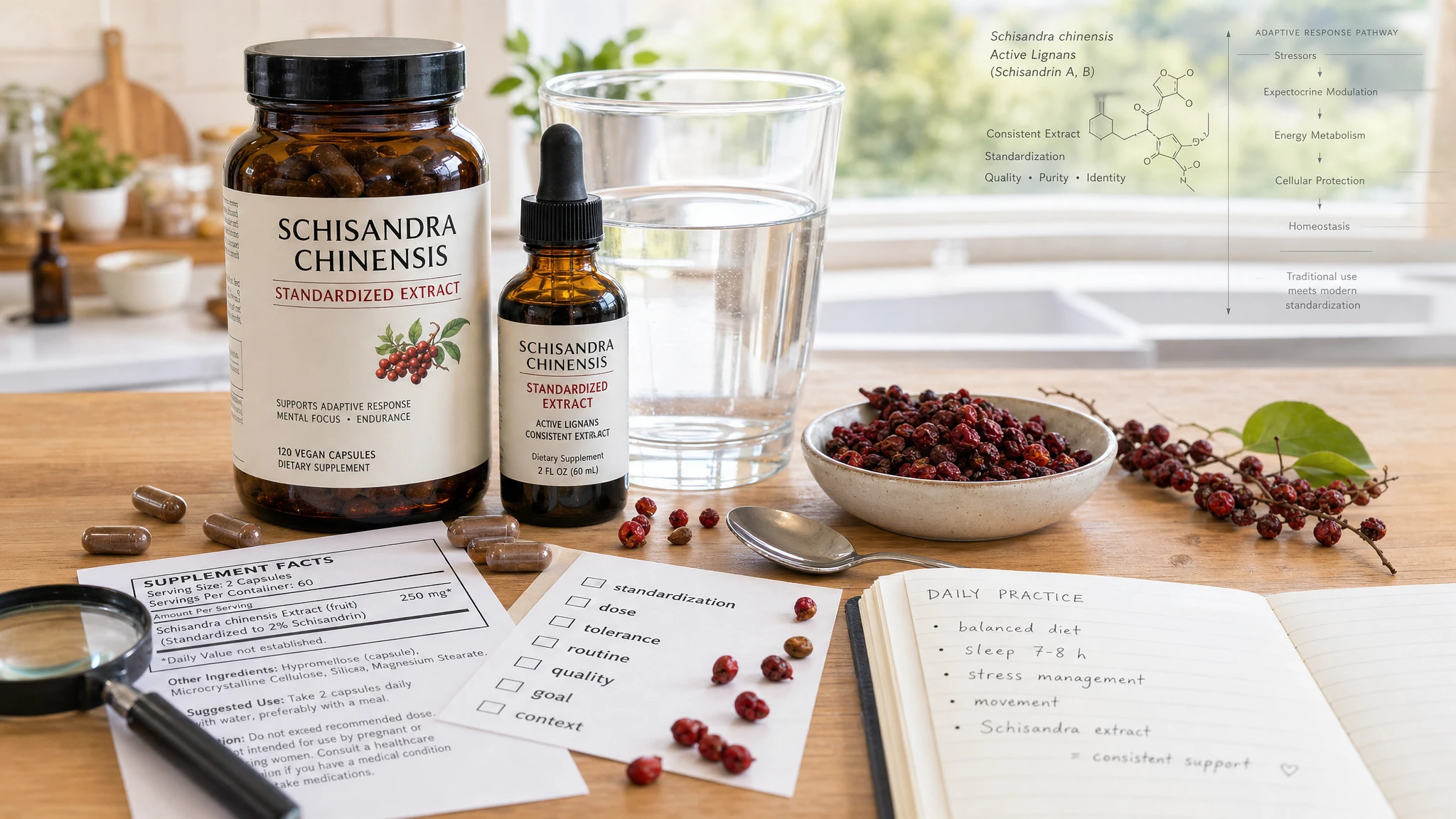
In practical use, Schisandra chinensis is an aid that complements diet, sleep, and stress management. It cannot replace these foundations. Its lignans (active plant compounds) act on the cell's defense systems. They may also influence energy use and the response to inflammation.
For this reason, research is studying the plant in the context of chronic stress, liver damage, and metabolic imbalances [1,18,2,4]. Before purchasing an extract, it is useful to clarify the purpose. It may be intended for occasional use, periods of increased demand, or prolonged supplementation programs.
Quality is important because not all extracts have the same amount of Schisandra lignans. Standardization (the consistent presence of active compounds) helps to compare the product with those studied [1,2].
These data also help in better interpreting studies. Indeed, the effects depend on the product used and not just on the plant species. The plant can be included in plans aimed at stress response, liver health, or metabolism.
In the liver, its compounds appear to support internal antioxidant systems. These limit the damage caused by free radicals. The effect may be relevant in steatosis (fatty liver) or in the presence of inflammation [18,3,37,22]. However, most of the data comes from studies on cells or animals.
When talking about schisandra supplementation, it is not just the amount taken that matters. The product must be suitable for the purpose and well-tolerated by the individual. More caution is needed if you are taking medications or other supplements, as there may be interactions [8,9].
In practice, it is advisable to aim for regular but moderate use. It is useful to observe the body's signals and choose the product carefully. Some extracts are suitable for daily use, while others are designed for targeted cycles.
Even when seeking the benefits of schisandra for vitality or metabolism, lifestyle remains central. An adaptogen (a substance that helps the stress response) does not replace healthy habits. Studies indicate a possible gradual action, not a sudden stimulus.
With consistent use, the extract may modulate the stress axis (the system that coordinates this response) and hormonal signals. However, the context and personal situation remain important [4,13,14]. For this reason, the most useful application comes from an informed choice that is consistent with the available data [18,4].
To choose more carefully, it is worth evaluating some concrete data rather than just the name of the plant:
- Verify the part used, the type of extract, and the indicated standardization.
- Check the dose per serving and the clarity of the instructions on the label.
- Prefer products with clear data on origin and composition.
- Link the use to realistic goals and a well-defined duration.
Practical advice varies depending on the purpose and the type of product. Three points must be evaluated: the label, integration into your routine, and tolerability.
How to choose a Schisandra extract by reading the label
To choose a Schisandra chinensis extract, it is best to read the label as if it were a technical data sheet, not a generic promise. The most useful points to check are the part of the plant used, the type of extract, any standardization, and the dose per serving. Standardization indicates that the product declares a constant amount of active components, making formulations more comparable and the relationship between the commercial product and scientific literature easier to interpret [8,9,1]. This is important because the effects attributed to Schisandra depend largely on the actual composition of the extract, not just the name on the label.
From a biological perspective, lignans do not all act in the same way: some are more relevant for liver protection, others for controlling oxidative stress or for interfering with metabolic signals such as AMPK and mTOR [17,24,41,27,28]. AMPK is a cellular energy sensor, while mTOR is a signaling pathway that regulates growth and protein synthesis.
In practice, a transparent label allows you to distinguish between a supplement formulated with criteria and a product that relies solely on botanical appeal. The format can also carry weight, as capsules, powders, and liquid extracts do not always offer the same ease of use. For those interested in the properties of schisandra in the context of nutritional supplementation, the informational quality of the product is the first sign of reliability. A complete label does not guarantee efficacy on its own, but it reduces the risk of a random choice and helps navigate between very different products.
Schisandra in your daily diet: how to include it without overdoing it
When the goal concerns metabolism, some studies explain the possible mechanism. In models of fatty liver disease, schisandrin B promoted the use of fatty acids. It also reduced the accumulation of lipids, or fats, in the liver [17]. This finding indicates a possible role when the liver manages fats poorly, but it does not prove the same effect in humans.
Other studies have observed effects on glucose and lipids. Pathways linking energy, oxidative stress, and inflammation are involved [22] [24]. Daily use therefore requires attention to the body's signals and the quality of the product.
Including the plant in your diet means using it as support, not as an essential part of a meal. The choice depends on the goal, tolerability, and type of extract. It can be used during certain periods or as part of broader plans. However, it must not replace a varied diet, adequate sleep, and stress management.
This criterion avoids attributing to a single supplement the ability to compensate for unhealthy habits. The stress response involves the nervous system, hormones, and metabolism. These systems benefit more from gradual and consistent changes than from isolated actions [4] [13] [14] [48] [49].
Plant-based products can also interact with medications and are not suitable for everyone [8] [9]. The topic concerns those looking for a practical way to include them in their diet. Phytotherapy (the use of plants for health purposes) can complement nutrition, but it requires realistic criteria. Your lifestyle context remains decisive for metabolic well-being. This leads to a common question: is Schisandra harmful?
Is Schisandra harmful? Frequently asked questions from users
The question “Is Schisandra harmful?” arises from the doubt that a natural product might have unintended effects. There is no one-size-fits-all answer. The risk depends on the dosage, duration, type of extract, and personal situation. Carefully selected plant-based products can be used rationally, but they are not always without limitations. They can also interact with other substances [8] [9]. Caution is therefore not alarmism, but a normal part of informed use.
The more useful question concerns the conditions under which its use might make sense. It is also necessary to understand when more caution is needed. This applies especially to long-term use or when combined with other products. Digestive issues, medications, and diet can, in fact, change tolerability.
A clear answer helps to overcome the vague idea that “natural” always means safe. Instead, it allows for a concrete choice based on available data and individual needs. Studies show precise biological actions, but not an effect that is the same for everyone. In some models, lignans have acted on inflammation, oxidative stress, and mitochondrial activity. Mitochondria are the parts of the cell that produce energy.
In other studies, the extract has modulated pathways related to cell life and growth [37] [31] [32] [41] [33] [27] [28]. The potential benefit therefore depends on the initial problem and the type of stress present. These data also derive from preclinical models (studies on cells or animals).
Research on memory, mood, and stress response indicates a potential supportive role. It does not show a rapid or certain correction [39] [10] [12] [13] [40] [38]. The most responsible approach therefore requires informed choices, realistic expectations, and attention to the individual. The active ingredient alone is not enough to predict the effect.
Summary of scientific evidence
The table summarizes the most representative sources from the received bibliography and the main topics examined.
| Publication year | Area studied | What the studies indicate |
|---|---|---|
| 2008 | Neuronal defense and oxidative stress | the antioxidant status of brain mitochondria and resistance to ischemic damage were improved [16] |
| 2015 | Microbiota and metabolic values | in obese women, the signal is consistent with changes in the gut microbiota and certain metabolic values [23] |
| 2017 | Fat utilization and adipocytes | cellular and animal studies show effects on fat utilization and lipolysis (fat breakdown) [15] |
| 2018 | Inflammation and cellular defense | studies show fewer pro-inflammatory mediators and potential control of Nrf2 and NF-kB pathways [5] |
| 2022 | Glycemia and clinical trial | a controlled trial with omija extract found favorable signals regarding glycemic control [10] |
| 2025 | Liver protection and preclinical review | evidence shows a consistent signal regarding liver damage and metabolic pathways [18] |
| 2025 | Lignans, pharmacology, and mechanisms of action | studies demonstrate multiple mechanisms and evaluate structure, biological activity, and pharmacokinetics (pathway in the body) [2] |
| 2026 | mTOR, autophagy, and energy use | in recent preclinical models, the signal is consistent with context-dependent control of AMPK and mTOR [47] |
Editorial interpretation of the evidence
Conclusions and editorial summary
Final critical note
References
[1] A comprehensive review of Schisandra chinensis lignans: pharmacokinetics, pharmacological mechanisms, and future prospects in disease prevention and treatment
[2] A Review of the Biological Activity and Structure–Activity Relationships of the Main Compounds of Schisandra chinensis
[3] Antioxidant Effects of Schisandra chinensis Fruits and Their Active Constituents
[4] Effect of Schisandra chinensis on interleukins, glucose metabolism, and pituitary-adrenal and gonadal axis in rats under strenuous swimming exercise
[5] Schisandra Chinensis Lignans Suppresses the Production of Inflammatory Mediators Regulated by NF-kB, AP-1, and IRF3 in Lipopolysaccharide-Stimulated RAW264.7 Cells
[6] Schisandrin B exhibits anti-inflammatory activity through modulation of the redox-sensitive transcription factors Nrf2 and NF-kB
[7] Downregulation of pro-inflammatory mediators by a water extract of Schisandra chinensis (Turcz.) Baill fruit in lipopolysaccharide-stimulated RAW 264.7 macrophage cells
[8] Herbal Supplements: What You Need To Know
[9] Herbal and Dietary Supplements
[10] Efficacy and Safety of an Omija (Schisandra chinensis) Extract Mixture in Improving Hyperglycemia: A Randomized, Double-Blind, Placebo-Controlled Clinical Trial
[11] Effect of Schisandra chinensis Extract Supplementation on Quadriceps Muscle Strength and Fatigue in Adult Women: A Randomized, Double-Blind, Placebo-Controlled Trial
[12] A Randomized, Double-Blind, Placebo-Controlled, Single-Dose Study of the Effects of ADAPT-232 on Cognitive Functions
[13] Effects of multi-herb and ashwagandha root formulas on stress modulation: a randomized, double-blind, placebo-controlled clinical study
[14] Anxiolytic Effects of Acanthopanax senticosus-Schisandra chinensis Combination: Mechanistic Insights via HPA and Neuroinflammatory Modulation
[15] Schisandrin B regulates lipid metabolism in subcutaneous adipocytes
[16] Schisandrin B Enhances Cerebral Mitochondrial Antioxidant Status and Structural Integrity, and Protects against Cerebral Ischemia/Reperfusion Injury in Rats
[17] Schisandrin B mitigates hepatic steatosis and promotes fatty acid oxidation by inducing autophagy through AMPK/mTOR signaling pathway
[18] Efficacy of Schisandra chinensis in the Treatment of Liver Injury: A Systematic Review and Preclinical Meta-Analysis
[19] Study on the effect of active components of Schisandra chinensis on liver injury and its mechanisms in mice based on network pharmacology
[21] Evaluation of the protective effects of Schisandra chinensis on Phase I drug metabolism using a CCl4 intoxication model
[22] Schisandra chinensis alleviates Hypertriglyceridemia in nonalcoholic fatty liver disease by modulating the gut microbiota and hepatic lipid metabolism: identification of its active fractions
[23] Schisandra chinensis fruit modulates the gut microbiota composition in association with metabolic markers in obese women: a randomized, double-blind placebo-controlled study
[24] Antidiabetic Effect of Gomisin N via Activation of AMP-Activated Protein Kinase
[25] Establishment of a pharmacokinetics and pharmacodynamics model of Schisandra lignans against hippocampal neurotransmitters in AD rats based on microdi-alysis liquid chromatography-mass spectrometry
[26] Schisandrin B, a potential GLP-1R agonist, exerts anti-diabetic effects by stimulating insulin secretion
[27] Schisandrin B Alleviates Renal Tubular Cell Epithelial–Mesenchymal Transition and Mitochondrial Dysfunction by Kielin/Chordin-like Protein Upregulation via Akt Pathway Inactivation and Adenosine 5′-Monophosphate (AMP)-Activated Protein Kinase Pathway Activation in Diabetic Kidney Disease
[28] Schisandrin A alleviates UVB-induced photoaging via AMPK/Nrf2-mediated antioxidant and autophagy pathways
[31] Schisandrin B Inhibits Osteosarcoma Cell Proliferation and Promotes Apoptosis Through PI3K/AKT/mTOR Pathway Mediated Autophagy
[32] Exploring the Molecular Mechanism of Schisandrin C for the Treatment of Atherosclerosis via the PI3K/AKT/mTOR Autophagy Pathway
[33] Schisandrin B Inhibits Cell Viability and Migration, and Induces Cell Apoptosis by circ_0009112/miR-708-5p Axis Through PI3K/AKT Pathway in Osteosarcoma
[34] Gomisin A Suppresses Colorectal Lung Metastasis by Inducing AMPK/p38-Mediated Apoptosis and Decreasing Metastatic Abilities of Colorectal Cancer Cells
[36] Schisandrin A Alleviates Inflammation and Oxidative Stress in an Ab25-35-Induced In Vitro Model of Alzheimer's Disease via the ERK/MAPK Signaling Pathway
[37] In Vivo and In Vitro Investigations of Schisandrin B Against Angiotensin II-Induced Ferroptosis and Atrial Fibrosis Through Regulation of the SIRT1 Pathway
[38] Schisanhenol Inhibits MPTP/MPP+-Induced Ferroptosis in Dopaminergic Neurons via the Nrf2/TrxR1/GPX4 Pathway Against Parkinson's Disease
[39] A supercritical oil extract of Schisandra chinensis seeds ameliorates Huntington’s disease-like symptoms and neuropathology: the potential role of anti-oxidant and anti-inflammatory effects
[40] Efficacy and Mechanism of Schisandra chinensis Fructus Water Extract in Alzheimer's Disease: Insights From Network Pharmacology and Validation in an Amyloid-b Infusion Animal Model
[41] Schisandrin B suppresses glioma cell metastasis mediated by inhibition of mTOR/MMP-9 signal pathway
[42] Inhibition of the AMPK/nNOS pathway for neuroprotection in stroke
[43] Schisandra chinensis Pomace Attenuates Scopolamine-Induced Cholinergic Dysfunction Associated with Changes in BDNF and JNK Signaling
[44] A comprehensive review of ethnopharmacology, phytochemistry, pharmacology, and pharmacokinetics of Schisandra chinensis (Turcz.) Baill. and Schisandra sphenanthera Rehd. et Wils.
[45] The extraction, purification, structural features, bioactivities, and applications of Schisandra chinensis polysaccharides: A review
[46] Schisandrol A, the Major Active Constitute in Schisandra chinensis : A Review of Its Preparation, Biological Activities, and Pharmacokinetics Analysis
[47] Schisandrin B confers multi-organ protection via regulation of mitochondrial homeostasis: mechanistic integration, organ-specific differences, and translational challenges—a review
[48] AMP-activated protein kinase and nitric oxide regulate the glucose sensitivity of ventromedial hypothalamic glucose-inhibited neurons
[49] A Functional Link between AMP-Activated Protein Kinase and Orexin Mediates the Effect of BMP8B on Energy Balance
Editorial note
Artificial Intelligence was used solely as a tool to support editorial and documentary work. All content, interpretations, bibliographic citations and conclusions have been verified, reviewed and approved by the author, who assumes full scientific responsibility for them.
The manuscript was also subject to independent peer review prior to publication.
To ensure maximum transparency, the article's complete history — including the dates of submission, review, acceptance and publication, as well as information on the peer review process — is available on the dedicated Article History page.