Roberto Panzironi

Independent researcher and science communicator

Roberto Panzironi

Professional profile

Born on 12 April 1972, Roberto Panzironi is an Italian entrepreneur with over thirty years of experience in publishing, communication, industrial printing, wellness and health communication.

Since 2013 he has been consistently dedicated to communicating topics in nutrition and human health, with the aim of making complex subjects related to lifestyle and well-being accessible to the general public. In July 2026 he founded LIFE Science Hub – Journal of Science, a magazine devoted to science communication in nutrition, health and prevention, of which he is a co-author.

Areas of expertise

  • Editorial direction and science communication
  • Publishing, communication and industrial printing
  • Nutrition, health and prevention (communication)
  • Entrepreneurship in wellness and food supplements

Professional experience

  • Independent researcher and co-author — LIFE Science Hub – Journal of Science (since 2026)
    Founder of the science-communication magazine on nutrition, health and prevention. Content is produced together with biologists and nutritionists, subject to independent peer review and accompanied by the authors' DOI and ORCID identifiers.
  • Founder — Food supplements company (since 2017)
    Within three years the company reached a turnover of 20 million euros. In 2020 it received the Industria Felix Award (Il Sole 24 Ore) as the best company in Central Italy for financial performance in the Web sector.
  • Communicator — “Life Informazione Salute” blog (since 2013)
    More than 400 articles making lifestyle and well-being topics accessible to a wide audience.
  • Founder — 3,000 sqm fitness centre, Anzio (since 2009)
    One of the most innovative facilities in the national wellness landscape.
  • Publisher — “Welcome Map Roma” (since 2004)
    Free tourist map distributed in the hotels of the Capital, with over 10 million copies a year for more than a decade.
  • Graphic and publishing entrepreneur — Printing plant, Gaeta (since 1997)
    Vertical integration of the entire production chain (design, prepress, printing, finishing): turnover of about 10 billion lire and more than 250 collaborators.
  • Publisher — Local free-press group (since 1993)
    Six monthly newspapers with a combined distribution of more than 100,000 copies per month.

Academic background

  • Diploma in Accounting (1990)
    Followed by a period of professional practice at an accountancy firm.
  • Studies in Economics and Business (1990–1992)
    Undertaken at university and interrupted in 1992 to pursue entrepreneurial activity.

Qualifications and certifications

Awards

  • Industria Felix Award 2020 (Il Sole 24 Ore) — best company in Central Italy in the Web sector

Articles

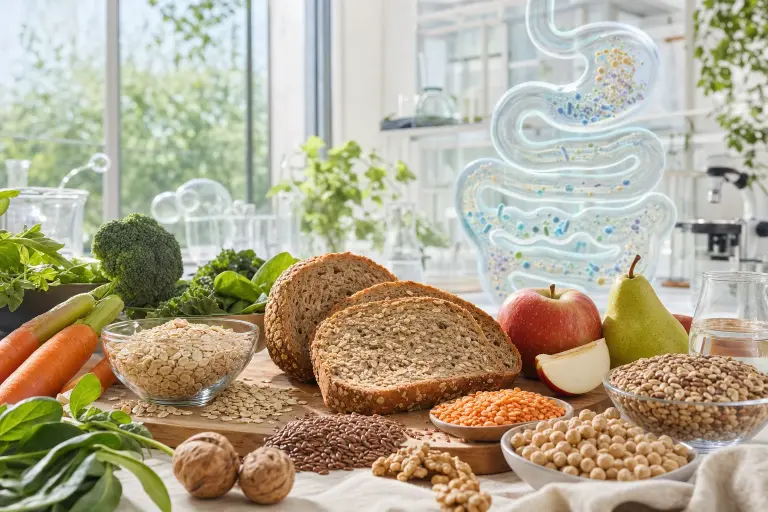
Dietary Fiber: What It Is and Why It's So Important Today

Dietary Fiber: What It Is and Why It's So Important Today

Dott. Armando Colonnese and Roberto Panzironi; Last updated: August 2026

In brief: Research shows that dietary fiber matters a lot for health, but not identically for all people. The strongest evidence links adequate intake to improved bowel regularity, a more stable glycemic response, and a more favorable cardiometabolic profile. The benefit emerges especially when fiber comes from legumes, whole grains, fruits, and vegetables, within an overall balanced and minimally processed diet.
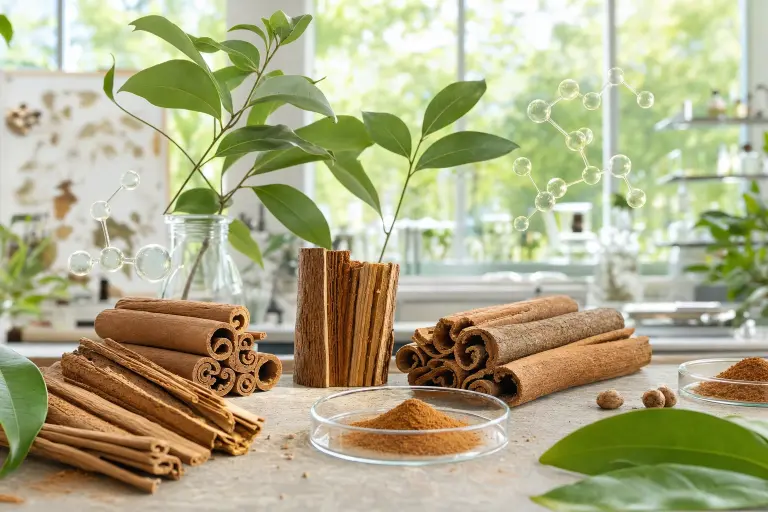
Cinnamon: scientific evidence, mechanisms of action, and applications for human health

Cinnamon: scientific evidence, mechanisms of action, and applications for human health

Dott. Armando Colonnese and Roberto Panzironi; Last updated: August 2026

In brief: Research describes cinnamon as a botanically complex spice, with active compounds that can influence metabolism, glycemia, and certain cellular processes. The strongest evidence concerns its support in metabolic disorders, especially type 2 diabetes and insulin resistance, while other areas remain more exploratory. Safety also depends on the variety, dose, and form of consumption. In summary, the scientific picture is promising but not uniform and requires careful interpretation.

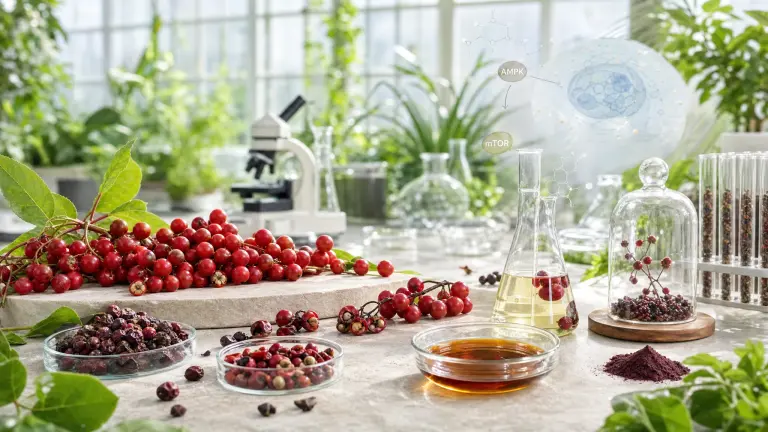
Schisandra: properties, supplementation, treated conditions, and mTOR modulation in metabolism

Schisandra: properties, supplementation, treated conditions, and mTOR modulation in metabolism

Dott. Armando Colonnese and Roberto Panzironi; Last updated: October 2026

In brief: Schisandra chinensis is rich in bioactive lignans and is being studied for its effects on the liver and metabolism. Studies are also evaluating its impact on inflammation and cellular defense. The most robust evidence comes from preclinical studies, while clinical data remain more limited. Furthermore, results often depend on the specific product used. Research therefore indicates a real biological potential, though it is not yet definitive. Caution and precise comparisons between various extracts are necessary.

Ginseng: properties, supplementation, and health benefits

Ginseng: properties, supplementation, and health benefits

Dott. Armando Colonnese and Roberto Panzironi; Last updated: October 2026

In brief: Research on ginseng offers an interesting, yet inconsistent, picture. Some studies indicate effects on fatigue, sugar metabolism, memory, and stress response. Others find weaker effects or results linked to the type of product used. The quality of the extract, dosage, timing of use, and duration can significantly change the outcome. Safety generally appears good, but still requires careful interpretation of the data. In summary, ginseng is a phytocomplex—that is, a set of active plant substances—that has been widely studied. The evidence makes it more credible as a targeted aid than as a one-size-fits-all solution.

Reishi (Ganoderma lucidum): properties, supplementation, treated conditions, and its role in mTOR and AMPK

Reishi (Ganoderma lucidum): properties, supplementation, treated conditions, and its role in mTOR and AMPK

Dott. Armando Colonnese and Roberto Panzironi; Last updated: October 2026

In brief: Research describes Reishi as an interesting medicinal mushroom, though results remain inconsistent. The most promising data concern the immune system, metabolism, and cellular pathways such as mTOR and AMPK. However, direct clinical evidence is more limited. Product quality also matters, as extracts, powders, and spores are not equivalent. In summary, it may play a role as an additional support. It is not, however, a standalone, definitive, or universal solution.

Cordyceps: properties, active compounds, and level of scientific evidence

Cordyceps: properties, active compounds, and level of scientific evidence

Dott. Armando Colonnese and Roberto Panzironi; Last updated: October 2026

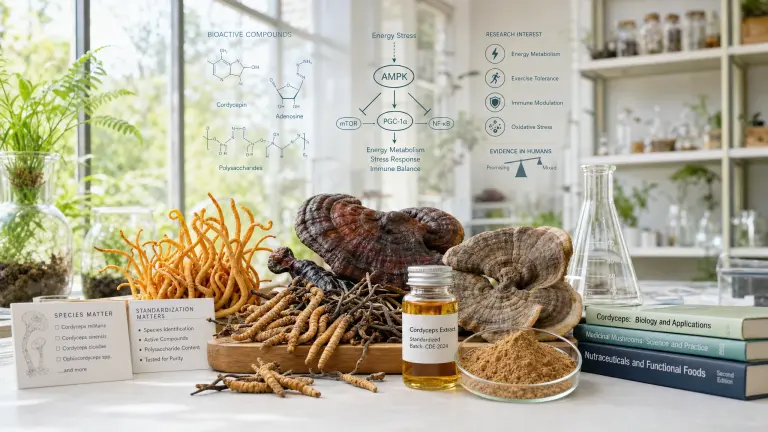
In brief: Research describes cordyceps as a complex fungus. Studies examine compounds such as cordycepin, adenosine, and polysaccharides. Evidence points to genuine interest regarding immune defenses, metabolism, and physical endurance. However, results are not uniform: some clinical studies show promising signs, while others remain neutral. The value of the data therefore depends on the species, extract, dose, and quality of the product used.

Ginger: properties, clinical integration, and role in key metabolic pathways

Ginger: properties, clinical integration, and role in key metabolic pathways

Dott. Armando Colonnese and Roberto Panzironi; Last updated: September 2026

In brief: Research suggests that ginger may offer metabolic support, especially in contexts where glycemia, insulin, and inflammation are already altered. Clinical trials show favorable signals on glycemic control, insulin sensitivity, and some oxidative markers, while experimental studies explain these effects through pathways such as AMPK and mTOR. However, results are not uniform and depend on the dose, form, and population studied.

Black pepper and its intrinsic properties

Black pepper and its intrinsic properties

Dott. Armando Colonnese and Roberto Panzironi; Last updated: September 2026

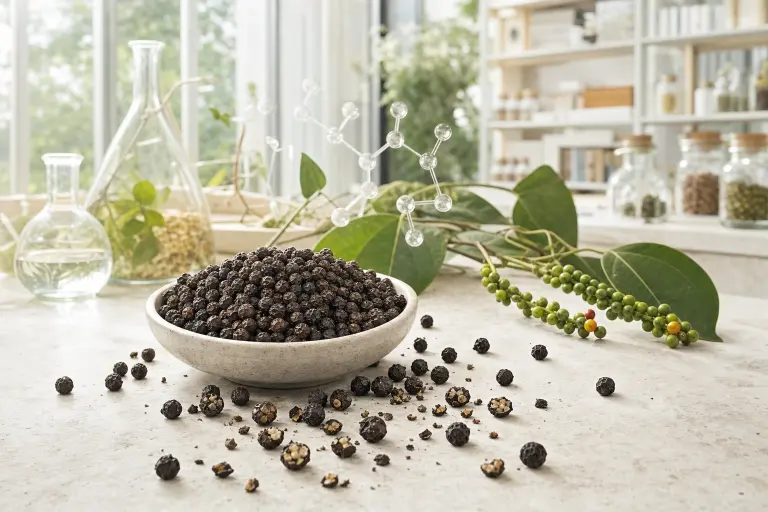
In brief: Research on black pepper shows growing interest in piperine, its most studied bioactive compound. The most convincing evidence concerns its ability to influence the bioavailability of certain substances and to modulate cellular signals related to metabolism, inflammation, and oxidative stress. However, many results remain preclinical or obtained in combination with other compounds, so the clinical significance is not yet precisely defined. Black pepper remains primarily a food spice, while piperine is a research molecule that deserves attention but also interpretive caution.

Oregano, much more than a spice

Oregano, much more than a spice

Dott. Armando Colonnese and Roberto Panzironi; Last updated: September 2026

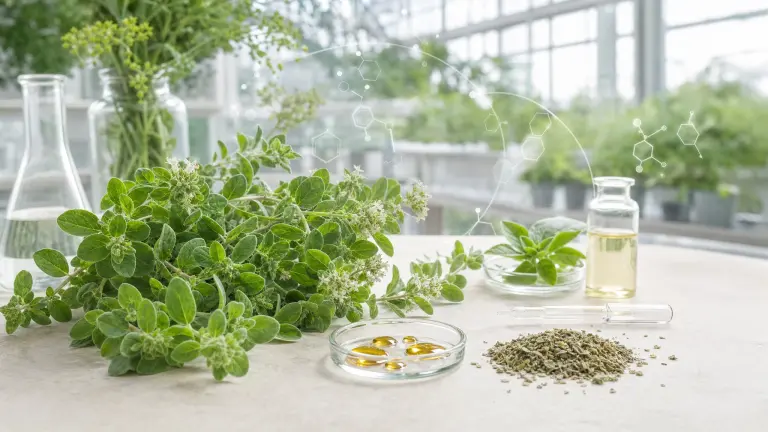
In brief: La ricerca sull’origano mostra un interesse reale, ma ancora non conclusivo. Le evidenze più convincenti riguardano carvacrolo e timolo, composti che spiegano gran parte delle attività antiossidanti, antinfiammatorie e antimicrobiche osservate in laboratorio. Nei modelli sperimentali l’origano è stato studiato anche per metabolismo, insulino-resistenza, mTOR e AMPK, ma i dati clinici nell’uomo restano limitati. La differenza tra spezia, olio essenziale ed estratti concentrati è centrale per interpretare correttamente i risultati.

Cloves, Eugenol, and Metabolic Regulation: Properties, Supplementation, and Uses in Chronic Diseases.

Cloves, Eugenol, and Metabolic Regulation: Properties, Supplementation, and Uses in Chronic Diseases.

Dott. Armando Colonnese and Roberto Panzironi; Last updated: September 2026

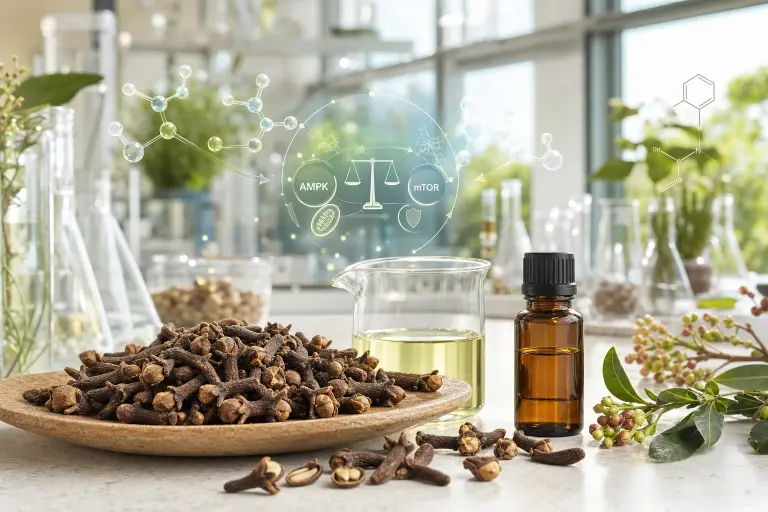
In brief: Research on cloves suggests a concrete interest in metabolism, inflammation, and oxidative stress. Eugenol and polyphenolic extracts appear to act on glycemia, AMPK, mTOR, autophagy, and peripheral tissues, but the strongest signal comes from experimental models. Human studies are few, small, and still preliminary. For this reason, the spice should be interpreted as a plausible nutritional support, not as an autonomous solution or universal remedy.

Turmeric, Insulin Resistance, and the Metabolic Journey

Turmeric, Insulin Resistance, and the Metabolic Journey

Dott. Armando Colonnese and Roberto Panzironi; Last updated: September 2026

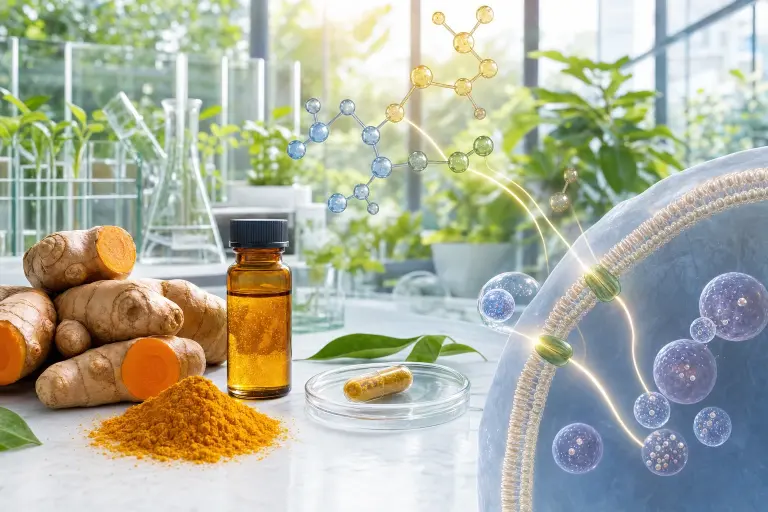
In brief: Research describes curcumin as a molecule of interest for metabolism, especially because it can interact with AMPK, mTOR, and GLUT4, three central nodes in energy management and glucose transport. In human trials and meta-analyses, favorable signals emerge regarding glycemia, insulin resistance, and inflammatory markers, but the effect is not uniform. Bioavailability, dose, and formulation remain decisive for correctly interpreting the results.

Guiding professional principle

To make the most recent scientific evidence on nutrition, health and prevention accessible to the general public, while maintaining high standards of methodological rigour.