


Reishi (Ganoderma lucidum): properties, supplementation, treated conditions, and its role in mTOR and AMPK
Research describes Reishi as an interesting medicinal mushroom, though results remain inconsistent. The most promising data concern the immune system, metabolism, and cellular pathways such as mTOR and AMPK. However, direct clinical evidence is more limited. Product quality also matters, as extracts, powders, and spores are not equivalent. In summary, it may play a role as an additional support. It is not, however, a standalone, definitive, or universal solution.
- Published 06/10/2026
- Updated 15/10/2026
- Reviewed 30/09/2026
- Article history

ABSTRACT : WHAT THE SCIENCE SAYS
Reishi, known as Ganoderma lucidum or Lingzhi, is among the most studied and cited medicinal mushrooms. Interest in it stems from a mixture of substances, rather than a single compound. It contains polysaccharides (active sugar chains), beta-glucans, triterpenes, phenolic compounds, sterols, nucleosides, active proteins, vitamins, and minerals.
This richness may explain its potential effects on immune defenses, inflammation, metabolism, and oxidative stress. The latter occurs when certain reactive molecules overwhelm cellular defenses. In Asian tradition, the mushroom is associated with vitality, longevity, and the stress response. Modern research seeks to understand which effects have a solid foundation and which require further evidence.
A key point concerns the differences between the whole mushroom, extracts, and spores. These forms do not always contain the same substances and do not have equal bioavailability (the amount absorbed by the body). Therefore, the name "Reishi" is not enough to describe a product. Effects also depend on dosage, duration, type of extract, and the populations studied. For this reason, every result should be interpreted with caution.
The article also examines the relationship with mTOR and AMPK. mTOR regulates growth and protein production, while AMPK detects the energy available in cells. We will then look at studies on metabolism, support in oncology, and safety. Finally, the criteria useful for choosing a product will be discussed. In summary, below are the key points we will explore in depth:
- Active compounds and properties of Reishi
- Differences between extracts, whole mushroom, and spores
- Possible effects on metabolism, immunity, and inflammation
- Role of mTOR, AMPK, and autophagy
- Product selection, safety, and practical use
Properties
The properties of reishi depend on its chemical profile and its potential effects on immunity, inflammation, and oxidative stress. The benefits of Ganoderma lucidum vary significantly depending on the form used. Active components, such as polysaccharides, beta-glucans, and triterpenes, also play a key role.
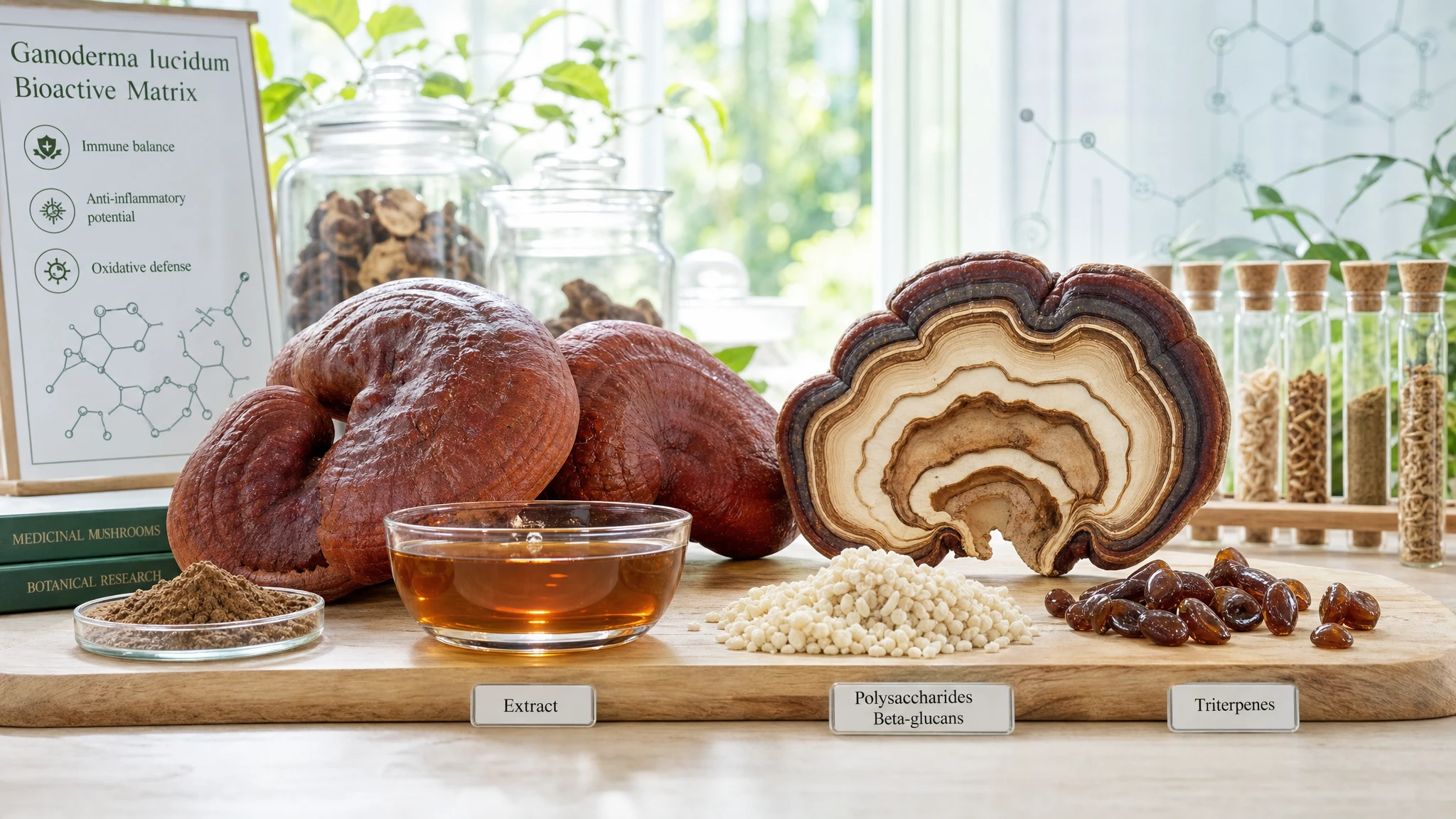
Among the most studied medicinal mushrooms, reishi has a very rich chemical structure. It does not contain a single substance, but many molecules that can have different actions. This “complex matrix” includes compounds that can act together in the body. Its properties depend primarily on polysaccharides, beta-glucans, and triterpenes. Sterols, nucleosides, and other active molecules are also present [1] [2].
Ganoderma lucidum can therefore act on immunity, inflammation, and defense against oxidative stress. This imbalance occurs when free radicals exceed the body's antioxidant defenses. The form used, however, can significantly change the chemical profile of the product. Extracts, fruiting bodies, and spores, in fact, do not provide the same compounds [1] [2].
The data indicate a possible immunomodulating effect (capable of regulating certain immune responses), not a generic “stimulating” action. The mushroom appears to coordinate certain cellular responses, but it does not guarantee a clinical benefit for everyone [3] [4].
An anti-inflammatory effect is also possible. In various laboratory models, triterpenes are linked to fewer signals that promote inflammation [5]. Many data, however, are derived from research conducted on cells or animals. Other results depend on the quality of the extract used. Properties must therefore be evaluated based on the form and the intended use [6] [7] [2].
To understand the main properties of reishi, it is useful to evaluate some key points. These aspects help in interpreting studies and judging products on the market:
- Polysaccharides can regulate certain functions of the immune defenses.
- Beta-glucans are among the most studied components for immunity.
- Triterpenes are linked to potential anti-inflammatory and antioxidant effects.
- The form of the product changes the quantity of active compounds.
- The properties also depend on the standardization (content control) of the extract.
The properties of reishi are best understood by starting with its main compounds. It is then necessary to see how these compounds can act within the body. The following points link composition, studied mechanisms, and potential practical use.
What is Reishi and what bioactive compounds does it contain
Reishi, or Ganoderma lucidum, is a medicinal mushroom that has long been used in Asia. Today, research is studying this mushroom for its complex chemical composition. Its best-known compounds are polysaccharides, β-glucans, and triterpenes. The extract also contains sterols, nucleosides, bioactive proteins, and phenolic compounds [1,2]. Phenolic compounds are plant molecules known for their potential antioxidant effect. This chemical richness explains why Reishi is considered a functional food, not just a simple ingredient. The various phytochemicals are plant-derived molecules that can have biological activity. These molecules do not always act alone, but can work together in the body. In this way, they can regulate immune defenses, oxidative stress, and certain inflammatory processes.
For this reason, it is always necessary to indicate which Reishi preparation has been used. The profile of the compounds varies significantly between the mycelium, the fruiting body, and the spores [1,2]. The practical takeaway is simple: there is no single "Reishi," but rather a family of different preparations. This distinction helps in better interpreting labels and clinical studies. In fact, results often cannot be compared directly. The distinction also has great scientific value, because many commercial messages ignore these differences. They often describe the mushroom as a unique product, without considering extracts and processing methods.
The first useful question, therefore, does not only concern what Reishi is. One must ask which form is being sold or was used in the study. Understanding this point avoids vague comparisons and helps in reading data more carefully. This applies to the effects on immunity, metabolism, and general support. The next step concerns polysaccharides and β-glucans, the components most studied for immunity and the gut.
Further reading: What is Reishi: composition and bioactive compounds of Ganoderma lucidum
What are Reishi polysaccharides and beta-glucans used for
Reishi polysaccharides and β-glucans are among the most studied compounds. They can interact with the immune system and the gut ecosystem. This system includes cells and molecules that defend our body. These compounds do not appear to "strengthen" defenses in a generic way. Instead, they may help to better regulate immune activity. In particular, they are thought to promote communication between innate and adaptive cells [3,4]. Innate cells form the first line of defense against threats. Adaptive cells, on the other hand, develop more targeted and long-lasting responses.
These compounds can also influence the gut microbiota, the community of microorganisms living in the intestine. The gut microbiota produces useful metabolites and helps maintain the integrity of the intestinal barrier [4]. Metabolites are substances produced by microorganisms during their metabolism. This role is interesting because it creates a link between nutrition and preventive health. A compound from the mushroom can have effects that go beyond simple digestion. These effects may involve inflammation, intestinal permeability, and the body's overall response. Intestinal permeability indicates how much the barrier allows substances to pass between the lumen and the bloodstream.
In healthy volunteers, a randomized study evaluated a β-1,3;1,6 D-glucan derived from Ganoderma lucidum. The research showed a modulation of the immune response compared to the control group [3]. This data confirms that glucan fractions are not just structural elements. Instead, they are components with biological activity. For the user, it is not enough to ask what these molecules are. It is necessary to understand what they are really for and when they might make sense in foods or supplements.
In this case as well, it is important not to overinterpret the data. An immunomodulating signal does not prove a clinical effect that is the same for everyone. Instead, it indicates potential utility in specific, selected contexts. Reishi therefore appears to be a complex source of molecules with a potential regulatory effect. It is not a product that acts in a simple or uniform way in every person. After polysaccharides, attention shifts to triterpenes, which contribute to the bitter taste of Reishi. These molecules are also linked to many of its biological activities.
Where Reishi triterpenes are found and why they matter
Triterpenes are another central class and include ganoderic and lucidenic acids. These molecules are characteristic of the mushroom and are being studied for their biological effects. In various models, they are linked to anti-inflammatory and antioxidant activities. They can also act on intracellular pathways (pathways that carry signals into the cell) [1] [5]. These pathways help cells regulate their responses.
Their quantity varies depending on the extract, the part used, and the processing method. Two products with the same label can therefore have very different functional qualities [2] [5]. The most recent reviews describe a chemical matrix that changes according to the preparation. In this matrix, triterpenes provide part of the bitter taste. They also contribute to many effects observed in the laboratory [1] [2].
These data help those choosing a supplement to better read the label. They also help in understanding which forms have more solid scientific foundations. This point is important, because advertising often simplifies a much more varied reality. Quality, instead, depends on the extraction method and standardization (content control).
The presence of these molecules, therefore, does not represent just a chemical datum. It also helps to estimate the possible role of the product. To compare studies or supplements, it is not enough to know the name of the mushroom. One must know what portion has been concentrated and to what extent. Whole mushroom, extracts, and spores, in fact, do not have the same profile.
Whole Reishi, extract, or spores: real differences
The various forms of Reishi are not equivalent to one another. Whole mushrooms, water or alcohol extracts, and cracked spores can have very different profiles. The amounts of polysaccharides, triterpenes, and other active molecules change [1] [2] [5]. This difference affects bioavailability, that is, the portion that the body is able to use. It also impacts the purpose for which the product is chosen.
An extract may contain a higher dose of certain specific components. The whole mushroom may offer more compounds, but in less consistent quantities. Spores form a distinct class and do not coincide with the fruiting body [2]. Therefore, price and advertising are not enough to make a choice. The form used and the actual content of active ingredients matter.
This distinction also avoids inaccurate comparisons between clinical studies and products on the market [1]. Recent research has shown that the form and context of use can change the meaning of the data. Therefore, the results of one preparation cannot be extended to all others. There are multiple technical options, not just one biological product. Understanding these differences helps to evaluate why some data are more robust than others. It also clarifies the link between composition and activity. On this basis, it is easier to address the topic of supplementation and choose the specific product.
Recent research and updates
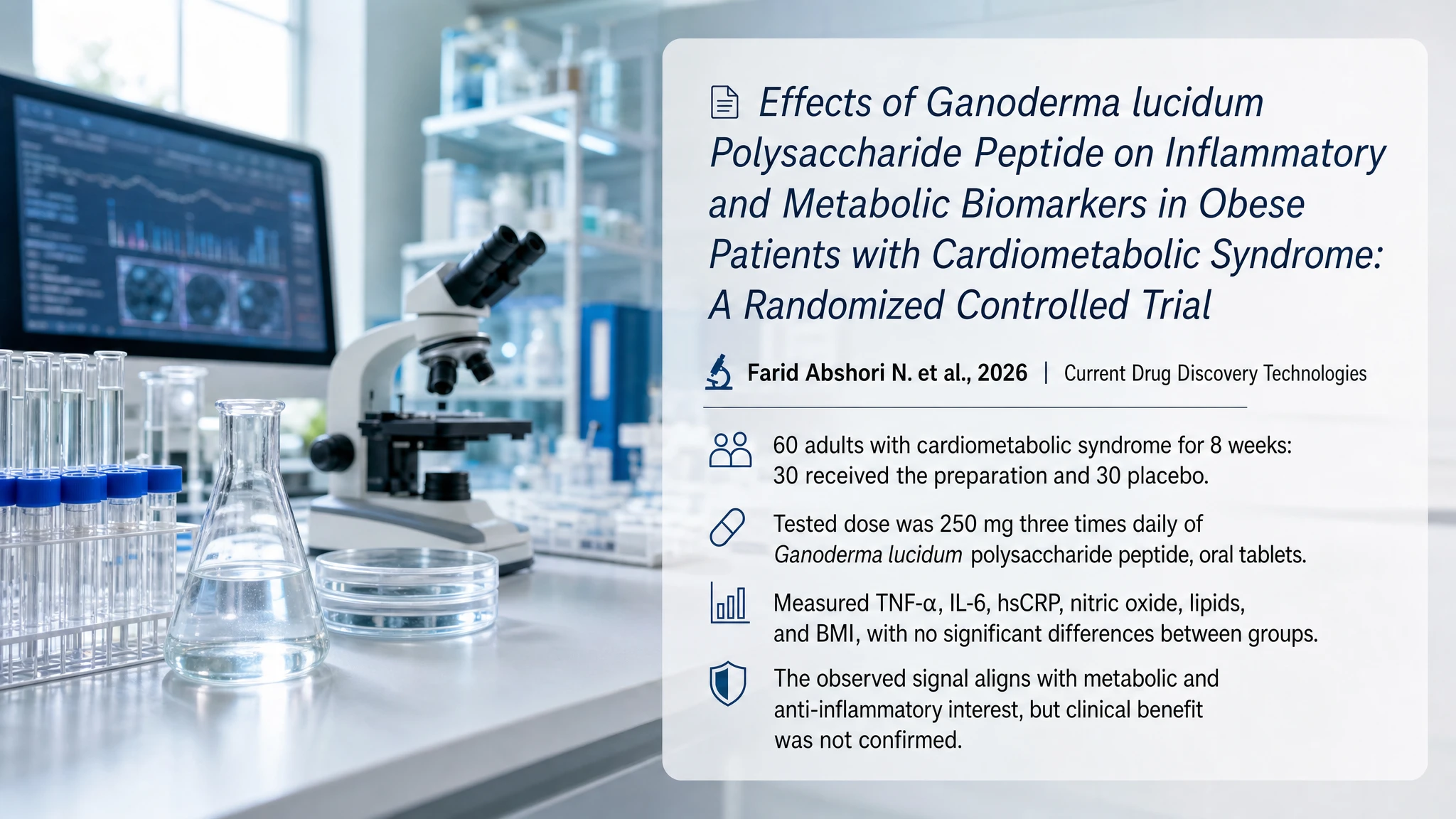
In 2026, Farid Abshori and colleagues, researchers from Indonesia, published a study in Current Drug Discovery Technologies. The group evaluated a polypeptide-polysaccharide from Ganoderma lucidum in adults with cardiometabolic syndrome. The research measured several markers of inflammation and metabolism in a controlled clinical setting. It also utilized a well-defined form of the product. While biological signals emerged, there was no clear difference compared to the control group.
Effects of Ganoderma lucidum Polysaccharide Peptide on Inflammatory and Metabolic Biomarkers in Obese Patients with Cardiometabolic Syndrome: A Randomized Controlled Trial
- The study followed 60 adults with cardiometabolic syndrome for 8 weeks: 30 received the preparation and 30 received a placebo.
- The tested dose was 250 mg of Ganoderma lucidum polysaccharide peptide three times daily, taken in oral tablets.
- The researchers measured TNF-α, IL-6, hsCRP, nitric oxide, lipids, and BMI, with no significant differences found between the groups.
- The data keep metabolic and anti-inflammatory interest alive, but do not confirm a clinical benefit.
Supplementation
Reishi supplements are not all the same. In studies, the form, standardization, and intended use vary. Therefore, it is not just the dose that matters, but also the type of Ganoderma lucidum extract. The context and the precise quantity of active compounds are also important. Potential benefits should be interpreted carefully, distinguishing clinical data from common use and product quality.
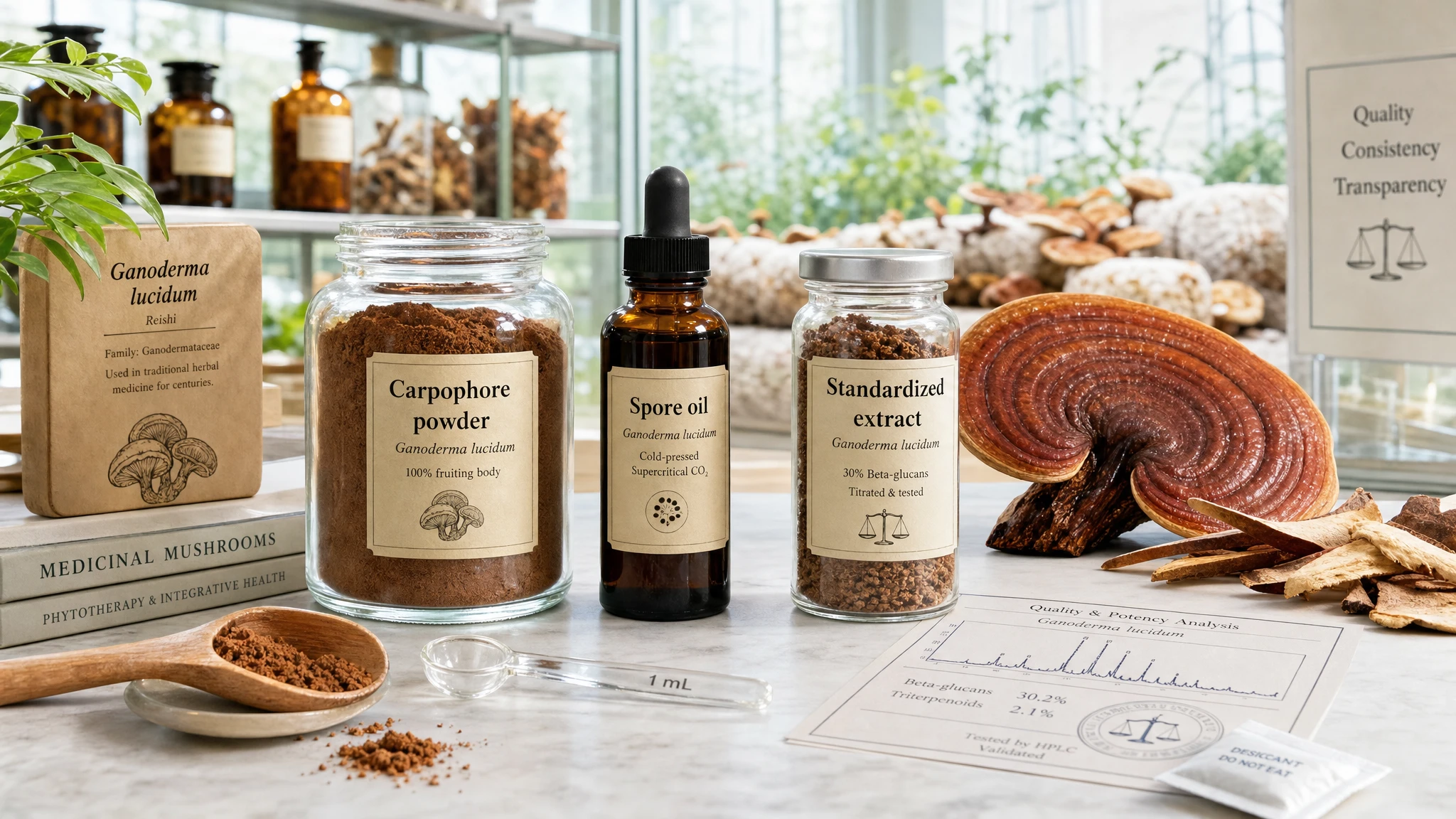
When it comes to reishi supplementation, the first mistake is to assume that every product is the same. In clinical studies, however, reishi is used in many different forms. These include dry extract, fruiting body powder, spore oil, and purified β-glucans. Standardized formulas with a defined amount of active compounds are also used [8,3,9].
The fruiting body is the reproductive part of the mushroom, usually harvested and processed into a supplement. These differences change the bioavailability, which is the portion that the body is able to use. The amount of polysaccharides and triterpenes present in the various products also varies. Therefore, comparing the results of different studies can be difficult [10,11].
Polysaccharides are long chains of sugars. Triterpenes are complex molecules, often studied for their biological activities. Evaluating a supplement therefore requires asking more questions. It is necessary to know in what form it is taken and what quality controls it has undergone.
The topic of supplementation, therefore, does not boil down to a simple daily dose. A safety study on healthy volunteers, already described [12], evaluated short-term use. Participants took 2 grams of extract twice a day for 10 days. The researchers did not detect any significant signs of poor tolerability.
However, other studies show that the response varies greatly depending on the fraction used. β-glucans are more linked to the immunomodulatory effect, i.e., the regulation of the immune response. Triterpenes, on the other hand, are often studied for different profiles [3,5,11]. Reishi should therefore be viewed as a family of preparations, not as a generic product.
Only in this way is it possible to evaluate its use as a supplement correctly and without being misleading. It is also necessary to distinguish between the various methods of use and consider them in their real context. In practice, it is not enough to ask whether reishi works. It is necessary to understand which preparation was actually used. The following information helps to interpret the differences between product, dose, and intended use.
To navigate this, it is useful to consider some criteria present in studies that are helpful for reading labels. These elements explain why two products with the same name can yield different results:
- The form of the extract changes the content and absorption of the bioactive compounds.
- Standardization allows for better comparison of the effects observed in studies.
- The dosage should always be evaluated together with the matrix, i.e., the base of the product.
- The duration of use varies greatly between short and long-term protocols.
- The quality of the preparation determines how reliable the results obtained are.
In studies, the term supplementation encompasses very different products. To understand how they are used, it is necessary to evaluate the form, dose, and specific quantity of the active compounds.
How Reishi is administered in clinical studies
In clinical studies, Reishi has been used in very different forms. These include purified beta-glucans, dry extracts, spore oil, and fruiting body powders. Standardized formulations have also been studied [8] [3] [9]. Beta-glucans are polysaccharides, which are sugar chains often studied for their potential role in the immune system. This variety makes it difficult to compare the results of different studies. Products do not always contain the same amounts of bioactive compounds. Furthermore, they may have different bioavailability, meaning they are absorbed and utilized to varying degrees [13] [14]. In practice, "taking Reishi" can refer to different uses depending on the chosen preparation.
Administration times also vary between protocols. Some last a few weeks, while others continue for several months. This duration affects the possibility of observing measurable changes [12]. Clinical data, therefore, do not indicate a single valid method of use for everyone. Instead, they suggest that the value of the product depends on its standardization and the context of use.
For example, one study involved healthy volunteers and primarily evaluated safety and tolerability. Participants took 2 grams of extract twice a day for 10 days. No significant adverse effects emerged compared to the control group [12]. This finding shows why dosage alone does not adequately describe the intervention. The form, the concentration of active compounds, and the reason for use also matter.
Reishi should therefore not be viewed as a substance to be taken indiscriminately. It encompasses various options that require a technical reading of the label and the context. This is why studies are not always comparable. The materials, preparations, and clinical objectives vary. After examining the forms, it remains to be understood how much Reishi is used in studies and supplements.
How much Reishi is typically used in supplements
Reishi quantities vary between commercial supplements and clinical studies. Some protocols use a few hundred milligrams per day of concentrated extracts. Others reach grams of powder or dried product [12] [15]. The number indicated on the label, therefore, is not enough to estimate exposure to active compounds.
It is necessary to verify if the product is titrated, meaning standardized to a defined quantity. The titer may refer to polysaccharides, triterpenes, or other fractions. It is also necessary to understand whether the dose refers to the extract or the raw mushroom [2] [14]. This point is important for correctly comparing different products. A low dose of concentrated extract may carry more weight than a large amount of poorly standardized powder.
In a safety trial, 16 healthy volunteers took an extract for a short period. They received 2 grams of extract twice a day for 10 days. Tolerability showed no significant differences compared to the placebo [12]. This data helps in evaluating short-term exposure under controlled conditions. Another study examined Reishi spores in women with cancer-related fatigue. In total, 48 patients were randomly assigned to an experimental or comparison arm. The study shows how much dose and matrix matter when looking for an effect on symptoms [15]. Fatigue is a persistent tiredness, excessive relative to the activity performed, common in oncology patients.
These data help answer the question “how much to consume?” without making incorrect comparisons. Many supplements, in fact, seem similar but are not truly comparable. Reasoned use requires evaluating quantity, quality of the preparation, and clinical context. Understanding the numbers is useful, but it is also necessary to evaluate the purpose of daily use. In some cases, it may have a concrete goal; in others, it may not be suitable.
Reishi every day: when it can make sense
Daily use of Reishi is often proposed for preventive purposes. It is primarily considered by those seeking support for immunity, general well-being, or the management of perceived stress. However, "every day" does not automatically mean "better." The choice depends on the context, the type of extract, and the intended duration. The goal one wishes to achieve also matters [3] [16]. In scientific protocols, continuous use makes sense when the study requires a constant stimulus. In real life, however, a supplement should not become a habit without a specific purpose [6] [7]. This topic helps to evaluate Reishi in a reasoned way, without promising effects that are valid for everyone. Any daily utility must be distinguished from medical therapy and proven preventive measures.
These measures include a good diet, sleep, and physical activity. Reishi can be part of a wellness journey. However, it is not a shortcut and does not replace well-established measures. Based on available data, continuous use seems more sensible for slow regulatory processes. These include the immune response and certain aspects of metabolism.
The evidence is less convincing when seeking a rapid and easily perceptible effect. Metabolism includes the reactions by which the body produces and uses energy. The question of daily use is therefore more complex than it seems. The frequency should be chosen based on the purpose, not applied as an automatic rule. Furthermore, a daily choice is not always free of risks. It is therefore advisable to be aware of possible side effects and limits of tolerability.
What side effects can occur with Reishi
In studies, Reishi is generally described as well-tolerated. However, this does not rule out the occurrence of potential side effects [9] [17]. Some people may experience gastrointestinal issues, dryness, subjective discomfort, or intolerance to certain formulations. Gastrointestinal issues include nausea, bloating, cramps, or changes in bowel habits. The quality of the product also significantly affects safety. Contaminants, unclear dosages, or non-standardized extracts can alter the risk profile. Discussing side effects is not intended to cause alarm. Instead, it allows for a balanced assessment of supplementation, especially during continuous use.
NIH resources on botanical supplements highlight another important point. Evaluation must include efficacy, safety, and the clarity of information provided to the consumer [6]. An individual's specific conditions also matter. Those taking medications or with pre-existing medical conditions may have different needs than a healthy adult [7]. This information helps those seeking clarity before using a medicinal mushroom supplement.
The practical message, therefore, remains one of caution. General tolerability may be good, but it does not indicate a total absence of risks. For long-term use, safety depends on many variables. Finding the name Reishi on the label is not enough. Even a well-tolerated product must offer quality, traceable origin, and reliable data.
How to choose a reliable Reishi supplement
To choose a reliable Reishi supplement, you need to look beyond the brand name. The botanical species, the part used, and the concentration of active ingredients are what matter. Certifications and label clarity are also important [6] [7] [14]. The botanical species precisely identifies the organism present in the product. The concentration, on the other hand, indicates the actual amount of active ingredient present.
A high-quality product should specify whether it contains extract, powder, fruiting body, or spores. It should also indicate any standardization. The origin of the raw material and quality control measures are equally important. Mushrooms can accumulate contaminants if they are grown or processed inadequately [2]. These criteria help those who want to distinguish a serious product from one based solely on marketing. Consistency with your goals can also guide your choice. Those seeking immune system support may consider different products than those looking at metabolic effects. Other consumers may instead prioritize safety during short-term use.
In any case, reading the label remains the first quality check. In the Reishi market, products can vary significantly. It is therefore necessary to distinguish between marketing claims and actual content. Once these criteria are clarified, one can evaluate where Reishi has shown potential clinical support.
Conditions treated
Rather than treating a single disease, reishi is being studied as an aid for various clinical conditions. Research focuses on cancer, metabolism, fatigue, and aging. The most promising data suggest potential support for the immune system, inflammation, and quality of life. However, this does not prove that reishi can replace standard medical treatments.
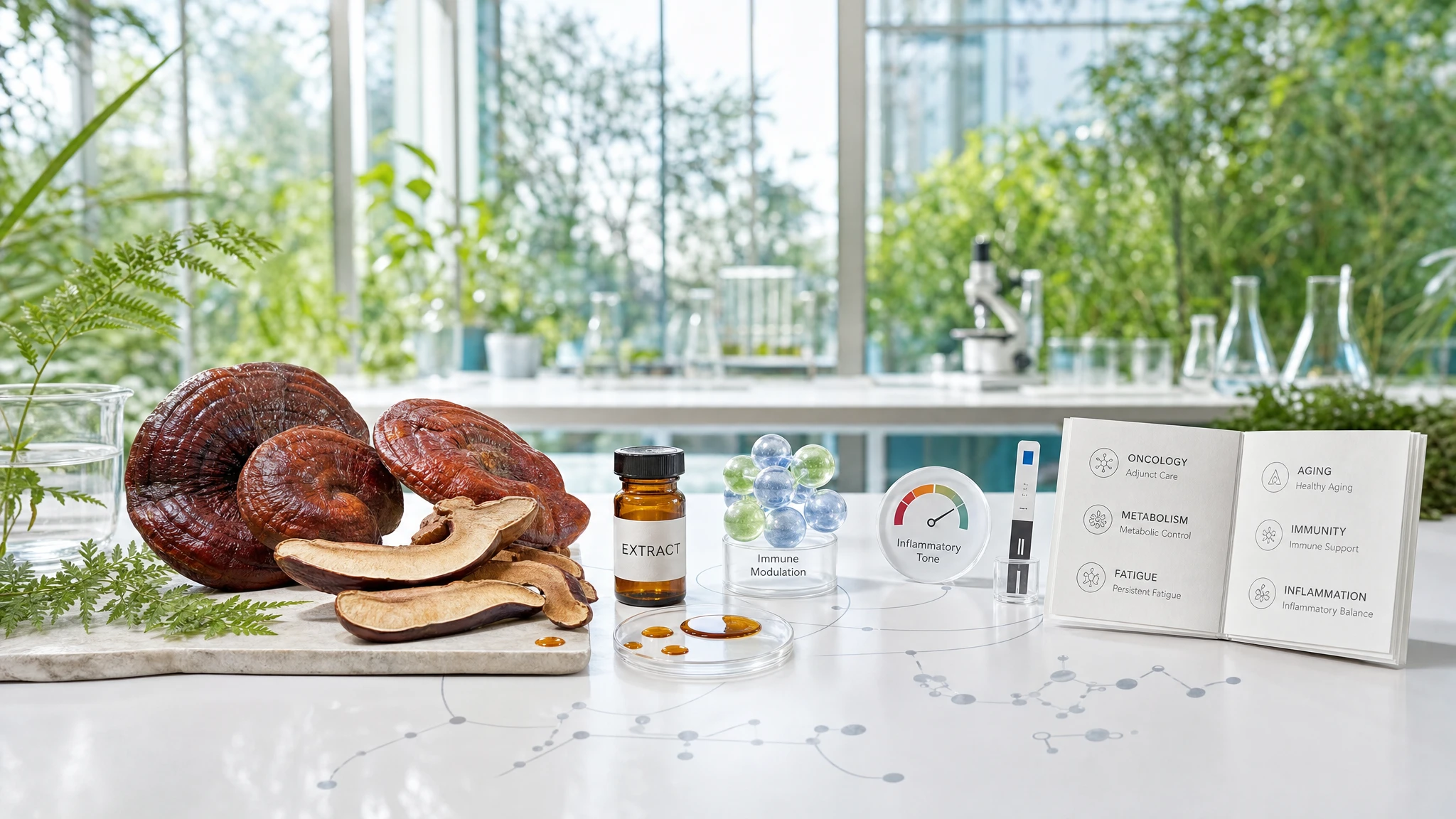
When discussing reishi in the context of diseases, it should not be considered a drug to be used on its own. Studies primarily evaluate its use as an adjuvant (an aid added to standard treatments). In this field, signals are emerging regarding the immune system, metabolism, fatigue, and certain values related to inflammation [8] [9] [11].
In oncology, reviews and clinical studies do not indicate the mushroom as an alternative to chemotherapy or radiotherapy. They describe it as a possible aid to clinical response and the tolerability of treatments [8] [18] [11]. Regarding metabolism, some products appear to act on glycemia, insulin response, and blood fats. This is indicated by experimental studies and small clinical trials [19] [20] [21].
Although the data are promising, the benefits of reishi depend on the product and the clinical picture. The mushroom is therefore not a standard cure for cancer, type 2 diabetes, or chronic fatigue [22] [16].
However, the picture remains varied because extracts, dosages, and clinical purposes differ. Therefore, the term ganoderma lucidum does not indicate a single, constant, and always repeatable effect. To better understand potential clinical uses, it is helpful to divide them by area of study. Biological mechanisms are often clearer than the actual effects observed in humans:
- In oncology, it is being studied as an aid to standard therapies.
- In metabolic control, signals are emerging regarding glycemia and insulin response.
- In persistent fatigue, vitality and perceived well-being are being studied.
- In the elderly, the immune system and low-grade, chronic inflammation are being evaluated.
The clinical uses of reishi become clearer if we separate the different areas. The following sections examine studies on cancer, metabolism, fatigue, and immune system defenses.
Reishi and oncology support: what we know
In oncology, Reishi has been studied as an aid to standard therapies, not as an independent cure [8] [18] [11]. Research focuses on polysaccharides and triterpenes, two groups of substances found in the mushroom. Polysaccharides are long chains of sugars that can perform various biological functions. Triterpenes, on the other hand, are natural lipid compounds, meaning they are fat-like substances.
These compounds may support the immune system response and reduce certain side effects of treatments. They may also influence cellular pathways related to the survival and growth of cancer cells [11] [23]. A Cochrane review examined Ganoderma lucidum in cancer treatment. Patients who took it alongside chemotherapy or radiotherapy responded positively more often. The comparison was made against patients undergoing only conventional treatments. However, the data is insufficient to claim certain efficacy [18].
A 2019 meta-analysis summarized three main outcomes. These were overall survival, recurrence-free survival, and clinical response. The results confirm a genuine interest, but do not yet allow for definitive conclusions [8]. In experimental models, signals regarding apoptosis, autophagy, and drug sensitivity have emerged. Apoptosis is the programmed death of a cell, while autophagy allows for its internal recycling. In humans, however, the evidence varies due to the quality of the extracts and the characteristics of the protocols [11] [23].
It is therefore necessary to separate the biological rationale from definitive clinical conclusions regarding Reishi in oncology. This is an important point for those seeking nutritional support during integrated oncology pathways. The correct message is clear: the mushroom can be discussed as an adjuvant, not as a substitute for therapies.
Reishi and type 2 diabetes: effects on glycemia and insulin sensitivity
Among the metabolic uses of Reishi, type 2 diabetes is of particular interest. Studies suggest that certain extracts may improve fasting glycemia and postprandial glycemia. The latter refers to the blood glucose level measured after meals. In some cases, the extracts might also improve glycated hemoglobin, which reflects glycemia over time. These potential effects emerge primarily when the mushroom is used alongside standard therapy [24] [19] [20].
The biological rationale concerns both insulin sensitivity and certain energy pathways within cells. Insulin sensitivity indicates how well tissues respond to insulin. The potential effects involve the liver, muscles, and adipose tissue [20] [25] [26]. A randomized trial involved people with type 2 diabetes and metabolic syndrome. Researchers divided 84 participants into three groups to evaluate the effects of Ganoderma lucidum on metabolism. However, the clinical results did not make the mushroom a standard treatment [27].
In obese mice fed a high-fat diet, the extract reduced insulin resistance. It increased the activation of AMPK, an enzyme that helps the cell manage energy. This finding supports the proposed mechanism, but it cannot be directly transferred to humans [20]. A 2015 review summarized many studies on the hypoglycemic effects of various substances. These include polysaccharides, proteoglycans, proteins, and triterpenoids. The topic therefore appears broad, but the results are not conclusive [28].
Human data remain limited and depend heavily on the type of product used. Can Reishi therefore help with glycemia? The answer requires caution. One can speak of potential support, but not a substitute for medical treatment.
Reishi and cholesterol: what the studies show
The lipid profile is another area where Reishi has sparked interest. Studies primarily evaluate a potential reduction in triglycerides and LDL cholesterol. They also examine a possible increase in HDL cholesterol [21] [27] [29]. The most promising results come from small or medium-sized studies. Often, however, these studies use different extracts and therefore require cautious interpretation.
One clinical trial involved people with risk factors for heart and metabolic health. Researchers tested Reishi on glycemia and other elements of cardiometabolic risk. Overall, the data did not provide a simple, robust, and universally valid answer [27]. A controlled trial studied Lingzhi in people with mild increases in blood pressure and/or cholesterol. Researchers evaluated cardiovascular, metabolic, antioxidant, and immunomodulatory responses—that is, the ability to regulate defenses. These diverse objectives show how broad and complex the topic is [29].
More recently, a randomized, double-blind crossover study examined spore oil. The study evaluated the reduction of triglycerides with Ganoderma lucidum spore oil. The results suggest that the form of the product can also influence the clinical outcome [21]. The topic is relevant because it falls under cardiovascular prevention based on diet and supplementation. We cannot declare a certain effect, but there is a biological rationale and some consistent clinical signals. However, larger studies using uniform products and methods are needed. These data address those seeking practical information on “reishi and cholesterol.”
Reishi and chronic fatigue: when support can be useful
Reishi has also been studied in conditions involving persistent fatigue and reduced vitality. Research has further evaluated the decline in perceived well-being [17] [15] [22]. The interest does not concern a single disease, but rather symptoms present in very different contexts, ranging from functional fatigue to more complex syndromes.
A randomized, double-blind, placebo-controlled trial examined a polysaccharide extract. Researchers tested the Ganoderma lucidum extract in people with neurasthenia. The results suggested less perceived fatigue and improved general well-being. This opens up a field of research into the mushroom as a potential aid for these symptoms [17]. Another pilot study involved 48 patients with breast cancer. The patients were experiencing fatigue, i.e., severe tiredness, linked to endocrine therapy. The study examined Reishi spore powder. In this case, too, the product matrix and the clinical picture played a significant role [15].
Ganoderma lucidum has also been evaluated for its effect on mood and quality of life in women with fibromyalgia. The data support the hypothesis of a possible effect on perceived energy and general well-being [22]. Some studies have noted less fatigue and a better quality of life. They also observed changes in certain values related to psychological well-being. However, the results are not uniform and depend on the protocols used [9] [22].
These data are of interest to those seeking help for a sense of exhaustion. However, they should be read with caution: Reishi does not replace the diagnosis of the underlying causes of chronic fatigue. Furthermore, it should not be presented as a one-size-fits-all solution.
Reishi in the elderly: immunosenescence and inflammaging
In older age, Reishi is being studied for its potential role in modulating immunosenescence and inflammaging, two processes associated with increased vulnerability to infections and inflammation [16,3]. Immunosenescence refers to the aging of the immune system, while inflammaging describes a state of chronic, low-grade inflammation that accompanies advanced age.
Some research has observed an improvement in immune parameters and a tendency to rebalance certain cell populations, suggesting possible support for elderly individuals [16]. In a study on elderly women, the dry extract of Ganoderma lucidum modulated T-lymphocyte function, showing that clinical interest is not limited to metabolism, but also extends to immune regulation in older age [16].
Another trial on healthy volunteers confirmed that β-glucans, the mushroom's structural polysaccharides, can influence the immune system in a measurable way, although this does not turn Reishi into an immunological therapy [3]. Here, too, however, the most appropriate approach is one of caution: the results are promising but are not sufficient to establish generalized recommendations. This content is intended for an audience interested in the use of Reishi for healthy aging, with a focus on the geriatric context and the distinction between nutritional support and therapy.
Reishi and mTOR
When discussing reishi and mTOR, it does not mean "switching off" a biological pathway. Research is focused on how certain compounds in Ganoderma lucidum regulate growth, cell life, and autophagy (the recycling of damaged components). Evidence comes primarily from laboratory tests and animal studies. The results indicate potential interest when mTOR signaling is overactive.
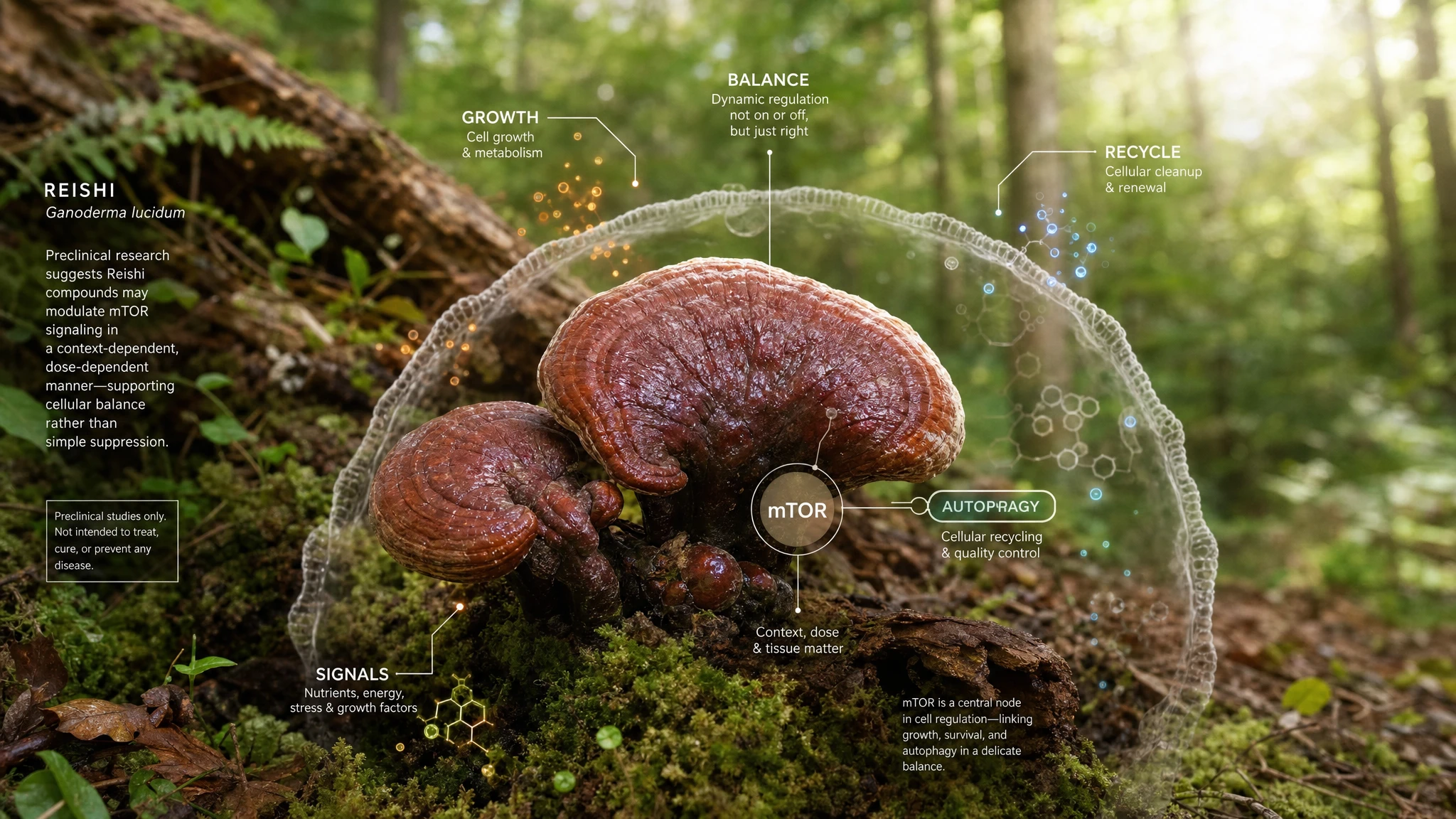
In cell biology, mTOR is one of the main hubs regulating cellular activity. It integrates energy, nutrients, and growth signals, directing the use of available resources. This allows the cell to build new components, conserve energy, or recycle what is no longer needed. This is why reishi is of interest in research regarding mTOR and the processes regulated by this pathway.
Studies primarily examine standardized extracts and fractions rich in triterpenes and polysaccharides. These bioactive molecules, of plant or fungal origin, appear to reduce mTOR in certain experimental models [30] [31] [32]. This finding has potential practical value, but it must be interpreted with caution. The action does not appear to be the same in every case, but varies depending on tissue, dose, and preparation. The mushroom, therefore, does not function like a switch that can simply turn mTOR on or off. Research is studying it as a possible regulator of the balance between cell growth and maintenance.
The most consistent picture shows a medicinal mushroom that acts on already well-studied cellular pathways. It does not, however, indicate an agent capable of correcting complex diseases on its own. Hepatoblastoma is a malignant liver tumor that occurs during childhood. In its models, Ganoderma lucidum polysaccharides acted on the Akt/mTOR pathway [33]. In doing so, they modulated apoptosis, which is programmed cell death, and autophagy.
In other experimental systems, reduced cell growth was associated with increased recycling processes. Studies on proteins and triterpenes also show different responses based on the biological context. The correct interpretation is therefore one of selective modulation, not general suppression. For this reason, reishi remains interesting in studies on cell growth, stress, and autophagy [30] [31] [32].
For the reader, the link to autophagy and the effects in tumor models are what matter most. Autophagy is the system by which the cell recycles damaged components from within. The relationship with sensors that detect energy and nutrients in the cell is also significant. These aspects explain the association between reishi, mTOR, and cellular response processes. However, laboratory data must not be turned into clinical promises before proper confirmation:
- The reduction of mTOR can promote cellular recycling programs.
- In some tumor models, the observed proliferative drive decreases.
- Autophagy becomes a key indicator of the biological effect.
- The type of extract significantly influences the experimental outcome.
The central point is to understand how reishi interacts with mTOR, without reducing it to a simple on-off switch. The following four steps explain the role of this pathway in the cell. They also show when autophagy is triggered and why cancer studies examine it.
What is mTOR and why Reishi affects this pathway
mTOR is a protein kinase, an enzyme that modifies other proteins within the cell. It integrates signals related to energy, nutrients, and growth, regulating protein synthesis, cell life, and autophagy [30] [34] [35]. When this pathway is overactive, the cell tends to favor growth and proliferation. Conversely, when it slows down, programs that repair and recycle cellular components can increase.
Reishi is of interest regarding this pathway because some of its compounds appear to reduce its activity in experimental models. This effect is primarily observed in contexts where cell growth is excessive [30] [31] [32]. This does not mean that the mushroom "switches off" mTOR always and in the same way. The biological outcome varies depending on the tissue, the model studied, and the type of extract [30].
This section clarifies the role of mTOR and its relationship with Reishi. It also explains the links to autophagy, cellular aging, and growth control. In tumor models, braking this pathway is associated with reduced cell growth. A greater tendency toward recycling programs, which are useful in certain experimental contexts, is also observed [30] [31] [33]. The key point is simple: mTOR regulates a balance and does not act in only one direction. Reishi is of interest because it appears to interact with this balance selectively. Having clarified the role of mTOR, we can delve into the process that this pathway inhibits or promotes: autophagy.
Reishi, mTOR and autophagy: why it is being discussed
Autophagy eliminates damaged cellular components and recycles materials that are still useful to the cell. This process helps the cell maintain its efficiency under various conditions. When mTOR is active, it inhibits autophagy; when its activity decreases, autophagy can increase [36] [37] [23]. In several models, Reishi appears to create conditions more conducive to activating this system. This effect emerges especially in cells under stress or with uncontrolled growth [36] [23].
Caenorhabditis elegans is a worm often used by research as a model organism. In this worm and in human cells, Ganoderma lucidum has stimulated longevity pathways linked to autophagy [36]. The result is interesting, but it remains preclinical and does not demonstrate effects on human longevity. Metabolic dysfunction-associated steatotic liver disease indicates fat accumulation linked to metabolic disorders. In its models, Reishi spore powder reduced lipid accumulation and oxidative stress. The effect occurred through autophagy, indicating a true control hub rather than a mere detail [37].
The topic is also widely studied in longevity research, i.e., processes related to lifespan. However, activating autophagy does not always produce benefits, and different biological contexts are not equivalent. This section answers those looking for the link between Reishi and autophagy. It explains it without turning the available data into an anti-aging promise. In practice, the mushroom can be seen as a modulator of the cellular response, not as a shortcut to longevity. The relationship between autophagy and growth then leads to the more delicate topic: tumor models.
Reishi and mTOR inhibition in tumor cells
In tumor models, Reishi has been studied for various potential effects on cells. It may reduce proliferation, increase apoptosis, and act on growth signals such as mTOR [30] [31] [32] [33]. This research starts from a premise: excessive anabolic signals can help tumor cells survive. These signals, in fact, drive the cell to produce new molecules and grow.
In colon cancer cells, a triterpene extract of Ganoderma lucidum reduced proliferation. Researchers also studied it in a xenograft model, with tumor cells inserted into a recipient organism. In the tumors, Beclin-1 increased by 3.9-fold and LC3 by 1.9-fold [23]. These two proteins are markers of autophagy and demonstrate a measurable biological effect.
In esophageal carcinoma cells, Reishi spore powder acted on PI3K/AKT/mTOR and the Erk pathway. The data suggests that the mushroom may act on multiple nodes simultaneously [32]. In hepatoblastoma cells, Ganoderma lucidum polysaccharides modulated apoptosis and autophagy via Akt/mTOR [33]. This result confirms that the pathway represents a recurring target in studies.
However, almost all available evidence comes from preclinical studies conducted on cells or animals. Their transition to clinical practice, therefore, is neither direct nor guaranteed. This section shows how oncological models interpret the regulation of mTOR. It also explains why Reishi is a potential adjuvant, not a substitute for therapies. The reader thus gains an accurate picture of the relationship between the mushroom, the biological pathway, and tumor cells. To complete it, one must understand the relationship between mTOR and AMPK, the cell's energy sensor.
Can Reishi activate AMPK and inhibit mTOR simultaneously?
Interest in Reishi does not only concern mTOR, but also its relationship with AMPK. AMPK is a protein that acts as a sensor for the energy available within the cell. In cell biology, the AMPK and mTOR pathways are closely linked. AMPK signals energy scarcity and can inhibit mTOR activity. It thus promotes energy conservation and creates conditions more suitable for autophagy [30,20,38].
In Reishi models, this relationship appears to play a prominent role. Some extracts seem to act consistently along the AMPK-mTOR axis [30,20,38]. One study examined a product called ReishiMax in tumor cells. AMPK activation was associated with the inhibition of mTORC1/2 and also involved IGFR/PI3K/Rheb [30]. This signaling cascade helps explain the interest in cell growth models.
On a metabolic level, a Ganoderma lucidum extract reduced insulin resistance in obese mice. The animals were on a high-fat diet and showed an increase in AMPK [20]. It remains to be seen whether the same effects occur in humans. The answer, for now, requires caution, because the most solid evidence remains preclinical. This section is useful for those looking for a link between metabolism, cellular longevity, and medicinal mushrooms. It also allows for the inclusion of a high-attractiveness search term on the page. The transition to AMPK is natural, because this sensor explains various metabolic effects attributed to Reishi.
Reishi and AMPK
The relationship between Reishi and AMPK helps us understand how Ganoderma lucidum acts on cellular response systems. AMPK, or AMP-activated protein kinase, regulates energy use and is activated when energy is scarce. In some studies on cells and animals, the mushroom has helped manage energy, glucose, and fats. It may also act on autophagy (the recycling of damaged or unnecessary cellular components). These are useful data, but they still largely come from experimental models.
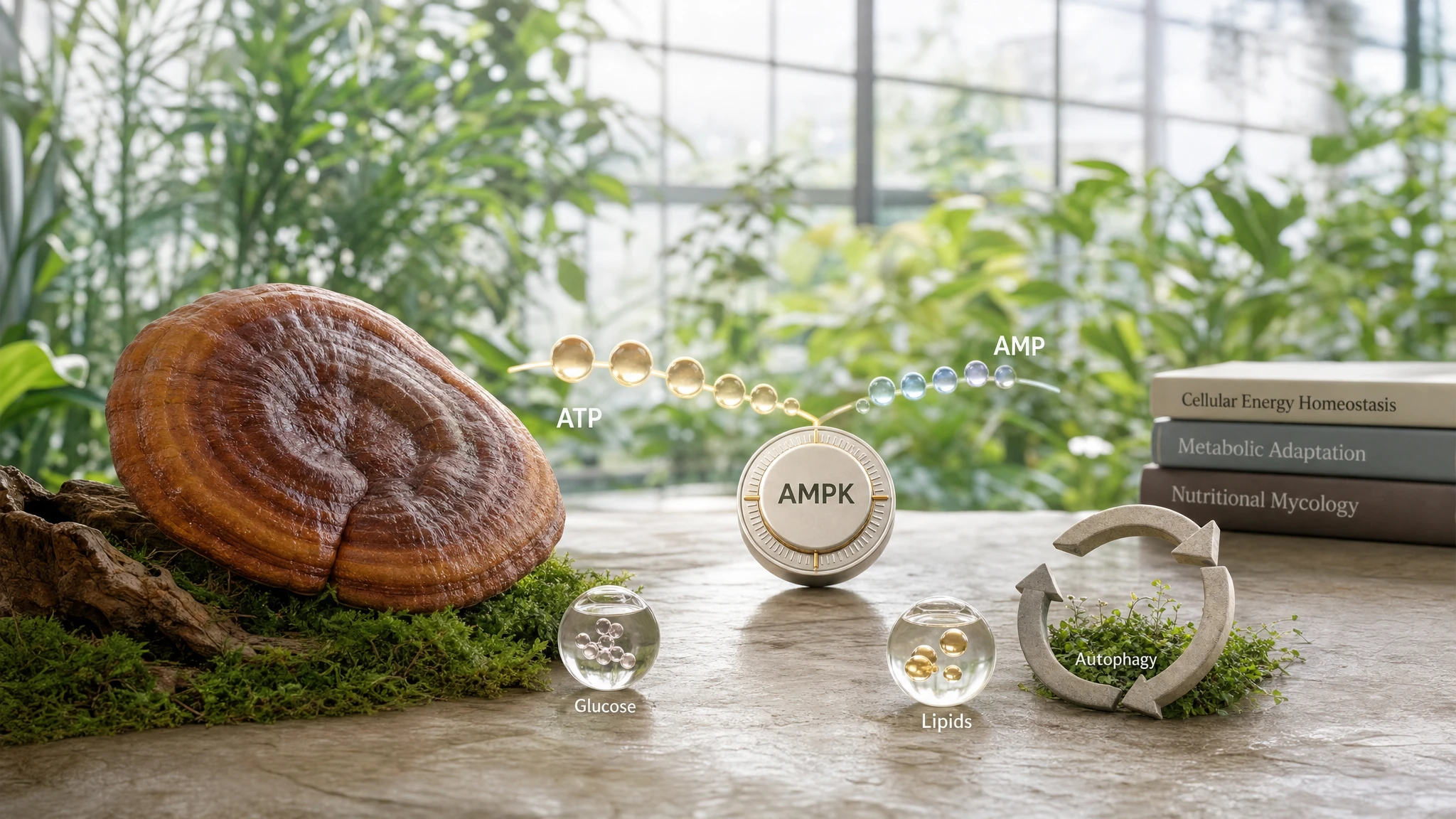
The link between reishi and AMPK does not point to a single direct effect of the mushroom. Its compounds appear to act on a pathway that responds when energy is scarce. AMPK, or AMP-activated protein kinase, is activated when cellular energy levels drop. It therefore slows down energy-expensive activities and supports those that produce or conserve energy.
This pathway also helps recycle cellular components that are no longer needed. For this reason, researchers are studying reishi as a potential aid in managing energy use, storage, and production. This role may be useful when this balance shifts or is disrupted [30] [20] [19].
One study examined a Ganoderma lucidum extract in a high-fat diet model. The product reduced insulin resistance (poor tissue response to insulin) by activating AMPK [20]. Other studies have detected changes in the systems cells use to adapt to new conditions.
Among these systems is autophagy, which recovers resources from damaged or unnecessary cellular components [36] [38]. Overall, the data call for caution. The mushroom does not activate AMPK like a simple switch. In various models, however, it appears to support the role of AMPK in energy balance. Now, it is necessary to determine whether these effects also occur in human tissues. The first aspects to evaluate are glucose management and the insulin response.
To better interpret the available data, it is useful to keep a few key points in mind:
- AMPK activation links reishi to energy use in cells.
- The AMPK pathway can promote nutrient utilization and autophagy.
- Some models show effects on insulin and glycemia.
- This signaling involves fats, the liver, and muscles.
- The actual effect in humans remains to be confirmed.
In the case of reishi, AMPK does not function as a simple switch. It is a point of contact between energy, nutrients, and cellular response. The following research shows in which tissues this signal may play a role.
AMPK: the energy sensor acted upon by Reishi
AMPK is a key protein that is activated when the cell senses a reduction in available energy. At that point, it slows down energy-expensive processes and promotes those that help produce ATP, or adenosine triphosphate—the cell's primary energy exchange molecule—such as fatty acid oxidation and autophagy [20] [38]. Reishi is relevant because several preclinical studies indicate that it may increase AMPK activity in specific metabolic contexts [30] [20]. This link is important for understanding why the mushroom is associated not only with immune system defense but also with metabolism and energy regulation. Discussing AMPK also helps frame Reishi within modern biological language, which is useful for both the general public and those seeking more technical yet accessible content.
In models of obesity and insulin resistance—that is, reduced tissue response to insulin—increased AMPK activation has been associated with better management of energy substrates and a more favorable cellular state [20]. In muscle tissue as well, modulation of the AMPK/SIRT1 axis, where SIRT1 is a protein involved in the regulation of metabolism and stress response, has helped reduce atrophy in an experimental model of diabetes, showing that this biological pathway is not just a theoretical detail but a relevant functional node [38].
The key takeaway is that AMPK acts as an intelligent brake on energy expenditure. In some models, Reishi seems to speak this very biological language. Having defined it as the energy sensor, the next step is to see how this translates into glucose metabolism and insulin response.
Reishi and glucose metabolism: glycemia, insulin, and target tissues
Part of the research focuses on glucose metabolism, which is the use and regulation of sugars. In experimental models, certain extracts have promoted insulin response and glucose utilization in tissues. They have also altered specific intracellular signaling pathways [19] [20] [28] [39]. These data provide a basis for studying the mushroom in metabolic disorders. However, they do not prove that a supplement can prevent or treat such conditions. Results obtained in cells and animals do not directly apply to humans. Furthermore, these products cannot replace treatments prescribed by a doctor.
In obese mice fed a high-fat diet, an extract reduced insulin resistance. This effect occurred through the activation of AMPK [20]. In a model of metabolic syndrome induced by fructose, researchers used a hot aqueous extract. Obtained from cultivated mycelium, the extract acted on both sugars and fats [39].
A 2015 review summarized data on the hypoglycemic (blood sugar-lowering) action of various compounds. These included polysaccharides, proteoglycans, proteins, and triterpenoids, for which various mechanisms have been proposed [28]. In 2025, a study on people with type 2 diabetes compared Ganoderma lucidum with another medicinal mushroom [24].
This clinical work demonstrates the interest in this field, but solid evidence in humans is still needed. These studies therefore help to formulate more precise questions regarding potential effects. When glucose utilization changes, the liver is often involved as well. This occurs especially in steatosis (fatty liver).
Reishi and fatty liver: the role of AMPK
In the liver, AMPK can reduce lipogenesis (the production of new fats) and promote the use of fatty acids. These processes are significant in models of hepatic steatosis, where fats accumulate in liver cells [40] [25] [37]. Certain compounds from the mushroom have been studied specifically in these conditions [40] [25].
In a model of non-alcoholic steatosis, Ganoderma lucidum increased certain enzymes that regulate energy in the liver [25]. This finding is consistent with the role of AMPK. A novel proteoglycan also reduced fat production, oxidative stress, and hepatocyte apoptosis [40]. Apoptosis is programmed cell death, while hepatocytes are the primary cells of the liver.
In more recent research, the mushroom's spore powder attenuated metabolic-related steatosis. It reduced fat accumulation and oxidative stress through autophagy [37]. These effects therefore involve multiple cellular systems, rather than a single value. These results do not prove that the product can cure fatty liver in humans. However, they provide a consistent biological basis that requires verification through clinical trials. From the liver, the discussion moves to the muscle, which uses a great deal of energy and responds to AMPK signals.
Reishi and skeletal muscle: energy, atrophy, and recovery
Skeletal muscle requires a great deal of energy and is therefore highly sensitive to pathways regulated by AMPK. In experimental models, Reishi has improved certain signals useful for maintaining muscle mass and function. These effects emerged primarily when metabolism was impaired [38]. A proteoglycan extracted from Ganoderma lucidum attenuated muscle atrophy caused by diabetes. The effect appeared in vivo and in vitro through the AMPK/SIRT1 pathway [38]. The result directly links the mushroom, cellular energy, and the integrity of muscle tissue.
This data makes the mushroom interesting for glucose metabolism and functional recovery. It may also help in studying muscle tissue quality. However, these results should not be translated into promises regarding muscle tone or performance. The most significant evidence still comes primarily from experimental models [38].
These studies present Reishi as a possible modulator of tissue metabolism. They do not describe it as a "sports" product in the common sense of the term. If confirmed, its potential role would concern the energy response and the defense of more vulnerable tissues. These are tissues exposed to metabolic stress. Finally, it is necessary to examine the mitochondria, which produce most of the cellular energy.
Reishi and mitochondria: cellular energy and oxidative stress
Mitochondria produce most cellular energy and respond to pathways regulated by AMPK. Some studies have evaluated whether compounds from the mushroom can support their function. They also examined oxidative stress, which is the damage caused by an excess of free radicals [40] [41] [26].
This line of research combines energy use, cell defense, and stress response. 5xFAD mice are used as a model for neurodegenerative disease. In these animals, certain polysaccharides from Ganoderma lucidum attenuated the decline in cognitive functions [41]. The effect was linked to less oxidative stress and changes in mitochondrial dynamics.
Mitochondrial dynamics regulate the fusion and fission of mitochondria. In the liver, a proteoglycan extracted from the mushroom reduced oxidative stress, lipogenesis, and apoptosis [40]. The results therefore show some similar effects in different organs. However, a better laboratory value does not guarantee the same clinical effect in people. These data help to study the relationship between energy, cellular damage, and aging. Further confirmation is needed, however. From the mitochondria, the path leads to the nervous system, where defense, stress, and cognitive functions are studied.
The nervous system
In the nervous system, reishi is of interest for two potential effects. It may help cells resist stress and regulate inflammation. In laboratory models, Ganoderma lucidum has shown signs of protection for nerve cells. These data guide research, but do not yet prove a clinical effect in humans.
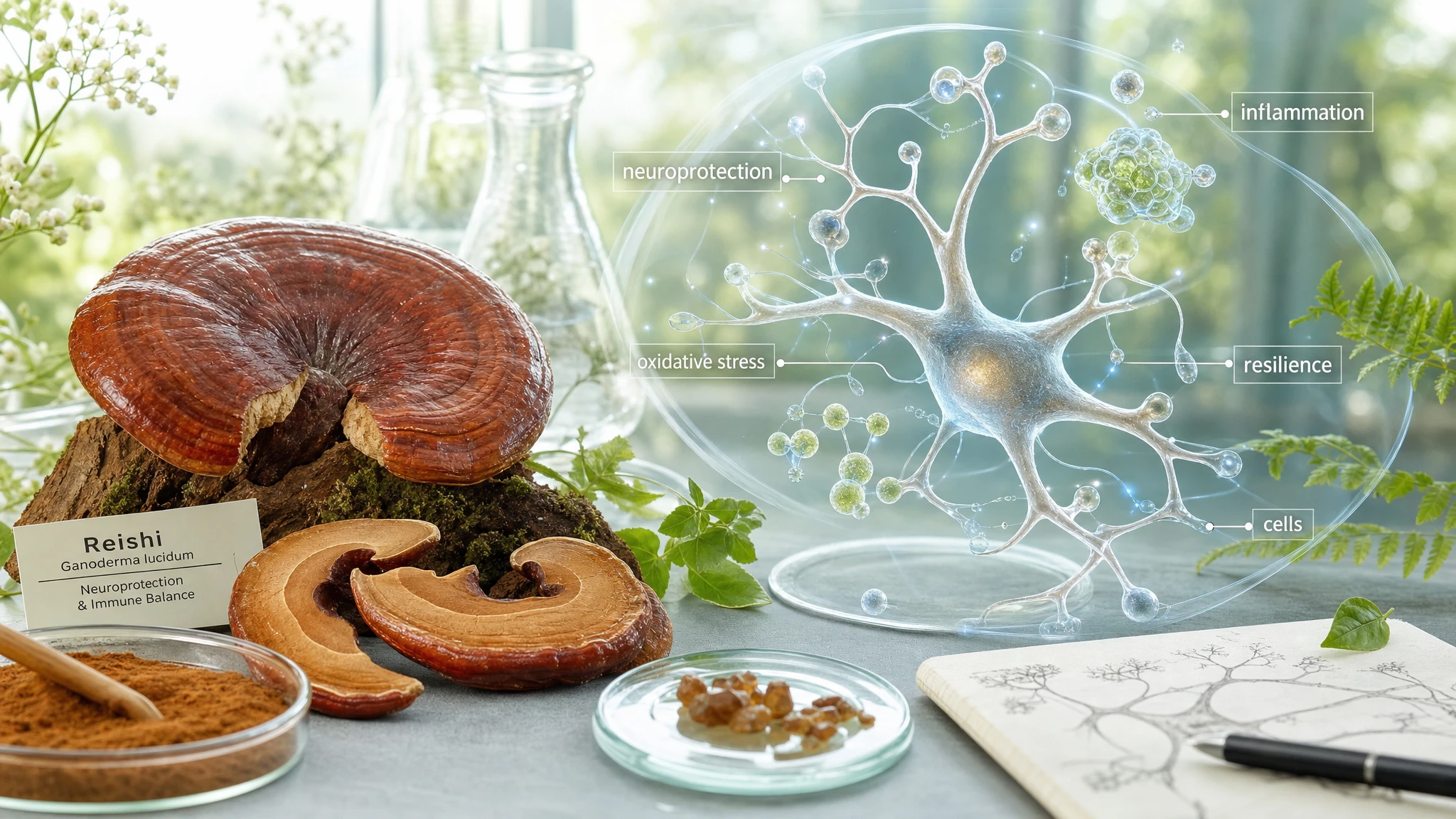
In the nervous system, reishi is being studied for its action on several key processes. If altered, these processes can promote neuronal damage, neuroinflammation, and oxidative stress. Oxidative stress is an excess of oxidizing molecules that can damage cells and tissues. The active compounds of Ganoderma lucidum primarily include polysaccharides and triterpenes. In experimental models, they have been linked to increased survival of nerve cells. They have also regulated intracellular signals, which are the chemical messages that act within the cell. Some of these signals participate in tissue defense [41] [42] [43].
This does not mean that the mushroom "cures" neurological disorders. However, there is a biological basis for studying it as potential support for brain health. The most interesting finding is that the signal does not involve just one target. Reishi appears to act on the local immune response and the control of oxidative stress. It may also influence the communication between glial cells, which support neurons, and the neurons themselves [44] [43].
In a model of traumatic brain injury, ganoderic acid A promoted the recovery of functions. It protected the blood-brain barrier, which separates the blood from brain tissue. It also oriented the microglia response in a more favorable way [45]. Another study examined extracellular vesicles similar to exosomes derived from Ganoderma lucidum. These are small structures produced by cells and used to transport substances. Administered intranasally, they slowed cognitive decline in a mouse model of Alzheimer's. They also reduced inflammation, indicating a possible transport route to the central nervous system [46].
Even in this case, however, the limitation is clear. The data are promising for understanding the mechanisms, but they do not prove a certain clinical effect. Therefore, they do not allow for attributing certain benefits on memory, trauma, or neurodegenerative diseases to reishi [41] [45] [46]. The scientific interest is real, but it indicates a working hypothesis and not a therapeutic promise.
Before examining individual cases, it is useful to distinguish the main lines of research. These explain why the potential benefits of reishi on the nervous system attract so much attention. The evidence follows four directions, all still experimental but biologically consistent:
- Multiple experimental models indicate a defense of neurons against oxidative stress and inflammation.
- The regulation of microglia, i.e., the brain's immune cells, suggests a possible effect on neuroinflammation.
- Some new formulations are attempting to better distribute the compounds in the brain.
- Data on trauma and cognitive decline remain preclinical and are not definitive.
The link between reishi and the nervous system is based on biological mechanisms, not on claims of use. Three main themes emerge from laboratory models. They concern the defense of neurons, the control of inflammation, and signal exchange between cells.
Reishi and neuroprotection: why it matters for the brain
Reishi is of interest to researchers because certain compounds appear to protect nerve cells. Its potential action concerns oxidative stress and inflammation processes [41] [42] [43] [46]. In experimental models, polysaccharides and triterpenes have been associated with increased neuron survival. They have also reduced certain reactive oxygen species, which are unstable molecules that can damage tissues. Furthermore, they have regulated intracellular signals linked to the cells' ability to withstand stress [41] [42].
The mushroom is therefore of interest not only as a general adaptogen but also for brain health. An adaptogen is a substance studied for its ability to promote a more balanced response to stress. In a head trauma model, ganoderic acid A improved functional recovery. It protected the blood-brain barrier and regulated microglial polarization. This term refers to the orientation of microglia toward more or less inflammatory responses. The data show that triterpenes can act on precise processes that link nerves and immune defenses [45].
Another study used extracellular vesicles similar to exosomes derived from Ganoderma lucidum. Administered intranasally, they slowed cognitive decline in a mouse model of Alzheimer's disease. In this case, the vesicles also reduced inflammation [46]. These preclinical data are not sufficient to define a clinical effect in humans. However, they are enough to explain the research interest. There is, therefore, a credible basis for a possible neuroprotective action. Such action, however, is not yet proven as an independent clinical treatment. Following the defense of neurons, research is examining cognitive functions, especially memory.
Reishi and microglia: the role of brain inflammation
Memory is often associated with Reishi because it depends on various nervous system processes. Among these are synaptic plasticity, inflammatory status, and mitochondrial integrity. Synaptic plasticity allows connections between neurons to change and adapt. Mitochondrial integrity, on the other hand, indicates the proper functioning of mitochondria, which produce energy in cells [41] [46].
Some models suggest that the mushroom's compounds may support cognitive functions. The potential effect emerges especially under oxidative stress or conditions of neuroinflammation [41]. The 5xFAD model reproduces some aspects of Alzheimer's pathology. In this model, Ganoderma lucidum polysaccharides slowed the decline of cognitive functions. They regulated oxidative stress and mitochondrial dynamics, in line with potential neuroprotection [41]. In another experiment, nanovesicles derived from the mushroom reduced inflammation. They also improved cognitive behavior in a mouse model of Alzheimer's [46].
However, it is accurate to speak of “potential support,” not a guaranteed increase in memory. The most solid evidence still comes from studies on cells or animals. It does not derive from large clinical trials conducted on humans. It is therefore necessary to distinguish experimental plausibility from a concrete clinical benefit. Reishi is interesting for research, but it is not a proven memory enhancer in humans. Beyond memory and cognition, many people seek Reishi to manage stress. This topic also requires a precise explanation.
Reishi, the brain, and signaling pathways: a network of effects
Reishi is often referred to as an "adaptogen," but this term requires precision. It refers to a substance studied to promote a more balanced response to stress. It does not, however, indicate a sedative suitable for everyone [9] [17]. One study examined supplementation with Lingzhi/Reishi in university students. Its use was associated with changes in psychological stress and certain selective fitness parameters. The data suggest a possible effect on the perception of stress and the adaptive response [9].
A trial on neurasthenia evaluated the polysaccharide of Ganoderma lucidum. The study examined its potential support against fatigue and for general well-being. The picture is consistent with the popular use of the mushroom to regulate perceived energy [17]. In experimental models, Reishi has been associated with changes in neuroendocrine signals. A possible effect on perceived anxiety, energy, and well-being also emerged. This may explain why it is sought after as support against mental or physical stress. The effect, however, is not necessarily calming in the strict sense. Furthermore, it does not replace adequate sleep, a good diet, or stress management.
This H3 section addresses searches such as "Reishi stress" or "Reishi anxiety." It does so with a cautious and scientifically accurate approach. Stress and general well-being often lead to a concrete question: Can Reishi improve sleep?
Reishi and memory: what experimental studies reveal
Reishi is often sought out by those looking to improve sleep or reduce feelings of restlessness. This interest stems from its potential effect on stress, arousal levels—that is, the body's level of activation—and general well-being, but the available evidence does not allow for it to be assigned a direct and universal role as a "sleep supplement" [9] [17].
Some users report a greater sense of relaxation, but this subjective data does not equate to robust clinical proof. In a well-constructed editorial ecosystem, sleep still deserves space because it addresses a real query and connects Reishi to the nervous system in a practical way. Sleep, in fact, does not depend solely on fatigue, but also on the regulation of circuits involving stress, alertness, and energy balance—areas in which Reishi is sometimes implicated.
However, there is no basis for presenting it as a substitute for insomnia treatments or as an automatic solution for sleep disorders. Here, the message must remain balanced: the mushroom can be discussed in relation to nighttime well-being, but without equating it to hypnotics, sedatives, or insomnia therapies. The topic of sleep fits into a broader framework: that of brain aging and cognitive prevention.
Reishi and traumatic brain injury: recovery and neuronal protection
In traumatic brain injury, the damage does not stop at the initial impact. Inflammation, edema (fluid accumulation), and issues with the brain's blood vessels can follow. This series of events can prolong the distress of nervous tissue. In experimental models, ganoderic acid A has promoted the recovery of functions. The compound protected the blood-brain barrier and regulated microglial polarization [45]. In simple terms, it stabilized the environment around the damaged neurons.
The study shows that recovery also involves blood vessels, support cells, and immune signals. Therefore, the result does not concern only the direct defense of neurons. However, these are preclinical data, which do not prove the efficacy of reishi in humans. Controlled studies are needed to define effects, safety, and potential uses following a traumatic brain injury. For now, the data indicates a plausible mechanism that warrants further study.
Reishi and brain delivery: why nanostructures matter
Delivering active substances into the central nervous system is a major challenge for neurological research. Many molecules lose their activity along the way or fail to enter the brain. This is why extracellular vesicles similar to exosomes are of interest. These are small structures that transport substances from one cell to another. In one study, vesicles derived from Ganoderma lucidum were administered intranasally. In a mouse model, they reduced inflammation and curbed cognitive decline [46].
This approach studies the mushroom both as a source of compounds and as a transport vehicle. Nanostructures could carry neuroactive substances to more precise areas of the brain. They could also reduce the amount of substance lost in the rest of the body. However, this possibility remains experimental. Before clinical use, it is necessary to clarify efficacy, safety, dosages, and the ability to replicate the same results. The key point is therefore the way in which the compounds reach the target tissue. It is a useful avenue for research, but it still needs to be verified in humans.
AMPK, NO, and orexin
The signals linking energy, wakefulness, and the stress response help us understand the biological role of reishi. In this context, the relationship between AMPK, nitric oxide, and orexin connects metabolism and brain function. This link provides a useful biological basis, but it does not make the mushroom a direct stimulant.
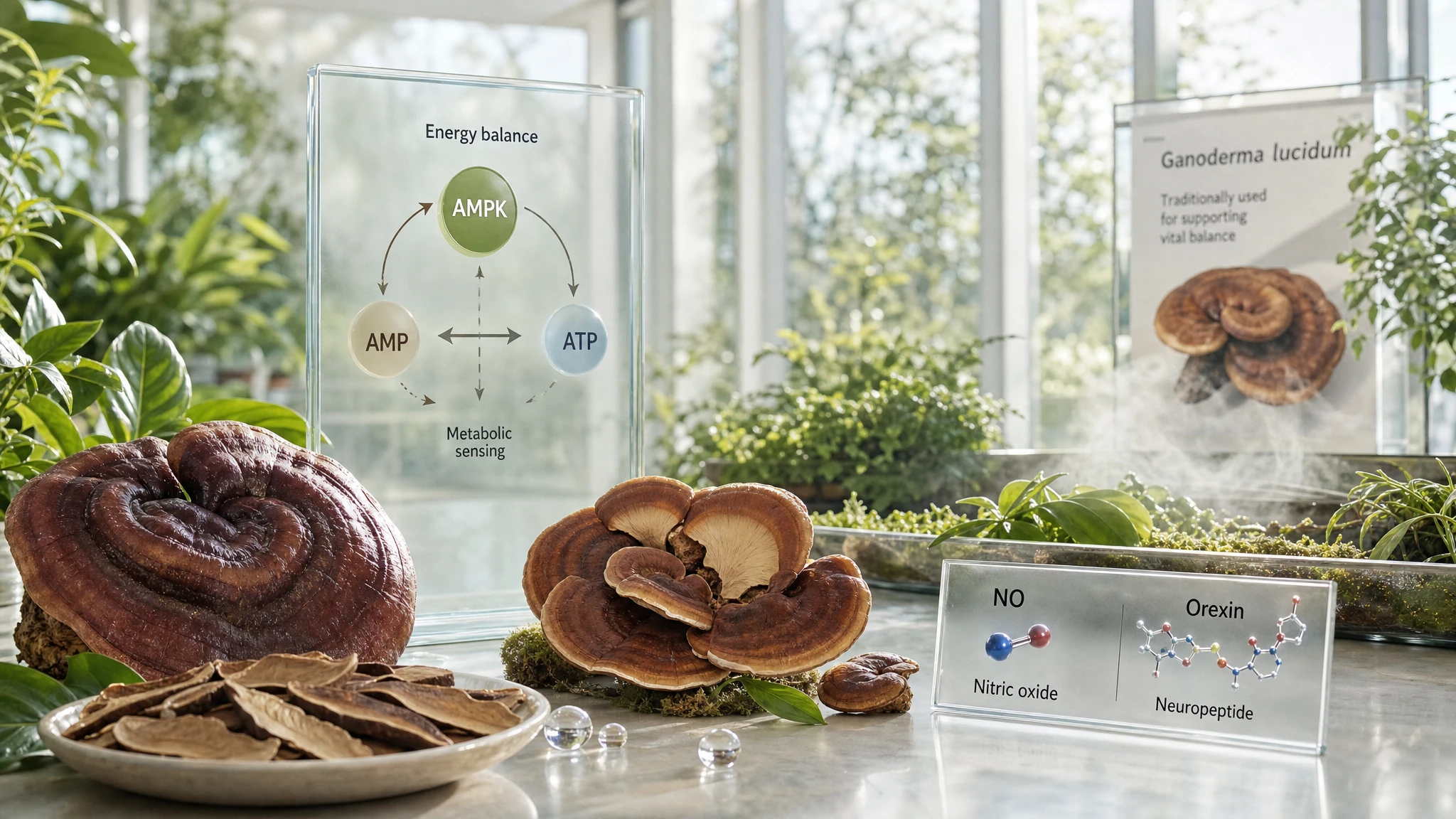
When cellular energy drops, certain control pathways are activated to restore balance. Among these is AMPK, or AMP-activated protein kinase. It is one of the primary sensors of metabolism and can act in conjunction with nitric oxide. In the nervous system, this molecule also regulates various processes and does not act solely on blood vessels [47] [48].
In experimental models, this link appears in glucose-sensitive hypothalamic neurons. Here, AMPK and NO regulate the brain's ability to detect how much fuel is available. In other words, they help the brain understand how much energy it has at its disposal [47].
For reishi, this point is important for interpreting some of its possible effects. The mushroom could support a more stable physiological balance, without producing an acute boost.
Nitric oxide is also linked to the redox state. This term indicates the balance between oxidation and antioxidant defenses. Oxidative stress can change the phosphorylation of neuronal NOS, which is the nitric oxide synthase enzyme. This strengthens the link between energy, inflammation, and nerve signals [48] [49].
In models of brain damage, some studies have proposed blocking the AMPK/nNOS axis. This strategy could protect neurons when normal physiological balance is compromised [50].
Orexins, on the other hand, are peptides produced by the hypothalamus, a region located at the base of the brain. These molecules promote alertness and behavioral activation. They therefore form a node that transforms metabolic signals into a state of alertness [51] [52].
For reishi, the practical significance remains limited to possible assistance in regulation. It does not indicate a direct pharmacological effect on wakefulness or attention [47] [51].
This axis can therefore act as a bridge between metabolism and higher brain functions. Three pathways form the core of the system; a fourth point concerns reishi:
- AMPK transforms the drop in energy into a coherent signal for the cell.
- Nitric oxide regulates neural circuits and hypothalamic responses.
- Orexin connects wakefulness, motivation, and the need for energy.
- Reishi is of interest primarily for its mechanisms, not as a stimulant.
The focus now shifts from basic processes to the signals that transform energy into wakefulness. The first key point concerns the AMPK-nitric oxide axis. The second involves orexin and its role in alertness.
AMPK and nitric oxide: the primary energy signal
When available energy drops, AMPK is activated and can alter nitric oxide production. In this way, a change in metabolism becomes a broader biological signal [47] [48]. Nitric oxide does not act only on blood vessels. In the brain, it also functions as a messenger, regulating neural and neuroendocrine circuits [47] [53]. This step connects metabolism, cell signaling, and the stress response.
In glucose-sensitive hypothalamic neurons, AMPK and NO regulate the response to glucose. This finding shows that the energy link is real and not just theoretical [47]. In other tissues as well, oxidative stress can activate AMPK. It can also change the phosphorylation of neuronal NOS, confirming the broad role of this axis [48].
Regarding reishi, this topic is relevant because many of its effects are interpreted in relation to energy balance. The mushroom could, in fact, support more orderly energy management. This paragraph explains the basic sequence without adding details that would make it difficult to read. It thus offers a clear bridge between nutrition and neurobiology. The practical significance concerns the potential link between metabolism, adaptation, and neural energy signals. From the primary energy signal, we now move on to the relationship between nitric oxide and orexin.
Nitric oxide and orexin: the bridge between energy and wakefulness
Orexin is one of the most important systems for supporting alertness, motivation, and adaptive response. Nitric oxide originates upstream of energy circuits and can regulate orexinergic neurons. It can therefore transform a metabolic signal into a state of brain activation [51] [53] [54] [55]. This link helps to understand how the brain responds to an energy deficit. The reaction may include food-seeking behavior, increased alertness, and greater readiness. Orexin A activates the locus coeruleus, a brainstem nucleus involved in arousal. Arousal is the state of activation that supports attention and response to stimuli. In rats, orexin A also increases wakefulness.
The orexinergic system also regulates the response to threats and noradrenergic transmission [55] [56]. The latter uses norepinephrine to send signals between neurons. Nitric oxide produced by the body can instead inhibit a specific group of orexinergic neurons. This data shows how delicate the balance between activation and inhibition is [53].
This passage clarifies the link between metabolism and wakefulness, which is often cited but not always explained. Orexin does not simply activate the brain. It acts in dialogue with energy signals and the NO circuit. It therefore remains to be seen whether reishi truly acts on these circuits. The alternative is that there is only plausibility based on biological mechanisms.
Reishi, AMPK, and alertness control: what is plausible
In the context of Reishi, the link with AMPK and alertness requires caution. The mushroom is discussed as an adaptogenic and metabolic support. Adaptogenic indicates a potential aid for the body in responding better to stress.
However, there is no solid evidence of a direct and relevant effect on human orexinergic neurons [51] [55] [57]. Biologically, AMPK participates in energy control. This control can then influence the circuits that regulate wakefulness. Studies on orexin, the locus coeruleus, and stress show a highly integrated system. Therefore, even small energy changes can produce effects on behavior [56] [55] [57].
In experimental models, the AMPK/NO axis also regulates the response to threats. It also participates in noradrenergic transmission, which uses norepinephrine as a nerve messenger. These data explain the interest in Reishi at a mechanistic level [51] [53]. However, one must distinguish a biologically plausible explanation from evidence obtained in clinical trials. This distinction avoids sensationalist interpretations and makes even advanced informative use more robust. The practical question therefore becomes more precise. Can Reishi provide mental energy or truly help with concentration?
Is Reishi suitable if you are looking for more mental energy?
Many people seek out reishi to reduce mental fatigue or improve cognitive clarity. The question is understandable, but it requires a precise answer. Reishi is not a classic stimulant. Furthermore, there is a lack of robust evidence to define it as a nootropic, i.e., a substance proposed to improve cognitive functions [9] [17]. Its adaptogenic profile and potential effect on general well-being may still spark interest. This is especially true for people who experience fatigue and stress. The outcome, however, is unpredictable.
Some studies have examined neurasthenia and psychological stress. Neurasthenia is a condition characterized by easy exhaustion and a feeling of weakness. These studies have found favorable signs regarding well-being and perceived fatigue [9] [17]. However, they have not shown a direct increase in mental performance. These data help set realistic expectations. Support for well-being is not equivalent to directly improving mental performance.
Reishi can therefore be part of a strategy for balance, not for rapid stimulation. Those looking for an effect similar to caffeine may be disappointed. Those who want more gradual support might find this profile more consistent. Precisely because it is not a stimulant, it is necessary to understand when it does not represent the best choice for energy.
When Reishi might not be the right choice for energy
If you are looking for a quick energy boost, Reishi is usually not suitable. Its use follows a different concept. It is studied for its potential support in the stress response and in homeostasis. Homeostasis is the internal balance that allows the body to function in a stable manner [9] [17].
This profile differs from that of supplements designed to immediately increase performance. Understanding the difference reduces unrealistic expectations and the risk of inappropriate use. The mushroom may make more sense for those seeking support in regulation. It is not, however, intended to provide an acute boost. This distinction does not diminish its potential value, but rather clarifies its role. In any case, the available evidence does not allow us to guarantee an increase in energy. Excluding a rapid stimulant effect, other pathways can be examined, such as mTOR and glutamate.
AMPK, mTOR and glutamate
Understanding how reishi acts on cellular energy and nerve signaling helps in evaluating its potential effects. The core issue is the link between AMPK, mTOR, and glutamate. AMPK signals when energy is scarce, while mTOR regulates growth and protein synthesis. Glutamate is the brain's primary excitatory signal. This system connects energy use, neuronal plasticity, and the control of brain activity. The evidence comes primarily from cell and animal studies, so it does not demonstrate an effect in humans.
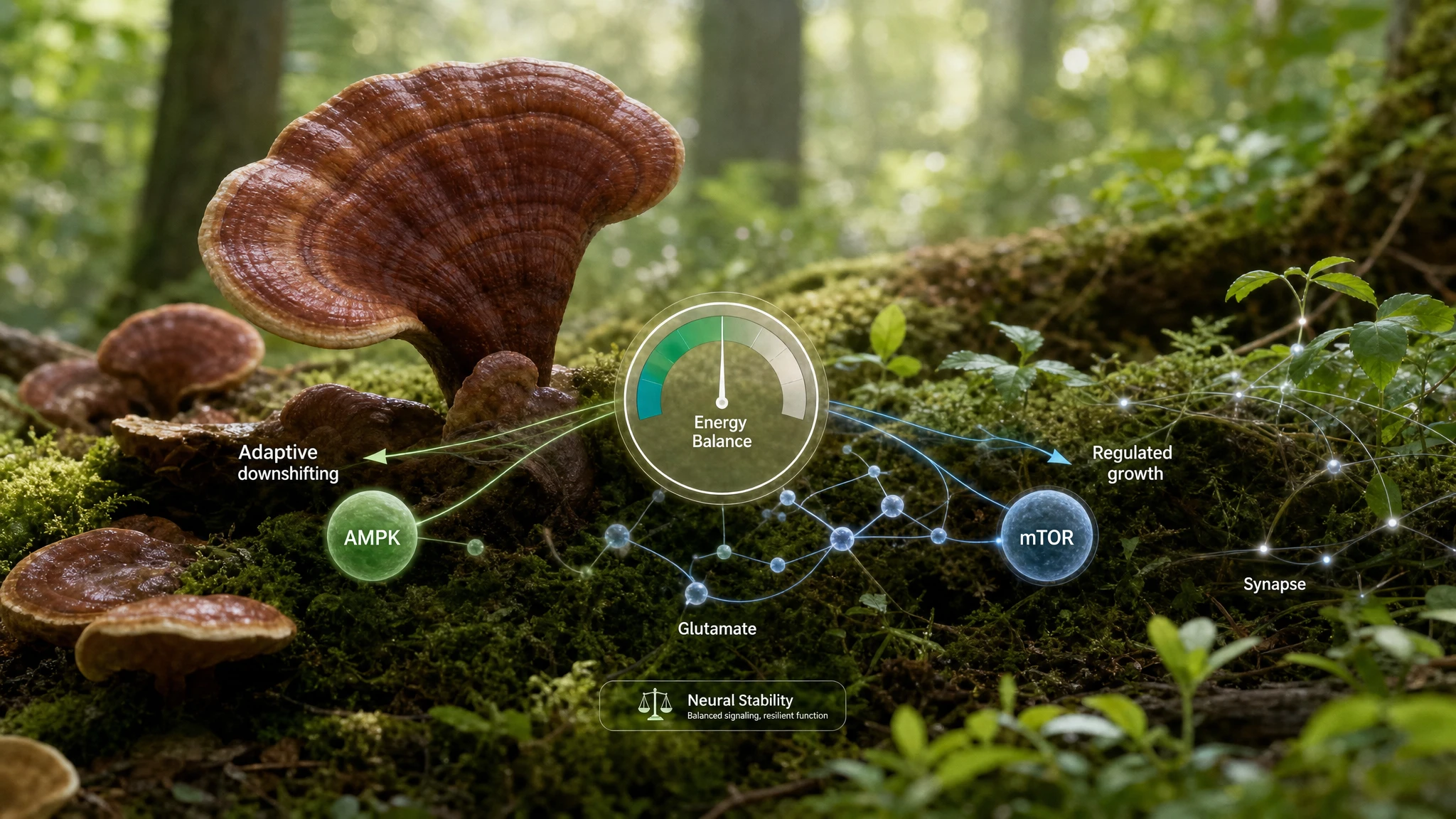
In the brain, mTOR and AMPK are not just metabolic sensors—that is, systems that detect energy and nutrients. They also regulate how neurons respond to stimuli and how the synaptic network adapts over time. The synaptic network is the system of contacts that allows nerve cells to communicate. Glutamate, the main excitatory neurotransmitter, requires a balance between its release, reuptake, and use within the cell. A neurotransmitter is a chemical messenger that transmits signals between neurons. Reuptake recovers glutamate from outside the cells, while metabolism allows for its use and recycling.
If this balance shifts, hyperexcitability—an excessive activity of neurons—can increase. Stress can also grow for neurons and astrocytes, the cells that support nervous tissue. In experimental models, certain compounds from Ganoderma lucidum have interacted with these systems. The data indicate an indirect effect on the stability of the glutamatergic circuit, rather than a direct action on glutamate [58] [59] [60].
This result is consistent with brain biology, where energy and synaptic signals are always linked. When energy and nutrients are abundant, mTOR tends to favor growth, protein synthesis, and cellular remodeling. Protein synthesis produces new proteins, which are necessary to maintain and change cell functions. When metabolic stress prevails, however, the available energy is not enough to support all the required functions. AMPK is therefore activated to reduce energy consumption and restore homeostasis.
In nervous tissue, this balance regulates both the cells' ability to remain alive and functional and the change in synapses. Synapses can, in fact, strengthen or weaken over time based on the stimuli received. The topic therefore has concrete effects: a network that consumes too much or too little energy can lose stability. Furthermore, poorly regulated glutamatergic transmission can increase existing vulnerabilities [30] [20] [58].
Within this framework, some preclinical data support the hypothesis of an immunomodulating effect of reishi. An immunomodulator regulates the immune response without blocking it in a general or indiscriminate way. This effect can also involve the nervous system, where inflammation, metabolism, and synaptic signals are linked [4] [43] [59]. In various models, its bioactive compounds seem to reduce certain cellular circuits linked to stress. They also appear to support more orderly adaptation pathways, without replacing normal control systems.
However, a mechanism observed in the laboratory does not necessarily produce the same effect in humans. The data therefore offer a scientific rationale, not a promise of a cure. Reishi, mTOR, and AMPK are three keys to studying a possible broader control of neuronal homeostasis. Homeostasis is the ability to keep the cell environment stable. Glutamate, on the other hand, is the point where this control appears most evident [30] [20] [58].
This view explains why researchers study a complex system instead of looking for a single target. In the brain, excitatory signals depend on energy, support cells, and the inflammation of the microenvironment. The microenvironment is the space near the cells, containing nutrients, chemical signals, and local conditions. If metabolism changes, the cell may struggle to manage calcium, neurotransmitters, and oxidative stress. Oxidative stress arises when reactive molecules exceed antioxidant defenses and damage cells.
In this system, AMPK and mTOR regulate the thresholds that guide cellular responses. Glutamate, conversely, shows more clearly when the system loses its balance. Reishi is of interest because, at least in models, it seems to act on these control thresholds. It does not, however, appear to intervene directly in nerve signaling [58] [60].
The link between cellular energy and neurotransmission comprises three distinct but connected levels. These are intracellular signaling, glial support, and the fragility of excitatory circuits. Intracellular signaling is communication within the cell, carried out through molecules and transduction pathways. Transduction pathways are chains of reactions that carry a signal from one point to another. The following three points describe this path.
The possible benefits of reishi do not, therefore, seem to depend on a single target. They could derive from a network of signals that influence each other. The key points are as follows:
- mTOR links the amount of available energy to the control of synaptic transmission.
- AMPK can shift the balance toward energy conservation and self-limitation.
- Astrocytes regulate glutamate clearance, that is, its removal from the space outside the cells.
- Neuroinflammation can increase defects in the system that regulates glutamate.
The link between energy and nerve signals involves three levels: cellular pathways, glial support, and the fragility of excitatory circuits. Glia include the cells that support neurons and regulate their environment. Cellular pathways, on the other hand, transmit signals within the cell through various molecules. The following points describe these three levels in detail.
mTOR and glutamatergic transmission: the fundamental link
mTOR does not only regulate growth and protein synthesis. In neurons, it also modulates synaptic strength and the availability of components that respond to glutamate [58] [60]. Simply put, the brain uses mTOR to adapt activity to available energy and network needs. When mTOR signaling is too high or too low, excitatory transmission can lose effectiveness or stability. This can affect synaptic plasticity and the ability of cells to resist stress. Synaptic plasticity allows nerve connections to change in strength over time.
This aspect is particularly important in circuits where glutamate supports learning and memory. However, if control systems weaken, glutamate itself can promote excessive excitation. Reishi fits into this framework thanks to results obtained in certain tumor and metabolic models. In these models, some extracts have interacted with AMPK and mTOR [30] [20]. The data therefore indicate a possible indirect influence on neural circuits as well.
The relationship between AMPK and mTOR links available energy to the choice between conservation and cellular activity. If energy appears insufficient, AMPK can curb costly processes and favor a more prudent state. This effect is not equivalent to a direct pharmacological action on glutamate. However, it can change the cellular context in which the neurotransmitter acts. The point, therefore, is not to attribute a direct neuropharmacological effect to the mushroom. A compound that regulates energy can still have effects on the glutamate system.
The link between reishi and mTOR offers, above all, a key to interpreting these possible effects. The mushroom could shift the balance between growth, adaptation, and the control of neuronal excitation. The limitation remains clear: the strongest evidence comes from studies on cells and animals. On their own, these do not allow for the deduction of a clinical effect on human glutamate [58].
Astrocytes and glutamate clearance
Astrocytes form the primary system that controls glutamate in the brain; they remove it from the space between cells, recycle it, and limit the duration of the signal [59,60]. If this process slows down, the excitatory signal lasts longer. This increases the risk of excitotoxicity, which is damage caused by excessive stimulation. Under certain conditions, mTOR can activate glia and support responses that alter tissue balance [58].
Bioactive compounds in reishi have shown anti-inflammatory and cellular control effects in other biological models [4,43]. These effects could help astrocytes manage the stress present in the local environment. However, they do not show that the mushroom directly removes glutamate. Rather, they indicate an environment less conducive to its abnormal accumulation. Indeed, both the amount released and the glia's ability to absorb it are important.
Astrocytes do not only provide physical support to neurons. They also regulate energy exchanges, the substances used by cells, and ion balance. If these tasks become less effective, the neural circuit more easily reaches a state of imbalance. The relationship between energy, inflammation, and astrocytes therefore helps in understanding potential brain effects [59,60].
Reishi, inflammation, and brain glutamate
Neuroinflammation can alter glutamate signaling because it acts on glia, transporters, and receptors [59] [61]. Transporters move the neurotransmitter, while receptors receive and transmit its signal. Reishi is particularly interesting for the immunomodulatory effect of its compounds. In experimental models, these compounds do not block immune defenses. Instead, they appear to make the response less disordered [4] [43].
The relationship with glutamate is therefore indirect. A less inflamed environment can reduce the risk of continuous or poorly managed excitatory signaling. Some studies on the nervous system also indicate a role for AMPK and energy use [60] [62]. These data support the link between metabolism—that is, the use of energy and substances—and nerve signals. Inflammation can, in fact, hinder transporters and reduce glutamate reuptake after signaling. This can create an environment more exposed to oxidative stress, continuous activity, and mitochondrial damage. Mitochondria are the parts of the cell that produce most of the necessary energy.
These studies help formulate hypotheses, but they do not prove an effect in humans. The potential value does not, therefore, stem from a direct action against glutamate. It concerns the ability to promote a more stable cellular environment in the models studied. This mechanism explains how a mushroom can act on stress and synapses without being a neurological drug [5] [59].
When glutamate becomes a problem in neurological disorders
Glutamate is necessary for learning, memory, and allowing neurons to communicate. However, if its regulation changes, it can increase nerve activity too much and make cells fragile [58] [59]. The problem, therefore, is not the molecule itself, but its accumulation or an uncontrolled signal. For this reason, research is studying targets that link energy, inflammation, and synaptic activity. AMPK and mTOR are at the center of these processes.
In experimental models, certain compounds in reishi have promoted a more stable and less inflamed cellular environment [43] [60] [61]. The result does not indicate a direct treatment for neurological disorders. Instead, it shows that different pathways can act together and compensate for one another. This step connects brain research to the potential use of supplements. It also helps to distinguish a possible mechanism from an effect demonstrated in humans. Faced with a positive result, it is necessary to verify whether the circuit has truly changed. The effect could, in fact, merely reflect a brief and limited cellular response. Potential benefits therefore require caution and must be interpreted within their physiological context [58] [59].
CRH, cortisol, and the stress axis
The benefits of reishi are often linked to how the body responds to stress. However, the mushroom does not appear to "lower cortisol" in a direct and automatic way. It is necessary to understand whether it can help regulate the HPA axis (the system involving the hypothalamus, pituitary gland, and adrenal glands). This potential role does not replace the body's normal processes or a medical consultation.
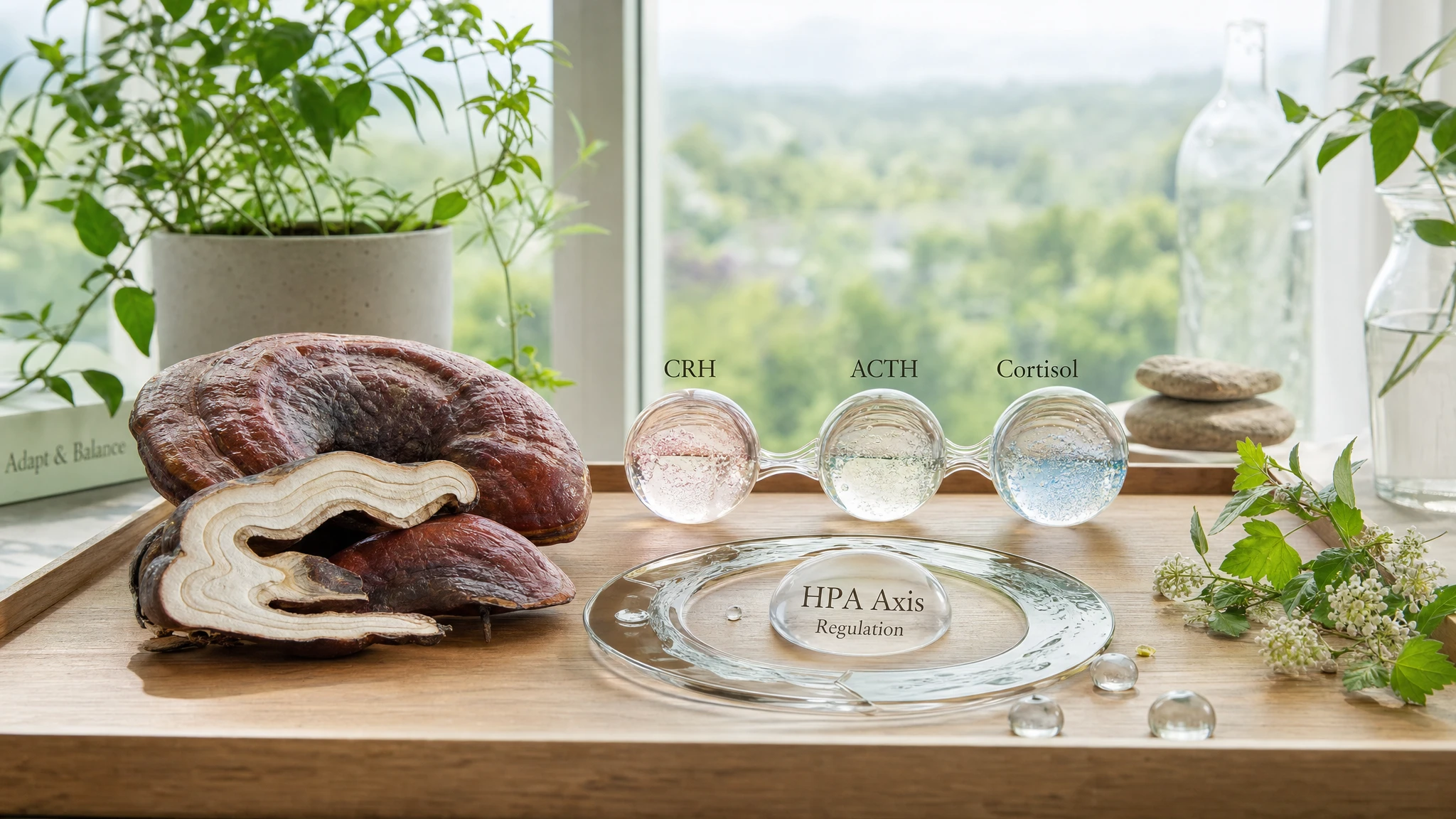
The stress axis begins with a signal from the hypothalamus, which prepares the body to react. CRH (the hormone that initiates the stress response) stimulates the anterior pituitary gland. This gland releases ACTH (the hormone that activates the adrenal glands) into the blood. ACTH then prompts the adrenal cortex to produce cortisol [63] [64] [65]. The body thus transforms a physical or mental stimulus into a useful and measurable response.
However, if the stimulus persists for a long time, the system may lose its balance. This is why Reishi is cited as a potential aid, not as a means to block the axis. It could support the neuroendocrine network (the link between nerves and hormones) when it becomes altered [66] [67].
Cortisol, therefore, is not a “negative” hormone. It is the main human glucocorticoid and plays an essential role in the body. After an alarm, it helps the body return toward homeostasis (internal balance) [68] [69]. The problem can arise when stress lasts a long time and the brake loses precision. Sleep, mood, energy use, and low-grade inflammation can be affected [66] [67].
In this context, Ganoderma lucidum can be viewed with caution as an aid to recovery. Studies, however, do not prove that it reduces cortisol in humans in a safe and consistent manner [9] [17]. First, the process must be understood, then Reishi supplementation can be evaluated as part of a broader plan. The choice must follow clinical criteria and take into account the individual's condition [6] [7].
To better understand the process, it is useful to divide it into four steps:
- CRH produced by the hypothalamus initiates the hormonal response and coordinates the signal in the brain.
- Cortisol, the main human glucocorticoid, brakes the HPA axis when the response is sufficient.
- Prolonged stress, if it lasts a long time, can change hormone rhythms and the way the body perceives and uses them.
- Reishi can be studied as a potential aid for balance, but not as a therapy.
Before discussing well-being or adaptation, it is necessary to understand the path of the hormonal response. Everything starts with a stressor (a factor that triggers the alarm) and follows specific stages. These stages also show the points at which Reishi might act.
CRH and ACTH: how the endocrine response to stress begins
The CRH released by the hypothalamus activates the adenohypophysis, which is the anterior part of the pituitary gland. This gland secretes ACTH, the adrenocorticotropic hormone, into the blood [63] [64] [65]. This step transforms the threat signal into a widespread and measurable endocrine response. It is a key stage in the physiology of stress, that is, the normal functioning of the body. In fact, it allows the organism to immediately make energy and other resources available [63].
To understand Reishi, this axis offers above all a view of the entire system. The mushroom is often linked to well-being and the ability to adapt. Its potential role, however, must be placed within the neuroendocrine network, not outside of it. Some studies have examined how noradrenergic signals regulate the neurons that produce CRH. These signals are mediated by norepinephrine, a substance used by nerve cells. The data show a close dialogue between stress, the autonomic nervous system, and the hypothalamus [64].
In experimental and clinical studies, CRH initiates an orderly series of responses. It is therefore not just an abstract marker, that is, a simple piece of data to be measured [65] [68]. The basic mechanism appears clear and prepares the transition to the role of cortisol. It is useful both to the general reader and to those seeking a more technical explanation. Stress is not a vague entity, but a series of steps that we can describe. After the start of the response, cortisol comes into play, which activates but also helps with control.
Cortisol and negative feedback: the brake of the HPA axis
Cortisol is the primary human glucocorticoid and essentially regulates the HPA axis [70] [68] [69]. Initially, it makes energy and resources available, then it helps to curb the response. In this way, it brings the body back toward homeostasis (the balance of its functions). This process is called negative feedback: the signal decreases when the response is sufficient. This brake prevents the alarm state from lasting longer than necessary.
The topic concerns Reishi, because many people link it to greater balance during stress. Before evaluating this link, it is necessary to understand how the body turns off the hormonal response on its own. Under critical conditions, the response to CRH and cortisol can change over time [68]. The HPA axis is therefore a dynamic system that varies according to the body's state. Recent reviews also link its control to mood disorders and chronic diseases [66] [67].
Data show that cortisol acts as a regulator and should not be viewed as "bad." This distinction is essential before discussing adaptogens or supplements. If stress continues, both the rhythm and the balance of the response can change.
Chronic stress and cortisol: what happens to hormonal balance
When stress lasts for a long time, the HPA axis does not simply remain active: its response also changes [70] [67]. Cortisol may lose part of its circadian rhythm, meaning its pattern throughout the different hours of the day. The way tissues perceive the glucocorticoid signal can also change. These effects matter because chronic stress is linked to fatigue, poor sleep, and metabolic problems. It can also be accompanied by low-grade inflammation, which is mild but persistent [67].
Recent reviews also examine the links with autoimmunity. In this condition, the body's defenses mistakenly attack its own tissues. The relationship with hormones is therefore more complex than a simple "high or low" measurement [67]. In this context, Reishi is often sought as a potential adaptogen. An adaptogen should help the body better manage its stress response. However, Reishi cannot be considered a cure for a chronic condition [9] [17].
Prolonged stress is not just a feeling, but a biological change that can cause damage. A medicinal mushroom can at most offer help with regulation, not a definitive solution. This interpretation places the potential benefit in the right context and respects the limitations of the evidence.
Reishi and the HPA axis: possible adaptogenic support
Reishi is often defined as an adaptogen because it may help stabilize the response to physical and mental stimuli [9] [17]. Regarding the HPA axis, this suggests potential assistance in balancing the alarm and recovery phases. It does not, however, imply a blockage of the system that regulates stress. This hypothesis requires caution, as human studies are few and do not provide definitive answers [9] [17].
A study on university students and one on neurasthenia have identified useful signals regarding perceived stress. Neurasthenia is a condition linked to severe fatigue and a reduced ability to perform daily activities. In both cases, possible benefits for fatigue and general well-being also emerged [9] [17]. However, the data do not prove a direct hormonal effect nor a certain reduction in cortisol. Research therefore points to a possible path, but does not yet confirm a clear clinical effect. The mushroom might help during stress, but the available evidence remains limited. This leads to a practical question: can it be useful when cortisol levels are high?
Is Reishi useful if you have high cortisol?
Questions about "high cortisol" are common, but a single value does not describe the entire clinical picture. There is no solid evidence that Reishi reliably reduces this hormone in humans [9,17,68]. The mushroom can be considered as a general aid for well-being and stress response. However, a true hormonal imbalance requires a medical consultation and, when necessary, targeted tests [6,7].
This limitation also helps avoid the misuse of the word "adaptogen." In common parlance, the term can become a vague answer to any anxiety or fatigue. Reishi can be part of a support plan, but it does not treat the root cause of the hormonal problem. If you are concerned about cortisol, you must first understand where the data comes from. Possible causes include stress, poor sleep, medications, or other clinical conditions. Only after this verification can Ganoderma lucidum be cautiously considered as a contextual supplement.
Practical use, selection, and safety
In practice, reishi should be chosen based on clear criteria: extract, quality, dosage, and health status. Potential benefits depend not only on the mushroom itself but also on its composition and production method. Product tolerability and potential drug interactions are also important factors. For this reason, safety and informed use must always be evaluated together.
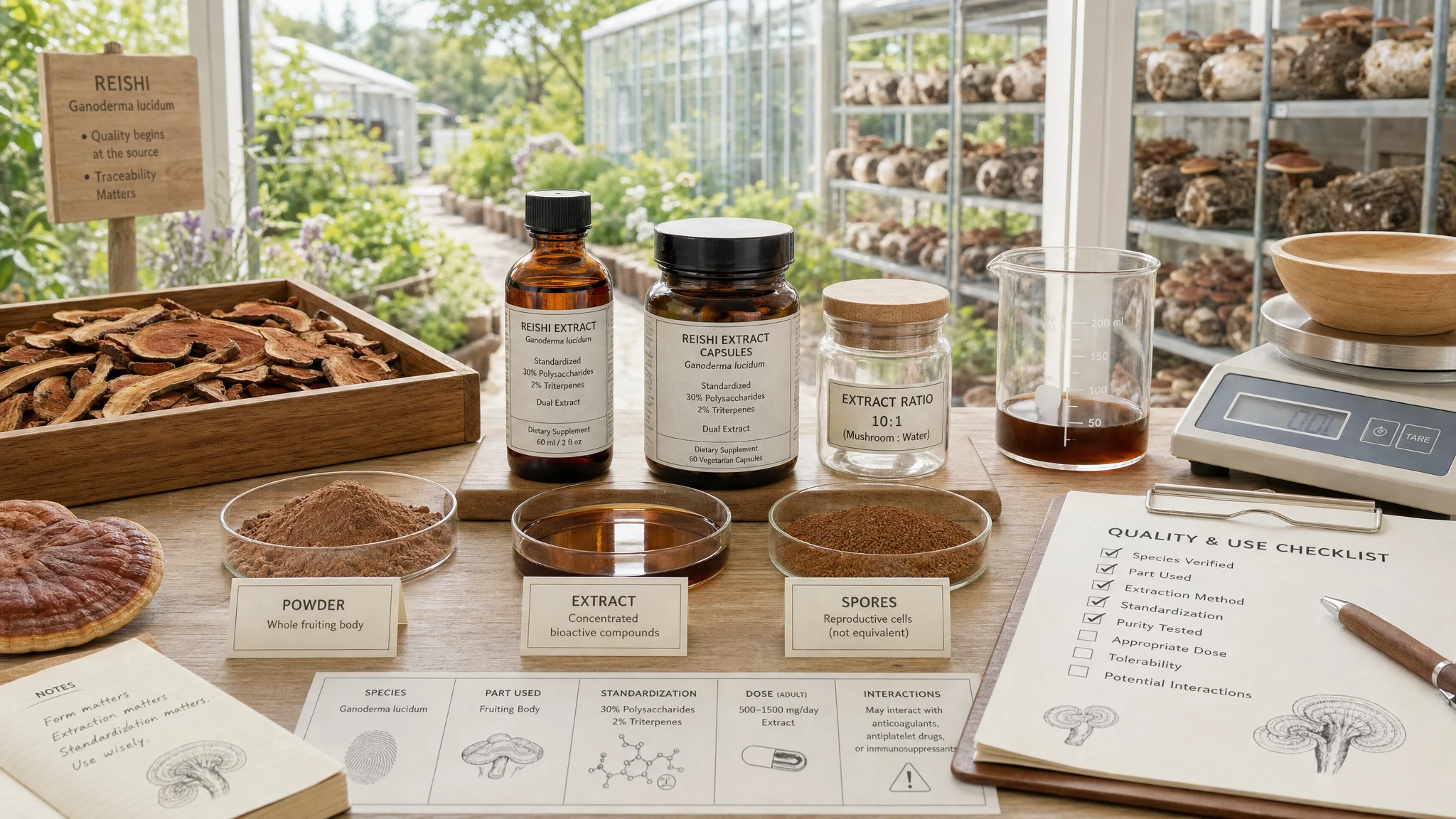
Before purchasing or using reishi, it is necessary to evaluate the product, the individual, and the purpose. The type of preparation, dosage, concentration, and duration of use all matter. The reason is simple: Ganoderma lucidum does not contain just one active ingredient. It contains polysaccharides, triterpenes, and other bioactive substances (capable of acting within the body). The quantities vary depending on the cultivation, the extraction method, and the part used [1] [2]. Therefore, powder, extract, and spores are not equivalent products [1] [2].
In healthy individuals, studies generally show good tolerability. However, these data do not prove that the supplement is suitable for everyone [6] [7] [12]. The supply chain, from cultivation to the final product, should also guide your choice. Differences between products can matter just as much as the dosage and duration of use.
This method follows general rules regarding botanicals (plant-based products used as supplements or support). These rules emphasize identity, traceability, and product data [6] [7]. They also help avoid a common mistake: believing that "natural" always means "safe" or "effective." The components of reishi can act on immune defenses, inflammation, and energy metabolism [1] [2] [4] [5] [10]. Known mechanisms make this action possible, but they do not, by themselves, prove a clinical benefit. Therefore, a concrete question is needed: is the chosen product truly similar to the one studied?
A study on 16 volunteers evaluated 2 g of extract twice daily for 10 days. The product was well tolerated and did not cause adverse effects compared to the placebo [12]. This data provides a real reference for short-term use. However, it does not prove safety for long-term use, for fragile individuals, or when taken alongside medications. The short duration also does not allow for the detection of delayed risks. Furthermore, it does not allow for the comparison of very different products.
Critical reviews confirm that while studies are numerous, they are not very homogeneous. Reliability also depends on how the preparation is produced and described [7] [2] [14]. These differences have biological weight. Effects can change based on the substances present in higher quantities. Polysaccharides that modulate defenses, anti-inflammatory triterpenes, or lesser-known substances may prevail [1] [4] [5] [11].
The same criterion applies to potential benefits. Reishi has been studied as support for immune defenses, metabolism, and quality of life [8] [3] [16] [9] [22]. This does not mean that every product acts in the same way or is suitable for everyone. Its most realistic role is that of a complement, not a substitute treatment. It may make more sense for those seeking gradual support and who choose well-described products. It is less suitable if one is looking for a rapid effect or if the label provides little data. More caution is also required when the person is already following other therapies. The safest criterion is simple: first evaluate quality and health, then decide on its use [6] [7] [12].
Before purchasing and using it, it is useful to evaluate a few simple criteria:
- verify the species, the part used, and the declared standardization;
- prefer products with dosage and origin clearly indicated on the label;
- check for compatibility with medications and health conditions;
- use Reishi as a support, not as a replacement for medical therapies.
For practical use, it is not just the quantity of the product to be taken that matters. It is also necessary to understand when more caution is required. The following points help to evaluate quality, expectations, and safety before starting.
Reishi and safety: for whom more caution is needed
A supplement may be well-tolerated, but safety always depends on the context. More caution is needed with medications, complex diseases, or long-term use without medical supervision [12] [14]. The goal is not to cause alarm. However, a natural product is not always harmless. The risk also depends on the quality and type of preparation: extract, powder, or spores. The mushroom can modulate immune and inflammatory pathways (signals that regulate defenses and inflammation). For this reason, its use must be evaluated based on one's health status [3] [4] [5] [11].
In healthy volunteers, short-term use was well-tolerated. However, the result does not automatically apply to every person or disease [12]. Recent reviews describe many studies, but with very different methods and products. The choice must consider composition, standardization (a defined quantity of certain substances), and the purpose of use [14]. More attention is needed, especially for those undergoing therapy or with a fragile clinical profile. Safety also depends on how the label describes, documents, and controls the product.
How to read labels and certifications for Reishi products
The label helps you understand the quality and true characteristics of a supplement. It should indicate the species, part used, type of extract, standardization, and quality certifications [6] [7] [14]. Without this data, it is very difficult to compare two products. Knowing what to look for reduces the risk of choosing based solely on advertising. NIH and WHO guidelines require specific checks for botanicals (plant-based products used as supplements). These checks concern safety, efficacy, and data clarity [6] [7]. Popularity alone is not enough.
A good label should indicate whether the product is derived from the fruiting body, spore, or mycelium. These parts of the mushroom are different and do not have the same composition [1] [2]. The choice can change the amount of polysaccharides and triterpenes. Therefore, the possibility of achieving the studied effects may also vary [1] [2] [11]. Reading commercial data carefully helps distinguish real evidence from marketing claims. After this check, you need to determine if the product is suitable for your specific purpose.
Reishi: yes or no? When it is worth trying
Many users ask a simple question: is it worth trying Reishi? The correct answer depends on your goal. It can make sense as support within a broader health and prevention plan. However, it is necessary to choose well-standardized products and avoid unrealistic expectations [6] [7] [14]. It does not make sense, however, if you are looking for rapid, replacement, or miraculous effects. The best evidence shows interesting signs, but not a universal or immediate effect. When present, the benefit tends to depend on the dose, composition, and duration of the intake [8] [3] [16] [9] [21] [22].
This point offers a useful summary for deciding and placing Reishi in the right context. It is a potentially useful tool, but it must be integrated into a coherent framework. This framework includes nutrition, lifestyle, and clinical evaluation when needed. In practice, it finds more space as complementary support. It finds less when seeking an immediate solution to complex problems. The decisive point remains the consistency between expectations and the available evidence.
Reishi therefore offers a broad topic for reflection between tradition, research, and conscious use. An informed choice also requires knowing when to consult a doctor. This step is particularly important in the presence of ongoing medications or therapies.
Reishi and interactions: when to talk to your doctor
Interactions are a crucial topic for any supplement, and Reishi is no exception. It is often viewed as natural and gentle, but its use may require caution. This is especially true in the presence of medications or specific medical conditions [6] [7] [14]. This topic does not concern specific prescriptions, but rather highlights a fundamental principle. When undergoing therapies or dealing with complex diagnoses, you must speak with your doctor or a healthcare professional. The goal is to foster trust and responsibility before starting any supplement. This guidance also provides a practical answer for those seeking useful information.
From a biological perspective, this caution has an even clearer basis. Ganoderma lucidum can act on immunity, glucose metabolism, and intracellular signals such as AMPK and mTOR. These signals regulate cells and can be relevant in various diseases and therapies [30] [19] [20] [43]. This broad potential action explains why the product should never be evaluated in isolation. Caution is also necessary because the market offers very different preparations. Furthermore, not all products have evidence of the same quality.
In a real-world context, Reishi must be carefully integrated into your health profile. It should not become an automatic addition. After clarifying safety, labels, expectations, and interactions, the process can be concluded. The final summary can thus remain useful, scientific, and balanced.
Summary of scientific evidence
The table summarizes some of the studies present in the article's bibliography. It distinguishes between areas of research and the general message of the selected works.
| Publication year | Area studied | What the studies indicate |
|---|---|---|
| 2012 | oncology | studies suggest a possible role [18] |
| 2019 | mTOR and autophagy | evidence indicates possible effects [30] |
| 2021 | lipid metabolism | results are not uniform [13] |
| 2023 | immunomodulation | evidence indicates possible effects [3] |
| 2024 | stress and perceived well-being | some signals have been observed [9] |
| 2025 | glucose metabolism | the signal appears consistent [24] |
| 2026 | neuroinflammation | the signal appears consistent [43] |
Editorial review of the evidence
In reviewing the studies collected here, we found consistent data for Ganoderma lucidum in some areas, but not uniform results. The strongest evidence we examined concerns the immune response, certain metabolic signals, and cellular processes studied in the laboratory. In humans, the results we observed primarily indicate possible additional support. They do not, however, show an independent and consistent effect. The research we analyzed remains active because it involves immunity, metabolism, stress, and internal cell signaling. The biological foundations seem plausible to us, but clinical confirmation varies significantly across different areas.
The main limitations we observed concern different products, variable dosages, and often small study groups. For many of the mechanisms discussed, we have seen that preclinical studies (laboratory or animal tests) still prevail. Furthermore, extracts, spores, and powders have different chemical profiles. Therefore, their results cannot be directly compared. We found that there is a lack of solid clinical evidence, especially regarding stress, sleep, and the hormonal system. We therefore believe that caution is necessary when moving from a potential mechanism to practical use.
Conclusions and editorial summary
Based on the studies examined in this article, Reishi appears to play a unique role in functional nutrition and research into medicinal mushrooms. It combines ancient use, complex chemistry, and modern scientific interest. The studies we analyzed indicate potential effects on immune defenses, inflammation, oxidative stress, and energy utilization. They also examine cellular pathways such as mTOR and AMPK. This network of actions is interesting but difficult to summarize. The mushroom does not act through a single mechanism. Its effects vary depending on the part used, extraction method, dosage, and standardization.
In practice, we believe that Reishi may offer additional support in certain contexts. The studies we reviewed primarily concern metabolism, general well-being, immune response, and specific biological processes. However, solid clinical confirmation is still lacking in many areas. This applies to stress, sleep, mental energy, cholesterol, and glycemic control. The data show some signals but do not provide definitive answers. We have observed that evidence is more reliable when the product and method are well-described. It becomes weaker when studies compare different products.
Reishi clearly demonstrates how closely nutrition, metabolism, and prevention are linked. A medicinal mushroom can interact with cellular energy, inflammation, and the stress response. It can also influence the gut microbiota (the collection of intestinal microorganisms). This perspective avoids both easy enthusiasm and baseless dismissal. The research we examined indicates a real, yet still partial, potential. The topic connects biochemistry, clinical practice, and the quality of information. It also opens the door to the study of other functional foods and compounds active on the same biological pathways.
Final critical note
The evidence on Reishi that we have analyzed requires a clear distinction between plausible hypotheses and proven effects in humans. Many of the cited data are derived from preclinical studies (laboratory or animal tests). These works clarify certain mechanisms, but they do not prove a certain benefit for people. The limitation we encountered mainly concerns mTOR, AMPK, neuroprotection, stress response, and autophagy (recycling of cellular components). In these areas, the signals are strong, but practical use remains uncertain. Even the human studies we examined often include few subjects and different products.
The form of the product also creates a significant limitation. Extract, spores, fruiting body, and mycelium are not equivalent. The mycelium is the network of filaments that forms the vegetative part of the fungus. Each form may have a different chemical profile. Consequently, we cannot extend the same results to all products. Studies do not always clarify dosage, duration, and absorption rate. The weakest evidence we found concerns cortisol, sleep, mental energy, hormones, orexin, and glutamate. In these areas, the data are primarily indirect.
Studies also show inconsistent results regarding the use of sugars and fats. Some report possible beneficial effects, while others find no relevant differences between groups. This discrepancy does not negate scientific interest, but it precludes overly simple conclusions. Reishi has interesting biological foundations and many preclinical data. However, confirmation in humans requires larger, uniform, and well-controlled studies. Only then will we know which effects are repeatable, for whom, with which product, and in what context.
References
[1] Unlocking the therapeutic potential of bioactive compounds in Ganoderma lucidum: a new frontier in natural medicine
[2] Ganoderma lucidum—From Ancient Remedies to Modern Applications: Chemistry, Benefits, and Safety
[3] Evaluation of Immune Modulation by b-1,3; 1,6 D-Glucan Derived from Ganoderma lucidum in Healthy Adult Volunteers, A Randomized Controlled Trial
[4] Immunomodulatory Effects of Ganoderma lucidum Bioactive Compounds on Gut–Brain and Gut–Liver Axis Disorders
[5] Anti-Inflammatory Potential of Ganoderma lucidum Triterpenes: A Systematic Review and Meta-Analysis of Preclinical Evidence
[6] Botanical Supplement Fact Sheets
[7] Research guidelines for evaluating the safety and efficacy of herbal medicines
[8] Coriolus Versicolor and Ganoderma Lucidum Related Natural Products as an Adjunct Therapy for Cancers: A Systematic Review and Meta-Analysis of Randomized Controlled Trials
[9] Efficacy of Lingzhi or Reishi Medicinal Mushroom Ganoderma lucidum (Agaricomycetes) Supplementation on Psychological Stress and Selective Fitness Profile Parameters in Female College Students in West Bengal, India
[10] Biochemical and Pharmacological aspects of Ganoderma lucidum: Exponent from the in vivo and computational investigations
[11] The Versatile Functions of G. Lucidum Polysaccharides and G. Lucidum Triterpenes in Cancer Radiotherapy and Chemotherapy
[12] Safety and Tolerability of Ganoderma lucidum in Healthy Subjects: A Double-Blind Randomized Placebo-Controlled Trial
[13] The beneficial effects of Ganoderma lucidum on cardiovascular and metabolic disease risk
[14] Ganoderma lucidum (Reishi) an edible mushroom; a comprehensive and critical review of its nutritional, cosmeceutical, mycochemical, pharmacological, clinical, and toxicological properties
[15] Spore Powder of Ganoderma lucidum Improves Cancer-Related Fatigue in Breast Cancer Patients Undergoing Endocrine Therapy: A Pilot Clinical Trial
[16] Ganoderma lucidum dry extract supplementation modulates T lymphocyte function in older women
[17] A Randomized, Double-Blind and Placebo-Controlled Study of a Ganoderma lucidum Polysaccharide Extract in Neurasthenia
[19] Antidiabetic activity of Ganoderma lucidum polysaccharides F31 down-regulated hepatic glucose regulatory enzymes in diabetic mice
[20] Ganoderma lucidum Extract Reduces Insulin Resistance by Enhancing AMPK Activation in High-Fat Diet-Induced Obese Mice
[21] Clinical Evaluation of Ganoderma lucidum Spore Oil for Triglyceride Reduction: A Randomized, Double-Blind, Crossover Study
[22] Ganoderma lucidum Effects on Mood and Health-Related Quality of Life in Women with Fibromyalgia
[23] Triterpenes FromGanoderma LucidumInduce Autophagy in Colon Cancer Through the Inhibition of p38 Mitogen-Activated Kinase (p38 MAPK)
[24] Comparing the Effects of Ganoderma lucidum and Kombucha Mushrooms on Glycemic Control in Patients With Type 2 Diabetes: A Randomized Clinical Trial
[25] Ganoderma lucidum Ameliorates Non-Alcoholic Steatosis by Upregulating Energy Metabolizing Enzymes in the Liver
[26] Therapeutic potential of the medicinal mushroom Ganoderma lucidum in metabolic syndrome: Antioxidant, hypoglycemic, and hepatoprotective activities
[27] A double-blind, randomised, placebo-controlled trial of Ganoderma lucidum for the treatment of cardiovascular risk factors of metabolic syndrome
[29] Study of potential cardioprotective effects ofGanoderma lucidum(Lingzhi): results of a controlled human intervention trial
[30] ReishiMax inhibits mTORC1/2 by activating AMPK and inhibiting IGFR/PI3K/Rheb in tumor cells
[31] Sporoderm-Broken Spores of Ganoderma lucidum Inhibit the Growth of Lung Cancer: Involvement of the Akt/mTOR Signaling Pathway
[32] Sporoderm-Removed Ganoderma lucidum Spore Powder May Suppress the Proliferation, Migration, and Invasion of Esophageal Squamous Cell Carcinoma Cells Through PI3K/AKT/mTOR and Erk Pathway
[33] Regulation of Apoptosis and Autophagy in Hepatoblastoma Cells by Ganoderma lucidum Polysaccharides Through the Akt/mTOR Pathway
[34] Genetic Inactivation of mTORC1 or mTORC2 in Neurons Reveals Distinct Functions in Glutamatergic Synaptic Transmission
[35] mTOR Promotes Astrocyte Activation and Participates in Neuropathic Pain Through Upregulation of RIP3
[36] Ganoderma lucidum stimulates autophagy-dependent longevity pathways in Caenorhabditis elegans and human cells
[37] Ganoderma lucidum Spore Powder Alleviates Metabolic-Associated Fatty Liver Disease by Improving Lipid Accumulation and Oxidative Stress via Autophagy
[38] Proteoglycan Extracted from Ganoderma lucidum Ameliorated Diabetes-Induced Muscle Atrophy via the AMPK/SIRT1 Pathway In Vivo and In Vitro
[39] Effect of the Lingzi or Reishi Medicinal Mushroom Ganoderma lucidum (Agaricomycetes) on Hyperglycemia and Dyslipidemia with Experimental Metabolic Syndrome
[40] Amelioration of the Lipogenesis, Oxidative Stress and Apoptosis of Hepatocytes by a Novel Proteoglycan from <i>Ganoderma lucidum</i>
[41] Polysaccharides from Ganoderma lucidum attenuate cognitive impairment in 5xFAD mice by inhibiting oxidative stress and modulating mitochondrial dynamics via the Nrf2/antioxidative axis activation
[42] Ganoderma calidophilum-derived highly oxygenated lanostane triterpenoids: Multitarget neuroprotection through AMPK/mTOR/SIRT1 axis modulation and gut-brain axis crosstalk
[43] Ganoderma lucidum mediates microglial polarization and ameliorates experimental autoimmune encephalomyelitis by reducing oxidative stress and inhibiting NF-kB/STAT3 pathway
[44] Ultrasound-Assisted Extraction of Neuroprotective Antioxidants from Ganoderma lucidum Optimized by RSM-ANN-GA Hybrid Modeling
[45] Ganoderic Acid A Promotes Functional Recovery After Traumatic Brain Injury by Protecting Blood–Brain Barrier Integrity and Modulating Microglial Polarization
[46] Intranasal administration of Ganoderma lucidum-derived exosome-like nanovesicles ameliorates cognitive impairment by reducing inflammation in a mouse model of Alzheimer’s disease
[47] AMP-activated protein kinase and nitric oxide regulate the glucose sensitivity of ventromedial hypothalamic glucose-inhibited neurons
[48] Oxidative stress induces phosphorylation of neuronal NOS in cardiomyocytes through AMP-activated protein kinase (AMPK)
[49] Blocking the vicious cycle nNOS/peroxynitrite/AMPK by S-nitrosoglutathione: implications for stroke therapy
[50] Inhibition of the AMPK/nNOS pathway for neuroprotection in stroke
[51] A Functional Link between AMP-Activated Protein Kinase and Orexin Mediates the Effect of BMP8B on Energy Balance
[52] Morphological Study of Orexin Neurons in the Hypothalamus of the Long-Evans Rat, with Special Reference to Colocalization of Orexin and NADPH-Diaphorase or Neuronal Nitric Oxide Synthase Activities
[53] Endogenous Nitric Oxide Inhibits, Whereas Awakening Stimuli Increase, the Activity of a Subset of Orexin Neurons
[54] Nitric Oxide Mediates Selective Degeneration of Hypothalamic Orexin Neurons through Dysfunction of Protein Disulfide Isomerase
[55] Orexin A activates locus coeruleus cell firing and increases arousal in the rat
[56] The Orexin/Hypocretin System Modulates Amygdala-Dependent Threat Learning through the Locus Coeruleus
[57] Orexin Modulates Behavioral Fear Expression through the Locus Coeruleus
[58] Physiological and Pathological Role of mTOR Signaling in Astrocytes
[59] Astrocytic Glutamate Uptake and Signaling as Novel Targets for Antiepileptogenic Therapy
[60] SLC38A10 Regulate Glutamate Homeostasis and Modulate the AKT/TSC2/mTOR Pathway in Mouse Primary Cortex Cells
[61] Diet Therapy Restores Glutamatergic Input to Orexin/Hypocretin Neurons After Traumatic Brain Injury in Mice
[62] Monosynaptic Glutamatergic Activation of Locus Coeruleus and Other Lower Brainstem Noradrenergic Neurons by C1 Cells in Mice
[63] Noradrenergic Activation in the Paraventricular Nucleus During Acute and Repeated Immobilization Stress: An In Vivo Microdialysis Study
[64] Regulation of corticotropin‐releasing hormone neuronal network activity by noradrenergic stress signals
[65] Continuous Administration of Human Corticotropin-Releasing Hormone in the Absence of Glucocorticoid Feedback in Man
[66] The role of the hypothalamic-pituitary-adrenal axis in depression across the female reproductive lifecycle: current knowledge and future directions
[67] Chronic Stress and Autoimmunity: The Role of the Hypothalamic-Pituitary-Adrenal Axis and Cortisol Dysregulation
[68] ACTH and Cortisol Responses to CRH in Acute, Subacute and Prolonged Critical Illness: A Randomized Double-Blind Placebo-Controlled Crossover Cohort Study
[69] Defining a Serum Cortisol Cutoff After CRH Stimulation for the Diagnosis of ACTH Deficiency: A Retrospective Study Validated by a National Registry
[70] Role of Paraventricular Noradrenergic/Epinephrine Inputs on Hypothalamo-Pituitary-Adrenal Axis Responses to Acute and Chronic Stress
Editorial note
Artificial Intelligence was used solely as a tool to support editorial and documentary work. All content, interpretations, bibliographic citations and conclusions have been verified, reviewed and approved by the author, who assumes full scientific responsibility for them.
The manuscript was also subject to independent peer review prior to publication.
To ensure maximum transparency, the article's complete history — including the dates of submission, review, acceptance and publication, as well as information on the peer review process — is available on the dedicated Article History page.