


Ginseng: properties, supplementation, and health benefits
Research on ginseng offers an interesting, yet inconsistent, picture. Some studies indicate effects on fatigue, sugar metabolism, memory, and stress response. Others find weaker effects or results linked to the type of product used. The quality of the extract, dosage, timing of use, and duration can significantly change the outcome. Safety generally appears good, but still requires careful interpretation of the data. In summary, ginseng is a phytocomplex—that is, a set of active plant substances—that has been widely studied. The evidence makes it more credible as a targeted aid than as a one-size-fits-all solution.
- Published 12/10/2026
- Updated 21/10/2026
- Reviewed 21/10/2026
- Article history


ABSTRACT : WHAT THE SCIENCE SAYS
Ginseng is one of the most studied medicinal plants in the world and, at the same time, one of the most misunderstood. When we talk about ginseng, we are not referring to a single effect or a single preparation, but to a set of species, extracts, and active compounds that can behave differently depending on the quality of the product, the dose, the timing of intake, and the clinical context. The most significant scientific aspect concerns ginsenosides, which are bioactive molecules belonging to triterpene saponins, a family of plant compounds with significant biological activity that help explain the plant's profile.
These substances have been studied for their potential role in cellular energy, inflammation, oxidative stress—that is, the damage caused by an excess of reactive oxygen species—stress response, glucose and lipid metabolism, as well as memory, attention, and psychophysical well-being. For this reason, ginseng is often described as an adaptogen, meaning a substance capable of promoting the body's adaptation to stress conditions without acting as a classic stimulant in the strict sense.
However, speaking about ginseng correctly also means distinguishing between promising data and truly consolidated results, between benefits on biomarkers and clinical impact, and between standardized extracts and generic products. The topic is also relevant for those seeking practical support, because the same plant can yield different responses if the formulation, standardization, or the gut microbiota—the set of microorganisms that live in the intestine and influence its absorption—changes.
In the following sections, you will first find the general properties of the plant, then practical indications on supplementation, the biological mechanisms involving AMPK, a cellular energy sensor, and mTOR, a signaling pathway that integrates nutrients and growth, the effects on metabolism and inflammation, the most studied clinical contexts, the relationship with the nervous system, a critical reading of the evidence, and finally concrete criteria for choosing and using the product in an informed manner. The goal is to offer a complete overview, useful both to those seeking reliable information and to those who wish to understand why ginseng continues to be studied in such diverse areas of medicine and nutrition. In particular, the article addresses:
- Ginsenosides, botanical species, and differences between various preparations
- Dosage, timing of use, and quantity of active substances in daily supplementation
- AMPK, mTOR, and cellular energy use with ginseng
- Effects on glycemia, blood fats, inflammation, and gut microbiota
- Memory, mental stress, safety, and criteria for informed use
The properties of ginseng
The properties of ginseng depend primarily on its active compounds and how the body absorbs and transforms them. Research therefore evaluates not only its traditional use but also its potential effects on energy, stress, and the body's biological responses.
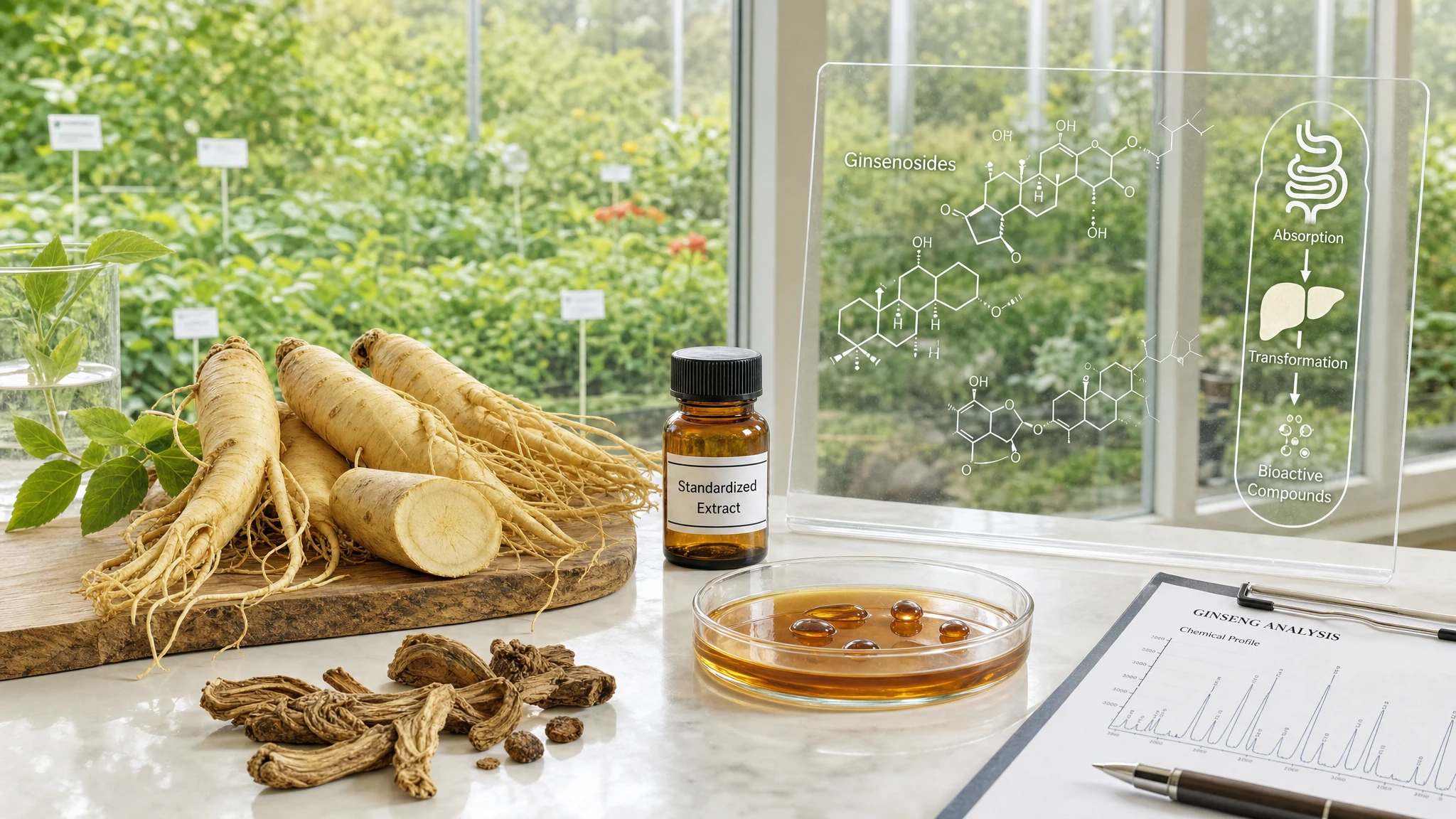
Ginsenosides are the main active molecules in ginseng and account for most of its biological effects. They are triterpene saponins (plant compounds with a complex chemical structure) and can perform various actions. Some are common, while others are present in small quantities. However, the rarer ones may play an important role in intestinal absorption and cellular activity.
Ginseng, therefore, is not a uniform substance. Each extract can contain different doses of active compounds and produce different effects. This is why standardization matters, as it indicates a defined amount of these molecules. This data makes it easier to compare studies and read labels.
Talking about benefits without specifying the preparation can create confusion. Two products with the same botanical name can, in fact, have very different qualities and effects. Ginsenosides are therefore the chemical basis for studying the plant, from cellular processes to practical uses. They also help to read the results obtained in humans, cells, and animals more carefully [1].
Ginseng is studied primarily as a support for fatigue, stress, and alterations in homeostasis (the body's internal balance). Its action does not consist solely of "stimulating." It can act on the processes that regulate cellular energy, inflammation, and antioxidant defense.
This action is different from the rapid effect of caffeine, which primarily increases alertness. In ginseng, a regulatory action often prevails over an excitatory effect. For this reason, it is often defined as an adaptogen (a substance that can help the body adapt to stress). The effect, however, is not the same for every person or situation.
It is necessary to distinguish perceived vitality from changes in biomarkers (biological values that can be measured). Ginseng can act on both, but the effect varies based on the individual and the product. It does not replace a healthy lifestyle, but it can offer support in selected cases. Before use, the goal should therefore be clarified: energy, stress response, metabolism, or general well-being [1].
The various ginseng preparations are not equivalent, and this difference helps in interpreting studies. White ginseng, red ginseng, and extracts of roots, berries, or sprouts can have different compositions. In fact, the production method, the quantity of ginsenosides, and the type of biological activity change.
Heat can transform certain compounds and change their bioavailability (the portion that actually reaches the tissues). Consequently, the biological effect can also vary. Two products with the same trade name can therefore yield different results. Korean red ginseng often undergoes processing that changes its composition compared to white ginseng. This can influence the rare compounds and their intestinal absorption.
When reading a study, one must therefore check which preparation was used. The results obtained with one formula do not automatically apply to all others. This distinction also helps to compare traditional products with modern ones. It also opens up topics of standardization, dosage, and timing (the moment the product is taken), which are central to informed use [1].
The key points regarding the properties of ginseng are:
- The quantity and type of ginsenosides drive most of the biological activity.
- Intestinal absorption can significantly change the final effects.
- Standardization allows for better comparison of different extracts and studies.
- The observed effects vary based on the preparation and the context of use.
- The most studied areas concern energy, stress, and the regulation of body functions.
The properties of ginseng depend on its active molecules and how the body uses them. The following three aspects help to better interpret studies and avoid overly simplistic conclusions.
What ginseng ginsenosides are and why they matter
Ginsenosides are the main active molecules in ginseng and account for most of its biological effects. They belong to the triterpene saponins (plant compounds with a complex chemical structure). Their actions can vary significantly. Some of these molecules are common, while others are present in smaller quantities. These rarer forms may play a significant role in intestinal absorption and cellular activity.
Therefore, the plant does not always provide the same product. Each extract may contain different amounts of active compounds and produce different effects. This is why standardization is important. A standardized extract indicates a defined proportion of the molecules present. This data makes it easier to compare research, evaluate products, and better understand the information provided on labels.
Speaking of benefits without specifying the preparation can instead create confusion. Two products with the same botanical name can have very different qualities and effects. This chemical basis allows for the study of the plant, from cellular processes to practical uses. It also helps to interpret the results obtained in humans, cells, and animals with greater care.
What is ginseng used for in human physiology
Ginseng is primarily studied as a support for fatigue, stress, and alterations in homeostasis (the body's internal balance). Its action does not consist solely of "stimulating." It can act on the processes that regulate cellular energy, the inflammatory response, and antioxidant defense. These mechanisms help the body better manage certain types of stress.
Its action differs from the rapid effect of caffeine, which primarily increases alertness. Here, a regulatory function prevails rather than an exciting effect. For this reason, the plant is often defined as adaptogenic, meaning it is capable of promoting adaptation to physical or mental stress. However, the effect can vary depending on the individual, the context, and the product used.
It is also necessary to distinguish between perceived vitality and changes in biomarkers (biological values that can be measured). The substance can influence both, but with varying intensity. It does not replace a healthy lifestyle and can only offer potential support in selected cases. Therefore, before use, the goal must be defined: energy, stress response, metabolism, or general well-being [1].
Difference between red ginseng, white ginseng, and other preparations
Ginseng preparations are not equivalent, and this difference is decisive when interpreting studies. White or red forms and extracts of roots, berries, or sprouts can have different compositions. In fact, the production method, the quantity of ginsenosides, and the type of biological activity change. The product used can therefore influence the observed result.
Heat can transform certain compounds and change their bioavailability (the portion that actually reaches the tissues). Consequently, the biological effect may also vary. Two products with the same trade name can therefore yield different results. The Korean red form often undergoes processing that changes its composition compared to the white form. This can affect rare compounds and their intestinal absorption.
When reading research, one must therefore check which preparation was used. Data obtained with one formula do not automatically apply to all others. This distinction avoids overly broad conclusions and helps in comparing traditional products with modern ones. It also introduces the topics of standardization, dosage, and the timing of product intake, which are useful for informed use [1].
Recent research and updates
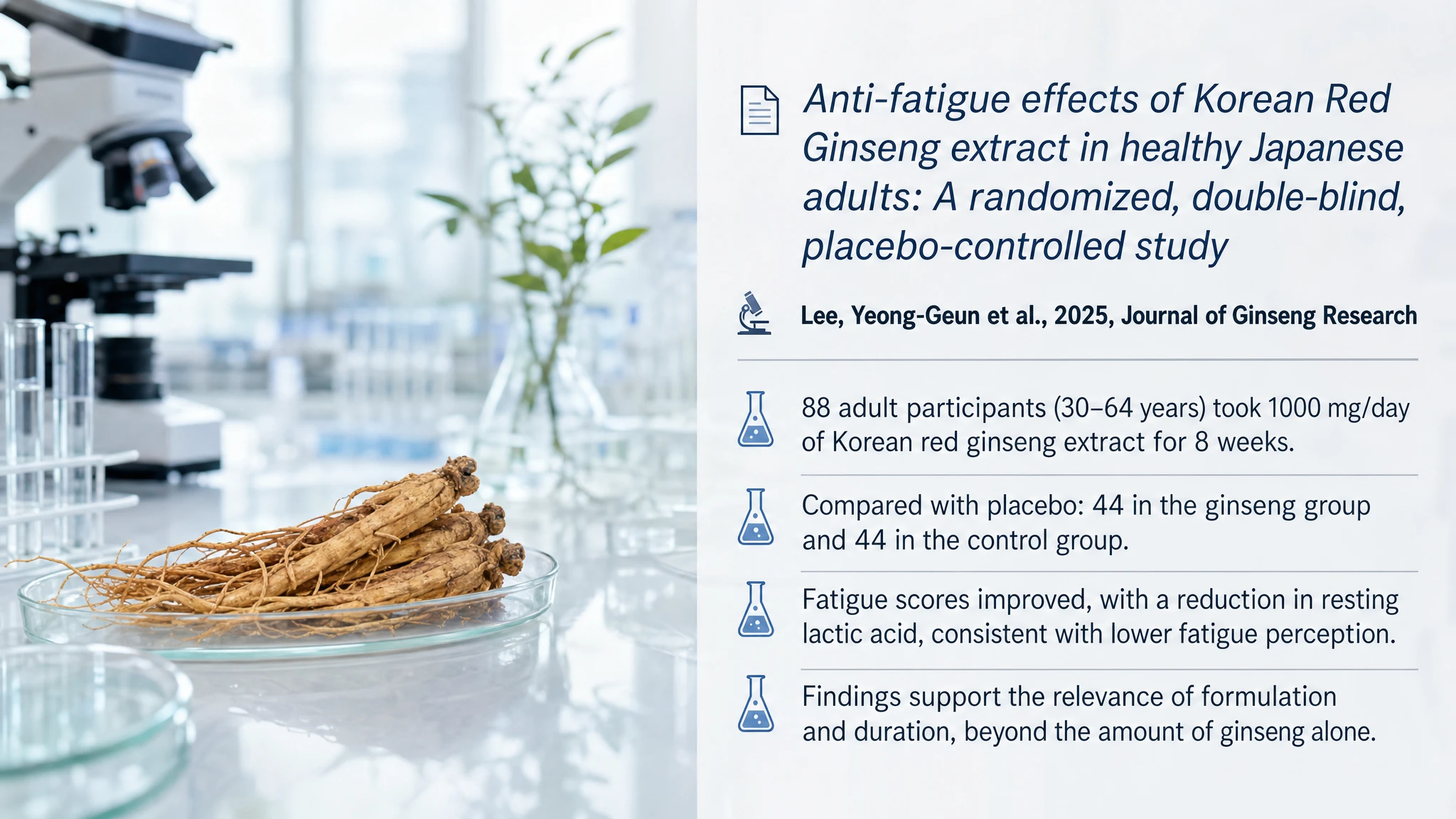
In 2025, Lee and colleagues studied healthy Japanese adults experiencing daily fatigue. The research, published in the Journal of Ginseng Research, used a Korean red ginseng extract. Participants took the standardized ginseng extract for 8 weeks. The authors measured perceived fatigue and several biological markers related to recovery. The results provide recent data obtained through a controlled clinical trial. The plant was therefore evaluated not only for its traditional use but also through measurable effects.
Anti-fatigue effects of Korean Red Ginseng extract in healthy Japanese adults: A randomized, double-blind, placebo-controlled study
- 88 adult participants, aged 30-64, took 1000 mg of red ginseng extract per day for 8 weeks.
- The comparison used a placebo: 44 people were in the ginseng group and 44 in the control group.
- Fatigue scores improved and resting lactic acid levels decreased, a finding consistent with reduced fatigue.
- The study indicates that the type of product and duration may matter as much as the amount of ginseng taken.
Ginseng supplementation
To evaluate a supplement, knowing whether it works is not enough. The dosage, form, and intended use also matter. Products with the same milligram content can yield different results. Factors such as standardization (the declared amount of active compounds), ginsenosides, and the clinical context vary. To choose carefully, you must read the label and evaluate the quality of the extract, not just the dose.
Clinical studies on ginseng have used very different doses. These range from low-dose extracts to much higher quantities. The duration also varies from a few weeks to several months. These differences make it difficult to establish a single dose that is valid for everyone. The result, in fact, depends on the extract, the purpose, and the individuals studied.
One trial involved 117 sedentary adults for 12 weeks. It compared 100 mg per day and 500 mg per day of a ginsenoside complex. Aerobic capacity improved only in the group taking the higher dose [2]. Another study involved 28 young adults for 3 weeks. Participants took 200 mg per day of a 7% Panax ginseng extract. This dose did not improve maximal aerobic performance [3].
Taken together, the results show that the number of milligrams is not enough. The formula, duration, and physiological context—that is, the body's conditions—also matter. When reading studies, one must also check the ginsenosides and the product standardization. The latter indicates the declared amount of active compounds present in the extract. Similar doses can have different biological effects if the extract or botanical form changes.
In popular science texts, the dose should therefore be presented as context-dependent data. One should not turn the average of studies into a practical recommendation valid for everyone. Research has, in fact, evaluated ginseng using very different usage patterns. The dose must be read in conjunction with the duration of use and the chosen purpose. There is no "single threshold" suitable for every person. Instead, these factors must be evaluated together: species, extract, standardization, timing, and concomitant therapies. Timing refers to the chosen moment to take the product [4,5,2,3,6].
Timing matters especially for postprandial metabolic effects, i.e., those that appear after a meal. A controlled study involved healthy middle-aged people. The timing of Panax ginseng intake changed glucose tolerance after a meal. The result suggests that timing can be as significant as the dose [7].
Ginseng berry saponins have also been studied in 195 people with prediabetes. This is an extract rich in ginseng berry saponins. The study had a crossover design, in which each participant tries multiple treatments in different phases. Each period lasted 4 weeks and also included lifestyle measures. Researchers measured fasting glycemia, 2-hour glycemia, insulin, and C-peptide. They also evaluated HOMA-IR and QUICKI, two indices related to the insulin response [8].
These data do not indicate a single rule valid for every person. However, they suggest that the timing of intake can be as important as the dose. Timing can change the relationship between ginsenosides, digestion, absorption, and metabolic response. This aspect can be particularly significant when the meal contains many carbohydrates. Studies before meals and in the postprandial phase help to understand the role of food. The same plant can, in fact, have different uses based on the dietary context.
For this reason, those who use ginseng ask not only "how much," but also "when." However, the scientific message must remain cautious. Timing can influence the effect, but it does not replace the quality of the extract. Furthermore, it does not guarantee the same outcome in all people. It can, however, guide a more reasoned use in relation to meals and metabolic goals [7,8].
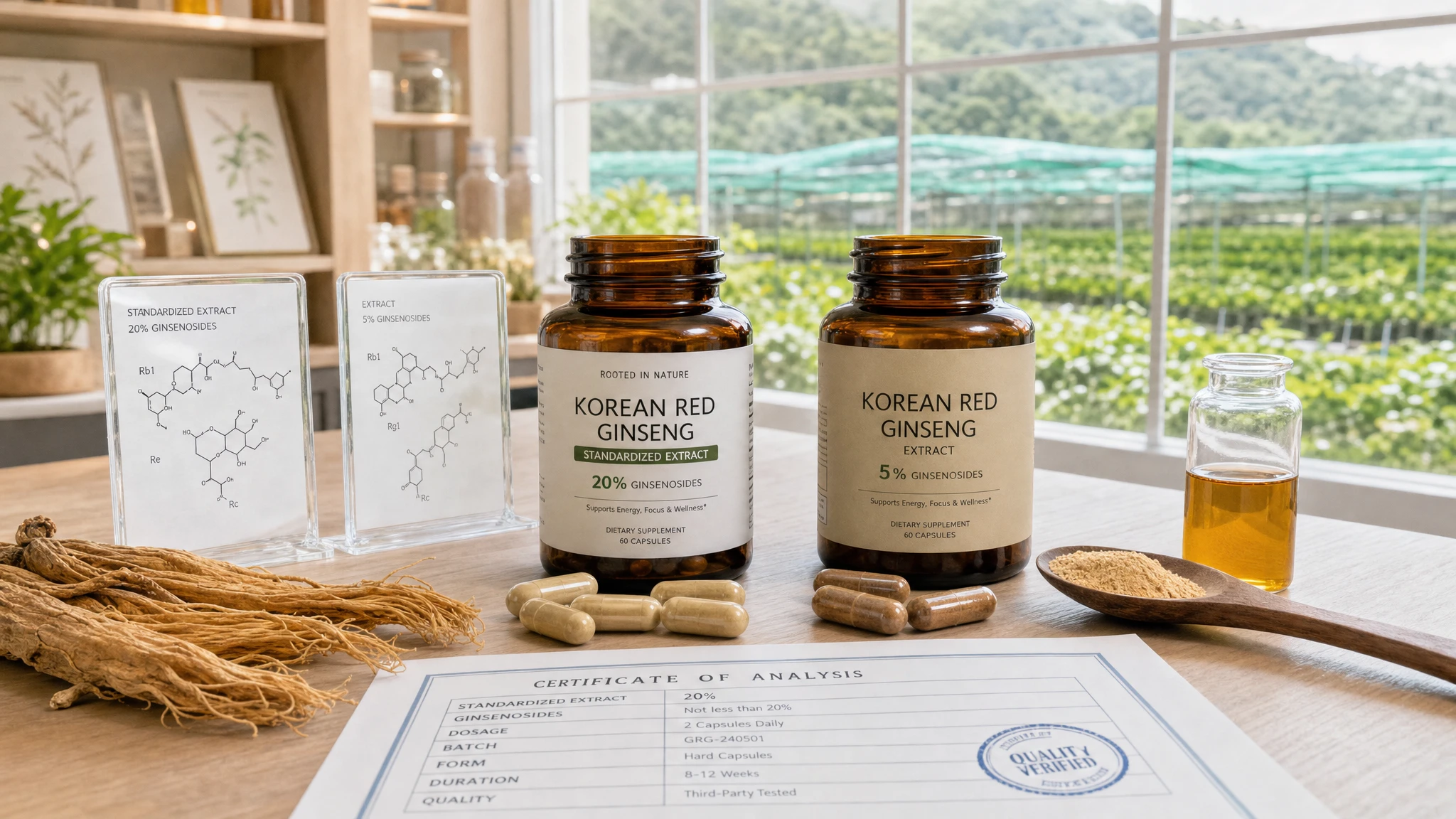
Standardization is one of the most important criteria for choosing a ginseng supplement. A standardized extract indicates a precise amount of active compounds. This data facilitates comparison between different products and studies. Without such information, two packages can have very different clinical qualities. This is true even when they report the same botanical name.
Reading the label therefore means verifying several data points: weight, ginsenoside content, species, and formula. The content indicates the declared quantity of ginsenosides present in the product. In ginseng, active substances matter more than just the milligrams in the capsule. A trial studied Korean red ginseng in women with mild or moderate chronic fatigue. Participants took 3 g per day for 6 weeks. The study included visits every 2 weeks and a follow-up 4 weeks later. The design evaluated a well-defined formula, not a generic ginseng product [5].
Another safety trial involved healthy Korean volunteers for 4 weeks. Participants took 1 g per day or 2 g per day of root extract. Mild events occurred, such as dyspepsia, hot flashes, insomnia, and constipation. Dyspepsia refers to difficult or uncomfortable digestion. The study reported no serious events [6]. Standardization is therefore a sign of quality, not a secondary technical detail. Reading the label helps distinguish real data from marketing messages. This criterion combines phytochemistry, study reliability, and the quality of supplementation. Phytochemistry studies the substances produced by plants [5,6].
Those seeking metabolic effects must rely on the concrete results of studies. One review collected 65 randomized studies on ginseng that combined various outcomes. The areas observed included psychomotor and physical performance, the circulatory system, and glucose metabolism [9]. Another review examined type 2 diabetes and glucose tolerance. The included studies mainly evaluated glycemia, insulin, and how the body responds to insulin. The topic was therefore studied with real metabolic goals, not just theoretical ones [10].
A review on cardiovascular risk examined various clinical and metabolic factors. The results place ginseng in a complex framework, which does not depend on a single element [4]. Overall, these data support a practical message. Conscious use requires evaluating the product, purpose, and duration. It should not stem from the automatic expectation of a benefit. Ginseng can be evaluated as a targeted tool, to be chosen with care. It should not be considered a generic solution for every need. The choice always requires reading the dose, formula, and context of use together [9,10,4].
In summary, choosing a product requires evaluating these criteria:
- The declared quantity is not enough without the ginsenoside content.
- The timing of intake can change the metabolic response.
- Standardization facilitates comparison between different products and studies.
- The purpose of use guides the choice of the most suitable formula.
- Concomitant therapies require a more cautious evaluation.
The following sections explain three key aspects: dosage, timing, and standardization. These criteria change how a supplement is evaluated. Furthermore, they help in making more informed choices.
What ginseng dosage has been studied in adults
Clinical studies on ginseng have used very different dosages, ranging from low-dose extracts to higher amounts. The duration also varies from a few weeks to several months. These differences make it difficult to establish a single, universally valid dose. In fact, the result depends on the extract, the purpose, and the individuals studied.
One trial involved 117 sedentary adults over 12 weeks. It compared 100 mg per day and 500 mg per day of a ginsenoside complex. Aerobic capacity improved only in the group taking the higher dose [2]. Another study involved 28 young adults for 3 weeks. Participants took 200 mg per day of a 7% Panax ginseng extract. This dose did not improve maximal aerobic performance [3].
Taken together, the results show that the number of milligrams is not enough. The formula, duration, and physiological context—that is, the body's conditions—also matter. When reading studies, one must also check the ginsenosides and the product's standardization. The latter indicates the declared proportion of active compounds present in the extract. Similar doses can have different biological effects if the extract or botanical form changes.
In popular science texts, the dose should therefore be presented as context-dependent data. One should not turn the average of the studies into a practical recommendation valid for everyone. Research has, in fact, evaluated ginseng using very different usage patterns. The dose must be read in conjunction with the duration of use and the chosen purpose. **There is no single threshold suitable for every person.** Instead, these factors must be evaluated together: species, extract, standardization, timing, and concomitant therapies. Timing refers to the moment chosen to take the product [5][2][3].
When to take ginseng to maximize its effect
Timing matters, especially for postprandial metabolic effects—that is, those that occur after a meal. A controlled study involved healthy middle-aged individuals. The timing of Panax ginseng intake altered glucose tolerance after the meal. The result suggests that timing can be as important as the dose [7].
Ginseng berry saponins have also been studied in 195 people with prediabetes. This is an extract rich in saponins from the ginseng berry. The study used a crossover design, in which each participant tries multiple treatments in different phases. Each period lasted 4 weeks and also included lifestyle measures. Researchers measured fasting glycemia, 2-hour glycemia, insulin, and C-peptide. They also evaluated HOMA-IR and QUICKI, two indices related to insulin response [8].
These data do not indicate a single rule that applies to every person. However, they suggest that the timing of intake can be as important as the dose. Timing can change the relationship between ginsenosides, digestion, absorption, and metabolic response. This aspect may be particularly significant when the meal contains many carbohydrates. Studies conducted before meals and in the postprandial phase help to understand the role of food. The same plant can, in fact, have different uses depending on the dietary context.
For this reason, those who use ginseng ask not only "how much," but also "when." However, the scientific message must remain cautious. Timing can influence the effect, but it does not replace the quality of the extract. Furthermore, it does not guarantee the same outcome in all people. It can, however, guide a more reasoned use in relation to meals and metabolic goals [7][8].
Ginseng and extract standardization: how to read the label
Standardization is one of the main criteria for choosing a ginseng supplement. A standardized extract indicates a precise amount of active compounds. This data makes it easier to compare different products and studies. Without this information, two packages with the same botanical name may have very different qualities.
The label must indicate the ginsenoside content, the species used, and data on the formula. The content indicates the declared amount of ginsenosides present in the product. In ginseng, the active substances matter more than just the milligrams in the capsule. One trial studied Korean red ginseng in women with mild or moderate chronic fatigue. Participants took 3 g per day for 6 weeks. The study included visits every 2 weeks and a follow-up 4 weeks later. The design evaluated a well-defined formula, not a generic product [5].
Another safety trial involved healthy Korean volunteers for 4 weeks. Participants took 1 g per day or 2 g per day of root extract. Mild events occurred, such as dyspepsia, hot flashes, insomnia, and constipation. Dyspepsia refers to difficult or uncomfortable digestion. The study reported no serious events [6]. Standardization is therefore a useful sign of quality, not a secondary detail. Reading the label helps distinguish product data from marketing messages. This criterion connects plant composition, study reliability, and the quality of supplementation [5][6].
When ginseng was tested for metabolism and performance
Those seeking metabolic effects should rely on the concrete results of studies. One review collected 65 randomized studies on ginseng that combined various outcomes. The areas observed included psychomotor and physical performance, the circulatory system, and glucose metabolism [9]. Another review examined type 2 diabetes and glucose tolerance. The included studies primarily evaluated glycemia, insulin, and how the body responds to insulin. The topic has therefore been studied with real metabolic goals, not just theoretical ones [10].
A review on cardiovascular risk examined various clinical and metabolic factors. The results place ginseng in a complex framework, which does not depend on a single element [4]. Overall, these data support a practical message. Informed use requires evaluating the product, purpose, and duration. It should not stem from the automatic expectation of a benefit. Ginseng can be considered a targeted tool, to be chosen with care. It should not be considered a generic solution for every need. The choice always requires reading the dose, formula, and context of use together [9][10][4].
Biological mechanisms of ginseng: ginsenosides, AMPK and mTOR
Ginseng acts on many targets thanks to ginsenosides, the plant's main active molecules. These compounds can influence energy use and cellular turnover. Among the most studied systems is AMPK, which detects how much energy remains in the cell. Another is mTOR, which regulates growth and protein synthesis. These mechanisms help to understand the potential effects of Panax ginseng on energy and cellular stress. They may also clarify some of the nervous system's defense actions.

AMPK is the cell's main energy sensor and is activated when energy levels drop. Several ginsenosides appear to promote this process in certain study models. In doing so, they shift metabolism toward activities that consume less energy. Furthermore, they limit anabolic pathways, which build new molecules and require significant resources. This node links ginseng to fat utilization and fatty acid oxidation. It also connects to autophagy, which is the recycling of cellular components, and the response to stress. When AMPK is activated, the cell therefore tends to consume energy more cautiously. At the same time, it seeks to maintain its internal homeostasis.
In an animal and cellular model, ginsenoside F1 improved fatty liver. It activated AMPK/PGC-1α and promoted autophagy, in line with a better energy balance in the liver [11]. Some basic physiology studies have also linked AMPK to glucose control in the hypothalamus. This area of the brain helps regulate appetite and the response to nutrients. Such research shows that the energy sensor guides the response to nutrients and available reserves [12]. For ginseng, it is hypothesized that some ginsenosides may contribute to regulating this system. The effects, however, vary according to the tissue and the model used in the study.
A plausible mechanism therefore does not offer a complete explanation of the plant's effects. The data describe only a part of the picture and not its entire clinical profile. The AMPK axis should be presented as a key to interpretation, not as certain proof of efficacy. Its utility arises from the link between cell biology and the use of energy in the organism. This connection explains why ginseng is studied in the liver, muscle, heart, and inflammatory states [11,12].
mTOR is a pathway that collects signals from nutrients, growth factors, and energy levels. Based on these signals, it regulates cell growth and protein synthesis. In some models, ginsenosides appear to reduce excessive mTOR activity. They can thus promote autophagy, cell growth control, and the recovery of internal homeostasis. In colon cancer cells, ginsenoside Rg1 triggered autophagy by curbing the Akt/mTOR/p70S6K pathway. Ginsenoside Rg5, on the other hand, reduced the growth of osteosarcoma cells and promoted apoptosis. Apoptosis is the programmed death of the cell and involved PI3K/Akt/mTORC1 and LC3 [13,14].
This does not mean that ginseng always blocks mTOR under every condition. The effect actually varies based on the tissue and the type of disease. It is necessary to distinguish physiological regulation from a strong and uncontrolled blockade. mTOR is not a pathway to be turned off in every case or in every tissue. It is, in fact, necessary for the growth and normal work of many cells. However, when it is too active, regulating it can help restore a more stable state. The interest therefore concerns the ability of some ginsenosides to rebalance cellular signals. In gastric cancer, ginsenoside Rk1 made cells more responsive to chemotherapy via the AMPK/mTOR pathway. This result shows that the relationship between these nodes varies according to the biological context [15]. mTOR is therefore not good or bad in itself: what matters is that it is well-regulated [13,14,15].
AMPK and mTOR are not isolated pathways, but two poles of the same metabolic balance. When AMPK is activated, it promotes energy conservation and curbs certain growth signals. These signals include mTOR, which supports cellular activities with a high energy cost. The AMPK-mTOR axis therefore makes many effects attributed to ginseng clearer. It allows them to be read as parts of a network, rather than as separate events. This network unites nutrient use, autophagy, cellular life, and the birth of new mitochondria. It also includes the control of cell growth and division.
Ginseng therefore does not act as a simple on-off switch. It acts rather as a network regulator, with different outcomes in various tissues. The effects also change based on the disease and the conditions of the studied model. This relationship has been described in models of bone, liver, kidney, and tumor cells. Examples include Rg3 in osteosarcoma and compound K in the defense of the podocyte. The podocyte is a kidney cell that helps the kidney filter blood. Another example concerns the AMPK/ULK1/FUNDC1 axis in allergic rhinitis [16,13,14,15,17,18]. This interpretation explains why ginseng is studied in very different conditions. The AMPK-mTOR axis thus offers a common key to understanding the biology and evaluating the studies [16,13,11,14,15,17,18].
Autophagy allows the cell to recycle damaged or now useless parts. In this way, it maintains internal order and makes new energy sources available. Some ginsenosides appear to promote this process only in very specific contexts. They can thus support cellular homeostasis, i.e., the balance of the cell's functions. This process creates a direct link between ginseng, AMPK, and mTOR. If the cell manages energy better, it can also better organize its own turnover. In colon carcinoma, Rg1 triggered autophagy by reducing the Akt/mTOR/p70S6K pathway. In osteosarcoma, Rg5 acted on PI3K/Akt/mTORC1, linking autophagy and apoptosis [13,14].
In hepatic steatosis, ginsenoside F1 promoted autophagy and activated AMPK/PGC-1α. This data indicates a possible link between fat utilization and the turnover of cellular parts [11]. Autophagy, however, is not always useful in every tissue or biological moment. Its effect depends on the type of stress and the phase in which it occurs. Ginsenosides therefore appear to regulate it, not activate it always and without any limit. This action could help cells during metabolic or oxidative stress. Oxidative stress arises when reactive molecules exceed the cell's defenses. The topic concerns the liver, nervous system, and tissues that consume a lot of energy. Explaining autophagy clarifies that ginseng does not act only on energy use. It can also regulate certain processes that keep cells in good condition [13,11,14].
The link with AMPK also appears outside the liver, in tissue defense models. In allergic rhinitis, ginsenoside Rh1 improved the pathological picture via AMPK/ULK1/FUNDC1. This pathway promoted mitophagy, i.e., the targeted recycling of damaged mitochondria [17]. In mouse autoimmune kidney disease, compound K regulated both SIRT1 and AMPK. It thus reduced damage to podocytes with an action specific to B lymphocytes [18].
These data indicate that ginseng is not a substance with a single action. Instead, it contains compounds that act according to the tissue and biological conditions. Their actions concern energy, cellular defense, and organelle quality. Organelles are internal structures that perform precise functions inside the cell. Pathways related to energy and cellular defense have also been proposed in the nervous system. These pathways could explain some neuroprotective effects and the response to stress [19,20]. The value of these data does not concern only individual mechanisms. They also help to read results obtained in very different organs in a coherent way. Molecules of the same family can indeed produce distant outcomes, but they are linked on a biological level [17,18,19,20].
The cellular mechanisms of ginseng can be summarized in a few key points:
- Ginsenosides can modify cellular signals related to energy.
- AMPK tends to activate when the cell must conserve resources.
- mTOR integrates nutrients and growth in an opposite or complementary way.
- Autophagy links cellular turnover to tissue quality.
- The biological context decides whether an effect is useful or neutral.
To understand these processes, it is necessary to distinguish the role of ginsenosides from that of AMPK and mTOR. However, these three components often act together and form a network.
How ginsenosides modulate AMPK in cells
AMPK is the cell's primary energy sensor and is activated when energy levels drop. Several ginsenosides appear to promote this process in certain study models. In doing so, they shift metabolism toward activities that consume less energy. Furthermore, they limit anabolic pathways, which build new molecules and require significant resources. This node links ginseng to fat utilization and fatty acid oxidation. It also ties into autophagy—the recycling of cellular components—and the stress response. When AMPK is activated, the cell therefore tends to consume energy more cautiously. At the same time, it seeks to maintain its internal homeostasis.
In an animal and cellular model, ginsenoside F1 improved fatty liver. It activated AMPK/PGC-1α and promoted autophagy, consistent with a better energy balance in the liver [11]. Some basic physiology studies have also linked AMPK to glucose control in the hypothalamus. This area of the brain helps regulate appetite and the response to nutrients. Such research shows that the energy sensor guides the response to nutrients and available reserves [12]. For ginseng, it is hypothesized that certain ginsenosides may contribute to regulating this system. However, the effects vary depending on the tissue and the model used in the study.
A plausible mechanism, therefore, does not offer a complete explanation of the plant's effects. The data describe only a part of the picture and not its entire clinical profile. The AMPK axis should be presented as a key to interpretation, not as definitive proof of efficacy. Its utility stems from the link between cell biology and the use of energy in the body. This connection explains why ginseng is studied in the liver, muscle, heart, and inflammatory states [11,12].
Why ginseng may inhibit mTOR in certain models
mTOR is a pathway that collects signals from nutrients, growth factors, and energy levels. Based on these signals, it regulates cell growth and protein synthesis. In some models, ginsenosides appear to reduce excessive mTOR activity. They can thus promote autophagy, cell growth control, and the recovery of internal balance. In colon cancer cells, ginsenoside Rg1 triggered autophagy by inhibiting the Akt/mTOR/p70S6K pathway. Ginsenoside Rg5, on the other hand, reduced the growth of osteosarcoma cells and promoted apoptosis. Apoptosis is programmed cell death and involved PI3K/Akt/mTORC1 and LC3 [13][14].
This does not mean that ginseng always blocks mTOR under every condition. The effect actually varies depending on the tissue and the type of disease. It is necessary to distinguish physiological regulation from a strong and uncontrolled blockade. mTOR is not a pathway to be turned off in every case or in every tissue. It is, in fact, necessary for the growth and normal function of many cells. However, when it is overactive, regulating it can help restore a more stable state. The interest therefore concerns the ability of some ginsenosides to rebalance cellular signals. In gastric cancer, ginsenoside Rk1 made cells more responsive to chemotherapy via the AMPK/mTOR pathway. This result shows that the relationship between these nodes varies according to the biological context [15]. mTOR is therefore not good or bad in itself: what matters is that it is well regulated [13][14][15].
AMPK and mTOR in ginseng: how they work together
AMPK and mTOR are two parts of the same energy-related balance. When AMPK is activated, it promotes conservation and slows down more energy-expensive growth signals. These signals include mTOR, which supports cellular activities with a high energy cost. The AMPK-mTOR axis therefore helps to link processes that may seem separate. It includes nutrient utilization, autophagy, cell life, and the birth of new mitochondria. It also includes the control of cell growth and division.
Ginseng does not act as a simple on-off switch. Its compounds can shift the balance in different ways, depending on the tissue and the disease. This network has been studied in bone, liver, kidney, and tumor models.
Examples include ginsenoside Rg3 in osteosarcoma and compound K in the defense of the podocyte. The podocyte is a kidney cell that helps filter blood. Another example concerns the AMPK/ULK1/FUNDC1 axis in allergic rhinitis [16][13][14][15][17][18]. This reading clarifies why the plant is studied in such diverse conditions. The AMPK-mTOR axis offers a common thread for evaluating data critically [16][13][11][14][15][17][18].
Ginsenosides, autophagy, and cellular homeostasis
Autophagy allows the cell to recycle damaged or obsolete parts. In this way, it maintains internal order and makes certain resources available again. Some ginsenosides appear to promote this process only in very specific contexts. They can thus support cellular homeostasis, which is the balance of the cell's functions. This process creates a direct link between ginseng, AMPK, and mTOR. If the cell manages energy better, it can also better regulate its own turnover. In colon carcinoma, Rg1 triggered autophagy by reducing the Akt/mTOR/p70S6K pathway. In osteosarcoma, Rg5 acted on PI3K/Akt/mTORC1, linking autophagy and apoptosis [13,14].
In hepatic steatosis (fat accumulation in the liver), the ginsenoside F1 promoted autophagy. It also activated AMPK/PGC-1α, indicating a possible link between fat utilization and cellular turnover [11]. Autophagy, however, is not always useful in every situation or biological phase. Its effect depends on the tissue, the type of stress, and the timing. The plant's compounds therefore seem to regulate it, rather than activating it without limits.
This mechanism could support cells during metabolic stress or oxidative stress. Oxidative stress arises when certain reactive molecules overwhelm the cell's defenses. This topic is relevant to the liver, the nervous system, and tissues that consume a lot of energy [13,11,14].
From mechanism to clinical practice: what tissue models indicate
The link with AMPK also appears outside the liver, in tissue defense models. In allergic rhinitis, ginsenoside Rh1 improved the condition studied via the AMPK/ULK1/FUNDC1 pathway. This pathway promoted mitophagy, which is the targeted recycling of damaged mitochondria [17]. In autoimmune kidney disease in mice, compound K regulated SIRT1 and AMPK reciprocally. It thus reduced podocyte damage with an action specific to B lymphocytes [18].
The data indicate that ginseng contains compounds with different actions depending on the context. These actions concern energy, cellular defense, and organelle quality. Organelles are internal structures that perform precise functions within the cell. In the nervous system, similar pathways have been proposed to explain the defense of neurons. The same pathways could also contribute to the cellular response to stress [19][20].
These results help to connect the effects observed in very different organs. They also show how molecules from the same family can produce distant outcomes that are nonetheless biologically linked [17][18][19][20]. The data are derived primarily from experimental models and do not, on their own, prove a clinical effect in humans.
Impact of ginseng on metabolism and inflammation
Ginseng shows potential effects on post-meal glycemia, blood fats, and inflammation. Data on energy metabolism and inflammation indicate a regulatory effect, rather than a direct and permanent cure. Results vary depending on the extract, the individuals involved, and the clinical context.

One initial finding concerns postprandial glycemia (the concentration of glucose in the blood after a meal). In healthy middle-aged individuals, the timing of Panax ginseng intake influenced glucose tolerance. This is the body's ability to manage sugars after a meal. The timing of the dose could therefore change the body's response [7].
A trial involved 195 people with prediabetes and evaluated ginseng berry saponins. These natural compounds act on various bodily processes. The study followed a crossover design (each group receives both treatments), with 4-week periods. Participants also changed their lifestyle. Researchers measured fasting glycemia, 2-hour glycemia, insulin, C-peptide, HOMA-IR, and QUICKI [8].
A meta-analysis gathered data on type 2 diabetes and sugar tolerance. These studies evaluated glycemia and the tissues' response to insulin. Sugar control is therefore one of the most studied topics [10]. In Korea, a trial on adults with prediabetes used red ginseng extract powder for 12 weeks. The research focused on glycemia control [21].
Overall, a biological signal emerges, but not a one-size-fits-all cure. Furthermore, the effects do not seem to concern only fasting glycemia. The gut, glucose passage, and insulin response may play a role. The type of extract and the people involved also matter [7,21,10,8].
Research has also evaluated the effects on fat usage and cholesterol. The most studied values are total cholesterol, LDL, and triglycerides. A meta-analysis that combined 17 controlled studies and 1381 people examined the effects on blood pressure and processes related to metabolism. Overall, the effect on blood pressure was not significant. Some groups, however, could respond differently [22].
Another review analyzed randomized clinical trials on the lipid profile (fats present in the blood). In some cases, the picture was more favorable, but results varied between individuals and products [23]. The extract could therefore influence fat usage, but the effect does not appear consistent.
This potential benefit does not replace a suitable diet or prescribed medication. It may play a supporting role only in certain groups. Fat usage is linked to the liver, inflammation, and the risk to the heart and blood vessels. Data must therefore be read in conjunction with the type of extract, duration, and the people studied [23,22].
Oxidative stress arises when reactive molecules exceed the body's defenses. Low-grade chronic inflammation is a mild response, but one that is present for a long time. The two processes are linked, and several studies have evaluated whether the plant can regulate them. Some analyses show decreases in markers of oxidative stress and inflammation.
Biomarkers are laboratory values that describe a bodily process. A decrease in them does not always indicate a clear benefit for the individual. Oxidative stress also depends on an excess of reactive oxygen species. Furthermore, mild and persistent inflammation appears in various diseases of the metabolism, heart, and blood vessels.
The active compounds could act on some steps of these processes. However, they do not eliminate complexity and do not "cure" every form of inflammation. They can interact with some mediators (molecules that guide the response) and with certain types of cells. It is necessary to distinguish laboratory studies from those on humans, because results can change. The picture remains interesting due to the links with the heart, brain, and metabolism [4,24,23,25,16,11,17,18,26,27,28,22,8].
The gut microbiota is the set of microorganisms that live in the gut. Gut bacteria transform part of the ginsenosides, the plant's main active compounds. More active metabolites can arise from this process. At the same time, the extract can change the structure of the microbiota.
This relationship may explain why people do not all respond in the same way. Gut microbes can change the absorption, modification, and effect of the compounds. They therefore act as a biological filter, which can help or limit their activation.
The plant should be viewed as a phytocomplex (a set of multiple active substances) that interacts with the gut. This link unites the study of medicinal plants, immune defenses, and metabolism. A highly studied metabolite is Compound K; it derives from certain ginsenosides and can have its own biological activity.
The response can therefore depend on the product and the individual's gut microbes. This topic is currently studied in precision nutrition and whole-body health. The microbiota is therefore not a detail: it can change the fate of the compounds taken. This vision expands the study of supplements beyond the individual product [26].
In short, the data indicate these points:
- Glycemia after a meal can vary based on the timing of the dose.
- Cholesterol and triglycerides can change, but the data are not uniform.
- Inflammation seems to change especially in cases of metabolic stress.
- The microbiota can change the amount of active compounds used by the body.
The three most studied areas are glycemia, blood fats, and inflammation. To these, the role of gut microbes is added. Each area shows a possible biological effect, but clinical data require caution.
Ginseng and postprandial glycemia: what studies show
A primary finding concerns postprandial glycemia (the increase in blood sugar after a meal). In healthy middle-aged individuals, the timing of Panax ginseng intake influenced glucose tolerance. This is the body's ability to manage sugars after a meal. The timing of the dose could therefore change the body's response [7].
A trial involved 195 people with prediabetes and evaluated ginseng berry saponins. These natural compounds act on various body processes. The study followed a crossover design (each group receives both treatments), with 4-week periods. Participants also changed their lifestyle. Researchers measured fasting glycemia, 2-hour glycemia, insulin, C-peptide, HOMA-IR, and QUICKI [8].
A meta-analysis gathered data on type 2 diabetes and sugar tolerance. These studies evaluated glycemia and tissue response to insulin. Sugar control is therefore one of the most studied topics [10]. In Korea, a trial on adults with prediabetes used red extract powder for 12 weeks. The research focused on glycemic control [21].
Overall, a biological signal emerges, but not a one-size-fits-all cure. Furthermore, the effects do not seem to concern only fasting glycemia. The gut, glucose transport, and insulin response may play a role. The type of extract and the individuals involved also matter [7][21][10][8].
Ginseng and lipid profile: cholesterol, triglycerides, and LDL
Ginseng has been studied for its potential effects on lipid metabolism. This term refers to the processes that regulate fats and cholesterol in the body. The most studied values are total cholesterol, LDL, and triglycerides. A meta-analysis that combined 17 controlled studies and 1381 people evaluated the effects of ginseng on blood pressure and processes related to the heart and metabolism. Overall, the effect on blood pressure values was not significant. However, some subgroups with specific metabolic conditions showed different responses [22].
Another review examined randomized clinical trials on the lipid profile. In some contexts, the picture was more favorable, but results varied between individuals and products [23]. Ginseng may therefore influence lipid utilization, but not consistently. Indeed, studies do not show the same effect in all people. This potential benefit does not replace a suitable diet or prescribed medications. Instead, it may offer support in specific groups.
Interest also arises from the links between lipid utilization, the liver, and inflammation throughout the body. These processes are also related to cardiovascular risk. Ginseng therefore acts within a broad biological network, not on a single isolated value. Data must be interpreted by considering the type of extract, the duration, and the individuals studied [23][22].
Ginseng may reduce oxidative stress and chronic inflammation
Oxidative stress occurs when reactive molecules overwhelm the body's defenses. Chronic low-grade inflammation, on the other hand, is a mild but long-lasting response. The two processes are closely linked, and ginseng has been studied for its ability to regulate them. Various analyses show potential decreases in markers of oxidative stress and inflammation. The clinical significance of these data, however, must be interpreted with caution.
Biomarkers are laboratory measurements that describe a biological process. A decrease in these markers does not always indicate a clear benefit for the individual. Oxidative stress is linked to an excess of reactive oxygen species. Mild and persistent inflammation, conversely, accompanies various metabolic, heart, and vascular diseases.
The active compounds in ginseng may act on certain stages of these processes. However, they do not eliminate the complexity of the biological phenomena involved. This herbal remedy does not "cure" inflammation in a generic sense. It can, however, interact with certain mediators and specific types of cells. Mediators are molecules that guide the body's response. This distinction avoids overly simplistic formulas and makes the information more accurate. It is also necessary to distinguish between laboratory studies and those conducted on humans. The results of these two types of studies, in fact, do not always coincide. The overall picture remains interesting due to the potential links with the heart, brain, and metabolism [4,24,23,25,16,11,17,18,26,27,28,22,8].
Ginseng and gut microbiota: why this is an important axis
The link between ginseng and the gut microbiota is a central theme in recent research. The microbiota is the collection of microorganisms that live in the gut. Gut bacteria transform part of the ginsenosides, the main active compounds in ginseng. This process can produce more active metabolites. At the same time, ginseng can change the structure of the microbiota. This dual relationship helps explain why people respond differently. Gut microbes can change the absorption, modification, and effect of the compounds. The microbiota therefore acts as a biological filter. It can help or limit bioactivation, i.e., the activation of the plant's compounds.
Ginseng should therefore not be seen only as a substance taken by mouth. It is a phytocomplex (a set of multiple active substances) that interacts with the entire body through the gut. This topic unites the study of medicinal plants, immune defenses, and metabolism. A widely studied metabolite is Compound K. It derives from the modification of certain ginsenosides and can have its own biological activity.
The response can therefore depend on the product and the person's gut microbes. This approach is now central to studies on precision nutrition and whole-body health. The microbiota is therefore not a secondary detail. It can change the fate of the compounds taken and their biological effects. This vision expands the study of supplements beyond the individual product [26].
Conditions related to ginseng and at-risk populations
Ginseng does not cure any single disease. It may provide partial support for certain metabolic and cognitive disorders, but it is not a substitute for medical treatment. Greater caution is required if you are taking other medications or if you have a low tolerance for the product.

Among the most studied clinical conditions is metabolic syndrome. This set of alterations involves glycemia, weight, lipids, and blood pressure. In this context, ginseng seems capable of acting on multiple fronts simultaneously. A review and meta-analysis that combined 17 studies and 1381 participants examined cardiovascular risk. Overall, blood pressure did not change significantly. However, some subgroups with metabolic disorders showed more favorable data [22]. Another synthesis examined hypertension, hyperglycemia, and hyperlipidemia, i.e., high levels of blood pressure, glycemia, and lipids. The results were conflicting. Some research found positive effects of Korean red ginseng on acute blood pressure. The effect, however, was not the same in all studies [29].
An analysis that combined 65 randomized studies concerned type 2 diabetes and glucose tolerance. The latter indicates the body's ability to manage glucose after meals. The research tested ginseng as an aid for glycemic control and for the cells' response to insulin [10]. More recently, a crossover study evaluated 195 people with prediabetes. The work examined the saponins of berry ginseng as a possible aid for metabolism [8]. In a crossover study, each person receives the treatments being compared in different phases. Saponins are natural compounds of the plant and can contribute to many of its biological activities.
The data show favorable signals in some biomarkers, i.e., measurable values of metabolic status. However, the results vary greatly between research and formulations. The topic therefore remains interesting, but not conclusive. In metabolic syndrome, ginseng is seen as a possible nutritional support for disorders that often coexist. These disorders increase the risk of heart and metabolic problems. The possible value of ginseng derives from its multitarget profile, i.e., from its action on multiple biological targets. This action is linked to the mechanisms described above, especially AMPK and energy regulation. AMPK is a protein that helps cells regulate energy use. The results, however, do not allow for the replacement of diet, physical activity, or prescribed therapies. It is more accurate to speak of a possible aid within a broader path [10,22,29,8].
Another field of strong interest concerns cognitive function, especially in the case of mild disorders. Cognitive function includes the mental abilities used to remember, concentrate, and process information. A 2025 analysis evaluated changes in MMSE and ADAS-Cog scores. The data support the idea of a possible cognitive aid in some clinical conditions. However, they do not allow the conclusion to be extended to every person or situation [30]. MMSE and ADAS-Cog are standard tests that measure various aspects of mental capacity.
In a randomized study on patients with mild cognitive impairment, Panax ginseng improved cognitive performance. The study was controlled and included patients with defined clinical conditions [31]. Ginseng sprout extract was also tested in people with subjectively impaired memory. The research, which lasted 12 weeks, was randomized, double-blind, and placebo-controlled [32]. In a double-blind study, neither the participants nor the researchers know who receives the treatment. This method reduces possible bias.
The interest is clear: many people seek help for concentration, clarity, and mental capacity. Ginseng is among the most cited plants in this field. Scientifically, however, it is necessary to distinguish between two aspects. One is the feeling of greater mental alertness; the other is the change measured by cognitive tests. The two aspects do not always coincide, so it is important to read the differences carefully. Ginseng has been studied as a possible support in cases of mild cognitive decline. It has also been evaluated as an adjuvant, i.e., as an aid, in cases of mental fatigue. The interest mainly concerns working memory, sustained attention, and processing speed [30,31,32,33].
Safety is essential even when talking about supplements. Ginseng is no exception. A randomized study evaluated a root extract in healthy Korean volunteers. Doses of 1 g per day or 2 g per day were taken for 4 weeks. Mild events occurred, such as dyspepsia, hot flashes, insomnia, and constipation, but no serious events [6]. Dyspepsia is a digestive disorder that can cause heaviness, pain, or slow digestion. Research on Korean red ginseng for chronic fatigue used 3 g per day for 6 weeks. The clinical response depended on a well-defined formulation, not on the generic use of the plant [5].
The point is not to create alarm, but to provide the right context. Dose, duration, health status, and other treatments can change tolerability. Some people report sleep disturbances, agitation, palpitations, or stomach and intestinal discomfort. Not everyone experiences these effects. Their frequency also changes depending on the product. The profile therefore appears generally favorable, but not entirely free of risks. A rigorous text must maintain this balance, without assuming a promotional tone. The duration of use and how much the individual organism tolerates the substance also count. Some people, in fact, may react more than others [5,6].
Interactions between ginseng and medications require particular caution. It is not necessary to present all possible interactions as certain. However, it must be remembered that some therapies require a personal evaluation. These include treatments for metabolism and the heart, as well as anticoagulant drugs. Anticoagulants reduce blood clotting. This point avoids a common mistake: believing that ginseng is harmless just because it is natural. The real picture is more complex. Any biologically active substance can influence metabolism, body functions, or the tolerability of treatments. For this reason, the person's entire clinical picture must be evaluated.
Caution is especially important with medications for glycemia, blood pressure, or coagulation. Sleep disturbances and the ease with which one is affected by stimulant effects may also require caution. This topic has two purposes in a popular science text. It protects the reader from superficial choices and shows a responsible clinical approach. It is not about demonizing ginseng. Instead, it must be evaluated in the real context of the person and their therapies [5,6,10,22,29].
The groups and situations that require more attention are:
- Metabolic alterations require caution regarding glycemia, lipids, and blood pressure.
- People with mild cognitive disorders may represent a group of interest.
- Those who are easily affected by stimulant effects may experience insomnia or agitation.
- Concomitant therapies make individual evaluation more important.
The three main scenarios concern metabolism, cognitive abilities, and personal tolerance. In any case, ginseng can only offer support. Its potential role varies depending on the individual, the product used, and any ongoing therapies.
Ginseng and metabolic syndrome: what studies observe
Among the most studied clinical contexts is metabolic syndrome, which is a set of alterations including glycemia, weight, lipids, and blood pressure. In this scenario, ginseng appears to be able to act on multiple fronts simultaneously. A review and meta-analysis that combined 17 studies and 1,381 participants examined cardiovascular risk, showing that the overall blood pressure profile did not change significantly, although some metabolic subgroups showed more favorable results [22].
Another synthesis on hypertension, hyperglycemia, and hyperlipidemia reported conflicting results, with some research finding positive effects of Korean red ginseng on acute blood pressure, but not a uniform effect across all studies [29]. Regarding type 2 diabetes and glucose tolerance—that is, the body's ability to manage glucose after a meal—the analysis of 65 randomized studies indicated that ginseng has been tested as an adjuvant to improve glycemic control and the cellular response to insulin [10].
More recently, 195 people with prediabetes were evaluated in a crossover study on berry ginseng saponins, again with a view toward potential metabolic support [8]. Saponins are natural compounds in the plant that may contribute to many of its biological activities. The data suggest favorable signals in some biomarkers, which are measurable indicators of metabolic status, but with wide variability between studies and formulations. This makes the topic interesting, but not conclusive.
In the clinical framework of metabolic syndrome, in fact, ginseng is considered a possible nutritional support for a set of alterations that often coexist and increase cardiometabolic risk. Its potential utility lies precisely in its multi-target profile, that is, its ability to act on multiple biological targets in connection with the mechanisms described above, particularly AMPK and energy regulation. However, the results do not allow for the replacement of diet, physical activity, or any prescribed therapies. It is more accurate to speak of a possible contribution to a broader risk management path [10,22,29,8].
Ginseng and cognitive function: memory, attention, and decline
Another area of significant interest concerns cognitive function, especially in cases of mild impairment. Cognitive function encompasses the mental abilities used to remember, concentrate, and process information. A 2025 meta-analysis evaluated changes in MMSE and ADAS-Cog scores. The data support the idea of potential cognitive support in certain clinical scenarios. However, they do not allow for the conclusion to be extended to every person or situation [30]. MMSE and ADAS-Cog are standard tests that measure various aspects of mental capacity.
In a randomized study on patients with mild cognitive impairment, Panax ginseng improved cognitive performance. The study was controlled and included patients with defined clinical conditions [31]. Ginseng sprout extract has also been tested in people with subjectively impaired memory. The research, which lasted 12 weeks, was randomized, double-blind, and placebo-controlled [32]. In a double-blind study, neither the participants nor the researchers know who is receiving the treatment. This method reduces potential bias.
The interest is clear: many people are looking for help with concentration, mental clarity, and cognitive abilities. Ginseng is among the most cited plants in this field. Scientifically, however, it is necessary to distinguish between two aspects. One is the feeling of greater mental alertness; the other is the change measured by cognitive tests. The two aspects do not always coincide, so it is important to carefully read the differences. Ginseng has been studied as potential support in cases of mild cognitive decline. It has also been evaluated as an adjuvant, that is, as an aid, in cases of mental fatigue. The interest primarily concerns working memory, sustained attention, and processing speed [30][31][32][33].
Who should exercise caution with ginseng
Safety is important for supplements as well. Ginseng is no exception. A randomized study evaluated a root extract in healthy Korean volunteers. Doses of 1 g per day or 2 g per day were taken for 4 weeks. Mild events occurred, such as dyspepsia, hot flashes, insomnia, and constipation, but no serious events [6]. Dyspepsia is a digestive disorder that can cause heaviness, pain, or slow digestion.
Research on Korean red ginseng for chronic fatigue used 3 g per day for 6 weeks. The clinical response depended on a well-defined formulation, not on the generic use of the plant [5]. Dose, duration, health status, and other treatments can change tolerability. Some people report insomnia, agitation, palpitations, or stomach and intestinal discomfort. Not everyone experiences these effects. Their frequency also varies depending on the product. The profile therefore generally appears favorable, but not entirely free of risks. The duration of use and how well the individual organism tolerates the substance also matter. In fact, some people may react more than others [5][6].
Ginseng and the nervous system
In the nervous system, ginseng is being studied for its potential effects on stress and attention. Cognitive resilience (the brain's ability to function under pressure) is also being evaluated. Panax ginseng does not appear to act as a rapid stimulant. Instead, it may influence neuroinflammation (inflammation of nervous tissue) and the stress response. It may also affect synaptic plasticity (the ability of nerve connections to change). The results are promising, but not yet conclusive.

Neuroinflammation plays a central role in cerebral pathophysiology, which studies the mechanisms of brain diseases. Ginseng has been studied for its effects on microglia, astrocytes, and cytokines. Cytokines are immune system molecules that regulate the strength and duration of the inflammatory response. Ginseng does not appear to completely switch off inflammation. Instead, it may help rebalance certain altered signals. Microglia are the immune cells that reside in the central nervous system. Astrocytes are support cells that regulate the brain's environment. If they remain active for too long, these systems can make the environment less suitable for neurons. The bioactive compounds in ginseng may act on these mechanisms and on certain antioxidant pathways. These pathways defend cells against free radicals and help regulate other processes [19,20].
Studies on the nervous system also examine orexin, arousal, and hypothalamic control. Arousal is the level of nervous activity that supports wakefulness, alertness, and response to stimuli. The hypothalamus is a part of the brain that coordinates many automatic functions and internal balance. The nervous networks of arousal combine signals related to energy, stress, and vigilance. These circuits have been linked to AMPK, nitric oxide, and glutamate [12,34,35,36,37,38,39,40,41,42,43,44,45,46,47,48,49,50,51,52,53,54,55,56,57,58,59,60,61,62]. This theme links the plant-based product to major brain health issues. Therefore, it is not just about symptoms perceived and reported by people. This framework explains why ginseng is studied in the prevention of neurodegeneration and in chronic stress. However, it does not allow for attributing a direct curative effect to the plant. For this reason, ginseng maintains a stable role in nervous system research [19,20,34,35,36,44,46,47,63,57].
Synaptic plasticity allows the brain to change the efficiency of nerve connections following new experiences. Some studies have associated ginseng with possible beneficial effects on this process. In various models, signs of support for BDNF, the brain-derived neurotrophic factor, emerge. This protein helps neurons survive and adapt. Studies also cite cholinergic transmission, i.e., the exchange of signals based on acetylcholine. They also examine neurogenesis, the birth of new neurons under specific conditions. These processes help explain the interest in memory and learning. If synapses work better, the brain can adapt to stimuli more easily. In ginseng, this possible effect is not equivalent to the rapid effect of a stimulant. The profile seems closer to a functional quality control of nerve networks.
A 2025 meta-analysis found improvements in MMSE and ADAS-Cog scores. The results suggested a possible utility for cognitive functions. Other trials have studied mild decline and subjective memory using different extracts [30,31,32]. The plant, therefore, is not studied only to increase perceived energy. Research also evaluates whether it can support the processes that make mental work more effective. However, the data are not uniform and do not guarantee improvement in every person. This theme connects molecular mechanisms to a possible cognitive benefit that is easy to understand [30,31,32,19,20].
Mild cognitive impairment and Alzheimer's disease are areas widely studied for ginseng. Evidence indicates possible benefits in some cognitive tests. They also show effects on amyloid, tau, inflammation, and oxidative stress. However, the picture remains complex and incomplete. Amyloid is a protein that, in abnormal forms, can accumulate in the brain. Tau helps keep neurons stable, but in some diseases, it takes on altered forms. Studies have examined the relationship between ginseng and these processes primarily in experimental models. The available clinical studies, however, do not always use homogeneous methods. In one randomized controlled trial, Panax ginseng improved cognitive functions in patients with mild decline [31]. Another study used ginseng sprout extract in people with perceived memory problems. The study evaluated its efficacy and safety for 12 weeks [32]. More recently, an analysis studied ginseng, amyloid, tau, and cognitive functions in Alzheimer's. The work re-examined the topic from a biological and clinical perspective [33].
It is a delicate area, but it concerns a central need for brain health. Indeed, support strategies are being sought to address cognitive aging. However, it is necessary to maintain balance: ginseng is not a therapy for Alzheimer's. It remains an interesting research topic for its possible supportive effects. Its utility could depend on the reduction of oxidative stress and the control of inflammation. It could also depend on neuroprotection, i.e., the defense of nerve cells. The central message is clear: there are promising, but not yet conclusive, signals [30,31,32,33,19,20].
Mental fatigue is one of the most common reasons why people use ginseng. The interest arises from the possible effects on the stress response and the perception of fatigue. Studies also evaluate some neurophysiological parameters, i.e., those related to the work of the nervous system. These effects seem more complex than a simple stimulating action. One study involved 50 people with mild or moderate chronic fatigue. Participants took 3 g per day of Korean red ginseng for 6 weeks. The study did not show an effect valid for everyone. However, it confirmed the interest of the topic in a well-chosen clinical context [5]. Many people do not just want to feel "more awake." They also seek to cope with long mental loads, intense rhythms, or poor recovery. In this area, ginseng is studied as support for psychophysical homeostasis. Homeostasis is the body's ability to maintain its own balance. However, ginseng cannot replace sleep or good stress management. This distinction avoids excessive expectations. The plant can be useful in some cases, but it does not eliminate the causes of fatigue on its own. It is therefore necessary to also evaluate sleep, diet, physical activity, and general health status. Scientifically, the topic combines neurobiology, stress response, and energy perception. Practically, it explains why ginseng is so requested as a daily supplement [5].
The key points are:
- Neuroinflammation helps to understand the role of microglia and astrocytes.
- Synaptic plasticity links ginseng to memory and learning.
- Arousal networks explain attention, wakefulness, and stress response.
- Neurodegenerative pathologies show where the data are most interesting.
Three themes help us understand research into ginseng and the nervous system: neuroinflammation, synaptic plasticity, and the brain's alertness networks. Together, they explain why this plant is not studied solely as an energy supplement.
Ginseng and neuroinflammation: why it matters for the brain
Neuroinflammation plays a central role in cerebral pathophysiology, which studies the mechanisms of brain diseases. Ginseng has been studied for its effects on microglia, astrocytes, and cytokines. Cytokines are immune system molecules that regulate the strength and duration of the inflammatory response. Ginseng does not appear to completely switch off inflammation. Instead, it may help rebalance certain altered signals. Microglia are the immune cells that reside in the central nervous system. Astrocytes are support cells that regulate the brain's environment. If they remain active for too long, these systems can make the environment less suitable for neurons. The bioactive compounds in ginseng may act on these mechanisms and on certain antioxidant pathways. These pathways defend cells against free radicals and help regulate other processes [19][20].
Studies on the nervous system also examine orexin, arousal, and hypothalamic control. Arousal is the level of nervous activity that supports wakefulness, alertness, and response to stimuli. The hypothalamus is a part of the brain that coordinates many automatic functions and internal balance. The arousal neural networks combine signals related to energy, stress, and vigilance. These circuits have been linked to AMPK, nitric oxide, and glutamate [12][34][35][36][37][38][39][40][41][42][43][44][45][46][47][48][49][50][51][52][53][54][55][56][57][58][59][60][61][62]. The topic links this plant-based product to major issues in brain health. Therefore, it is not just about symptoms perceived and reported by individuals. This framework explains why ginseng is studied in the prevention of neurodegeneration and chronic stress. However, it does not allow for attributing a direct curative effect to the plant. For this reason, ginseng maintains a stable role in research on the nervous system [19][20][34][35][36][44][46][47][63][57].
Ginseng and synaptic plasticity: memory, learning, and BDNF
Synaptic plasticity allows the brain to change the efficiency of nerve connections following new experiences. Some studies have associated ginseng with potential beneficial effects on this process. In various models, signs of support for BDNF, the brain-derived neurotrophic factor, have emerged. This protein helps neurons survive and adapt. Studies also cite cholinergic transmission, which is the exchange of signals based on acetylcholine. They also examine neurogenesis, the birth of new neurons under specific conditions. These processes help explain the interest in memory and learning. If synapses work better, the brain can adapt to stimuli more easily. In ginseng, this potential effect is not equivalent to the rapid effect of a stimulant. The profile seems closer to a functional quality control of nerve networks.
A 2025 meta-analysis found improvements in MMSE and ADAS-Cog scores. The results suggested potential utility for cognitive functions. Other trials have studied mild decline and subjective memory using different extracts [30][31][32]. The plant, therefore, is not studied solely to increase perceived energy. Research also evaluates whether it can support the processes that make mental work more effective. However, the data are not uniform and do not guarantee improvement in every person. This topic connects molecular mechanisms to a potential cognitive benefit that is easy to understand [30][31][32][19][20].
Ginseng in cognitive decline and Alzheimer's: what we know
Mild cognitive impairment and Alzheimer's disease are widely studied areas for ginseng. Evidence indicates potential benefits in certain cognitive tests. They also show effects on amyloid, tau, inflammation, and oxidative stress. However, the picture remains complex and incomplete. Amyloid is a protein that, in abnormal forms, can accumulate in the brain. Tau helps maintain stable neurons, but in some diseases, it takes on altered forms. Studies have examined the relationship between ginseng and these processes primarily in experimental models. The available clinical studies, however, do not always use homogeneous methods. In one randomized controlled trial, Panax ginseng improved cognitive functions in patients with mild impairment [31]. Another study used ginseng sprout extract in people with perceived memory problems. The study evaluated its efficacy and safety for 12 weeks [32]. More recently, an analysis studied ginseng, amyloid, tau, and cognitive functions in Alzheimer's. The work reviewed the topic from a biological and clinical perspective [33].
This is a delicate area, but it addresses a central need for brain health. Indeed, support strategies are being sought to address cognitive aging. However, it is necessary to maintain balance: ginseng is not a therapy for Alzheimer's. It remains an interesting research topic due to its potential supportive effects. Its utility may depend on the reduction of oxidative stress and the control of inflammation. It could also depend on neuroprotection, that is, the defense of nerve cells. The central message is clear: there are promising signals, but they are not yet conclusive [30][31][32][33][19][20].
Ginseng for mental fatigue and psychophysical stress
Mental fatigue is one of the most common reasons people use ginseng. Interest stems from its potential effects on the stress response and the perception of fatigue. Studies also evaluate certain neurophysiological parameters, that is, those related to the functioning of the nervous system. These effects appear more complex than a simple stimulant action. One study involved 50 people with mild or moderate chronic fatigue. Participants took 3 g per day of Korean red ginseng for 6 weeks. The study did not show a one-size-fits-all effect. However, it confirmed the relevance of the topic in a well-selected clinical context [5]. Many people do not just want to feel "more awake." They are also looking to cope with heavy mental workloads, intense schedules, or poor recovery. In this area, ginseng is being studied as a support for psychophysical homeostasis. Homeostasis is the body's ability to maintain its own balance. However, ginseng cannot replace sleep or good stress management. This distinction prevents unrealistic expectations. The plant can be useful in some cases, but it does not eliminate the causes of fatigue on its own. It is therefore necessary to also evaluate sleep, diet, physical activity, and general health status. Scientifically, the topic combines neurobiology, stress response, and the perception of energy. Practically, it explains why ginseng is so highly sought after as a daily supplement [5].
Ginseng, heart, energy, and inflammatory diseases
Regarding the heart, ginseng is being studied for its potential effects on cellular energy, blood vessels, and inflammation. Data do not show a single, definitive effect on blood pressure and lipids. However, they do indicate some possible mechanisms related to energy use and oxidative stress. This stress arises from an imbalance between reactive molecules and antioxidant defenses.

Research is also studying ginseng for its potential effects on the heart, blood vessels, and metabolism. A key point concerns the endothelium, which is the layer that lines the inside of the blood vessels. This tissue regulates blood flow, vascular tone, and local inflammation.
An analysis that combined 17 studies with 1,381 people did not find significant changes in blood pressure. Some groups with metabolic issues, however, may respond better [22]. A second review on hypertension yielded inconsistent results. Two studies found a favorable immediate effect of Korean red ginseng. The effect involved both systolic and diastolic blood pressure [29].
These data do not prove a general effect on all people. Instead, they indicate that the response can vary between individuals and products. It is necessary to distinguish between potential support for the body's normal processes and a direct clinical effect.
The plant may act on pathways that support the heart, but it is not a cure. Among these pathways is AMPK, an enzyme that senses energy in cells. The heart uses a lot of energy, so any change in its production can affect function. Oxidative stress, caused by the imbalance between reactive molecules and antioxidant defenses, also plays a role. If this balance is missing, the blood vessels and the myocardium—the heart muscle—can suffer. This is why studies evaluate circulation, blood vessels, and effects on the heart and metabolism [22,29].
Hepatic steatosis, or the accumulation of fat in the liver, clarifies the link between AMPK and ginseng. The liver must manage energy and fats effectively. If fats accumulate, the risk of damage and inflammation can increase. In this context, controlling fat usage therefore plays a central role.
Ginsenoside F1, an active molecule in the plant, has reduced steatosis in experimental models. It acted by activating AMPK/PGC-1α and autophagy, which is the recycling of cellular components. The result shows a link between energy use and the liver's response [11].
Other ginsenosides could help with fat usage and cellular response via AMPK. They could thus promote the consumption of fatty acids and a new energy balance. The data connects a molecular pathway to a visible effect in liver tissue. However, studies on experimental models do not prove a certain benefit in humans. Results can change based on the dose, the extract, and the method used. This research, however, helps connect the liver, metabolism, and inflammation. It also explains why such substances are studied in metabolic diseases [11].
Researchers are also evaluating these compounds outside of metabolism, for example in allergic diseases. In allergic rhinitis, an inflammation of the nose due to allergies, immunity and mitochondrial health are being studied. Mitochondria are the parts of the cell that produce most of its energy. Some hypotheses involve AMPK and mitophagy, which is the removal of damaged mitochondria.
In a 2025 study, ginsenoside Rh1 reduced allergic rhinitis through mitophagy. This effect depended on the activation of the AMPK/ULK1/FUNDC1 pathway [17]. A 2024 review also examined the relationship between ginsenosides and immunomodulation. This term refers to the regulation of immune defenses [24]. The data expands the field of study toward immunity and the respiratory tract.
These results require caution and do not indicate a cure for allergies. They show a field of research, not a proven clinical effect. The useful point is another: different systems can share the same signaling pathways. Energy, mitochondrial quality, and immunity can indeed influence each other [24,17].
Extracts have also been tested after exercise, which can briefly change immunity and inflammation. A crossover study involved healthy sedentary men, who were subjected to the studied treatments at different times. A dose of 1125 mg per day for 35 days changed the immune response after moderate exertion. Researchers detected variations in CD8+ and IL-2 in samples analyzed outside the body [27].
Another study included 18 men. The participants took 20 g per day of red ginseng extract. The intake lasted 7 days before and 4 days after an uphill run. Researchers detected a link with inflammatory markers measured after the test [28]. These markers are biological values related to inflammation. The type of trial was very specific, so the results do not apply to every situation.
Overall, some products can change specific biological values after exertion. The real health benefit, however, depends on the context, dose, and quality of the product. The data does not indicate a therapy, but a possible aid in well-defined cases [27,28].
In summary, the key points are:
- Endothelial function explains part of the interest in the heart and blood vessels.
- Energy use in the myocardium remains a possible biological target.
- Oxidative stress links the heart, blood vessels, and inflammation in the body.
- The response can change with the extract, dose, and health status.
The topic encompasses three interconnected levels: blood vessels, metabolism, and inflammation. The sections start from the mechanisms and lead to potential practical effects.
Ginseng and cardiovascular health: which mechanisms are plausible
Cardiovascular health is one of the fields where ginseng is frequently studied. Interest primarily focuses on oxidative stress, endothelial function, and metabolism. The endothelium is the inner lining of blood vessels. It regulates vascular tone, blood flow, and local inflammation responses. A meta-analysis on cardiovascular risk combined 17 studies involving 1,381 people. Overall, ginseng did not significantly change blood pressure values. However, some groups with metabolic issues may respond better [22]. Another review on hypertension reported conflicting results. Two studies noted a favorable immediate effect of Korean red ginseng. The effect concerned both systolic and diastolic blood pressure [29].
The available data do not allow for simple conclusions. However, they indicate that some mechanisms may be biologically plausible. It is useful to distinguish a possible physiological aid from a clinical effect on blood pressure or lipids. The point is not to claim that ginseng cures the heart. Instead, the plant may act on processes that support normal cardiovascular function.
Among these processes is AMPK, an enzyme sensitive to the energy available in cells. The heart consumes a great deal of energy, so any change in its production can have functional effects. Oxidative stress affecting the heart and vessels also matters. This stress arises when free radicals and antioxidant defenses lose their balance. In such a situation, the vessels and the myocardium can suffer damage. For this reason, ginseng is being studied in relation to circulation and vascular function. Its possible effects on the heart and metabolism are also being evaluated [22][29].
Ginseng and fatty liver disease: the role of AMPK in the liver
Hepatic steatosis helps us understand the potential link between AMPK and ginseng. In the liver, regulating energy is essential for maintaining normal function. Lipid accumulation and metabolic problems can impair this function. They can also promote inflammation and cell damage. Fatty liver therefore requires good control of lipid utilization.
Ginsenoside F1 is one of the plant's active molecules. In experimental models, it has improved steatosis by activating AMPK/PGC-1α and autophagy. Autophagy is the process by which a cell recycles its own components. The result shows a direct link between energy signaling and the liver's response [11]. Studies indicate that other ginsenosides may assist in fat utilization in experimental models. They may also influence cell response, with the possible role of AMPK. The plant is therefore being studied for its potential ability to promote two processes. These are the consumption of fatty acids and the recovery of energy balance in the liver.
This transition is interesting because it connects a molecular pathway to a concrete effect in the tissue. Preclinical data, however, do not prove a certain clinical benefit in humans. Results depend on the doses, extracts, and conditions used in the experiments. This topic helps to connect the liver, metabolism, and inflammation in a single explanation. It also clarifies why ginseng is so widely studied in metabolic diseases [11].
Ginseng and allergic rhinitis: the connection to the immune system axis
Allergic diseases show how ginseng is also being studied outside of metabolism. One example is allergic rhinitis, which is the inflammation of the nasal mucosa due to an allergy. Studies evaluate mucosal inflammation, the immune response, and mitochondrial health. Some hypotheses also involve AMPK and mitophagy. Mitophagy is the process by which the cell removes damaged mitochondria. This turnover helps maintain the energy-producing system in good condition.
In a 2025 study, ginsenoside Rh1 alleviated allergic rhinitis by mediating mitophagy. The effect occurred through the activation of the AMPK/ULK1/FUNDC1 pathway [17]. A 2024 review also summarized the relationship between ginsenosides and immunomodulation. Immunomodulation refers to the regulation of immune defenses [24]. The review placed the plant within a broader framework of immune control.
Clinical significance requires caution: these data do not indicate a therapy for allergies. Instead, they describe a field of research that deserves further study. Ginseng, therefore, is not studied only for energy and memory. Research is also examining immune and respiratory mechanisms, expanding its biological profile. Different systems can, in fact, be linked by the same signaling pathways [24][17].
Ginseng, physical exercise, and inflammatory response
Regarding inflammation, ginseng has also been tested in the context of physical exercise, where muscle load can temporarily alter immunity and inflammatory mediators. In a crossover study on healthy sedentary men, 1125 mg per day for 35 days modified the immune response to moderate exercise, with variations in CD8+ and IL-2 observed in samples analyzed ex vivo [27].
In a study of 18 men, 20 g per day of Korean red ginseng extract for 7 days before and 4 days after an uphill run were associated with changes in inflammatory markers following the protocol [28]. These data suggest that ginseng may influence certain stages of the response to physical stress, but the context is highly specific and should not be automatically extended to the general population. From a physiological standpoint, the connection to the heart and energy is intuitive: skeletal muscle, like the myocardium, is sensitive to energy availability and oxidative stress status. However, a cautious interpretation remains essential: the signals observed are consistent with a biological effect, not definitive proof of clinical benefit [27][28].
Scientific evidence, safety, and critical reading of studies
Evidence on ginseng requires careful interpretation. Dosage, duration, type of extract, and the individuals involved can all influence the results. Some data are useful and promising, but they do not yet constitute solid clinical evidence. For this reason, safety, study quality, and their limitations are also important factors.

Reviews bring together different studies and help identify recurring findings. In 2013, a systematic review included 65 randomized studies on Panax ginseng. The studies evaluated mental and physical activity, blood flow, and glucose utilization. The literature is therefore extensive, but the studies are also highly diverse [9].
A 2023 summary confirmed that the plant has been studied for many conditions. The results, however, are not always consistent [1]. Meta-analyses (analyses that combine multiple studies) on diabetes, blood pressure, and lipids have provided useful, but not definitive, signals [23][25][10][22][29]. In 2025, another meta-analysis examined MMSE and ADAS-Cog scores, which are used to assess mental functions. In this case as well, the data were promising but not conclusive [30].
A review does not make weak or incomplete data certain. Its quality always depends on the initial studies. Small sample sizes or different extracts reduce the strength of the conclusions. Reviews therefore indicate which areas deserve further study and where evidence remains fragile. The correct interpretation is not "it always works" or "it never works." Instead, there are useful signals that should be read with care [30][1][23][25][9][10][22][29].
Safety is essential when discussing supplements. In a study on healthy Korean volunteers, 1 g per day or 2 g per day of root extract for 4 weeks caused only mild events. Dyspepsia (indigestion), hot flashes, insomnia, and constipation occurred, but no serious events [6].
In a trial on Korean red ginseng for chronic fatigue, the protocol described 3 g per day for 6 weeks. The data show that tolerability must be assessed based on the product and the individuals studied [5]. Dose, duration, health status, and other treatments can, in fact, change the risk.
Some people report poor sleep, agitation, palpitations, or stomach and intestinal discomfort. These effects do not appear in everyone, and their frequency varies between products. The profile therefore generally appears favorable, but the risk is not zero. A correct reading must describe both the reassuring data and the possible exceptions [5][6].
Interactions with medications are another reason to exercise caution. Use alongside treatments for metabolism, heart, or coagulation requires a personal assessment. Natural, in fact, does not mean free of effects. An active substance can change how the body uses medications. It can also affect the physical response or the tolerability of treatments.
More attention is needed for those taking medications for glycemia, high blood pressure, or blood clots. Sleep disorders or high sensitivity to stimulants also require caution. Evaluating ongoing treatments helps to avoid unsafe choices. The goal is not to demonize the root, but to place it within the person's real-life situation [5][6][10][22][29].
It is essential to distinguish preclinical studies (on cells or animals) from human trials. In cellular models, ginseng and its ginsenosides can act on various systems. These include AMPK (an enzyme that regulates energy) and mTOR (a system that regulates growth and protein synthesis). They can also influence autophagy (recycling of cellular parts) and antioxidant signals [16][13][11][14][15][17][18][19][20].
These effects do not guarantee the same outcome in humans. Absorption, the body's use of the substance, and the gut microbiota (microbes present in the intestine) all count. Other treatments and differences between people also have an impact. The same limitation applies to hypotheses regarding effects on the brain, heart, and metabolism.
Critical reading does not deny the value of research, but assigns the right weight to each piece of data. One can therefore evaluate the potential of the plant without overestimating it beyond the evidence. This criterion is very useful in phytotherapy (the use of plants for therapeutic purposes). In this field, tradition, research, and marketing can be difficult to separate [16][13][11][14][15][17][18][19][20].
Some criteria help to evaluate the available evidence:
- The same root can produce different outcomes based on extract, dose, and duration.
- Human studies count more than data on cells and animals, but require careful comparisons.
- Adverse effects should be read considering the individuals studied and the treatments already in use.
- A single result is not enough without confirmation from reviews or repeated studies.
Evidence on ginseng is only useful if evaluated using clear methods. The following points explain what studies show, how safe its use appears to be, and why data from cells and animals are not enough.
What reviews say about ginseng
Reviews bring together different studies and help identify recurring findings. In 2013, a systematic review included 65 randomized studies on Panax ginseng. The studies evaluated mental and physical activity, blood flow, and glucose utilization. The literature is therefore extensive, but the studies are also highly diverse [9].
A 2023 summary confirmed that the plant has been studied under many conditions. The results, however, are not always consistent [1]. Meta-analyses (analyses that combine multiple studies) on type 2 diabetes, blood pressure, and lipids have provided useful, but not definitive, signals [23][25][10][22][29]. In 2025, another meta-analysis examined MMSE and ADAS-Cog scores, which are used to assess mental functions. In this case as well, the data were promising but not conclusive [30].
A review does not make weak or incomplete data certain. Its quality always depends on the underlying studies. Small sample sizes or different extracts reduce the strength of the conclusions. Reviews therefore indicate which areas deserve further study and where evidence remains fragile. The correct interpretation is not "it always works" or "it never works." Instead, there are useful signals that must be read with care [30][1][23][25][9][10][22][29].
Ginseng and safety: side effects and tolerability
Safety is essential when it comes to supplements. In a study on healthy Korean volunteers, 1 g per day or 2 g per day of root extract for 4 weeks caused only mild events. Dyspepsia (indigestion), hot flashes, insomnia, and constipation occurred, but no serious events [6].
In a trial on Korean red ginseng for chronic fatigue, the protocol described 3 g per day for 6 weeks. The data shows that tolerability must be assessed based on the product and the individuals studied [5]. Dose, duration, health status, and other treatments can, in fact, change the risk.
Some people report poor sleep, agitation, palpitations, or stomach and intestinal discomfort. These effects do not appear in everyone, and their frequency varies between products. The profile therefore generally appears favorable, but the risk is not zero. A proper assessment must describe both the reassuring data and the possible exceptions [5][6].
Ginseng, medications, and interactions: when to be careful
Drug interactions are an important reason to exercise caution. Using the root in conjunction with treatments for metabolism, heart conditions, or blood clotting requires a personal assessment. Indeed, natural does not mean free of effects. An active substance can change how the body processes medications. It can also affect the physical response to or the tolerability of treatments.
Greater attention is needed for those taking medications for glycemia, high blood pressure, or blood clots. Sleep disorders or high sensitivity to stimulants also require caution. In these cases, the overall clinical picture must be evaluated, as there are no one-size-fits-all judgments.
Considering ongoing treatments helps to avoid unsafe choices. This approach protects the reader and respects how clinical decisions are made. The goal is not to demonize ginseng, but to place it within the real-life context of the individual and their therapies [5][6][10][22][29].
Why preclinical studies alone are not enough
It is essential to distinguish between preclinical studies (on cells or animals) and human trials. In cellular models, ginseng and its ginsenosides can act on various systems. Among these are AMPK (an enzyme that regulates energy) and mTOR (a system that regulates growth and protein synthesis). They can also influence autophagy (the recycling of cellular components) and antioxidant signals [16][13][11][14][15][17][18][19][20].
These effects do not guarantee the same outcome in humans. Factors such as absorption, how the body uses the substance, and the gut microbiota (microbes present in the intestine) matter. Other treatments and individual differences also play a role. The same limitation applies to hypotheses regarding effects on the brain, heart, and metabolism. A critical reading does not deny the value of research, but assigns the appropriate weight to each piece of data. One can therefore evaluate the plant's potential without overestimating it beyond the evidence. This criterion is very useful in phytotherapy (the use of plants for therapeutic purposes). In this field, tradition, research, and marketing can be difficult to separate [16][13][11][14][15][17][18][19][20].
Practical applications: product selection and conscious use
To choose a ginseng supplement, you need to read the label carefully and look beyond the brand name. What matters is the standardization, the content of ginsenosides (the plant's main active compounds), and the form of the product. This information must be suitable for the purpose for which you are using ginseng. An informed choice combines verifiable quality, realistic expectations, and care for your own health status.
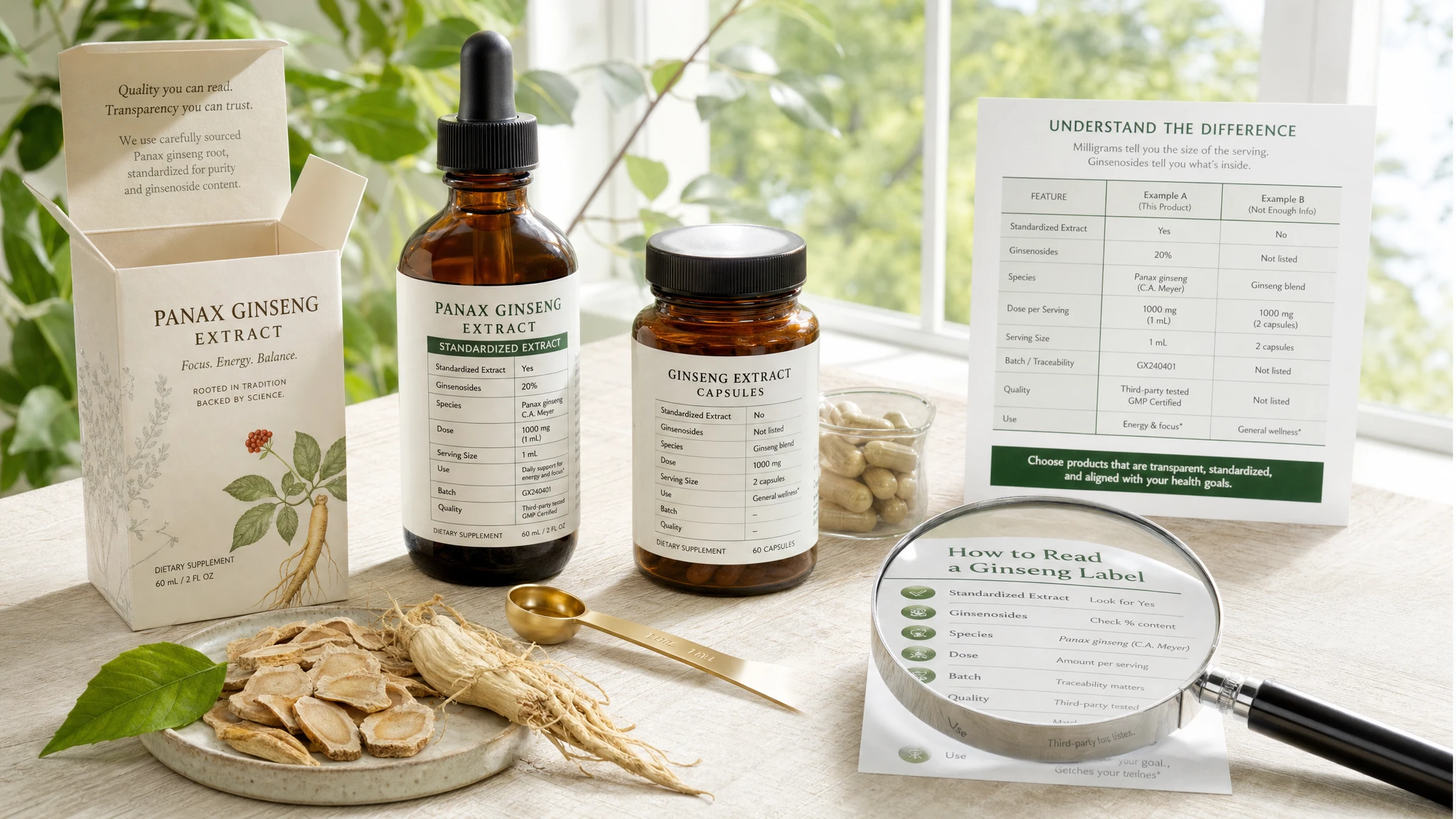
Choosing a quality ginseng supplement requires looking beyond just the botanical name. You need to verify the standardization, the form, the clarity of the label, and the intended purpose. A well-described product indicates how much active substance it contains and helps in comparing different formulas. It is advisable to first check the species and the content of ginsenosides, the active compounds typical of ginseng. You should then look for the term "standardized extract," along with clear data on dosage and use. The weight in milligrams alone says little if the content of active compounds is missing. In this informative text, the key point is simple: quality matters more than marketing claims. Two supplements with the same name can, in fact, have different effects. The reasons are often the different processing and standardization techniques.
The label should therefore be used as a tool for judgment, not viewed as a bureaucratic detail. This care avoids uninformed purchases and distinguishes more solid products from less clear formulas. For informed use, it is best to choose an extract that is suitable for your purpose and well-researched. A clinical study involved 50 people with chronic fatigue and evaluated Korean red ginseng. The participants took 3 g per day for 6 weeks. The result confirms that the quality of the formula matters more than the generic name [5]. A safety study instead evaluated a root extract in two doses. For 4 weeks, participants took 1 g or 2 g per day. Only mild events emerged, which offer practical data on tolerability [6]. The choice is thus based on verifiable data, not on marketing [5,6].
The various forms of ginseng have important practical effects for those who need to use them. However, they do not always change the biological significance of the plant. Capsules, powder, drinks, and fluid extracts vary in convenience, duration, clarity of dosage, and standardization. Capsules are often convenient to use and allow for accurate dosage measurement. Powder can be more flexible but is often less practical. Functional drinks are ready to use, but do not always clearly indicate the active compounds. The format should therefore be chosen by considering the purpose, lifestyle, and clarity of the formula. In this informative text, it should be clarified that there is no single form that is always better than the others. What counts most is the quality of the product and its connection to the intended purpose.
Those looking for daily convenience may prefer capsules. Those who want a more traditional use or a drink will make a different choice. In any case, standardization and the actual content of ginsenosides matter more than the external form. A 2013 synthesis examined the use of ginseng in 65 randomized studies. The studies were very diverse and confirm that methods of use vary greatly in the literature [9]. This section separates ease of use from the biological value of the product. This avoids confusing the chosen format with efficacy. The reader can therefore make a more informed and realistic choice [9].
Using ginseng with discretion means considering it a support, not a one-size-fits-all solution. Overly high expectations are among the most common mistakes. Ginseng can be useful in some cases, but it does not replace diet, sleep, and exercise. Furthermore, it does not replace a diagnosis or therapy when they are necessary. This point improves the quality of information and limits the attribution of unproven benefits to the plant. Many benefits, in fact, depend on broader factors related to lifestyle. Ginseng can act as an adjuvant, meaning an aid that complements other interventions. It can be useful especially when the problem is mild, well-chosen, and well-defined. It should not be seen as an automatic response to fatigue, poor concentration, or metabolic difficulties.
In the metabolic and cardiovascular field, meta-analyses have detected responses linked to various factors. These syntheses bring together data from multiple studies. The results change based on the extract, the duration, and the population studied. Therefore, a positive signal does not justify use without criteria [4,23,25,22,29,8]. The value of the supplement depends on the context in which it is chosen and used. Quality, a realistic purpose, duration of use, and personal situation all count. This section therefore closes the article with a balanced and responsible tone. The message is clear: ginseng can have a role, but it remains a support. It should be evaluated with common sense and not considered a miracle remedy [4,23,25,22,29,8]. For a practical choice, the label should clearly state these data:
- The botanical species and the part of the plant must be clearly indicated.
- The ginsenoside content helps to compare different formulations in a useful way.
- The presence of a standardized extract makes the actual dosage more transparent.
- The pharmaceutical form must be consistent with convenience and adherence to use.
This information translates research data into useful criteria for choosing and using the product. The following three points explain how to read the label, evaluate the form, and maintain realistic expectations.
How to choose a quality ginseng supplement
Choosing a quality ginseng supplement requires looking beyond just the botanical name. You need to verify the standardization, form, label clarity, and intended purpose. A well-described product indicates how much active substance it contains and helps in comparing various formulas. It is advisable to first check the species and the concentration of ginsenosides, the active compounds typical of ginseng. You should also look for the phrase "standardized extract," along with clear data on dosage and use. The weight in milligrams alone says little if the content of active compounds is missing. In this informative text, the key point is simple: quality matters more than commercial claims. Two supplements with the same name can, in fact, have different effects. The causes are often the different processing and standardization techniques.
The label should therefore be used as a tool for judgment, not viewed as a bureaucratic detail. This care avoids uninformed purchases and distinguishes the most solid products from less clear formulas. For informed use, it is best to choose an extract that is suitable for your purpose and well-studied. A clinical study involved 50 people with chronic fatigue and evaluated Korean red ginseng. Participants took 3 g per day for 6 weeks. The result confirms that the quality of the formula matters more than the generic name [5]. A safety study instead evaluated a root extract at two doses. For 4 weeks, participants took 1 g or 2 g per day. Only mild events emerged, which offer practical data on tolerability [6]. The choice is thus based on verifiable data, not on marketing [5][6].
Ginseng in capsules, powder, or drinks: practical differences
The various forms of ginseng have significant practical effects for those who need to use them. However, they do not always change the biological significance of the plant. Capsules, powder, drinks, and fluid extracts vary in terms of convenience, shelf life, dosage clarity, and standardization. Capsules are often convenient to use and allow for precise dosage measurement. Powder can be more flexible, but is often less practical. Functional drinks are ready to use, but do not always clearly indicate the active compounds. The format should therefore be chosen by considering the purpose, lifestyle, and clarity of the formula. In this informative text, it should be clarified that no single form is always better than the others. What matters most is the quality of the product and its connection to the intended use.
Those looking for daily convenience may prefer capsules. Those who want a more traditional use or a drink will make a different choice. In any case, standardization and the actual content of ginsenosides matter more than the external form. A 2013 meta-analysis examined the use of ginseng in 65 randomized studies. The studies were very diverse and confirm that methods of use vary widely in the literature [9]. This section separates ease of use from the biological value of the product. This avoids confusing the chosen format with efficacy. The reader can therefore make a more informed and realistic choice [9].
How to use ginseng without unrealistic expectations
Using ginseng judiciously means considering it a support, not a one-size-fits-all solution. Unrealistic expectations are among the most common mistakes. Ginseng can be useful in some cases, but it does not replace diet, sleep, and exercise. Furthermore, it does not replace a diagnosis or therapy when they are necessary. This point improves the quality of information and limits the attribution of unproven benefits to the plant. Many benefits, in fact, depend on broader lifestyle factors. Ginseng can act as an adjuvant, meaning an aid that works alongside other interventions. It can be particularly useful when the problem is mild, well-chosen, and well-defined. It should not, however, be viewed as an automatic response to fatigue, poor concentration, or metabolic difficulties.
In the metabolic and cardiovascular field, meta-analysis studies have identified responses linked to various factors. These syntheses combine data from multiple research projects. Results vary based on the extract, duration, and the population studied. Therefore, a positive signal does not justify indiscriminate use [4][23][25][22][29][8]. The value of the supplement depends on the context in which it is chosen and used. Quality, a realistic goal, duration of use, and personal situation all matter. This section therefore closes the article with a balanced and responsible tone. The message is clear: ginseng can have a role, but it remains a support. It should be evaluated with common sense and not considered a miracle cure [4][23][25][22][29][8].
Essential guide to ginseng dosage, timing, and safety
The ginseng dosages used in studies vary widely, so there is no one-size-fits-all amount. To navigate this, three criteria are needed: type of extract, timing of intake, and individual response. Ginseng should therefore be used judiciously, without assuming that a higher dose always yields better results.

Clinical studies on ginseng have used widely varying doses, for periods ranging from a few weeks to several months. Therefore, it is difficult to establish a dose that is valid for everyone. The result depends on the extract, the purpose, and the individuals studied.
A trial on 117 sedentary adults compared 100 mg per day and 500 mg per day of a complex of ginsenosides (the main active compounds in ginseng) for 12 weeks. Aerobic capacity improved only with the higher dose [2]. Another study, involving 28 young adults, used 200 mg per day for 3 weeks. The 7% extract of Panax ginseng, the most studied species, did not improve maximal aerobic performance [3].
These data show that the number of milligrams alone is not enough. The type of product, the duration, and the physical state of the individuals also matter. It is therefore necessary to verify both the dose and the ginsenoside content, as well as the standardization (consistent presence of the indicated compounds). Similar doses can have different effects if the extract or botanical species changes [2][3].
The timing (time of intake) can matter, especially for effects on metabolism after a meal. In a controlled study on healthy middle-aged people, the timing of Panax ginseng intake altered glucose tolerance after a meal [7]. This finding indicates that the time of day can have as much weight as the dose.
Ginseng berry saponins (saponins derived from the berries) have also been studied in 195 people with prediabetes. The crossover study, in which each person tries multiple interventions, lasted 4 weeks per period. The researchers combined the product with lifestyle measures. They then evaluated fasting glycemia, 2-hour glycemia, insulin, C-peptide, HOMA-IR, and QUICKI [8]. Prediabetes is an intermediate stage between normal values and diabetes. HOMA-IR and QUICKI, on the other hand, estimate how well the body responds to insulin.
However, there is no single time of day suitable for every person. The timing can change the relationship between ginsenosides, digestion, absorption, and the response to a meal, especially if it is rich in carbohydrates [7][8].
Safety is essential even when talking about supplements, and ginseng is no exception. In a study on healthy Korean volunteers, 1 g per day or 2 g per day of root extract for 4 weeks caused only mild events. These included dyspepsia, hot flashes, insomnia, and constipation, with no serious events [6]. Dyspepsia includes various digestive disorders, while constipation indicates difficulty in having a bowel movement.
In a trial on Korean red ginseng for chronic fatigue, 3 g per day were used for 6 weeks. Research shows that tolerability must always be assessed based on the product and the individuals involved [5]. Dose, duration, health status, and other treatments can indeed change the response. Some people report sleep disturbances, agitation, palpitations, or digestive discomfort. However, the frequency varies according to the product, and not everyone experiences these effects. The profile therefore generally appears favorable, but not entirely free of risks [5][6].
The possible combined effect of ginseng and medications requires particular caution. It is not necessary to present every combination as certain, but some therapies deserve a personal evaluation. These include treatments for metabolism, heart, blood pressure, and coagulation. A natural product, in fact, is not necessarily free of effects.
Every active substance can influence metabolism, body functions, or the response to other treatments. It is therefore necessary to evaluate the entire picture, especially when taking medications for glycemia, blood pressure, or coagulation. Sleep disorders or a strong reactivity to stimulants also require caution. This approach avoids superficial choices and takes into account treatments already in progress. It does not mean demonizing ginseng, but rather placing it within the person's real situation. Use must therefore be evaluated together with health status and the therapies being taken [5][6][10][22][29][8].
Here are the key points to remember for informed use:
- The dose must always be evaluated together with the type of extract used.
- The timing of intake can change the metabolic response.
- Tolerability also depends on the duration and health status.
- Higher doses do not always ensure a better effect.
Practical guidelines vary depending on the purpose for which ginseng is used. The following sections explain the dosages studied, the timing of intake, and the signs to monitor for safer use.
Dosages used in studies and what they mean
Ginseng dosages vary significantly depending on the product and the purpose of the study. One study compared 100 mg or 500 mg per day of ginsenoside complexes for 12 weeks. Aerobic capacity improved only with the higher dosage [2]. In another study, 200 mg per day for 3 weeks did not improve maximal aerobic performance [3].
For chronic fatigue, researchers tested 3 g per day of Korean red ginseng for 6 weeks in middle-aged adults [5]. In safety studies, 1 g or 2 g per day for 4 weeks caused only mild events [6]. Therefore, the dose must be interpreted in conjunction with the type of extract and the duration. Simply saying "ginseng" does not clarify which quantity is appropriate. These data are research references and not dosages to be followed automatically. This caution respects the available evidence and limits unrealistic expectations [5][2][3][6].
When to take ginseng in relation to meals
Timing (the time of intake) seems to matter especially for carbohydrate utilization after meals. In a controlled study, Panax ginseng altered glucose tolerance depending on when it was taken [7]. The effect could therefore vary if the product was taken before or near a meal. Another crossover study evaluated ginseng berry saponins in people with prediabetes. The researchers combined them with lifestyle measures. They measured fasting glycemia, 2-hour glycemia, insulin, and the insulin resistance index [8]. This index describes how well the body responds to insulin, the hormone that helps glucose enter cells.
The data do not indicate a perfect time for everyone. However, they suggest that the time of intake may influence the metabolic response as much as the quantity. For goals related to energy or glycemia, the relationship with the meal may therefore deserve attention. Increasing the dose, on the other hand, does not guarantee a better result on its own.
Safety signals not to be underestimated
Ginseng is generally well-tolerated, but it can cause some side effects. In healthy volunteers, 1 g per day or 2 g per day for 4 weeks caused only mild events. These included dyspepsia, hot flashes, insomnia, and constipation, with no serious events [6]. In a trial on chronic fatigue, 3 g per day of Korean red ginseng were used for 6 weeks. The intake took place in a controlled clinical setting [5].
In practice, you should observe your own response. Sleep disturbances, nervousness, digestive discomfort, or palpitations require caution, especially when combined with other products or medications. The response can vary greatly between individuals. Therefore, a natural origin alone does not guarantee safety. If symptoms persist, it is prudent to discontinue use and seek medical advice.
When to seek professional advice
It is useful to speak with a healthcare professional before combining ginseng with certain therapies. Greater caution is required with medications for glycemia, blood pressure, or coagulation. A consultation is also necessary in the presence of sleep disorders or complex clinical conditions [5][6][10][22][29]. The reason is simple: its compounds are active in the body and can interfere with an ongoing treatment. They may therefore alter the response to or the tolerability of the treatment.
Asking for an opinion does not mean being overly cautious. It means evaluating the supplement in a more informed way. This check is also useful for different goals, such as energy, metabolism control, or general well-being. It also helps to avoid the uncoordinated use of multiple products. Safety is not just about immediate side effects. It also includes long-term use and compatibility with other therapies.
Summary of scientific evidence
This summary organizes the sources and distinguishes the most solid evidence from that which is still uncertain. It also shows how results vary across metabolism, mind, safety, and cellular mechanisms.
| Publication year | Area studied | What the studies indicate |
|---|---|---|
| 2012 | Safety and tolerability | studies indicate that ginseng extracts are generally well-tolerated, with mild dose-related events [6] |
| 2019 | Lipid profile | studies indicate possible effects on cholesterol and triglycerides, but with significant differences between trials [23] |
| 2022 | Hyperglycemia and hypertension | results vary significantly based on the extract, study duration, and participants involved [25] |
| 2023 | Overall evidence framework | results vary, but overall they confirm the biological interest in ginseng across multiple areas [1] |
| 2024 | Glycemic control | evidence indicates a potential benefit for glycemia and insulin response in selected groups [21] |
| 2024 | Immunomodulation | studies indicate that ginsenosides can regulate certain immune and inflammation responses [24] |
| 2025 | Cognition and memory | evidence indicates a potential benefit for the mind in certain contexts, but results vary between studies [30] |
| 2025 | Cardiovascular risk | results vary: some values may improve, but the overall effect on blood pressure remains weak [4] |
Editorial review of the evidence
Overall, in the studies collected here, we found an active herbal remedy, though its effects are not always consistent. The most robust data concern metabolism, fatigue, and certain aspects of cognitive function. Conversely, studies on blood pressure, blood fats, and chronic diseases show significant differences. The value of this evidence stems from the combination of clinical data, studies on cells and animals, and biological mechanisms. These signals primarily relate to energy, inflammation, and the stress response.
In reviewing the sources, however, we noted that samples were often small, durations were short, and products were difficult to compare. Species, preparation, amounts of active substances, and ginsenoside content vary. For this reason, we believe it is difficult to generalize the results to everyone. Furthermore, effects observed in cells and animals are not automatically confirmed in humans. Absorption, gut microbiota, and medications taken can, in fact, alter the final outcome.
Conclusions and editorial summary
Final critical note
References
[1] Ginseng and health outcomes: an umbrella review
[2] Effect of high-dose ginsenoside complex (UG0712) supplementation on physical performance of healthy adults during a 12-week supervised exercise program: A randomized placebo-controlled clinical trial
[3] Ginseng Supplementation Does Not Enhance Healthy Young Adults’ Peak Aerobic Exercise Performance
[4] The effect of ginseng supplementation on CVD risk factors: a comprehensive systematic review and dose–response meta-analysis
[5] Efficacy of Korean red ginseng (Panax ginseng) for middle-aged and moderate level of chronic fatigue patients: A randomized, double-blind, placebo-controlled trial
[6] Safety and Tolerability of Panax ginseng Root Extract: A Randomized, Placebo-Controlled, Clinical Trial in Healthy Korean Volunteers
[7] Preload time-dependent effects of Panax ginseng on postprandial glucose tolerance. A randomized controlled study in healthy middle-aged participants
[8] Effects of ginseng berry saponins from panax ginseng on glucose metabolism of patients with prediabetes: A randomized, double-blinded, placebo-controlled, crossover trial
[10] The Efficacy of Ginseng-Related Therapies in Type 2 Diabetes Mellitus
[11] Ginsenoside F1 ameliorates nonalcoholic fatty liver disease by activating the AMPK/PGC-1a pathway and autophagy
[12] AMP-activated protein kinase and nitric oxide regulate the glucose sensitivity of ventromedial hypothalamic glucose-inhibited neurons
[13] Ginsenoside Rg1 Induces Autophagy in Colorectal Cancer through Inhibition of the Akt/mTOR/p70S6K Pathway
[14] Ginsenoside Rg5 Inhibits Human Osteosarcoma Cell Proliferation and Induces Cell Apoptosis through PI3K/Akt/mTORC1‐Related LC3 Autophagy Pathway
[15] Ginsenoside Rk1 Enhances Gastric Cancer Chemosensitivity through Activation of the AMPK/mTOR Signaling Pathway
[16] Ginsenoside Rg3 attenuates ovariectomy‐induced osteoporosis via AMPK/mTOR signaling pathway
[17] Ginsenoside Rh1 Alleviates Allergic Rhinitis by Mediating Mitophagy through Activation of the AMPK/ULK1/FUNDC1 Pathway
[18] Reciprocal regulation of SIRT1 and AMPK by Ginsenoside compound K impedes the conversion from plasma cells to mitigate for podocyte injury in MRL/lpr mice in a B cell-specific manner
[19] Ginsenosides: A Potential Neuroprotective Agent
[20] Neuroprotective Effects of Ginseng Phytochemicals: Recent Perspectives
[21] Efficacy and safety of red ginseng extract powder (KGC05pg) in achieving glycemic control in prediabetic Korean adults: A 12-week, single-center, randomized, double-blind, parallel-group, placebo-controlled study
[22] The effect of ginseng (genus Panax) on blood pressure: a systematic review and meta-analysis of randomized controlled clinical trials
[23] Efficacy of Panax ginseng supplementation on blood lipid profile. A meta-analysis and systematic review of clinical randomized trials
[24] Ginsenosides as dietary supplements with immunomodulatory effects: a review
[25] Effects of Panax ginseng on hyperglycemia, hypertension, and hyperlipidemia: A systematic review and meta-analysis
[26] Ginseng as a therapeutic target to alleviate gut and brain diseases via microbiome regulation
[27] A randomized controlled crossover trial of the effect of ginseng consumption on the immune response to moderate exercise in healthy sedentary men
[28] Effects ofPanax ginsengSupplementation on Muscle Damage and Inflammation after Uphill Treadmill Running in Humans
[29] Ginseng for Treating Hypertension: A Systematic Review and Meta-Analysis of Double Blind, Randomized, Placebo-Controlled Trials
[30] Cognitive Benefits of Ginseng: A Systematic Review and Meta-Analysis of Changes in Mini-Mental State Examination and Alzheimer’s Disease Assessment Scale-Cognitive Subscale Scores
[31] Effect of Panax ginseng on Cognitive Performance in Patients with Mild Cognitive Impairment: A Randomized Controlled Trial
[32] Efficacy and Safety of Panax ginseng Sprout Extract in Subjective Memory Impairment: A Randomized, Double-Blind, Placebo-Controlled Clinical Trial
[33] Panax ginseng: A modulator of amyloid, tau pathology, and cognitive function in Alzheimer's disease
[34] Blocking the vicious cycle nNOS/peroxynitrite/AMPK by S-nitrosoglutathione: implications for stroke therapy
[35] Inhibition of the AMPK/nNOS pathway for neuroprotection in stroke
[36] A Functional Link between AMPK and Orexin Mediates the Effect of BMP8B on Energy Balance
[37] Morphological Study of Orexin Neurons in the Hypothalamus of the Long-Evans Rat, with Special Reference to Colocalization of Orexin and NADPH-Diaphorase or Neuronal Nitric Oxide Synthase Activities
[38] Endogenous Nitric Oxide Inhibits, Whereas Awakening Stimuli Increase, the Activity of a Subset of Orexin Neurons
[39] Nitric Oxide Mediates Selective Degeneration of Hypothalamic Orexin Neurons through Dysfunction of Protein Disulfide Isomerase
[40] Extracellular Calcium Contributes to Orexin-Induced Postsynaptic Excitation in Rat Locus Coeruleus Neurons
[41] The Orexin/Hypocretin System Modulates Amygdala-Dependent Threat Learning through the Locus Coeruleus
[42] Orexin A Activates Locus Coeruleus Cell Firing and Increases Arousal in the Rat
[43] Orexin-A Infusion in the Locus Ceruleus Triggers Norepinephrine (NE) Release and NE-Induced Long-Term Potentiation in the Dentate Gyrus
[44] Orexin modulates behavioral fear expression through the locus coeruleus
[45] Astrocytic Glutamate Uptake and Signaling as Novel Targets for Antiepileptogenic Therapy
[46] Genetic inactivation of mTORC1 or mTORC2 in neurons reveals distinct functions in glutamatergic synaptic transmission
[47] mTOR Promotes Astrocyte Activation and Participates in Neuropathic Pain Through Upregulation of RIP3
[48] Activation of Orexin Neurons by Non-NMDA Glutamate Receptors Evidenced by c-Fos Immunohistochemistry
[49] Hypocretin/Orexin Excites Hypocretin Neurons via a Local Glutamate Neuron: A Potential Mechanism for Orchestrating the Hypothalamic Arousal System
[50] SLC38A10 Regulates Glutamate Homeostasis and Modulates the AKT/TSC2/mTOR Signaling Pathway in Primary Mouse Cortical Cells
[51] Activation of Glutamate Transporters in the Locus Coeruleus Paradoxically Activates Descending Inhibition in Rats
[52] Elevated Gene Expression of Glutamate Receptors in Noradrenergic Neurons of the Locus Coeruleus in Major Depression
[53] Diet Therapy Restores Glutamatergic Input to Orexin/Hypocretin Neurons After Traumatic Brain Injury in Mice
[54] Monosynaptic Glutamatergic Activation of Locus Coeruleus and Other Lower Brainstem Noradrenergic Neurons by C1 Cells in Mice
[55] Glutamatergic Periaqueductal Gray Projections to the Locus Coeruleus Orchestrate Adaptive Arousal States in Threatening Contexts
[56] Properties and Modulation of Excitatory Inputs to the Locus Coeruleus
[57] Astrocytes Amplify Neuronal Dendritic Volume Transmission Stimulated by Norepinephrine
[58] Role of Paraventricular Noradrenergic/Epinephrine Inputs on Hypothalamo-Pituitary-Adrenal Axis Responses to Acute and Chronic Stress
[59] Noradrenergic Stress Signals Regulate Corticotropin-Releasing Hormone Neuronal Network Activity
[60] ACTH and Cortisol Responses to CRH in Acute, Subacute and Prolonged Critical Illness: A Randomized Double-Blind Placebo-Controlled Crossover Cohort Study
[61] The Role of the Hypothalamic-Pituitary-Adrenal Axis in Depression Across the Female Reproductive Life Cycle: Current Knowledge and Future Directions
[62] Chronic Stress and Autoimmunity: The Role of the Hypothalamic-Pituitary-Adrenal Axis and Cortisol Dysregulation
[63] Relationship of Alpha-1- and Alpha-2-Adrenergic-Binding Sites to Regions of the Paraventricular Nucleus of the Hypothalamus Containing Corticotropin-Releasing Factor and Vasopressin Neurons
Editorial note
Artificial Intelligence was used solely as a tool to support editorial and documentary work. All content, interpretations, bibliographic citations and conclusions have been verified, reviewed and approved by the author, who assumes full scientific responsibility for them.
The manuscript was also subject to independent peer review prior to publication.
To ensure maximum transparency, the article's complete history — including the dates of submission, review, acceptance and publication, as well as information on the peer review process — is available on the dedicated Article History page.