


Dietary Fiber: What It Is and Why It's So Important Today
Research shows that dietary fiber matters a lot for health, but not identically for all people. The strongest evidence links adequate intake to improved bowel regularity, a more stable glycemic response, and a more favorable cardiometabolic profile. The benefit emerges especially when fiber comes from legumes, whole grains, fruits, and vegetables, within an overall balanced and minimally processed diet.
- Published 28/08/2026
- Updated 04/09/2026
- Reviewed 04/09/2026
- Article history

ABSTRACT : WHAT THE SCIENCE SAYS
Dietary fiber is one of the most important topics in modern nutrition, as it links diet quality, gut health, and metabolic prevention. The term dietary fiber refers to plant-derived components that resist, to varying degrees, digestion in the small intestine—the part of the intestine where most nutrient absorption occurs—and reach the colon, where they can be fermented by the gut microbiota, the community of microorganisms living in the intestine, or eliminated almost intact. This definition, however, is not enough to explain why they are so relevant today. Fibers do not act in just one way: some are soluble, meaning they dissolve in water and form solutions or gels; others are insoluble and primarily increase fecal bulk; some are viscous, meaning they can thicken intestinal contents and slow down nutrient absorption; others are fermentable and promote the production of short-chain fatty acids, molecules involved in the dialogue between the intestine, metabolism, and the intestinal barrier. This is why talking about fiber means talking about post-prandial glycemia (blood sugar after a meal), satiety, LDL cholesterol, bowel regularity, and overall diet quality. Their importance has also grown because modern diets, often more refined and poor in minimally processed plant foods, tend to reduce their intake. In practice, fiber is a useful indicator of a meal's structure and its physiological impact: not only the quantity matters, but also the source, food processing, and individual tolerability. The main sources remain legumes, whole grains, fruits, vegetables, seeds, and nuts—foods that provide not only fiber but also a more favorable nutritional matrix compared to ultra-refined products. International guidelines recommend an intake of at least 25 grams of natural fiber per day for adults, emphasizing that the benefit does not depend on a single isolated nutrient but on the overall dietary pattern [1][2]. Further on, we will see how fibers are classified, how they act on the intestine, glycemia, lipids, and satiety, which foods are richest in them, how to increase them without bloating, and what science truly says about their properties. In summary, the key points we will explore are the following:
- Definition of fiber and main functional differences
- Effects on glycemia, lipids, satiety, and absorption
- Role of the gut, microbiota, and digestive disorders
- Best food sources and choice between food and supplements
- Practical strategies to increase fiber without bloating
Dietary fiber: what it is and how it affects the digestive system, with a scientific description of fiber-rich foods and the gut
Dietary fiber is not just for "regulating" the gut: it is a plant component that changes how food is digested, absorbed, and metabolized. In naturally fiber-rich foods, the food's structure matters as much as its nutritional content, because it affects satiety, transit, and digestive response. This makes fiber a central element of the quality of the modern diet [1][2].

When it comes to dietary fiber, many people still associate it almost exclusively with bowel regularity. This perception, however, is now too limited compared to what the evidence shows. Fiber is, in fact, a broad and extremely heterogeneous family of compounds, found mainly in legumes, whole grains, vegetables, fruits, seeds, and nuts. Its scientific importance today stems from the fact that it interacts with many physiological processes that go far beyond simple intestinal transit. Available data show that its role includes meal dynamics, nutrient absorption rate, modulation of LDL cholesterol—the low-density lipoprotein that transports cholesterol in the blood—and the production of biologically active intestinal metabolites. Furthermore, guidelines remind us that adequate intake is not marginal: for adults, at least 25 g/day are recommended, while for children and adolescents, the range is 15-25 g/day depending on age [1]; for adults, a consumption of 400 g/day of fruits and vegetables is also recommended [1]. These numbers do not just describe a quantitative goal, but reflect the need to reintroduce less refined foods into the diet, foods richer in structure and more capable of supporting integrated digestive and metabolic functions.
This growing relevance also reflects changes in the modern food environment. Contemporary diets tend to favor more refined and less complex products in their structure, with a clear reduction in dietary fiber intake and, consequently, in the functional complexity of meals. In this context, talking about fiber also means talking about carbohydrate quality, the structural density of foods, and how the body manages energy, hunger, satiety, and its relationship with the gut microbiota—the community of bacteria, archaea, and other microorganisms that live in the large intestine and participate in numerous metabolic functions. The food matrix matters because it influences the speed at which gastric and intestinal contents move, how quickly nutrients reach the mucosa, and how intense the glycemic response is after a meal. Consequently, a low-fiber diet not only means less fecal volume but also less modulation of satiety signals and poorer management of the daily metabolic load.
Another fundamental aspect is that not all fibers behave in the same way. Some retain water and form gels, others increase fecal mass, and still others are fermented and generate short-chain fatty acids, molecules produced by bacterial activity that participate in the dialogue between the intestine and metabolism. Evidence clarifies that this heterogeneity prevents fiber from being considered a single nutrient with a single effect. Instead, it is necessary to distinguish them based on their properties, context of use, and practical implications. International consensus also reminds us that fiber primarily comes from plant cell walls and that its nutritional significance cannot be separated from the quality of the food that contains it [1,2]. The most important properties to keep in mind are the following:
- Dietary fibers are not all the same, and their function varies.
- Solubility, viscosity, and fermentability lead to different physiological effects.
- Daily intake matters more than occasional use.
- The modern diet tends to provide too little fiber.
- Individual tolerance varies, so the increase must be gradual.
In detail, it is useful to first distinguish the general biological meaning of fiber and then the functional differences that change their effect in the digestive system. The following three steps clarify why the same word describes compounds with very different behaviors.
What dietary fiber really is
Dietary fiber are plant components that, due to their chemical structure, are not digested like available sugars and starches. They therefore partially reach the colon, where they can be transformed by the gut microbiota or eliminated almost intact. This definition is useful, but not complete: biological behavior also depends on solubility, viscosity, fermentability, and molecular weight. For this reason, fibers should not be treated as a single nutrient, but as a family of compounds with complementary effects on digestion. Recent consensus also reminds us that fiber is part of the overall food quality, because the plant matrix modulates absorption and the gastrointestinal tract's response [3,4]. Historical recommendations have also quantified a practical reference: 25 g/d for women; 38 g/d for men; 14 g/1000 kcal [3]. In a food context dominated by refined products, this distinction is particularly important, because naturally fiber-rich foods tend to offer a more complex structure and a different digestive response compared to fiber-poor foods. Understanding "what" fibers are therefore means understanding why the body reacts differently to a whole food compared to a highly processed one, and why the same amount of carbohydrates can have different clinical effects when the matrix containing them changes.
Further reading: Dietary fiber: what it really is and how it behaves in the body during digestion
Soluble and insoluble fiber: differences that matter
The most common distinction is between soluble fiber and insoluble fiber. Soluble fibers disperse in water and, in some cases, form more or less viscous gels; this can slow down the passage of digestive contents and alter the contact between nutrients and the intestinal wall. Insoluble fibers, on the other hand, generally have a greater impact on fecal volume and transit. This classification is useful as an initial guide, but it is not sufficient on its own, because not all soluble fibers are viscous and not all insoluble fibers behave in the same way. Modern reviews and position papers emphasize precisely this point: the functional profile depends on the fiber's structure and the food matrix containing it [5,6]. In practice, this distinction helps explain why some fiber-rich foods are more relevant for regularity, while others are more interesting for the consistency of intestinal contents and meal quality. The category matters, but even more important is the nutritional context in which the fiber is consumed: a viscous fiber can attenuate the absorption rate and support satiety, while a less soluble fiber primarily contributes to maintaining residue volume and more efficient transit.
Further reading: Soluble and insoluble fiber: practical differences and how to choose the right one for your diet
Fermentable and non-fermentable fibers: why the gut microbiota matters
Another useful distinction is between fermentable and non-fermentable fibers. Fermentable fibers are utilized by colon bacteria and give rise to metabolites such as short-chain fatty acids, including acetate, propionate, and butyrate; less fermentable fibers, on the other hand, primarily act as mechanical support for fecal mass and transit. This step is important because it links fibers to the gut microbiota, which is the microbial community that participates in the transformation of many food substrates. Syntheses on the topic show that interventions with fibers can modify the composition of the microbiota and promote a more active production of fermentative metabolites, although the effect depends on the type of fiber and the initial diet [7,8]. In practice, fermentability is not a secondary detail: it is a property that makes some fibers particularly interesting for the intestinal ecosystem, because butyrate supports the physiology of colon cells, while other metabolites participate in the regulation of energy homeostasis and inflammatory signals. At the same time, the response is not the same for everyone, because digestive tolerance and fermentation capacity vary from person to person. It is this balance between mechanical effect and microbial metabolism that explains much of the current importance of fibers, especially when the goal is not just to "go to the bathroom," but to improve meal quality, intestinal health, and metabolic adaptation in the long term.
Recent research and updates

In 2026, a Chinese research group led by Wang and colleagues published a randomized controlled study in the journal Food Research International, meaning a study where participants are assigned to treatment groups in a comparable manner, on the relationship between a fiber-rich nutritional strategy and glycemic control in people with type 2 diabetes. The results are consistent with the idea that fiber, especially when integrated into a structured dietary pattern, can contribute to a more stable metabolic response.
Timing matters in type 2 diabetes: Early high-Fiber nutrition enhances glycemic control and reshapes gut microbiota
- The study shows that a high-fiber dietary intervention can improve glycemic control in the context of type 2 diabetes.
- The observed effect is accompanied by changes in the gut microbiota, i.e., the microbial community living in the intestine.
- The data suggest that the timing of implementing the nutritional strategy may also play a role in the metabolic response.
- The result is consistent with existing evidence on the link between fiber, the gut, and the stability of cardiometabolic parameters.
How dietary fiber affects glycemia, lipids, and satiety after meals
After a Meal, dietary fiber can slow down the entry of glucose into the bloodstream, mitigate certain processes related to LDL cholesterol, and increase satiety, which is the feeling of fullness that reduces hunger. The effect depends on the type of fiber, its viscosity—that is, its ability to form dense solutions—and the conditions of the Meal. This is why the benefits of fiber are more apparent when they are part of a balanced diet, not when added in isolation.
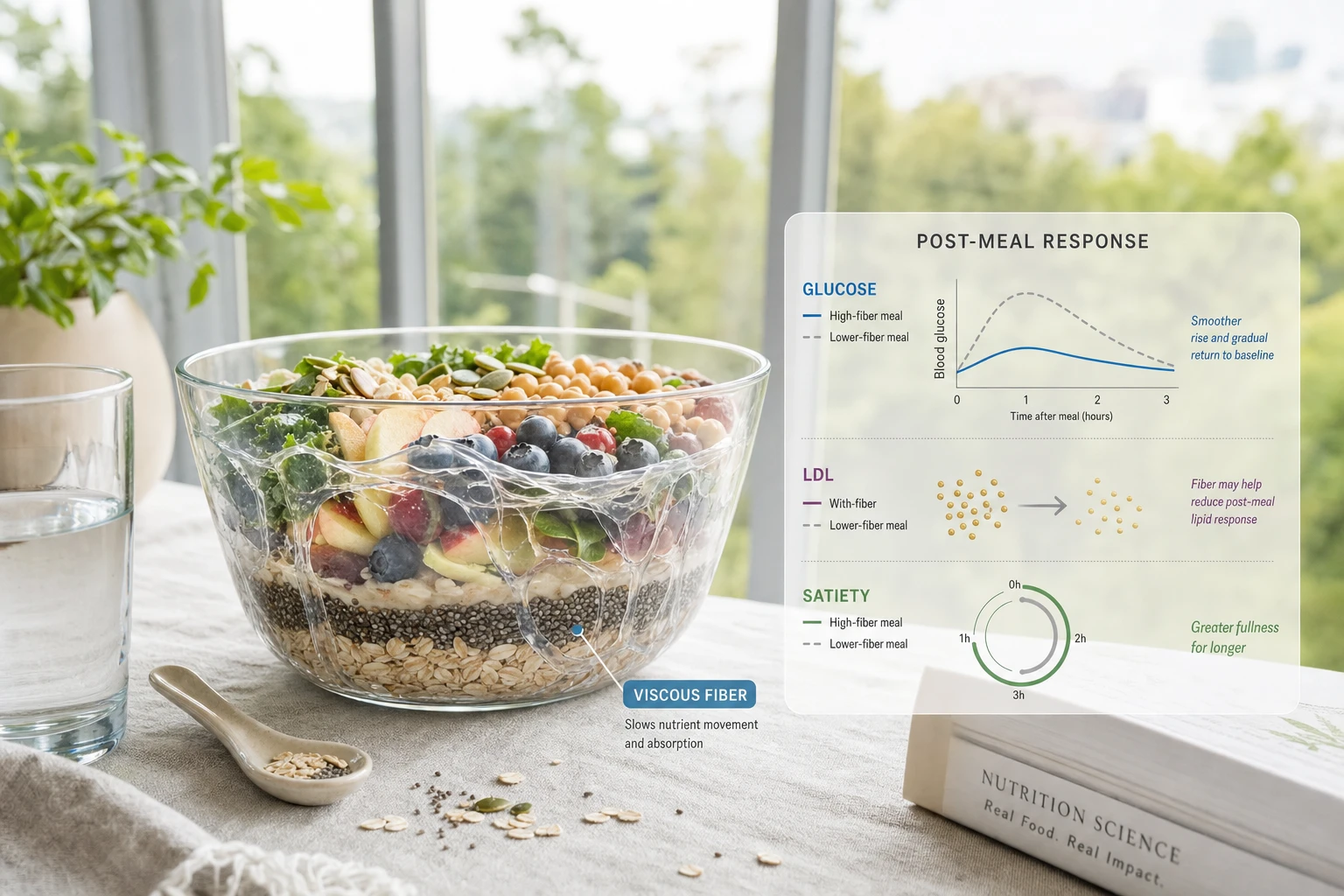
To begin, the most immediate mechanism to observe is how fiber affects glucose absorption, meaning the sugar that enters the bloodstream after a meal. Once dietary fiber is understood, it becomes useful to understand how it works in the body, because its true value emerges primarily when observing how it modifies the physiology of a meal. Fiber doesn't simply act because it "isn't digested," but because it changes the behavior of food content along the gastrointestinal tract, which is the path food and residues take between the stomach and intestines; it alters the consistency of the bolus, which is the mass of chewed food, and of the chyme, which is the semi-liquid material that exits the stomach; it slows down or modulates the interaction between nutrients and the intestinal mucosa, the inner surface of the intestine, and, in many cases, interacts with the gut microbiota, which is the set of microorganisms living in the intestine that in turn produce metabolites, microbial substances involved in metabolic regulation. From a clinical perspective, all of this explains why fiber doesn't just "fill you up": it intervenes in transit times, nutrient accessibility, and post-prandial signals—those that follow a meal—which guide glycemia, insulin, and appetite. Reference nutritional recommendations indeed emphasize an adequate daily intake, equal to at least 25 g/day in adults, with 15-25 g/day for children and adolescents based on age, in addition to 400 g/day of fruits and vegetables for adults [1,2].
Their action is best understood as a sequence of interconnected steps. In the stomach, some fibers increase the volume and density of the content, promoting greater gastric distension, meaning the widening of the stomach wall, and slower emptying. This delay is not a technical detail: it prolongs the time required for the meal to reach the small intestine, the first part of the intestine, and makes the arrival of energy substrates more gradual. In the small intestine, viscous fibers, meaning those capable of forming denser, more slippery solutions, can slow down the diffusion of glucose and lipids towards the absorbing surface, influencing post-prandial glycemia, that is, the concentration of glucose after a meal, and the dynamics of the insulin response. In the colon, fermentable fibers become a substrate for bacteria and generate compounds like butyrate, acetate, and propionate, which participate in local and systemic functions. These metabolites contribute to the health of the intestinal barrier, meaning the intestine's ability to select what passes into the blood, to the regulation of low-grade inflammation, and, indirectly, to carbohydrate and lipid metabolism. This is why fibers should be seen as a connecting factor between the intestine, liver, adipose tissue, and muscle, not as a simple food residue.
Available evidence shows that a higher fiber intake is associated with improvements in the main cardiometabolic risk factors, meaning those related to metabolism and cardiovascular health, although the extent of these effects varies based on the type of fiber, dose, and overall dietary context. This point is crucial because it prevents treating fibers as if they had an automatic effect, independent of the rest of the diet. More precisely, fibers should be considered an element that modifies the physiological profile of the meal and, through this change, influences several key points of metabolism. The available synthetic evidence on high-fiber diets, microbiota modulation, and cardiometabolic outcomes confirms this integrated view [1,2]. Broader health syntheses also show that fiber intake is consistently linked to favorable long-term outcomes, while consensus documents reiterate the need to distinguish between different fibers, because viscosity, fermentability (meaning the ability to be processed by intestinal microbes), and chemical structure change the biological effects [4,9,10,5,11]. The main mechanisms can be summarized as follows:
- Fibers can slow down nutrient absorption, especially when they are viscous.
- The insulin response changes indirectly because the glucose speed changes.
- Some fibers interfere with the reabsorption of bile acids.
- Fermentable fibers nourish the microbiota and produce active metabolites.
- Satiety increases due to volume, viscosity, and longer gastric residence.
After looking at the general picture, the three most useful steps to distinguish are the effect on glycemia, the impact on lipids, and the role of satiety, i.e., the feeling of fullness after a meal. Each mechanism primarily depends on viscosity, dose, and meal composition.
How fiber slows down glucose absorption
Fiber, especially viscous fiber, can reduce the rate at which glucose enters the bloodstream after a meal. The mechanism depends on slower gastric emptying and increased viscosity of intestinal contents, which hinders the diffusion of glucose towards the mucosa. The result is a more gradual glycemic curve, with less pronounced post-prandial peaks. This does not mean blocking glucose, but rather modifying its absorption rate. Reviews on the subject emphasize that the effect is greater when fiber is integrated into consistent dietary habits and not used as an isolated addition [1,2]. In practice, the type of carbohydrate, the presence of proteins and fats, and the form of the food matter, along with the fiber. In guidelines and clinical summaries, this is one of the reasons why an adequate fiber intake is associated with better management of post-meal glycemic peaks [3,5]. From a pathophysiological perspective, meaning the mechanisms of disease, a slower absorption rate reduces the acute metabolic stress on pancreatic beta cells, the cells in the pancreas that produce insulin, and limits glycemic fluctuations, which in the long term are unfavorable for metabolism and vascular risk. Furthermore, when glucose reaches the circulation more slowly, the counter-regulatory response, i.e., the set of mechanisms that rebalance glycemia, also organizes itself more stably, with perceptible benefits especially in meals rich in refined carbohydrates. Fiber thus acts as a "time modulator," and it is precisely this modulation that makes the relationship between ingestion, absorption, and peripheral utilization of glucose more orderly.
Fiber and post-prandial insulin response
The insulin response, meaning the secretion of insulin after a meal, largely depends on how quickly blood sugar levels rise after food intake. For this reason, fiber can influence it indirectly, without directly acting on the pancreas. When glucose enters the bloodstream more slowly, insulin secretion also tends to be less abrupt. This is particularly relevant in people with impaired glucose tolerance, meaning a reduced ability to manage sugars. Literature reviews link higher fiber intake to better glycemic and insulin parameters, although the effect size varies with the type of fiber and the rest of the diet [1,2]. Diets richer in fiber, especially those based on whole foods, are associated with better glycemic and insulin parameters. However, the effect is not identical in all studies and depends on the type of fiber, dose, and dietary context. The correct view is that of support for metabolic stability, not an isolated or automatic effect. In this sense, fiber helps to "smooth out" the dynamics of the meal rather than replacing normal regulatory mechanisms [10,5]. This is also important in conditions of insulin resistance, meaning the reduced response of tissues to insulin, where the problem is not just producing insulin, but using it effectively in peripheral tissues. A less rapid and less extensive post-prandial response reduces immediate insulin demand and can make the overall metabolic profile of the day more available.
Fiber and LDL cholesterol: the role of bile acids
Some fibers, especially viscous ones, can interfere with the reabsorption of bile acids in the intestine. Since bile acids are derived from cholesterol, their increased excretion forces the liver to use more cholesterol to produce new ones. This mechanism helps explain why some fibers are associated with a reduction in LDL cholesterol. Reviews and guidelines highlight this point as one of the reasons why fiber is considered useful in cardiometabolic prevention [1,2]. The effect is generally moderate and depends on the consistency of intake, the dose, and the rest of the diet. Fiber does not replace clinical strategies when needed, but it can contribute to improving the lipid profile in correct eating habits. It is therefore a useful lever, especially when working on the overall quality of meals. Even the most recent summaries on the cardiometabolic outcomes of fiber intake confirm that the benefit is more solid when intake is regular and comes from fiber-rich foods [9,10]. From a biological point of view, this action integrates with colonic fermentation, i.e., the transformation of fibers in the colon by microbes, because the products of the microbiota can influence the hepatic metabolism of bile acids and some satiety signals. This results in a non-linear effect, but one distributed across multiple organs and over several hours after the meal.
Effects of fiber on the gut, microbiota, and digestive disorders
The effects of dietary fiber are primarily seen in the gut, but not in the same way for everyone. The benefits of fiber, such as increased regularity, softer stools, and support for the gut microbiota, depend on the type of fiber, the dose, and individual tolerance. In digestive disorders, increasing fiber intake should therefore be managed gradually and with sound clinical judgment.

The intestine is the primary site where the effects of dietary fiber manifest in daily life. It is also the environment where the limitations of oversimplification become most apparent. On one hand, fiber is often associated with improvements in bowel regularity, stool consistency, and interaction with the gut microbiota, which is the collection of microorganisms living in the intestine. On the other hand, individual responses can vary greatly depending on the dose, speed of introduction, hydration status, visceral sensitivity (i.e., amplified perception of intestinal stimuli), and the presence of functional disorders such as irritable bowel syndrome.
This means that the usefulness of fiber should never be interpreted as uniform. A type of fiber that improves intestinal function and reduces constipation in one person may, in another, temporarily increase bloating, gas, and discomfort, especially if intake is increased too quickly. Evidence shows that fiber supplementation, meaning the controlled addition of fiber to the diet, can improve bowel movement frequency and stool consistency in chronic constipation. However, it can also increase subjective symptoms in the initial stages or in more sensitive individuals. Reviews and meta-analyses, which summarize multiple studies on the same topic, dedicated to constipation and functional disorders, confirm that the benefit is not identical for everyone and depends on the type of fiber and the clinical context [1,2]. In practical terms, this translates into a clear message: fiber should not be considered a "the more, the better" remedy, but a nutritional tool that requires adequate doses and a considered progression.
In this context, talking about fiber also means talking about intestinal adaptation, gradual introduction, and personalization. The available data also show that the relationship between fiber and the intestine is bidirectional: fiber modifies the intestinal environment, but the intestinal environment also shapes the response to fiber. The composition of the microbiota, intestinal motility (i.e., the intestine's ability to move and propel its contents), habitual intake of plant foods, and general health status substantially influence the practical outcome of increased fiber intake. For this reason, it is useful to remember some principles:
- Intestinal benefit depends on the type of fiber and the dose.
- Increase should be gradual, especially from low consumption.
- Hydration remains important for tolerability.
- Initial bloating does not always indicate true intolerance.
- In IBS, meaning irritable bowel syndrome, choice often matters more than absolute quantity.
The effect of fiber on the gut also involves the microbiota and its fermentation capacity, meaning the transformation of fiber by intestinal bacteria. In clinical practice, however, the benefit largely depends on the digestive disorder present and individual tolerance.
Fiber and gut microbiota: what really happens
Dietary fiber is one of the main substrates for the gut microbiota because it largely reaches the colon, the final part of the intestine, undigested, where it is fermented by various bacteria. This process can support greater microbial diversity and promote the production of short-chain fatty acids, metabolites that contribute to the balance of the intestinal environment. Systematic reviews, which are studies that rigorously collect and evaluate available evidence, show that even even a brief presence of fiber can modify the composition of the microbiota in a relatively consistent way, albeit with differences related to the type of fiber and the initial diet [7,8]. In other words, fiber does not "impose" an ideal microbiota, but creates more favorable conditions for its activity. The response is also influenced by medications, eating habits, and general health status, so there is no uniform effect for everyone. Precisely for this reason, in popular science, it is more accurate to speak of ecological support for the intestinal ecosystem rather than a rapid and definitive correction of the bacterial flora. When the diet gradually and consistently increases in fiber, the microbiota tends to adapt better and produce fewer transient discomforts. This aspect is clinically relevant because increased fermentation, if well tolerated, can improve mucosal trophism, i.e., the nutrition and maintenance of intestinal tissues, and stabilize the colonic environment, with possible positive effects also on regularity and the perception of digestive well-being.
Fiber and constipation: when they help and when they don't
Constipation is one of the most frequent reasons why dietary fiber is discussed in the context of digestion. The mechanism is only seemingly simple: some fibers increase stool volume, while others retain water and can make stools softer, facilitating transit. Available evidence indicates that fiber supplementation can improve chronic constipation, especially regarding bowel movement frequency and stool consistency, but the benefit is not automatic [12]. In older people, for example, the response depends heavily on hydration, physical activity, medications, and intestinal motility. The way a higher intake is achieved also matters: a gradual increase is generally more tolerable than a sudden change. If constipation is linked to causes other than low fiber intake, the effect may be modest. This is why fiber is a useful tool, but not a universal solution. When the problem persists, it is important to also consider the overall quality of the diet and possible clinical causes. In practice, the goal is not just to increase stool volume, but to promote a balance between water retention, fermentation, and motility, in order to improve transit without worsening abdominal symptoms.
Fiber and abdominal bloating: common causes and management
Abdominal bloating is among the most common effects when increasing dietary fiber, especially if the change happens too quickly. More fermentable fibers are metabolized by the gut microbiota and can produce gas, leading to a temporary feeling of distension that does not necessarily coincide with a true intolerance. In many cases, this is an adaptation phase, not a reason to completely stop fiber intake. However, tolerability varies greatly from person to person and also depends on the initial intestinal state, the amount introduced, and the presence of functional disorders [13,14]. This explains why some people tolerate a rapid increase well, while others need more time and a different distribution throughout the day. In practice, bloating is better managed with gradual increases, attention to the total fiber load, and adequate hydration. When discomfort is persistent or significant, the priority becomes personalizing the strategy instead of insisting on indiscriminate increases. Correct clinical interpretation distinguishes between a physiological adaptation, often transient, and a true exacerbation of symptoms, which requires a review of the type of fiber chosen and the overall dietary context.
Fiber and irritable bowel syndrome
In irritable bowel syndrome, the relationship with dietary fiber is particularly delicate, because the same amount can be helpful for one person and bothersome for another. Here, the choice of fiber type and the speed of introduction matter more than the absolute quantity. Less fermentable fibers or those with a greater water-absorbing capacity tend to be better tolerated than highly fermentable ones, although the response remains individual [13]. Some patients report improved regularity, while others experience more pain, gas, or abdominal distension if they increase intake too quickly. For this reason, in people with sensitive bowels, the most appropriate strategy is to adapt fiber to the clinical picture and observe the response over time. The goal is not to eliminate fiber, but to use it in a targeted way, avoiding symptomatic worsening that can discourage dietary adherence. In this sense, personalization is worth more than a one-size-fits-all rule. Effective clinical management therefore integrates subjective tolerance, characteristics of the usual diet, and symptom progression, with the idea that a well-calibrated intervention can support intestinal function without amplifying visceral sensitivity, i.e., the reactivity of the intestine to stimuli.
Dietary fiber and cardiometabolic prevention: diabetes, weight, blood pressure, and cardiovascular risk
Dietary fiber also matters when the goal is not just to "feel light," but to reduce cardiometabolic risk over time. In diabetes, weight control, and cardiovascular prevention, their effect is primarily cumulative: they improve diet quality, attenuate glycemic peaks, and promote better management of energy intake. The best evidence comes from dietary patterns rich in plant-based foods, not from a single isolated nutrient [1][2].
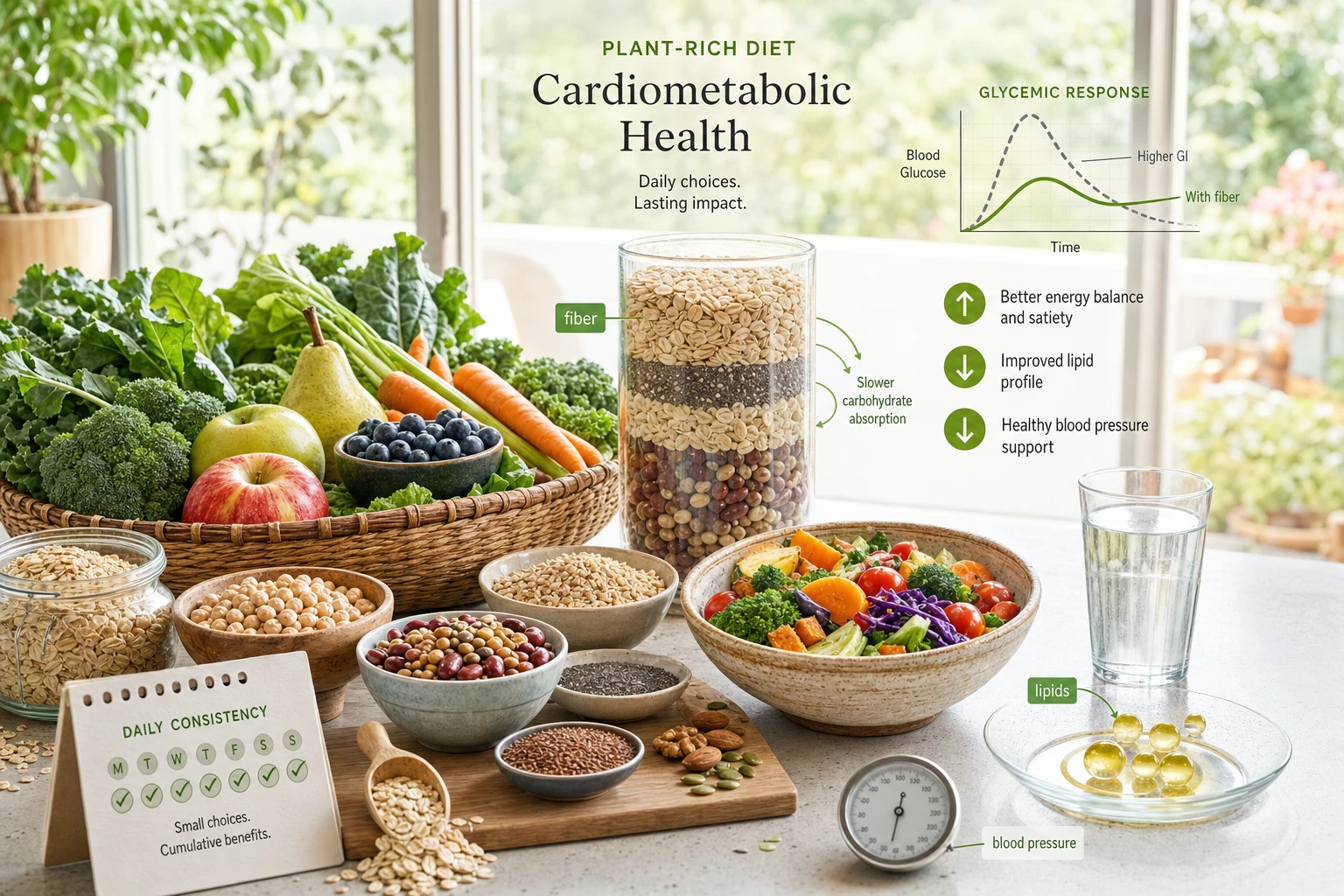
When it comes to cardiometabolic prevention, dietary fiber is relevant because it acts on multiple fronts simultaneously: it improves carbohydrate quality, helps control energy intake, affects the lipid profile, and, to a more modest extent, blood pressure, which is the force with which blood presses against artery walls. This does not mean that they have a "curative" effect, but that they can help shift the diet towards a more favorable balance, especially if they increase in place of refined and ultra-processed products. Guidelines recommend at least 25 g/day for adults, with indications of 15-25 g/day for children and adolescents based on age [1]; in daily life, the benefit primarily comes from consistency and the overall dietary context. Reference recommendations for adults also include 400 g/day of fruits and vegetables, because fiber works best within a dietary pattern rich in vegetables, water, micronutrients, which are nutrients needed in small quantities, and bioactive compounds, which are molecules present in foods that exert favorable effects on the body [1]. In this sense, fiber is not an isolated intervention: it is a marker of diet quality and, at the same time, a factor that modifies digestion, absorption, and metabolic response. For example, it slows gastric emptying, attenuates carbohydrate absorption, and reduces the rapidity of post-prandial peaks, with useful effects on glycemia and subsequent hunger. Furthermore, an adequate intake of fiber promotes colonic fermentation, which is the process by which intestinal bacteria degrade part of the fiber in the colon, and the production of metabolites that support metabolic balance, with possible repercussions on the lipid profile and low-grade inflammation. This is why fiber is especially important over time: it does not act with a single striking effect, but makes the set of cardiometabolic parameters more stable. When the basic diet is poor in vegetables and rich in industrial products, however, the margin of benefit becomes even more evident, because the switch to more fiber almost always coincides with an overall improvement in dietary quality.
In type 2 diabetes, the strongest evidence indicates that a higher fiber intake is associated with better glycemic control, with reductions in HbA1c, which is glycated hemoglobin that reflects the average glycemia over the preceding weeks, more convincing when fiber comes from fiber-rich foods or structured dietary strategies, not from isolated corrections [2,4,5]. On the lipid side, the picture is equally important: fibers, especially viscous ones, i.e., those capable of forming gels upon contact with water, can contribute to reducing LDL cholesterol and improving the overall metabolic quality of the diet, also through effects on bile and nutrient absorption [3,10]. For body weight, the effect tends to be modest but useful, because it increases satiety and helps contain caloric intake without resorting to drastic restrictions [9,5]. The summary literature indeed emphasizes that the advantage does not only derive from gastric "filling": increased chewing, slower ingestion speed, and the different composition of meals, which reduces overall energy density, i.e., the energy contained in relation to food volume, also play a role. In practice, a diet richer in fiber tends to also be richer in minimally processed foods, and this amplifies the beneficial effect on glycemia, lipids, and dietary adherence. The totality of the evidence therefore suggests a cumulative benefit, not a uniform response for everyone. Those starting from a very low fiber intake may see more marked improvements, while those already following a very balanced diet often observe a more nuanced advantage, but still useful for long-term prevention.
Blood pressure responds less markedly, but available summaries still indicate a small and consistent advantage when fiber intake increases within a dietary pattern richer in vegetables and lower in salt [1,2,10]. In practical terms, therefore, the value of fiber does not lie in a single "wow effect," but in its ability to stabilize the set of cardiometabolic parameters and support more protective eating habits in the long term. This is particularly relevant in primary prevention, i.e., prevention before the onset of disease or clinical events, where small improvements repeated over time can translate into a concrete reduction in risk. The most effective approach remains the overall dietary one: more legumes, whole grains, fruits, vegetables, and nuts, fewer refined flours, free sugars, and ultra-processed foods. Fiber, therefore, is not just a "useful nutrient," but an indicator of dietary choices consistent with cardiometabolic prevention. And precisely because it fits into this framework, its role must be considered together with the quality of the entire diet, meal regularity, and control of overall energy intake.
To understand why this truly matters, it's worth looking at the main cardiometabolic outcomes that the literature associates with a higher fiber intake, to see how the different benefits intertwine in practice:
- In type 2 diabetes, they improve meal quality and glycemic response.
- In weight control, they aid satiety and the energy density of the diet.
- On blood pressure, the effect is generally modest but consistent.
- On cardiovascular risk, they primarily contribute to the overall lipid profile.
The three most studied areas are type 2 diabetes, weight management, and cardiovascular prevention. Here, the focus is primarily on what the evidence shows in clinical and dietary practice.
Fiber and type 2 diabetes: what the evidence shows
In type 2 diabetes, dietary fiber is useful because it makes the post-meal carbohydrate response more gradual and helps improve certain glycemic control indicators. Reviews and guidelines indicate that a higher intake is associated with better HbA1c values and an overall more stable metabolic profile, especially when the increase comes from legumes, whole grains, and other fiber-rich foods [1,2]. The central point is not just the quantity, but the quality of the source: the most convincing interventions are those that modify the overall dietary structure, not those that marginally add fiber. In this sense, fiber does not replace medications or personalized nutritional therapy, i.e., the eating plan built on the characteristics of the individual, but it can make the daily glycemic response more manageable and support adherence over time. From a pathophysiological perspective, meaning the altered functioning of biological processes in diseases, they act by slowing glucose absorption, reducing post-prandial variation and promoting a lower immediate insulin demand; this is particularly useful when insulin resistance, i.e., the reduced sensitivity of cells to insulin action, makes glycemic regulation more fragile. The clinical benefit is therefore primarily contextual: a fiber-rich diet attenuates glycemic variability, simplifies meal control, and can help prevent the progressive worsening of metabolic compensation. In practice, the message is clear: rather than chasing a single "miracle" food, it is better to build a consistent, fiber-rich eating pattern.
Fiber and metabolic syndrome
Metabolic syndrome combines abdominal obesity, impaired glycemia, elevated triglycerides, low HDL, and high blood pressure. In this context, fiber helps primarily by improving carbohydrate quality, increasing satiety, and reducing the energy density of the diet. Broader syntheses show that higher fiber intake is associated with an overall better cardiometabolic profile, although the magnitude of the effect on individual markers varies from person to person and from diet type to diet type [10,5]. The benefit, therefore, should not be seen as a direct action on a single parameter, but as a sum of small advantages that become more relevant when the diet shifts from refined to richer in plant-based and less processed foods. In practice, fiber acts as a simple indicator of the quality of the dietary pattern. This is also important because metabolic syndrome arises from a combination of caloric excess, sedentary lifestyle, insulin resistance, and low-grade inflammation. Fiber intervenes in some key steps of this circuit: it improves satiety, reduces high-energy-density snacks, and promotes food choices closer to the Mediterranean diet or other plant-based dietary patterns. The clinical advantage is not only measurable in individual tests but also in the greater sustainability of the dietary intervention, which becomes more realistic to maintain in the long term.
Fiber and blood pressure: associations and clinical significance
The link between fiber and blood pressure is less evident than that with glycemia and weight, but it remains clinically interesting. Summaries of randomized studies, i.e., research where participants are controllably assigned to different interventions, indicate a modest reduction in blood pressure with higher fiber intake, especially when the overall diet becomes richer in vegetables and poorer in industrial foods rich in sodium [2,10]. The effect, in itself, is not sufficient to treat hypertension, but it can contribute to a broader cardiovascular prevention strategy. In this case too, context matters: often, those who increase fiber intake simultaneously improve other aspects of their diet, and this makes the result more favorable than the single isolated data point. The practical conclusion is simple: fiber does not dramatically lower blood pressure, but it can make a concrete and cumulative contribution to risk control. Physiologically, the possible effect comes through a less energetic diet, better weight control, and reduced exposure to sodium and ultra-processed products. Furthermore, a greater presence of plant-based foods can promote a more favorable overall setup, with indirect effects on endothelial function, i.e., the ability of the endothelium, the inner lining of blood vessels, to regulate blood flow, and on vascular stiffness, i.e., the reduced elasticity of the arteries. For this reason, in people with hypertension or increased risk, fiber should be considered part of the underlying dietary strategy, not as a substitute for prescribed therapy. Its role is complementary: small in the short term, but valuable in continuous prevention.
Fiber and body weight control
Fiber helps with weight control mainly for two reasons: it increases satiety and lowers the energy density of the diet. For the same volume, many fiber-rich foods provide less energy and also require more chewing, a factor that promotes more spontaneous regulation of caloric intake. Available reviews show generally modest but consistent effects on body weight and appetite, with more solid results when the increase in fiber is part of a stable dietary change and not a temporary intervention [9,5]. This is why fiber is useful in preventing overweight and maintaining weight, rather than as a quick solution for losing weight. Its real advantage is practical: it helps build more satiating, more balanced, and easier-to-maintain meals over time, reducing the risk of falling back into high-calorie habits. This aspect is crucial, because success in weight control depends primarily on sustainability. A fiber-rich diet facilitates more regular portions, a greater presence of unprocessed foods, and a better distribution of energy throughout the day. Furthermore, when fiber comes from whole and plant-based foods, it is often associated with better fat quality and a higher intake of micronutrients, which further support metabolic health. In other words, fiber is not just a means to eat less: it is a tool to eat better and with greater consistency.
Dietary fiber sources: legumes, whole grains, fruits, vegetables, and product labels
Understanding where dietary fiber is found is the most useful step to translate recommendations into concrete choices. Legumes, whole grains, fruits, and vegetables remain the primary sources, but even the label of a packaged product can help assess how much it truly contributes to daily intake. The point is not just counting grams: the overall quality of the food and the meal matters.

Knowing that dietary fiber is useful isn't enough if you don't understand where to find it and how to navigate between natural sources, packaged products, and supplements. Dietary fiber is the indigestible part of plant foods, and its impact depends heavily on the context in which it is consumed. This is one of the most delicate steps in translating scientific evidence into daily practice, because the most common risk is to reduce the issue to a simple gram count. This overlooks the fact that fiber acts within a food matrix, meaning within the structure of the food, which includes water, micronutrients, bioactive compounds, texture, and degree of processing. Evidence shows that diets rich in fiber from natural sources are associated with more favorable health outcomes compared to patterns where fiber is introduced primarily as an isolated additive [1,2].
This does not mean that supplements have no role. Rather, it means that the primary goal should almost always be to increase fiber through legumes, whole grains, vegetables, whole fruits, seeds, and nuts. Legumes are edible seeds of plants such as beans, chickpeas, lentils, and peas, while whole grains retain the bran, germ, and endosperm. This way, you choose foods that simultaneously improve meal structure, satiety, and overall diet quality. A packaged product may list a good fiber content on its label and still be metabolically poor if it is part of a highly refined or ultra-processed formulation. Conversely, a simple, minimally refined food may not provide an exceptional amount of fiber per serving, but within a much more favorable nutritional context. This distinction is also important because fiber does not act alone: it slows digestion, modulates nutrient absorption, promotes satiety, and, through colonic fermentation, contributes to the production of metabolites useful for the mucosa and for metabolic homeostasis. Colonic fermentation is the process by which bacteria in the large intestine break down certain fibers, producing beneficial substances.
The available data therefore suggest that fiber should be interpreted not only as a quantity, but as a signal of the quality of food and the diet as a whole. Recent reviews and research emphasize that carbohydrate quality and food structure are an essential part of the nutritional context [1,2]. To navigate practically between different sources and forms, it is useful to remember some fundamental principles. Natural sources remain the main reference, because they combine fiber and nutritional density; legumes are strategic because they combine fiber, plant proteins, and high satiety power; the food matrix matters as much as, and often more than, grams; supplements can help, but do not replace a complete diet; properties and tolerability vary greatly from one fiber to another. Personalization is also central, because the actual need depends on age, habits, appetite, intestinal tolerance, and the overall quality of the diet. Intestinal tolerance indicates how well the intestine tolerates a certain quantity or type of fiber.
In this sense, reference guidelines help to make objectives concrete. For adults, at least 25 g/day [1] and, in classic position papers, 25 g/day for women, 38 g/day for men, or 14 g/1000 kcal [3]. These are not abstract numbers, but practical thresholds that encourage building the plate differently, incorporating fiber into main meals and not just into a single "functional" food.
- Natural sources remain the main reference for increasing fiber.
- Legumes are strategic because they combine fiber and meal quality.
- The food matrix matters as much as, and often more than, grams.
- Supplements can help, but do not replace a complete diet.
- Properties and tolerability vary greatly from one fiber to another.
Fiber sources are not all equal: each food group contributes differently to the daily diet. In the following points, we will see how to evaluate legumes, whole grains, fruits, vegetables, and packaged products without stopping at just the label data.
The richest fiber foods in the daily diet
The main sources of fiber in the daily diet are legumes, whole grains, fruits, vegetables, seeds, and nuts. The actual contribution, however, depends not only on the content per 100 grams, but also on portion sizes, frequency of consumption, and the place the food occupies in the meal. International guidelines state that, for adults, the practical goal is to reach at least 25 g/day, while for children and adolescents the reference varies from 15-25 g/day depending on age [1]. In this context, legumes are among the most efficient sources because they combine fiber and plant proteins; whole grains are very useful when they replace refined counterparts; fruits and vegetables, finally, contribute significantly if consumed regularly and in variety. Their usefulness depends not only on the volume ingested, but also on the fact that they increase chewing time, promote satiety, and reduce the energy density of the meal. Furthermore, the fermentable fraction of many fibers feeds the gut microbiota, i.e., the set of intestinal microorganisms, with effects on the production of short-chain fatty acids that support intestinal function. To truly increase intake, daily consistency matters more than the single food considered in the abstract.
This is especially true for people who start with low consumption, because gradual increases are more sustainable and better tolerated. Progressive increase also helps to limit bloating and discomfort, which often reduces adherence. When the daily diet includes several different sources, the probability of reaching the target increases without the need for drastic choices.
Legumes or whole grains? How to really choose
The comparison between legumes and whole grains is frequent, but in reality, these foods are complementary. Legumes provide a lot of fiber per serving and help build more satisfying meals, while whole grains improve the starchy base of the diet when they replace refined bread, pasta, or rice. The most useful choice, in practice, is not to oppose them but to combine them. For example, a dish with legumes and a whole grain makes it easier to increase fiber intake without overcomplicating the dietary routine. Summaries on carbohydrate quality and reference documents on dietary patterns support this integrated view [4,5]. This not only improves the quantity of fiber but also the overall balance of the meal, with a more stable effect on diet quality over time. From a physiological perspective, the combination attenuates the postprandial glycemic peak, prolongs satiety, and reduces the need for energy-dense snacks. The postprandial glycemic peak is the increase in glycemia observed after a meal. Furthermore, the micronutrient profile of legumes and whole grains is different and complementary, so alternating them improves the overall quality of the diet. In the most robust dietary models, the benefit does not come from a single ingredient, but from the systematic replacement of refined versions with whole and less processed versions.
For this reason, the label is not enough to describe the real value of a food. Two products with similar fiber content can behave very differently if one is part of a simple composition and the other is a highly industrial formulation. The best choice remains one that increases the proportion of minimally processed foods and makes the diet more coherent as a whole.
Fiber-rich fruits and vegetables: how much do they really matter?
Fruits and vegetables contribute significantly to fiber intake, but their impact depends on quantity, variety, and their position in the meal. Whole fruit is preferable to juices because it retains its fibrous structure, while vegetables are more effective when they are not just a marginal side dish. These foods also provide water, micronutrients, and bioactive compounds, contributing to the overall quality of the diet in addition to fiber intake. International recommendations also emphasize the goal of consuming approximately 400 g/day of fruits and vegetables in adults, as part of the overall model [1]. In practice, their value increases when they are consistently present throughout the day, for example, at breakfast, main meals, or as a snack, instead of appearing only occasionally. Regularity remains the most important factor. From a clinical perspective, this continuity also facilitates the transition from a low-fiber diet to a more adequate one, without creating overly abrupt changes. The fibers present in fruits and vegetables are also often associated with good tolerability, because they come with a high water content and a less dense food structure. Choosing different varieties also allows for better coverage of micronutrient needs and expands the dietary repertoire, an aspect useful for long-term adherence.
In a balanced diet, these foods do not just "complete" the meal: they improve its metabolic quality and increase its overall health value. This is why it is important to consider them a structural, not an accessory, component.
Food or fiber supplements? When they make sense
Fiber supplements can be useful in some situations, but they are not usually the first choice. Fiber from natural foods offers a complex matrix with water, micronutrients, and bioactive compounds, while a supplement primarily adds a specific function. This does not mean that products on the label should be discarded: they can be practical when intake remains insufficient or when a fiber with specific characteristics is needed. However, the declared fiber content must be read together with the ingredient list and the level of processing, because a product can be rich in fiber but not very interesting from an overall point of view. Practical reviews and consensus documents emphasize that the most robust strategy is to first improve food, then evaluate any support [4,5]. In other words, fiber works best when it is part of a well-constructed diet, not when it is treated as a simple additive. This approach is even more important when the packaged product contains high amounts of sugars, fats, or salt, because the benefit of fiber can be partially neutralized by other aspects of the formulation. Tolerability also varies: some fibers are more fermentable and can cause bloating, while others are gentler on the intestine. For this reason, the practical criterion is not to look for "as much fiber as possible," but to choose the type of fiber and the source most suitable for the individual context. For people with very low consumption, a supplement can be a temporary solution, but the fundamental direction always remains the same: to transform the quality of daily nutrition.
How to increase fiber without bloating: practical method, hydration, and label reading
Increasing dietary fiber works best when the change is gradual and realistic. Bloating depends not only on the quantity, but also on the speed at which new foods are introduced, individual tolerance, and hydration. Also, reading labels carefully helps choose truly useful products, without relying solely on the words "rich in fiber."

Increasing dietary fiber intake is not a mechanical operation, but a process that requires adaptation, consistency, and a good understanding of one's starting habits. Dietary fiber, which are indigestible plant components that largely pass through the digestive system without being absorbed, work best when the change is introduced gradually. Many people encounter difficulties not because the strategy is wrong, but because the change is proposed too quickly or in an unsustainable way. Often, people suddenly increase legumes, whole grains, or supplements, without giving the gut enough time to adapt. Evidence indicates that a progressive increase allows the gut microbiota, the collection of microorganisms living in the intestine, and digestive function to respond more favorably, reducing the risk of bloating and discomfort [1,2]. This is consistent with recommendations that encourage adults to reach at least 25 g/day, while for children and adolescents, the reference is 15-25 g/day depending on age [1]. The goal of 400 g/day of fruits and vegetables for adults also helps to understand that fiber should not be thought of as a single "functional ingredient," but as part of a broader, daily dietary pattern [1].
Another crucial point is hydration, meaning adequate fluid intake, because many fibers absorb water and function better when fluid intake is sufficient. Without enough water, the benefit to intestinal transit can decrease, and in some situations, constipation can even worsen. Physiologically, water allows viscous fibers, those capable of forming gels and retaining liquids, to increase the volume of intestinal contents and soften stools. Fermentable fibers, on the other hand, are those that are partially utilized by the microbiota and promote the production of useful metabolites. At the same time, it should be remembered that increasing fiber does not mean randomly adding some "healthy" food, but rather better distributing sources throughout the day and progressively replacing refined foods with more structured options. The guidelines on carbohydrate quality and overall dietary patterns support this logic, where continuity, variety, and sustainability of change are important [1,2].
Available data show that the most effective change is almost always one that improves the overall dietary profile without creating unmanageable disruptions in daily routine. Practical guidance for health professionals emphasizes gradualness, personalization, and support for behavioral change [1,2]. For this reason, it is useful to keep some key practical principles in mind. Increasing one fiber source at a time reduces the likelihood of overloading the gut; distributing intake across meals limits concentrated fermentation; drinking regularly supports transit; reading labels helps distinguish truly fiber-rich products from those merely promoted as such; finally, slower changes are often the ones that last longest. In other words, the goal is not to introduce a lot of fiber quickly, but to build stable and maintainable tolerance, capable of translating into metabolic and digestive benefits [1,2].
The thresholds indicated by the guidelines are also useful for avoiding perception errors: many people believe they "eat enough fiber," but in practice, they remain below the recommended references. When starting from a low intake, the transition to the target should be built with small steps, allowing the gut to adapt and the person to recognize signals of satiety, regularity, and abdominal comfort. In this sense, increasing fiber is a prevention strategy, but also an exercise in applied nutritional education, because it makes the link between food quality, intestinal tolerance, and overall health more evident [1,2].
- Increasing one fiber source at a time is often more effective.
- Distributing fiber throughout the day improves tolerability.
- Drinking enough water is essential when fiber intake increases.
- Labels help, but should be read along with the ingredients.
- Slower changes are often the ones that last longest.
The practical transition to fiber relies on three levers: rate of increase, fluid intake, and conscious product choice. The following three points show how to apply them without straining the gut.
How to increase fiber without abdominal bloating
Bloating is one of the most common obstacles when trying to increase dietary fiber, but often the problem isn't the fiber itself: it's the change being too abrupt. If large amounts of legumes, whole grains, or fortified foods are added within a few days, the gut microbiota suddenly receives more fermentable material and can produce more gas. For this reason, the most effective approach is progressive: introduce only one new item at a time, observe the response for a few days, and only increase further if tolerance is good. Nutritional recommendations emphasize gradualness, adherence, and personalization [1,2]. In clinical terms, this reduces the risk of distension, abdominal tension, and early abandonment of the dietary plan. It is also useful to distinguish between highly fermentable fibers and more tolerable fibers, because individual response varies based on the microbiota, visceral sensitivity, and the presence of pre-existing digestive disorders. Visceral sensitivity, meaning the greater or lesser reactivity of the intestine to stimuli, helps explain why the same amount of fiber can be well tolerated by some and less so by others. A slow increase is not a compromise, but often the most realistic strategy to obtain the benefits of fiber without sacrificing continuity.
The "little but better" logic also works because the intestine does not respond in the same way at all stages of life. A sedentary person, someone who drinks little, or someone starting from almost no consumption may need even longer times. Furthermore, if the goal is to approach the reference of 25 g/day for adults [1], it is advisable to consider fiber as a daily accumulation process, not an occasional peak. This promotes the functional adaptation of the gastrointestinal tract and minimizes the feeling of "fullness" that often discourages continuing the diet. The practical idea is simple: introduce, observe, consolidate, then increase again, without forcing individual tolerance.
Water and fiber: why hydration is crucial
Water is an essential part of the strategy, because many dietary fibers retain liquids, increase in volume, and help make stools softer and easier to pass. If fiber intake is increased but fluid intake is not also increased, the effect on intestinal transit may be less favorable, and in some people, constipation may worsen. This is especially true when fibers come from dry or highly concentrated foods, such as bran, ready-made mixes, or products with added fiber. There is no one-size-fits-all amount, but the most useful practice is to combine dietary changes with better hydration throughout the day. Guidelines for a healthy diet remind us that success also depends on the context: physical activity, climate, habits, and meal composition [1,2]. Drinking enough water is therefore not an accessory detail, but the necessary complement to make fibers work well and make them more tolerable.
From a physiological point of view, hydration also supports peristalsis, i.e., the coordinated movements of the intestine, and makes the mechanical action of the food bolus along the colon more effective. The food bolus is the mass of food that moves through the digestive tract after chewing and swallowing. When fiber is well hydrated, the fecal mass increases more physiologically, and the consistency becomes more compatible with regular transit. Conversely, insufficient fluid intake can make even a well-constructed diet less useful. This explains why, in practice, many people only perceive benefit after correcting both factors together: more fiber and more water. From an adherence perspective, the message to convey is very concrete: it's not enough to "add fiber," you also need to create the conditions to manage it well.
How to read labels to choose useful fiber
Nutritional labels are useful, but they alone are not enough to choose truly beneficial foods. A product may show an interesting fiber content and still be highly refined or unbalanced in terms of salt, sugar, or fat. For this reason, correct interpretation also requires looking at the ingredient list, the processing level, and the product's role in the daily diet. Dietary guidelines suggest prioritizing the overall dietary pattern—that is, the overall combination of foods habitually consumed—rather than a single isolated value [1,2]. In practice, it's worth asking not only how much fiber there is, but also from which ingredient it comes and what other components accompany it. A conscious choice highlights the most useful fiber-rich foods for your routine, instead of relying on alluring slogans or claims on the front of the package. This way, the label becomes a tool to improve the overall quality of your diet, not just to chase a high number in a table.
This aspect is also important to avoid the opposite mistake: considering any product with a high fiber content to be "good." In reality, nutritional quality is assessed within the context of the meal and the day. A packaged food can be useful if included in a balanced pattern, but it does not automatically replace fruits, vegetables, legumes, and whole grains. Therefore, when reading a label, it's advisable to use fiber as one indicator among others, not as the sole criterion. It is this integrated reading that helps choose products truly functional for intestinal well-being and greater long-term adherence.
When to consume more fiber during the day
Distributing dietary fiber throughout the day is generally more effective than concentrating it in a single meal. A more even distribution helps reduce sudden fermentative load, improves intestinal tolerability, and makes the habit more sustainable in the long term. Including a portion of fiber at breakfast, lunch, and dinner also helps prevent a single meal from becoming too rich in foods that are difficult to manage. Practical guidelines for nutrition professionals specifically suggest a gradual, distributed, and personalized approach [1,2]. There is no perfect time that works for everyone: regularity, manageable portions, and consistency with routine are what matter most. This way, increasing dietary fiber does not become a forced effort, but a concrete change that integrates into daily life and can be maintained more easily.
Timed distribution is also useful because it promotes satiety and reduces the likelihood of compensating with low-quality snacks. When fiber accompanies main meals, appetite control improves, and the glycemic profile tends to be more stable, especially if the source is minimally refined. This makes the change not only more tolerable but also more consistent with metabolic prevention goals. In summary, regularity helps the gut, hunger, and the continuity of eating behavior. For this reason, the best time is often the one that the person can repeat every day without effort.
Dietary fiber, age, and clinical situations: pregnancy, children, elderly, menopause, and prediabetes
At certain times of life, dietary fiber becomes more beneficial, but also more delicate to manage. During pregnancy, childhood, old age, menopause, and in prediabetes, tolerability, hydration, and diet quality are important, in addition to the total daily intake. For this reason, recommendations should always be adapted to the individual, not applied rigidly.

Dietary fiber does not have the same practical significance at every stage of life, because needs, tolerability, clinical goals, and the ability to introduce fiber-rich foods change with age, physiological state, and metabolic condition. International guidelines offer general thresholds useful as a reference, but in practice, they must be adapted to individual needs. This avoids both generalizations and the idea that the same nutritional plan works equally for everyone. In adults, about 25 grams per day is a widely used minimum reference threshold, but this value should always be interpreted in relation to intestinal tolerance, diet quality, and clinical context [1,2].
From a physiological point of view, fiber acts through different mechanisms. It increases fecal volume, meaning the quantity and consistency of stool, retains water, slows down or modulates intestinal transit, and, when fermentable, is transformed by the gut microbiota—the set of microorganisms living in the intestine—into metabolites useful for the intestinal mucosa and systemic metabolism. This combined action explains why fiber is important not only for regularity but also for the overall quality of the diet and for the glycemic response to meals, i.e., how blood sugar levels change after eating. Broader recommendations also indicate consistent dietary goals, such as 25 g/day for women, 38 g/day for men, and 14 g/1000 kcal, in addition to a consumption of 400 g/day of fruits and vegetables in adults [3,1].
In some specific situations, such as pregnancy, childhood, old age, menopause, and metabolic conditions like prediabetes, fiber can play a particularly useful role, but requires more careful introduction methods. The same amount that can be easily tolerated by a young adult accustomed to a plant-based diet might be much more difficult to manage in an elderly person with low fluid intake, or in someone starting from a very low-fiber diet who already experiences intestinal symptoms. Available data suggest that fiber should always be integrated into a broader practical assessment that also considers hydration, appetite, intestinal motility, and overall diet quality [1,2].
This caution is also confirmed by recent clinical literature. Systematic reviews, which are analyses that rigorously collect and synthesize the results of multiple studies, and international consensuses link higher fiber intake to favorable metabolic and intestinal outcomes. At the same time, they emphasize that the benefit depends on the context, the type of fiber, and the progression of its introduction [4,9,10,5,6,11,13,7,8,14,15,12]. In practice, it's not just "how much" fiber is consumed, but also from which foods it comes and with what consistency it is incorporated into the daily diet.
This approach helps to avoid both excessive caution, which leads to underestimating the role of fiber, and the opposite automatism, which pushes for a rapid increase in intake without considering the individual. To better navigate this, it's useful to keep some fundamental principles in mind:
- Fiber tolerance changes with age and habits.
- During pregnancy and in old age, gradual introduction is crucial.
- In children, building healthy eating habits is important.
- In prediabetes, carbohydrate quality is central.
- With intestinal symptoms, the increase must always be personalized.
Needs truly change a lot from one life stage to another. For this reason, during pregnancy, in pediatric age, in the elderly, and in mild metabolic conditions, fiber should be interpreted practically and not abstractly.
Fiber in pregnancy: useful but to be increased with caution
During pregnancy, dietary fiber is often useful for combating constipation, which can occur due to hormonal changes and reduced intestinal motility. They can also improve overall diet quality and aid satiety, an important aspect when nutrition needs to remain balanced without excess. The decisive point, however, is gradualness: a rapid increase can accentuate bloating, cramps, or gas production, especially if the initial diet was low in fiber-rich foods. The most sensible approach is to prioritize fruits, vegetables, legumes, and less refined grains, distributing them throughout the day and accompanying them with good hydration [1,2]. In pregnancy, therefore, fiber supports intestinal well-being and helps build a better quality diet, but it must be calibrated to individual tolerance. This is even more true when the pregnant woman experiences nausea, poor appetite, or gastrointestinal disturbances, because the priority becomes maintaining adherence to the dietary plan without worsening symptoms. In clinical practice, personal tolerance matters more than a rigid goal, and progression remains the safest and most sustainable strategy.
Fiber in children and adolescents
For children and adolescents, the main goal is not to immediately aim for a perfect number, but to build a stable relationship with fiber-rich foods. Fruits, vegetables, legumes, and less refined grains help to make the diet more varied and to create habits that, over time, become protective. Guidelines indicate different intake ranges based on age, but the practical meaning is primarily educational: do not force, do not complicate meals, and do not turn fiber into a goal perceived as punitive [1,2]. The quantitative reference is useful as a guide, as recommendations suggest 15-25 g/day for children and adolescents depending on age [1]. This is also important because children can be selective in their tastes and less tolerant of sudden changes. A gradual strategy, with small but frequent portions of plant-based foods, is more helpful than a sudden increase. At this stage, family role models, menu variety, and consistency over time are very important. Fiber, therefore, is not only for intestinal regularity: it also helps to form more solid eating habits, which will be useful in adulthood.
Fiber in the elderly: bowel regularity and hydration
In the elderly, fiber can be particularly useful for supporting bowel regularity, especially when motility is slower, physical activity is reduced, or certain medications promote constipation. However, this is also the phase where increasing fiber intake needs to be managed with more care: without sufficient fluids, a higher amount of fiber can worsen discomfort instead of improving it. For this reason, hydration, dentition, appetite, and the practicality with which meals can be prepared and consumed are very important. The literature on elderly individuals with constipation indicates that benefits are possible, but depend on tolerability and the continuity of the intervention over time [12]. Fermentable fibers can also be useful because they promote a more favorable intestinal environment, but only if the increase is gradual and the patient can maintain adequate fluid intake [15,12]. Here too, the principle is gradual: small, stable increases are better than drastic, unsustainable changes. In daily life, a simple strategy is more effective than a theoretically perfect but difficult-to-follow plan. In summary, in the elderly, dietary fiber truly works when accompanied by water, regular meals, and realistic food choices [1,2].
Fiber in menopause and prediabetes
During menopause, dietary fiber can especially help improve overall diet quality and support weight management, during a period when hormonal changes and lifestyle can make it easier to gain visceral fat mass. In prediabetes, however, their role is also linked to glycemic control: a diet richer in fiber tends to make the glycemic response to meals more gradual and facilitates the replacement of refined foods with more structured choices. This does not mean that fiber acts alone, but that it becomes part of a concrete preventive strategy, along with energy balance, carbohydrate quality, and physical activity [1,2]. The biological rationale is clear: by slowing carbohydrate absorption and improving satiety, fiber reduces post-prandial spikes and makes it easier to control caloric intake. In practice, the most useful step is often very simple: progressively increasing vegetables, legumes, whole fruits, and whole grains, instead of just reducing sugars. This way, fiber becomes a sustainable tool to support metabolism and improve adherence to a more protective diet.
What science says about fiber: studies, meta-analyses, guidelines, and common myths
The evidence on dietary fiber is solid, but it needs to be interpreted correctly. Prospective studies, meta-analyses, and guidelines indicate concrete benefits, especially when fiber is part of an overall higher quality diet [1][2].

When it comes to dietary fiber, it's easy to fall into two opposite traps. On the one hand, fiber is reduced to a simple aid for bowel regularity; on the other, it's presented as a universal solution for metabolic and digestive problems. Both perspectives are misleading. The strongest evidence shows that a higher fiber intake, particularly within diets rich in minimally refined plant-based foods, is associated with better health outcomes, including a lower risk of cardiovascular disease, type 2 diabetes, and all-cause mortality [1,2].
However, these findings do not justify treating fiber as a standalone or "miraculous" component, separate from the broader diet. From a scientific perspective, this body of evidence is robust because it is based on convergent results from prospective studies, systematic reviews, and meta-analyses. Prospective studies follow groups of people over time to observe associations between habits and health outcomes; systematic reviews collect and evaluate all available work on a topic in a structured way; meta-analyses statistically combine the results of multiple studies to estimate an overall effect. Together, these tools consistently show associations and, in many cases, dose-response relationships. The broader reviews also remind us that the correct message is not "more fiber in absolute terms," but "more fiber within a better dietary pattern" [1,2]. At the same time, important limitations remain: variability in the types of fiber studied, the difficulty of separating fiber from overall dietary patterns, and significant individual differences in intestinal and metabolic responses. Precisely for this reason, a critical reading of studies is essential: a favorable effect observed in populations consuming more legumes, whole grains, fruits, and vegetables cannot be mechanically attributed to fiber alone, but reflects a set of nutritional qualities that reinforce each other.
For this reason, guidelines translate the evidence into minimum intake targets and practical advice, emphasizing carbohydrate quality and prioritizing natural, minimally processed foods. The recommendations state that, for adults, the minimum target is at least 25 g/day, while for children and adolescents it is generally between 15 and 25 g/day, depending on age [1]. Some guidelines for adults also include a reference to 400 g/day of fruits and vegetables, because increasing these foods facilitates both adequate fiber intake and the intake of micronutrients and bioactive compounds [1]. To address the topic without oversimplifying, it's worth keeping some key principles in mind. Evidence supports fiber intake within a good context. Fibers differ greatly in structure and function. Guidelines indicate minimum thresholds, not universal targets. The most reliable data concern overall dietary patterns. Misconceptions arise from oversimplifications.
Scientific syntheses help distinguish what is well-demonstrated from what is merely plausible. In the following sections, we will see what truly emerges from studies, where the limitations remain, and how guidelines transform evidence into practical advice.
What research truly shows about fiber
The best evidence comes from large prospective studies, systematic reviews, and meta-analyses. Together, they show that a higher intake of dietary fiber is associated with a lower risk of cardiovascular events, type 2 diabetes, and all-cause mortality, with a dose-response trend already near recommended thresholds [9,10]. The crucial point is that these results are more robust when fiber comes from fiber-rich, minimally processed foods, not from "fortified" products that only partially mimic the nutritional profile of whole foods [5,6]. Recent summaries also remind us that the benefit does not depend on a single mechanism. The effect on glycemic control, satiety, lipid metabolism, and the gut microbiota, which is the set of microorganisms living in the intestine, all play a role [10,5]. Glycemic control refers to the body's ability to maintain glycemia, i.e., the concentration of glucose in the blood, within adequate values. From a pathophysiological perspective, fiber can slow down carbohydrate absorption, attenuate post-meal peaks, and indirectly improve insulin sensitivity, reducing the metabolic load of meals. Fermentable fibers are also transformed by the microbiota into useful metabolites, such as short-chain fatty acids, which contribute to the health of the intestinal barrier and the regulation of systemic inflammation. The strength of the evidence does not eliminate variability between studies but makes the clinical message stable enough for practical use.
Where the evidence for fiber is weaker
The literature on fiber is extensive, but not perfect. A significant portion of the data comes from observational studies, which are research that observes what happens in the population without direct intervention: they are very useful for identifying associations, but unable to demonstrate direct causality on their own. Furthermore, those who consume more fiber often also follow other healthy behaviors, such as increased physical activity or lower consumption of ultra-processed foods, and this can influence the results. Even in controlled trials, studies where different interventions are compared in a planned way, protocols vary greatly in terms of fiber type, duration, dose, and population, making it difficult to compare outcomes uniformly [5,11]. Methodological reviews therefore emphasize that the signal is credible, but should be interpreted with caution: not all fibers act in the same way, and not all observed effects are attributable to fiber in isolation [4,5]. In clinical practice, this is particularly important in gastrointestinal disorders, where tolerability depends on the amount introduced, the rate of increase, and individual sensitivity. For some individuals, a gradual increase improves transit and intestinal comfort; for others, especially if the fermentable portion increases too quickly, bloating and discomfort may increase. This does not weaken the general message; it only makes it more scientifically accurate.
Fiber in official guidelines
Guidelines are not created to oversimplify science, but to translate it into realistic goals. For adults, the most common reference is at least 25 g/day, while for children and adolescents, the values are adjusted to age, generally between 15 and 25 g/day [1,2]. In parallel, dietary recommendations prioritize fruits, vegetables, legumes, and whole grains as primary sources of fiber, because these foods also offer water, micronutrients, and other protective compounds. The daily threshold is therefore a useful indicator, but not a goal to be achieved rigidly or in isolation from the rest of the diet. In clinical summary documents, the underlying idea is always the same: rather than "adding fiber," it is better to improve the overall quality of carbohydrates and the dietary pattern [3,4,5]. In practical terms, this means that the benefit emerges primarily when fiber replaces refined foods poor in structure, not when it is simply added to an already unbalanced diet. The recommendations therefore serve to guide daily choices, not to suggest a formula valid for everyone in every clinical context.
Common myths about dietary fiber
One of the most widespread myths is that all dietary fiber is equivalent. In reality, the literature distinguishes different effects based on viscosity, fermentability, and the ability to interact with the gut and metabolism. Another common mistake is thinking that more fiber always means better: increases that are too rapid can worsen tolerability, especially in people not accustomed to consuming much [5,16]. Then there's the myth of the "healthy product" just because it contains added fiber: the real benefit depends on the overall profile of the food and the diet as a whole, not on a single ingredient. Reviews and international consensus emphasize precisely this point, that is, the importance of avoiding simplistic slogans and viewing fiber as part of a broader dietary pattern [4,10,6]. The clinical context also matters: in some fragile patients, such as the elderly or people with specific gastrointestinal conditions, the choice of fiber and how it is introduced can make the difference between benefit and poor tolerability. Therefore, the correct message is not "more fiber regardless," but "more fiber, in the right way, within a coherent and well-constructed diet."
Frequently Asked Questions about Dietary Fiber: Quantity, Safety, Choice, and Special Cases
Practical questions about dietary fiber mainly concern quantity, tolerability, and choosing the most suitable format. Useful answers are not the same for everyone: age, nutritional goals, intestinal symptoms, and overall diet quality all matter. For this reason, the most reliable guidelines combine reference numbers with clinical common sense.
When it comes to dietary fiber, the most useful questions are not theoretical, but practical: how much to consume, whether it can cause discomfort, which source to choose, and how to adapt it to specific cases. Dietary fiber refers to plant components that are not digestible in the small intestine, i.e., in the initial part of the intestine where most nutrient absorption occurs. In practice, the most commonly used reference for adults is at least 25 g per day, while for children and adolescents the range is from 15 to 25 g per day depending on age; for adults, it is also useful to consume about 400 g of fruits and vegetables per day [1]. Another widely cited historical recommendation is 25 g per day for women, 38 g per day for men, or 14 g per 1000 kcal [3]. These numbers should not be read as a rigid goal for everyone, but as a practical guide to be adapted to individual tolerance and clinical context. The rationale is simple: fiber affects satiety, transit, colonic fermentation, and glycemic response, but the final effect depends on the diet as a whole.
From a physiological point of view, fiber is not a single block. Some types increase fecal volume and promote motility, i.e., the movements that push intestinal content along the digestive tract, while others are fermented by the gut microbiota, the set of microorganisms that inhabit the intestine, and produce short-chain fatty acids, with effects on the intestinal barrier and metabolism. This diversity explains why "how much" and "what type" both matter. In a diet poor in plant foods, increasing fiber often improves the overall quality of the meal, reduces the load of fast sugars, and stabilizes postprandial glycemia [10,5].
The safety of dietary fiber, in practice, depends mainly on the dose, speed of introduction, and individual response: if the increase is too rapid, bloating or transient discomfort may occur, without this meaning that fiber "is bad." In cases where the goal is to improve glycemic management, the priority remains to integrate fiber into the overall diet, not to use it as an isolated shortcut. Reviews on the relationship between a high-fiber diet and metabolic health confirm that the benefit is more consistent when fiber comes from well-chosen foods and regular consumption over time [10,5]. From a clinical perspective, this means that the patient should be guided towards a gradual increase, because intestinal tolerance improves as the microbiota and motility progressively adapt. Hydration is also part of the strategy: without adequate fluids, especially with more insoluble fiber, digestive comfort worsens and adherence decreases.
A practical aspect often underestimated concerns the difference between natural fiber and added fiber. In the food matrix, fiber is associated with chewing, longer digestive times, and greater satiety; in supplements, however, the effect depends heavily on the type of fiber and the dose. This is why guidelines do not promote a "more is better" approach, but a sustainable balance [1,3]. In prevention and metabolic support, the point is not to reach an isolated number on a single day, but to maintain an adequate intake consistently, prioritizing unrefined foods and a coherent distribution throughout meals. In this way, the daily choice becomes easier to maintain and more clinically useful, because it combines regularity, variety, and tolerability. Thus, the reference numbers remain a concrete guide, but the result depends mainly on the ability to integrate them into the dietary routine.
Before deciding what to do, it's helpful to organize the most frequent questions:
- Recommended quantities change with age and energy needs.
- Tolerability also depends on gradual increase and hydration.
- The choice between foods and supplements follows the clinical objective.
- In diabetes and prediabetes, meal quality also matters.
- In case of intestinal disorders, a more prudent evaluation is needed.
The most common questions about dietary fiber concern practical numbers, safety, and source selection. Here, the answers should be read from a clinical and daily perspective, without separating recommended values from how they are achieved.
How much fiber do you really need per day?
For many adults, the most commonly used reference remains at least 25 g per day [1], while the American Dietetic Association's position indicates 25 g per day for women, 38 g per day for men, and 14 g per 1000 kcal [3]. For children and adolescents, the recommended range is lower, from 15 to 25 g per day depending on age [1]. These values are not an absolute "ceiling" or a goal to be achieved in a single step: if current intake is low, a gradual increase is often the most sustainable strategy. The target of approximately 400 g of fruits and vegetables per day for adults also helps build total intake without relying on a single food or a single packaged product [1]. In practice, the question is not just "how much fiber?", but "how much fiber can I consistently maintain every day?". The answer should consider age, eating habits, presence of constipation, glycemic control, and personal preferences, because long-term adherence is as valuable as the number itself. When consumption is truly personalized, it becomes easier to meet targets without creating unnecessary discomfort and without turning the nutritional goal into a rigid constraint.
Is fiber bad for you or always good?
Dietary fiber is not automatically "always good": the benefit depends on the dose, context, and speed of introduction. When intake is increased too quickly, or if one drinks too little, bloating, abdominal tension, or changes in bowel habits may occur; however, this does not mean that fiber itself is harmful. The most solid evidence emphasizes the importance of gradualness and individual adaptation [1,10]. In practice, the body usually tolerates a progressive change better, especially if the transition occurs through habitual foods and not with sudden increases in highly concentrated products. The form also matters: a fiber-rich food does not behave the same way as a supplement, because the meal matrix changes, and thus the digestive response. For this reason, the correct answer to the question is not an absolute yes or no, but "it depends on how and how much is introduced." In a clinical setting, it is important to distinguish transient discomfort, which is common in the first few weeks, from a true intolerance, which requires a review of the type or quantity of fiber. This distinction avoids unnecessary alarm and allows the benefits to be maintained, while correcting factors that worsen tolerance.
Are fibers suitable for people with diabetes or prediabetes?
Yes, in many cases dietary fiber is particularly useful because it helps to make the glycemic response more gradual and to build more stable meals. Choosing fiber-rich foods, especially when they replace refined products, is consistent with guidelines that recommend adequate and regular intake [1,2]. In prediabetes or diabetes contexts, however, the point is not to seek an isolated and immediate effect: what matters is the inclusion of fiber in the overall eating plan, along with carbohydrate distribution, portion quality, and consistency over time. Clinical reviews on fiber and metabolic health indicate that benefits are more reliable when the increase comes from a structured diet and not from episodic interventions [10,5]. In other words, fiber can be a practical support, but it should be used as part of a comprehensive dietary strategy. On a pathophysiological level, they slow down glucose absorption, attenuate postprandial peaks, and can improve insulin sensitivity in the long term, especially if they replace high-energy-density, low-fiber foods. For this reason, their value is not measured solely by the individual meal, but by the metabolic stability they help build over time.
Fiber from food or supplements: what to choose?
In most cases, it is preferable to start with foods, because fiber comes with water, micronutrients, and other components of the food matrix. Fiber-rich foods also allow for more natural management of satiety and meal quality, while supplements make sense when intake remains insufficient or when a fiber with a specific function is needed. Practical recommendations for achieving recommended intakes prioritize diet, leaving supplements as targeted support [1,3]. The main consideration when choosing is the goal: improving intestinal regularity, increasing total intake, or promoting a more stable glycemic response. When in doubt, the most sustainable solution is one that can be maintained every day without worsening digestive tolerance. For this reason, food remains the starting point and supplements a secondary option, useful but not indispensable. A supplement may be reasonable when the patient does not reach targets with diet, but it does not replace the overall nutritional value of whole grains, legumes, fruits, and vegetables, which also provide bioactive compounds and promote greater microbiota diversity. In practical terms, the best choice is one that combines efficacy, continuity, and daily acceptability, because only then does fiber intake truly become stable.
Summary of scientific evidence
This summary only includes sources present in the provided bibliography, to distinguish stronger levels of support from areas where evidence remains more heterogeneous.
| Publication Year | Area Studied | What the Studies Indicate | Main Limitation | Level of Evidence |
|---|---|---|---|---|
| 2024 | Cardiometabolic Risk and Mortality | Evidence indicates a favorable association between higher fiber intake and lower risk of adverse outcomes | Many data come from observational cohorts and also reflect other aspects of the diet | Meta-analysis [9] |
| 2018 | General Health and Clinical Outcomes | Studies suggest that higher fiber intake is linked to favorable outcomes across multiple health fronts | The quality of included studies is heterogeneous, and results depend on the dietary context | Systematic Review [10] |
| 2024 | Metabolism, glycemia, lipids, weight, and microbiota | The signal appears consistent in showing metabolic benefits when fiber is included in an overall more balanced diet | Effects are not uniform across different fibers and different populations | Systematic Review [5] |
| 2020 | Definition, carbohydrate quality, and food matrix | Evidence indicates that fiber should be understood as part of food quality, not as a simple isolated quantity | The operational definition of fiber can change between documents and contexts | Scientific Consensus [4] |
| 2022 | Constipation and intestinal tolerability | Benefits have been observed, especially on intestinal regularity, but the response varies with the type of fiber | Not all fibers have the same impact on gastrointestinal symptoms | Systematic Review [13] |
| 2024 | Gut microbiota | Evidence indicates that fiber interventions can measurably modify the gut microbiota | Short duration and differences between protocols limit direct comparison between studies | Meta-analysis [8] |
| 2025 | Chronic constipation in the elderly | Studies suggest an improvement in constipation with fiber supplementation | Samples and protocols are not always homogeneous | Meta-analysis [12] |
Editorial interpretation of the evidence
Overall, the bibliography shows a fairly stable picture: dietary fiber is associated with better diet quality and favorable outcomes for the gut, metabolism, and cardiometabolic risk. The most convincing evidence concerns bowel regularity, post-prandial glycemic response, some aspects of the lipid profile, and the association with a lower risk of adverse events over time. The strongest message is not that fiber acts alone, but that it works best when it replaces refined foods and is part of a more plant-rich dietary pattern.
However, the literature remains marked by variability among fiber types, doses, intervention durations, and study populations. In many studies, fiber is evaluated alongside other dietary changes, so it is not easy to attribute the effect to a single component. Tolerability also varies greatly from person to person, especially in digestive disorders and the elderly. For these reasons, the results should be interpreted with caution and without excessive generalizations.
Conclusions and editorial summary
Final critical note
References
[1] Guideline: Carbohydrate intake for adults and children
[2] Dietary Guidelines for Americans, 2020-2025
[4] Dietary Fibre Consensus from the International Carbohydrate Quality Consortium (ICQC)
[8] Short-term dietary fiber interventions produce consistent gut microbiome responses across studies
[9] Dietary fiber intake and all-cause and cause-specific mortality: An updated systematic review and meta-analysis of prospective cohort studies
[10] Dietary fiber and health outcomes: an umbrella review of systematic reviews and meta-analyses
[12] Effects of Dietary Fiber Supplementation on Chronic Constipation in the Elderly: A Systematic Review and Meta-Analysis of Randomized Controlled Trials
Editorial note
Artificial Intelligence was used solely as a tool to support editorial and documentary work. All content, interpretations, bibliographic citations and conclusions have been verified, reviewed and approved by the author, who assumes full scientific responsibility for them.
The manuscript was also subject to independent peer review prior to publication.
To ensure maximum transparency, the article's complete history — including the dates of submission, review, acceptance and publication, as well as information on the peer review process — is available on the dedicated Article History page.