


Cordyceps: properties, active compounds, and level of scientific evidence
Research describes cordyceps as a complex fungus. Studies examine compounds such as cordycepin, adenosine, and polysaccharides. Evidence points to genuine interest regarding immune defenses, metabolism, and physical endurance. However, results are not uniform: some clinical studies show promising signs, while others remain neutral. The value of the data therefore depends on the species, extract, dose, and quality of the product used.
- Published 06/10/2026
- Updated 21/10/2026
- Reviewed 30/09/2026
- Article history


ABSTRACT : WHAT THE SCIENCE SAYS
In recent years, cordyceps has entered the world of wellness, sports, and supplements. This name refers to a vast group of fungi, not a single organism with uniform traits. On the market, however, one often finds extracts from cultivated and selected species with very different chemical profiles. This variety explains both the interest in cordyceps and the need to evaluate it carefully. Its appeal combines ancient use, market interest, and medical research that is still ongoing.
Studies have examined cordycepin, adenosine, and polysaccharides, molecules with potential biological activities in the laboratory. However, laboratory data alone does not prove a benefit in humans, especially for supplements, drinks, or capsules. Cordyceps is often associated with energy, physical endurance, post-sport recovery, and immune system response. At the same time, quality varies with the species, the part used, and the chosen extraction method. Standardization (controlling the quantity of compounds) also matters, as it can change the quality of the product.
Therefore, a clear path is needed to understand the nature of the fungus and the compounds studied. Then, clinical results must be distinguished from laboratory data, without mistaking hypotheses for certainties. In particular, the article addresses the following topics:
- What cordyceps is and why it is of interest
- Active compounds, cultivation, and quality of extracts
- Possible effects on energy, endurance, and recovery
- Safety, interactions, and limitations of the evidence
- How to choose a product consciously
Author's video article

Video hosted on YouTube. By playing it you accept YouTube’s cookies, including advertising ones. Cookie policy
What is cordyceps and why is it being discussed
Cordyceps combines an ancient name, traditional use, and modern research that is still ongoing. Today, it is of interest as a source of bioactive compounds (substances that act on the body's processes). Studies are evaluating its potential effects on energy, immune system defenses, and stress response. However, products can vary significantly, and the evidence in humans is not yet consistent.

Cordyceps is a common name for many different fungi, not a single, uniform ingredient. This variety fuels scientific interest but also creates uncertainty regarding products on the market. The same label can refer to different species, parts of the fungus, and chemical profiles [1] [2].
Attention is primarily focused on cordycepin, adenosine, and polysaccharides. These compounds are being studied for their potential effects on energy utilization, inflammation, immune system defenses, and physical performance [3] [4] [5]. Therefore, to evaluate a result, one must consider the preparation, dosage, and measured effect.
Cordyceps is therefore of interest in food and health research for two reasons. While there are plausible biological mechanisms, clinical studies are small and use different products. Furthermore, results are not always consistent. Some studies have detected signals regarding endurance and the activity of certain immune system cells [6] [7]. These data, however, require caution.
One study of 28 people used 4 g per day for 1 week. The trial continued for another 2 weeks in 10 participants. After 3 weeks, aerobic capacity (oxygen utilization during exertion) increased. The time to exhaustion also increased during repeated tests [6]. The result pertains to that specific product and a limited group.
In another controlled study, 79 people in total took 1.68 g per day for 8 weeks. The activity with which natural killer cells recognize and destroy other cells increased compared to the placebo [7]. These immune system cells help identify and destroy altered cells. The data indicates a potential aid to defenses, but does not prove a general clinical benefit.
A randomized controlled trial compared FCM and 2.85 mg of cordycepin for 8 weeks. The trial included 10 participants of each sex per group and evaluated the metabolic and functional effects of the militaris species.
Overall, these data do not allow for definitive conclusions. However, they show why research continues on specific preparations and small samples. It is necessary to distinguish between products, trials, and real limitations before evaluating potential benefits.
The name on the label alone is not enough to understand what a product contains. It is necessary to know the species, standardization (control of the quantity of compounds), and the type of use. The key points are as follows:
- The name cordyceps encompasses different species, which do not have the same composition.
- The most studied compounds are cordycepin, adenosine, and bioactive polysaccharides.
- Products can vary significantly based on their origin and processing method.
- Modern research primarily evaluates effects that can be measured in humans.
Cordyceps is not a single ingredient, but rather encompasses various materials. This variety changes both its composition and the potential effects being studied. The following sections explain its identity and the reasons for scientific interest.
Species, origin, and meaning of the name
Reviews of the genus report approximately 750 identified species [6]. Only a small fraction has been studied for medicinal uses or bioactive compounds. Cordyceps sinensis and Cordyceps militaris are the most common in products. They are also among the most studied and widely available forms on the market [1,2].
The generic name is therefore not enough to describe composition, yield, or standardization. The species can change the levels of cordycepin, polysaccharides, and other studied compounds [4,5]. To interpret research, one must know which species and which part were used. This data allows for linking the product to the observed result.
The part of the mushroom can also make a clear difference. The mycelium is the network of filaments through which the mushroom grows. The fruiting body, on the other hand, is the visible part that produces spores. Two products with the same name can therefore have very different contents. This is a family of biological materials, not a single ingredient. Part of the uncertainty regarding the evidence stems precisely from these highly varied products [1,2].
Further reading: Cordyceps species: origin, meaning of the name, and differences between the fungi used in studies
Bioactive compounds and hypotheses of action
Scientific interest primarily stems from certain bioactive molecules (capable of acting on bodily processes). The most frequently cited are cordycepin, adenosine, and polysaccharides [3] [4]. The former is a nucleoside, a molecule similar to a component of nucleic acids. Studies are evaluating its action on cellular signaling and protein synthesis. They are also examining energy utilization and the response to cellular stress [5] [8].
In the laboratory, this molecule acts on pathways that regulate energy consumption within cells. It may also influence the response to oxidative damage and cell lifespan. Polysaccharides, on the other hand, are long chains formed by sugars. In various study models, they have shown antioxidant and immunomodulatory (immune-regulating) actions [2] [4].
These mechanisms explain why studies cover such diverse areas, including physical exercise, immune defenses, inflammation, and energy utilization. However, a possible mechanism does not guarantee a beneficial effect in humans. Oral absorption and transformation within the body can alter the outcome. The amount that actually reaches the tissues also matters.
The most useful studies, therefore, link composition to a measurable effect. Some evaluate exercise endurance or specific immune defense markers [7]. Preclinical data (obtained from cells or animals) study AMPK, oxidative stress, autophagy, and cellular signaling [9] [10] [11] [12]. Autophagy is the system by which the cell eliminates damaged parts. These data support a hypothesis but remain in an early stage. Human trials, using clearly defined products and known dosages, are needed to confirm a clinical benefit.
Recent research and updates
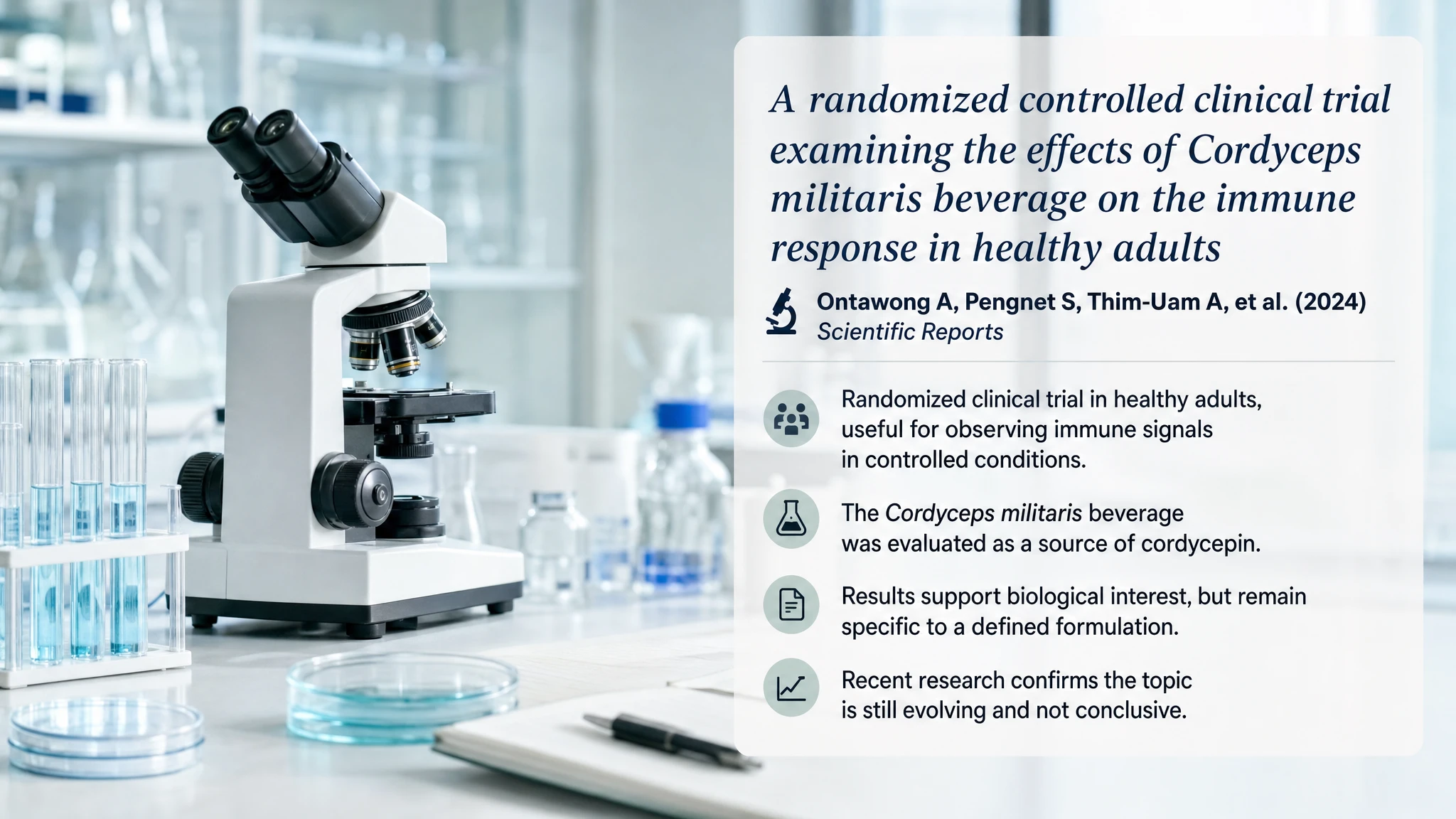
In 2024, Thai researcher Ontawong and colleagues published a study in the journal Scientific Reports. The work evaluated a beverage containing Cordyceps militaris and the immune response in healthy adults. The researchers used a fermented extract rich in cordycepin. This natural compound from the fungus is being studied for its potential effects on immune defenses and the balance of inflammation.
A randomized controlled clinical trial examining the effects of Cordyceps militaris beverage on the immune response in healthy adults
- A randomized clinical trial on healthy adults, useful for observing immune signals under controlled conditions.
- The beverage containing Cordyceps militaris was evaluated as a source of cordycepin.
- The results indicate biological interest, but apply only to a specific formula.
- Recent research confirms that the topic is still ongoing and does not allow for definitive conclusions.
Possible benefits of cordyceps in practice
In practice, the possible benefits of cordyceps touch on three areas: perceived energy, response to exertion, and certain immune markers. Clinical evidence, however, does not provide uniform results. Some studies show measurable changes, while others find no or very small effects. Cordyceps may therefore provide some help in certain cases. However, it is not a guaranteed cure for fatigue, physical performance, or immune system defenses.

To understand the potential benefits of cordyceps, it is necessary to separate laboratory data from results in humans. Studies primarily examine perceived energy, response to exertion, and certain markers of immune system function. Results vary depending on the product, the dosage, and the individuals involved [13,14]. Therefore, a benefit is never guaranteed. In some cases, the mushroom appears useful, while in others, it does not change the measured outcomes. Its compounds act on various pathways related to energy, inflammation, and oxidative stress (damage caused by reactive molecules) [3,2,4,5]. To evaluate its effects, one must consider both the positive data and the limitations of clinical studies.
Fatigue does not always stem from the same cause. It can depend on low energy, mild inflammation, oxidative stress, or poor recovery after exertion. Oxidative stress occurs when reactive molecules exceed natural defenses. These molecules can thus damage cells and tissues. Cordyceps is being studied because it may act on multiple processes. Its compounds include cordycepin, adenosine, polysaccharides, and other metabolites (substances produced by cells) [3,2,4,8]. These substances could help manage exertion and regulate the immune system response. The effects observed in people, however, are not always the same. In vitro (laboratory) activity is not enough: it must be verified whether it leads to real and measurable benefits.
Overall, the data show a possible benefit, but not an effect that is the same for everyone. One study included 20 subjects aged 50-75. Cs-4 (a standardized, lab-grown form of the medicinal mushroom Cordyceps sinensis) at 333 mg three times a day for 12 weeks improved metabolic and ventilatory thresholds. It did not, however, change maximum oxygen consumption [15]. In another trial, 22 male cyclists took 3 g per day for 5 weeks. No advantages emerged regarding VO2peak, ventilatory threshold, or time-trial performance [16]. Immune markers also show varied responses. A dose of 1.68 g per day for 8 weeks increased natural killer cell activity in 79 adults. A drink containing 2.85 mg of cordycepin was tested for 8 weeks. The study included 10 subjects per gender and group [7]. Cordyceps therefore remains a supplement to be evaluated with caution, not a solution suitable for everyone [17,18].
It is also important to verify whether the mechanism produces a concrete result. An extract that activates AMPK can promote energy use in cells. AMPK is adenosine monophosphate-activated protein kinase, an enzyme that regulates energy [9,10]. Action on inflammation signals or oxidative stress can influence recovery and response to stimuli [19,11,20]. These mechanisms, however, do not guarantee a perceptible benefit in every person. The help often seems modest and may be more plausible during functional fatigue or intense loads. It should not, therefore, be viewed as a general remedy.
Before drawing practical conclusions, it is useful to remember some common points in clinical studies:
- Feeling less tired does not always mean having better physical performance.
- The response regarding endurance varies greatly between trained and untrained individuals.
- Some immune markers seem to respond to extracts more than others.
- The dosage and duration of use can significantly change the result.
The potential benefits of cordyceps are best understood by separating three areas: perceived energy, response to exertion, and immune regulation. For each area, the dose, duration, and type of extract used are important.
Perceived energy and fatigue
Many people buy cordyceps hoping to feel less tired and more active. This potential effect is not just a feeling. It also involves how cells produce ATP. ATP, or adenosine triphosphate, provides energy for cellular processes. Some studies indicate possible effects on the pathways that regulate energy and the response to exertion [13] [21]. Cordycepin may act on the signals that regulate energy balance, autophagy, and cellular life [9] [12]. Autophagy is the system by which the cell eliminates or recycles damaged parts. There is, therefore, a biological basis for studying its effects on energy. The results, however, are not the same for everyone. Some groups show small benefits, while in others the differences compared to the control are minimal. The effect can change based on the extract, training, diet, and the person's expectations. Therefore, the product is not a "fuel" suitable for everyone. It can provide help in specific cases, but it must be evaluated on a case-by-case basis. The evidence points to possible support, not a guaranteed correction of an energy problem [3] [13].
Many studies on cells and animals have detected effects on oxidative stress and energy use. However, they have not shown a direct increase in strength. This finding may explain why some people report more alertness without having significantly better athletic results. The benefit might emerge when fatigue stems from poor recovery or an unfavorable energy balance. In other conditions, the outcome may remain almost the same as that of the control group. More robust clinical data are therefore needed to understand who might obtain a real advantage.
Physical endurance and recovery
In sports, cordyceps is suggested to support sustained effort and aid recovery. A randomized study evaluated Cs-4 in 20 healthy subjects aged 50-75. The dosage was 333 mg three times a day for 12 weeks. The metabolic threshold increased by 10.5% and the ventilatory threshold by 8.5%. Maximum oxygen consumption, however, did not change [15]. Another trial involved 22 male cyclists treated with CordyMax Cs-4. The subjects took 3 g per day for 5 weeks. No improvements in aerobic capacity or endurance performance emerged [16]. The results show positive signs for some values, but not a consistent increase in performance. It is necessary to distinguish between physiological thresholds, perceived exertion, and actual athletic output. The extract may be studied as a support, but it does not replace proper training, diet, and recovery. Any potential benefit may depend on the species, dose, and individuals examined [13] [14] [16].
Exercise physiology helps to better interpret these data. A higher threshold may allow moderate effort to be sustained longer before fatigue sets in. This change does not necessarily lead to better maximum performance. The results therefore indicate possible effects on energy utilization, not proof of athletic enhancement. Furthermore, those who are already highly trained often have less room for additional gains. This factor may explain some of the differences between studies. Different doses and durations also play a role.
Immune support and oxidative stress
Cordyceps has also been studied for certain effects on the immune system and oxidative stress. The immune system comprises cells and signals that defend the body. Oxidative stress, on the other hand, arises from an excess of reactive molecules, which can damage cells and tissues [8] [22]. A randomized clinical trial involved 79 healthy adults. Of these, 39 took 1.68 g per day of a mycelial extract of Cordyceps for 8 weeks. The other 40 received the comparison treatment. In the treated group, the cytotoxic activity of natural killer cells increased by 38.8%. These cells recognize and target certain abnormal or infected cells [23]. More recent research used a Cordyceps militaris drink containing 2.85 mg of cordycepin. The drink was given for 8 weeks to healthy men and women. The groups included 10 people of each sex and were used to evaluate the immune response. The data indicate a possible targeted action, rather than a general increase in defenses. Furthermore, many studies remain limited to cells, animals, extracts, or polysaccharides [8] [22] [24]. The clinical effect may therefore vary depending on the product and the context of use.
This action could be useful when the immune system is under pressure, but not overactive due to a disease. It is therefore not a matter of "strengthening" all defenses in the same way. The extract might act only on certain parts of immune surveillance and the stress response. It remains essential to distinguish between effects seen in the laboratory and those useful in real life. The increase of an immune marker (a value indicating a biological response) does not in itself prove greater protection. Nor does it demonstrate that people will have fewer infections.
The most studied biological mechanisms
Cordyceps contains compounds that can act on certain internal cell signals. The most studied is cordycepin, which is linked to the control of energy, growth, and the stress response. However, most of the data comes from studies on cells or animals. These results therefore help to understand the mechanisms, but do not prove a clinical effect in humans.
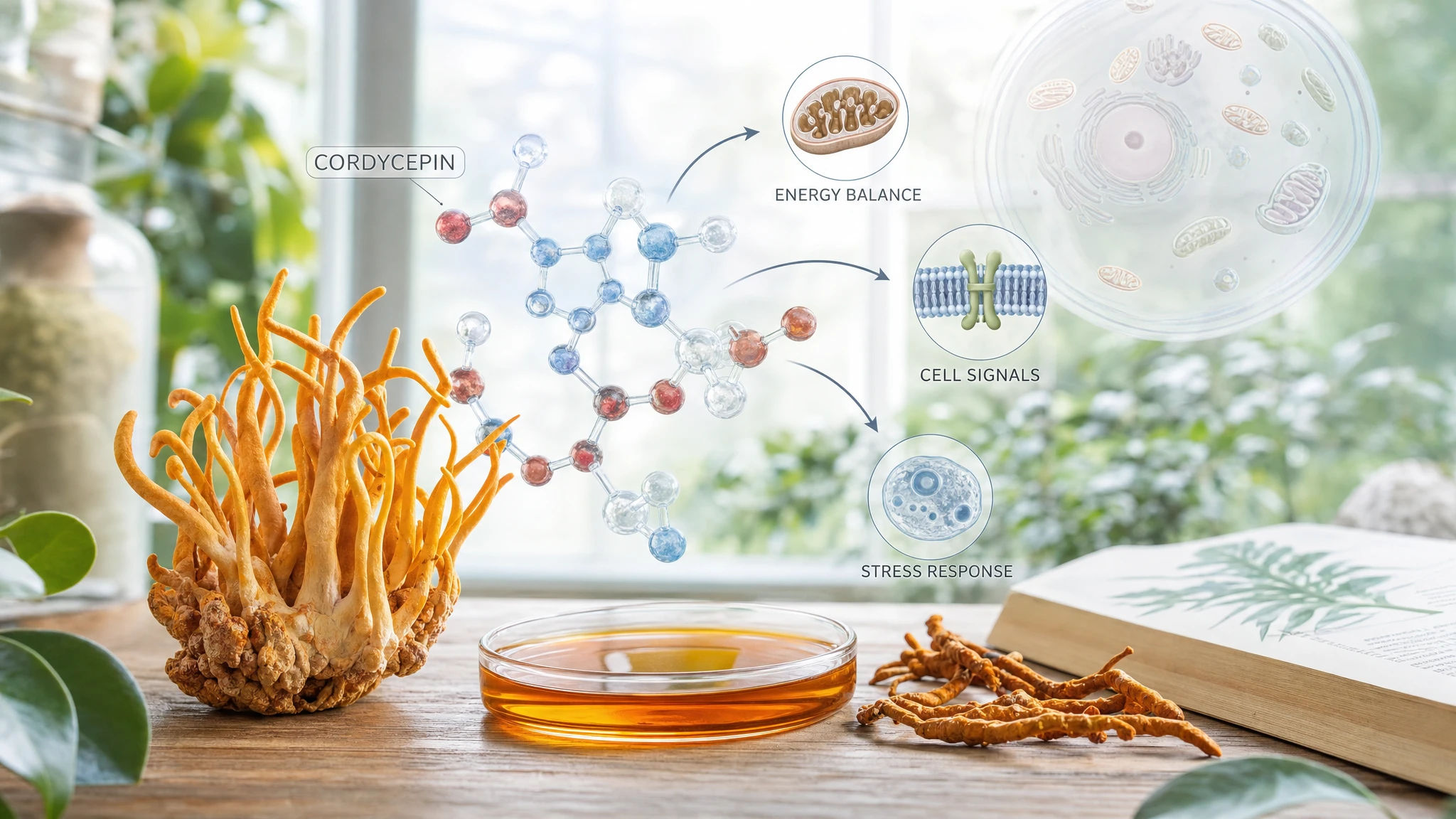
To understand the mechanisms of cordyceps, we must follow the signals that regulate cell life. Cordycepin can act on energy use, growth, and the response to damage [2] [4] [8].
Among these types of damage are oxidative stress and inflammation. Oxidative stress arises when reactive molecules overwhelm antioxidant defenses. Inflammation is a useful defense, but it can cause damage when it lasts too long.
The compound does not appear to act as a generic stimulant. Instead, it may guide the cell toward a more cautious use of its resources. This explains why it is being studied in many areas, from muscles to the nervous system. However, most of the data does not come from clinical studies on humans.
In tissues that consume a lot of energy, this control could help cells react to damage. However, the effect remains linked to the doses that products can actually provide.
An experimental study showed that cordycepin can activate AMPK, a cellular energy sensor [9]. The name stands for adenosine monophosphate-activated protein kinase. This signal turns on when the cell detects low available energy.
AMPK helps to use resources better and limits processes that consume a lot of energy. It can also curb mTOR, a pathway that supports growth and synthesis. At the same time, it promotes autophagy (the recycling of damaged cellular components). In various models, this configuration reduces stress and increases resistance to adverse conditions [25] [26] [19] [10].
In practice, AMPK promotes conservation, while mTOR supports growth and accumulation. A proper balance can limit damage and help the cell recover. However, an effect seen in the laboratory is not always the same in humans. Factors such as dose, bioavailability (the amount absorbed and utilized), and health status are crucial.
Some studies on Cordyceps militaris have also evaluated human responses after short periods of use. The intake of 4 g per day for 1 week involved 28 people. In 10 of them, the research then continued for an additional 2 weeks [6]. The data does not prove a single mechanism, but it indicates a human response across multiple signals.
To read this data in an orderly fashion, it is useful to distinguish the most cited biological pathways:
- The control of cellular energy via AMPK and similar signals.
- The balance between mTOR, cell growth, and protective autophagy.
- The control of inflammation and oxidative stress in tissues.
- The link to neural pathways and the ability of cells to remain alive and functional.
Research focuses on a few cellular pathways, but the effects vary between tissues and models. The following steps explain the role of AMPK, mTOR, and stress-related signals.
Cordycepin, AMPK, and energy metabolism
Cordycepin is the most studied compound for its effects on energy utilization. A study on cellular mechanisms indicates that it can activate AMPK when available energy drops [5]. AMPK stands for adenosine monophosphate-activated protein kinase and is a cellular energy sensor. When activated, it helps the cell make better use of available resources. Furthermore, it reduces energy-intensive processes and promotes a more efficient state. It therefore acts as a switch that guides the cell toward conservation and adaptation.
Some studies also link this effect to AKT, a pathway that regulates growth and the ability of cells to remain alive. A reduction in other signals that promote growth has also been observed [9] [27]. This is therefore not the typical action of a stimulant. Instead, the compound can change the way the cell manages energy.
This mechanism is being studied in metabolism and in supporting physical exertion. One study involved 28 people taking 4 g per day for 1 week. Subsequently, 10 of them continued for an additional 2 weeks. The researchers observed improved aerobic capacity and greater tolerance to exertion.
Maximum oxygen consumption (VO2max) increased by 4.8 ml per kg per minute. Time to exhaustion increased by 28.1 seconds and 69.8 seconds in the higher-dose group [6]. Another randomized controlled trial used 2.85 mg for 8 weeks. The study included 10 people of each sex in each group and provided a more cautious picture.
These data indicate that the response can vary with dose, form, and the group studied. Indeed, an effect on cells does not always imply a real clinical benefit. The amount that reaches the tissues, the route of administration, and the duration all matter [5] [13].
AMPK, mTOR, and autophagy
mTOR is a pathway that promotes growth and synthesis when the cell has energy available. Conversely, AMPK tends to curb this drive when resources are scarce. Studies indicate that cordycepin, by activating AMPK, can regulate mTORC1 [28] [29]. mTORC1 is the mTOR complex that drives growth and biosynthesis (the production of new molecules).
This relationship matters because mTOR regulates growth, nutrient use, and the response to the environment. AMPK can also act on TSC1/TSC2, which helps to curb mTORC1. TSC1/TSC2 is a group of proteins that adapts growth to available energy. In some models, this action promotes autophagy (the recycling of damaged or useless cellular components). The cell can thus derive energy and keep its interior more organized [25] [12]. The mechanism can therefore orient it toward a phase of conservation and defense.
These effects have been observed in models of nervous system and metabolic diseases. In such models, the balance between AMPK and mTOR can influence the ability of cells to remain alive and functional [25] [26]. If this control is lost, damage may increase and efficiency in energy use may decrease.
This is why cordyceps is also being studied outside of the sports field. However, laboratory data are not enough to designate it as a cure. Bioavailability (the amount absorbed and used), dosage, and the clinical situation remain decisive. In damage related to metabolism or ischemia, i.e., reduced blood flow, the action may be protective. In other conditions, however, an effect that is too strong might not be useful. The goal is not to turn a pathway on or off, but to restore a proper balance.
Inflammation, oxidative stress, and cellular function
Many studies on cordyceps indicate effects on signals related to inflammation and oxidative stress [8] [22]. Inflammation helps the body's defense when it remains brief and well-regulated. If it lasts for a long time, however, it can damage tissues and alter their functions. Oxidative stress occurs when reactive molecules exceed antioxidant defenses. In experimental models, cordycepin has reduced certain pro-inflammatory signals. It has also been linked to cell protection and the control of oxidative damage [4] [30] [10].
In neurons and heart cells, studies have detected increased resistance to stress. They have also observed a greater ability of cells to remain viable under adverse conditions [26] [11] [20]. The compound could therefore regulate cellular adaptation, rather than providing a generic "boost." This potential role explains the studies on metabolism, the nervous system, and the immune system.
Some human data follow the same direction, but remain limited. A study on 79 people in total evaluated the Cordyceps CBG-CS-2 mycelial extract. The dose was 1.68 g per day for 8 weeks. Compared to the placebo, the activity of NK cells against altered cells increased by approximately 38.8% [7]. Natural killer cells recognize and target certain altered cells within the immune system.
In the respiratory field, another clinical study on Hirsutella sinensis examined chronic obstructive pulmonary disease [18]. The interest therefore also concerns the immune response and general tolerance, not just sports. However, it is necessary to distinguish experimental effects from real-world utility for people. More robust, direct clinical studies are needed, especially on commercially available products. These can, in fact, have very different compositions [3] [5] [4]. The mechanisms make the effects possible, but do not allow for conclusions valid for every use.
Cordyceps, metabolism, and chronic diseases
When discussing cordyceps and chronic diseases, we are not referring to a miraculous effect. Instead, research is focused on how it acts on energy, inflammation, and the tissue response to stress. Cordycepin is the most studied molecule because it acts on key metabolic pathways. Among these pathways is AMPK, a protein that senses how much energy a cell has. The data are still preliminary, but they explain the interest in the liver, kidneys, and heart.

Regarding the link between cordyceps and metabolism, certain molecules can act on the systems that regulate energy. These systems guide the use of fats, their storage, and the response to stress. Studies on cordycepin have focused primarily on its action on AMPK. This protein detects how much energy a cell has and adapts its activities accordingly.
When AMPK is activated, the cell limits activities that consume large amounts of energy. In parallel, it promotes processes useful for coping with new metabolic demands. The balance thus shifts toward a more orderly and effective use of available resources.
This does not mean that the fungus lowers cholesterol or cures chronic diseases. In research models, however, it may promote a more beneficial metabolic state. The liver is an important target because it manages sugars, fats, and many inflammatory signals.
Studies on various tissues show some consistent data, which must, however, be interpreted with caution. In the liver, AMPK activation is associated with less fat and less inflammation. In the kidney, interest focuses on defense against oxidative stress (damage caused by highly reactive molecules). This type of stress accompanies many nephropathies (kidney diseases) and can reduce kidney function.
In the heart, energy use affects the response to stress caused by ischemia. Ischemia is the decrease in blood and oxygen reaching a tissue. The heart uses a lot of energy and therefore depends on well-coordinated and efficient mitochondria. Mitochondria are parts of cells that produce most of the available energy.
In some models, this pathway also regulates mitochondria and cell life. Cordyceps could therefore act on multiple interconnected biological networks, rather than on a single target. However, this effect must be confirmed in large, well-conducted clinical trials.
In the liver, a study on non-alcoholic steatohepatitis examined the action of cordycepin. The molecule improved the inflammatory and metabolic profile via AMPK [10]. The disease causes an accumulation of fat and inflammation, with potential damage over time.
The mechanism studied therefore indicates that it is possible to act on this energy sensor. If it detects energy more effectively, the liver cell can limit fat storage. It can also reduce processes linked to oxidative stress and cell damage.
Fermented products of Ophiocordyceps sinensis have been studied in acute kidney injury caused by contrast media. Bailing capsules, linked to Cordyceps sinensis, have been evaluated in chronic kidney disease [13,23]. In the diabetic heart, cordycepin reduced damage caused by ischemia/reperfusion. It promoted mitochondrial fusion regulated by AMPK and Mfn2 [20].
Mitochondrial fusion joins mitochondria together and can help them work more effectively. Overall, these data do not prove that cordyceps is a therapy. However, they indicate three possible common targets: metabolism, oxidative stress, and inflammation. The scientific value lies in the study of these networks, not in any alleged sensational effect.
To summarize the key points:
- Cordycepin activates AMPK, promoting better energy management.
- In the liver, AMPK can reduce fat and inflammation.
- In the kidney, cordyceps could counteract oxidative stress.
- In the heart, it promotes mitochondrial function in experimental models.
The focus now shifts from general effects to the tissues where energy usage matters most. The liver, kidneys, and heart are three different cases, yet they share the same biological foundation. All must adapt to energy demands while limiting cellular damage.
Liver and lipid metabolism
One line of research is studying the liver and how it uses fats. In a model of non-alcoholic steatohepatitis, cordycepin activated AMPK. This action improved the metabolic profile and reduced signs of inflammation [10]. The disease causes fat in the liver, inflammation, and potential damage that progresses over time.
In this phase, the organ must manage an excessive amount of fat. It changes how it uses these fats, and oxidative stress increases. Signals that can promote fibrosis (growth of scar tissue) are also activated. Over time, these events can reduce liver function.
When AMPK is activated, the cell limits processes that store energy. At the same time, it makes better use of the resources it already has. It can therefore reduce fat synthesis and increase fat utilization. These two processes regulate the balance between storage and consumption.
The study does not prove that the treatment works in humans, but it indicates a possible mechanism. This helps explain the interest in cordyceps in liver research. The fungus does not treat the organ in a generic way. However, in experimental models, some of its molecules act on key metabolic points.
The role of AMPK also makes the data useful for studying other organs. This pathway acts as a common energy sensor for cells [30] [10]. The data remains preliminary and does not allow for clinical recommendations for human treatment.
This framework is part of broader studies on substances derived from Cordyceps. These substances do not act like a single drug targeting one specific site. Instead, they can act on multiple interconnected processes. A response in the liver may therefore depend on a reduction in metabolic stress. It is not necessarily the case that there is a direct effect on a single blood value. This action on multiple systems makes the topic interesting, but it requires great caution. Data from research models cannot be applied directly to daily life.
Kidney and tissue protection
In the kidney, certain cordyceps-based products have been studied for their potential to protect tissues. A review examined fermented products derived from Ophiocordyceps sinensis. The studies evaluated how to prevent acute kidney injury caused by contrast media. The work gathered randomized trials with favorable clinical and laboratory data [13].
The signal is interesting, but the studies are few and have evaluated specific products. In this case, acute kidney injury arises from multiple combined events. These include vasoconstriction (narrowing of blood vessels), oxidative stress, and fragility of tubular cells. These cells form parts of the kidney that filter and reabsorb various substances.
Tubular cells are highly sensitive to changes in blood flow and chemical damage. Reducing these stresses could therefore limit damage, at least in theory. However, this potential effect is not enough to define a standard therapy. Another analysis studied Bailing capsules, linked to Cordyceps sinensis, in chronic kidney disease. The work linked the potential effects to signaling networks and defense pathways [23]. Chronic kidney disease progresses slowly and can have many causes.
It often involves persistent inflammation, damage to blood vessels, and a gradual loss of nephrons. Nephrons are the units of the kidney that filter the blood. The hypothesis concerns the control of oxidative stress, inflammation, and cellular energy. The kidney and liver are complex organs, so a single piece of data does not apply to every case. These products could be studied as an aid in very specific cases. However, they cannot replace standard treatments. These studies are valuable because they have extended research beyond the sports field [13] [23].
Overall, the data indicate a possible defense of cells, not a broad recovery of function. This distinction is important for understanding the true weight of the results. Protecting tissues can be a first step toward a clinical benefit. However, more robust studies, well-defined doses, and similar patient groups are needed. Without these conditions, the data remain preliminary and do not allow for definitive conclusions.
Heart, energy, and stress adaptation
The heart uses a great deal of energy, so it depends on AMPK and the proper functioning of mitochondria. In a diabetic heart model with ischemia/reperfusion, cordycepin reduced damage. It increased mitochondrial fusion regulated by AMPK and Mfn2 [20]. Mitochondrial fusion joins mitochondria together, which are the parts of the cell that produce energy. This process can help them maintain more effective function.
During ischemia, the heart receives less blood and oxygen. With reperfusion, blood flow restarts and can cause further damage. The tissue thus undergoes a sudden imbalance between oxygen, energy needs, and free radicals. These highly reactive molecules can damage cells.
Better-organized mitochondria can limit damage and help cells stay alive. This finding links cordyceps to research on heart health. Improved energy use could, in fact, reduce damage during acute stress. However, this effect emerged in a study model, not as an established treatment.
Another study investigated the potential action of the fungus on arrhythmias. Arrhythmias are abnormal changes in the heart's rhythm. The research also evaluated the biological signals linked to these changes [24]. These data show interest in the heart's electrical activity, but remain preliminary.
The result is in line with the proposed mechanism. The molecule appears to act on systems that regulate energy, stress, and cell survival. In the heart, this control is very important because the need for energy always remains high. Further studies in humans are therefore needed to clarify its potential clinical role [30] [20]. Overall, a coherent hypothesis emerges: this substance may help cells adapt their metabolism. It would not, therefore, act as a simple tonic. This explains the interest in various diseases involving energy imbalances, oxidative stress, and loss of homeostasis (internal balance).
Cordyceps and physical performance
Cordyceps has been studied to see if it helps with endurance and exercise tolerance. Some trials have provided useful signals, while others have not detected clear benefits. Today, it can be viewed as a potential support, but not as a proven ergogenic aid.

Regarding physical performance, cordyceps has been studied in intense or prolonged trials. Researchers have evaluated endurance, perceived exertion, and the ability to sustain effort. Endurance indicates how long a person can perform an activity. Perceived exertion, on the other hand, describes how difficult the exercise feels to the person performing it.
Interest focuses on cordycepin and other nucleosides (molecules also found in nucleic acids). These substances may act on energy utilization, oxygen, and oxidative stress. This imbalance occurs when free radicals overwhelm the body's defenses. The hypothesis is that cells use resources more efficiently and can sustain activity for longer. AMPK (a protein that regulates energy within the cell) may play a role, but this does not prove a definitive effect in sports [5,9].
Exercise physiology, however, involves many different factors. Performance depends on the heart, lungs, blood flow, muscles, and movement control. The way each person perceives effort also counts. Therefore, a supplement might change a single value without improving the final result.
Studies have measured metabolic and ventilatory thresholds (levels beyond which effort becomes more taxing). Others have evaluated maximum oxygen consumption, which is the peak amount used during exercise. Some tests have measured time to exhaustion or recovery after exertion. Overall, the data are plausible but inconsistent. A useful signal appears in some cases, while in others it is absent or too weak [14,16].
To understand the results, it is necessary to distinguish between the different types of tests. Thresholds show how the body manages effort before reaching its limit. Endurance time and maximum oxygen consumption are closer to actual performance. Models on cells and animals, however, help to study the mechanisms.
An effect seen in the laboratory does not necessarily appear in humans. Furthermore, the type of product, the dose, and the duration of use can change the outcome. The level of training can also significantly influence the result. These differences help explain why studies do not provide a single answer [6,30].
In the study already described [15], some healthy adults showed higher thresholds. In the trial with Cordyceps militaris, maximum oxygen consumption increased by 4.8 ml·kg−1·min−1 after 3 weeks. In more strenuous tests, time to exhaustion also increased [6]. These data indicate a possible greater capacity to sustain effort.
Other studies, however, have not found a clear advantage in total performance [16]. The mushroom may therefore offer help in very specific cases. Current evidence does not allow us to consider it effective for everyone who plays sports. The effect, if present, seems modest and linked to the type of use. Final confirmation valid in every context is still lacking [14].
Ultimately, to summarize:
- Cordyceps may improve physical endurance and tolerance to effort.
- AMPK could promote more efficient management of muscle energy.
- Some studies show improvements in maximum oxygen consumption.
- Benefits vary according to training, dosage, and duration of supplementation.
Studies on performance do not provide a single answer, because they measure different outcomes. Some values improve, while others remain the same. It is therefore advisable to separate useful signals from neutral data and then evaluate the possible energy mechanisms.
Positive studies on thresholds and tolerance
Some studies indicate that cordyceps may help with exercise tolerance without changing overall performance. In the trial already described [15], the metabolic threshold increased by 10.5% in healthy elderly individuals. The ventilatory threshold rose by 8.5%, while maximum oxygen consumption remained stable. The body therefore seems to manage exertion better before reaching its limit. However, this data does not indicate an increase in absolute maximum capacity.
Another study examined a blend containing Cordyceps militaris in 28 healthy subjects. Participants took 4 g per day for 1 week. Of these, 10 continued for another 2 weeks. After 3 weeks, maximum oxygen consumption increased by 4.8 ml·kg−1·min−1. In more strenuous tests, time to exhaustion also improved [6].
A randomized controlled trial studied a drink containing 2.85 mg of cordycepin for 8 weeks. In this type of study, chance assigns participants to the various groups. The trial included 10 subjects per gender and group. The substance acts on pathways related to energy and cellular recovery. The benefit observed was limited and linked to the test conditions [3] [2] [4].
Overall, a useful signal exists, but it varies depending on the product used. In the most suitable tests, a greater capacity to sustain exercise emerges. Conversely, no significant leap in athletic performance is observed. The mushroom therefore remains a possible support, not a definitive ergogenic (performance-enhancing) substance.
Neutral or negative studies on performance
The literature does not offer entirely consistent results. One study involved 22 male cyclists and evaluated CordyMax Cs-4. The dose was 3 g per day for 5 weeks. The product did not change maximum oxygen consumption or the ventilatory threshold. There was also no variation in time during the endurance test (long-duration exercise) [16].
This result shows that a possible biological effect does not always improve performance. The beverage trial also lasted 8 weeks and used 2.85 mg of cordycepin. The test was well-controlled, but it provided a cautious picture. On its own, in fact, it does not prove a broad and easily repeatable athletic advantage.
Differences between studies may depend on the type of extract and the dose. The level of training and the metric chosen to measure the outcome also count. For this reason, cordyceps cannot be proposed as a valid remedy for every athlete. The same variety appears in studies on supplements, which often use different products and sources [1] [17] [13] [14]. Today, its role may be that of an aid to be evaluated on a case-by-case basis. A realistic goal would be a small benefit, consistent with the body's processes. Evidence does not, however, indicate a clear increase in athletic capacity. Therefore, more robust data that are easily repeatable across different groups are needed.
From cellular metabolism to performance
The link between cordyceps and performance also concerns the energy produced by cells. A study on mice used an ethyl acetate extract of Cordyceps militaris. The doses were 50, 150, and 300 mg/kg for 12 weeks. Researchers observed only a slight increase in grip strength [30]. Some biomarkers (values indicating activity in the body) also changed. These values were linked to the pathway that produces ATP, the main source of cellular energy. The fungus can therefore influence energy use even when the practical benefit remains small. In this case, the signal in the cells is clearer than the effect on strength.
AMPK helps explain this step, as it regulates how the cell uses resources. More efficient energy use could better support exertion in some cases [5] [9]. Cordycepin also acts on pathways related to inflammation, oxidative stress, and cell signaling. These processes play a role during intense or prolonged exercise [3] [2] [4] [28].
However, data obtained in mice does not prove the same effect in humans. The study helps to understand the possible mechanism, but does not guarantee benefits in the field. The evidence therefore forms a set of consistent clues, but they are not yet conclusive. Action on energy appears possible, while the actual effect on performance depends on many factors [13] [15] [30].
Cordyceps, immunity, and oxidative stress
Cordyceps does not appear to generically "strengthen" all of the body's defenses. Instead, some of its molecules may specifically regulate precise immune system responses. Its effects on oxidative stress (the imbalance between reactive molecules and antioxidant defenses) are also being studied. However, the most compelling evidence comes from laboratory studies and small human trials.

In studies on immunity and oxidative stress, cordyceps appears to be a potential modulator of defenses. However, it does not seem to act as a general stimulant for the immune system. Some components may influence immune surveillance, which identifies and monitors abnormal cells. They may also support systems that limit damage caused by reactive molecules.
Interest therefore lies in its ability to regulate certain signals used by cells. The available evidence, however, does not all carry the same weight. The clearest data come from controlled studies and experimental models. Their value for human health still requires great caution [7] [8] [21].
In a human study, a mycelial extract of Cordyceps increased the cytotoxic activity of natural killer cells. The research involved 79 healthy adults, treated for 8 weeks [7]. The data indicate a possible effect on the cell-mediated response, carried out by specialized immune cells. A beverage containing cordycepin was also evaluated for 8 weeks in a controlled trial.
The result offers another clue of biological activity, but it concerns only very specific parameters. It does not, therefore, allow for conclusions to be drawn for the entire immune system. In the laboratory, some compounds appear to reduce damage caused by free radicals (highly reactive molecules). They may also support the cells' defense systems. These data indicate hypotheses to be verified in humans, not definitive proof [8] [21].
Oxidative stress is not just a chemical process without effects on the body. When reactive molecules become too numerous, they can damage membranes, proteins, and DNA. This damage can then promote inflammation and alter cell function. An antioxidant or immunomodulating compound (capable of regulating immune defenses) could limit this chain reaction.
To be useful, however, it would need to act without creating new imbalances. Over-activating the immune system does not necessarily mean improving health. Furthermore, an antioxidant effect seen in a test tube does not demonstrate true protection in humans. The fungus is therefore being studied as a modulator of complex networks. It is not considered an immediate or substitute cure [1] [17] [8].
Another field of study concerns physical exertion and subsequent recovery. Intense exercise increases oxygen consumption and can produce more reactive molecules. After exertion, the body must also regulate inflammation and energy use. Some reviews indicate a possible role for cordyceps during this phase.
The fungus might reduce the perception of fatigue and support the body's adaptation [14] [21]. However, a biological signal does not demonstrate a consistent benefit for everyone. Indeed, studies use groups, doses, and products that are not always comparable.
Overall, the fungus shows promising biological activities, but they are not yet fully defined. It appears to act on immunity, oxidation, and inflammation through several possible mechanisms. The strength of the evidence, however, varies greatly between laboratory and clinical studies. Scientific interest is therefore well-founded, but does not allow for overreaching conclusions.
Today, it is more accurate to speak of cordyceps as a potential modulator. The data primarily help to understand how certain natural metabolites act. These molecules, produced by living organisms, can influence cell signaling [7] [8] [21].
To better understand the data, it is useful to distinguish the main themes studied by research:
- the response of natural killer cells (immune cells that target infected or abnormal cells) and immune surveillance;
- the action of polysaccharides (long chains of sugars) on innate immune cells, the body's first line of defense;
- the relationship between cordycepin, oxidative stress, and cellular adaptation;
- the possible link to inflammation and recovery after exertion;
- the difference between a biological effect and a proven health benefit.
The available evidence is divided into three levels: clinical studies, component analysis, and models of cellular stress. The following three points describe these levels and the observed results.
Immune cells and cell-mediated response
The most concrete part of the studies concerns the cell-mediated response. This is the part of immunity entrusted to cells that recognize and control infected or abnormal cells. A randomized, double-blind clinical trial involved 79 healthy adults. The treated group took a mycelial extract of Cordyceps from Paecilomyces hepiali. The dose was 1.68 g per day for 8 weeks.
At the end, the group showed increased cytotoxic activity of natural killer cells [7]. The result suggests an effect on immune surveillance. Natural killer cells, in fact, offer rapid defense against altered or stressed cells. Another trial studied a beverage based on Cordyceps militaris. The drink contained 2.85 mg of cordycepin and was taken for 8 weeks.
The trial involved healthy men and women and evaluated targeted parameters. The results confirm the interest in a possible regulation of defenses. On a physiological level, the point is important: cordyceps seems to act on precise immune circuits. These circuits belong to the innate immune system, the body's first line of defense. A generic "boosting" of the organism does not emerge. This distinguishes biological regulation from a strong effect without precise targets. The available data do not show an effect of this type. Caution is still needed, because the samples, duration, and products studied are still limited. The clinical significance cannot exceed what the studies actually show [7].
The observed effect does not necessarily imply a broad and uncontrolled increase in inflammation. It suggests, rather, a possible regulation of the response capacity of the immune system. In theory, this effect could help the body react quickly and effectively. However, a variation measured in the laboratory does not coincide with a perceptible benefit. Confirmations are needed in larger groups, with different ages and well-defined clinical profiles. For now, therefore, the most solid data remains biological and not therapeutic [7] [14].
Polysaccharides and antioxidant activity
Cordyceps polysaccharides are widely studied because they can perform various biological functions. Reviews describe antioxidant, anti-inflammatory, and immunomodulatory effects (the ability to regulate immune defenses). The chemical structure can change how these molecules act in the body [8] [22].
An experimental study examined polysaccharides obtained from a submerged culture of Cordyceps sinensis. These compounds increased cytokine synthesis, CD11b expression, and phagocytosis [27]. Cytokines are signals that allow immune cells to communicate with each other. Phagocytosis, on the other hand, allows certain cells to engulf foreign material. These data indicate a possible role for polysaccharides in immune system signaling. During oxidative stress, cells also activate various defense systems. An antioxidant compound can reduce cellular damage and promote a more orderly response.
However, a result observed in cells does not guarantee the same effect in a person. The actual role of these long sugar chains depends on the dose and the product. Antioxidant and immunomodulatory effects are possible, but they do not prove a clinical benefit on their own. The picture therefore shows interesting biological signals that require further confirmation in humans [8] [22] [27].
These activities are part of a broader and very complex biological network. Innate immune cells react to dangers, but how they regulate the response also matters. Antioxidant defenses can reduce reactive molecules and help tissues function better. Research is specifically studying this balance between immune response and damage control [1] [17] [8] [27].
Inflammation, cell growth, and control signals
The most recent studies describe cordyceps and cordycepin as potential regulators of various signals. These signals relate to inflammation, cell growth, and adaptation to damage [4] [30]. mTOR and AMPK are pathways that help cells manage energy and resources. They do not just regulate metabolism—that is, how the cell uses energy. They also influence proliferation, cellular self-management, and stress response.
When conservation and repair prevail, the cell can reduce energy-intensive processes. It can thus favor a more conservative state, better suited to managing stress. This logic recurs in many experimental models, from neuroprotection to metabolism. It also appears in studies on certain conditions that cause excessive cell growth [25] [26] [11].
The message for non-specialists is simple. Cordyceps does not act merely as an “energy-boosting” ingredient. Instead, it may regulate much broader cellular networks. This explains why researchers are also studying it in fields far removed from sports. The limitation, however, remains the same in all these areas. The observed mechanisms are consistent, but they do not, by themselves, prove a definitive clinical benefit.
Studies better support the hypothesis of a plausible biological regulation. Evidence indicating a definitive solution for immunity or inflammation is, conversely, weaker [4] [8] [22]. Regarding oxidative stress, cordycepin is of interest in studies on cellular adaptation. It also frequently appears in research on potential protection against damage. Reviews indicate that it can influence energy pathways and the cells' ability to resist and function. These include pathways associated with AMPK [3] [5] [9].
This network helps the cell detect an energy deficit and respond more effectively. In theory, such a state could increase stress resistance and limit oxidative damage. However, potential clinical effects must be proven with well-designed studies. For now, therefore, the greatest value of these results lies in helping to interpret the mechanisms. Cordyceps offers a useful model for studying the relationship between natural compounds and cellular controls. This, however, does not automatically make such compounds therapies [3] [5] [9] [21].
The transition to the nervous system is natural, because stress and adaptation are crucial in the brain. In this organ, excessive oxidation or poorly regulated inflammation can have wider effects. Many studies have therefore evaluated whether cordycepin can protect vulnerable tissues. They have also studied its potential role in the recovery of functions [11] [31] [32].
Cordyceps and the nervous system
In the nervous system, cordyceps can act on three aspects: oxidative stress, neuronal life, and wakefulness networks. Oxidative stress is the damage caused by an excess of reactive oxygen species. Almost all data, however, are derived from studies on cells or animals. These show possible biological pathways, but do not prove a clinical effect in humans.

When discussing the relationship between cordyceps and the nervous system, we are not talking about a "miraculous" effect. Instead, research is investigating whether certain compounds help neurons resist stress. Among these, cordycepin stands out—a bioactive nucleoside frequently studied for its biological effects. A nucleoside is a molecule similar to a natural component of nucleic acids.
In experimental models, cordycepin can act on apoptosis, which is programmed cell death. It can also influence the signals that help a cell survive and the pathways that limit damage. Such damage can arise from excessive cellular excitation or metabolic stress. This topic is relevant because nervous tissue consumes a great deal of energy. Furthermore, it does not tolerate long-lasting imbalances well.
Many neurological diseases share certain processes: oxidative stress, mitochondrial damage, and the accumulation of altered proteins. They can also alter synaptic communication, which is the exchange of signals between neurons. However, the results are primarily derived from laboratory settings. They help us understand the mechanisms, but they do not prove clinical efficacy.
In HT22 hippocampal neurons, cordycepin reduced apoptosis caused by glutamate. It also reduced apoptosis related to endoplasmic reticulum stress [11]. The hippocampus is a part of the brain involved in memory and learning. This finding is important because too much glutamate can overwhelm a cell's defenses. This promotes an excessive influx of calcium and a chain of oxidative damage. The neuron then enters a state of biochemical distress that precedes cell death.
In another study, neurons were exposed to an accumulation of beta-amyloid. The observed protection depended on ERK/CREB, signals linked to the cell's ability to survive and to neuronal plasticity [31]. ERK is a kinase, a protein that transfers phosphate groups. CREB is a transcription factor that regulates gene expression. The cell is not "resurrected," but it can react better to stress. It can thus preserve certain essential functions for longer.
Studies on AMPK also help explain why these effects are plausible. AMPK is a protein that measures the cell's energy status. When energy levels drop or stress increases, the cell changes its processes. In this way, it attempts to resist better [9] [33]. However, an important limitation remains. These data do not prove that cordyceps improves memory, concentration, or neurological diseases in humans. They only indicate that certain nervous pathways are sensitive to its compounds [11] [31] [33].
These data must be read within the framework of cerebral pathophysiology. This discipline studies how and why normal brain function becomes altered. Neurons require a lot of energy and tolerate hypoxia—a lack of oxygen—poorly. They are also vulnerable when calcium homeostasis changes. This term refers to the balance of calcium inside and outside the cell.
Researchers therefore study AMPK, ERK/CREB, and the response to endoplasmic reticulum stress. These systems do not promise immediate relief from symptoms. However, they can determine whether a cell manages to adapt or gives way. In this context, cordyceps is being studied as a modulator of biological resilience. The hypothesis is consistent with the biochemistry of the fungus. However, it remains far from a valid therapeutic use for patients.
The most relevant observations concern three biological levels:
- The defense of neurons exposed to glutamate and endoplasmic reticulum stress.
- The activation of cellular pathways linked to the cell's ability to survive and adapt.
- The control of brain networks that regulate alertness, orexin, and norepinephrine.
Studies on the nervous system primarily examine the defense of neurons and the networks that activate the brain. The following sections explain how energy, wakefulness, and chemical signals influence neurons under stress.
Neuroprotection and oxidative stress
The first area concerns neuroprotection, which is the defense of nerve cells against damage. In the previously mentioned cell models [11], cordycepin protected neurons from glutamate. If present in excess, this signal can become toxic. It can, in fact, overstimulate nerve cells and damage them.
Another study exposed certain cells to an accumulation of beta-amyloid. The observed protection involved ERK/CREB [31]. This pathway helps neurons adapt to stress and remain viable. This data does not indicate that the fungus "repairs" the brain. Instead, it shows a possible action against oxidative stress, excess calcium, and damage to the endoplasmic reticulum.
In simple terms, the study measured the resistance of cells to damage. It did not evaluate a therapy in people. The transition from a cell culture to the human body remains complex. Inflammation, the liver, the blood-brain barrier, and individual differences can alter the effects. The blood-brain barrier regulates the passage of substances from the blood to the brain.
Autophagy, AMPK, and neurodegenerative models
A second line of research studies autophagy, which eliminates and recycles damaged cellular components. In a model of Machado-Joseph disease, cordycepin activated this system. The effect was mediated by AMPK phosphorylation [25]. Phosphorylation adds a phosphate group and can change a protein's activity. AMPK signals when the cell needs to consume less energy and adapt.
This response is crucial in neurons, which struggle to compensate for accumulated damage. Another preclinical study observed protection of hippocampal neurons from excessive activity. The researchers had induced this activity using beta-amyloid and ibotenic acid [34]. Ibotenic acid is excitotoxic: it can damage neurons by overstimulating them.
The data suggest that cordyceps may help the cell curb stress. It might also promote the removal of damaged parts before the damage escalates. However, these results were obtained in specific models, not in people with neurodegenerative diseases. Currently, they only indicate a potential aid to cellular adaptation systems [25] [34].
AMPK often links energy consumption with cell survival. When activated, it limits energy-consuming processes and promotes internal maintenance. The mechanism has an interesting biological basis, but it still needs to be verified in humans.
Arousal, stress, and neural networks
The third topic is arousal, the brain state that supports wakefulness, alertness, and response to stimuli. Studies on cordyceps also consider the orexin system. This circuit communicates with the locus coeruleus, an area that regulates attention and norepinephrine [35] [36]. Orexin is a neuropeptide, which is a small molecule used by neurons to communicate.
Other studies show that orexin regulates neurons via glutamate and non-NMDA receptors. Nitric oxide also helps control these networks [37] [38] [39]. Some authors point to AMPK and nNOS as bridges between cellular energy and the nervous response to stress [40] [41] [42] [43] [44] [33]. nNOS is the enzyme that produces nitric oxide in neurons.
The point is not that the mushroom "stimulates the brain." Its compounds have been studied in systems that link energy, wakefulness, and adaptation. However, the data remain indirect and experimental. They do not prove effects on sleep, attention, or anxiety in people [35] [36] [39]. On a physiological level, the mushroom could act on the networks that regulate alertness. It could also influence the balance between the active phase and recovery. However, there is a lack of evidence linking these effects to measurable clinical benefits.
Cordyceps and cancer research
In cancer research, cordyceps is primarily studied for its cordycepin content. This molecule may affect the growth, lifespan, and resistance of tumor cells. The most useful data come from studies conducted on cells and animals. Evidence in humans remains scarce and does not yet indicate clinical use. Therefore, this topic concerns a field of research, not a promise of a cure.
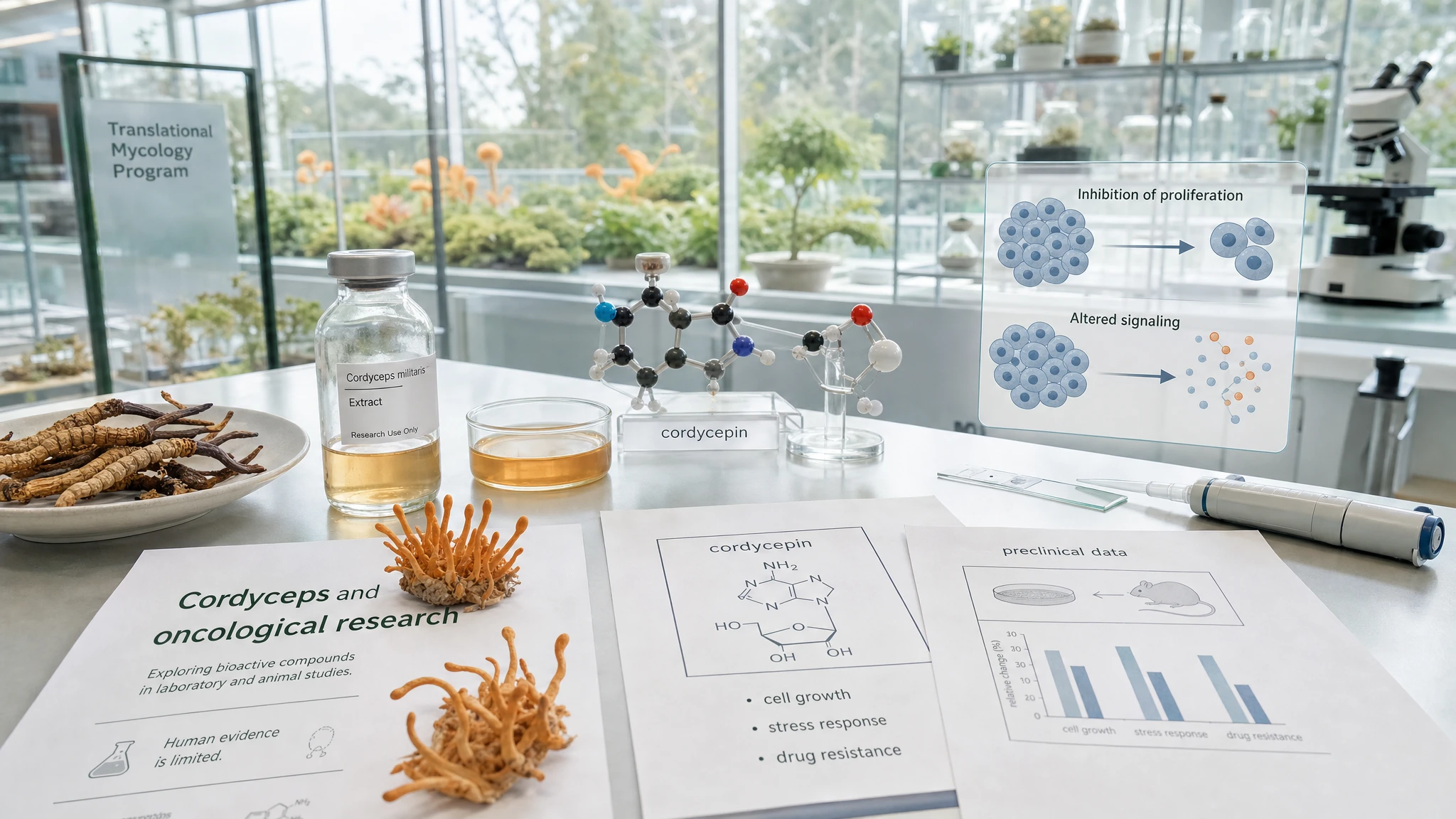
In oncology, interest in cordyceps focuses on specific molecules, primarily cordycepin. This substance can act on processes vital to tumor cells, including protein production, internal signaling, and drug response.
The point is not to determine whether the fungus "kills" a tumor, but to evaluate whether certain compounds slow growth or weaken diseased cells. However, almost all data come from cultured cells or animal models. The transition to clinical use in humans has not yet occurred [28,8].
To understand these data, one must look at the biological processes most frequently studied. Tumor cells often exist in a state of high metabolic stress. They consume significant energy, adapt to low oxygen, and activate effective defense pathways. Metabolism (the set of processes that produce and use energy) therefore becomes a potential target.
A molecule that acts on these pathways will not eliminate a tumor on its own. However, it may reduce some of the defenses that diseased cells use to survive. For this reason, cordycepin is being studied as a potential modulator, not as a proven drug. Interest stems from its effects on multiple processes, as observed in various study models [3,2,4,5].
These data require caution, because acting on important pathways does not demonstrate a clinical effect. It can, however, provide useful foundations for launching new studies. Some research indicates that glioma cells respond better to temozolomide when exposed to cordycepin. A similar effect has emerged in osteosarcoma treated with cisplatin. In both cases, AMPK and the reduction of AKT signaling were involved [25,26].
Glioma originates from glial cells, which support the nervous system. Osteosarcoma, on the other hand, is a malignant tumor that affects bone. In another model, action on the AMPK/mTORC1 axis reduced certain signs of drug resistance. mTORC1 is a group of proteins that regulates cell growth and synthesis. That study also noted a reduced ability to survive with low oxygen [19].
The results are consistent and useful for studying combination therapies, but they remain preliminary. They do not prove that the substance can cure a tumor in humans on its own. Reviews confirm this limitation of the available evidence. Standard clinical doses, defined usage times, and measured benefits in patients are lacking [3,28,8].
Research does not evaluate cordyceps as a simple "natural supplement." It studies it as a source of bioactive compounds (substances with measurable biological effects). Cordycepin can act on transcription, i.e., the copying of data from DNA to RNA. It can also influence protein synthesis and the cell's internal signaling.
These actions explain the interest regarding growth, migration, invasion, and resistance to treatment. However, a central question remains: are the effects strong and safe enough to help patients? At the moment, this benefit has not been demonstrated [5,28,29].
Cordyceps therefore has an interesting, yet delicate, role in modern research. On one hand, it helps study how to influence energy use in tumors. On the other, it shows that a complex biological substance is not necessarily useful in treatment.
The distance between the laboratory and the patient remains significant and requires very clear language. Today, the value of cordyceps lies primarily in creating solid hypotheses to be verified. It cannot, however, replace proven oncological therapies [1,17,8].
The main effects studied concern certain pathways that regulate energy, growth, and cellular defense:
- AMPK activation can slow growth and increase stress due to energy deficiency;
- action on AKT and mTOR can reduce the signals that drive the cell to multiply;
- the reduction of HIF-1α and MDR can limit adaptation and drug resistance;
- effects on adhesion and protein synthesis can hinder the spread and survival of tumor cells.
Oncological studies on cordyceps examine mechanisms that could improve the response to treatments. The three most cited themes concern cellular energy, drug resistance, and tumor adaptation.
AMPK and treatment sensitivity
In human glioma cells, cordycepin made the cells more responsive to temozolomide. It did so by activating AMPK and blocking the AKT pathway [21]. A similar result emerged in osteosarcoma with cisplatin. This molecule made the cells more responsive by activating AMPK and reducing AKT signaling [12]. The meaning of these studies is clear even to non-specialists. Cordycepin can shift the cellular balance toward conditions less favorable to tumor survival. At the same time, it can create conditions more favorable to the response to drugs.
AMPK is a protein that detects how much energy the cell has available. When it is activated, the cell often detects low energy and reduces growth processes. This effect can make it more difficult to sustain the rapid growth of tumor cells. However, these are laboratory experiments on cells, not clinical studies conducted directly on patients. The central point is therefore not "it cures cancer," but "it acts on key growth pathways." This distinction separates the mechanistic rationale, based on mechanisms, from a possible clinical use. The link with AMPK is consistent with what has also been observed in other tissues. If the energy sensor is activated, it can curb cell growth under stress [9] [21] [12].
The same logic also appears in studies conducted in other biological contexts. Here, cordycepin shows a consistent ability to regulate energy homeostasis. Energy homeostasis is the internal balance that keeps the cell in conditions suitable for its work. This aspect matters a great deal in oncology, because many tumors change their metabolism to resist treatments. If a natural substance weakens these adaptations, it may become useful in combined approaches to be studied. However, it remains essential to distinguish the mechanistic potential from a proven clinical benefit. In practice, the laboratory indicates a direction, but studies on patients have yet to confirm it. Research is needed that is adequate in terms of the number of participants, duration, and results useful to the patient [9] [25] [26].
mTOR, AKT, and growth control
Another highly studied axis involves mTOR, a pathway that regulates various cellular signals. This pathway supports growth, protein synthesis, and metabolic adaptation. In gallbladder carcinoma cells, cordycepin reduced the expression of MDR and HIF-1α. This effect depended on the regulation of the AMPK/mTORC1 signal [19]. MDR refers to the mechanisms that make a cell less permeable to drugs or cause it to expel them. HIF-1α, on the other hand, is a transcription factor that aids survival in low-oxygen conditions. Simply put, acting on this circuit can make the tumor less resistant. It can reduce its ability to cope with an unfavorable environment and treatments.
In this case, too, the biological rationale is strong. If a molecule reduces the activity of a pathway that promotes growth, it can slow the cell down. The limitation, however, remains structural: these results show a biological link, not clinical efficacy. Therefore, Cordyceps is not being studied only for a generic antioxidant effect. It is a source of compounds that act on key nodes of tumor biology.
In terms of pathophysiology—the processes that cause the disease—the data is consistent. Tumors do not grow only because their cells divide rapidly. They also change their metabolism, adapt to low oxygen, and develop defenses against drugs. A compound that reduces these three aspects can be useful in preclinical research. For this reason, many studies on cordycepin analyze signals related to cell life and resistance. They are less oriented toward direct patient treatment. The literature therefore speaks of a possible modulating action, not an established therapy [19] [3] [28].
Cell growth, adhesion, and interpretative limitations
An older study on mechanisms showed that cordycepin can inhibit two processes: protein synthesis and cell adhesion, which are linked to signal transduction [29]. Signal transduction includes the molecular steps that carry instructions into the cell. This data concerns basic functions of cellular life. Producing proteins and adhering to tissues are essential for the life and behavior of cells. In some tumor models, these effects may reduce the ability to grow and spread. However, the limitation remains the same: an in vitro effect does not necessarily indicate a clinical benefit.
The literature on cordyceps therefore gathers several consistent signals. These signals strengthen the foundations of research, but do not demonstrate a therapeutic effect. The contribution of cordyceps to oncological research remains primarily mechanistic and conceptual. It shows how a natural molecule can act on cell growth, energy, and adaptation. It thus opens new avenues of study, which remain interesting but still experimental [21] [12] [32] [29].
For those observing the topic from a clinical perspective, the message remains sober but useful. Cordyceps should not be presented as an oncological remedy, because evidence obtained in humans is lacking. Instead, it should be considered a useful research subject for better understanding tumor cells. In particular, it helps study how to make them less protected and more exposed to treatments. This distinction avoids incorrect expectations in patients and their caregivers. The risk is greater in oncology, where initial evidence can easily be misunderstood. Science proceeds in phases: first it studies mechanisms, then it evaluates safety. Finally, it can initiate any well-designed clinical trials [1] [17] [8].
How to use cordyceps in an informed way
How you use cordyceps matters almost as much as the product you choose. Form, dosage, duration, and tolerability vary significantly across available studies. It is therefore advisable to follow a cautious approach, tied to a specific goal. Cordyceps should be evaluated carefully and does not represent an automatic solution.

To use cordyceps wisely, it is necessary to separate commercial promises from real data. Choosing a well-known brand or an eye-catching package is not enough. You need a well-described product, a realistic goal, and a timeline consistent with scientific studies. Capsules, powders, extracts, and standardized products can have very different properties. For this reason, a clear label remains an essential practical criterion [1] [17].
The term cordyceps does not refer to a single substance, but to products that differ by species and the part used. The active compounds present also vary in each case. Among these, we find cordycepin (a molecule with potential biological effects) and polysaccharides (complex sugars). Other substances are also present, the quantities of which can vary significantly between products. These differences can change the observed effects [3] [2] [4] [5] [8].
The response also varies from person to person. Furthermore, the benefits that have emerged from studies are often modest and linked to specific cases. It is therefore advisable to know the composition, the daily dose, and the expected duration. Research is investigating the potential effects on energy use, inflammation, and the immune system. It also evaluates oxidative stress (damage caused by an excess of oxidizing molecules). The product should be viewed as a potential targeted aid, not as a quick cure [3] [4] [9] [10] [21].
The studied doses provide concrete references, but they also show the importance of context. One study on exercise tolerance used 4 g per day for 1 week. In 10 subjects, use continued for another 2 weeks [6]. After 3 weeks, aerobic capacity improved by 4.8 ml·kg−1·min−1. Aerobic capacity indicates oxygen usage during prolonged exertion. In repeated trials, the time to exhaustion increased by 28.1 seconds and 69.8 seconds. The potential effect therefore emerged after a short, but well-defined period [6].
Another study used 1.68 g per day for 8 weeks. The mycelial preparation is derived from the filamentous part of the fungus. This product increased the cytotoxic activity of natural killer cells. These immune system cells eliminate infected or altered cells. The study included 79 total participants [7]. A fermented formula with 2.85 mg of cordycepin was evaluated for 8 weeks. The randomized controlled trial included 10 subjects per sex and group.
Other trials used 333 mg three times a day for 12 weeks. In this case, researchers observed an improved metabolic threshold [15]. With 1.05 g per day for 3 months, no relevant signals emerged. The data concerned kidneys, liver, electrolytes, and lipids [45]. In male cyclists, 3 g per day for 5 weeks did not change certain parameters, including maximum oxygen uptake, ventilatory threshold, and time trial performance [16].
Overall, the data invite prudent and controlled use, especially when taking medications or in the presence of chronic diseases [17]. Potential benefits do not replace training, a suitable diet, or necessary medical check-ups.
Before starting, it is useful to check a few essential aspects:
- The label must clearly indicate the species and the part used.
- The daily dose must be comparable to that used in clinical studies.
- The duration of the cycle must be clear and realistic.
- During use, it is necessary to monitor your own tolerability.
- Those undergoing medical treatment should seek the advice of a professional.
Before choosing a product, it is necessary to separate clinical data from mere marketing promises. There are three main points: the quality of the formula, safety of use, and alignment with your personal goals.
Available forms and quality criteria
Cordyceps is sold in capsules, tablets, powders, and sometimes liquid extracts. The form matters less than the actual quality of the product. Biological effects depend, in fact, on the origin, processing, and standardized content. A good supplement should indicate the species and the part of the mushroom used. It should also state the extraction method and, whenever possible, the standardization of typical compounds. Standardization means maintaining a stable quantity of certain molecules considered important. In this way, it is easier to compare different products and batches.
This criterion is very important for cordyceps, because studies use different species and preparations. Often, such products cannot be compared directly [3] [2] [4] [13] [8]. Official sources highlight an important point regarding supplements: a natural product does not automatically offer quality and safety [1] [17]. In practice, a clear label is more useful than vague promises about energy or vitality. Consumers should look for concrete data before choosing a product. This includes the species, the part used, purity checks, and a clear description of the extract. Only in this way can one navigate with discernment among very different products [1] [6] [46].
Even a promising formula requires verification of its actual content. The compounds present should correspond to those studied, such as cordycepin or polysaccharide fractions. The potential biological effect depends, in fact, on this correspondence [3] [5] [28] [29] [9].
Safety and potential interactions
Many people tolerate cordyceps well, but this does not mean it is suitable for everyone. Official data sheets remind us that supplements can interact with medications or cause side effects [17]. In the case of cordyceps, caution is especially needed with therapies that affect coagulation. Coagulation is the blood's ability to form clots. Caution is also required with medications that affect glycemic control, that is, the amount of glucose in the blood.
The biological reason is plausible and concerns certain substances present in the product. These can act on cellular signals related to energy, inflammation, and immune communication. The effect, therefore, never remains entirely isolated from the rest of the body [3] [4] [9] [10] [20]. Direct studies on interactions are still limited. However, a practical principle remains valid: a natural supplement is not necessarily neutral. Safety also depends on the dose, duration, and how each person reacts.
Those with a chronic illness should seek professional advice before continuous use. This caution counts even more if the product is added to other treatments. It also applies when the goal is to boost performance. In these cases, the line between expected benefit and improper use can quickly narrow [1] [17] [23] [24] [18]. Overall, the product often appears to be well tolerated, but it still requires attention. Caution is especially needed when cordyceps is combined with other treatments [1] [17].
When it makes sense to consider it
Cordyceps may make sense as a potential aid, but not as a certain or immediate solution. It is more reasonable to use it within an already well-maintained lifestyle. This includes a suitable diet, regular sleep, a well-planned training regimen, and good stress management. Studies show interesting data on certain aspects of performance and immune system defenses, and also examine various cellular processes. However, they do not indicate a strong, consistent effect that is valid for everyone [13] [23] [15].
Cordycepin and other derivatives act on cellular pathways such as AMPK. This pathway participates in energy management within cells. Research also studies inflammation and apoptosis (programmed cell death). It further evaluates autophagy (recycling of cellular components). Outcomes may vary depending on the tissue, dose, and type of study [9] [25] [26] [19] [10] [11] [20] [31] [12] [32] [40] [33]. In the clinical field, the potential aid concerns specific situations. These include certain cases of fatigue, recovery, or metabolic support [14] [21] [44] [35] [38].
The choice should start with a precise goal and a quality product. If the species, extract, and standardization are not clear, the data lose practical value. The supplement deserves attention when the product is well-defined. One must also accept a potentially modest benefit that is context-dependent [1] [17] [46].
Summary of scientific evidence
This summary gathers the most useful sources from the list. It presents data on composition, immune system defenses, physical performance, and cellular processes.
| Publication year | Area studied | What the studies indicate |
|---|---|---|
| 2004 | endurance sports | results are inconsistent and do not show a consistent advantage for endurance [16] |
| 2010 | physical performance in the elderly | possible improvements in physical thresholds have emerged, but no consistent changes in maximum oxygen consumption [15] |
| 2013 | main bioactive compounds | data are inconsistent, but cordycepin, adenosine, and polysaccharides remain the most studied compounds [47] |
| 2018 | taxonomy, traditional use, and composition | the genus includes different species, with unequal bioactive profiles (compounds that act on the body) [48] |
| 2020 | standardization and product variability | species, part used, and processing significantly change the meaning of the commercial name [46] |
| 2020 | AMPK energy pathways and metabolism | the signal is consistent with a role for cordycepin in cellular energy adaptation [9] |
| 2024 | cordycepin activity | the signal is consistent regarding various biological processes, with interest in metabolism and tumors [3] |
Editorial review of the evidence
By reviewing the studies collected here, we have found a plausible but divided picture. Cordyceps appears clearer to us if we consider it as a group of different species, extracts, and compounds. Therefore, we cannot treat it as a single, uniform product. The best evidence we examined concerns the biology of cordycepin and some signals regarding immune system defenses. Possible effects on exertion thresholds (the levels at which physical response changes) also emerge. However, we are talking about a potential aid that is context-dependent, not a consistent effect for everyone.
The main limitations we observed stem from the great variety of preparations and the often small sample sizes. Furthermore, many results obtained in cells or animals have not yet been confirmed in humans. Species, dosage, duration, formula, and measured outcomes vary between studies. This makes comparison difficult and explains why some works are positive while others are neutral. The available evidence helps us interpret the topic, but it is not enough to draw broad and definitive conclusions.
Conclusions and editorial summary
After reviewing the research, we believe that cordyceps is a significant case in the study of natural products. It combines three levels that do not always align: tradition, biology, and market use. It has a long history of use and contains well-studied bioactive compounds. However, the clinical evidence we reviewed remains incomplete, with promising but inconsistent data. This gap is the key point of the issue. The name cordyceps does not refer to a single ingredient, but to species and preparations with different chemical profiles. Therefore, species, extract quality, and processing methods matter just as much as the dosage.
The most solid evidence we found points to a possible role in modulating certain bodily processes. These include energy utilization, response to oxidative stress (damage caused by reactive molecules), immune system defenses, and physical endurance. The topic therefore concerns the link between food, cellular energy, and adaptive capacity. Cordycepin is a key molecule because it acts on pathways such as AMPK (a system that regulates cellular energy). In this way, it can help cells better manage available resources. This mechanism is of interest to us both for sports and for the broader study of the human body.
The picture, however, does not allow for easy conclusions. Based on the data we analyzed, cordyceps does not offer the same help to every person and in every context. The effects can be modest and depend on the type of product. It should therefore be viewed as a supplement within a broader framework, not as a miracle solution. Diet, recovery, sleep, and physical load remain central factors. This mushroom shows us how a natural substance can act on the body's processes. Its real utility, however, depends on the care with which it is studied and described. For the reader, the criterion we suggest is simple: evaluate the substance, not the slogan.
Cordyceps therefore helps us understand how evidence is built in the field of nutrition. First, mechanisms are studied, then clinical signals, and finally their use in real life. The path remains open, but it already requires scientific rigor and caution when interpreting data.
Final critical note
The evidence we have reviewed highlights a key point: cordyceps is not a uniform product. Species, the part used, cultivation methods, and standardization (control of compound quantities) can significantly alter the results. Therefore, we find the studies difficult to compare, and the conclusions remain limited. Many studies are short-term, have few participants, or include selected groups. Consequently, they do not accurately reflect real-life scenarios. Furthermore, much of the data is derived from cells or animals. These studies help us formulate hypotheses, but they do not prove clinical benefits in humans.
Even when the signals are consistent, doubts remain regarding dosage, absorption, and comparisons between products. The evidence therefore points to potential interest, not a certain or universal effect. The main limitation we observe is not a lack of data, but their fragmentation. Larger studies are needed, using well-described products and solid clinical outcomes. Until then, the picture will remain interesting but incomplete. This uncertainty does not diminish the value of the research, but it clarifies its boundaries. We believe that cordyceps remains promising for the study of metabolism, immune defenses, and cellular adaptation. However, the transition from biological signal to practical use still requires confirmation.
References
[1] Wild Mushrooms: Health Professional Fact Sheet
[2] Cordyceps militaris: An Overview of Its Chemical Constituents in Relation to Biological Activity
[3] Structural and pharmacological insights into cordycepin for neoplasms and metabolic disorders
[4] Cordyceps militaris as a Bio Functional Food Source: Pharmacological Potential, Anti-Inflammatory Actions and Related Molecular Mechanisms
[5] Therapeutic Potential and Biological Applications of Cordycepin and Metabolic Mechanisms in Cordycepin-Producing Fungi
[6] Cordyceps militaris Improves Tolerance to High-Intensity Exercise After Acute and Chronic Supplementation
[7] Immunomodulatory effects of a mycelium extract of Cordyceps (Paecilomyces hepiali; CBG-CS-2): a randomized and double-blind clinical trial
[8] A Systematic Review of the Biological Effects of Cordycepin
[9] Mechanism of Activation of AMPK by Cordycepin
[10] Cordycepin Ameliorates Nonalcoholic Steatohepatitis by Activation of the AMP‐Activated Protein Kinase Signaling Pathway
[11] The neuroprotective effects of cordycepin inhibit glutamate-induced oxidative and ER stress-associated apoptosis in hippocampal HT22 cells
[12] Cordycepin activates autophagy through AMPK phosphorylation to reduce abnormalities in Machado–Joseph disease models
[13] Fermented Ophiocordyceps sinensis mycelium products for preventing contrast-associated acute kidney injury: a systematic review of randomized controlled trials
[14] Current Evidence of Ergogenic and Post-Exercise Recovery Effects of Dietary Supplementation with Cordyceps militaris in Humans—A Narrative Review
[15] Effect of Cs-4 ® ( Cordyceps sinensis ) on Exercise Performance in Healthy Older Subjects: A Double-Blind, Placebo-Controlled Trial
[16] Cordyceps Sinensis (CordyMax Cs-4) Supplementation Does Not Improve Endurance Exercise Performance
[17] Dietary Supplements
[18] Efficacy and safety of Cordyceps sinensis (Hirsutella sinensis, Cs-C-Q80) in chronic bronchitis
[19] Cordycepin Down-Regulates Multiple Drug Resistant (MDR)/HIF-1a through Regulating AMPK/mTORC1 Signaling in GBC-SD Gallbladder Cancer Cells
[20] Cordycepin Decreases Ischemia/Reperfusion Injury in Diabetic Hearts via Upregulating AMPK/Mfn2-dependent Mitochondrial Fusion
[21] Cordycepin combined with antioxidant effects improves fatigue caused by excessive exercise
[22] Structural Elucidation and Activities of Cordyceps militaris-Derived Polysaccharides: A Review
[23] Use of bailing capsules (cordyceps sinensis) in the treatment of chronic kidney disease: a meta-analysis and network pharmacology
[24] Bidirectional regulatory effects of Cordyceps on arrhythmia: Clinical evaluations and network pharmacology
[25] Cordycepin Augments the Chemosensitivity of Human Glioma Cells to Temozolomide by Activating AMPK and Inhibiting the AKT Signaling Pathway
[26] Cordycepin augments the chemosensitivity of osteosarcoma to cisplatin by activating AMPK and suppressing the AKT signaling pathway
[27] Immunomodulatory effect of exo-polysaccharides from submerged cultured Cordyceps sinensis: enhancement of cytokine synthesis, CD11b expression, and phagocytosis
[28] The role and mechanisms of cordycepin in inhibiting cancer cells
[29] Cordycepin Inhibits Protein Synthesis and Cell Adhesion through Effects on Signal Transduction
[30] Beneficial Effect of Cordyceps militaris on Exercise Performance via Promoting Cellular Energy Production
[31] Cordycepin mediates neuroprotection against apoptosis via ERK/CREB signaling activation in Ab1–42‐induced neuronal cell models
[32] Cordycepin protects against b-amyloid and ibotenic acid-induced hippocampal CA1 pyramidal neuronal hyperactivity
[33] Inhibition of the AMPK/nNOS pathway for neuroprotection in stroke
[34] Cordycepin Attenuates Testosterone-Induced Benign Prostatic Hyperplasia in Rats via Modulation of AMPK and AKT Activation
[35] Orexin A Activates Locus Coeruleus Cell Firing and Increases Arousal in the Rat
[36] Orexin-A Infusion in the Locus Ceruleus Triggers Norepinephrine (NE) Release and NE-Induced Long-Term Potentiation in the Dentate Gyrus
[37] Extracellular Calcium Contributes to Orexin-Induced Postsynaptic Excitation of the Rat Locus Coeruleus Neurons
[38] Nitric Oxide Mediates Selective Degeneration of Hypothalamic Orexin Neurons through Dysfunction of Protein Disulfide Isomerase
[39] Activation of orexin neurons through non-NMDA glutamate receptors evidenced by c-Fos immunohistochemistry
[40] Oxidative stress induces phosphorylation of neuronal NOS in cardiomyocytes through AMP-activated protein kinase (AMPK)
[41] Reducing neuronal nitric oxide synthase (nNOS) expression in the ventromedial hypothalamus (VMH) increases body weight and blood glucose levels while decreasing physical activity in female mice
[42] AMP-activated protein kinase and nitric oxide regulate the glucose sensitivity of ventromedial hypothalamic glucose-inhibited neurons
[43] Blocking a vicious cycle nNOS/peroxynitrite/AMPK by S-nitrosoglutathione: implication for stroke therapy
[44] A Functional Link between AMPK and Orexin Mediates the Effect of BMP8B on Energy Balance
[45] Safety Assessment of HEA-Enriched Cordyceps cicadae Mycelium: A Randomized Clinical Trial
[46] Can Cordyceps cicadae be used as an alternative to Cordyceps militaris and Cordyceps sinensis? – A review
Editorial note
Artificial Intelligence was used solely as a tool to support editorial and documentary work. All content, interpretations, bibliographic citations and conclusions have been verified, reviewed and approved by the author, who assumes full scientific responsibility for them.
The manuscript was also subject to independent peer review prior to publication.
To ensure maximum transparency, the article's complete history — including the dates of submission, review, acceptance and publication, as well as information on the peer review process — is available on the dedicated Article History page.