


Australian Aboriginal plant foods: a consideration of their nutritional composition and health implications - A review of the evidence
The study estimated that, in traditional Australian Aboriginal populations, plant foods would have provided few starchy carbohydrates and a high amount of fiber. The authors hypothesize a lower insulin demand due to the low glycemic index. Independent studies confirm metabolic effects in some contexts, but do not demonstrate certain protection against chronic diseases.
- Published 09/11/2026
- Updated 11/11/2026
- Article history
ABSTRACT
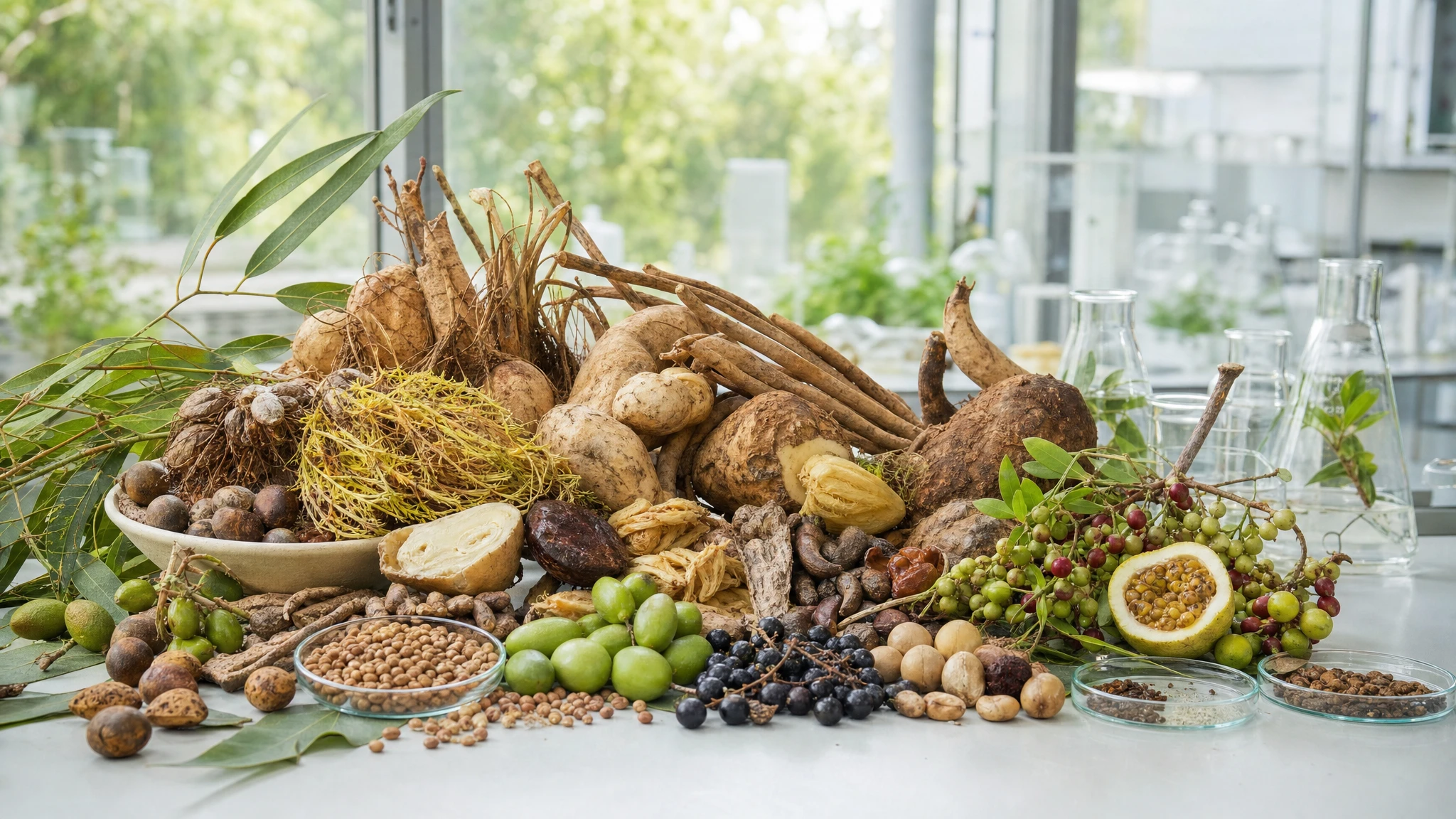
The analyzed study calculated the potential nutritional composition of over 800 plant foods traditionally available to Australian Aboriginal people. Assuming these foods provided 20-40% of daily energy, the authors estimated a relatively low intake of carbohydrates, especially starch, and a very high intake of fiber. They also hypothesized that the low glycemic index of these plant foods could reduce the demand for insulin.
In the narrative of "The Choice to Live in Health or Illness" by Dr. A. Colonnese and R. Panzironi, the study contributes to the passage suggesting that the plant sources of Aboriginal hunter-gatherers could have had a low glycemic impact. Independent human studies show that low-glycemic index diets can reduce post-meal glucose exposure in some groups and improve certain indicators of metabolic function. However, conflicting results indicate that this effect is not uniform and does not prove that such a diet certainly prevents insulin resistance, type 2 diabetes, or other metabolic diseases.
Analyzed study
Australian aboriginal plant foods: a consideration of their nutritional composition and health implications
DOI: 10.1079/nrr19980003
PMID: 19087457
The research question was whether the composition of plant-based foods traditionally consumed by Australian Aboriginal people could help reconstruct certain nutritional characteristics of their diet. The authors evaluated the hypothesis that, while representing a minority share of energy compared to animal-based foods, these plant sources contributed fiber, vitamin C, and low-glycemic index carbohydrates.
The glycemic index indicates how quickly a carbohydrate-containing food tends to increase glycemia, i.e., the concentration of glucose in the blood. A more gradual increase in glucose generally requires a lower immediate insulin response. In the section of "The Choice to Live in Health or Illness" by Dr. A. Colonnese and R. Panzironi, the publication is relevant because it supports the reconstruction of a plant-based diet that is relatively low in starch and high in fiber.
The study can document a nutritional estimate conditioned on the hypotheses adopted by the authors. However, it cannot directly demonstrate what actual individual consumption was, the insulin response measured in traditional Australian Aboriginal people, nor a causal protective effect against insulin resistance, obesity, diabetes, or cardiovascular diseases.
Materials and methods of the original study
The publication calculated the average nutritional composition of over 800 Australian Aboriginal plant foods, both overall and by food group, comparing them with modern cultivated foods. Based on a theoretical diet of 12,500 kJ, equivalent to 3,000 kcal per day, the authors estimated the contribution of these plants when they provided 20-40% of total energy.
The work is not described in the available abstract as a clinical trial, an observational cohort, or an experiment involving participants. Therefore, no human sample, inclusion or exclusion criteria, data collection period, experimental controls, measurements of glycemia or insulin, clinical endpoints, follow-up, or inferential statistical analyses are reported. This information is not provided in the available material.
Since the accessible text is only an abstract, it is not possible to verify in detail the origin of the compositional data, the selection criteria for individual foods, the analytical techniques used to measure nutrients and glycemic index, or the statistical uncertainty of the estimates.
Results
In the model proposed by the authors, if plant-based foods provided 20-40% of the energy in a 3,000 kcal diet, they would have contributed 22-44 g of protein, 18-36 g of fat, 101-202 g of carbohydrates, 40-80 g of fiber, and 90-180 mg of vitamin C. The practical significance of this estimate is that the plant-based portion could contribute significantly to fiber intake without making the diet particularly rich in starchy carbohydrates.
The authors also indicated that all carbohydrates in the traditional diet considered were derived from plant-based foods and that more than half could have consisted of sugars from fruit and honey. According to their interpretation, the diet would have been relatively low in carbohydrates, especially starch, and high in fiber compared to the recommendations current at the time.
The element most relevant to the book is the physiological hypothesis: plant-based foods containing carbohydrates would have had a low glycemic index and, therefore, could have generated a lower demand for insulin secretion. The abstract does not report values for glycemia, insulin, average glycemic index, P-values, or confidence intervals. It also does not report diagnoses of insulin resistance or diabetes in the populations considered.
Interpretation
In simple terms, the study suggests that a plant-based portion consisting of fruits, roots, seeds, and other wild foods could provide carbohydrates within a fiber-rich food matrix. Fiber partially slows the intestinal absorption of carbohydrates and can attenuate the rise in glycemia after a meal. If a food causes a more moderate increase in glucose, the pancreas may need to produce less insulin in the immediate term.
However, the segment actually documented by the publication is primarily nutritional and based on modeling: traditional Australian Aboriginal plant foods → relatively low starch and high fiber intake → prediction of a lower glycemic impact. The next step, i.e., lower insulin demand → protection against insulin resistance, is a biologically plausible interpretation proposed by the authors, not a directly measured clinical result.
For “The Choice to Live in Health or Illness” by Dr. A. Colonnese and R. Panzironi, the scientific correspondence is therefore precise but limited: the publication supports the qualitative description of the plant portion as low in starch and high in fiber. It does not allow this historical reconstruction to be transformed into proof that a Paleolithic diet or a modern low-glycemic index diet alone prevents metabolic dysfunction.
Independent supporting evidence
A randomized clinical trial conducted in Italy, Sweden, and the United States compared two Mediterranean diets for 12 weeks with the same amount of available carbohydrates, 270 g per day, and the same amount of fiber, 35 g per day, but with different glycemic indices. Among 156 adults with at least two characteristics of metabolic syndrome, the high-glycemic index diet produced average eight-hour glucose concentrations in women that were 23% higher on the first day and 37% higher after 12 weeks compared to the low-glycemic index diet. No significant differences emerged in men. This study directly confirms that the glycemic quality of carbohydrates can modify glucose exposure, but it also shows a sex-dependent effect and does not demonstrate a reduction in metabolic diseases [1].
A second multicenter randomized trial followed 162 people with type 2 diabetes treated with diet alone for one year. Compared to a lower-carbohydrate diet, a high-carbohydrate but low-glycemic index diet showed a disposition index that was 0.12 h−1 higher at 12 months (95% confidence interval from 0.01 to 0.23). The disposition index combines insulin sensitivity and insulin secretion and is used as an indicator of pancreatic beta-cell function. However, insulin sensitivity and insulin secretion considered separately did not differ significantly; furthermore, this was a secondary analysis declared as exploratory by the authors themselves [2].
A systematic review with meta-analysis of prospective studies evaluated the association between glycemic index or glycemic load and the onset of type 2 diabetes. In the studies deemed valid, an increase of 10 units in the glycemic index was associated with a relative risk of type 2 diabetes of 1.27, with a 95% confidence interval from 1.15 to 1.40. In other words, higher dietary glycemic index values were associated with a higher future incidence of diabetes. However, these are observational data: even with statistical adjustments, they cannot completely eliminate the influence of other lifestyle and dietary factors [3].
Taken together, this research supports the general idea that carbohydrates with a lower glycemic impact can reduce the rise in glucose after meals and, in some contexts, be associated with more favorable metabolic indicators. Confirmation of protection against insulin resistance, however, remains incomplete, because not all trials find the same effect.
Conflicting evidence
The OmniCarb trial subjected 163 overweight adults, with systolic blood pressure between 120 and 159 mmHg, to four controlled diets for five weeks each. The diets varied in both carbohydrate quantity and glycemic index, within a DASH-style dietary pattern. When carbohydrate content was high, the low glycemic index diet reduced, rather than increased, insulin sensitivity by 20%, from 8.9 to 7.1 units, compared to the high glycemic index diet. When carbohydrate content was lower, the glycemic index did not alter insulin sensitivity [4].
This result does not deny that low glycemic index foods can attenuate postprandial glycemia in other contexts, but it indicates that the effect on insulin sensitivity depends on the entire composition of the diet, the population studied, the duration of the intervention, and the outcomes measured. The trial also observed a reduction in triglycerides in the diet that was simultaneously low in carbohydrates and low in glycemic index, but not a reduction in insulin sensitivity compared to the high-carbohydrate, high-glycemic index diet. No directly conflicting evidence sufficiently relevant beyond this important trial has been identified; this does not prove the absence of contrary results.
Summary table of evidence
The table distinguishes the nutritional estimate from the original study from independent human verification and conflicting experimental evidence.
| Reference | Study type | Population or model | Main result | Direction of evidence | Strength of evidence |
|---|---|---|---|---|---|
| Original study | Compositional analysis and nutritional model | Over 800 Australian Aboriginal plant foods; no human participants reported | Estimate of relatively low carbohydrates, especially starch, and high fiber; hypothesis of lower insulin demand | biologically consistent evidence | preliminary |
| [1] | RCT | 156 adults at risk of type 2 diabetes | In women, high glycemic index diet associated with 23% higher mean eight-hour glycemia initially and 37% higher at 12 weeks | direct confirmation | moderate |
| [2] | Multicenter RCT | 162 people with type 2 diabetes treated with diet alone | At 12 months, low glycemic index diet associated with higher disposition index compared to low carb diet | indirect confirmation | moderate |
| [3] | Meta-analysis of prospective cohorts | 10 studies valid for glycemic index and type 2 diabetes | Higher glycemic index associated with higher incidence of type 2 diabetes | indirect confirmation | moderate |
| [4] | Crossover RCT with controlled feeding | 163 overweight adults with elevated systolic blood pressure | High-carbohydrate, low glycemic index diet associated with 20% lower insulin sensitivity | discordant evidence | moderate |
Confirmation of the evidence
Claim in the book
In the chapter dedicated to human nutrition in the Paleolithic era, “The Choice to Live in Health or Illness” by Dr. A. Colonnese and R. Panzironi states that the limited availability of carbohydrate sources resulted in a low overall intake, especially of starch, and a high presence of fiber. It adds that, in Australian Aboriginal hunter-gatherers, the plant-based portion could provide low-glycemic index carbohydrates, rich in fiber and micronutrients, reducing insulin demand and protecting against insulin resistance and metabolic dysfunction.
Plant-based foods relatively low in starch and high in fiber → lower glycemic response → lower hypothesized insulin demand → lower exposure to insulin resistance and metabolic dysfunction
The publication subject to the Evidence Review was used in the book to support the following passage: traditional plant-based foods of Australian Aboriginals could provide a relatively low amount of carbohydrates, especially starch, and a high quantity of fiber; their low glycemic index was proposed by the authors as a possible reason for a lower insulin demand.
The original publication directly supports the first part of the chain, namely the nutritional reconstruction using low-starch, high-fiber plant sources. The link to a lower insulin demand, however, is formulated in the study as a physiological hypothesis. Independent evidence in humans is consistent with part of this narrative: given the same amount of carbohydrates and fiber, a low-glycemic index Mediterranean diet reduced daily glucose exposure in women at metabolic risk [1]. In people with type 2 diabetes, one year of a low-glycemic index diet was associated with a more favorable combined indicator of beta-cell function compared to a low carb diet [2]. Furthermore, in prospective cohorts, higher dietary glycemic index values have been associated with a higher incidence of type 2 diabetes [3].
However, the chain is neither linear nor universally proven. In the OmniCarb trial, a low glycemic index did not improve insulin sensitivity and, in a specific high-carbohydrate condition, was associated with a reduction in it [4]. For this reason, “The Choice to Live in Health or Illness” by Dr. A. Colonnese and R. Panzironi can be considered consistent with the available evidence on the lower glycemic impact of certain dietary patterns, but the claim of protection against insulin resistance must be read as a plausible long-term hypothesis, not as a certain clinical effect demonstrated in the Australian Aboriginal population.
Overall level of confirmation
MODERATE CONFIRMATION
The nutritional composition proposed by the original study is consistent with independent data showing lower glycemic increases in certain contexts and prospective associations with a lower risk of type 2 diabetes. The confirmation is moderate because the effects on insulin and insulin sensitivity are not uniform across trials, and there are no direct clinical measurements in the historical population described.
Conclusions
The study analyzed provides relevant support for the description of a traditional Australian Aboriginal plant-based diet that is relatively low in starch and high in fiber. The prediction of a reduced glycemic impact is biologically plausible and receives partial confirmation from independent clinical and observational studies. The hypothesis that this characteristic directly protects against insulin resistance and other metabolic dysfunctions is moderately supported, but requires more consistent and longer-term validation. It is not possible to attribute certain protection against chronic diseases to a single historical dietary pattern.
Overall assessment
The narrative is reasonably well-supported regarding the hypothesized nutritional composition and the lower glycemic impact of certain carbohydrates. The link to a lower insulin demand is biologically consistent, but protection against insulin resistance remains moderately supported, as the available trials show context-dependent results.
References
[1] The effects of Mediterranean diets with low or high glycemic index on plasma glucose and insulin profiles are different in adult men and women: Data from MEDGI-Carb randomized clinical trial
[2] Low glycaemic index diet and disposition index in type 2 diabetes (the Canadian trial of Carbohydrates in Diabetes): a randomised controlled trial
[3] Dietary Glycemic Index and Load and the Risk of Type 2 Diabetes: A Systematic Review and Updated Meta-Analyses of Prospective Cohort Studies
[4] Effects of High vs Low Glycemic Index of Dietary Carbohydrate on Cardiovascular Disease Risk Factors and Insulin Sensitivity
Editorial note
Artificial Intelligence was used solely as a tool to support editorial and documentary work. All content, interpretations, bibliographic citations and conclusions have been verified, reviewed and approved by the author, who assumes full scientific responsibility for them.
The manuscript was also subject to independent peer review prior to publication.
To ensure maximum transparency, the article's complete history — including the dates of submission, review, acceptance and publication, as well as information on the peer review process — is available on the dedicated Article History page.