Dott. Antonio Conte

Nutritional Biologist — Expert in Food Safety and Environmental Hygiene

Dott. Antonio Conte

Professional profile

Dr. Antonio Conte is a Nutritional Biologist, registered with the Italian National Board of Biologists, with experience in clinical and nutritional practice and in food and environmental safety.

He provides nutritional counselling with a low-carb and ketogenic approach, combined with the assessment of low-carbohydrate foods and specific supplements. He has also gained experience in clinical chemistry, microbiology and environmental analysis, both in hospital settings and as a freelance professional.

Areas of expertise

  • Clinical nutrition (low-carb and ketogenic approach)
  • Clinical chemistry and immunoenzymatic assays
  • Applied microbiology and bacteriology
  • Food safety (HACCP, EU Reg. 1169/11)
  • Chemical and biological risk assessment
  • Environmental monitoring of air and water
  • Quality systems and agri-food certifications (ISO 9001, 22000, 22005)

Professional experience

  • Nutritional Biologist — LIFE 120 (since 2019)
    Counselling on low-carb and ketogenic nutrition, with supplements and low-carbohydrate foods.
  • Biologist — Athena Clinic, Villa dei Pini Care Home (2017)
    Clinical chemistry, immunoenzymatic analysis, bacteriology and seminal fluid examination.
  • Freelance professional (since 2016)
    Consulting on workplace and environmental health and safety: chemical/biological risk, air monitoring, water sampling, HACCP, nutritional values and shelf-life.

Academic background

  • Master's Degree in Biology (109/110)
    Second University of Naples. Thesis in hygiene on the toxicity of hospital and civil wastewater.
  • Degree in Biological Sciences (99/110)
    Second University of Naples.
  • Scientific high-school diploma (90/100)
    «Galileo Galilei» Scientific High School.

Qualifications and certifications

Advanced Professional Master in Quality Systems and Agri-food Certifications (Gruppo MIDI).

  • Auditor/Lead Auditor ISO 9001:2015
  • Auditor/Lead Auditor ISO 22000:2005
  • Auditor ISO 22005:2008 (traceability)
  • Internal auditor BRC — IFS standards
  • Internal auditor Pest Management UNI EN 16636 and UNI 11381

Articles

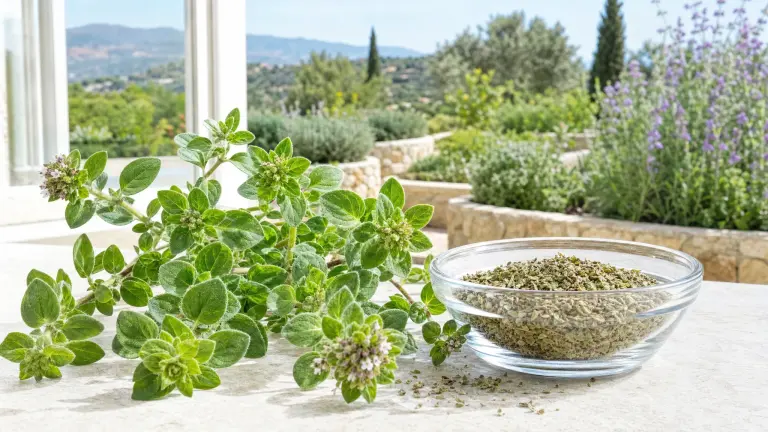
Carvacrol in oregano: the key compound and the role of thymol in the plant

Carvacrol in oregano: the key compound and the role of thymol in the plant

Dott. Antonio Conte; Last updated: October 2026

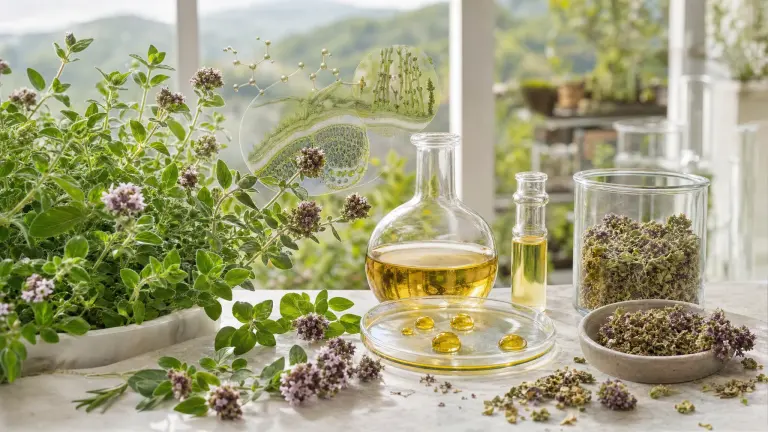
In brief: Research indicates that carvacrol and thymol help us understand the chemistry and biology of oregano. Their levels vary between species, chemotypes, and products. Therefore, these products do not have the same profile. The most robust data come from laboratory tests and composition analyses. The key takeaway requires caution. These substances help us better understand oregano, but the spice, essential oil, and concentrated extracts are not equivalent.
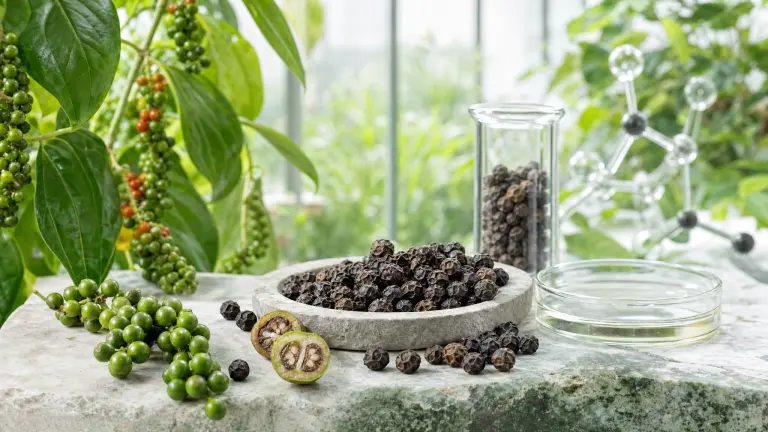
Where is piperine found in black pepper and how is the extract obtained

Where is piperine found in black pepper and how is the extract obtained

Dott. Antonio Conte; Last updated: October 2026

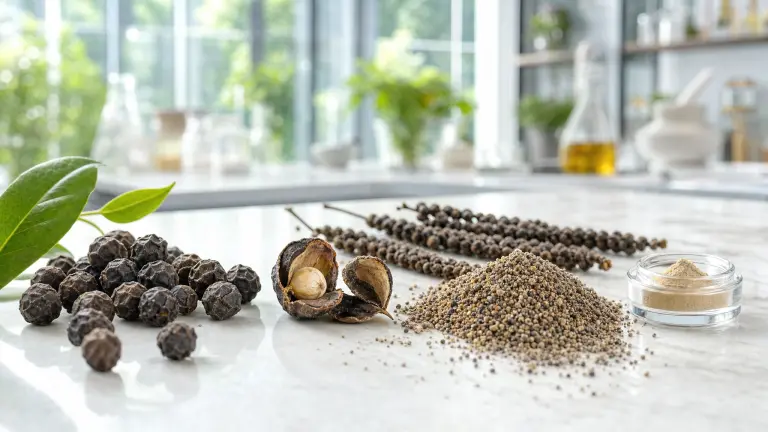
In brief: Research shows that piperine is not distributed uniformly in black pepper. It is concentrated primarily in the outer parts of the fruit and varies based on variety, ripeness, and the processes used. Products on the market are not equivalent, as grinding and extraction change stability and concentration. A proper comparison must therefore take into account the botanical part and the type of product.

What is Reishi: composition and bioactive compounds of Ganoderma lucidum

What is Reishi: composition and bioactive compounds of Ganoderma lucidum

Dott. Antonio Conte; Last updated: October 2026

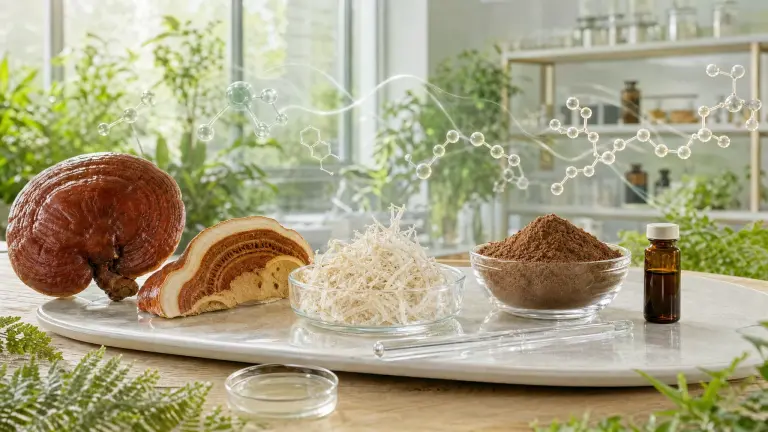
In brief: Research shows that Reishi is not a single material, but includes preparations with different chemical profiles. The most studied classes are polysaccharides and triterpenes, along with sterols and phenolic compounds. Interpreting the data depends on the species, the part of the mushroom, and the processing method. Studies therefore require caution, because non-equivalent products cannot be compared directly.

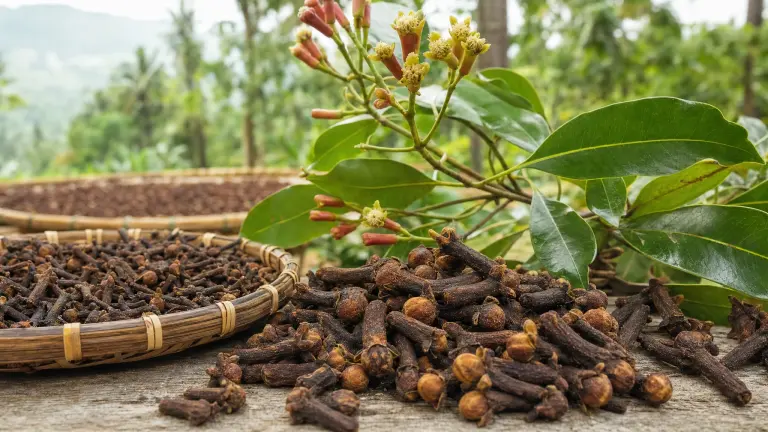
Origin of cloves: what they are, where they come from, and why it matters for spice quality

Origin of cloves: what they are, where they come from, and why it matters for spice quality

Dott. Antonio Conte; Last updated: October 2026

In brief: Research shows that botany clearly defines cloves. The spice is obtained from the dried flower buds of Syzygium aromaticum. Studies link the quality of the product to harvesting, drying, and storage methods. Geographical origin, on the other hand, helps to understand its history and supply chain. Chemically, its most typical feature remains the aromatic phytocomplex, which is the set of substances that form its aroma.

What is black pepper: definition, piperine, and biological significance for health

What is black pepper: definition, piperine, and biological significance for health

Dott. Antonio Conte; Last updated: October 2026

In brief: Research describes black pepper as a spice derived from the dried fruits of Piper nigrum. Piperine is its most studied compound and is responsible for much of its pungent taste. However, the spice is a food made up of many substances, and its composition can vary. Therefore, to understand studies and labels, it is necessary to distinguish between the food, the extract, and the isolated substance.

What is cinnamon: botanical origin and the species from which the spice is derived

What is cinnamon: botanical origin and the species from which the spice is derived

Dott. Antonio Conte; Last updated: October 2026

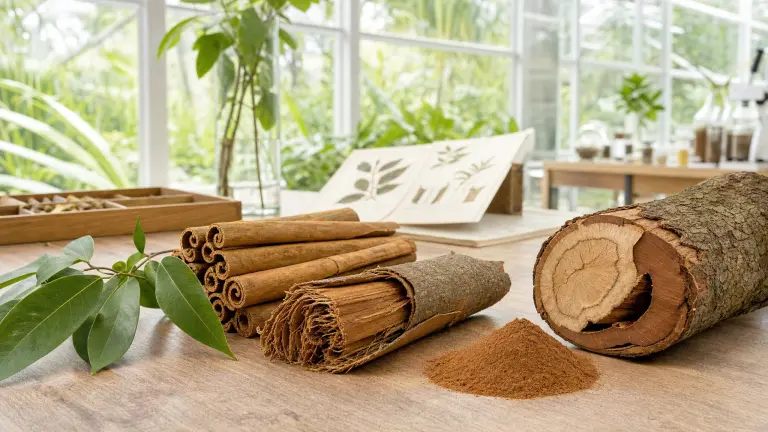
In brief: Research shows that cinnamon has a precise botanical origin. It is a spice obtained from the dried inner bark of plants of the Cinnamomum genus. Studies distinguish between the common name, the species of origin, and the product for sale. This explains why Ceylon cinnamon and cassia are not the same thing. These classification data help in interpreting sources, labels, and names without confusing different plant materials.