


Origin of cloves: what they are, where they come from, and why it matters for spice quality
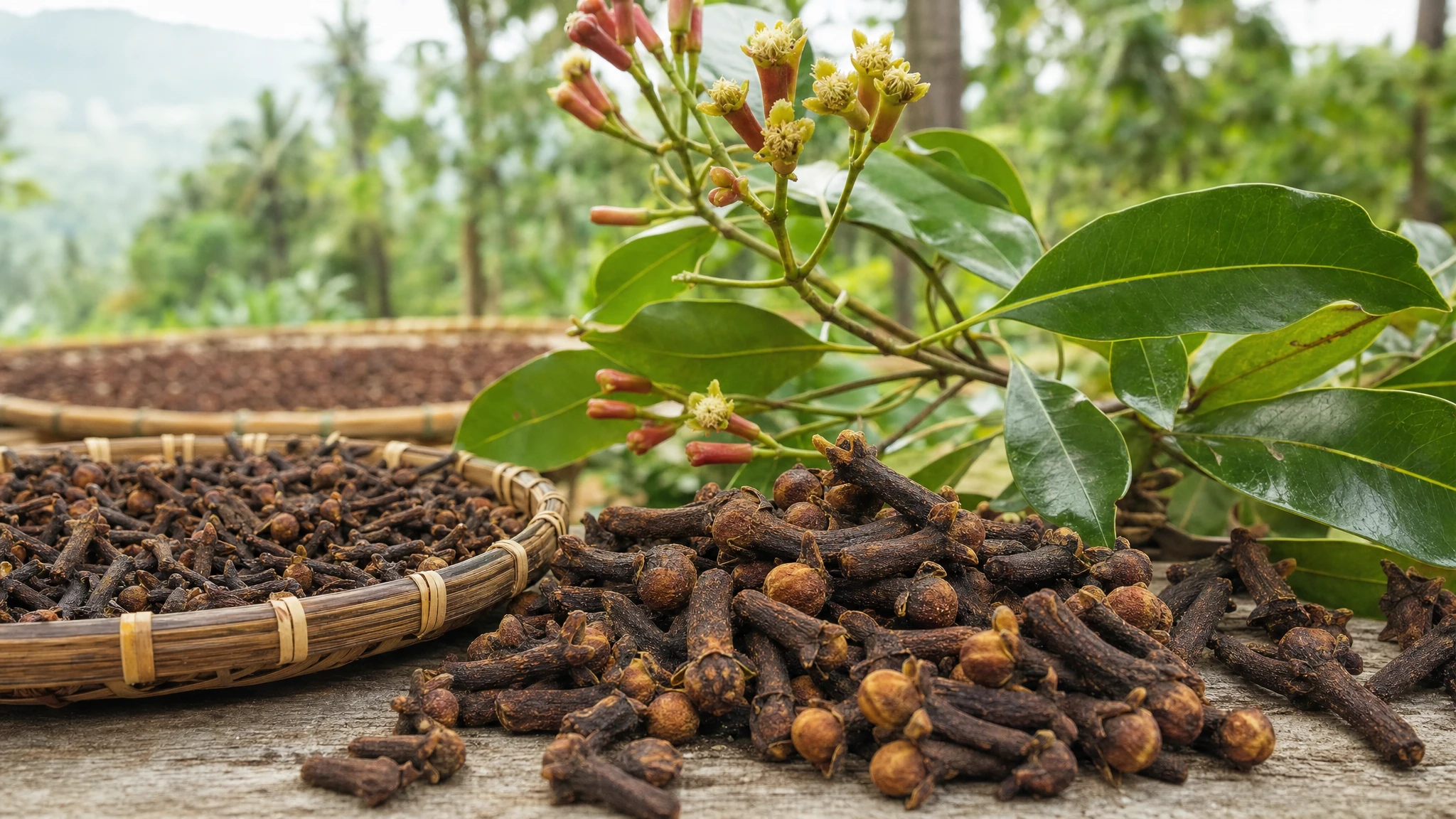
Research shows that botany clearly defines cloves. The spice is obtained from the dried flower buds of Syzygium aromaticum. Studies link the quality of the product to harvesting, drying, and storage methods. Geographical origin, on the other hand, helps to understand its history and supply chain. Chemically, its most typical feature remains the aromatic phytocomplex, which is the set of substances that form its aroma.
- Published 07/10/2026
- Updated 09/10/2026
- Reviewed 30/09/2026
- Article history
ABSTRACT : WHAT THE SCIENCE SAYS
Cloves are a well-known spice, but descriptions are often unclear. They are not fully opened flowers, but the dried flower buds of Syzygium aromaticum. This botanical fact shows which part of the plant is used and explains its shape, aroma, and commercial value.
For this spice, harvesting, drying, and storage methods also matter. These stages transform the fresh bud into a stable product that is easy to recognize and transport. The area of origin also counts: the plant's history in the tropics has shaped its cultivation, distribution, and use.
In this article, we will look at what cloves are, which plant they come from, and how to evaluate them. We will also see why the place of origin and quality do not always coincide. In particular, the text will address these points:
- They are buds harvested before opening and dried, not fully opened flowers.
- They come from Syzygium aromaticum, an evergreen species typical of tropical areas.
- Geographic origin helps to understand the history, cultivation, and supply chain.
- Drying and storage can change the aroma, appearance, and quality of the spice.
- Labels and origin provide useful data, but they are not enough on their own.
What are cloves in botany
In botany, cloves are neither actual nails nor open flowers. They are the flower buds of the plant, harvested before they bloom and then dried. Knowing this origin helps to understand the shape, aroma, and culinary use of the spice.
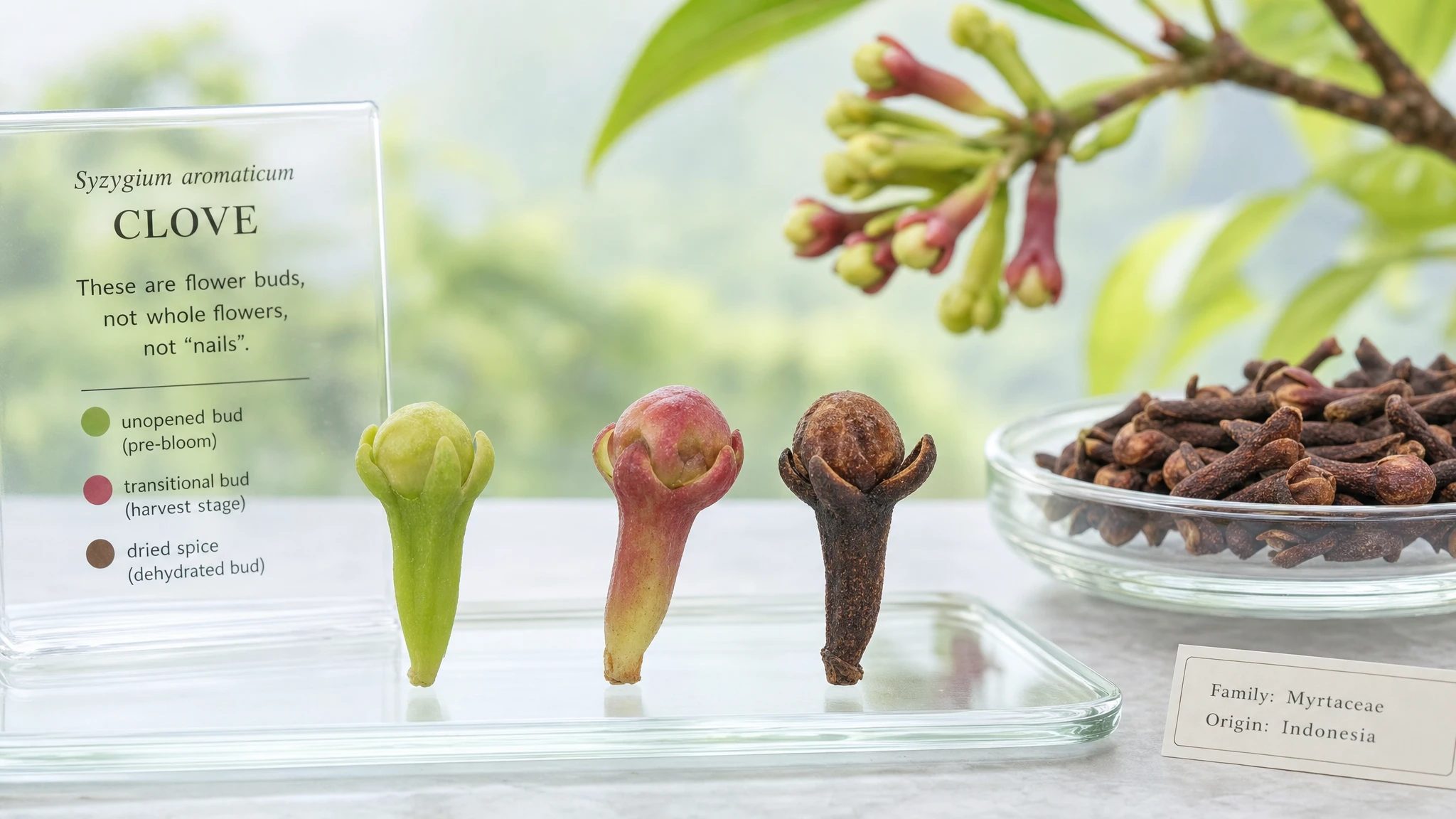
In botany, cloves are the flower buds, meaning small, still-closed flowers, of the Syzygium aromaticum plant. They are harvested before they bloom and are then dried. The spice on the market, therefore, is not the open flower, but a specific stage of its growth. Understanding this botanical origin helps to identify which part of the plant becomes the spice and where its characteristic aroma comes from.
Understanding what cloves are also helps to better evaluate commercial and nutritional information. The correct definition distinguishes the plant part from the finished product. It also explains why dried buds are the standard form of the spice, before examining geographical origin and processing quality.
This distinction also guides the interpretation of studies. The spice is a plant organ modified by harvesting and dehydration (loss of water). The following paragraphs clarify four points:
- The botanical definition of the dried buds used to produce the spice.
- The Syzygium aromaticum species as the plant from which the product originates.
- The role of harvesting before flowering in the final form.
- The link between the plant part, drying, and the identity of the spice.
Botany first clarifies which part of the plant becomes a spice. The following paragraphs explain why cloves have a precise definition. They also show how this definition helps in interpreting scientific studies.
Cloves are dried flower buds
Cloves are not fully opened flowers, but flower buds, meaning floral gems that are still closed. They are harvested before they bloom and are then dried. This botanical fact is essential for understanding the nature of the spice. The official definition identifies the product as the dried flower buds of Syzygium aromaticum [1] [2]. A review also describes them as a spice obtained from dried buds and used in food for centuries [3]. This information clearly identifies both the part harvested and the stage preceding flowering.
Distinguishing the bud from the open flower avoids errors and makes the description of the spice more precise. Harvesting at the right time can better preserve shape and aroma. Inaccurate processing, on the other hand, can change the final product. However, while many sources describe the raw material well, they do not explain the effects of harvesting on commercial batches in the same way. It is therefore necessary to understand which species produces these buds.
Syzygium aromaticum is the plant that produces the spice
The spice is derived from Syzygium aromaticum, an evergreen species of the Myrtaceae family. The scientific name links the common name to a specific plant. This avoids confusion between different products or similar common names. A recent review describes this aromatic plant as widely cultivated and rich in volatile compounds (substances that form the aroma) [4]. Another synthesis indicates that its essential oil plays a central role in its bioactive properties (effects on biological systems) [5]. The botanical species therefore provides a stable reference for comparing descriptions and study results.
These data shift the focus from the spice to the plant from which its shape and aroma are derived. Many studies, however, examine the oil or extracts primarily, rather than the whole spice. The botanical name therefore remains the first useful piece of data for accurately describing the product. On its own, however, it does not explain all the differences between products on the market. To understand them, one must also evaluate the processing and its effects on the final quality.
Why dried buds define the quality of the spice
The quality of cloves depends on their origin, but also on the harvesting and drying of the buds. The dried form reaches the market and maintains its typical sensory profile (a combination of aroma, taste, and appearance). A study on dried buds describes them as an important source of phenolic compounds (substances produced by plants). These compounds contribute to the chemical characteristics of the product [6]. Research thus links the composition of the buds to the properties observed in the dried spice.
To assess quality, one must therefore consider several stages: harvesting, drying, and storage. A review of the methods used to obtain the oil shows that its composition can change depending on the type of extraction [7]. This data indicates that processing significantly influences the final profile. Sources describe the changes in the plant material well, but they do not establish a ranking valid for all batches. To complete the picture, it is therefore necessary to also examine the historical and geographical origin of the plant.
Recent research and updates
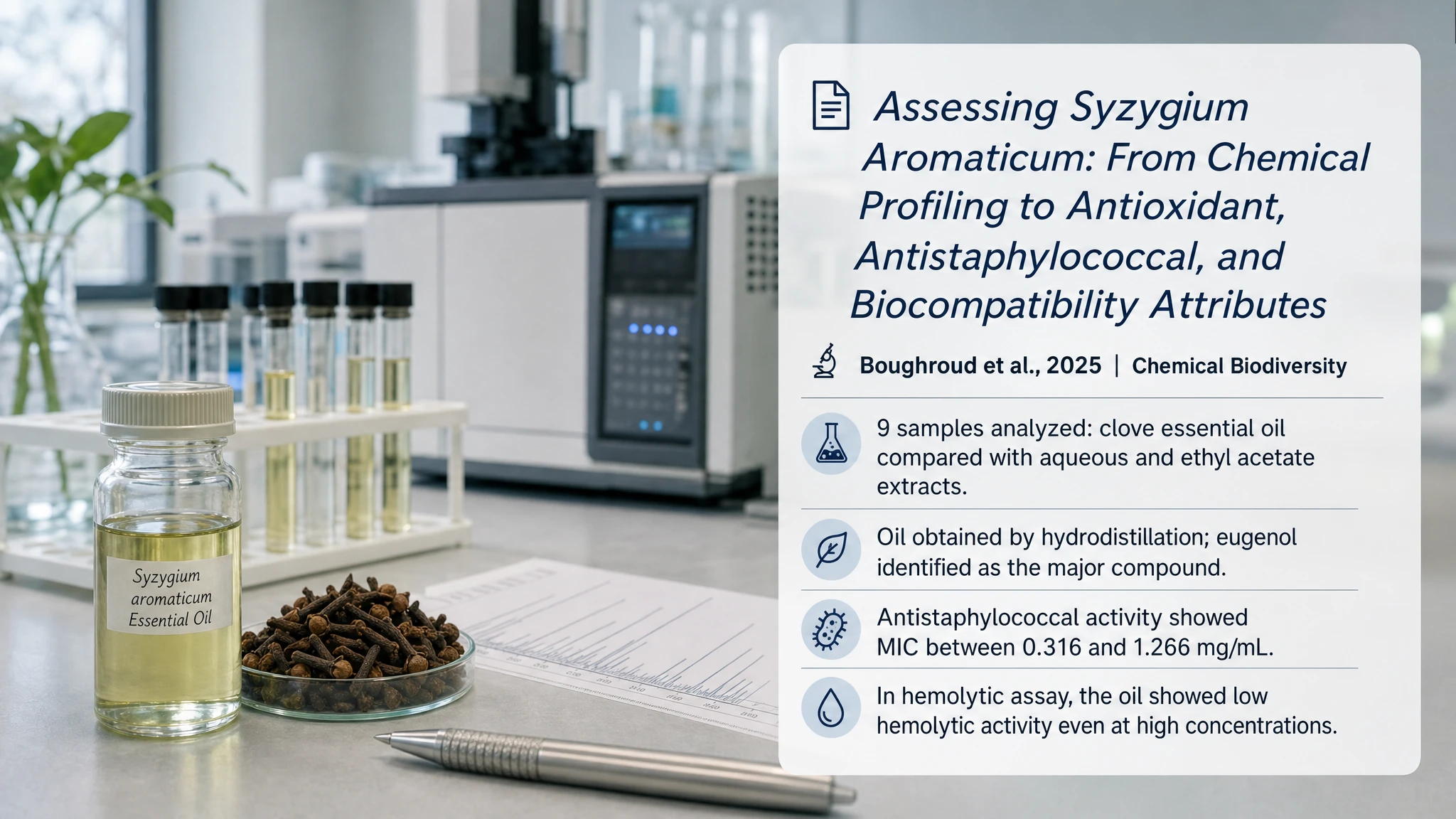
In 2025, Moroccan researcher Hajar Boughroud and her colleagues studied the essential oil of Syzygium aromaticum. The work was published in the journal Chemical Biodiversity. Essential oil is the aromatic concentrate obtained from cloves. The team studied its substances, antioxidant activity, and action against Staphylococcus. Antioxidant activity indicates the ability to counteract oxidation processes. The data describe the spice as a complex plant matrix, with measurable compounds and activities observed in the laboratory.
Assessing Syzygium Aromaticum: From Chemical Profiling to Antioxidant, Antistaphylococcal, and Biocompatibility Attributes
- 9 samples analyzed: clove essential oil was compared with aqueous and ethyl acetate extracts.
- The oil was obtained by hydrodistillation; eugenol was found to be the main compound.
- In the laboratory, activity against staphylococcus showed a minimum effective concentration between 0.316 and 1.266 mg/mL.
- In the hemolytic test, the oil showed low hemolytic activity even at high concentrations.
Where do cloves come from and why origin matters
The origin of cloves helps to understand the history, supply chain, and quality of the spice. It indicates not only a region but also the place where the plant grows, is harvested, and is processed. For this reason, provenance can influence uses, quality expectations, and market value.
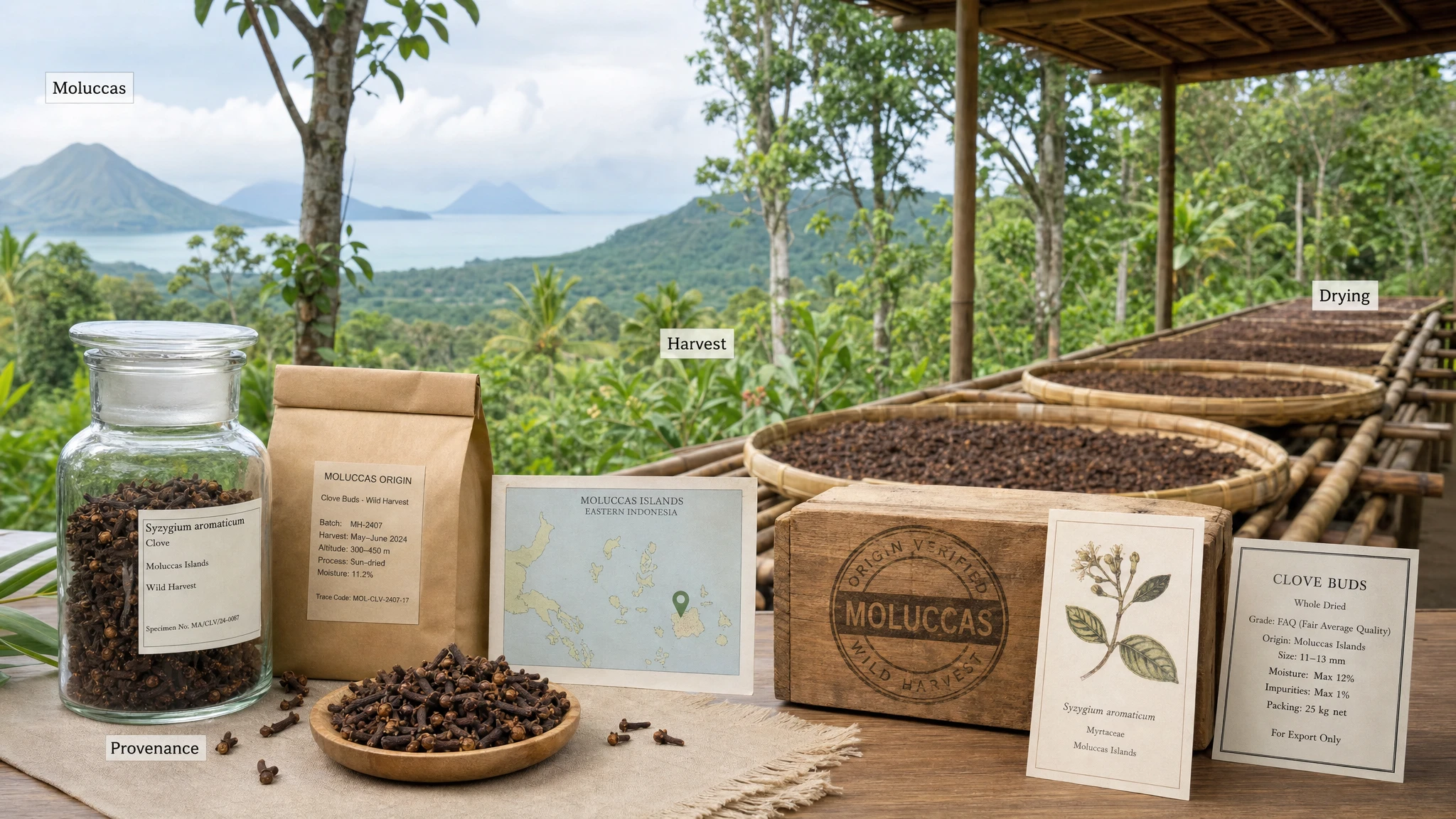
Cloves have a history linked to Southeast Asia and the islands known for this spice. The botanical origin (plant and place of origin) also encompasses the territory where its uses and trade first emerged. Provenance therefore helps to interpret the indicated regions, agricultural practices, and expected quality.
The product can vary from one region to another. Climate, harvest timing, and processing methods influence the final result. It is therefore necessary to distinguish the history of the spice from the qualities of an individual batch.
These steps show why provenance is not just a detail on a label. Instead, it helps to understand the quality of the spice and its role in the market. In the case of Syzygium aromaticum, location, cultivation, and processing explain how the dried buds arrive. They also clarify why some origins are more well-known and recognizable than others.
Several factors affect quality:
- The Moluccas are the historical center of the spice.
- The tropical climate supports the growth of the buds.
- Harvesting and drying can vary between different regions.
- The supply chain affects yield, uniformity, and market value.
The origin of cloves can be understood on three levels: history, environment, and supply chain. The following points show how each level can affect the quality of the spice.
The Moluccas are the historical center of cloves
The Moluccas, an archipelago in eastern Indonesia, are the best-known historical reference for cloves. This origin helps explain why the spice played an early role in trade and food botany. The area has become a cultural as well as an agricultural landmark, as it has linked the product to its geographical identity for centuries. The fame of the islands is no coincidence: the plant grew wild here, and its use was already deeply rooted in local cultures long before large-scale trade. This historical primacy explains why the name of the Moluccas still evokes a direct link to the origin of the spice today.
The limitation is clear: the reference to the Moluccas is not enough to guarantee the quality of the current batch on its own, because historical origin does not automatically coincide with modern harvesting conditions. Provenance therefore remains a useful indicator for interpreting the label, not absolute proof of the product's value.
The tropical climate favors the production of the buds
Syzygium aromaticum thrives in tropical environments because the formation of its dried flower buds depends on temperature, humidity, and seasonal regularity. When these conditions are stable, the plant is able to produce the part that is harvested as a spice. In practice, the climate is not a secondary detail: it is one of the foundations of agricultural yield and production continuity. Mild temperatures and well-distributed rainfall throughout the year allow the plant to develop buds uniformly. Without these conditions, flowering can be sparse or irregular, reducing the amount of spice available for harvest.
A comprehensive review notes that the species is cultivated in tropical areas and that its commercial interest also depends on subsequent processing [8]. This means that the climate favors production, but it does not determine the final quality on its own. This is precisely the limitation of the data: favorable conditions do not guarantee uniformity of the harvest, because harvesting, drying, and storage remain decisive steps. Climatic origin, therefore, guides but does not fully determine the assessment of the spice.
Origin can affect harvesting, drying, and yield
The origin of cloves indicates not only a place, but also a set of agricultural and post-harvest practices. Harvest times, drying speeds, and storage methods can vary across different areas, affecting the yield and uniformity of the product. For this reason, two batches may have the same trade name but show concrete differences in the quality of the spice. Rapid sun-drying, for example, can better preserve essential oils compared to a slower process in humid conditions. The timing of the harvest is also crucial: the buds must be picked before they open, when the concentration of active ingredients is at its highest.
This data helps to understand the problem, but it has a limitation: it describes the effect of processing well, but it does not absolutely classify all production origins. In other words, the origin guides the interpretation of the product, but it should always be considered together with the conditions under which the dried buds were harvested and handled.
Why dried buds have such a strong aroma
The intensity of cloves comes largely from the dried buds. With less water, it is easier to perceive the volatile substances (compounds that evaporate and reach the nose). Drying does not create the aroma, but it brings it to the forefront. Furthermore, it helps preserve it for longer, provided the process is carried out correctly. Understanding this step helps avoid confusing fragrance, shelf life, and final quality.
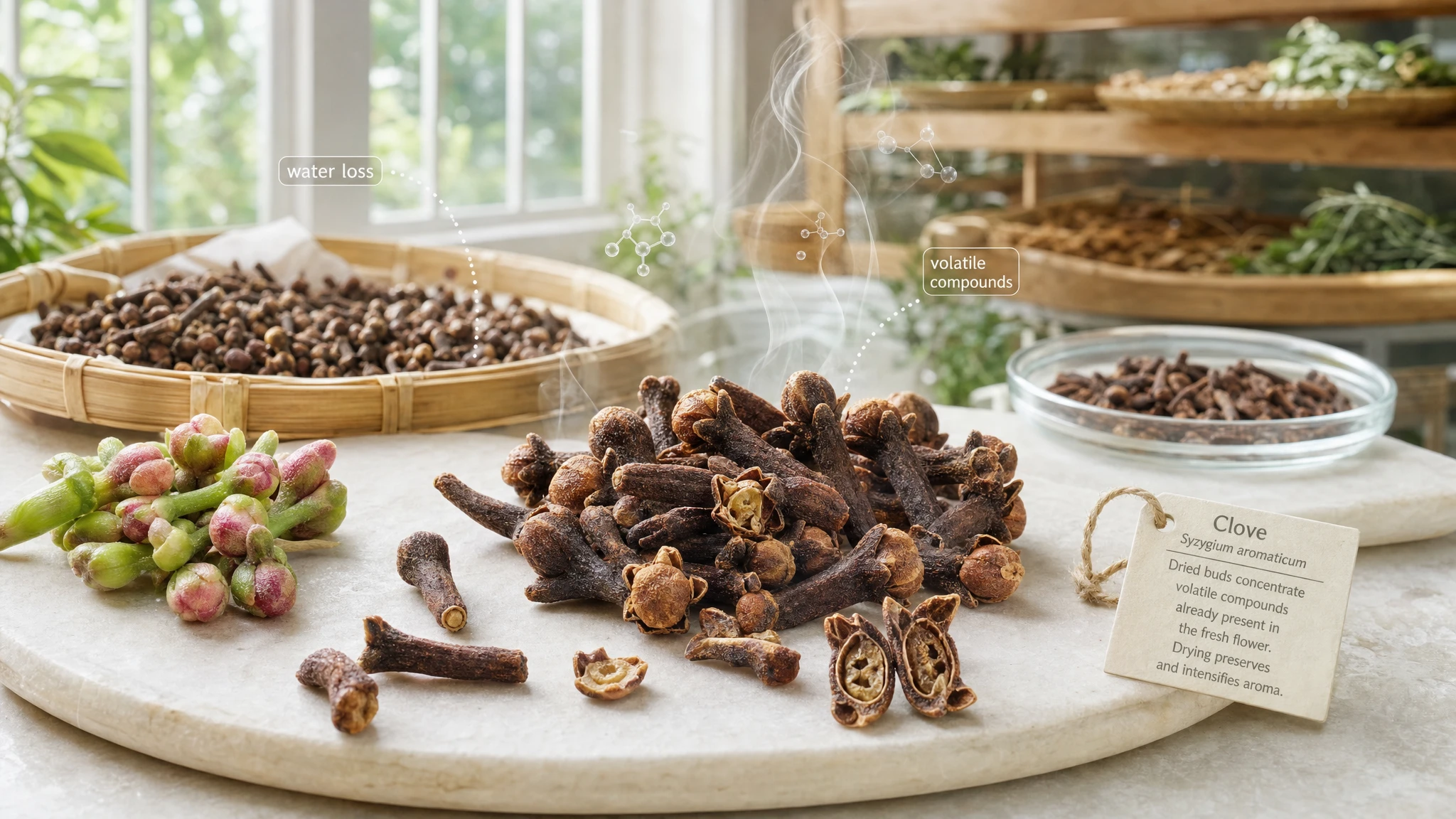
In cloves, the strong aroma comes from odoriferous compounds already present in the plant. The dried bud preserves these substances, making the scent easier to detect. In fact, as it loses water, the plant tissue becomes less diluted. Consequently, the aromatic molecules become more noticeable. However, a new aroma is not created; rather, the one already present in the aromatic spice emerges more clearly.
The strong scent is therefore not just a simple “strong smell.” It arises from the balance between plant tissue, essential oils (natural mixtures of aromatic compounds), and the drying method. This combination makes the product easily recognizable, regardless of its botanical origin (the plant from which it is derived). For this reason, the sense of smell can provide an initial indication of the spice's quality.
Three simple aspects help to better understand this transition of the spice:
- The loss of water concentrates the volatile substances that we can smell.
- The shape of the bud helps to retain the scent for longer.
- Processing affects the duration and clarity of the aroma.
- The perceived intensity also depends on how the drying process is carried out.
The aroma changes when the bud transitions from the plant to the dried product. The following paragraphs explain how the scent becomes concentrated and lasts over time. They also clarify why an intense smell does not necessarily indicate a greater biological effect.
The phytocomplex of cloves creates their signature aroma
The aroma of cloves does not come from a single molecule. It depends on the phytocomplex (the set of compounds present in the dried bud). Volatile substances work in concert with those that evaporate less quickly. This interaction regulates the strength, duration, and character of the scent. Therefore, the spice cannot be understood by simply adding up individual compounds: the entire plant tissue matters. Every element contributes to the overall result, even when it does not dominate the perception on its own.
Reviews on Syzygium aromaticum describe an oil rich in eugenol, which plays a central role in the aroma, as well as β-caryophyllene and α-humulene [4]. Another review identifies the first compound as the main component [9]. These data help to understand the odor profile, but they require caution. They are primarily derived from essential oils or extracts, not always from the whole spice used in daily life. Eugenol, in particular, provides a warm, pungent scent that is immediately recognizable. β-caryophyllene adds a woody and slightly spicy note. α-humulene completes the picture with a more earthy nuance. Together, these molecules create a complex profile that the nose perceives as a single entity. The phytocomplex therefore explains the signature aroma, without confusing the bud with a concentrated extract. For this reason, describing the composition helps to interpret the scent without reducing it to a single substance.
Drying concentrates and stabilizes aromatic substances
Drying is the step that makes dried buds much more intense in terms of scent. By reducing water content, the relative concentration of aromatic compounds increases, making the fragrance easier to perceive. In food botany, this means transforming fresh, moisture-rich tissue into a spice that is more stable, storable, and sensorially readable. In the case of cloves, drying does not invent the aroma: it makes it more available and more persistent.
The data suggests that drying helps preserve a significant portion of the aromatic profile, but the limitation remains methodological: we are primarily discussing chemical composition, not uniform sensory evaluation. A process conducted at controlled temperatures reduces the risk of degrading more delicate molecules. Conversely, excessive heat can disperse volatile compounds before the spice reaches the consumer. Exposure time to air also plays a role: drying that is too slow can promote reactions that dampen the freshness of the aroma. In other words, well-executed drying tends to concentrate and stabilize, whereas overly aggressive treatment can alter the quality of the spice instead of improving it.
Sensory intensity and biological function do not coincide
A very strong aroma does not automatically mean a stronger biological function. In cloves, sensory intensity describes how much the spice affects smell and taste. Biological function, on the other hand, concerns different effects that can be measured in the body. These effects depend on the dose, the form of use, and the food matrix in which the spice is consumed. It is useful to keep these two levels distinct, because a spice can be very recognizable to the nose without this alone indicating how much it acts within the body. An intense scent tells us about the volatile composition of the bud. It does not, however, tell us the quantity of active ingredients that reach the tissues after intake, nor how they are metabolized.
The message remains clear, but it carries an important limitation to remember: sensory data is not enough to explain the biological effect, and the biological effect cannot be deduced from the perceived scent alone. For the reader, this means one specific thing: interpret the aroma as an index of sensory quality, not as direct proof of nutritional or therapeutic efficacy. Two buds with a similar scent can differ in their actual content of active ingredients. In this sense, intensity and function are two different levels of the same spice, and they must be read separately to avoid drawing hasty conclusions.
Why origin, drying, and quality are not the same thing
The quality of cloves cannot be assessed by a single piece of data. Botanical origin, drying, and care over time act in different ways, so they do not yield the same assessment. Understanding this difference helps to better interpret the label, appearance, aroma, and condition of the spice.
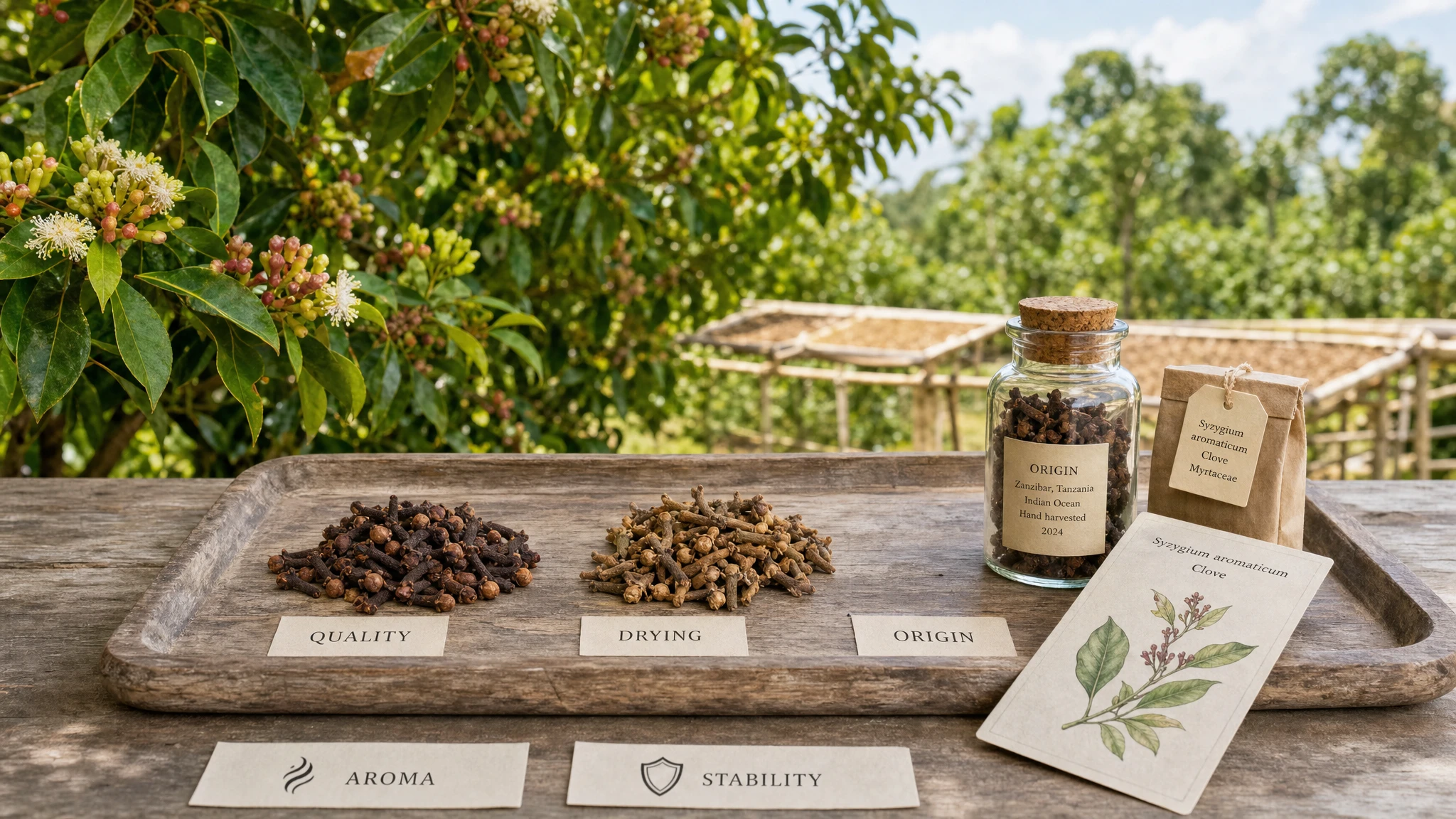
When talking about cloves, it is necessary to separate three aspects: origin, processing of the dried buds, and the result perceived by those who use the spice. The botanical origin indicates the plant from which the product is derived. Drying affects the color, texture, and retention of essential oils (substances that provide aroma). Quality, on the other hand, combines sensory data, chemical values, and market aspects. Origin alone is therefore not enough to define it.
Two batches can have the same botanical origin but different qualities. This happens if harvesting, drying, and long-term care follow different methods. Quality arises from the relationship between raw material and processing phases; it is not a fixed trait of the place of origin. This idea allows for evaluating the spice with clearer criteria.
This distinction also matters in food botany (the study of plants used as food). The phases after harvesting can significantly change the product. To evaluate it, it is useful to keep three levels distinct:
- Origin indicates where the spice comes from, not its absolute value.
- Drying changes the aroma, color, and shelf life of the buds.
- Quality arises from multiple factors, not just one.
- Labels and origin help, but do not provide a complete judgment.
Now we can look at three ways in which similar products can receive different assessments.
Quality stems from the combination of harvesting and storage
For cloves, quality does not depend on a single moment, but on the entire supply chain, from harvesting to storage. A product harvested at the right time is more likely to maintain a stable aromatic profile. The buds should be picked when they are still closed and a vibrant red, before they bloom. Inadequate storage, on the other hand, can alter the color, fragrance, and integrity of the dried buds. Humidity and light are the main enemies of essential oils, which evaporate or degrade quickly. In this sense, quality is the result of a sequence of choices, not just one visible characteristic. While external appearance can be useful, it remains only a partial indicator. A dark, wrinkled bud may have lost its aroma even if the harvest was perfect.
The limitation of this type of literature is that, while it clarifies what is observed, it does not always provide uniform criteria for comparing batches. This is why quality does not coincide with either the origin or a good presentation of the product: one must consider harvesting, drying, and storage together to truly understand the value of the spice.
The label indicates the product, not its entire history
The label is useful because it identifies the spice, but it does not tell the whole story behind its final profile. In the case of cloves, a trade name may indicate that it is an aromatic spice. However, it does not precisely explain when the harvest took place or how the dried buds were handled. Information on the drying method, which can be done in the sun or in temperature-controlled ovens, is often missing. It is also unknown how long the product remained in storage before reaching the shelf. For this reason, reading the label means distinguishing between product identification and quality assessment. A well-known name does not guarantee a recent or well-preserved batch.
This is the key takeaway: the name on the packaging is informative, but it is not enough to reconstruct the complete history of the batch. The limitation remains practical, as the available information depends on market regulations and the manufacturer's precision. The label should therefore be considered a starting point, not a definitive guarantee of quality.
Origin and commercial standards are not synonymous
Stating that a spice comes from a certain area does not automatically mean it meets a superior quality standard. Provenance describes a geographical or productive origin, such as a specific island or region. Commercial standard, on the other hand, depends on criteria such as uniformity, integrity, processing, and storage. In cloves, these elements may overlap, but they are not the same. A batch from a renowned area can be poor if the drying process was rushed. The same plant can therefore yield different harvests if the post-harvest process is not carefully controlled. Soil and climate matter, but they are not enough on their own.
This helps to understand that origin is useful information, but not an absolute judgment. The limitation is that the literature does not consistently show an automatic superiority of one provenance over another. For the reader, the message is simple: origin, standard, and quality are connected, but should be viewed as distinct levels.
Summary of scientific evidence
This summary only covers the sources cited in the article. The selection prioritizes the most robust and useful studies for describing the origin, substances, and quality of cloves.
| Publication year | Area studied | What the studies indicate |
|---|---|---|
| 2004 | Botanical definition | studies indicate that cloves are the dried flower buds of Syzygium aromaticum [1] |
| 2014 | Origin and general description | evidence indicates that the spice comes from dried buds and that the source plant defines its identity [3] |
| 2021 | Matrix and processing | the study found changes in the chemical profile related to the extraction and processing of the matrix [7] |
| 2024 | Chemical composition | data consistently describe a profile rich in eugenol and other volatile compounds [4] |
| 2025 | Buds and phenolic compounds | evidence indicates that the dried buds are a significant source of phenolic compounds [6] |
| 2025 | Bioactivity of the spice | results vary, but overall they link the substances present in the spice to the observed biological activities [10] |
Editorial interpretation of the evidence
Overall, the sources provide a consistent picture. Botany clearly defines cloves, which are derived from a specific tropical species. The spice also contains a rich aromatic phytocomplex, which is the set of substances that form its aroma and scent. Studies also agree on the role of drying, storage, and extraction in changing the final profile. The most recent works confirm the scientific interest in these substances and in some activities observed in the laboratory.
However, an important limitation remains. Many sources primarily study the essential oil, which is the concentrated aromatic component, or extracts. These products are not the same as the whole spice. Furthermore, studies do not always use the same criteria to measure commercial quality. Origin, batch appearance, and aroma strength are useful clues, but they do not prove superior quality. Therefore, while sources describe the spice well, they only allow for clear comparisons between products with greater caution.
Conclusions and editorial summary
Cloves demonstrate why a spice should first and foremost be studied as part of a plant. Distinguishing the bud, the species of origin, and the dried product helps to understand the real differences between products. Sources agree: harvesting, drying, and storage help define the aroma and quality of the spice.
The plant species from which the product originates also counts. Therefore, to evaluate cloves, the name on the label or the perceived aroma is not enough. One must examine the plant, the supply chain, and the substances present together. This method helps to understand how the quality of raw plant materials is created, from the field to consumption.
Final critical note
The available evidence defines the spice well and describes its origin, processing, and aroma. However, it is less consistent when comparing the quality of different products. Studies show that harvesting and drying matter, but they do not indicate criteria valid for every origin, batch, or commercial standard.
Aroma also provides useful data, but it only describes a part of the product. Therefore, it cannot replace more comprehensive analyses. The final picture appears consistent, but it should be interpreted with caution.
References
[1] WHO Monographs on Selected Medicinal Plants, Volume 2
[2] WHO Monografie di piante medicinali, Volume 2 (versione italiana)
[3] Clove (Syzygium aromaticum): a precious spice
[4] Clove Essential Oil: Chemical Profile, Biological Activities, Encapsulation Strategies, and Food Applications
[5] Evaluating the multifaceted bioactivity of Syzygium aromaticum essential oil:the central role of eugenol
[6] Clove (Syzygium aromaticum) Pods: Revealing Their Antioxidant Potential via GC-MS Analysis and Computational Insights
[7] Clove Essential Oil (Syzygium aromaticum L. Myrtaceae): Extraction, Chemical Composition, Food Applications, and Essential Bioactivity for Human Health
[8] Syzygium aromaticum L. (Clove): A Comprehensive Reveiw of Its Ethnopharmacological Uses and Pharmacological Activities
[9] Antimicrobial Activity of Syzygium aromaticum Essential Oil in Human Health Treatment
[10] Antioxidant Application of Clove (Syzygium aromaticum) Essential Oil in Meat and Meat Products: A Systematic Review
Editorial note
Artificial Intelligence was used solely as a tool to support editorial and documentary work. All content, interpretations, bibliographic citations and conclusions have been verified, reviewed and approved by the author, who assumes full scientific responsibility for them.
The manuscript was also subject to independent peer review prior to publication.
To ensure maximum transparency, the article's complete history — including the dates of submission, review, acceptance and publication, as well as information on the peer review process — is available on the dedicated Article History page.