


What is oregano: properties, forms of use, and significance in functional nutrition
Research describes oregano as a Mediterranean aromatic plant, used in cooking primarily as a spice. Evidence shows that fresh, dried, and concentrated products are not the same. Post-harvest treatments can also alter compounds and usage. Nutritional interest therefore depends on the context, not on simple or automatic effects.
- Published 07/10/2026
- Updated 08/10/2026
- Reviewed 30/09/2026
- Article history
ABSTRACT : WHAT THE SCIENCE SAYS
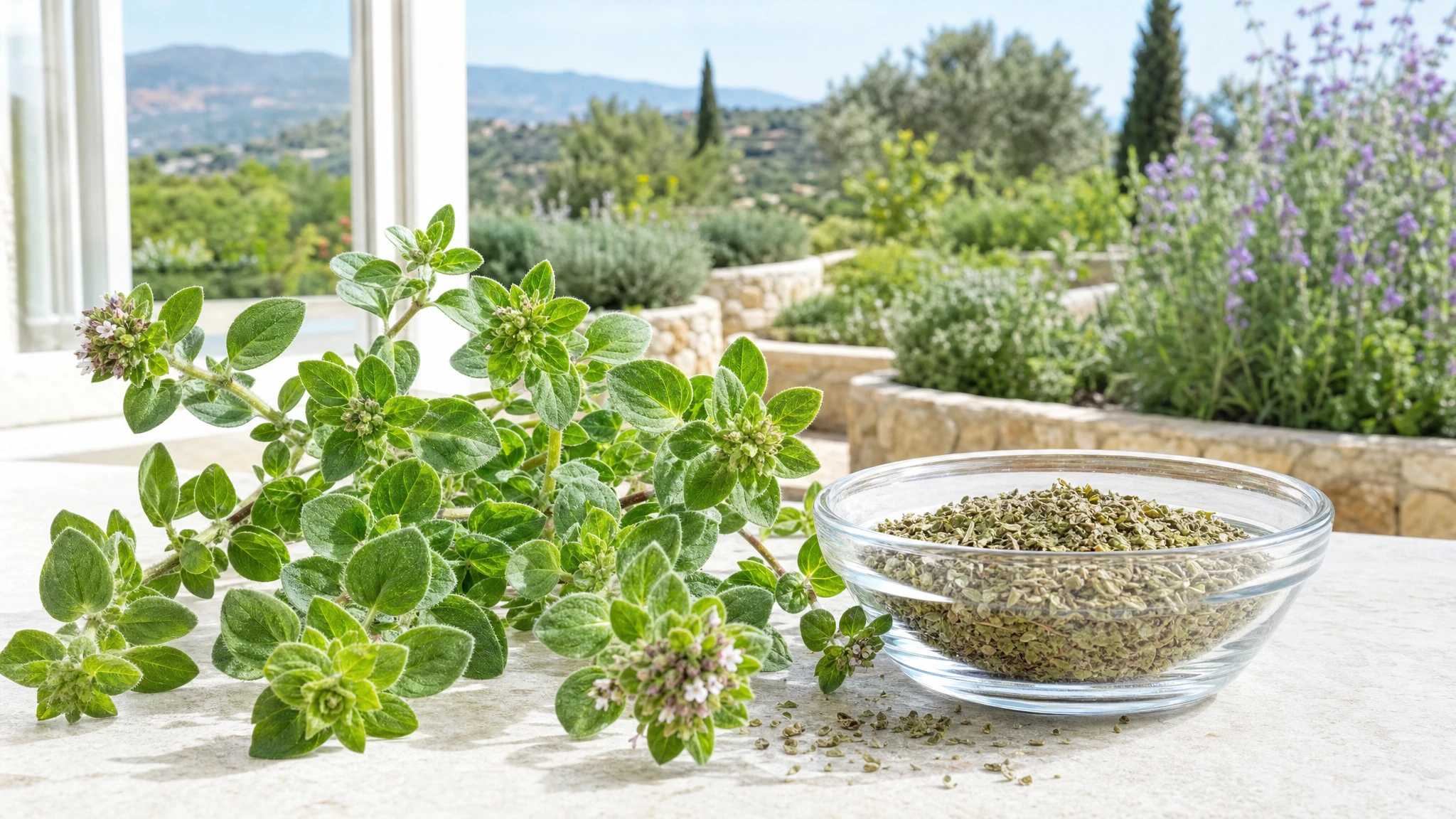
Oregano is among the most well-known aromatic herbs in Mediterranean cuisine, but some distinctions are necessary. The question "what is oregano" can refer to the plant, the dried spice, or concentrated products. This difference matters because it changes how we use each product. In the kitchen, oregano is a flavoring; in nutrition, it is part of a broader diet. It belongs to the Lamiaceae, a large family of aromatic plants typical of the Mediterranean area and its dishes. Understanding these differences avoids confusing the spice with concentrated products. It also helps define its role in the diet. In particular, this article will address:
- Botanical identity of oregano and the Lamiaceae family.
- Difference between the plant, the spice, and concentrated products.
- Daily use in cooking and its role in the Mediterranean diet.
- Significance of phytocompounds (substances produced by plants) in nutrition.
- Practical differences between fresh and dried oregano and methods of use.
Oregano: botanical identity and classification among aromatic herbs
To understand the identity of oregano, we must start with its place among Mediterranean aromatic herbs. In the kitchen, it is primarily used as a spice. In functional nutrition, it is of interest for its plant compounds and how it is used. This distinction helps to understand what oregano is, without confusing the plant, the food, and its more concentrated forms.
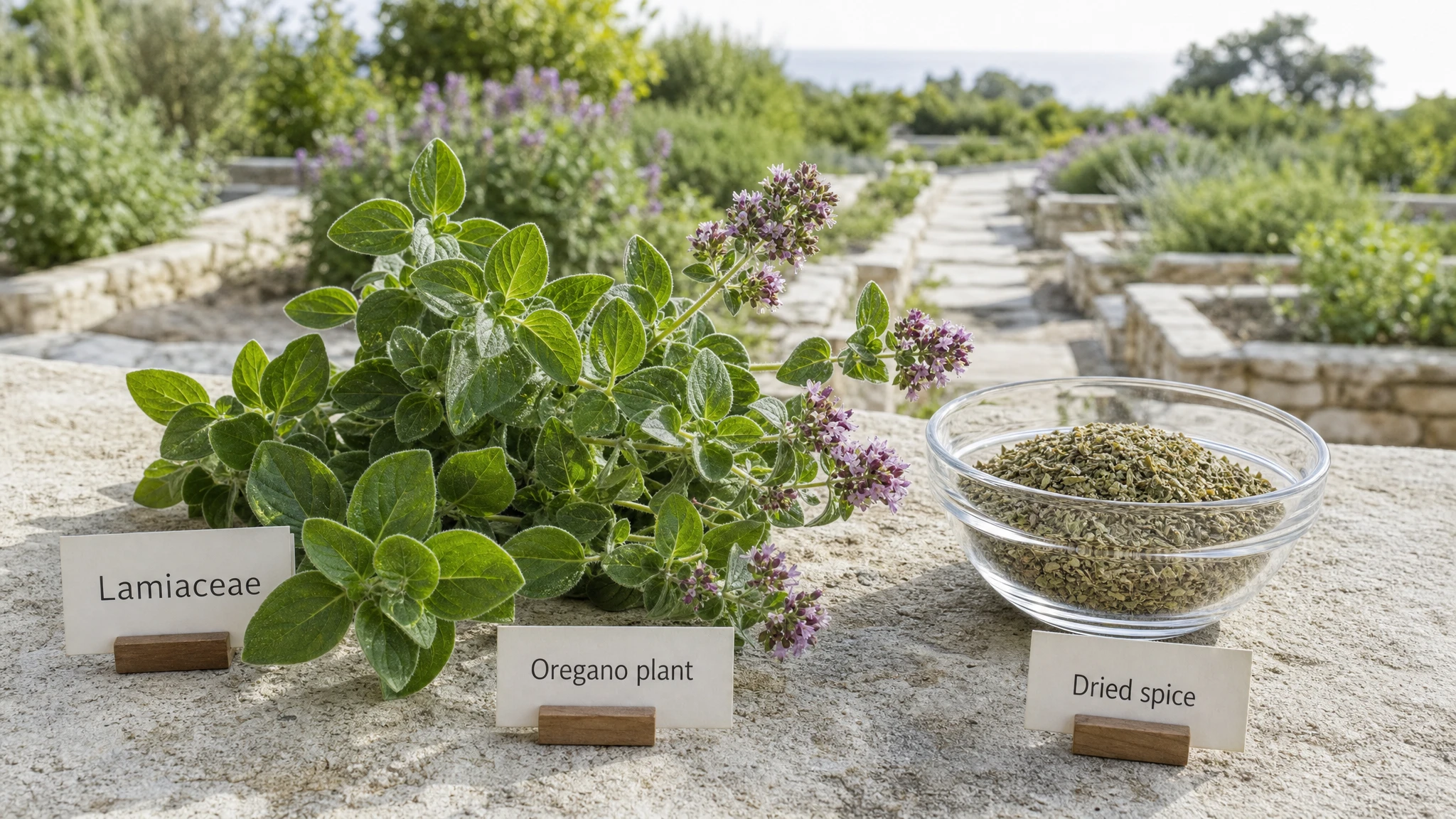
Oregano is an aromatic plant of the Lamiaceae family, common in Mediterranean cuisine. The term also refers to a spice used to add fragrance and flavor to dishes. This distinction is important because the plant does not always correspond to the product on the table.
To truly understand what oregano is, one must separate the botanical species from its role in food. The species identifies the plant, while the ingredient indicates the form used in meals. Oregano is considered a Mediterranean aromatic herb due to its aroma and its use in cooking.
This distinction helps place oregano within functional nutrition, which studies the role of foods in the diet. Its significance changes depending on whether one considers the plant, the spice, or a more concentrated form. Above all, oregano remains a plant-based ingredient of the Mediterranean tradition. Based on this, other potential uses can then be evaluated.
From this foundation, four interconnected aspects emerge:
- The Lamiaceae family defines the basic botanical framework.
- Its use in cooking explains why oregano is considered a spice.
- The food context distinguishes the product from the whole plant.
- Nutritional interpretation requires avoiding overly simplistic conclusions.
The following sections present oregano from three perspectives: botanical, culinary, and functional. Each level clarifies a different part of its identity and use.
Oregano and the Lamiaceae family: essential botanical classification
Oregano is a Mediterranean aromatic herb belonging to the Lamiaceae family. This group includes many species used in cooking for their intense aroma. The most well-known species is Origanum vulgare. In common usage, however, the name often also refers to the parts of the plant prepared for consumption. Botanical data therefore helps to distinguish the species from the form in which the product enters our dishes.
The FAO describes spices and aromatic herbs as important ingredients for taste and fragrance. The WHO also includes oregano among the dried herbs used as food [1] [2]. Reviews confirm the plant's strong connection to traditional uses. However, they also show that its composition changes depending on the material studied [3] [4]. This means that the species, the part analyzed, and the preparation influence the profile described by studies. Botany therefore explains where the spice comes from, but not how it is consumed. To understand its role in the diet, one must also consider the context of use.
Oregano as a spice: which part of the plant is actually used
The term oregano spice primarily refers to the dried aerial part of the plant, which is then preserved and used in cooking. This step separates the living plant from the ingredient that ends up on the plate. In practice, the spice does not always include the entire plant. Instead, it corresponds to the parts harvested and processed for human consumption.
A study on Origanum vulgare showed that drying changes the yield and chemistry of the essential oil. Researchers identified 39 components. Carvacrol was the main compound, with values ranging between 56.2% and 81.4% [5]. Another study on Origanum syriacum observed that the drying method modifies the final quality. A moderate process carried out in the dark better preserves aromas and chlorophylls [6]. Therefore, different drying conditions can produce a spice with different chemical and visual characteristics. However, these data concern processed material, not normal household use. Nevertheless, they show that preparation can change the profile of the spice.
Oregano and functional nutrition: why a spice can be of interest
In functional nutrition, oregano is of interest as part of a varied diet rather than as a miracle remedy. In this context, oregano as a food remains primarily a culinary ingredient. It adds aroma, variety, and a Mediterranean character to meals. Its value therefore depends on its actual use in the diet, not on qualities generically attributed to the plant.
Reviews describe this species as rich in bioactive compounds. They also study it as a phytocomplex, meaning the set of compounds present in the plant. Other syntheses show that concentrated forms have a different context than the spice [7] [8]. A study on four Mediterranean essential oils used GC/MS analysis to separate and identify the compounds. The comparison included O. vulgare and showed strong chemical differences between the aromatic plants [8]. These results concern extracts and essential oils, not daily consumption. The spice therefore remains an ingredient and does not replace a targeted nutritional intervention.
Recent research and updates
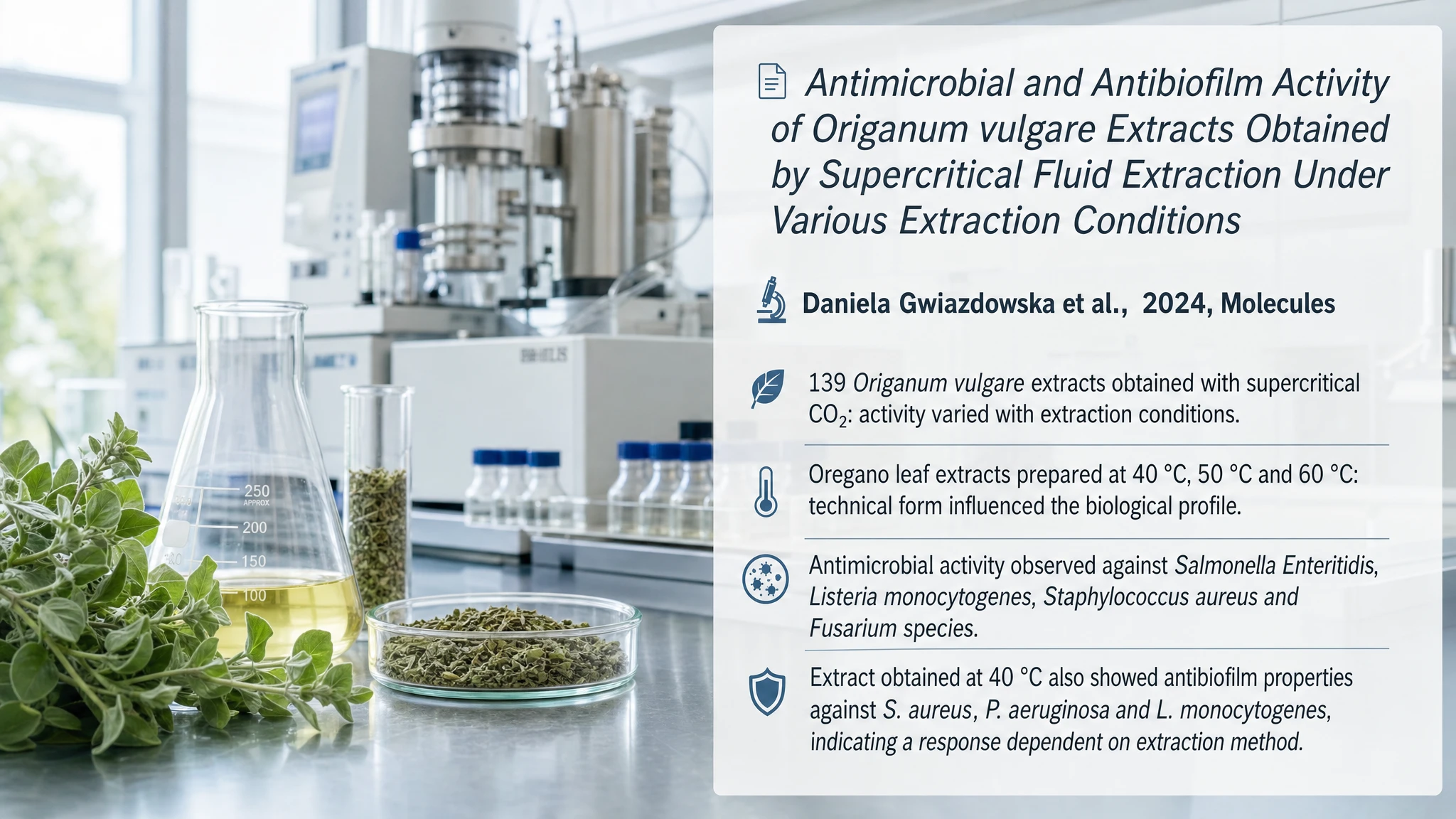
In 2024, Daniela Gwiazdowska and colleagues studied Origanum vulgare extracts in the journal Molecules. The authors obtained them using a supercritical fluid. This technique uses high-pressure carbon dioxide to extract plant compounds. The study shows that the preparation method can change the substances present. It can also modify their biological activity (effects measured in the study). The DOI is verified in the PubMed record. It corresponds by title, authors, year, and journal.
Antimicrobial and Antibiofilm Activity of Origanum vulgare Extracts Obtained by Supercritical Fluid Extraction Under Various Extraction Conditions
- 139 extracts of Origanum vulgare obtained with supercritical CO2: activity changed based on extraction conditions.
- Leaf extracts prepared with supercritical fluid at 40 °C, 50 °C, and 60 °C: the technique changed the biological profile.
- Antimicrobial activity has emerged against Salmonella Enteritidis, Listeria monocytogenes, Staphylococcus aureus, and fungi of the Fusarium genus.
- The extract obtained at 40 °C also showed antibiofilm activity (action against microbial communities) on S. aureus, P. aeruginosa, and L. monocytogenes. The response depended on the extraction method.
Fresh oregano, dried oregano, and forms of consumption: what really changes
The differences between fresh, dried, and concentrated oregano products matter more than it seems. They change the aroma, shelf life, and how this plant is used. Its role in functional nutrition also changes. To understand what oregano is in practice, the form that reaches your plate must therefore be considered.
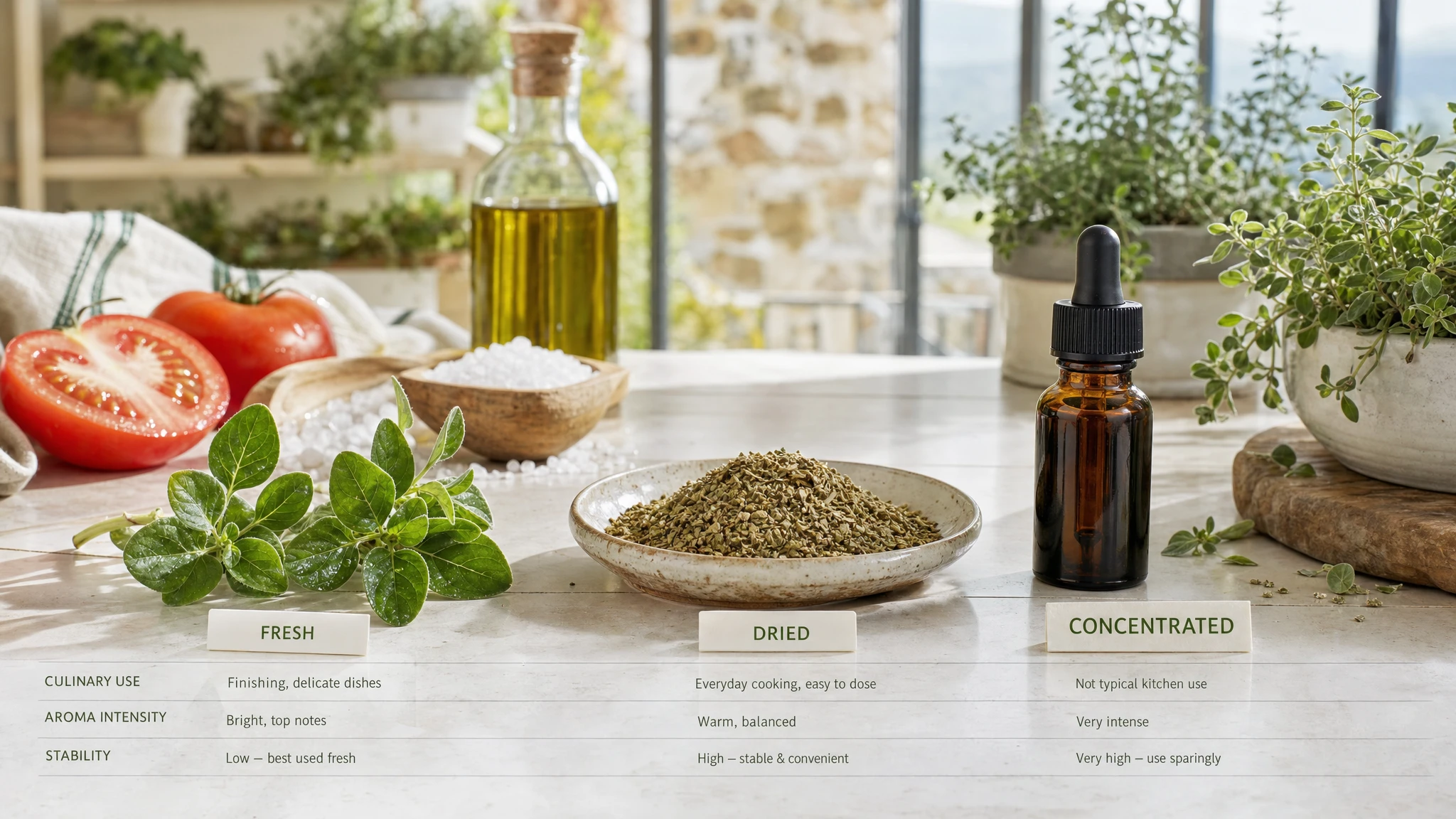
When we talk about oregano as a food, meaning used as an ingredient, its form changes its practical role. Fresh oregano is milder and is often used to finish a dish. Dried oregano is the most well-known form of oregano as a spice, as it is stable and easy to portion. There are also concentrated products, which serve purposes other than culinary ones. Oregano therefore remains a Mediterranean aromatic herb, used for aroma, flavor, and preservation at home.
These differences also help to understand oregano in functional nutrition. The various forms do not have the same dietary role or the same purpose. In the kitchen, taste, practicality, and method of use are what matter most. In concentrated products, however, specific parts of the plant are sought for different purposes. To explain what oregano is, the form must therefore always be specified. Its role in the dish or the final product depends on this choice.
To better distinguish between the various forms, it is useful to evaluate these practical aspects:
- Fresh oregano offers a milder and immediately perceptible aroma.
- Dried oregano combines intense aroma, ease of use, and long shelf life.
- Concentrated forms do not correspond to normal kitchen use.
- Preparation changes the yield, intensity, and stability of the product.
The forms of oregano do not only differ in name, but also in texture, aroma, and use. Comparing fresh, dried, and concentrated products helps to understand why they have different roles.
Fresh oregano: characteristics, culinary use, and practical limitations
Fresh oregano is the form closest to the plant and is used primarily to add a delicate aromatic note to simple dishes, salads, and preparations where it is added at the end. Compared to the dried spice, it retains more water and has a less intense sensory profile, making it better suited for short, non-invasive uses. In the kitchen, it functions as a finishing touch rather than a foundational flavor base. Fresh leaves release volatile compounds that disperse rapidly with heat. These compounds are responsible for the typical scent of the freshly harvested plant. For this reason, they are added raw or in the final minutes of cooking. Their soft texture and bright green color signal an unprocessed product. Those who use it immediately notice a difference compared to the dried version, which is darker and more compact. However, its short shelf life in the refrigerator and seasonal availability limit its daily use. It is often found only during certain times of the year, depending on cultivation or harvest. This makes it less practical for continuous use in the kitchen compared to the dried form.
The limitation is clear: these results describe the behavior of the plant material and do not attribute an independent functional effect to the fresh form. Its role remains primarily culinary.
Dried oregano: why it is the most common form in our diet
Dried oregano is the most practical and common form used in daily cooking. Reducing its water content improves storage, transport, and portioning, making it a staple in home kitchens and for preparing consistent dishes. For this reason, when we think of oregano as a spice, we almost always mean the dried version. The drying process concentrates the essential oils and intensifies the aromatic profile. This concentration of compounds makes the aroma stronger compared to the fresh plant. A small amount is enough to add character to sauces, pizzas, and marinades. A teaspoon, for example, is enough to flavor an entire dish. Furthermore, this form can be stored for months in a sealed jar, away from light. Light and humidity, in fact, reduce its aroma more quickly than expected. This convenience has made it a staple ingredient of the Mediterranean diet, accessible in every season. It is easily found in stores all year round, unlike the fresh version.
The limitation is therefore interpretive: dried is the most common form, but it should not be confused with a standardized extract or a concentrated product. Its value is culinary, even before it is technical.
Concentrated oregano preparations: when it is no longer just a spice
When oregano is processed into more concentrated forms, it is no longer just a simple kitchen spice. This category includes essential oil and standardized extract, which are products obtained to enhance specific fractions of the plant rather than to flavor a dish. This shift changes the context of use: from a food ingredient to a selected preparation, with different purposes and a language closer to scientific research. Essential oil is obtained through steam distillation of the flowering tops. Standardized extract, on the other hand, aims to ensure a fixed concentration of specific compounds, such as carvacrol or thymol. These products are found in capsules or bottles, not in kitchen jars.
Studies on cell models have also shown that the oil can reduce markers of inflammation and oxidative stress, but in an experimental context separate from the kitchen [9]. The limitation is crucial: what applies to a concentrate does not automatically transfer to the spice used in meals. For this reason, when interpreting oregano in functional nutrition, the form of the product must always be specified.
Oregano and daily use: what changes between the kitchen and more selected products
In daily use, oregano as a food ingredient remains primarily a seasoning: it is used in recipes for its aroma, the perception of freshness, and its convenience. In more specialized products, however, the goal is no longer just to add flavor, but to achieve a more controlled content of plant components. This is an important shift, as it separates domestic use from the language of formulation. The dried spice is measured by the teaspoon on a pizza. The extract is measured in milligrams in a supplement. This difference in scale is not just quantitative; it changes the logic with which the product is used.
Furthermore, the composition of the essential oil changes with its origin and starting material, as shown by a study on two different areas, which highlights variations in the chemical profile [10]. The limitation is that concentrated products are not equivalent to one another and should not be viewed as if they were simply "dried oregano in a stronger form." The distinction between cooking and technical selection remains the decisive point.
Phytocompounds of oregano: what it really means to talk about them
To understand what oregano is in the diet, it is useful to know its phytocompounds (substances produced by plants). These molecules show the plant beyond its use in the kitchen. However, they do not indicate certain effects for every form and every dose. In fact, the chosen product, the dose taken, and the context of use matter. Their meaning therefore changes with the way oregano is used.
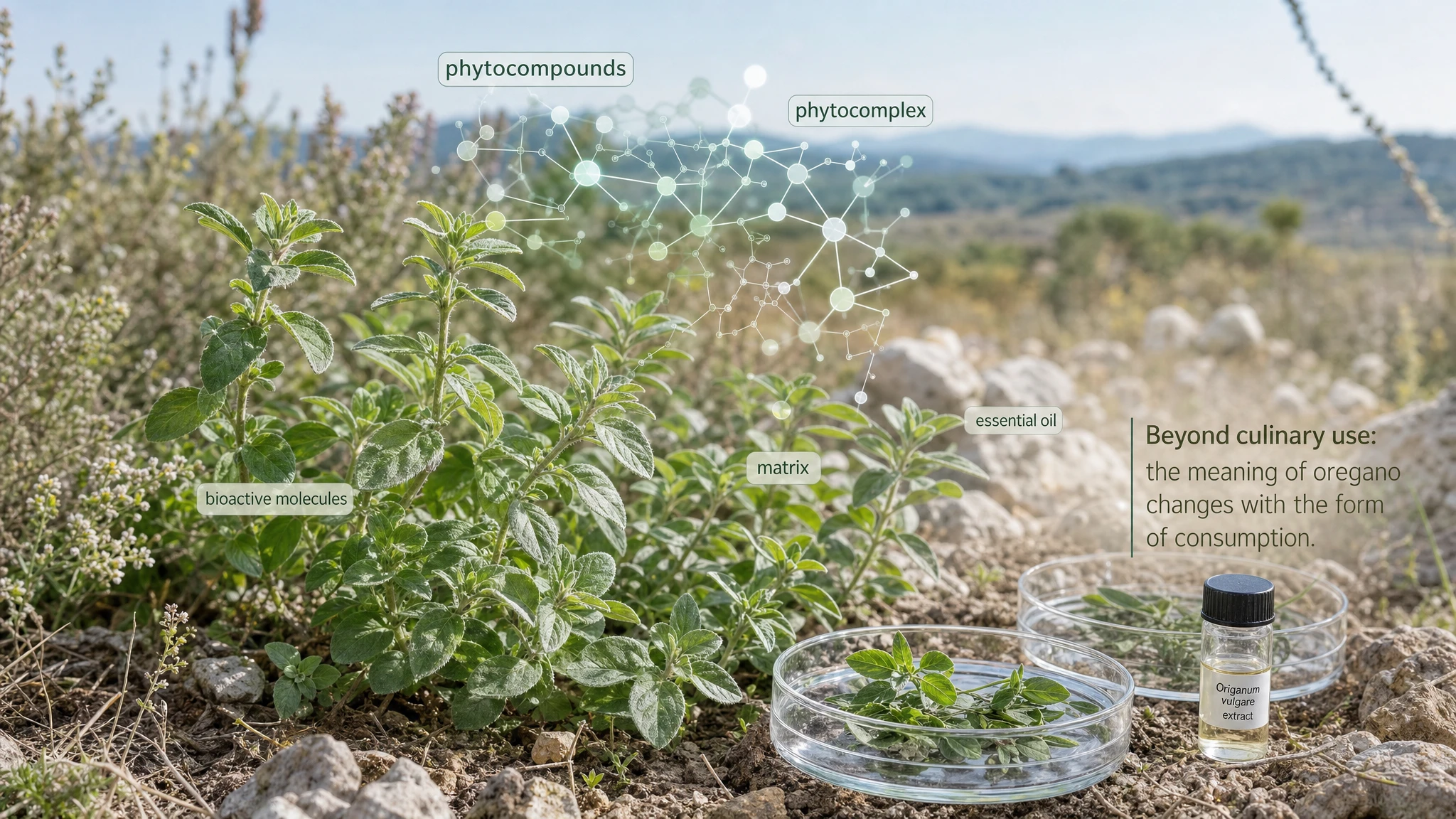
Phytocompounds are substances of plant origin that define the chemical profile of a food and its potential biological interest. In the case of oregano, discussing phytocompounds means linking the spice to its composition, without immediately turning the description into a promise of an effect. This is an important step for those trying to understand what oregano is in terms of functional nutrition: not just an aroma, but a food with molecules studied for being biologically active.
In other words, oregano as a Mediterranean aromatic herb is of interest because it contains a phytocomplex, that is, a set of compounds that act as part of a plant matrix. This is why scientific literature often refers to essential oil and standardized extract when it wants to separate the simple presence of compounds from their practical significance. In the language of functional nutrition, caution is essential: the category of phytocompounds helps to describe, but does not by itself allow for conclusions.
To correctly interpret this topic, it is useful to distinguish a few aspects:
- The term describes a broad class of plant molecules.
- The form of use changes what is actually consumed.
- Essential oil and extracts are not equivalent to the spice itself.
- The dietary context avoids overly generic interpretations.
The following paragraphs clarify the term, then show how form and use change the interpretation of scientific data.
Oregano phytocompounds: what the term really means
The term phytocompounds refers to plant-derived molecules that contribute to the chemical profile of a food and, in some cases, to its biological significance. In oregano, the term helps explain why a common culinary species is also studied outside the kitchen. It is not a drug, but it contains substances that research considers relevant. Referring to the aromatic oregano plant in this sense means recognizing a complex matrix. It cannot be reduced to a single constituent. The main phytocompounds include thymol and carvacrol, two volatile phenols. These are responsible for its characteristic scent and are the most studied in the laboratory. However, the plant also contains flavonoids and phenolic acids, which complete the picture.
The limitation, however, remains clear: the word phytocompounds is descriptive, not predictive. Saying that oregano contains interesting molecules does not mean attributing the same effects to it in every use. The meaning changes with the preparation and the actual amount consumed. The chemical analysis of an extract is one thing; a pinch of spice on a dish is another. Research distinguishes between these levels to avoid creating false expectations.
Fresh and dried oregano: how the phytocompound profile changes
The phytocompound profile of oregano does not remain identical when the plant transitions from fresh to dried. The transformation primarily affects the most volatile components. These are the ones that provide the scent and part of the aromatic character. For those who view oregano as an oregano spice, this is the decisive point. The dried product is not just a less moist version. It is a matrix in which the quantity and quality of the compounds can change significantly. Drying reduces water and concentrates certain non-volatile compounds. At the same time, however, it disperses part of the essential oils. The result is a different aromatic profile, more subtle but no less interesting.
The limitation is that these data describe the plant material. They do not authorize the claim that one form is always superior. It depends on the intended use and the type of preparation. In the kitchen, dried oregano is more practical and stable. Fresh oregano offers a more immediate aroma. The choice is not a matter of hierarchy, but of context.
Oregano and different preparations: why the context of use matters
When discussing oregano as a food, the context of use is just as decisive as the list of its compounds. A culinary spice, an essential oil, or a standardized extract do not have the same practical significance. Their concentration, method of intake, and purpose differ. Essential oil is a highly concentrated product, used in drops. Dry extract is found in capsules with precise dosages. The spice, on the other hand, is used in grams and dispersed in food. For this reason, literature on functional nutrition oregano often adopts cautious language. It describes the preparations but does not automatically equate them with the everyday spice.
This helps to correctly interpret phytochemicals. They do not speak for themselves, but within a precise form of use. The limitation is that results obtained from concentrated preparations do not automatically transfer to home cooking. The quantities are very different, and the biological significance must be read with caution. An effect observed with an extract cannot be attributed to a pizza topping.
Oregano and scientific literature: what can be said without overstating
The literature on oregano is extensive, but it does not all address the same aspect. Some sources focus on the spice as an ingredient. Others study the essential oil or concentrated extracts. For this reason, it is useful to distinguish between what concerns the everyday food and what concerns more potent preparations. Scientific terminology helps to avoid confusing oregano as Lamiaceae oregano with products created for other uses, often pharmacological or cosmetic. Many in vitro studies show interesting antimicrobial or antioxidant activities. These are solid data, but they are obtained in test tubes, on isolated cells, not in the whole human body. Other research on animal models uses doses very far from normal daily food consumption. In some cases, the quantities tested exceed realistic kitchen amounts by tens of times.
However, these are always preliminary laboratory data, not evidence of real food consumption in humans. The limitation, therefore, does not weaken the interest in the phytochemicals themselves. It simply makes it more accurate, because it clearly separates the chemical description from definitive clinical conclusions. Science, in this case, describes a biological potential. It does not yet offer concrete certainty for human health. This approach helps readers use the available information without undue pressure or easy enthusiasm.
Summary of scientific evidence
This summary organizes the sources. It explains how research describes oregano, its dietary use, and more concentrated products.
| Publication year | Area studied | What the studies indicate |
|---|---|---|
| 2013 | Influence of drying conditions on Origanum syriacum | evidence indicates that the drying method changes the quality of the product and its potential use [6] |
| 2018 | Phytochemical constituents and biological activities of the Origanum genus | studies indicate the presence of phytocompounds (substances produced by plants). However, the data depend on the form of the product [11] |
| 2020 | Compositional differences between oregano of different origins | data show that the origin and raw material change the chemical profile of the essential oil [10] |
| 2022 | Effect of drying on Origanum vulgare | post-harvest treatment changed the yield and chemical composition of the essential oil [5] |
| 2024 | Food use and quality of dried spices | evidence indicates that dried spices, including oregano, are food ingredients. Their quality must be carefully assessed [2] |
| 2024 | Composition and activity of essential oils from Mediterranean Lamiaceae | results vary, but show clear differences between species and preparation methods [8] |
| 2025 | Botanical identity and nutritional value of oregano | studies indicate that oregano is a Mediterranean aromatic plant with a role in cooking and nutrition [3] |
Editorial interpretation of the evidence
Reading the studies collected in this article, I found a consistent picture. Oregano is, first and foremost, a Mediterranean aromatic plant. However, its significance changes when moving from the common spice to extracts and essential oils. The most solid sources agree on one point: consumption, drying, and preparation change the compounds and the use of the product. Scientific interest is therefore real, but it must be placed in the right context. One should not confuse cooking, botany, and concentrated products.
However, the literature I have reviewed remains highly varied. Many sources are reviews or experimental studies, while those on daily use are less numerous. Furthermore, the species and chemotypes (chemical variants of the same plant) differ. The methods used to extract and dry the product also vary. These differences make comparisons more difficult. Conclusions must therefore remain cautious and pertain only to the specific form of oregano examined.
Conclusions and editorial summary
Oregano is an aromatic plant used in Mediterranean cuisine, primarily as a spice. From the studies I have reviewed, it emerges that the form of the product matters. Fresh oregano, dried oregano, extracts, and essential oils are not the same products. This distinction is also useful in nutrition: it allows for the inclusion of oregano in a varied diet rich in plant-based foods. Scientific interest stems from the plant itself, its common use, and its compounds, rather than from easy promises. The most accurate interpretation, therefore, values the spice as a food item. Concentrated products, on the other hand, require a separate assessment. The same criterion applies to other aromatic herbs and to functional nutrition linked to the Mediterranean diet.
Final critical note
The bibliography I have analyzed reveals an important point. Studies often examine forms of oregano different from those used in cooking. This gap limits the application of the results to daily consumption and requires caution. Even when data agree, different species, products, and treatments make direct comparison difficult. The evidence therefore does not allow for broad conclusions. Instead, it is necessary to distinguish the context of each study from the actual use of the ingredient.
References
[1] Spices and culinary herbs: FAO guidelines on production, processing and marketing
[2] WHO guideline on food safety and dried spices/herbs microbiological hazards
[3] Chemical Composition, Biological Activity, and Potential Uses of Oregano (Origanum vulgare L.) and Oregano Essential Oil
[4] Oregano (Origanium Vulgare) Extract for Food Preservation and Improving Gastrointestinal Health
[5] Impact of drying methods on the yield and chemistry of Origanum vulgare L. essential oil
[7] A Recent Insight Regarding the Phytochemistry and Bioactivity of Origanum vulgare L. Essential Oil
[8] Chemical and Bioactive Evaluation of Essential Oils from Edible and Aromatic Mediterranean Lamiaceae Plants
[9] Oregano (Origanum vulgare L.) essential oil provides anti-inflammatory activity and facilitates wound healing in a human keratinocytes cell model
[10] Chemical Compositions and Anti-Skin-Ageing Activities of Origanum vulgare L. Essential Oil from Tropical and Mediterranean Region
[11] Origanum vulgare ssp. vulgare: Chemical Composition and Biological Studies
Editorial note
Artificial Intelligence was used solely as a tool to support editorial and documentary work. All content, interpretations, bibliographic citations and conclusions have been verified, reviewed and approved by the author, who assumes full scientific responsibility for them.
The manuscript was also subject to independent peer review prior to publication.
To ensure maximum transparency, the article's complete history — including the dates of submission, review, acceptance and publication, as well as information on the peer review process — is available on the dedicated Article History page.