


Carvacrol in oregano: the key compound and the role of thymol in the plant
Research indicates that carvacrol and thymol help us understand the chemistry and biology of oregano. Their levels vary between species, chemotypes, and products. Therefore, these products do not have the same profile. The most robust data come from laboratory tests and composition analyses. The key takeaway requires caution. These substances help us better understand oregano, but the spice, essential oil, and concentrated extracts are not equivalent.
- Published 13/10/2026
- Updated 15/10/2026
- Reviewed 15/10/2026
- Article history
ABSTRACT : WHAT THE SCIENCE SAYS
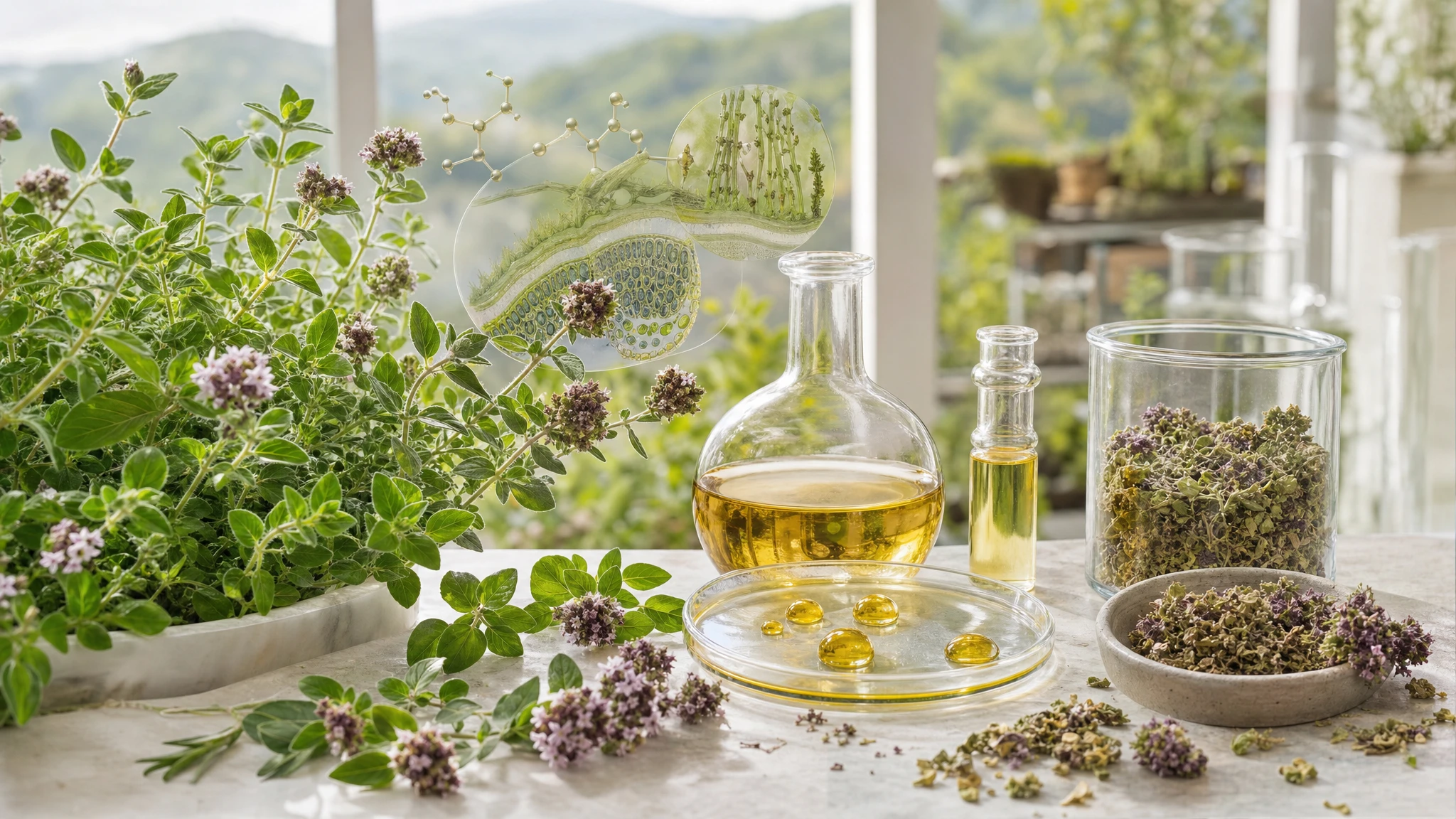
When we talk about oregano, we often think of its aroma, but its chemistry is much richer. Two substances, carvacrol and thymol, explain a large part of the plant's profile and the differences between oregano varieties. Carvacrol is among the most studied compounds and is a phenolic monoterpene (an aromatic molecule produced by plants). Its chemical form can change how it acts in biological systems. Thymol completes this picture and can modify the effects of carvacrol.
To understand the data, one must distinguish between the spice, the essential oil, and concentrated extracts. These products differ in composition and potency. In this article, we will look at these molecules, their variety, and the phytocomplex (the set of substances in the plant). We will also see how much the form of consumption matters. In summary, here are the key points we will explore:
- Carvacrol and thymol define a large part of oregano's chemical profile.
- Spice, essential oil, and extracts are different products.
- Composition changes with species, harvest, and processing method.
- The phytocomplex matters more than a single molecule taken in isolation.
- Caution and a clear context are needed to interpret the data correctly.
Carvacrol and thymol: what they are and why they change the identity of oregano
In the profile of oregano, the proportion of phenolic compounds can change many aspects. Either carvacrol or thymol may prevail, with different effects on the aroma and biological profile. Oregano carvacrol is therefore not just a chemical datum. It is the starting point for understanding the plant's identity and variability.
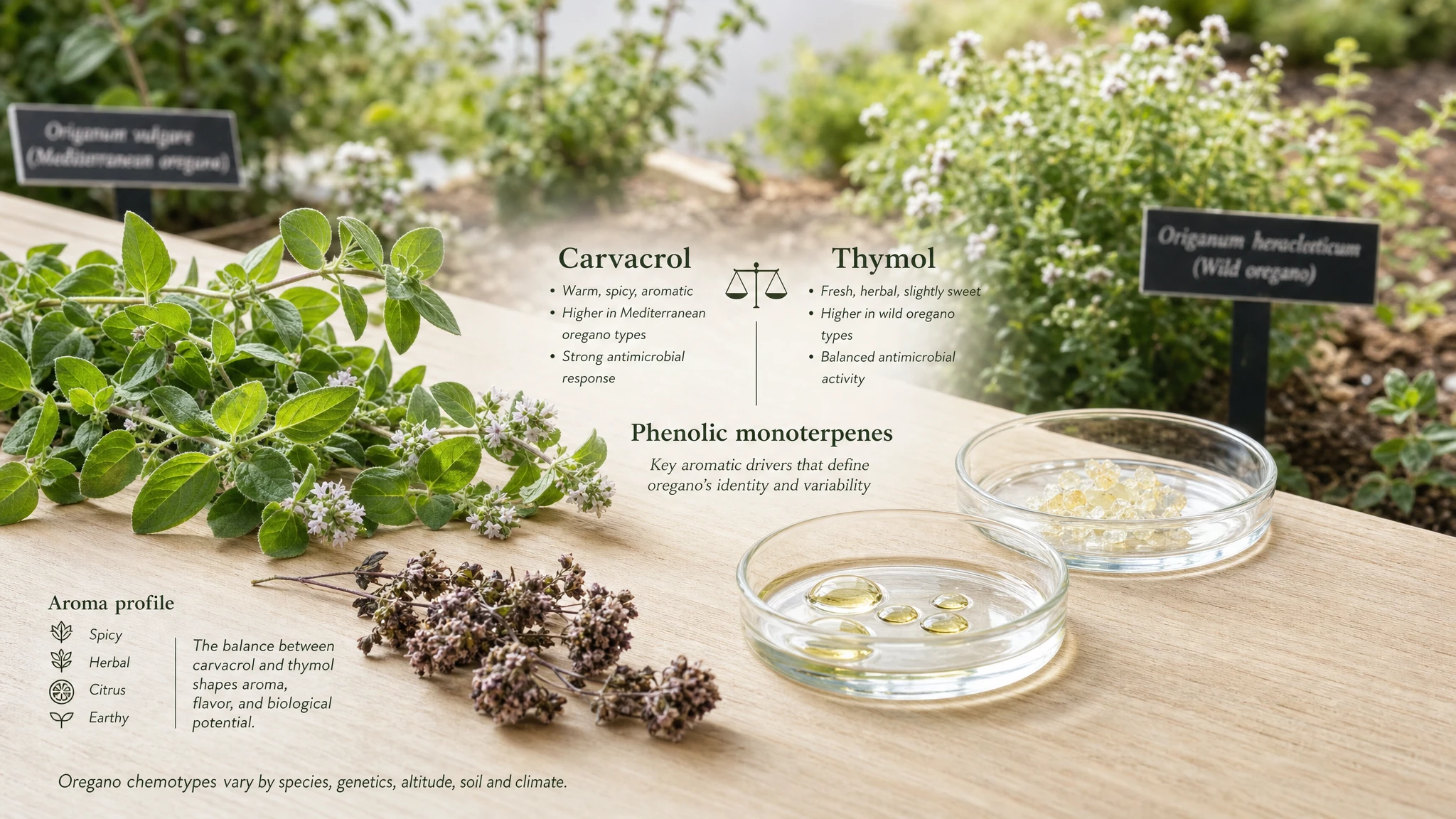
In oregano, carvacrol and thymol define much of the plant's aroma and biological profile. These are phenolic monoterpenes (small aromatic plant molecules), which are therefore fragrant and highly reactive compounds. These substances can influence the scent and the way the phytocomplex—which includes all the substances naturally present in the plant—behaves. For this reason, oregano should not be viewed as a spice that is always the same.
Discussing oregano carvacrol therefore means starting with two key molecules and their ratio. This balance matters more than just the presence of the plant itself. In fact, it can change how oregano is perceived and studied as a source of active ingredients. In the next step, this same pair of compounds must be evaluated in different forms: spice, extract, and essential oil.
Before distinguishing between the various products, it is useful to establish a few essential points:
- Carvacrol and thymol are phenolic compounds found in oregano.
- Their presence influences the aroma and sensory identity.
- The composition varies between different types of oregano and among various processing methods.
- The phytocomplex allows for the evaluation of multiple active ingredients together.
To understand the chemical identity of oregano, one must first know its guiding molecules. The following sections describe the two most typical compounds and their roles. Their quantities, in fact, are not fixed and can vary significantly.
What are carvacrol and thymol in oregano
These two key compounds are phenolic monoterpenes (small aromatic molecules of plant origin). Their structure significantly influences the chemical profile of oregano. Within the plant, they contribute to its scent and the perception of its intensity. For this reason, they are among the most characteristic active ingredients of the Origanum genus. However, their significance also depends on their ratio to other substances in the phytocomplex, which provides a useful criterion for describing an individual chemical profile with greater precision.
Studies and technical reports indicate that these quantities vary based on species, botanical origin, and processing [1][2]. A 2011 analysis examined an oregano essential oil. Carvacrol was at 36.46%, thymol at 29.74%, and p-cymene at 24.31% [3]. A 2018 review then described the former as a monoterpenoid phenolic typical of the plant. The same source notes that human evidence remains incomplete [4]. These data therefore describe specific profiles, not every oregano in absolute terms.
Why the chemical profile of oregano is not always the same
The profile of oregano changes because there is no single composition that applies to all plants, all seasons, and all processing methods. Oregano essential oil composition and the spice's content depend on botanical and environmental factors, as well as harvesting, drying, and storage. This is why two products sold under the same name may show different levels of carvacrol, thymol, and other minor constituents.
A 2024 review on Lamiaceae confirmed that these two compounds are among the dominant ones in most matrices, but not with the same distribution everywhere [5]. The useful takeaway is practical: variability does not disprove the role of oregano's phenolic compounds, but it requires that every extract be interpreted within its own context. The limitation, here too, is that summary data cannot replace the analysis of an individual sample.
Oregano phytocomplex: why it matters more than the individual compound
The phytocomplex includes all the substances naturally present in a plant. Together, these molecules form its final profile. In oregano, this concept avoids reducing everything to a single compound. This holds true even when carvacrol and thymol are present in higher quantities. Aroma, stability, and part of the biological activity may depend on the ratios between multiple substances, rather than an isolated molecule.
A 2016 review studied the ethanolic extract of Origanum vulgare. The extract showed cytotoxic (harmful to cells), antioxidants, and antibacterial activity. The authors linked these effects primarily to the two lead compounds [6]. The active ingredients of oregano should therefore be viewed as a system, not as separate parts. However, tests on laboratory extracts do not directly describe the spice or oils on the market. Bioavailability (the portion used by the body) and the extraction method can, in fact, change the picture.
Recent research and updates
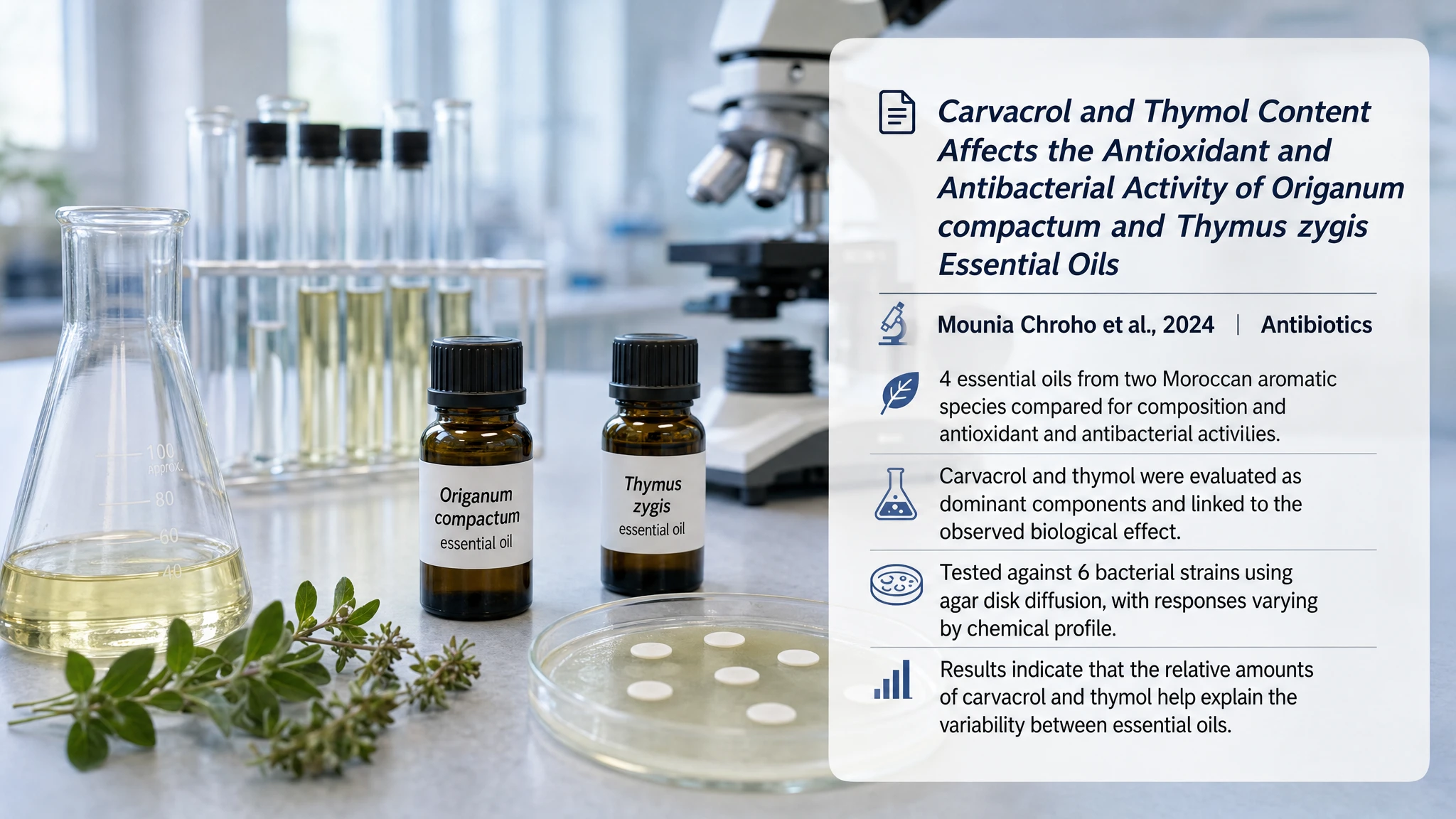
In 2024, Moroccan researcher Mounia Chroho and her colleagues published a study in Antibiotics. The team investigated how carvacrol and thymol modify the activity of two essential oils from oregano and thyme. These oils are plant-based mixtures rich in aromatic molecules. The study links chemical composition to the observed effects. Therefore, knowing the name of the plant is not enough; the actual proportions of the compounds and the method used to measure them are what matter.
Carvacrol and Thymol Content Affects the Antioxidant and Antibacterial Activity of Origanum compactum and Thymus zygis Essential Oils
- Four essential oils from two aromatic species from Morocco were analyzed. The study compared their composition as well as their antioxidant and antibacterial activity.
- Carvacrol and thymol were the main compounds. The study links their proportions to the strength of the observed effects.
- The oils were tested against 6 bacterial strains using the disk diffusion method. Responses varied based on the chemical profile.
- Overall, the proportions of carvacrol and thymol help explain the differences between the essential oils studied.
From spice to essential oil: how composition and concentration change
To understand carvacrol in oregano, both the plant and the form used matter. Spices, essential oils, and extracts have different chemical profiles and concentrations, and therefore require distinct interpretations. In fact, the same botanical name does not always indicate a product with equal intensity and use. This difference helps in evaluating the composition, the dosage of the compounds, and the study results.
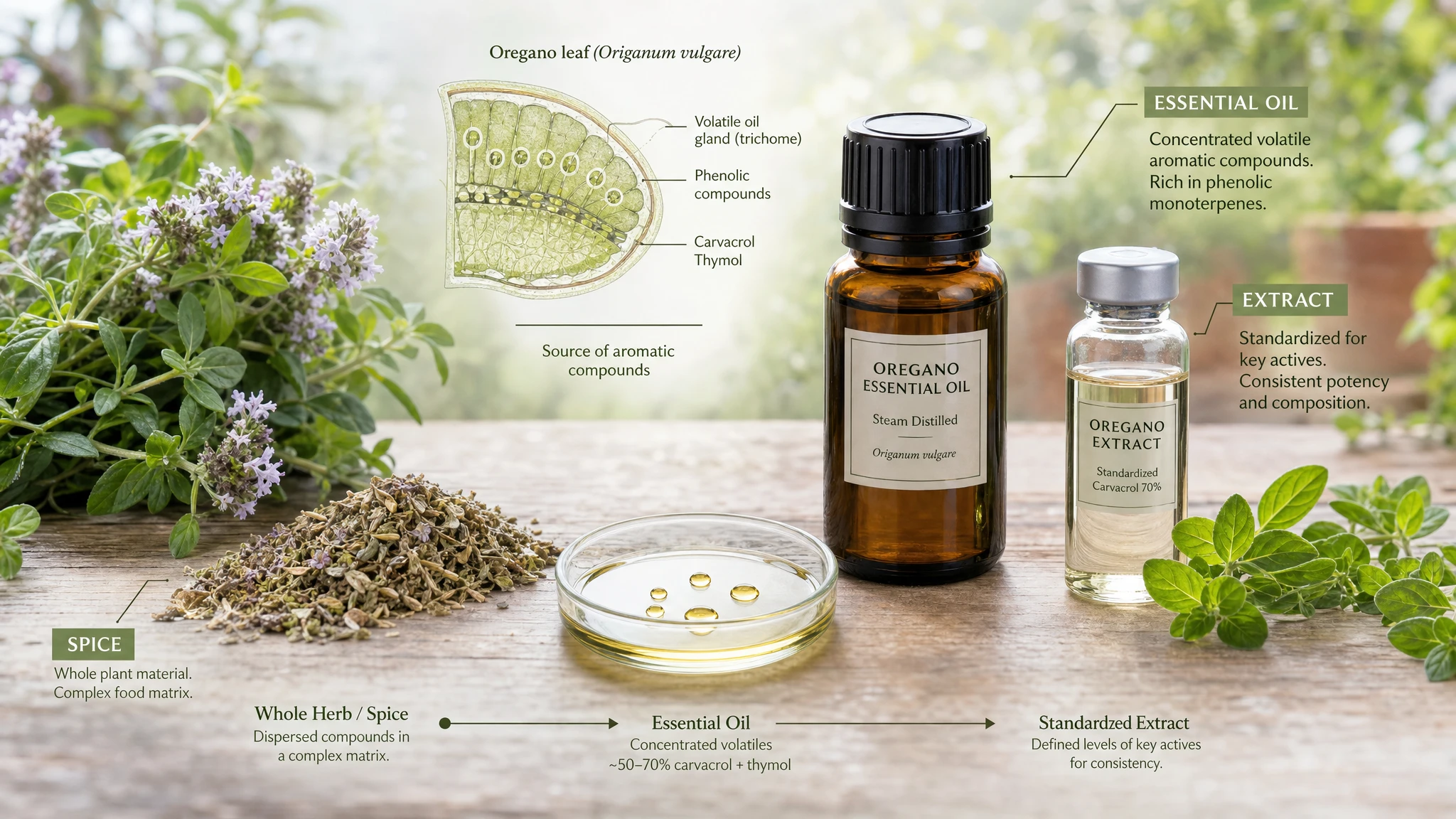
When moving from the kitchen to concentrated products, the quantity, form, and use change. The composition of oregano essential oil does not match that of the spice. In concentrates, the phenolic compounds of oregano are present in higher doses. Among these are phenolic monoterpenes, small aromatic molecules that have been widely studied.
This distinction prevents incorrect comparisons between dietary use and concentrated preparations. The portion of active ingredients absorbable by the body may also change. Consequently, the value of the results obtained in experiments changes.
An effect observed in an extract or an oil does not automatically apply to the spice. The following paragraphs explain how to interpret extracts and why the various forms are not interchangeable [7][3].
In the spice, however, the phytocomplex (the set of substances in the plant) remains diluted in the food. Therefore, carvacrol and thymol can have different proportions in the various forms. Before reading scientific data, it is necessary to distinguish between form, extraction method, and declared composition:
- The culinary spice is a complex and diluted mixture.
- Essential oil concentrates volatile compounds and phenols.
- Extracts vary based on the method used to obtain them.
- Labels help to understand the declared composition of the product.
Before examining the studies, it is useful to distinguish between the forms of oregano cited in the research. The same plant, in fact, can provide products that are very different in terms of composition, dose, and use.
Spice, essential oil, and extracts: three non-equivalent products
Culinary oregano, essential oil, and commercial extracts are not equivalent products. The spice contains limited amounts of the most studied compounds. Essential oil, on the other hand, is a concentrated part obtained through extraction (the separation of certain substances). Extracts can vary in purity, dosage, and the ratio between molecules. Standardization—the guaranteed presence of a specific quantity—can also vary. These parameters determine how much of the studied substance is actually present in the sample analyzed in the laboratory. This difference matters because the effect of carvacrol and thymol depends on the actual dose and the form used.
A 2024 systematic review evaluated 38 articles on the two compounds. The studies reported antibiofilm (against layers of adherent microbes) and antimicrobial activity. There were also 68 synergistic combinations, with enhanced effects, or additive ones, with summed effects [8]. However, this data refers to preparations used in experiments, not the household spice. Distinguishing between these forms therefore avoids overly broad conclusions.
How to read oregano extract labels
Labels may indicate the standardization of the extract and the amount of its main compounds. Not all products, however, report the same data or present it with equal clarity. A complete label distinguishes a simple reference to the plant from a concentrate with a declared composition. This information helps to understand which product is being used and in what dose. Without these details, the name oregano alone does not accurately describe the content. This data is essential for comparing different products without immediately assuming they are equivalent.
In 2020, a thymol chemotype essential oil (a variant rich in this substance) was described as potentially suitable for selective herbicidal use on monocotyledonous species [9]. The result shows that the chemotype can significantly change the oil's properties. However, this concerns a possible herbicidal use, not a health effect. The chemical label therefore guides interpretation, but it does not make oil and spice comparable.
When spice and essential oil cannot be compared
Comparing a spice and an essential oil as equivalent products can lead to incorrect conclusions. Spices are used in small doses and consumed along with other foods. Their compounds are therefore much more diluted compared to those in a concentrated product. An essential oil, on the other hand, collects volatile substances and is intended for different uses. Even with the same plant, the dosage, bioavailability (the portion absorbable by the body), and method of use change. A comparison therefore requires considering concentration, the context of use, and the specific product studied together.
Effects observed in a laboratory or with concentrated products do not automatically apply to cooking. In 2021, a systematic review examined the anti-tumor effects of carvacrol and thymol. The authors reiterated that these are preclinical data, obtained before human studies, and should be interpreted with caution [10]. These premises help explain why one of the two compounds receives so much attention in research.
What makes carvacrol interesting from a biological perspective
From a biological perspective, the carvacrol in oregano is interesting because it can act on multiple processes. Tests show effects on membranes, microbes, and damage caused by oxidative stress. This helps to view the active ingredients in oregano as a system, rather than as separate molecules. However, the data obtained in tests do not, by themselves, prove a clinical effect in humans.
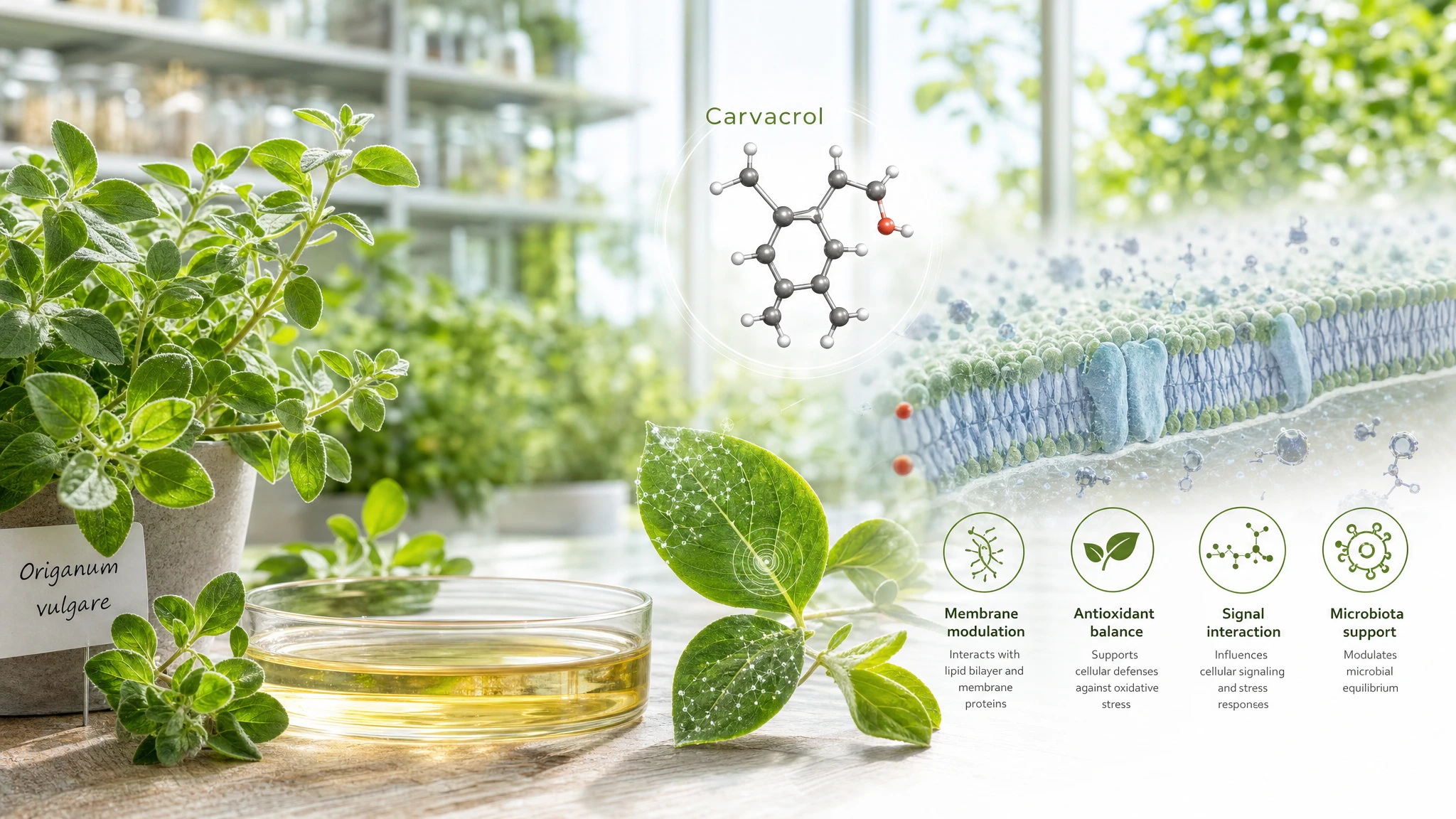
Carvacrol is a phenolic monoterpene (a small plant molecule with a phenolic group). In study models, it can act on multiple biological targets. Tests evaluate both its action on microbes and its effects on membranes and oxidative stress. The latter occurs when too many reactive substances form within the cell.
The composition of oregano essential oil also matters, as it can vary significantly. The phytocomplex (the set of substances in the plant) changes based on the raw material and the extraction method. The ratio between the phenolic compounds in oregano also varies. Carvacrol is therefore an important part of a larger system. Its role is clearly visible in tests, but caution is required when discussing food or human use.
These data explain why the compound is useful for studying the biological activity of oregano. However, they do not directly demonstrate a clinical benefit. To better understand the topic, it is helpful to start with three questions that will guide the next steps:
- Why carvacrol has become the most studied compound in oregano.
- How carvacrol can act on cell membranes.
- Why results change when moving from the molecule to the plant.
Carvacrol helps explain why oregano generates so much interest in biological research. The following sections show its role, how it acts, and the limitations of comparing it to the whole plant.
Why carvacrol is the most studied molecule in oregano
Carvacrol is widely studied because it shows various easily measurable effects in tests. It is a phenolic monoterpene (a small plant molecule with a phenolic group). Its structure allows it to act on multiple parts of the cell, rather than having a single effect. Furthermore, certain chemotypes (plant types with different chemical compositions) contain higher amounts of it. This is why researchers often use it to carefully study the active ingredients of oregano. This choice allows for linking the molecule's structure to the effects observed in various tests.
A 2018 review summarized these data and the biological role of the compound. However, it clarified that human trials (studies conducted on people) are still lacking [4]. Its interest therefore remains primarily biological and related to testing, rather than clinical treatment. The strength of the results depends on the model used. Tests help to understand the mechanisms, but they are not sufficient to define a therapeutic use in humans. One of the first effects studied concerns cell membranes.
Carvacrol and cell membranes: the first level of action
Carvacrol is also being studied for how it interacts with cell membranes. The molecule is lipophilic (it binds well to fats) and can enter their lipid bilayer. It can thus partially change the shape, fluidity, and order of the membrane. In some microbes, this can reduce their stability and alter exchanges with the outside environment. This is a physical and chemical effect observed in tests, not proof of a clinical effect.
An in vitro study (conducted in a laboratory) examined Pseudomonas aeruginosa and Staphylococcus aureus. Researchers tested oregano essential oil and its main components. They then measured the minimum amount capable of stopping bacterial growth [11]. The result shows that the effect on the membrane can produce measurable biological activity. However, the evidence does not indicate the effect in humans. It also does not clarify what happens within the phytocomplex, where other substances may increase or reduce the action.
Why comparing an isolated molecule to the plant is complicated
Studying carvacrol on its own is useful, but it is not enough to understand what really happens when using oregano. In the plant, in fact, the compound coexists with other constituents that can modify its stability, absorption, and overall biological response. These constituents do not remain inert: they can strengthen an effect or attenuate it, depending on the quantities involved. For this reason, the comparison between an isolated molecule and a plant matrix is always delicate. A pure substance helps to clarify the mechanism with precision, isolating one variable at a time. The spice or oil, on the other hand, describes a more complex and less linear system, made up of many molecules acting together.
In 2025, a review also described synergistic antimicrobial activities between carvacrol and thymol against bacteria and Candida [12]. Synergy refers to a combined effect that is stronger than the sum of the individual effects. This data reinforces the idea that oregano should be viewed as a system of molecules, not as a single isolated active ingredient. However, the limitation remains interpretive: these data support a relevant biological role, but they do not allow for the direct transfer of results from the isolated molecule to the use of the whole plant. Caution is therefore needed when moving from the laboratory to real-world consumption.
How to interpret the role of thymol in oregano
Thymol is a phenolic monoterpene (an aromatic terpene molecule with a phenolic group). In oregano, it is part of the aromatic and biological profile, so it should not be studied in isolation. The ratio between the various phenolic compounds present in the plant also matters. The phytocomplex (the sum of the plant's substances) actually drives its aroma, composition, and activity. Thymol thus helps to better define the chemical quality of the plant.
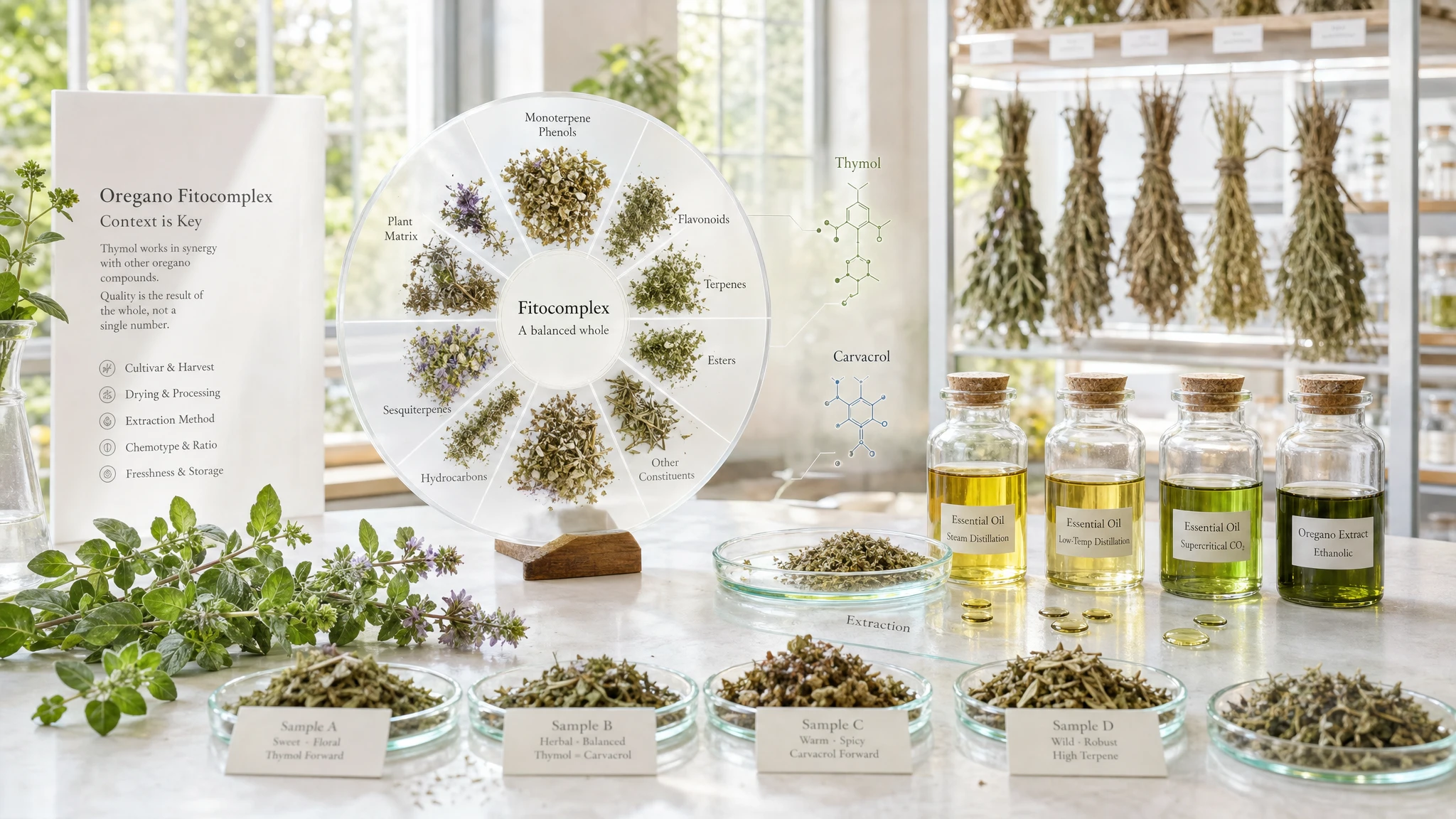
Context is necessary to understand the role of thymol in oregano and its weight within the mixture. Thymol contributes to the plant's properties, but it does not explain its value on its own. It must be interpreted alongside the other active ingredients, because the final profile depends on the entire phytocomplex.
This method avoids overly simplistic interpretations of the composition of oregano essential oil. It also explains why different samples may have aromas and functions that are not entirely identical.
Thymol remains important, but it describes the plant better when compared with other phenolic monoterpenes. Furthermore, harvesting, processing, and the method used to extract the substances also matter.
To interpret the data correctly, it is useful to follow four steps:
- Evaluate thymol as part of the total composition.
- Study the ratio with carvacrol in the phytocomplex.
- Distinguish the composition of the oil from the biological response.
- Consider how extraction changes the proportion of the compounds.
Thymol is a phenolic monoterpene (an aromatic terpene molecule with a phenolic group). It should be viewed as part of the chemical profile of oregano, not as an independent substance.
The role of thymol in the biological profile of oregano
Thymol contributes to the oregano profile as one of the main phenolic compounds, but its significance must always be considered in relation to the rest of the matrix. In practice, it describes a portion of the aromatic signature and potential biological activity, without encompassing the entire function of the plant. The reference review [7] shows that the concentration of thymol can range from trace amounts to over 60% of the essential oil, depending on the subspecies and geographical origin.
This wide range explains why two oregano samples can have very different sensory and biological profiles. The collected data also indicate that thymol shows antimicrobial activity in vitro, but the observed potency varies based on the total composition of the oil. The limitation of this interpretation is clear: the work synthesizes literature data and does not measure a single sample, so while it provides a good general overview, it does not allow for attributing a universal or identical effect to thymol across every botanical origin.
Carvacrol and thymol: how the ratio between varieties changes
The ratio between carvacrol and thymol is useful because it describes how the composition of oregano changes from one chemotype to another. In some cases, carvacrol prevails, while in others, thymol is more prominent, and this difference affects both the scent and the overall biological profile.
The studies collected in the review [7] document chemotypes with a carvacrol/thymol ratio greater than 10 to 1 in some variants of Origanum vulgare, while in others, thymol dominates with a ratio of less than 1 to 2. These imbalances are not minor details: they influence the antioxidant capacity measured with the DPPH assay and modify the spectrum of action against Gram-positive and Gram-negative bacteria. For this reason, talking about only one of the two molecules risks oversimplifying a variable chemical reality. The limitation remains that of descriptive and preclinical research: they indicate real differences, but they are not enough on their own to predict the practical effect of a specific product.
Why thymol should not be interpreted alone
Isolating thymol can be useful for studying its properties, but within the plant, its significance emerges primarily in conjunction with other constituents. In the oregano phytocomplex, the interactions between molecules, their relative abundance, and the way the matrix is obtained are what truly matter. The review [7] cites evidence of synergy between thymol and carvacrol, where the mixture of the two compounds shows antimicrobial activity superior to that of the individual components tested at the same concentration.
This combined effect is lost when evaluating a molecule isolated from its natural context. This also applies when comparing the spice, extract, and essential oil, because the bioavailability of the components changes significantly between the different forms. The data show a genuine interest in this combined action, but they remain almost entirely preclinical, with inconsistent results across models. The most solid takeaway is therefore interpretative: thymol should not be viewed as an absolute indicator, but as part of a broader chemical network.
Summary of scientific evidence
This summary synthesizes the previously cited literature. It connects the composition, the variety of products, and the activities observed in laboratory tests.
| Publication year | Area studied | What the studies indicate |
|---|---|---|
| 2001 | antimicrobial mechanism of action | in vitro effects were observed on Pseudomonas aeruginosa and Staphylococcus aureus with essential oil, thymol, and carvacrol [11] |
| 2011 | chemical composition of an oregano chemotype | in the analyzed sample, 36.46% carvacrol, 29.74% thymol, and 24.31% p-cymene were measured [3] |
| 2016 | ethanolic extract of Origanum vulgare and main components | evidence attributes much of the antioxidant and antibacterial activity to carvacrol and thymol [6] |
| 2018 | biological interest in carvacrol | studies indicate broad interest in testing, but clinical data on humans remain incomplete [4] |
| 2020 | guideline on oregano essential oil | evidence indicates that the essential oil is a defined mixture, different from the spice and rich in carvacrol and thymol [7] |
| 2023 | variability of composition based on species and cultivation | studies suggest that carvacrol and thymol levels vary significantly with botanical origin and growing conditions [1] |
| 2024 | antibacterial and antibiofilm activity of carvacrol and thymol | 38 articles were evaluated, with mean minimum inhibitory concentrations of 475.46 and 279.26 µg/mL and 68 synergistic or additive combinations [8] |
| 2025 | antimicrobial synergy between carvacrol and thymol | data indicate a combined action against bacteria and Candida, but these are still derived from preclinical studies [12] |
Editorial interpretation of the evidence
In the studies I reviewed for this article, I found one point on which the literature converges. Carvacrol and thymol are reliable markers for studying oregano. I observed that the composition changes significantly between species, chemotypes, and products. Furthermore, the observed effects are highly dependent on the dose and the matrix. In laboratory tests, these compounds show activity against certain microbes and other biological actions.
The main limitation I encountered is the gap between laboratory tests and real-world use. Much of the data comes from reviews or in vitro trials (outside of a living organism). I noted that samples, extraction methods, and analysis techniques vary between studies. Moreover, the spice, essential oil, and extracts are not equivalent products. To interpret the results, I therefore believe it is essential to clearly define the form, dose, and context.
Conclusions and editorial summary
From the studies gathered here, I have come to the conviction that carvacrol and thymol help in studying oregano with care, as they define much of its chemical identity. They also explain many differences between samples, chemotypes (chemical variants of the same species), and products. I have observed that these compounds do not act alone. The matrix, the phytocomplex, and the actual dose also matter. For this reason, the spice, essential oil, and extracts are not equivalent.
The tests help me understand the potential biological role of oregano. However, laboratory data do not apply directly to everyday life. Studying aromatic plants remains useful in nutrition because it links quality, natural variety, and the careful use of food. Oregano therefore offers a good model for evaluating the bioactive compounds (substances that act within biological systems) of plants.
Final critical note
The overview I have outlined describes the chemistry of oregano well, but provides fewer answers regarding its practical use. The studies I have examined confirm the central role of carvacrol and thymol and the great variety in composition. However, many comparable data on humans are still missing. Therefore, a gap remains between what we know about the chemistry and what happens in real-world use.
Comparing the studies also proved difficult for me. Indeed, the species, extraction methods, dosages, and test models vary. The most accurate interpretation I can offer remains cautious: the topic has a solid foundation, but more data are still needed.
References
[1] Limited Scope Technical Report: Flavors - Handling
[3] Oregano: Chemical Analysis and Evaluation of Its Antimalarial, Antioxidant, and Cytotoxic Activities
[5] Chemical and Bioactive Evaluation of Essential Oils from Edible and Aromatic Mediterranean Lamiaceae Plants
[6] Antioxidant, Antibacterial, and Cytotoxic Activities of the Ethanolic Origanum vulgare Extract and Its Major Constituents
[7] Safety and efficacy of an essential oil of Origanum vulgare ssp. hirtum (Link) leetsw. for all poultry species
[8] Thymol and carvacrol against Klebsiella: anti-bacterial, anti-biofilm, and synergistic activities—a systematic review
[9] Thymol Chemotype Origanum vulgare L. Essential Oil as a Potential Selective Bio-Based Herbicide on Monocot Plant Species
[11] A study of the minimum inhibitory concentration and mode of action of oregano essential oil, thymol and carvacrol
Editorial note
Artificial Intelligence was used solely as a tool to support editorial and documentary work. All content, interpretations, bibliographic citations and conclusions have been verified, reviewed and approved by the author, who assumes full scientific responsibility for them.
The manuscript was also subject to independent peer review prior to publication.
To ensure maximum transparency, the article's complete history — including the dates of submission, review, acceptance and publication, as well as information on the peer review process — is available on the dedicated Article History page.