


Caffeine ingestion is associated with reductions in glucose uptake regardless of obesity and type 2 diabetes before and after physical training - Evidence review
The study found that an acute dose of caffeine reduced insulin-mediated glucose uptake even in lean men, prior to the onset of disease. Subsequent trials and a meta-analysis confirm the acute effect, but do not demonstrate that habitual coffee consumption causes diabetes or persistent insulin resistance in the long term in humans.
- Published 21/11/2026
- Updated 21/11/2026
- Article history
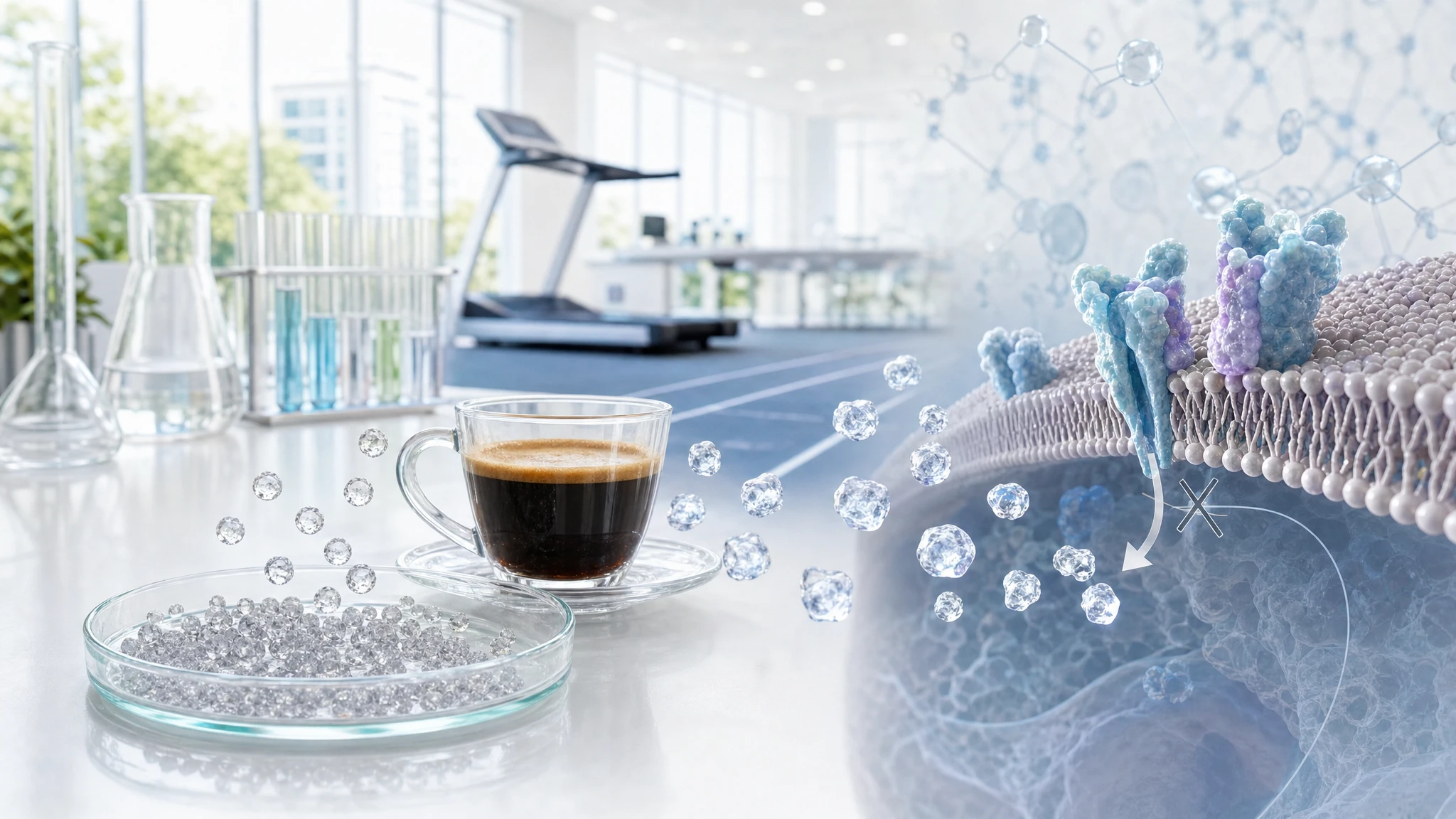
ABSTRACT
The analyzed study evaluated whether a single dose of caffeine reduced insulin sensitivity, that is, the body's ability to use insulin to move glucose into cells. Twenty-three sedentary men, either lean or obese with or without type 2 diabetes, received caffeine or a placebo in randomized, double-blind trials, before and after three months of aerobic exercise. Compared to the placebo, caffeine reduced insulin sensitivity in all groups, including lean men without diabetes.
In section 4.16 of “The Choice to Live in Health or Illness” by Dr. A. Colonnese and R. Panzironi, this research contributes to the narrative that acute impairment of glucose entry into cells can appear before overt obesity and diabetes. Independent clinical studies and a meta-analysis confirm that acutely ingested caffeine can reduce insulin sensitivity and worsen glucose management. However, the evidence does not demonstrate that this transient effect is equivalent to the inevitable development of diabetes, nor that habitually consumed coffee produces the same effects in the long term.
Analyzed study
Caffeine ingestion is associated with reductions in glucose uptake independent of obesity and type 2 diabetes before and after exercise training
PMID: 15735189
The research question was whether caffeine intake reduced insulin sensitivity in sedentary men with different metabolic conditions: lean, obese without diabetes, and obese with type 2 diabetes. The authors also verified whether three months of aerobic training modified this response.
The hypothesis was that caffeine hinders insulin action regardless of obesity or diabetes. Insulin sensitivity was measured using the hyperinsulinemic-euglycemic clamp, an experimental procedure in which insulin is kept elevated and blood glucose is kept stable: a greater amount of glucose required to maintain stable glycemia indicates, in general, a greater response to insulin.
The relevance to the book's paragraph concerns a specific point: the reduction of insulin-mediated glucose uptake can also be observed in lean people without diabetes. The study documents this acute effect under controlled experimental conditions. However, it cannot establish that caffeine causes diabetes over time, nor can it directly demonstrate all the molecular mechanisms mentioned in the paragraph, such as alterations in PI3K/AKT, GLUT4, or cortisol.
Materials and methods of the original study
The study included 23 sedentary men: 8 lean, 8 obese without type 2 diabetes, and 7 obese with type 2 diabetes. Each participant underwent two trials, one with caffeine and one with a placebo, following a randomized, double-blind, crossover design. In a crossover design, each person receives both experimental conditions, reducing the influence of individual differences.
The caffeine dose was 5 mg per kilogram of body weight. Insulin sensitivity was assessed using two hyperinsulinemic-euglycemic clamps, one after caffeine and one after placebo, both before and after a three-month aerobic exercise program. Body composition was measured using magnetic resonance imaging.
The available material consists only of the abstract. Detailed inclusion and exclusion criteria, the duration and frequency of training sessions, the intervals between trials, absolute clamp values, complete clinical characteristics of the participants, and detailed statistical procedures are not reported in the available material.
Results
Before training, caffeine was associated with a statistically significant reduction in insulin sensitivity compared to placebo in all three groups. The reduction was 33% in lean men, 33% in obese men without diabetes, and 37% in men with type 2 diabetes; for each comparison, the abstract reports P < 0.05. In practical terms, after caffeine, the body required a smaller amount of glucose to respond to insulin, indicating a reduced ability of insulin to facilitate glucose uptake into tissues.
After three months of aerobic exercise, the association between caffeine and lower insulin sensitivity was still present. Compared to placebo, insulin sensitivity was reduced by 23% in the lean group, 26% in the obese group without diabetes, and 36% in the group with type 2 diabetes; in this case as well, P < 0.05.
Training did not produce a statistically significant increase in insulin sensitivity in either the caffeine or placebo trials, regardless of the group: P > 0.10. This finding does not mean that exercise is ineffective in general, but it indicates that, in the sample and under the conditions described, the program did not significantly modify the measure used by the authors. The abstract does not report confidence intervals, absolute values of glucose uptake, or separate analyses adjusted for potential confounding factors.
Interpretation
The most relevant finding regarding the book's section is simple: the acute effect of caffeine on the insulin response was not limited to people with obesity or diabetes. Even lean men without diabetes showed a 33% reduction in insulin sensitivity compared to the placebo before training and a 23% reduction after training.
The publication therefore supports the part of the narrative suggesting that reduced insulin-stimulated glucose utilization can be detected early, before the onset of overt disease. However, the data concerns an acute response to an experimental dose of caffeine in a limited population of sedentary men. It does not prove that daily coffee consumption causes permanent insulin resistance, nor that the observed effect depends directly on the inhibition of the PI3K/AKT pathway or reduced translocation of GLUT4, the transporter that facilitates glucose entry into muscle and adipose cells.
A possible biological link is that caffeine increases hormonal and nervous signals that temporarily counteract the action of insulin. This is an interpretation consistent with subsequent studies, but the mechanism was not fully demonstrated by the publication subject to the Evidence Review.
Independent supporting evidence
A systematic review and meta-analysis of seven randomized clinical trials conducted in healthy individuals evaluated the acute effect of caffeine on insulin sensitivity. Overall, the authors found a significant reduction in insulin sensitivity following caffeine intake compared to control conditions. This summary directly confirms the direction of the effect described in the analyzed study: an acute dose of caffeine can reduce the body's response to insulin. The main limitation is that the included studies were small and varied in terms of dose, measurement method, and participant characteristics [1].
A randomized, double-blind, crossover trial conducted in 24 healthy adults, 12 men and 12 women, showed a dose-response relationship. After caffeine doses of 1, 3, or 5 mg/kg, followed by an oral glucose tolerance test, the increase in dose was associated with increases in the areas under the curve for insulin and C-peptide, a protein that reflects insulin secretion. For every 1 mg/kg increase, the area under the curve for insulin increased by 5.8% and that for C-peptide by 8.7%; glucose exposure also increased. The study confirms that the acute alteration can occur in healthy subjects of both sexes and can begin at low doses. Since it uses an oral test and not a clamp, it estimates the metabolic response using a different method [2].
A further crossover study in seven healthy men examined a mechanistic step useful for the book's narrative. Caffeine, at a dose of 5 mg/kg, increased the area under the curve for insulin by 42% and for C-peptide by 39% compared to placebo during an oral glucose tolerance test. When participants also received propranolol, a drug that blocks beta-adrenergic receptors, these responses returned to levels similar to those of the placebo. The result suggests that adrenergic activation, i.e., signals linked to adrenaline, contributes to the acute effect of caffeine on glucose regulation. However, it does not demonstrate a predominant role for cortisol nor a specific inhibition of PI3K/AKT in humans [3].
Conflicting evidence
Evidence regarding the acute effect of caffeine cannot be automatically applied to the effects of habitual coffee consumption. In an eight-week parallel randomized trial, 45 healthy, overweight volunteers who were already habitual coffee drinkers were assigned to consume five cups of caffeinated coffee, decaffeinated coffee, or water daily. No significant differences emerged between the groups regarding glucose tolerance, insulin sensitivity, and insulin secretion. However, caffeinated coffee increased adiponectin, while decaffeinated coffee reduced fetuin-A, both of which are metabolic biomarkers [4].
This result does not refute the acute decrease in insulin sensitivity observed after a single dose of caffeine. Rather, it indicates that regular consumption of coffee—a beverage containing many substances in addition to caffeine—may produce different or compensated effects over time. The limitations include the small sample size, the eight-week duration, and the absence of a clamp-based assessment. No directly conflicting evidence sufficiently relevant to the acute effect of caffeine measured via clamp has been identified; this does not prove the absence of contradictory results.
Summary table of evidence
The table distinguishes the publication that is the subject of the Evidence Review from the independent research used to confirm or define the narrative of the paragraph.
| Reference | Study type | Population or model | Main result | Direction of evidence | Strength of evidence |
|---|---|---|---|---|---|
| Original study | Randomized, double-blind, crossover trial | 23 sedentary men: lean, obese without diabetes, and obese with type 2 diabetes | Caffeine reduced insulin sensitivity by 33%, 33%, and 37% before exercise in the three groups. | direct confirmation | moderate |
| [1] | Systematic review and meta-analysis of RCTs | Seven randomized clinical trials in healthy individuals | Acute caffeine intake significantly reduced insulin sensitivity compared to controls. | direct confirmation | moderate |
| [2] | Randomized, double-blind, crossover RCT | 24 healthy adults, 12 men and 12 women | Increasing doses of caffeine increased glycemia, insulin, and C-peptide after an oral glucose tolerance test. | direct confirmation | moderate |
| [3] | Crossover RCT | 7 healthy men | Caffeine increased insulin and C-peptide; beta-adrenergic blockade abolished this difference. | biologically consistent evidence | low |
| [4] | Parallel RCT | 45 healthy overweight adults, habitual coffee consumers | Eight weeks of caffeinated coffee did not significantly change insulin sensitivity or glucose tolerance. | discordant evidence | low |
Confirmation of the evidence
Claim in the book
In section 4.16 of "The Choice to Live in Health or Illness" by Dr. A. Colonnese and R. Panzironi, the relevant statement is that cellular glucose uptake can be compromised even in non-obese and non-diabetic subjects, suggesting that this phenomenon may appear before the onset of overt pathology.
Acute caffeine → reduced insulin sensitivity → reduced peripheral glucose uptake → transient impairment of glucose management
The publication subject to the Evidence Review was used in the book to support the following passage: an acute dose of caffeine can reduce insulin-mediated glucose uptake even in lean, non-diabetic men, therefore prior to clinically manifest obesity or diabetes.
The scientific correlation is direct: the analyzed study compared caffeine and a placebo using a reference technique to measure insulin sensitivity and observed a 33% reduction even in the lean group. The publication does not directly document the entire molecular chain mentioned in the paragraph, including a specific alteration of PI3K/AKT, GLUT4, or cortisol.
Independent evidence primarily strengthens the functional segment of the chain. A meta-analysis of randomized trials confirms that acute caffeine intake reduces insulin sensitivity in healthy individuals [1]. Furthermore, a trial in healthy men and women shows that increasing the caffeine dose is associated with a greater insulin response and higher glucose exposure following a glucose load [2]. Another experiment suggests that beta-adrenergic signals contribute to the acute worsening of glucose tolerance, as propranolol abolished the caffeine-induced increase in insulin and C-peptide [3].
The situation, however, requires caution. An eight-week trial on regular coffee consumption did not detect significant changes in insulin sensitivity, showing that isolated caffeine taken acutely and habitual coffee consumption are not equivalent exposures [4]. In “The Choice to Live in Health or Illness” by Dr. A. Colonnese and R. Panzironi, the passage regarding the early onset of an acute alteration in glucose utilization is therefore well-linked to the original study; however, it is not proven that this equates to stable insulin resistance or future metabolic disease.
Overall level of confirmation
MODERATE CONFIRMATION
The acute reduction in insulin sensitivity following caffeine intake is supported by the original study, independent trials, and a meta-analysis. The level of confirmation remains moderate because the studies are generally small, primarily evaluate short-term effects, and do not demonstrate a progression toward diabetes or persistent insulin resistance.
Conclusions
The study analyzed directly supports the claim that a single dose of caffeine can temporarily reduce insulin sensitivity even in lean men without diabetes. This observation is confirmed by independent clinical research and a meta-analysis; therefore, the passage in the book regarding the possible early onset of reduced glucose utilization is moderately supported.
However, the strength of this conclusion is limited to the acute and experimental effect of caffeine. The available evidence does not allow us to translate this result into proof that habitual coffee consumption causes diabetes, chronic insulin resistance, or permanent alterations in insulin signaling. The role of cortisol, PI3K/AKT, and GLUT4 requires more direct and specific human validation.
Overall assessment
The narrative is moderately supported regarding the acute effect: caffeine can reduce insulin sensitivity and glucose uptake even in healthy individuals. The adrenergic mechanism is biologically plausible, but evidence of specific molecular alterations in humans and persistent metabolic consequences remains limited.
References
[1] Acute caffeine ingestion reduces insulin sensitivity in healthy subjects: a systematic review and meta-analysis
[2] Caffeine ingestion impairs insulin sensitivity in a dose-dependent manner in both men and women
[3] Caffeine-induced impairment of glucose tolerance is abolished by b-adrenergic receptor blockade in humans
[4] Effects of caffeinated and decaffeinated coffee on biological risk factors for type 2 diabetes: a randomized controlled trial
Editorial note
Artificial Intelligence was used solely as a tool to support editorial and documentary work. All content, interpretations, bibliographic citations and conclusions have been verified, reviewed and approved by the author, who assumes full scientific responsibility for them.
The manuscript was also subject to independent peer review prior to publication.
To ensure maximum transparency, the article's complete history — including the dates of submission, review, acceptance and publication, as well as information on the peer review process — is available on the dedicated Article History page.