


Consumption of caffeinated coffee impairs glycemic homeostasis in response to high and low glycemic index meals in healthy men - Evidence review
In the ten healthy men studied, caffeinated coffee increased glycemia after carbohydrate-rich meals and reduced insulin sensitivity, especially with a high-glycemic index meal. Independent trials and a meta-analysis confirm an acute effect, but do not demonstrate chronic damage or a molecular mechanism in humans.
- Published 20/11/2026
- Updated 20/11/2026
- Article history
ABSTRACT
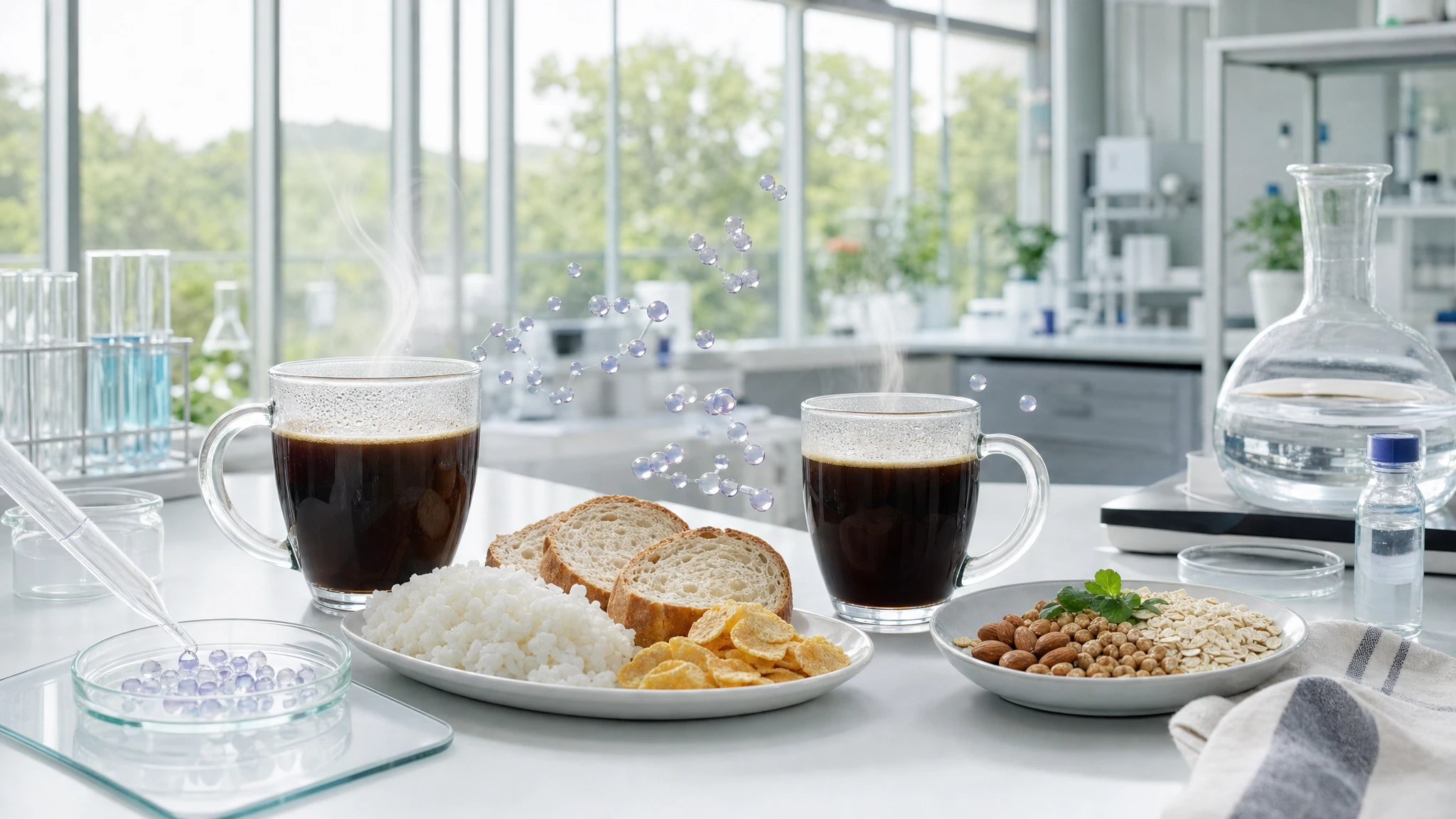
The original study verified whether caffeinated coffee, consumed before a mixed meal containing 75 g of carbohydrates, altered glycemic control in healthy men. Ten participants completed four trials in random order, comparing caffeinated and decaffeinated coffee before high or low glycemic index meals. Compared to decaffeinated coffee, caffeinated coffee increased postprandial glucose exposure in both conditions and significantly reduced insulin sensitivity after the high glycemic index meal.
In the narrative of "The Choice to Live in Health or Illness" by Dr. A. Colonnese and R. Panzironi, the publication contributes to the passage stating that the acute effect does not depend generically on coffee, but on caffeine, and can temporarily make insulin action less efficient. Independent crossover studies and a meta-analysis are consistent with an acute worsening of glucose management. However, a longer randomized trial on daily coffee consumption did not observe a significant reduction in insulin sensitivity. The most prudent conclusion, therefore, concerns the acute effect of caffeine, not a proven chronic metabolic impairment.
Analyzed study
Caffeinated coffee consumption impairs blood glucose homeostasis in response to high and low glycemic index meals in healthy men
PMID: 18469247
The research question was simple yet relevant: when a healthy person drinks caffeinated coffee before eating carbohydrates, can the body manage blood sugar as effectively as it does after an equivalent decaffeinated drink? The hypothesis was that caffeine would temporarily worsen the response to the meal, even when the meal had a different glycemic index. The glycemic index indicates how quickly a carbohydrate-containing food tends to increase glycemia.
The study is relevant to paragraph 4.16 because it directly compares caffeinated and decaffeinated coffee while keeping the beverage comparable. This design allows for a more precise attribution of the observed difference to the presence of caffeine, rather than to the combination of other coffee compounds. The publication documents an acute worsening of glucose management and a reduction in insulin sensitivity in a specific experimental setting.
However, it cannot prove that habitual coffee consumption causes persistent insulin resistance, diabetes, or metabolic damage in the long term. Furthermore, it did not directly measure the PI3K/AKT pathway, which is a sequence of intracellular signals that helps insulin promote glucose entry into cells. Consequently, the link to this pathway remains a mechanistic interpretation external to the analyzed study.
Materials and methods of the original study
The study used a randomized crossover design: each of the ten healthy men received all four experimental conditions in random order. This approach reduces the influence of individual differences because each participant serves as their own control.
The conditions combined caffeinated coffee or decaffeinated coffee, followed one hour later by a mixed cereal meal with either a high or low glycemic index. Each meal provided 75 g of carbohydrates. The caffeine dose in the caffeinated coffee was 5 mg per kilogram of body weight; the decaffeinated coffee was administered in the same volume.
The primary outcomes were the areas under the curve for glucose, insulin, and C-peptide. The area under the curve summarizes how long a substance remains elevated in the blood over time after a meal. C-peptide is produced alongside insulin and helps assess insulin secretion by the pancreas. The authors also estimated insulin sensitivity, which is how effectively the body responds to insulin.
The average age, body mass index, caffeine consumption habits, inclusion and exclusion criteria, the exact timing of the study, any caffeine washout period, the analytical method for the samples, and the statistical formulas are not reported in the available material, which consists only of the abstract.
Results
The most important finding is that, after caffeinated coffee, blood glucose remained overall higher compared to after decaffeinated coffee. With the high-glycemic index meal, the area under the glucose curve was 147% higher after caffeinated coffee compared to decaffeinated, with P<0.001. In practical terms, glycemic control after that meal was worse.
In the same high-glycemic index condition, the area under the insulin curve was 29% higher, but this difference was not statistically significant. The C-peptide area, however, was 40% higher with P<0.001. This is consistent with increased insulin secretion or a higher demand for insulin, but it does not demonstrate on its own which mechanism is responsible.
After the low-glycemic index meal, caffeinated coffee increased the area under the glucose curve by 216%, the insulin area by 44%, and the C-peptide area by 36%, compared to decaffeinated coffee. The differences were statistically significant for glucose, insulin, and C-peptide, with P<0.001, P<0.01, and P<0.01, respectively.
Insulin sensitivity decreased by 40% after caffeinated coffee and a high-glycemic index meal compared to decaffeinated; the difference was statistically significant. After the low-glycemic index meal, insulin sensitivity decreased by 29%, but this difference did not reach statistical significance. The data therefore support an acute unfavorable effect of caffeine on the efficiency of insulin action, especially in the high-glycemic index condition.
The book's paragraph mentions a “reduced insulin response.” The available results show instead that insulin and C-peptide tended to increase after caffeinated coffee, while insulin sensitivity decreased. The most accurate formulation based on the data is therefore: to manage higher glycemia, the body required a greater insulin response in a context of lower insulin efficacy.
Interpretation
In plain language, the study suggests that caffeine can temporarily make the signal by which insulin prompts muscles, adipose tissue, and other tissues to use blood glucose less efficient. If cells respond less effectively, glucose remains in the bloodstream longer, and the pancreas may need to increase insulin production.
The part of the book's narrative that is actually documented is: caffeine in coffee → acute increase in glycemia after a carbohydrate-containing meal and reduced insulin sensitivity compared to decaffeinated coffee. The comparison with decaf makes it plausible that caffeine is a determining factor in the effect observed in this experiment.
However, the data does not directly identify the molecular point of interference. The activation of the insulin receptor, IRS-1/2 proteins, PI3K, AKT, or the GLUT4 transporter were not measured. Therefore, it is not possible to state, based on the publication alone, that caffeine directly inhibited the PI3K/AKT pathway or GLUT4 translocation in the participants' tissues.
The sample size was very small and consisted only of healthy men. Furthermore, the exposure was acute and at a dose relative to body weight that may not correspond to the usual dose consumed in a single cup. The results are therefore informative for the short term, but they do not quantify individual risk or the effects of habitual consumption.
Independent supporting evidence
A first randomized, double-blind, crossover study directly evaluated the effect of caffeine on insulin sensitivity in 12 healthy volunteers using a hyperinsulinemic-euglycemic clamp. This technique keeps glucose and insulin levels controlled and measures how much glucose the body can utilize; it is considered a direct assessment of insulin sensitivity. Caffeine reduced insulin sensitivity by 15% compared to placebo, with P<0.05. In the same experiment, plasma adrenaline increased fivefold, a result consistent with the possible involvement of the adrenergic response to acute stress, but not definitive proof of the mechanism's causality [1].
A second randomized crossover trial, conducted in ten healthy overweight men, verified whether even a single standard serving of coffee was sufficient to alter the glucose response. Participants received decaffeinated coffee with varying amounts of caffeine or a control, along with 50 g of glucose. Preparations containing 100 mg of caffeine, an amount equivalent to a standard serving in the study, increased the glycemic response compared to the control. When caffeine was kept constant, increasing the amount of decaffeinated coffee components did not produce a dose-dependent effect. The data confirms that the acute effect can emerge even with a dose lower than that used in the original study, but remains limited by a small sample size and short observation period [2].
A systematic review with meta-analysis of 18 clinical trials, totaling 252 participants, gathered evidence on the acute effects of caffeine and caffeinated coffee. Overall, acute intake increased circulating glucose with a weighted mean difference of 2.48 and reduced the insulin sensitivity index with a weighted mean difference of −0.46. The effect on glycemia was evident even for caffeinated coffee and was clearer with caffeine doses equal to or greater than 250 mg; the reduction in the insulin sensitivity index, in the subgroup analysis, was significant for pure caffeine but not for caffeinated coffee alone. This distinction limits the possibility of attributing every effect of coffee to caffeine, but remains consistent with the direction observed in the original study [3].
Taken together, this evidence supports the section of the book regarding an acute worsening of glucose management after caffeine or caffeinated coffee. The confirmation is more robust for the acute reduction in insulin sensitivity and the increase in postprandial glycemia than for the specific PI3K/AKT-GLUT4 molecular chain or a predominant role of cortisol.
Conflicting evidence
Acute evidence does not necessarily align with findings related to daily, long-term consumption. In a 24-week randomized controlled trial, 126 overweight adults with reduced insulin sensitivity were given four cups of regular instant coffee per day or a coffee-like placebo beverage. Insulin sensitivity, measured via hyperinsulinemic-euglycemic clamp, did not change significantly compared to the placebo: mean percentage difference of 4.0%, 95% confidence interval from −8.3% to 18.0%, P=0.53. Fasting plasma glycemia also showed no statistically significant difference [4].
This result does not directly contradict the acute observation of the original study, as it evaluates chronic exposure, a different population, and a comparison with a placebo rather than decaffeinated coffee. However, it indicates that it is incorrect to automatically translate a short-term postprandial effect into a stable worsening of insulin sensitivity over the long term. Potential adaptation to caffeine, other coffee compounds, changes in body weight, and individual differences may modify the overall effect.
Summary table of evidence
The table distinguishes the study covered in this review from independent publications and shows that the most consistent evidence concerns acute effects, not chronic ones.
| Reference | Study type | Population or model | Main result | Direction of evidence | Strength of evidence |
|---|---|---|---|---|---|
| Original study | Acute crossover randomized trial | 10 healthy men | Caffeinated coffee increased postprandial glycemia and reduced insulin sensitivity, particularly after a high-glycemic index meal. | direct confirmation | moderate |
| [1] | Double-blind crossover RCT with clamp | 12 healthy volunteers | Intravenous caffeine reduced insulin sensitivity by 15% compared to placebo. | direct confirmation | moderate |
| [2] | Double-blind crossover RCT | 10 healthy overweight men | A preparation with 100 mg of caffeine increased the postprandial glycemic response compared to control. | direct confirmation | moderate |
| [3] | Systematic review and meta-analysis of clinical trials | 18 trials, 252 participants | Acute intake increased glucose and reduced the insulin sensitivity index, with heterogeneity and differences between pure caffeine and coffee. | indirect confirmation | moderate |
| [4] | 24-week parallel controlled RCT | 126 overweight adults with reduced insulin sensitivity | Four daily cups of coffee did not significantly change insulin sensitivity compared to placebo. | discordant evidence | moderate |
Confirmation of the evidence
Claim in the book
In section 4.16 of “The Choice to Live in Health or Illness” by Dr. A. Colonnese and R. Panzironi, the relevant statement is that the effect observed after coffee consumption does not depend on the coffee itself, but on the caffeine, which is capable of temporarily inhibiting the efficiency of insulin signaling.
Caffeinated coffee → caffeine → lower insulin sensitivity → higher postprandial glycemia
The publication subject to the Evidence Review was used in the book to support the following passage: compared to decaffeinated coffee, caffeinated coffee temporarily compromises glycemic homeostasis after both high and low glycemic index meals and can reduce the efficiency of insulin action.
The scientific correspondence is direct. The original study compares caffeinated and decaffeinated coffee and observes higher postprandial glycemia with the caffeine-containing beverage; it also shows a significant reduction in insulin sensitivity after a high-glycemic index meal. Its contribution to the narrative of “The Choice to Live in Health or Illness” by Dr. A. Colonnese and R. Panzironi therefore concerns the acute effect of caffeine on glucose management, not the demonstration of a stable impairment of insulin signaling.
Independent confirmations are convergent. In healthy volunteers, caffeine reduced insulin sensitivity measured by clamp by 15% and markedly increased adrenaline [1]. A separate trial found an increase in glycemic response with an amount of caffeine equivalent to a standard serving of coffee [2]. The meta-analysis of 18 trials confirmed, overall, an acute increase in glucose and a reduction in the insulin sensitivity index, while noting heterogeneity and less consistency for caffeinated coffee compared to pure caffeine [3].
However, the chain ends at the physiological level observable in humans: caffeine, lower insulin sensitivity, and higher postprandial glycemia. The publication subject to the review did not measure PI3K, AKT, IRS-1/2, or GLUT4, nor did it demonstrate that cortisol is the predominant mechanism. Furthermore, the 24-week trial did not find a significant reduction in insulin sensitivity with daily coffee consumption compared to placebo [4].
Overall level of confirmation
MODERATE CONFIRMATION
The passage regarding the acute effect of caffeine is directly supported by the original study and independent trials, as well as a meta-analysis. The confirmation is moderate because the acute samples are small, the response varies between pure caffeine and caffeinated coffee, and data on chronic consumption do not show a significant worsening of insulin sensitivity.
Conclusions
The study analyzed directly supports the idea that caffeinated coffee may temporarily impair glycemic management after a carbohydrate-rich meal compared to decaffeinated coffee. Independent evidence quite consistently confirms an acute reduction in insulin sensitivity and an increase in postprandial glycemia. However, the specific PI3K/AKT-GLUT4 molecular mechanism remains unproven in this research, and it is not possible to conclude that this acute effect necessarily leads to chronic insulin resistance or type 2 diabetes.
Overall assessment
The narrative regarding an acute effect of caffeine on insulin sensitivity and post-meal glycemia is moderately supported. Comparisons with decaffeinated coffee and independent trials are consistent. However, the translation into chronic harm, the PI3K/AKT mechanism, or a predominant role of cortisol remains unproven.
References
[2] A single serving of caffeinated coffee impairs postprandial glucose metabolism in overweight men
[3] The effect of coffee consumption on insulin sensitivity and other biological risk factors for type 2 diabetes: a randomized placebo-controlled trial
Editorial note
Artificial Intelligence was used solely as a tool to support editorial and documentary work. All content, interpretations, bibliographic citations and conclusions have been verified, reviewed and approved by the author, who assumes full scientific responsibility for them.
The manuscript was also subject to independent peer review prior to publication.
To ensure maximum transparency, the article's complete history — including the dates of submission, review, acceptance and publication, as well as information on the peer review process — is available on the dedicated Article History page.