


Evaluation of the glycemic response to model breakfasts with different glycemic indices in school-aged children aged 5-7 years - Review of the evidence
In 5-7-year-old children, a morning beverage with isomaltulose, a low-glycemic index sugar, produced lower glycemic peaks and more time spent at moderate levels compared to glucose. This supports the idea of more regular energy availability, but does not demonstrate cognitive benefits, which remain variable and require independent confirmation.
- Published 10/11/2026
- Updated 11/11/2026
- Article history
ABSTRACT
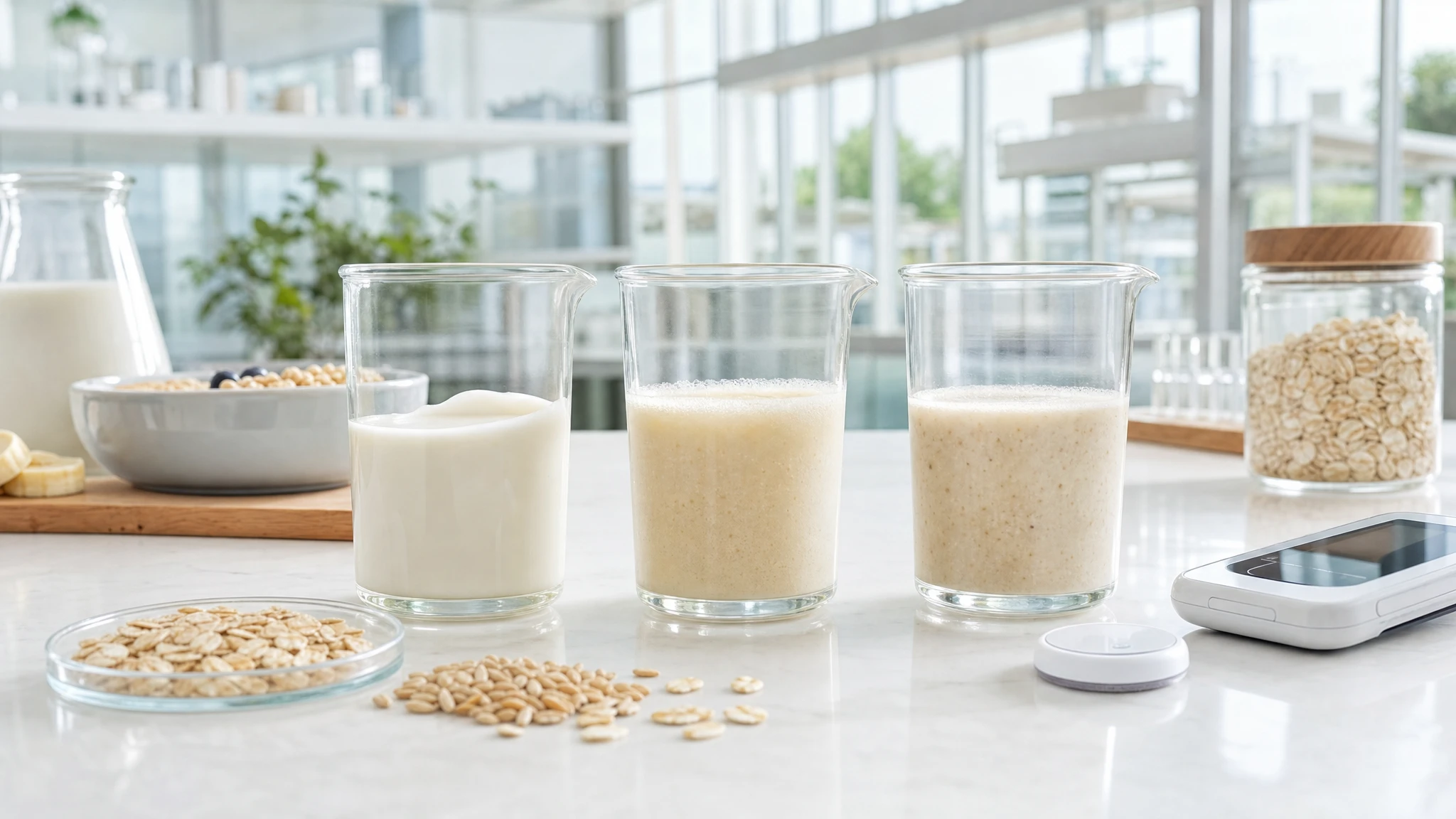
The analyzed study evaluated how three breakfast drinks, with equal energy intake but different glycemic indices, modified glycemia after consumption in eleven healthy children aged 5-7 years. The drink containing isomaltulose caused a more contained increase in glycemia compared to the drink with glucose and maintained intermediate values for longer, without excessive spikes.
In the "The Choice to Live in Health or Illness" section by Dr. A. Colonnese and R. Panzironi, the study contributes to the narrative that a more stable glycemic response could promote a more constant availability of glucose for the brain. However, the research did not measure attention, memory, or learning. Independent studies report some late cognitive advantages of breakfasts with a lower glycemic index or load, but a meta-analysis did not find a certain overall effect on memory and attention. The link between glycemic stability and cognitive performance therefore remains biologically plausible and moderately supported, but not uniformly proven.
Analyzed study
Assessment of Glycemic Response to Model Breakfasts Varying in Glycemic Index (GI) in 5-7-Year-Old School Children
DOI: 10.3390/nu13124246
PMID: 34959798
PMCID: PMC8707352
The research question was simple but important: in young children, do breakfasts with the same amount of energy but with sugars absorbed at different rates produce different glycemic curves? The authors compared a high-glycemic index drink with glucose, an intermediate-index one with sucrose, and a low-glycemic index one with isomaltulose.
The hypothesis was that isomaltulose, being digested and absorbed more slowly, would produce a less sharp increase in glycemia after breakfast. This is the segment of the narrative relevant to the paragraph from “The Choice to Live in Health or Illness” by Dr. A. Colonnese and R. Panzironi: the quality of carbohydrates can change the speed and intensity of the postprandial glycemic response, that is, after a meal.
The study can demonstrate acute differences in interstitial glycemia, measured in the fluid between cells, in the three hours following the drink. However, it cannot demonstrate that a more regular glycemic curve directly improves cerebral metabolism, attention, memory, academic performance, or long-term health, because these outcomes were not measured.
Materials and methods of the original study
A single-center, randomized, open-label, crossover pilot study was conducted. "Crossover" means that the same participants received all experimental conditions on different days: this allows each child to be compared against themselves. Eleven healthy children completed the study, eight females and three males, aged between 5 and 7 years; the average age was 6.5 years.
After a 12-hour overnight Fasting period and a standardized dinner the previous evening, each participant consumed one of three 260-kilocalorie drinks within 12 minutes: 125 mL of semi-skimmed milk with 50 g of glucose, sucrose, or isomaltulose. In a fourth visit, the same amount of sucrose was distributed in three doses, at the beginning and after 30 and 60 minutes.
Glycemia was measured every 15 minutes for up to 180 minutes using continuous glucose monitoring, a technique that estimates glucose in the interstitial fluid via a sensor applied to the arm. The primary outcome was the incremental area under the curve over three hours, which is an estimate of the overall glycemic increase above the baseline value. The maximum peak, the time required to reach it, and the time spent above, below, or between specific glycemic thresholds were also analyzed.
The analysis was conducted on the data available according to the protocol. One visit was excluded due to illness and one due to the Intake of paracetamol before the test. The authors used paired t-tests compared to the glucose drink. The sample was deliberately kept small because the study was designed as a pilot for future research that would also include cognitive tests.
Results
In practical terms, all beverages increased glycemia within 30-45 minutes, but the beverage containing isomaltulose produced a smaller rise and lower overall glycemic exposure compared to glucose. The mean baseline value was 5.4 ± 0.17 mmol/L.
The incremental area under the curve over three hours was highest after glucose, at 284 ± 58 mmol/L·min. After sucrose, it was 206 ± 58 mmol/L·min, which is 27% lower, though the difference was not statistically significant compared to glucose. After isomaltulose, it was 147 ± 21 mmol/L·min, 48% lower than glucose; this difference was statistically significant. Even within the first two hours, the incremental area was 50% lower with isomaltulose compared to glucose: 116 ± 18 versus 232 ± 45 mmol/L·min.
The maximum glycemic peak was 9.7 ± 0.61 mmol/L with glucose and 7.8 ± 0.27 mmol/L with isomaltulose. In other words, isomaltulose reduced the peak by approximately 1.9 mmol/L; the difference was statistically significant. The maximum increase from the baseline value was 4.3 ± 0.62 mmol/L with glucose and 2.4 ± 0.31 mmol/L with isomaltulose, a 45% reduction.
The beverage with isomaltulose maintained glycemia for longer within a range defined by the authors as moderate, between the baseline value and 7.8 mmol/L: 150 ± 10 minutes, compared to 115 ± 13 minutes after glucose and 97 ± 10 minutes after sucrose. The difference compared to sucrose was significant. Furthermore, the time spent above 7.8 mmol/L was 7 ± 3 minutes with isomaltulose, compared to 41 ± 14 minutes with glucose.
Distributing sucrose into three intakes did not reproduce the more moderate curve observed with isomaltulose. This result suggests that, in this specific beverage model, the nature of the sugar played a greater role than simply fragmenting the same amount of sucrose over time.
Interpretation
The key finding is that, in the children studied, the same energy content did not necessarily produce the same glycemic response. When the sugar used was isomaltulose, glycemia increased less and spent more time at intermediate values compared to when the sugar was glucose.
In plain language, a breakfast can provide carbohydrates without necessarily causing a rapid spike in glycemia. Technically, this is consistent with the low glycemic index of isomaltulose and a more gradual absorption of the glucose derived from digestion. The directly documented finding is therefore: different carbohydrate quality → different postprandial glycemic profile.
This passage helps to understand why the publication was cited in the section "The Choice to Live in Health or Illness" by Dr. A. Colonnese and R. Panzironi. However, the further step proposed by the book—that a more constant availability of glucose can keep brain metabolism more stable—remains a plausible physiological interpretation and not an outcome observed in this trial. The authors did not administer tests for memory, attention, or executive functions.
The strength of the glycemic results is limited by the very small sample size, the use of model beverages containing 50 g of sugar, and the short observation period. Furthermore, the results do not allow for the conclusions to be automatically extended to habitual breakfasts, mixed meals, or children with diabetes, obesity, or other metabolic conditions.
Independent confirmatory evidence
Particularly relevant confirmation comes from a double-blind, repeated-measures study on 75 children aged 5–11. On two separate occasions, participants consumed breakfasts with equal energy and macronutrient content, but sweetened with either isomaltulose or glucose. After one hour, no cognitive differences emerged; however, after three hours, the lower glycemic load breakfast was associated with better immediate memory and mood. In children evaluated a second time, faster information processing speed and better spatial memory were also observed. This study more directly confirms the link between the lower glycemic potency of breakfast and potential cognitive differences later in the morning, although it does not prove that the mechanism is exclusively glycemic stability [1].
A previous crossover study on 64 children aged 6–11 compared two breakfast cereals, one with a low glycemic index and one with a high glycemic index. Throughout the morning, the decline in attention accuracy and secondary memory was lower after the low glycemic index cereal. The study design supports the narrative of the book, but it does not directly measure glycemia during the test and does not identify which component of the breakfast determined the effect [2].
Another randomized study on 74 schoolchildren separated the effects of glycemic index and glycemic load, i.e., the quality and quantity of carbohydrates. After accounting for baseline levels of mood, glucose, and cortisol, the hormone involved in the stress response, low glycemic index breakfasts predicted better declarative verbal memory, while high glycemic index breakfasts predicted better alertness. This picture suggests that any cognitive effects are not uniform: they may depend on the cognitive domain considered, the time of assessment, and the overall composition of the meal [3].
Taken together, these independent studies strengthen the link between the glycemic quality of breakfast and certain aspects of cognitive function throughout the morning. However, significant differences remain regarding the age of the participants, the foods used, the cognitive tests, and the timing of measurements. For this reason, it is not possible to state that every low glycemic index breakfast will predictably improve all cognitive functions.
Conflicting evidence
The main relevant conflicting evidence is a systematic review with meta-analysis that compared low and high glycemic index breakfasts in children and adolescents. Combining the studies available up to June 2019, the authors did not find a statistically clear effect of the glycemic index on immediate memory, delayed memory, or attention. The aggregate effect sizes were 0.13 for immediate memory, 0.07 for delayed memory, and −0.01 for attention; all confidence intervals included the absence of an effect [4].
This evidence does not contradict the glycemic result of the original study, which concerns the different blood glucose curve after drinks with different sugars. Instead, it reduces the certainty of the next step, namely that a more moderate glycemic curve consistently leads to cognitive improvement in children. The meta-analysis also highlights the heterogeneity of the studies: different breakfasts, different cognitive measures, small samples, and non-overlapping evaluation times.
Consequently, the available data are compatible with selective and delayed benefits in some contexts, but they do not support a universal effect of a low glycemic index on memory and attention.
Summary table of evidence
The table distinguishes the glycemic data directly observed in the original study from independent research evaluating the link with cognitive functions.
| Reference | Study type | Population or model | Main result | Direction of evidence | Strength of evidence |
|---|---|---|---|---|---|
| Original study | Randomized crossover pilot study | 11 healthy children aged 5-7 | Isomaltulose reduced the three-hour incremental glycemic area and glycemic peak by 48% compared to glucose. | direct confirmation | moderate |
| [1] | Double-blind crossover RCT | 75 children aged 5-11 | After three hours, breakfast with isomaltulose was associated with better memory and mood compared to glucose. | direct confirmation | moderate |
| [2] | Crossover RCT | 64 children aged 6-11 | Low glycemic index cereal reduced the morning decline in attention and secondary memory. | indirect confirmation | moderate |
| [3] | Randomized RCT | 74 schoolchildren | Low glycemic index associated with better verbal memory; high glycemic index with better alertness. | biologically consistent evidence | moderate |
| [4] | Systematic review and meta-analysis | Children and adolescents in included studies | No statistically clear aggregate effect of low glycemic index on memory or attention. | discordant evidence | moderate |
Confirmation of the evidence
Claim in the book
In section 2.1, “The Choice to Live in Health or Illness” by Dr. A. Colonnese and R. Panzironi, it is stated that low-glycemic index meals are frequently associated with greater stability of cognitive functions, and it is hypothesized that a more constant availability of glucose may keep cerebral metabolism more stable, avoiding rapid energy fluctuations.
Carbohydrate quality and lower glycemic index → less elevated and more gradual glycemic increase → potentially more regular glucose availability → possible late differences in memory, attention, or other cognitive functions
The publication subject to the Evidence Review was used in the book to support the following passage: given the same amount of energy provided by breakfast, carbohydrates of different glycemic quality can produce different postprandial responses; in particular, a low-glycemic index carbohydrate can reduce the peak and overall glucose exposure in the hours following the meal.
The original study directly documents the first part of the chain: isomaltulose resulted in a more moderate glycemic curve in children compared to glucose. However, it does not document brain metabolism or cognitive abilities. The link to the latter receives independent support from studies in pediatric populations: a breakfast with isomaltulose, with a lower glycemic load but equivalent energy and macronutrients, was associated with better results in certain memory and mood tests after three hours [1]. A low-glycemic index cereal also attenuated the morning decline in attention and secondary memory [2].
The narrative, however, is not linear for all cognitive outcomes. In a randomized study, a low glycemic index was associated with better verbal memory, while a high glycemic index was associated with better alertness [3]. Furthermore, the quantitative synthesis of available pediatric studies did not demonstrate a statistically certain average advantage of a low glycemic index on memory or attention [4]. Therefore, the literature confirms the glycemic segment well and offers partial, context-dependent support for the cognitive segment.
Overall level of confirmation
MODERATE CONFIRMATION
The more moderate glycemic response after a breakfast with isomaltulose is directly documented in the original study. There are independent pediatric studies consistent with possible delayed cognitive benefits, but the outcomes are heterogeneous and the meta-analysis does not confirm a certain overall effect. The demonstration of a stable cognitive benefit in humans therefore remains incomplete.
Conclusions
The study analyzed directly shows that, in healthy 5-7-year-old children, a beverage containing isomaltulose produces a lower and more sustained postprandial glycemic response compared to a beverage containing glucose. This finding supports the concept that the quality of carbohydrates, in addition to their quantity, influences the glycemic curve after breakfast.
The link to cognitive functions is moderately supported by independent studies, especially for certain outcomes measured in the late morning hours. However, the effects are not uniform across memory, attention, and alertness, and the synthesis of the evidence does not demonstrate a clear overall benefit. Larger studies are needed, using realistic breakfasts, concurrent blood glucose measurements, and standardized cognitive tests.
Overall assessment
The relationship between the glycemic quality of breakfast and a lower magnitude of the glycemic response is well-supported at the experimental level. The link to greater stability of cognitive functions is moderately supported by some pediatric studies, but it remains heterogeneous and is not uniformly confirmed by the available quantitative syntheses.
References
[1] The effect of using isomaltulose (Palatinose™) to modulate the glycaemic properties of breakfast on the cognitive performance of children
[2] A low glycaemic index breakfast cereal preferentially prevents children's cognitive performance from declining throughout the morning
[3] Glycaemic index and glycaemic load of breakfast predict cognitive function and mood in school children: a randomised controlled trial
[4] Comparative Effect of Low-Glycemic Index versus High-Glycemic Index Breakfasts on Cognitive Function: A Systematic Review and Meta-Analysis
Editorial note
Artificial Intelligence was used solely as a tool to support editorial and documentary work. All content, interpretations, bibliographic citations and conclusions have been verified, reviewed and approved by the author, who assumes full scientific responsibility for them.
The manuscript was also subject to independent peer review prior to publication.
To ensure maximum transparency, the article's complete history — including the dates of submission, review, acceptance and publication, as well as information on the peer review process — is available on the dedicated Article History page.