


Gains and losses in agricultural food production: implications for the twenty-first century - Review of evidence
The review describes how modern food systems may lose phytochemical compounds. The passage cited in the book primarily concerns selection and processing that reduce bitterness and astringency. Independent studies confirm this phenomenon in specific crops; however, they do not demonstrate that every modern product automatically presents a lower absolute nutritional value.
- Published 09/11/2026
- Updated 11/11/2026
- Article history
ABSTRACT
The study analyzed is a narrative review on changes in modern agricultural and food systems. The authors argue that crop simplification, processing technologies, and the pursuit of more palatable foods may reduce fiber, complex carbohydrates, micronutrients, and certain classes of phytochemicals, i.e., biologically active plant molecules. The full text is not available in the provided material; therefore, detailed methods and results not reported in the abstract cannot be reconstructed.
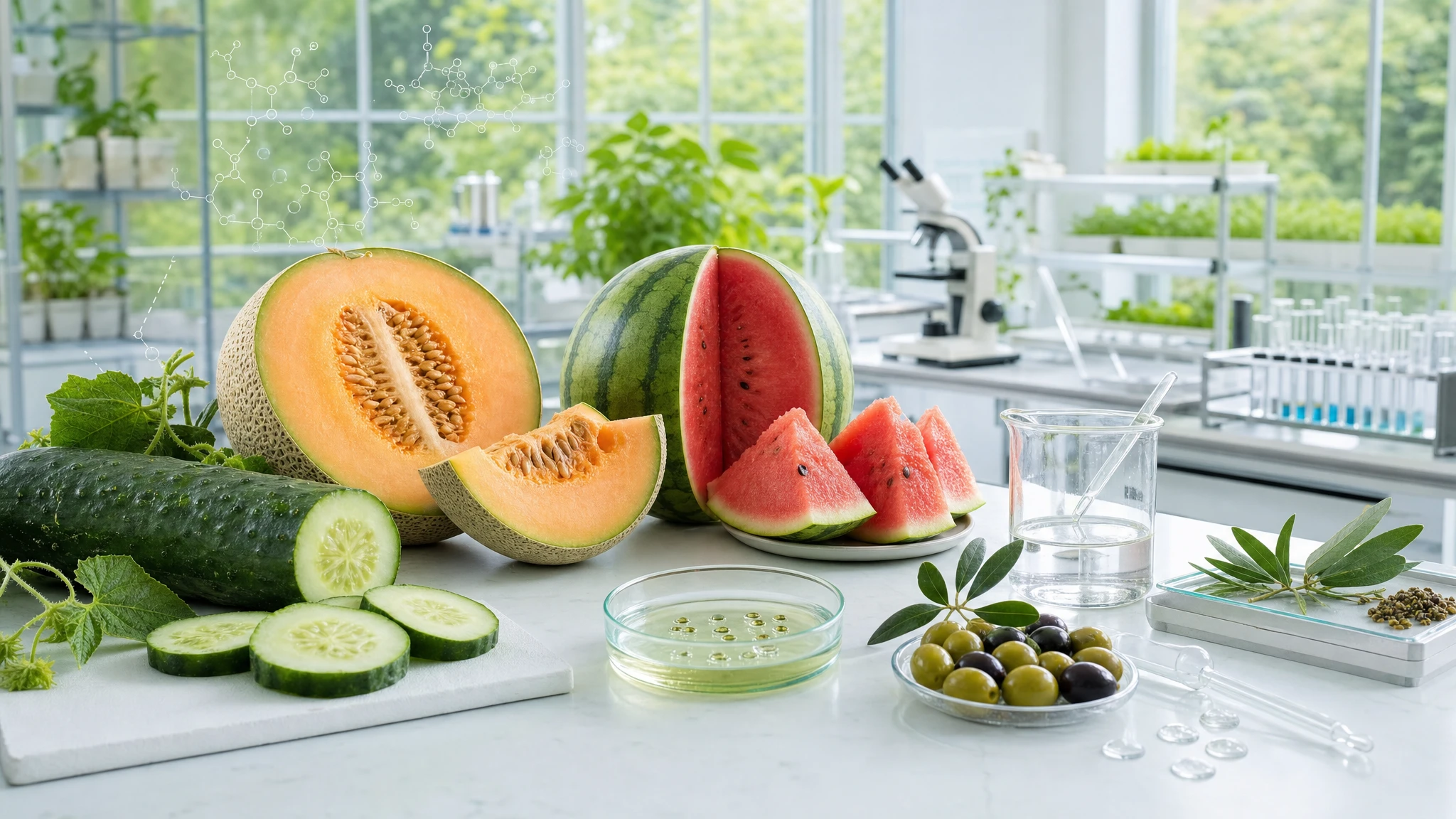
In the section "The Choice to Live in Health or Illness" by Dr. A. Colonnese and R. Panzironi, the publication contributes to the statement that many bitter and astringent compounds have been reduced through varietal selection and industrial de-bittering processes to make foods sweeter and more acceptable. Independent research documents the genetic selection of less bitter fruits in cucumber, melon, and watermelon and shows that some de-bittering processes remove phenolic compounds. However, the effects depend on the species, the molecule, and the method used; it is not proven that the reduction of bitterness always equates to an overall nutritional loss.
Analyzed study
Gains and Losses of Agricultural Food Production: Implications for the Twenty-First Century
DOI: 10.1146/annurev-food-082421-114831
PMID: 34813357
The research question was whether modern agricultural and food supply chains have produced benefits, such as greater food availability, but also significant losses in agricultural diversity, nutritional composition, and public health. The hypothesis discussed is that the progressive standardization of crops and foods has reduced certain components considered important for diet quality, including dietary fiber, complex carbohydrates, micronutrients, and phytochemicals.
The relevance to the section "The Choice to Live in Health or Illness" by Dr. A. Colonnese and R. Panzironi concerns a specific segment of the narrative: the orientation of production toward more easily accepted flavors may favor the reduction of bitter or astringent substances. Bitter and astringent do not automatically indicate beneficial or harmful substances: they describe sensory characteristics that can depend on very different molecules, including plant defense substances and phenolic compounds.
The analyzed study can therefore support the general context of the loss of certain phytochemicals in modern supply chains. However, it cannot, on its own, prove that every commercial variety is less rich in bioactive compounds than every traditional variety, nor that reduced bitterness causes a deterioration in human health.
Materials and methods of the original study
The publication is a narrative review of the literature on agri-food systems. Based on the available abstract, the authors discussed the reduction in agricultural biodiversity, changes in dietary composition, and potential innovations in food production, monitoring, processing, and distribution.
The available material does not report a detailed bibliographic search strategy, databases consulted, inclusion and exclusion criteria for studies, the number of selected publications, methodological quality assessment protocols, or aggregate statistical analyses. This information is not provided in the available material. There are no human participants, intervention groups, clinical follow-ups, or directly measured health endpoints.
Results
The abstract states that, over the last century, agricultural and food processing advancements have contributed to reducing hunger and poverty, yet without adequately addressing sustainability goals. The authors describe an erosion of agricultural biodiversity and balanced diets, alongside the progressive loss, in modern supply chains, of dietary fiber, complex carbohydrates, micronutrients, and various classes of highly bioactive phytochemicals.
Regarding the passage cited in the book, the most relevant result is conceptual: food selection and processing may prioritize sensory and commercial characteristics, including reduced bitterness and astringency. The abstract does not provide quantitative data on specific plant varieties, concentrations of individual phytochemicals, industrial de-bittering methods, or direct comparisons between modern and traditional foods. These data are not reported in the available material.
The available text does not report statistical significance values, confidence intervals, sample sizes, or effect sizes. For this reason, the publication does not allow for a quantitative estimate of how frequent or significant the loss of bitter and astringent compounds is across different crops.
Interpretation
In simple terms, plants produce many molecules that influence flavor. Some make a fruit bitter, while others cause astringency, which is that dry or rough sensation in the mouth. These substances can discourage insects and herbivores or contribute to the sensory characteristics of the product. If farmers, breeders, and industries prioritize sweeter or less bitter fruits, the quantity of some of these molecules may decrease.
The segment documented by the publication subject to the Evidence Review is therefore: modern agricultural and food supply chains → loss or reduction of certain classes of phytochemicals. The book's paragraph extends this idea to the more specific case of intentional selection against bitterness and astringency. This extension is biologically plausible and finds independent confirmation in specific crops, but it should not be transformed into the general claim that all eliminated compounds are protective or that all modern foods are nutritionally inferior.
The distinction is also important because some bitter compounds, such as cucurbitacins in fruits of the cucurbit family, are defense molecules and can be undesirable or even problematic at high concentrations. Selecting a less bitter food can therefore have a sensory and safety-related motivation, not just a commercial one.
Independent confirming evidence
Direct confirmation of the agricultural part of the narrative comes from a genetic and biochemical study on the cucumber. Researchers identified nine genes involved in the synthesis of cucurbitacin C, a triterpene responsible for bitterness, and two distinct genetic regulators for leaves and fruits. Analyses of genomic selection signatures indicated that, during domestication, selection on the fruit bitterness regulator favored the emergence of non-bitter cucumbers from bitter ancestors [1]. The study concerns one crop and a specific family of molecules: it demonstrates a mechanism of selection against bitterness, not a universal loss of phytochemicals in all vegetables.
A second study extended the same observation to cucumber, melon, and watermelon. Through comparative genomics, biochemical analyses, and experimentation on regulatory genes, the authors showed that the loss of fruit bitterness in the three species occurred through convergent modifications of fruit-specific regulators. This arrangement allows for the reduction of cucurbitacins in the edible part without necessarily eliminating the plant's entire defensive system [2]. It is a robust mechanistic confirmation of the direction described in the book: selection can reduce bitter compounds to make the fruit more palatable.
Further confirmation comes from a study on wild, cultivated, and domesticated watermelons. Metabolomic analysis—the measurement of many small molecules produced by the plant—revealed negative selection of cucurbitacins and flavonoids during the evolution and domestication of the watermelon, while sugars and carotenoids were positively selected during domestication. Functional experiments linked specific genetic variants to lower synthesis of cucurbitacins in cultivated watermelons [3]. The data confirms a reduction in compounds associated with bitterness, but does not allow for attributing a single nutritional or clinical significance to the negatively selected flavonoids.
The industrial component of the book's statement finds an example in table olives. In a laboratory comparison between conventional and ultrasound-assisted debittering, the accelerated procedure increased the removal of phenolic compounds responsible for bitterness and reduced the time required for treatment by 37.8% in water and 38.6% in brine [4]. This shows that debittering can modify or reduce phenols. The result concerns olives and a specific procedure; it does not authorize extending it indiscriminately to fruit, vegetables, or grains.
Conflicting evidence
No directly conflicting evidence of sufficient relevance has been identified; this does not prove the absence of contrary results. The available evidence, however, requires a contextual interpretation. In the case of cucurbits, the loss of bitterness does not automatically equate to the loss of all the plant's defense systems: genetic modifications may be limited to the fruit while leaving other functions active in tissues not intended for consumption [2].
Furthermore, the study on olives shows that ultrasound treatment, while increasing the removal of phenols associated with bitterness, maintained higher antioxidant activity compared to conventional debittering [4]. This does not contradict the reduction of specific phenols, but indicates that the effects of processing on product quality depend on the method, the food matrix, and the indicator used. It is therefore incorrect to consider every debittering process as synonymous with an identical biological or nutritional loss.
Summary table of evidence
The table distinguishes the publication subject to the review from the independent research used to verify the specific passage in the book.
| Reference | Study type | Population or model | Main result | Direction of evidence | Strength of evidence |
|---|---|---|---|---|---|
| Original study | Narrative review | Agricultural and food systems; no unique experimental population | Describes the progressive loss of certain classes of phytochemicals in modern supply chains | biologically consistent evidence | moderate |
| [1] | Plant genomics and biochemistry | Cucumber, genes and lines with different bitterness | Selection during the domestication of the fruit bitterness regulator favored non-bitter cucumbers | direct confirmation | moderate |
| [2] | Comparative genomics and plant functional study | Cucumber, melon, and watermelon | Convergent mutations of fruit regulators are associated with the loss of bitterness in three cucurbits | direct confirmation | moderate |
| [3] | Metabolomics, genomics, and plant functional experiments | Wild and cultivated watermelon accessions | Cucurbitacins and flavonoids were negatively selected; sugars and carotenoids positively | direct confirmation | moderate |
| [4] | Experimental food technology study | Table olives treated in water or brine | Ultrasound-assisted debittering increases the removal of phenols responsible for bitterness | indirect confirmation | low |
Confirmation of the evidence
Claim in the book
In the section of “The Choice to Live in Health or Illness” by Dr. A. Colonnese and R. Panzironi, the relevant statement is that many bitter and astringent principles, also linked to taste perception, have been intentionally eliminated through varietal selection and industrial debittering processes to make foods sweeter and more palatable.
Bitter or astringent compounds → lower sensory appeal → varietal selection or debittering → reduction of specific metabolites → less bitter and more acceptable product
The publication subject to the Evidence Review was used in the book to support the following passage: modern agricultural and food supply chains can reduce certain classes of phytochemicals, even when the selection of more appealing sensory characteristics favors less bitter or less astringent foods.
The scientific correspondence is clear, but it must be delimited. The original publication provides a general overview of phytochemical losses in modern supply chains. Independent studies then specifically show that cucumber domestication favored non-bitter fruits through the selection of cucurbitacin synthesis regulators [1]. The same trend emerges in cucumber, melon, and watermelon, where convergent mutations in fruit bitterness regulators are associated with the loss of bitterness during domestication [2].
The study on watermelon reinforces this narrative because it documents, in the populations examined, a negative selection of both cucurbitacins and flavonoids, and a positive selection of sugars during evolution and domestication [3]. Industrial debittering can also reduce specific phenolic compounds, as shown in ultrasound-treated olives [4]. Overall, independent literature confirms that selection and processing can decrease certain molecules responsible for bitterness or astringency. However, it does not confirm that this process occurs in every food, nor that it necessarily entails a clinically proven deterioration of human health. The connection with “The Choice to Live in Health or Illness” by Dr. A. Colonnese and R. Panzironi is therefore supported primarily at an agronomic, metabolic, and food technology level.
Overall level of confirmation
MODERATE CONFIRMATION
The original publication and several independent studies converge in showing that selection for less bitter fruits and certain debittering processes reduce specific plant metabolites. The confirmation is moderate because the evidence concerns defined crops, molecules, and technologies, without demonstrating a uniform loss of nutritional quality or direct health effects in humans.
Conclusions
The passage from the book is moderately supported regarding the intentional reduction of specific bitter or astringent compounds through plant domestication and food processing. The evidence is particularly strong in cucurbits, where genetic mechanisms favoring less bitter fruits have been identified. It is also documented that certain debittering treatments for olives reduce phenolic compounds.
However, the conclusion must remain circumscribed. Bitterness, astringency, phytochemical content, and overall nutritional value are not synonymous. The data do not demonstrate that all modern varieties are less nutritious, that every industrial process inevitably reduces protective substances, or that such variations automatically produce clinical consequences in humans.
Overall assessment
The narrative is moderately supported. The biological mechanism of selecting for less bitter fruits is well-documented in specific cucurbits, while industrial debittering can reduce certain phenols. A generalization to all modern foods or direct health outcomes remains promising but unproven.
References
[2] Convergence and divergence of bitterness biosynthesis and regulation in Cucurbitaceae
[3] Watermelon domestication was shaped by stepwise selection and regulation of the metabolome
Editorial note
Artificial Intelligence was used solely as a tool to support editorial and documentary work. All content, interpretations, bibliographic citations and conclusions have been verified, reviewed and approved by the author, who assumes full scientific responsibility for them.
The manuscript was also subject to independent peer review prior to publication.
To ensure maximum transparency, the article's complete history — including the dates of submission, review, acceptance and publication, as well as information on the peer review process — is available on the dedicated Article History page.