


Ingesting a mixed meal reduces glycemic excursion compared to glucose ingestion through various adaptive mechanisms in people with and without type 2 diabetes - Evidence review
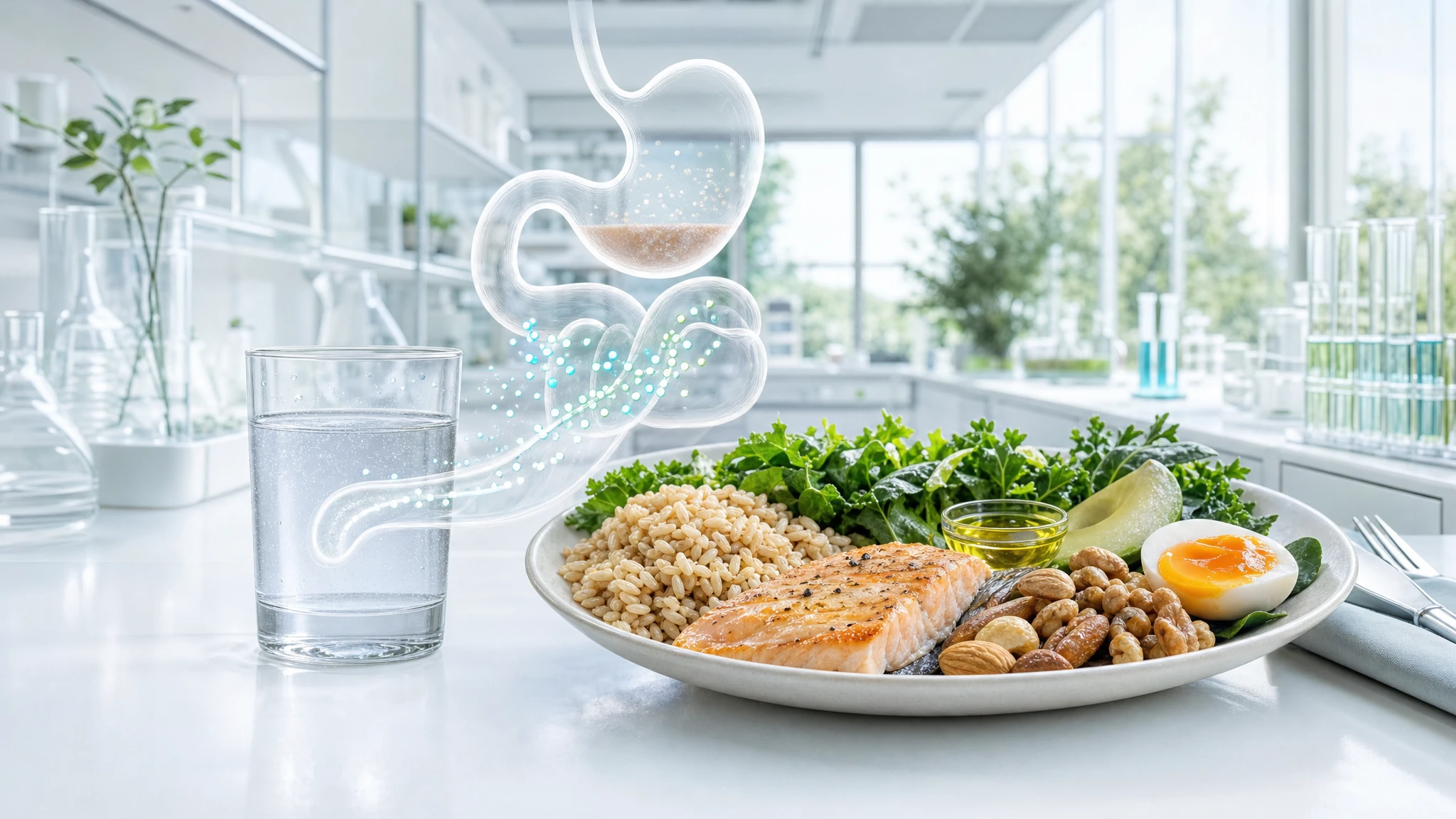
In healthy subjects and those with type 2 diabetes, a mixed meal reduced the increase in glycemia compared to glucose alone. The study associates this effect with slower gastric emptying, insulin adaptations, and gut hormones. Independent studies confirm the network, but small sample sizes and unequal energy comparisons require cautious interpretation.
- Published 11/11/2026
- Updated 11/11/2026
- Article history
ABSTRACT
The analyzed publication compared the metabolic response to glucose taken alone with that observed when glucose, proteins, and fats were consumed together. In 18 healthy individuals and 18 people with type 2 diabetes not treated with medication, the mixed meal produced a smaller increase in glycemia compared to the glucose drink alone. The authors also noted changes in pancreatic beta-cell function, insulin clearance from the blood, gastric emptying, and certain gut hormones.
In section 2.3, “The Choice to Live in Health or Illness,” Dr. A. Colonnese and R. Panzironi use this study to illustrate that post-meal glycemia depends on a network of signals, not just on the grams of carbohydrates. Independent studies confirm that proteins and fats, especially if consumed before or together with carbohydrates, can slow gastric emptying and attenuate the glycemic spike. However, the direction of the GIP and GLP-1 response is not identical in all protocols, and the available studies are largely acute and small in scale.
Analyzed study
Mixed meal ingestion diminishes glucose excursion in comparison with glucose ingestion via several adaptive mechanisms in people with and without type 2 diabetes
DOI: 10.1111/dom.12570
PMID: 26354383
The research question was whether the body responds differently to carbohydrates, proteins, and fats consumed separately or combined in the same meal. The hypothesis was that a mixed meal could reduce postprandial glycemic excursion—that is, the overall increase in blood glucose after eating—through multiple simultaneous mechanisms.
The relevance to the book's section therefore concerns a very specific point: the pancreas and the digestive system do not react solely to the amount of glucose ingested. The composition of the meal changes the speed at which nutrients reach the intestine, the secretion of intestinal hormones, the availability of insulin in the blood, and the response of beta cells, which are the pancreatic cells that produce insulin.
The study can document acute metabolic differences following specific dietary tests. However, it cannot demonstrate that every mixed meal is metabolically superior for every person, nor can it establish long-term clinical effects on glycated hemoglobin, diabetes complications, body weight, or the need for pharmacological therapy.
Materials and methods of the original study
Only the abstract is available. The study included 18 healthy subjects and 18 subjects with type 2 diabetes not treated with medication. Participants consumed glucose alone, protein alone, fat alone, or the three macronutrients together in a mixed meal.
The glucose load provided 330 kcal. The trials with protein alone or fat alone provided 110 kcal each. The mixed meal provided a total of 550 kcal. This energy difference is important: the main comparison was not between preparations that were perfectly equivalent in calories, but between isolated glucose and glucose accompanied by protein and fat.
The authors measured glucose, insulin, C-peptide, glucagon, GIP, and GLP-1. C-peptide is a substance released along with insulin and helps estimate how much insulin is actually secreted by the pancreas. GIP and GLP-1 are incretins, which are gut hormones that participate in the regulation of insulin secretion and digestion. Beta-cell function and insulin clearance—the removal of insulin from circulation, primarily by the liver—were estimated using mathematical models based on glucose, insulin, and C-peptide data.
To estimate gastric emptying, i.e., the rate at which stomach contents pass into the small intestine, paracetamol was administered and its appearance in the blood was measured. The recruitment period, detailed inclusion and exclusion criteria, order of trials, sampling times, complete statistical analyses, and numerical values of the endpoints are not reported in the available material.
Results
In both groups, healthy individuals and those with type 2 diabetes, the mixed meal reduced glycemic excursion compared to glucose consumed alone. In simple terms, the rise in glycemia after a meal containing protein and fat was lower than that observed after the glucose drink alone.
Blood insulin concentrations increased more after the mixed meal compared to isolated glucose, while C-peptide did not increase correspondingly. This profile is consistent with lower insulin clearance: some insulin may have remained in circulation longer, without necessarily implying a proportional increase in the amount secreted by the pancreas. The mathematical model also estimated an increase in beta-cell function after the mixed meal.
Glucagon, a hormone that helps keep glucose available in the blood, especially between meals, was higher after the mixed meal. GIP and GLP-1 also increased after all tests; the data highlighted in the abstract is a particularly marked increase in GIP after the mixed meal compared to glucose. The abstract does not report a specific quantitative comparison demonstrating a greater increase in GLP-1 in the mixed meal compared to the glucose-only test.
The appearance of paracetamol was delayed after the mixed meal. This result suggests slower gastric emptying: glucose may therefore have reached the intestine and the blood more gradually. The abstract does not report absolute values, confidence intervals, or P-values for these results; such information is not provided in the available material.
Interpretation
The main significance of this work is that a meal does not act as the simple sum of its calories or grams of carbohydrates. Proteins and fats can change the rate at which glucose is absorbed and the hormonal response that accompanies this absorption. From this perspective, lower postprandial glycemia can result from both a slower entry of glucose into the intestine and a different regulation of insulin.
The segment of the chain directly documented by the study is: joint presence of glucose, proteins, and fats → slower gastric emptying and endocrine changes → lower glycemic excursion. The study also observes lower insulin clearance and estimated higher beta-cell function, but it does not demonstrate that these changes are individually responsible for the glycemic reduction.
The citation in the book is therefore appropriate to support the idea of a coordinated network of endocrine and gastrointestinal adaptations. However, two caveats must be kept in mind. First, the mixed meal had more calories than the glucose alone. Second, the temporal association between hormonal variations and glycemia does not identify with certainty the causal weight of each mechanism.
Independent supporting evidence
Confirmation that aligns closely with the book's narrative comes from a randomized crossover study conducted on 12 people with type 2 diabetes and 10 healthy volunteers. Fish or meat consumed before rice reduced the area under the glucose curve in people with diabetes compared to rice consumed before protein sources. In the same study, the time required to empty half of the gastric content increased from approximately 30 minutes to over 80 minutes when fish or meat preceded the rice. Gastric slowing was associated with lower glycemic variability and greater GLP-1 secretion, although it did not demonstrate a complete causal link on its own [1].
A second crossover study examined eight people with type 2 diabetes controlled by diet alone. The addition of 55 g of whey protein to a soup consumed 30 minutes before a potato meal slowed gastric emptying more significantly than when no protein was added. The incremental blood glucose area was lower both when protein was consumed before the meal and when it was added to the meal. Insulin, GIP, and cholecystokinin increased, while GLP-1 was higher after the protein preload [2]. This study directly supports the pathway of protein → gut hormones and slower gastric emptying → lower glycemic rise.
In a more recent crossover study, 10 elderly men with type 2 diabetes and 10 without diabetes consumed 30 g of glucose, 30 g of whey protein, or a combination of both. The combination reduced the glycemic peak compared to glucose alone, both in people with diabetes and in the controls, and increased insulin levels more significantly. Gastric emptying of the combined drink was slower compared to drinks containing only glucose or only protein [3]. The model is a drink rather than a standard meal, but it reinforces the observation that protein and carbohydrates together can simultaneously modify glycemia, insulin, and gastric motility.
Overall, these independent studies confirm that the composition and even the sequence of a meal influence postprandial glycemia through gastrointestinal and hormonal mechanisms. The evidence is strongest for the slowing of gastric emptying and the reduction of the glycemic rise; it is less consistent regarding the direction of each individual incretin and insulin clearance.
Conflicting evidence
No directly conflicting evidence sufficiently relevant to the general finding that adding macronutrients to carbohydrates can attenuate or delay the postprandial glycemic increase has been identified; this does not prove the absence of contrary results.
However, there is a significant difference in the hormonal response. In a small crossover study on six men with type 2 diabetes, 30 ml of olive oil consumed before a potato meal markedly slowed gastric emptying and delayed the rise in glycemia. At the same time, compared to the water control, it attenuated the increase in insulin and GIP, while increasing GLP-1 [4]. This finding does not contradict the role of the gastrointestinal network described in the book, but it shows that GIP does not necessarily increase in every situation where fats and carbohydrates reduce or delay the glycemic peak.
The difference may depend on the predominant macronutrient, whether the oil was consumed before rather than with the carbohydrate, the solid or liquid form of the meal, the dose, and the characteristics of the participants. For this reason, it is incorrect to consider a specific variation in GIP or GLP-1 as the universal mechanism for all mixed meals.
Summary table of evidence
The table distinguishes the publication subject to the review from independent research that confirms or contextualizes the individual steps of the narrative.
| Reference | Study type | Population or model | Main result | Direction of evidence | Strength of evidence |
|---|---|---|---|---|---|
| Original study | Acute experimental study in humans | 18 healthy subjects and 18 with untreated type 2 diabetes | The mixed meal reduced glycemic excursion compared to glucose alone; associated with gastric slowing and endocrine changes | direct confirmation | moderate |
| [1] | Exploratory crossover RCT | 12 people with type 2 diabetes and 10 healthy controls | Fish or meat before rice reduced glycemic excursion and slowed gastric emptying | direct confirmation | moderate |
| [2] | Crossover study | 8 people with diet-controlled type 2 diabetes | Whey protein preload reduced incremental glycemic area, slowed gastric emptying, and increased incretins | direct confirmation | moderate |
| [3] | Crossover study | 10 elderly men with type 2 diabetes and 10 without diabetes | Glucose plus whey protein reduced the glycemic peak and slowed gastric emptying compared to glucose | direct confirmation | moderate |
| [4] | Randomized crossover study | 6 men with type 2 diabetes | Oil before potatoes slowed emptying and delayed glycemia, but reduced GIP and increased GLP-1 | discordant evidence | low |
Confirmation of the evidence
Claim in the book
In section 2.3, “The Choice to Live in Health or Illness” by Dr. A. Colonnese and R. Panzironi, it is stated that the pancreas interprets a meal as a set of metabolic signals and that, when carbohydrates, proteins, and fats are consumed simultaneously, glycemia is regulated by coordinated endocrine and gastrointestinal adaptations, rather than by a single mechanism.
Mixed meal with carbohydrates, proteins, and fats → intestinal and pancreatic signals → slower gastric emptying and different insulin regulation → lower postprandial glycemic excursion
The publication subject to the Evidence Review was used in the book to support the following passage: a meal containing glucose, proteins, and fats simultaneously can produce a lower glycemic excursion compared to glucose consumed in isolation, through the integration of pancreatic, intestinal hormonal, and gastrointestinal mechanisms.
The correspondence between the original study and the paragraph is direct regarding the central result: the mixed meal was associated with a lower glycemic excursion and a slowing of gastric emptying, along with changes in insulin, glucagon, and incretins. The work does not demonstrate that every component of the network is indispensable, but it documents that multiple adaptations coexist in the same response to a meal.
Independent evidence reinforces this narrative. In people with and without diabetes, consuming fish or meat before rice reduced glycemic excursion and slowed gastric emptying [1]. In people with type 2 diabetes, a whey protein preload reduced the glycemic increase after a potato meal, accompanied by slower gastric emptying and higher concentrations of certain gut hormones [2]. Co-ingestion of glucose and whey protein also reduced the glycemic peak and slowed gastric emptying in elderly men with and without diabetes [3].
The independent literature therefore convergently confirms the idea reported by Colonnese and Panzironi in “The Choice to Live in Health or Illness” by Dr. A. Colonnese and R. Panzironi: the glycemic response depends on the composition of the meal and the interaction between the gut, pancreas, and liver. The response of each individual incretin is not uniform, however. For example, an oil preload slowed gastric emptying and delayed the glycemic increase, but it reduced GIP instead of increasing it [4].
Overall level of confirmation
STRONG CONFIRMATION
The main point is supported by the original study and by multiple independent crossover studies in humans, including participants with type 2 diabetes. The evidence is strong regarding the reduction or delay of glycemic excursions and the role of gastric emptying. It remains more limited in attributing a universal role to each individual hormone or to the reduction of insulin clearance.
Conclusions
The analyzed study directly supports the concept that a mixed meal can generate a lower glycemic increase compared to glucose consumed alone. The result is biologically consistent with more gradual digestion and absorption, accompanied by changes in the insulin response and gut hormones.
Independent research primarily confirms the link between the presence or sequence of proteins and fats, the slowing of gastric emptying, and the attenuation of the postprandial glycemic increase. The narrative is therefore well-supported in humans in the short term. However, the exact role of GIP, GLP-1, glucagon, and insulin clearance varies based on the type of nutrient, the dose, the sequence, and the meal pattern. Larger and more prolonged trials are needed to define the clinical impact in the long term.
Overall assessment
The narrative is quite well-supported: acute studies in humans show that proteins and fats can modify digestion, gut hormones, and the glycemic response to carbohydrates. The connection to the book's section is strong regarding the gastrointestinal-endocrine network, but remains moderately defined regarding the specific role of each hormone.
References
[1] Meal sequence and glucose excursion, gastric emptying and incretin secretion in type 2 diabetes: a randomised, controlled crossover, exploratory trial
[2] Effects of a Protein Preload on Gastric Emptying, Glycemia, and Gut Hormones After a Carbohydrate Meal in Diet-Controlled Type 2 Diabetes
[3] Effects of co‐ingesting glucose and whey protein on blood glucose, plasma insulin and glucagon concentrations, and gastric emptying, in older men with and without type 2 diabetes
Editorial note
Artificial Intelligence was used solely as a tool to support editorial and documentary work. All content, interpretations, bibliographic citations and conclusions have been verified, reviewed and approved by the author, who assumes full scientific responsibility for them.
The manuscript was also subject to independent peer review prior to publication.
To ensure maximum transparency, the article's complete history — including the dates of submission, review, acceptance and publication, as well as information on the peer review process — is available on the dedicated Article History page.