


The adaptation of insulin clearance to metabolic demand is a key determinant of glucose tolerance - A review of the evidence
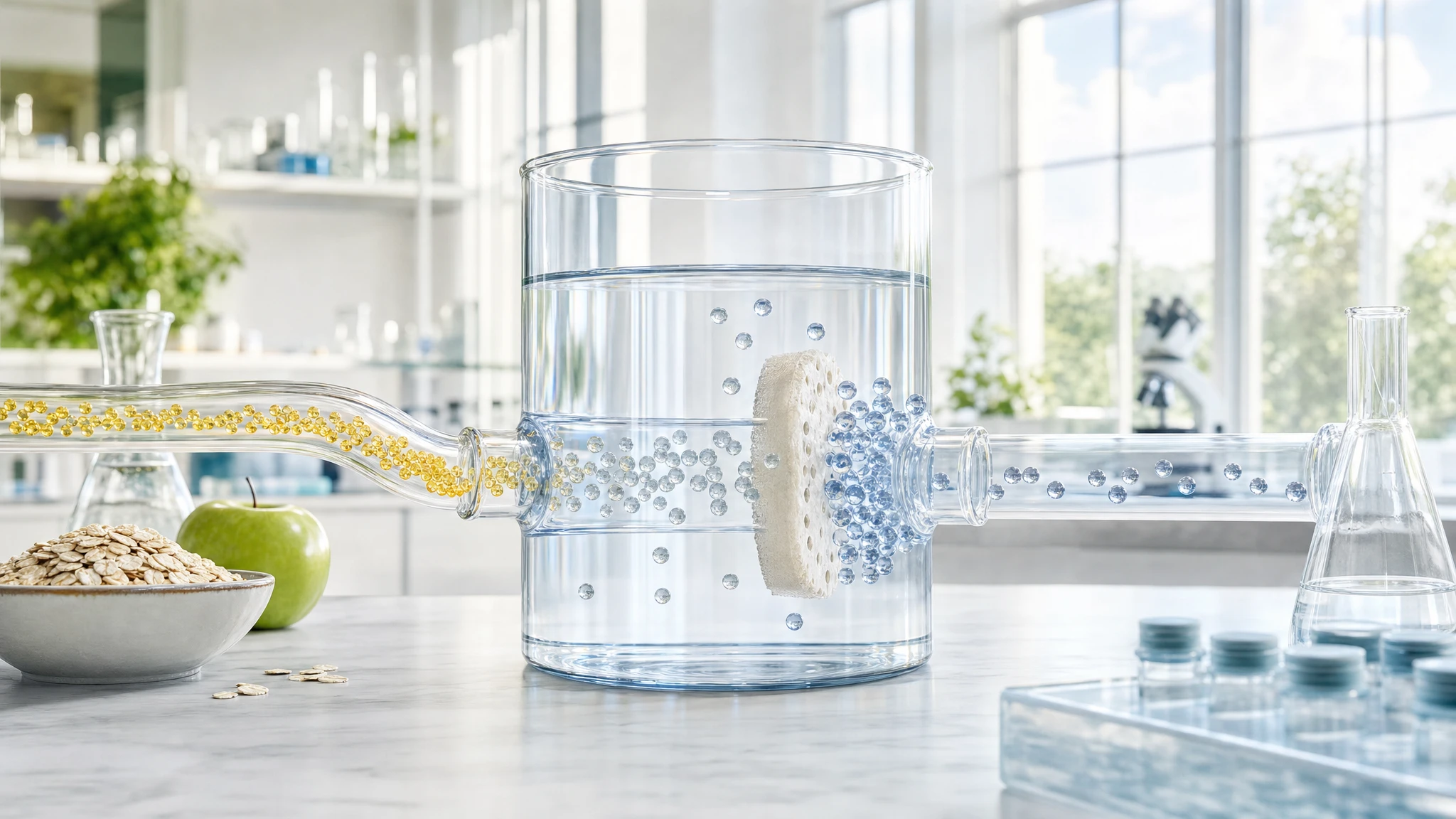
The study shows that, after oral glucose, insulin elimination decreases rapidly in people without diabetes but much less so in type 2 diabetes. This response can temporarily increase available insulin. Independent studies confirm the phenomenon, but inconsistent results indicate that it depends on secretion, obesity, method, and overall individual metabolic severity.
- Published 11/11/2026
- Updated 11/11/2026
- Article history
ABSTRACT
The analyzed study evaluated how insulin clearance—the rate at which the body removes the hormone from the blood—varies in 368 individuals with normal glucose tolerance, impaired glucose tolerance, or type 2 diabetes. Using a hyperinsulinemic-euglycemic clamp and an oral glucose tolerance test, the authors observed that, following glucose intake, clearance decreased rapidly in participants without diabetes or with impaired glucose tolerance, whereas the reduction was minimal in type 2 diabetes.
The publication contributes to the narrative of "The Choice to Live in Health or Illness" by Dr. A. Colonnese and R. Panzironi regarding the loss of a dynamic adaptation of insulin clearance following glucose intake in type 2 diabetes. Independent studies confirm that glucose ingestion can reduce clearance and that clearance, insulin sensitivity, and secretion are integrated. However, varying results across cohorts indicate that the phenomenon is not uniform in all patients with diabetes. The evidence is therefore considered moderate.
Analyzed study
Adaptation of Insulin Clearance to Metabolic Demand Is a Key Determinant of Glucose Tolerance
DOI: 10.2337/db19-1152
PMID: 33077684
PMCID: PMC7881859
The research question was whether the metabolic clearance of insulin—that is, the body's removal of the hormone from circulation—changes in relation to insulin resistance and the degree of impaired glucose tolerance. The hypothesis evaluated was that a reduction in clearance initially contributes to maintaining higher insulin availability in the blood when tissues respond less effectively to the hormone.
The research is relevant to the passage from "The Choice to Live in Health or Illness" by Dr. A. Colonnese and R. Panzironi, which describes the response to oral glucose administration. In particular, it documents that in people with type 2 diabetes, the suppression of clearance after glucose intake was minimal, unlike what was observed in groups without diabetes or with impaired glucose tolerance.
The result describes a physiological association measured under controlled experimental conditions. It does not prove that the defect in clearance reduction is the sole cause of glycemic worsening, nor does it establish that the liver is the only organ responsible: the metabolic clearance of insulin measured in the study represents a measure of the body as a whole, even though the liver is a major site of insulin extraction.
Materials and methods of the original study
The available material consists only of the abstract. The study included 368 participants: 104 with normal glucose tolerance, 57 with impaired glucose tolerance, and 207 with type 2 diabetes. Participants were further divided into non-obese and obese groups; the size of each subgroup is not reported in the available material.
Each participant underwent, on separate days, a hyperinsulinemic-euglycemic clamp and a 75 g oral glucose tolerance test. The clamp is a procedure in which insulin is infused at a fixed rate, in this case 40 mU/m² per minute, while glucose is adjusted to maintain stable glycemia. It allows for the estimation of how effectively tissues utilize glucose in response to insulin.
Insulin metabolic clearance was calculated during the clamp using [3-³H] glucose and during the oral test. The authors also correlated clearance with indicators of peripheral, hepatic, and adipose tissue insulin resistance. Inclusion and exclusion criteria, recruitment period, sex and age distribution, medications taken, duration of diabetes, details of statistical analyses, and follow-up are not reported in the available material.
Results
During the clamp, insulin metabolic clearance was lower in obese individuals with normal glucose tolerance compared to non-obese individuals with normal tolerance: 0.60 ± 0.03 versus 0.73 ± 0.02 L/min·m², with P < 0.001. In practical terms, the body eliminated insulin more slowly in the obese group. Lower values were also reported in non-obese participants with impaired glucose tolerance, 0.62 ± 0.02 L/min·m², and in non-obese individuals with type 2 diabetes, 0.68 ± 0.02 L/min·m².
The clearance measured during the clamp was inversely correlated with insulin resistance, with r = −0.52 and P < 0.0001. An inverse correlation means that, in the sample, higher insulin resistance corresponded on average to lower insulin clearance. This relationship alone does not prove which of the two phenomena comes first, nor does it demonstrate a cause-and-effect relationship.
The result most relevant to the book's paragraph concerns the oral glucose tolerance test. In participants with normal or impaired glucose tolerance, insulin clearance decreased within 15-30 minutes of glucose intake and remained reduced. In participants with type 2 diabetes, however, this suppression was minimal. The abstract does not report the absolute clearance values at individual time points, the numerical differences between groups, or the respective P values.
Interpretation
After a meal containing glucose, the body must temporarily increase insulin action to facilitate glucose uptake into tissues and limit its production by the liver. Reduced insulin clearance can contribute to this goal, as it allows a larger portion of the hormone to remain in the blood without immediately requiring a proportionally higher pancreatic secretion.
The analyzed study suggests that this dynamic response is present in groups without diabetes and with impaired glucose tolerance, but is significantly attenuated in type 2 diabetes. The segment of the chain directly documented is therefore: glucose ingestion → transient reduction in insulin clearance → greater circulating availability of the hormone; in type 2 diabetes, the observed reduction in clearance is minimal.
The data are consistent with the idea that insulin concentration depends on both pancreatic beta-cell secretion and its removal. However, the study does not demonstrate that the loss of this clearance reduction alone causes postprandial hyperglycemia. In type 2 diabetes, insufficient insulin secretion, reduced tissue sensitivity to insulin, hepatic glucose production, and other metabolic factors occur simultaneously.
Independent confirming evidence
An independent analysis conducted through mathematical modeling of nine physiological studies examined 2,067 people and evaluated the effect of oral glucose Intake on clearance more directly. In the 1,555 participants used for this comparison, oral glucose ingestion required a reduction in insulin clearance of approximately 10%, independent of the insulin secretion rate, to explain the observed blood insulin profiles. This result confirms the finding that clearance can decrease dynamically after oral glucose. The authors also concluded that these adaptive processes are dysregulated in type 2 diabetes, although they did not exactly reproduce the temporal comparison of the analyzed study [1].
In a cohort of 91 obese adults without diabetes, Jung and colleagues compared insulin secretion and clearance in people with varying degrees of insulin resistance. The reduction in clearance contributed to higher compensatory hyperinsulinemia and, in people with less marked insulin resistance, preceded the increase in insulin secretion. This study does not specifically examine the lack of suppression after an oral load in type 2 diabetes, but it confirms the complementary part of the narrative: lower insulin elimination can contribute to metabolic compensation when insulin sensitivity decreases [2].
A further study on 113 people with normal glucose tolerance, impaired tolerance, and type 2 diabetes combined consecutive clamps and a mathematical model. The clearance parameter decreased when moving from the groups with normal tolerance to those with impaired tolerance and type 2 diabetes, while lower clearance was associated with higher glycemia two hours after the oral load. This reinforces the link between clearance, postprandial glucose regulation, and the progression of metabolic deterioration. Since the conclusions are also derived from parameters estimated by the model and comparisons between groups, it does not demonstrate individual causality [3].
Conflicting evidence
A result that is not fully consistent comes from a study of 106 people, divided into a healthy lean group and four groups with obesity and varying glycemic status, including 18 participants with type 2 diabetes. After oral glucose intake, insulin clearance decreased rapidly within the first 30 minutes in all groups, including the one with type 2 diabetes. Furthermore, the average clearance during the oral test in the group with diabetes was higher compared to various obese groups with dysglycemia and did not differ from the lean group.
This observation contradicts the idea that in type 2 diabetes, the postprandial reduction in clearance is always minimal or absent. The authors found that clearance was inversely correlated with the postprandial increase in insulin secretion and concentration, suggesting that some of the differences may depend on the amount of insulin produced and the saturability of the processes that eliminate it. The study was cross-sectional, with small subgroups, and does not exclude the possibility that other diabetes phenotypes may show the response described in the original study [4].
Summary table of evidence
The table distinguishes the publication subject to the Evidence Review from the independent research used to confirm or define the narrative of the paragraph.
| Reference | Study type | Population or model | Main result | Direction of evidence | Strength of evidence |
|---|---|---|---|---|---|
| Original study | Cross-sectional human physiological study | 368 adults with normal tolerance, impaired tolerance, or type 2 diabetes | After oral glucose, clearance decreased within 15-30 minutes in groups without diabetes or with impaired tolerance, but suppression was minimal in type 2 diabetes. | direct confirmation | moderate |
| [1] | Observational with physiological modeling | Nine studies, 2,067 participants; oral-intravenous comparison in 1,555 people | Oral glucose required a reduction in clearance of approximately 10%, independent of secretion, to explain insulin profiles. | direct confirmation | moderate |
| [2] | Physiological observational | 91 obese adults without diabetes | Reduced clearance contributed to the compensatory hyperinsulinemia associated with insulin resistance. | indirect confirmation | moderate |
| [3] | Observational with mathematical modeling | 113 people with normal tolerance, impaired tolerance, or type 2 diabetes | Estimated clearance decreased along with worsening glucose tolerance and was inversely associated with two-hour glycemia. | biologically consistent evidence | moderate |
| [4] | Cross-sectional physiological observational | 106 lean or obese people, including 18 with type 2 diabetes | Clearance decreased in the first 30 minutes even in type 2 diabetes; the average during the test was similar to the lean group. | discordant evidence | moderate |
Confirmation of the evidence
Claim in the book
In section 2.2 of “The Choice to Live in Health or Illness” by Dr. A. Colonnese and R. Panzironi, it is stated that, following oral glucose, the liver rapidly reduces insulin extraction in metabolically healthy individuals and those with impaired glucose tolerance, whereas in type 2 diabetes this response is strongly attenuated or absent, which contributes to the worsening of glycemic control.
Oral glucose → transient reduction in insulin clearance → greater availability of circulating insulin → support for glycemic control; in type 2 diabetes → attenuated or variable response
The publication subject to the Evidence Review was used in the book to support the following passage: during an oral glucose tolerance test, insulin clearance decreases rapidly in subjects with normal tolerance or impaired glucose tolerance, whereas in type 2 diabetes this suppression is minimal.
The correspondence between the study and the paragraph is direct for the segment regarding the dynamics of clearance after oral glucose. The analyzed publication precisely observes lower suppression in the group with type 2 diabetes. Independent literature confirms that oral glucose intake can reduce insulin clearance even independently of pancreatic secretion and that this regulation is integrated with insulin sensitivity and β-cell function [1].
The part of the narrative regarding compensatory function is further supported by data in obese individuals without diabetes, in whom lower clearance contributed to maintaining higher hyperinsulinemia in the presence of insulin resistance [2]. The association between reduced clearance, deterioration of glucose tolerance, and higher postprandial glycemia is also consistent with an independent cohort based on clamps and modeling [3].
However, the picture is not uniform. In another cohort, clearance decreased rapidly after glucose even in people with type 2 diabetes and was not necessarily lower than that of the lean group [4]. For “The Choice to Live in Health or Illness” by Dr. A. Colonnese and R. Panzironi, this means that the point supported by the original study is biologically and physiologically plausible, but should not be interpreted as an identical characteristic of every person with type 2 diabetes.
Overall level of confirmation
MODERATE CONFIRMATION
The passage is documented directly in the original study and is supported by independent data on the effect of oral glucose and the integration between insulin clearance, secretion, and sensitivity. However, the presence of non-overlapping results between cohorts, together with the predominantly cross-sectional and modeling nature of the evidence, requires caution in clinical generalization.
Conclusions
The study analyzed shows that insulin clearance is a dynamic component of the glucose response and that, in its sample, its reduction after an oral load was minimal in type 2 diabetes. This observation strongly supports the section of the book dedicated to the loss of a possible compensatory adaptation.
Independent evidence confirms quite well that oral glucose can transiently reduce clearance and that clearance integrates with insulin secretion and tissue sensitivity to the hormone. However, it remains to be clarified why the response differs between studies and between people with type 2 diabetes. The picture is therefore moderately supported, not a demonstration that the clearance defect is the sole cause of glycemic worsening.
Overall assessment
The narrative is moderately supported. The biological mechanism of postprandial reduction in insulin clearance is fairly well documented in humans, and the original study is consistent with the passage in the book. However, the response in type 2 diabetes appears heterogeneous and does not allow for causal conclusions or absolute generalizations.
References
[1] New Insights on the Interactions Between Insulin Clearance and the Main Glucose Homeostasis Mechanisms
[2] Adapting to insulin resistance in obesity: role of insulin secretion and clearance
[3] Glucose Homeostatic Law: Insulin Clearance Predicts the Progression of Glucose Intolerance in Humans
[4] b Cell function and plasma insulin clearance in people with obesity and different glycemic status
Editorial note
Artificial Intelligence was used solely as a tool to support editorial and documentary work. All content, interpretations, bibliographic citations and conclusions have been verified, reviewed and approved by the author, who assumes full scientific responsibility for them.
The manuscript was also subject to independent peer review prior to publication.
To ensure maximum transparency, the article's complete history — including the dates of submission, review, acceptance and publication, as well as information on the peer review process — is available on the dedicated Article History page.