


Tribulus terrestris and male fertility: beyond testosterone and sperm
Research on Tribulus and male reproductive health shows an interesting, yet still incomplete, picture. Some studies indicate possible effects on motility, count, and quality of seminal fluid. These signals emerge primarily in experimental models and in some analyses conducted on humans. However, the results are not uniform and vary significantly depending on the method used. Tribulus therefore requires a cautious interpretation of the available data. It is necessary to distinguish between potential biological mechanisms and more solid clinical evidence.
- Published 16/11/2026
- Updated 17/11/2026
- Reviewed 17/11/2026
- Article history
ABSTRACT : WHAT THE SCIENCE SAYS
The relationship between Tribulus and male reproductive health and fertility deserves attention and goes beyond just testosterone. It also encompasses the ability to conceive and other aspects of male sexual function. To evaluate it, it is not enough to see if a supplement changes hormone levels in the body. Data on motility, concentration, and the general quality of seminal fluid—that is, semen—are also needed.
Tribulus terrestris is a medicinal plant, meaning it is used for medical purposes. Studies evaluate its potential effects on sexual health and hormone levels. It has also been studied for male fertility, but the evidence varies and should be interpreted with caution. This article presents the collected data, how the plant might act in the body, and the results in humans. The goal is not to provide absolute answers, but to separate useful signals from evidence that is still weak. Specifically, the article will address:
- Seminal parameters useful for evaluating male fertility.
- Motility, count, and quality of seminal fluid.
- Biological hypotheses regarding microcirculation, oxidative stress, and steroidogenesis (production of steroid hormones).
- Clinical results in humans that remain variable and inconclusive.
- How to evaluate Tribulus within an andrological treatment plan.
Tribulus terrestris and male fertility: which parameters really matter
When discussing Tribulus and male reproductive health, a single value is not enough. It is necessary to understand which data describe fertility and how they help evaluate tests. Key data measure the number, motility, and general quality of sperm.
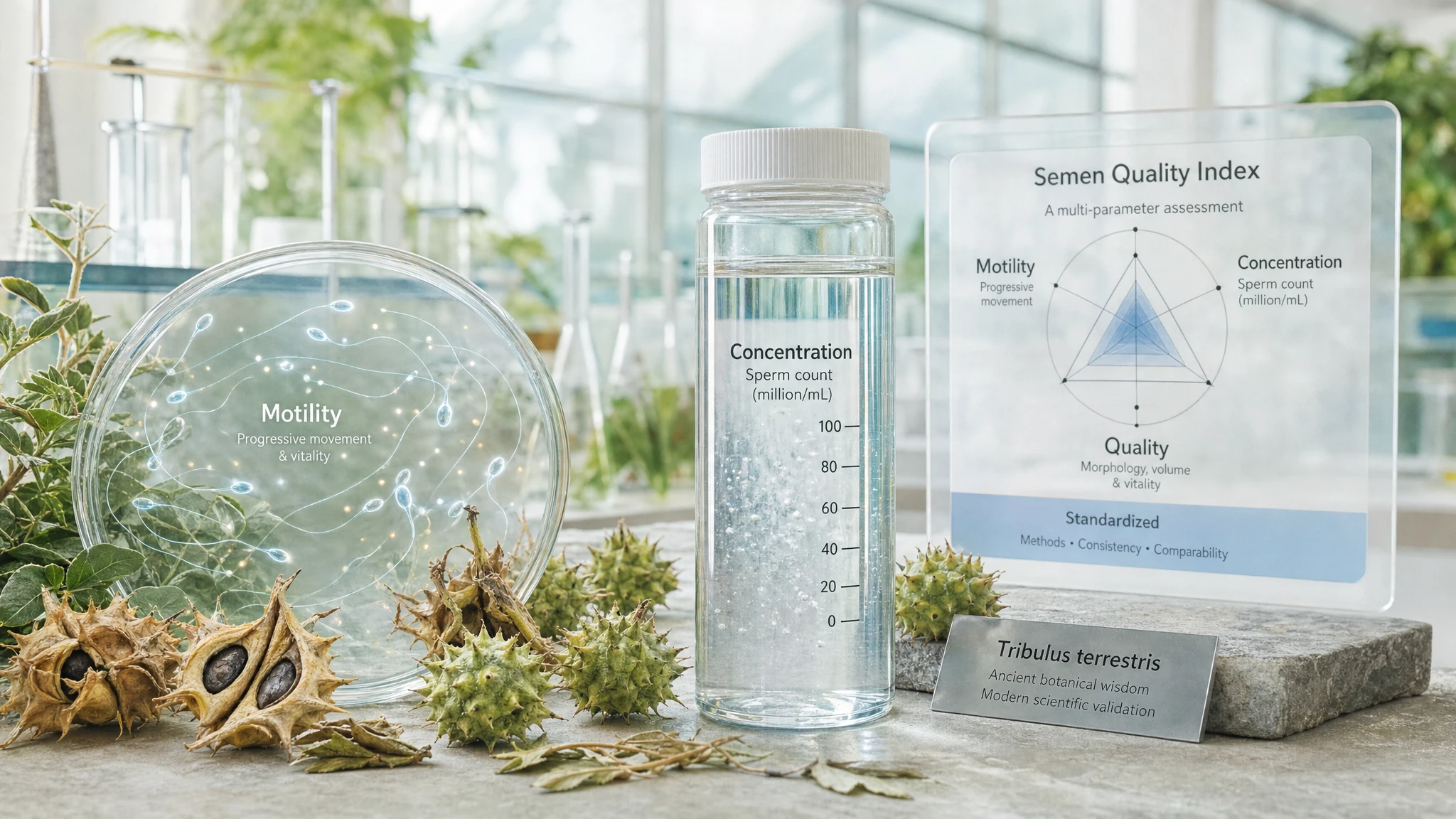
To evaluate a possible effect of Tribulus terrestris on male reproductive health, a single data point is not enough. Male fertility depends on various values measured in seminal fluid. Sperm must be present, move well, and be able to perform their function. Therefore, the number, type of movement, and general quality of the sample all count.
These data show whether the possible effect of Tribulus is real, partial, or limited. In the following paragraphs, we will see which values were measured in the various studies. We will also see why each data point carries different weight in evaluating reproductive function.
Before examining the studies, it is useful to clarify which aspects really matter:
- Sperm motility indicates how well sperm are able to move.
- Sperm concentration indicates how many cells are present in the sample.
- Seminal fluid quality brings together multiple data points into a single picture.
- Results always require consistent measurement methods and well-defined criteria.
To understand the results regarding Tribulus terrestris, it is best to start with the most sensitive data. Motility, sperm count, and the general quality of the sample have different clinical weights. For this reason, each value requires careful interpretation.
Sperm motility: why it is one of the first parameters observed
Sperm motility, which is the ability of sperm to move effectively, measures their capacity to advance through the reproductive tract. It is one of the first parameters observed because it describes a concrete function, not just the presence of the cells. The World Health Organization guidelines help to interpret this data in a standardized way that is comparable across laboratories [1].
In an in vitro study on human semen from 40 healthy volunteers, incubation with Tribulus terrestris at 20, 40, and 50 micrograms per milliliter improved total motility, progressive sperm, and velocity after 60-120 minutes [2]. This is an interesting result because it suggests a direct effect on Tribulus and sperm, but it remains a laboratory test: it does not yet say whether the same benefit translates into real clinical utility in humans. For this reason, motility must be interpreted together with other seminal indices, not in isolation.
Sperm concentration: what a higher or lower number means
Sperm concentration indicates how many sperm cells are present in a given volume of seminal fluid. It is an important piece of data regarding reproductive function, but it does not describe male fertility on its own. The measurement therefore considers the number of cells relative to the volume examined in the laboratory. An adequate number can, in fact, be combined with poor motility or other defects in the sample. Therefore, this value must be read in conjunction with the other semen data.
A prospective study followed 30 men with idiopathic infertility (without a known cause). Tribulus terrestris, taken at 750 mg/day in 3 doses for 3 months, did not show relevant differences. There were no changes in testosterone, LH (the hormone that regulates the testes), concentration, motility, or abnormal forms [3]. The absence of differences concerned all parameters measured in the study overall. In this group, therefore, no certain effect on concentration emerged. However, the sample was small and does not allow for definitive conclusions valid for all men.
Seminal fluid quality: which indices are considered
The quality of seminal fluid does not depend on a single value, but on all the data from the sample. The examination evaluates the count, motility, and appearance of the sperm. Male fertility, in fact, depends on the right balance between these elements. Considering these indices together avoids placing too much weight on a single variation. In studies on Tribulus terrestris, this method shows whether only one data point changes or the entire picture.
A systematic review included 7 studies. Of these, 6 out of 7 reported improvements in some or all of the semen data. The data included count, motility, and morphology (sperm shape) [4]. The work therefore suggests a possible signal, but not a conclusion valid for everyone. The result is promising, but the studies varied in method, duration, and participants involved. Therefore, individual studies do not all carry the same weight. Overall semen quality offers a useful initial picture. However, the evidence remains highly heterogeneous and not definitive.
Recent research and updates
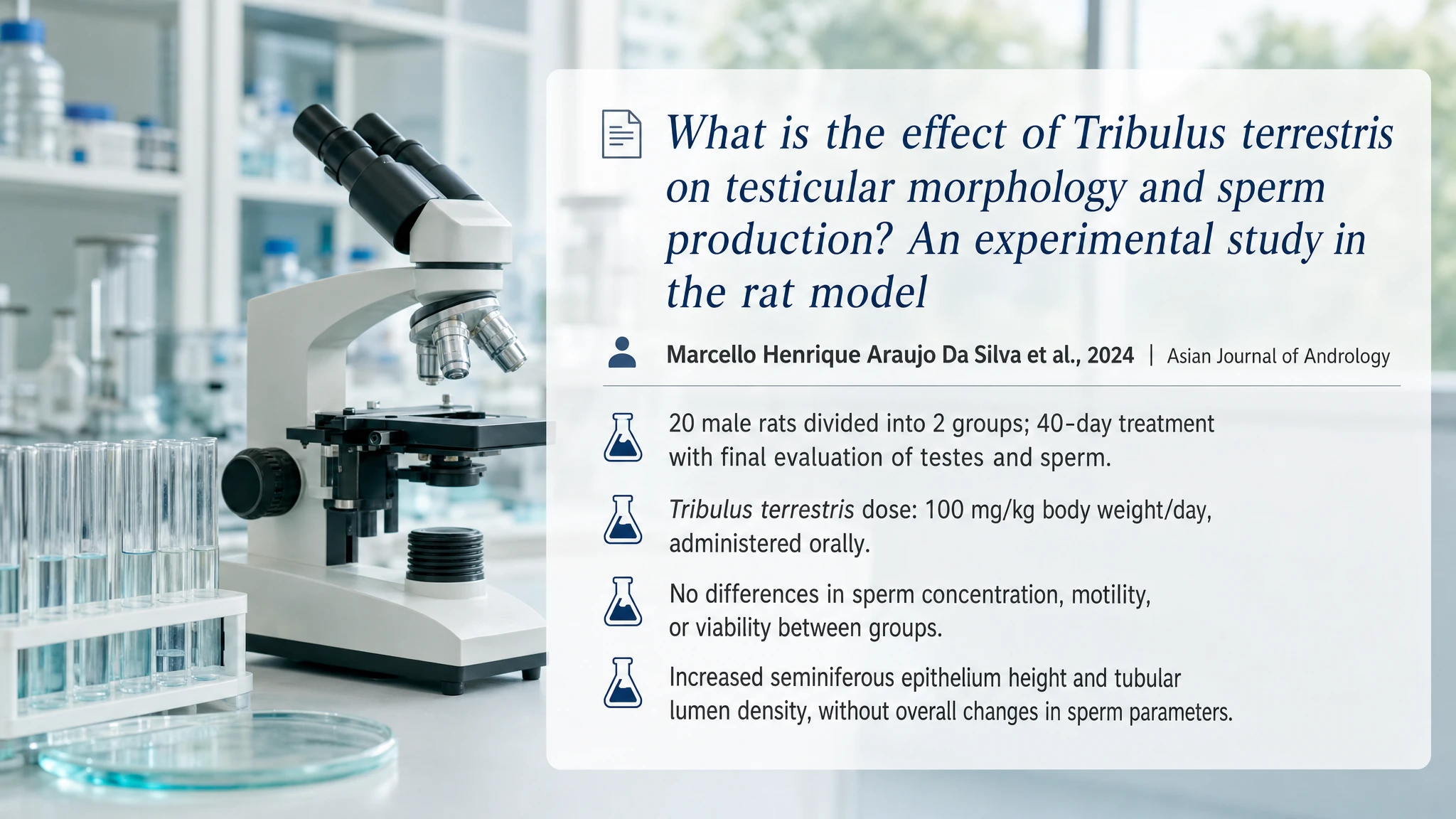
In 2024, Marcello Henrique Araujo Da Silva and colleagues published a study in the journal Asian Journal of Andrology. They examined the potential effect of Tribulus terrestris on testicular structure and sperm production in rats. This is a preclinical study, conducted on animals rather than humans. It may help determine whether a biological signal exists before investigating potential effects in humans. The work therefore suggests reading data on male reproductive function with caution.
What is the effect of Tribulus terrestris on testicular morphology and sperm production? An experimental study in the rat model
- 20 male rats divided into 2 groups; treatment for 40 days, followed by examination of the testicles and sperm.
- Dose of Tribulus terrestris equal to 100 mg/kg of body weight per day, administered orally.
- Sperm concentration, motility, and vitality did not differ between the groups.
- The height of the seminiferous epithelium and the density of the tubular lumen increased, but without overall changes in sperm parameters.
Tribulus terrestris and male fertility: biological mechanisms hypothesized in studies
The potential link between Tribulus, reproductive health, and male fertility is based on three hypotheses. These concern blood flow in the testicles, defense against oxidative stress, and local hormones. These are possible mechanisms, but they do not in themselves prove a clinical effect. It is therefore useful to understand them before examining data on humans.
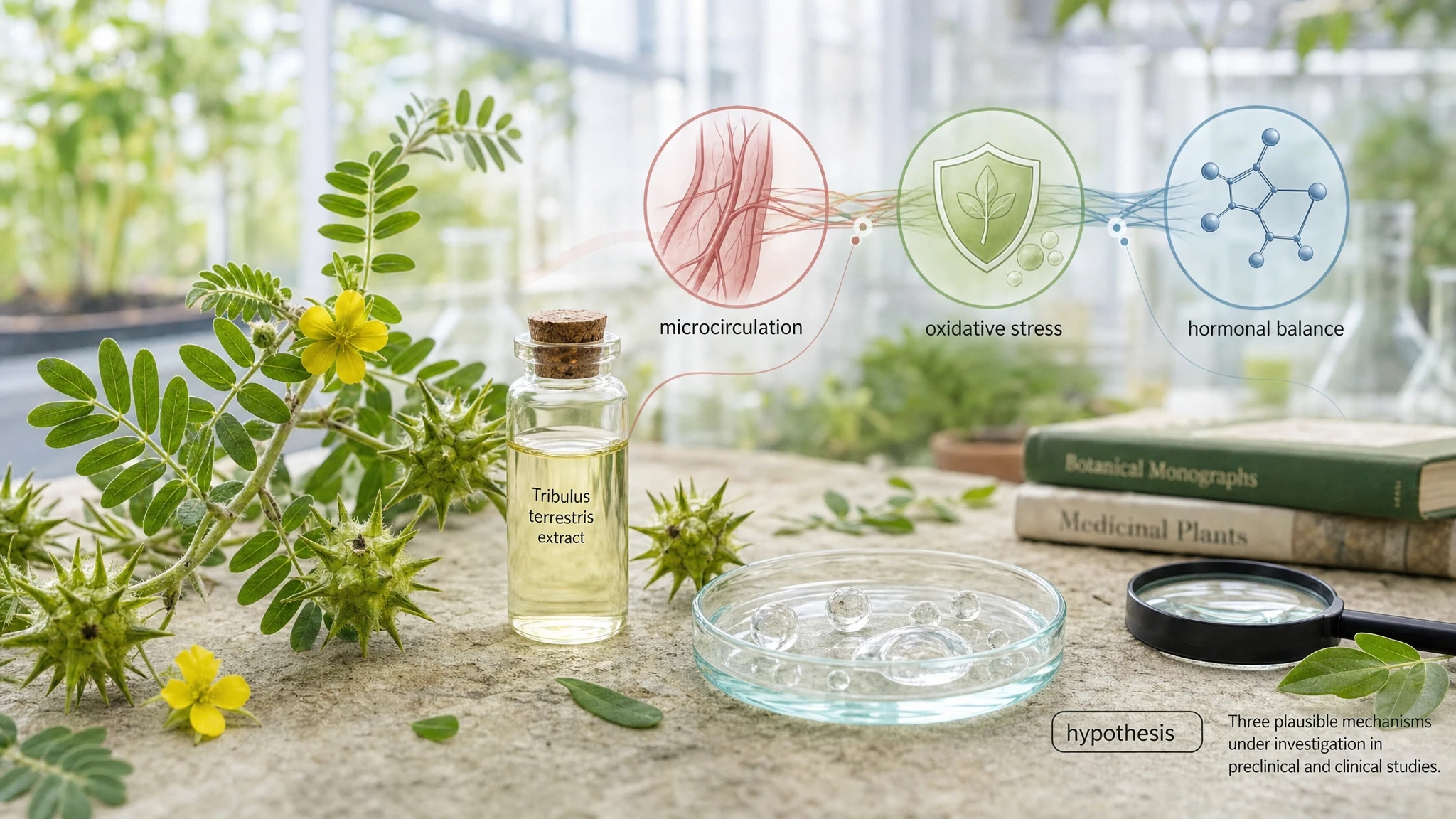
Tribulus terrestris is associated with male reproductive health due to various hypothesized biological mechanisms. Support for testicular tissue could affect sperm parameters (values that describe sperm). These include sperm motility and the quality of the seminal fluid.
These hypotheses explain why Tribulus is studied for reproductive function. They do not, however, prove that it can improve male fertility. To understand this, data obtained in the laboratory and clinical studies conducted on humans are needed. A useful effect in the laboratory, in fact, may have little weight in real life.
However, a possible mechanism does not demonstrate a real benefit. Each hypothesis must therefore be evaluated based on the available evidence. The three most studied hypotheses are these:
- Testicular microcirculation can support the tissues that produce sperm.
- Oxidative stress can damage the structure and movement of sperm.
- Steroidogenesis can change the hormonal environment present in the testicles.
Biological hypotheses regarding Tribulus are not proof of efficacy. However, they help explain why researchers have studied this topic. The following sections link each mechanism to the available data and their limitations.
Testicular microcirculation: why it is implicated
Testicular microcirculation refers to the small network of vessels that delivers oxygen and nutrients to the tissues involved in the production and maturation of sperm. In reasoning about Tribulus terrestris, this hypothesis serves to explain why improved perfusion could, in theory, support local metabolism and reproductive function. Adequate blood flow is essential for the work of the cells that support spermatogenesis. Without a good supply of oxygen, these delicate tissues may function less effectively. It is a plausible mechanism, but it must be carefully distinguished from a clinical effect already demonstrated in male fertility. In a study on mice with cyclophosphamide-induced reproductive damage, Tribulus terrestris showed a protective effect against male reproductive damage in the animals [5].
The data supports the idea that testicular tissue may benefit from biological support, but it remains preclinical and does not indicate whether the same occurs in humans. Furthermore, an improvement in microcirculation does not automatically coincide with an improvement in sperm parameters measured in a clinical setting. For this reason, the result is interesting, but not conclusive.
Oxidative stress: the potential role of cellular defense
Oxidative stress is an imbalance between reactive molecules and the body's defense systems. In the context of male reproductive health, this aspect is significant because sperm are cells that are particularly sensitive to damage to their membranes, proteins, and genetic material. Their membranes are rich in fatty acids that are easily attacked by free radicals. Damage here can reduce motility and the ability to fertilize.
For this reason, Tribulus terrestris is sometimes discussed as a possible support for cellular defense, especially when it comes to antioxidants and the protection of male gametes. The signal is consistent with a protective role against oxidative damage, but this remains an animal-based result and does not demonstrate a benefit in humans. Furthermore, the term antioxidant is often used broadly: the dose, the composition of the extract, and the biological context all matter. In other words, a defense mechanism can be real without translating into a visible clinical improvement.
Steroidogenesis: why local hormone production also comes into play
Steroidogenesis is the process by which the body produces steroid hormones and, in the testes, contributes to creating the environment necessary for the maturation of germ cells. Tribulus terrestris is often linked to this mechanism because it has long been associated, even in common parlance, with hormonal health. The idea is that some of its compounds may influence key enzymes in this metabolic pathway. However, an effect on local production does not automatically lead to an improvement in male fertility. A review of plants used in the management of male infertility includes Tribulus terrestris among the remedies studied in the laboratory, in animals, and in humans [6].
This confirms that the biological rationale is taken seriously, but it also shows how heterogeneous the data are and how difficult they are to translate into practice. Steroidogenesis, therefore, remains a useful interpretive key for reading studies on Tribulus and male reproductive health, not proof that the supplement actually improves clinical outcomes.
Tribulus terrestris and male infertility: what emerges from human studies
In human studies, the link between Tribulus, reproductive health, and male fertility remains interesting but uncertain. Results vary based on patients, sperm values, and study quality. Therefore, before discussing efficacy, it is necessary to separate positive signals from the limitations of the available evidence.
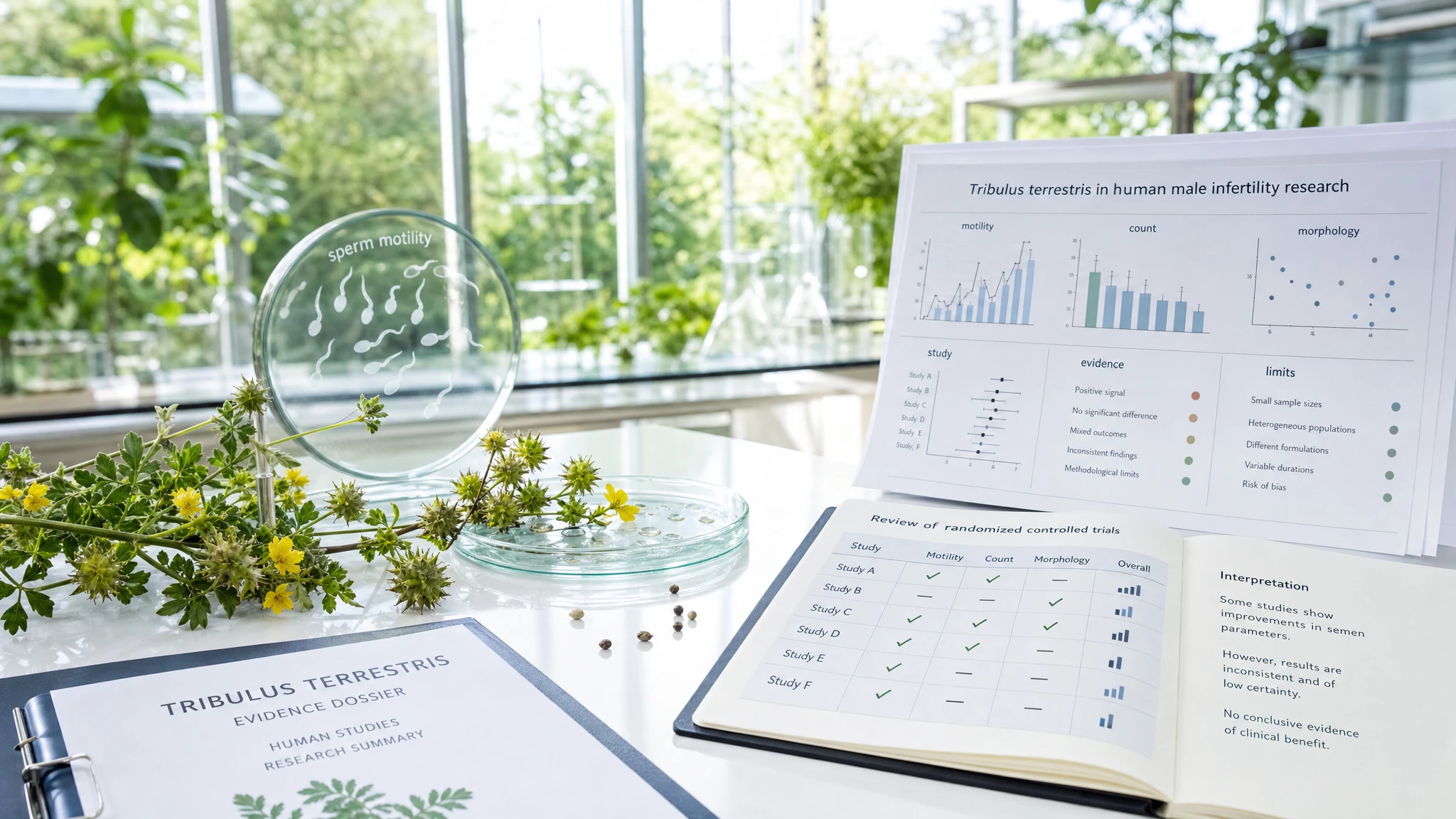
In clinical studies on Tribulus and male reproductive health, it is important to understand which outcome actually changes. Research primarily examines sperm quality, sperm motility, and other values related to fertility. However, the results are not always consistent with one another.
Overall, the relationship between Tribulus and sperm deserves attention, but the evidence is not definitive. Some studies report an improvement in specific values, while others do not find the same effect. Furthermore, the observed groups are often small or not very similar to each other. The point, therefore, is to understand whether the evidence supports targeted use in male fertility.
Positive signals, therefore, do not in themselves prove a stable effect on reproductive function. To better understand the data, it is useful to separate the main lines of research and their limitations:
- The most cited clinical studies show conflicting results.
- Idiopathic infertility remains the most difficult condition to evaluate.
- Methodological limitations make it difficult to extend the results to other patients.
Studies on humans do not provide a single answer, but rather results that must be interpreted with care. It is therefore necessary to separate the most robust signals from those that are still preliminary.
What the most cited clinical studies on male fertility show
In the field of male fertility, clinical studies on Tribulus terrestris are few and highly heterogeneous. The most cited data comes from a double-blind study on men with oligozoospermia. In a double-blind study, the treatment assignment remains hidden from both patients and researchers. This method reduces the risk of results being biased by expectations. Oligozoospermia indicates a low sperm count and is a major cause of male infertility. Understanding how this parameter reacts is therefore central to the study.
These works do not only evaluate whether the sperm count increases. They also examine whether the quality of the seminal fluid changes in a way consistent with a real benefit. For example, they look at the shape and movement of the cells. Among the most cited studies, one evaluated Tribulus terrestris in men with oligozoospermia. However, the available abstract does not report sufficient numerical data to estimate the magnitude of the effect [7]. This limitation weighs heavily when interpreting the results. Without precise numbers, it is difficult to say how real the benefit is. There is a lack of data on sperm parameters, the duration of the benefit, and the comparison with the control group. The observation time also remains unclear in the available abstracts. The result therefore remains suggestive, but not conclusive. The picture is still too incomplete to state that Tribulus consistently improves male fertility.
Idiopathic infertility: why this is the most difficult context to interpret
Idiopathic infertility is a condition in which no clear cause for the reproductive problem can be identified. No known hormonal, anatomical, or genetic alterations emerge. Precisely for this reason, it is the most rigorous testing ground for any intervention on reproductive function: if a treatment shows no advantage here, it is difficult to attribute a general role to it. Without a precise cause to target, in fact, any observed effect is more difficult to explain.
In the case of Tribulus, the context is even more cautious because the results are not uniform across different studies. Some papers report small improvements, others no appreciable change. This finding is important because it concerns a concrete clinical application, but it also indicates a clear limitation: in this population, no solid evidence of efficacy emerges. Repeated confirmations using the same terms and criteria are lacking. The message, therefore, is not that the product never has effects, but that in idiopathic infertility, the response observed so far is not enough to speak of a reliable benefit. More targeted studies on this subgroup of patients are needed.
Methodological limitations: why results cannot be easily generalized
When reading the literature on Tribulus terrestris, the limitations of the methods are just as decisive as the results. Small sample sizes, different extracts, short durations, and measures that are not always comparable make it difficult to compare data on sperm motility and other sperm parameters.
Furthermore, age, lifestyle, and baseline conditions can significantly alter the outcome, especially when evaluating such a sensitive biological variable. The signal is therefore promising but inconsistent: the presence of a single unfavorable study and the variability of protocols prevent generalization. Even a narrative review, which is a descriptive overview of the literature, emphasizes that the exact role of Tribulus remains controversial and that larger, double-blind studies are needed to truly clarify the relationship between Tribulus and sperm [8].
Tribulus terrestris for male reproductive health: how to interpret the results in practice
In practice, the effects of Tribulus on male reproductive health require clear data. The result, dose, duration, and clinical picture all matter. It is not enough to ask whether it "works": one must understand when it can help and when the evidence remains weak.
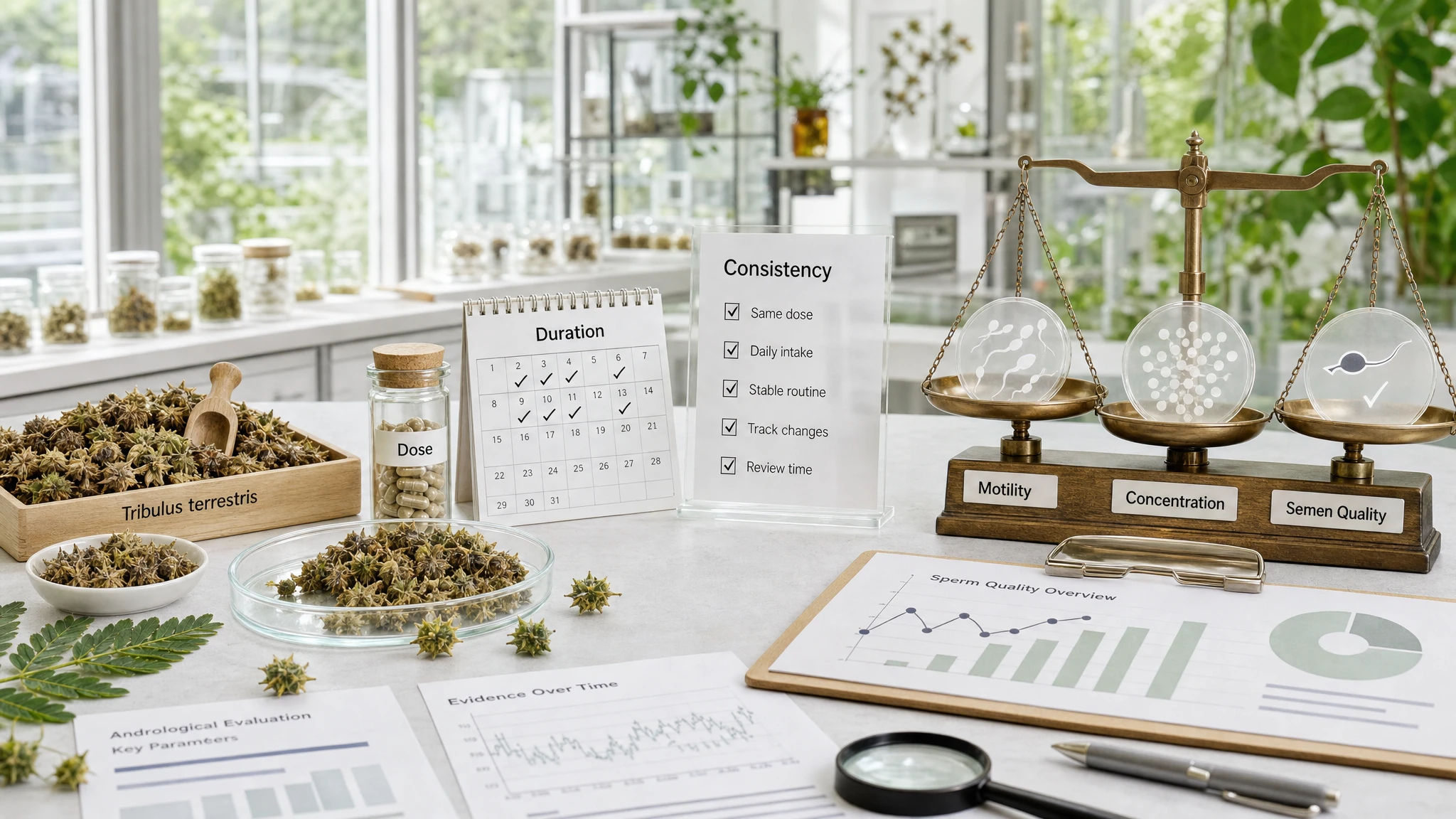
To evaluate Tribulus terrestris in male reproductive health, one must separate useful data from hypotheses. The potential interest concerns male fertility and certain sperm parameters (values that describe sperm). However, the clinical weight changes based on the initial clinical picture, duration of use, and the measured outcome.
In this context, Tribulus can provide targeted support, but it does not work in every case. Data must be interpreted based on the quality of the study and the comparison with baseline values. The expected benefit concerns possible support for reproductive function, not a guaranteed outcome. This distinction avoids unfounded expectations and helps in interpreting results correctly.
A single improved data point is not enough: the change must last and affect the quality of the seminal fluid. To interpret the data correctly, it is useful to ask four practical questions:
- Does the variation actually concern sperm motility, count, or quality?
- Is the dose used similar to that evaluated in clinical studies currently available?
- Does the result show possible support, but not prove the effect of a cure?
- Does the control always take into account the entire reproductive health picture?
A practical interpretation of Tribulus requires caution and clear clinical criteria. The following three steps help distinguish possible support from excessive expectations.
When Tribulus can be considered only a potential support
Potential support is the most accurate definition when Tribulus is included in male reproductive health without attributing a certain effect to it. This is especially true if the underlying issue has not yet been identified. It also applies when the observed outcomes are partial or unclear. In other words, the product can accompany a clinical pathway. However, it cannot replace the evaluation of the root causes of the problem. And it cannot promise a predictable recovery of reproductive function. The review with meta-analysis dedicated to Tribulus in male fertility and sexual function clearly highlights this boundary. It does so by bringing together diverse data collected in studies that are not always homogeneous. It interprets them as a signal to be read with caution, not as definitive proof [9]. This type of analysis helps to understand the general direction of the results. However, it is not enough to establish how strong the actual effect is.
The limitation lies precisely in the absence of uniform and conclusive evidence; for this reason, in practice, Tribulus remains a supportive option and not a proven treatment for everyone. This caution does not devalue the topic, but it avoids overestimating what studies have not yet confirmed in a solid manner.
How to avoid excessive expectations regarding reproductive results
Expectations must be tempered when a possible improvement is mistaken for a guaranteed effect. In the field of male reproductive health, a change in seminal parameters does not automatically equate to a recovery of fertility. Clinical outcomes depend on many factors combined. The underlying cause of the reproductive issue matters. The duration of exposure to Tribulus also matters. And individual variability between one person and another matters. For this reason, Tribulus can be evaluated as an intervention to be observed over time. It should not, however, be considered a foregone or automatic solution.
This means that while a signal exists, it does not justify overreaching conclusions. In practice, a correct interpretation involves three distinct levels. There is a potential benefit in some specific and well-defined contexts. There is a need for caution in many other clinical cases. And there is no shortcut for sperm motility or seminal quality, especially in the absence of a well-defined clinical picture.
Why Tribulus should be viewed within a comprehensive andrological approach
A supplement cannot replace a comprehensive andrological approach when it comes to male fertility. If considered, Tribulus should be integrated into a broader strategy. This strategy includes the medical history, which is the collection of the patient's clinical background. It then includes the actual clinical evaluation. And it includes the careful interpretation of the collected seminal parameters. This is important because the possible effects on Tribulus and sperm only make sense in a specific context. They must be read in conjunction with the biological causes of the reproductive problem. They should not be considered an independent shortcut to diagnosis. It is a useful framework for understanding the biological plausibility of the observed effect. However, it is not enough on its own to change daily clinical practice.
In other words, Tribulus can be part of the journey, but it does not define the journey. The most accurate interpretation remains one that combines caution, monitoring of semen quality, and specialist evaluation, without attributing a role to the supplement that has not yet been definitively proven.
Summary of scientific evidence
This summary brings together the sources present in the bibliography. It briefly shows where the evidence is strongest and where it remains partial. It also avoids repeating the details of individual studies.
| Publication year | Area studied | What the studies indicate |
|---|---|---|
| 2012 | Oligozoospermia | results are inconsistent and a single clinical trial is not enough to extend the potential effect [7] |
| 2017 | Idiopathic male infertility | results are inconsistent and do not show a reliable benefit on seminal parameters in the studied sample [3] |
| 2017 | Human semen in vitro | evidence indicates improved sperm motility and progression observed in the laboratory [2] |
| 2018 | Overall role in male infertility | results are inconsistent and the literature remains controversial; larger studies are needed [8] |
| 2018 | Animal model of reproductive damage | evidence indicates a preclinical protective effect against male reproductive damage [5] |
| 2019 | Systematic review on male infertility | in some of the included studies, a possible increase in sperm count, motility, and morphology emerges [4] |
| 2021 | Seminal parameters and assessment criteria | studies indicate that motility, concentration, and general quality require standard criteria to be evaluated [1] |
| 2023 | Meta-analysis on fertility and sexual function | studies show a promising signal, but it is still variable and not definitive [9] |
Editorial interpretation of the evidence
In reviewing the studies collected in this article, I found a possible mechanism, but the results are inconsistent. Experimental studies and the most recent syntheses show some changes linked to Tribulus terrestris. These changes primarily concern motility and the overall quality of the sample. In human studies, however, results vary depending on the participants, the extract used, and the duration. I draw a cautious conclusion from this, which does not allow for definitive findings. There is a basis for further research, but the clinical effect is not yet clear.
The main limitations encountered are the small number of participants, the different extracts, and the variable duration of the studies. Furthermore, the criteria used to measure results are difficult to compare with one another. Some studies are preclinical or in vitro (conducted in a laboratory). Their results, therefore, cannot be applied directly to patient care. Moreover, positive results do not always appear in men with idiopathic infertility. Therefore, a uniform effect of Tribulus terrestris on male reproductive health cannot be assumed.
Conclusions and editorial summary
The relationship between Tribulus terrestris and male reproductive health requires caution, as the studies examined yield varying results. Research shows potential interest regarding certain sperm parameters, especially motility and sample quality. However, the strength of the evidence varies significantly between experimental and clinical studies.
Male fertility does not depend on a single value, but on many biological and clinical data points. Studies on Tribulus therefore help to understand certain mechanisms of reproductive function. They do not, however, prove that the plant has a definite effect on male fertility. This site will continue to explore the link between medicinal plants and reproductive function. It will always be necessary to distinguish promising signals from certainties that research has not yet reached.
Final critical note
The sources consulted advise against mistaking a plausible hypothesis for definitive proof. Some studies show signs consistent with potential benefits for seminal parameters. However, the results are not uniform enough to be generalized to everyone. Doubts remain regarding the type of extract, dosage, duration, and the groups studied.
Furthermore, preclinical data (obtained from cells or animals) do not always align with clinical findings. This caution does not diminish the value of the topic or its interest for research. The biological framework appears interesting, but it remains uncertain from a clinical perspective.
References
[1] WHO laboratory manual for the examination and processing of human semen, 6th edition
[2] Tribulus terrestris Extract Improves Human Sperm Parameters In Vitro
[3] Prospective Analysis on the Effect of Botanical Medicine (Tribulus terrestris) on Serum Testosterone Level and Semen Parameters in Males with Unexplained Infertility
[4] Effect of Tribulus terrestris L. on sperm parameters in men with idiopathic infertility: A systematic review
[5] Tribulus terrestrisProtects against Male Reproductive Damage Induced by Cyclophosphamide in Mice
[9] The Profertility and Aphrodisiac Activities of Tribulus terrestris L.: Evidence from Meta‐Analyses
Editorial note
Artificial Intelligence was used solely as a tool to support editorial and documentary work. All content, interpretations, bibliographic citations and conclusions have been verified, reviewed and approved by the author, who assumes full scientific responsibility for them.
The manuscript was also subject to independent peer review prior to publication.
To ensure maximum transparency, the article's complete history — including the dates of submission, review, acceptance and publication, as well as information on the peer review process — is available on the dedicated Article History page.