


Tribulus terrestris: properties, supplementation, and in-depth analysis of treated conditions
Research describes Tribulus terrestris as a complex plant. Studies primarily evaluate its sexual function, but also its effects on metabolism, inflammation, and neuronal protection. Some clinical data regarding sexual health are favorable. However, findings on testosterone remain variable and inconsistent. Many potential mechanisms are still derived from experimental studies and highly varied extracts.
- Published 09/11/2026
- Updated 11/11/2026
- Reviewed 11/11/2026
- Article history

ABSTRACT : WHAT THE SCIENCE SAYS
Tribulus terrestris is a plant that has attracted significant interest in recent years. This interest stems from its ancient use, the supplement market, and new clinical and experimental studies. It is an annual herbaceous plant: it is born, grows, and completes its life cycle within one year. It belongs to the Zygophyllaceae family and grows in Mediterranean, tropical, and subtropical regions. For centuries, various forms of traditional medicine have used this plant for a wide range of purposes.
Science studies the phytocomplex, which is the set of active substances, rather than a single compound. The most studied molecules are steroidal saponins, plant substances similar to certain steroids. The plant also contains flavonoids, phytosterols, and other substances formed during its metabolism. Therefore, effects can vary depending on the extract, its quality, and how it is used.
In popular science texts, Tribulus is often suggested for increasing testosterone, libido, vitality, or metabolism. However, studies provide a less clear picture: some data are useful, while others remain uncertain. It is necessary to distinguish between the plant's properties, its use in supplements, potential clinical applications, and the limitations of the evidence.
This article explains how the phytocomplex acts and when it might make sense to choose a supplement containing it. It also examines AMPK (a cellular energy sensor) and mTOR (a pathway that regulates cell growth). It then evaluates the role of nitric oxide, orexin, and cortisol in the plant's potential effects. Together, these pathways help to interpret and better understand the data we have today. In summary, here are the key points that we will explore, one by one, in the following sections:
- Plant-based phytocomplex containing active saponins, flavonoids, and phytosterols.
- Traditional use associated with vitality, diuresis, and sexual well-being.
- Variable human evidence regarding testosterone, desire, and sexual function.
- Extract quality is essential for achieving reliable results.
- The mTOR, AMPK, and stress pathways explain some of the effects.
The properties of Tribulus terrestris
The properties of Tribulus terrestris depend on its phytocomplex, which is the set of substances present in the plant. Among these, steroidal saponins—plant molecules similar to certain steroids—stand out. Studies evaluate its potential effects on sexual function, oxidative stress, and nutrient utilization. However, results vary based on the extract, dosage, and context of use.

The properties of Tribulus terrestris depend on its phytocomplex, which is the set of substances present in the plant. Therefore, they do not depend on a single molecule. The phytocomplex includes steroidal saponins, flavonoids, phytosterols, and other secondary metabolites (substances produced by the plant).
Flavonoids are plant compounds with various biological activities. Phytosterols, on the other hand, have a shape similar to that of cholesterol. Each group can contribute differently to the observed effects. For this reason, not all extracts are the same. The raw material, production method, and titration (defined quantity of the active compound) can vary [1][2][3].
To evaluate these properties, it is necessary to distinguish traditional uses from studies on cells, animals, and humans. An effect observed with a standard extract does not automatically apply to every available product.
These differences also help in interpreting data on Tribulus terrestris supplementation. A randomized study (with random assignment) involved women with sexual dysfunction. A dose of 7.5 mg per day for 4 weeks improved the total FSFI score. The FSFI, or Female Sexual Function Index, measures various aspects of female sexual function. Among the 60 participants who completed the treatment, some specific aspects also improved [4].
However, clinical summaries on erectile dysfunction report inconsistent results. The outcome varies significantly based on the quality of the extract and the method used in the study [5][6][7]. The plant is therefore not a remedy that works for everyone. It shows various possible activities, but some still require more solid and consistent evidence [8][2].
The main areas of study are as follows:
- Studies evaluate saponin-rich extracts primarily for their effects on sexual function.
- Some compounds have an antioxidant action, meaning they help reduce damage caused by free radicals.
- Studies evaluate parts rich in diosgenin and dioscin for their possible effects on metabolism.
- Differences between extracts make it difficult to directly compare the results of various studies.
- The most robust results depend on the dose, the product used, and the clinical context.
The following three H3 headings help explain the properties of Tribulus terrestris from three perspectives: composition, traditional uses, and its relationship with clinical evidence.
What is Tribulus terrestris and why is it considered a phytocomplex
Tribulus terrestris does not contain just one active substance. The plant brings together various classes of compounds that can act in concert. For this reason, it is defined as a phytocomplex. Its profile includes steroidal saponins, flavonoids, phytosterols, and alkaloids (nitrogen-containing plant compounds). It also includes other secondary metabolites, which are substances produced by the plant. This definition avoids attributing every effect to a single molecule. The various parts of the phytocomplex can, in fact, act on different processes. Some are linked to endocrine systems, which regulate hormones, and to metabolism. Others are being studied for defense against oxidative stress or for the control of inflammation.
Studies also show that commercial products can be very different from one another. Not all contain the same amount of active compounds or the same degree of standardization. Standardization is the process that sets and controls the composition of a product. The raw material, the extraction method, and the proportion of saponins can change the final product.
It is therefore necessary to know whether a study uses the whole plant, a titrated extract, or individual substances. This distinction helps to interpret the results correctly. It also avoids transferring effects seen in preclinical models (tests on cells or animals) to humans. The botanical name alone does not allow one to predict the effect of a product. One must know its composition, the dose, and the way it was studied. The same plant can provide preparations with different chemical profiles and, therefore, with unequal outcomes.
Standardization is precisely used to define which substances an extract contains and in what quantity. It is a central requirement even in the most recent reviews. When evaluating this plant, therefore, the actual product matters, not just the name on the label [2][3].
Where Tribulus terrestris is found and how it is traditionally used
Tribulus terrestris grows in hot, arid areas in many regions of the world, particularly in the Mediterranean basin, Asia, Africa, and subtropical zones. This geographical distribution explains why the plant has entered various medical traditions, often with similar but not identical uses. Historically, it has been used as a general tonic—that is, as non-specific support for vitality—as an aid for diuresis (and thus urine production), as a remedy for urinary disorders, and as a support for vitality, with a long-standing symbolic association with male strength and reproductive health.
However, traditional use does not automatically equate to proven clinical efficacy; rather, it represents a useful starting point for generating research hypotheses. Today, modern interest focuses primarily on extracts and fractions rich in saponins, which are being studied for their potential effects on sexual function, metabolism, and oxidative stress. This distinction helps separate the ethnobotanical context from the contemporary nutraceutical one, avoiding the confusion of historical use with definitive proof of efficacy.
This is an important step for correctly interpreting both tradition and current research, which operate on different but complementary levels. Therefore, the plant should not be viewed solely as a folk remedy, nor as an automatic solution for every wellness need. The value of tradition lies in indicating potential directions for study, not in replacing the scientific method. In this sense, Tribulus is a classic example of how a plant can span centuries of empirical use and then be re-examined in light of modern biochemistry and pharmacology.
The distance between these two levels is significant and must be maintained, because only in this way can excessive interpretations or promises unsupported by data be avoided. The result is a more robust and useful interpretation for those seeking reliable information. Institutional sources and reviews confirm that traditional use alone is not enough to define clinical efficacy [1][3].
Recent research and updates
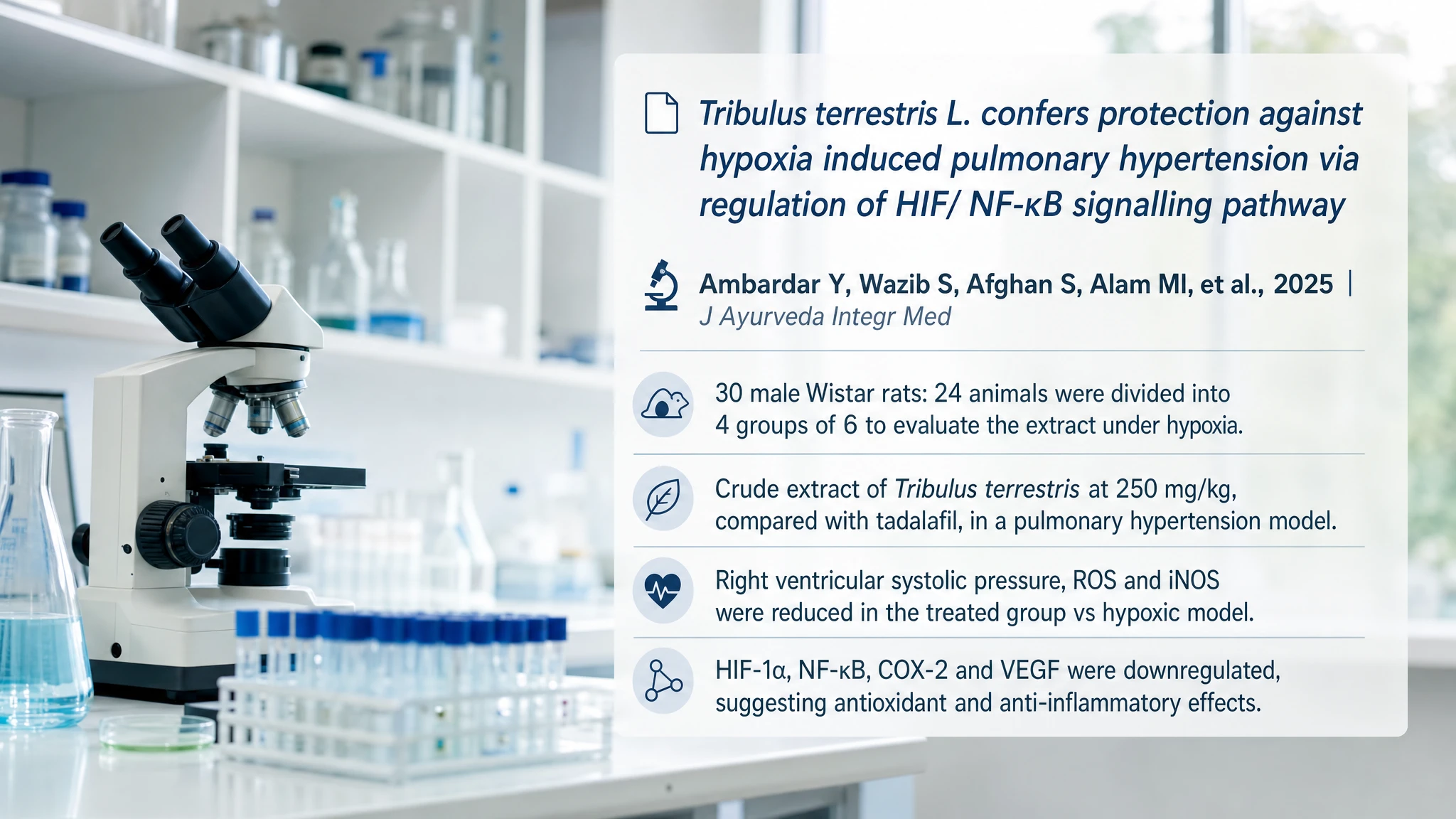
In 2025, in India, Ambardar and colleagues studied Tribulus terrestris in the J Ayurveda Integr Med. The research evaluated hypoxia-induced pulmonary hypertension (high pressure in the pulmonary vessels caused by low oxygen). In an animal model, the extract reduced various signs of biological stress and inflammation. The data suggest a possible effect on oxidative stress and vascular signaling. The study is valuable because it examines a clinical field different from the more well-known ones.
Tribulus terrestris L. confers protection against hypoxia induced pulmonary hypertension via regulation of HIF/ NF-kB signalling pathway
- 30 male Wistar rats: 24 animals were divided into 4 groups of 6 to study the extract against hypoxia.
- Crude extract of Tribulus terrestris at 250 mg/kg, compared with tadalafil, in a model of pulmonary hypertension.
- Right ventricular systolic pressure, ROS, and iNOS decreased compared to the hypoxic model.
- HIF-1a, NF-kB, COX-2, and VEGF levels decreased, indicating potential effects against oxidative stress and inflammation.
Supplementation with Tribulus terrestris
Supplementation with Tribulus terrestris is often used to support vitality, physical activity, and sexual health. Results, however, vary depending on the purpose and the type of extract. The phytocomplex (the combination of the plant's compounds) seems more useful as a targeted aid than as a universal hormonal "booster." What matters most are the steroidal saponins (plant substances similar to steroids) and the quality of the product.

To evaluate supplementation with Tribulus terrestris, one must understand the intended purpose of its use. The individual's health status also matters. Studies indicate potential effects on well-being, sexual function, and recovery. In healthy men, however, there is no evidence of a stable increase in testosterone (the primary male sex hormone) [8][5][6][7].
The product does not act through a single mechanism that is the same for everyone. Effects can vary depending on the formula, the group studied, and the initial health status. It should therefore be viewed as a phytocomplex with multiple potential actions. It is not, however, a reliable means of increasing hormones.
To navigate this, it is necessary to distinguish clinical outcomes from data on biological mechanisms. The former describe the effects observed in people. The latter help to understand how such effects might arise. The phytocomplex does not necessarily act the same way in everyone. The response may depend on saponins, the quality of the extract, and other body systems.
This distinction helps to avoid unrealistic expectations. An extract rich in saponins may be promising, but it does not produce the same effect in everyone. Furthermore, it does not replace a medical consultation in the case of erectile dysfunction or hormonal disorders. Erectile dysfunction is the persistent difficulty in achieving or maintaining an erection [9][7].
The plant also contains diosgenin and dioscin, two natural substances with various potential biological actions. However, a benefit observed in studies does not prove a certain increase in testosterone or athletic performance. Supplementation should therefore be chosen for specific and realistic purposes, not based on one-size-fits-all slogans [1][2][3].
The most useful points for informed use are as follows:
- The link between supplementation and testosterone varies significantly in human studies.
- The quality and composition of the extract affect the interpretation of the results.
- Perceived effects on energy and recovery do not always depend on hormones.
- Data on sexual function require careful and prudent interpretation.
Before examining the practical uses, it is worth clarifying the questions that most often guide the choice. It is not just about what Tribulus terrestris promises. It is necessary to understand which effects emerge from human studies and how much they depend on the type of extract.
Does Tribulus terrestris increase testosterone or not?
Many people believe that Tribulus terrestris increases testosterone. Human studies, however, do not show a consistent effect. In healthy men, hormone levels often remain the same during use. Some studies do, however, report greater perceived well-being or certain functional benefits. These outcomes, however, do not prove a direct boost to the production of male hormones. Possible benefits may therefore depend on other bodily pathways. The phytocomplex might act on vascular tone, recovery, or the sense of well-being. It could also influence oxidative stress (damage caused by highly reactive molecules). These mechanisms do not coincide with a direct increase in testosterone and should not be confused with it.
Even when a study detects a hormonal rise, the data is not always clinically significant. The result can vary depending on the individuals involved, the duration of the study, and the extract used. The initial status of the participants also matters. Data collected in a specific group cannot, therefore, be automatically extended to everyone.
It is therefore useful to separate a testosterone increase from perceived benefit. A supplement can act on certain symptoms without directly affecting hormones. This distinction helps to better evaluate expectations related to sports and sexual health. It also avoids mistaking the product for hormone therapy, which follows very different medical criteria.
Overall, one cannot speak of a "testosterone booster" that is valid for every man. The potential value of the product should be sought in broader outcomes, not in a single hormone. This interpretation is consistent with most of the better-conducted human studies. Official reviews and meta-analyses confirm that an increase in testosterone is not a certain or common outcome [8][3][9].
How much the standardization of Tribulus extract matters
In studies on Tribulus terrestris, products with the same name can have very different compositions. The dose of steroidal saponins, the ratio between compounds, and the quality of the raw material vary. These differences can change the biological activity of the product. The name of the plant alone, therefore, is not enough to compare two supplements. A standardized extract contains a declared and verifiable dose of one or more compounds. This data does not automatically make the product better. However, it allows you to know more precisely what you are taking. It also helps to compare the results of different studies more rigorously. The other conditions, however, must be similar.
The comparison becomes weak when studies use very different extracts, doses, and timings. In these cases, it is unclear whether the differences depend on the plant or the chosen product. The duration of use can also change the outcome. To read research properly, precise data on the formula and its use are therefore needed.
Standardization also matters for safety. Poorly controlled products may contain impurities, variable doses, or amounts different from those indicated. A well-defined extract reduces this uncertainty. However, it does not, by itself, guarantee efficacy or the absence of risks. Above all, it offers a clearer basis for evaluating the product and comparing it with those studied.
To choose a reliable supplement, it is not enough to look for the botanical name on the label. It is useful to know how it was prepared and which compounds were measured. These data distinguish a carefully described formula from a product with little information. Without a good description, the comparison between studies loses value. The conclusions also become less solid. Reviews dedicated to the plant confirm this limitation [3][9].
Tribulus terrestris for energy, vitality, and recovery: what to expect
Many people use Tribulus terrestris to increase energy, vitality, or recovery after sports. The plant is often described as an adaptogen (a substance that may help the body manage stress). This idea may explain its use, but study results do not apply to everyone. The effect depends on the purpose, the product, and the initial conditions.
In some clinical studies, the most interesting signals concern recovery and physical stress. Researchers have evaluated biological markers, which are measurable body values. These values were linked to fatigue or damage. However, the data do not necessarily indicate more strength, muscle mass, or better performance. A minor sign of physical stress does not always equate to a clear athletic advantage.
It is also necessary to distinguish what a person feels from what can be measured. Perceived energy, muscle damage, recovery times, and athletic output are different outcomes. A supplement may act on one of these aspects without changing the others. For this reason, the question "does it work?" always requires a clear goal and an appropriate measurement. The phytocomplex may be useful when a person feels fatigued or does not fully recover. Even in these cases, however, the effect remains uncertain and may be mild. In other people, it may be minimal or impossible to detect. Individual response matters a great deal. Therefore, it is not correct to describe the product as a reliable way to gain more energy.
Its possible role is that of an aid chosen for specific cases and purposes. It should not, however, be presented as a universal means to improve performance. This distinction reduces the risk of expectations exceeding the observed benefits. Sports studies show interesting signals. However, they are not enough to extend the results to all people who use the supplement [10][11][12][13].
Conditions treated by Tribulus terrestris
Tribulus terrestris has not been studied to treat a single disease. Research has primarily examined erectile dysfunction, low female libido, and metabolic disorders. Erectile dysfunction hinders the ability to achieve or maintain an erection suitable for intercourse. Low libido, on the other hand, reduces interest in and the drive for sexual activity. The data are not uniform, but they indicate potential effects on blood flow and overall well-being. They also suggest effects on oxidative stress, which is the damage caused by reactive molecules. However, it is necessary to distinguish between a potential aid and a therapy with proven efficacy.

Tribulus terrestris is not a drug designed for a single disease. It is a phytocomplex, meaning a combination of active substances from the plant, studied in various clinical settings. Research has examined symptoms related to desire, blood flow, and oxidative stress.
Perfusion is the passage of blood through the small vessels that nourish organs and tissues. For this reason, speaking of conditions treated by Tribulus terrestris requires caution. In many cases, the plant may offer support, but it does not replace medical treatments. Evidence in humans is more robust for sexual health disorders. In other areas, data are preliminary or come from studies on cells and animals [1][4][5][7].
For erectile dysfunction, studies and reviews indicate progress in some aspects of sexual function. The signal mainly concerns people with mild or moderate symptoms and products with known dosages [5][6][9][7].
For female desire, a randomized, double-blind study used 7.5 mg per day for 4 weeks. Neither the women nor the researchers knew who was receiving the active product. The study included 67 women, 60 of whom completed the course. The results showed progress in the total score and in some areas of sexual function [4].
For metabolism, some studies indicate possible effects on glycemia and the lipid profile, i.e., blood fats. However, the evidence is not sufficient to claim that the plant cures diabetes [2][3]. Overall, the plant appears more credible as a targeted aid than as a universal remedy. Its clinical value depends on the context, the type of extract, and the purpose of the treatment [1][7].
To better understand the evidence, it is useful to divide it according to the clinical area studied. This comparison shows where the signal is most stable and where it remains weak:
- Erectile dysfunction shows the most consistent clinical signal.
- Female sexual desire has promising but still limited data.
- Glycemia control indicates a possible supportive role.
- Some studies on cells and animals examine inflammation and oxidative stress.
The most concrete clinical evidence concerns sexual health. For other conditions, however, the data are still preliminary. The following four areas highlight the most credible uses of Tribulus terrestris and those that require more caution.
Tribulus terrestris for erectile dysfunction: what the studies say
Erectile dysfunction is the condition with the strongest support from human studies for Tribulus terrestris. Data indicate progress in certain aspects of sexual function. The signal emerges primarily with standardized extracts and in cases of mild or moderate dysfunction. The observed benefit does not appear to depend on a constant increase in testosterone. This hormone is the primary male sexual regulator.
Possible effects instead concern the blood vessels, microcirculation, oxidative stress, and general sexual well-being. Microcirculation is the network of small vessels that delivers oxygen and nutrients to tissues. This finding shifts the focus from the sole role of hormones to that of blood vessels and sexual function. Therefore, Tribulus should not be viewed as a substitute for standard therapies. Instead, it may be a possible additional support in selected cases.
Results are not uniform because duration, dosages, and participant profiles vary between studies. The observation period indicates how long researchers administered the product. The participant profile includes age, severity of symptoms, and other clinical conditions. Research must therefore clarify which patients may benefit and which outcomes should be measured. It must also better define the limitations of the evidence currently available.
This is one of the most solid clinical topics in the general picture. It is also one of the areas that sparks the greatest interest among readers. The value of the plant does not lie in the promise of a miraculous effect. It lies in the possibility of offering extra help to carefully selected individuals. However, it remains essential to distinguish support from therapy, as the two roles are different. This distinction allows for a correct interpretation of studies on Tribulus and erectile function. The randomized trial and the recent clinical review show a favorable signal. However, it is not enough to replace established treatments [5][9][6].
Tribulus terrestris and hypoactive sexual desire disorder in women
Tribulus terrestris has also been studied for female sexual desire. Research has focused primarily on hypoactive sexual desire disorder. In this case, studies do not measure just a single physical response. They evaluate the sexual experience as a whole: desire, arousal, lubrication, satisfaction, and comfort. Lubrication is the production of vaginal secretions that reduce friction and facilitate sexual intercourse.
Clinical studies indicate potential progress in some of these areas, especially regarding desire. Generally, participants tolerated the product well. However, the studies include few subjects, and the trials often last for limited periods. It is therefore accurate to speak of a promising signal, not a definitive conclusion. Biologically, the authors hypothesize effects on the hypothalamus-pituitary-gonadal axis. This circuit regulates the production of certain sex hormones. They also hypothesize effects on certain hormonal processes and blood flow. However, these mechanisms are less clear than those studied in male erectile dysfunction.
This interpretation addresses a strong interest but avoids a common mistake. Data collected on men cannot be directly transferred to women. Tribulus is not a universal solution, but a potential aid in a field that is still being studied. Caution is needed because female sexuality depends on many factors. These include hormonal, emotional, and psychological factors, as well as those related to blood flow.
An interpretation based on a single cause would therefore be misleading. If more robust studies were to confirm its effects, the plant could be included in targeted treatment pathways. However, it should not replace a proper clinical evaluation. In summary, the results spark interest but do not yet offer certainty. Studies on menopausal women and those with female sexual dysfunction indicate benefits. The protocols vary, but they have produced interesting clinical results [4][14][15].
Tribulus terrestris and glycemia: data on diabetes and metabolism
Some studies have evaluated Tribulus terrestris in populations with diabetes or metabolic disorders, observing improvements in glycemia and, in some cases, lipid parameters. Glycemia is the concentration of glucose in the blood, while lipid parameters describe the amount of circulating cholesterol and triglycerides. This does not mean that Tribulus is an antidiabetic therapy, but rather that it could act as complementary support in a complex metabolic context. The most plausible hypothesis concerns an action on oxidative stress, inflammation, and the cellular response to insulin, with possible effects on glucose management.
It is important to maintain a clear distinction between preliminary results and established clinical use: the data are not yet sufficient to replace diet, exercise, medication, or medical monitoring. However, the presence of measurements regarding fasting glycemia, postprandial glycemia, and HbA1c, which reflects average glycemic control over the previous months, makes the topic relevant for both the reader and scientific research.
This approach also captures the interest of those looking for supplements for metabolism, but it must be treated with caution to avoid overpromising. The correct message is that there is an interesting scientific signal, not a definitive confirmation of therapeutic efficacy. In this area, Tribulus is positioned as a possible biological adjuvant and not as a substitute for the standard clinical pathway.
Its potential utility must therefore be interpreted within an overall metabolic management strategy, not as an autonomous solution. For the reader, the most honest conclusion is that the data is stimulating but not yet sufficient to change clinical practice. The strongest observations remain preclinical and based on reviews, not yet sufficient to define a certain metabolic benefit in humans [2][3].
Tribulus terrestris and male reproductive health beyond testosterone
In the field of male reproductive health, Tribulus terrestris is almost always associated with testosterone. However, some clinical studies and reviews have identified more interesting signals regarding other parameters. These include sperm motility, sperm concentration, and erectile function. The increase in androgens, i.e., male sex hormones, appears to be less consistent. Sperm motility indicates the ability of sperm to move effectively. Concentration indicates how many sperm are present in a given volume of seminal fluid.
This shift in perspective helps to evaluate reproductive function as a whole. It also avoids describing Tribulus as a simple product that increases hormones. Hypothesized mechanisms include effects on microcirculation and possible help against oxidative stress. They also include a potential effect on steroidogenesis, which is the process that produces steroid hormones. However, the evidence does not yet allow for solid conclusions to be drawn.
Many people seek remedies for fertility, desire, or semen quality. Therefore, they are not just looking for products linked to testosterone. It is necessary to distinguish what can be defined as promising from what remains uncertain. Tribulus can be studied in the reproductive field, but it requires a broad and cautious narrative. This caution is often missing in content shared online.
Male reproductive health encompasses hormones, sperm quality, tissue perfusion, and general well-being. The phytocomplex could act on some of these points, but not on all of them in the same way. The topic is therefore interesting, but it remains difficult to study and communicate. The most accurate interpretation is that of a possible support that acts on multiple factors. However, this role is still far from being fully confirmed. The only direct study on idiopathic male infertility did not find a convincing clinical benefit [16]. Idiopathic infertility is that for which a cause cannot be identified.
Further reading: Tribulus terrestris and male fertility: beyond testosterone and sperm
Tribulus and mTOR
The link between Tribulus terrestris and mTOR involves certain steroidal saponins, plant-based substances similar to steroids. These substances can influence growth, energy utilization, and cellular stress responses. In laboratory tests, the effect appears most beneficial when metabolism is already impaired. Conversely, a generic "tonic" effect applicable in every case does not emerge. This finding helps to interpret the plant's properties based on its biological effects.
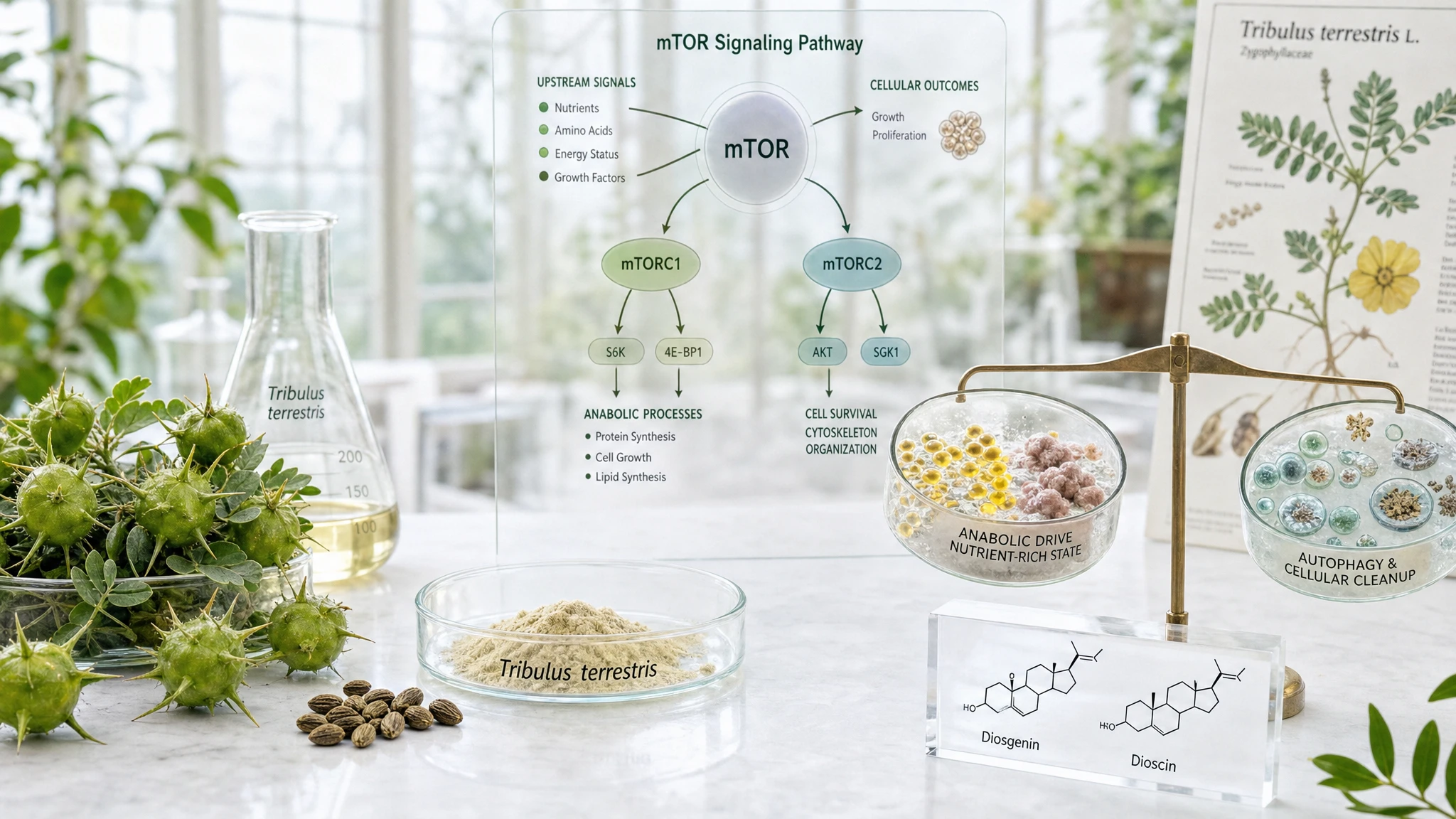
In Tribulus terrestris, mTOR matters because it integrates signals related to food, energy, and growth. The name refers to the mechanistic target of rapamycin, which is the point where this drug acts. In practice, this pathway helps the cell use the resources it has. If it remains too active, it can promote fat synthesis and inhibit autophagy. The latter is the process by which the cell recycles broken or useless parts.
Some substances in the Tribulus terrestris phytocomplex, such as diosgenin and dioscin, may make the signal more stable. The phytocomplex is the set of active substances present in the plant. However, the data come from models used in research. They indicate a possible action on a key cellular node, not a clinically proven effect.
Among the most studied substances, diosgenin has reduced metabolic load in various experimental models. Dioscin has been linked to the control of the AMPK-mTOR axis. This axis connects the energy sensor to the signals that regulate cell growth. In tests, it also promoted the recovery of processes used by the cell to adapt [17,18,19,20,21,22,23].
This does not mean that mTOR should always remain turned off. However, high and continuous activity can cause damage in some diseases. For this reason, researchers are studying the plant in steatosis, inflammation, and autoimmune models. However, the data are primarily preclinical, meaning they were obtained from cells or animals. They offer a biological basis but do not yet indicate clinical use in humans [24,25,26,27].
This interpretation links the plant to metabolic and inflammation processes more clearly. In particular, it helps to understand how steroidal saponins can act inside cells:
- Steroidal saponins can curb overly strong growth signals.
- Controlling mTOR can also change cellular autophagy.
- The effect may vary depending on the type of tissue.
- Individual active substances seem to matter more than the extract as a whole.
To understand the role of Tribulus in this pathway, we must start with the substances that can regulate it. Tests then show when mTOR becomes a key node for metabolism.
What is the mTOR pathway and why does it matter for metabolism and cell growth
mTOR is one of the main pathways regulating cell metabolism. A signaling pathway is a chain of biochemical messages that travels within the cell. These messages indicate whether the cell has food, energy, and stimuli to grow. Based on this data, mTOR can promote growth and protein synthesis. It can also support proliferation, which is the increase in the number of cells.
When resources decrease, however, the cell must use less energy and adapt. If the pathway remains too active for too long, it can promote various imbalances. These include lipogenesis, inflammation, insulin resistance, and autophagy defects. Lipogenesis is the process by which the body produces fats. Insulin resistance is a weaker response of tissues to insulin.
For these reasons, mTOR is widely studied in diseases related to metabolism and inflammation. In tests on metabolic and immune tissues, diosgenin and dioscin have modulated this pathway [28][18][19][21][23]. These data are concrete, but they come from experimental models and do not prove benefits in humans. However, they help to better understand the properties related to Tribulus terrestris.
The action does not seem to derive from a vague effect of the whole plant. It may depend on substances that act on a node located before many other processes. The outcome changes according to the tissue, health status, and type of diet. For this reason, the control of mTOR does not always yield the same result. This aspect also counts when evaluating supplements for metabolism. It also explains why some data on the plant and inflammation follow a consistent biological thread. The reader can thus distinguish a possible mechanism from a promise lacking evidence. This distinction is essential for properly evaluating the phytocomplex.
Diosgenin and dioscin: how Tribulus saponins modulate mTOR
Researchers often study these two saponins for their potential effect on the mTOR pathway. In various disease models, they have reduced its activity, thereby stabilizing cellular balance [28][18][19][21][23]. This data suggests a possible rebalancing, rather than a simple blockage of the pathway. However, these tests remain preclinical and do not prove the same effect in humans.
In fact, mTOR is not inherently good or bad. It becomes harmful when it remains overactive while the cell should be slowing down growth. In this state, the anabolic load increases, meaning the drive to create new molecules and tissues. At the same time, the cell may underutilize its defense and recycling systems.
The saponins studied appear to guide the system toward better homeostasis. This term refers to the cell's ability to maintain a stable internal environment. This data also helps to understand where the effect of an extract might originate. Not all actions depend on the phytocomplex as a whole. Some may arise from specific molecules present in varying doses.
This is why standardizing products is essential. Standardization means fixing the quantity of key substances present in each dose. Knowing that a product contains Tribulus, therefore, is not enough to estimate its biological effect. One must know which saponins it contains and in what quantity. This level of care allows for better comparison of data and different extracts. It also explains the interest in models of hepatic steatosis, inflammation, and autoimmune diseases. In these areas, the same pathways act within the liver and the immune system. The link between plant chemistry and body functions appears promising, but still requires clinical trials.
Tribulus terrestris and fatty liver: the link with mTOR/SREBP-1c
Non-alcoholic fatty liver disease is a useful model for studying metabolic control. It indicates an accumulation of fat in the liver without significant alcohol consumption. In this condition, mTOR can overactivate SREBP-1c. This transcription factor activates genes that drive fat synthesis. This increases de novo lipogenesis, which is the production of new fats in the body.
This process can increase the amount of triglycerides present in the liver. In experimental models, diosgenin reduced lipogenesis and some signs of liver damage [18][21][23]. Tests also showed an improvement in liver structure. However, these are preclinical data and do not prove that the plant cures fatty liver in humans.
The effect seen in the tests seems to stem from a common action on multiple processes. Among these are reduced synthesis and more effective use of fats. The tests also indicate the recovery of some cell functions that were altered. The link between mTOR and SREBP-1c therefore connects internal signals to fat accumulation.
This axis helps to understand why researchers are studying Tribulus beyond the sexual sphere. The plant could act on pathways also involved in metabolism-related inflammation. For now, however, it cannot be seen as a therapy for steatosis. A possible practical use requires solid clinical studies conducted on people. The proposed mechanism remains in line with the laboratory data available today. Furthermore, it clarifies how a single substance can act on multiple phases of the same imbalance. The result is therefore useful for research, but it is not enough to provide treatment advice.
Tribulus terrestris and autoimmune conditions: mTOR, inflammation, and Hashimoto's thyroiditis
Some tests indicate that the plant's saponins may also act on autoimmune processes. Interest is primarily focused on autoimmune thyroiditis, also known as Hashimoto's thyroiditis. In this disease, the immune system mistakenly attacks the thyroid. mTOR also regulates how immune cells use energy. If it remains too active, it can sustain inflammation and the attack on tissues for a long time.
In animal models, dioscin reduced autoantibodies and improved thyroid structure [19][20]. Autoantibodies are proteins that mistakenly target parts of the body itself. The result indicates reduced immune system activity against the gland. However, it does not prove that the compound cures Hashimoto's thyroiditis in people. The possible mechanism involves rebalancing immune cell metabolism via mTOR. This is a useful basis for new studies, not a proven cure. This data is relevant for those looking for evidence on supplements in autoimmune diseases. The available evidence does not yet support a clinical recommendation. However, it shows that the phytocomplex can act on immune and inflammatory signals in the models used.
Interest in the plant therefore extends beyond the sexual or metabolic sphere alone. At the same time, it raises new questions about the dose, form, and safety of the extracts. Well-conducted human studies are needed to understand if these effects have real value. Until then, the observed signal remains consistent, but still far from clinical use. In this case, caution does not diminish the value of the data. Instead, it allows us to distinguish a good biological hypothesis from a proven treatment.
Tribulus and AMPK
When a cell is low on energy or under stress, it activates a biological switch called AMPK. This protein, known as AMP-activated protein kinase, measures how much energy remains in the cell. In Tribulus terrestris, research is investigating the potential link between AMPK and certain saponins (active plant molecules). The observed effects relate to energy and fat utilization, autophagy (the recycling of cellular components), and inflammation. This is not about "speeding up" the metabolism, but rather helping the cell manage its resources more effectively.
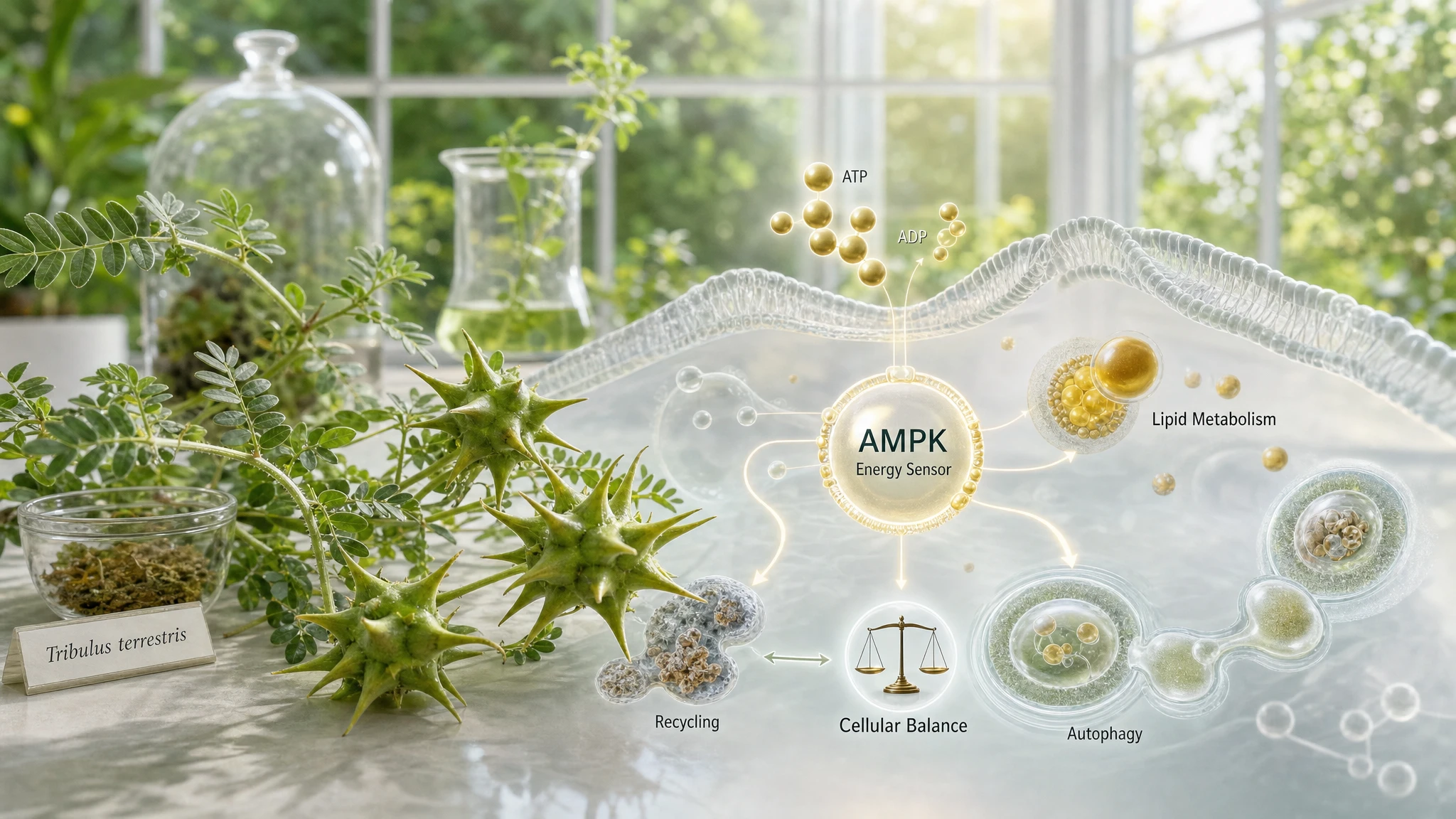
In the biology of Tribulus terrestris, AMPK is of interest because it measures the cell's energy status. When energy levels drop, this kinase promotes adaptation and limits activities that consume more resources. A kinase is an enzyme that transfers phosphate groups and regulates the activity of other proteins. AMPK can thus influence fat utilization, cellular recycling, and the stress response. In experimental models involving the Tribulus phytocomplex, this pathway often appears as a potential bridge. The phytocomplex is the set of substances present in the plant that can act in a coordinated manner. AMPK can therefore link the plant's chemical composition to the effects observed in different tissues. The topic does not concern a simple "metabolic stimulus," but rather a finer control of cellular homeostasis. Homeostasis is the cell's ability to maintain a stable internal balance.
In experimental models, AMPK is particularly important when accumulated fat, inflammation, and oxidative stress occur together. Oxidative stress is an excess of reactive species that damage cells and tissues. In particular, data on diosgenin show consistent changes in various metabolic pathways. These changes reduce the tendency to accumulate fat and improve adaptation and the management of cellular damage [28][21][23].
Studies on other Tribulus derivatives indicate possible effects even in tissues that consume a lot of energy. These include the nervous system, where AMPK interacts with signals that help cells resist stress and remain viable [29][30]. This does not mean that Tribulus is a therapy, but it does indicate activity worthy of attention. This activity, in fact, involves a central control circuit, not a generic, untargeted effect. The useful data therefore concerns the biological rationale that emerges from the available studies. Understanding AMPK helps distinguish a plausible effect from an excessive promise.
To properly understand this section, it is useful to keep a few key points in mind:
- AMPK directs the cell toward a more efficient use of available energy.
- Fat metabolism changes when AMPK phosphorylation increases. Phosphorylation adds a phosphate group and modifies the protein's activity.
- Autophagy and cellular recycling depend on the ratio between AMPK and mTOR. mTOR is the mechanistic target of rapamycin, a protein that inhibits these processes.
- Some saponins in Tribulus also appear to involve antioxidant pathways. These systems limit the damage caused by free radicals.
- The rationale is primarily derived from preclinical studies and therefore requires caution.
To understand AMPK, one must start with its role as an energy sensor and follow its effects in tissues. The following sections explain what studies show regarding fat utilization, cellular recycling, and inflammation. The context remains experimental and does not demonstrate clinical benefit in humans.
AMPK: the energy sensor that guides cellular metabolism
AMPK is a kinase that activates when cellular energy decreases and the AMP/ATP ratio—the comparison between two molecules that reflect the energy state—signals a shortage of resources. At that moment, the cell must reduce energy-intensive activities and promote adaptive processes, such as fat oxidation, the recycling of damaged structures, and the containment of inflammation. This makes AMPK a strategic regulator in many metabolic diseases. In the context of Tribulus terrestris, it is important because certain saponins appear to activate this very sensor, shifting the balance toward a more efficient use of energy.
The relevance is not merely biochemical: explaining AMPK helps to understand why the plant has been studied in models of fatty liver, diabetes, kidney damage, and systemic inflammation. Its function is not to generically boost metabolism, but to orchestrate a coordinated response to energy scarcity. For this reason, AMPK is an essential node in the scientific interpretation of Tribulus. Here lies the basis for interpreting subsequent effects and for distinguishing a physiological modulation from a simple commercial promise. Furthermore, it becomes clear why the same pathway can be useful in different tissues but with non-identical outcomes, depending on the biological context.
For the reader, this means that Tribulus should not be considered a generic activator, but a potential modulator of a highly sophisticated control system. This distinction is the first step toward correctly interpreting the effects that follow. The axis is biologically relevant especially in metabolic and inflammatory models where saponins have shown activity [28][20][21][22].
Tribulus terrestris and lipid metabolism: the AMPK-ACC-CPT1A axis
In lipid metabolism, AMPK reduces the synthesis of new fats and increases the use of those already available. In experimental models using diosgenin, it increases the phosphorylation of AMPK and its target, ACC. ACC is acetyl-CoA carboxylase, an enzyme involved in fatty acid synthesis. Consequently, there is a decrease in malonyl-CoA, a molecule that hinders the entry of fats into the mitochondria. Mitochondria are the cellular structures that produce most of the energy used by the cell. The reduction of malonyl-CoA facilitates the access of fats via CPT1A, carnitine palmitoyltransferase 1A. This enzyme promotes the transport of fatty acids into the mitochondria. In other words, the cell shifts from a storage phase to a utilization phase.
This mechanism helps explain the reduction of fats observed in some models of steatosis. Steatosis is an excessive accumulation of fat in the liver. The central point concerns not only the final effect but also the biochemical pathway involved. This pathway includes less lipogenesis and more β-oxidation, which is the degradation of fatty acids. Overall, these changes can make energy use in the cell more efficient. This step clarifies the possible link between Tribulus and fat metabolism. It also shows that the phytocomplex does not act generically on body weight. Indeed, modifying lipid metabolism requires a precise biological context.
Furthermore, the available data are derived primarily from preclinical models and not from clinical studies. This caution avoids overestimating the results and helps define the nutraceutical role of the plant. Therefore, this is not a direct weight-loss effect demonstrated in humans. Instead, a possible action on the processes that regulate fat utilization is observed. This distinction makes the interpretation of the evidence more rigorous and the use of the information more realistic. In models with diosgenin, this metabolic axis emerges as one of the most robust [28][21][23].
Tribulus terrestris, autophagy and mitophagy: the role of the AMPK-mTOR axis
Autophagy and mitophagy allow the cell to eliminate and reuse damaged parts. Autophagy recycles various internal components, while mitophagy acts specifically on mitochondria. These processes become important when energy is lacking or cellular structures are malfunctioning. AMPK promotes them, while mTOR tends to inhibit them. The ratio between these two proteins is therefore central to cellular balance. In experimental models, dioscin has activated AMPK and reduced mTOR activity. These changes were associated with the recovery of autophagy and, in some tissues, mitophagy.
This data primarily concerns experimental models of kidney damage or metabolism-related issues. In these cases, eliminating damaged parts can help the cell regain efficiency. Recycling can also allow for more effective use of available energy. The mechanism therefore links a molecular signal to a concrete effect within the cell. This effect consists of clearing damage and protecting homeostasis, i.e., internal balance. This potential action makes the plant interesting for studies on metabolism and inflammation. However, the results are mainly derived from experimental models and do not demonstrate clinical efficacy in humans. The compound might promote a more efficient cellular environment, but this does not make it a therapy. The link to kidney damage and mitochondrial function emerges primarily in the cited studies [22].
Tribulus terrestris and metabolic inflammation: AMPK, Nrf2, and NF-kB
Metabolic inflammation is one of the areas where the AMPK axis of Tribulus appears most interesting. In experimental models, dioscin has reduced proinflammatory cytokines and activated antioxidant systems. Proinflammatory cytokines are molecules that increase and sustain the inflammatory response. The results therefore suggest a possible containment of inflammation in the observed models. The connecting link is AMPK, which in many models is associated with the activation of Nrf2. Nrf2 is a transcription factor that increases defenses against oxidative stress. A transcription factor regulates gene activity and, therefore, the production of specific proteins. AMPK is also associated with the blocking of proinflammatory pathways such as NF-kB. NF-kB is a protein complex that promotes the activity of genes linked to inflammation.
The phytocomplex could therefore do more than just directly limit the inflammatory response. It could also promote a more stable cellular environment in terms of redox and immune status. Redox balance describes the relationship between oxidative processes and antioxidant defenses. This topic is significant because many of the conditions studied share a chronic inflammatory component. These conditions include fatty liver, diabetes, and kidney damage. In this perspective, Tribulus modulates biological networks rather than acting as a simple anti-inflammatory. This shift connects molecular research to potential applications in the field of nutraceuticals.
However, caution is needed because a benefit in animals does not demonstrate a therapeutic effect in humans. Instead, the results offer a plausible rationale for conducting further clinical studies. Anti-inflammatory and antioxidant pathways are therefore part of the studied biology of Tribulus. Understanding these pathways helps explain why the plant is being studied in many contexts. However, interpretation must remain cautious and based on available evidence, especially in practical use. In this case as well, the signal is derived primarily from preclinical studies [20][22].
The nervous system and Tribulus terrestris
In the nervous system, the potential interest in Tribulus terrestris concerns several biological processes. Studies on cells and animals indicate possible effects on oxidative stress, neuroinflammation, and neuronal signaling. Some data also concern behavior and arousal (the brain's state of activation). However, these are preclinical results: they clarify certain mechanisms but do not prove clinical effects in humans.
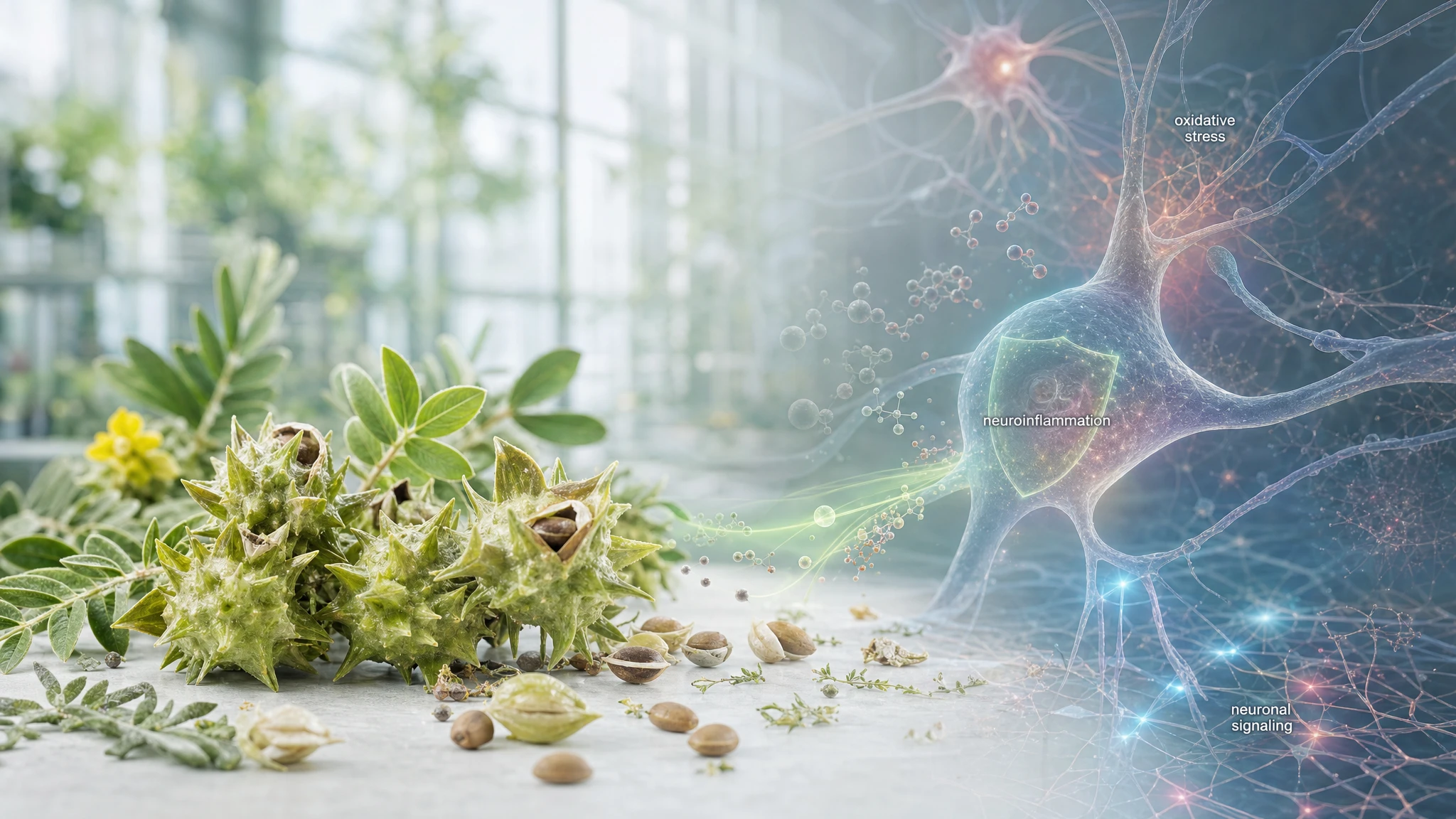
In the neurological field, the interest does not concern a generic or presumed "stimulant" action. Instead, it concerns the phytocomplex, that is, the set of active substances present in the plant. These substances could act on the processes that make nervous tissue more exposed to damage. In experimental models, extracts and fractions of the plant have shown signs of protecting nerve cells. This action concerns oxidative stress, caused by reactive molecules that can damage cells. It also involves certain inflammatory pathways that can contribute to neuronal distress [29,31,32].
This framework is plausible because the brain consumes a great deal of energy and produces many free radicals. Furthermore, it requires a very fine balance between activation and protection. In this context, researchers are studying Tribulus as a regulator of cellular processes. They do not consider it a neurological treatment already proven in humans.
The nervous system does not respond to a single switch, but uses networks of intertwined signals. For this reason, some studies are evaluating the components of Tribulus terrestris on different biological targets. These include mediators of neuronal excitability and the systems that defend cells against oxidation. Studies are also examining intracellular pathways, that is, the signals that act inside the cell. These pathways can influence the fate of the cell itself and its ability to remain alive and functioning [29,33,34,35].
Meanwhile, behavioral studies suggest possible effects on anxiety, alertness, and stress response. These data also derive from experimental models and have clear limitations for clinical use [31,32]. It is therefore correct to consider them signals of potential interest for the nervous system. They also help to understand why research is studying the plant beyond its most well-known uses. However, they do not demonstrate neurological benefits already confirmed in humans.
To understand the next steps, it is useful to keep the most important results in mind:
- the reduction of markers of oxidative damage in experimental neuronal models.
- the modification of signals related to the ability of nerve cells to remain alive and functioning.
- the effect on circuits that connect brain activation and behavior.
- the possible role of the steroidal saponins of Tribulus, natural compounds similar to certain steroid hormones.
Let us now move from general mechanisms to the potential effects on the brain and its circuits. Studies focus on oxidative stress, inflammation, dopaminergic neurons, memory, and behavior.
Tribulus terrestris and neuronal oxidative stress
Oxidative stress is one of the most common processes involved in neuronal damage. These cells are highly sensitive to reactive oxygen species, which are unstable and potentially harmful molecules. If present in excess, these molecules can damage lipids, proteins, and DNA. In experimental models, Tribulus terrestris or some of its fractions have reduced certain markers of oxidative stress. Furthermore, they have preserved some cellular parameters related to the ability of neurons to remain alive and functional.
This effect is of interest to research because neurodegeneration rarely depends on a single event. It usually involves a combination of oxidative stress, inflammation, and mitochondrial dysfunction. The latter refers to damage to mitochondria, the cellular structures that produce energy. In this context, Tribulus is not being studied to cure a neurological disease. Instead, researchers are evaluating its action on a process that can promote the disease. The benefit observed in experimental models does not automatically imply a clinical effect in humans.
However, the consistency of preclinical data makes this field worthy of attention. Tribulus therefore falls among the phytocomplexes studied against cerebral oxidative damage. This classification, however, should not lead to stronger conclusions than the available data support. The brain requires a very fine balance between protection and activation. If this balance shifts for a long time, significant consequences for nervous tissue may appear. The plant is therefore being studied as a possible regulator of the environment within cells. Such an action could make this environment less exposed to damage caused by oxidation. It is a plausible biological hypothesis, not a guarantee of therapeutic efficacy.
This distinction keeps the discussion accurate and useful for those seeking reliable data. Models on the extract and dioscin, a steroidal saponin of the phytocomplex, indicate consistent protection. This protection primarily concerns the oxidative damage present in certain neurodegenerative conditions [29][24][27].
Tribulus terrestris, microglia, and neuroinflammation
Microglia are the primary immune cells found in the central nervous system. If they remain active for too long, they can sustain harmful forms of neuroinflammation. Some preclinical studies suggest that Tribulus terrestris may reduce microglia activation. It could also limit the production of pro-inflammatory mediators, which are substances that promote inflammation. These effects are consistent with reduced toxicity in the environment surrounding brain cells.
This finding is relevant because many neurological diseases involve chronic inflammation in addition to degenerative damage. This line of research proposes a multi-target action, meaning it is directed at multiple biological targets. The phytocomplex could act on neurons and the immune cells that surround them. This is a useful perspective, but it is still far from established clinical use. The correct question is not whether Tribulus cures neuroinflammation. Instead, we must ask whether there is biological data to justify further research. Such data exists, especially in experimental models.
This field expands the study of Tribulus beyond its more well-known areas. It also places it among the nutrients and phytocomplexes studied for regulating immune-neural crosstalk. This term refers to the communication between the immune system and nerve cells. The topic demonstrates that the brain is not an organ isolated from the rest of the body's defenses. Within it, immune cells and neurons communicate continuously. When this dialogue becomes overly inflammatory, the function and resilience of the nervous tissue change.
Tribulus is therefore being studied as a potential regulator of this delicate balance. However, any assessment must remain within the limits of the data currently available. Caution is essential, especially when hypothesizing potential applications in humans. Recent studies on neuroinflammation show concrete, yet still experimental, interest [29][24][25].
Tribulus terrestris and Parkinson's disease: what studies suggest
In experimental models of Parkinson's disease, researchers have studied the potential neuroprotective role of Tribulus terrestris. Data indicate a possible reduction in oxidative stress and a modification of neuroinflammation. They also suggest protection of dopaminergic neurons, the nerve cells that produce dopamine. In animals, these effects were also associated with some behavioral improvements. The value of the results derives from the combination of multiple biological signals, not from a single outcome.
However, a preclinical signal does not equate to proven clinical efficacy. Parkinson's is a complex disease, and the available treatments remain those provided by clinical standards. At the moment, therefore, Tribulus cannot be presented as a treatment. This section answers a very specific and sensitive question for many readers. Many people are indeed looking for natural remedies for neurodegenerative diseases and require data-based answers. Tribulus can be described as an interesting object of study, not as a solution. This approach maintains the right balance between practical utility and scientific rigor.
Research on Parkinson's also clarifies why scientists evaluate the dopaminergic system. In this disease, dopaminergic neurons are, in fact, very sensitive to oxidative stress. If a phytocomplex reduces certain types of damage in animal models, the data deserves attention. However, it does not allow for the anticipation of clinical applications before adequate studies in humans. The distance between the laboratory and clinical practice remains wide. The useful takeaway is therefore simple: Tribulus is an object of study, not an established therapy. Models on Parkinson's and the dopaminergic system yield consistent results, but they remain preclinical [25][27].
Tribulus terrestris and memory: what we know from experimental models
Some preclinical models have also evaluated Tribulus terrestris in relation to memory, anxiety, and stress resilience. In these studies, changes were observed in mediators such as BDNF, or brain-derived neurotrophic factor, a protein that supports the ability of neurons to survive and adapt, as well as in certain inflammatory signals, with potential implications for neuronal plasticity and behavior.
It is important to interpret these results with caution: memory is not a simple function and cannot be reduced to a single compound or a single biological pathway. However, the fact that Tribulus shows signals related to neuroplasticity—the brain's ability to adapt and reorganize—makes it a plausible candidate as a multi-target phytocomplex. This section is useful for addressing an increasingly frequent question: can Tribulus help the brain? The correct answer is that while there are interesting biological hypotheses, clinical data are still insufficient.
This does not diminish the value of this line of research, which actually expands the plant's profile beyond the classic sexual and metabolic areas. For the reader, this section helps distinguish between general promise and concrete evidence, avoiding overly optimistic interpretations. The brain, in fact, integrates energy, inflammatory, and neurotrophic signals in a very complex way, and Tribulus could interact with multiple levels of this system. The hypothesis is fascinating, but clinical validation remains distant. In this sense, its primary value is exploratory and educational.
The reader can thus place the phytocomplex in a broader context without turning it into a miracle solution. Even models of chronic stress and memory reinforce this exploratory interpretation [32][24].
AMPK and nitric oxide (NO)
In the brain, the dialogue between AMPK and nitric oxide transforms an energy drop into a neuronal response. AMPK, or AMP-activated protein kinase, detects how much energy remains in the cell. Nitric oxide, or NO, is a chemical messenger that regulates neuronal activity. Certain compounds in Tribulus terrestris may act on pathways related to metabolism and the autonomic nervous system. The key point concerns the control of these networks, not the effect on a single organ.

When energy levels drop, certain neurons transform this data into a rapid chemical response. AMPK (an enzyme that detects cellular energy) can activate pathways that produce nitric oxide (NO). This messenger regulates neurons and clarifies the signal of deficiency. Tribulus terrestris does not provide NO directly. However, diosgenin and dioscin, two steroidal saponins from the plant, may act on pathways common to these circuits [17][28][21].
This axis connects energy use, neuronal activity, and the body's internal control. AMPK is activated when the cell detects that its energy stores are low. It then initiates a response that helps the cell adapt. In some neurons of the hypothalamus, the brain area that regulates many vital functions, NO levels also increase. This messenger strengthens the signal and coordinates electrical activity, energy use, and autonomic response.
The brain thus transforms the drop in energy into a message that can change appetite, wakefulness, and behavior. This process helps in interpreting studies on Tribulus. Researchers are, in fact, evaluating the phytocomplex (the set of compounds in the plant) within networks that link metabolism and nervous control [33][36][34][35].
In the ventromedial nucleus of the hypothalamus, some neurons become active when glucose levels drop. These cells, known as glucose-inhibited neurons, help researchers study the process. In these cells, AMPK promotes the phosphorylation (addition of a phosphate group) of nNOS. The latter, or neuronal nitric oxide synthase, then produces a greater quantity of NO [36][34].
The brain does not just register the deficiency; it also creates a well-coordinated response. This response can affect wakefulness, hunger, and autonomic tone (involuntary organ activity). Researchers have also studied the circuit regarding neuronal survival and defense against cellular stress. The balance between AMPK, NO, and nNOS can, in fact, regulate both the adaptation and the fragility of neurons [33][35][30].
The topic also concerns the plant, but it does not indicate a unique and direct action on this axis. Researchers are studying its compounds in networks where metabolism and NO signals meet. Nitrergic signaling (processes regulated by nitric oxide) refers precisely to this type of exchange.
The available data primarily describe a possible mechanism and should therefore be read with caution. There is a lack of targeted clinical evidence in humans. The studies indicate a possible action on common cellular pathways, not a proven cure for neuroendocrine disorders [29][24][25][26].
In summary, the circuit includes these steps:
- AMPK transforms energy deficiency into a useful signal for neurons.
- NO strengthens communication in the neurons of the hypothalamus.
- nNOS produces NO in circuits that detect glucose levels.
- Certain compounds in Tribulus act on similar metabolic pathways.
This axis shows how the brain transforms an energy drop into a biological response. First, we look at the role of AMPK and nNOS. Then, we examine the hypothalamus circuit that detects the drop in glucose.
AMPK and nitric oxide: how the brain perceives energy deficit
In the brain, AMPK acts as a sensor for the energy stores present in the cell. When glucose or energy levels drop, the enzyme signals that functions and behavior must adapt. In hypothalamic neurons, this signal can increase the production of nitric oxide. NO acts within the cell and strengthens the response to energy depletion.
This creates a series of reactions that helps to detect the deficiency early. The circuit prepares coordinated responses involving appetite, wakefulness, and energy use. This point offers a different perspective from the better-known properties of Tribulus terrestris. The focus shifts from the plant itself to the biological network upon which its compounds can act.
In phytopharmacology (the study of the biological effects of plant substances), researchers evaluate diosgenin and dioscin on specific cellular pathways. These pathways regulate inflammation, oxidative stress (damage caused by reactive molecules), and energy balance [2][17][28][21][23]. Therefore, NO is not merely a waste product. It is a signal that connects the energy sensor to the brain's networks.
The AMPK-NO circuit also demonstrates how quickly the brain detects changes in energy stores. In this way, it integrates metabolic data with the responses that drive behavior. This framework explains the neurobiological interest in the plant, beyond its metabolic and sexual applications. The key is system control, not just a simple boost to its activity. The results describe a physiological link, but do not prove a clinical effect in humans. However, they offer a coherent framework for interpreting experimental data without attributing unproven effects. This framework is consistent with the basic literature on the circuit [33][34][35].
Tribulus terrestris and nNOS: the glucose-inhibited hypothalamic circuit
In the ventromedial nucleus of the hypothalamus, glucose-inhibited neurons monitor how much energy remains available. When glucose levels drop, these cells activate AMPK. The enzyme then promotes the phosphorylation of nNOS and increases the production of nitric oxide. nNOS (a neuronal enzyme that produces NO) therefore plays a key role in the circuit.
NO initiates a series of reactions that strengthens and stabilizes the energy signal. The brain does not simply respond to the drop in glucose; instead, it transforms this data into a broader response. In the hypothalamus, the nitrergic signal helps coordinate hormones, hunger, and wakefulness.
The effects of the circuit can therefore extend beyond the individual neuron. For the plant, this mechanism provides a useful basis for interpreting certain experimental data. Researchers are, in fact, studying its compounds in systems where energy use can influence behavior and homeostasis. Nitrergia (biological functions related to NO) encompasses these exchanges.
Nitric oxide does not act only as a vasodilator molecule, meaning it is capable of widening blood vessels. In the brain, it also functions as a signal between energy stores and neuronal activity. Very small molecules can therefore integrate metabolic data and guide an appropriate response. This perspective places the phytocomplex within the processes that regulate energy, without attributing unproven clinical effects to it. The data remains mechanistic and describes a possible connection with hypothalamic physiology. Studies on the glucose-inhibited circuit and nNOS offer a solid physiological reference [33][34][35].
NO and orexin
The dialogue between nitric oxide and orexin shows how the brain translates an energy signal into wakefulness and action. This exchange also regulates arousal, i.e., the state of alertness. In Tribulus terrestris, certain compounds have been studied for their potential effects on the networks between hormones and the brain. The signal, therefore, does not remain merely chemical, but can also guide behavior.
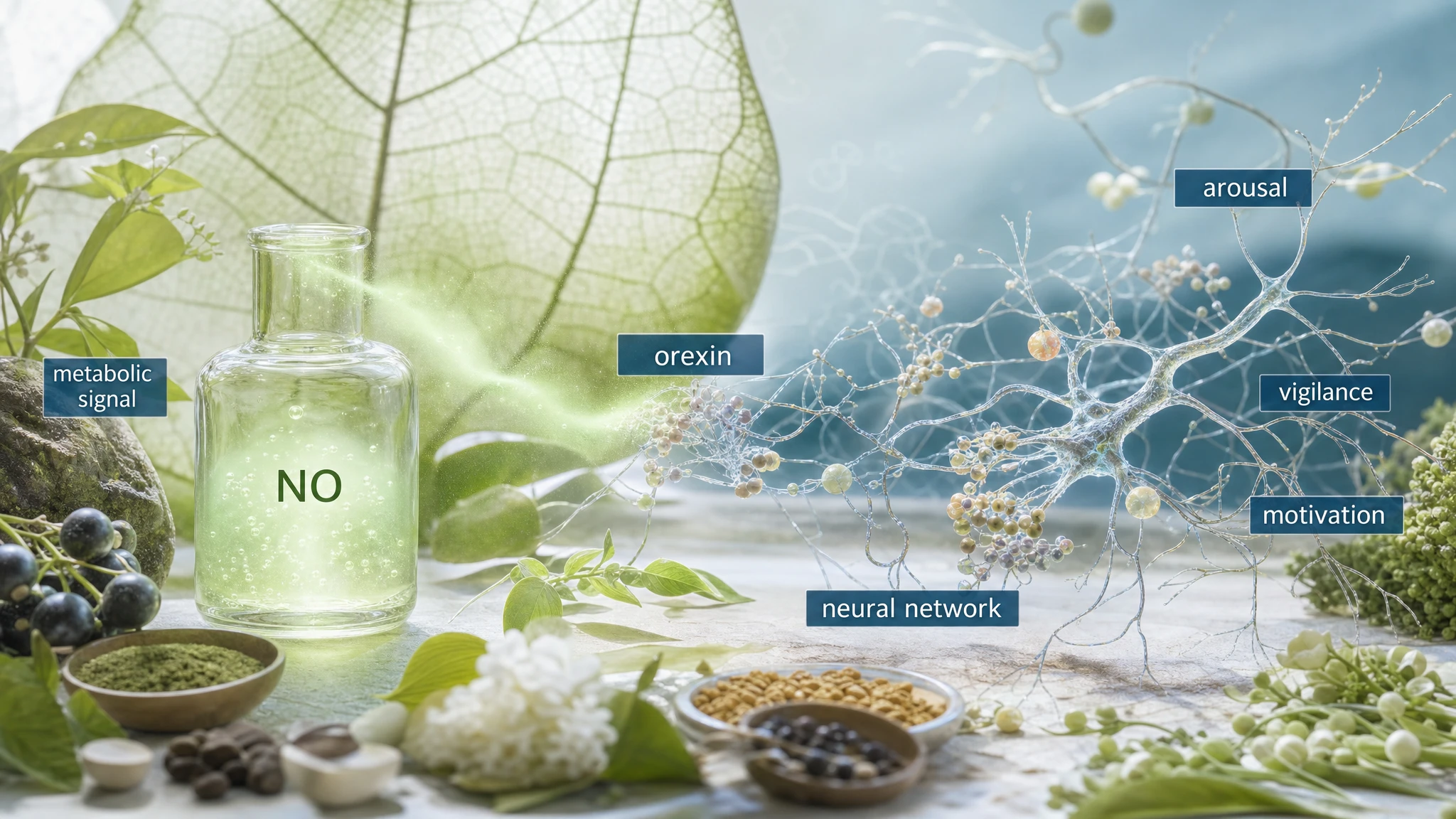
In the brain, the dialogue between nitric oxide, abbreviated as NO, and orexin links energy and activity levels. Nitric oxide is a gaseous signaling molecule, meaning it is a substance that sends local signals. Orexin, on the other hand, is a neuropeptidergic system based on small messengers made of proteins. This system supports wakefulness, motivation, and the response to important stimuli. In this network, NO does not act only as a peripheral “vasodilator,” i.e., a substance that dilates blood vessels. It can also regulate the excitability of orexinergic neurons and help them maintain arousal, which is alertness and readiness.
In the study of the potential effects of Tribulus terrestris on the nervous system, a direct and generic stimulus is therefore not hypothesized. Instead, the phytocomplex—the set of compounds in the plant—may integrate into circuits that connect metabolism and alertness [34][37][38].
This relationship is part of a broader pathophysiology, where the body's control systems influence each other. To maintain homeostasis, or internal balance, the brain must assess how much energy is available. It must then determine whether it can support activity, attention, and the response to stress. AMPK is a protein that detects the cell's energy status and signals how much energy is available. It can influence hypothalamic neurons, located in the hypothalamus and involved in controlling vital functions. These neurons coordinate hunger, wakefulness, and motivation.
In this axis, NO acts as a rapid messenger. Depending on the context, it can increase or reduce transmission between neurons. When these signals reach orexin, they do not produce a single, constant effect. Instead, they precisely regulate the state of alertness. This action makes the topic interesting for Tribulus as well. However, it does not prove the clinical efficacy of the plant on behavior or sleep [39][37][38][40].
In experimental models, nitric oxide can inhibit or promote the neurons that maintain alertness. The outcome changes based on the context. Stimuli that cause wakefulness, however, tend to increase the activity of these circuits. The system, therefore, is not static but responds to the body's state [37]. Orexin can also increase the excitation of neurons in the locus coeruleus, an area of the brainstem. This structure participates in attention and the response to stimuli. Orexin can thus strengthen arousal, the state of readiness that facilitates attention and response [41][40].
This network helps explain why studies on Tribulus include hypotheses about stress and neuroendocrine functions. However, one cannot attribute a direct and reliable effect on wakefulness to the plant. Some of its compounds may act, at least in preclinical studies, on the nodes that link energy and activity. An important limitation remains: this is a physiological and experimental interpretation, not a consolidated therapeutic indication.
The link with nitric oxide also helps to understand how a metabolic signal can guide behavior. When energy drops, the nervous system must choose whether to conserve resources or maintain a state of alertness. Orexin participates in this choice and increases motivation, resource seeking, and vigilance. NO, conversely, regulates the threshold beyond which these neurons are activated. The circuit, therefore, does not serve only to “keep one awake.” It also helps to make wakefulness useful relative to the body's conditions. It is an adaptive response, not a simple increase in excitation.
For Tribulus, scientific interest primarily concerns the mechanisms that link the nervous system and hormones. It does not concern direct clinical results on sleep, attention, or mood [34][39][37][41].
Finally, it is necessary to clearly distinguish a preclinical hypothesis from clinical practice. The cited evidence describes a coherent network but does not demonstrate a predictable effect of Tribulus. In particular, it does not show that a supplement modifies the sleep-wake cycle in humans. The physiology of orexin is complex, and small changes in context can alter the biological outcome. Furthermore, stress, lack of sleep, physical activity, nutritional status, and hormonal signals act on the same circuits. The most correct interpretation, therefore, remains cautious. Tribulus is studied as a possible regulator of certain signaling nodes. However, it is not a regulator of arousal or drowsiness with proven clinical efficacy [39][37][38].
From this perspective, a few points must be kept in mind:
- NO can finely regulate the activity of orexinergic neurons.
- Orexin supports wakefulness and behavior-related activity.
- Upstream energy signals can reach and regulate these circuits.
- This link helps interpret stress and arousal.
The first point concerns the signaling between NO and orexin in the body. The following section explains how this network affects wakefulness, alertness, and the stress response.
Orexin: the system that connects energy, alertness, and motivation
Orexin consists of small messengers produced in the lateral hypothalamus, an area located at the base of the brain. This system connects energy signals to the body's responses. When resources drop, orexin-producing neurons increase wakefulness. They also promote food-seeking behavior and make the brain more active. Orexin therefore forms a bridge between energy use and behavior. Within the context of Tribulus, AMPK and nitric oxide can send signals to these neurons. Energy deficiency, therefore, does not remain merely a chemical datum. The brain translates it into a more active state.
This passage explains why certain compounds of the plant are studied in relation to stress, alertness, and hormonal networks. The topic also concerns sleep, hunger, the drive to act, and the stress response. However, the data do not show a generic stimulating effect. They only indicate that certain mechanisms can enter the circuits that regulate arousal.
Orexin also acts on energy use in the brain and the rest of the body. The link between energy and behavior thus becomes even tighter. Understanding this network helps interpret tests without attributing an overly broad role to the phytocomplex. The network, in fact, connects an internal state to a useful and visible response. Basic data show the link between orexin, energy, and the state of alertness [39][42][41].
Tribulus terrestris, orexin, and sleep-wake regulation
The orexin system regulates hunger and the drive to act, as well as the sleep-wake cycle. When its neurons are active, alertness increases and wakefulness is maintained. If their activity decreases, the brain can transition more easily into sleep. In study models, AMPK and nitric oxide can influence these neurons, thereby potentially changing alertness levels. This is why Tribulus terrestris is also of interest in research on stress and bodily activity. Some preclinical tests link it to the networks between hormones and the brain. However, this does not prove a direct effect that induces sleep or stimulates wakefulness.
Energy, sleep, attention, and behavior all belong to the same bodily network. The plant might only act on a part of this system. The sleep-wake cycle also depends on many other factors. Its role therefore remains a subject of research and does not indicate a currently valid clinical use.
The data require further studies and do not support easy promises of a cure. The possible role of the phytocomplex remains to be explored and does not provide a basis for prescribing it. This caution prevents attributing a value to the evidence that it does not possess. Studies link orexin, alertness, and energy balance, but they do not show a direct clinical use for the plant [39][37][41].
Orexin and norepinephrine: the connection with the locus coeruleus
The link between orexin and norepinephrine primarily passes through the locus coeruleus, the brain's main center for vigilance. It is a small nucleus in the brainstem, a deep area that regulates basic functions. Here, the orexinergic signal (driven by orexin) triggers the release of norepinephrine in various areas. This substance supports attention, arousal (alert state), and the stress response. In the context of Tribulus terrestris, this axis shows how metabolism can influence alertness.
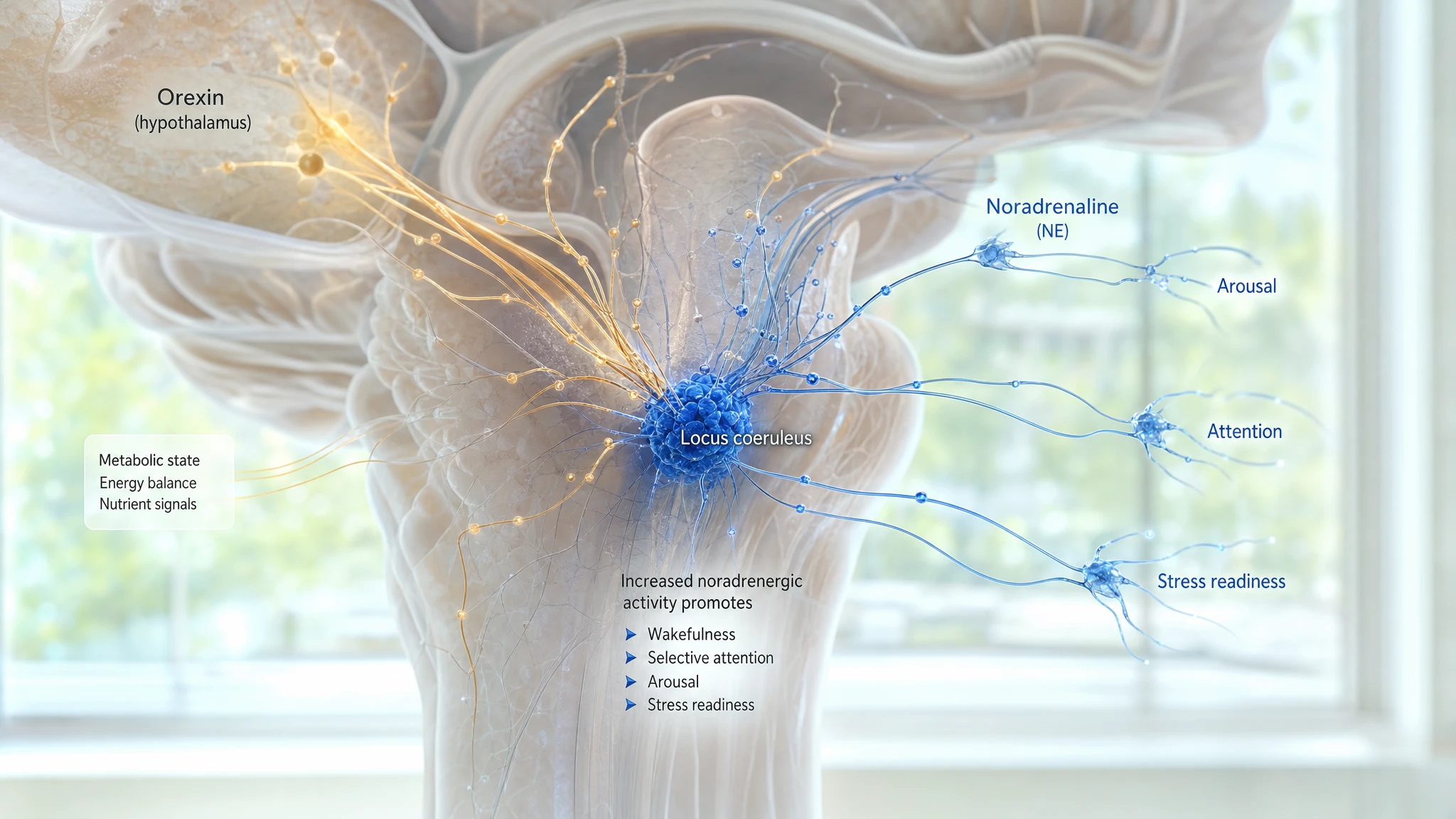
In the brain, the link between orexin and norepinephrine passes through a small nucleus: the locus coeruleus. Orexin is a neuropeptide (a small molecule produced by neurons) that regulates wakefulness and appetite. The locus coeruleus produces and distributes most of the norepinephrine found in the brain. Its neurons help maintain wakefulness, attention, and responsiveness. When they receive orexinergic signals, they become more active and release norepinephrine into many areas. This effect coordinates arousal, rather than acting as a simple stimulant. This process shows how energy status can change behavior, vigilance, and responses to important events.
This axis does not just "wake up" the brain; it also helps it adapt its responses. The brain can thus react appropriately to internal and external signals. In experimental models, orexin directly activates the locus coeruleus and increases arousal. It can also act through local excitatory signals and calcium fluxes outside the cells. These movements make the neurons' response more effective [40,41,43].
If it remains too active, the circuit can increase vigilance and affect sleep, anxiety, and stress. In the context of Tribulus terrestris, this data requires caution. It does not prove a direct stimulating effect, but it indicates a possible link between metabolism, nerve signals, and alertness.
To follow the next steps, it is useful to remember a few key points:
- The locus coeruleus receives excitatory signals and spreads a general state of alertness.
- Orexin specifically increases the activity of neurons that produce norepinephrine.
- Norepinephrine regulates vigilance, attention, and emotional memory (memories linked to intense emotions).
- If the circuit remains active, it can promote hyperarousal (excessive alertness) and stress.
The transition from orexin to noradrenaline emerges from the role of the locus coeruleus. We will see how this center regulates alertness, participates in stress, and acts on emotional memory.
Locus coeruleus: the noradrenergic center of alertness
The locus coeruleus is the main noradrenergic nucleus of the brain. For this reason, it regulates attention, alertness, and the stress response. Noradrenaline is a neurotransmitter (a substance that carries signals between neurons) and coordinates many brain responses. When it receives a signal from orexin, this nucleus increases its activity. It then spreads the neurotransmitter to many areas and maintains a well-regulated state of alertness. In the context of Tribulus terrestris, the mechanism links energy status to a concrete bodily response. It does not just increase activity, but also regulates memory, attention, and preparation for movement. At this point, a signal of energy deficiency becomes an extended nervous response. Its effect, therefore, does not remain confined to a single area.
The signal reaches various parts of the brain and can speed up certain mental processes. This helps to understand the link between stress, the drive to act, and alertness. A single center can, in fact, regulate brain areas that perform very different tasks. This is why it plays a key role in how the body adapts. The plant might act upstream of the circuit, but there is no evidence of a direct stimulus. The relationship therefore remains indirect, even if the mechanism makes it possible. The cited studies clearly show the role of this nucleus in alertness. They also show its role in the release of the chemical signal [40][44][45][46].
Orexin, locus coeruleus, and chronic stress response
When the orexin-locus coeruleus circuit remains active for a long time, vigilance can turn into hyperarousal (excessive alertness). Norepinephrine keeps brain activity high and can strengthen the response to stressful stimuli. Some experimental models show that chronic activity of this axis can promote anxiety and sleep disorders. It can also promote the generalization of fear, that is, fear toward similar but not identical cases. Some studies on cells and animals indicate that Tribulus terrestris may act on stress circuits. The data also concern neuroinflammation (inflammation involving nervous tissue). This possible effect, however, does not demonstrate a therapeutic benefit in people. The plant is not a proven treatment for chronic stress or anxiety disorders. Instead, it remains a subject of study regarding the link between energy status and highly complex brain networks.
The central point connects the orexinergic signal, the noradrenergic nucleus, and the prolonged response to stress. If it receives stimuli for a long time, the brain may lose part of its normal balance. A response that is useful in the short term can thus become unsuitable and cause effects on sleep. Scientific interest is real, but the available data do not yet allow for clinical conclusions. Caution therefore helps to distinguish a possible mechanism from an effect already proven in humans. Studies on chronic stress and the noradrenergic axis confirm the complex nature of this circuit [44][45][47].
Tribulus terrestris and emotional memory: the role of noradrenaline
Norepinephrine supports wakefulness, but it also participates in the formation of emotional memory. When the locus coeruleus is activated, it releases norepinephrine into areas such as the amygdala and the hippocampus. The amygdala evaluates the emotional weight of events, while the hippocampus forms and consolidates memories. The signal can thus strengthen the trace left by important events or those experienced as a threat. The orexin-locus coeruleus circuit regulates both arousal and the way we record an experience. Some data on cells and animals place Tribulus terrestris in this field of research. Studies indicate a possible effect on chemical signals related to stress and synaptic plasticity. This term refers to the ability of connections between neurons to change over time. The topic goes beyond a simple sedative or stimulant action of the plant. It concerns the way the brain organizes and stores information with emotional value.
The data do not prove that the product improves memory or mood in people. They only indicate a path of research that requires further verification. Emotional memory depends on a network that connects the noradrenergic nucleus, the amygdala, and alertness circuits. A possible effect on this network is consistent with some experimental models, but it does not demonstrate a therapeutic use. Basic literature confirms the role of the locus coeruleus in this circuit [45][48][49].
mTOR and glutamate: how metabolism regulates excitatory transmission
Brain metabolism does not just produce energy; it also regulates the dialogue between neurons. Regarding Tribulus terrestris, studies are evaluating a possible link between mTOR and glutamate. mTOR is a pathway that integrates nutrients, energy, and growth-related signals. Glutamate, on the other hand, is the brain's primary excitatory messenger. These two nodes can influence neuronal activity and the response to stress. They can also act on synaptic plasticity, which is the ability of synapses to change.
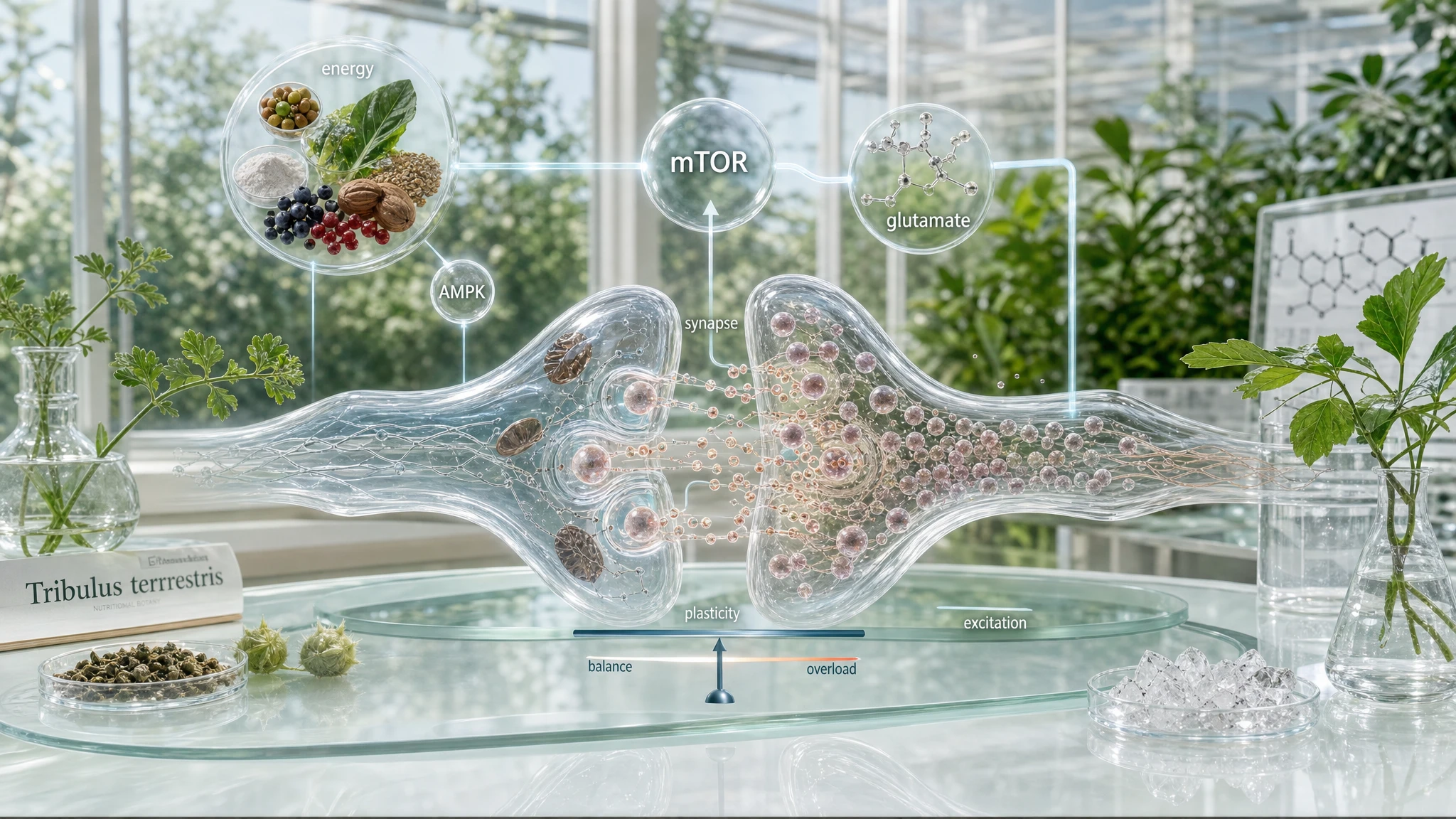
In the brain, an energy-related signal can change the strength of excitatory transmission. A central role is played by mTOR (mammalian target of rapamycin), a pathway sensitive to nutrients, energy, and growth. This pathway regulates the shape and activity of synapses, the contact points between neurons. If the network changes, even glutamate, the main excitatory messenger, can escape normal control. This imbalance can alter neuronal plasticity and, in severe cases, cause excitotoxicity. Excitotoxicity is damage caused by a stimulus that is too strong or too prolonged.
In this context, studies are evaluating the phytocomplex of Tribulus terrestris as a possible indirect regulator. The phytocomplex is the set of active substances present in the plant. Some compounds, including steroidal saponins, diosgenin, and dioscin, have been tested in models related to AMPK and mTOR. These substances do not "turn on" neurons directly, but they can act on cellular signals. Such signals guide growth, cell maintenance, and the downregulation of their activity. This aspect matters because the excitatory signal also depends on the energy state of the nervous tissue. Therefore, it is not just the release of the chemical messenger between cells that counts. Metabolism also contributes to the quality of the signal and its control over time. For this reason, the plant is viewed as a possible aid to balance, not as a direct stimulant. Interest stems from the effects against oxidative stress and inflammation observed in preclinical models. These models include studies conducted on cells and animals [29][24][26].
Another point concerns astrocytes, glial cells that regulate glutamate outside the cells. Thus, these cells help control the total excitatory tone of the nervous tissue. Some studies indicate that mTOR can influence astrocytes and glutamate homeostasis. Homeostasis refers to the maintenance of its local balance [50][51][52]. Other models show that uptake depends on transporters and pathways sensitive to cellular energy [53][54]. The same pathway can therefore help in some cases and promote damage in others. If energy is lacking or stress increases, the ratio between release and recovery changes more easily. Glutamate can therefore remain too long in the space outside the cells. The environment thus becomes more fragile and can push neurons toward excessive and harmful activity.
In the link between Tribulus and mTOR, therefore, studies do not hypothesize a direct stimulus. Some compounds could instead promote a more stable relationship between excitation and neuronal defense. This interpretation is consistent with preclinical data, but a targeted clinical trial in humans is still missing [29][24][26]. This view also helps in interpreting studies on the neuroprotective effects of Tribulus terrestris. In experimental models, extracts have reduced some processes related to cellular stress. They have also acted on processes connected to brain inflammation and neuronal death. In the event of brain damage, mTOR can influence both cell survival and glutamate. It can, in fact, act on the receptors and transporters of this messenger [29][25][26][27].
These results do not make the phytocomplex a proven neurological treatment. However, they indicate that some of its compounds act on biological nodes of interest for research. It is therefore necessary to read the data with caution and take their limitations into account. The plant does not replace treatments supported by solid evidence, but it offers a useful model. It allows for the study of the link between food, redox balance, and synaptic signals. Redox balance refers to the control of processes that cause oxidative stress. Glutamate control can link metabolism to neuronal defense. For now, however, the possible implications remain primarily experimental.
In practice, metabolism does not only regulate energy consumption and production. It also helps establish how long a circuit remains active and ready to respond. The key points are:
- mTOR influences the formation and stability of excitatory synapses.
- The amount of glutamate also depends on glia (cells that support and protect neurons).
- Altered metabolic control can increase synaptic activity.
- Tribulus compounds act, in theory, as indirect regulators of the circuit.
The point is not glutamate transmission in general. What matters is understanding how cell metabolism regulates its strength and duration. The following two sections explain excitatory synapses first, followed by the role of astrocytes.
mTOR and glutamatergic transmission: controlling excitatory synapses
mTOR regulates glutamatergic transmission before and after the signal passes through the synapse. It influences presynaptic release and postsynaptic response in the cells involved. The presynaptic cell sends the signal, while the postsynaptic cell receives it. In experimental models, blocking this pathway reduces the number or effect of excitatory synapses. It can also change the presence of receptors that respond to glutamate. Cellular metabolism, therefore, does not just provide energy, but precisely regulates the dialogue between neurons.
This passage helps to understand the potential role of Tribulus terrestris. The plant's compounds could act in networks where glutamate regulates various functions. These include arousal, memory, and the stress response. Arousal refers to the state of activation of the nervous system. This key also helps in interpreting preclinical studies on neuroprotection. Depending on the model, the metabolic signal can change the state of the synapses. Therefore, a single effect of the plant on the brain does not emerge. Instead, studies hypothesize an action on a network that connects nutrients, growth, and neuronal dialogue. The synapse, in fact, is very sensitive to the amount of energy available. If the system changes, both excitability and the quality of the nervous response can vary. The plant should therefore be viewed as a possible indirect regulator, not as a rapid and unique stimulus. The outcome depends on the biological network in which the phytocomplex acts. This is the key point of the relationship between mTOR and glutamate. Basic data show that this pathway clearly conditions glutamatergic transmission [55][53].
Astrocytes, GLT-1, and glutamate balance: why mTOR matters
Astrocytes are not passive support cells: they regulate glutamate clearance, which is its removal from the extracellular space, through transporters such as GLT-1 and GLAST, and they contribute decisively to the balance of the tripartite synapse. mTOR participates in this control because it influences astrocytic metabolism, mitochondrial function, and the ability to maintain a stable extracellular environment. When mTOR is overactive, glutamate uptake can decrease, and the risk of excitotoxicity increases.
This is a crucial aspect for understanding why Tribulus terrestris has been studied in models of neuroinflammation and brain damage: its interest does not concern only the neuron, but also the glial context that supports or amplifies transmission. This reasoning allows us to link energy metabolism to the health of neuronal networks and to understand why an excess of glutamate is problematic. For the reader, the key is simple: mTOR regulates not only growth but also the synaptic ecosystem. In this ecosystem, astrocytes decide how much excitation remains in the circuit and how much is rapidly cleared. The proper functioning of GLT-1 and GLAST is essential to avoid harmful accumulations of glutamate in the extracellular space. This regulation is an important piece of neuroprotection and brain physiology.
Tribulus is observed here as a possible modulator of a more stable and less excitotoxic environment, but this remains a hypothesis to be verified in humans. Glial complexity makes the picture richer, but also more difficult to translate into clinical practice. Reviews on astrocytes and mTOR confirm that this pathway plays both a physiological and a pathological role [50][51][52][53].
Glutamate, orexin, and the locus coeruleus: the arousal and fear circuit
In the control of wakefulness, glutamate activates neurons that produce orexin. Orexin then stimulates the locus coeruleus, which increases attention, alertness, and the defense response. This circuit does not prove that Tribulus terrestris cures anxiety or fear. However, it helps to understand the links between energy, arousal (state of vigilance), and stress.

When the brain shifts from rest to alertness, it uses a network of glutamate, orexin, and the locus coeruleus. Glutamate is the brain's primary excitatory neurotransmitter, meaning it is a messenger that activates neurons. Within this network, glutamate activates cells that produce orexin.
Orexin is a neuropeptide (a small molecule that regulates neurons) that prepares the body for action. It thus supports the systems that regulate wakefulness, attention, and the response to threats. The locus coeruleus, on the other hand, uses noradrenaline as a messenger and increases arousal (a general state of vigilance).
This axis helps to understand some data regarding Tribulus terrestris. Changes in metabolism and energy can, in fact, influence the stress response. However, these data do not indicate a direct clinical effect of the plant on fear or anxiety.
Studies show that orexin responds to local glutamate and non-NMDA glutamatergic receptors. These receptors transmit the nerve signal rapidly [56,57].
Other studies indicate that the locus coeruleus receives monosynaptic glutamatergic signals, meaning they are direct between two neurons. These signals can activate it rapidly. Pathways from the periaqueductal gray, an area linked to defense, can also strengthen this state [58,59].
The link with Tribulus terrestris therefore remains indirect. Researchers are studying the phytocomplex (the set of substances in the plant) as a possible regulator of upstream metabolic and chemical processes. It is not, however, a targeted intervention on arousal or fear. The mechanism has biological foundations, but further confirmation in humans is still needed [2,24,25].
The signal chain includes several distinct steps, which clarify the role of each element:
- Glutamate activates neurons that produce orexin and strengthens their signal.
- Orexin prepares the circuits that regulate vigilance and attention.
- The locus coeruleus uses noradrenaline to spread the state of alertness.
- Fear can last longer when this network remains overactive.
This circuit shows how an excitatory signal can produce wakefulness, attention, and a defense response. The following three steps explain how glutamate, orexin, and the locus coeruleus activate and support each other.
Glutamate and orexin: the primary amplifier of arousal
Glutamate is the primary excitatory neurotransmitter in the central nervous system. It is also one of the most important signals that activate orexinergic neurons, which are those that produce orexin. When the glutamatergic signal increases, these neurons become more active. They can thus coordinate the entire arousal network in a short time.
This mechanism transforms simple excitatory information into a state of widespread activity in the brain. In the context of Tribulus terrestris, it helps to understand how metabolic changes can influence alertness. These same changes can also have effects on the stress response.
Glutamate, however, does not act alone. It communicates with the orexinergic system and the noradrenergic system, which uses noradrenaline as a messenger. This creates a circuit that links energy, behavior, and defense. This step helps to interpret the phytocomplex within a neurophysiological framework, that is, one linked to the functions of the nervous system. However, it does not allow for the attribution of a direct effect of Tribulus on glutamate in humans. The data therefore offers an interesting biological basis, but not definitive clinical proof.
The mechanism also shows that the brain uses glutamate as a rapid signal to prepare the body. It also explains why a change in one neurotransmitter can have broad effects on behavior. Tribulus must therefore be studied within complex networks, not as a single lever. The complexity of the circuit makes the data more interesting, but also more difficult to explain. Basic research clearly confirms the dialogue between glutamate, orexin, and arousal [56][57][58][59].
Locus coeruleus, fear, and generalization of the defensive response
The locus coeruleus does not just regulate wakefulness; it also plays a role in fear and emotional learning. When it receives orexinergic and glutamatergic signals, it increases the release of norepinephrine. This makes alertness, freezing (defensive immobility), and the consolidation of aversive memories more likely.
This circuit helps us understand how the brain transforms a threat into a stable defensive response. In the case of Tribulus terrestris, some preclinical studies have examined circuits very close to this network. The data suggest a possible effect on neuroinflammation and stress resilience. Neuroinflammation is the activation of inflammatory processes in nervous tissue. Resilience, on the other hand, refers to the ability to adapt to stress. However, these results do not show a direct link between Tribulus and fear. Rather, they serve to place arousal within a broader framework.
The locus coeruleus is a central node because it connects attention, emotional memory, and physical response. For this reason, it is of great scientific and informative significance. It also shows how a metabolic signal can reach the systems that regulate fear. If the circuit remains overactive, excessive norepinephrine can strengthen defensive responses that are ill-suited to the context. Regulating this axis is therefore a delicate and important process. Tribulus is studied, at most, as a possible upstream regulator, not as a treatment for fear. This distinction avoids going beyond the limits of the data currently available. Studies on the locus coeruleus and fear confirm the bridge between alertness and defensive memory [44][45][58][46].
Tribulus terrestris and anxiety disorders: what is plausible and what is not
Some readers look into Tribulus terrestris for anxiety, stress, or restlessness. However, it is necessary to carefully distinguish biological plausibility from clinical use. The glutamate-orexin-locus coeruleus circuits partially regulate alertness and the defense response. When these become overactive, they can promote hyperarousal and increased reactivity to stress. Hyperarousal is a state of excessive nervous system activity. This data has sparked interest in Tribulus as a potential regulator of certain neurophysiological nodes.
However, there is insufficient evidence to use it as a treatment for anxiety disorders. The available data remain preclinical and do not support therapeutic claims. Therefore, Tribulus is not an anxiolytic. It is a phytocomplex studied in models where stress and neuroinflammation change at a molecular level. The gap between these results and clinical use in humans remains wide. The topic deserves further study, but does not allow for hasty conclusions.
This reading answers a common question and maintains the caution required by the data. It is essential here to distinguish plausible effects from potential clinical applications. The brain is, in fact, a very complex system and does not offer shortcuts that work for everyone. Tribulus may therefore be part of the scientific debate, but not of easy promises. Even the most recent studies on fear do not support the direct clinical use of the plant [44][45][57][46].
Noradrenaline and CRH
Stress does not arise solely from a feeling of alarm. The body must translate it into a well-regulated response. This is where noradrenaline, a neurotransmitter that carries signals between neurons, and CRH act. This hormone triggers the stress axis. This step helps to understand the hypotheses regarding Tribulus terrestris and their biological framework.
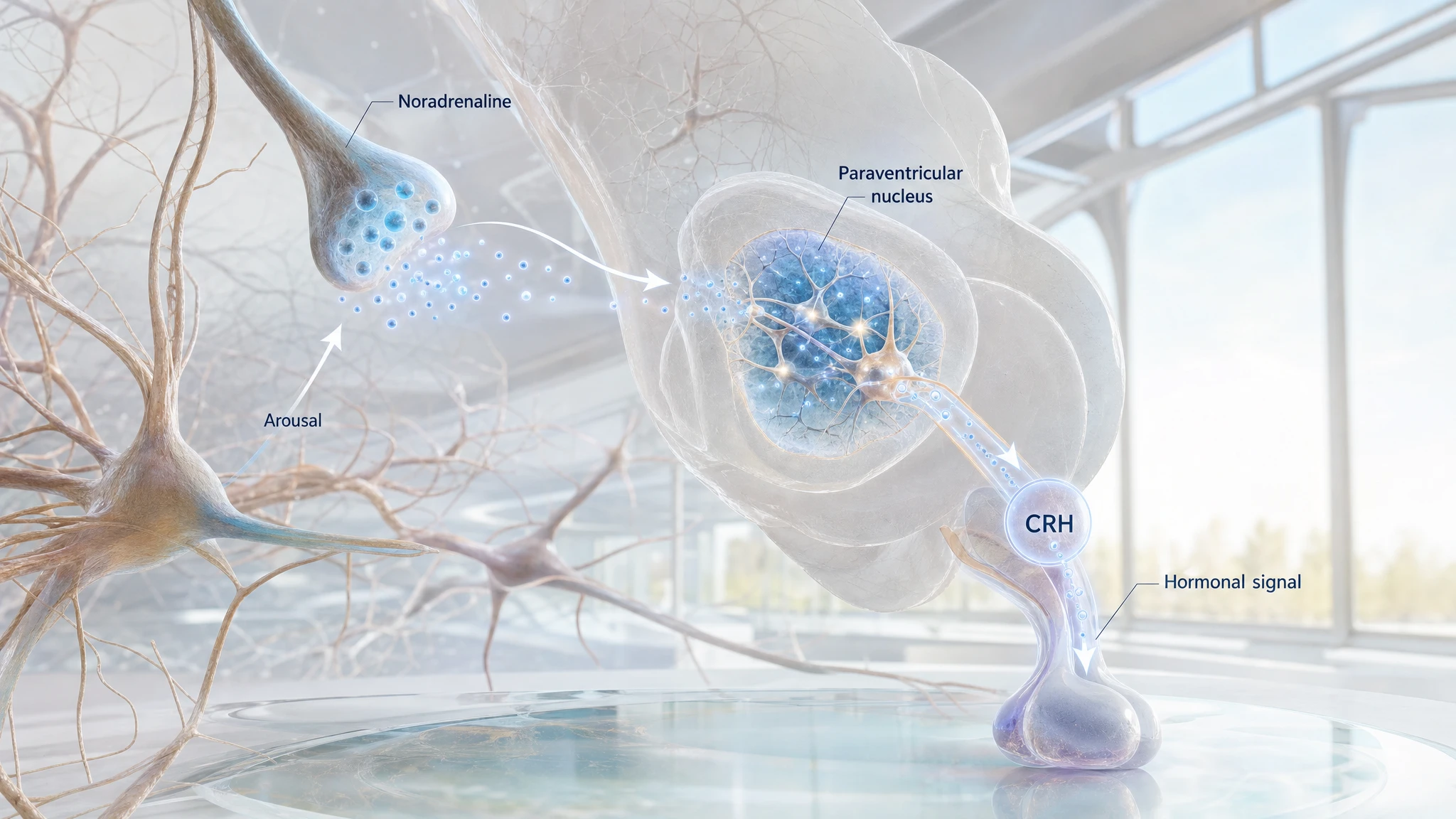
The stress response begins when an alarm signal reaches the paraventricular nucleus, an area of the hypothalamus. This area receives various stimuli and coordinates the body's internal response. Here, norepinephrine can activate neurons that produce CRH, an acronym for corticotropin-releasing hormone. The brain thus shifts from vigilance to a hormonal signal that prepares the body.
This hub links arousal (a general state of alertness) to the pathway involving the pituitary gland and adrenal glands. In the case of Tribulus terrestris, it helps to frame hypotheses regarding stress and adaptation. However, it does not prove a direct effect of the plant on this system. It is necessary to distinguish a possible aid in adaptation from a true pharmacological effect on the stress axis.
Studies have not yet demonstrated this second effect with certainty. The available data place the phytocomplex (the set of substances in the plant) within a very complex network. In this network, norepinephrine, the hypothalamus, and hormones regulate one another.
Basic data show that norepinephrine does not act alone in the hypothalamus. It is part of a network that combines stimulus and adaptation signals. Some experimental studies indicate that its activity in the PVN, the paraventricular nucleus, can promote the stress response [60]. Other research shows that alpha-1 and alpha-2 adrenergic receptors help regulate the system's output [61].
The response, therefore, does not function like a simple switch. The PVN receives data from autonomic circuits, emotions, and metabolic signals. It then transforms them into a well-coordinated and time-limited response. The norepinephrine pathways activate CRH and regulate the strength and duration of the signal. The system can thus react to the stimulus in the most appropriate way.
For Tribulus terrestris, this framework offers only a basis for evaluating hypotheses. The phytocomplex must be studied within adaptation processes, without inferring a direct hormonal effect. This axis can help situate potential effects on energy, recovery, and the response to psychophysical stress. It therefore remains essential to distinguish a possible mechanism from a real health benefit.
To better follow the subsequent steps, it is useful to remember these points:
- Norepinephrine can promote the activation of CRH in the paraventricular nucleus.
- CRH is the first hormonal signal of the stress response.
- The circuit connects vigilance, the autonomic system, and the hormonal axis.
- Its activity also depends on emotional and metabolic signals.
The first step is to understand how norepinephrine transforms an alarm into a signal from the hypothalamus. This signal activates CRH. Then, it is necessary to see how the circuit enters into the body's broader response to stress.
Norepinephrine and CRH: how the PVN initiates the stress response
The paraventricular nucleus of the hypothalamus transforms an alarm state into a hormonal signal. When norepinephrine reaches the PVN, it activates neurons that produce CRH. This initiates the pathway that involves first the pituitary gland and then the adrenal glands. This step links arousal (a general state of alertness) to the HPA axis, i.e., the hypothalamus-pituitary-adrenal axis.
This bridge helps in interpreting hypotheses regarding Tribulus terrestris related to stress, inflammation, and adaptation. However, it does not prove that the plant acts directly on CRH in humans. Instead, it describes the framework of the mechanisms that precede the hormonal response. Furthermore, the PVN does not work alone. It integrates signals from metabolism, the autonomic system, and emotions. The stress response, therefore, goes beyond mere nerve activity. When the system functions well, alertness is useful and remains limited in time. If control changes, the response can become too intense or poorly coordinated. This process shows how a threat signal triggers an orderly series of hormonal events.
CRH therefore marks the transition between the nervous system and the endocrine system (the network that produces hormones). After CRH is activated, the response can extend throughout the entire body. The link between norepinephrine and CRH is thus central to the physiology of stress. Understanding this avoids overly simplistic interpretations of the possible relationships between the plant and adaptation systems. Some basic research on the PVN and CRH neurons confirms this noradrenergic bridge [60][47][49][61].
HPA axis, cortisol, and negative feedback: stress control
The HPA axis initiates the stress response, but it also helps to stop it once the threat has passed. Cortisol, produced at the end of the pathway, exerts a control brake that regulates the system, known as negative feedback. It acts on the hypothalamus and pituitary gland to reduce the release of CRH and ACTH. If the system is functioning well, the body returns to homeostasis (internal balance).
If stress persists for a long time, however, this brake can change and lose its precision. This explains why the response must remain short and well-regulated. In the case of Tribulus terrestris, hypotheses concern adaptation to stress. They do not indicate a direct effect on cortisol. The body uses this hormone to react and to limit a response that lasts too long.
This is therefore a key point in the physiology of stress. If the control loses effectiveness, the system may remain on alert longer than necessary. This state can have effects on metabolism, immune defenses, and general well-being. Hypotheses regarding the plant suggest possible effects on adaptation processes, not a proven cure. It is therefore essential to distinguish a possible regulatory action from a demonstrated therapy. This framework helps to understand the role of the HPA axis in a clearer and more realistic way. Some studies on this mechanism show how long-term stress can change the control of the response [62][63][64][65].
CRH and cortisol: how stress becomes a hormonal response
The body translates perceived stress into a hormonal response through a precise chain of events. CRH, or corticotropin-releasing hormone, initiates the signal. Cortisol is the final result of this chain. In this context, Tribulus terrestris does not directly regulate stress hormones. It is a phytocomplex (a combination of active plant substances) that warrants further study regarding the body's response to stress.

When the brain perceives a threat, it triggers a precise series of reactions in the body. First, the hypothalamus releases CRH, the corticotropin-releasing hormone. CRH activates the hypothalamic-pituitary-adrenal axis, which connects the brain to the adrenal glands. In this way, the nervous signal becomes an endocrine (hormone-based) response that involves multiple organs.
Next, the anterior pituitary gland releases ACTH, or adrenocorticotropic hormone. This hormone prompts the adrenal cortex to produce cortisol, the primary glucocorticoid linked to stress. Cortisol makes more energy available, regulates inflammation, and helps the body react quickly. Its effects depend on the quantity, the duration of the signal, and the return to homeostasis.
This chain also helps in understanding the potential role of Tribulus terrestris, without drawing overly simplistic conclusions. The plant does not directly regulate cortisol and is not a standalone remedy for stress. It must be studied within a system where adaptation, energy use, inflammation, and hormones interact with one another.
Some studies on saponins (active plant compounds) and phytocomplexes indicate certain potential effects. These effects concern oxidative stress, cellular signaling, and the ability to adapt [2][3]. However, the data do not prove a clinical benefit on the HPA axis (hypothalamic-pituitary-adrenal axis). Nevertheless, they explain why this topic still generates interest in the research community.
To understand the stress response, one must distinguish three interconnected steps. CRH initiates the chain, ACTH reinforces it, and cortisol completes the response. If the system functions well, the body reacts effectively and for a limited time. If the stimulus lasts for a long time, however, the body remains under continuous biological pressure.
This condition can affect sleep, immune system defenses, energy use, and mood. In this context, Tribulus is being studied within broader processes, not as an isolated solution. Indeed, studies on stress show a close link between the brain, endocrine glands, and other tissues [62][63][64][65][66].
This section explains how a stress signal becomes a complete hormonal response. The two steps separate the initiation of the chain from its final effect on the body.
CRH, ACTH, and cortisol: the endocrine cascade of stress
In the case of Tribulus terrestris, this chain helps to evaluate biological hypotheses. However, it does not prove direct effects on cortisol. Studies have primarily examined saponins and phytosterols (sterols produced by plants). These substances may act on adaptation, inflammation, and oxidative stress (damage caused by reactive molecules) [2][3].
However, these effects do not demonstrate a clinical change in the HPA axis. A supplement may act on certain cellular functions without significantly changing hormones in the body. For this reason, one must first understand the physiological process and then evaluate its potential uses.
CRH is the first link in the hormonal stress response. It passes into the hypothalamic-hypophyseal portal system (a network of vessels between the hypothalamus and the pituitary gland). It then reaches the anterior pituitary and triggers the release of ACTH. The latter acts on the adrenal cortex and stimulates the production of cortisol. Cortisol then carries the adaptation signal throughout the body.
During acute stress, it makes energy available and regulates many processes in the organs in a short time. The stress response is therefore not an isolated event, but a well-coordinated chain. The timing of the response also plays a central role. CRH appears first, ACTH carries the signal, and cortisol completes the chain. When the stimulus ends, the axis reduces its activity and returns toward homeostasis (the body's internal balance).
If activity remains high, however, the system may function poorly and cause unfavorable biological effects. This sequence helps to study the plant without viewing it as a shortcut against stress. The hormonal chain therefore remains the reference point for evaluating any possible intervention of natural origin [62][63][64][65][66].
Cortisol and immunity: when stress becomes a chronic factor
A constantly stimulated HPA axis can have clinical effects on various functions. It can promote sleep disorders, changes in energy use, inflammation, and a decline in general well-being. The stress response thus links personal experience to the risk of chronic disorders. In this context, Tribulus terrestris is being studied as a phytocomplex of potential interest. Its substances may act on cellular pathways related to oxidation, inflammation, and adaptation. However, these data do not prove that they can correct a cortisol imbalance [2][3].
Cortisol also normally regulates immune defenses. It limits excess cytokines (substances that drive inflammation) and helps control the HPA axis. Furthermore, it keeps short-term inflammation in check. It is therefore not a harmful hormone, but an essential part of the adaptive response.
Problems can begin when stress becomes chronic or tissues become less responsive to glucocorticoids. In these cases, the control of defenses may decrease and promote imbalances that persist over time. Caution is therefore needed so as not to attribute effects to the plant that studies have not proven. Research primarily describes possible biological actions and traditional uses. It does not demonstrate a definitive use in immune or endocrine diseases. However, the relationship between cortisol and immunity remains important. If chronic stress alters the signals between the brain and hormones, it can make the body more fragile. The phytocomplex therefore remains an object of study, not a defined therapy. Its interest concerns certain adaptation mechanisms integrated into a broader system [64][65].
Summary of scientific evidence
This summary organizes the evidence found in the provided bibliography. It separates clinical studies from preliminary data and results that have yet to be confirmed.
| Publication year | Area studied | What the studies indicate |
|---|---|---|
| 2014 | Female sexual function | several clinical studies indicate potential benefits for desire and sexual function scores [4] |
| 2017 | Male fertility | data vary and do not confirm convincing clinical effects on testosterone and seminal parameters [16] |
| 2019 | Oxidative stress and inflammation | experimental models indicate a possible biological defense, but direct clinical confirmation is lacking [29] |
| 2022 | Sports and recovery | studies on athletes show variable results regarding biological values and performance [13] |
| 2023 | Metabolism and lipids | data indicate a possible effect on metabolic pathways, but these are primarily derived from preclinical studies [18] |
| 2025 | Neuroinflammation | a Tribulus terrestris extract has shown preclinical signs of protection against neuroinflammation [24] |
| 2026 | Erectile dysfunction | a meta-analysis of multiple randomized clinical trials indicates an improvement in erectile function [6] |
Editorial review of the evidence
In the studies we reviewed, the most robust evidence concerns sexual function. We found preliminary data regarding metabolism, the nervous system, and inflammation. Clinical trials are more consistent when evaluating desire, sexual function, and aspects of well-being. Data on testosterone, however, appeared less clear and more variable to us. By reading experimental studies, we observed that Tribulus terrestris may act on oxidative stress, inflammation, and cellular balance.
The limitations we encountered are primarily the variable extracts, different dosages, and the short duration of the studies. Furthermore, much of the data on mechanisms comes from animal or cellular models. Even when the data seemed interesting to us, we believe that clinical use requires caution. We noted that results are not always confirmed and can vary between different groups.
Conclusions and editorial summary
In our view, Tribulus terrestris remains a plant of great interest for research. By reading the studies collected here, we can see how its study bridges tradition, diet, bodily functions, and experimental research. We do not consider it a remedy with a single effect, but rather a phytocomplex (a combination of active substances). Its action varies depending on the quality of the extract, the substances present, and the context observed. Therefore, we believe it should not be described solely as a hormone stimulant. Indeed, the evidence shows us a broader picture that is not yet entirely clear.
In a clinical setting, the most useful data we found primarily concerns sexual function. Some studies on women report benefits for desire, arousal, and level of satisfaction. In men, however, we have seen more variable results, and the benefit does not always appear. Testosterone, often the focus of advertising, does not increase reliably and consistently in the trials we examined. The plant, therefore, does not seem to be a cure-all. However, it could offer support in carefully selected cases.
The research we have reviewed also observes potential effects on metabolism, oxidative stress, inflammation, and neuronal protection. Oxidative stress indicates an excess of reactive molecules that can damage cells. Pathways such as AMPK, mTOR, nitric oxide, orexin, and cortisol may explain some of the observed effects. However, much of the data comes from studies conducted on cells or animals. We cannot, therefore, immediately use them to decide how to treat people. These works do not prove a therapy, but rather indicate consistent biological hypotheses that require further study.
Tribulus terrestris shows us how modern science can study a plant used for centuries. The evidence we have analyzed does not all carry the same weight: some is strong, while other parts are weak or uncertain. The topic therefore requires a serious reading, linked to metabolism, diet, and hormone control. We still see the plant at the center of a vibrant field of research. It also helps us understand the link between ancient use and modern research. But we must not mistake useful hypotheses for certain data.
Final critical note
The evidence we have reviewed calls for more caution than many summaries aimed at the general public. The most robust data point to a possible role in certain aspects of sexual function. However, many other hypotheses stem from studies on cells, animals, or extracts that are difficult to compare. A gap therefore remains between the biological effect observed in the laboratory and the actual benefit for people. We have noted that studies use different doses, products, groups, and outcomes. These differences make it difficult for us to obtain a single synthesis.
Another limitation we encountered concerns the transition from biological mechanisms to real-world benefits. AMPK, mTOR, nitric oxide, orexin, and cortisol form pathways that are consistent with one another. However, studies on these pathways often remain far from clinical practice. A possible mechanism, on its own, does not prove the presence of a therapeutic effect. Furthermore, it is not always clear to us which part of the product produces the benefit. The effect may depend on the whole plant, a part of the extract, or other factors. For this reason, we believe the quality of the methods used in the studies remains central.
The main limitations we identified include small sample sizes, short-term studies, limited longitudinal data, and non-uniform products. These factors make the conclusions less robust and do not allow us to provide definitive guidance. The most accurate synthesis must therefore remain cautious and adhere to the evidence. Tribulus terrestris has a real scientific basis and a growing number of studies. However, it still leaves many important questions unanswered. We believe it is necessary to evaluate it based on the evidence, without giving partial data more weight than they deserve.
References
[1] Herbs at a Glance: Tribulus
[2] Promising phytopharmacology, nutritional potential, health benefits, and traditional usage of Tribulus terrestris L. herb
[3] A review of traditional pharmacological uses, phytochemistry, and pharmacological activities of Tribulus terrestris
[4] Tribulus terrestris for treatment of sexual dysfunction in women: randomized double-blind placebo-controlled study
[5] Evaluation of the efficacy and safety of Tribulus terrestris in male sexual dysfunction—A prospective, randomized, double-blind, placebo-controlled clinical trial
[6] Tribulus terrestris for management of patients with erectile dysfunction: a systematic review and meta-analysis of randomized trials
[7] A systematic review and meta-analysis on the effectiveness and safety of Tribulus Terrestris in male fertility problems: examining semen parameters and erectile function
[8] Testosterone Boosters Fact Sheet for Health Professionals
[9] Effects of Tribulus (Tribulus terrestris L.) Supplementation on Erectile Dysfunction and Testosterone Levels in Men—A Systematic Review of Clinical Trials
[10] Effects of Tribulus terrestris saponins on exercise performance in overtraining rats and the underlying mechanisms
[11] Tribulus terrestris extracts alleviate muscle damage and promote anaerobic performance of trained male boxers and its mechanisms: Roles of androgen, IGF-1, and IGF binding protein-3
[12] Effect of Tribulus terrestris L. supplementation on Exercise-Induced Oxidative Stress and Delayed Onset Muscle Soreness Markers: A Pilot Study
[13] 6-Week Supplementation with Tribulus terrestris L. to Trained Male CrossFit® Athletes on Muscle, Inflammation, and Antioxidant Biomarkers: A Randomized, Single-Blind, Placebo-Controlled Trial
[14] Clinical Assessment of Tribulus terrestris Extract in the Treatment of Female Sexual Dysfunction
[15] Effect of Tribulus Terrestris in the Treatment of Female Sexual Dysfunction and Clitoral Vascularization. Results of a Randomized Study Comparing Two Different Dosage Regimes
[16] Prospective Analysis on the Effect of Botanical Medicine ( Tribulus terrestris ) on Serum Testosterone Level and Semen Parameters in Males with Unexplained Infertility
[17] Dioscin promotes autophagy by regulating the AMPK-mTOR pathway in ulcerative colitis
[18] Effect of Diosgenin on Nonalcoholic Fatty Liver Disease Induced by High-Fat Diet in Rats Through the mTOR/SREBP-1c/HSP60/MCAD/SCAD Signaling Pathway
[19] Dioscin Ameliorates Experimental Autoimmune Thyroiditis via the mTOR and TLR4/NF-kB Signaling
[20] Dioscin Improves Pyroptosis in LPS-Induced Mice Mastitis by Activating AMPK/Nrf2 and Inhibiting the NF-kB Signaling Pathway
[21] Diosgenin ameliorates palmitic acid-induced lipid accumulation via AMPK/ACC/CPT-1A and SREBP-1c/FAS signaling pathways in LO2 cells
[22] Diosgenin Targets CaMKK2 to Alleviate Type II Diabetic Nephropathy through Improving Autophagy, Mitophagy and Mitochondrial Dynamics
[23] Diosgenin prevents high-fat diet-induced rat non-alcoholic fatty liver disease through the AMPK and LXR signaling pathways
[24] Dietary Supplement With Tribulus terrestris L. Extract Exhibits Protective Effects on Neuroinflammation
[25] Tribuli Fructus alleviates 1-methyl-4-phenyl 1,2,3,6-tetrahydropyridine (MPTP)-induced Parkinson’s disease by suppressing neuroinflammation via JNK signaling
[26] Supplementation with Tribulus Terrestris Extract Exhibits Protective Effects on MCAO Rats via Modulating Inflammation-Related Metabolic and Signaling Pathways
[27] Neuroprotective Effect of Dioscin against Parkinson’s Disease via Adjusting Dual-Specificity Phosphatase 6 (DUSP6)-Mediated Oxidative Stress
[28] Diosgenin reduces phosphodiesterase 3B (PDE3B) through AMP-activated protein kinase/ mechanistic target of rapamycin (AMPK/mTOR) signaling pathway to ameliorate streptozotocin-induced pancreatic b-cell apoptosis and dysfunction
[29] Tribulusterine Containing Tribulus terrestris Extract Exhibited Neuroprotection Through Attenuating Stress Kinases Mediated Inflammatory Mechanism: In Vitro and In Vivo Studies
[30] Inhibition of the AMPK/nNOS pathway for neuroprotection in stroke
[31] Anxiolytic and Antidepressant Effects of Tribulus terrestris Ethanolic Extract in Scopolamine-Induced Amnesia in Zebrafish: Supported by Molecular Docking Investigation Targeting Monoamine Oxidase A
[32] Synergistic effect of Celastrus paniculatus and Tribulus terrestris against chronic immobilisation stress-induced memory impairment, BDNF level and neuroinflammation
[33] Oxidative stress induces phosphorylation of neuronal NOS in cardiomyocytes through AMP-activated protein kinase (AMPK)
[34] AMP-activated protein kinase and nitric oxide regulate the glucose sensitivity of ventromedial hypothalamic glucose-inhibited neurons
[35] Blocking a vicious cycle nNOS/peroxynitrite/AMPK by S-nitrosoglutathione: implication for stroke therapy
[36] Reducing neuronal nitric oxide synthase (nNOS) expression in the ventromedial hypothalamus (VMH) increases body weight and blood glucose levels while decreasing physical activity in female mice
[37] Endogenous Nitric Oxide Inhibits, Whereas Awakening Stimuli Increase, the Activity of a Subset of Orexin Neurons
[38] Nitric Oxide Mediates Selective Degeneration of Hypothalamic Orexin Neurons through Dysfunction of Protein Disulfide Isomerase
[39] A Functional Link between AMPK and Orexin Mediates the Effect of BMP8B on Energy Balance
[40] Orexin-A Infusion in the Locus Ceruleus Triggers Norepinephrine (NE) Release and NE-Induced Long-Term Potentiation in the Dentate Gyrus
[41] Orexin A activates locus coeruleus cell firing and increases arousal in the rat
[42] Morphological study of orexin neurons in the hypothalamus of the Long–Evans rat, with special reference to co-expression of orexin and NADPH-diaphorase or nitric oxide synthase activities
[43] Extracellular Calcium Contributes to Orexin-Induced Postsynaptic Excitation of the Rat Locus Coeruleus Neurons
[44] Orexin modulates behavioral fear expression through the locus coeruleus
[45] Orexin/hypocretin system modulates amygdala-dependent threat learning through the locus coeruleus
[46] Properties and modulation of excitatory inputs to the locus coeruleus
[47] Role of paraventricular nucleus‐projecting norepinephrine/epinephrine neurons in acute and chronic stress
[48] Astrocytes Amplify Neuronal Dendritic Volume Transmission Stimulated by Norepinephrine
[49] Regulation of corticotropin‐releasing hormone neuronal network activity by noradrenergic stress signals
[50] Astrocytic Glutamate Uptake and Signaling as Novel Targets for Antiepileptogenic Therapy
[51] Physiological and Pathological Role of mTOR Signaling in Astrocytes
[52] MTOR Promotes Astrocyte Activation and Participates in Neuropathic Pain through an Upregulation of RIP3
[53] SLC38A10 Regulate Glutamate Homeostasis and Modulate the AKT/TSC2/mTOR Pathway in Mouse Primary Cortex Cells
[54] Activation of glutamate transporters in the locus coeruleus paradoxically activates descending inhibition in rats
[55] Genetic inactivation of mTORC1 or mTORC2 in neurons reveals distinct functions in glutamatergic synaptic transmission
[56] Hypocretin/Orexin Excites Hypocretin Neurons via a Local Glutamate Neuron: A Potential Mechanism for Orchestrating the Hypothalamic Arousal System
[57] Activation of Orexin Neurons by Non-NMDA Glutamate Receptors Evidenced by c-Fos Immunohistochemistry
[58] Monosynaptic Glutamatergic Activation of Locus Coeruleus and Other Lower Brainstem Noradrenergic Neurons by C1 Cells in Mice
[59] Glutamatergic Periaqueductal Gray Projections to the Locus Coeruleus Orchestrate Adaptive Arousal States in Threatening Contexts
[60] Noradrenergic Activation in the Paraventricular Nucleus During Acute and Repeated Immobilization Stress: An In Vivo Microdialysis Study
[61] Relationship of Alpha-1- and Alpha-2-Adrenergic-Binding Sites to Regions of the Paraventricular Nucleus of the Hypothalamus Containing Corticotropin-Releasing Factor and Vasopressin Neurons
[62] ACTH and cortisol responses to CRH in acute, subacute, and prolonged critical illness: a randomized, double-blind, placebo-controlled, crossover cohort study
[63] Continuous Administration of Human Corticotropin-Releasing Hormone in the Absence of Glucocorticoid Feedback in Man
[64] The Role of the Hypothalamic-Pituitary-Adrenal Axis in Depression Across the Female Reproductive Life Cycle: Current Knowledge and Future Directions
[65] Chronic Stress and Autoimmunity: The Role of the Hypothalamic-Pituitary-Adrenal Axis and Cortisol Dysregulation
[66] Defining a serum cortisol cutoff level post-CRH stimulation for diagnosing ACTH deficiency: A retrospective study validated by a nationwide registry
Editorial note
Artificial Intelligence was used solely as a tool to support editorial and documentary work. All content, interpretations, bibliographic citations and conclusions have been verified, reviewed and approved by the author, who assumes full scientific responsibility for them.
The manuscript was also subject to independent peer review prior to publication.
To ensure maximum transparency, the article's complete history — including the dates of submission, review, acceptance and publication, as well as information on the peer review process — is available on the dedicated Article History page.