


Cinnamon and AMPK: the link to cellular metabolism
Research on cinnamon and AMPK describes a possible biological mechanism, not a clinical promise. In study models, cinnamaldehyde acts on pathways related to cellular energy and AMPK phosphorylation. Studies in humans indicate possible effects on metabolism, but the data are not uniform. The picture therefore requires caution: it helps to understand the mechanisms, but it does not yet offer certain practical conclusions.
- Published 16/11/2026
- Updated 17/11/2026
- Reviewed 17/11/2026
- Article history
ABSTRACT : WHAT THE SCIENCE SAYS
Cinnamon often appears in texts on metabolic health, studied for its potential link to AMPK. AMPK is a kinase, an enzyme that transfers phosphate groups from one molecule to another. This enzyme helps the cell estimate available energy and act when supplies change. Simply put, AMPK functions as an internal sensor and regulates how the cell uses energy. In this field, studies examine cinnamaldehyde, a well-known compound in cinnamon. This substance may act on pathways that help manage energy balance. The topic connects food and cell biology, but caution is needed when reading the results. Understanding a mechanism, in fact, does not by itself prove a certain practical effect. The article explains what AMPK does, why it matters in metabolism, and how to evaluate studies on cinnamon. Specifically, the article addresses:
- What AMPK does in controlling cellular energy
- Why cinnamaldehyde is the most studied compound
- How experimental models have guided the hypothesis
- Why biological mechanism and practical utility do not coincide
- Which conclusions remain the most prudent and solid today
What is AMPK and why does it matter for energy balance
In the relationship between cinnamon and AMPK, the first step is to understand the role of this protein. AMPK acts as a cellular energy sensor. It reads the status of reserves and responds when available energy changes. In this way, it helps maintain energy homeostasis (the balance between available and consumed energy).
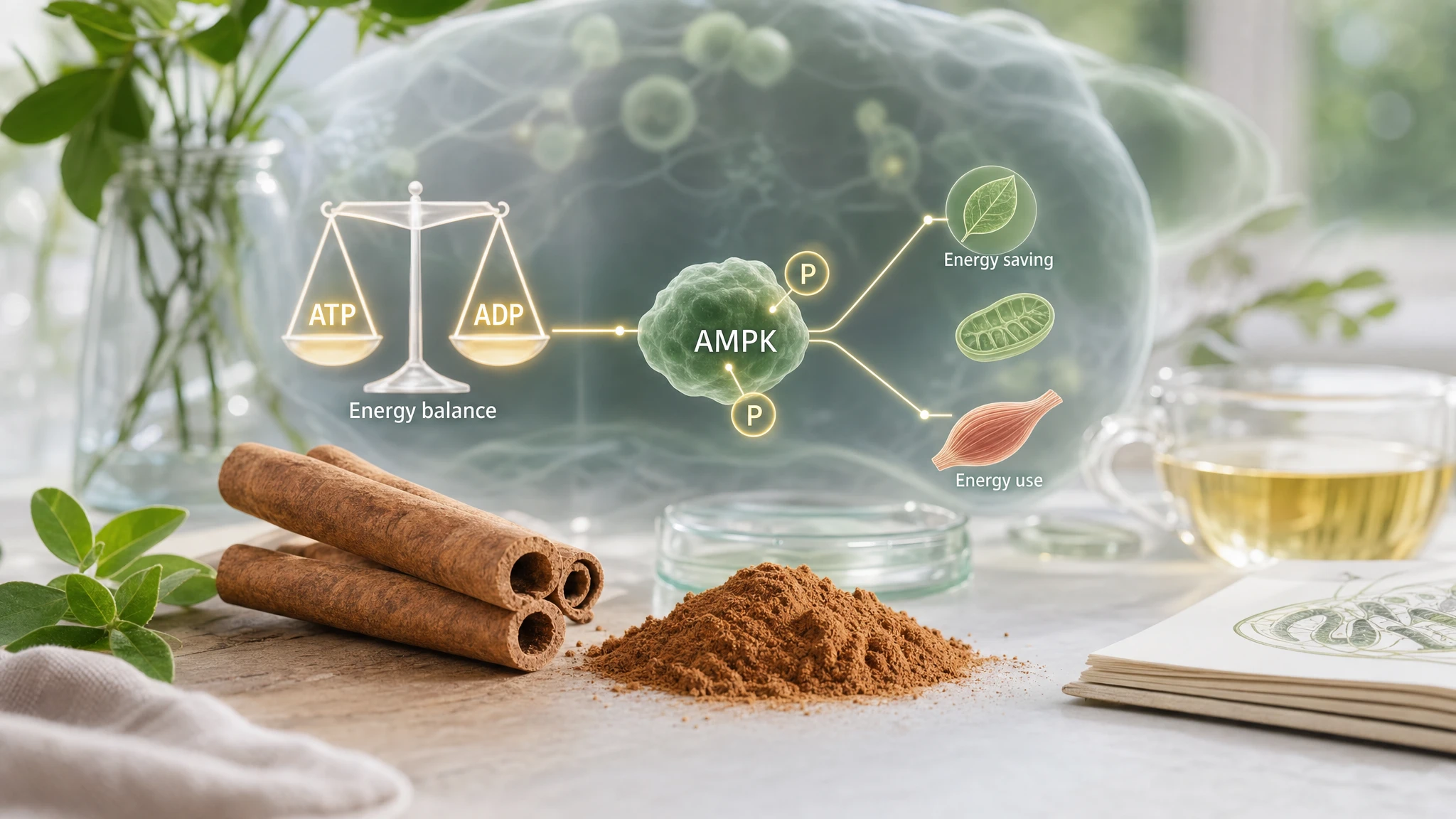
AMPK is a kinase (an enzyme that regulates other proteins through chemical signals). It thus coordinates various processes related to energy use. It is called a cellular energy sensor because it detects the internal state of the cell, not the food ingested. It assesses how much energy is available compared to how much is needed. If this ratio changes, AMPK promotes conservation and helps the cell maintain its homeostasis.
In this context, the link between cinnamon and AMPK stems from a specific hypothesis. Some compounds in the spice might act on a pathway that regulates energy use. However, a signal observed in cells does not, by itself, prove a clinical effect in humans. It is therefore useful to distinguish the mechanism being studied from its possible practical use.
Understanding this pathway also helps to better interpret studies on cinnamon. However, it is necessary to distinguish a control system from an effect already proven in humans. The central point is energy balance. AMPK does not act alone, but is part of a network of signals. This network reflects the metabolic state of the tissue and its energy needs.
The following steps explain how the activity of this protein changes and what happens when it is activated:
- The function of AMPK in reading the internal energy state.
- The role of phosphorylation (the addition of a phosphate group) in regulating the enzyme.
- The way in which activation changes the cell's priorities.
- The link between metabolic response and the prudent use of resources.
Before examining studies on cinnamon, three steps are necessary: understanding what AMPK is, how it is regulated, and what changes when it is activated.
What is AMPK and why is it called an energy sensor
AMPK is a kinase (an enzyme that regulates other proteins) central to the cell's energy balance. When resources drop, it coordinates metabolism and adapts energy usage. For this reason, it is defined as an energy sensor. It does not "see" food, but rather integrates internal signals regarding reserves and consumption. In practice, it guides the cell toward conservation, recovery, and stability. It helps maintain energy homeostasis (the balance between available and used energy).
A summary of the mechanisms describes AMPK as a regulator of nutrients and energy, useful for maintaining internal balance. Another study evaluates its potential therapeutic use, but also points out the need to carefully regulate any intervention. Indeed, small changes in its activity can have significant effects. Furthermore, there is a biological limit: the response varies between tissues and metabolic states. Its role must therefore be interpreted within context, not as that of a single switch.
How phosphorylation modulates AMPK activity
Phosphorylation (the addition of a phosphate group) is a chemical modification that changes a protein's behavior. In the case of AMPK, it can act as an "on" switch or an enhancement signal. The protein thus transmits information about the cell's energy status more effectively. The link between cinnamon and AMPK phosphorylation therefore points to a precise molecular mechanism. It does not describe a generic "beneficial" action of the spice.
Trans-cinnamic acid, a compound found in cinnamon, has been associated with higher adiponectin levels and increased AMPK phosphorylation [1]. Adiponectin is a hormone produced by adipose tissue that is involved in metabolic control. Other research on polyphenols (active plant compounds) shows effects on multiple pathways related to insulin signaling [2]. These data help us understand the mechanism, but they do not predict the human response on their own. The outcome can, in fact, vary depending on the cell type, the dosage, and the type of test.
Why the energy balance changes when AMPK is activated
When AMPK is activated, the cell shifts its priorities. It reduces processes that consume significant energy and promotes those that produce or conserve it. In simple terms, the metabolism uses resources more prudently. This is why this pathway is linked to energy metabolism and substrate oxidation (the use of fats or sugars). It is also involved in metabolic adaptation, which is the response to changes in available nutrients.
In experimental models, AMPK activation has been associated with lower insulin resistance and improved fat utilization [3]. Trans-cinnamaldehyde has also promoted mitochondrial biogenesis (the formation of new mitochondria) via PGC-1a and PPARb/δ [4]. Mitochondria are the cellular components that produce most of our energy. However, a signal within a cell does not always equate to a clinical benefit. The effect can vary depending on the tissue, the dose, and the duration of the test. Therefore, this mechanism offers a biological basis, not a definitive conclusion.
Recent research and updates
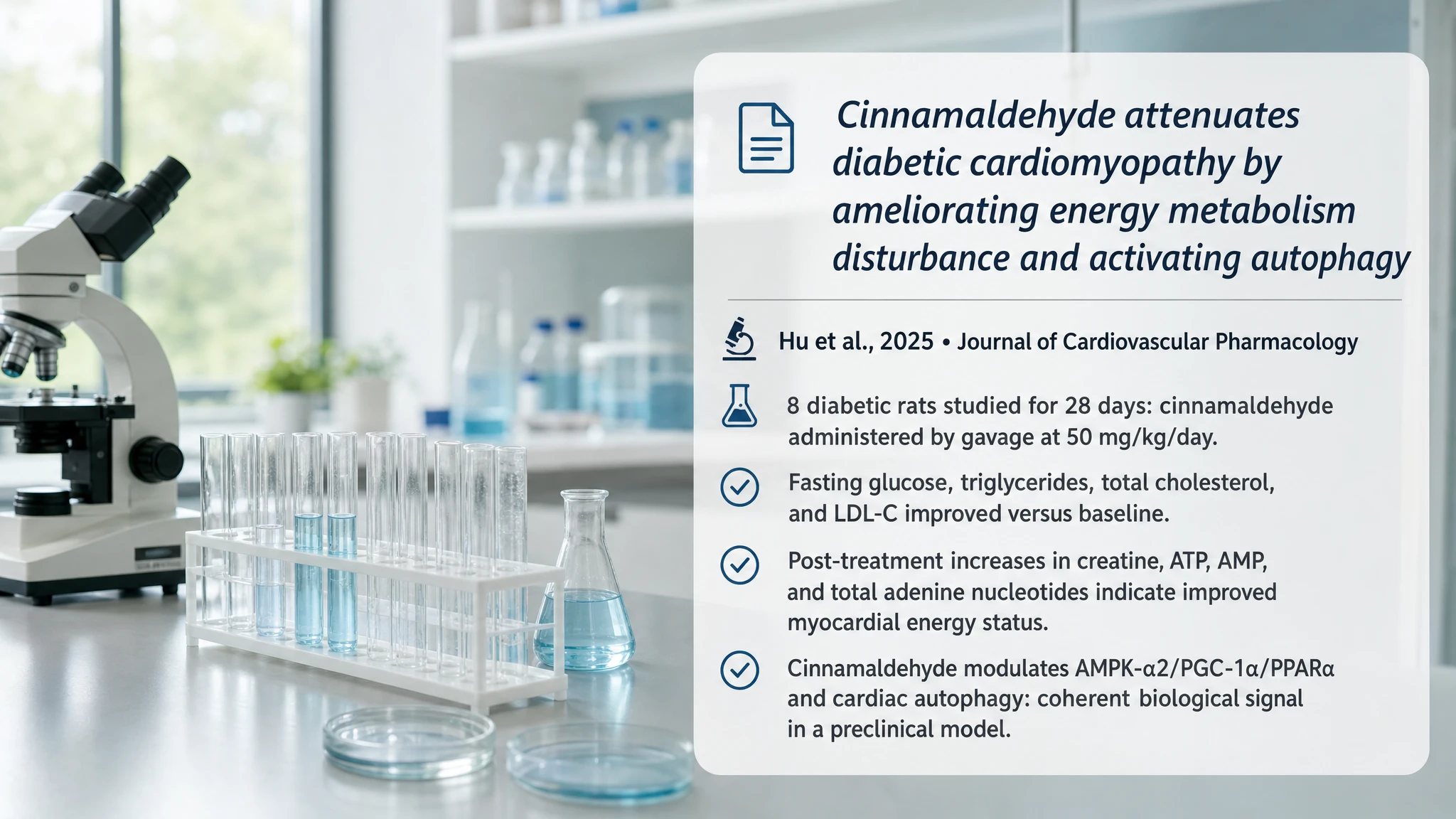
In 2025, Chinese researcher Ming-Qiao Hu and colleagues studied cinnamaldehyde in the Journal of Cardiovascular Pharmacology. This aromatic substance from cinnamon was used in a model of diabetic cardiomyopathy (heart damage linked to diabetes). The work evaluated its effects on energy use in the heart. The topic also concerns AMPK, the sensor that helps the cell manage energy.
Cinnamaldehyde attenuates diabetic cardiomyopathy by ameliorating energy metabolism disturbance and activating autophagy
- The study followed 8 diabetic rats for 28 days, with a gavage dose of 50 mg/kg per day.
- In the study model, fasting glycemia, triglycerides, total cholesterol, and LDL-C improved compared to the baseline.
- After treatment, creatine, ATP, AMP, and total adenine nucleotides increased, indicating a recovery of heart energy.
- The study links cinnamaldehyde to a set of molecular signals involving AMPK in its 2 form, PGC-1, and PPAR—a network that regulates cellular energy—and to cardiac autophagy (recycling of cellular components), but the data remains preclinical.
Why cinnamon has been linked to AMPK activation
The link between cinnamon and AMPK stems primarily from studies on its potential biological mechanism. It does not derive from a proven effect in the daily diet. Certain compounds, including cinnamaldehyde, may influence energy utilization and the cell's energy sensor.

The link between cinnamon and AMPK starts from a simple biological hypothesis. Certain aromatic molecules may act on the pathways that regulate energy within cells. Among these, cinnamaldehyde is the most studied compound. Researchers are evaluating whether it can activate AMPK, the cell's energy sensor. However, this does not mean that the spice always acts in the same way. Instead, it explains why many studies have focused on this potential link.
Therefore, the interest does not stem from the promise of a quick cure. It arises from a hypothesis that connects the chemistry of the spice to cell functions. Tests help to understand whether certain compounds promote metabolic adaptation (a response that changes how energy is used). A signal observed in the laboratory, however, does not prove a benefit in humans. The next step concerns cinnamaldehyde and the reasons why it is being studied.
Before examining the studies, it is useful to distinguish the various steps of the reasoning:
- Cinnamaldehyde is the most studied compound in laboratory tests.
- Studies on cells and animals show molecular signals under controlled conditions.
- The transition to a real-world diet remains the most difficult point.
- The link with AMPK is possible, but not yet certain.
The following paragraphs explain the steps that have made the link with AMPK credible. We start with the most studied compound and the data obtained in preclinical tests. Finally, we clarify the boundary between biological hypothesis and practical use.
Why cinnamaldehyde is the most studied compound
Cinnamaldehyde is the main aromatic compound in cinnamon. This is why the spice is often linked to AMPK. The interest does not arise because this molecule alone represents all of cinnamon. It arises because it is well-defined, easy to study, and can act on energy metabolism (the way cells use energy). When looking for a mechanism, researchers usually start with the molecule that is easiest to identify.
Available data indicate that cinnamaldehyde could promote, under controlled conditions, the phosphorylation of AMPK. This is a chemical modification that can activate the protein. In the laboratory, this data is useful because it shows a measurable effect on a cellular pathway. However, it does not indicate what dose of cinnamon could produce the same result in the diet. For this reason, cinnamaldehyde remains the primary reference, but it does not offer final proof. The plausibility of the mechanism stems from this molecule, not clinical confirmation. The data therefore shows a possible biological pathway, but it is not enough to provide practical advice.
In what sense do preclinical models suggest a signal regarding AMPK
Preclinical models are tests on cells or animals conducted before clinical trials. They serve to determine whether a substance can act on a biological pathway such as AMPK. In the case of cinnamon, these tests have shown a signal consistent with AMPK activation. Some components of the spice could therefore encourage the cell to use energy more efficiently. The result indicates a pathway that warrants further investigation, but it does not prove an automatic effect in humans.
These studies allow us to observe, in a controlled manner, how cinnamon interacts with the cell. However, their limitation is clear: the test conditions do not match a real-world diet. The dosage, the form of the preparation, and the duration of exposure can significantly alter the result. Therefore, preclinical models do not prove clinical efficacy, but they do offer a plausible initial clue. Simply put, the link between cinnamon and AMPK has an experimental basis. It remains to be seen, however, how much this holds true outside the laboratory. This caution makes it accurate to speak of a signal, not a conclusion.
How to distinguish between biological hypothesis and practical application
A biological hypothesis arises when a compound shows a plausible effect on a cellular pathway. Practical use, however, requires more solid evidence obtained in humans. In the case of cinnamon, one should not mistake a signal on AMPK for a proven benefit. Adding the spice to your diet does not guarantee the same effect seen in tests. This distinction is important for properly evaluating the potential mechanism. A substance can be useful for research without becoming an effective intervention for metabolism.
At the moment, the link between cinnamon and AMPK remains a well-constructed biological plausibility. However, it is not a practical recommendation that can stand on its own. The point is not to deny the value of the research. Instead, we must avoid giving cinnamon a role that the data has not confirmed. The spice contains compounds that deserve further study, but this is not enough to recommend its use. Daily consumption does not equate to a measurable effect on energy metabolism. This distinction prepares for the next step, dedicated to what happens in cells when AMPK is activated.
What changes in cells when AMPK is activated
When we talk about AMPK cinnamon, what matters is how the cell uses its resources. This cellular energy sensor detects how much energy is available and can change how it is used. The effects, however, vary depending on the tissue.
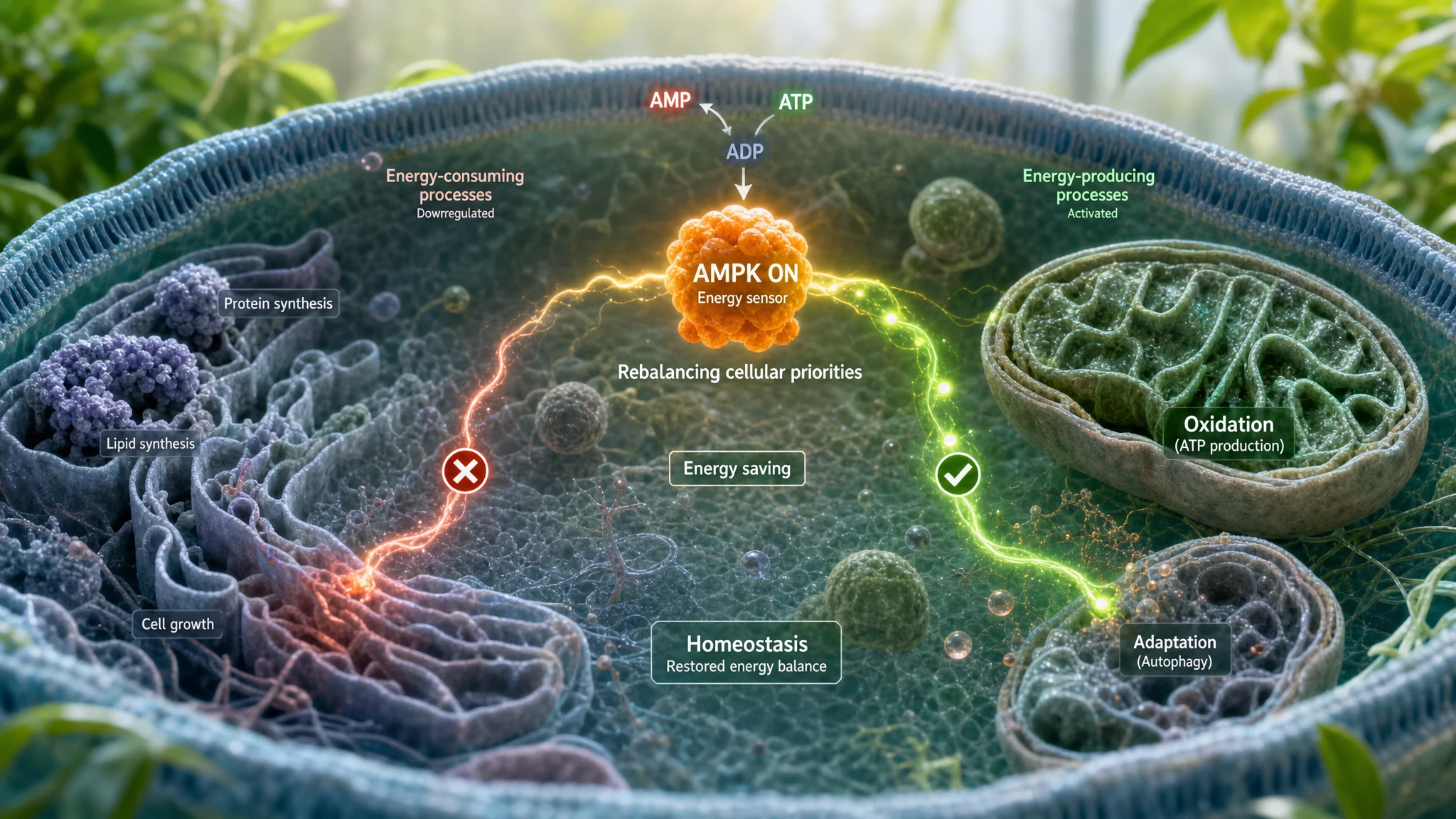
When AMPK is activated, the cell shifts its priorities. It reduces energy-consuming processes and promotes those that produce or conserve it. AMPK kinase (an enzyme that regulates other proteins) thus controls energy homeostasis. This term refers to the balance between the energy required and the energy available.
The key point is therefore AMPK activation, a signal that redistributes resources. It does not indicate a generic increase in metabolism. The relationship between cinnamon and AMPK phosphorylation helps in studying these cellular choices. Phosphorylation is a process that can activate the enzyme. However, the effects still depend on the context, the dose, and the type of tissue.
This is why cinnamon is being studied as a potential aid for a precise cellular response. It concerns energy metabolism (how the cell uses energy) and nutrient intake. From this framework, four points emerge that are useful for carefully interpreting study results:
- The ratio between catabolism and anabolism can help the cell save energy.
- Substrate oxidation increases if the cell needs to produce more energy.
- The cell can adapt better when nutrient intake changes.
- Various tissues may show different biological responses.
In cells, AMPK activation changes how resources are used or stored. The following three steps explain the effects on energy balance, cellular fuels, and various tissues.
How the relationship between catabolism and anabolism changes
When the AMPK kinase is active, the cell tends to favor catabolism—the set of processes that derive energy from the breakdown of molecules—and to inhibit anabolism, which instead consumes energy to build new structures. This shift does not mean "burning more" in a generic sense: it means prioritizing essential processes when resources are limited. For this reason, AMPK is considered a central node of metabolic adaptation, capable of coordinating energy conservation and production.
The biological interpretation is consistent with the cellular energy sensor model, but the practical significance remains conditioned by the context. A cell in a different energy balance may respond less markedly or more transiently, and this also applies to the signals attributed to cinnamon. The direction is clear, while the intensity of the effect depends on the initial state of the tissue and the duration of the stimulus. In practice, AMPK acts as a metabolic switch that turns off non-urgent consumption and turns on energy recovery pathways. This mechanism has been observed in studies on muscle and liver cells, where AMPK activation reduces the synthesis of fatty acids and cholesterol, processes that require a lot of energy. At the same time, the cell increases glucose uptake and fatty acid oxidation to generate ATP, the molecule that serves as immediate fuel. Data indicate that AMPK phosphorylation can reduce the activity of key anabolic enzymes, such as acetyl-CoA carboxylase, and activate those of catabolism. However, the response is never absolute: the extent of the shift depends on how much the cell perceives the energy drop. If the balance is already stable, the effect may be more subtle.
Why oxidation and nutrient adaptation increase
When AMPK is activated, the cell tends to use energy substrates—the molecules from which it derives energy—more efficiently. This translates into greater substrate oxidation, a process that helps extract energy more effectively when nutrient intake is unstable. Oxidation occurs primarily in the mitochondria, the cell's power plants, where fats and sugars are converted into ATP. AMPK stimulates the formation of new mitochondria and improves their efficiency, preparing the cell for periods of scarcity. This adaptation is crucial because it allows for a rapid switch from one fuel to another, for example from glucose to fats, without waste. In studies on animal models, prolonged AMPK activation has shown an increase in the expression of genes linked to fatty acid oxidation, such as CPT1 and PGC-1a. These genes encode proteins that transport fats into the mitochondria and regulate their combustion. The data suggest that the cell becomes more flexible and less dependent on a single type of nutrient, an advantage during fasting or physical exercise.
In this context, cinnamon has been studied because some of its compounds, including cinnamaldehyde AMPK, could promote a faster response to nutritional variations and support the orderly use of resources. Cinnamaldehyde, the main component of cinnamon essential oil, has shown the ability to activate AMPK in adipose and muscle cells in laboratory settings. This effect could translate into better control of energy balance when the diet changes, but the effective doses in cellular studies are often higher than those achievable through diet. Furthermore, the effect depends on the presence of other compounds in cinnamon, such as polyphenols, which can act in synergy or modulate the response. Research is still in the early stages and results should be interpreted with caution, because the leap from the test tube to the human body is complex.
Why different tissues may respond differently
The response to AMPK varies between tissues because each part of the body performs different tasks. Muscle, liver, and adipose tissue manage energy in specific ways. A stimulus on cinnamon and AMPK phosphorylation can therefore have different effects depending on the biological context. To interpret studies correctly, one must remember an important limitation. A signal observed in a cell or an organ does not necessarily apply to the entire organism.
The literature shows precisely this variability. A meta-analysis that pooled data from 24 clinical studies found a decrease in fasting glycemia and HbA1c, which indicates average glycemia. However, the strength of the effect varies between populations and protocols [5]. Another analysis that brought together 8 clinical studies observed a decrease in fasting glycemia of 0.49 mmol/L [6]. The signal is interesting, but not uniform. Moving from cellular data to human physiology therefore requires caution. It does not allow for the same conclusions for every tissue [6][5].
Cinnamon and AMPK: what it really means for human metabolism
The potential effects of cinnamon on AMPK in humans should be interpreted with caution. A signal in cells, in fact, does not by itself prove a clinical benefit. AMPK is a kinase (an enzyme that regulates other processes) and detects the energy available in the cell. It remains to be seen whether activating it truly changes how the body uses energy. Therefore, a credible biological basis must be distinguished from evidence obtained in humans.
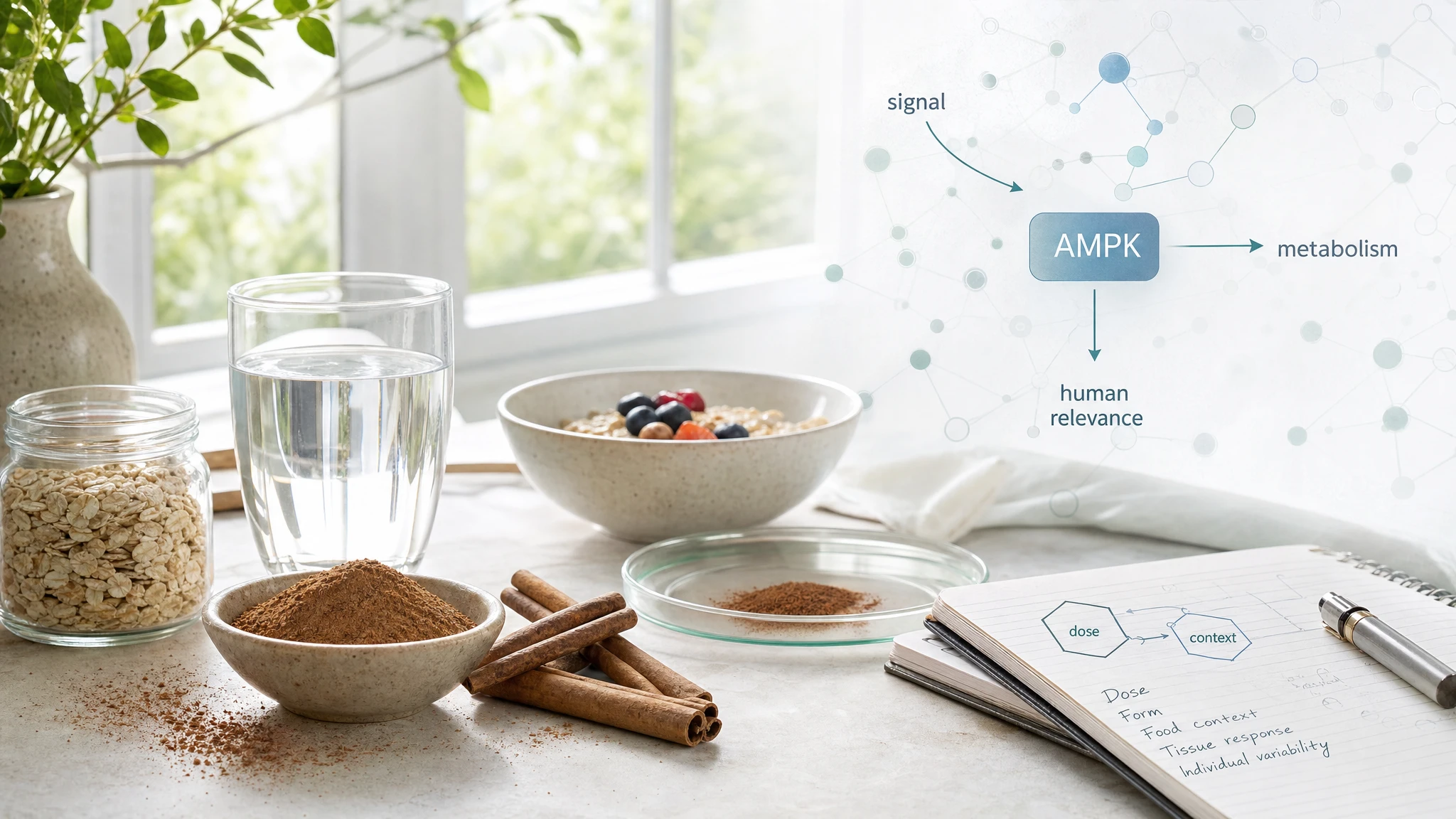
In the human body, the relationship between cinnamon and AMPK indicates a biological pathway, not a quick cure. Certain compounds in the spice may promote the activation of AMPK, the sensor that regulates energy in cells. To truly change energy metabolism (the use of energy), the signal must be strong, stable, and repeatable.
The transition from the laboratory to real life depends on diet, the tissues involved, and individual traits. These factors can reduce or increase the effect observed in studies. To properly interpret the available evidence, one must distinguish what is possible from what has already been proven in humans:
- The transition from laboratory studies to humans always requires a cautious interpretation.
- The form, dose, and context of the meal can change the potential practical effect.
- Conclusions must remain cautious and faithful to the data available today.
The following three readings separate the biological basis, the practical value, and the most reliable conclusions.
How to interpret the transition from the laboratory to humans
In cell studies, cinnamaldehyde can promote AMPK activation and suggests a credible mechanism. However, this data is not enough to predict a clinical effect in humans. It is a useful clue regarding a potential benefit, not proof that it actually occurs. The transition depends on bioavailability (the amount absorbed and used by the body), dosage, and timing. The tissue that the compound is able to reach also matters.
A molecular signal may be real, but too weak to change the functioning of the entire body. In studies on cinnamon AMPK, therefore, AMPK phosphorylation must be interpreted with caution. Phosphorylation (the addition of a phosphate group) is consistent with the activation of the kinase. However, a wide gap remains between isolated cells and human metabolism. In the body, metabolism involves many different organs and signals. The data supports a credible biological basis, but does not yet prove a certain effect. For this reason, laboratory results should be interpreted as a starting point, not as a guarantee of results in the whole organism.
Why form, dosage, and context change practical relevance
In the case of AMPK cinnamon, the practical relevance depends on how much active compound actually reaches the body and in what dietary context. A spice used occasionally is not equivalent to a controlled experimental exposure: the form of the product, the quantity, the frequency of use, and the composition of the meal in which it is included all matter. The profile of the compounds also varies, and this can change the way a signal on energy metabolism is observed.
These are interesting results, but they do not equate to an effect that is the same for everyone. In other words, cinnamon can support a metabolic adaptation, but the context influences its intensity and reliability. Caution remains necessary because doses, extracts, and duration are not comparable across studies. Each study uses different preparations, which makes it difficult to compare results directly. To have a clear picture, more uniform investigations conducted on larger groups of people are therefore needed.
What conclusions are reasonable without forcing the data
The most balanced conclusion is that there is a credible basis for studying AMPK cinnamon. However, there is no definitive proof that the spice alone significantly alters human metabolism. This is especially true for homeostasis (the balance between available and consumed energy). This balance depends on many signals, organs, and habits. It is unlikely that a single food can drive its progression. The spice may offer potential support, but it does not replace proven treatments and dietary choices.
Broader syntheses indicate potential interest regarding glycemia, insulin resistance, and fat utilization [7][8]. Insulin resistance is a reduced cellular response to insulin, the hormone that regulates blood sugar. However, the products, dosages, and groups of people studied vary greatly. For this reason, the same result does not apply to everyone. The topic remains promising, but it cannot be considered settled. It is correct to acknowledge biological signals without turning them into guarantees of a cure. Cinnamon can be part of a sensible diet. Its impact on the AMPK kinase in humans, however, remains to be clarified in daily life.
Summary of scientific evidence
This summary distinguishes the biological role of AMPK from the more robust clinical and preclinical (cell and animal) data on cinnamon.
| Publication year | Area studied | What the studies indicate |
|---|---|---|
| 2008 | Insulin resistance and lipid metabolism | A cinnamon extract may improve certain metabolic values in animal models via PPAR, a receptor that regulates lipid metabolism genes, in its alpha and gamma forms [3]. |
| 2011 | Fasting glycemia | A meta-analysis of multiple clinical studies indicates a decrease in fasting glycemia following the use of cinnamon [6]. |
| 2012 | Metabolic pathways in the enterocyte | Research findings are inconsistent, but cinnamon polyphenols appear to act on pathways related to insulin and intestinal lipoproteins [2]. |
| 2014 | AMPK phosphorylation in adipocytes | In 3T3-L1 cells, signs of increased adiponectin and phosphorylation (addition of a phosphate group) of AMPK have emerged [1]. |
| 2015 | Mitochondrial biogenesis and AMPK | Following the use of trans-cinnamaldehyde, AMPK and certain markers of mitochondrial oxidation (use of nutrients to produce energy) increased [4]. |
| 2024 | Glycemic control in type 2 diabetes | Studies are inconsistent, but cinnamon improves certain glycemic values in controlled clinical trials and meta-analyses [5]. |
Editorial reading of the evidence
Overall, the studies I have examined here offer a consistent, though not uniform, picture. The most robust sources describe AMPK as a key node of cellular energy balance. Studies on cinnamon and cinnamaldehyde, on the other hand, indicate a possible mechanism in laboratory models. In humans, meta-analysis research shows possible effects on certain glycemic values. However, the magnitude varies depending on the study, the people involved, and the form used.
The main limitations I encountered stem from the distance between cell studies, animal models, and normal dietary use. Furthermore, dosages, products, and study durations vary significantly. Laboratory tests use controlled systems that do not reflect the full complexity of the human body. Even in clinical trials, the effects are not always consistent. The literature collected here therefore supports an interesting hypothesis, but not a certain one.
Conclusions and editorial summary
The relationship between cinnamon and AMPK shows me how a food can have significant biological interest. Cinnamaldehyde, among the most studied compounds in the spice, can act on pathways that regulate cellular energy. However, the human studies I have analyzed do not prove an identical effect in every case. Results vary based on the product, dosage, duration, and metabolic state. The link therefore appears possible to me, but it remains incomplete. This topic helps to understand how research evaluates a common substance within complex processes. It also distinguishes a biological mechanism from a proven practical effect. This caution makes the picture more solid and useful for future studies.
Final critical note
The most delicate point I found concerns the transition from biological mechanism to practical effect. Studies on cells and animals help to create a hypothesis, but they do not prove the same outcome in humans. Furthermore, they do not clarify which part of the cinnamon plays the major role. Summaries of clinical trials indicate possible effects on metabolism, but show highly variable results. The bibliography I have collected therefore suggests a consistent direction, without proving a simple, stable, and universally valid link.
References
[1] Trans-Cinnamic Acid Increases Adiponectin and the Phosphorylation of AMP-Activated Protein Kinase through G-Protein-Coupled Receptor Signaling in 3T3-L1 Adipocytes
[2] Cinnamon polyphenols regulate multiple metabolic pathways involved in insulin signaling and intestinal lipoprotein metabolism of small intestinal enterocytes
[3] Improved Insulin Resistance and Lipid Metabolism by Cinnamon Extract through Activation of Peroxisome Proliferator‐Activated Receptors
[4] trans-Cinnamaldehyde stimulates mitochondrial biogenesis through PGC-1a and PPARb/δ leading to enhanced GLUT4 expression
[5] The effect of cinnamon supplementation on glycemic control in patients with type 2 diabetes mellitus: An updated systematic review and dose‐response meta‐analysis of randomized controlled trials
[8] Cinnamon: Potential Role in the Prevention of Insulin Resistance, Metabolic Syndrome, and Type 2 Diabetes
Editorial note
Artificial Intelligence was used solely as a tool to support editorial and documentary work. All content, interpretations, bibliographic citations and conclusions have been verified, reviewed and approved by the author, who assumes full scientific responsibility for them.
The manuscript was also subject to independent peer review prior to publication.
To ensure maximum transparency, the article's complete history — including the dates of submission, review, acceptance and publication, as well as information on the peer review process — is available on the dedicated Article History page.