


Cloves in your daily diet: when to really use them for flavor and balance
Research on cloves shows a clear interest in their aroma and variety of flavor. It also examines some possible effects on metabolism. The most reliable culinary sources indicate that spices can enhance flavor. They may also help in following a structured diet. However, more targeted research concerns extracts, cells, or animals. Therefore, these are not enough to prove an independent nutritional effect in home use.
- Published 29/10/2026
- Updated 30/10/2026
- Reviewed 30/10/2026
- Article history
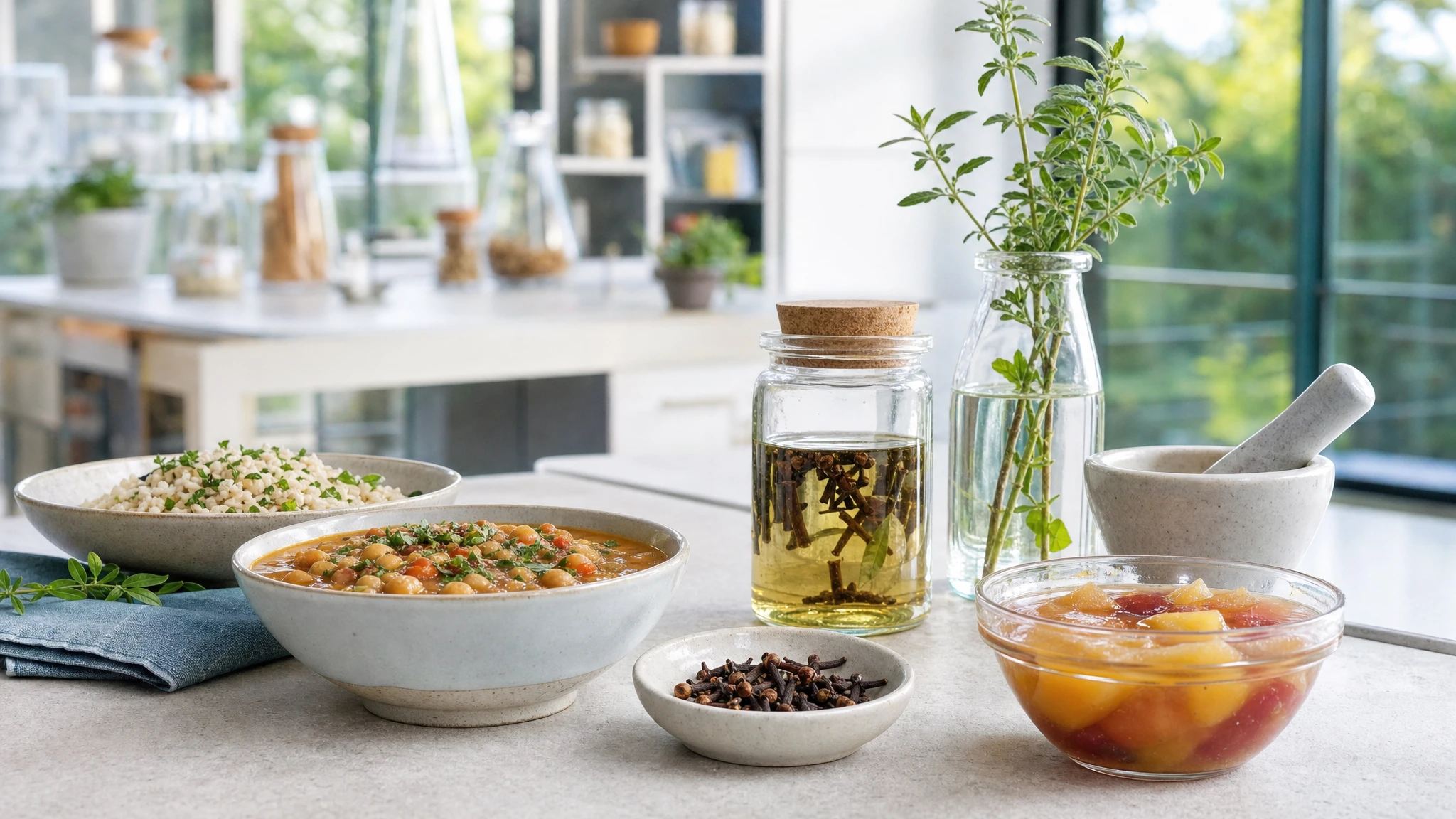
ABSTRACT : WHAT THE SCIENCE SAYS
Cloves have an intense aroma. They can add character to simple recipes without the need for richer ingredients. However, in the debate over cloves in the diet, it is important to distinguish their culinary use from unrealistic expectations. Their contribution is primarily about aroma, flavor variety, and convenience. For those following a regular diet, it is important to understand when to use this spice and in what dosage. An excessive amount, in fact, can overpower the taste of the dish.
This article explains when to use them, where they work best, and what limits to respect. It also distinguishes between their use in cooking and their role in nutritional support. It thus offers a realistic and prudent perspective, suitable for everyday life. In particular, the article addresses:
- When their aroma truly improves everyday meals
- Which recipes they work best in without masking other flavors
- How much to use to maintain flavor and balance over time
- Why they increase variety without replacing a balanced diet
- How to incorporate them into your routine with simple and realistic choices
Cloves in your daily diet: function, context, and limits
Cloves are primarily useful as a supporting spice. They add intensity to flavor and make even simple dishes more enjoyable. The point is not to determine how beneficial they are in the abstract. What matters is understanding where their aroma enhances a recipe and where, instead, it proves too strong or impractical.
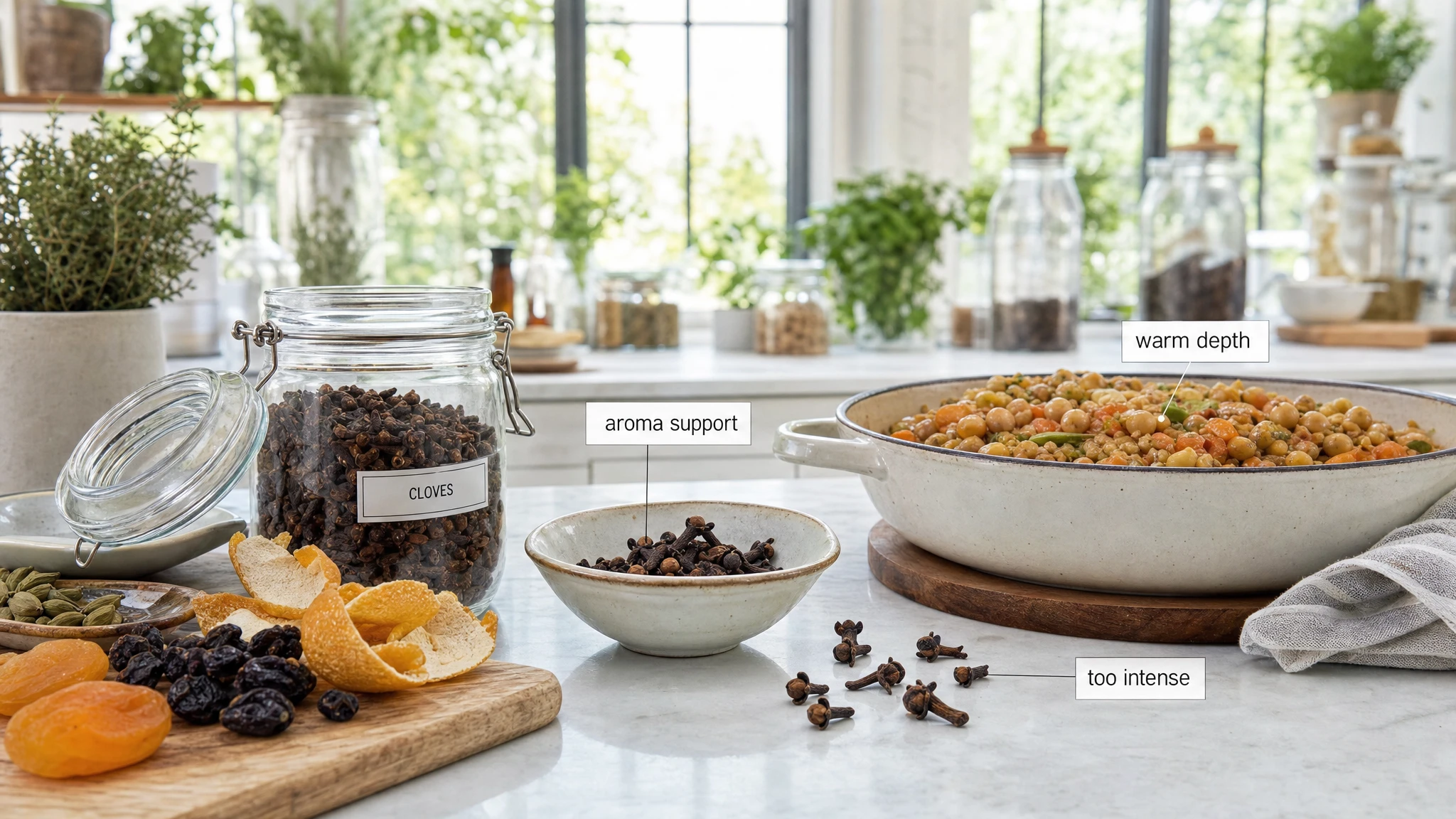
In daily life, cloves in the diet serve primarily to add aroma without overpowering the food. They can make a simple dish more inviting, but their use remains culinary first and nutritional second. They should therefore be incorporated into a healthy and varied dietary pattern. They are not a staple food, but a useful tool for adding flavor and consistency to good habits.
In this context, the spice helps to vary flavor and can support healthy choices. However, it does not replace the quality of the diet as a whole. Let us therefore see when their use truly makes sense in everyday meals.
Their utility varies depending on the recipe. In some dishes, they provide warmth and depth, while in others, they mask every other flavor. The points to consider are as follows:
- When the natural aroma enriches simple recipes without masking their taste.
- When they enhance legumes, fruit, beverages, and other hot dishes.
- When the richer flavor makes the meal pleasant and satisfying.
- When their aroma proves too strong compared to the other ingredients.
Let's now look at when this spice adds real value to a meal without altering its balance. We will then distinguish between suitable uses and those that are merely decorative or too intense.
When cloves are truly useful in meals
Cloves are useful when they add depth to a dish without overpowering other flavors. This often happens with infusions, fruit compotes, legumes, sauces, and certain baked goods. In these recipes, they create a richer natural aroma and can increase the enjoyment of the meal. This can help in sticking to a varied diet tailored to one's needs over time. Their use thus falls under preventive cooking (cooking that supports healthy choices), based on taste and moderation [1] [2].
A small open-label study involved 11 healthy volunteers and 11 prediabetic individuals (with blood glucose levels above normal). The polyphenol extract, rich in active plant substances, reduced post-meal glycemia as early as the 12th day. The effect remained present until the 30th day [3]. The data indicates a potential aid in controlling glycemic spikes (rapid increases in blood glucose). However, the research tested an extract and not the standard culinary spice. Therefore, it does not demonstrate the same effect with simple addition to meals.
Which culinary preparations they work best in
Cloves work best in recipes that require a warm and intense note. They are suitable for herbal teas, spiced desserts, jams, compotes, marinades, legumes, and certain soups. In these cases, they support functional cooking (using food to promote healthy choices). They enrich the aroma and add more nuances to simple bases. Their strength is precisely this: providing structure to the taste with very small doses.
A laboratory study examined extracts rich in polyphenols, plant substances with biological activity. These compounds acted against certain enzymes (proteins that facilitate reactions) involved in the digestion of carbohydrates [4]. A test on rats yielded a similar result. In animals with experimental diabetes, clove powder reduced glycemia compared to controls without supplementation [5]. These studies do not indicate which recipes to choose and do not prove an effect in humans. In the kitchen, their value therefore remains primarily linked to taste.
How much to use to avoid overdoing it
Quantity is the most useful criterion when incorporating this spice into your daily diet. Its aroma is very strong, so a little goes a long way in changing the flavor of a dish. In many homemade recipes, one or two whole pieces are sufficient. They can then be removed at the end of cooking. The powdered form spreads more quickly and requires even more care. As with other spices in the diet, it should add flavor without overpowering the main ingredients.
A study examined a clove extract in genetically diabetic mice. The product curbed the increase in glycemia compared to the control group, indicating the presence of active components in the plant [6]. However, the test does not allow for the establishment of a dose suitable for recipes or for humans. Furthermore, a higher dose does not imply a greater benefit. In common use, a small quantity well-integrated into the dish therefore remains the most sensible choice.
Why they help with dietary variety without replacing it
Cloves can help support a more structured diet by introducing sensory variety, but they do not replace any structural element of nutrition. They do not provide fiber, protein, or an overall balance to a meal: their role is linked to the perception of taste and the palatability of dishes. This function becomes useful when a diet risks becoming monotonous, as a richer flavor can make simple and repetitive foods more sustainable. In this sense, they support eating habits without changing their underlying quality on their own.
The advantage is therefore indirect: promoting greater adherence to already sensible dietary choices. Experimental data on extracts and animal models also show biological potential, but these remain separate from everyday cooking.
Recent research and updates

In 2022, Italian researcher Truzzi and colleagues published a study in the journal Molecules. The research concerned a polyphenol extract (compounds found in plants). The group studied its effects on the metabolism of adults with metabolic syndrome. The controlled study measured certain values related to glucose management. It also evaluated oxidative balance (the defense of cells against damage). The result concerns an extract and not culinary use. However, it helps to understand the current nutritional interest in this spice.
Clove bud (Syzygium aromaticum L.) polyphenol helps to mitigate metabolic syndrome by establishing intracellular redox homeostasis and glucose metabolism: A randomized, double-blinded, active-controlled comparative study
- The study followed 70 adults with metabolic syndrome for 84 days. The treated group took 250 mg per day of clove polyphenol extract, compared to an active control.
- The researchers measured glucose values and oxidative balance before and after the treatment. In the treated group, they observed a better metabolic profile compared to the control.
- The sample included healthy adults with metabolic syndrome. The data therefore relates to a specific clinical context, not the normal use of the spice at home.
- The result indicates a possible effect on metabolism. However, it does not make cloves a standalone nutritional intervention.
Cloves in the kitchen: how to include them in everyday preparations
When it comes to cloves in the diet, the practical question is not just whether to use them. What matters most is understanding where they truly improve a dish. They work well in hot, slow-cooked, or slightly sweet recipes. In these cases, their aroma remains balanced without overpowering the other ingredients.
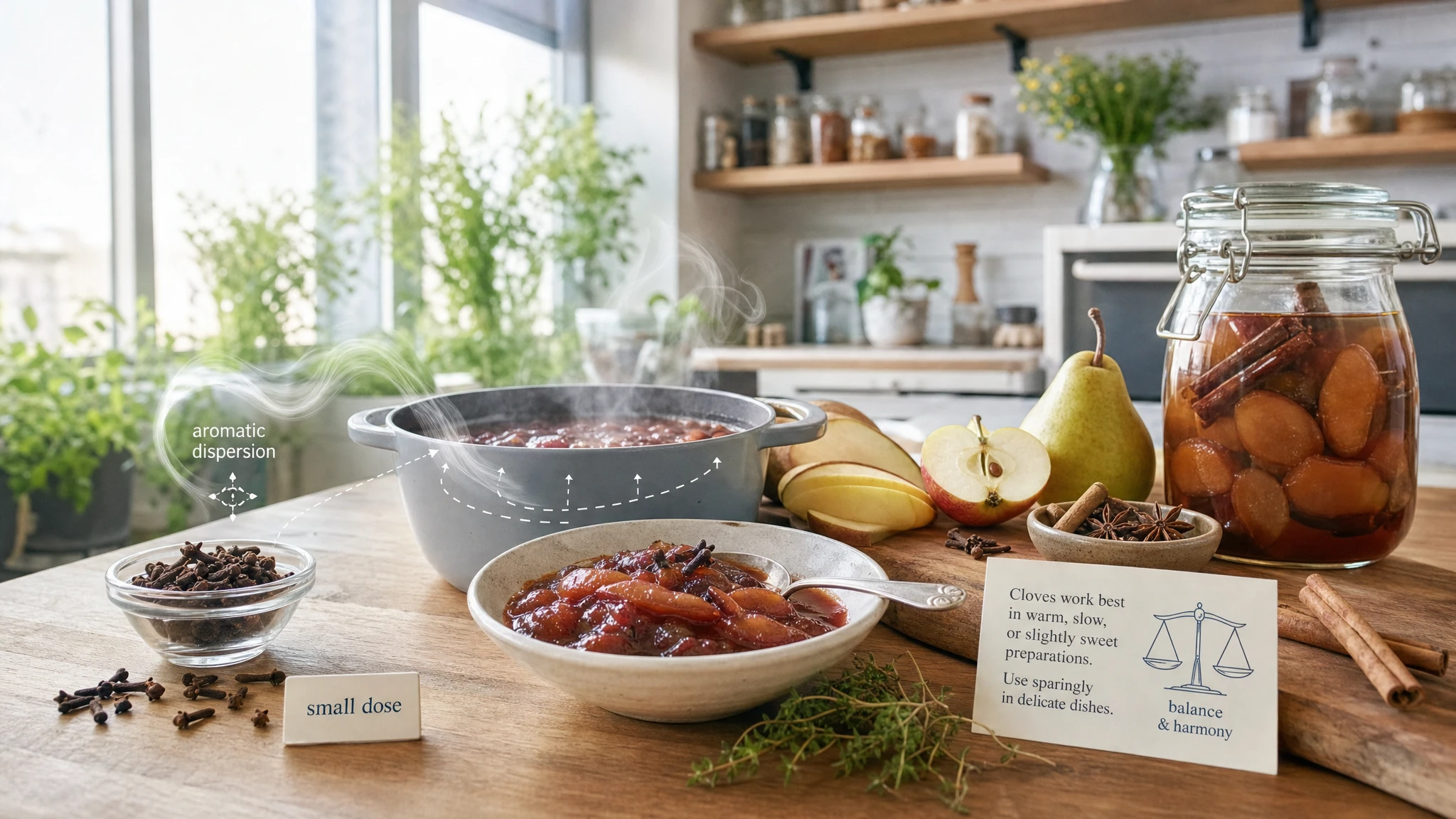
In the kitchen, cloves work best in slow-cooked dishes, infusions, and preserves. They also pair well with fruit compotes, dark sauces, and recipes with warm flavor profiles. Their natural aroma is very intense, so a little goes a long way in adding depth. It can also increase sensory satiety (the feeling of a full and satisfying taste). In a health-conscious kitchen, this spice supports the dish without overpowering it.
This criterion helps incorporate spices into an organized and varied dietary pattern. Their role is to provide character without making every recipe too intense.
Let's look at which pairings are most harmonious and when the taste becomes excessive. Finally, we will understand how to choose between whole cloves, ground powder, or blends.
To use them effectively, it is helpful to distinguish between suitable recipes and those where they might mask other flavors:
- Long cooking times diffuse the aroma and make it less pungent.
- Sweet recipes or those containing fruit better accommodate the intense taste.
- Delicate dishes require minimal amounts or none at all.
- Spice blends help create a more balanced aroma.
In home cooking, the result depends on the balance between the strength of the aroma and the type of recipe. For this reason, cloves should be evaluated within the dish and not on their own.
Recipes where the aroma is most harmonious
Cloves are most harmonious in recipes that already have a warm, rounded, or slightly sweet base. Herbal teas, fruit compotes, preserves, slow-cooked dishes, and certain sauces allow the spice to add depth without seeming out of place. In this approach to preventive cooking, the spice is not used to "fix" a dish, but to make it more cohesive and enjoyable. Its aroma pairs well with the natural sugars of cooked fruit and long-simmered cooking juices. For example, in an apple compote, a single clove added during cooking releases a warm note that rounds out the flavor without masking it. In herbal teas as well, slow infusion in hot water gradually extracts the eugenol. This compound is primarily responsible for the spice's characteristic scent and taste. The final perception remains clean and enveloping, never aggressive.
The presence of other aromatic ingredients also helps build a balanced profile, especially when seeking an enveloping but not overpowering note. However, these remain laboratory data or findings from small groups, which are useful as context, not as a rule for choosing a recipe based solely on metabolism.
When cloves overpower delicate flavors
The problem arises primarily in dishes that require restraint: mild-tasting vegetables, delicate fish, clear broths, and very simple preparations. In these cases, cloves can overpower other flavors instead of complementing them. This is not a flaw of the spice, but a matter of proportion between the intensity and the structure of the recipe. Eugenol, the dominant aromatic compound, has a very high olfactory potency. In a simple vegetable broth, even a small amount can saturate taste receptors. The result is a dish where only the spice is perceived, while the subtler notes of carrot or celery disappear. This effect has been observed in sensory tests on small groups of tasters. Participants described the broth as "monotonous" or "masked" when the concentration exceeded a minimum threshold. The data does not establish a fixed rule, but it shows a clear perceptual limit.
In functional cooking, the most useful approach is to leave room for the main ingredients and use the spice only if it truly serves to strengthen the overall profile. However, these results say nothing about the performance in a cream soup or a broth, nor do they suggest that a delicate flavor should be forced with the spice. The limit remains culinary even before it is biological: if the dish is subtle, the presence of cloves should be kept to a minimum.
Better to use them whole, in powder, or in a blend
The chosen form changes the result. Whole cloves release their aroma gradually. They are therefore easier to manage in long-cooking dishes and infusions. Powder distributes immediately and provides a more intense flavor, but requires more attention. Blends diffuse the spicy note better and make it less dominant. For this reason, they are often well-suited for daily use. The choice therefore depends on the cooking time of the recipe and the aromatic intensity desired.
The form also affects your work in the kitchen. Whole pieces are suitable when a slow release of aroma is needed. They work well in long-cooking dishes and beverages that need to be strained. Powder is useful when a rapid and uniform diffusion is required. However, it must be dosed carefully because it can become overpowering. In richer recipes, blends often help to harmonize the taste. In this way, each ingredient remains clear and recognizable. In any case, checking the quantity helps to keep the overall profile balanced.
How to balance them with other spices without overpowering the dish
Balancing cloves means incorporating them into a blend, not making them the absolute star. With cinnamon, cardamom, citrus, pepper, or milder spices, they can create a complex profile, provided they remain a measured presence. This approach improves the sensory satiety of the dish, as the taste appears fuller and more layered without becoming monotonous or excessive. In daily practice, the advantage is primarily culinary: a well-distributed aroma supports the recipe instead of masking it. To achieve this balance, you can start with a ratio of 1 to 3-4 with other spices. In a blend for a mild curry, for example, cinnamon and cardamom create a sweet and warm base. The clove adds just a touch of depth at the finish. This prevents its pungent note from taking over. The dish thus becomes more interesting, while each ingredient maintains its aromatic space.
In balancing, the rhythm of the ingredients also counts: in preparations where cloves are used together with other spices, it is useful to think of their function as a note of depth, not as a dominant element. In this way, the aromatic profile remains legible and the dish retains its identity, without the spice masking more subtle components or making everything uniform.
Daily use of cloves: quantities, routines, and practical choices
In the daily use of cloves, moderation and consistency matter more than intensity. Adding them carefully helps create a simple routine without letting the spice overpower the dish. The choice depends on the dish, the form used, and the aroma you wish to achieve.
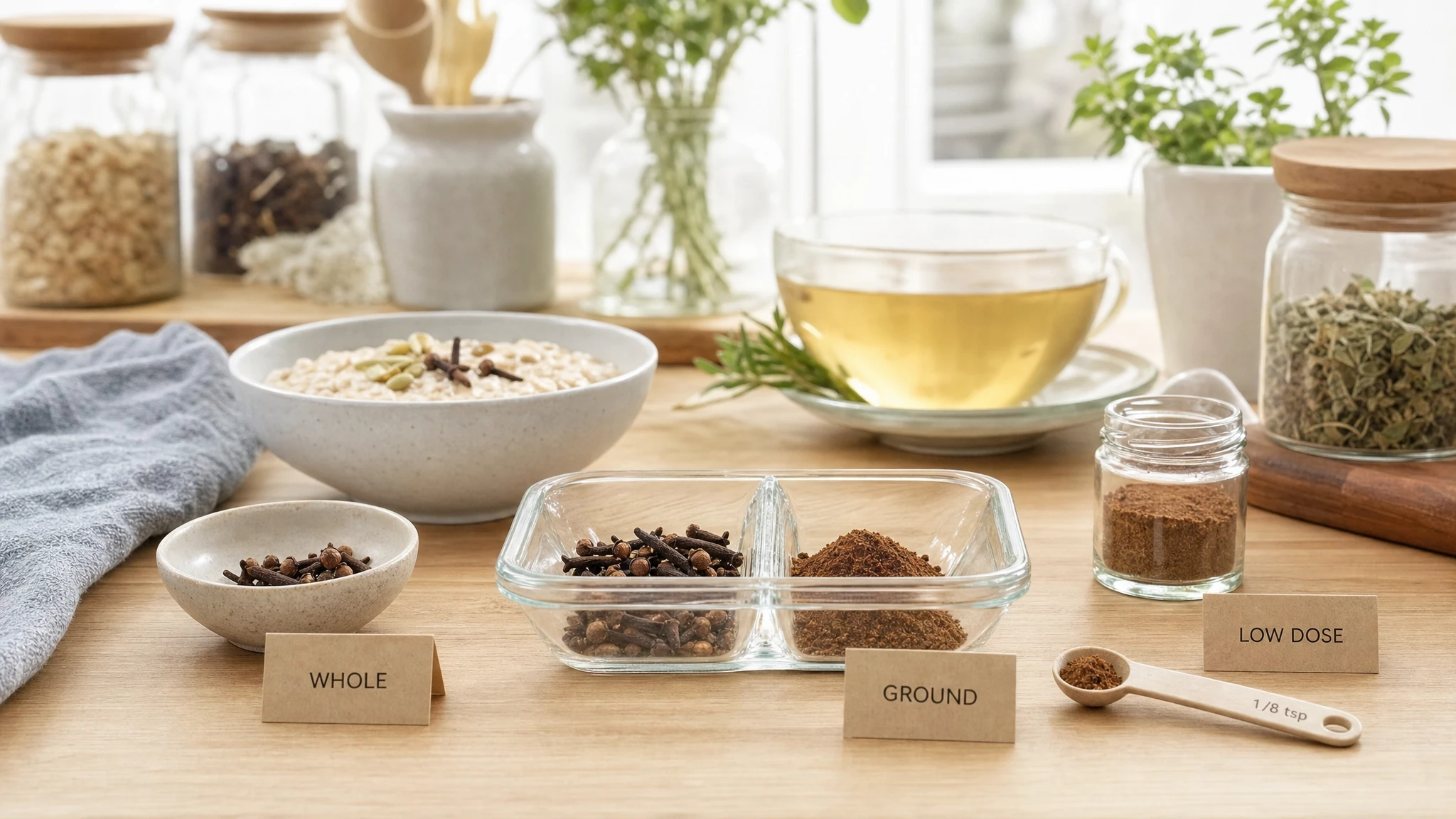
In daily use, cloves work best as a supporting spice. A small amount is enough to add depth without overpowering other flavors. A simple dietary routine makes the choice more consistent and helps in properly measuring the aroma. This way, the spice becomes part of a functional kitchen (practical and targeted), where taste and ease of use carry equal weight.
This method makes cloves a regular, yet discreet, presence in your diet. A well-measured spice can increase the satisfaction provided by taste and encourage more varied recipes. Within the context of spices in the diet, therefore, it is not about using more, but about using them better.
Dosage, form, and type of recipe help maintain a good balance every day. The following steps explain these aspects and the most common mistakes.
To use them effectively in practice, it is helpful to start with a few key points:
- Use minimal amounts in small, delicately flavored recipes.
- Choose the whole form when you need greater control over the aroma.
- Prefer the powder form when it needs to be distributed evenly.
- Evaluate the overall taste of the dish before adding the spice.
- Adapt the frequency of use to your own habits and preferences.
To use cloves every day, you need to evaluate dosage, form, and type of recipe. The following steps help you choose with greater care and better manage the aroma.
How many cloves to use in home recipes
In home recipes, the amount of cloves should remain very low. Their aroma is, in fact, intense and long-lasting. Often, just one is enough for a small recipe, or two for a richer dish. There is no one-size-fits-all dose, as the intensity increases quickly. Using only a few prevents the spice from overpowering other ingredients and facilitates a stable routine.
A study on muscle cells and mice examined an extract and an active compound. Both products reduced insulin resistance (poor cellular response to insulin). Another study on muscle cells investigated a compound related to eugenol. The substance promoted glucose uptake into cells via AMPK (a sensor that regulates cellular energy) [7] [8]. These tests show a potential biological effect, but they do not indicate how much of the spice to use in the kitchen. Therefore, they do not offer a valid dose for home use.
How to use whole cloves in a simple way
Whole cloves are easy to manage when you want to control the aroma precisely. They release their scent gradually, especially in hot liquids and during slow cooking. Furthermore, they can be easily removed at the end of preparation. They are therefore suitable for soups, infusions, sauces, and dishes that require a subtle note. This form also helps in repeating the same recipe with a more consistent taste.
The cited studies used extracts and active compounds, not doses common in recipes [9] [10]. In one study, the essential oil showed an anti-inflammatory action in experimental models of diabetes. In another, eugenol combined with spermidine activated autophagy (a system by which the cell eliminates damaged parts) in vitro (in cells studied in the laboratory). These signals help to understand the possible biological mechanisms. However, they do not allow for establishing a practical rule for daily cooking.
Why powder requires more attention in the kitchen
Clove powder is convenient, but requires more care during use. It disperses immediately into the mixture and provides a more intense flavor compared to the whole form. This effect is useful when seeking a uniform aroma, but it makes it easier to overdo it. In everyday recipes, it is therefore advisable to use only a small amount, especially in small dishes or those already rich in flavor. In preventive cooking, controlling the dose helps achieve a balanced taste.
Experimental data show the presence of active molecules, but do not indicate a dose suitable for recipes. Eugenol has acted on cellular pathways linked to autophagy (removal of damaged cellular parts) and the stress response. In models of ischemic damage (damage due to poor blood flow), it has shown protective effects [11] [12]. These results are useful for studying biology, but do not translate directly to cooking. The powder should therefore be dosed with care, based on the desired taste.
Common mistakes in home use to avoid
The most common mistakes with cloves mainly concern the quantity and the type of recipe. The first is using too many, thinking that an intense aroma always improves the dish. The second is adding them to very delicate recipes, where they can overpower other flavors. Confusing the whole form with the powder also leads to results different from those expected. Finally, casual use makes it difficult to achieve a consistent taste in your daily routine. For this reason, it is advisable to taste the dish before increasing the amount already planned.
Avoiding these mistakes means treating the spice as a true culinary tool. The result, in fact, depends primarily on how it is incorporated into the dish. Automatic use can make the taste unpredictable and difficult to correct. A targeted choice, on the other hand, allows you to better integrate the spice into your dietary habits. Therefore, the dose, the chosen form, and the intended role in the recipe all matter.
Cloves and an organized diet: practical benefits and real limitations
In a healthy diet, cloves are first and foremost a choice of taste. They provide a natural aroma and can increase the satisfaction associated with a meal. Furthermore, they make even simple recipes more enjoyable. Their value, however, remains practical and limited.
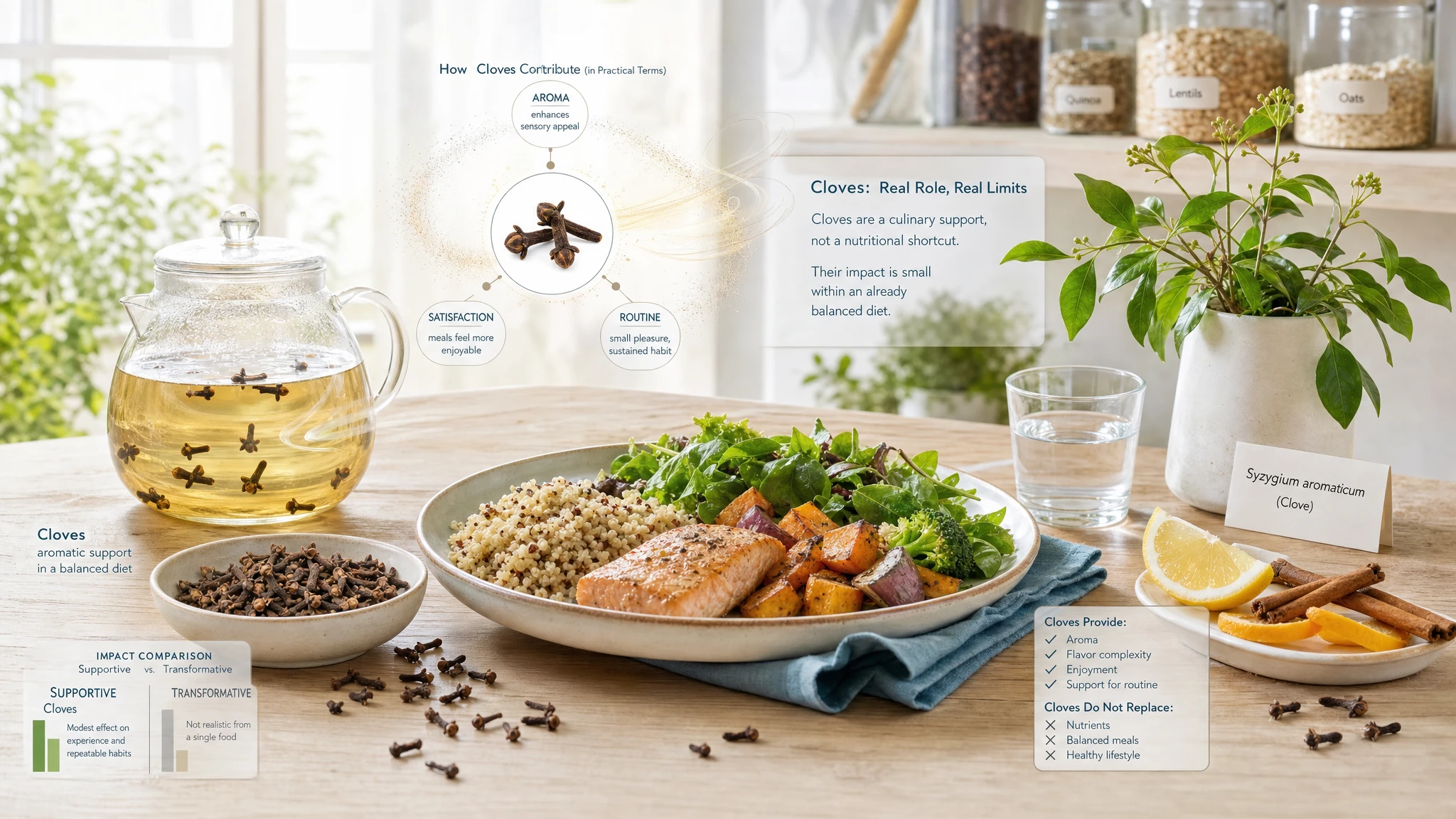
In a healthy diet, cloves make a meal more enjoyable and easier to stick with. They do not change the quality of the diet, but they help create tasty recipes with less salt or sugar. Therefore, they can support consistent habits without adding extra ingredients to your dishes. They are a choice for flavor, not a shortcut to eating better.
This spice can therefore accompany an already well-constructed diet, but it cannot replace it. Its value lies in giving character to simple foods and making the diet easier to follow. However, if a meal is unbalanced, the aroma does not improve its overall quality. Its role therefore remains linked to taste and consistency, not to treating nutritional problems.
Three practical aspects help to understand when they are useful and when, instead, they are of little help:
- They can increase the pleasure of a meal without making the recipe heavier.
- Their aroma can add more flavor to everyday dishes.
- Their contribution remains modest when the meal is already well-balanced.
- Their use works best if it remains simple, targeted, and tied to the recipe.
The most concrete value concerns the pleasure of the meal and the ease of repeating a recipe over time. The following sections explain when this help is useful, when it remains modest, and how to use it simply.
How they improve meal satisfaction without adding weight
Cloves can increase the sensory satisfaction of a meal because they add intensity and complexity to the taste in minimal amounts. In a structured diet, this matters a great deal: a more rewarding dish is easier to repeat, and therefore simpler to maintain as a habit. The benefit, however, concerns the perception of the food, not its nutritional value. This is why the spice works well when you need to add character to light preparations without making them heavy or artificial. The pleasure derived from it helps prevent the search for less healthy alternatives. A more satisfying meal reduces the urge to add rich condiments or extra portions. The spice therefore works on enjoyment, not on the composition of the dish.
The data is interesting for controlling glycemic spikes, but it is not enough to turn the spice into a clinical intervention. A solid comparison is missing and, above all, the result concerns an extract, not the daily use of the condiment in the kitchen. The correct interpretation is therefore practical: a well-dosed aroma can improve the meal experience without weighing it down, but it should not be confused with a treatment.
Why they cannot replace a balanced diet
Cloves cannot replace a balanced diet because they affect taste, not the overall nutrients—the substances that make up a complete meal. In functional cooking, they can make legumes, whole grains, vegetables, or beverages more enjoyable, but they do not, on their own, provide adequate protein, sufficient fiber, or a correct distribution of energy throughout the day. Their usefulness, therefore, depends on the context: they make sense within an already structured model, not as a standalone solution. The risk is confusing a flavor enhancer with a dietary pillar. The spice does not build the structure of the meal. It can only make it more pleasant to follow. This is a real advantage, but not a nutritional foundation.
Even the most promising biological data remain experimental. These are interesting results, but they are far from daily use on the plate. For this reason, the real limitation is simple: the spice can accompany a balanced diet and make it more enjoyable, but it cannot create one, nor can it single-handedly correct disordered eating habits.
In which cases use remains only marginal
The use of cloves remains modest when a dish has a mild and delicate taste. Their intense aroma can overpower other ingredients instead of enhancing their flavor. This risk increases in recipes that are fresh, light, or composed of only a few elements. In such cases, it is often better not to use them. A well-managed diet also requires choosing when a strong aroma is not needed. The choice therefore depends on the balance of flavors, not on the need to consume the spice at all times.
Experimental studies help us understand the potential biological role of the spice, but they do not change this practical choice. Some of its compounds have shown effects on autophagy (the recycling of cellular components) in experimental systems [13]. However, the transition from these models to culinary use remains indirect. Even a potential cellular effect does not establish how much to use, nor does it make it necessary to add them to meals. Therefore, the data do not justify regular use. When a meal is already complete or the aroma does not pair well, the contribution becomes minimal.
How to incorporate them into a simple dietary routine
Incorporating cloves into a simple dietary routine means using them consistently but selectively, rather than making them an automatic addition to every meal. The best approach is to pair them with a few well-chosen dishes, allowing you to enjoy their natural aroma without overwhelming the palate. In this way, they become a tool for preventive cooking: they help provide consistency to healthy recipes and make it easier to maintain stable eating habits over time. Consistency stems from enjoyment, not obligation. Targeted use prevents the aroma from losing its impact. The spice thus remains a subtle ally in your routine.
Another study has observed interesting combination effects in the laboratory on autophagy processes [14]. These are useful indicators for understanding biological potential, but they do not equate to an automatic culinary benefit. The practical point remains simple: choose when to use them, do not use them too often, and include them only where they truly enhance the meal.
Summary of scientific evidence
The sources outline a coherent picture that still requires caution. Guidelines support the use of spices in cooking. Specific research on cloves, however, often remains preliminary or indirect.
| Publication year | Area studied | What the studies indicate |
|---|---|---|
| 2012 | action on enzymes in the laboratory | laboratory studies have shown effects on enzymes that digest carbohydrates and on certain oxidation values [4] |
| 2012 | genetically predisposed diabetic mice | results are not uniform, but indicate a possible preclinical action in reducing glycemia [6] |
| 2014 | clove powder in an animal model of diabetes | glycemia improved, but the data comes from animals and not from the use of the spice in cooking [5] |
| 2016 | glucose absorption in muscle cells | a compound related to cloves appears to act via AMPK (cellular energy sensor) [8] |
| 2017 | insulin resistance in muscle cells and mice | an extract and an active compound reduced insulin resistance (decreased cell response to insulin) [7] |
| 2019 | post-meal glycemia in healthy and prediabetic volunteers | a polyphenol-rich extract reduced post-meal glycemia [3] |
| 2025 | use of herbs and spices in the diet | spices can add flavor to food and help reduce salt intake [1] |
| 2025 | healthy dietary patterns | a diet based on simple foods and seasonings remains the best context for using spices [2] |
Editorial interpretation of the evidence
Reading the studies collected here, I found a real interest in cloves. This spice contains bioactive compounds (substances that act within the body). The most solid sources I have examined regarding daily use concern herbs and spices that improve the taste of meals. More targeted research, on the other hand, examines extracts, powders, or individual molecules. Therefore, they do not directly describe the effects of normal household use.
The main limitations I have encountered are the low number of human studies and the short observation periods. Differences between spices, extracts, and individual compounds also matter. Much of the data is derived from cells or animals. Therefore, these results do not prove a certain effect in daily cooking. They must be read with caution, distinguishing biological data from normal culinary use.
Conclusions and editorial summary
Based on an examination of this evidence, I believe that cloves find their place in the diet primarily as a spice. They can add character without overpowering the dish. Their practical value lies in taste, variety, and the ability to make simple recipes more enjoyable. Studies also show potential biological interest. However, most of the data comes from cells, animals, or small human studies.
Moving from the laboratory to the dinner table therefore requires caution. In a balanced diet, moderation remains the most reliable criterion. A few cloves, used well, can make cooking more refined. They are useful when they enhance a meal, not when they are intended to replace a complete diet.
Final critical note
The most delicate point I have identified is the distance between study results and their use in daily life. The most solid sources address taste, variety, and the use of spices in a balanced diet. More targeted studies, however, examine extracts, individual compounds, or laboratory models. Extending these results to home cooking can therefore lead to incorrect conclusions.
Furthermore, research does not clearly clarify dosages, forms of use, and the duration of effects. Therefore, I cannot consider cloves an independent tool.
References
[1] Heart-Healthy Living - Choose Heart-Healthy Foods
[2] Dietary Guidance
[3] Water-soluble polyphenol-rich clove extract lowers pre- and post-prandial blood glucose levels in healthy and prediabetic volunteers: an open label pilot study
[4] In vitro inhibition activity of polyphenol-rich extracts from Syzygium aromaticum (L.) Merr. & Perry (Clove) buds against carbohydrate hydrolyzing enzymes linked to type 2 diabetes and Fe2+-induced lipid peroxidation in rat pancreas
[5] Antihyperglycemic, hypolipidemic, hepatoprotective and antioxidative effects of dietary clove (Szyzgium aromaticum) bud powder in a high‐fat diet/streptozotocin‐induced diabetes rat model
[6] Hypoglycemic effects of clove (Syzygium aromaticum flower buds) on genetically diabetic KK-Ay mice and identification of the active ingredients
[7] Clove and Its Active Compound Attenuate Free Fatty Acid-Mediated Insulin Resistance in Skeletal Muscle Cells and in Mice
[8] AMPK, a metabolic sensor, is involved in isoeugenol-induced glucose uptake in muscle cells
[9] Therapeutic Potential of Clove Essential Oil in Diabetes: Modulation of Pro‐Inflammatory Mediators, Oxidative Stress and Metabolic Enzyme Activities
[10] Wheat Germ Spermidine and Clove Eugenol in Combination Stimulate Autophagy In Vitro Showing Potential in Supporting the Immune System against Viral Infections
[11] Eugenol-Induced Autophagy and Apoptosis in Breast Cancer Cells via PI3K/AKT/FOXO3a Pathway Inhibition
[12] Eugenol Attenuates Cerebral Ischemia-Reperfusion Injury by Enhancing Autophagy via AMPK-mTOR-P70S6K Pathway
Editorial note
Artificial Intelligence was used solely as a tool to support editorial and documentary work. All content, interpretations, bibliographic citations and conclusions have been verified, reviewed and approved by the author, who assumes full scientific responsibility for them.
The manuscript was also subject to independent peer review prior to publication.
To ensure maximum transparency, the article's complete history — including the dates of submission, review, acceptance and publication, as well as information on the peer review process — is available on the dedicated Article History page.