


Curcumin, mTOR: cell growth and metabolism
Research on curcumin and mTOR primarily studies the potential mechanism. In various experimental models, the substance can reduce growth signals and act on mTORC1. It can also alter protein synthesis, growth, and autophagy. This data has biological value, but it depends on the context, the dose, and the cell type. Research therefore indicates a possible modulation, not a single effect that applies in every case. The most accurate interpretation remains cautious and tied to the observed mechanism.
- Published 04/11/2026
- Updated 05/11/2026
- Reviewed 05/11/2026
- Article history
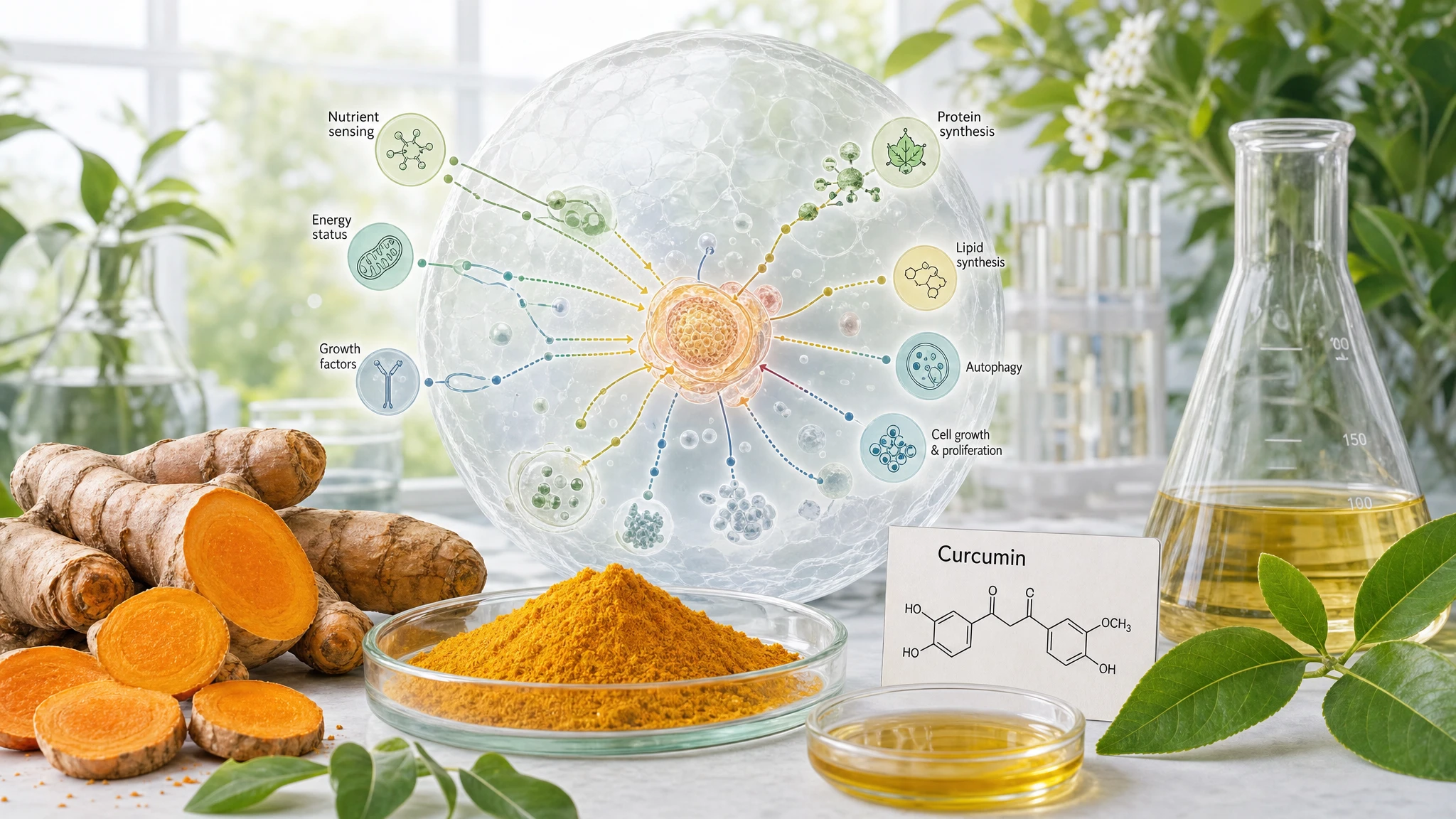
ABSTRACT : WHAT THE SCIENCE SAYS
The relationship between curcumin and mTOR concerns a key point in the life of a cell. It indicates how the cell chooses between growth, protein synthesis, division, and resource conservation. mTOR, or mechanistic Target Of Rapamycin, is a pathway that integrates nutrients, energy, and metabolic status. Curcumin, the main active compound in turmeric, may act on this signal. However, it is necessary to understand when the observed change has real biological value. We will see why mTOR is important, how mTORC1 acts, and which processes it regulates. We will also see why the available data still require caution. In summary, these are the key points we will explore:
- mTOR integrates nutrients, energy, and signals that regulate growth
- mTORC1 is the most frequently studied complex
- Curcumin can modulate the signal in some models
- Protein synthesis, growth, and autophagy can change together
- Experimental data do not demonstrate clinical effects
mTOR and cell growth: why this pathway is central
The curcumin-mTOR pathway is of interest because it connects nutrients, growth signals, and cell maintenance. When this axis is active, the cell invests resources in cell growth and anabolism. When it slows down, it uses resources instead to adapt and maintain its homeostasis.
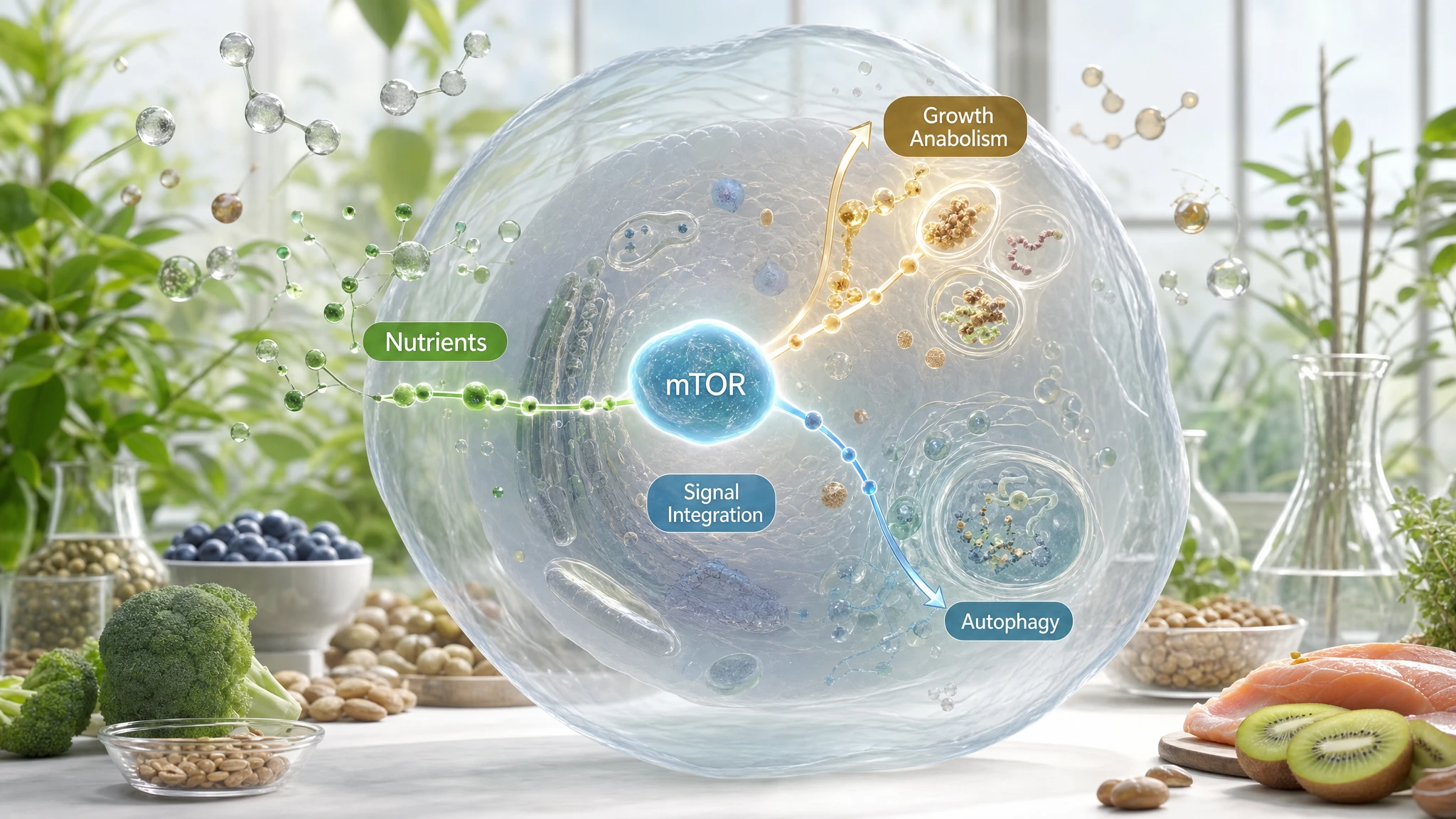
mTOR is a key node of cellular life. It collects signals regarding nutrients, energy, and growth, and drives a common response. It decides when the cell can initiate anabolism (building new parts). If resources are scarce, it reduces activities to maintain internal balance. This nutrient sensing function clarifies how a substance can act on cell growth.
This foundation explains why studies on curcumin mTOR start from cellular signals. It is not just about whether the pathway's activity increases or decreases. The tissue, nutritional status, and the balance between construction and conservation also matter.
In a healthy cell, in fact, cellular homeostasis (internal balance) requires continuous control. The cascade must follow needs, without blockages or excessive stimulation.
To follow the subsequent steps, it is useful to keep a few key points in mind:
- mTOR collects signals regarding metabolism and guides the cell's response.
- mTORC1 is the most studied complex in models evaluating growth.
- Changes in the pathway also show how metabolism adapts.
- Protein synthesis and proliferation change based on the cell type.
- Autophagy and anabolism vary together when the signal changes.
Before discussing curcumin, it is necessary to understand what mTOR does in the cell. Its signal indicates the state of metabolism, that is, how the cell uses energy and nutrients. The following steps explain the role of mTORC1 and the processes linked to this pathway.
What is mTOR and why is it a metabolic sensor
mTOR is a protein kinase (an enzyme that regulates other proteins) present in the cell. It collects nutrients, energy, and growth signals, thereby directing the cell's activities. When resources are sufficient, it promotes anabolism and supports cell growth. If the context changes, it shifts the balance toward conservation and helps the cell adapt. This is why it is a metabolic sensor: it reads various signals arriving from the cell and the environment. In this way, different signals are integrated into a common and coordinated cellular response.
In experimental studies, curcumin acts on this system in some tumor models. The mTOR pathway appears to be a target linked to nutrients and the amount of available energy [1]. A second study shows that the substance can reduce the PI3K–AKT–mTOR cascade in cells exposed to growth stimuli [2]. These data, however, are derived from controlled systems. They show how the signal changes, but they do not, by themselves, prove the effect in the whole organism.
Why mTORC1 is the most studied complex
mTOR forms multiple complexes, but mTORC1 is the most studied regarding nutrients, proteins, and growth. It responds rapidly to signals indicating whether the cell can create new components. For this reason, it offers a valuable perspective in studies on curcumin. If mTORC1 changes, the cell can adapt its anabolic program. This program includes the activities through which the cell builds new elements. The complex therefore links the availability of resources to the operational choices made by the cell.
In the available data, the substance reduces signals linked to mTORC1 in various models. In tumor cells, studies describe the downregulation of the mTOR pathway and growth signals [1]. In other systems, changes in AKT/mTOR are associated with different cell proliferation [3]. Another study notes lower activity of the complex in cells exposed to carcinogens and nicotine [4]. However, a lower signal does not describe the entire cell. Instead, it indicates a slowing down of the growth program.
Protein synthesis, proliferation, and autophagy when mTOR changes
When mTOR changes, the cell reorganizes multiple functions simultaneously. Protein synthesis may decrease because the signal supporting protein production is reduced. At the same time, proliferation may slow down, while autophagy may increase. Autophagy is the process by which the cell recycles worn-out or damaged parts. Therefore, it does not act only as a brake, but helps cellular homeostasis (internal balance). Furthermore, it allows the cell to adapt its metabolism.
In the studied models, curcumin induces autophagy and reduces tumor proliferation by acting on AKT/mTOR [5]. Another study notes an autophagic response along with changes in the Akt/mTOR/p70S6K pathway [6]. In endothelial cells, which line blood vessels, autophagy can instead play a protective role [7]. A subsequent study links PI3K/AKT/mTOR to both autophagy and ferroptosis (iron-dependent cell death) [8]. The same drop in the signal can therefore indicate protection, slowing down, or stress, depending on the cell type.
Recent research and updates
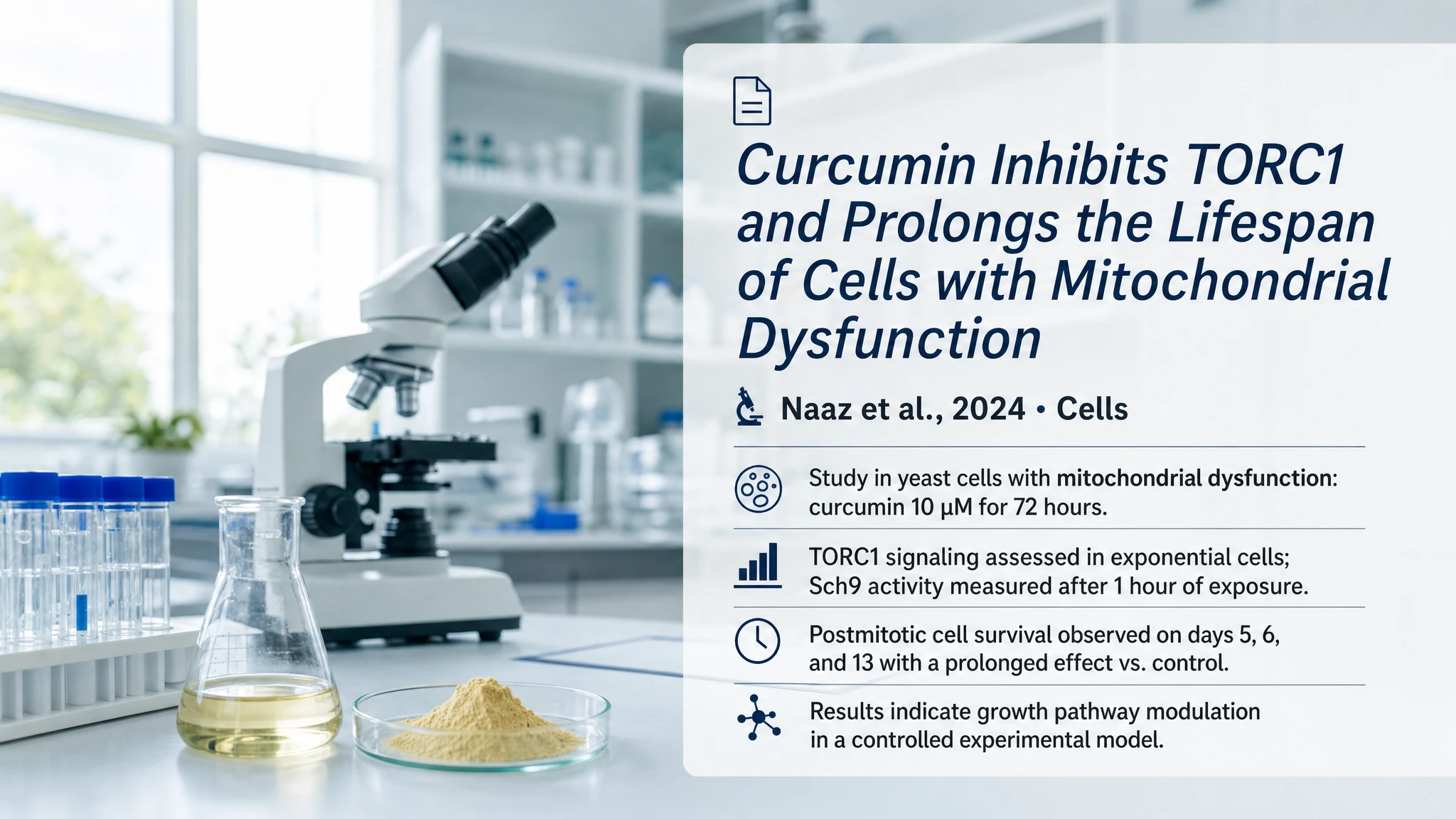
In 2024, Arshia Naaz and colleagues published a study in the journal Cells. They examined how curcumin acts on mTORC1, the mTOR complex that regulates growth and resource utilization. The research used cells with mitochondrial dysfunction (a defect in energy production). The researchers observed a change in the growth signal and a longer cellular lifespan. This is a preclinical finding useful for understanding the mechanism, but it is not clinical evidence in humans.
***Curcumin Inhibits mTORC1 and Prolongs the Lifespan of Cells with Mitochondrial Dysfunction***
- The study used yeast cells with mitochondrial dysfunction, treated with 10 µM curcumin for 72 hours.
- The mTORC1 signal was studied in exponential cells. The activity of the Sch9 target was measured after 1 hour of exposure.
- The lifespan of postmitotic cells was measured on days 5, 6, and 13. The data showed a longer effect compared to the control.
- The result indicates a change in the growth pathway, but it remains limited to a controlled experimental model.
Curcumin and mTOR: biological mechanism and limitations of interpretation
The relationship between curcumin and mTOR indicates a possible biological effect, but it does not follow a fixed rule. We will see how the compound can reduce signaling along the pathway and why the context changes the value of the data.
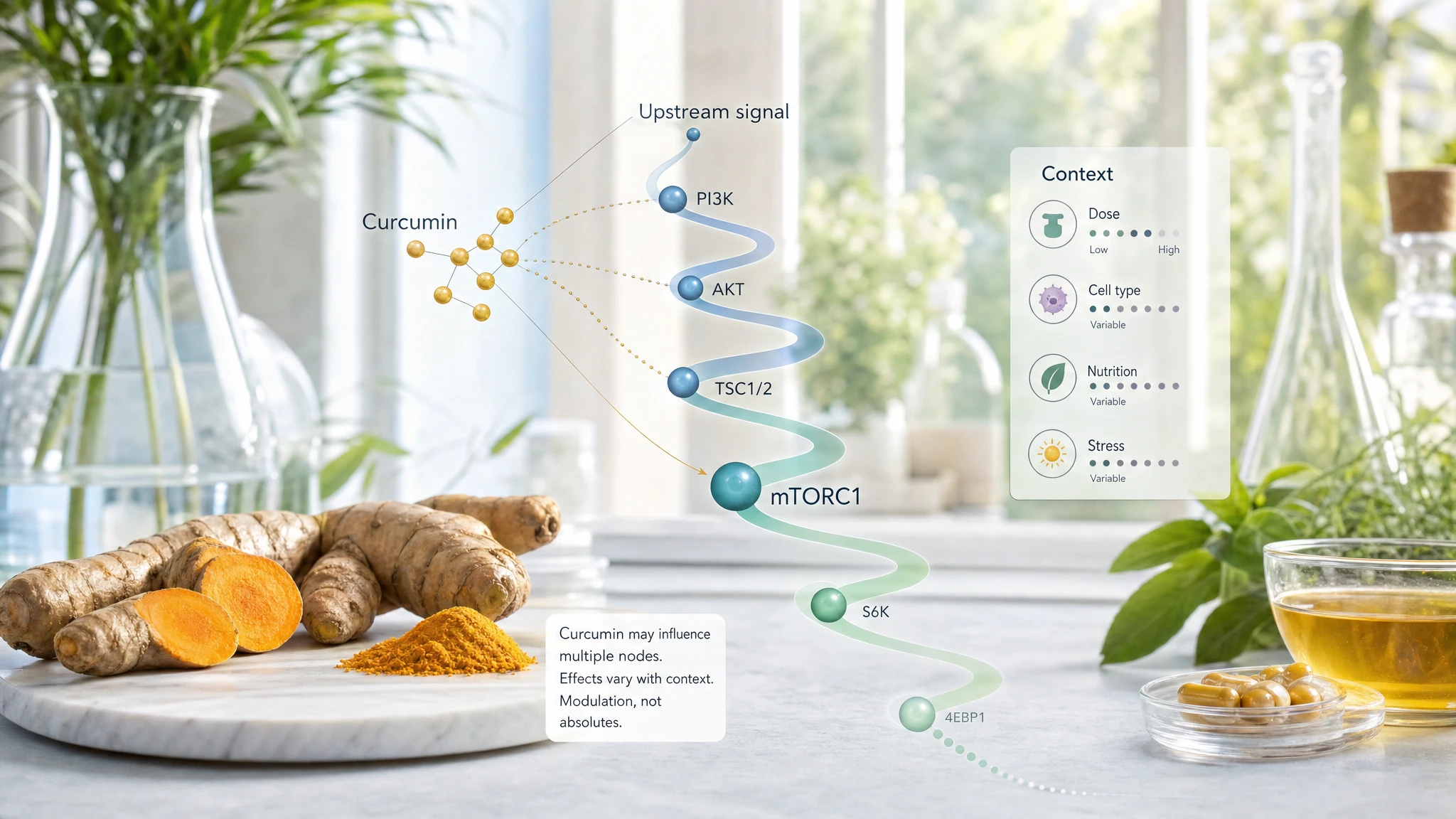
When discussing curcumin and mTOR, it does not imply a complete blockade of the pathway. The compound can alter the signaling network that drives cell growth. In the models used in tests, it acts both upstream and downstream of mTORC1. It can thus influence anabolism (the set of processes that form new molecules). This effect can reduce the drive to produce proteins and other cellular elements.
The same modification can therefore be useful in one case and irrelevant in another. The cell does not use simple switches, but integrates signals of varying strength. The compound is being studied as a potential modulator of nutritional signaling (response to available nutrients). It therefore does not act in a fixed manner on the pathway. The next step shows how the model used can change the meaning of the result.
However, its impact varies with dosage, cell type, and test conditions. To understand the data, it is useful to distinguish a few points:
- Curcumin can reduce the signals reaching mTORC1.
- The effect can vary based on the model used in the study.
- A weaker signal does not always indicate a complete blockade.
- The biological value changes with nutritional and stress status.
To interpret these data correctly, one must first understand the mechanism and then its limitations. The following three steps distinguish what has been observed from conclusions that have not yet been proven.
How curcumin can attenuate signaling to mTOR
The compound can act as a modulator at multiple points along the pathway leading to mTORC1. It does not flip a single switch, but can weaken the message as a whole. This signal supports protein synthesis and the growth of new cells. A decrease in this signal can therefore reduce anabolic drive and alter cell growth. It may also influence how metabolism adapts to available resources. Indeed, the cell interprets every signal as part of a broader network.
In cell models, the active ingredient has reduced certain steps of the PI3K-AKT-mTOR pathway. This signaling cascade carries the message to mTOR. In tumor cells, studies have observed reduced pathway activity and slower growth. This does not mean that every tissue responds in the same way or to the same dose. The data demonstrate a possible mechanism, but do not by themselves describe the effects in the whole body. The result varies depending on the cell type, test conditions, and model sensitivity.
Why the experimental context changes the meaning of the effect
The value of a result regarding mTOR depends heavily on the system used in the study. A cell in culture, an isolated tissue, and a whole body have different conditions. The available nutrients, the response to stress, and the absorption of curcumin all change. The duration of the test and the dosage can also alter the signal. Therefore, its effect does not follow a rule that is valid in every case. It must be interpreted based on the model and the conditions chosen by the researchers.
This caution is also necessary when data show a decrease in the AKT/mTOR pathway. In carcinoma cells, a weaker signal is linked to reduced growth. It is also associated with increased autophagy (recycling of old or damaged cellular components). However, this pattern cannot be directly extended to other cases. In tumor models, the compound also reduced the activity of the PI3K-AKT-mTOR pathway and cell growth. However, these data are valid only within the specific framework in which they were collected. The limitation does not concern the quality of the data, but how applicable it is elsewhere. A model can demonstrate a possible mechanism without proving the same effect in every healthy or diseased state.
Why saying mTOR inhibition is not enough to explain everything
Talking about mTOR inhibition summarizes the data, but it can be too vague. Curcumin may reduce the signal only partially or for a short time. The effect can also change based on the cell type, without completely shutting down the pathway. This point matters because mTOR does not regulate just one process. It acts on protein synthesis, growth, cell life, and the stress response. The word “inhibition” can therefore make effects that have different weight and duration seem the same.
In studies on laryngeal carcinoma, the active ingredient reduced the PI3K–AKT–mTOR pathway. This cascade regulates cell growth and survival. The study also observed a limitation in cell growth. However, the result describes an effect linked to that specific context, not a total blockage of the pathway [9]. The data indicates a possible biological role, but it does not prove an identical response in every cell. It also does not demonstrate that the same strength of effect always provides a health benefit. It is therefore more accurate to speak of signal modification rather than complete arrest.
Downstream effects of mTOR: protein synthesis, adaptation, and autophagy
The downstream effects of mTOR show how curcumin can influence cell fate. If this network changes, protein synthesis, resource utilization, and internal recycling also vary. Therefore, it is not just growth that matters, but also how the cell uses resources and adapts.
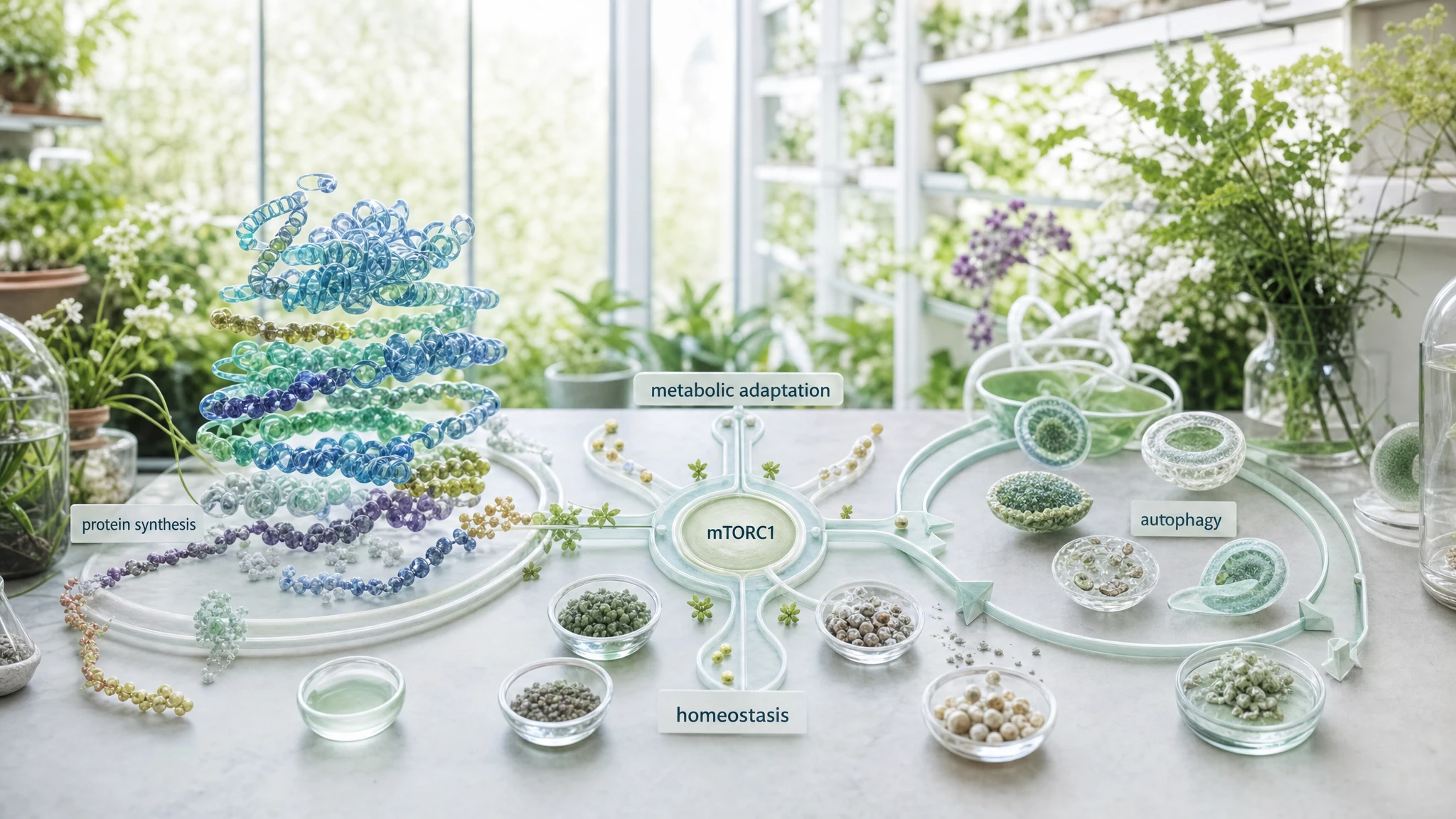
When mTOR activity changes, an entire network of responses changes, not just a single switch. This network directs the cell toward either growth or energy conservation. Depending on the signal, the cell builds new components or preserves its own resources. In this way, it maintains cellular homeostasis (the balance of internal functions).
The modulation of mTOR therefore does not produce a single effect. It changes the signaling cascade (an ordered series of signals), which regulates growth, internal maintenance, and stress response. The biological value of curcumin is therefore not just about cell growth. It also matters how the cell balances production, life, and resource use. The following step shows what happens to protein synthesis.
To understand the link between curcumin and mTOR, one must observe the subsequent processes. These include protein production, energy use, and the recycling of cellular components. Before examining the individual effects, it is useful to establish the key points of the experimental models:
- Protein synthesis depends on the level of mTORC1 activity.
- Proliferation changes when the cell revises its priorities.
- Autophagy increases when the growth signal is reduced.
- Metabolic adaptation links the presence of nutrients to the defense of resources.
The following three steps show how mTOR guides the cell toward production, slowing down, or recycling. Each phase belongs to the same biological response and should be read in conjunction with the others.
How mTOR regulates protein synthesis and growth
Protein synthesis (the production of proteins) is one of the ways in which mTOR supports cell growth. When mTORC1 is active, the cell reads mRNAs (copies of genetic instructions) more efficiently. It thus produces the proteins needed to create mass, membranes, and enzymes. The signal therefore regulates the use of energy for an anabolic program (building new parts). If mTORC1 slows down, the cell reduces this activity and conserves resources for vital functions. This mechanism is central because protein synthesis consumes a great deal of energy. The cell must therefore carefully decide when to invest in new proteins. An active mTOR signal pushes the cell to grow and duplicate its contents. A weak signal, on the other hand, leads it to a conservation profile.
The available data require caution, as they come from specific cell models. In one study, a turmeric extract reduced pathways linked to mTOR in tumor cells. The drop in protein production could therefore accompany a reduced drive toward growth. Another study detected a modulation of the Akt/mTOR pathway and fewer signals favoring protein synthesis [10]. In that model, the reduction in the signal was associated with a brake on the production of cellular components. However, these results do not prove that the same effect occurs in every tissue or state of the body. More research is needed to understand whether the response is general or limited to specific contexts.
Cell proliferation and adaptation: what really changes
Cell proliferation depends not only on the speed at which a cell divides, but also on how it integrates signals related to nutrients and energy status. When mTOR slows down, the cell can reduce its entry into division cycles and shift resources toward maintenance functions. In other words, adaptation does not always coincide with a simple growth arrest: it can be a reorganization of internal priorities, which is useful under conditions of stress or reduced metabolic demand. This change in strategy allows the cell to survive longer in difficult conditions. The cell does not stop functioning, but it revises its internal program. It shifts energy and materials from division to repair and defense. This is a choice that can protect the tissue in which it is located.
The interpretive limit remains substantial: less proliferation does not automatically mean a beneficial effect, because the biological significance depends on the tissue, the context, and the initial state of the cell. In healthy tissue, a brake on division can be neutral or protective. In tissue undergoing repair, however, it can slow down a necessary process. Data on curcumin must therefore be read with this complexity in mind. There is no single rule that applies to every type of cell or condition.
Autophagy: why it comes into play when mTOR decreases
Autophagy is the process by which a cell degrades damaged components and recovers useful material. When mTOR is active, this program tends to be inhibited; when the signal decreases, autophagy can become more prominent. It is not a simple switch for health or disease: it is a metabolic adaptation strategy that allows the cell to reorganize its resources, especially when growth must give way to internal maintenance.
In experimental models, turmeric has been associated with this dynamic. The limitation is that the same response can have different meanings depending on the context: it may indicate protective adaptation, but also a reaction to distinct cellular stresses. Therefore, it is necessary to interpret the data within the overall network of cellular responses.
Curcumin, mTOR, and biological significance: how to read data without overinterpretation
In the relationship between curcumin and mTOR, there is no one-size-fits-all answer. It is necessary to understand what the data truly show. A correct interpretation separates the biological signal—that is, the response measured in cells—from the context of the study. Only in this way can its possible role in cell growth be estimated. This prevents turning laboratory data into a clinical conclusion.
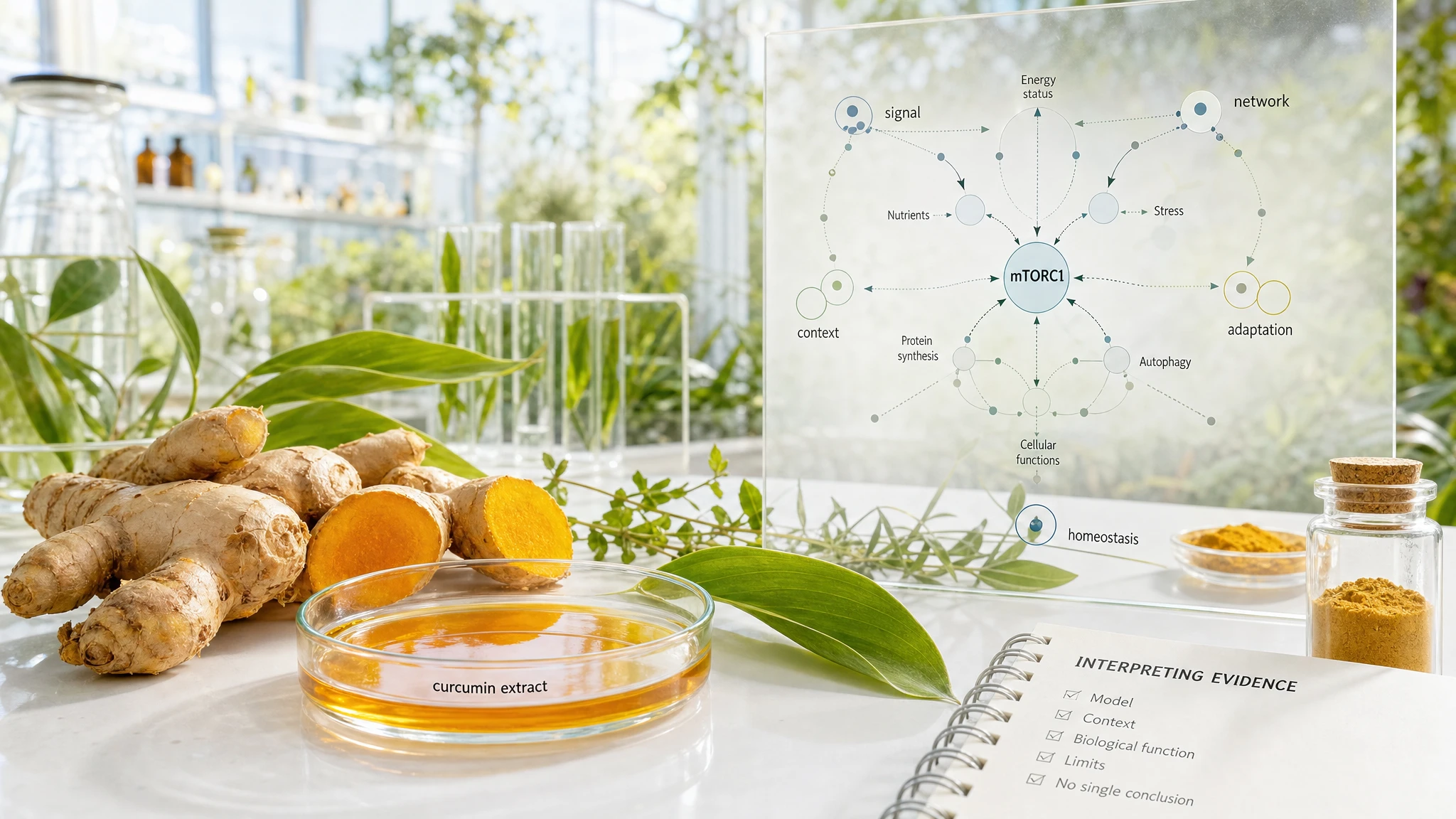
When discussing curcumin and mTOR, it is necessary to understand what the data shows. The substance can act on this pathway and change cell growth or anabolism (the production of new molecules). It can influence cellular homeostasis (the internal balance of the cell). The result depends on the model used, the context, and the role of the signal. A rigorous interpretation avoids absolute statements and hasty conclusions.
The data gains biological meaning if it fits into a coherent signaling cascade (a series of signals between molecules). It should not be extended beyond the limits of the study. Curcumin can act on nutrient sensing and the cellular response linked to it.
However, the result remains a clue regarding the mechanism and, on its own, does not prove a benefit. This caution makes the interpretation more robust and helps to understand the topic without forcing conclusions.
To interpret them, it is useful to follow a few key steps:
- Distinguish an effect observed in the laboratory from a general biological outcome.
- Evaluate whether the response involves mTORC1 or a broader signaling network.
- Understand whether the data changes protein synthesis, adaptation, or merely the signal itself.
- Read the relationship between turmeric and metabolism as context, not as definitive proof.
To understand the relationship between curcumin and mTOR, it is necessary to separate biological data from potential effects in the body. The following steps show how forced interpretations arise. They also explain how to avoid them without losing useful data.
Why laboratory data is not enough to claim a clinical effect
An in vitro result (obtained on cells in a laboratory) describes a response under controlled conditions. However, it does not prove that the same effect occurs in the body. In the relationship between curcumin and mTOR, the pathway change may be real in cells. Nevertheless, the data might not apply to treating people. Bioavailability (the amount absorbed and usable), presence in tissues, and the dose that reaches them all matter. These factors can change the actual weight of the detected signal. For this reason, a cellular response is not equivalent to a therapeutic result.
Laboratory data therefore indicates a possible mechanism, but does not prove an effect in humans. The signal may coincide with reduced cell growth or different protein synthesis. Its clinical value remains uncertain until the model, dose, and biological context are studied. This caution does not diminish the value of the result. On the contrary, it helps to interpret it correctly and limits the risk of conclusions not supported by the data.
Common mistakes when interpreting curcumin's effect on mTOR
The most common mistake is thinking that acting on mTOR is always beneficial. In reality, this pathway performs normal functions in the body. It regulates nutrient sensing, anabolism, and metabolic response. Therefore, reducing its activity does not always lead to an advantage. Another mistake consists of confusing a change in signaling with a stable effect on the cell. Furthermore, data obtained from different models, doses, and conditions cannot be treated in the same way. The significance depends on the function that the pathway performs in the studied context.
Regarding the curcumin mTOR topic, these errors can give results excessive weight. A signaling cascade may be reduced or altered without providing the same benefit in every case. Moreover, on its own, it does not show how much the data matters for humans. It is therefore necessary to separate the observed mechanism from its true biological significance. A molecular change is not enough to draw general conclusions about cellular homeostasis (the cell's internal balance).
How to maintain a rigorous biological interpretation of the topic
A rigorous reading starts with a simple question: what does the data actually show? In the case of curcumin mTOR, the result indicates a possible action on a point that regulates the cell. It does not prove a universally valid rule regarding cell growth. Therefore, one must evaluate the study model, the scale of the effect, and the normal role of the pathway. The same signal can, in fact, have a different meaning in other contexts. This method avoids mistaking a useful data point for a definitive conclusion.
The rule of thumb is to read every result within its biological limits. One starts with the context, then evaluates the mechanism, and finally clarifies the boundaries. In this way, the relationship being studied remains solid and does not become an overly simplistic formula. The data can explain how a signaling cascade (a series of signals between molecules) changes. It cannot, however, promise identical effects in every situation. This is the most correct way to give the proper weight to the results.
Summary of scientific evidence
This summary collects the most representative studies from the list. It shows how research describes the relationship between curcumin, mTOR, and related cellular processes.
| Publication year | Area studied | What the studies indicate |
|---|---|---|
| 2006 | mTOR signaling and cell growth | evidence indicates that curcumin can reduce the phosphorylation (addition of phosphate groups) of mTOR and its targets in cell models [1] |
| 2007 | Autophagy and Akt/mTOR/p70S6K pathway | studies indicate that curcumin can promote autophagy (recycling of cellular components) and reduce Akt/mTOR/p70S6K signaling [6] |
| 2012 | Protective autophagy and cellular lifespan | in endothelial cells, autophagy markers increased, while PtdIns3K-AKT-mTOR signaling decreased [7] |
| 2016 | Cell proliferation and invasion | results are not uniform, but in melanoma cells, curcumin has been linked to reduced growth and changes in AKT/mTOR [5] |
| 2018 | Tumor progression and PI3K/Akt/mTOR | evidence indicates reduced progression of laryngeal carcinoma, along with the blocking of the PI3K/Akt/mTOR pathway [9] |
| 2020 | Tumor growth and modulation of the PI3K-AKT-mTOR pathway | the signal is consistent with reduced growth and progression in head and neck cells treated with curcumin [2] |
| 2024 | TORC1 and mitochondrial dysfunction | studies indicate that curcumin can inhibit TORC1 and extend cellular lifespan in yeast with mitochondrial dysfunction [8] |
Editorial interpretation of the evidence
Overall, the studies I have reviewed show a fairly consistent direction. Curcumin tends to alter the signals reaching mTOR. This effect emerges primarily in cell models exposed to growth signals or stress. The changes in mTORC1, AKT, and autophagy indicate a possible new balance between growth and adaptation. However, the biological value varies depending on the cell type, dosage, and study conditions.
The main limitation I have encountered is the prevalence of preclinical studies (on cells or animals). These research efforts are often very diverse and difficult to compare. Specific human data on the relationship between curcumin and mTOR are lacking. Therefore, the effects within the body remain uncertain. Furthermore, many studies measure molecular markers (measurable biological signals) rather than the full effects on the cell. Any conclusion that goes beyond the observed mechanism therefore requires great caution.
Conclusions and editorial summary
Final critical note
The most delicate point is the gap between study data and effects in humans. Research shows a consistent change in mTOR, but it almost always uses highly controlled models. These models remain far from normal human conditions and limit the practical value of the results. Furthermore, reducing the signal is not always useful or positive. It may indicate an adaptation, stress, or a normal variation of the system. The value of these data therefore concerns the potential mechanism, not their direct application. A cautious, context-dependent interpretation is needed, without turning a mechanism into a general rule.
References
[1] Curcumin inhibits the mammalian target of rapamycin‐mediated signaling pathways in cancer cells
[2] Curcumin downregulates the PI3K–AKT–mTOR pathway and inhibits growth and progression in head and neck cancer cells
[3] Curcumin inhibits Akt/mammalian target of rapamycin signaling through protein phosphatase-dependent mechanism
[4] Curcumin Inhibits Carcinogen and Nicotine-Induced Mammalian Target of Rapamycin Pathway Activation in Head and Neck Squamous Cell Carcinoma
[5] Curcumin induces autophagy, inhibits proliferation and invasion by downregulating AKT/mTOR signaling pathway in human melanoma cells
[6] Roles of the Akt/mTOR/p70S6K and ERK1/2 Signaling Pathways in Curcumin-Induced Autophagy
[7] Curcumin induces autophagy to protect vascular endothelial cell survival from oxidative stress damage
[8] Curcumin Induces Autophagy-mediated Ferroptosis by Targeting the PI3K/AKT/mTOR Signaling Pathway in Gastric Cancer
[9] Curcumin suppresses the progression of laryngeal squamous cell carcinoma through the upregulation of miR-145 and inhibition of the PI3K/Akt/mTOR pathway
[10] Turmeric
Editorial note
Artificial Intelligence was used solely as a tool to support editorial and documentary work. All content, interpretations, bibliographic citations and conclusions have been verified, reviewed and approved by the author, who assumes full scientific responsibility for them.
The manuscript was also subject to independent peer review prior to publication.
To ensure maximum transparency, the article's complete history — including the dates of submission, review, acceptance and publication, as well as information on the peer review process — is available on the dedicated Article History page.