


Diabetes risk: the role of curcumin and omega-3
In 2019, researcher Rohith Thota and colleagues, in the journal Lipids in Health and Disease, evaluated whether a controlled formulation of curcumin, long-chain omega-3, or their combination could modify glycemic parameters, insulin sensitivity, and blood lipids in adults at high risk of type 2 diabetes.
- Published 23/11/2026
- Updated 23/11/2026
- Article history
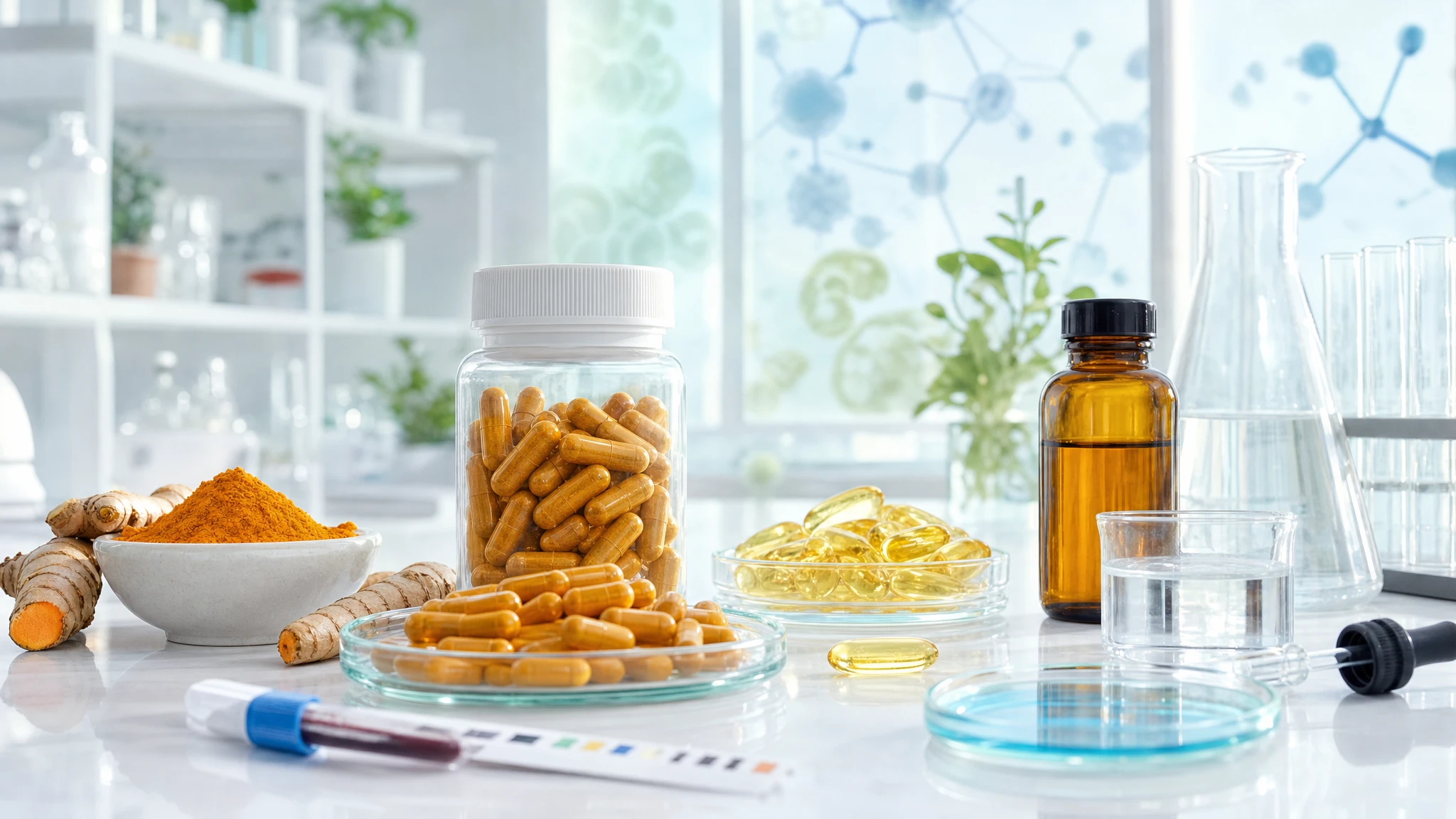
ABSTRACT : WHAT THE SCIENCE SAYS
A clinical study compared curcumin, omega-3, their combination, and a placebo over 12 weeks in people at high risk of type 2 diabetes. The curcumin studied was a standardized formulation, not culinary turmeric. It improved certain indirect indicators of insulin response without altering glycemia or glycated hemoglobin.
The authors' summary describes a randomized, double-blind, placebo-controlled study. Eighty-one people were assigned to four groups, and 64 completed the analysis. The curcumin group received two daily tablets of Meriva®, for a stated intake of 180 mg of curcumin; other interventions included long-chain omega-3, a combination of the two products, or a double placebo. After 12 weeks, insulin sensitivity—the body's ability to respond to insulin—increased by 32.7 ± 10.3% with curcumin compared to placebo (P = 0.009). Fasting insulin also decreased in the curcumin group. Fasting glycemia and glycated hemoglobin, an indicator of average glucose levels over the previous months, did not show significant differences between groups. Omega-3 achieved the greatest reduction in triglycerides, equal to −16.4 ± 4.5% (P < 0.001). The combination did not demonstrate an additional benefit. The results therefore concern a specific product, dose, and population; they do not prove that turmeric used as a spice prevents or treats diabetes.
What this research analyzed
The 2019 study by Thota and colleagues examined individuals between 30 and 70 years of age who were overweight or obese and presented markers consistent with high metabolic risk. The goal was to understand whether concentrated products, administered in a controlled manner, could change parameters linked to glucose metabolism.
Participants received a placebo, curcumin, fish oil, or both. The researchers measured glycemia, insulin, glycated hemoglobin, lipids, and C-reactive protein. They also calculated HOMA2-IR and HOMA2-%S, indices derived from fasting glycemia and insulin that estimate insulin resistance and insulin sensitivity, respectively. These indices do not directly measure the effect of curcumin within cells.
Research data
Curcumin and/or omega-3 polyunsaturated fatty acids supplementation reduces insulin resistance and blood lipids in individuals with high risk of type 2 diabetes: a randomised controlled trial
- 2 × 2 randomized, double-blind, placebo-controlled trial: 81 people assigned, 64 included in the final analysis.
- The Meriva® curcumin formulation provided 180 mg of curcumin per day; the omega-3 provided 1.2 g of EPA and DHA daily.
- With curcumin, insulin sensitivity increased by 32.7 ± 10.3% compared to the placebo; glycemia and glycated hemoglobin did not change significantly.
What results emerged from the study
The clearest result concerns the insulin response. In the curcumin group, insulin sensitivity increased by 32.7 ± 10.3% compared to the placebo (P = 0.009), while fasting insulin was significantly reduced compared to the placebo (P = 0.002). In simple terms, the data suggest a favorable change in some indirect indicators of insulin response in the short term.
However, this signal did not translate into a significant reduction in fasting glycemia or glycated hemoglobin. Omega-3 showed the greatest reduction in triglycerides, −16.4 ± 4.5% (P < 0.001). The combination of curcumin and omega-3 did not produce proven additional benefits. Therefore, it is incorrect to interpret the result as evidence of diabetes prevention.
Why this study is relevant
This research is particularly useful for distinguishing a standardized extract from the culinary spice. Participants did not consume varying amounts of turmeric in their meals: they received a precise formulation with defined dosage, frequency, and controls. This makes the comparison more reliable, but it also limits its applicability to everyday cooking.
The placebo-controlled, double-blind design reduces the risk that the expectations of participants and researchers could influence the results. Furthermore, the comparison between four groups allowed for the separate verification of curcumin, omega-3, and their combination. The relevant point remains limited: the observed effects belong to the specific product examined under the conditions of the study.
Study limitations and what it does NOT demonstrate
The final sample consisted of 64 people, and the follow-up lasted only 12 weeks. The study was primarily designed to detect changes in glycated hemoglobin, but this outcome did not improve significantly. The results regarding insulin and HOMA2-%S must therefore be interpreted as short-term metabolic signals, not as conclusive clinical outcomes.
The participants had non-identical risk profiles, and some were taking medications or other supplements. Furthermore, Meriva® is a phospholipid-complexed formulation designed to modify the absorption of curcumin. The study does not demonstrate that every extract produces the same effects, nor that turmeric as a food ingredient has an equivalent result.
Independent confirming evidence
A trial involving 84 people with prediabetes and overweight status compared curcumin, zinc, a combination of both, and a placebo over 90 days. All active groups showed improvements in certain glycemic parameters compared to the placebo. This supports the possibility that controlled formulations should be studied in humans for metabolic outcomes; however, the hypocaloric diet recommended to all participants and the presence of zinc prevent attributing every change solely to curcumin [1].
Another randomized study of 80 overweight individuals with suboptimal fasting glycemia used a phytosomal formulation containing curcumin, phospholipids, phosphatidylserine, and piperine. After 56 days, fasting insulin and HOMA-IR decreased more significantly compared to the placebo. This confirms the decisive role of the formulation but does not isolate the effect of curcumin from the other components [2].
In an acute crossover trial, 16 volunteers took 180 mg of curcumin before a standardized meal. The post-meal glycemic response and insulin demand were lower compared to the placebo. This is a consistent finding in the short term, but it involves healthy subjects, a single intake, and does not address the risk of diabetes over time [3].
Conflicting evidence
A 12-week trial involving 100 people with type 2 diabetes compared nano-curcumin, omega-3, a combination of both, and a placebo. The combination reduced insulin levels but did not significantly change fasting glycemia, glycated hemoglobin, HOMA-IR, or QUICKI, an insulin sensitivity index. This result is relevant because it shows that the effect is not consistent across different populations, formulations, and measures considered [4].
A systematic review with meta-analysis published in 2026 found that, in cohorts with diabetes, the aggregate effect on HOMA-IR was not significant: SMD −0.01, 95% confidence interval from −0.78 to 0.76, with very high heterogeneity. This does not negate the signal from the Thota study, but it reduces the certainty of a generalizable effect [5].
Comparative overview
External research shows variable results, influenced by formulation, population, duration, and associated interventions.
| Publication | Model and intervention | Main result | Relationship with the Thota study |
|---|---|---|---|
| Karandish et al., 2021 [1] | RCT, 84 people with prediabetes; 500 mg curcumin, zinc, combination, or placebo for 90 days | Improvements in multiple glycemic parameters in the active groups | Indirect confirmation; zinc, diet, and physical activity limit attribution to curcumin alone |
| Cicero et al., 2020 [2] | RCT, 80 overweight people; curcumin phytosome with co-ingredients for 56 days | Reduction in fasting insulin and HOMA-IR compared to placebo | Direct confirmation of the role of the concentrated formulation, not the spice |
| Thota et al., 2018 [3] | Crossover RCT, 16 volunteers; 180 mg of curcumin before a meal | Lower glycemic and insulin response after the meal | Partial and acute confirmation; healthy population and single dose |
| Asghari et al., 2024 [4] | RCT, 100 people with type 2 diabetes; nano-curcumin, omega-3, combination, or placebo | No significant difference for glycemia, glycated hemoglobin, HOMA-IR, and QUICKI | Discordant evidence; results dependent on clinical context and formulation |
| Kehinde et al., 2026 [5] | Systematic review and meta-analysis of RCTs in metabolic conditions | No reliable aggregate benefit on HOMA-IR in cohorts with diabetes | Synthesis discordance; high heterogeneity reduces overall certainty |
Editorial conclusion
The 2019 study by Thota and colleagues evaluated a standardized formulation of curcumin and omega-3, not the turmeric used in cooking. Over 12 weeks, curcumin improved certain indirect indices of insulin sensitivity and reduced fasting insulin, without producing significant differences in fasting glycemia or glycated hemoglobin. Omega-3 showed the most marked effect on triglycerides, while the combination did not provide a demonstrated advantage. Independent evidence confirms that concentrated products and specific formulations can modify certain metabolic markers in specific studies. However, other trials and a quantitative synthesis show null or highly variable results for insulin resistance. The most accurate interpretation is therefore limited: dosage, formulation technology, duration, population, and associated interventions matter. This work does not prove that dietary turmeric prevents diabetes, nor that supplements can replace prevention, nutrition, physical activity, or appropriate medical care.
References
[1] Effects of phytosomal curcumin on anthropometric parameters, insulin resistance, cortisolemia and non-alcoholic fatty liver disease indices: a double-blind, placebo-controlled clinical trial
[2] Curcumin alleviates postprandial glycaemic response in healthy subjects: A cross-over, randomized controlled study
[3] The effect of curcumin and high-content eicosapentaenoic acid supplementations in type 2 diabetes mellitus patients: a double-blinded randomized clinical trial
[4] Clinical Potential of Curcuma longa Linn. as Nutraceutical/Dietary Supplement for Metabolic Syndrome: Systematic Review and Meta-Analysis of Randomized Controlled Trials
Editorial note
Artificial Intelligence was used solely as a tool to support editorial and documentary work. All content, interpretations, bibliographic citations and conclusions have been verified, reviewed and approved by the author, who assumes full scientific responsibility for them.
The manuscript was also subject to independent peer review prior to publication.
To ensure maximum transparency, the article's complete history — including the dates of submission, review, acceptance and publication, as well as information on the peer review process — is available on the dedicated Article History page.