


Magnolia officinalis: properties, supplementation, treated conditions, and the nervous system
Magnolia officinalis is of interest to research primarily for its magnolol and honokiol content. These compounds act on oxidative stress, inflammation, metabolism, and the nervous system. Preclinical studies are numerous and show consistent results. Clinical studies, however, vary more and often evaluate specific formulas. The overall picture is promising, but the evidence is more robust regarding the mechanisms. It remains less certain regarding practical effects in humans.
- Published 25/10/2026
- Updated 27/10/2026
- Reviewed 27/10/2026
- Article history


ABSTRACT : WHAT THE SCIENCE SAYS
Magnolia officinalis is an Asian medicinal plant that is now also of interest to modern biomedical research. Studies are evaluating its potential effects on inflammation, oxidative stress, energy, the nervous system, and the stress response. The best-known compounds are magnolol and honokiol, found primarily in the bark. These are lipophilic neolignans (plant molecules with an affinity for fats) and play a central role in available studies. To understand Magnolia officinalis, it is necessary to distinguish between the plant, the extract, and its active molecules. It is also necessary to separate preclinical studies from potential practical uses.
In this article, we will see why it is called multitarget (active on multiple biological targets) and what properties it exhibits. We will also examine supplements and the limitations related to bioavailability (the amount that reaches the tissues). We will further look at the effects on AMPK (a protein that regulates energy) and mTOR (a pathway that controls cell growth and synthesis). We will then discuss the gut microbiota (intestinal microorganisms), the brain, and the stress response. However, experimental data should not be confused with clinical evidence. The reader will find a comprehensive yet cautious guide to evaluating benefits, areas of research, and safety. In particular, the article addresses:
- the main active compounds of Magnolia officinalis
- the antioxidant, anti-inflammatory, and multitarget effects
- supplements, bioavailability, and available formulations
- effects on AMPK, mTOR, and the nervous system
- studied diseases, limitations of evidence, and safety
The properties of Magnolia officinalis
Among the plants studied in phytotherapy, Magnolia officinalis stands out for two phytochemicals: magnolol and honokiol. Research evaluates their effects on oxidative stress (an excess of molecules that can damage cells). Studies also examine inflammation and certain pathways used by cells to send signals. However, results vary depending on the extract, dosage, and type of study.

The properties of Magnolia officinalis depend primarily on its bark, which contains the most well-studied compounds. The plant does not produce a single effect but rather displays a broad biological profile. At the center are magnolol and honokiol, two natural substances with documented activity. These phytocompounds—that is, plant-based molecules—can act on oxidative stress, inflammation, and cellular signaling. Cellular signaling is the messaging system through which cells regulate their functions. These three processes play a central role in many chronic conditions [1][2].
Research therefore indicates interesting potential, but results are not always consistent. They can vary based on the formula, the quality of the extract, and the biological context examined. It is therefore necessary to distinguish the chemical rationale from the data that can truly be applied to humans. The plant is also of interest due to its composition, which is rich in biologically active substances. Magnolol and honokiol are not mere chemical markers; they appear to act together on multiple targets. For this reason, Magnolia officinalis is being studied in relation to metabolism, the nervous system, and stress.
Research is also evaluating its effects on the response of the heart and blood vessels. However, significant limitations remain, such as low oral bioavailability and differences between extracts [3][4][5]. Oral bioavailability indicates how much of a substance actually enters the bloodstream after oral intake. The scientific value of the plant therefore lies in its multitarget rationale. This term refers to the ability to act on multiple biological pathways simultaneously. Its molecules can modulate important cellular processes, but clinical data remain inconsistent. When evaluating a supplement, dose, duration, product quality, and context of use all matter.
Interest in Magnolia officinalis also stems from data regarding the physiology of diseases. Many chronic diseases, in fact, share certain underlying mechanisms. If oxidative stress increases, cells suffer damage and more easily trigger inflammation. If metabolic control changes, signals such as AMPK and mTOR come into play. AMPK is a protein that helps the cell conserve energy and adapt. mTOR, on the other hand, is a protein complex that regulates cell growth and synthesis. Prolonged stress also modifies the nervous circuits related to arousal and the stress response. Arousal is the state of activation and alertness of the nervous system. Neuroprotection processes, which defend nerve cells, may also change [6][7][8][9].
Another key point concerns the link between experimental data and potential uses. In the laboratory, magnolol and honokiol show antiparasitic activity [10] and potential neuropharmacological interest [11]. A cardioprotective potential [3] and some anticancer signals [12][13] also emerge. In some models, magnolol also stimulates glucose utilization [14]. This finding suggests possible effects on how cells use energy. However, such results do not directly prove a clinical benefit in humans. The outcome changes with the amount present in tissues, the pharmaceutical form, and the duration of exposure. The strength of the evidence therefore lies in the concordant signals, not in the confirmation of a cure.
For these reasons, Magnolia officinalis is of interest to both nutraceuticals and pharmacology. On one hand, it allows for the study of natural compounds with antioxidant and anti-inflammatory activity. On the other, it offers molecules that could guide the development of new therapies [2][12]. The many cellular targets also explain the interest in fields that seem distant. These include stress, neuroprotection, metabolism, and the control of certain cell growth pathways. The properties of Magnolia officinalis, therefore, are not reduced to a single effect. They form a set of biological signals that research continues to define with greater precision.
The plant's main compounds appear to act on more than one of these nodes. A coherent biological rationale therefore exists, but it is not enough to define general clinical use. Before examining the mechanisms, it is useful to summarize the points that recur most often in studies:
- The bark is the most studied part of Magnolia officinalis.
- Magnolol and honokiol explain much of the biological activity.
- Many observed effects concern oxidative stress and inflammation.
- The quality of the extract significantly influences the reported results.
- Properties do not always coincide with a direct clinical effect.
To understand the properties of Magnolia officinalis, we must start with the parts of the plant that are actually used. The next step concerns the molecules that support its biological activity. The following sections describe the main compounds and the results that have emerged from studies.
What is Magnolia officinalis and which parts are used
Magnolia officinalis belongs to the Magnoliaceae family and has long been used in Asian medicine. Today, research primarily focuses on its bark. However, describing the plant in a scientific manner requires avoiding overly simplistic explanations. It is not a single remedy, but a source of various compounds with different activities. The bark contains the highest proportion of the most studied bioactive substances. Leaves, flowers, and other parts play a minor role in the available studies.
This point is important because botanical names, extract types, and active ingredients are often confused. Standardization—that is, controlling the quantity of the compounds present—also matters. Two Magnolia officinalis extracts can be different, even if they are derived from the same species. Modern research focuses primarily on magnolol and honokiol. These are the most studied molecules and best represent the plant's biological profile. Knowing which parts are used also helps in better reading supplement labels.
It also allows for a more careful evaluation of the results of preclinical and clinical studies. Preclinical studies use cells or animals, while clinical studies involve people. The reader can thus distinguish between traditional use, nutraceutical use, and experimental application. In this way, they avoid conflating results that have different levels of evidence. The botanical description is therefore not a detail, but the foundation for understanding the entire article. It will also be useful in the chapters on extracts, dosages, and potential fields of application.
Magnolol and honokiol: the two most important compounds
Magnolol and honokiol are neolignans, which are plant-based aromatic compounds formed by two phenolic units. They are the molecules of Magnolia officinalis most studied in scientific research. They also represent the core of the biological activities attributed to the plant. They are not merely chemical markers, but bioactive compounds capable of modulating various cellular pathways. They are lipophilic molecules, meaning they have an affinity for fats. This property influences their behavior in the body and their distribution in tissues.
In some models, they show similar effects on oxidative stress and inflammation. In others, they differ in potency, bioavailability, or molecular targets. For this reason, one must always distinguish between the total extract and individual purified substances. Furthermore, studies do not always use the same formula or the same degree of standardization. Direct comparison between results can therefore be difficult. Magnolol and honokiol are of interest because they act on multiple biological signals simultaneously. This type of action is defined as multitarget.
This may explain their potential role in metabolism, the nervous system, and immune system control. The two compounds are therefore at the heart of the modern rationale for Magnolia officinalis. The whole plant, on the other hand, provides the botanical and chemical context in which these molecules act. This distinction will be essential in the chapters dedicated to mechanisms, supplements, and potential clinical uses.
Why Magnolia officinalis is considered a multitarget plant
The definition of a multitarget plant fits Magnolia officinalis well. Its main compounds appear to act on multiple biological systems simultaneously. Multitarget does not vaguely mean "it does many things." Instead, it indicates the ability to influence multiple signaling pathways according to a coherent logic. For magnolia, data suggest combined effects on oxidative stress, inflammation, and immune system function. Studies also evaluate energy metabolism and the ability of neurons to remain alive and functional.
This variety explains why the plant is studied in very different fields. These include metabolic health, neuroprotection, and experimental oncology. The concept also helps to understand why the same phytocompound appears in very distant sections. A broad action, however, does not prove effects that are always the same, strong, or demonstrated in humans. Rather, it indicates a vast biological profile of interest to research. This profile emerges especially in models involving inflammation, oxidative stress, and poor cellular control.
This perspective therefore avoids a too simple or miraculous interpretation of Magnolia officinalis. The plant is a complex source of phytocompounds, supported by an articulated experimental rationale. For this reason, it can be studied from multiple points of view, from phytochemistry to potential uses. The following sections explain the molecular mechanisms and possible effects on the body.
Recent research and updates
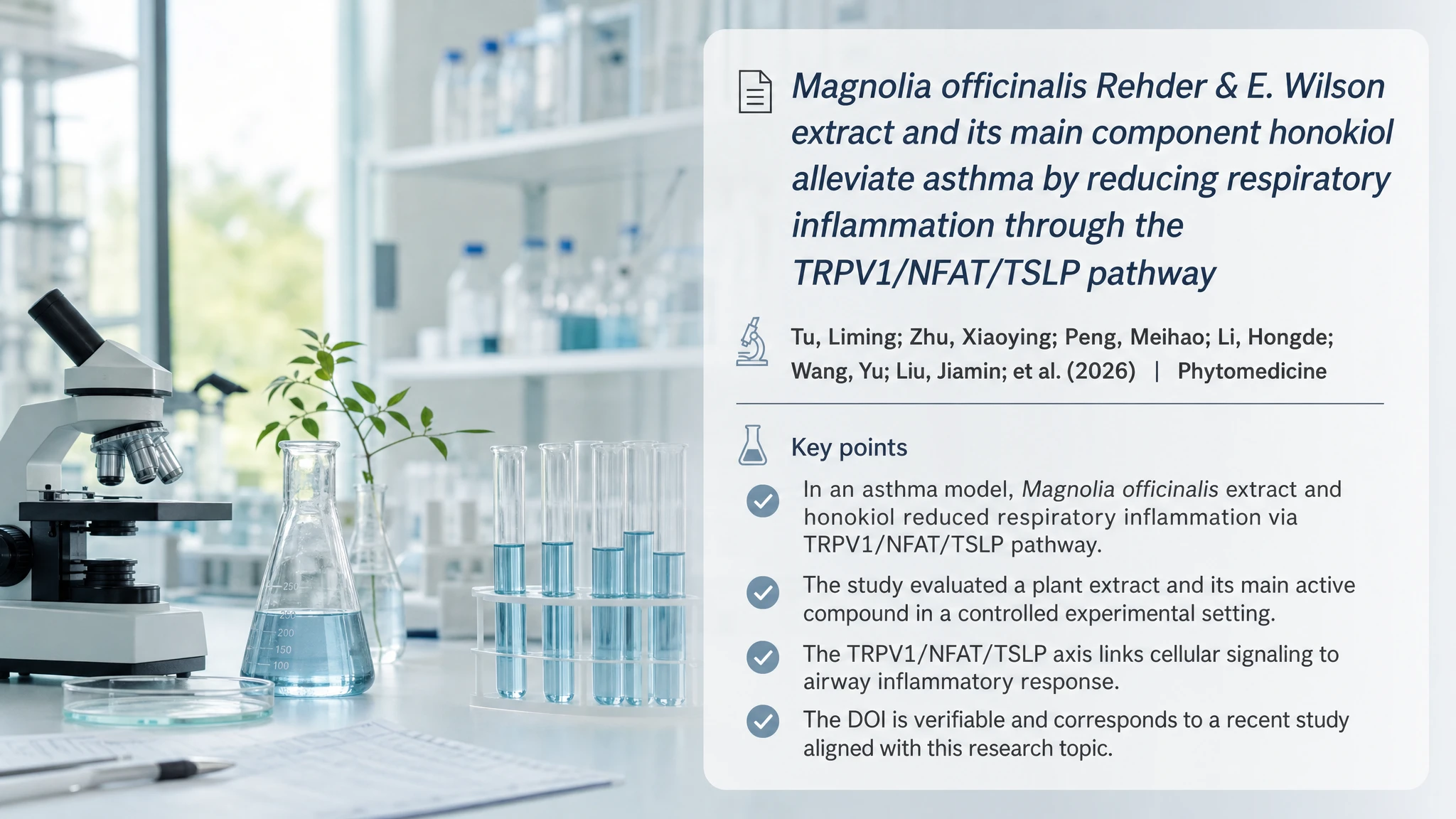
In 2026, Chinese researchers Tu and colleagues published a study on asthma in Phytomedicine. They evaluated an extract of Magnolia officinalis and its main compound, honokiol. Asthma causes inflammation of the airways. TRPV1, NFAT, and TSLP are biological signals involved in this response. The study confirms the interest in the plant in fields related to inflammation. It also concerns the control of cellular processes.
Magnolia officinalis Rehder & E. Wilson extract and its main component honokiol alleviate asthma by reducing respiratory inflammation through the TRPV1/NFAT/TSLP pathway
- In the asthma model, Magnolia officinalis extract and honokiol reduced airway inflammation via the TRPV1/NFAT/TSLP pathway.
- The study evaluated the plant extract and its main active compound under controlled experimental conditions.
- The TRPV1/NFAT/TSLP pathway links cell signals to the inflammatory response of the airways.
- The DOI is verifiable and links to a recent study consistent with the article's topic.
Nutritional context and supplementation with Magnolia officinalis
When using Magnolia officinalis as a supplement, it is not just the chosen plant that matters. It also matters how its phytocompounds (active plant substances) enter the body. Extraction, standardization, and oral bioavailability (the amount absorbed after oral intake) can change the action of magnolol and honokiol. This fact explains why the effects observed in the laboratory do not always match those seen in real-world use.

In the field of nutrition, Magnolia officinalis provides phytocompounds (plant molecules with biological activity). Manufacturers can concentrate these substances, stabilize their dosage, or combine them with other ingredients. Therefore, it is not just the presence of the plant in the product that counts, but also the form, the quality of the extract, and the actual dose of magnolol and honokiol.
A supplement does not always replicate the plant material from which it is derived. It may concentrate active compounds or include them in an unclear mixture. This aspect is central, because studies often use well-controlled extracts. Products on the market, however, can vary significantly in content and absorbed amount.
Institutional sources study the bark primarily for its bioactive compounds (substances that act on the body's processes). Botanical origin alone, therefore, is not enough [1]. A well-defined formula helps in comparing dosage, safety, and tolerability. The difference between a standardized extract and raw plant material can change the meaning of a study or a label [15,1].
In supplements, the effect of magnolol and honokiol depends on extraction, absorption, and use within the body. These lignans (phenolic-type plant compounds) can have various biological activities. However, their presence in a product does not in itself demonstrate a clinical effect in humans.
After oral intake, the body may degrade, transform, or poorly absorb a portion of the substance. In vitro data (on cells in a laboratory) must therefore be read in conjunction with pharmacokinetics. This term refers to how the body absorbs, distributes, transforms, and eliminates a substance.
The dose that reaches the tissues helps to understand the effects on stress, metabolism, and oxidative stress. Oxidative stress occurs when oxidizing substances exceed the cells' defenses. Part of the activity may be lost during passage through the stomach, intestine, and liver. For this reason, clinical studies often prefer standardized products and defined formulas, which are easier to compare [15,1].
Another point concerns nutraceutical formulas (supplements with active substances) made up of multiple ingredients. In these cases, it is necessary to distinguish the action proposed for the plant from that of the entire mixture. The final effect may depend on the ratios between the components, not on a single molecule.
The transition from raw material to finished product explains why two similar supplements may act differently. The formula can combine effects on perceived stress, neuroendocrine tone, or the body's response. Neuroendocrine tone includes the signals that connect the nervous system and hormones.
However, the outcomes depend on the entire formula, not just the name of the plant. To evaluate a supplement, one must therefore consider botany, extraction method, and biochemistry. Only in this way can the reason for use and the value of the available results be better understood.
Experimental studies indicate that magnolol and honokiol can act on inflammatory processes and important cellular pathways. This data does not imply that every supplement produces the same effects. It does, however, explain why the plant has attracted the interest of research and the supplement industry.
This interest combines traditional use, chemical analysis, and biological hypotheses that research can verify. Practical use, however, requires two checks: the quality of the preparation and the actual absorption of the active ingredients. Without this data, the potential observed in studies remains primarily theoretical.
This premise leads to four practical aspects, useful for reading studies and labels:
- Standardization of the extract fixes the quantity of the main active compounds.
- Formulas with multiple ingredients can change the meaning of the observed results.
- Oral bioavailability (the portion that reaches the blood after oral intake) indicates how much of the substance reaches the tissues.
- Product quality matters as much as, and sometimes more than, botanical origin alone.
Following the general overview, it is necessary to distinguish between single extracts, commercial formulas, and absorption limitations. These steps explain why products containing Magnolia officinalis are not all the same.
Magnolia officinalis in supplements: how they differ from the plant
A supplement does not necessarily correspond to the traditional use of a plant. The final product changes based on the extract, standardization, and dose of the active compounds. Dried bark, standardized extract, and commercial formula are therefore not equivalent products. This remains true even when the label lists the same botanical name.
A supplement is always a formulated product, not just a natural ingredient. Quality depends on the content of magnolol and honokiol, the extraction method, and individual batches. This is why clinical studies often use standardized extracts. Commercial products, on the other hand, can have very different formulas. Standardization indicates a known and constant dose of certain compounds chosen as a reference. In this way, the content becomes measurable and allows for a better understanding of the effect. Without this data, two similar products can provide very different actual doses. Consequently, the biological response may also change.
The plant may also appear in formulas that contain other active ingredients. In these cases, it is more difficult to attribute the effect to a single component. Studies on the mixture, in fact, describe the complete product, not each substance used alone. This distinction helps to read both data and labels more carefully.
The botanical name, therefore, does not guarantee the actual quality of the purchased supplement. Clear data on the formula, dose, extraction, and batch control are needed. It is also necessary to verify that the indicated formula matches the one being taken. These elements help to understand absorption, combinations, and safety of use.
Relora® and combinations with Phellodendron amurense
A well-known formula combines an extract of Magnolia officinalis with that of this second plant. This mixture helps distinguish a single phytocompound from a nutraceutical product with multiple ingredients. This difference is particularly important for supplements marketed for stress or emotional well-being. In a combined formula, the result depends on the ratios between all the components. Therefore, it is not correct to attribute it directly to a single substance. Furthermore, experimental studies and those on daily use answer different questions. Transitioning between these two areas therefore requires careful reading.
Research on the mixture has studied its potential action on the stress response and certain neuroendocrine values. These include salivary cortisol (a measurement of the hormone linked to the stress response in saliva). The system observed includes the brain, nerves, hormones, and adrenal glands.
A central role is played by the hypothalamic-pituitary-adrenal axis (the network that regulates the hormonal response to stress). The formula may act on this system, but the mechanism alone does not prove a therapeutic effect. Clinical data concerns the specific mixture studied, at the doses and under the conditions specified by the research.
Formulas registered under a brand name may also differ from other similar products. Therefore, the available results should not be extended to every supplement containing the same plants. This caution prevents confusing the studied product with the individual starting extracts. The value of this research depends precisely on the formula used and its composition. The data describes the entire combination, not every possible botanical combination on the market. This point explains why a brand name does not indicate an effect valid for every product.
Bioavailability of Magnolia officinalis and absorption issues
Bioavailability refers to the portion of a substance that reaches the bloodstream and can act within the body. It represents one of the main practical limitations of this type of supplementation. Magnolol and honokiol are lipophilic (fat-loving) molecules and do not dissolve well in aqueous liquids.
This property can make their absorption less consistent following oral use. Therefore, it is not enough to know that a substance works in a laboratory. We must measure how much of it actually reaches the tissues and how long it remains available. Lipophilicity can facilitate contact with cell membranes, which are rich in fats. At the same time, however, it makes dispersion in the fluids of the digestive tract more difficult. The activity observed in vitro, therefore, does not guarantee the same result in the human body.
First-pass metabolism (the initial transformation carried out primarily by the intestine and liver) also counts. This process can alter a portion of the dose before it reaches the rest of the body. The chosen formula can therefore influence the actual amount of active ingredient available. The difference between the ingested dose and the dose used by the body is not just a technical detail. If the body absorbs little of the substance, even a rich extract may act less than expected. Some formulation techniques attempt to increase this yield by starting from the chemical properties of the molecules.
Two products with similar contents can therefore behave differently in the body. It is necessary to evaluate their pharmacokinetics (the path of the substance in the organism), in addition to the quantity stated on the label. This data helps in interpreting studies without relying solely on the name of the plant. The biological rationale may be solid, but the clinical effect depends on the absorbed portion and the dose in the tissues. The issue, therefore, does not only concern botany. It also involves product technology, pharmacology, and the verification of outcomes in humans.
Biological mechanism: oxidative stress, inflammation, and cellular regulation
The biological mechanisms of Magnolia officinalis follow three pathways. The first limits oxidative stress (an excess of reactive molecules that can damage tissues). The second regulates inflammation, a defense mechanism that can remain active for too long. The third acts on intracellular pathways (the cell's internal circuits). These pathways regulate energy use and cell survival. In this context, magnolol and honokiol are not merely "antioxidants." Instead, they act on many cellular signals. This explains why the plant is being studied for chronic disorders with multifactorial causes.
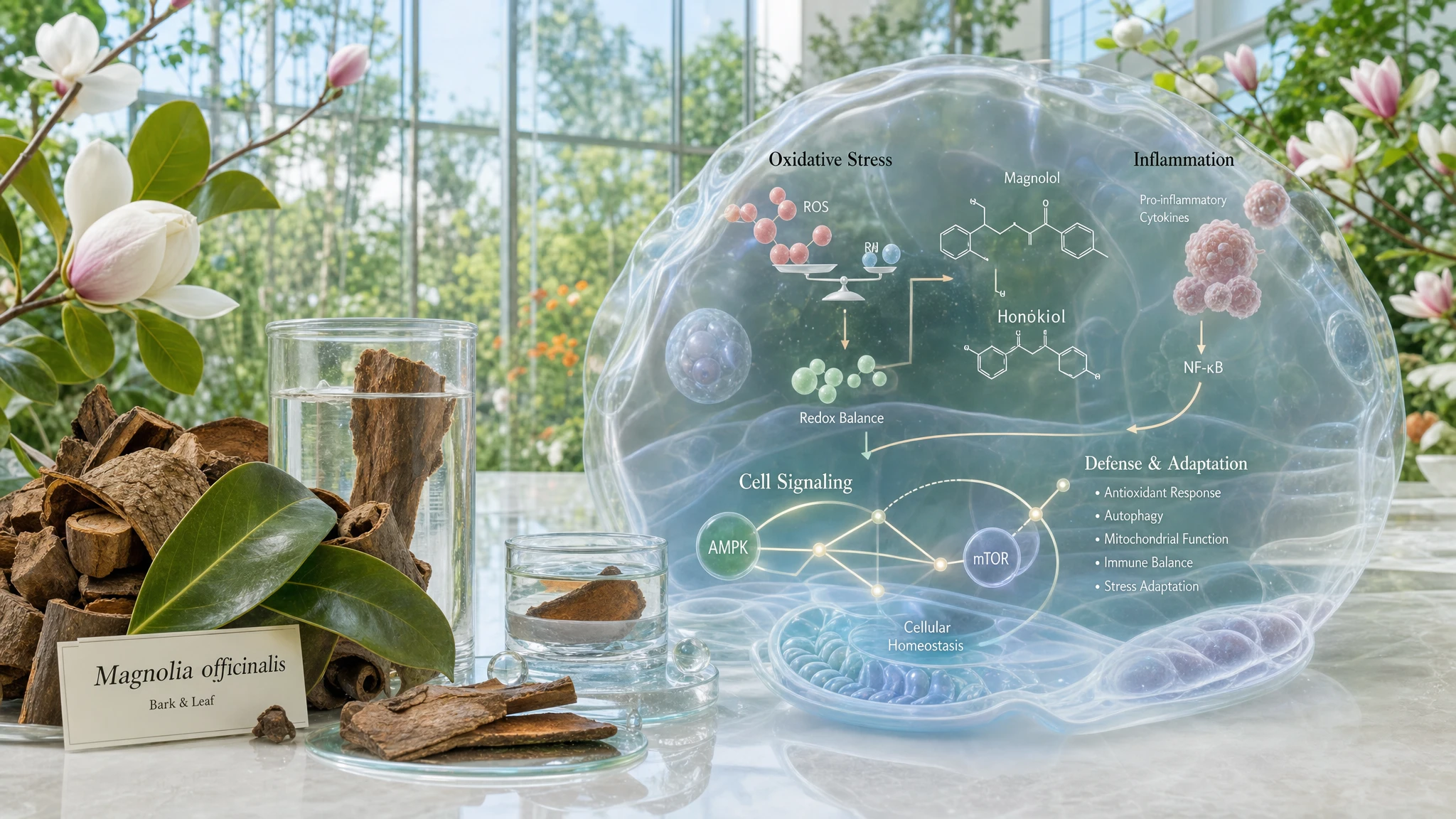
Interest in Magnolia officinalis stems from its primary phytocompounds (active plant substances): magnolol and honokiol. These molecules can act on multiple cellular functions. Oxidative stress occurs when reactive molecules overwhelm the body's defenses. This imbalance can damage fats, proteins, DNA, and mitochondria.
Magnolia is therefore not only studied as a "scavenger," meaning a substance that neutralizes free radicals. It can also regulate the defenses already present in the body. Its effects can thus involve inflammation and internal cell signaling [1,2,16]. Many chronic diseases, in fact, share three common aspects. These are oxidative damage, persistent inflammation, and defects in defense and repair processes.
This sequence explains why the same compounds are studied in very different models. Experiments involve, for example, nervous tissue, the heart, and tumor tissues. In these cases, the phytocompounds often reduce damage signals. Furthermore, they help make mitochondria more stable. They can also rebalance the pathways that support the cell during stress [3,17,18,19].
However, these data require caution. An effect observed multiple times in the laboratory does not prove a direct clinical benefit in humans. This framework therefore connects preclinical studies (on cells and animals) to biological mechanisms. On its own, however, it does not allow for conclusions to be drawn regarding treatments.
To understand these mechanisms, it is useful to follow three distinct steps. The first concerns redox damage (chemical imbalance due to oxidation). It also includes the loss of mitochondrial function. The second concerns the signals that keep inflammation active. The third involves AMPK and mTOR, two pathways that regulate energy, growth, and autophagy (recycling of cellular components):
- defense against redox damage and loss of mitochondrial function;
- reduction of pro-inflammatory signals that keep tissues active;
- regulation of AMPK and mTOR, pathways linked to energy, growth, and autophagy.
The three biological levels of Magnolia officinalis become clearer when starting from redox imbalance. From there, we move to the pathways that can increase or reduce it. The following points separate the effects of magnolol and honokiol. They concern oxidative damage, inflammation, and cellular control.
How magnolol and honokiol reduce oxidative stress
Oxidative stress is one of the most consistent biological targets for Magnolia officinalis. In fact, it links chemical damage to the loss of cell function. In experimental models, magnolol and honokiol appear to reduce lipid peroxidation, which is the oxidation of cell membranes. They also appear to support endogenous antioxidants, which are already present in the body. These systems include enzymes and other defense molecules. Several studies also indicate protection of the mitochondria, the structures that produce energy. The latter are very vulnerable when redox stress persists for a long time [1,2,16].
This does not mean that magnolia compounds completely "turn off" oxidative damage. Instead, they may regulate the balance between the production of reactive species and the ability to neutralize them. Nrf2 may also contribute to these effects, making the picture even more interesting. Nrf2 is a transcription factor that activates genes linked to antioxidant defense. In practice, the plant does not seem to act on a single target. It can act on multiple systems that keep the cell stable in an unfavorable internal environment.
This aspect matters because oxidative damage does not remain limited to a single tissue. It can increase inflammation, metabolic defects, and cell death signals. For this reason, preclinical data on magnolia suggest a first level of systemic protection. Such protection can be useful when altered redox is part of the disease. In these cases, in fact, it is not just a side effect.
Magnolia officinalis and chronic inflammation pathways
The anti-inflammatory activity of Magnolia officinalis involves a network of signals. Therefore, it should not be viewed as a single, linear effect. Among the most frequently cited targets are NF-kB, MAPK, COX-2, and iNOS. NF-kB regulates the activity of many genes that promote inflammation. The other targets help produce mediators that keep tissue active for too long. In experimental models, magnolol and honokiol tend to reduce some of these signals. These include those that promote pro-inflammatory cytokines and damage-associated molecules. The effect appears consistent, but it varies based on the biological context [2,3,20].
This action is not equivalent to that of a classic anti-inflammatory drug. In fact, magnolia does not simply block the immune system response. Instead, it can reduce excess activity and hinder low-grade inflammation. This form of inflammation serves as the backdrop for many chronic conditions. Signals from different tissues can also converge into the same network. These tissues include the endothelium, immune cells, and the nervous system. The literature therefore describes a possible brake on the circuits that amplify inflammation. It does not, however, suggest the complete elimination of the defense response. This difference makes the biological profile of magnolia more relevant today. It also helps in correctly interpreting experimental data.
AMPK and mTOR: the most important metabolic hub
AMPK and mTOR are at the center of the dialogue between energy, protein synthesis, and cell survival. AMPK is a sensor that activates when the cell is low on energy. In this phase, it promotes conservation and adaptation processes. mTOR, on the other hand, promotes growth, anabolism, and protein synthesis. It activates when nutrients and growth signals are available. The balance between these two pathways is essential for metabolism and cell growth. It also plays a role in various processes related to diseases.
Certain constituents of Magnolia officinalis appear to rebalance these pathways in specific experimental models. They can support AMPK and reduce the excessive activity of mTOR. This effect is not universal and does not necessarily occur in every situation. However, it offers a solid biological basis for studying the plant in relation to metabolism and tumors. AMPK and mTOR can therefore be seen as two cellular switches. They help determine whether the cell favors energy, growth, or protection.
Magnolia officinalis appears interesting because it can influence this balance. However, one must carefully distinguish the mechanism from its potential clinical application. Regulating AMPK and mTOR in an experimental model does not prove a therapeutic benefit in humans. Nevertheless, it remains one of the most important topics in the biology of magnolia. It links the plant to energy metabolism, autophagy, and cell growth control. These aspects will be revisited in the clinical chapters and the pathologies studied.
Magnolia officinalis, gut microbiota and intestinal barrier
In the nervous system, Magnolia officinalis is of particular interest for its ability to intercept mechanisms that link oxidative stress, inflammation, and neuronal vulnerability. Neuroinflammation—the persistent activation of the brain's support cells and the accompanying local signals—is not the same as "classic" inflammation. If it persists, it can impair the ability of neurons to survive and function, as well as disrupt communication between brain networks.
In this context, the literature on honokiol shows effects consistent with a reduction in oxidative damage, improved mitochondrial integrity, and the modulation of pathways that also influence the nervous tissue's stress response [6,8,20]. An interesting aspect is the link between metabolic signals and brain circuits: AMPK, nitric oxide (a signaling molecule involved in cellular communication), and neuronal excitability systems can interact closely, especially in areas that regulate arousal, stress response, and energy balance [21,22,23,24].
This helps explain why some studies view magnolia not just as a "calming" modulator, but as a broader biological interference in the processes that make the nervous system sensitive to chronic damage. However, it remains necessary to carefully separate the molecular rationale from the clinical effect, because the transition from experimental models to humans requires bioavailability, adequate dosages, and controlled confirmation. From this perspective, the value of magnolia lies primarily in its ability to offer a bridge between the biochemistry of damage and the functional regulation of the brain.
Impact on the body: metabolism, heart, and immune system
Magnolia officinalis is of interest to research because it acts on multiple systems, not just a single tissue. Its phytocompounds (active plant substances) are being studied for their effects on metabolism, the heart, and the immune response. The pathways involved include mTOR, which regulates growth and nutrient response, and AMPK, which senses available energy. Studies are also evaluating oxidative stress and the signals that regulate inflammation.
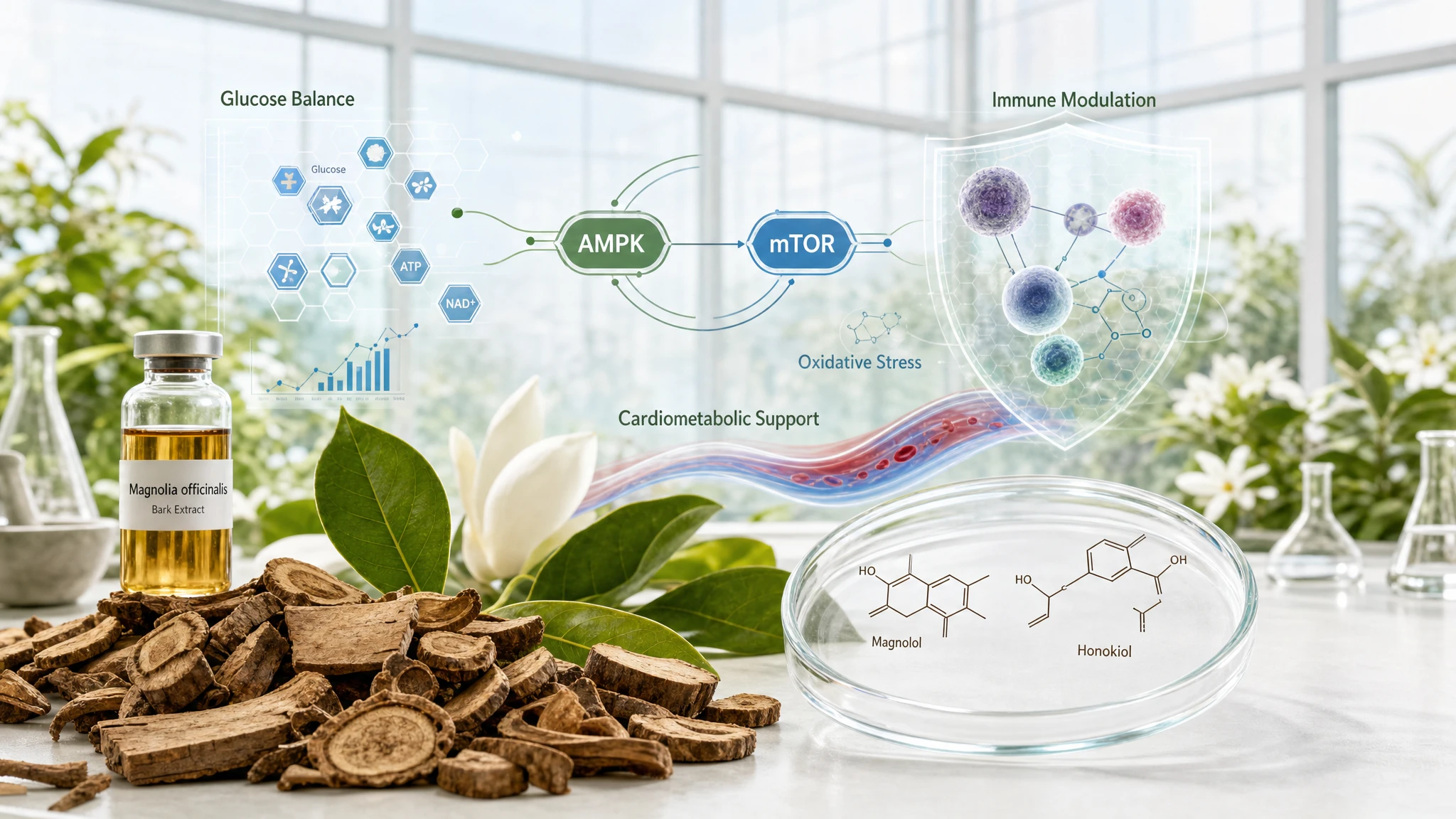
In metabolism, researchers are studying Magnolia officinalis for its potential role in managing glycemia. The plant may act on cellular pathways that regulate nutrient utilization. In laboratory models, magnolol and honokiol have shown effects linked to improved energy management. These effects emerge especially when chronic inflammation and oxidative stress disrupt cellular balance.
Oxidative stress arises from an excess of reactive molecules, which can damage cells and tissues. A key player in this process is AMPK, the sensor that measures how much energy remains in the cell. When energy is scarce, this pathway promotes the conservation and use of available resources. At the same time, it limits processes that cause excessive accumulation.
For this reason, researchers are studying the plant's compounds in models that combine glucose and energy signals [14,7,25]. This does not mean that the plant cures diabetes. However, it explains the interest in how tissues respond to insulin and in metabolic control.
mTOR is also significant, as it is a pathway that regulates growth, protein synthesis, and nutrient response. If it becomes overactive, it can promote imbalances in metabolism and inflammation. Research is therefore studying magnolia because it acts on multiple points of cellular balance, rather than on a single value.
Clinical data require caution, as many results are derived from studies on cells or animals. These preclinical studies are not sufficient to define a cure or recommend a therapy. However, they help us understand why the plant is being studied in nutrition, metabolism, and prevention.
Magnolia officinalis does not replace diet, physical activity, or doctor-prescribed therapies. It remains, however, a useful research topic regarding energy homeostasis (the balance between energy available and consumed). Interest grows when glycemia, inflammation, and oxidative stress fuel one another.
In the heart, many forms of damage share the same origins that also alter metabolism. These causes include reactive molecules, inflammation, and poor vascular response. In preclinical models, some compounds have been associated with the protection of the myocardium, i.e., the heart muscle. Possible effects on the endothelium, the inner lining of blood vessels, have also emerged [3].
The heart is affected by the oxidation of fats in membranes and damage to mitochondria. These structures produce energy, and if they function poorly, they reduce the efficiency of cardiac tissue. Studies also evaluate heart remodeling and signals related to hypertrophy. This term refers to an abnormal increase in myocardial mass [26,27].
Regarding the immune system, the goal is not to boost all defenses in a generic way. Instead, research evaluates whether the plant regulates responses that are too strong or poorly coordinated. These responses consume resources and can extend damage to other tissues. The literature therefore speaks of a possible rebalancing, not a direct immune stimulus [1,5].
The logical thread starts from cellular processes and leads to potential effects on organs:
- Glucose control also depends on the signals that regulate energy within cells.
- Heart protection involves oxidative stress and tissue changes.
- Immunity requires balance, not the simple reduction of every response.
- The mTOR and AMPK pathways link nutrition, growth, and adaptive capacity.
The first point concerns metabolism, where energy signals change the use and availability of glucose. The path then moves to the heart and immunity. Both depend on the close link between inflammation and oxidative stress.
Magnolia officinalis and glucose metabolism
In preclinical studies, researchers have evaluated magnolol and honokiol for their effects on glucose. In cell and animal models, the two compounds modulated its absorption and utilization. This data indicates a possible role in controlling glycemic homeostasis (blood sugar balance).
Glucose does not just provide energy; it also acts as a signal for cells. It can influence growth, tissue repair, and the inflammatory response. If metabolism changes, the communication between the pancreas, liver, muscles, and adipose tissue also worsens. A central point is insulin resistance, which is the poor response of tissues to insulin. This condition is often associated with chronic inflammation and oxidative stress. If these processes change, the way cells use glucose can also vary.
In some models, the role of AMPK helps explain the effect on energy consumption. This sensor helps cells use nutrients better when available energy drops. The possible action on mTOR, on the other hand, concerns the balance between new molecules produced and energy consumed. These results do not prove a clinical effect in humans, nor do they indicate a cure for diabetes. However, they offer a basis for broader studies on glycemia and the tissue response to insulin. The interest, therefore, concerns metabolic control, not a generic wellness effect.
This topic links the biochemical properties of the plant to the most studied issues in natural supplements. It also prepares for the examination of individual pathologies, without anticipating results that have not yet been proven. The value remains primarily pathophysiological, meaning it concerns the processes that lead to disease. A single mixture of phytocompounds can, in fact, act at multiple points within the cell.
Magnolia officinalis, lipids, and cardiovascular health
In experimental studies, researchers have evaluated magnolol and honokiol for their effects on the heart and blood vessels. Research focuses on blood lipids, the endothelium, and myocardial protection. These aspects are linked, because the same processes can damage both metabolism and the cardiovascular system.
The observed effects involve oxidative stress, inflammation, and vascular function. They may therefore play a role in processes related to atherosclerosis and cardiac remodeling. Atherosclerosis causes the buildup of plaque in the arteries. Remodeling, on the other hand, changes the shape and structure of the heart. The endothelium is the layer of cells that lines the inside of blood vessels. It helps regulate vessel diameter and blood flow. When it functions poorly, the risk of impaired vascular function increases. Certain compounds may help protect this balance.
However, the most solid evidence comes from studies conducted on cells or animals. The plant is therefore not a heart medication and should not be used as such. Instead, these data help explain why research is exploring potential effects on the cardiovascular system. The topic of lipids is also linked to chronic inflammation, which is common to many diseases. This suggests a possible action on multiple systems, which remains experimental, however [3][26][27]. The heart suffers when it uses energy inefficiently and mitochondria produce excessive oxidative stress.
For this reason, researchers are also studying the signals that promote hypertrophy and tissue stiffness. Hypertrophy is the abnormal increase in heart muscle mass. Stiffness, conversely, reduces the ability of the heart and vessels to adapt. The data do not yet prove a clinical benefit, but they explain why this line of research continues.
Magnolia officinalis and immune modulation
The phytochemicals in the bark are described as immunomodulatory, rather than merely anti-inflammatory. An immunomodulator can regulate the immune response without indiscriminately blocking it. This distinction is useful for understanding what the studies have observed. Many chronic conditions do not require the complete suppression of defenses. Instead, it is necessary to correct a response that is too strong, prolonged, or poorly regulated. Research is therefore evaluating whether these compounds attenuate certain signals without nullifying normal defenses.
Studies highlight pathways such as NF-kB, STAT3, NLRP3, and PI3K/AKT. These systems regulate cell activity, inflammatory mediators, and their ability to persist over time. Mediators are substances that cells use to initiate and guide the inflammatory response. The plant, therefore, does not act as a proven immunosuppressant capable of curbing all defenses. Researchers are studying it as a potential regulator of highly complex networks. This distinction avoids errors, especially when discussing autoimmune or inflammatory diseases.
In these diseases, the problem is not just an overly strong immune response. Often, the way the system recognizes and regulates signals changes. A change in the response can affect multiple tissues, from the gut to the nervous system.
This interpretation explains why research is exploring very diverse clinical areas [1][5][9]. The potential effect concerns the balance of signals, not a single isolated action. The hypothesis involves fine-tuning, which reduces excesses without erasing normal defense. However, the available evidence does not yet allow us to confirm this effect in humans.
Related conditions and research areas for Magnolia officinalis
Research on Magnolia officinalis investigates metabolism, inflammation, cancer, and signaling between hormones and nerves. Magnolol and honokiol act on processes linked to these diseases, but they are not yet approved therapies. Studies primarily examine mTOR (a pathway that regulates growth and energy use) and AMPK (a cellular energy sensor). They also evaluate oxidative stress (damage caused by excess free radicals) and active signaling in the brain.

Research on Magnolia officinalis investigates diseases in which several processes act in concert. These include altered energy use, inflammation, cell growth, and the stress response. The most studied compounds are magnolol and honokiol, which can act on cellular pathways such as mTOR and AMPK.
Studies also evaluate oxidative stress (damage linked to free radicals) and mitochondrial function. These cellular structures produce most of the energy used by the body. The goal is not to attribute a curative effect to the plant for every disease. Instead, research seeks to understand when its biological effects might prove useful.
Overall, researchers study Magnolia officinalis as a biological modulator, not as a single remedy. Some studies on cells and animals indicate effects on various interconnected pathways. However, the transition to human treatment requires more robust clinical evidence.
Results also depend on the quality of the extracts and their oral bioavailability (the amount absorbed after oral intake). The type of disease examined by researchers also matters. Even with a valid biological rationale, it is necessary to distinguish early signals from a proven therapeutic benefit [2][12][19][7].
Key areas include type 2 diabetes, chronic inflammation, and the stress response. Studies also examine damage to neurons and cancer cells. From this framework, several lines of research emerge, which are useful for better understanding the available studies:
- Glucose control and insulin resistance (poor tissue response to insulin) are among the primary targets studied.
- Chronic inflammatory diseases are of interest due to their effects on the signals that guide the body's defenses.
- The brain and stress pathways link neuroinflammation (inflammation of nervous tissue) to the body's response.
- Cancer studies link magnolia compounds to mTOR and AMPK, which regulate cellular life.
Research on Magnolia officinalis primarily focuses on metabolism, inflammation, the brain, and cancer. In these areas, AMPK, mTOR, and neuroinflammation (inflammation of nervous tissue) are recurring themes. These pathways help explain how the plant's compounds may act.
Magnolia officinalis in type 2 diabetes and insulin resistance
Type 2 diabetes and insulin resistance are important for understanding the metabolic role of Magnolia officinalis. In experimental models, the plant has been linked to improved glucose control. Studies also indicate potential effects on the pathways that regulate energy use. These data, however, do not make the plant a treatment for diabetes. They only indicate that its biological profile is consistent with certain disease processes.
Insulin resistance occurs when tissues respond less effectively to insulin and use glucose less efficiently. This condition often coexists with chronic inflammation, oxidative stress, and visceral fat accumulation. Magnolia officinalis interests researchers because it may act precisely on these related processes. An important role is played by AMPK, which regulates nutrient use and energy balance. This balance, known as energy homeostasis, helps the body maintain stable functions.
Therefore, this is not a natural cure, but a specific line of research. This line connects metabolism, inflammation, and the signals used by cells to communicate. The topic is very useful for forms related to metabolic syndrome, which involves multiple organs. However, it is necessary to distinguish data obtained from animals or cells from evidence in humans. Knowledge regarding humans remains much more limited compared to preclinical data. It is therefore a cautious interpretation, useful for evaluating the plant beyond promotional language.
Magnolia officinalis in autoimmune and inflammatory diseases
Autoimmune and chronic inflammatory diseases are among the most studied fields in experimental research. Magnolia officinalis appears to modulate various inflammation pathways. This potential effect concerns a wide range of diseases, from colitis to rheumatological conditions. However, magnolia is not an immunosuppressive drug, meaning it does not directly reduce immune system defenses. Furthermore, the available evidence is much stronger in preclinical studies than in clinical ones.
The potential interest lies in the signals that keep inflammation active over time. The plant could modulate these without indiscriminately shutting down the entire immune system. The biological rationale therefore appears plausible, but it does not equate to a defined indication for use. In autoimmune diseases, in fact, the problem depends not only on the presence of inflammation but also on the loss of the balance that regulates the immune system's response.
Researchers are therefore studying Magnolia officinalis as a potential modulator, not as a validated therapy. This distinction helps in interpreting studies on ulcerative colitis, lupus, and rheumatoid arthritis. It also applies to other inflammatory diseases examined by research. The reader can thus separate promising experimental data from established clinical use. At present, there is no defined clinical application for these diseases. This caution avoids oversimplification and allows for a better assessment of the available literature.
Magnolia officinalis and brain health
Brain health is one of the most studied areas for Magnolia officinalis. Interest primarily focuses on honokiol, the protection of neurons, and the control of neuroinflammation. The brain is highly sensitive to oxidative stress, mitochondrial damage, and chronic inflammation. For this reason, magnolia compounds have been studied in many neurological models.
The biological rationale concerns the potential defense of neurons against damage caused by oxidation. These compounds may also reduce the activity of glial cells that promote inflammation. Glial cells support neurons, but in some cases, they can fuel neuroinflammation. Such effects could help preserve cognitive functions and neuronal structure. However, this does not make magnolia a treatment for neurological diseases. Instead, it demonstrates that there is scientific interest based on precise biological processes.
Another important element is the blood-brain barrier, the filter that protects the brain from many substances. Some compounds are lipophilic, meaning they dissolve in fats, and may be able to cross this barrier. The reader can thus link the plant to specific processes, rather than a generic sense of well-being. Research ranges from general neuroprotection to more complex models of neuronal loss. Magnolia therefore remains a topic of interest for neurobiology and experimental research. However, it is necessary to maintain a clear distinction between experimental studies and human applications. This section also introduces more specific topics such as memory, Alzheimer's, and Parkinson's. These diseases show how the studied processes can take on a concrete clinical form.
Magnolia officinalis and experimental oncology
Oncology is one of the most delicate and promising areas in studies on Magnolia officinalis. Interest is primarily focused on honokiol, which has been studied in various tumor models. In these models, it has shown activity regarding proliferation, apoptosis, autophagy, angiogenesis, and invasion capacity. Proliferation is cell growth, while angiogenesis is the formation of new blood vessels. Apoptosis is programmed cell death, which eliminates damaged cells. Autophagy, on the other hand, is a cellular recycling system with varying effects depending on the context.
The action of a plant compound on these pathways is biologically interesting. However, these data do not allow us to speak of magnolia as an oncological therapy. The reader must clearly distinguish between laboratory observations and clinical use. Magnolia should therefore be presented as a subject of research, not as a potential cure already available. This caution prevents misinterpretations of a very sensitive topic for patients and their families.
Some of the plant's pathways of action coincide with those that support tumor growth. These pathways include mTOR and PI3K/AKT, which regulate cell growth and survival. However, any potential use must be verified through robust clinical trials. The real value lies in understanding why oncological research studies Magnolia officinalis. Experimental potential must never turn into a therapeutic promise lacking evidence. This distinction allows the topic to be read with rigor, prudence, and without exaggeration.
Magnolia officinalis for anxiety, stress, and sleep
Magnolia officinalis is often sought after as a potential aid for stress, anxiety, and sleep. This is especially true for commercial formulas that combine it with other extracts. Interest stems from its potential effects on stress circuits and certain neuroendocrine signals. Neuroendocrine signals connect the nervous system to the hormones produced by the body. Among these hormones is cortisol, one of the primary mediators of the stress response.
However, it is necessary to distinguish between supporting well-being and treating a clinical disorder. The most well-known studies primarily concern conditions of mild or moderate stress. They evaluate the tension perceived by participants and certain biological markers related to stress. They do not, however, study the treatment of actual psychiatric illnesses. The practical question is simple: can magnolia help you relax or sleep better? The most accurate answer is that there is an interesting biological rationale, but it is not conclusive.
The context of use and the quality of the formula can significantly change the results. This topic addresses a real and widespread need among readers. However, cautious language is required, without promising certain, rapid, or universal effects. Magnolia can be viewed as a nutraceutical support, halfway between food and supplementation. It might be useful in certain stress situations, but the evidence remains limited. It does not replace a clinical consultation when anxiety or insomnia are persistent or severe. This distinction maintains scientific rigor and introduces the chapter dedicated to the nervous system.
The nervous system and the neuroprotection of Magnolia officinalis
In the nervous system, Magnolia officinalis is studied for the action of its phytocompounds (natural substances produced by plants). These molecules can act on oxidative stress, neuroinflammation, and the signals that help neurons survive. The most studied compounds are magnolol and honokiol. Research is evaluating their potential effects on memory, arousal (the body's level of activation), and stress response.
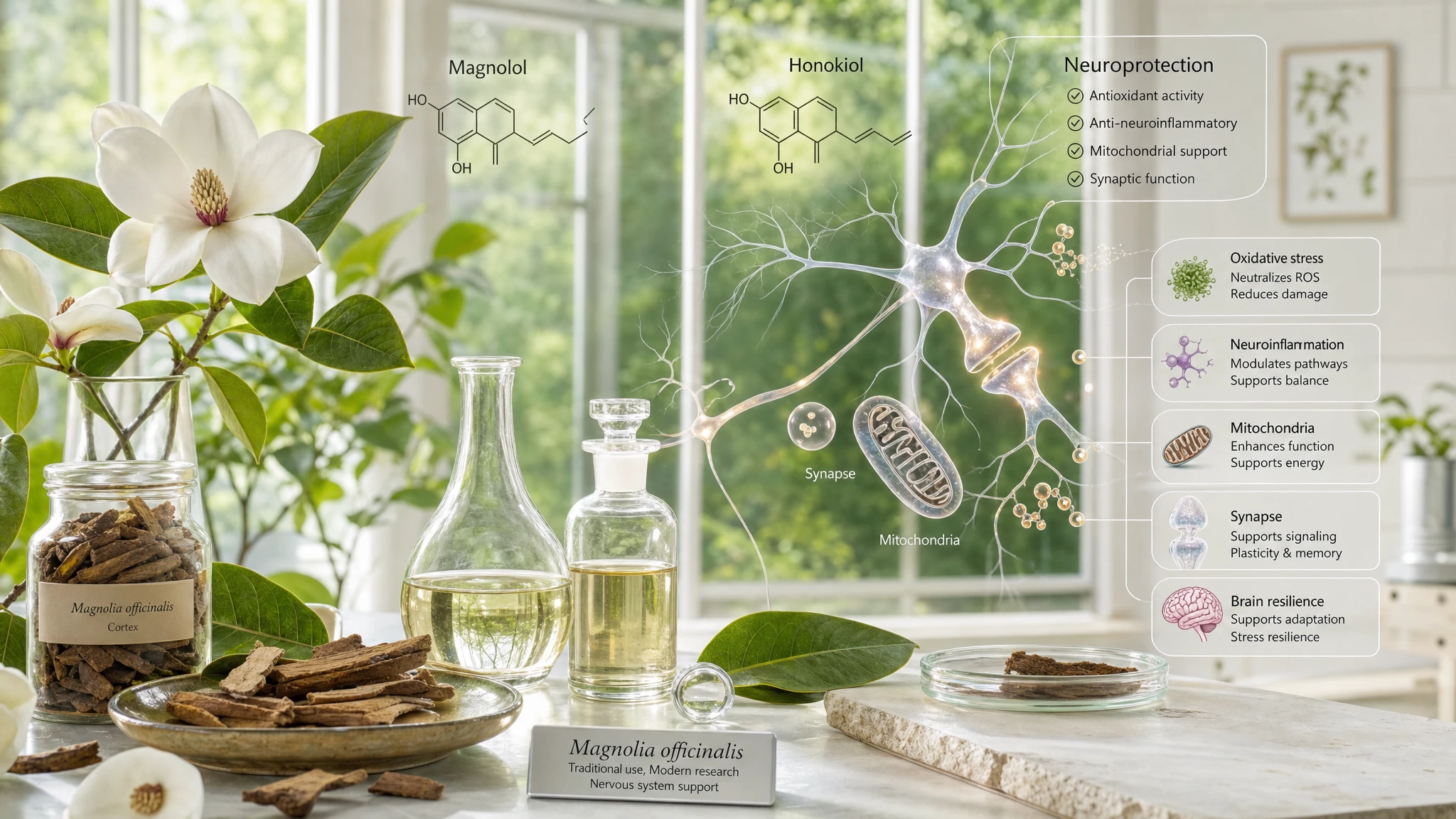
In the nervous system, Magnolia officinalis is of interest due to the potential effects of its phytocompounds on various brain processes. These substances may protect neurons, regulate inflammation, and balance the signals that activate or inhibit them. They may also support mitochondria (cellular structures that produce energy). Research is therefore evaluating whether magnolol and honokiol help the brain resist damage. It is also studying their effects on defects in neuronal communication.
A key role is played by oxidative stress (an excess of reactive molecules that damage cells). This process and neuroinflammation can fuel each other and make neural networks more fragile. The potential effect therefore arises from multiple actions that combine within the brain.
Preclinical studies indicate that neuroprotection does not depend on a single target. Some research shows less oxidative stress and a better response of nerve cells to stress. Others detect effects on mTOR and AMPK, two pathways linked to energy, cell life, and adaptive capacity [6][8][24][28].
Tests have also studied the circuits that regulate wakefulness and threat response. These include the hypothalamus, amygdala, and locus coeruleus [29][30][31][32]. Most of the data, however, comes from studies on cells and animals. The results indicate a possible biological effect, but do not yet prove a clinical benefit in humans.
To understand these effects, it is necessary to follow the steps that connect molecules, neural circuits, and behavior:
- Crossing into the brain makes a direct effect on the central nervous system possible.
- Glutamate activates neurons, while GABA inhibits their activity and maintains balance.
- AMPK indicates the cell's energy status, while mTOR regulates growth, proteins, and plasticity.
- Arousal control involves orexin (a molecule that promotes wakefulness and appetite) and the locus coeruleus (a brain area linked to alertness).
- Neuroinflammation can defend tissues, but it can also cause damage if it lasts too long.
The neuroprotection provided by Magnolia officinalis can be examined through three themes: access to the brain, control of neural circuits, and stress response. These steps are interconnected and help to better understand the results of experimental studies.
How Magnolia officinalis crosses the blood-brain barrier
Reaching the central nervous system is a key condition for explaining the neuroprotective interest in Magnolia officinalis. The blood-brain barrier is a selective filter that protects the brain and limits the entry of many substances. Since this filter is highly effective, the ability to cross it becomes a decisive factor. In this context, honokiol is of interest due to its lipophilicity. This term refers to the ability to interact with lipid-rich environments and biological membranes. This property makes its access to the brain plausible, at least in some experimental models. A molecule may indeed be promising, but it may not reach the site of action in sufficient quantities.
In the case of magnolia, the potential crossing of the barrier provides a solid foundation for neurological research. Neuroprotection depends not only on the chemical activity of the compound but also on tissue distribution, i.e., where the molecule reaches in the body. Some data indicate that magnolia phytocompounds can interact with the central nervous system.
These results pave the way for studies on stress, memory, and neurodegeneration. This passage also helps clarify the link between chemistry and brain function. It thus avoids attributing vague or generic properties to the compound. Access to the brain helps in interpreting subsequent chapters on memory, Alzheimer's, and emotional control. Without this passage, in fact, neuroprotection would remain merely theoretical.
Magnolia officinalis and memory, learning, and synaptic plasticity
Magnolol and honokiol are being studied for their potential effects on memory, learning, and synaptic plasticity. The latter is the ability of connections between neurons to change based on experience. This capacity is therefore essential for forming memories and learning. Oxidative stress, inflammation, and poor energy supply can damage this system. Consequently, they can reduce mental efficiency and the ability to adapt.
In experimental models, magnolia phytocompounds can limit oxidative damage and support synapses. They may also improve the balance between defense signals and harmful processes. A highly studied area is the hippocampus, which plays a central role in memory formation. Research, therefore, does not only study the general protection of neurons; it also examines more precise mental functions.
These studies help us understand how cell protection can influence memory circuits. However, the data largely come from cell and animal tests. Therefore, they do not allow us to claim that the plant improves memory or concentration in humans. The proposed mechanism is consistent with preclinical data, but more robust clinical studies are needed. This caution is necessary when extracts are proposed as an aid for cognitive functions.
Magnolia officinalis in Alzheimer's disease
In preclinical Alzheimer's research, honokiol is being studied for its action on multiple targets of the disease. The main ones are amyloid, tau, microglia, and mitochondrial function. Amyloid can accumulate in abnormal forms and contribute to neuronal damage. Tau normally supports microtubules (internal structures that give the cell its shape). When it changes abnormally, it can promote processes typical of neuronal loss.
Microglia, on the other hand, are the brain's defense system and are involved in neuroinflammation. Mitochondria are also important because they provide cells with the energy needed to survive. Studies are therefore evaluating an effect on various processes that may act together over time. This multi-target action explains the interest in this compound in neurological research.
An effect observed in the laboratory, however, does not prove a benefit in patients. The disease is complex, changes over the years, and involves many biological pathways. For this reason, current data do not allow us to propose Magnolia officinalis as a treatment. The plant remains a subject of study for its possible effects on processes linked to the disease. Distinguishing between initial research and proven treatment avoids errors and keeps the data within its limits.
Magnolia officinalis in Parkinson's disease and other neurodegenerative conditions
Magnolol and honokiol have also been studied in the context of Parkinson's disease and other neurodegenerative disorders. These conditions often share oxidative stress, neuroinflammation, and the gradual loss of nerve cells. Parkinson's disease primarily affects the dopaminergic neurons (cells that produce dopamine) in the substantia nigra. This area of the brain helps control movement.
In experimental models, magnolia compounds can reduce oxidative damage and regulate microglia. They may also protect nerve cells from certain processes that lead to their loss. The key point is not any single disease, but the presence of common mechanisms. The potential effects can, in fact, vary depending on the specific neurons and brain regions involved.
Many disorders cause different symptoms, even if they share certain cellular damage pathways. This common foundation explains why the plant is of interest to various fields of brain research. However, the available evidence comes primarily from cell and animal studies. Therefore, it is not sufficient to suggest these compounds as a therapy for Parkinson's or other diseases. The data help in studying neuronal damage, but they do not yet prove a clinical effect. This distinction prevents the over-extrapolation of initial findings.
Magnolia officinalis for anxiety, wakefulness, and emotional well-being
Magnolol and honokiol are also being studied for their potential effects on stress, anxiety, and wakefulness. Some actions appear to involve the stress axis and the circuits that regulate arousal (the body's level of activation). For this reason, the plant is primarily studied in cases of mild to moderate tension. This is not equivalent to treating a well-defined psychiatric disorder.
The most cited studies measure stress using scales and questionnaires, known as psychometric tests. In some cases, they also evaluate hormones related to the stress response. These data help to interpret the claims of commercially available products more carefully. The potential effect on relaxation or sleep depends on the formula, the context, and the quality of the extract. Furthermore, a sleep aid does not necessarily indicate a strong sedative action. Instead, it could depend on a reduced state of alertness in certain situations.
Research is also studying the HPA axis (the system involving the hypothalamus, pituitary gland, and adrenal glands). This system coordinates the stress response. It thus connects signals from the brain to the production of hormones and the body's reactions. There is a biological basis, but the results do not prove a certain effect in every person. Caution is therefore required, taking into account the type of extract and the quality of the studies.
Related conditions: metabolic axes, oncology, and adjustment disorders
The conditions studied in relation to Magnolia officinalis do not prove that the plant already has a therapeutic use. Research examines several common processes: energy use, stress response, and cell growth. The most studied compounds are magnolol and honokiol. These substances can act on mTOR, a pathway that regulates cell growth and synthesis. They may also act on AMPK, a sensor of the cell's energy status. Research is also evaluating potential effects on inflammation and neuroendocrine signals (messages between nerves and hormones).
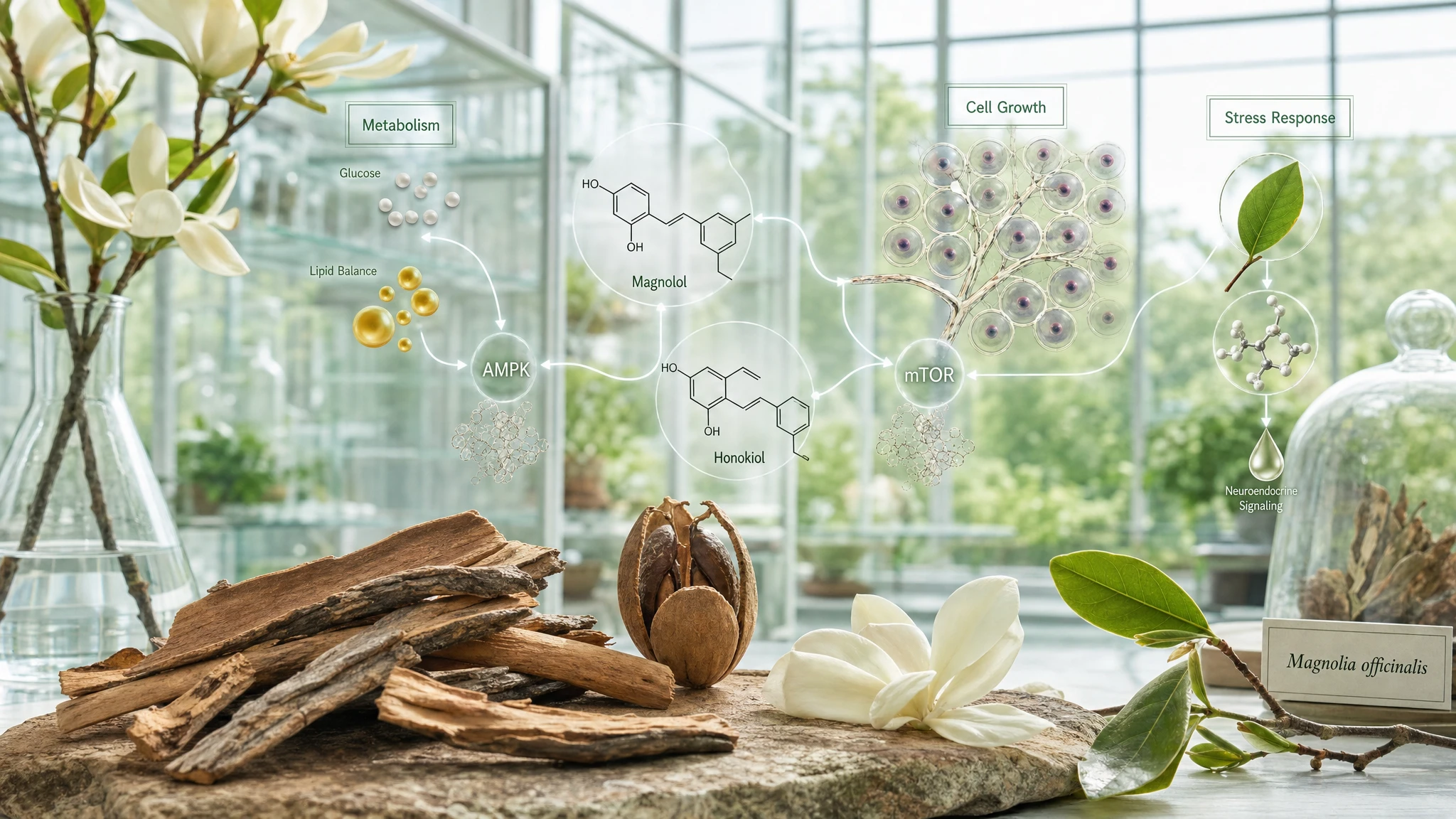
Studying pathologies related to Magnolia officinalis does not prove that the plant has curative effects. Instead, it serves to understand which biological processes may respond to its compounds. Research follows three areas: energy use, experimental oncology, and stress response.
In these fields, studies primarily examine magnolol and honokiol. These two compounds can act on nutrient signaling and redox balance (the balance between oxidative and protective processes). They can also influence communication between the nervous system and the endocrine system (glands and hormones) [2][12][7].
In non-alcoholic fatty liver disease, research is studying the possible effect on fat accumulated in the liver. This disease, also known as NAFLD, occurs without significant alcohol consumption. Studies on cells and animals examine the role of mTOR and AMPK. mTOR promotes growth and synthesis, while AMPK detects the energy status of cells.
Some compounds could therefore help cells use energy more efficiently. This data, however, does not prove that the plant cures NAFLD in humans [3][14][7]. Chronic stress follows a different path, but it can act on the same balances. The hypothalamic-pituitary-adrenal axis can remain active and promote fatigue, tension, and sleep disturbances.
In this field, studies evaluate adaptation and neuroinflammation (inflammation of the nervous system). They also evaluate arousal, which is the state of brain activation. These results indicate a possible biological support, not a proven clinical effect [4][5].
In oncology, some compounds appear to act on cell growth, migration, apoptosis, and autophagy. With autophagy, a cell recycles damaged or unnecessary parts. These studies help identify potential molecular targets, but they do not make magnolia a cure for cancer.
The same caution is needed when discussing adjustment disorders. Perceived stress is real, but it arises from many nervous, hormonal, and metabolic factors. Magnolia officinalis therefore remains a research topic that connects metabolism, tumors, and stress. The available evidence, however, does not allow us to go beyond the experimental field [12][13][19][33].
These data help to understand the mechanisms, but they do not demonstrate clinical use. The link between these fields concerns energy and allostasis (the ability to adapt to stress). To better follow the research, it is useful to distinguish four points:
- fatty liver disease shows the link between fats and metabolic signals;
- obesity and metabolic syndrome involve AMPK, an energy sensor, and mTOR, a pathway linked to growth;
- experimental oncology studies growth and apoptosis (programmed cell death);
- chronic stress involves the hypothalamic-pituitary-adrenal axis, which regulates the hormonal response to stress.
The following sections show how Magnolia officinalis is studied in different but related contexts. The common thread is the control of metabolism and neuroendocrine signals, rather than a single therapeutic action.
Magnolia officinalis and non-alcoholic fatty liver disease
Non-alcoholic fatty liver disease explains why this plant is of interest in metabolism research. This condition, also known as NAFLD, causes fat to accumulate in the liver. The fat is deposited without significant alcohol consumption. In experimental models, the plant's compounds have modulated AMPK and reduced certain pro-steatotic signals. These signals promote fat storage in the liver.
This topic is important because NAFLD often appears alongside metabolic syndrome. It can be associated with insulin resistance (poor response to insulin), obesity, and mild chronic inflammation. Research therefore studies glucose, as well as fat utilization and liver damage. The liver manages most nutrients and helps maintain the body's energy stability.
However, the most solid evidence comes from studies conducted on cells and animals. These data are not sufficient to provide clinical guidelines or to propose the plant as a treatment. They explain why this field is being studied, but they do not demonstrate an effect in humans. Research is also evaluating the links with inflammation and oxidative stress.
Oxidative stress is the damage caused by an excess of oxidizing molecules. These processes can act together and contribute to chronic liver damage. The plant therefore remains an object of study, not a proven therapy.
Magnolia officinalis and chronic stress disorders
Products based on this plant are also being studied for disorders related to chronic stress. The stress response is not just a feeling, but involves a precise biological system. A central role is played by the HPA axis, i.e., the hypothalamic-pituitary-adrenal axis. This circuit also regulates the production of certain hormones, including cortisol.
If the response remains active for too long, fatigue and nervous tension may occur. Sleep and the ability to adapt to events may also change. Formulas containing magnolia have been studied primarily during periods of mild to moderate stress. However, studies do not indicate these formulas as a cure for complex disorders.
It is therefore necessary to distinguish between a possible reduction in physical activation and the treatment of anxiety or depression. In this context, the plant can be viewed as a nutraceutical support. A nutraceutical is a supplement with a potential biological effect. On its own, however, it cannot resolve problems that require the advice of a professional. Many people use supplements for stress without fully understanding this biological state. Research, on the other hand, starts from a precise point, not a generic calming effect. This approach helps to understand the products on the market and the link between nerves, hormones, and stress.
Magnolia officinalis, obesity, and metabolic syndrome
The plant is also being studied in the context of obesity and metabolic syndrome for its potential effects on energy utilization. Metabolic syndrome encompasses several alterations: a large waist circumference, dyslipidemia, and altered glycemia. Dyslipidemia refers to abnormal blood fat levels. High blood pressure is also frequently present.
In this context, AMPK and mTOR can alter how cells utilize nutrients. These pathways also regulate fat synthesis and the response to energy scarcity. Research is therefore evaluating potential effects on processes involving the liver, muscles, and adipocytes. Adipocytes are the cells that make up adipose tissue.
These are fundamental mechanisms studied to understand how these organs communicate with one another. However, an effect on these signals does not equate to a cure for obesity. The plant does not cause weight loss and does not replace diet, exercise, and medical supervision. Its interest remains experimental. Nevertheless, this research helps to understand the links between obesity, insulin resistance, and low-grade chronic inflammation. In this framework, the product is studied as a potential modulator of a complex system, not as a weight-loss aid. This distinction separates biological potential from real-world daily use.
Magnolia officinalis and supportive oncology
In oncology, compounds from this plant are being studied for their effects on cell growth, apoptosis, and invasiveness. Apoptosis is the programmed death of cells. Invasiveness, on the other hand, refers to the ability of cells to enter other tissues. However, current evidence is preclinical or exploratory and does not show that the plant cures any cancer.
Research is examining cellular pathways such as PI3K/AKT/mTOR and AMPK in various tumor models. In the laboratory, some molecules have inhibited the signals that support tumor cell growth. Other evidence has indicated effects on the ability of these cells to invade tissues. These results, however, do not demonstrate a clinical benefit in humans.
A natural compound can therefore aid research without immediately becoming a cancer drug. Even the term supportive oncology requires caution. Here, it indicates a field of study, not a validated use in patients. The plant does not replace standard treatments and remains a source of molecules with potential biological activity. This distinction is essential for providing accurate information. The interest in experimental data should not be confused with conclusive clinical evidence.
Scientific evidence, limitations, and critical reading of the literature
The evidence on Magnolia officinalis is interesting, but it does not all carry the same weight. Studies provide a good biological basis, especially for the plant's phytocompounds (active natural substances). Clinical data on humans, however, are still limited and vary significantly between studies. A critical reading must distinguish between useful signals, preliminary data, and evidence applicable in practice.

To understand what we know about Magnolia officinalis, we must evaluate the type of evidence, not just the result. Most of the data comes from cellular and animal models, which are used to study effects in the laboratory. These models show how a substance acts within cells or non-human organisms. They are useful for studying oxidative stress, which is the damage caused by an excess of reactive species. These molecules can, in fact, alter cell structures. The models also help to study inflammation and mitochondrial function. The latter concerns the activity of mitochondria, the structures that produce energy in cells.
They also allow for the analysis of intracellular signaling, which are the chemical messages that regulate cells. Clinical studies on humans are much less numerous and often evaluate different products and objectives [11][6][20]. This does not mean that the plant is of no interest. Instead, its profile suggests various plausible biological hypotheses, but not definitive confirmation for every use.
In the field of the nervous system and magnolia, studies indicate potential interest in several circuits. Among these are those related to alertness, neuroinflammation, and the control of glial cells. Glial cells support the nervous system and also participate in the inflammatory response. However, human data are still too limited to speak of generally valid efficacy [11][6][20].
On the metabolic front, the study of mTOR and AMPK offers promising data. These pathways may explain how the plant's compounds act on cellular energy and the stress response. mTOR is a signaling pathway that regulates growth and metabolism. AMPK, on the other hand, is a key protein that detects energy deficiency. When activated, it triggers systems that help the cell conserve and recover energy. In this case, too, moving from the laboratory to the clinic requires caution [9][34].
Overall, the studies provide a solid foundation for defining a biological rationale. They are less robust, however, when it comes to indicating universally valid uses. This distinction guides a scientific reading, far removed from both enthusiasm and skepticism [1][2][3].
A critical reading must therefore clarify the meaning of the results and the limitations of the methods used. The strength of a piece of data depends on how it is generated and how it can be compared with other research:
- preclinical studies help define the biological targets of Magnolia officinalis;
- clinical research is less extensive and often not comparable;
- the formulations tested are not equivalent to a common Magnolia officinalis supplement;
- outcomes regarding stress and sleep do not automatically translate into other indications;
- oral bioavailability indicates how much of the substance actually reaches the blood after oral intake. This data significantly affects the interpretation of the results.
Studies on Magnolia officinalis require distinguishing between the biological basis and the strength of clinical evidence. The following points show where the data is most robust and where it remains preliminary.
What science says about Magnolia officinalis today
Many readers ask what science really says about Magnolia officinalis, beyond commercial messaging. To answer this, one must separate the many studies on cells and animals from the few conducted on humans. The most robust data come from laboratory models. In these tests, the compounds act on inflammation, oxidative stress, and energy use. Studies also show potential effects on systems that protect neurons. These results help us understand the mechanisms, but they do not, on their own, prove a benefit in people.
Human studies do exist, but they often involve small groups, specific cases, and very precise products. Therefore, the results do not confirm a clinical effect that is valid in every situation. A serious biological basis exists, but more evidence is needed before applying it in practice. This reading avoids two opposing errors that can distort the real weight of the data. The first consists of assuming every observed effect is already certain. The second leads to discarding all data because definitive proof is still lacking. The most correct position considers the results and their limitations together.
Scientific interest is concrete, but new clinical studies on effects, dosages, and potential uses are needed. For this reason, the plant is often described as promising, but not yet definitive. Experimental data indicate a path to follow; they do not represent a final destination. This interpretive framework helps to better understand the following sections. It also allows one to distinguish between evidence, a hypothesis, and a use supported by clinical data.
Magnolia officinalis: clinical studies on humans and small sample sizes
Clinical studies on humans are the most delicate point in research on Magnolia officinalis. They often include few participants, use specific products, and measure very different outcomes. For this reason, it is difficult to extend the results to everyone. Some research evaluates subjective data, such as perceived stress or sleep quality. Others measure cortisol or certain inflammatory markers (values related to inflammation). These data describe different aspects and cannot always be combined.
Small sample sizes reduce the strength of the results and make it more difficult to confirm them in other groups. Differences in methods also hinder direct comparison between studies. It is therefore not always clear whether the same effect would appear again under the same conditions. Furthermore, the products tested are not all the same in terms of formula and content. A result obtained with a standardized extract does not apply to every supplement containing the plant. In fact, both the quantity of active compounds and the method used to produce the extract can vary.
The existence of human studies remains important, but it does not offer valid proof in every case. Therefore, the answer to the question about clinical data is positive, but requires clear limitations. This caution does not diminish the research, but helps to define its true weight. The point is useful when discussing stress, sleep, supplementation, or emotional well-being. In these fields, initial data does not indicate a certain effect in real life. Prudence therefore allows us to use the information without giving it more weight than it deserves.
What are the methodological limitations of studies on Magnolia officinalis
A serious assessment of Magnolia officinalis must evaluate the limitations of the methods used in studies. The main issues concern the different products, non-standardized extracts, and the high number of preclinical tests. Furthermore, research does not always measure the same outcomes. Different doses, timings, and products may be used, making direct comparison difficult. Two similar results can therefore arise from very different conditions.
Another limitation concerns reproducibility (the ability to obtain the same result again). An effect observed in one model may not appear in another. It may also vary in human groups with different ages, health statuses, or habits. A promising finding, therefore, cannot be applied to every product or all individuals. However, these limitations do not negate the value of the available research. Instead, they help in understanding how much weight to assign to each result.
It is also necessary to distinguish between biological effects and actual clinical utility. A substance may act on a target in a laboratory without producing the same effect in humans. Therefore, larger and well-controlled studies are needed before recommending practical use. The literature is vast and makes the plant interesting, but it requires rigorous examination. This approach prevents turning a useful hypothesis into a clinical certainty. In this way, the reader can better distinguish between solid data, open questions, and future avenues of research.
New research on Magnolia officinalis, AMPK, and the nervous system
New research on Magnolia officinalis is investigating the relationship between energy use and the nervous system. A central theme concerns AMPK and the neuroendocrine circuits involved in the stress response. These circuits link nerve signals to the hormones that regulate the response to stimuli. AMPK detects when a cell is low on energy and activates systems to use it more efficiently. Studies are evaluating whether the plant's compounds can act on this pathway. However, any potential effect must be confirmed with appropriate clinical trials.
This line of research connects cellular energy to neuronal protection and emotional control. Future studies may examine energy, inflammation, and nervous system activity together. This approach can offer a more complete picture of the mechanisms involved. The plant presents a multi-target profile (action on multiple biological targets). This characteristic may explain various effects within the same system, but it makes it difficult to establish precise causes. Therefore, studies capable of isolating each pathway and measuring its impact are needed.
Research thus continues to raise new questions about the relationship between metabolism and the brain. Current signals concern both energy use and nervous function. However, they do not yet demonstrate a certain or universally valid clinical benefit. These studies indicate potential future paths, but do not yet offer definitive confirmation. This distinction avoids anticipating conclusions that the data do not support. The picture is therefore completed by looking to the future and separating new hypotheses from already solid evidence.
Practical applications and choosing a supplement
To choose a Magnolia officinalis supplement, the label, standardization, and intended purpose are what matter most. It is not enough to know that it contains magnolia. You must verify how much magnolol and honokiol it contains. The formula and its connection to available data should also be evaluated.

In practice, you should evaluate a Magnolia officinalis supplement as a complete formula. The botanical name alone is not enough. The first filter is the label, which must clearly indicate the type of extract. It must also state the concentration of active compounds and the amount per daily dose. The mere presence of the plant does not clarify the actual dose of magnolia phytocompounds. Phytocompounds are the natural substances that give the plant its typical activities. This information is essential for comparing a product with available studies.
The observed effects often depend on standardization, purity, and oral absorption. Bioavailability indicates the portion of the substance absorbed after oral intake. The galenic form—the way the product is prepared—also matters. Capsules, liquid extracts, and combination formulas are not always as clear or easy to use. In short, the right choice starts with the declared composition, not the marketing.
The criteria do not change when looking for help with perceived stress, sleep, or emotional well-being. You need a product that is clear, comparable, and suited to realistic goals. Combination formulas may have a logical basis, but they make it more difficult to attribute the effect. It is not easy to understand which individual ingredient produced the result. These formulas are therefore only useful when the composition is well-documented.
In the relationship between the nervous system and magnolia, the label is as important as the content. Interest in the plant often also concerns mechanisms such as mTOR and AMPK. mTOR is a signaling pathway that regulates cell growth and metabolism. AMPK is an energy sensor that helps the cell adapt to available energy. This data is only useful if the product has a defined and repeatable composition. Without standardization, comparison with studies becomes weak. The supplement can thus prove more difficult to understand than to use [11,4,5].
Before purchasing, it is therefore advisable to check a few practical elements:
- The label must clearly indicate the standardization for magnolol and honokiol.
- The quantity per dose must be distinguished from the total weight of the extract.
- The formula must specify any added ingredients and their role.
- The standardization must be consistent with the use declared by the manufacturer.
- The instructions for use must be clear and unambiguous for the consumer.
To move from theory to purchase, it is best to read the label like a short technical document. The three key points are composition, intended use, and formula quality.
How to read a supplement label containing Magnolia officinalis
Reading the label of a supplement containing Magnolia officinalis carefully helps you understand what you are taking. Many labels list the botanical name but do not indicate the titration or the quantity of the extract. Sometimes, the content of the main active compounds is also missing. This creates a practical problem: the reader may consider products that are not equivalent to be the same. The main distinction concerns the total weight of the extract and the actual content of the active compounds. These compounds are magnolol and honokiol, the most studied in the plant.
A well-formulated product should present this data as clearly as possible. You should also check whether it contains a standardized extract or a more generic mixture. A standardized extract maintains a constant content of specific chosen constituents. The quality of the label therefore also provides useful indications regarding the quality of the product. In fact, it shows how precise the manufacturer has been in declaring the composition. The reader must learn not to stop at just the name of the plant.
Careful reading avoids confusing plant powder with active ingredients. These are different quantities that do not provide the same information. This check makes the reader more autonomous when choosing a product. Reading the label is therefore not a technical detail, but a decisive step. It allows you to use Magnolia officinalis with greater awareness. It is especially useful for comparing the product with the data available in the literature.
Once the composition is clarified, it becomes easier to evaluate the consistency between the product and the intended purpose.
Magnolia officinalis: dosages, timing, and realistic use
Questions about dosage and timing are common when discussing Magnolia officinalis. The answers require caution, as studies use different formulas and provide inconsistent data. There is no universal amount valid for all products. Nor is there a single intake time suitable for every situation. The effective amount changes based on the product, the goals, and the individual's condition. Therefore, this content does not indicate a standard value to be applied automatically. Instead, it explains how to evaluate its use with realistic criteria.
A standardized extract may require different usage compared to a blend with multiple ingredients. The same applies to a product with a different titration. Even the timing of intake can change based on the chosen goal. Emotional well-being does not necessarily require the same strategy used for sleep or perceived stress. The reader should therefore not assume that magnolia alone allows for predictable effects. This content is intended to provide guidance, not to prescribe.
A supplement acts within a complex system, which includes quantity, quality, regularity, and individual conditions. Realistic use considers all these variables and is not based on abstract expectations. This method remains consistent with the entire article and makes scientific data practical. However, it does not promise automatic results or results that are the same for every person.
Once quantities and timing are clarified, it is necessary to understand how formulas that combine multiple ingredients behave.
Magnolia officinalis with other ingredients: synergies and overlaps
Many supplements combine the extract with other plants or substances for a specific purpose. This choice may have a rationale for perceived stress, relaxation, or sleep quality. However, a mixture makes it more difficult to determine which substance produced the observed result. This limitation also hinders comparison with studies on magnolol and honokiol. Synergy, i.e., a favorable joint action, should not be taken for granted. In some cases, it may exist; in others, the effect arises from the sum of multiple actions. Sometimes, a single element of the mixture may prevail.
Combinations therefore require caution, especially in products for the nervous system or stress. It is necessary to verify whether the formula is well-documented and can be compared with studies. Otherwise, the combination may serve marketing purposes more than the understanding of the effect. A clear label allows for the identification of actions that may overlap. If it remains vague, the final result becomes more difficult to evaluate. Combined formulas can be useful, but they must not obscure the role of the extract. They must also clearly state the declared dose [11][4][5].
Carefully evaluating combinations helps to distinguish sensible formulas from those created primarily for marketing.
Magnolia officinalis: common mistakes to avoid
The most common mistakes stem from overly high expectations and a quick reading of the label. The first is thinking that all forms of the plant are equivalent. In reality, a standardized extract and a generic mixture can provide very different amounts of active ingredients. Another mistake is anticipating an effect without checking the dose of the active substance. Furthermore, one should not attribute the same role to a supplement as to a medical therapy. The product can offer support, but it must be part of a broader context.
This limitation is important when talking about oxidative stress, stress response, and the well-being of the nervous system. Oxidative stress is the damage caused by reactive molecules. Without these limits, a nutraceutical product risks becoming a vague promise. A nutraceutical is a supplement that contains natural substances. Even overly complex formulas can create confusion. If they contain many poorly described ingredients, it is unclear which substance might be acting. It is better to choose a clear composition, with realistic goals and easy-to-read data. This way, the plant remains an interesting option, without expectations that the label cannot support. This reading also introduces the topic of safety and conscious use [1,11,4].
Recognizing these mistakes helps you choose more carefully and better understand the product's limitations.
Guidelines, safety, and informed use of Magnolia officinalis
Using Magnolia officinalis with care requires choices based on clear data. Products can vary significantly in terms of quality, dosage, and ease of use. Phytocompounds (the plant's active substances), such as magnolol and honokiol, can produce biological effects. However, these must be evaluated by considering the dosage, duration, the individual's health, and any medications being taken. Safety therefore depends on the type of product and how it is used.

When evaluating Magnolia officinalis in practice, the central point is not just whether it "works," but whether it is used in a way that is consistent with the goal, the intended duration, and the clinical context. A Magnolia officinalis supplement can have a reasonable usage profile when it is well-standardized, meaning it contains controlled and declared amounts of active components. However, the quality of the extract, the presence of magnolol and honokiol, and the transparency of the label matter more than the botanical name alone.
From an institutional perspective, this means considering the plant as a real biological active agent rather than a generic support devoid of complexity. Monographs—the technical-scientific sheets that summarize characteristics and uses—and reviews on this species remind us that the composition can vary and that the effect depends on the formulation, not just the botanical species [1][2].
Product quality is also a decisive point because phytocompounds can act on different systems. Magnolol and honokiol have been studied for their effects on the nervous system—the set of brain, spinal cord, and nerves that coordinates voluntary and involuntary functions—on the stress response, and on cellular pathways such as mTOR and AMPK, two key proteins that regulate cell growth, energy, and metabolism. These data, however, should not be automatically transferred to daily use.
In the laboratory, Magnolia officinalis shows interesting signs regarding inflammation, oxidative stress—the excess of reactive molecules that can damage cells and tissues—and cellular metabolism; in practice, however, bioavailability, the actual dose taken, the duration of use, and the presence of concomitant conditions also matter [11][2][6][7]. For this reason, tolerability must be interpreted with caution: what appears well-accepted in a studied formulation should not be extended to different products or prolonged use without evaluation.
From a physiological point of view, this caution has a precise logic. The phytocompounds of Magnolia officinalis are not simple inert substances: they can interfere with circuits that regulate neuronal excitability, the stress response, and energy balance. In experimental models, the plant and its components have shown activity on anxiety, insomnia, inflammation, and metabolic regulation, with possible repercussions on sleep and alertness [11][3][4][5][6].
In a real-world context, however, these effects may be desirable only in certain usage profiles and become less appropriate in others. This is where a critical reading of the evidence becomes essential: an interesting property does not automatically coincide with a broad or universal indication.
The issue of safety also concerns the correct interpretation of expectations. A botanical product may be perceived as "gentle," but this does not automatically make it free of effects on behavior, sedation, or individual functionality. The literature suggests that Magnolia officinalis can be well-tolerated in studied formulations, but caution remains indispensable when talking about continuous use, combinations with other products, or intake in the presence of clinical fragility [1][4][5].
In other words, natural does not mean without limits. Informed choice arises precisely from the balance between potential benefit and personal attention, without minimizing or overemphasizing it.
For this reason, when evaluating Magnolia officinalis, it is useful to always distinguish between support and treatment. Reviews on neuropsychological effects—those concerning the mind, emotions, and behavior—and metabolic effects show a promising rationale, but they remain primarily preclinical or still-limited clinical data [11][12][6][7]. This means that the product can be considered an aid in selected contexts, not a general solution for complex disorders. Informed use, therefore, is not limited to choosing a good extract: it also requires understanding when a botanical product is appropriate and when, instead, a more comprehensive medical assessment is needed.
Before starting, it is advisable to keep in mind some practical criteria that guide a prudent choice:
- verify standardization, origin, and the part of the plant used;
- prefer products with doses clearly indicated on the label;
- evaluate drowsiness, sedation, or other unwanted effects;
- consider ongoing therapies and relevant personal conditions;
- avoid prolonged intake without a defined reason.
The main safety questions concern product quality, personal health conditions, and medications being taken. The following points address these topics in a practical way, respecting the data and their limitations.
Is Magnolia officinalis safe? What to know about tolerability and caution
It is necessary to distinguish between common doses in supplements and higher or non-standardized exposures. Magnolol and honokiol are the most studied phytocompounds of Magnolia officinalis. However, their presence alone does not guarantee equal efficacy or tolerability for everyone. Some experimental studies have evaluated stress, sleep, and metabolism using well-defined formulas. These include Magnolia and Phellodendron extracts tested in healthy women. The product Relora® has also been studied for its effects on perceived stress [4][5]. These data indicate a possible scope for use, but they only apply to specific contexts. Therefore, they do not allow the results to be extended to every product or situation.
Safety is a central issue when discussing Magnolia officinalis. The plant, in fact, is often proposed as a natural support. Data indicate generally favorable tolerability for the studied formulas. However, this does not mean that every product is equally safe for everyone. A standardized extract can differ significantly from a formula with an unclear composition. Such a difference can significantly change the product's usage profile. Monographs and reviews describe many traditional uses of the plant. However, they remind us that quality, dose, and method of preparation remain decisive factors [1][2]. It is therefore not enough to know that a product contains Magnolia officinalis. It is necessary to know the amount of extract and the active compounds that have been measured. It is also necessary to establish how long the product is intended to be taken.
The reader should therefore evaluate magnolia with a careful and prudent approach. This caution is especially important for long-term use or in the presence of specific personal conditions. Even more attention is needed when seeking effects on sleep, stress, or emotional well-being. In these cases, expectations can encourage poorly evaluated or unsuitable use. Natural does not automatically mean free of limitations or risks. Every product must be examined based on its formula and the context of use. Safety arises from the balance between the potential benefit and the individual's characteristics. The message remains cautious but not alarmist: Magnolia officinalis can be well tolerated. However, it must be used with care, clear information, and well-defined goals.
Magnolia officinalis and potential drug interactions
Caution is consistent with the known mechanisms of magnolol and honokiol. Both compounds have shown activity on neurochemical systems and intracellular pathways. These pathways are involved in the stress response and the regulation of mood. They also regulate how cells produce and use energy [11][2][6][7]. In experimental models, effects on cardiovascular and metabolic processes have also emerged. These include protection against cardiac remodeling, i.e., changes in the structure of the heart. Studies have also detected modulation of AMPK in various tissues [3][26][7]. This does not prove that these compounds always cause significant clinical interactions. However, it does indicate that their action is complex and requires individual assessment.
When a botanical supplement enters daily use, possible interactions with medications must be evaluated. Magnolia officinalis is not necessarily neutral just because it is plant-derived. Any biologically active substance can add its effects to those of a therapy. It can also hinder or change the action of other products or medicines. This principle also applies to the phytocompounds present in Magnolia officinalis. Particular caution is needed with sedative, cardiovascular, or metabolic therapies. The same attention applies to conditions that require regular medical check-ups. This is not about creating alarm, but about recognizing real biological activity.
Those taking medications should therefore carefully inform themselves before using magnolia. The same applies to those with clinical conditions that require continuous monitoring. Possible interactions do not make magnolia dangerous in every situation. However, they do indicate that its use must be part of a responsible framework. The practical question is clear: can it be taken together with medications? A correct answer requires an assessment of the individual, the medications, and the product. A serious article does not ignore interactions and does not offer one-size-fits-all answers. Instead, it places them in the real context in which the person uses the supplement. Magnolia should therefore be considered within a broader therapeutic and nutritional framework.
Magnolia officinalis: prevention, support, or therapy?
This distinction matters especially in studies on stress, metabolism, and neuronal protection. Precise extracts of Magnolia and Phellodendron have shown effects on stress in healthy women [4][5]. In models of neurodegeneration (gradual damage to neurons), honokiol acted on oxidative stress. It also showed activity on inflammation linked to these experimental models [6][16][8]. Other studies have evaluated possible anti-tumor effects in cells and experimental models. Actions on apoptosis (programmed cell death) and autophagy (recycling of cellular components) have emerged. Studies have also observed effects on cell invasion [12][13][17][18][19]. These results do not yet prove a valid therapeutic use in common practice.
To discuss Magnolia officinalis, one must clearly distinguish between prevention, support, and therapy. The plant can be evaluated as a nutraceutical support (a supplement with biological activity). It can also be used as a targeted aid in a well-defined context. However, it must not replace medical treatments whose efficacy has already been proven. Prevention aims to reduce a risk or support general balance. Support offers help in a specific case and with clear objectives. Therapy, on the other hand, treats a defined disease with tools evaluated for that purpose. Magnolia most often falls within the realms of prevention and support.
These boundaries help to better interpret both studies and commercial proposals. It is not just a matter of different words, because the way the product is used changes. Magnolia officinalis can offer possible support in carefully chosen situations. However, it does not represent an alternative to necessary medical pathways. This distinction reduces unrealistic expectations regarding health, metabolism, and emotional well-being. Correct use therefore starts with a clear examination of the available evidence. It also requires recognizing the limitations of current studies and knowledge.
Magnolia officinalis: when to seek professional advice
A consultation is useful when seeking specific effects on sleep, stress, or metabolic disorders. Studies on magnolol and honokiol indicate potential actions on neuroinflammation (inflammation of the nervous system). They also describe possible effects on oxidative stress and the damage it can cause. AMPK and mTOR, two pathways that regulate energy and cell growth, have also been studied [11,2,6,7]. These systems are very broad and interconnected in complex ways. Therefore, experimental data alone is not enough to guide the use of the product. A professional can evaluate the potential utility of the support and any avoidable risks.
Magnolia officinalis is often described as a simple natural remedy. However, its use is not always simple or suitable for everyone. A professional opinion is prudent for those taking medication or experiencing persistent symptoms. It is also necessary when the supplement becomes the primary response to a complex problem. The quality of the product and the health of the individual are more important than the word "natural." A professional can verify the choice and potential interactions with other treatments. They can also assess the compatibility of the product with the individual's specific conditions.
This advice is not intended to make every use of a supplement a medical matter. However, remember that a fact sheet or an article cannot answer every question. Professional consultation is useful in the presence of significant disorders or other therapies. It is also useful when expectations for the product are very high. Correct information should provide guidance without prescribing and explain without making promises. For a complex plant like Magnolia officinalis, caution helps in making better choices. A well-evaluated choice is often the most informed and conscious one.
Summary of scientific evidence
This summary gathers the most useful data from the sources already present in the text. It distinguishes between mechanistic studies, experimental research, and clinical trials.
| Publication year | Area studied | What the studies indicate |
|---|---|---|
| 2008 | Perceived stress | Results vary. In pilot studies, some formulas combined with Magnolia officinalis have been associated with changes in perceived stress [4]. |
| 2011 | Glucose metabolism | In experimental models, honokiol and magnolol may promote glucose utilization. Adipose tissues may play a role in this effect [14]. |
| 2013 | Cortisol and mood | Results vary. Formulas with Magnolia officinalis and Phellodendron amurense have shown effects on cortisol and mood in moderately stressed individuals [5]. |
| 2019 | Experimental oncology | Honokiol has been studied as a basis for cancer research. Studies have examined cell growth and apoptosis (programmed cell death) [12]. |
| 2023 | Neuropharmacology | Evidence indicates a clear interest in brain protection and nerve inflammation. They also concern certain targets of the nervous system [11]. |
| 2025 | Cardioprotection | Evidence associates magnolol and honokiol with possible protective effects on the heart. They also indicate a role in the regulation of oxidative stress [3]. |
| 2025 | Autoimmunity | Compounds from Magnolia officinalis could offer starting points for new studies on autoimmune diseases [2]. |
| 2026 | Safety and off-target | The signal is consistent: magnolol and honokiol can cause off-target cardiac effects by blocking the hERG channel [35]. |
Editorial interpretation of the evidence
Overall, the studies we reviewed describe a plant with many potential biological effects. We observed that these effects depend primarily on magnolol and honokiol. In the preclinical studies collected here, the data on oxidative stress, inflammation, energy utilization, and brain protection appeared consistent to us. We found fewer clinical studies, and they were more varied. However, upon reviewing the trials, some formulas may be helpful in selected cases. The data we analyzed primarily concern perceived stress and mental well-being.
In reviewing the papers, we noted that the studies vary in terms of dosage, formula, duration, and measured outcomes. Much of the data we examined is derived from cells or animals. The human studies often seemed small and difficult to compare. Furthermore, oral bioavailability and the quality of the extracts can alter results, as we observed in several papers. The presence of other ingredients also made it difficult for us to apply the data to real-life situations.
Conclusions and editorial summary
Final critical note
The main limitation we encountered concerns the gap between well-founded biological mechanisms and clinical evidence that remains weak. The literature we reviewed shows that compounds from Magnolia officinalis act on multiple fronts. However, many of the results we read are derived from cell or animal studies. In these models, it is easier to control dose, exposure, and response. The signal therefore seemed promising to us, but it does not yet confirm practical use. Furthermore, the clinical studies we analyzed are few, often small, and very heterogeneous. The formulas did not appear equivalent to us. It is therefore difficult for us to determine whether the effect depends on the plant, a specific compound, or the mixture studied.
Another limitation we noted concerns bioavailability (the portion that actually reaches the tissues). Magnolol and honokiol have chemical traits compatible with many biological effects. These traits, however, do not tell us how much of the substance reaches the tissues after oral use. We consider this point essential: the practical effect depends on the available quantity, not just its presence in the formula. Extracts can also vary significantly, as we have seen. They may contain different doses of active ingredients, making comparisons between studies more difficult.
Finally, in reading the documents, we noticed that the most optimistic studies tend to give greater emphasis to positive signals. Problems in replicating results and differences between outcomes remain less visible. The same applies to the gap between the laboratory and real life that we observed. We therefore believe that Magnolia officinalis requires a balanced assessment. Its mechanisms are very interesting, but they are not yet sufficient to draw general clinical conclusions. This caution does not diminish the value of the topic. On the contrary, it protects its credibility and better defines its scientific weight.
References
[1] WHO monographs on selected medicinal plants: Cortex Magnoliae
[2] Magnolol and honokiol: potential lead compounds for the new drug discovery in treating autoimmune diseases
[3] The Cardioprotective Effect of Magnolia officinalis and Its Major Bioactive Chemical Constituents
[4] Effect of a proprietary Magnolia and Phellodendronextract on stress levels in healthy women: a pilot, double-blind, placebo-controlled clinical trial
[5] Effect ofMagnolia officinalisandPhellodendron amurense(Relora®) on cortisol and psychological mood state in moderately stressed subjects
[6] Neuroprotective effects of honokiol: from chemistry to medicine
[7] Honokiol acts as an AMPK complex agonist therapeutic in non-alcoholic fatty liver disease and metabolic syndrome
[8] Honokiol alleviated neurodegeneration by reducing oxidative stress and improving mitochondrial function in mutant SOD1 cellular and mouse models of amyotrophic lateral sclerosis
[9] Physiological and Pathological Role of mTOR Signaling in Astrocytes
[10] Magnolol and Honokiol Are Novel Antiparasitic Compounds from Magnolia officinalis That Target the Mitochondrial Electron Transport Chain
[11] Neuropharmacological potential of honokiol and its derivatives from Chinese herb Magnolia species: understandings from therapeutic viewpoint
[12] Honokiol: A Review of Its Anticancer Potential and Mechanisms
[13] Anti-tumor effect of honokiol alone and in combination with other anti-cancer agents in breast cancer
[14] Magnolia dealbata Zucc and its active principles honokiol and magnolol stimulate glucose uptake in murine and human adipocytes using the insulin-signaling pathway
[16] Mitigation of honokiol on fluoride-induced mitochondrial oxidative stress, mitochondrial dysfunction, and cognitive deficits through activating AMPK/PGC-1a/Sirt3
[17] Honokiol induces autophagic cell death in malignant glioma through reactive oxygen species-mediated regulation of the p53/PI3K/Akt/mTOR signaling pathway
[18] Honokiol induces apoptosis and suppresses migration and invasion of ovarian carcinoma cells via AMPK/mTOR signaling pathway
[19] Honokiol induces autophagy and apoptosis of osteosarcoma through PI3K/Akt/mTOR signaling pathway
[20] The Neolignan Honokiol and Its Synthetic Derivative Honokiol Hexafluoro Reduce Neuroinflammation and Cellular Senescence in Microglia Cells
[21] AMP-activated protein kinase and nitric oxide regulate the glucose sensitivity of ventromedial hypothalamic glucose-inhibited neurons
[22] Reducing neuronal nitric oxide synthase (nNOS) expression in the ventromedial hypothalamus (VMH) increases body weight and blood glucose levels while decreasing physical activity in female mice
[23] Blocking the vicious cycle nNOS/peroxynitrite/AMPK by S-nitrosoglutathione: implications for stroke therapy
[24] Inhibition of the AMPK/nNOS pathway for neuroprotection in stroke
[26] Honokiol ameliorates angiotensin II‐induced cardiac hypertrophy by promoting dissociation of the Nur77–LKB1 complex and activating the AMPK pathway
[27] Oxidative stress induces phosphorylation of neuronal NOS in cardiomyocytes through AMP-activated protein kinase (AMPK)
[28] Genetic inactivation of mTORC1 or mTORC2 in neurons reveals distinct functions in glutamatergic synaptic transmission
[29] A Functional Link between AMPK and Orexin Mediates the Effect of BMP8B on Energy Balance
[30] Orexin/hypocretin system modulates amygdala-dependent threat learning through the locus coeruleus
[31] Orexin A Activates Locus Coeruleus Cell Firing and Increases Arousal in the Rat
[32] Orexin Modulates Behavioral Fear Expression through the Locus Coeruleus
[33] The role of the hypothalamic-pituitary-adrenal axis in depression across the female reproductive lifecycle: current knowledge and future directions
[34] mTOR Promotes Astrocyte Activation and Participates in Neuropathic Pain Through Upregulation of RIP3
Editorial note
Artificial Intelligence was used solely as a tool to support editorial and documentary work. All content, interpretations, bibliographic citations and conclusions have been verified, reviewed and approved by the author, who assumes full scientific responsibility for them.
The manuscript was also subject to independent peer review prior to publication.
To ensure maximum transparency, the article's complete history — including the dates of submission, review, acceptance and publication, as well as information on the peer review process — is available on the dedicated Article History page.