


mTOR and AMPK: why they regulate cell growth in opposite ways
Research indicates that mTOR and AMPK are two key signals of cellular metabolism. They act in a complementary way, not as absolute switches. mTOR promotes growth, protein synthesis, and cell proliferation when resources are available. Conversely, AMPK helps the cell conserve energy and adapt to scarcity. Autophagy is a meeting point between the two pathways, but the response varies with context, time, and cell type. Therefore, the data require caution and do not allow for overly simplistic interpretations.
- Published 17/11/2026
- Updated 22/11/2026
- Reviewed 22/11/2026
- Article history


ABSTRACT : WHAT THE SCIENCE SAYS
mTOR and AMPK are two key signaling hubs in cells that regulate the use of resources. mTOR stands for mechanistic Target of Rapamycin and promotes anabolism, i.e., the processes that build matter. AMPK, or AMP-activated protein kinase, senses when energy is scarce and curbs its consumption. Their relationship is not a clear-cut clash, but a balance that varies with many factors. Among these are nutrients, energy, cell type, and signal duration.
This article explains why the two systems appear to be opposites and how they regulate protein synthesis. It also illustrates their role in autophagy (cellular recycling) and cell growth. Furthermore, it clarifies the limitations to keep in mind for properly interpreting scientific evidence and, in particular, addresses:
- Role of mTOR in growth and protein synthesis
- Function of AMPK in detecting energy scarcity
- Balance between cellular construction, maintenance, and autophagy
- Significance of signals in the context of metabolism
- Limitations in interpreting studies on these cellular pathways
What is mTOR and why does it drive growth, protein synthesis, and proliferation
mTOR is one of the main control points for cell growth. It integrates data on nutrients, energy, and growth signals. It then assesses whether the cell can build new materials and divide. Protein synthesis, which is the production of new proteins, and cell proliferation, which is the increase in the number of cells, are part of the same plan. Understanding this role helps to interpret the dialogue with AMPK and the importance of energy balance.
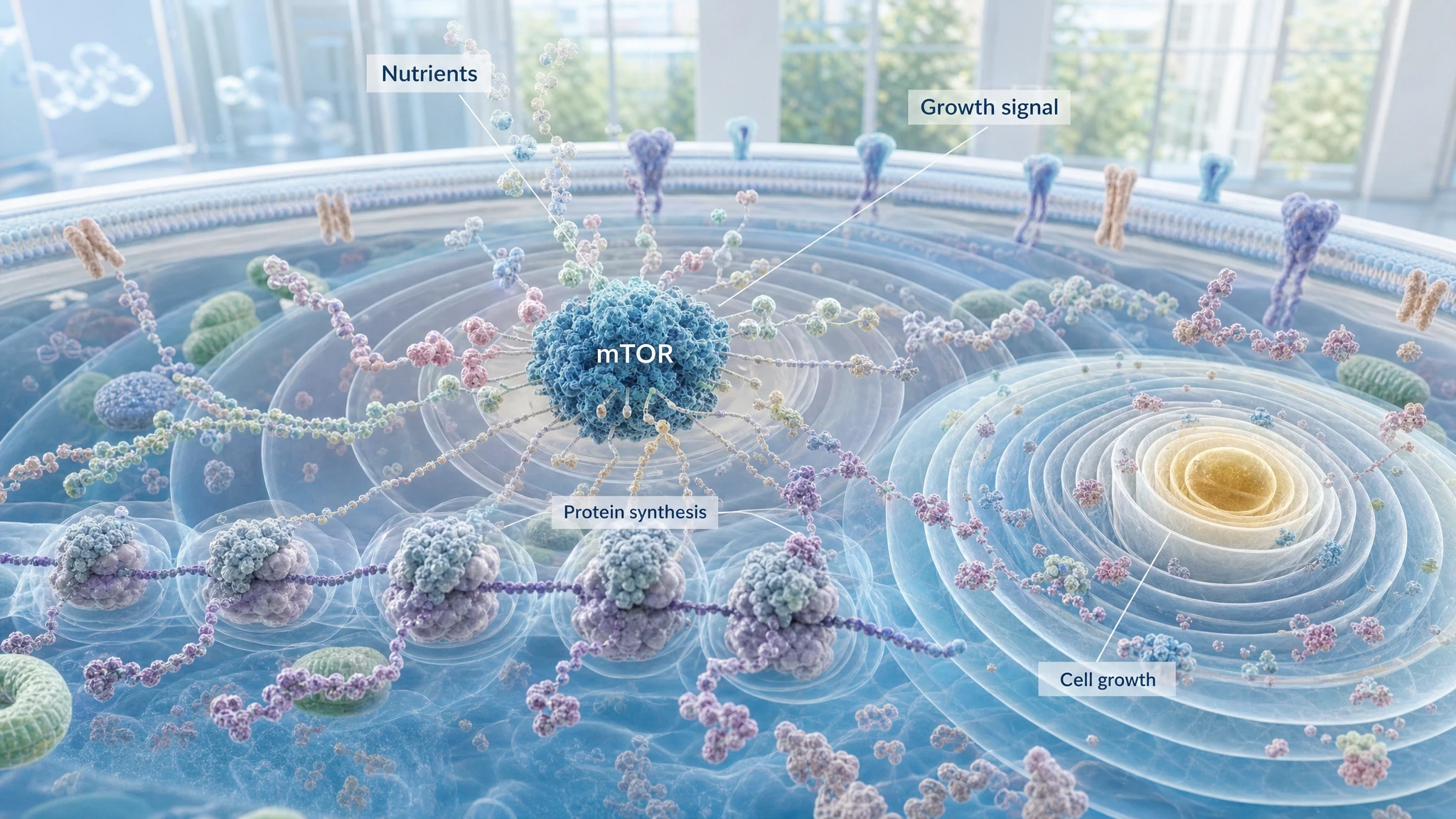
mTOR is a signaling pathway, that is, a network of molecular signals that functions as an integration hub: it receives information about nutrients, growth factors, and energy availability and translates them into a cell response oriented toward construction. When the context is favorable, this network supports cell growth, the production of structural components, and an increase in cell mass. Saying that mTOR "turns on growth" is a useful simplification, but the real point is that it coordinates a program of anabolism, that is, the synthesis and accumulation of biological material.
This framework makes mTOR a central regulator, but not a universal switch: its significance changes based on the cell type, the duration of the signal, and the metabolic context. Under physiological conditions, its activation helps support growth; if, however, the signal is altered or persistent, the biological advantage may become questionable. For this reason, its role must be interpreted in conjunction with protein synthesis and, subsequently, with energy balance. The next section clarifies how mTOR concretely supports the production of new proteins.
To understand why this node is so important, it is useful to look at its main effects:
- it coordinates the cell's entry into growth and construction programs;
- it supports the production of proteins necessary for structure and function;
- it promotes conditions compatible with orderly cell proliferation;
- it connects external signals and the internal state of the cell in a coherent way.
The following steps show how mTOR transforms a signal into growth, protein synthesis, and cell proliferation. Its role is best understood by starting with its basic function and then moving on to its building processes.
mTOR: what it is and what it does in the cell
mTOR is a kinase (an enzyme that regulates the activity of other proteins). To do this, it adds small chemical groups called phosphates to proteins. It therefore acts as a hub that integrates signals regarding nutrients, energy, and growth. Based on this data, it directs the cell's choices toward actions suitable for the context. If conditions are favorable, it supports the construction of new materials and the increase of mass. Its biological value stems from this guiding function, not from a single effect.
A review described mTOR as a guide for growth and metabolism. It also showed that it integrates external signals, including nutrients and growth factors [1]. Another defined mTORC1 as a key regulator of growth in eukaryotic cells (cells with a nucleus) [2]. The two analyses agree on the central role of the pathway, but they have a descriptive approach. They do not show that every activation is useful or the same in all tissues. In fact, the effects depend on the context, the strength of the signal, and its duration. This is where the link with protein synthesis arises.
How mTOR supports protein synthesis and cell growth
One of the best-known effects of mTOR concerns protein synthesis. Through this process, the cell uses amino acids to build new proteins. These molecules form various structures and also act as enzymes or signals. Their production therefore becomes vital when the cell enters a growth phase. In this way, the pathway promotes mass increase and makes cell proliferation possible. However, a stronger signal does not always indicate better health. The effects change depending on the duration, the tissue, and the metabolic state.
A 2022 experimental study updated the map of mTOR substrates (molecules upon which the enzyme acts). The data confirm that the pathway regulates growth, metabolism, and disease-related processes [3]. Research therefore supports its role in coordinating the construction of new cellular materials. However, it also shows a limitation: much of the evidence comes from models studied under controlled conditions. These models cannot, on their own, describe the full complexity of an organism. Before evaluating the result, it is therefore necessary to also consider the energy balance. The following section clarifies this link.
Why mTOR must be interpreted in the context of energy balance
mTOR does not act alone, because its activity depends on the energy balance (the ratio between available and used energy). If nutrients and energy are sufficient, the signal supports growth and construction programs. If resources decrease, the cell reduces the weight of this pathway instead. It can thus prioritize other processes, which are better suited to managing scarcity. For this reason, it should not be viewed as a simple on or off switch. Its effect changes depending on the cell type and the resources actually available.
A 2023 review explained that mTOR integrates signals regarding nutrients, growth factors, energy, and oxygen. Based on this data, it initiates responses that increase anabolism or reduce catabolism (the consumption of materials to obtain energy) [4]. Another study showed that the pathway links nutrient abundance to growth and energy reserves [5]. The picture is clear, but requires caution. These studies explain the mechanism without showing that every activation is beneficial. Its value depends on the duration of the signal and the type of cell. This is the starting point for the comparison with AMPK, its functional counterbalance.
Recent research and updates
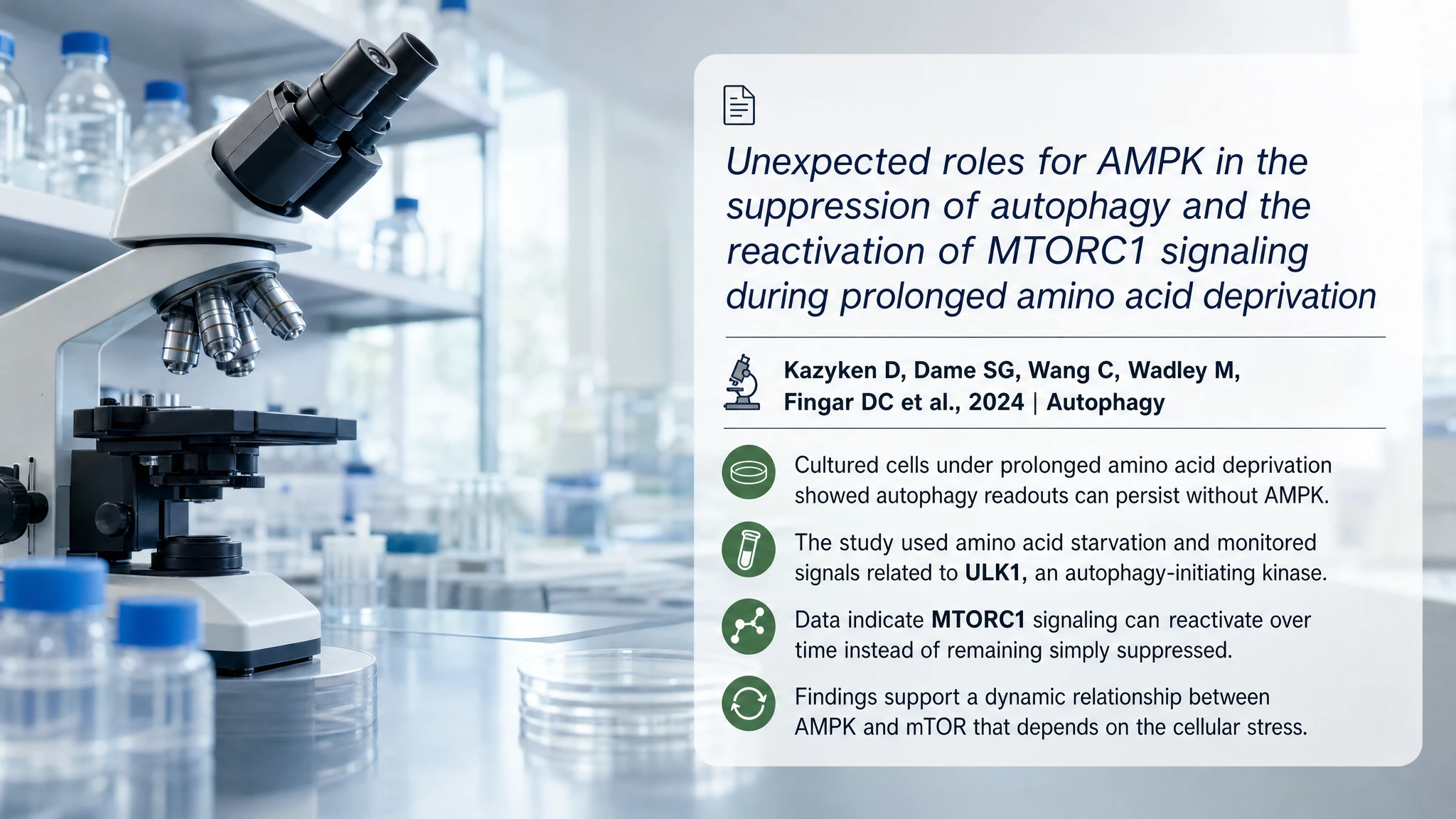
In 2024, the American researcher Kazyken and colleagues published a study in the journal Autophagy. The group examined how catabolism (the use of cellular resources) interacts with AMPK and mTORC1, the mTOR complex linked to growth. During prolonged amino acid deprivation, the relationship between these signals did not follow a linear path and changed over time. The data therefore call for caution when linking cellular energy, autophagy, and growth.
Unexpected roles for AMPK in the suppression of autophagy and the reactivation of MTORC1 signaling during prolonged amino acid deprivation
- The study examined cultured cells during prolonged amino acid deprivation. Some signs of autophagy remained present even without AMPK.
- The researchers created an amino acid deficiency and tracked signals linked to ULK1, a kinase (regulatory enzyme) that initiates autophagy.
- Under these conditions, the MTORC1 signal could reactivate over time, instead of remaining permanently switched off.
- The work argues that the relationship between AMPK and mTOR is dynamic and varies with the type of cellular stress. It is therefore not a rigid opposition.
Why AMPK is the counterbalance to mTOR and signals energy scarcity
When resources decrease, the cell shifts its priorities to protect its internal balance. It thus postpones cell growth and protein synthesis, which consume significant energy. In this process, AMPK, or AMP-activated protein kinase, detects the energy balance. It acts as a counterweight to mTOR and guides the cell toward conservation, adaptation, and homeostasis (stable internal balance).
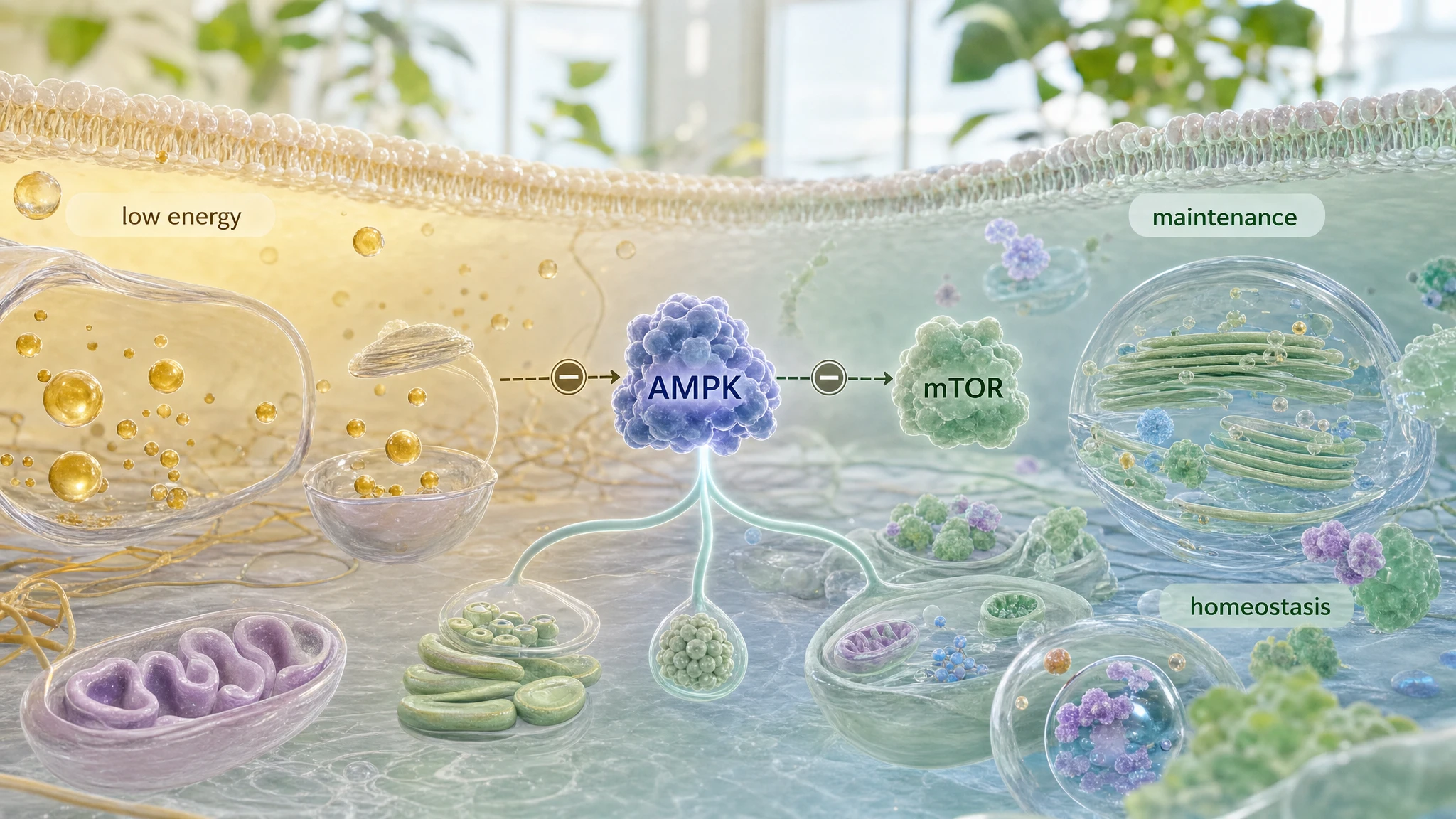
When energy levels drop, the cell cannot support anabolism, growth, and cell proliferation in the same way. Anabolism includes the processes used to produce new molecules and parts of the cell. In this context, AMPK, or AMP-activated protein kinase, detects the energy shortage. It then helps shift resources toward essential functions.
This balance links metabolic signals to the choice between producing new components or preserving existing ones. The following paragraphs explain how the sensor detects the energy drop and promotes adaptation. They also show why its effect is functionally opposed to that of mTOR.
It does not "shut down" the cell, but changes its priorities to maintain homeostasis (a stable internal balance). For this reason, it acts as a counterbalance to mTOR: the former signals scarcity, while the latter indicates relative abundance. Before examining the details, it is useful to keep three key points in mind:
- AMPK is activated when the energy available in the cell drops.
- The signal promotes conservation, adaptation, and reduced synthesis of new molecules.
- The dialogue with mTOR helps regulate growth and maintenance.
The first step is to understand how AMPK detects the energy drop and changes the cell's choices.
AMPK: what it is and when it is activated in the cell
AMPK is a kinase (an enzyme that regulates other proteins) that detects the energy available within the cell. When reserves drop, its activity signals that more energy-intensive processes must be reduced. These include protein synthesis and cell proliferation. The cell does not lose vitality, but rather shifts its strategy to protect its internal homeostasis. It therefore reduces anabolism and uses resources for essential functions. This enzyme is not an absolute brake, but a system that responds to scarcity. A review has defined it as a crucial sensor of energy status. When activated, it promotes the production of ATP (the molecule that provides energy) and shuts down biosynthetic pathways [6].
Another review noted that mTORC1 is negatively regulated by this sensor. The two systems can therefore counterbalance each other [7]. However, these summaries describe a general principle, not every difference between tissues or different phases. In practice, the cell adapts to deficiency without stopping permanently. The signal is therefore useful when the energy balance becomes critical and a rapid response is needed.
How AMPK promotes energy conservation and metabolic adaptation
When AMPK is activated, the cell reduces energy-intensive processes and protects vital functions. In this way, it limits waste and adapts better to unfavorable conditions. Biologically, this sensor helps maintain homeostasis (a stable internal balance) when resources decline. The cell, in fact, cannot simultaneously support growth and maintenance when energy is low.
This response therefore coordinates energy conservation without causing a total shutdown. A review has described this pathway as a system that coordinates growth, autophagy, and metabolism [8]. Autophagy is the process by which the cell eliminates and recycles damaged components. Another study has linked the sensor to the nodes that regulate autophagy and aging. These include mTOR, ULK1, FOXO, SIRT1, and NF-kB [9]. The data reveal a broad network that does not follow a single linear path. This enzyme acts in conjunction with other signals, which vary depending on the tissue, time, and nutritional status. Its role is to guide the orderly transition from energy expenditure to conservation.
How AMPK functionally opposes mTOR
AMPK and mTOR are often described as opposites because they detect different biological conditions. The former signals energy scarcity and guides the cell toward conservation. The latter, conversely, supports growth and synthesis when conditions are more favorable. However, this is not a constant battle between two switches. The systems communicate and can prevail depending on the tissue, the timing, and the context being studied. This dynamic balance determines whether the cell grows or slows down to protect its resources. A review on skeletal muscle has shown several intersections between the Ras, PI3K, and mTOR networks. These networks connect at multiple points with the LKB1/AMPK network [10].
An experimental study used insulin and AICAR, an activator of the same kinase. Researchers thus observed how the two signals influence each other in muscle tissue [10]. Another study found that metformin can inhibit mTORC1 even without the help of this pathway [11]. The opposition is therefore real, but not absolute. Their dialogue helps us understand when the cell grows and when it conserves resources.
How energy balance decides between cellular growth and maintenance
The energy balance indicates the ratio between available resources and the cell's needs. Based on this ratio, the cell invests in either growth or the repair of its components. If energy and nutrients are abundant, anabolism (production of new molecules), protein synthesis, and cell proliferation increase. If resources decrease, the cell dedicates more energy to maintenance. In this balance, mTOR and AMPK integrate the signals that guide the use of cellular resources.

Through energy balance, the cell assesses whether it can support cell growth or must conserve resources. If conditions are favorable, it uses energy for anabolism, protein synthesis, and proliferation. Anabolism is the process by which it produces new molecules. If the metabolic state worsens, it reduces consumption and maintains vital functions. Metabolic signaling translates nutrients, energy, and stress into instructions.
The cell decides whether to build or repair based on available energy. If there is enough, it can invest in growth. When reserves drop, it focuses on stability and recovery. The same signaling pathway can therefore produce different effects over time, without contradiction. Let us now look at the steps that regulate this balance.
This logic clarifies the dialogue between mTOR and AMPK in resource management. It is not a simple alternation between an "on" and "off" state. The following points explain how nutrients and time guide the balance between growth and maintenance:
- The quantity of nutrients directs the signal toward growth or conservation.
- The duration of the signal modifies the biological effect over time.
- The ratio between growth and maintenance varies with the cell's state.
- Internal maintenance prepares the cell for the next phase, called autophagy.
The flow of nutrients does not act alone, but is interpreted alongside the cellular energy state. The following steps show how this data gradually guides the biological response.
How nutrients and energy guide cellular signaling
The cell integrates nutrients and energy as contextual signals: if the intake is adequate, it can support growth, protein synthesis, and other energy-intensive activities; if resources decrease, it reduces anabolism and conserves what it has. This does not depend on a single sensor, but on a network of pathways that transform the energy balance into biological instructions. For this reason, the signal must be read as a system response, not as an isolated switch.
Data show that the mTORC1 pathway is activated in the presence of amino acids and growth factors, promoting protein synthesis. Conversely, a drop in ATP raises the AMP/ATP ratio and activates AMPK, which slows down anabolic processes. These two sensors do not work in parallel, but influence each other. The result is an integrated decision that weighs both the immediate availability of nutrients and the cell's energy reserves. The limitation is that these syntheses unify different models and do not always yield the same intensity of response across various tissues. However, they remain useful for understanding the general principle: the cell uses the metabolic context to decide how much to invest in growth and how much in conservation.
Why the same pathway changes meaning over time
A signaling pathway does not always produce the same effect: the duration of activation, the cell type, and the timing of the signal all matter. A short pulse may promote adaptation, while more prolonged activation can shift the balance toward different processes. In other words, the cell interprets time as part of the biological information rather than just a technical detail.
In a study on nutrient deprivation, ULK1, a kinase that initiates autophagy, showed marked dephosphorylation during nutrient deficiency [12]. This rapid change indicates that the cell perceives Fasting as an acute signal and immediately activates recycling mechanisms. In another study, AMPK and mTOR were described as two complexes that regulate the ULK1/2-Atg13-FIP200 complex in opposite ways [13]. AMPK activates it directly, while mTOR inhibits it. The limitation of these data is the narrow observation window: they describe the onset of the response well, but not always the entire cellular adaptation over time.
How the cell balances growth and internal maintenance
The cell must distribute resources between cell growth and internal maintenance without compromising homeostasis. mTOR tends to support investment in protein synthesis and cell proliferation, while AMPK directs towards conservation and the reorganization of functions. The central point is not to establish a winner, but to maintain a dynamic balance that changes with metabolic conditions and the duration of the stimulus.
A review on autophagy has summarized this network as an interconnected system between AMPK, mTOR, and ULK1/2 [14]. In this model, AMPK and mTOR act as a two-way switch that regulates the initiation of autophagy based on energy status. Another study showed that nutrient starvation induces an acute autophagic response mediated by ULK1 and its dissociation from AMPK [15]. In practice, when nutrients are scarce, ULK1 detaches from AMPK and activates the sites of autophagosome formation. The limitation is that these results explain the basic mechanism, but they do not serve as an identical rule for all tissues or for every stress. The biological value lies precisely in the flexibility of the energy balance.
Autophagy and cell turnover: the role of the dialogue between mTOR and AMPK
Cellular turnover requires a constant choice between creating new components and using existing ones. The crosstalk between mTOR and AMPK drives the cell toward two different pathways. Autophagy degrades and recycles internal components when the cell needs to perform maintenance. During anabolism (the production of new structures), however, the cell primarily uses resources to grow. This balance helps maintain the stability of the cell's internal environment.
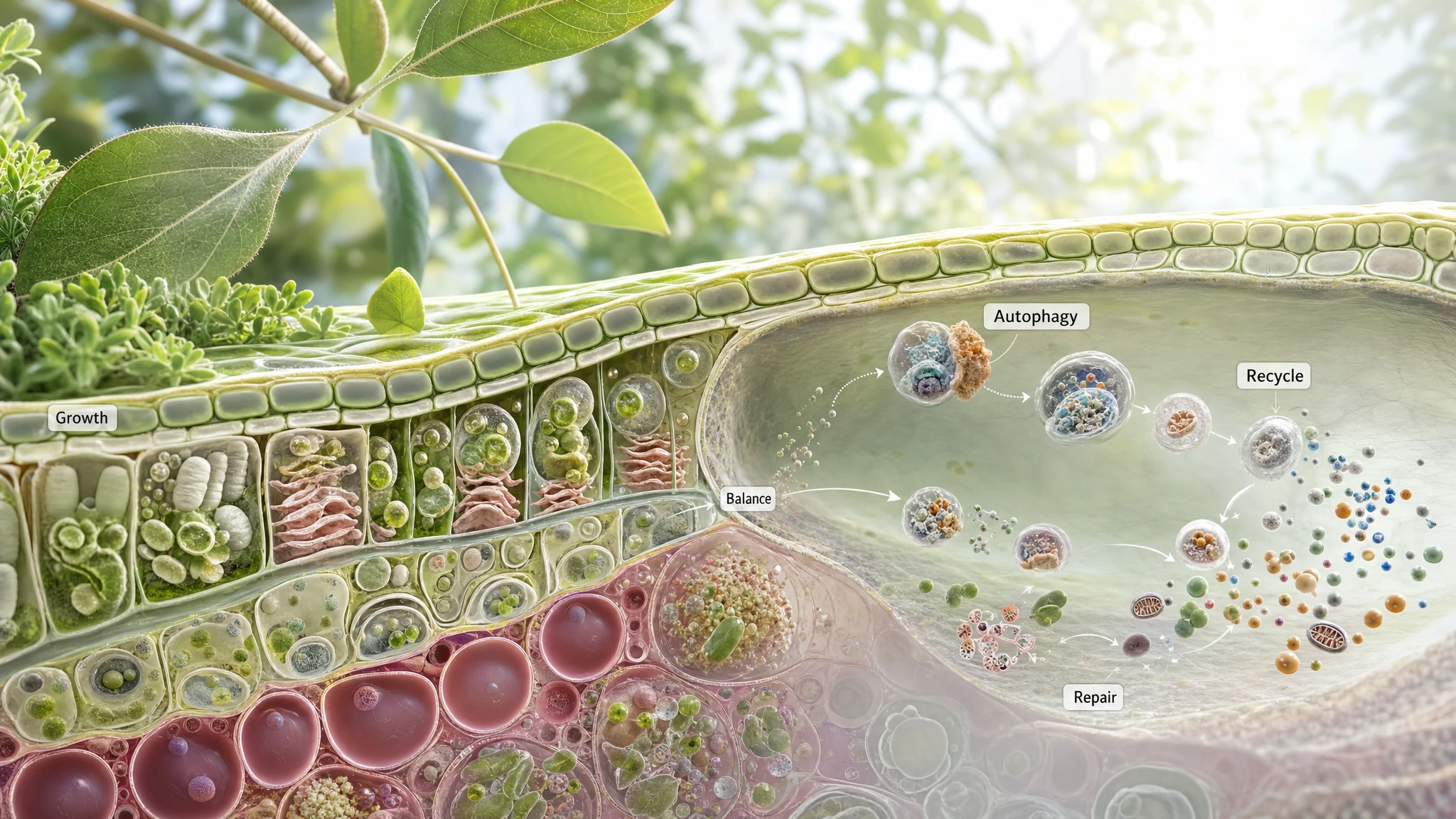
When choosing between growth and maintenance, the cell uses autophagy as an orderly recycling system. This system eliminates damaged parts, recovers useful materials, and supports cellular turnover. Autophagy does not indicate a "collapse," but rather a useful response to maintain internal balance. Furthermore, it adapts cell structures based on the resources available.
The cell, therefore, does not simply switch from an "off" state to an "on" state. It regulates degradation, recovery, and renewal based on the energy balance (the ratio between available and consumed energy).
This control maintains homeostasis (stability of the internal environment) and prevents any single program from prevailing for too long. We will see how turnover works, how AMPK promotes it, and how mTOR limits it during cell proliferation.
The transition from growth to reuse does not happen by chance. Two pathways guide different, yet well-coordinated responses:
- The initiation of autophagy depends on the contact points between mTOR and AMPK.
- AMPK helps recover resources when the cell has little energy available.
- mTOR tends to slow down turnover when the cell prioritizes growth.
- The dialogue between these two pathways maintains a balance that changes over time.
Autophagy does not act alone, but helps the cell adapt its use of resources. In the following sections, we will see how AMPK and mTOR oppositely regulate this targeted recovery of cellular components.
Autophagy: what it is and how it helps cellular turnover
Autophagy is a disposal and recycling program in which the cell encapsulates internal parts to be degraded and reuses the released materials. This mechanism supports cellular turnover because it removes worn-out structures and makes amino acids, lipids, and other resources available to stay alive or to face a new phase of activity. In this sense, autophagy is not an alternative to cell vitality, but a component of its continuous maintenance. The process begins with the formation of a membrane that isolates the material to be eliminated. Then, this vesicle fuses with a lysosome, an organelle filled with enzymes that break down the content. The degradation products return to the cytoplasm, and the cell reuses them to build new molecules or to produce energy. This cycle of disassembly and reassembly allows the cell to renew itself without relying solely on external materials.
The limitation is that most of the evidence comes from controlled systems, which are useful for clarifying the mechanism but less suitable for representing the complexity of an entire organism.
How AMPK promotes the reuse of cellular resources
When the AMPK signal prevails, the cell interprets the situation as an invitation to conserve resources and make the most of what is already present. Autophagy then becomes an efficient form of metabolic signaling: instead of spending energy to produce everything from scratch, the cell recovers useful components and reinserts them into biochemical circuits. This behavior helps maintain functionality even under less favorable conditions. AMPK acts as a sensor that detects low energy levels by measuring the AMP to ATP ratio. When this ratio rises, AMPK activates and triggers a series of reactions that block the most energy-intensive processes. At the same time, it directly stimulates key autophagy proteins to accelerate the recovery of existing materials. The cell thus obtains resources without having to import new ones from the outside.
The limitation is that these results describe the activation of the process well, but they do not mean that every tissue responds with the same intensity or at the same speed.
Why mTOR reduces turnover when growth prevails
When mTOR dominates, the cell directs its energy toward cell growth, the synthesis of new structures, and the support of cell proliferation. In this state, turnover does not disappear, but it is relegated to the background in favor of construction programs. The result is a functional reduction in autophagy, consistent with a context in which the cell interprets nutrients and growth signals as favorable to anabolism. mTOR functions as a central switch that integrates various signals: amino acid availability, growth factors, and energy status. When conditions are favorable, mTOR blocks a protein complex necessary to initiate the formation of autophagic vesicles. Thus, the cell suspends large-scale recycling and concentrates resources on the production of new proteins, membranes, and organelles. This allows it to increase in size and, if necessary, to divide.
A review on energy homeostasis noted that AMPK and mTOR counterbalance each other and that mTORC1 drives growth and proliferation in response to nutritional and hormonal signals [16]. The limitation is important: the prevalence of mTOR activity does not cancel out autophagy, but it restricts its activation; likewise, scarcity does not block growth absolutely, but rather reorients it toward a more conservative balance.
Summary of scientific evidence
This summary brings together the most useful sources from our internal bibliography. The selected works explain the relationship between mTOR, AMPK, cell growth, and autophagy.
| Publication year | Area of study | What the studies indicate |
|---|---|---|
| 2010 | Cross-talk between drugs and mTOR | results vary and show that mTORC1 can be blocked even without AMPK [11] |
| 2011 | Autophagy induced by nutrient deficiency | evidence indicates that nutrient starvation activates ULK1 and changes the dialogue between AMPK and mTOR [12] |
| 2012 | AMPK as an energy sensor | studies suggest that AMPK conserves energy and helps the cell adapt [6] |
| 2012 | Autophagy and regulatory nodes | evidence indicates that AMPK, mTOR, and ULK1/2 regulate autophagy together [14] |
| 2012 | Cellular energy and homeostasis | evidence indicates that AMPK and mTOR balance each other in controlling growth and energy [16] |
| 2017 | mTOR and cell growth | evidence indicates that mTOR coordinates growth, metabolism, and protein synthesis [1] |
| 2022 | AMPK, autophagy, and aging | studies suggest that AMPK links autophagy, energy stress, and homeostasis [9] |
| 2024 | AMPK and cellular metabolism | results vary and show a bidirectional relationship between AMPK and mTOR in growth control [7] |
Editorial review of the evidence
Overall, the studies I have examined here show a consistent picture. mTOR tends to support growth, biosynthesis (the production of new molecules), and an increase in cell number. AMPK, on the other hand, detects energy drops and prompts the cell to reduce consumption. The most robust research also agrees on one point: the dialogue is not binary. It changes based on the cell type, the duration of the stimulus, and the metabolic state. Autophagy is one of the main meeting points I have found.
However, the literature I have analyzed consists primarily of reviews and laboratory studies, which are not always easy to extrapolate to the whole organism. Many results explain cellular processes but do not prove identical effects in every tissue or situation. Furthermore, some data show that the relationship between AMPK and mTOR changes depending on the type of stress. For this reason, I believe caution is necessary when faced with overly linear interpretations.
Conclusions and editorial summary
Final critical note
The sources I consulted agree on the central role of mTOR and AMPK, but leave some questions open. The two signals often act in opposite directions, but the relationship is not always linear. There can, in fact, be indirect pathways, compensatory responses, and different outcomes depending on the context. An overly simplistic interpretation therefore risks missing part of the biological complexity. Furthermore, many data are derived from controlled tests. These explain the mechanisms well, but do not always allow for predicting the same effects in every organism or tissue.
References
[1] mTOR Signaling in Growth, Metabolism, and Disease
[4] The molecular basis of nutrient sensing and signalling by mTORC1 in metabolism regulation and disease
[6] AMPK: a nutrient and energy sensor that maintains energy homeostasis
[7] The metabolic sensor AMPK: Twelve enzymes in one
[8] The AMPK signalling pathway coordinates cell growth, autophagy and metabolism
[10] Role of Adenosine 5′-Monophosphate-Activated Protein Kinase Subunits in Skeletal Muscle Mammalian Target of Rapamycin Signaling
[11] Metformin, Independent of AMPK, Inhibits mTORC1 in a Rag GTPase-Dependent Manner
[12] Nutrient starvation elicits an acute autophagic response mediated by Ulk1 dephosphorylation and its subsequent dissociation from AMPK
[14] Role of AMPK-mTOR-Ulk1/2 in the Regulation of Autophagy: Cross Talk, Shortcuts, and Feedbacks
[15] AMPK and mTOR regulate autophagy through direct phosphorylation of Ulk1
Editorial note
Artificial Intelligence was used solely as a tool to support editorial and documentary work. All content, interpretations, bibliographic citations and conclusions have been verified, reviewed and approved by the author, who assumes full scientific responsibility for them.
The manuscript was also subject to independent peer review prior to publication.
To ensure maximum transparency, the article's complete history — including the dates of submission, review, acceptance and publication, as well as information on the peer review process — is available on the dedicated Article History page.