


Piperine and AMPK: black pepper in cellular energy control
Research on piperine and AMPK shows genuine interest in cell metabolism. Data indicate that the compound could modulate energy signals, especially in skeletal muscle. It could also influence glucose utilization and mitochondrial function (energy production in mitochondria). However, the evidence is largely derived from preclinical studies. The proposed mechanism therefore has solid biological foundations. However, it does not allow for definitive clinical conclusions for humans.
- Published 10/11/2026
- Updated 16/11/2026
- Reviewed 16/11/2026
- Article history

ABSTRACT : WHAT THE SCIENCE SAYS
The relationship between piperine and AMPK is of interest because it concerns how cells use energy. AMPK, an acronym for AMP-activated protein kinase, is a kinase (an enzyme that regulates other proteins). It acts as an energy sensor and is activated when reserves drop. Piperine is the main active compound in black pepper.
Studies have evaluated its effects on this pathway, especially in laboratories and experimental models. In this article, we will see what AMPK activation indicates and which signals can promote it. We will also see why data must be read with caution. In particular, the article addresses:
- What a cellular energy sensor means
- When AMPK is activated and what signals it detects
- How piperine can act on cellular pathways
- Why data primarily come from preclinical studies
- How to interpret results without overstating them
What is AMPK and why does it matter as a cellular energy sensor
When cellular energy levels drop, AMPK comes into play—a protein that balances ATP consumption and production. ATP is the cell's primary energy source. Understanding this energy sensor helps in cautiously evaluating why piperine AMPK is being studied in metabolism. It also helps in examining its role in energy homeostasis (internal energy balance).

AMPK is a regulatory protein that helps the cell recognize when available energy is dropping and reorient cellular metabolism toward a more efficient use of resources. In practice, it acts as an energy sensor: it does not produce energy, but it coordinates responses that limit the most costly processes and favor those useful for maintaining internal balance. This role is central when ATP, the main cellular energy molecule, becomes less available.
For this reason, AMPK is described as a key node of energy homeostasis: it integrates internal signals and guides the cell toward a dynamic balance, especially when energy demand changes rapidly. Its importance lies not in a single function, but in its ability to coordinate different responses based on the context. It is precisely this logic that makes the possible link with piperine interesting, though it still requires careful verification. In the following sections, the focus shifts to how and when the signal is actually activated in the cell.
To frame the topic of piperine AMPK, it is useful to start with what AMPK represents on a biological level: a control pathway that connects energy deficiency, cellular adaptation, and the maintenance of energy homeostasis. The point is not just to "turn on" a signal, but to understand how the cell translates metabolic stress into an orderly response. The next steps clarify when this signal is activated and why it matters in the most demanding tissues:
- The cell activates AMPK when it senses a drop in available energy.
- The AMPK signal translates metabolic stress into an adaptive response.
- Tissues with high ATP consumption depend heavily on this control.
- The connection with piperine should be read as a cautious mechanistic hypothesis.
The role of AMPK becomes clearer if we observe how the cell monitors available energy. In the next steps, we will see how this signal regulates metabolism (the reactions that keep the cell alive).
What is AMPK and how does it work in the cell
AMPK is a kinase (an enzyme that regulates other proteins by adding phosphate groups). It acts as a control center for the cell's energy status. When energy is scarce, it reduces processes that consume ATP and supports those that help maintain internal balance. For this reason, it is an energy sensor and not just a simple switch. Its study is relevant to nutrition and metabolism because it integrates multiple signals and adapts the response to the context. In practice, it collects different signals and translates them into metabolic choices suited to energy availability.
A 2012 review describes AMPK as a crucial energy sensor. A 2026 summary defines it as a conserved kinase that keeps cellular metabolism in balance [1] [2]. A 2022 review also indicates that it directs the use of glucose and fatty acids [3]. The three sources therefore converge on energy control, while describing different aspects of it. These data explain its biological role, but do not prove a practical effect of piperine in the body. The link indicates a possible mechanism and not a clinical conclusion.
When AMPK is activated and what it signals
AMPK is activated when the cell detects less available energy or an increased internal demand. In this case, the signal does not necessarily indicate damage, but rather a rapid need for adaptation. AMPK then compares energy consumption and production, subsequently transforming this data into a coordinated response. The cell can thus determine whether it needs to conserve resources and slow down certain processes. It can also use available substrates (the substances from which it derives energy) more effectively.
A 2025 review article notes that cells must continuously adapt their metabolism. They must do so based on available nutrients and signals arriving from the environment [4]. WHO recommendations on physical activity show how important it is to regulate energy demand in a sustainable way [5]. This principle also applies at the level of the entire organism. These references explain the biological context, but they do not show that activating AMPK is always beneficial. Furthermore, the effect is not the same in every tissue. Its significance depends on the duration, intensity, and context of the stimulus.
Why AMPK is important for tissue metabolism
AMPK is highly significant in tissues that consume large amounts of energy, such as skeletal muscle. In these tissues, the need for ATP changes rapidly depending on activity and available nutrients. Therefore, a control system capable of adapting to these changes is required. This protein helps the cell decide how to use resources and maintain its function. It thus links energy control to the tissue's response to metabolic stress. This control is essential for connecting rapid energy fluctuations with appropriate tissue responses.
WHO and USDA guidelines do not mention piperine. However, they demonstrate why energy balance is important for biology and public health [5,6]. In this context, the relationship with piperine and AMPK should be interpreted starting from the function of this pathway. AMPK is not a nutrient that provides energy, but a signal that can act on metabolism. Data support this biological basis, but do not prove a direct clinical effect.
Piperine and AMPK: what an experimental link means
The connection between piperine and AMPK arises primarily from preclinical and cellular observations. In this context, piperine should not be viewed as a substance that provides energy, but rather as a molecule capable of modulating intracellular signals involved in the response to energy deficit. The value of these observations lies in suggesting a possible link to an important metabolic axis, not in demonstrating a definitive effect in humans on its own. For this reason, the correct language remains cautious: we speak of association, modulation, and mechanistic potential.
Experimental data help us understand why piperine AMPK is an interesting topic, but they do not yet allow us to generalize the results. The distinction between an observed signal and its practical significance therefore remains essential, especially when discussing cellular adaptation and energy metabolism. In vitro studies show that piperine can influence AMPK activity in specific cell models. However, these controlled conditions do not reproduce the complexity of an entire organism. Therefore, clinical studies are needed to verify whether this modulation translates into a real and safe metabolic effect in humans.
Recent research and updates
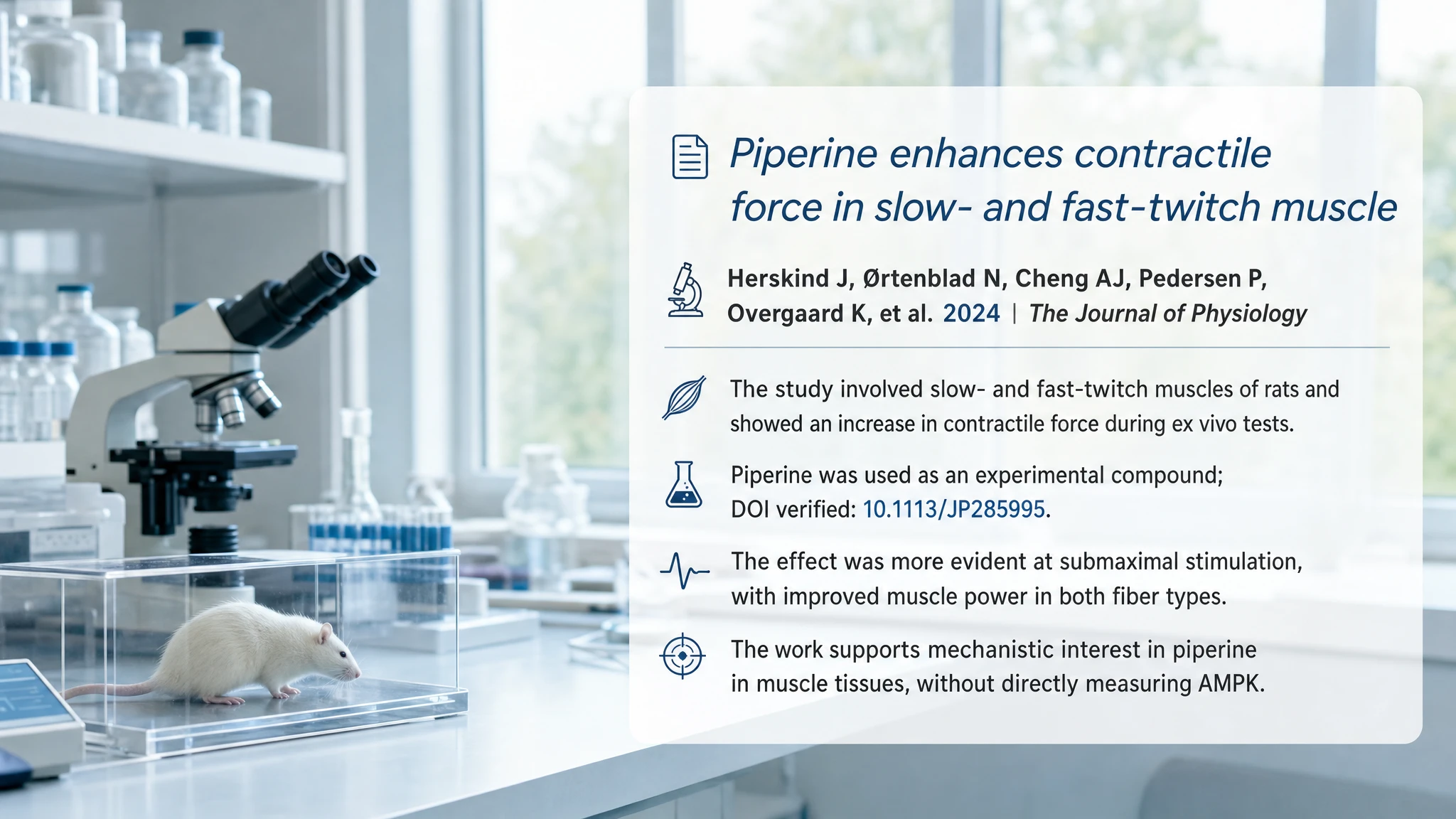
In 2024, the Japanese researcher Herskind and colleagues studied the effects of piperine on the strength of rat skeletal muscles. The work appeared in the journal The Journal of Physiology. It does not measure AMPK directly, but it links the compound to a measurable effect. The effect concerns tissues that use a lot of energy. The result expands knowledge on the relationship between piperine and cellular energy. It also provides clear and verifiable experimental data.
Piperine enhances contractile force in slow- and fast-twitch muscle
- The study examined slow- and fast-twitch rat muscles. It found greater force in ex vivo (outside the organism) tests.
- Piperine was used as the experimental compound; the verified DOI is 10.1113/JP285995.
- The effect was more pronounced with a submaximal stimulus. Furthermore, it increased power in both fiber types.
- The work supports interest in the mechanism of piperine in muscle, but it does not directly measure AMPK.
How piperine can modulate intracellular energy signals
In the link between piperine and AMPK, the way the compound changes cellular energy signals is what matters. The process involves metabolic stress (when energy demand slightly exceeds available supply). It also involves cellular adaptation and the response of mitochondria (structures that produce most of our energy). These signals help the cell choose whether to produce, use, or store energy.
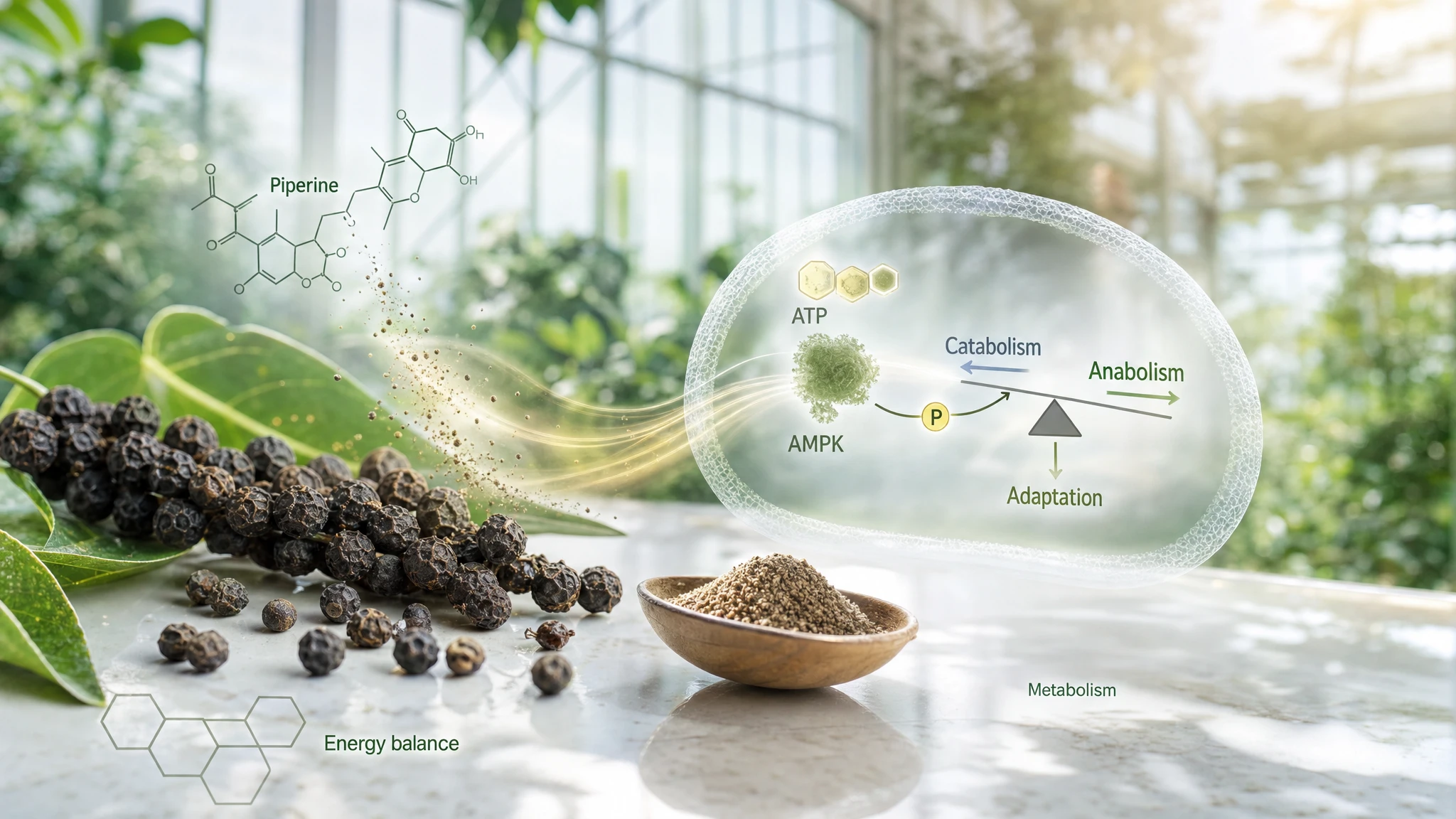
Piperine can influence intracellular energy signals because it acts on nodes that the cell uses to read ATP availability, metabolic stress, and energy demand. In practice, it does not "provide energy," but it can shift the balance between catabolism and anabolism, promoting a cellular adaptive response that also involves AMPK.
Piperine appears to be a modulator that interacts with the cell's energy sensor and its ability to respond to a change in resources. The decisive step is to understand through which intermediate signals this modulation takes shape. This leads into the mechanisms closer to AMPK and the kinases that control it.
This makes an effect on energy homeostasis and cellular metabolism plausible, without turning an experimental signal into clinical proof. To guide your reading, it is useful to distinguish between the levels of the signal:
- The redox balance can act as a signal, not just as damage.
- Upstream kinases integrate multiple intracellular inputs together.
- Food molecules can modulate sensitive energy pathways.
- Biological plausibility does not yet equate to clinical benefit.
The following paragraphs explain how piperine may act on the signals that precede the activation of AMPK. This helps in understanding its potential role in metabolism and cellular adaptation.
The role of ROS in the cellular response to piperine
ROS (reactive oxygen species) do not always indicate damage. At low doses, they can alert the cell to metabolic stress (a brief imbalance between energy demand and availability). The compound could thus transform a change in the oxidative balance into a signal for the activation of AMPK. This does not mean that ROS are useful in every situation. Instead, it indicates that a well-regulated change can prompt the cell to adapt its energy usage.
A study on L6 myotubes (cultured muscle cells) and Wistar rats used doses of 0.01 and 0.1 mg/kg. The treatment reduced postprandial glycemia and activated a signaling chain from ROS to AMPK [7]. In another study on muscle cells and mice, phosphorylated AMPK and ACC levels increased. These proteins were therefore rendered active through the addition of a phosphate group. Glucose uptake (the entry of glucose into cells) also increased [8]. Both studies show a consistent mechanism: piperine triggers a controlled increase in ROS, which in turn activates AMPK. This step was observed in cellular and animal models, where the redox signal preceded the metabolic response. The data indicate a sequence of events that is reproducible in the laboratory. However, these remain study models and do not prove a defined clinical effect in humans.
CAMKK and other kinases upstream of AMPK
AMPK responds to signals arriving from multiple points in the cell, and among the most important regulators is CAMKK, a kinase that translates intracellular variations into a readable energy signal. When discussing piperine, the issue is not a linear shortcut, but rather the possibility that the compound interacts with multiple upstream steps, eventually converging on the phosphorylation of AMPK. This helps to understand how a food compound can integrate into a control network rather than acting as a single switch.
In a cellular study on MC3T3-E1, piperine promoted osteoblastic differentiation through an AMPK-dependent mechanism [9]. The data support a coherent chain of events, but the abstract does not provide complete quantitative details for all steps; therefore, the picture remains strong from a mechanistic standpoint but still limited in terms of clinical transferability.
Why a food molecule can influence an energy pathway
Food molecules do not serve only as sources of nutrients or energy. Some can act as biological modulators and change the signals that regulate metabolism. Piperine does not add calories like a macronutrient, but it can change the way a cell reads a signal. This aspect matters for AMPK, which responds to energy changes and stress signals. In a test on skeletal muscle and mice, the compound increased the use of carbohydrates and fats during acute exercise. The data indicates a possible action on energy balance [10].
The compound should therefore be viewed as a possible amplifier or regulator in a specific test context. Not all food molecules perform this action. Furthermore, the effects observed in laboratory models do not directly become benefits for people. However, this hypothesis explains why the compound arouses interest in research. The data clarify the reasons for the studies, but remain linked to experimental biology. The next step concerns what AMPK can change after its activation. It is therefore a matter of the real effects produced by the signal. Even in a cardiac model, previous research cited by the authors indicated a possible activation of AMPKa. However, the central effect of the research concerned different pathways [11].
Effects of AMPK on energy, glucose, and mitochondrial function
AMPK activation helps the cell use its energy carefully. Its effects impact glucose, energy sources, and ATP production. The key point is homeostasis (the balance between energy required and available). Piperine is of interest because it may act on these cellular processes, but the data require caution.
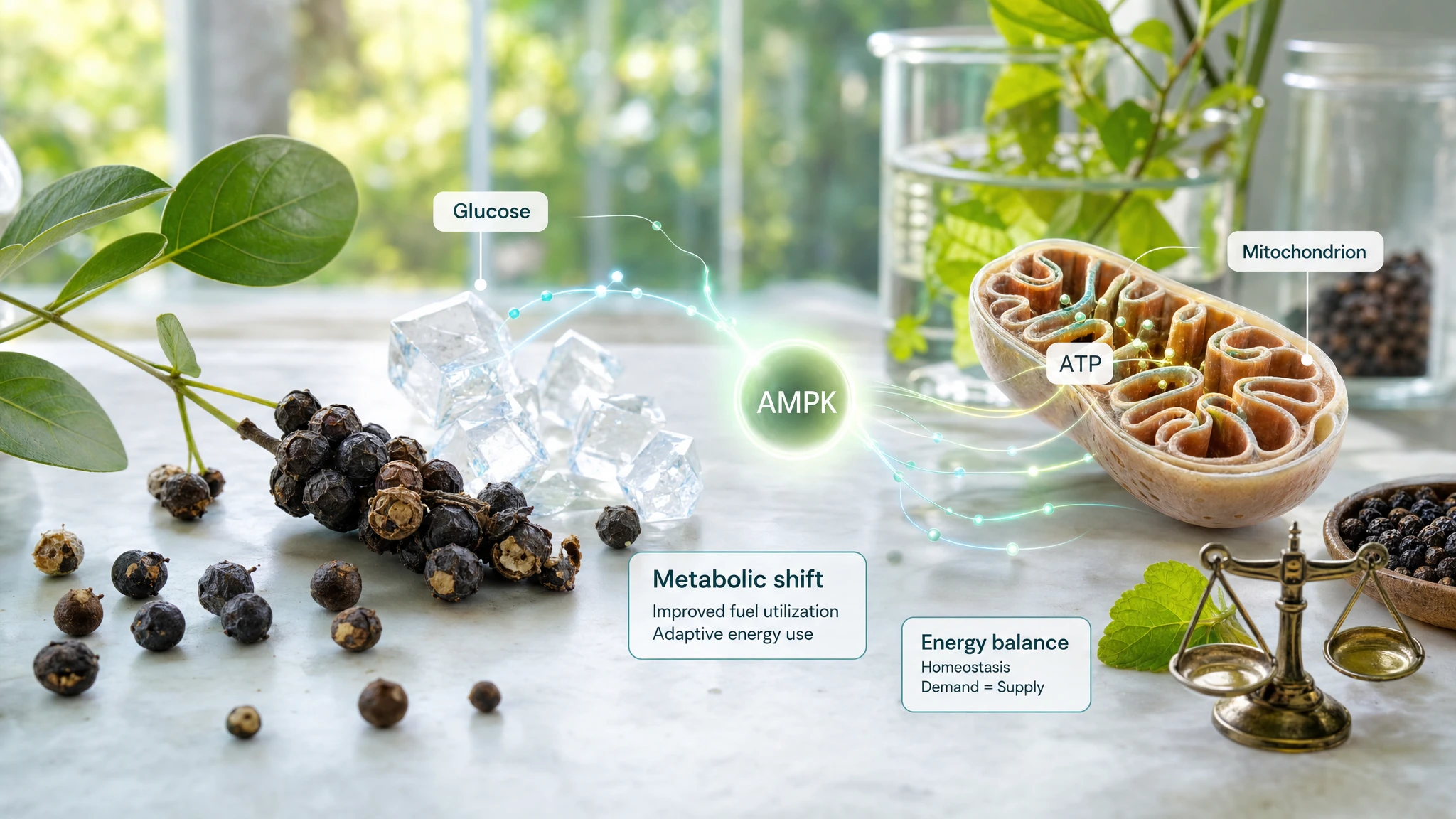
When AMPK is activated, the cell conserves energy and adapts its cellular metabolism (the sum of all cellular reactions). It helps produce and use ATP (the main source of cellular energy), while slowing down less urgent processes. It therefore stimulates catabolism (using nutrients to obtain energy) and limits anabolism (the production of molecules).
Overall, the cell seeks a balance between the energy it uses and the energy available. This data, however, does not indicate a direct clinical benefit. The priority is to understand how an energy signal changes the work of tissues. This helps in evaluating data on piperine and its possible link to AMPK. In tests conducted under controlled conditions, the effects on glucose and mitochondria appear clearer.
The cell reacts in this way to metabolic stress (an imbalance between required and available energy). This occurs primarily in tissues that consume energy. To understand these effects, one must follow three aspects and the potential role of piperine:
- Glucose enters the cell, which can then use it more efficiently.
- The cell adapts its energy expenditure based on its needs.
- Mitochondria maintain a central role in energy production.
- Piperine is of interest because it could act on these processes.
The following points show the main effects of AMPK on the cell's energy balance. Each aspect helps to understand the potential role of piperine.
How AMPK influences glucose use in cells
When the AMPK pathway is activated, the cell tends to favor the entry and utilization of glucose as a source of rapid energy. This is particularly important in metabolically active tissues, as it allows for the support of ATP production when reserves are limited or demand increases. The mechanism involves glucose transporters, which move to the cell membrane to facilitate the entry of the sugar. Once inside, glucose enters glycolysis, the pathway that transforms it into usable energy. This process has been observed in various cellular models, where AMPK activation has increased glucose uptake in a measurable way. The data indicate a rapid and consistent effect, which does not depend on insulin but on a direct signal of energy deficiency. In practice, the cell responds to a drop in energy by opening the doors to its primary fuel.
In the context of piperine, the point is not to discuss a clinical effect, but rather a cellular signal that better directs the use of energy substrates. In this sense, glucose regulation is one of the first observable consequences of AMPK activation and a concrete example of metabolic adaptation. These results are consistent, but they remain preclinical and do not allow for the attribution of general benefits to humans.
AMPK and energy expenditure: what changes in the cellular balance
One of the best-known effects of AMPK concerns the energy balance (the ratio between available and consumed energy). When it detects low energy, the cell reduces less urgent activities. At the same time, it prioritizes processes useful for remaining active and vital. This does not mean "burning more," but rather managing energy, reserves, and recovery better. The compound may act on this internal configuration, that is, on the choice of where to use fuel. In practical terms, the cell shuts down construction processes and turns on those for maintenance and energy production. This reorientation affects key metabolic pathways such as protein synthesis and lipid production, which are slowed down to save ATP. At the same time, the cell increases the oxidation of fatty acids, a longer-lasting energy source compared to glucose. The net result is a more prudent use of available resources, which prepares the cell for periods of stress or fasting.
In a preclinical study, piperine increased muscle metabolism at rest. The data indicates a possible effect on the tissue's energy expenditure [12]. The result helps to understand the mechanism, but it does not show how much it matters in humans. Furthermore, it does not clarify how long it might last. Research therefore observes the tissue under defined conditions, not a response of the entire organism. For this reason, it links piperine to the mechanism without demonstrating a practical result in nutrition. It should therefore be read as a biological signal, not as certain proof of nutritional efficacy.
The link between AMPK and mitochondrial function
Mitochondria are the center of energy production and therefore the point where the activation of AMPK becomes most visible on a functional level. When this energy sensor is activated, it does not only regulate the immediate use of nutrients, but also contributes to maintaining more efficient mitochondrial function. This occurs through the stimulation of mitochondrial biogenesis, which is the formation of new, healthy mitochondria. A greater number of functioning mitochondria allows the cell to produce more ATP with less waste. Furthermore, AMPK promotes the removal of damaged mitochondria, a cleaning process that is essential to avoid the accumulation of inefficient components. These mechanisms have been observed in studies on muscle and liver cells, where AMPK activation improved mitochondrial respiration. The data show an increase in oxidative capacity, which is the power with which the cell converts nutrients into energy.
In practice, the cell seeks to produce energy in a more orderly manner, limiting waste and supporting the ability to respond to metabolic stress. This is one of the reasons why AMPK is considered a key axis of energy homeostasis. These sources do not measure a direct clinical effect of piperine, but they explain why the experimental data appear plausible.
Why these effects are relevant to the study of piperine
These effects are relevant to piperine because they show a possible meeting point between a food molecule and a central system of cellular metabolism. If a compound influences AMPK, it can theoretically affect multiple aspects simultaneously: glucose utilization, energy expenditure, and mitochondrial function. These three aspects do not act alone, but are interconnected. A change in glucose can, in fact, be reflected in energy expenditure. In turn, energy expenditure depends on the work of the mitochondria. This is why researchers look at these three aspects together, rather than one at a time. Understanding this link helps to better interpret the data on piperine. It is not enough to observe a single effect to draw solid conclusions. Instead, it is necessary to see how the signals combine within the cell. This is the most useful approach for studying the compound.
It is precisely this convergence that makes piperine a useful subject of study in energy models—not to promise clinical results, but to understand how a natural substance can modulate complex intracellular signals under controlled conditions. Observations in muscle, rats, and cells indicate a possible effect on the systems that regulate energy and glucose, but they are not sufficient to define useful doses or clinical effects in humans. For this reason, piperine should be viewed as an interesting biological key, capable of helping to study the cellular energy sensor, rather than as an intervention already validated in practical nutrition.
What studies say about piperine and the significance of the results
Studies on piperine and AMPK show genuine interest, but they are primarily preclinical, meaning they have been conducted on cells or animals. The data help us understand how the substance may act on cell metabolism. However, they do not prove a beneficial effect in humans. It is therefore necessary to distinguish between what emerges in the laboratory and its practical value.

Research on piperine AMPK shows a potential effect on how cells use energy. However, this data does not yet prove a therapeutic effect. In laboratory tests, in fact, the response can be more pronounced than in the human body.
The literature therefore offers a basis for new hypotheses, not a final verdict. In the nutritional field, a signal of AMPK activation or homeostasis (balance between available and used energy) can guide further research.
However, it remains to be seen how robust this is outside the laboratory. The following sections explain how to evaluate each result and its real weight.
Studies therefore help to understand the mechanism, without providing proof of efficacy. To interpret this data correctly, it is necessary to distinguish between the observed result and what applies in general. The key points are as follows:
- Many results derive from preclinical studies on cells or animals.
- The observed modulation does not demonstrate a clinical effect in humans.
- Doses, timing, and study models can change the biological response.
- Prudent language describes the data without diminishing its value.
The available studies show why this molecule is of biological interest, but they do not allow for quick conclusions. The following sections separate what the tests have observed from what we can truly conclude.
Why results on piperine remain primarily preclinical
Most of the evidence on AMPK comes from tests conducted on cells or animals. These models show how the molecule can act on the pathways that regulate energy use. However, they do not directly describe what happens in humans. These are simplified systems, useful for isolating a precise mechanism. Precisely for this reason, they allow for a clear observation of a single biological effect.
Preclinical research isolates a biological signal well, but it does not, on its own, demonstrate a health benefit. The data follow a common line, but they depend on the model and the biological scale used. A cell in a laboratory, in fact, does not reproduce the full complexity of an entire organism. Furthermore, direct clinical confirmations—that is, studies conducted on real people—are missing. These findings therefore indicate a path to be studied, not an effect already demonstrated in humans. The next step, not yet solidly taken, is large-scale clinical verification.
What a modulation indicates, not proof of efficacy
Stating that piperine modulates AMPK means it can act on a pathway that regulates cellular energy. Studies have observed this effect only under specific experimental conditions. This data is useful, but it does not show whether the response is consistent or strong enough in humans. In other words, modulation describes a possible influence on a mechanism, not a measurable clinical outcome in a person.
Modulation therefore describes a possible biological link, not a proven clinical effect. The result connects an effect within the cell to a signal that may involve the entire body. This transition, however, is neither automatic nor guaranteed. Doses, timing, and test conditions do not translate directly into nutritional practice. What works in a laboratory may behave differently in the human body. Therefore, targeted clinical trials are needed to verify the effect under real-world conditions and on an adequate number of people.
Which methodological limitations matter most in this topic
When reading studies on piperine and AMPK, the limitations of the methodology carry significant weight: the model used, concentration, duration of exposure, and tissue type can all alter the observed outcome. For this reason, two positive results do not necessarily hold the same value, especially if they come from different systems. A study on liver cells, for example, is not directly comparable to one on muscle cells.
Understanding the methodology is essential to avoid confusing a promising signal with an established conclusion. The result is consistent with a biological role for the pathway, but the abstract does not report the number of cases or the full details of the dosage, which limits critical interpretation. Without this information, it is difficult to determine how robust or replicable the result is. Even when the signal is clear, the strength of the interpretation depends on the completeness of the experimental design. A well-described design, in fact, allows for the proper comparison of different studies.
How to correctly interpret evidence without overestimating it
Correctly interpreting evidence means balancing biological interest with caution. In the case of piperine, the strong point is the presence of a coherent mechanistic logic consistent with cellular metabolism; the weak point is that this logic has primarily been observed outside of humans. Keeping both aspects in mind avoids interpretations that are either overly optimistic or overly skeptical.
The most accurate language is therefore that of possibility, not certainty: a useful signal for research, not a proven promise. This distinction is not a formal detail, but rather changes how every new study is interpreted. Precisely for this reason, when a study discusses a metabolic effect, the next step is to ask how replicable it is, under what conditions, and with what weight compared to other factors that influence metabolism. It is a cautious approach, but also the most useful one to avoid overestimating preliminary data that are still far from definitive confirmation.
Summary of scientific evidence
This summary includes only the sources already present in the bibliography. It summarizes the evidence on the piperine-AMPK relationship and its possible effects on metabolism.
| Publication year | Area studied | What the studies indicate |
|---|---|---|
| 2012 | AMPK as an energy sensor | evidence indicates that AMPK regulates energy homeostasis (the balance between available and used energy) [2] |
| 2016 | Skeletal muscle metabolism and energy expenditure | studies indicate that piperine can increase the energy used by muscle at rest [12] |
| 2017 | AMPK activation in muscle and glucose uptake | evidence indicates that piperine can activate AMPK and promote glucose uptake [8] |
| 2018 | ROS/CaMKKb/AMPK cascade in skeletal muscle | signals consistent with upstream control of AMPK and glucose transport have emerged [7] |
| 2018 | AMPK-dependent osteoblastic differentiation | the signal is consistent with the phosphorylation (a modification that regulates a protein) of AMPK in cultured cells [9] |
| 2022 | Metabolic adaptation and use of energy substrates | evidence indicates that AMPK drives metabolism to use glucose and fatty acids [3] |
| 2025 | Modern regulation of metabolism and mitochondria | studies indicate that AMPK remains central to the response to energy deficiency [1] |
Editorial reading of the evidence
Overall, the research I have reviewed here shows a consistent biological picture. AMPK regulates the cell's energy balance. I found that piperine can act on this pathway in experimental models, especially in skeletal muscle. The data indicate that the compound could influence nutrient utilization and ATP management (the main source of cellular energy).
Furthermore, I was struck by its possible effect on certain signals that precede the phosphorylation of AMPK, the modification that regulates this protein. The data help to understand the possible mechanism. However, I must point out that they are derived from laboratory studies and controlled models.
The main limitations I encountered are the many preclinical studies and the wide variety of models. Doses, timing, and samples also vary. In several cases, complete data on numerical values are missing, making it difficult to compare the research. Furthermore, not all studies evaluate AMPK as a primary outcome. The link with piperine therefore remains possible, but it does not appear to be the same in every experimental model.
Conclusions and editorial summary
The link between piperine and AMPK interests me because it connects diet to cellular energy control. The data collected in this article indicate a possible relationship between piperine, energy use, and AMPK-related signaling. The studies primarily concern skeletal muscle, the tissue that enables voluntary movement.
The mechanism is therefore of genuine interest, but the data do not allow for broader conclusions. The biological framework is promising, but it should be interpreted with caution. This research shows how a natural substance can influence the use of energy and nutrients. It also helps us understand the stress response and the relationship between diet and metabolism. However, one should not overstate the significance of these results.
Final critical note
The framework I analyzed has solid foundations regarding mechanisms, but is weaker on a practical level. The data follow a consistent line, but vary between the models studied. Therefore, I cannot apply them to humans with certainty. Even the most favorable research does not clarify the differences between tissues, doses, and test conditions. Caution is therefore needed: the signal is interesting, but its significance in the body remains uncertain. Further confirmation is needed to define it.
References
[1] The AMPK Pathway: Molecular Rejuvenation of Metabolism and Mitochondria
[2] AMPK: a nutrient and energy sensor that maintains energy homeostasis
[4] The AMPK signaling pathway in cell metabolism and human diseases
[5] WHO guidelines on physical activity and sedentary behaviour
[7] Piperine Promotes Glucose Uptake through ROS‐Dependent Activation of the CAMKK/AMPK Signaling Pathway in Skeletal Muscle
[8] Piperine regulates UCP1 through the AMPK pathway by generating intracellular lactate production in muscle cells
[10] Piperine Attenuates Pathological Cardiac Fibrosis Via PPAR-γ/AKT Pathways
[11] Piperine enhances carbohydrate/fat metabolism in skeletal muscle during acute exercise in mice
[12] Piperine’s mitigation of obesity and diabetes can be explained by its up-regulation of the metabolic rate of resting muscle
Editorial note
Artificial Intelligence was used solely as a tool to support editorial and documentary work. All content, interpretations, bibliographic citations and conclusions have been verified, reviewed and approved by the author, who assumes full scientific responsibility for them.
The manuscript was also subject to independent peer review prior to publication.
To ensure maximum transparency, the article's complete history — including the dates of submission, review, acceptance and publication, as well as information on the peer review process — is available on the dedicated Article History page.