


Piperine and curcumin: how they work together in supplements
Research studies piperine and curcumin together because the latter has very low oral bioavailability. In some formulas, piperine can alter its absorption. The result, however, varies depending on the product, the dose, and the context. Not all combinations are equivalent. Furthermore, greater exposure does not always indicate a proven clinical effect. The combination therefore remains a useful study model, not a valid answer for every supplement.
- Published 03/11/2026
- Updated 05/11/2026
- Reviewed 05/11/2026
- Article history
ABSTRACT : WHAT THE SCIENCE SAYS
Piperine and curcumin are often combined in supplements for a specific reason. On its own, curcumin has limited bioavailability: only a small amount reaches the blood and tissues. Piperine, the main active compound in black pepper, can help the body absorb it. It can therefore increase the amount of curcumin present in the body after intake. However, not all formulas act in the same way. Simply pairing them does not guarantee a biological effect. The dose, the quality of the extract, and the context in which the product is used all matter. In this article, we will see why this combination is studied and how it can increase bioavailability. We will also examine the limitations of the data, which require a cautious interpretation. In summary, these are the key points we will cover:
- Why curcumin alone has limited absorption
- How piperine can change its bioavailability
- Why dose and formula change the observed result
- What studies on the combination really show
- How to evaluate a supplement in an informed way
Why the piperine-curcumin combination has become a study model
The piperine-curcumin combination has attracted interest as a study model. It combines a widely studied phytocompound with a cofactor (a substance that can change its use in the body). In this case, the nutraceutical synergy (joint action between substances in supplements) does not indicate a certain effect. Instead, it offers a model for understanding why some products work better than others. It also helps to evaluate which factors can change their effects.
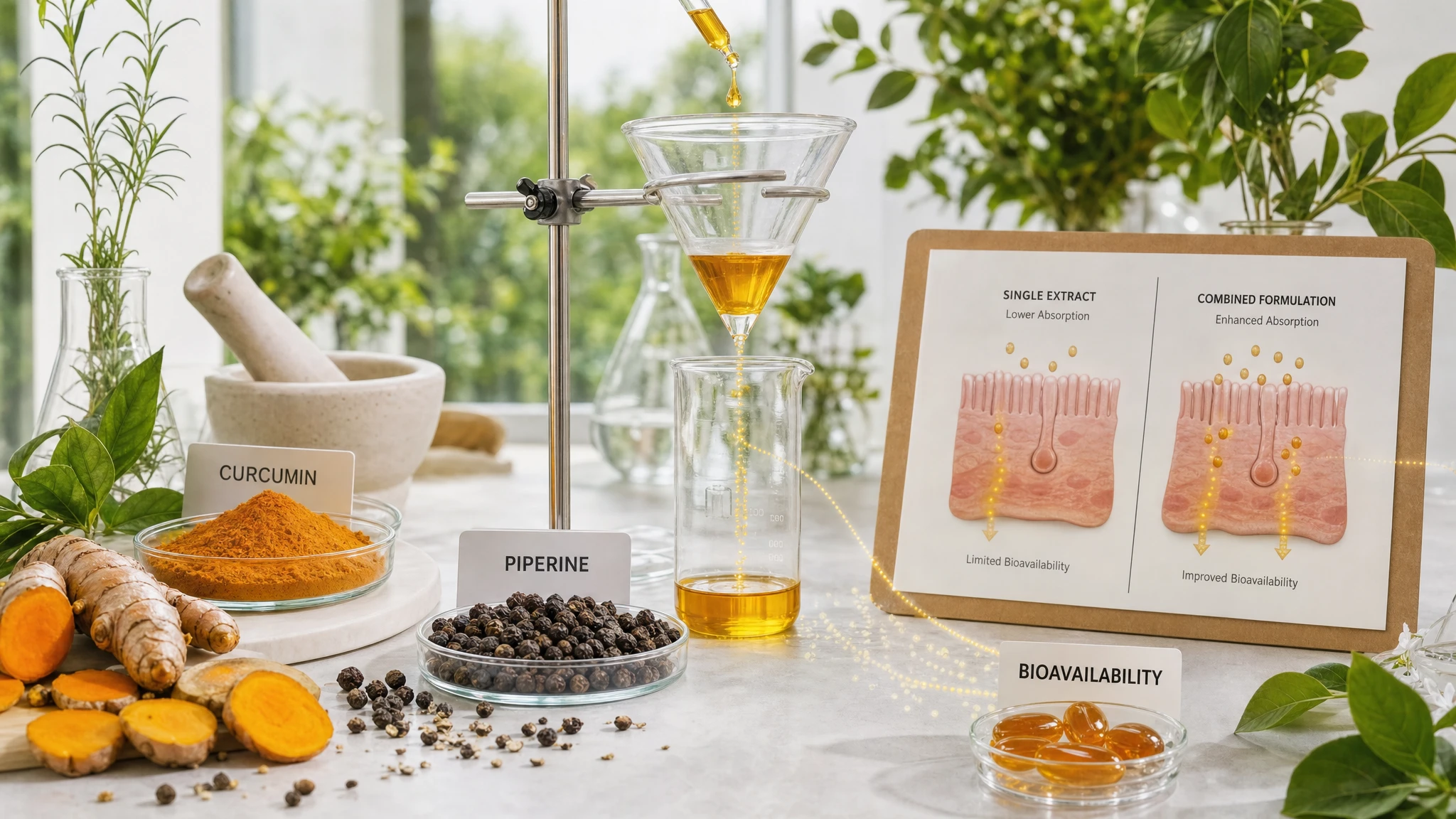
The combination of piperine and curcumin has become a study model because it allows us to observe, in a very concrete way, how a combined formulation can change the biological response compared to a single turmeric extract. The point is not just the presence of the two ingredients, but the fact that their ratio, the form of the product, and the context of use can influence curcumin bioavailability, that is, the amount available to the body, and therefore its systemic exposure.
This interest has made the combination useful not only for research but also for evaluating combined supplements more carefully. In other words, this same association has been studied as an example of nutraceutical synergy, meaning the interaction between phytocompounds that can increase the value of nutritional support without changing the core issue: how much of the compound actually reaches the body.
This approach is useful because it avoids oversimplified interpretations: finding turmeric extract and piperine on a label is not enough to predict the effect, and not all products are interchangeable. Precisely for this reason, the combination has become a privileged case study, capable of bringing together chemistry, physiology, and formulation quality into a single interpretive framework.
The questions that guide the literature on this combination are primarily three:
- The first topic concerns why curcumin alone is absorbed with difficulty.
- The second topic explains why piperine has been proposed as a cofactor of interest.
- The third topic shows why dose and formulation change the observed result.
The following steps explain the limitations of curcumin, the role of piperine, and the importance of the formulation.
Why curcumin alone has limited absorption
Absorption refers to the passage of a molecule from the intestine to the rest of the body. After oral intake, the absorbed portion tends to be low. This limitation does not negate its interest, but it explains why studies evaluate bioavailability (the portion the body can use). This measure helps distinguish the ingested dose from the amount made available. For any turmeric extract, the passage through the intestine and into the blood can influence the potential effect of the supplement.
Syntheses indicate that certain physiological barriers (the body's natural limits) reduce the useful portion after oral use. In practice, not all of the amount taken reaches the blood in the same condition. They also point out that different products make it more difficult to compare studies. Differences between preparations therefore limit the direct comparison of results. Institutional reviews also remind us that the quality and content of extracts can vary significantly [1]. Therefore, the result obtained with one formula does not apply to every product. The available portion depends on the preparation used, not just on the presence of the active ingredient.
What makes piperine a studied cofactor
This cofactor (a substance that assists another substance) can change how the body processes the other compound. For this reason, it is studied in combination formulations, i.e., products that combine multiple substances. However, the term cofactor does not imply a certain or uniform effect. The pairing allows researchers to observe how the systemic exposure of phytocompounds changes. This term refers to the amount present in the blood and tissues. Studying this variation helps distinguish the amount ingested from the portion that actually reaches the body.
In rats, 2 g/kg of curcumin with 20 mg/kg of the cofactor increased bioavailability by 154%. In humans, 2 g of curcumin with 20 mg of piperine produced a 2000% increase [2]. The observed increase is significant, but it stems from very specific study conditions. The 2000% figure describes the comparison observed with that specific combination. It does not represent a valid measure for different doses and formulas. On their own, these data do not describe all products on the market. The study therefore shows a possible principle of action, but does not guarantee the same result in every supplement.
Why dose and formulation change the observed result
In a combined formulation, the result depends on the ingredients, the dosages, and their ratio. The technique used to prepare the product also matters. This pairing therefore helps to study nutraceutical synergy and the factors that can alter it. Even two products for nutritional support, while appearing similar, can yield very different results.
A preliminary study on healthy volunteers examined urine collected over 24 hours. It found a half-life (the time it takes for the quantity to be halved) of 2.2±0.79 h versus 4.5±0.80 h. Urinary excretion (the amount eliminated in the urine) was 218.14±94.98 µg compared to 49.45±12.94 µg [3]. A critical review then studied nine healthy males and three formulations of approximately 570 mg. It also evaluated an AOV of 2280 mg, with or without piperine. Free curcumin remained below 2 nM in most cases [4]. Therefore, without knowing the preparation used, biological data can be misleading.
Recent research and updates
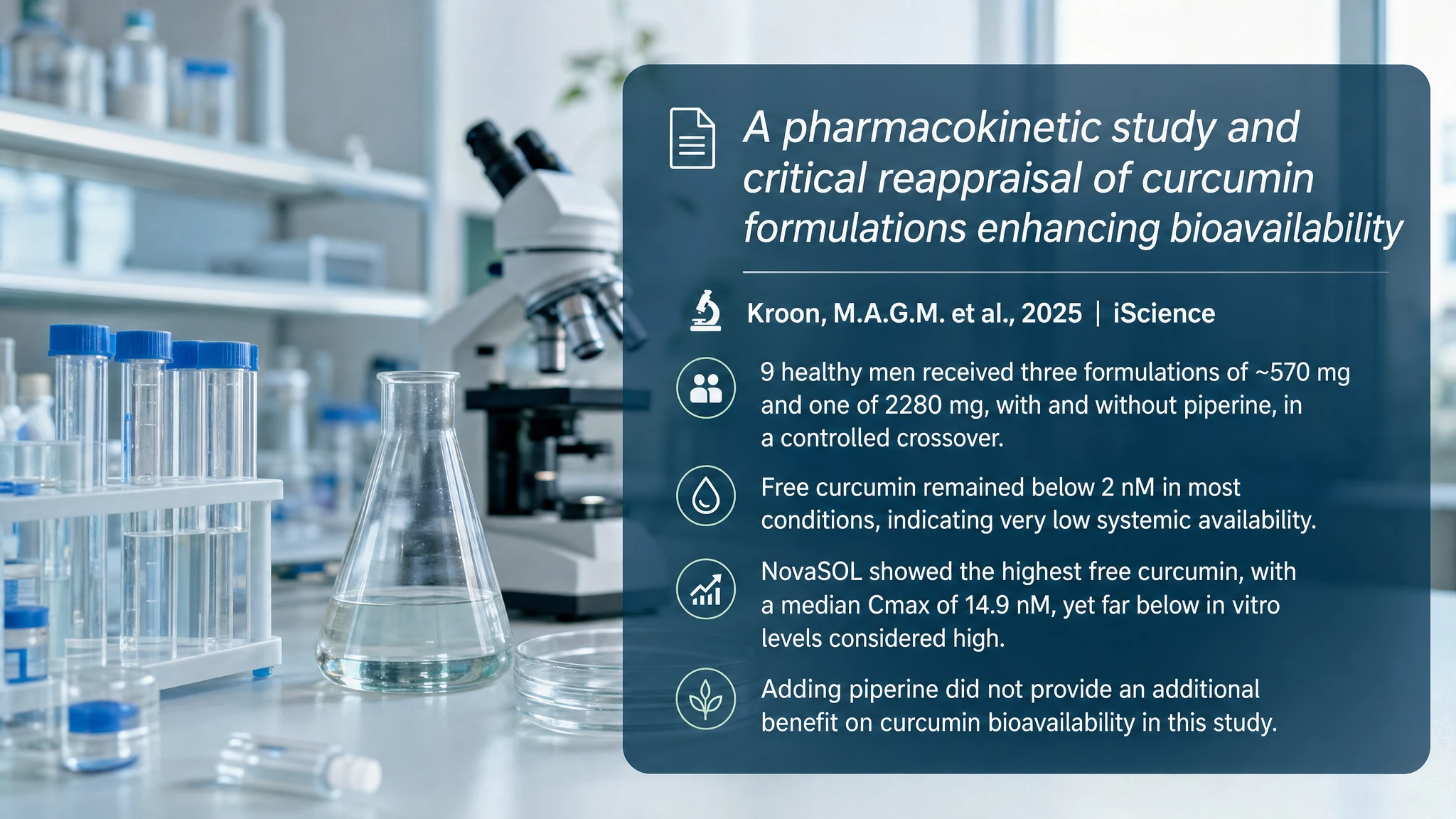
In 2025, Canadian researcher Kroon and colleagues published a study in the journal iScience. The pharmacokinetic study tracked the path of curcumin in the body. The research compared different oral formulas in 9 healthy men. It used doses of approximately 570 mg and a 2280 mg version. It also evaluated piperine, a substance in black pepper studied for its effects on absorption. The results show that the formulas do not increase free curcumin in the blood in the same way.
A pharmacokinetic study and critical reappraisal of curcumin formulations enhancing bioavailability
- 9 healthy men took three formulas of approximately 570 mg and one of 2280 mg. They tested them with and without piperine in a controlled crossover study.
- In most conditions, free curcumin remained below 2 nM. This data indicates very low bioavailability in the blood.
- The NovaSOL formula yielded the highest value of free curcumin, with a median Cmax of 14.9 nM. This value remains far from the levels considered high in vitro.
- In this study, the addition of piperine did not further increase the bioavailability of curcumin.
How piperine can increase curcumin absorption
Piperine and curcumin are often combined because the former can alter the latter's fate within the body. It is not just about how much curcumin enters, but also how much remains available over time. Let's look at how this process occurs before examining the data and practical limitations.
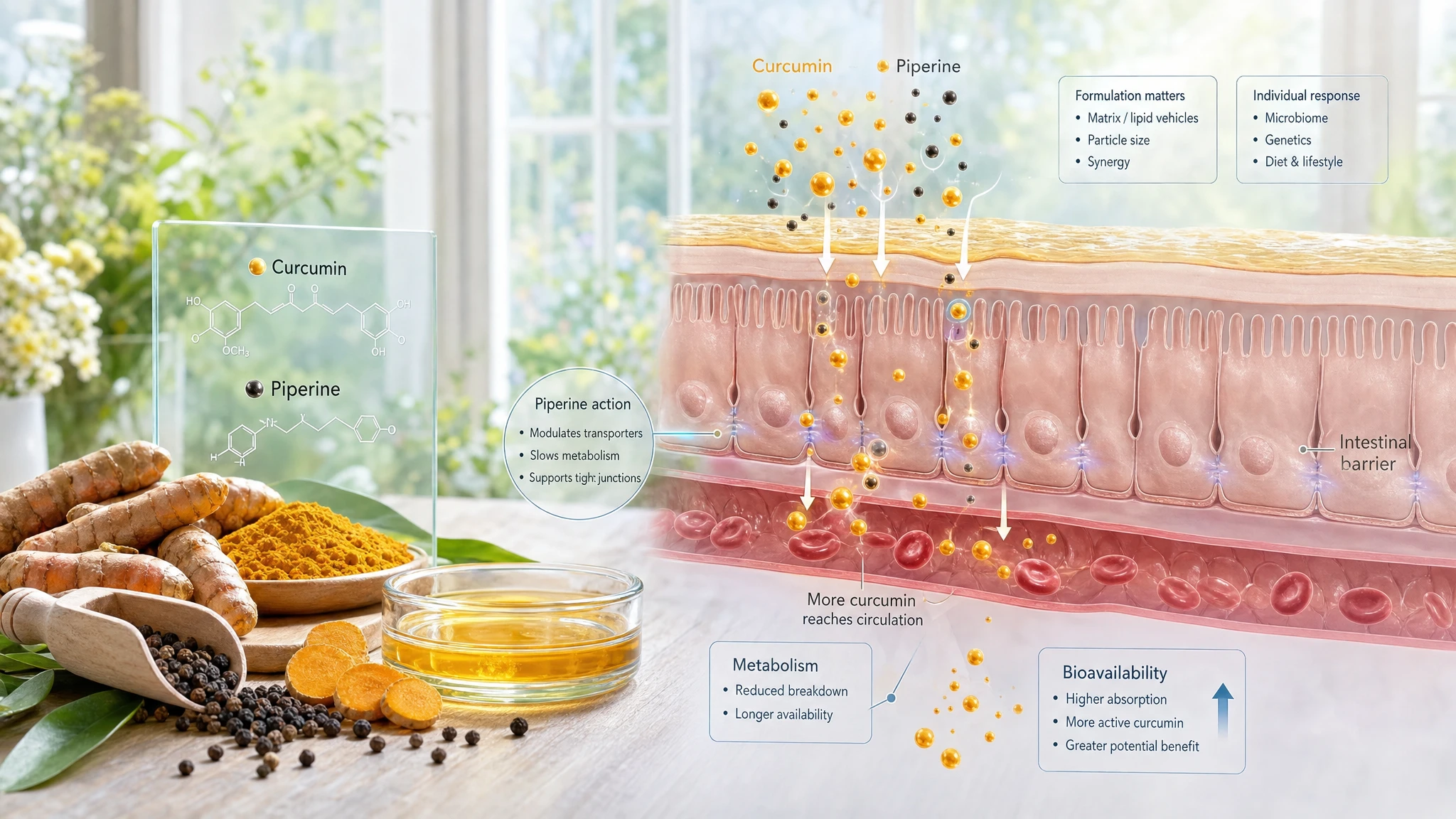
For curcumin absorption, it is not just about entering the intestine. The passage through the intestinal wall, metabolism, and subsequent elimination also matter. Piperine can slow down some of these steps and increase the amount that remains in the body. The combination therefore aims to improve bioavailability (the amount available after a dose). This is why the two compounds are often found in combined supplements with plant extracts.
The pair is therefore viewed as a form of nutraceutical synergy (the combined action of substances used in supplements). It is not enough to simply add two compounds together: one must understand how one changes the fate of the other. The central point is systemic exposure, which is the amount present in the blood over time. The following sections show where this effect has emerged, what its limitations are, and why products can yield different responses.
Before examining the studies, it is useful to distinguish the key points covered in the following H3 sections:
- Piperine can act on the intestinal pathways of curcumin.
- The amount present in the blood matters more than just the dose taken.
- The response varies based on the product, the dose, and the individual.
- A biological datum alone does not prove a health benefit.
The following steps show how piperine can change the profile of curcumin in the body. They also explain why simply increasing absorption does not describe the entire process.
How piperine can modulate the bioavailability of curcumin
Bioavailability indicates how much curcumin actually remains available in the body after a dose. Piperine can act at several stages: it helps transit through the intestinal wall and slows down rapid elimination. The combination is therefore used to improve the presence of a turmeric extract in the blood. In fact, if used alone, this extract tends to remain in the blood in very low quantities.
A classic study evaluated the combination in rats and human volunteers. The doses were 2 g/kg plus 20 mg/kg in rats and 2 g with 20 mg in adults. However, the data does not automatically apply to every product or dose. Another crossover study (where each person tries multiple formulas) involved 9 healthy males. It tested three formulations of approximately 570 mg and an AOV formula of 2280 mg with and without the addition. In many cases, the free fraction remained below 2 nM. Therefore, the formula can matter as much as the added compound [5].
Why systemic exposure matters more than simple absorption
Stating that a substance has been absorbed is not enough, because what matters most is how much of it reaches the systemic circulation, i.e., the blood and tissues where it can exert a measurable action. In the case of curcumin, piperine can be useful precisely because it increases the likelihood that the compound remains detectable in the body for longer. This makes the concept of systemic exposure more informative than intestinal entry alone.
In simple terms, the curcumin remained available for longer and in greater quantities. The limitation is that these pharmacokinetic data alone do not tell us whether the result always translates into a concrete benefit, because the measure of exposure does not automatically coincide with the final biological effect.
What determines the variability of the response between people and products
The response to the piperine-curcumin pair is not the same for every person or product. It depends on the combined formulation, the dose, and the polyphenols (plant-based substances) present. The way the body absorbs and eliminates the compounds also matters. Two supplements with similar ingredients can act differently. In fact, the ratios between the substances or the method used to produce them may vary. The assessment must therefore concern the specific product, not just the name on the label.
A clinical trial (a study conducted on people) involved patients with COVID-19. Participants received 525 mg of curcumin with 2.5 mg of piperine twice a day [6]. The study shows the use of the pair in a specific clinical context. However, it was not designed to directly measure bioavailability. Therefore, the data cannot be applied to all supplements. Furthermore, clinical use is not targeted proof of absorption. This variability makes a careful reading of the results essential.
What studies on the combined formulation indicate
Studies on piperine and curcumin show one clear point: higher absorption does not always lead to a useful effect. The dose, duration, purpose of the trial (clinical study), and type of product also matter. Combined supplements, in fact, are not all the same.
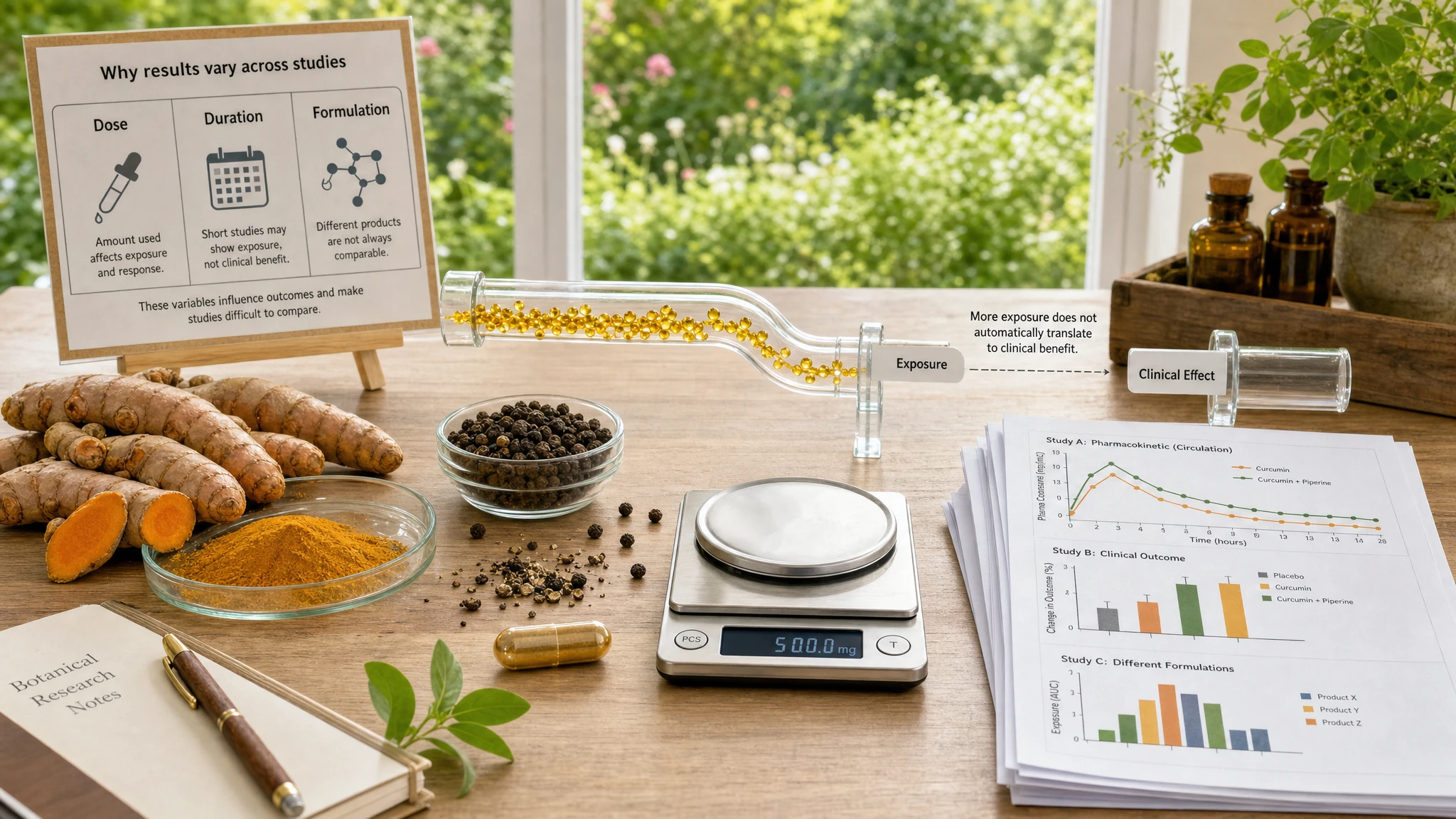
Studies on combined formulations evaluate how much of a compound enters the bloodstream and under what conditions. Greater systemic exposure (the amount that reaches the blood) may promote a biological effect, but it does not guarantee it. It is also necessary to understand how researchers measure the data and which product they use. Research must therefore be read by considering pharmacokinetics (the compound's path through the body), clinical purpose, and quality.
Overall, the potential combined action of piperine and curcumin must be evaluated on a case-by-case basis. It is not enough for a product to contain both ingredients. What matters is the method used and how closely the tested product resembles the one on the market.
Before drawing practical conclusions, it is useful to distinguish between the various types of evidence:
- Some studies find more of a compound in the blood, but not always a greater clinical effect.
- Others use different doses, timings, and purposes, making comparisons difficult.
- Still others test products different from the supplements found on the market.
The evidence on piperine and curcumin does not form a single block, because each study addresses different questions. The following sections therefore examine exposure, study design, and the practical use of the results.
Why greater exposure does not automatically mean greater efficacy
If the bioavailability of curcumin (the amount the body can use) increases, the data appears favorable. Greater absorption may help the compound's action, but it does not prove a health benefit. Possible nutraceutical synergy (joint action between substances) therefore requires direct clinical evidence. Measuring how much of the compound circulates in the blood does not prove that the nutritional support works better. These are two distinct levels: the first describes the passage into the blood, the second concerns a measurable outcome.
A randomized trial involved 72 people with type 2 diabetes and high triglycerides. For 12 weeks, a tablet containing 500 mg of curcuminoids and 5 mg of piperine was compared with a placebo [7]. In another experimental study, the use of the two compounds together increased the biological availability of curcumin [8]. However, greater exposure alone does not prove a superior clinical effect. Furthermore, studies may measure different outcomes in very different groups of people.
How dose, duration, and study objective change the conclusions
The conclusions depend on the dose, duration, and purpose of the research. A study on curcumin absorption does not answer the same question as a trial on health outcomes. Even with the same compounds, data change based on the dose and duration of use. Furthermore, the parameters chosen by the researchers matter. Two similar studies can therefore lead to different interpretations without being contradictory.
A trial on outpatients with COVID-19 used 525 mg of curcumin with 2.5 mg of piperine twice a day [9]. Another study on people with metabolic syndrome used curcuminoids and piperine in a 100:1 ratio. The goal was to improve the oral bioavailability of the compounds [10]. Another paper evaluated the pro-oxidant and antioxidant response, not just a single absorption data point [11]. These protocols are not interchangeable. Therefore, the results do not always apply to the daily use of turmeric extract.
Why the studied product does not always match the commercial one
The product tested in studies does not always match the supplement available on the market. Even with the same polyphenols (plant compounds) and phytocompounds, purity, dosage, and release can vary. A positive result, therefore, does not apply to every product available on the market. The combined formulation matters as much as its components, because it indicates whether two products are truly comparable. To compare two formulations, reading the ingredient names is not enough. You must verify the form and quantity in which they are present. The delivery system can also alter the comparison.
In one study, curcumin was combined with piperine in nanostructures (very small-sized structures). The goal was to improve oral availability and tissue diffusion [12]. Another study created nanoparticles with both compounds to overcome the limitations of oral intake [13]. These techniques can significantly change the product profile. However, the results do not automatically apply to combined supplements sold commercially.
How to read a supplement with piperine and curcumin in an informed way
To understand a supplement containing piperine and curcumin, reading the name on the label is not enough. What matters is the clarity of the formula, the dosages, the type of turmeric extract, and the instructions for use. This guide explains which details make a product clearer, more useful, and easier to compare.
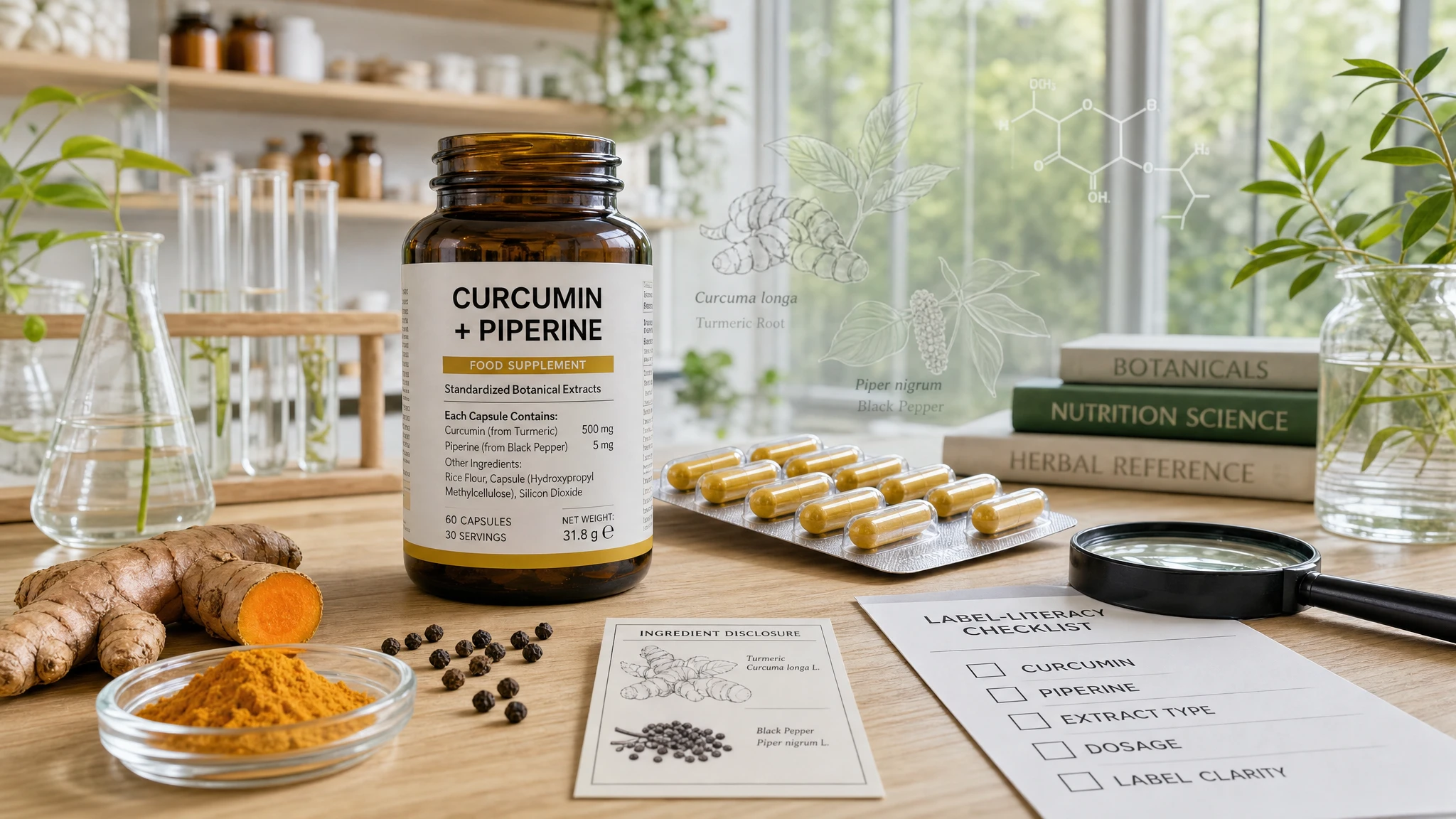
When evaluating a supplement with piperine and curcumin, you shouldn't just stop at the name on the label. It is more important to understand what data the manufacturer clearly declares. A clear formula indicates the dosages, active ingredients, and all other components present. This data makes it easier to compare different combination supplements. Transparency does not guarantee results, but it helps to distinguish products that rely primarily on marketing appeal.
Reading the label carefully also helps to evaluate the bioavailability of curcumin (the amount the body can absorb and use). In nutraceutical synergy (the combined action of multiple substances), clarity does not prove the quality of the formula. However, it remains the first useful filter for making an informed choice. The next step is to understand whether the product meets a real need.
Before purchasing, it is therefore advisable to check a few simple and concrete elements:
- The quantity of active ingredients must be clearly indicated.
- The type of turmeric extract must be easy to understand.
- The presence of piperine must be indicated without any ambiguity.
- The directions for use must be appropriate for the product's characteristics.
To read a product label with awareness, it is best to start with the data that the label allows you to check immediately. The following points transform a brand name into concrete, clear, and useful data.
How to recognize a transparent and readable formulation
A transparent formulation allows you to clearly understand which ingredients are present, in what quantities, and the logic behind their combination. In the case of a supplement with piperine and curcumin, this helps distinguish a well-described product from one that merely lists ingredient names without providing useful details. Readability is important because it makes it easier to compare similar formulas and assess whether the product promises nutritional support consistent with its claims.
Evidence suggests that transparency is a very useful practical criterion, even if it is not enough on its own to guarantee a better outcome. A product can be well-labeled and still remain unconvincing from a functional standpoint, but formal clarity is a reliable first filter for interpreting a combined formulation.
Which label elements help in interpreting the product
A supplement label is an informative tool, not an accessory detail. In the case of the piperine and curcumin combination, it can help you understand the amount of curcuminoids, the presence of piperine, and the type of extract used. Curcuminoids are the main polyphenols—plant compounds with multiple phenolic groups—found in turmeric, to which the biological interest of the formula is attributed. This data is useful because it allows you to interpret the product in a more concrete and less impressionistic way.
Although they are not enough on their own to guarantee efficacy, these elements provide better guidance for evaluation compared to a generic label. The difference lies in the ability to compare products and understand whether the commercial promise truly matches the content. The limitation is clear: a good declaration does not equate to a guaranteed effect.
Why the context of use matters more than the brand name
A product may have a catchy name and a well-presented formula. Its true value, however, depends on the context in which it is used. This is especially true for a combination supplement, which requires considering personal goals, habits, and conditions. The brand name does not indicate whether the formula is suitable for the individual. It also does not clarify whether the combination truly addresses what they are looking for. This is why context matters more than the label and places the product within a broader framework.
The cited study involved patients with inflammatory bowel disease, a chronic digestive condition marked by inflammation. The combination was compared with curcumin used alone. The researchers evaluated body composition, phase angle, and functional capacity, aspects closely linked to the clinical context [14]. The limitation lies in thinking that a well-crafted label can replace an assessment of one's own goal. An informed reading, instead, combines product data with personal context, without placing too much weight on the brand.
Summary of scientific evidence
This summary organizes the most relevant sources from the bibliography. It distinguishes between pharmacokinetic studies (on the pathway of substances in the body), reviews, and clinical trials. In this way, it clarifies which data are the most robust.
| Publication year | Area studied | What the studies indicate |
|---|---|---|
| 1998 | Piperine-curcumin interaction | studies indicate that piperine can significantly increase the concentration and absorption of curcumin [2] |
| 2014 | Clinical use in metabolic syndrome | a controlled study with curcuminoids and piperine found effects on certain heart and metabolic markers [10] |
| 2023 | Oral pharmacokinetics | with pepper, longer retention times and greater urinary excretion of curcumin were observed [3] |
| 2024 | Formulation strategies | studies indicate that the product technology determines the pharmacokinetic profile of curcumin [4] |
| 2025 | Comparison of formulations | results vary, and in some formulas, piperine offers no additional benefits [5] |
| 2026 | Overall clinical evidence | the evidence indicates potential effects on inflammation, oxidative stress, and heart and metabolic risk, but trials show mixed results [15] |
Editorial review of the evidence
Overall, the literature uses the piperine-curcumin combination to distinguish between two data points. The first is the dose taken; the second is the amount available in the body. The most robust studies agree on one point: on its own, curcumin has low bioavailability. Under certain conditions, piperine can change this profile. However, the advantage varies between formulas and does not always lead to a measurable clinical benefit. The most consistent message therefore concerns the method used to evaluate supplements.
The main limitations are small sample sizes, short studies, varying doses, and products formulated in different ways. Some trials measure the presence of the substance in the body. Others, however, evaluate health effects. Therefore, it is difficult to compare them directly. Furthermore, the formula studied does not always coincide with the supplements sold. The data explain the reason for the combination, but require caution when moving to daily use.
Conclusions and editorial summary
The combination of piperine and curcumin shows how much the formula matters in supplements. Studies consistently indicate that curcumin has low oral bioavailability. Under certain conditions, piperine can change its profile, but the effect does not always remain the same. This pair therefore helps in studying the absorption and presence of substances in the body. It also allows for a better understanding of the differences between products. However, a pharmacokinetic datum (regarding the substance's pathway in the body) does not prove general efficacy. One must evaluate the dose, technology, quality of the extract, and context of use. The combination thus demonstrates the link between formula, nutrition, and metabolism in the study of supplements.
Final critical note
The available data explain the rationale behind the combination well, but still leave several questions unanswered. The literature indicates that piperine can alter the profile of curcumin. However, different products and protocols do not always yield the same results. The most solid finding, therefore, concerns variability rather than the absolute superiority of the combination. Even when outcomes are favorable, it remains difficult to link higher exposure to a stable clinical benefit. Caution is therefore an essential part of scientific interpretation.
References
[1] Turmeric: Usefulness and Safety
[2] Influence of Piperine on the Pharmacokinetics of Curcumin in Animals and Human Volunteers
[3] Development of a rapid, sensitive, and selective LC–MS/MS method for quantifying curcumin levels in healthy human urine: Effect of pepper on curcumin bioavailability
[5] A pharmacokinetic study and critical reappraisal of curcumin formulations enhancing bioavailability
[6] Oral Curcumin With Piperine as Adjuvant Therapy for the Treatment of COVID-19: A Randomized Clinical Trial
[7] The effect of curcumin‐piperine supplementation on lipid profile, glycemic index, inflammation, and blood pressure in patients with type 2 diabetes mellitus and hypertriglyceridemia
[8] Piperine potentiates curcumin-mediated repression of mTORC1 signaling in human intestinal epithelial cells: implications for the inhibition of protein synthesis and TNFa signaling
[9] The efficacy of curcumin-piperine co-supplementation on clinical symptoms, duration, severity, and inflammatory factors in COVID-19 outpatients: a randomized double-blind, placebo-controlled trial
[10] Lipid-modifying effects of adjunctive therapy with curcuminoids–piperine combination in patients with metabolic syndrome: Results of a randomized controlled trial
[11] The effect of curcumin with piperine supplementation on pro-oxidant and antioxidant balance in patients with non-alcoholic fatty liver disease: a randomized, double-blind, placebo-controlled trial
[12] Preparation, characterisation and evaluation of curcumin with piperine-loaded cubosome nanoparticles
[13] Preparation and characterization of curcumin–piperine dual drug loaded nanoparticles
[14] Curcumin plus piperine improve body composition in patients with inflammatory bowel disease: a randomized, double-blind, placebo-controlled clinical trial
[15] Curcumin-piperine supplementation modulates inflammation, oxidative stress, and cardiometabolic risk: a systematic review of randomized controlled trials
Editorial note
Artificial Intelligence was used solely as a tool to support editorial and documentary work. All content, interpretations, bibliographic citations and conclusions have been verified, reviewed and approved by the author, who assumes full scientific responsibility for them.
The manuscript was also subject to independent peer review prior to publication.
To ensure maximum transparency, the article's complete history — including the dates of submission, review, acceptance and publication, as well as information on the peer review process — is available on the dedicated Article History page.