


Piperine and glycemia: what the available scientific studies really show
Research on piperine and glycemia is growing, but it does not yet offer a definitive result. Experimental studies suggest possible effects on glucose utilization and tissue response to insulin. In clinical studies, however, data vary and often involve products containing multiple substances. Piperine therefore remains a compound to be studied, not a remedy with proven effects.
- Published 24/11/2026
- Updated 24/11/2026
- Reviewed 24/11/2026
- Article history

ABSTRACT : WHAT THE SCIENCE SAYS
The relationship between piperine and glycemia is of interest to those studying how natural substances affect glucose. Piperine, the main active compound in black pepper, may influence how the body uses sugars. However, results vary based on the model studied, the dosage, the duration, and the type of measurement. It is therefore necessary to distinguish between fasting glycemia, post-meal glycemia, and the insulin response.
It is also necessary to evaluate how well the body responds to insulin. These values describe different phases of how the organism regulates glucose. This article illustrates the results of the studies, the methods used, and their most important limitations. It also separates early biological signals from clinical evidence, which remains inconsistent, and addresses these topics:
- What the link between piperine and glycemia indicates
- Why fasting glycemia differs from post-meal glycemia
- How insulin helps the body manage glucose
- Which tests measure the effects on glucose control
- Why studies on cells and animals are not sufficient
What the relationship between piperine and glycemia really indicates
The relationship between piperine and glycemia does not yet offer a single answer. To understand the data, one must evaluate how the body uses glucose and how insulin acts. The person's baseline status also counts. Only in this way can we distinguish early signals from a proven clinical effect in humans.
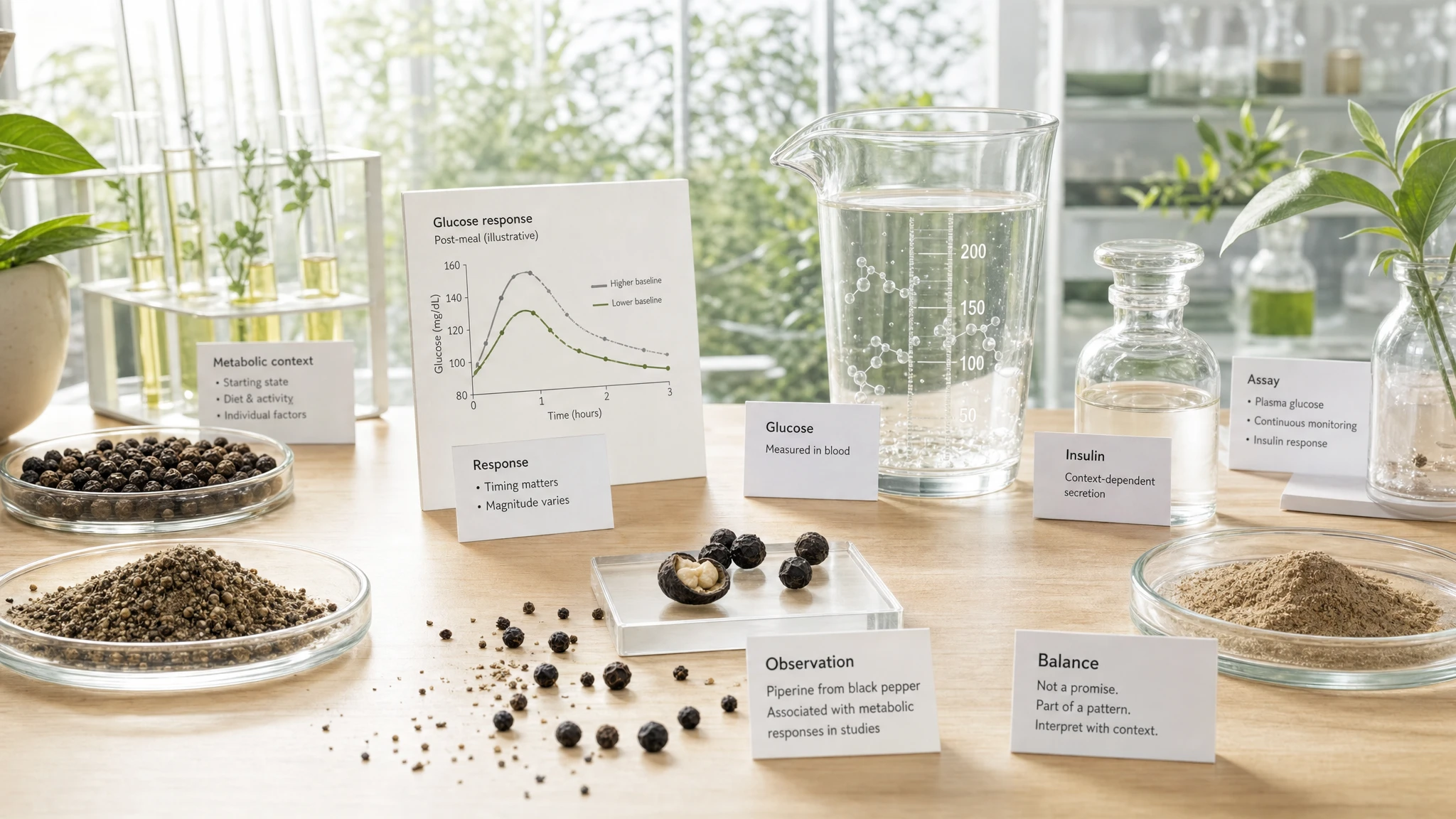
The relationship between piperine and glycemia does not produce a simple effect, nor is it the same in every case. It is not enough to observe whether glycemia rises or falls after using the molecule. How the body absorbs, uses, and regulates glucose over time also matters.
This framework avoids hasty conclusions and points to the molecule as a possible aid in glycemic control. Scientific interest is real, but much of the data comes from studies on cells and animals. Therefore, great caution is needed when evaluating its use in humans.
To better understand the studies, it is necessary to distinguish four levels of interpretation:
- The first concerns the biological significance of the observed link.
- The second distinguishes the different phases of the glycemic response.
- The third clarifies which tests measure these changes.
- The fourth examines how insulin controls glucose.
The first question seems simple: what does the relationship between piperine and glycemia concretely indicate? The following three steps distinguish the biological signal, the timing of the measurement, and the tests used. These differences help to read the studies without drawing conclusions too quickly.
Piperine and glycemia: what this association really means
Discussing piperine and glycemia does not mean attributing a unique and proven effect to the molecule. Available reviews indicate potential interest regarding glucose metabolism (the body's use of sugars) [1] [2]. However, the weight of these data depends on four factors: the model used, whether animal or cellular; the dose administered; the duration of exposure; and the initial metabolic state. It is therefore more accurate to speak of a biological link to be studied, rather than proven clinical efficacy. The same molecule may appear more or less useful depending on what is measured and how.
An in vitro study from 1993 provides a useful example. In the liver and intestine of rats and guinea pigs, piperine modified two processes. These regulated the metabolism of compounds, but the research did not concern glycemia [3]. The data shows that the molecule can alter the regulation of other biochemical pathways. It does not demonstrate a direct effect on glucose, but it invites us to read this relationship with care. The limitation is clear: these are interesting signals, not a general conclusion valid in every biological context.
Fasting glycemia and postprandial glycemia: why they are not the same thing
In glucose control, fasting glycemia and postprandial glycemia describe two different phenomena. The former measures the baseline situation after a period without food. The latter shows the body's response to a meal or a sugar load. This difference is crucial in studies on piperine. A compound may act more on glucose management after meals than on the resting value. To properly interpret the results, one must therefore know which phase was observed. The conditions under which researchers conducted the test also matter.
In one study, some rats followed a diet high in carbohydrates and fats. The addition of piperine improved glucose tolerance and liver function. The result indicated a more visible effect after the energy load than on a single isolated value [4]. The data links piperine to glycemic homeostasis, that is, the balance of glucose in the blood. However, this remains an animal model and is not enough to predict the effect in humans. Distinguishing between fasting and the postprandial phase is therefore essential for interpreting the results, not just a technical detail.
Which metabolic tests do studies use to evaluate piperine
Studies use different tests to understand how piperine affects glucose utilization. The OGTT (oral glucose tolerance test) measures the response to an ingested dose of sugar. The euglycemic clamp (a test that keeps glycemia stable) directly measures how well cells respond to insulin. The ITT (insulin tolerance test) evaluates how glycemia changes after an external dose of insulin. These tests are not the same because they examine different aspects. For this reason, results obtained with one method do not necessarily describe what others detect.
A study on HepG2 liver cells found minor impairment in glucose utilization. The cells had been exposed to glucosamine, a substance that can alter this process [5]. However, this was a laboratory model, which does not replicate the entire human body. A positive finding in a single test therefore does not demonstrate a general clinical benefit.
Recent research and updates
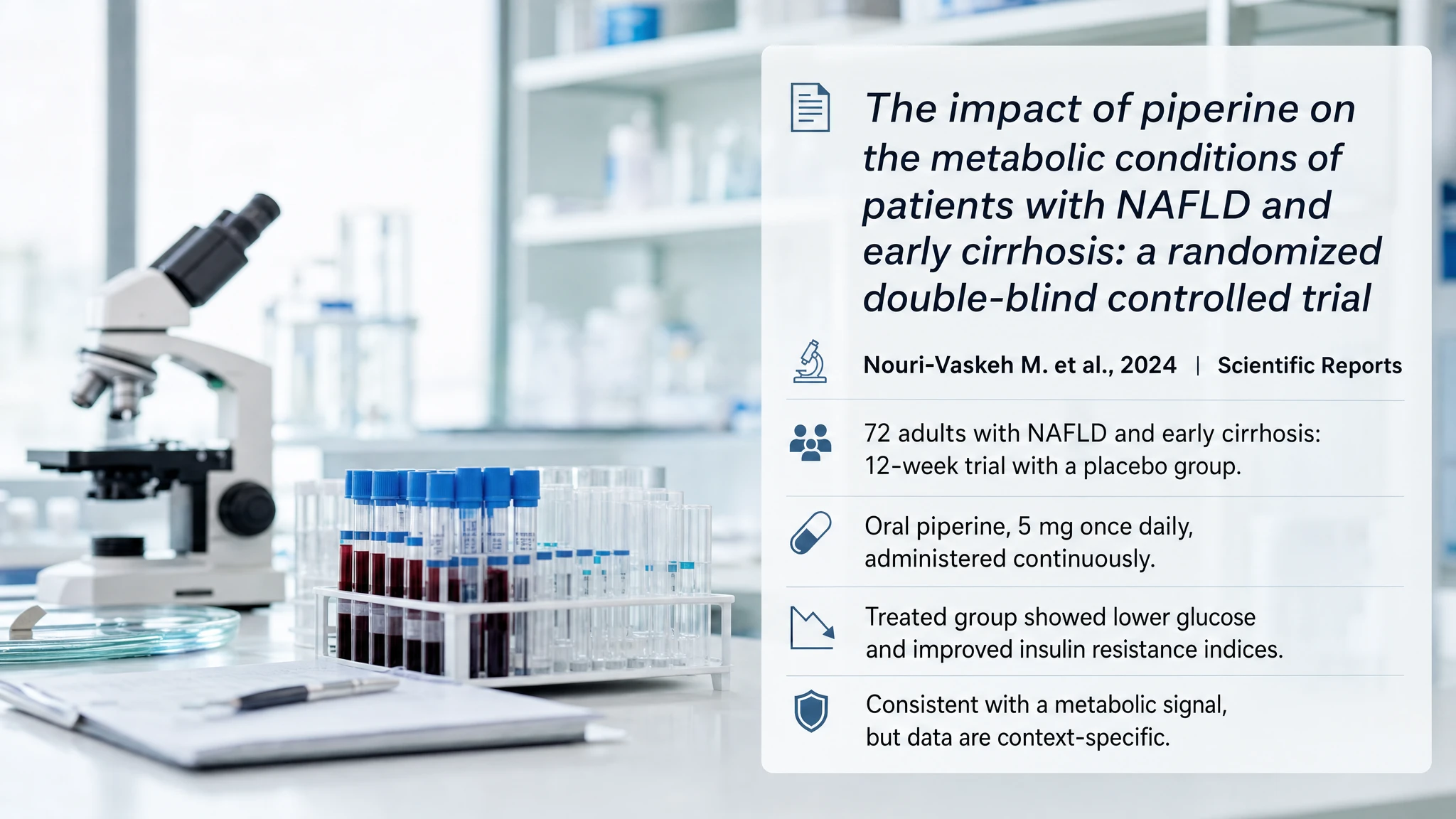
In 2024, Nouri-Vaskeh and colleagues studied piperine in individuals with metabolic liver disease and early cirrhosis. The research, published in Scientific Reports, evaluated a dose of 5 mg per day for 12 weeks. The researchers measured various metabolic values, including blood glucose. This work therefore moves research from experimental evidence to a real-world clinical setting. However, it concerns a specific group of patients and requires cautious interpretation.
The impact of piperine on the metabolic conditions of patients with NAFLD and early cirrhosis: a randomized double-blind controlled trial
- The study included 72 adults with metabolic liver disease and early cirrhosis. The comparison with the placebo lasted 12 weeks.
- Participants took piperine orally at a continuous dose of 5 mg per day.
- In the treated group, glucose and indices of poor insulin response decreased compared to the control group.
- The result indicates a possible effect on metabolism, but it concerns a specific clinical context and not all people.
Piperine, insulin, and the body's ability to respond well to its signal: the central metabolic node
Regarding the relationship between piperine and glycemia, it is not just the value measured at a given moment that counts. How the body manages hormones and uses glucose in the tissues also matters. Insulin helps glucose enter the cells, where it can be used as an energy source. The ability of tissues to respond well to this hormone indicates how well the system is functioning. Together, these data show whether the body maintains blood glucose homeostasis.
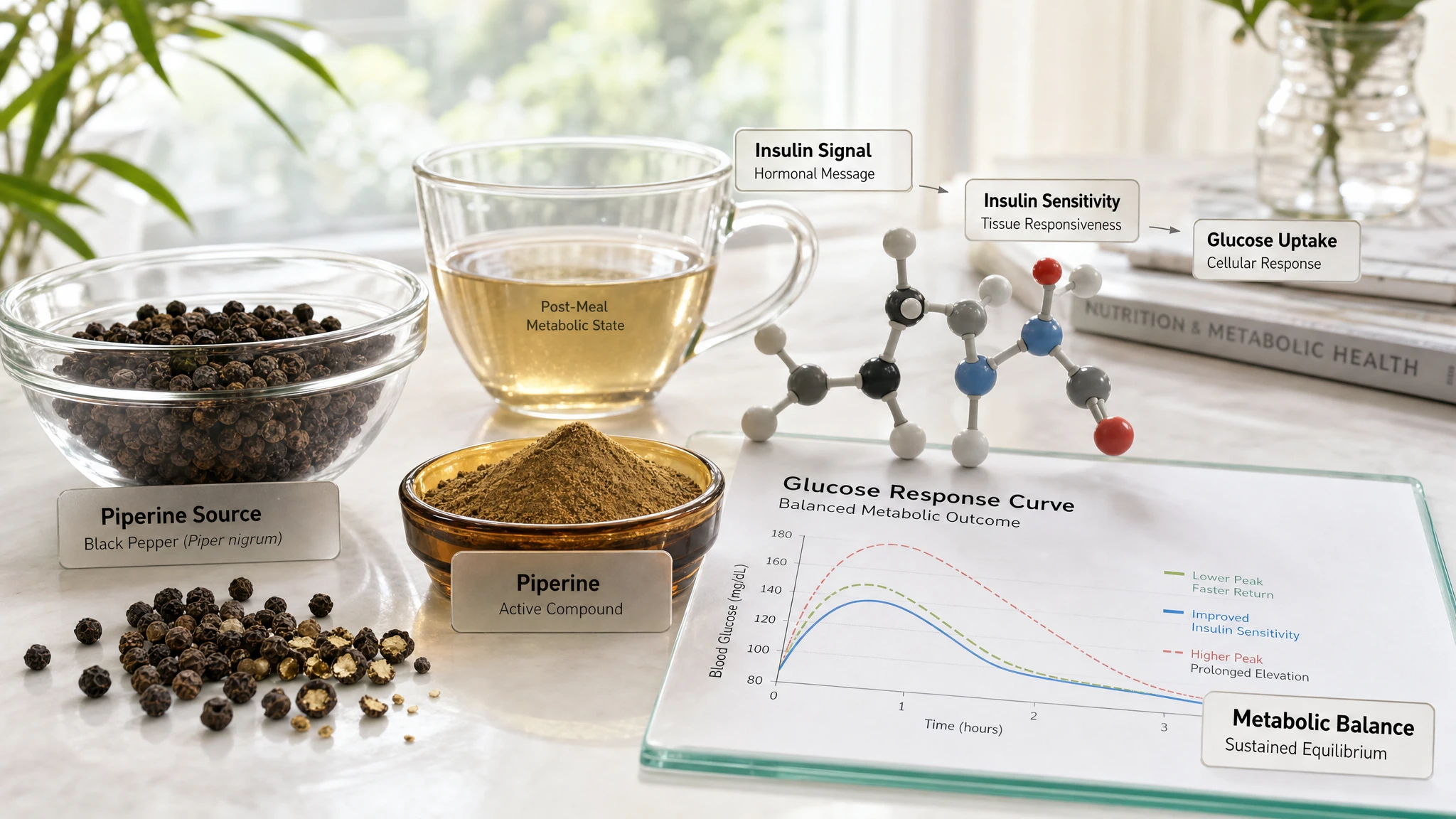
At the intersection of piperine and glucose metabolism, the key step is understanding how the insulin response changes. Insulin is not just a laboratory value: it is the signal that allows tissues to take up glucose and coordinate metabolic regulation after meals. If a compound alters this balance, it can influence glucose control even before glycemia shows clear variations.
For this reason, when reading literature on piperine, glycemia, insulin, and insulin sensitivity must be considered together, as they describe different levels of the same homeostasis. The distinction becomes useful especially when observing initial or partial effects: a change in insulin secretion may precede an improvement in postprandial glycemia, while a more efficient response can limit hyperglycemia without immediately disrupting all parameters.
In other words, this central metabolic node serves to avoid overly simplistic interpretations: seeing a value drop is not enough to claim a benefit, because glucose metabolism depends on timing, context, and the intensity of the response. Therefore, piperine should be interpreted as a potential modulator of metabolic regulation, not as an autonomous solution for high glycemia. The next section delves into individual studies to show where the biological signal is most convincing and where, instead, it remains preliminary.
The following steps clarify these three levels:
- The insulin response shows how much the body compensates for glucose.
- Insulin sensitivity indicates the efficiency of target tissues.
- Metabolic markers must be read together, not separately.
- A favorable signal does not always coincide with a clinical benefit.
The data become clearer if we separate the hormonal response from tissue efficiency. Experimental and clinical studies help to understand the difference between these two aspects.
Piperine and insulin: why the hormonal response matters
When evaluating piperine in glucose control, that is, in managing blood glucose concentration, insulin is often the first indicator to observe. This hormone determines how much energy enters the tissues and how long glucose remains in circulation; therefore, a change in its response can alter the glycemic profile even without immediate and dramatic effects on blood glucose measured at a single moment. In this context, piperine is of interest not only as a potential support for glucose metabolism but as a substance capable of influencing the dialogue between hormonal signaling and glucose utilization. In a model of alloxan-induced diabetic mice, 125 mg/kg of piperine combined with 10 mg/kg of metformin lowered blood glucose more than metformin alone at 250 mg/kg, suggesting a supportive contribution to glucose control [6].
In a clinical study on patients with type 2 diabetes, however, 500 mg per day of curcuminoids plus 5 mg per day of piperine for 3 months reduced serum glucose by an average of 9 mg/dL (compared to an average reduction of 3 mg/dL in the control group), a modest change but consistent with a more favorable metabolic response [7]. The data are promising, but they do not entirely separate the effect of piperine from that of the combination in which it is included.
The ability of tissues to respond well to insulin: the parameter that reflects metabolic efficiency
The ability of tissues to respond well to the insulin signal indicates how effectively tissues react to this hormone. If the signal functions properly, less hormone is needed to achieve the same effect on glucose. This metric describes blood glucose balance better than fasting glycemia alone. It is very useful when muscles and the liver are not utilizing available glucose efficiently. In this context, piperine is being studied as a potential aid to treatments. It is not, however, proposed as a substitute for them.
In rats with streptozotocin-induced diabetes, the treatment produced several effects. It reduced vascular damage, fasting glycemia, and HbA1c [8]. HbA1c is a metric that estimates average blood glucose over the previous months. In muscle cells, the treatment also increased glucose uptake via AMPK [9]. AMPK is a protein that detects how much energy is available within the cell. These data are derived from animal and cell studies, not from clinical trials in humans. They therefore indicate a possible mechanism, but do not demonstrate a stable effect in people.
Why a metabolic signal does not equate to a clinical benefit
A laboratory improvement does not automatically coincide with a clinical advantage. In the case of piperine, this is particularly important because glucose metabolism may show partial or context-dependent signals without there yet being solid proof of general efficacy.
The boundary between hypothesis and confirmation is also seen in interactions with medications. In animals, the combination of piperine and glimepiride altered the biochemical parameters of the disease [10], while with gliclazide, the literature suggests caution and glucose monitoring [11]. These data do not deny the biological interest of piperine, but they serve as a reminder that a metabolic signal must be interpreted within a therapeutic context, not in isolation. For this reason, before speaking of a benefit on glycemia, it is necessary to distinguish between an observable effect, clinical relevance, and safety of use.
What studies say about piperine and glucose metabolism
Studies on piperine and glucose metabolism provide an interesting, yet still incomplete, picture. The biological signal emerges primarily in experimental models and in certain multi-compound formulas. However, the data are not sufficient to attribute a stable clinical effect on glycemia to the molecule alone.
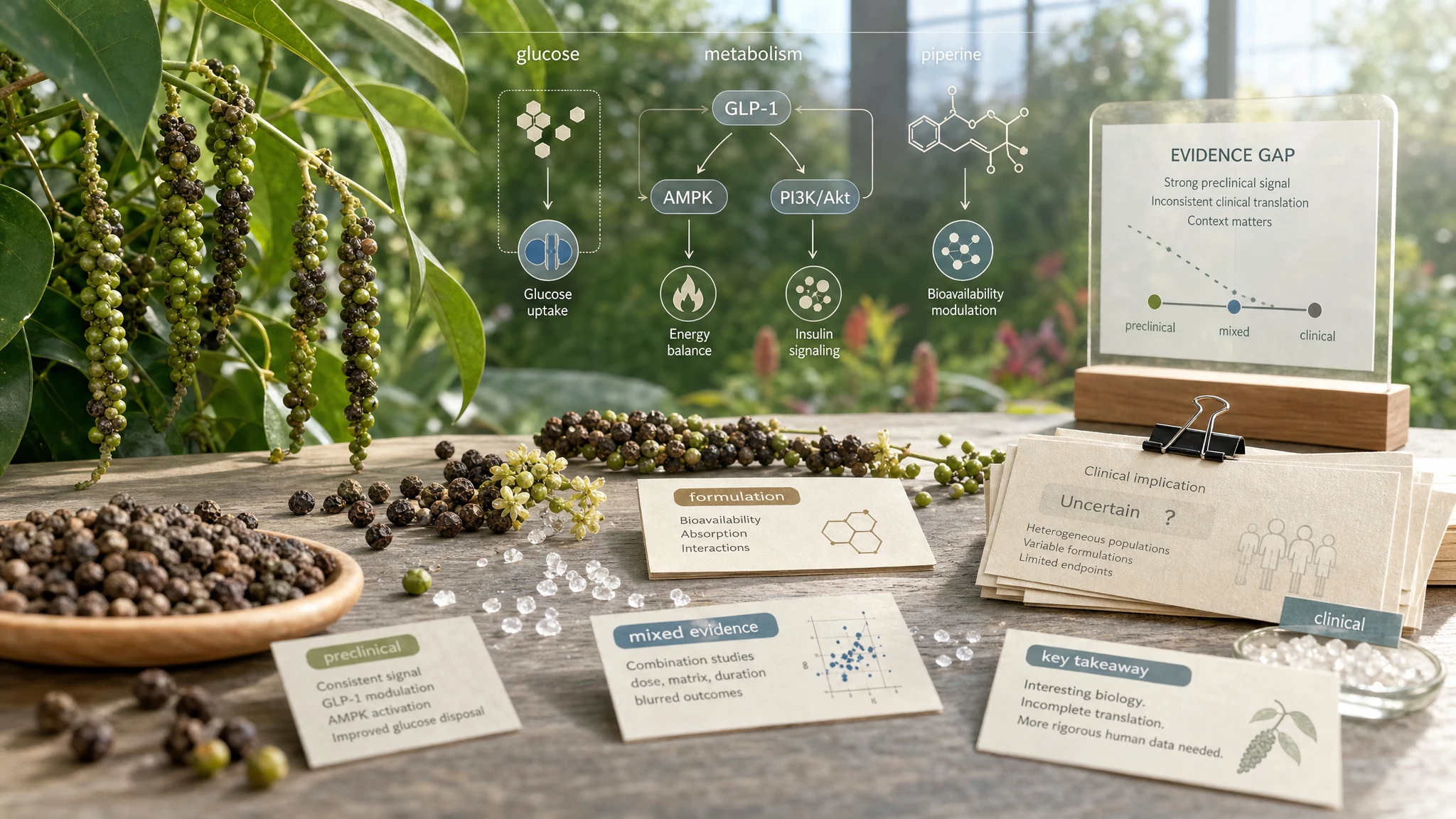
Studies do not show a single, certain effect of piperine on glucose control. Results vary based on the model studied, the formula used, and the individuals involved. Research on cells and animals indicates potential effects on glycemia, insulin, and metabolism. In clinical trials, however, the data are less clear and often involve mixtures of multiple compounds.
Overall, research indicates a possible action on glycemia and glucose utilization. However, it does not allow for the use of piperine alone as an intervention with certain effects. The point, therefore, is not to seek absolute confirmation in the available data. It is necessary to understand which results are consistent and which depend on the model used. It must also be clarified which data relate to precise formulas or specific study conditions.
It is therefore necessary to distinguish a biological hypothesis from a proven effect in humans. Before drawing practical conclusions, it is useful to understand which data are solid and which remain uncertain:
- Animal models show useful signals regarding glucose utilization.
- Clinical studies often examine combined formulas, not the molecule alone.
- Mixtures make it difficult to isolate the specific effect on glucose.
- The response also depends on the initial metabolic state.
The most useful studies do not show a valid effect in every case. Instead, they indicate in which models piperine changes glucose metabolism. Therefore, the direction of the observed signal matters, not a pre-defined conclusion.
What preclinical data suggest about piperine and glycemia
In preclinical models, piperine is of particular interest as a modulator of glycemia and metabolic response, but the value of these data remains tied to the experimental context. Researchers use cells and animals to observe basic mechanisms. In these systems, doses, timing, and conditions can be controlled with great precision. This allows for the isolation of a biological signal that would be difficult to observe in isolation in humans. However, the precision of the model comes at a cost: it does not reflect real-world complexity. Results should therefore be read as clues, not as clinical evidence.
The most concrete data come from mice fed a high-fat diet: piperine attenuated hepatic steatosis and insulin resistance, indicating a biological effect consistent with an improvement in metabolic regulation [12]. Hepatic steatosis is the accumulation of fat in the liver. Insulin resistance is the reduced response of cells to insulin. Both signals are relevant to glucose metabolism. However, this is an animal model, with controlled doses and conditions that do not replicate human complexity. For this reason, the result is useful for generating hypotheses, but not for concluding that piperine alone improves glucose control in humans.
Why results on piperine and glucose do not always translate to humans
The gap between the laboratory and clinical practice is central to studies on piperine and glycemia. In animals, researchers control diet, dosages, and living conditions. In humans, however, diet, metabolic status, therapies, and individual differences all play a role. Therefore, an effect on glucose or insulin does not always lead to a stable benefit for their metabolism.
Two clinical studies conducted on people help clarify the issue. One examined patients with type 2 diabetes treated with a formula of Curcuma longa and piperine [13]. The other used 500 mg per day of curcuminoids plus 5 mg per day of piperine for 3 months. Glucose dropped by an average of 9 mg/dL compared to 3 mg/dL in the control group [7]. However, this data concerns mixtures and does not prove an independent effect on glucose control. It also does not prove an effect on postprandial glycemia (blood glucose after meals).
Piperine alone or in combination: why context changes the interpretation
Many results attributed to piperine actually stem from combinations with other compounds, and this changes how the data is interpreted. A formula can modify absorption, insulin response, or glucose metabolism differently compared to the single molecule. For this reason, in clinical studies, it is necessary to carefully distinguish what depends on piperine from what depends on the rest of the preparation. The latter is also known for increasing the bioavailability of other substances. This effect can amplify the action of the compounds with which it is associated. Consequently, a positive result from a mixture does not indicate how much piperine alone contributed. Caution is therefore needed before attributing a direct role to the molecule.
These data do not deny a possible metabolic role, but they serve as a reminder that the context of administration can change the observed effect. Overall, discussing insulin without considering the formulation risks oversimplifying the available evidence.
How to interpret piperine's effect on glycemia without overestimating the results
The point is not to deny the possible role of piperine, but to read the data on piperine and glycemia carefully. Every result depends on the context, the individuals studied, and the type of product used. Only in this way does an initial clue not become, without proof, a confirmed effect.
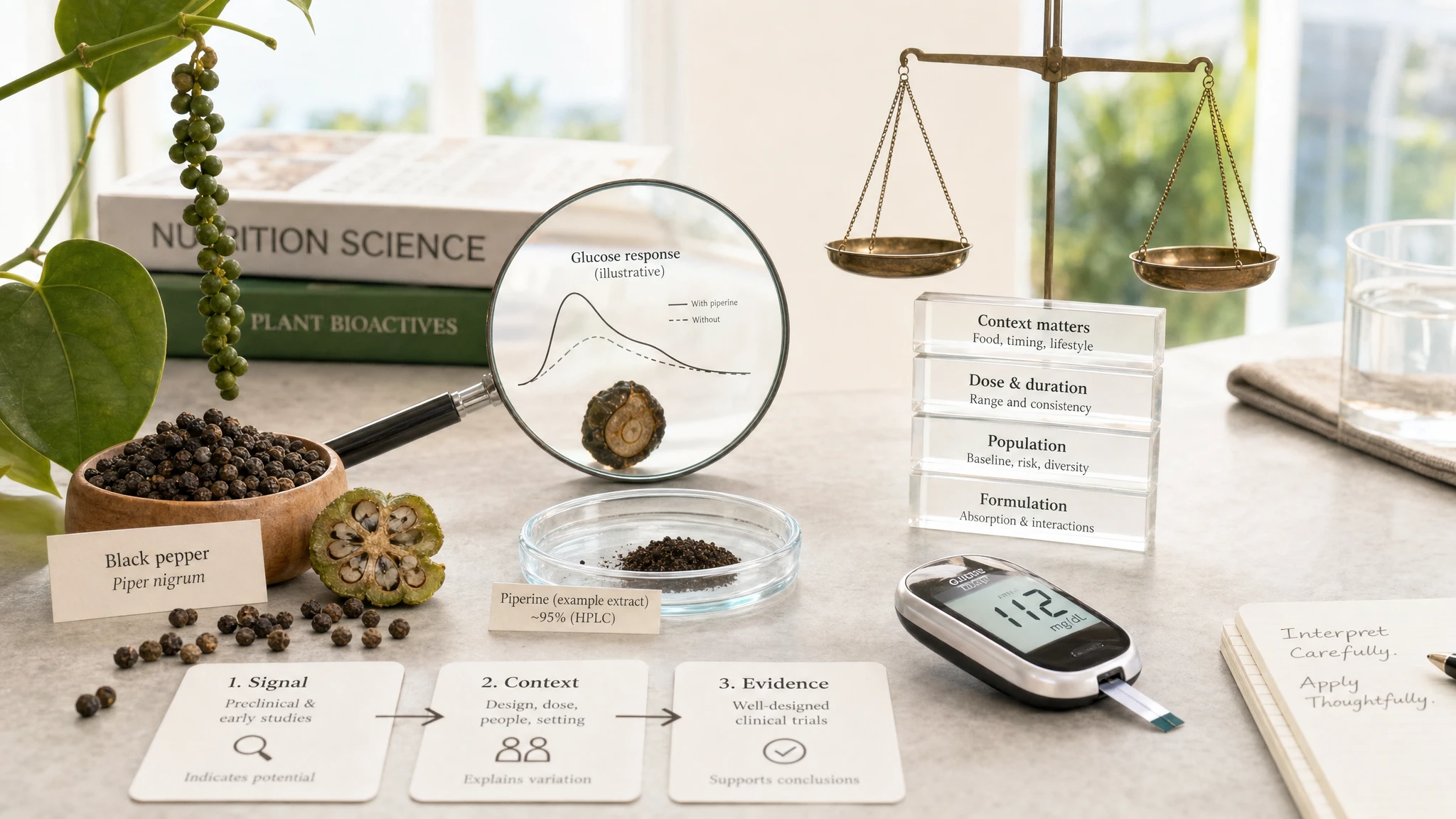
To understand the relationship between piperine and glycemia, one must separate the biological signal from data useful for treatment. A favorable outcome does not prove a stable effect on glucose control. The response may vary based on the dose, duration, the individuals studied, and other compounds used.
In this context, piperine remains a compound of interest for metabolic regulation (control of sugar and fat utilization). However, data must be interpreted according to their weight. It is necessary to distinguish between an initial signal, a potential aid, and a true clinical effect. This prevents overemphasizing results that are still partial.
Data can therefore guide new studies, but it does not, on its own, describe glycemic homeostasis (the balance of sugar in the blood). Before assigning the compound a role in sugar metabolism, the evidence must be evaluated:
- Research is more useful when it approaches clinical practice.
- Mixtures with other compounds do not prove the effect of the substance used alone.
- Animal data do not directly apply to humans.
- A drop in post-meal glycemia does not, by itself, demonstrate a cure.
To correctly interpret the results, one must distinguish an initial signal from solid evidence. This applies especially to piperine, glycemia, and glucose metabolism, which is how the body uses sugar.
How to interpret results on piperine without attributing absolute effects to it
When evaluating a result regarding piperine and glycemia, the first step is to check the gap between what was observed and what can truly be concluded. An effect on a biomarker is not equivalent to a general health benefit, especially if the study uses a small sample size or a combination of ingredients. In these cases, the data may indicate a direction, but not a stable answer. The experimental context matters as much as the numerical value. A drop observed in a laboratory does not automatically translate into help for the individual. Therefore, it is necessary to read every result within its experimental design. Only in this way can one avoid turning an initial signal into a ready-made conclusion.
This is why the keyword is prudence: the literature should not be read as an absolute yes or no, but as a series of clues with varying weight. The main limitation is that the formulation does not isolate piperine and therefore does not allow the observed effect to be attributed to it alone. Other compounds present in the product may have contributed to the result. The short duration of the study also reduces the strength of the interpretation. A promising finding remains just that until it is confirmed elsewhere. Prudence does not deny the value of the work, but it defines its significance. In this way, the result remains useful without becoming a forced proof.
Piperine as a possible metabolic modulator and not as a standalone solution
When interpreting the data correctly, piperine can be viewed as a potential metabolic modulator, rather than a standalone remedy for glycemia. This means its value lies in its interaction with insulin processes, tissue response to insulin, and glucose metabolism, but it does not replace diet, physical activity, or clinical management. The term modulator indicates an intervention that supports, rather than resolves. Piperine can fit into a broader regulatory framework. Its role should therefore be sought within a system, not as a single effect. This approach avoids placing disproportionate expectations on the compound. The biological data remains interesting, but it must be placed in the proper context.
In other words, the compound can complement a broader approach, not take its place. These results are useful, but they remain based on animal models and in combination with drugs, so they are not enough to transform piperine into a standalone solution for humans. Animal models offer indications, not clinical answers. The combination with drugs makes it difficult to isolate the contribution of piperine. Research on humans with single products and clear dosages is needed. Only then will it be possible to say whether its role is real. For now, the compound remains a candidate to be studied. Its position is that of a possible support, not a ready-made alternative.
When piperine becomes just an initial clue and not a confirmation
An isolated result, however interesting, does not equate to confirmation. In the case of piperine and glycemia, the threshold between a clue and proof is only reached when multiple studies converge in the same direction and when the effect remains stable in different contexts. A single study may show a useful signal, but it is not enough. Reproducibility is the primary criterion for giving weight to data. If other groups do not obtain similar results, the signal remains weak. The quality of the design also matters: small sample sizes and short durations reduce robustness. An initial clue serves to guide, not to conclude. Confirmation requires time, comparison, and independent verification.
If, on the other hand, the data come from experimental models, combinations, or studies that have not yet been widely replicated, the most accurate conclusion is to speak of hyperglycemia potentially being influenced, rather than an effect definitively demonstrated. Even laboratory and animal research show an interesting direction, but they do not settle the matter. In practice, piperine remains a useful initial clue for guiding research, not a confirmation sufficient to change the interpretation of glucose metabolism on its own. The transition from clue to proof requires consistent human data. It is also necessary to understand the effective dose and the minimum duration. Without these elements, the result remains a lead to follow. Researchers can use it as a starting point, not as an endpoint.
Summary of scientific evidence
This summary organizes the bibliographic sources and shows where the results on piperine are most consistent. It also indicates how they differ between experimental studies and clinical trials (studies conducted on humans).
| Publication year | Area studied | What the studies indicate |
|---|---|---|
| 2013 | Cell and animal studies on glucose metabolism | results vary and suggest a possible effect linked to study conditions [12] |
| 2016 | Glucose control in animal models | studies indicate a greater hypoglycemic effect when piperine is combined with metformin [6] |
| 2017 | Glucose uptake in muscle | in cell models, glucose uptake increased via AMPK (a protein that regulates cellular energy) [9] |
| 2018 | Clinical study with curcuminoids and piperine | the combined product reduced blood glucose compared to placebo [7] |
| 2023 | Glucose utilization in liver cells | in a cell model, signs of improved glucose utilization emerged [5] |
| 2023 | Vascular damage in diabetic rats | studies indicate a reduction in fasting glycemia and HbA1c in an experimental model [8] |
| 2025 | Review on glycemic control | evidence suggests a possible role for piperine in how the body uses glucose [1] |
Editorial interpretation of the evidence
Overall, the studies I have reviewed show genuine biological interest, especially in experimental models and combination products. I have observed that piperine can act on certain processes that regulate glucose, insulin, and glycemic balance. However, clinical evidence is less robust than that obtained from cells and animals. Furthermore, many human studies use multiple compounds together, which does not allow me to isolate its effect.
The studies use very different models, dosages, and products, making it difficult to compare their results. They often evaluate formulas containing multiple substances, which makes it impossible to attribute the effect to piperine alone. Additionally, some studies include few participants or provide incomplete descriptions of the methods used. The current landscape therefore offers useful data, but is not enough to define a clear clinical effect.
Conclusions and editorial summary
Overall, I believe that piperine may affect glucose metabolism, but the evidence is not yet definitive. The studies I have collected indicate possible effects on glycemia, insulin response, and how well the body responds to this hormone, especially in experimental models. Some data, however, are derived from products that combine multiple substances.
Nevertheless, laboratory results do not apply directly to humans. Dosages, duration, products used, and metabolic conditions make it difficult to compare studies. Furthermore, diet, insulin response, and initial health status can have as much of an impact as the substance being studied. Therefore, further studies are needed to understand whether these effects have concrete value in clinical practice.
Final critical note
The general picture I have found is interesting, but the results are not uniform. The studies show a possible biological effect, yet many use controlled models or products with multiple substances. Therefore, they do not clarify how much depends on piperine alone.
Furthermore, glycemia, insulin, and tissue response to this hormone describe different parts of the same process. Without larger and more comparable studies, there is a risk of attributing unproven effects to the substance. The signal therefore warrants further study, but does not represent definitive proof.
References
[2] Piperine as a Potential Nutraceutical Agent for Managing Diabetes and Its Complications: A Literature Review
[3] Impairment of UDP-glucose dehydrogenase and glucuronidation activities in liver and small intestine of rat and guinea pig in vitro by piperine
[4] Piperine Attenuates Cardiovascular, Liver and Metabolic Changes in High Carbohydrate, High Fat-Fed Rats
[5] Piperine Attenuates Bmal1-Mediated Glucose Metabolism Disorder in a Trpv1-Dependent Manner in HepG2 Cells
[6] Bio-enhancing effect of Piperine with Metformin on lowering blood glucose level in Alloxan induced diabetic mice
[7] Effects of Curcuminoids Plus Piperine on Glycemic, Hepatic and Inflammatory Biomarkers in Patients with Type 2 Diabetes Mellitus: A Randomized Double-Blind Placebo-Controlled Trial
[8] Piperine mitigates aortic vasculopathy in streptozotocin-diabetic rats via targeting TXNIP-NLRP3 signaling
[9] Piperine regulates UCP1 through the AMPK pathway by generating intracellular lactate production in muscle cells
[10] Effect of Piperine on the Pharmacokinetics and Pharmacodynamics of Glimepiride in Normal and Streptozotocin - Induced Diabetic Rats
[11] Pharmacodynamic and Pharmacokinetic Interactions of Piperine on Gliclazide in Animal Models
[12] Piperine reverses high fat diet-induced hepatic steatosis and insulin resistance in mice
Editorial note
Artificial Intelligence was used solely as a tool to support editorial and documentary work. All content, interpretations, bibliographic citations and conclusions have been verified, reviewed and approved by the author, who assumes full scientific responsibility for them.
The manuscript was also subject to independent peer review prior to publication.
To ensure maximum transparency, the article's complete history — including the dates of submission, review, acceptance and publication, as well as information on the peer review process — is available on the dedicated Article History page.