


Rhodiola rosea: properties, supplementation, treated conditions, and its relationship with mTOR
Research on Rhodiola rosea offers interesting but inconsistent results. The most robust evidence concerns fatigue, stress, and recovery, especially with standardized extracts. Data on mTOR, AMPK, metabolism, and organ defense are often derived from preclinical studies. The plant can therefore be a possible adaptogenic support, but not a definitive therapy or a general solution.
- Published 02/11/2026
- Updated 04/11/2026
- Reviewed 04/11/2026
- Article history

ABSTRACT : WHAT THE SCIENCE SAYS
Rhodiola rosea is a plant that is widely studied in phytotherapy and health-related nutrition. Research evaluates its potential effects on stress, fatigue, recovery, and physical and mental performance. It also examines cellular pathways such as AMPK and mTOR. AMPK, or adenosine monophosphate-activated protein kinase, detects the energy available within the cell. mTOR, the mammalian target of rapamycin, regulates growth and protein synthesis.
The plant does not act as a simple tonic; rather, it contains a phytocomplex (a set of active substances). These substances can act simultaneously on multiple bodily processes. Among the best-known compounds are salidroside and rosavins. These molecules help explain the plant's activity and assess the quality of standardized extracts. Salidroside is a phenolic compound studied for various biological effects. Rosavins, on the other hand, are substances used as titration markers (indicators of the quantity present).
To understand Rhodiola rosea, it is necessary to distinguish between traditional use and studies on cells, animals, and humans. Furthermore, a possible mechanism does not equate to a therapy with proven effects. This article first introduces the plant and then its use in supplements. It also explains the mechanisms involved, the most studied areas, and the points that require caution. It also addresses safety, product selection, and the most important practical uses.
The goal is to provide a complete, clear, and accurate overview based on available scientific studies. In this way, the reader can distinguish promising results from hypotheses that have yet to be verified. In particular, the article addresses:
- The properties of Rhodiola rosea and its key compounds
- Its use as a supplement, dosages, and contexts of use
- The biological mechanisms involving AMPK, mTOR, and mitochondria
- The effects on fatigue, stress, recovery, and performance
- Clinical evidence, its limitations, and safe choices
The properties of Rhodiola rosea
The properties of Rhodiola rosea depend on the phytocomplex, which is the set of molecules present in the extract. The plant is a natural adaptogen, studied for its ability to help the body cope with stress and fatigue. It may also act on oxidative stress (cell damage caused by free radicals). However, it is necessary to distinguish between potential effects and those that are already well-proven.
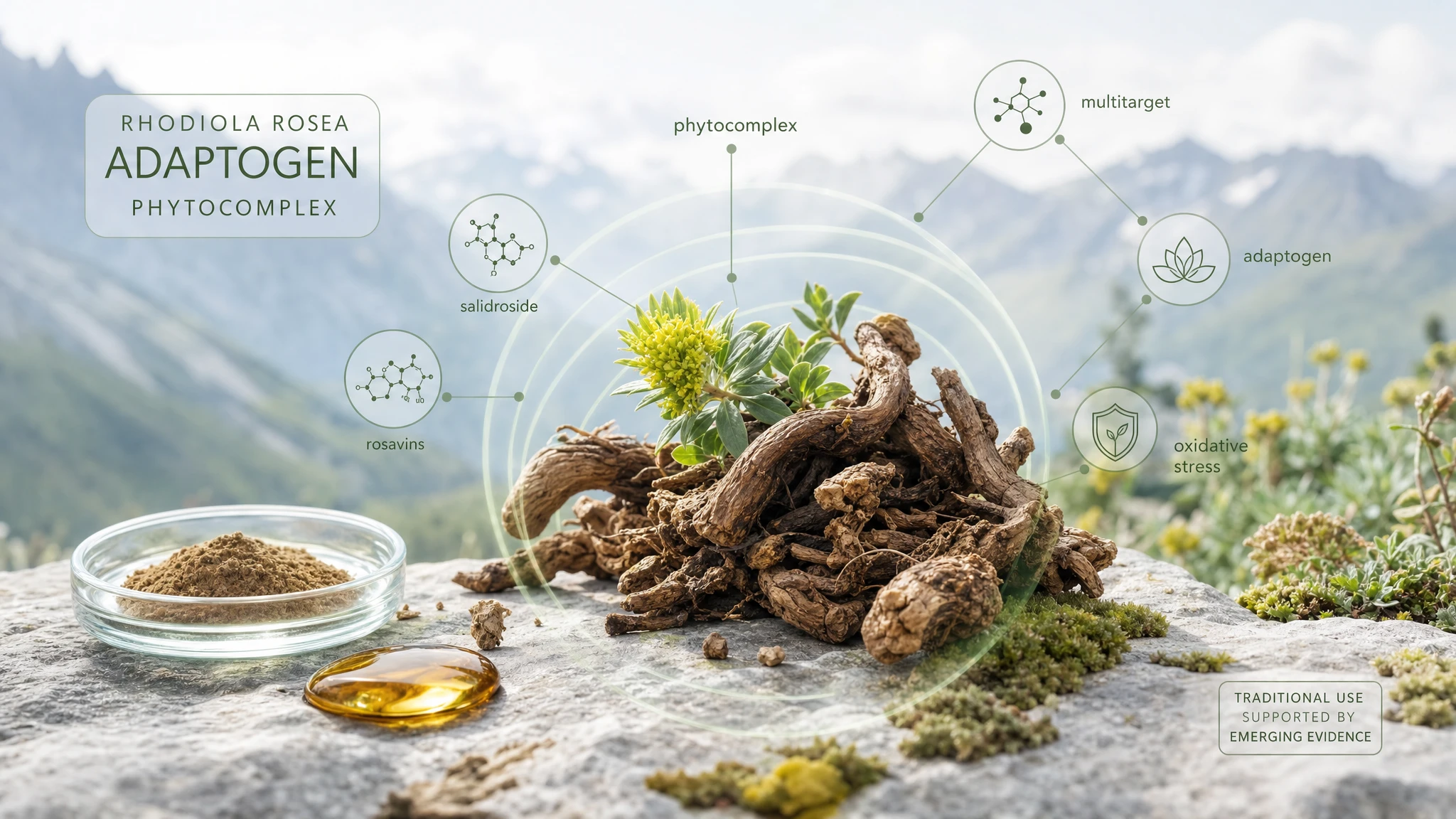
Before examining the molecular mechanisms, it is useful to clarify the plant's basic profile. The roots contain bioactive markers used to identify the product and assess its quality. Salidroside is a phenolic glucoside, formed by a sugar and a phenolic compound. It is also one of the Rhodiola compounds most studied by research. Rosavins, which are typical of the species, help define the chemical profile of the extract.
Its action is multitarget, meaning it acts on multiple biological targets rather than a single cellular pathway. The place of growth can also change the chemical profile of the extracts. Reviews on the species and analyses by public bodies summarize these aspects well. Overall, they show genuine scientific interest, but not definitive proof for every proposed use [1][2].
The term adaptogen distinguishes this plant from a common tonic. An adaptogen is studied for its ability to help the body manage physical or mental stress. It is not a direct stimulant and cannot replace medical treatment. This distinction helps avoid misconceptions when faced with messages promising quick energy or generic well-being.
To understand Rhodiola, one must evaluate the phytocomplex, the quality of the extract, and the body's response together. Standardization is essential because it indicates the known quantity of certain compounds. Different products can produce different effects, making comparisons between studies more difficult. It is not enough to read the name of the plant: data on content, dosage, and production method are required.
Research is also studying the plant's potential role in the stress response. However, official analyses note that evidence for some uses is still scarce. Therefore, not all claims have the same level of confirmation. The interest stems from ancient use, chemical profile, and data on various processes. Among these are oxidative stress, energy utilization, and cellular response. The key points are:
- The roots contain bioactive markers useful for assessing the quality of the extracts.
- Salidroside is one of the most studied compounds.
- Rosavins help identify the chemical profile of the extract.
- The action involves multiple targets and does not depend on a single cellular pathway.
- The place of growth can change the profile of the extracts.
The plant's properties become clearer when we separate its chemical profile, biological action, and the limitations of the evidence. The following three aspects explain why Rhodiola rosea supplementation has sparked such interest in research.
Rhodiola rosea: what it is and why it is defined as an adaptogen
Rhodiola rosea is a perennial plant that has been used for centuries in Northern Europe and Asia. Tradition links it to supporting strength, energy, and the stress response. Today, it is defined as an adaptogen because it can help the body react better to stressors. Stressors are physical or mental factors that put the body under pressure. The plant does not act like a classic stimulant, which increases activity for a short period. Instead, its phytocomplex can act on multiple systems that regulate response and recovery. This action on various targets explains the interest in mental fatigue, physical exertion, and stress load.
The term adaptogen provides a logical reason to study the plant, not a promise of a cure. This point also matters for editorial E-E-A-T (criteria of experience, expertise, authoritativeness, and trustworthiness of texts). Serious content must, in fact, separate ancient use from data collected in modern studies.
The available evidence does not carry the same weight for every possible use. General properties must therefore be distinguished from clinical results observed in people. It cannot be inferred that the plant is useful for every type of fatigue. Furthermore, the effect can vary between individuals and depend on the product used. Research primarily studies the systems that manage stress, energy use, and cell defense. This foundation helps in interpreting data on mechanisms and potential clinical uses. Once the meaning of adaptogen is understood, one can delve into the plant's chemical profile.
Salidroside, rosavins, and other bioactive compounds in Rhodiola
The profile of Rhodiola rosea stems from multiple bioactive compounds, including salidroside, rosavin, rosin, and rosarin. These molecules do not necessarily act alone. Studies indicate a possible synergistic action, in which multiple elements contribute to the observed biological effects. Salidroside is often used as a functional marker and appears in many experimental and clinical studies. Rosavins, on the other hand, help to identify the species and define the content of the extracts. The two roles are different, but both are necessary to properly evaluate the product.
Two supplements from the same plant can contain very different amounts of active substances. When discussing benefits or dosages, it is therefore necessary to know which extract was used. The formula can change the effect and make comparisons between products or studies unreliable. This topic also has SEO value, as it addresses questions about supplements on the market. Scientifically, however, the key fact is another: the plant is a phytocomplex. It can therefore act on various targets that regulate stress, energy, and the defense of nerve cells.
Intracellular pathways (active signals within cells) can also respond differently depending on the formula. This is therefore not a secondary detail, but rather helps in interpreting all other results. Knowing these markers allows for the evaluation of potential benefits and the actual quality of the product. Once the main compounds are known, it becomes essential to understand where the plant comes from.
Where Rhodiola rosea grows and why the environment matters
Rhodiola rosea grows in cold mountainous areas with high radiation and low oxygen levels. In these locations, the plant must cope with harsh conditions. The environment may have favored the production of secondary metabolites, which are useful for defense but not for basic growth. The place of origin helps to understand the proposed link between stress and hypoxia. Hypoxia refers to lower-than-normal oxygen levels in tissues. It does not prove a clinical effect in humans, but it provides a useful biological basis for studying the plant.
In these environments, molecules with potential antioxidant and cytoprotective (cell-protecting) actions are formed. Some may also regulate various biological signals. However, the place of growth is not enough to predict the effect on people. Furthermore, it does not demonstrate any benefit on its own. Botany, however, helps explain why the species contains many compounds of interest. Extracts can vary depending on the location, the part used, and the processing method. These factors can influence both the quality of the product and the results of studies.
To evaluate a supplement, data on origin, traceability, and a known quantity of compounds are required. Natural origin alone does not ensure quality, safety, or consistent effects across different products. This step links botany to research and helps in carefully interpreting the subsequent data. Having clarified the habitat, the next step is to understand what it really means to standardize an extract.
Standardized Rhodiola extract: what it really means
For Rhodiola rosea, the term "standardized extract" indicates known and constant amounts of certain compounds. This information is essential because raw plants and non-standardized extracts can vary significantly. The differences primarily concern the content of salidroside and rosavins.
In clinical and nutritional studies, a well-defined formula allows for better comparison of results and dosages. Without known quantities, it is difficult to determine if two studies used truly similar products. It also becomes less reliable to extend a result to other extracts. This question is also valuable for SEO, as many users search for differences between products on the market. However, the topic also concerns safety. An extract described with care is easier to study and monitor. It is also simpler to link it to observed effects.
Standardization does not directly prove that one product is better than any other. However, it allows for a better estimation of the relationship between dose, tolerability, and the body's response. It therefore creates a bridge between the ancient use of the plant and research based on measurable data. When the product is well-described, we can read studies without confusing very different formulas. On this basis, clinical effect, safety, and quality are evaluated with greater rigor. Before discussing benefits or practical uses, one must therefore know the criteria adopted. From standardization, one naturally moves on to the nutritional and practical use of the plant.
Recent research and updates
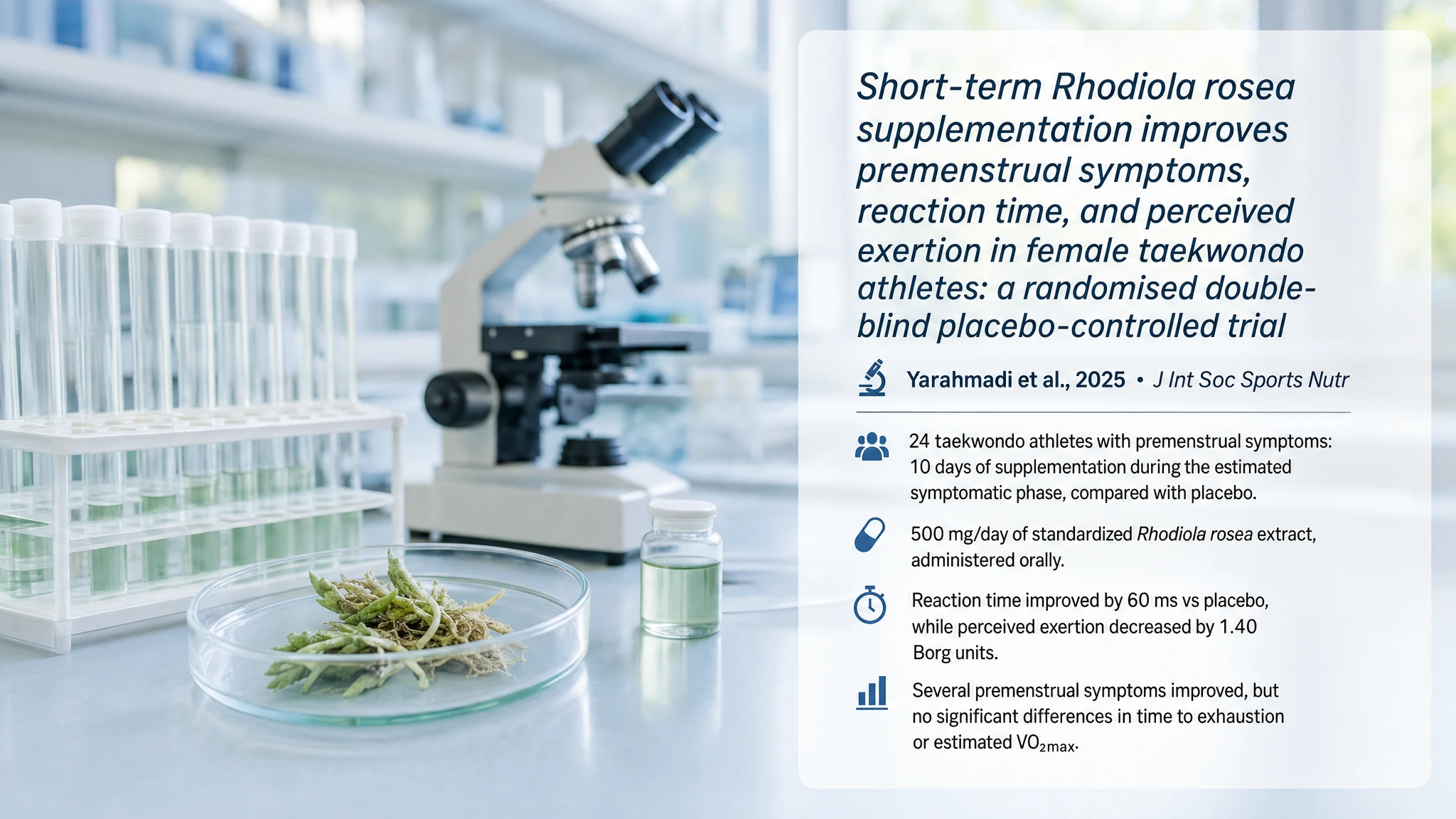
In 2025, Yarahmadi, an Iranian author, and his colleagues published a study in the Journal of the International Society of Sports Nutrition. The research evaluated the short-term use of Rhodiola rosea in female taekwondo athletes with premenstrual symptoms. The authors used a standardized formula and measured symptoms, reaction times, and perceived exertion. The study is useful because it evaluates fatigue and physical response in a specific sports context. It also offers measurable data and a verifiable DOI.
*Short-term Rhodiola rosea supplementation improves premenstrual symptoms, reaction time, and perceived exertion in female taekwondo athletes: a randomised double-blind placebo-controlled trial*
- 24 female taekwondo athletes with premenstrual symptoms took the supplement for 10 days during the estimated symptomatic phase, compared to a placebo.
- The athletes took 500 mg per day of standardized Rhodiola rosea extract orally.
- Reaction time improved by 60 milliseconds compared to the placebo. Perceived exertion decreased by 1.40 Borg units.
- Several premenstrual symptoms improved, but not the time to exhaustion or estimated VO2max. The differences were not significant.
Nutritional context and the use of supplementation
When discussing Rhodiola rosea supplementation, we are not looking for a generic "energy" boost. Instead, it is necessary to understand in which cases it is useful to consider it. Research evaluates it primarily during periods of high physical or mental strain. In these phases, it can promote adaptation, recovery, and a reduced perception of fatigue. A standardized extract is therefore a targeted aid, not a classic stimulant.
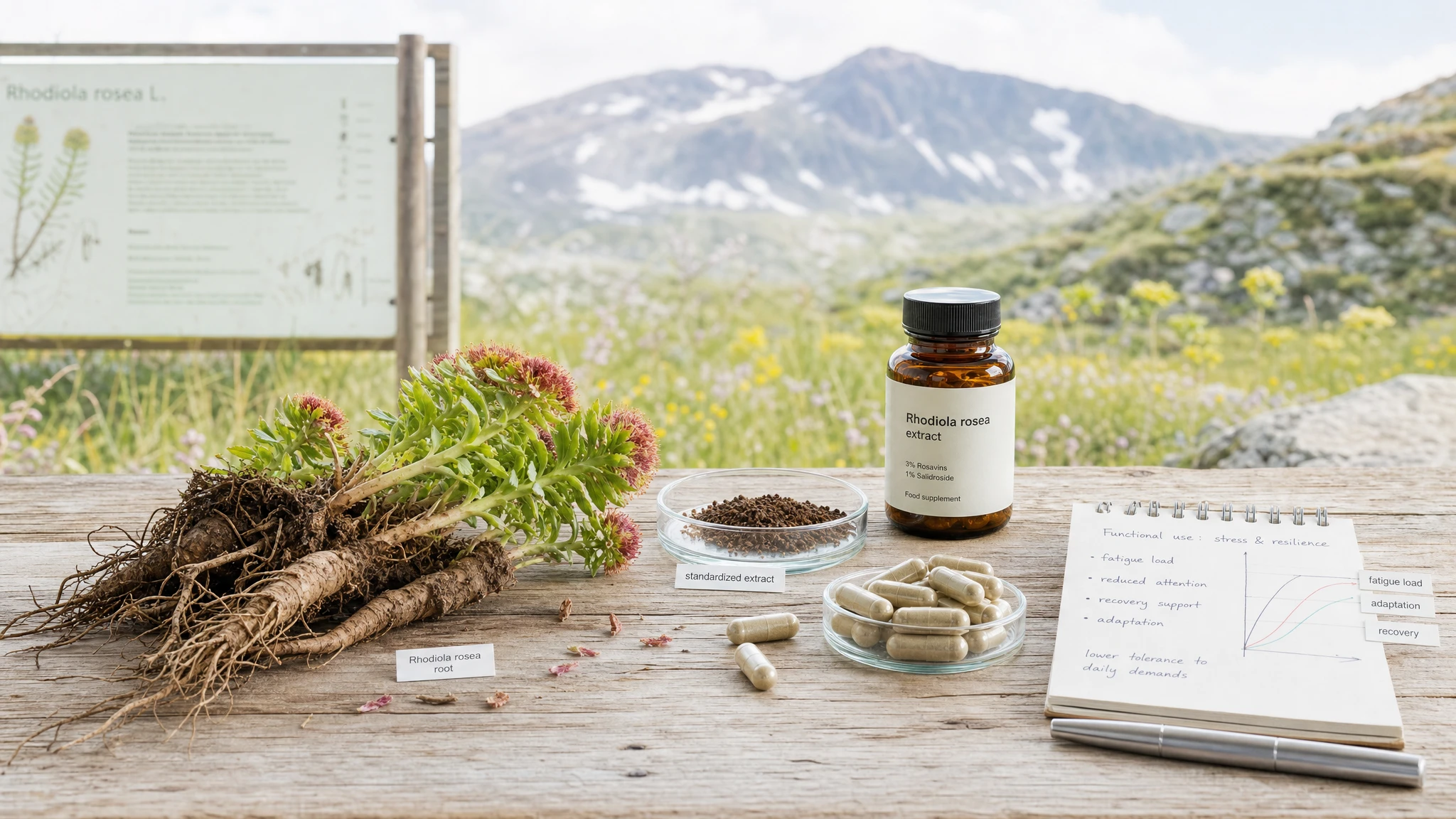
In the field of nutrition, Rhodiola rosea is studied during long periods of physical or mental stress. During these phases, fatigue, reduced attention, and difficulty coping with the workload may occur. The plant is known as a natural adaptogen (a substance that helps the body adapt to stress). It is not intended to force energy, but rather to support the body's normal response.
For this reason, trials often select individuals with a specific need. These include fatigued individuals, workers under pressure, and athletes. The goal is therefore not to achieve a vague sense of well-being. What matters is the ability to handle stress and remain active every day [3][4].
Data also show that various products are not always the same. A standardized Rhodiola extract allows for better comparison of results. The weight of the capsule, however, does not by itself indicate the dose of the compounds present. Two products of the same weight can therefore provide different amounts of these substances.
A randomized study (with random assignment of participants) involved adults between 20 and 55 years of age. The subjects took SHR-5 at 576 mg per day for 28 days. The research detected changes in fatigue, attention, depression, and cortisol (a hormone linked to stress). These outcomes indicate a potential aid in the stress response, not a rapid stimulant effect [5].
Overall, the data support its use during more difficult periods. Without an actual burden, its use appears less well-founded [1].
This premise also helps to better interpret data on extracts. Results vary depending on the formula, dose, duration, and purpose of the treatment. Some key points consistently appear in research:
- Clinical studies often use standardized extracts with known quantities of the plant's compounds.
- Salidroside (a compound used to evaluate the extract) allows for the comparison of different products.
- Studies primarily assess fatigue, stress, and the recovery of normal functions.
- Realistic expectations matter more than a rapid effect felt immediately after intake.
In practice, Rhodiola rosea is studied when the body is facing a high workload. In these cases, fatigue can limit normal activities. Let's look at when its use makes the most sense and how to interpret dosages. We will also clarify what effects can be realistically expected.
Rhodiola rosea as a supplement: when it is studied
Rhodiola rosea is studied primarily when the body is under significant physical or mental stress. Clinical research specifically evaluates fatigue, burnout, performance decline, and recovery difficulties. This does not mean the plant is useful for everyone. The foundation for its use is most solid when the body needs to adapt to a high workload.
Rhodiola, therefore, does not act as a generic "booster." Instead, it is studied as an aid to resilience, that is, the ability to react to stress. For this reason, trials often select individuals with specific symptoms or needs. These include athletes, workers under stress, and patients with stress-related fatigue. It is also necessary to distinguish between perceived benefit and measurable data. The most robust studies attempt to evaluate both aspects. This distinction matters because much of the research found online concerns rapid effects or generic energy. Scientific literature, on the other hand, speaks more often of adaptation and recovery.
In a well-constructed editorial plan, this topic connects the nutritional rationale of supplementation to practical uses. These uses will be examined later. This comparison also avoids confusing Rhodiola with classic stimulants. It also helps to distinguish it from supplements designed for entirely different purposes. Its use makes the most sense when the context is clear and the expected result is realistic. After clarifying when to study it, one must evaluate the doses actually used in trials.
Rhodiola rosea dosages studied in clinical trials
Clinical trials on Rhodiola rosea feature various dosages, primarily linked to the type of extract used. Some studies have utilized daily doses of a few hundred milligrams of extract. Others have evaluated salidroside in a more concentrated form. Therefore, there is no need to search for a “correct” dose that is valid for everyone. The dose must be interpreted in conjunction with the degree of standardization and the duration of the protocol.
This criterion avoids a common mistake: comparing different products as if they were identical. Two capsules of the same weight can, in fact, contain very different amounts of active markers. Active markers are compounds used to define and compare extracts. Clinical literature indicates that the most significant effects may also depend on the context. Supplementation should therefore be studied for a specific purpose, rather than used randomly. From an editorial perspective, this topic addresses frequently asked questions such as “how much to take” and “what dose has been studied.” It also answers the question of “how many capsules are needed.” It is therefore a central point, but one that requires caution.
Trial dosages should not be automatically translated into personal recommendations. One must evaluate the product, the goal, and the individual's specific conditions. Furthermore, a distinction must be made between experimental research and daily use. A superficial reading of the dose might make the plant appear effective in every case. In reality, the outcome also depends on the formula, the study method, and the people involved. The topic of dosage is therefore both informative and method-related. After reading about the dose, the practical context of its use remains to be understood.
Rhodiola rosea and stress: why the functional context matters
The relationship between Rhodiola rosea and stress should be interpreted based on the body's physiological function. It is not an automatic response to every form of fatigue. In states of chronic stress or high workload, the plant has been studied as an aid to resilience. Research also evaluates its role in regulating the biological response to stress. Its potential effect therefore depends on the presence of a genuine demand on the body. It does not stem from a mere desire for more energy. Rhodiola is of interest to functional nutrition because it sits at the intersection of phytotherapy and stress biology. Phytotherapy studies the use of plants to support health.
Rhodiola is not a drug, but it is not a simple traditional tonic either. Its use appears most plausible during periods when one wishes to maintain performance. In such phases, it may help limit the feeling of having fewer resources. In editorial content, this distinction avoids unrealistic expectations, especially for those seeking immediate effects.
The context also includes sleep, workload, diet, physical activity, and psychological state. The response to Rhodiola cannot, therefore, be separated from one's lifestyle. This topic prepares the way for subsequent studies on mechanisms, at-risk groups, and clinical uses. It also keeps one point clear: the benefit also depends on the starting situation. When stress is well-defined, the supplement can be evaluated more precisely. The key is not to find a universal solution. Instead, a response tailored to the actual need is required. From here, one can move on to concrete expectations regarding well-being and daily activities.
Rhodiola rosea and well-being: what to realistically expect
Those seeking "well-being" through Rhodiola rosea may easily have overly broad expectations. Scientific literature, however, points to a more precise and limited effect. The plant can support stress resistance and reduce the perception of fatigue. It may also help maintain normal functions during more challenging periods.
Available data, however, do not show a universal effect on energy, mood, or motivation. These potential outcomes depend on the context. This point is important because "well-being" is a common term in marketing, but lacks precision in science. From an E-E-A-T perspective—that is, experience, expertise, authoritativeness, and trustworthiness—it is better to use measurable outcomes. These include recovery, adaptation, the ability to handle stress, and performance maintenance. Furthermore, the response may differ between trained, sedentary, or stressed individuals. It may also vary in subjects with mild mood disorders. For this reason, an editor must avoid extending results to everyone.
This topic addresses a very frequent online search. It also helps bridge the gap between perceived promises and scientific evidence. It allows for distinguishing Rhodiola from supplements primarily aimed at sleep or relaxation. Instead, it places it within the scope of resilience and the ability to adapt to stress. It is therefore correct to expect specific help, not a general improvement in well-being. A realistic interpretation avoids disappointment and helps determine if the product truly serves its purpose. This step is necessary before examining deeper biological mechanisms. Once the context and expectations are clarified, the plant's action within cells can be studied.
Biological mechanism of Rhodiola rosea
Rhodiola rosea does not act on a single target. Its effects involve oxidative stress, energy use, and the cellular response to stress. The most studied compound is salidroside, which can help the body adapt. This is why it is studied in relation to Rhodiola rosea supplementation, fatigue, and stress response.
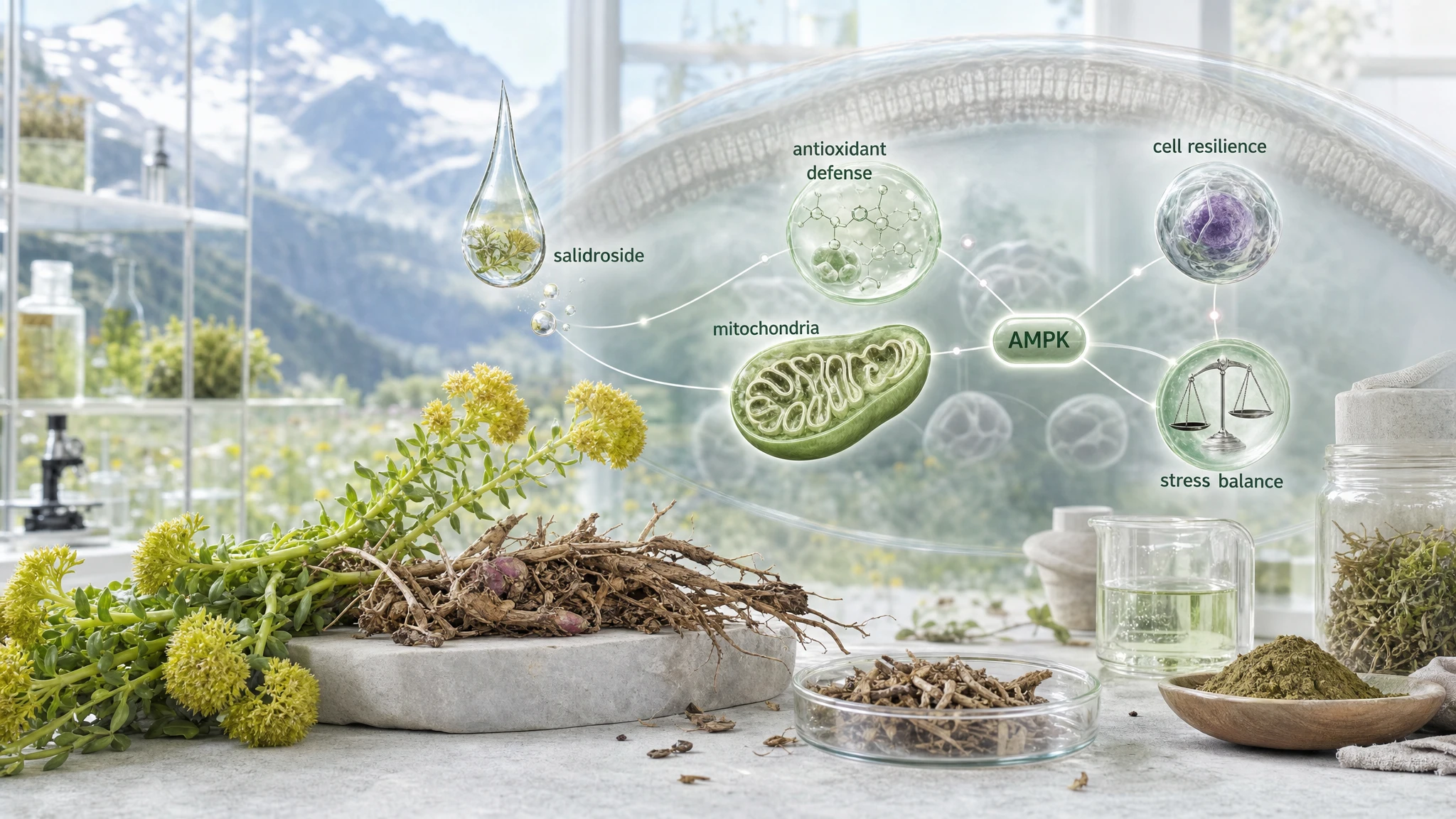
Rhodiola rosea can modulate cellular responses to stress without forcing them. In study models, salidroside, an active compound of the plant, supports antioxidant defenses. It may also promote energy utilization and the stability of mitochondria, which produce energy within cells. Therefore, the plant does not "accelerate" a single function. Instead, it helps the cell manage stress, low energy, and danger signals.
This mechanism is consistent with its role as a natural adaptogen (a substance that helps with adaptation to stress). This profile also explains the interest of research in the clinical and nutritional fields [3,4,6].
These mechanisms do not, on their own, prove a therapeutic effect. However, they explain why the properties of Rhodiola rosea are being studied in relation to fatigue and oxidative stress. Research is also examining these properties in certain metabolic disorders.
Studies on cells, animals, and humans indicate clearer effects when the system is already under pressure. Under normal conditions, however, the margin of variation appears to be lower [5,7,8,9].
The mechanism, therefore, does not consist of a simple stimulus. The plant can modulate the stress response and the relationship between AMPK and mTOR. This axis controls central aspects of life and cellular functions [10,11,12].
To better understand the mechanism, four interconnected steps can be distinguished:
- Salidroside supports the body's antioxidant defenses and limits the damage caused by oxidative stress.
- AMPK, a sensor of cellular energy, is activated and helps the cell use resources more efficiently.
- The mTOR pathway regulates growth and energy use. Its modulation can influence autophagy and cellular life.
- Mitochondrial function and the inflammatory response help tissues resist stress.
The mechanism involves three key steps: defense against oxidative stress, energy control, and modulation of mTOR. Added to these are mitochondrial function and the signals that regulate inflammation.
Salidroside and oxidative stress: how cellular defense changes
Salidroside is often described as an antioxidant, but it does not only neutralize free radicals directly. Experimental evidence indicates that it can strengthen the body's own defense systems. It can also improve mitochondrial function and reduce oxidative damage to lipids, proteins, and DNA. DNA is the cell's genetic material. These effects are relevant when oxidative stress promotes cellular damage, as seen in many chronic diseases.
The key point is that the compound appears to act on multiple levels. It limits the production of reactive species, aids energy utilization, and supports cellular resilience. This action may help cells better withstand repeated damage and stress. In SEO publishing, this topic captures searches for "natural antioxidant" and "oxidative stress." However, it must be approached with caution, without overemphasizing an effect observed prior to clinical trials.
Defense against oxidative stress is part of a broader picture. It does not indicate an isolated and certain benefit in every situation. The combination of antioxidant defense, mitochondrial control, and tissue protection explains the widespread scientific interest. Indeed, Rhodiola is being studied in many different fields. This examination offers a solid biological basis, but not definitive clinical proof.
It helps in understanding the subsequent chapters on neuroprotection, metabolism, and related diseases. Here too, the mechanism indicates possible support for cellular resilience, that is, the ability to react to stress. It does not automatically prove a therapeutic effect in humans. The rationale is solid, but it must always be interpreted with caution. Oxidative defense is only one part of the picture: the next step concerns the cell's energy metabolism.
Rhodiola rosea and AMPK: the cell's energy sensor
AMPK is the energy sensor that detects a deficiency in ATP, the primary source of cellular energy. When ATP levels drop, AMPK promotes processes that produce energy and limits those that consume large amounts of it. In various experimental models, salidroside from Rhodiola rosea has been linked to the activation of AMPK. This connection explains the interest in the plant for metabolic stress conditions.
When energy decreases, the system can promote a more efficient use of resources. In the tissues studied, AMPK activation is associated with improved glucose metabolism. Better mitochondrial function and increased cell resistance are also observed. AMPK is not just a marker, i.e., a biological indicator. It is an upstream regulator capable of influencing many downstream processes.
These include certain steps related to mTOR. The topic therefore has strong SEO value and clear editorial utility. It connects nutrition, physiology, and molecular mechanisms. However, activating AMPK in a laboratory does not guarantee a universal clinical effect in humans. It is necessary to clearly distinguish biological plausibility from therapeutic evidence.
This passage helps to interpret the relationship between Rhodiola, energy metabolism, and the control of cell growth. The plant does not "create energy" in a magical way. Instead, it can help the cell better manage energy demand. From the management of cellular energy, we move to the crux of growth and mTOR signaling.
Rhodiola rosea and mTOR: when cellular growth is modulated
mTOR, or the mammalian target of rapamycin, regulates cell growth, protein synthesis, and metabolism. Experimental studies indicate that salidroside may modulate this pathway. It often reduces its activity in disease models where signaling is excessive. However, mTOR is not a unique target, nor is it always a "bad" element. It is a physiological node that must remain in balance. Rhodiola appears to act on this balance in relation to energy status and the stress response.
The topic links this phytochemical to one of the most studied pathways in cell biology and oncology. Pathways are the routes used by cells to transmit signals. From an editorial perspective, the topic addresses online searches with a strong informational intent. However, it is necessary to avoid therapeutic conclusions that are stronger than the available data.
The modulation of mTOR primarily concerns preclinical models, which are studied before clinical trials in humans. It does not indicate clinical efficacy already proven against neoplasms. However, the link between Rhodiola and mTOR helps to understand the relationship with autophagy. Autophagy is the process by which the cell recycles its own components. This link also concerns the cells' ability to remain alive and the control of proliferation, i.e., cell growth.
The topic therefore remains central, but it must be distinguished from in-depth studies on AMPK and individual diseases. The regulation of mTOR explains why the plant is studied in very different contexts. The common logic concerns biological adaptation and cellular balance. When mTOR is modulated, mitochondrial function also becomes a decisive factor.
Rhodiola rosea and mitochondrial function: energy and resilience
Mitochondrial function is one of the most consistent aspects of the mechanism under study. In experimental models, salidroside is associated with more efficient energy use. Studies also show fewer reactive species and faster recovery after metabolic stress. These data explain the interest in fatigue, endurance, and the ability to tolerate exertion.
Mitochondria produce ATP (the molecule that provides energy to the cell) and regulate the stress response. When they malfunction, they can increase oxidative stress and make tissues more fragile. The plant appears to act on this balance and support cellular adaptation. This does not mean, however, that it can prevent every energy crisis.
This topic relates to online searches regarding energy, metabolism, and performance, but it requires precise terminology. One cannot generically claim that the plant “gives energy.” Instead, it may promote cellular conditions better suited to managing stress. This distinction avoids marketing messages that are not faithful to physiology. The mechanism also helps in interpreting clinical studies on fatigue and performance.
It is also useful in cases where individuals face high energy demands. Mitochondrial function can link cellular processes to perceived effects without confusing the two levels. Beyond energy, the way the plant regulates inflammation also matters.
Rhodiola rosea, inflammation, and pro-inflammatory cytokines
The inflammatory response is another important point in the plant's biological profile. In various experimental models, salidroside has been associated with a reduction in pro-inflammatory signals. These include TNF-α, IL-1β, and IL-6. These are pro-inflammatory cytokines, proteins that activate and guide the immune system response. This finding is particularly relevant in cases where inflammation and oxidative stress act together.
This potential effect is not equivalent to that of a common anti-inflammatory drug. Instead, it indicates that certain cellular pathways linked to the response to damage can be modulated. The topic is highly searched for online, but requires caution. The plant cannot be considered a general cure for inflammatory diseases. Studies on cells and animals indicate a decrease in some signals that promote inflammation.
This distinction is essential to remain faithful to the available data. The mechanism may also be useful in the study of metabolic, brain, and heart diseases. In these conditions, mild, long-term inflammation can contribute to damage. It is therefore a complex network that participates in the plant's adaptogenic profile. However, it does not indicate a valid cure for every disease. With these mechanisms in mind, it becomes easier to interpret the observable effects on the body.
Health impact: fatigue, stress, and performance
This section addresses a key topic for those seeking information on Rhodiola rosea supplements: its potential to help with fatigue and stress. Studies primarily indicate support for mental endurance and the ability to withstand exertion. Its profile resembles that of a natural adaptogen (a substance that helps the body adapt to stress). It does not, however, align with that of a fast-acting stimulant.

When evaluating Rhodiola rosea in a clinical setting, the goal is not to achieve a “euphoric rush.” Instead, research focuses on its ability to reduce perceived fatigue and support the response to stress. Stress is a physical or mental pressure that requires the body to adapt. In several studies, standardized Rhodiola extract has supported mental endurance during high-load periods. The perceived benefits have included improvements in attention, mental stamina, and feelings of exhaustion.
In the previously described trial with SHR-5, for example, fatigue, mood, and cortisol levels improved [5]. Cortisol is a hormone involved in the stress response. A decrease in its levels suggests a potential ability to manage the physical tension associated with stress. The most robust interpretation is that the plant may help manage the biological cost of intense periods. However, it cannot eliminate the root causes of stress. It may be of interest to those with a high mental workload, those who sleep poorly, or those who do not fully recover. In these cases, daily pressure exceeds the individual's normal capacity to cope.
The most useful interpretation, however, remains the one linked to function. Salidroside, an active compound typical of the plant, and other substances appear to act on multiple pathways. These regulate cellular energy, the response to oxidative stress, and energy-related signaling. Oxidative stress arises from an excess of reactive molecules, which can damage cells and tissues. This occurs when the body's antioxidant defenses are insufficient.
Overall, the studies show reasonable consistency, but the results are not uniform. In experimental models, salidroside has been linked to signals such as AMPK. This protein helps regulate the body's use of energy. The compound has also been linked to energy metabolism and reduced oxidative damage [6,13].
In studies on exercise and endurance, the effect appears more stable regarding the ability to sustain effort. It also concerns certain fatigue biomarkers, which are biological data indicating the level of physical stress. The effect, however, seems less stable regarding absolute peak performance [14,15]. In practice, Rhodiola rosea seems to support consistency in performance and perceived endurance. It does not appear to act as a rapid “boost.” It may therefore make more sense when fatigue from workload, burnout, or poor recovery prevails [3].
Clinical and experimental studies indicate several key points:
- mental fatigue may decrease during long periods of high load
- physical performance improves especially when effort is repeated
- recovery after intense stress seems faster and more regular
- the response varies based on dose, extract, and context of use
The three most studied areas are mental fatigue, physical performance, and recovery after stress. In any case, Rhodiola rosea can help the body regulate its responses. However, it does not act as a classic stimulant.
Rhodiola rosea for mental fatigue and burnout
Plant extracts have been studied for their effects on mental fatigue caused by chronic stress and burnout. Burnout is a state of severe physical and mental exhaustion linked to prolonged and intense pressure. In this context, the goal is not to provide a quick boost, but rather to evaluate the ability to handle the workload and maintain good mental performance.
A placebo-controlled study involved 60 people between the ages of 20 and 55. The subjects took four tablets of SHR-5 per day for 28 days. The total daily dose was 576 mg. The authors observed improvements in fatigue, low mood, attention, and cortisol [5]. The study was randomized and included a control group, making the comparison between groups more robust.
Another trial, conducted across multiple centers and without a control group, included 100 subjects with prolonged or chronic fatigue. Participants took 2 × 200 mg of WS® 1375 daily for 8 weeks. The benefit increased over time, and after 8 weeks, it was unlikely to be due to chance [16]. However, a placebo group was missing, so the data should be interpreted with caution.
Another multi-center study evaluated the extract in patients with burnout during routine clinical practice. The data support interest in its potential to help with the stress response [9]. However, they do not show that the supplement can resolve burnout on its own. It can only be viewed as additional support during periods of high pressure.
It is also necessary to distinguish occasional tiredness from clinically significant burnout. The evidence appears more favorable for high stress than for generic cases of "low energy." Therefore, the extract is not a suitable remedy for every form of fatigue. This distinction avoids false expectations and keeps the message faithful to the studies.
Rhodiola rosea and physical performance in endurance sports
In endurance sports (resistance disciplines), extracts have been studied as an aid during exertion. Researchers have measured time to exhaustion, oxygen usage, recovery, and fatigue data. These values help to understand whether the product supports endurance during long activities.
A meta-analysis that combined 9 randomized trials, with a total of 424 participants, examined the extract. It improved total antioxidant capacity, i.e., the defense against reactive molecules. However, it did not produce reliable effects on maximum oxygen consumption. It also did not prevent acute mountain sickness [17].
An exploratory trial on active young adults studied salidroside during physical exercise [14]. The data indicate that the potential effect on performance is yet to be defined. Another study, conducted on football players, examined physical and decision-making performance [18]. It therefore also evaluates activities that require both physical and mental skills.
The proposed mechanism includes more effective energy use and less oxidative stress. These effects could help to withstand exertion, especially when the load is high. However, they do not prove a certain increase in performance for every athlete. Results may vary based on dose, product, and the subject's conditions.
The effect should therefore be described as possible and context-dependent, not certain. The quality of the extract and the level of training can change the outcome. The product could help support load and recovery. It is not a shortcut to overcome the body's normal limits.
Rhodiola rosea and mood: what we know about anxiety and mild depression
The extract has also been studied for mood, anxiety, and mild depression, but the evidence is limited. One randomized study included 57 subjects with mild or moderate major depression. For 12 weeks, researchers compared a standardized extract with sertraline and a placebo.
Symptoms decreased by 5.1 points in the Rhodiola group and 8.2 in the sertraline group. The decrease was 4.6 points in the placebo group. The reductions were modest, and the differences between the groups were unlikely to be significant [19]. Therefore, the study does not prove a definitive antidepressant effect. It only shows a possible signal, which requires larger studies.
A small pilot study examined the Rhodax® extract for generalized anxiety disorder. The data indicated potential interest, but not therapeutic certainty [8]. The small number of subjects limits the strength of the result. Larger, properly controlled trials are needed.
Some reviews evaluate the plant as a possible supplement for depressive disorders. Hypotheses involve monoaminergic, neurotrophic, and anti-inflammatory pathways [20]. Monoaminergic pathways regulate serotonin, dopamine, and norepinephrine. Neurotrophic pathways help neurons survive and change over time.
These mechanisms are plausible, but the clinical evidence is weaker than that for fatigue. It is necessary to distinguish between anxiety related to a specific event, low mood caused by stress, and diagnosed disorders. The supplement may be considered as an aid in selected cases. It does not replace a medical consultation or a prescribed treatment.
The correct message, therefore, points to a possible additional aid, not an autonomous or definitive solution. Some studies report perceived benefits and improvements in daily life. However, these data are not sufficient to make therapeutic promises. This caution limits expectations that the evidence currently available cannot support.
Rhodiola rosea and recovery after prolonged stress
Extracts are also studied for recovery after long periods of physical or mental stress. Recovery means returning toward homeostasis (the body's internal balance) after an intense load. Severe fatigue can last a long time and does not disappear with a simple stimulating boost. In this case, the potential effect concerns the return to normal function. It does not consist of pushing the body beyond its limits.
This is why the topic is of interest to athletes, professionals under pressure, and people going through intense phases. Recovery includes sleep, alertness, perceived energy, and the ability to withstand exertion. The plant is called an adaptogen because it may support the body's response to stress. However, this profile must be distinguished from the promise of quick energy.
The evidence mainly concerns the control of the response and the resumption of normal activities. It does not show a certain effect in every person or situation. This aspect distinguishes the product from supplements used primarily to sedate or promote relaxation. Here, the proposed goal is to manage stress and aid recovery.
Recovery, therefore, does not coincide with euphoria or strong activation. It indicates, rather, the ability to regain a good balance after exertion. The topic addresses common practical questions, despite having a complex biological basis. It connects the studied mechanisms, clinical data, and potential daily use. To properly evaluate recovery, however, one must clarify the relationship between alertness and activation.
Rhodiola rosea and alertness: why it is not just a simple energizer
The plant is often referred to as an "energizer," but this word can create false expectations. Studies suggest it is more of a potential aid for alertness, adaptation, and the ability to handle stress. Its effect, therefore, does not coincide with that of a classic stimulant. When it appears, the benefit does not always consist of a rapid peak of activation. It may emerge as better task management and less perceived fatigue.
One should not, therefore, expect an effect similar to that of caffeine. The response may be milder and more gradual. This distinction corrects a very common commercial description. It also allows the effect to be linked to the mechanisms already examined. Among these are AMPK and the mitochondria (parts of cells that produce energy). The stress response may also play a role.
The hypothesis does not suggest that the product provides energy in an absolute sense. Instead, it might help the body adapt when energy demand increases. Those looking for a rapid effect must therefore consider this difference. The proposed function concerns regulation, not an immediate stimulus. This interpretation allows for more realistic use and a more accurate assessment of the results. It also avoids confusing alertness with a state of high excitement. After evaluating the perceived effect, it is necessary to examine the clinical conditions and the most studied groups.
Rhodiola rosea, oxidative stress and cellular adaptation
A further reason why Rhodiola rosea is studied in relation to stress and performance concerns its potential control of oxidative stress, i.e., the excess of reactive molecules that accompanies exertion, inflammation, and incomplete recovery. In various experimental models, salidroside has shown protective effects on cells exposed to oxidative damage and on tissues sensitive to energy consumption [13][21]. This does not mean that the plant magically "repairs" the body, but rather that it can help make the transition through phases of high physiological demand less taxing. The clinical relevance is primarily functional: less secondary damage can translate into better exercise tolerance, a reduced feeling of exhaustion, and more efficient recovery.
However, an important point remains that should not be overlooked: much of the data comes from animal or cellular models, so the link to the perceived benefit in humans is plausible but not automatic. For this very reason, Rhodiola should be described as a support for biological resilience, not as a definitive cure. The value of its profile lies in the consistency between cellular mechanisms, preliminary results, and practical use during periods of high load.
Related pathologies and at-risk populations
When evaluating Rhodiola rosea in individuals with other conditions, the clinical picture also matters. Areas of interest include long-term stress, metabolic issues, and nervous system fragility. However, the strength of the evidence varies significantly from one condition to another.
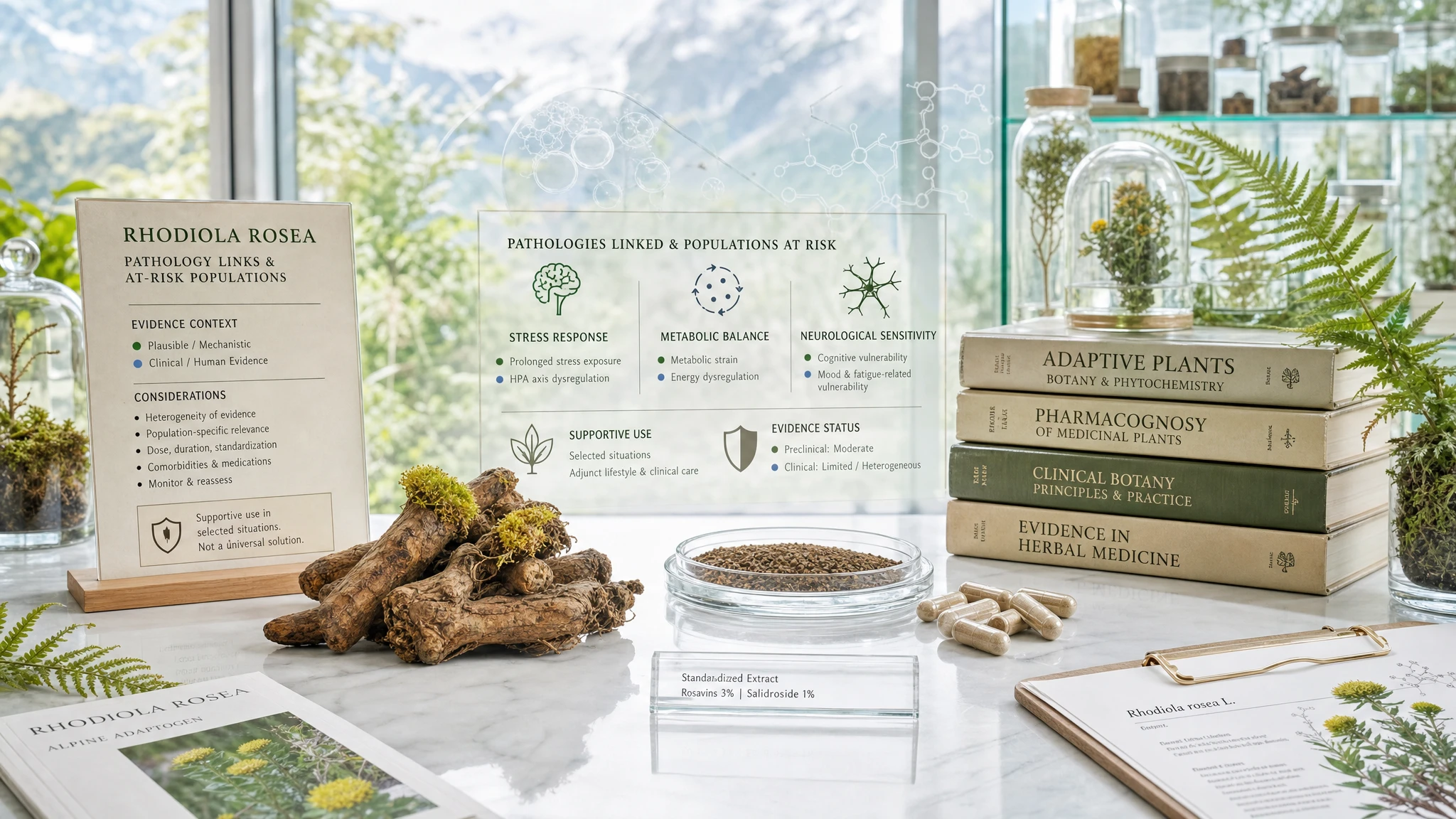
To evaluate conditions related to Rhodiola rosea, it is necessary to separate biological hypotheses from proven clinical uses. Standardized extract may act on the stress response, energy utilization, and oxidative stress (an excess of molecules that can damage cells).
These effects make the plant a potential aid in certain clinical scenarios. However, much of the data comes from preclinical studies (conducted on cells or animals), which do not prove a therapeutic effect in humans. The plant may therefore help in specific cases, but it does not cure every chronic disease. To understand where it may be useful, one must evaluate each area and the strength of the evidence.
In burnout (exhaustion due to prolonged stress), human studies show signs regarding mental fatigue, attention, and tiredness. Overall, the data indicate a possible benefit for those experiencing long-term stress [5][7][9]. Cortisol (the stress response hormone) must also be evaluated with caution: the data indicate a possible action on this response, not an automatic correction of it. Its use does not replace sleep, workload management, and healthy habits.
For metabolic disorders, studies primarily concern salidroside, one of the main active compounds. Data on insulin resistance (poor tissue response to insulin) and hepatic steatosis involve AMPK (a cellular energy sensor). For now, these results explain a possible mechanism, but they do not indicate a cure [22][23][24].
Similarly, neuroprotection models show effects on oxidative damage and mitochondria (structures that produce energy). These data are not sufficient to extend its use to already diagnosed neurodegenerative diseases [25][26].
The areas that deserve the most attention are as follows:
- Burnout and stress-related fatigue are the clinical area with the most data.
- Metabolic disorders have interesting, but primarily experimental, foundations.
- Nervous system diseases show useful signs, but they are not yet conclusive.
- People with multiple diseases or therapies require greater caution.
The conditions associated with Rhodiola rosea do not all carry the same clinical weight. For some, there are studies on humans, while others only show signals obtained in the laboratory. The following sections separate the more concrete areas from those that require more caution.
Burnout and stress-related fatigue: the most studied condition
Burnout and stress-related fatigue are the conditions with the most robust clinical data. Studies indicate potential effects on mental exhaustion, tiredness, concentration, and quality of life. Burnout, in fact, is not just simple fatigue: it involves a heavy mental burden, reduced performance, and increasing difficulty in recovery.
In this context, Rhodiola rosea may support the body's response to prolonged stress. It is defined as an adaptogen (a substance proposed to help the body adapt to stress). This potential effect, however, does not make it a definitive cure: it can complement adequate sleep, workload management, and the modification of harmful habits.
Human data allow for a more concrete estimation compared to other areas. However, one should not extend these results to every person who feels tired. Fatigue can have many causes, such as sleep disorders, deficiencies, illnesses, or medication use. Before use, it is therefore necessary to understand the origin of the symptoms.
The potential benefit also depends on the individual's profile and the quality of the extract used. Different products may provide different doses and quantities of active compounds. The central point remains this: in stress-related conditions, there is a specific reason to study its use. Conversely, there is no valid evidence for every case. This area clarifies where the plant may have a practical role and where further evaluations are needed.
Type 2 diabetes and insulin resistance: what experimental models indicate
In type 2 diabetes and insulin resistance, Rhodiola rosea is of particular interest due to preclinical data. In experimental models, salidroside has been associated with better glycemic control. Improved tissue response to insulin and beneficial effects on energy metabolism have also emerged. Simply put, the compound may help cells better utilize glucose, the sugar circulating in the blood.
A landmark study investigated a pathway linked to AMPK, PI3K, AKT, and GSK3b. The results show that salidroside can reduce insulin resistance by activating this pathway. In another study, the compound promoted glucose uptake in skeletal muscle cells. In this case as well, the effect occurred through the activation of AMPK [10,23]. Further research has linked the reduction of insulin resistance to mitochondrial quality control [24].
However, these data do not equate to solid clinical evidence in humans. The topic connects AMPK and mitochondrial function to a pathology in which these pathways are central. From an editorial standpoint, animal or cellular data must not be transformed into therapeutic advice. Rhodiola is an interesting candidate for future studies on glucose metabolism. It is not, however, a treatment for diabetes.
This review also helps address very specific online searches regarding the use of the plant in individuals with impaired glycemia or insulin resistance. The text must therefore clearly distinguish between the biological basis and clinical use. In a well-structured overview, this topic clarifies the link between cellular energy and metabolic control. At the same time, it must remain within the limits of available evidence. The reader must be aware that we are discussing possibilities, not already proven indications. This distinction ensures the discussion is scientifically accurate.
Non-alcoholic fatty liver disease: why salidroside is relevant
Non-alcoholic fatty liver disease is the accumulation of fat in the liver that is not related to alcohol. In this area, too, salidroside has attracted interest, especially in animal models. One study examined fatty liver disease caused by a high-fat diet. The compound reduced it through a pathway linked to AMPK and the regulation of TXNIP/NLRP3. The effects involved inflammation and lipid accumulation, i.e., fat [22].
In practice, the compound appears to reduce fat deposits in the liver. It also seems to attenuate certain signals related to inflammation. The observed effects include lower lipid accumulation in the liver and an improved metabolic profile. They also concern the control of pathways linked to inflammation and oxidative stress. In this case, however, this is still a plausible preclinical basis. It is not yet a clinical certainty.
The topic is significant because fatty liver disease is linked to insulin resistance and low-grade inflammation. It is also linked to mitochondrial dysfunction, meaning the poor performance of mitochondria. Rhodiola appears to act precisely on these processes, at least in the models studied. This makes the topic very interesting, but it does not prove that the plant cures fatty liver. The correct approach shows how experimental data fit into the framework of metabolism and homeostasis, the body's internal balance.
From an SEO perspective, the search has high potential among those looking for natural remedies for fatty liver disease. However, the text must remain rigorous and non-promotional. It is therefore a topic to be treated with caution, while expanding the area covered by the content. One must not confuse the reader regarding the strength of the available evidence. The interest is real, but the transition to clinical practice is still incomplete. This balance between interest and prudence makes for a correct scientific reading.
Neurodegeneration and cognitive decline: still experimental perspectives
Rhodiola rosea has also been studied in models of neurodegeneration and cognitive decline. Interest focuses on its effects on oxidative stress, neuroinflammation, and mitochondrial function. In Parkinson's models, salidroside has been associated with the protection of dopaminergic neurons, which produce dopamine, a substance that helps regulate movement. The effect was mediated by a mitochondrial pathway linked to MEF2D-ND6.
In another study, the compound improved cognitive function in a Parkinson's model. The effect involved a Braf-mediated MAPK pathway [25][27]. Other studies have indicated potential neuroprotective effects in models of cerebral ischemia and cognitive dysfunction. Data show reduced neuroinflammation and support for mitochondrial function [28][26]. These processes play a central role in neurodegenerative diseases. The biological rationale is therefore consistent.
However, most of the evidence comes from preclinical studies. Interest is high, but evidence in humans is insufficient for a clearly defined therapeutic use. This examination serves a dual purpose. On one hand, it extends the content to the nervous system. On the other, it avoids confusing experimental models with a proven benefit in practice. Rhodiola can be described as a candidate for future studies on neuroprotection. It is not a proven treatment for Alzheimer's, Parkinson's, or other neurological diseases.
From an SEO perspective, the topic captures many natural online searches. Precisely for this reason, it requires precise and highly rigorous wording. The text must offer a balanced framework and acknowledge the biological basis. However, it must not exceed the limits of the available evidence. It is an area of interest, not a definitive conclusion. This distinction supports the credibility of the entire article.
Rhodiola rosea and vulnerable populations: who requires caution
Not everyone responds to an adaptogenic supplement in the same way. Rhodiola rosea requires more caution in the presence of specific diseases, therapies, or physiological conditions. This does not mean it is always dangerous, but it does require a more careful assessment. Caution is especially important for those with mood disorders, chronic diseases, or heart problems. Attention is also needed when taking multiple therapies or if there is a high sensitivity to effects on energy and sleep. In these groups, the response can vary depending on the dose, the product, and the clinical picture.
The absence of serious warning signs in studies does not prove the same level of safety for every individual. Some groups may be poorly represented or entirely absent from research. General data, therefore, do not always accurately estimate risks, tolerability, and potential interactions. Adaptogens are not suitable solutions for every problem or disease. Before use, those undergoing therapy or with complex health profiles should consult a healthcare professional. This discussion helps to evaluate symptoms, medications being taken, and personal risks.
The key point is simple: the more complex the health profile, the more the choice must be tailored to the individual. Even if the mechanism appears valid, the person must be evaluated as a whole. This caution is not alarmism, but an essential part of informed and conscious use.
Metabolic, cellular, and oncological conditions
From metabolism to cancer, Rhodiola rosea is being studied for the effects of its compounds. Among these, salidroside (an active plant compound) stands out, as it may influence cellular energy. It may also act on oxidative stress (damage caused by reactive molecules). Furthermore, it may modulate AMPK (a protein that regulates energy) and mTOR (a protein that controls cell growth and activity). These data primarily come from studies on cells and animals. They indicate potential mechanisms, but not treatments already proven in humans.
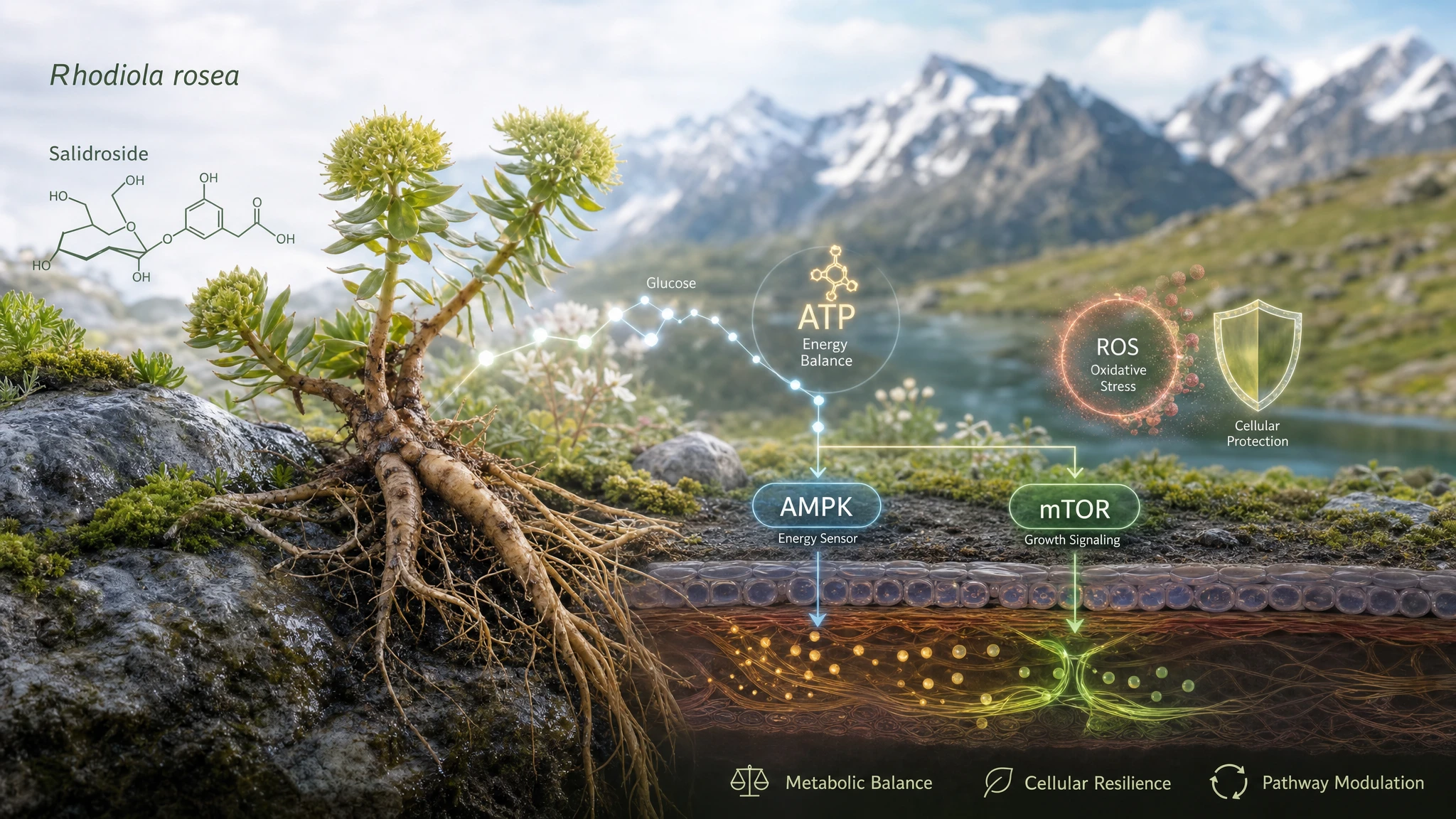
In this field, Rhodiola rosea is being studied for the effects of its compounds on cells. The most well-known is salidroside (an active plant compound). In tests, it can influence energy use and the response to oxidative stress.
Research is also studying the pathways that regulate cell growth, life, and death. Among these are AMPK (a protein that regulates energy) and mTOR (a protein that controls cell growth). These pathways link glucose use, mitochondrial activity, and cell growth. Mitochondria are the parts of the cell that produce most of its energy.
Autophagy is the system by which the cell eliminates and recycles damaged parts. These data indicate a possible biological effect, but do not prove clinical use.
In glucose metabolism (sugar use), studies indicate a possible aid to insulin response. They also show increased glucose use by cells [23][10][24][12]. The data come primarily from experimental models and tests on isolated compounds.
In insulin resistance (poor tissue response to insulin), AMPK appears to play a central role. Its activity promotes glucose uptake and helps the cell manage energy. These effects have also been observed in muscle cells.
A similar mechanism may act on fat use and liver health. In the models studied, it can reduce fat accumulation and damage from a high-fat diet. The compound has also been studied in non-alcoholic fatty liver disease (fat in the liver not caused by alcohol). The observed effect involves AMPK and reduced oxidative stress [22]. However, this data is preliminary and does not prove a therapeutic effect in humans.
Oxidative damage can also affect the kidneys and the endothelium (the inner lining of blood vessels). A summary of renal studies reports a cytoprotective action (cell defense) in various models of nephropathy. Other work indicates possible benefits for blood vessels and their normal function [29][11][30].
These effects seem linked to less inflammation and lipid peroxidation (damage to membrane fats). They may also help cells maintain their structure. Even in this case, however, most of the data does not come from clinical studies.
In laboratory tests, some extracts and the isolated compound have inhibited bladder and colon cancer cells. In gastric and colorectal tumor models, they have also induced apoptosis (programmed cell death) [31][32][33]. Other studies have examined melanoma and the PI3K/Akt/mTOR pathway [34][35]. These results help in studying cancer, but do not prove an anti-tumor effect in humans.
Three areas help to understand how these effects might be linked:
- In experimental models, it increases glucose uptake into cells.
- In the liver, kidneys, and blood vessels, it may reduce oxidative damage.
- The modulation of mTOR and autophagy is also of interest in cancer research.
The following three topics show how energy, oxidative stress, and cell growth can be linked. The distinction remains essential: an effect observed in the laboratory does not prove a clinical benefit.
Rhodiola rosea and glucose metabolism in experimental models
In glucose metabolism, salidroside is the most studied compound. In experimental models, it has increased the entry and use of sugar in cells. The effect appears to involve AMPK, mitochondria, and the tissue response to insulin. AMPK assists the cell when available energy drops. When activated, it promotes glucose entry and helps the cell use it. Mitochondria can thus produce energy by making better use of what enters the cell. This link explains why metabolism, stress, and fatigue are not entirely separate.
The results, however, come from studies on cells, animals, or isolated compounds. They do not prove that the plant can cure diabetes or prevent its complications. It is not a hypoglycemic therapy (a drug that reduces glycemia) and does not replace medical check-ups. The useful data therefore concerns the mechanism, not a confirmed clinical effect. Research shows how a plant compound can act on energy in well-defined models. Studies in humans are needed to understand dosage, efficacy, and long-term safety.
The picture remains clear: the possible effect on glucose is interesting, but it still needs to be proven in a clinical setting. This distinction avoids confusing a biological finding with a cure. From glucose, we move on to lipids, where the mechanism is similar but the context changes.
Rhodiola rosea and lipid metabolism: what research reveals
In studies on fat utilization, salidroside has shown some effects of interest. Tests primarily concern insulin resistance, dyslipidemia, and steatosis. Dyslipidemia refers to an altered level of fats in the blood, while steatosis refers to an accumulation of fat in the liver.
In the models studied, the compound reduced some of the fat accumulated in the liver. It also acted on energy homeostasis (the balance between energy produced and used). The mechanism appears to involve AMPK and a reduction in oxidative stress. These data indicate a possible link between cellular energy and liver damage. However, they do not prove a certain decrease in cholesterol or triglycerides in humans. Most of the evidence comes from cells and animals, not from clinical trials.
Research thus extends the field beyond the effects on stress and the nervous system. It shows that the same mechanisms can influence multiple organs and processes. This does not mean, however, that a supplement can treat complex metabolic disorders. The result should therefore be read as a basis for new studies in humans. It is necessary to understand which doses might work and for which individuals. Furthermore, the effects over time and the relationship with other treatments must be studied. When metabolism changes, the most exposed organs, such as the kidney, must also be studied.
Rhodiola rosea and kidney protection: nephropathy and damage from oxidative stress
Renal protection is one of the most promising fields for the study of salidroside. The kidney is, in fact, highly sensitive to oxidative stress, inflammation, and ischemia. Ischemia is a reduction in the supply of blood and oxygen to tissues. Preclinical research and syntheses on kidney diseases indicate a possible effect of Rhodiola. In models of nephropathy and acute injury, it can reduce tissue damage. It may also support renal function [29]. The key point, however, is clear: these are experimental data, not proven therapeutic indications. This in-depth look allows us to address the topic of "kidneys" without creating unfounded expectations. Biologically, the kidney helps in studying AMPK, mitochondria, and cytoprotection. Cytoprotection includes the processes that help defend cells from damage.
From an editorial standpoint, it is necessary to clearly clarify the limitations of these results. The protection observed in models does not allow for the use of Rhodiola against chronic kidney disease. The research remains interesting because it shows the versatility of the phytocompound, that is, the compound of plant origin. Salidroside can modulate processes common to many organs, but only in well-defined experimental contexts.
This section helps the reader understand that the plant's effects are not "miraculous." They depend on precise biological mechanisms and the conditions under which they are studied. The value of the data lies in distinguishing biological potential from clinical use. This distinction is essential for providing rigorous and reliable information. Like the liver, the kidney shows promising, but not yet conclusive, results. From the kidney, we move on to the oncological topic, which requires even greater caution.
Rhodiola rosea and cell proliferation: the oncological concern
The topic of oncology is one of the most sensitive and requires the utmost precision. Experimental literature suggests that salidroside may modulate proliferation, apoptosis, and autophagy in various tumor cell models, often through the PI3K/AKT/mTOR pathway. Some studies have shown a reduction in the growth of bladder, gastric, and colorectal cancer cell lines, with direct involvement of mTOR and the induction of autophagy [31][32][33].
A more recent study has also explored the modulation of mTOR and PI3K/AKT in melanoma, but still within an experimental setting [34]. This makes Rhodiola an interesting subject for research, but not as an oncological therapy. The content of this in-depth analysis must therefore clearly separate the biological rationale from clinical application. The SEO element is strong because many users search for links between natural plants and cancer, but for this very reason, we must be rigorous: no promises of a cure, no equivalence to anti-tumor drugs, and no generalizations to patients.
The editorial value lies in showing how the compound acts on cell growth and survival processes in the laboratory, and in clarifying that these results remain preliminary. The relationship with mTOR is central here, as it links the oncological topic to the mechanistic core of the content. In this way, the structure maintains internal consistency and covers an area of great interest without overstepping the limits of scientific evidence. It is a point that must be handled with care, but it is essential for a complete overview.
The reader must leave with one certainty: biological interest, yes; oncological use, no—at least based on the current state of evidence. This distinction is the foundation of accurate information. When cell growth is modulated, it is also necessary to carefully evaluate who requires greater caution in its use.
Rhodiola rosea and vulnerable populations: who requires caution
Not everyone responds to an adaptogenic supplement in the same way. An adaptogen is a substance studied for its effects on the stress response. Rhodiola rosea requires caution in certain vulnerable populations. Monitoring is even more important in the presence of illnesses, ongoing therapies, or specific physiological conditions. This does not mean the plant is inherently dangerous. It means that the context of use requires a more careful evaluation. This issue concerns people with mood disorders, chronic diseases, or cardiovascular problems. It also includes those who are following multiple therapies or who react sensitively to effects on energy and sleep.
It is necessary to avoid both alarmism and overly simplistic explanations. The absence of serious warning signs in studies does not prove universal safety for every group. This section also protects the reader from overly broad and unfounded uses. Online searches, in fact, can present adaptogens as solutions suitable for many different problems.
Good content must explain when it is best to speak with a healthcare professional. It must also answer questions such as “is it suitable in case of…” or “can someone who has… take it?”. The tone must remain cautious and not create unjustified fears. This section demonstrates responsibility and helps to evaluate the supplement in the right context. The key message is simple: the more complex the clinical picture, the more an individual assessment is needed.
This caution is an essential part of reliable information. Even with a solid biological rationale, one must consider the individual's profile. Possible interactions with other risk factors must also be evaluated. This is the foundation of a truly informed choice. Caution becomes even more important when comparing available scientific data.
Scientific evidence, study quality, and critical reading
The evidence on Rhodiola rosea is promising, but it does not all carry the same weight. Studies vary in terms of extract, duration, participants involved, and methods used. A critical reading therefore helps to distinguish solid data from results that are still preliminary.

To evaluate Rhodiola rosea, finding a biological effect is not enough. It is necessary to understand whether this effect can also be useful in real life. Reviews show a genuine interest in its role as a natural adaptogen. An adaptogen helps the body respond to stress and its effects. Studies primarily concern fatigue, perceived stress, and pathways related to AMPK, oxidation, and cellular response [3][4]. AMPK (the energy sensor in cells) regulates energy use and storage. The plant could therefore help the body adapt to stress and manage energy. It might also reduce the damage caused by excessive oxidative stress. This occurs when certain highly reactive molecules overwhelm the cells' defenses.
However, the clinical value depends on the quality of the methods used. Extracts are not identical, groups are often small, and the measured outcomes vary. Data exists, but it is highly heterogeneous and must be read with care. These differences matter because Rhodiola rosea acts on multiple interconnected biological networks. Hypotheses implicate the stress response and neuroendocrine control. The latter refers to the link between the nervous system, hormones, and the glands that produce them. Other studies evaluate mitochondrial defense and the possible control of inflammation. Mitochondria are parts of the cell that produce most of its energy. Measuring only one outcome can therefore underestimate or overly exaggerate the significance of the effect.
An example comes from clinical studies conducted with the SHR-5 extract, mentioned earlier. In 60 participants between 20 and 55 years old, with 576 mg/day for 28 days, signals emerged regarding fatigue, attention, mood, and cortisol [5]. Cortisol is a hormone that participates in the body's response to stress. This data links a perceived effect to a measurable value in the body. It therefore suggests a possible action on the stress response and energy use. However, the result concerns a precise study method and a specific product. It cannot be extended directly to every extract on the market.
Other clinical studies have involved different groups and followed more targeted goals. Consistency must therefore be sought among similar research, not by adding up very different data [7][8][9]. The same criterion applies to other studies on Rhodiola rosea supplements. If the dose, extract, and method are clear, the results are easier to evaluate. If such data are missing, the evidence has less weight. It is not correct to say that the plant works always and for everyone. Data are more robust when the clinical question is precise and the product is well-described [1][7]. The value of the study increases if the dose, duration, people involved, and outcomes are defined. This way, one can understand which effect the data truly refers to. It may concern mental fatigue, physical performance, stress response, or a more limited scope. The same rigor is needed to read the mechanisms studied in cells. A credible mechanism increases interest, but it does not prove a benefit in humans on its own.
The type of disorder for which Rhodiola rosea is studied also counts. Preclinical studies (conducted on cells or animals) indicate some possible fields of action. Among these are oxidative damage, energy use, neuronal defense, and cellular integrity [13][6][21][29]. However, laboratory data does not translate directly into the treatment of people. In the human body, dose, tissue distribution, and the strength of the effect change. Bioavailability (the portion of the substance that reaches the tissues and can act) also matters. The evidence is promising, but its weight varies based on the purpose. Support for well-being is not equivalent to a cure for a disease. Even support against fatigue is different from use in selected clinical cases. This distinction requires a careful and non-automatic reading of the data [1][3].
The person's initial state can also change the observed response. Those with mild fatigue or stress may respond differently than healthy individuals. The same applies to a person with poor mental performance or a chronic illness. The literature therefore shows multiple signals pointing in the same direction. However, it does not offer a single, uniform, and already certain proof [1]. To better understand the results, it is useful to evaluate three levels of analysis together:
- Reviews show trends, but they do not replace clinical studies.
- Standardized extracts make it easier to compare results.
- Studies on cells and animals explain mechanisms, but they do not prove the effect in humans on their own.
- A good study design counts for more than a single result.
Reviews help organize data, but they are only as good as the studies they include. The extract, the method, and the people involved can, in fact, change the meaning of the results. The following sections explain in concrete terms why these factors are so important.
What reviews really say about Rhodiola rosea
Reviews on Rhodiola rosea bring together multiple studies, but they do not eliminate their limitations. A comprehensive review of Rhodiola species examined traditional uses, compounds, effects, safety, and clinical trials. On this basis, it placed the plant among the most interesting adaptogens [3]. Phytochemistry (the study of natural plant compounds) helps to understand which substances it contains. Another review evaluated this species alongside other plants used for stress. Studies indicate possible effects on multiple aspects of the stress response. However, the methods and protocols used vary greatly between research [4]. Overall, signals emerge regarding fatigue, performance, and perceived stress. The data appear clearer with standardized extracts and well-defined groups.
Reviews therefore show both the possible effects and the weaknesses of the evidence. If the selection criteria change, studies become less easy to compare. The duration of the treatment and the endpoints (measured final outcomes) can vary. The use of different extracts also makes it more difficult to attribute the effect to the entire species. To do so, it is always necessary to indicate which product was used. This information is also useful for those seeking practical help. It is not enough to ask whether the plant can be useful in a general sense. One must understand in what form, for what purpose, and with what evidence. Reviews describe the landscape, but they do not provide therapeutic certainty on their own. The most accurate synthesis therefore remains cautious and linked to the quality of the studies. There are interesting signals, but their strength depends on the methods and consistency.
This point avoids over-interpretation and helps build trust with the reader. It is also useful for responding to those searching online for what science says. A good answer explains that a synthesis does not turn a hypothesis into a certain cure. The task is to inform clearly, not to promote a supplement. This choice makes the text more credible and prepares for the examination of individual data. Subsequently, each result can be read with more care and in the right context. A fair reading does not promise too much, but it does not ignore recurring signals. It is precisely this balance that makes a good synthesis of evidence useful. After the general overview, it is therefore necessary to evaluate which extract was used.
Why standardized extracts change study results
In studies on Rhodiola rosea, the type of extract can change the observed result. The dosage of salidroside, the presence of rosavins, and the production method all matter. Salidroside is one of the main active compounds attributed to the plant. Rosavins, on the other hand, are chemical markers used to describe the product's composition. Two seemingly similar studies may therefore evaluate substances that are not entirely the same. This detail explains why results do not always point in the same direction. Standardization indicates that the product contains known quantities of specific chosen compounds. In this way, researchers can better compare data and replicate tests. In studies on cells or animals, markers help link the effect to a precise extract. Without this data, the result remains tied only to the generic name of the plant.
It is also important for the reader to know which product was studied. Many people look for which extract works best or why studies yield different outcomes. The correct answer is that the product matters as much as the compounds it contains. If its formula is not clear, the weight of the evidence is reduced. This criterion allows for a more rigorous reading of both clinical and preclinical studies. It also helps to avoid extending a result to products with a different composition. The plant's name alone is not enough to estimate the effects of a supplement. Data on its true formula, markers, and how it is produced are needed. Only then can results be compared and used correctly. However, even a well-described extract does not make laboratory results and clinical practice the same. If the product changes, the value of the available evidence also changes. It is therefore necessary to carefully distinguish preclinical data from those obtained in humans.
Rhodiola rosea: difference between preclinical and clinical evidence
With Rhodiola rosea, it is easy to confuse preclinical data with clinical evidence. Studies on cells and animals show effects on AMPK, mTOR, oxidation, and inflammation. mTOR (a protein that integrates nutrient and growth signals) regulates various cellular processes. AMPK, on the other hand, controls how much energy is available and how the cell uses it. Together, these pathways help balance growth, synthesis, and energy conservation. A substance that acts on these nodes could change the response to stress. In theory, it could also influence cell lifespan and energy usage. These mechanisms are biologically consistent, but they do not prove a therapeutic effect. The transition to humans is neither direct nor certain.
Physiology, dosage, bioavailability, and the relationships between various organs change. Data observed in the laboratory may therefore not appear in a person. It may also require different doses or produce a much weaker effect. This distinction is essential to provide accurate information and avoid creating false expectations. A possible mechanism is not equivalent to a proven clinical benefit. This point is also important for those seeking answers regarding complex diseases. The plant shows signs in several fields, but the strength of the evidence is not always the same. Online searches often stem from the need to find quick confirmation. A serious answer, however, must clarify that direct data on people is needed. Biology makes the interest plausible, while clinical research establishes whether the effect truly exists.
This interpretation avoids both excessive hype and judgments that dismiss all data. It also helps build trust, because it clearly indicates what we know. The laboratory does not equate to a cure, and evidence in humans remains the central data point. This difference changes the meaning of results regarding fatigue, physical performance, and mental support. After distinguishing between levels of evidence, the limitations of the studies can be better evaluated.
Limitations of Rhodiola research that truly matter to the reader
Some limitations in studies on Rhodiola rosea truly change the meaning of the results. Among the main ones are short-term tests, different extracts, and outcomes measured using various methods. These factors do not invalidate the data, but they do require a more cautious interpretation. If a study lasts only a few weeks, it does not show whether the effect persists over time. The observed benefit may be stable, short-lived, or linked to a specific phase. The number of people involved also affects the strength of the data. In a small group, initial characteristics can weigh more heavily on the result. Age, health, and fatigue levels can therefore modify the final outcome. It is also important to know whether the study included a control group. This group allows for comparing the extract with a placebo or other standard treatments.
A rigorous method reduces the risk that expectations and chance might alter the results. Critical reading therefore helps to understand why some evidence is more robust. Marketing often cites a result without explaining how it was obtained. Those who want to know if a product works do not need absolute answers. They need to know about the people studied, the dose used, and the duration of the treatment. Data on the extract and the outcome measured by the researchers are also needed. This information clarifies how well the study answers the reader's specific question. A promising result does not represent a certainty, but it should not be ignored either. It must be interpreted together with other evidence, without separating it from its context. This middle ground makes critical reading clear, useful, and faithful to the research. From here, one can move toward a more informed choice and use of the product.
Practical applications and dietary choices
In practical use, Rhodiola rosea should be chosen based on quality, goals, and personal tolerance. The benefits depend more on a standardized Rhodiola extract than on the dosage in milligrams alone. What matters most is the salidroside content, one of the main active compounds, and the verified origin of the product. Lifestyle also remains central. Sleep, diet, stress, and daily habits can be just as significant as the supplement.
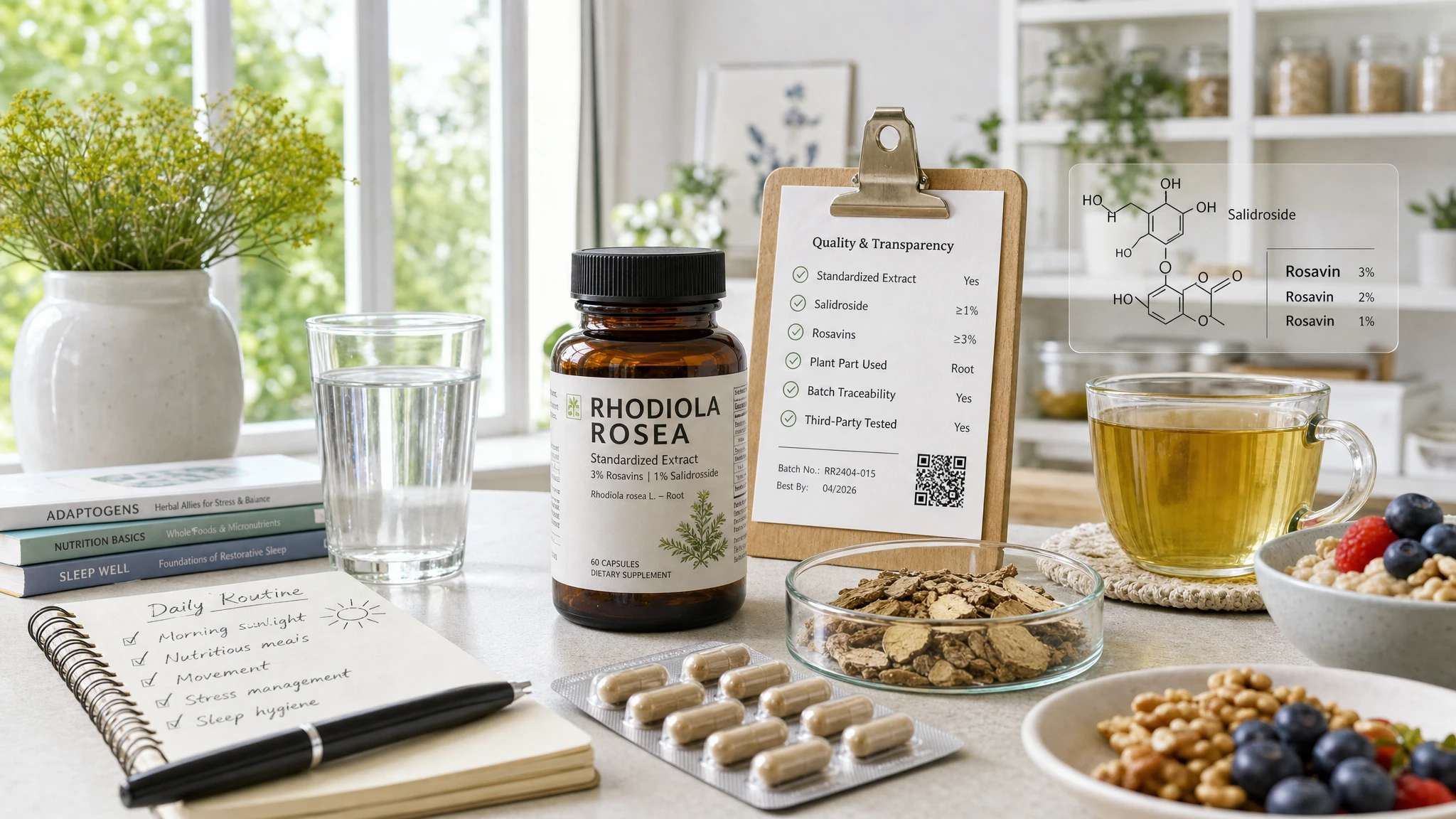
When it comes to practical use, it is not enough to ask whether Rhodiola rosea might be useful. You also need to choose a product similar to those studied in research. Quality depends on the label, standardization, and the part of the plant used. A standardized Rhodiola extract contains defined amounts of markers, which are compounds that characterize the product. Among these markers are salidroside and rosavins.
In the most cited clinical trials, 60 participants between 20 and 55 years old took SHR-5. The dose was 576 mg per day for 28 days [5]. Another study used 2 × 200 mg per day of WS® 1375. The treatment lasted 8 weeks and involved 100 subjects. Researchers observed a favorable safety profile and significant improvement at week 8 [16].
These data do not indicate a one-size-fits-all dose. Instead, they show that the effect depends on a specific extract, a defined duration, and a precise goal. Supplementation fits into a routine that includes a regular diet, adequate sleep, and good stress management. It can offer targeted support, but it does not compensate for unhealthy habits.
The data also help in evaluating the possible relationship with mTOR and the stress response. mTOR is a cellular pathway that regulates growth and energy use. This control is important because extracts can have different compositions. To navigate this, it is advisable to read the product instructions as a brief usage plan. It is not just the doses that count, but also the duration, regularity, and context. Before choosing, it is useful to verify these points:
- The declared standardization must be clear and verifiable.
- The plant part used must be indicated without ambiguity.
- The daily dose should be compared with available clinical studies.
- Excipients, i.e., added substances, and the pharmaceutical form influence practical use.
Now, let's turn our attention to the practical aspects: quality, labeling, daily use, and practical limitations. These criteria help determine when supplementation may be beneficial. In other cases, it is better to focus on diet and lifestyle first.
How to choose a high-quality Rhodiola rosea supplement
To choose a high-quality Rhodiola rosea supplement, you must start with a clear label. The first piece of information to check is standardization. A good product should precisely indicate the content of salidroside, rosavins, or other useful markers. The part of the plant used also matters. The most studied extracts are derived from the root and rhizome, which is the underground part of the plant.
Other important aspects include a verified origin, excipients, the pharmaceutical form, and the manufacturer's transparency. These elements do not guarantee efficacy on their own. However, they reduce the risk of buying products that bear little resemblance to those studied in scientific literature. From an SEO perspective, searches for "how to choose" are very strong. Users want to navigate the real market, not just read theory. This is therefore a practical deep dive, but one based on scientific criteria.
The key point is simple: quality does not equate solely to quantity in milligrams. A well-described supplement is easier to understand and compare with clinical studies. For this reason, reading the label is essential before evaluating the dosage and duration of use. If the product is described clearly, it is easier to determine if it meets your needs. Informed choice begins with this check. After choosing the product, you must read the label and titration without creating any doubts.
Rhodiola rosea: how to read the label, titration, and composition
Carefully reading the label of a Rhodiola rosea product helps avoid confusing different extracts. Titration indicates the quantity of specific active components present in the product. The total composition, however, can vary significantly from one brand to another. It is important to check the salidroside content, the ratio with rosavins, and other functional ingredients. The dose per capsule and the form of intake also matter. These data affect ease of use and allow for comparison with studies.
This in-depth look answers a frequent practical question and teaches how to evaluate the market critically. From an E-E-A-T perspective, it provides concrete tools for assessing a supplement, rather than giving generic descriptions. The goal is not to promote a brand. Instead, it is necessary to distinguish a well-documented product from an unclear one. For topical authority, this point connects the technical language of research to the consumer's concrete choices.
If the label is vague, the judgment of the product remains weak. If it is precise, however, the reader can make a more informed choice that is consistent with scientific literature. This clarity is the foundation of a reliable and non-impulsive choice. After reading the label, it is necessary to understand when the plant truly makes sense in one's daily routine.
When and how to include Rhodiola in your daily routine
To include Rhodiola rosea in your daily routine, you must first clarify your goal. Some people consider it during periods of higher mental or physical strain. Others, however, think about more continuous use. The practical question is not just about "when to take it." You also need to understand if the context makes its use truly sensible. Your routine includes sleep, nutrition, physical activity, and your overall stress level. Indeed, the response to the supplement does not depend on a single factor.
This in-depth look helps those seeking concrete guidance without suggesting automatic results. From an editorial standpoint, it is necessary to avoid tailored advice and instead offer general criteria. Consistency with your goal, product quality, and monitoring your personal response are what matter. Rhodiola is not an essential element, but a possible choice in well-defined cases. Your routine must also take personal tolerability into account. Furthermore, any sensitivity to its effects on energy or sleep should be evaluated.
This keeps the content practical and cautious, as well as consistent with the rest of the article. The question is not just whether to take it. You need to understand if the chosen time is suitable for your situation. This method helps avoid casual and uninformed use. A sensible routine must remain linked to your diet and lifestyle as a whole.
Rhodiola rosea and nutrition: how to best combine them
Rhodiola rosea does not replace a healthy diet. However, it can offer support within a broader lifestyle. Its potential value increases when diet, sleep, and stress are evaluated together. Energy metabolism—the way the body uses energy—depends on many factors. This in-depth look helps those seeking supplementation that is consistent with their daily diet. It also avoids the notion that one can "compensate" for bad habits with a natural extract.
From an editorial perspective, it must be clarified that there are no magic combinations. An adaptogenic plant helps the body adapt to stress, but it acts within a given lifestyle. The practical question is not just what to take it with. It is also necessary to understand when it makes sense to use it in relation to one's goals. In SEO terms, the topic includes searches regarding synergies with coffee, meals, or other supplements. The content, however, must remain cautious and must not prescribe treatments.
This section primarily serves an educational purpose. It shows that perceived improvement, if present, also depends on the nutritional context as a whole. The chapter thus offers a unified vision of wellness and metabolism. The final point is simple: the plant can be useful within a consistent routine. It may be much less so when inserted into a disorganized framework. For this reason, diet and lifestyle remain central. If the routine is not consistent, errors in use also become more common.
Common mistakes in using Rhodiola rosea
The most common mistakes concern expectations, product quality, and timing of use. The first mistake is treating the extract as a quick energizer, similar to a stimulant. The second is choosing products that are unclear or lack defined standardization. In this case, it becomes difficult to know what you are actually taking. Another mistake is ignoring the overall picture of your health. Poor sleep, high stress, a disorganized diet, and excessive workloads cannot be solved with a supplement.
Furthermore, not everyone gets the same results. The response can depend on personal characteristics and the initial situation. Knowing these limitations reduces the risk of disappointment, confusion, and excessive expectations. The goal is not to create fear, but to encourage more realistic use. Reliable information must also explain which choices are best avoided. Understanding the mistakes also helps to recognize the limitations of the plant and the chosen extract. The decision thus becomes more informed and less tied to promises. Finally, safety must be evaluated based on personal needs.
Operational guidelines, safety, and informed choices
Before using Rhodiola rosea, the dosage, extract quality, and health status are what matter. Let's look at how to assess tolerability, effects on sleep, and precautions regarding medications. These criteria make Rhodiola rosea supplementation more mindful and tailored to your specific case. The goal is not to encourage consumption, but to help you choose with care.
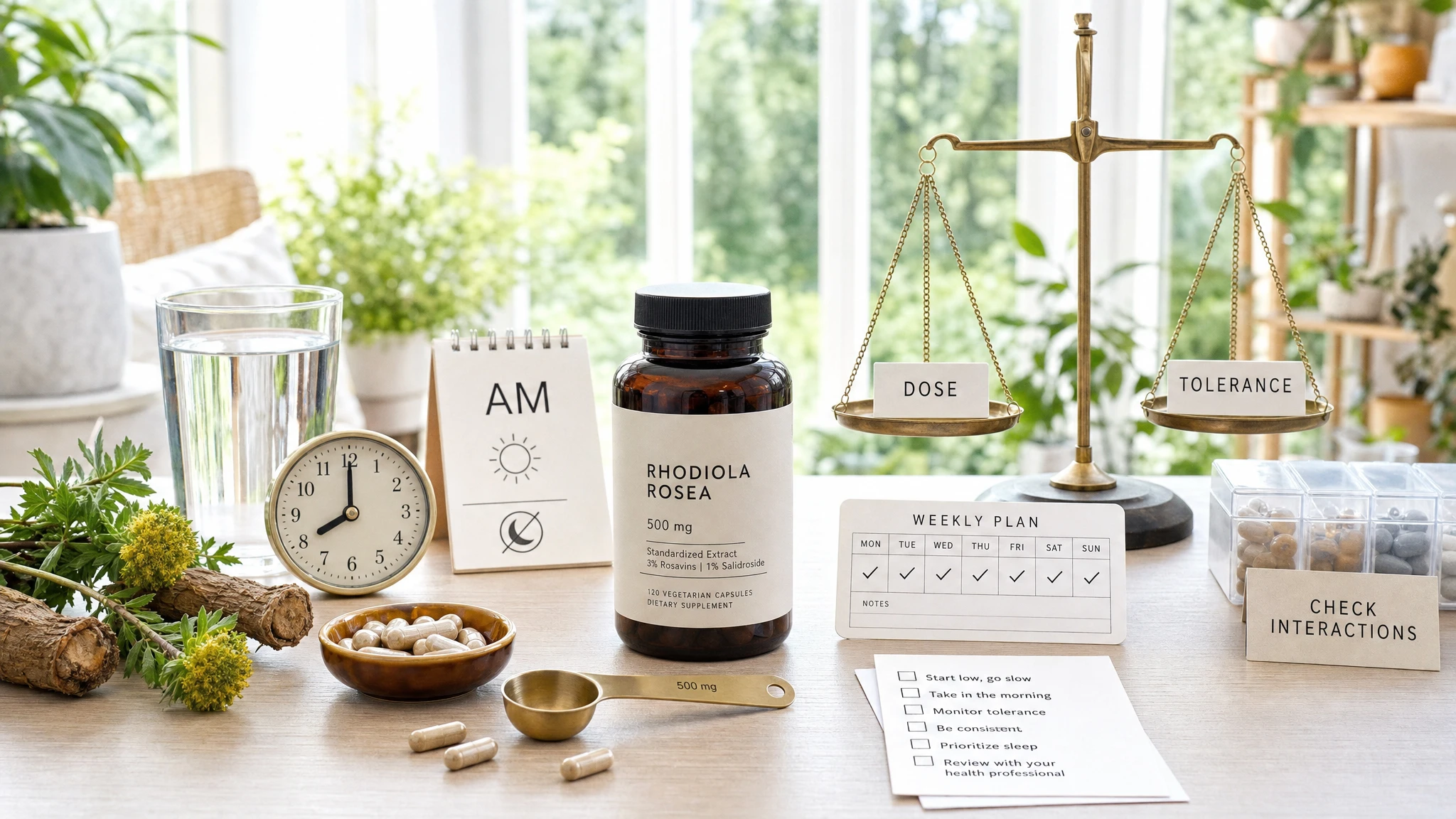
To evaluate Rhodiola rosea, it is not enough to ask whether it might work. You need to understand how to use it with caution and in a way that is appropriate for the individual. The quality of the extract, the dose, the timing, and the state of health all matter. These aspects are more useful than the vague idea of a “natural product.” Studies indicate that, in general, the plant is well-tolerated. However, each person may react differently to its use. More care is needed when the nervous system is under stress or sleep is fragile. It is therefore useful to set realistic goals and observe your own response over time.
Furthermore, you should not add the supplement indiscriminately to treatments or habits that are already in place. Some of these act on stress, wakefulness, and rest. A sensible Rhodiola rosea supplementation starts from these foundations, not from excessive expectations. To evaluate practical use, it is useful to consider four aspects together. Tolerability depends on the dose, duration, and the individual's response. Timing can influence wakefulness, rest, and the sensations experienced. The presence of treatments or illnesses always requires greater caution. Finally, the choice must start from a clear purpose and a well-described product.
Clinical studies offer useful data, but they do not provide rules that apply to everyone. One study involved 60 participants between 20 and 55 years old. It was randomized (with groups assigned by chance), double-blind, and placebo-controlled. Participants took the standardized extract SHR-5 at a dose of 576 mg per day for 28 days. Researchers evaluated fatigue, mood, attention, and cortisol (a hormone linked to the stress response) [5]. The result should not be read based on a single value. What counts is the relationship between perceived stress, mental response, and neuroendocrine adaptation. The latter indicates the control of stress through nerves and hormones.
In another study, 100 subjects took 2 × 200 mg per day of WS® 1375 for 8 weeks. The study found a good safety profile and a significant improvement at week 8 [16]. The data indicates that the response may emerge with consistent use. It does not, however, suggest a rapid and strong effect. Nevertheless, these results do not replace the evaluation of the individual case. It is better to combine a clear product, consistent use, and monitoring of personal signals. Regulatory and informational texts also evaluate the foundations of use and its suitability for the individual [1,3].
The chemical quality of the extract used also counts. Rhodiola rosea, in fact, does not always have the same composition. The type of extract, the standardization, and the proportion of active compounds can change the reliability of the effect. Among the most studied compounds are salidroside and rosavins. They can contribute to the stress response, energy use, and defense against oxidative stress. This stress arises when oxidizing substances exceed the body's defenses [3,4,6]. Such processes matter because lasting fatigue, excessive activity, and poor recovery involve various systems. These include mitochondria, parts of the cell that produce energy. Antioxidant defenses and nerve and hormone signals are also involved.
The choice of extract, therefore, is not just a market issue. A well-described product allows for a better comparison of real-world use with studies. It also helps to evaluate the effects noticed over time with more care. Therefore, the label, standardization, and clear data from the manufacturer count as much as the dose. Studies do not show widespread tolerability problems, but the response remains personal. Some people notice a more active effect during use. Others report greater mental stamina, while others still do not detect clear changes. This variety may depend on stress, the sleep-wake rhythm, and the response to adaptogens. Adaptogens are substances that can help the body adapt to stress.
Reading the signals must therefore remain cautious and practical. If the state of alertness increases too much or sleep worsens, use must be reviewed. The benefit may instead concern energy, attention, or mental fatigue. In that case, it may be consistent with the initial goal. This, however, does not prove that the product is suitable for every person. Observing your own response is more useful than a vague judgment on “efficacy” or “safety.” The best choice arises from the relationship between the goal and the personal context. Those seeking help for fatigue and mental decline have different needs than those who sleep poorly. More caution is also needed in case of excessive activity or treatments already in progress.
Careful use is not the most frequent use, but the one most suitable for the individual. Rhodiola rosea can be a sensible choice with a clear product and realistic expectations. It is also necessary to carefully follow any signals from the body. If these criteria are missing, it is better to stop or re-evaluate the path. This way, the supplement remains a tool and does not become an automatic choice.
The perceived safety of Rhodiola rosea should be evaluated in a practical manner. The following points help distinguish general tolerability, clinical caution, and product quality.
Is Rhodiola rosea safe? What to know about tolerability and individual signals
In available studies, Rhodiola rosea is generally found to be well-tolerated. However, this does not imply that it is suitable for every person in every case. Tolerability depends on the dose, duration, personal sensitivity, and method of use. Some people may notice excessive activity or less stable sleep. The risk may increase if the timing does not respect the normal rhythm of the day. The question “is it safe?” therefore requires an answer linked to the specific case. The type of product, the individual, and how they take it all matter.
The absence of major issues in studies does not exclude poor personal tolerance. For this reason, it is useful to observe changes in sleep, energy, and wakefulness. Being well-tolerated does not mean it produces the same effects in everyone. This difference is simple, but it plays a key role in safer use. Neither alarmism nor over-reliance on the term “natural” is necessary. Instead, it is essential to evaluate the signals together and compare them with the initial goal. Furthermore, the personal response should be interpreted in light of any ongoing treatments.
Rhodiola rosea and medications: when greater caution is needed
When taking pharmacological treatments, the keyword for Rhodiola rosea is caution. This does not necessarily mean there is a problem in every case. However, using it alongside medications requires attention to potential interactions and pre-existing conditions. Your personal profile and the type of treatment you are undergoing also matter. This in-depth look helps those seeking a practical guide on using Rhodiola rosea in conjunction with therapies. The correct answer is not a one-size-fits-all yes or no. If you are taking medications or have underlying health conditions, a professional assessment is more appropriate.
From an SEO perspective, this topic addresses a strong need for information. It is especially relevant for users who do not want to rely on vague advice. It is important to avoid lists based on hypothetical and unproven interactions. It is better to explain the general principle of caution and evaluate each individual context. This section strengthens E-E-A-T because it demonstrates responsibility, avoids making promises, and encourages informed use. In this way, the content combines science and practice with a tone that is helpful but not prescriptive.
The reader should view caution as common sense, not as a cause for alarm. When medications are involved, your personal context is more important than any general rule. For this reason, prudence remains a central part of the assessment. With ongoing therapies or medical conditions, sleep and activity levels also become more relevant.
Rhodiola rosea for sleep disorders or hyperactivation
Rhodiola rosea may not be suitable for every type of sleep pattern or activity state. The plant is also studied for its effects on wakefulness and fatigue. Those prone to hyperactivation (a state of excessive activity) might therefore experience a different response. The same applies to those who already have fragile sleep. This does not prove that the product is always at odds with rest. However, it does indicate that personal rhythm and the time of use play an important role. Adaptogens do not necessarily produce a neutral effect in every person.
Furthermore, this extract is not a sleep aid and does not act as a sedative. This distinction avoids attributing a purpose to it that it does not have. During use, it is useful to observe the time it takes to fall asleep and the quality of rest. Any increase in alertness during evening hours also matters. If the sleep rhythm worsens, the context of use should be reviewed. This method does not create alarm, but makes the choice more careful and less automatic. After sleep, the general criteria for choosing the product remain to be evaluated.
Rhodiola rosea: how to make an informed choice without overdoing it
Choosing Rhodiola rosea mindfully requires three criteria: product quality, alignment with your goals, and realistic expectations. An informed consumer does not look for miraculous effects, but for a well-described product suited to their specific context. This in-depth look summarizes the right approach to an adaptogenic supplement. It is necessary to evaluate the formulation, read the label, and understand its practical use. It is also important to recognize the limitations related to your own situation.
From an SEO perspective, the query concerns users who are not just asking "if it works." These users also want to know "how to decide well." On an editorial level, this content provides a strong conclusion and transforms complexity into practical criteria. An informed choice also requires knowing when to stop if the product does not meet your needs. The same applies if it does not produce the expected effect. This is not an invitation to consume more, but to choose better.
This logic makes the content useful and authoritative because it offers tools for decision-making rather than slogans. The reader should remember a simple criterion: clear product, clear goal, realistic expectations. If these three elements are missing, the likelihood of beneficial use is significantly reduced. This is a conclusion consistent with the entire analysis performed. Ultimately, the best choice is the one that is most informed and suited to your own context.
Summary of scientific evidence
This summary organizes the main bibliographic sources. It distinguishes the most robust clinical data from experimental results and indicates where the evidence is most consistent.
| Publication year | Area studied | What the studies indicate |
|---|---|---|
| 2007 | Mood and mild depression | results vary: the signal is interesting, but comparison with placebo and sertraline does not show clear superiority [7] |
| 2012 | Relationship with mTOR and autophagy | the signal is consistent in cellular models, but concerns experimental research and not clinical use [31] |
| 2015 | Glucose metabolism and insulin resistance | favorable effects have emerged in experimental models, linked primarily to AMPK activation [23] |
| 2017 | Prolonged fatigue | studies indicate a possible reduction in fatigue with a standardized extract used for 8 weeks [16] |
| 2018 | Non-alcoholic fatty liver disease | in diet-related experimental models, evidence indicates effects on liver damage and inflammation [22] |
| 2019 | General botanical and pharmacological profile | studies support interest as an adaptogen, but species, extracts, and clinical results vary significantly [2] |
| 2024 | Renal protection | in cell and animal models, signals of cell protection and possible mechanisms of action have emerged [29] |
| 2026 | Physical endurance and biomarkers | evidence indicates improved antioxidant capacity, but effects on aerobic performance are not uniform [17] |
Editorial review of the evidence
Conclusions and editorial summary
Final critical note
References
[1] Scientific Opinion on the substantiation of a health claim related to Rhodiola rosea L. extract and reduction of mental fatigue pursuant to Article 13(5) of Regulation (EC) No 1924/2006
[2] Rhodiola species: A comprehensive review of traditional use, phytochemistry, pharmacology, toxicity, and clinical study
[3] Rosenroot (Rhodiola rosea): Traditional use, chemical composition, pharmacology and clinical efficacy
[4] Effects of Adaptogens on the Central Nervous System and the Molecular Mechanisms Associated with Their Stress—Protective Activity
[5] A randomised, double-blind, placebo-controlled, parallel-group study of the standardised extract shr-5 of the roots of Rhodiola rosea in the treatment of subjects with stress-related fatigue
[6] Salidroside: An Overview of Its Promising Potential and Diverse Applications
[7] Clinical trial ofRhodiola roseaL. extract SHR-5 in the treatment of mild to moderate depression
[8] A Pilot Study of Rhodiola rosea (Rhodax ® ) for Generalized Anxiety Disorder (GAD)
[9] Multicenter, open-label, exploratory clinical trial with Rhodiola rosea extract in patients suffering from burnout symptoms
[10] Salidroside stimulated glucose uptake in skeletal muscle cells by activating AMP-activated protein kinase
[11] Induction of autophagy by salidroside through the AMPK-mTOR pathway protects vascular endothelial cells from oxidative stress-induced apoptosis
[12] Salidroside, A Natural Antioxidant, Improves b-Cell Survival and Function via Activating AMPK Pathway
[13] Antioxidant Effects of Salidroside in the Cardiovascular System
[14] Salidroside and exercise performance in healthy active young adults – an exploratory, randomized, double-blind, placebo-controlled study
[15] The effect of Rhodiola rosea supplementation on endurance performance and related biomarkers: a systematic review and meta-analysis
[16] Rhodiola rosea in Subjects with Prolonged or Chronic Fatigue Symptoms: Results of an Open-Label Clinical Trial
[17] Antioxidant but not ergogenic or altitude-protective: a meta-analysis of Rhodiola species in healthy adults
[18] Effects of Rhodiola rosea on Physical and Decision-Making Performance in Football Players: A Randomised Controlled Trial
[19] Rhodiola rosea versus sertraline for major depressive disorder: A randomized placebo-controlled trial
[20] Rhodiola rosea, Ginkgo biloba, and Ashwagandha as novel antidepressant supplements: converging monoaminergic, neurotrophic, anti-inflammatory, and brain health pathways in depressive disorders
[21] Therapeutic potential and molecular mechanisms of salidroside in ischemic diseases
[22] Salidroside Attenuates High‐Fat Diet‐Induced Nonalcoholic Fatty Liver Disease via AMPK‐Dependent TXNIP/NLRP3 Pathway
[23] Salidroside ameliorates insulin resistance through activation of a mitochondria‐associated AMPK / PI3K / A kt/ GSK 3b pathway
[24] Anti-insulin resistance effects of salidroside through mitochondrial quality control
[25] Salidroside protects dopaminergic neurons by regulating the mitochondrial MEF2D‐ND6 pathway in the MPTP/MPP + ‐induced model of Parkinson's disease
[26] Neuroprotective effects of salidroside against cerebral ischemia-reperfusion injury involve downregulation of total NAMPT and suppression of microglial inflammation
[27] Salidroside improves cognitive function in Parkinson’s disease via Braf-mediated mitogen‑activated protein kinase signaling pathway
[28] Salidroside nanoliposomes alleviate postoperative cognitive dysfunction by inhibiting Fos-mediated neuroinflammation
[29] Pharmacological functions of salidroside in renal diseases: facts and perspectives
[30] Salidroside attenuates oxidized low‑density lipoprotein‑induced endothelial cell injury via promotion of the AMPK/SIRT1 pathway
[31] Rhodiola rosea extracts and salidroside decrease the growth of bladder cancer cell lines via inhibition of the mTOR pathway and induction of autophagy
[32] Salidroside induces apoptosis and protective autophagy in human gastric cancer AGS cells through the PI3K/Akt/mTOR pathway
[33] Salidroside induces apoptosis and autophagy in human colorectal cancer cells through inhibition of PI3K/Akt/mTOR pathway
[34] Salidroside inhibits melanin synthesis and melanoma growth via mTOR and PI3K/Akt pathways
[35] Salidroside-Loaded, TMTP1-Modified CSC-Exosomes Reprogram the PI3K/AKT/mTOR Axis to Overcome PD-1 Resistance in Breast Cancer
Editorial note
Artificial Intelligence was used solely as a tool to support editorial and documentary work. All content, interpretations, bibliographic citations and conclusions have been verified, reviewed and approved by the author, who assumes full scientific responsibility for them.
The manuscript was also subject to independent peer review prior to publication.
To ensure maximum transparency, the article's complete history — including the dates of submission, review, acceptance and publication, as well as information on the peer review process — is available on the dedicated Article History page.