


Tribulus terrestris and testosterone: what scientific studies really show
Research indicates that Tribulus terrestris does not reliably increase testosterone in all men. Some studies show positive signs in selected groups. However, most data do not detect a stable or repeatable effect. Caution is therefore advised: the perceived benefit does not always coincide with a measurable hormonal change. Results depend heavily on the type of study, the product used, and the participants.
- Published 16/11/2026
- Updated 18/11/2026
- Reviewed 18/11/2026
- Article history


ABSTRACT : WHAT THE SCIENCE SAYS
The relationship between Tribulus terrestris and testosterone is one of the most debated topics when discussing supplements for men's health. Tribulus terrestris is a plant often presented as a support for vitality, sexual well-being, and hormonal production, but scientific literature does not consistently confirm an increase in testosterone in healthy men.
To truly understand the topic, one must distinguish between traditional use—the historical application of a substance—subjective perception of benefit, and measurable biological data. In this reading, the point is not just whether Tribulus is "famous," but whether there is solid clinical evidence documenting its endocrine effect, i.e., its effect on hormonal function.
The article therefore clarifies what human studies indicate, which factors make the results variable, and why the quality of the extract significantly changes the interpretation. In particular, it will address the reasons for the product's reputation, the weight of clinical data in humans, the role of formulation, and the correct way to interpret perceived benefits and laboratory measurements.
- The fame of Tribulus does not prove an effect on hormones.
- Studies on humans show inconsistent and varying results.
- Perceived benefit does not always coincide with measured testosterone.
- Extract, dose, and context can significantly change the results.
- Caution and comparison between studies are necessary to interpret the data correctly.
Why Tribulus is associated with testosterone
The link between Tribulus terrestris and testosterone stems from traditional use, marketing, and expectations regarding male well-being. The plant is therefore promoted as a potential natural testosterone booster. However, market popularity does not equate to clinical evidence. Let's look at why this association is so widespread.
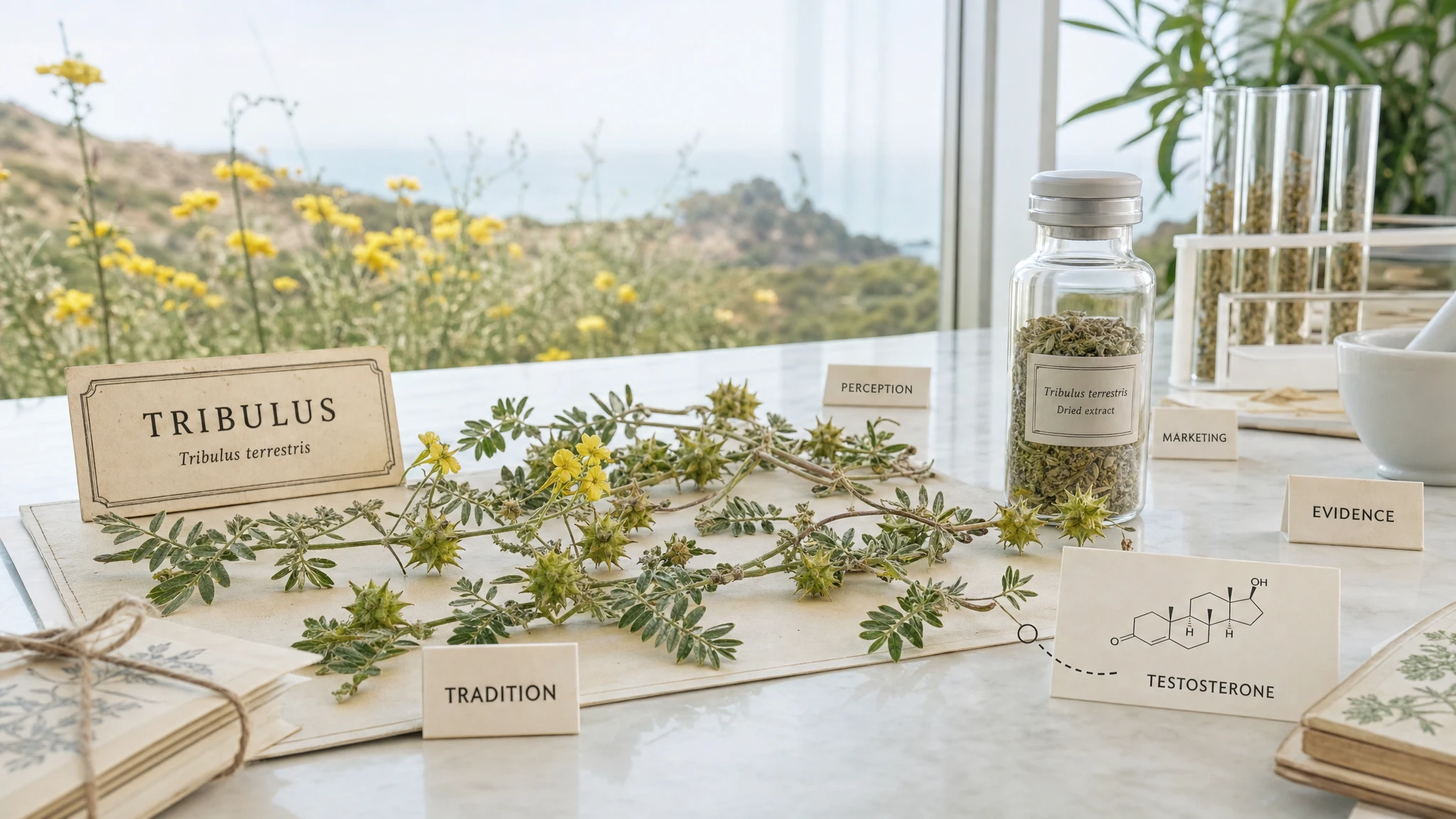
Tribulus terrestris is often associated with testosterone, vitality, and sexual function. This idea is common among those who sell and use supplements. The hypothesis of a possible androgenic effect of Tribulus, similar to that of male hormones, has thus become widespread. However, its commercial reputation emerged before clinical evidence and simplifies a complex biological topic.
This narrative attracts those seeking quick remedies for energy, desire, and performance. However, it does not provide data on serum testosterone levels (the amount of the hormone in the blood). This is where the gap between expectations and biological data arises.
A product may seem useful without having a real effect on hormones in healthy men. It is therefore advisable to evaluate the historical and commercial reasons behind this connection.
The issue also concerns the action attributed to the androgenic axis (the system that regulates male hormones). This expectation stems from four recurring elements:
- Traditional use suggests potential support for male hormone balance.
- Marketing transforms sexual well-being into a direct promise regarding hormones.
- The word testosterone evokes rapid, clear, and easily measurable effects.
- The concept of a "booster" simplifies a biological effect that is actually complex.
To understand this connection, one must distinguish between public image and biological significance. The following steps show how the association originates. They also explain why, on its own, it does not prove an increase in the hormone.
What is Tribulus terrestris and why is it linked to testosterone
Tribulus terrestris is a plant often mentioned when discussing men's health. In common and commercial parlance, it is linked to vitality and sexual well-being. This has given rise to the idea of a natural testosterone booster capable of clearly increasing the hormone. However, studies on humans have not provided unique and certain proof. It is therefore necessary to distinguish between fame, traditional use, and measurable biological changes.
This distinction prevents turning a widespread idea into a clinical conclusion. Regulatory and synthesis sources indicate that promises of hormonal increase lack adequate evidence [1] [2]. Even reviews of available data report unconvincing results regarding testosterone in humans [3] [4]. The picture becomes clearer when comparing sensations with objective measurements. This leads to the second step: understanding whether the perceived benefit truly coincides with a hormonal increase.
Difference between perceived benefit and testosterone increase
Subjective improvement does not always indicate an increase in testosterone, the primary male sex hormone. A person may feel greater well-being, confidence, or balance without showing relevant changes in blood tests. This distinction is important because supplements can alter the perception of one's physical state through indirect pathways as well. These pathways do not necessarily depend on hormones. Therefore, a benefit reported by an individual is not equivalent to data measured in a laboratory.
Clinical research separates reported outcomes from biological measurements because they can yield different results. Some controlled trials have involved healthy men and men with idiopathic infertility (without a known cause). In these studies, Tribulus did not significantly change testosterone, free testosterone, or luteinizing hormone [5,6]. Personal experience may be real, but it does not prove an increase in the hormone. This moderate interpretation also helps in understanding the human data described in the following sections. Having clarified this point, the topic shifts from perceived aspects to clinical data.
Recent research and updates
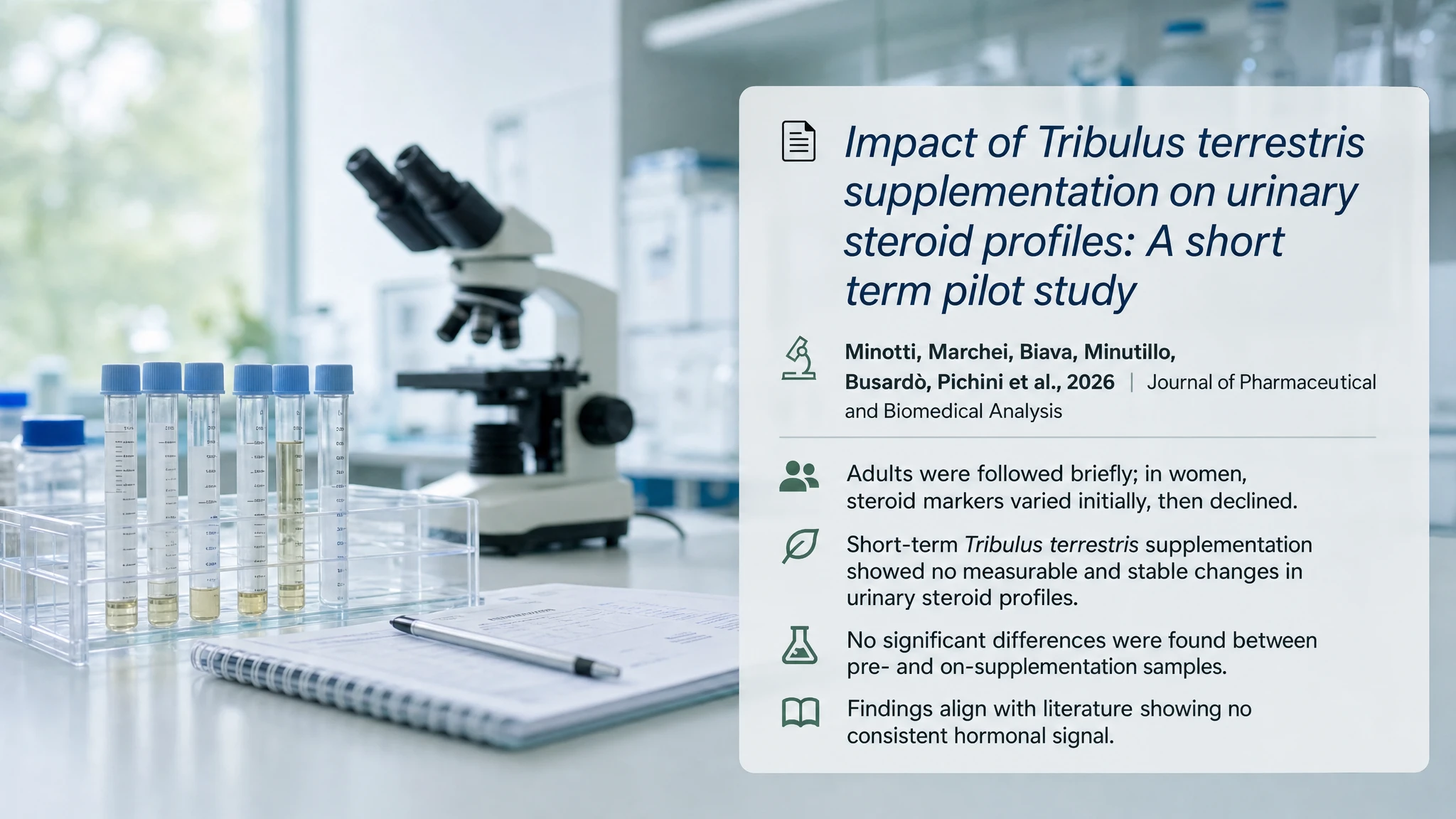
In 2026, the Italian researcher Minotti and colleagues published a study in the Journal of Pharmaceutical and Biomedical Analysis. The group investigated the short-term effects of Tribulus terrestris on urinary steroid profiles (traces of hormones eliminated in urine). The research verified whether the use of the product left measurable signs of a possible effect on hormones.
Impact of Tribulus terrestris supplementation on urinary steroid profiles: A short term pilot study
- The sample included adult men and women followed for a short period; in women, steroid markers initially varied and then decreased.
- The supplementation contained Tribulus terrestris; in short-term use, it did not cause measurable and stable changes in urinary profiles.
- The samples collected before and during use did not show relevant differences between the two measurement points.
- The result is consistent with studies that do not show a stable and repeatable hormonal signal.
What human studies show about testosterone
In clinical studies on Tribulus terrestris and testosterone, hormone levels do not always change in the same way. In many healthy men, the effect is weak or entirely absent. In some selected groups, however, the data show more interesting outcomes. To understand the differences, it is necessary to evaluate the clinical context, duration, and quality of the evidence.
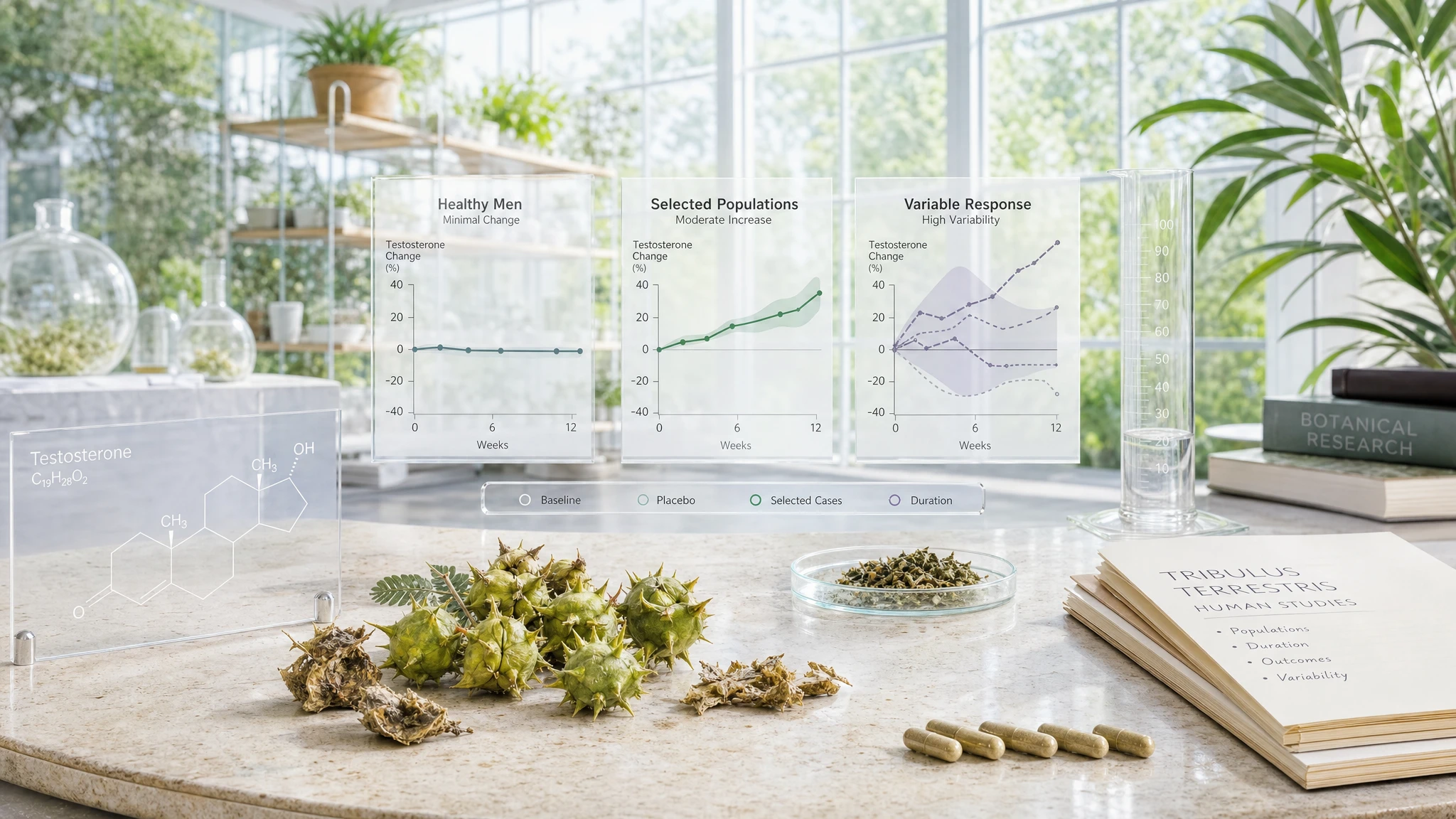
Human studies on Tribulus terrestris and testosterone do not yield the same results in all cases. If hormone levels are already normal, the effect tends to be modest or non-existent. In other clinical cases, however, the outcome may be more favorable.
In summary, the potential androgenic effect of Tribulus does not always lead to an increase in testosterone. The result depends on initial values, the people involved, and how the hormonal data is interpreted.
Tribulus is therefore proposed as a potential natural testosterone booster. However, studies on healthy men do not yet allow for definitive conclusions. To better understand the results, it is necessary to evaluate the individuals studied and the measures used:
- In healthy men, blood testosterone levels often remain stable during studies.
- In some selected groups, clinical conditions can change the final result.
- The duration of the treatment can influence the outcome that emerges from the study.
- Comparison with a placebo helps to determine if the observed effect is real.
Studies on the androgenic axis (the system that regulates male sex hormones) must be read with caution. It is necessary to know who participated, the duration of the intake, and which hormones were measured.
Why studies on testosterone do not yield uniform results
The literature on Tribulus terrestris testosterone is inconsistent because not all studies start from the same conditions. The number of participants, the duration of the intake, the selection criteria, and the measured parameters vary. In a context of healthy men, where blood testosterone levels are often already adequate, the margin for observing a real change is reduced. The body regulates these hormones within precise limits. When values are normal, an additional external stimulus struggles to produce a clear and measurable increase. Even a small group of participants makes it easier to obtain outcomes that seem contradictory, especially if one is looking for subtle differences. Individual variability, such as age and lifestyle, adds a further layer of complexity to the interpretation of the data.
These data indicate that the alleged hormonal herbal remedy does not always produce a measurable endocrine effect; the limitation, however, is that the results depend heavily on the type of participants and how the study was conducted. For this reason, conclusions must be considered on a case-by-case basis.
Which study factors influence the final result
The result of a study on Tribulus and male hormones depends on the dose, duration, individuals, and tests chosen. To evaluate an increase in testosterone, it is not enough to know that the product was taken. One must understand who used it, for how long, and which extract was used. In people with sexual or hormonal disorders, it may be easier to observe an effect. A decrease in symptoms, however, does not necessarily indicate a stable change in hormones. A randomized study lasted 12 weeks and involved men with sexual dysfunction. The plant improved sexual function compared to the placebo. In the same research, total testosterone also increased in a specific group of participants [7].
Another study involved patients with late-onset hypogonadism (low hormone levels linked to age). The authors noted increases in total testosterone and improvements in certain clinical scores [8]. The data indicate a possible androgenic effect in selected groups. However, they do not demonstrate the same outcome in all men, especially those with already normal levels.
Why extract quality changes the outcome
The quality of the extract is decisive when studying the relationship between Tribulus terrestris and testosterone. It is not enough for the plant to be sold as a natural testosterone booster. Composition, dosage, duration, and context of use also matter. Without this data, even an outcome that seems clear can be difficult to understand and apply.
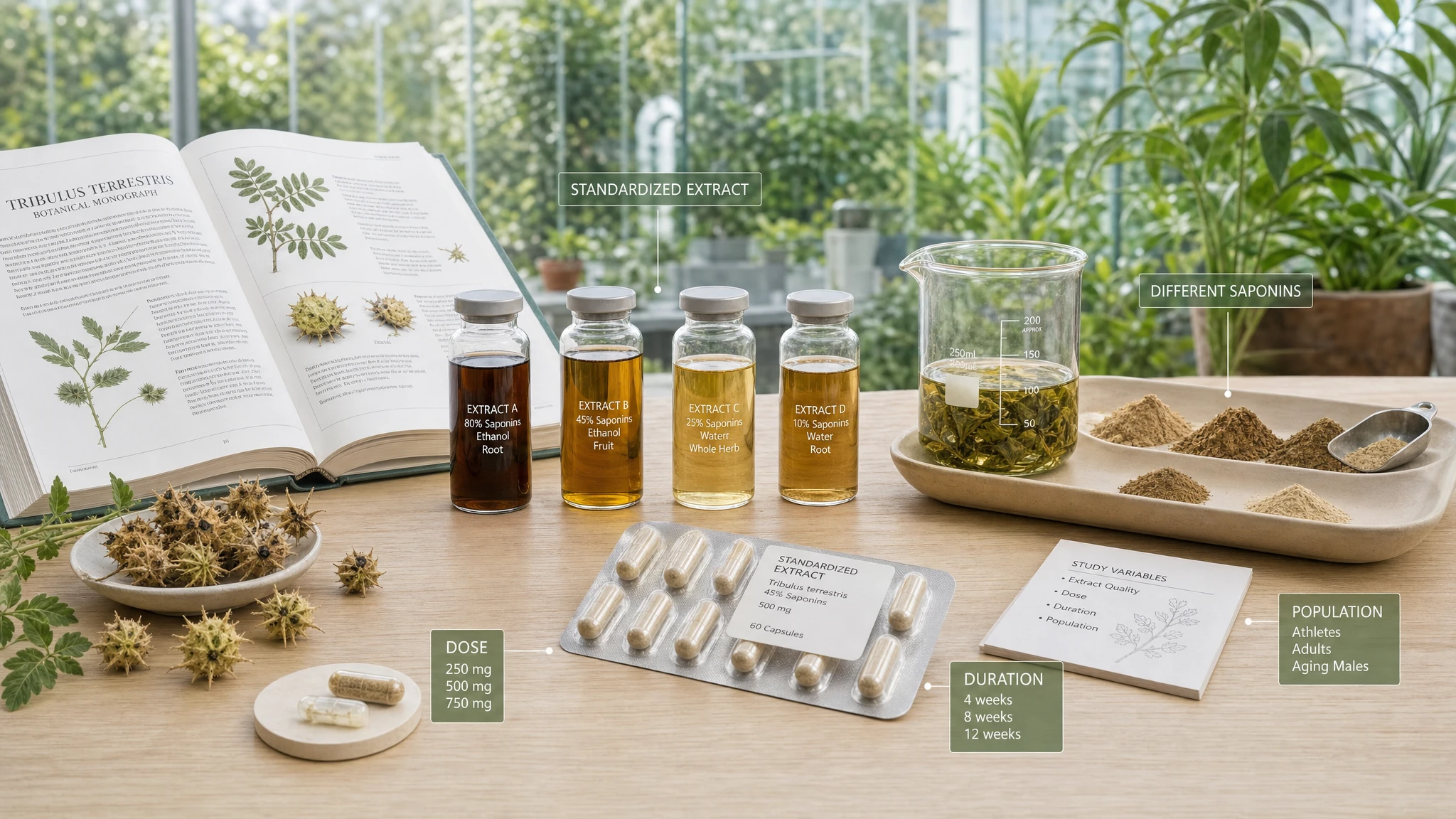
When studying the relationship between Tribulus terrestris and testosterone, it is not enough to know that the plant is present. What matters is which extract was used and how it was produced. The same species can yield products with different levels of saponins (substances typical of many plants). The mix of active compounds—substances that act within the body—can also vary.
For this reason, regarding the relationship between Tribulus and male hormones, the name of the plant alone offers little useful information.
These differences can change the potential endocrine effect (action on hormones). Data from one study does not apply to every natural testosterone booster on the market. Before comparing data, it is necessary to understand how the product was prepared and who took it:
- Extract standardization helps in interpreting the result.
- Different products may have non-comparable compositions.
- Dosage and duration can change the outcome.
- The type of participants can influence the response.
The quality of an extract is not just a technical detail, as it indicates how transferable a piece of data is. Let's now look at how standardization and product comparison change the interpretation of studies.
How standardization changes the interpretation of results
Standardization (composition control) makes an extract more consistent from one batch to another. This point is central because Tribulus terrestris testosterone-based products do not always have the same levels of saponins. The type and amount of other active compounds can also vary significantly between products. If the composition changes, the potential endocrine effect (action on hormones) may also change. Thus, one study may find few effects, while another may yield more promising data. The difference, however, does not necessarily depend on the plant itself. A 6-week controlled study involved already trained CrossFit athletes.
The product showed differences in testosterone and bench press performance, but not in the other outcomes evaluated [9]. These data therefore describe a very specific and limited athletic situation. Another study, also lasting 6 weeks, included trained male athletes. It examined body composition, biomarkers (measurable values in the body), and inflammation [10]. Both studies therefore evaluated very specific groups and conditions. The data do not apply directly to all healthy men or other products. The quality of the product must therefore be evaluated before the final result itself.
Why different products are not always comparable
Two supplements with the same brand name may differ in source, purity, concentration, and extraction method. In the case of Tribulus terrestris testosterone, the potential androgenic effect (action similar to that of male hormones) also depends on the product. A more concentrated extract or a different raw material can change the body's response. An unclear formula also makes comparing studies more difficult. Therefore, the label description alone is not enough to determine if two products are truly equivalent. The literature also includes a double-blind study (neither participants nor researchers knew the groups) on men with oligozoospermia (low sperm count).
Gokshura granules favored the treated group compared to the placebo. However, the research primarily evaluated seminal quality, not testosterone as a central measure [11]. A subsequent analysis of supplements used by athletes also shows their frequent use in sports [12]. This use, however, does not equate to definitive hormonal evidence. If the extract, dose, and type of participants do not match, the comparison between studies remains fragile. The various results cannot, therefore, be aggregated or applied in the same way.
Perceived benefit and increased testosterone do not coincide
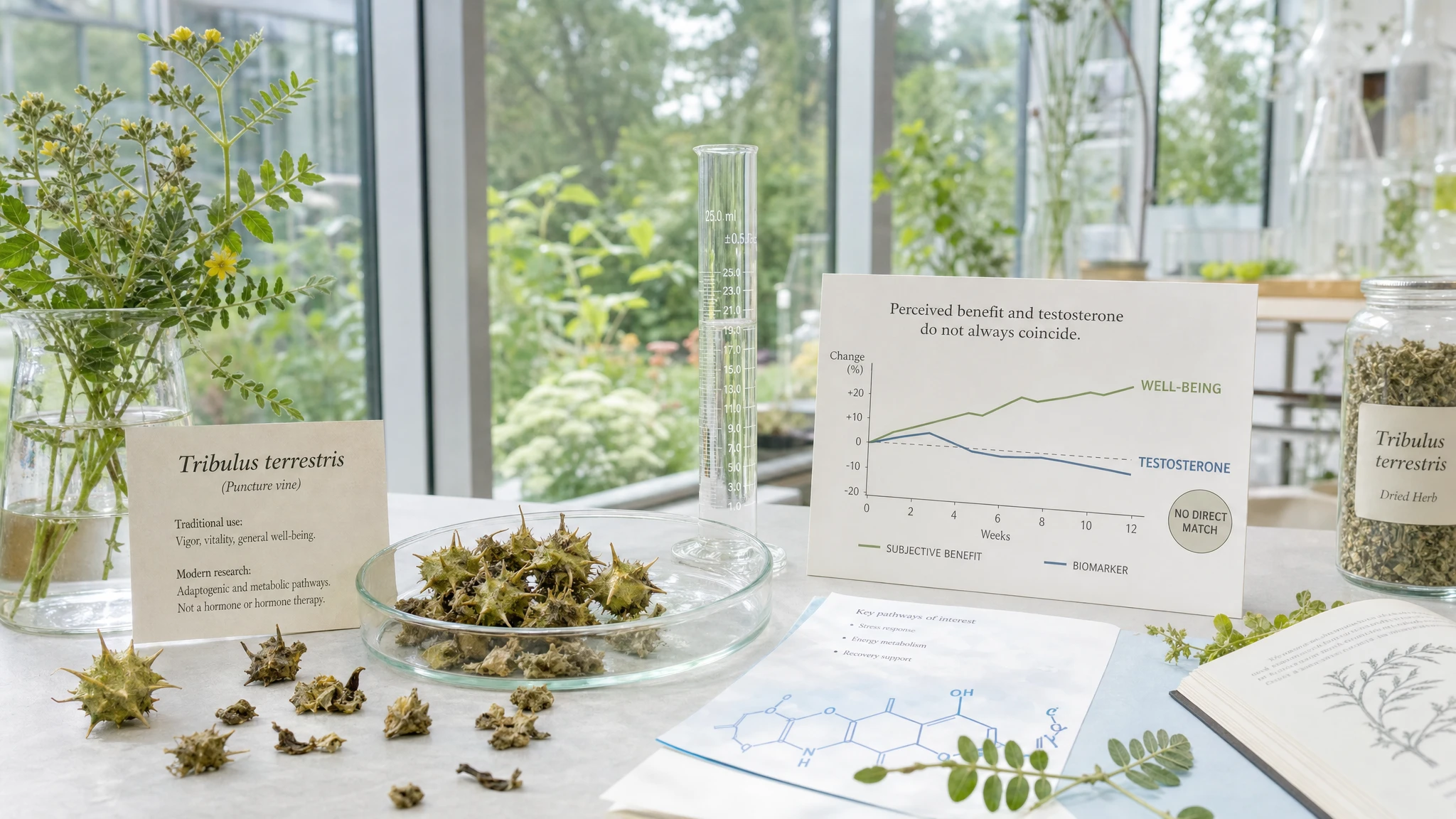
- Personal experience can improve without hormonal changes.
- Clinical studies distinguish well-being from biomarkers, which are measurable biological values.
- Subjective response does not prove an endocrine effect.
- Positive data do not always concern healthy men.
- Results require caution and context.
This passage helps to avoid a common mistake: confusing a positive sensation with biological proof. Tribulus can be described as a product that “makes you feel better.” However, this phrase is not enough to say that it increases testosterone. Separating the two aspects helps to understand both personal experience and the available clinical studies. In this way, one does not attribute an effect to the supplement that research does not consistently confirm.
When a subjective benefit does not indicate a hormonal effect
A subjective benefit may appear even without a measurable change in testosterone. In fact, the perception of energy, well-being, and balance does not depend on a single hormone. Many biological, mental, and daily life factors come into play. During the use of Tribulus, some people may therefore report positive effects without relevant variations in blood tests. For this reason, an individual sensation cannot, on its own, prove an endocrine (hormone-related) effect.
One study examined premenopausal women with hypoactive sexual desire disorder (a persistent decrease in desire). In this group, the product increased free and bioavailable testosterone compared to the placebo [13]. However, this data concerns women and cannot be directly applied to healthy men. In men with sexual dysfunction, the clinical improvement observed over 12 weeks does not, by itself, demonstrate a general effect on the hormonal profile [7]. This distinction therefore avoids confusing personal satisfaction with biological proof. The central point is to separate what a person feels from what tests measure.
Why Tribulus can provide useful effects without changing hormones
A supplement may provide welcome effects without directly modifying testosterone. The extract might act on general aspects of well-being through non-hormonal pathways, but the mechanism is not certain. Furthermore, it cannot replace endocrine therapy (treatment that acts on hormones). The link between personal experience and measured values can be complex. In nutrition and phytotherapy (the use of plants for health), the perceived benefit can depend on multiple factors. These include expectations, the context of use, and the individual's response.
The most recent syntheses indicate that there is no solid evidence of an increase in testosterone in men [14]. The 2019 review on plants used for testosterone and sperm parameters points out another limitation. The phytotherapeutic goal remains difficult to define optimally [4]. Furthermore, a short pilot study on urinary steroid profiles (hormones and similar substances measured in urine) did not detect any changes. Under the observed conditions, the supplement therefore did not produce measurable variations [15]. These data justify neither unproven enthusiasm nor total rejection.
How to interpret Tribulus realistically
In a realistic scenario, Tribulus terrestris and testosterone do not automatically go hand in hand: the hormone does not always increase. The value of the supplement depends on its use, the quality of the evidence, and the measured results. A benefit perceived by an individual does not always coincide with an effect on hormones. Therefore, great caution is needed when evaluating it, especially when used by healthy men.

To evaluate Tribulus terrestris, one must understand what the studies show and who they involved. A product may seem useful without being a true natural testosterone booster. Some people notice benefits, but this does not prove an increase in testosterone. The signal remains uncertain and does not justify a promise that applies to everyone.
In practice, Tribulus terrestris testosterone refers to a plant-based product promoted to act on hormones. However, it should be evaluated with caution. The same criterion applies to Tribulus and male hormones. Studies, in fact, do not show a stable androgenic effect for everyone.
It is necessary to evaluate the people studied, the type of extract used, and the purpose of the research. Effects that the data do not consistently confirm should not be attributed to the product.
To avoid giving too much weight to the results, it is necessary to separate commercial expectations from personal responses. These responses must then be compared with hormone measurements. Here are the main points:
- The term "booster" is too strong compared to the evidence currently available.
- Favorable studies do not necessarily apply to all healthy men.
- The perceived benefit does not always coincide with the testosterone measured in the blood.
- Results depend on the context of the study, not on slogans.
A useful reading does not look for absolute promises, but separates personal perception from clinical evidence. The following points explain when the term "booster" makes sense and when it oversimplifies the data.
When does it make sense to talk about natural testosterone boosters
Talking about natural testosterone boosters only makes sense when the effect is repeatable, measurable, and consistent in controlled clinical trials. In the case of Tribulus, this threshold has not been reached convincingly. The product can be discussed as a botanical supplement, but not as a reliable solution for generally increasing testosterone. Available research shows conflicting results. Some studies do not detect any significant hormonal changes in healthy men. Others report small changes, but only in very specific groups. For example, a study on men with erectile dysfunction observed a slight increase in testosterone after ninety days of treatment [1]. However, this finding is not consistently replicated in other research. This makes the term “booster” a simplification that the data cannot consistently support.
The point is not to deny any possible utility, but rather to avoid a label that suggests more than what the literature actually shows. This means that the term “booster” remains, at best, a commercial simplification. The available evidence does not support a uniform hormonal effect, and favorable results, when they do appear, are not enough to generalize the message to all people or all extracts.
How to interpret evidence without overestimating results
Interpreting evidence without exaggerating the results means asking whether the benefit is real, useful in practice, and consistent across different studies. In the case of Tribulus, this caution is essential because the topic is often discussed with more certainty than research actually provides.
A perceived improvement may be significant for the individual experiencing it, but it does not automatically equate to an androgenic effect of Tribulus or a reliable change in the male hormonal axis. An analysis of supplements used by athletes [16] shows that the reputation of Tribulus is often broader than its experimental basis. In other words, practical interest is not enough to prove that the product truly increases testosterone. If the data are inconsistent, the result should be read as a signal to be contextualized, not as confirmation of a stable hormonal effect. This helps avoid confusing an individual response with a general rule for all healthy men.
Summary of scientific evidence
This summary collects the most useful sources for distinguishing the fame of Tribulus from clinical results. These lines also help in understanding the limitations of the studies and in reading the data with caution.
| Publication year | Area studied | What the studies indicate |
|---|---|---|
| 2005 | Healthy men and androgens | in young healthy men, there is no significant increase in testosterone, androstenedione, or LH [5] |
| 2017 | Idiopathic male infertility | no changes in total and free testosterone or LH were observed [6] |
| 2017 | Male sexual dysfunction | results vary: sexual benefit does not prove a hormonal effect applicable to everyone [7] |
| 2019 | Late-onset hypogonadism | a possible increase in testosterone was observed in a selected group, but the data does not apply to everyone [8] |
| 2021 | Trained athletes and hormonal response | results vary; the signal regarding testosterone is weak and does not appear in all outcomes [9] |
| 2023 | Sports use and commercial claims | studies indicate that claims about Tribulus as a product to increase testosterone lack adequate evidence [1] |
| 2024 | Regulatory assessment and traditional use | results vary and traditional use does not prove a hormonal increase in men [2] |
| 2025 | Overall summary of clinical studies | studies do not provide solid evidence that Tribulus increases testosterone in men [14] |
Editorial reading of the evidence
Reading the studies collected in this article, I found a more complex picture than the natural testosterone booster label suggests. The most robust research on healthy men and other selected groups did not show a stable and repeatable increase. Some studies on specific groups, however, report more favorable signs. I have concluded that the effect of Tribulus may depend on the participants, the duration, the extract, and the specific metric measured. To understand the results, I had to distinguish between perceived benefit and actual hormonal changes.
I noticed that the studies have significant limitations: few participants, different extracts, short durations, and heterogeneous groups. Furthermore, some research evaluates sexual function more than testosterone as a primary outcome. Therefore, it is difficult for me to use that data to evaluate the androgenic axis (the system that regulates male hormones) in general. Even with a positive finding, I cannot separate the biological effect from other factors. The conclusions I can draw must therefore remain cautious and refer only to the cases studied.
Conclusions and editorial summary
Overall, I believe the relationship between Tribulus terrestris and testosterone requires more caution than advertising suggests. The human studies I have reviewed here do not show a stable increase that applies to everyone, especially in healthy men. Some research on specific groups shows positive signs, but these cannot be extended to every individual.
A correct interpretation, in my opinion, evaluates diet, energy expenditure, and hormone control together. One should not place too much weight on a single data point. The type of extract, the participants, the duration of use, and the measurement method all matter. I therefore suggest studying Tribulus as a topic of physiology (body functions). It should not be viewed as a quick way to increase hormones. This method helps distinguish perceived benefits from biological data. It also allows for a deeper exploration of other aspects of the plant using the same critical, evidence-based approach.
Final critical note
The main limitation I have encountered in the studies is not the total absence of signals. The real problem is the difficulty in drawing a general conclusion. Some research shows beneficial effects in selected groups, while many do not detect a consistent hormonal increase. Therefore, I believe that a promotional narrative on the topic can be misleading.
Furthermore, it is difficult for me to compare the results because the extract, duration, and type of participants vary. A correct interpretation, in my opinion, does not impose either enthusiasm or rejection. Instead, it distinguishes between the perceived benefit, the measured effect, and the use of the data for other groups.
References
[1] Dietary Supplements for Exercise and Athletic Performance
[2] Tribulus terrestris L. herba: Final assessment report
[3] A Systematic Review on the Herbal Extract Tribulus terrestris and the Roots of its Putative Aphrodisiac and Performance Enhancing Effect
[4] Beyond tribulus (Tribulus terrestris L.): The effects of phytotherapics on testosterone, sperm and prostate parameters
[5] The aphrodisiac herb Tribulus terrestris does not influence the androgen production in young men
[6] Prospective Analysis on the Effect of Botanical Medicine (Tribulus terrestris) on Serum Testosterone Level and Semen Parameters in Males with Unexplained Infertility
[7] Evaluation of the efficacy and safety of Tribulus terrestris in male sexual dysfunction—A prospective, randomized, double-blind, placebo-controlled clinical trial
[8] Tribulus terrestris versus placebo in the treatment of erectile dysfunction and lower urinary tract symptoms in patients with late-onset hypogonadism: A placebo-controlled study
[9] The Effects of 6 Weeks of Tribulus terrestris L. Supplementation on Body Composition, Hormonal Response, Perceived Exertion, and CrossFit® Performance: A Randomized, Single-Blind, Placebo-Controlled Study
[10] 6-Week Supplementation with Tribulus terrestris L. to Trained Male CrossFit® Athletes on Muscle, Inflammation, and Antioxidant Biomarkers: A Randomized, Single-Blind, Placebo-Controlled Trial
[11] Clinical study of Tribulus terrestris Linn. in Oligozoospermia: A double blind study
[13] Efficacy of Tribulus Terrestris for the treatment of premenopausal women with hypoactive sexual desire disorder: a randomized double-blinded, placebo-controlled trial
[14] Effects of Tribulus (Tribulus terrestris L.) Supplementation on Erectile Dysfunction and Testosterone Levels in Men—A Systematic Review of Clinical Trials
[15] Impact of Tribulus terrestris supplementation on urinary steroid profiles: A short term pilot study
Editorial note
Artificial Intelligence was used solely as a tool to support editorial and documentary work. All content, interpretations, bibliographic citations and conclusions have been verified, reviewed and approved by the author, who assumes full scientific responsibility for them.
The manuscript was also subject to independent peer review prior to publication.
To ensure maximum transparency, the article's complete history — including the dates of submission, review, acceptance and publication, as well as information on the peer review process — is available on the dedicated Article History page.