Dr.ssa Mena Bitonti

Nutritional Biologist — registered with the Board of Biologists (Section A)

Dr.ssa Mena Bitonti

Professional profile

Nutritional Biologist registered with the Board of Biologists (Section A), trained in Nutrition Sciences at the University of Calabria. She currently works at a medical-diagnostic centre, where she performs bioimpedance assessments and prepares personalised nutrition plans, following patients in both physiological and pathological conditions.

Areas of expertise

  • Applied human nutrition
  • Personalised nutrition plans
  • Bioimpedance analysis
  • Nutritional education
  • Food safety (HACCP)
  • Quality of agri-food products

Professional experience

  • Nutritional Biologist — Medical-diagnostic centre (current)
    Bioimpedance assessments, preparation of personalised nutrition plans and patient management in physiological and pathological conditions.
  • Nutritional consultancy — Aclichef cooperative / Karol Wojtyła Medical Center (2017–2020)
    Drafting of school menus with attention to food allergies, collaboration with the food technologist on hygiene and safety, and food-education projects in schools.

Academic background

  • Master's Degree in Nutrition Sciences (109/110)
    University of Calabria (UNICAL).
  • Professional qualification as Biologist (Section A)
    Passing the State Examination and registration with the Board of Biologists.

Qualifications and certifications

Teaching qualification (mathematics and sciences, health disciplines, human anatomy, food chemistry, natural, chemical and biological sciences).

  • HACCP food-handler training certificate
  • Course in food, environmental and health-hygiene safety
  • Certificates in nutrition (nutraceuticals, nutrition and sport) with CME credits
  • ECDL — European Computer Driving Licence

Articles

Piperine and extract standardization: what the Haq review shows about the quality of black pepper products

Piperine and extract standardization: what the Haq review shows about the quality of black pepper products

Dr.ssa Mena Bitonti; Last updated: October 2026

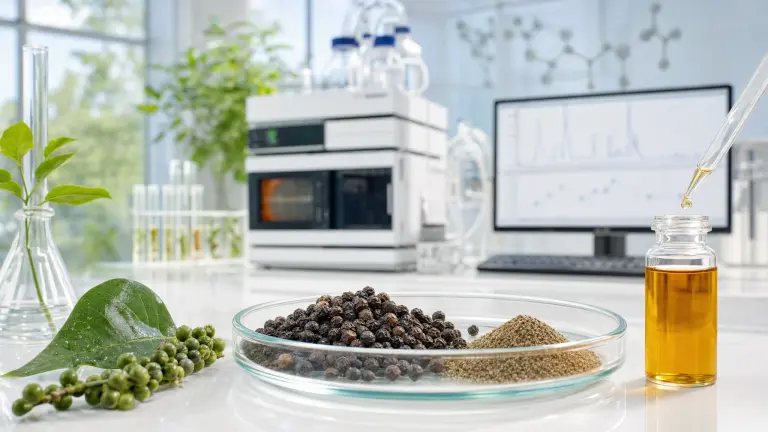
In brief: The review by Haq and colleagues examines piperine as the characteristic component of black pepper, describing its origin, studied activities, and application limits. Regarding product quality, the most useful point is distinguishing the whole spice from an extract: the latter can be measured and controlled, but it does not represent the entire food.The authors' summary describes piperine as a natural alkaloid—a nitrogen-containing plant substance—responsible for much of the pungent sensation of black pepper. The authors report that its quantity in pepper can vary from approximately 2% to 7.4%, a range indicating that the spice does not have an identical composition in all samples. The publication also collects experimental studies on the potential biological activities of piperine, including cell and animal models. These results explain the scientific interest in the molecule, but they do not equate to clinical evidence of benefit for those consuming black pepper in cooking. Regarding the topic of quality, the review is primarily helpful in understanding why manufacturers and researchers use extracts with a declared concentration. Standardization consists of verifying and maintaining a defined amount of a substance chosen as a reference, in this case, piperine. This reduces variability between batches, but it does not make an extract equivalent to whole black pepper: during extraction, purification, and formulation, the concentration, overall composition, and storage conditions change. The review is neither a clinical trial nor a direct analysis of individual commercial products.
Ginger supplements and HbA1c in type 2 diabetes: what the 2024 review shows

Ginger supplements and HbA1c in type 2 diabetes: what the 2024 review shows

Dr.ssa Mena Bitonti; Last updated: October 2026

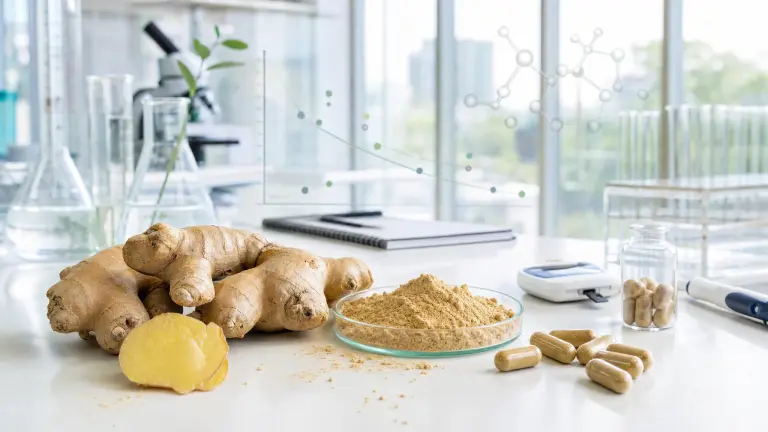
In brief: The 2024 review evaluated whether oral ginger intake can improve fasting glycemia and glycated hemoglobin in people with type 2 diabetes. By pooling five clinical trials, the authors did not find an overall statistically significant effect, despite some favorable individual studies.Type 2 diabetes involves a persistent increase in blood glucose. To assess its control, studies often look at fasting glycemia, which is the value measured after several hours without eating, and HbA1c or glycated hemoglobin, which reflects the average glucose exposure over the previous months. Schumacher and colleagues examined randomized trials—studies in which assignment to the product or the comparison group occurs randomly—on ginger in capsules or powder taken orally. Doses ranged from 1.2 to 2 grams per day, and treatments lasted from 4 to 12 weeks. Five studies were included in the quantitative synthesis. When the results were combined, there was no statistically significant reduction in either fasting glycemia or HbA1c. However, two studies, when considered separately, had detected a decrease in fasting glycemia. The practical significance is cautious: some data suggest a possible metabolic signal, but the body of evidence analyzed does not demonstrate a stable and reproducible benefit. Differences in formulations, duration, baseline values, and the groups studied may contribute to the observed variability.

Cinnamon in diabetes studies: why species and product change the interpretation

Cinnamon in diabetes studies: why species and product change the interpretation

Dr.ssa Mena Bitonti; Last updated: October 2026

In brief: Research has compared seven cinnamon products sold in different forms. It verified the botanical species, chemical components, and in vitro activity on enzymes linked to carbohydrate digestion. The central point is simple: an effect measured in the laboratory does not guarantee either clinical efficacy or product safety.The publication by Mancak and colleagues studied commercial cinnamon samples, including sticks, tea bags, and capsules. The authors first observed the appearance of the products and then evaluated some of their compounds using chromatographic techniques, which are methods that separate and measure the substances present in a mixture. Finally, they verified in vitro whether the extracts hindered α-amylase, α-glucosidase, and aldose reductase, enzymes involved respectively in the digestion of starches, the release of glucose, and some processes associated with diabetes complications. All samples showed some activity on the enzymes, but the composition proved to be highly variable. In the extracts of different species, trans-cinnamaldehyde varied from 7.73 to 333.69 mg/g and coumarin reached up to 43.73 mg/g. Some cassia sticks, Cinnamomum burmannii, and Cinnamomum loureiroi contained high amounts of coumarin. A preparation purchased at an herbalist's shop showed enzymatic activity even without the sought-after cinnamon markers. The research therefore points to a problem of product identification and control, not a demonstration of therapeutic benefit in people.

Supercritical CO2 oregano extracts: antimicrobial and antibiofilm activity studied in the laboratory

Supercritical CO2 oregano extracts: antimicrobial and antibiofilm activity studied in the laboratory

Dr.ssa Mena Bitonti; Last updated: October 2026

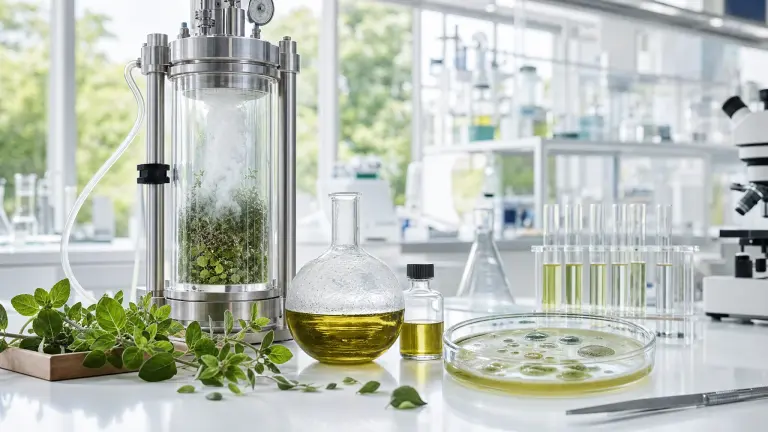
In brief: The study evaluated three extracts of Origanum vulgare leaves obtained using supercritical carbon dioxide. The results indicate activity against bacteria, fungi, and biofilms in laboratory tests. The intensity of the effect varied based on the microorganism, the concentration, and the conditions used to prepare the extract.The authors' summary describes experimental in vitro research, meaning it was conducted on microorganisms cultured in a laboratory and not on humans or animals. Oregano leaves were extracted using supercritical CO2, a technique that uses high-pressure carbon dioxide to separate plant molecules; methanol was also used as a co-solvent. Extracts produced at 40, 50, and 60 °C were compared. Chemical analysis detected phenolic acids, flavonoids, and triterpenes, including rosmarinic acid, luteolin, naringenin, oleanolic acid, and ursolic acid. The extracts inhibited selected bacteria, including Salmonella Enteritidis, Listeria monocytogenes, and Staphylococcus aureus, with minimum inhibitory concentrations between 0.25 and 1.0 mg/mL. They also acted against Fusarium species, but generally at higher concentrations. The extract obtained at 40 °C reduced L. monocytogenes and S. aureus biofilm formation by up to 100% at twice the minimum inhibitory concentration. It only partially removed already mature biofilms. These results demonstrate technological potential in the laboratory; they do not prove clinical efficacy, safety of use, or the ability to prevent infections in humans.

Syzygium aromaticum: tropical cultivation, buds, and processing according to a recent review

Syzygium aromaticum: tropical cultivation, buds, and processing according to a recent review

Dr.ssa Mena Bitonti; Last updated: October 2026

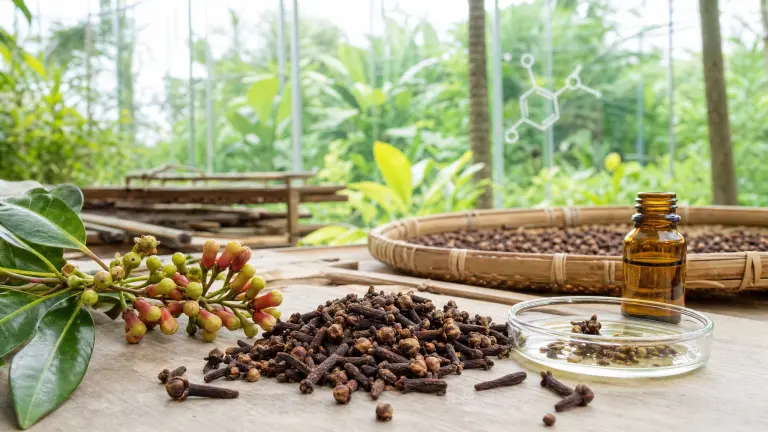
In brief: This publication examines Syzygium aromaticum, the plant from which cloves are derived, gathering data on traditional uses, composition, and activities observed in various models. To interpret the spice in the context of quality, the central point is to distinguish between the plant, the dried bud, the essential oil, and the extracts.The authors' synthesis is a literature review, not a new experiment on humans, animals, or crops. It collects studies dedicated to ethnopharmacological uses—that is, traditional uses documented in different cultures—and the pharmacological activities attributed to Syzygium aromaticum. In the food context, the publication primarily helps to correctly categorize the spice: cloves are flower buds that have been harvested and dehydrated, while essential oil and extracts are more concentrated preparations and are not equivalent to the whole spice. The review describes the presence of aromatic compounds, including eugenol, and reports results from various types of research. These include chemical analyses and preclinical trials, i.e., studies in test tubes, on cells, or on animals. The practical message regarding the quality of the raw material is that botanical origin, the bud's developmental stage, harvesting, drying, and storage can influence the final chemical profile. However, the review does not establish a universal standard that allows for the classification of every commercial batch. Furthermore, the activities observed for concentrated extracts or oils do not automatically demonstrate the effects of the spice when used normally in food.

Global diversity of Cinnamomum and conservation: what the Red List species review shows

Global diversity of Cinnamomum and conservation: what the Red List species review shows

Dr.ssa Mena Bitonti; Last updated: October 2026

In brief: The review by Mohandass and colleagues examines the diversity of the Cinnamomum genus using assessments from the International Union for Conservation of Nature (IUCN) Red List. This work is valuable because it shows that the genus name encompasses many species, with widely varying distributions, available data, and conservation needs.The authors' synthesis evaluated 230 taxa—that is, species or other recognized botanical units—of the Cinnamomum genus present on the IUCN Red List. The main message is simple: speaking of Cinnamomum as if it were a single plant obscures significant biological diversity and varying conditions of vulnerability. The authors report that 195 taxa require urgent conservation interventions. To interpret the assessments, they considered geographical indicators used by the IUCN, such as the extent of occurrence or EOO (the overall area within which a species is known to exist) and the area of occupancy or AOO (the portion actually occupied by the species). They also reference species distribution modeling, which are tools that estimate where an organism can find compatible environmental conditions. The review proposes integrating protection in natural environments with ex-situ conservation, for example in germplasm banks and living collections. However, it does not directly measure the number of individuals of each species, nor does it demonstrate that a single propagation technique can resolve the risk of extinction.