


Cinnamon as a functional spice: why it matters in your daily diet
Research describes cinnamon as a spice of nutritional interest, especially for metabolism. Some studies show useful signals regarding glycemia and lipids, but results vary based on dose, duration, product, and the individuals studied. It should therefore be viewed as a functional ingredient in a varied diet, not as a standalone solution. Its scientific value is real, but it requires caution and must be interpreted within the context of daily meals.
- Published 25/10/2026
- Updated 26/10/2026
- Reviewed 26/10/2026
- Article history
ABSTRACT : WHAT THE SCIENCE SAYS
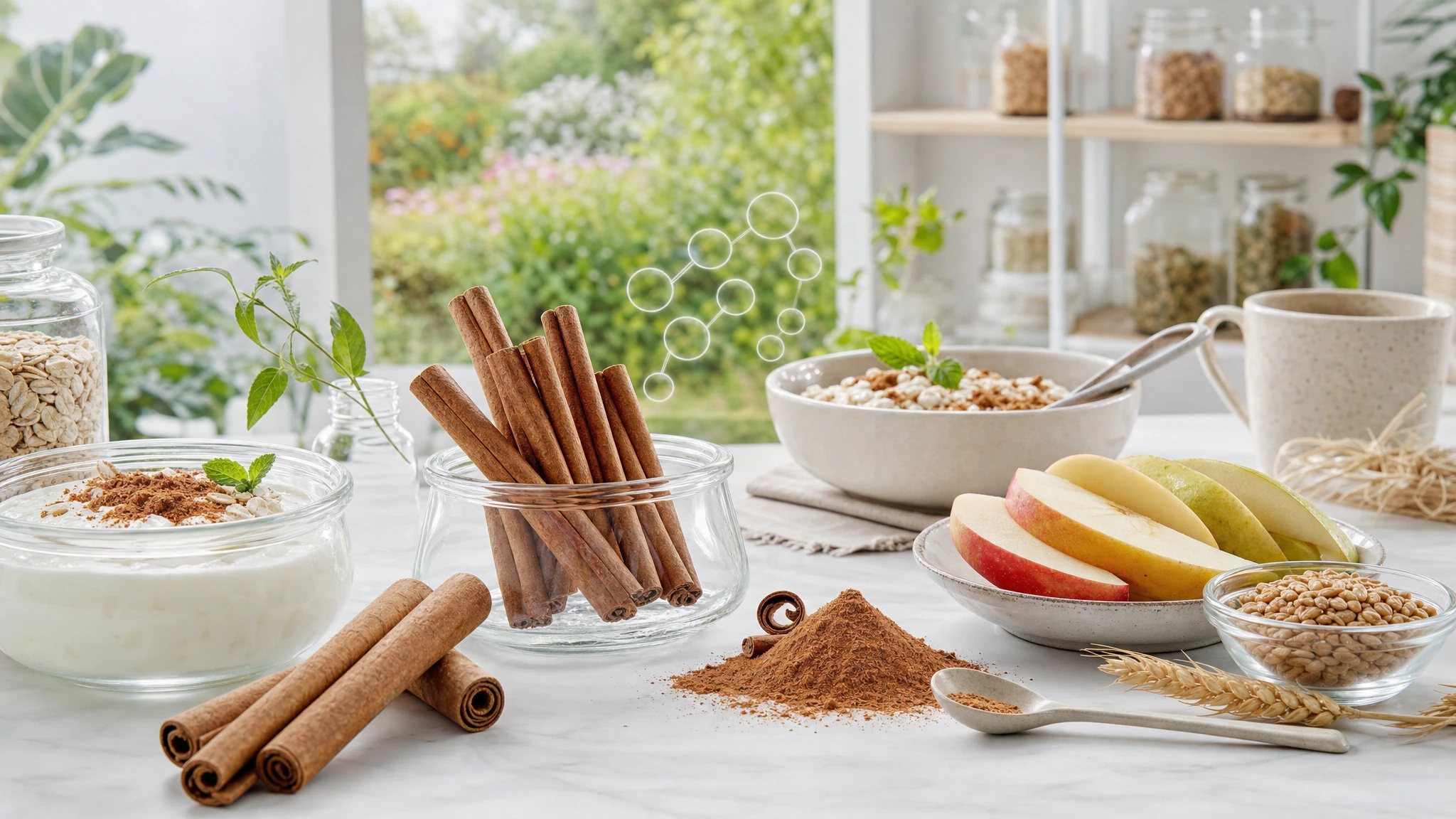
Cinnamon is a common spice, but it attracts interest beyond the aroma it adds to desserts and drinks. Referring to cinnamon as a functional spice does not mean proposing it as a cure, but rather acknowledging its potential role in the diet. Guidelines remind us that health stems from the sum of our dietary choices, not from a single food [1] [2]. It should therefore be included in a varied diet, alongside many other foods. In this way, it can add flavor to simple dishes and, over time, encourage healthier choices. Studies provide useful data, but they are not always consistent: they should therefore be read with care and caution. In particular, this article will cover the following points:
- What it really means to define a spice as functional
- Why cinnamon is of interest in preventive nutrition
- In what context cinnamon has nutritional value
- How taste and adherence influence habits
- Why the role of cinnamon remains dietary
What functional spice really means
Cinnamon as a functional spice is not just a kitchen flavoring. The term refers to a spice that is also studied for its potential biological role in the diet. This does not mean that it always produces clinical effects. Instead, it helps us understand why it is different from a common aromatic spice.
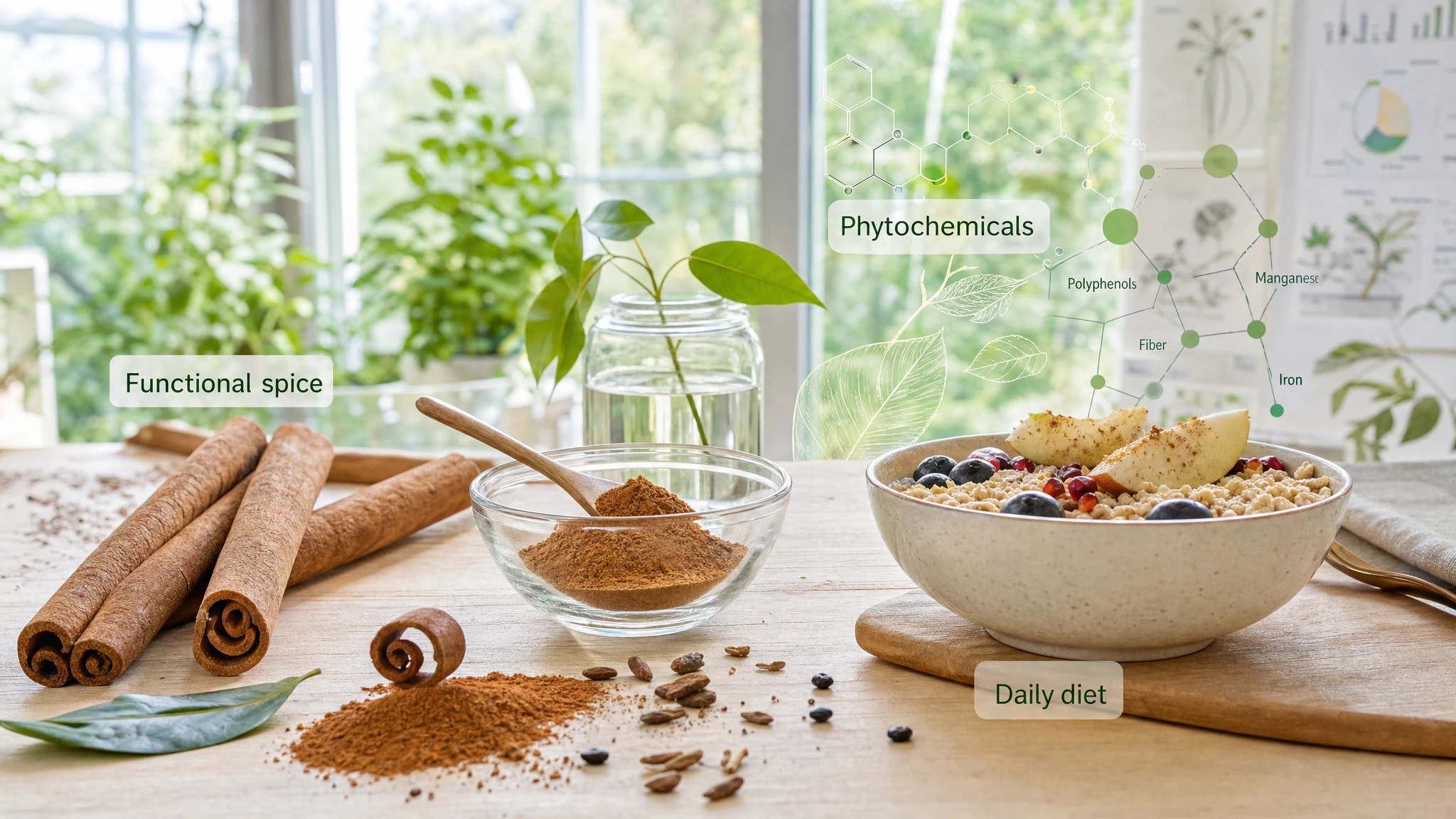
A functional spice provides aroma and contains natural compounds useful for nutrition research. This idea does not make the spice a drug. It indicates that, within a varied diet, it can offer more than just flavor. For cinnamon, interest stems from its traditional use and its phytonutrients (plant substances with potential biological effects).
This foundation helps define cinnamon as a functional food in the correct sense. It can contribute to the quality of a diet, but it is not a quick cure. Talking about healthy spices makes sense in the context of nutrition and prevention research, not in treatment. This explains why it is described as being rich in active compounds. Its value always depends on how it is used, not on any supposed miraculous effect.
To understand the term, it is necessary to separate its true meaning from incorrect usage. The points to clarify are as follows:
- A functional spice combines aroma and nutritional interest.
- Cinnamon is studied in the context of a preventive diet.
- Its value depends on the diet, not on isolated effects.
- Correct language avoids excessive or baseless promises.
This section clarifies the term in three steps: general meaning, the link to cinnamon, and scientific language. Each H3 examines a different point, without repeating the definitions already provided.
What is a functional spice and how does it differ from a common spice
A functional spice provides aroma and contains compounds studied for their potential effects on physiology (normal body activity). The difference from a common spice is not medical in nature. Instead, it concerns substances that may have nutritional value. This does not mean that every spice has measurable effects. Furthermore, mere use in cooking does not prove a clinical benefit. For cinnamon, the term arises from the link between traditional use and dietary research. What matters, therefore, is how these compounds are evaluated within the overall context of nutrition.
The term therefore describes a context and does not promise a certain effect. This distinction helps in correctly reading labels, articles, and marketing messages. It also avoids attributing qualities to the spice that have not been proven. It thus allows for a more careful assessment of its role. The transition to the specific case then becomes clearer. Recent research treats the topic as a matter of dietary interest, not as a quick path to a cure [3] [4].
Why cinnamon falls under the concept of a functional food
Cinnamon offers aroma and taste, but it also contains substances studied by nutrition research. These natural compounds may play a biological role within the framework of a varied diet. For this reason, the spice is associated with functional foods. Its value, however, does not stem from a single effect and is not automatic. It emerges only when its use is part of a healthy and consistent dietary pattern.
This reading avoids describing it either as a "superfood" or as a spice of no interest. Its role can be both culinary and nutritional. This dual function supports the definition of a functional food. An analysis that combined 24 randomized studies (with groups assigned by chance) examined people with type 2 diabetes. Supplementation improved fasting glycemia and glycated hemoglobin (a measure of average blood sugar). However, the result offers indirect support rather than an absolute definition [5]. The term nutraceutical therefore requires great caution.
When it makes sense to use the term nutraceutical for cinnamon
The term nutraceutical refers to a food or ingredient with nutritional value and potential biological interest. For cinnamon, however, this word requires caution. Normal culinary use does not always imply a full nutraceutical role. The term is more appropriate when the spice is part of a high-quality diet. It does not, however, describe a single product with guaranteed effects. Therefore, the dietary context in which cinnamon is included in the overall diet is what counts.
Cinnamon can therefore offer interesting compounds, but it does not replace a healthy and varied regimen. This care in word choice distinguishes the language of science from that used for marketing. A 2019 review gathered history, traditional uses, phytochemistry (the study of plant substances), and clinical impacts. The work examined the spice both as a food and as medicine, showing this dual interpretation [6]. Precise language, free of emphasis, is therefore needed. Once the term is clarified, it remains to understand its role in preventive nutrition.
Recent research and updates
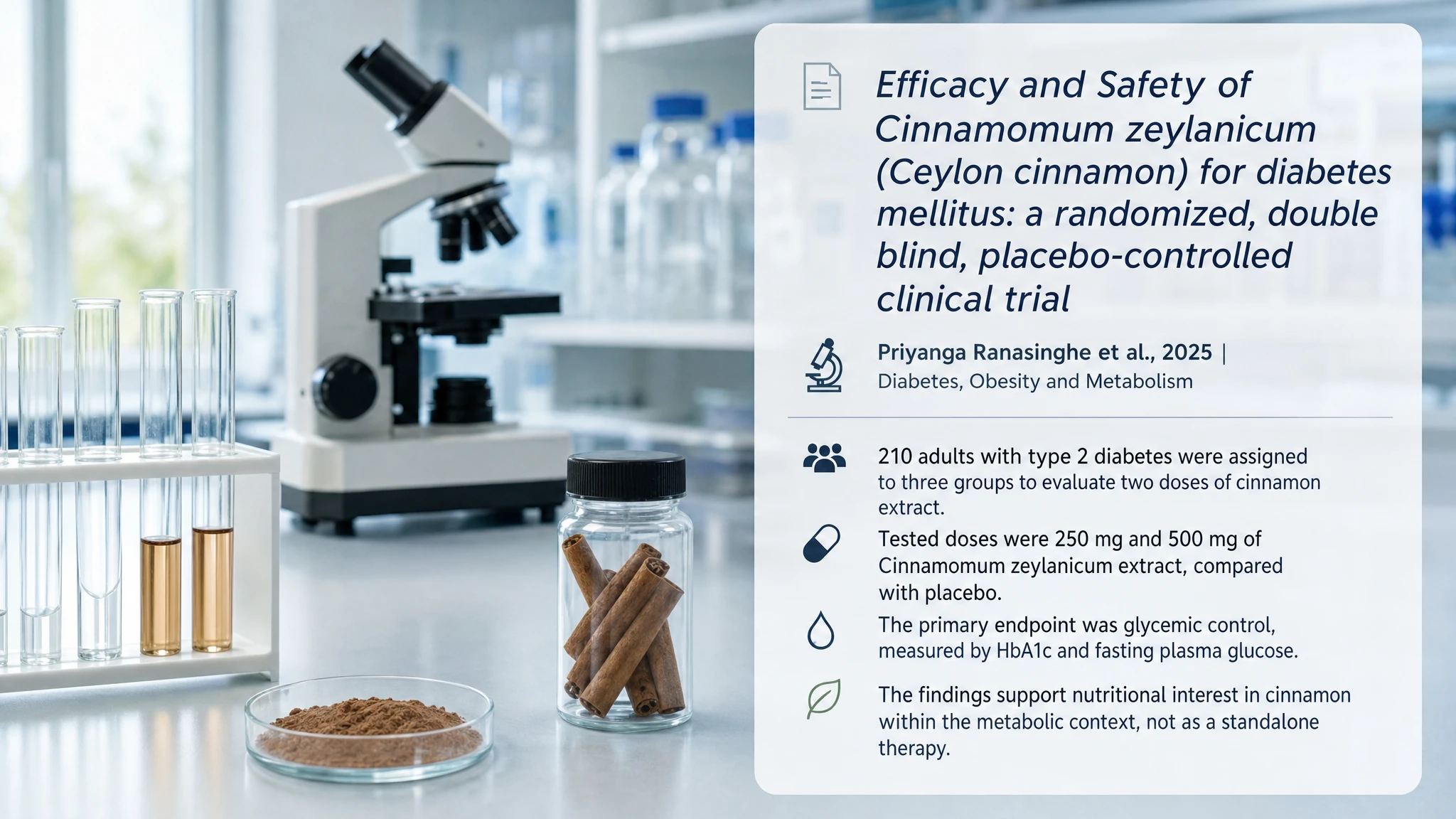
In 2025, Sri Lankan researcher Priyanga Ranasinghe and colleagues studied Cinnamomum zeylanicum extract in the journal Diabetes, Obesity and Metabolism. This study focused on Ceylon cinnamon, tested in people with type 2 diabetes. The study compared 250 mg and 500 mg doses against a placebo to evaluate glycemic control. The data support a potential biological interest in metabolism, but do not assign a curative value to the spice.
Efficacy and Safety of Cinnamomum zeylanicum (Ceylon cinnamon) for diabetes mellitus: a randomized, double blind, placebo-controlled clinical trial
- 210 people with type 2 diabetes were divided into three groups to evaluate two doses of cinnamon extract.
- The doses tested were 250 mg and 500 mg of Cinnamomum zeylanicum extract, compared with a placebo.
- The primary outcome was glycemic control, measured by glycated hemoglobin (average glycemia) and fasting glycemia.
- The study supports the nutritional interest of cinnamon in metabolism, but does not prove an independent therapeutic value.
Why cinnamon is of interest in preventive nutrition
The benefits of cinnamon in prevention do not stem from a miraculous effect. They depend on how the spice can fit into healthy and stable habits. As a functional spice, cinnamon combines taste, ease of use, and potential support in your daily diet.
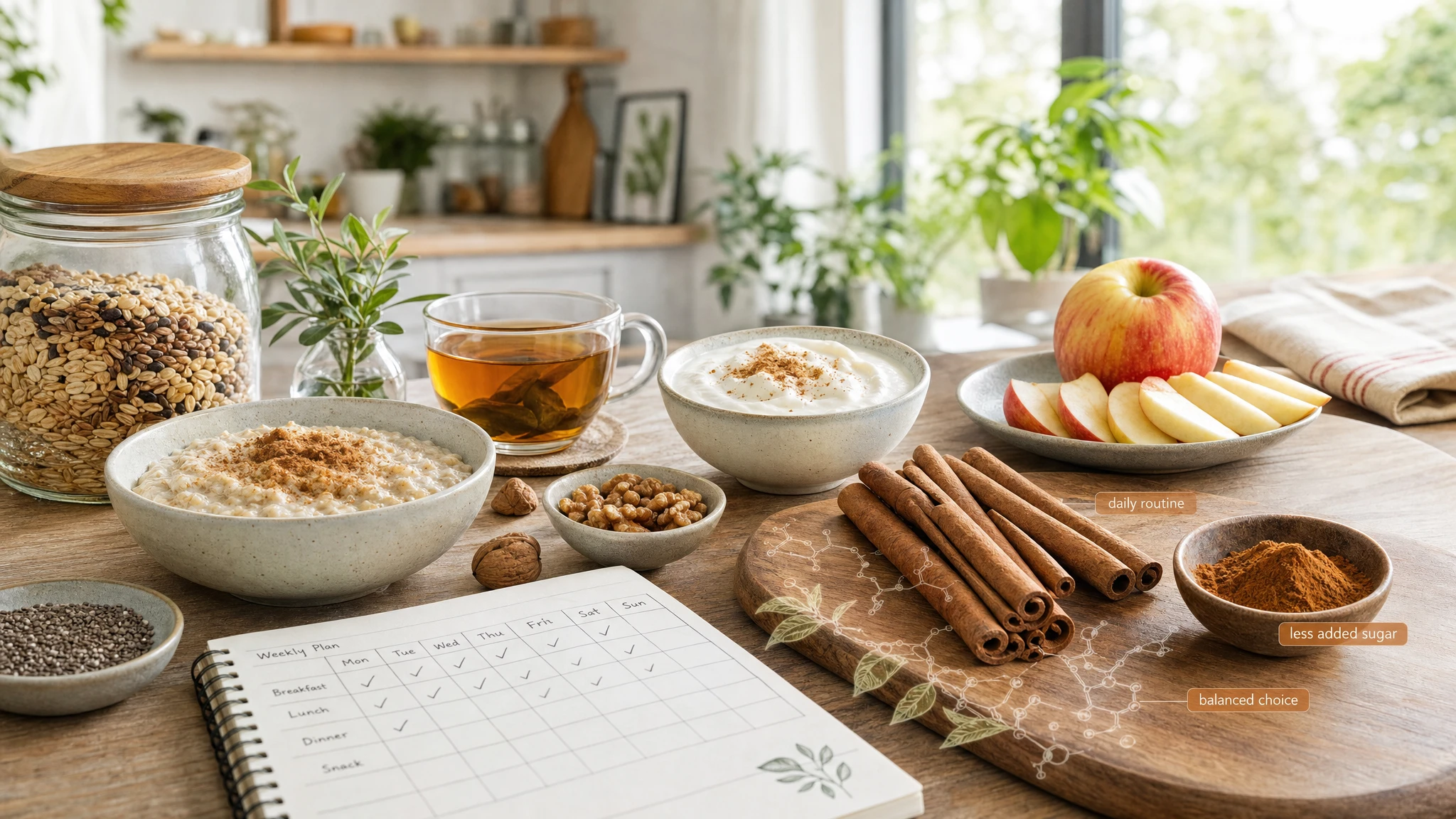
Cinnamon as a functional spice is of interest in preventive nutrition because it combines taste, consistent use, and diet quality. In prevention, it is not just about the individual food, but also about following a healthy diet over time. This spice can add more flavor to simple dishes and encourage more consistent choices. It can be useful, for example, when you want to reduce added sugars and highly processed foods.
Cinnamon enters preventive nutrition when it helps you follow a healthy and consistent eating regimen. In this sense, it can act as a functional food (food with potential beneficial effects beyond its nutritional value). It does not count for an isolated effect, but because it can fit into a more structured dietary style. The main guidelines on healthy diets and prevention support this type of approach [1][2].
Its value should therefore be viewed as a practical aid for a preventive diet. It cannot replace healthy habits. The following points explain three aspects:
- Cinnamon can help maintain dietary choices over time.
- Taste promotes adherence more than the individual ingredient.
- The type of diet influences the potential role of the spice.
Cinnamon can be relevant in prevention when used consistently within a realistic diet. The following three points show the role of adherence, dietary context, and potential support for metabolism.
How cinnamon can support a preventive diet
The relationship between cinnamon and prevention primarily concerns its practical use in the diet. A popular spice can add flavor to simple meals and make them easier to stick with. Its role is not to cure, but to support adherence (the ability to maintain a choice over time). This aspect matters in preventive nutrition, where consistency often weighs more than an intense but short-lived change.
A crossover study (in which each person tries both treatments) lasted 4 weeks. In adults with prediabetes, 24-hour glucose levels were lower with the spice compared to the placebo [7]. This finding concerns high-risk individuals but comes from a short period. On its own, therefore, it does not prove a stable clinical effect. However, it suggests potential support in diets focused on the glycemic response (variation in blood sugar), provided the use is regular. The comparison therefore helps to distinguish an interesting signal from a definitive conclusion.
Why taste and adherence matter more than the individual ingredient
In preventive nutrition, taste matters because it influences the sustainability of dietary choices. Cinnamon, a functional spice, can make simple, less sweet foods more palatable. In this way, it can help maintain a consistent diet over longer periods. A pleasant spice also reduces monotony and makes it easier to repeat beneficial habits. This potential role, however, does not equate to an independent curative effect.
A 2015 review critically evaluated experimental and clinical studies on outcomes related to glycemia. The analysis indicates that scientific interest focuses on repeated use and its relationship with adherence, rather than occasional consumption [8]. However, the studies differed in terms of the groups examined, the form of intake, and duration. For this reason, the results were not always comparable. The differences between the studies therefore require a cautious interpretation of the available data. The practical message is clear: maintaining a healthy habit matters more than any single ingredient, even a promising one.
In which dietary patterns does cinnamon make the most sense
Cinnamon is increasingly used in diets based on quality, low sugar, and simple dishes. In these cases, it does not determine the value of the diet, but it can make it more consistent. It can add flavor to yogurt, cereals, and other homemade dishes without excessive sweetness. This is where its profile as a natural nutraceutical (a food or natural substance studied for potential health effects) emerges. However, it remains a minor aid within a well-structured diet.
A 2020 meta-analysis combined data from randomized trials on cardiometabolic biomarkers (values related to the heart and metabolism). The study examined the antioxidant and anti-inflammatory properties of the spice. However, the results were varied and did not apply in the same way to the entire population [9]. The potential benefit therefore requires caution and may depend on the diet, frequency of use, and the individual. Prevention stems from the overall context, not from the spice alone.
Cinnamon: biological interest and daily use
The biological interest of cinnamon emerges with regular dietary use, not with an occasional addition. As a functional spice, cinnamon can support choices suitable for a diet focused on prevention. However, its use must remain realistic, consistent, and always linked to a meal.

Every day, cinnamon combines flavor, convenience, and potential nutritional value, even in small, regular doses. It does not solve problems on its own, but it can be useful in a preventive diet. It can replace less healthy additions or facilitate simple recipes with less sugar. It should be considered part of a mindful diet, not a standalone cure.
This perspective explains why cinnamon as a functional spice is defined as a functional food or natural nutraceutical. This does not mean attributing extraordinary effects to it, but rather evaluating the potential contribution of healthy spices. Over time, these spices can improve the overall quality of the diet. The context of use, frequency, and type of preparation matter. These aspects define its practical value. The following section translates this idea into a clinical reading.
From this idea, some concrete points for daily use emerge:
- Its biological interest takes shape in simple, regular, and easy-to-maintain dietary habits.
- Daily use should always be evaluated within the context of a meal, not as an isolated choice.
- Cinnamon can accompany dietary choices that are better suited to prevention goals.
- Its use makes sense if it remains realistic, consistent, and adapted to everyday life.
The interest in cinnamon becomes clearer when observing its use in the daily diet. The following points combine context, clinical evidence, and nutritional value in everyday life.
How to translate the biological interest of cinnamon into your daily diet
The value of cinnamon emerges when the spice is incorporated into simple, concrete, and repeated habits. It can add flavor to breakfast and help reduce the use of added sugars. Its utility, therefore, does not depend on a single effect on the body. Instead, it can foster habits more in line with a preventive diet. A small dose makes a meal more enjoyable and facilitates the consistent use of this healthy spice.
A clinical study on healthy adults used 1,200 mg per day of Ceylon cinnamon. It found favorable effects on blood pressure and lipids (fats present in the blood) [10]. The data indicates a possible effect on metabolism, that is, on the processes that manage energy and nutrients. However, it does not allow for extending the result beyond the people studied or to every home use. This clarifies why dosage, regularity, and participant characteristics are essential for interpreting the result. The spice therefore remains an aid in the diet, not an independent solution.
Why functional spices matter above all in context
Healthy spices matter most in the meal in which they are used every day. Their role depends on the quality of the food, the frequency of use, and the sugars present. Cinnamon, therefore, should not be considered an ingredient isolated from the rest of the diet. It is part of a broader pattern in which flavor can encourage simple recipes. However, these choices must remain suited to individual needs and health goals.
A 2014 review described the spice as a medicinal plant with many possible actions. The studies examined indicated antioxidant, anti-inflammatory, antidiabetic, and hypolipidemic (related to the reduction of blood fats) activities [11]. However, the review summarizes various mechanisms and does not demonstrate every possible use in food. For this reason, the actual meal counts, while without context, the term natural nutraceutical can remain vague. The term therefore describes a potential interest that must be interpreted in light of the available evidence. In the right framework, the link between diet and prevention emerges instead.
What is the value of cinnamon beyond its simple aroma
The value of cinnamon beyond its simple aroma lies in the fact that a spice can also have biological significance, not just sensory appeal. In a daily diet, this means combining pleasure and function, without turning cinnamon into a remedy. Its profile becomes interesting when considered as part of a functional food, capable of supporting more mindful choices and reinforcing the idea of cinnamon and prevention when viewed with caution.
A trial with 3 g per day did not find sufficient evidence to support the use of cinnamon in the prevention or treatment of metabolic diseases [12]. Another study tested 1 g per day for 2 months in women with symptoms of early menopause, but the data remains limited to that context and does not change the general message [13]. Here, too, the limit is clear: the value of the spice is real, but it should not be overestimated beyond the available evidence.
Summary of scientific evidence
This summary collects the most useful data from the provided bibliography and distinguishes between guidelines, reviews, and clinical studies. It shows which signals are most consistent and where, instead, the results remain uncertain or conflicting.
| Publication year | Area studied | What the studies indicate |
|---|---|---|
| 2013 | Type 2 diabetes | results vary, but indicate potential interest for glycemia and lipids [7] |
| 2014 | General biological mechanisms | studies indicate antioxidant and anti-inflammatory effects, but do not provide definitive clinical proof [6] |
| 2015 | Overall glycemic outcomes | the different methods used in the studies require a cautious interpretation of the data [8] |
| 2017 | Safety and cardiovascular parameters | some outcomes show a consistent signal, which should not be automatically extended to the general population [5] |
| 2019 | Traditional use and pharmacological interpretation | various areas of interest have emerged, though they are linked to the context and form of intake [14] |
| 2020 | Inflammation and oxidative stress | data vary, but indicate potential interest for the heart and metabolism [9] |
| 2024 | Glycemic control | cinnamon may be associated with better glycemic control in some clinical contexts [3] |
| 2024 | Glycemic response in prediabetes | studies indicate a potentially useful effect on daily glycemia [4] |
Editorial interpretation of the evidence
Reading the studies collected in this article, I found that cinnamon sparks concrete scientific interest, especially regarding metabolism. Reviews and clinical trials show potential benefits for glycemia and lipids in very specific contexts. The signals observed primarily concern people with difficulties managing sugars. However, the outcomes vary between groups and do not allow me to consider the spice as an independent intervention. The most solid finding I have gathered therefore concerns the relationship between cinnamon, diet, and metabolism, rather than a single clinical effect.
The main limitation I encountered stems from the many differences between the studies: species, dose, duration, participants, and product type all vary. Many studies are short-term, include few people, and measure intermediate values rather than long-term benefits. Furthermore, I noted that a large portion of the data concerns people with metabolic disorders and does not apply directly to everyone. The interest is therefore credible, but the evidence is not yet consistent enough to draw stronger conclusions.
Conclusions and editorial summary
Cinnamon is called a functional spice because, beyond its aroma, it can be of concrete interest for nutrition. From the studies examined here, I have seen a possible role in metabolism, especially regarding glycemia and lipids—that is, sugars and fats in the blood. However, the results vary and do not allow me to draw conclusions that are valid for everyone. What matters most is the diet as a whole: a spice cannot improve it on its own, but it can support healthy and lasting habits.
Cinnamon shows me how nutrition, metabolism, and prevention can meet in everyday choices. Its value does not stem from exceptional effects, but from the role it can play in a well-composed diet. This reading helps me discuss it with rigor, without making promises and without reducing the topic to just its aroma. In this space, the spice maintains its value both for science and for the reader.
Final critical note
In the studies collected here, I have observed a genuine biological interest, but I have not found a value that is equal and certain for everyone. Some research detects useful signals, but the differences between studies make it difficult for me to generalize the results. Furthermore, I have noted that much of the evidence concerns people with metabolic issues rather than the general population. This reduces the strength of the conclusions I can draw. The most solid finding, therefore, is that its role varies depending on the diet, the form used, and the quality of the meals.
References
[1] Healthy diet
[2] Dietary Guidelines for Americans, 2020-2025
[3] The effect of cinnamon supplementation on glycemic control in patients with type 2 diabetes mellitus: An updated systematic review and dose‐response meta‐analysis of randomized controlled trials
[4] Effect of cinnamon spice on continuously monitored glycemic response in adults with prediabetes: a 4-week randomized controlled crossover trial
[5] Evaluation of pharmacodynamic properties and safety of Cinnamomum zeylanicum (Ceylon cinnamon) in healthy adults: a phase I clinical trial
[6] Cinnamon: A Multifaceted Medicinal Plant
[7] Cinnamon Use in Type 2 Diabetes: An Updated Systematic Review and Meta-Analysis
[8] The glycaemic outcomes of Cinnamon, a review of the experimental evidence and clinical trials
[9] Impact of Cinnamon Supplementation on cardiometabolic Biomarkers of Inflammation and Oxidative Stress: A Systematic Review and Meta-Analysis of Randomized Controlled Trials
[10] Dietary Cinnamon Supplementation and Changes in Systolic Blood Pressure in Subjects with Type 2 Diabetes
[11] Anti-inflammatory activity of cinnamon (C. zeylanicum and C. cassia) extracts – identification of E-cinnamaldehyde and o-methoxy cinnamaldehyde as the most potent bioactive compounds
[12] Effect of cinnamon on gastric emptying, arterial stiffness, postprandial lipemia, glycemia, and appetite responses to high-fat breakfast
[13] Cinnamon potential in alleviating early postmenopause symptoms: a randomized clinical trial
Editorial note
Artificial Intelligence was used solely as a tool to support editorial and documentary work. All content, interpretations, bibliographic citations and conclusions have been verified, reviewed and approved by the author, who assumes full scientific responsibility for them.
The manuscript was also subject to independent peer review prior to publication.
To ensure maximum transparency, the article's complete history — including the dates of submission, review, acceptance and publication, as well as information on the peer review process — is available on the dedicated Article History page.