


Fiber and intestinal fermentation: a study on grains, legumes, and tubers
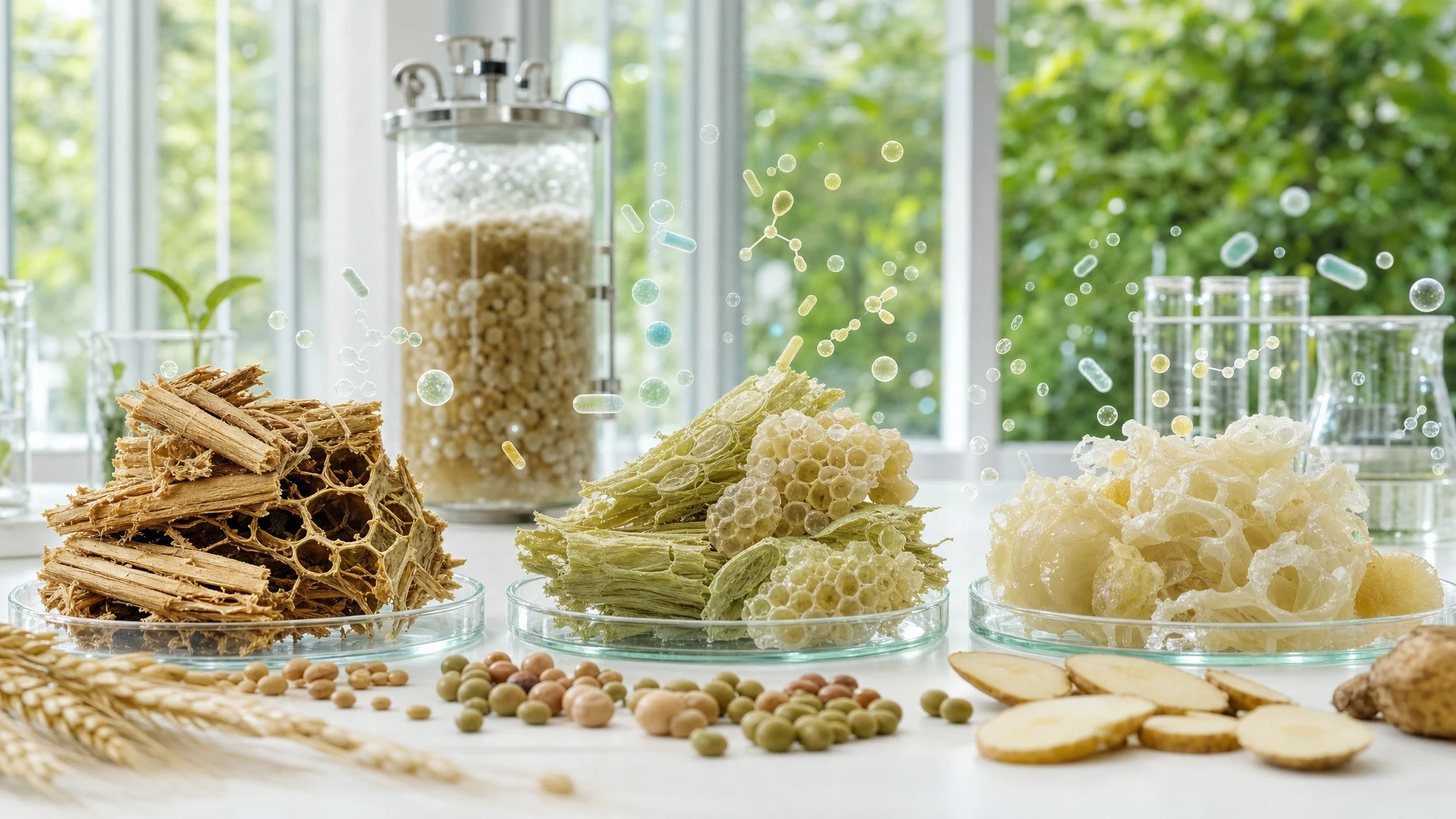
In 2023, the Australia-affiliated researcher Xiong and colleagues, in the journal Carbohydrate Polymers, analyzed how the cell wall composition of grains, legumes, and tubers influences fermentation by the gut microbiota and the production of metabolites in a laboratory system. The data link differences in pectin and lignin to distinct fermentation profiles.
- Published 29/10/2026
- Updated 29/10/2026
- Reviewed 29/10/2026
- Article history
ABSTRACT : WHAT THE SCIENCE SAYS
The study compared cell walls isolated from nine plant-based foods to understand whether their composition alters fermentation by gut bacteria. The results indicate different profiles for grains, legumes, and tubers, particularly regarding the rate of fermentation and the metabolites produced.
The publication studied cell walls from three grains, three legumes, and three tubers in a laboratory setting, incubating them for 48 hours with a fecal suspension obtained from three healthy volunteers. Cell walls are the network that provides shape and support to plants. For the human body, they are largely resistant to initial digestion, but they can become a substrate for microorganisms in the colon. The authors measured fiber composition, gas production, short-chain fatty acids—small molecules generated during fermentation—and changes in the bacterial community. Grain cell walls, rich in lignin and low in pectin, fermented more slowly and produced fewer short-chain fatty acids compared to those of legumes and tubers. Legume cell walls showed a higher relative proportion of propionate, while those of tubers showed a higher relative proportion of butyrate. The result suggests that it is not just the total amount of fiber that matters: the composition and organization of the plant material also guide the microbial response. However, the experimental model does not reproduce the diet, intestinal transit, and biological variability of real people.
What this research analyzed
The 2023 study by Xiong and colleagues examined whether the fibers contained in plant cell walls are utilized in the same way by gut bacteria. They isolated plant cell walls from nine sources: three grains, three legumes, and three tubers. The researchers then compared pectin, lignin, the sugars that make up polysaccharides—that is, complex carbohydrates—and phenolic compounds.
The biological significance is simple: a cell wall richer in components accessible to bacteria can be transformed more rapidly. A structure with more lignin, a rigid plant component, may instead be less available. After incubation with fecal microbiota from multiple samples, the authors measured gas, short-chain fatty acids, and bacterial composition using 16S rRNA gene sequencing, which is used to identify groups of bacteria. The design shows what happens in the experimental container, not in a person's gut.
Research data
Plant cell wall composition modulates the gut microbiota and metabolites in in-vitro fermentation
- Nine isolated cell walls were compared: barley, sorghum, waxy rice, pea, fava bean, mung bean, potato, sweet potato, and yam.
- The fermentation used pooled fecal samples from three healthy volunteers and lasted 48 hours under oxygen-free conditions.
- Cereal cell walls showed lower fermentation and total short-chain fatty acid production compared to legumes and tubers.
What results emerge from the study
Cereal cell walls showed slower transformation and lower production of short-chain fatty acids compared to the walls of legumes and tubers. These metabolites include acetate, propionate, and butyrate; they are microbial products, not nutrients consumed directly through food. Acetate was found to be the primary product in all groups.
From a technical standpoint, cereals contained more lignin and less pectin, while legumes and tubers belonged to the type of cell wall richer in pectin. At 48 hours, legume walls produced more propionate in proportion, about eight percentage points higher than those of tubers. Tuber walls, on the other hand, had a higher relative share of butyrate; in yam, it exceeded 11% of the total short-chain fatty acids. Multivariate analyses also separated the samples according to their botanical origin. These differences describe associations within the experimental system and do not demonstrate clinical effects in humans.
Why this study is relevant
The work clarifies why treating all plant fibers as equivalent can be misleading. Two foods may contain fiber but offer gut bacteria materials that differ in composition, accessibility, and structure. The most useful result is therefore mechanistic: the microbial response depends on the available substrate, not just on the generic food category.
This interpretation is consistent with the observed difference between cell walls rich in lignin and those rich in pectin. Lignin tends to make plant material more resistant, while pectin is a polysaccharide that various bacteria can utilize. The study does not identify a "better" cell wall for health, nor does it establish which food a person should prefer. Rather, it shows that the plant matrix helps determine which metabolites and microbial communities emerge during fermentation.
Study limitations and what it does NOT demonstrate
This is an in vitro experimental study, meaning it was conducted outside of a living organism. Fecal samples from three healthy young volunteers were pooled; this approach reduces the likelihood of observing individual responses. Symptoms, clinical parameters, absorption, intestinal transit, habitual diet, or long-term effects were not evaluated.
Furthermore, the comparison involves isolated cell walls rather than complete meals. Home preparation, chewing, and the interaction with proteins, fats, and other food components can alter what reaches the colon. The data do not prove that lignin is the sole cause of the differences, because pectin, other polysaccharides, and phenolic compounds varied simultaneously. Nor do they allow for the conclusion that an increase in acetate, propionate, or butyrate in the container produces a specific clinical benefit.
Independent confirming evidence
An experiment with 14 plant substrates and fecal samples from three donors confirmed the initial step of the chain: variations in cell wall composition, such as the abundance of arabinan or galactan, were associated with the selective growth of bacterial groups and differences in fermentation products [1]. This work is directly relevant because it uses complex plant material, not just a single purified fiber. The evidence is limited: it remains an in vitro model with few donors and no clinical outcomes.
A second study compared ten structurally different pectins in an artificial colon model. The degree of esterification, branching, and sugar composition were associated with substrate-dependent changes in bacteria and in the cumulative production of short-chain fatty acids [2]. It therefore supports the link between fiber structure, microbial utilization, and metabolites. The number of biological replicates was limited and the material was isolated pectin, so the confirmation for whole foods is indirect.
Bulut and colleagues added an important element: even the physical position of the pectin in a film similar to a cell wall modified the fermentation of microbiota from three donors [3]. The confirmation concerns the accessibility of the fiber. The effect varied among donors and the material was laboratory-designed, so it is not equivalent to a natural plant cell wall.
Conflicting evidence
A relevant finding suggests that composition or architecture should not be considered absolute predictors. In an in vitro fermentation study using porcine fecal inoculum, wheat cell walls, arabinoxylan, beta-glucan, and a mixture of these induced similar microbial communities at the genus level, despite producing different proportions of propionate and butyrate [4]. The transition from structure to microbial community may therefore depend on the type of fiber, the inoculum, and the metric used. This is partial conflicting evidence, as it confirms differences in metabolites but not a clear separation of bacterial groups. The animal model limits direct translation to humans.
Comparative overview
Independent studies that help evaluate how the structure and composition of plant fibers influence fermentation and bacterial communities.
| Publication | Model and sample size | Main result | Relationship to the Xiong study |
|---|---|---|---|
| Solvang et al., 2023 [1] | In vitro fecal fermentation; 14 substrates; 3 donors | Plant composition associated with differences in bacterial growth and metabolites | Direct confirmation, with a significant limitation in sample size |
| Larsen et al., 2019 [2] | Artificial colon model; 10 pectins; 2 biological replicates | Different pectin structures modified bacteria and fermentation products | Indirect confirmation of the role of structure |
| Bulut et al., 2023 [3] | In vitro fecal fermentation; 3 donors | The location of pectin within the matrix selected for different microbial responses | Indirect confirmation of the role of physical accessibility |
| Lu et al., 2021 [4] | In vitro fermentation with porcine fecal inoculum | Similar bacterial profiles across various substrates, but different final metabolites | Partial discrepancy dependent on the model |
Editorial conclusion
The 2023 study by Xiong and colleagues shows that the cell walls of grains, legumes, and tubers do not constitute a uniform material for gut bacteria. In a controlled fermentation system, grain walls, which are richer in lignin and lower in pectin, fermented more slowly and generated fewer short-chain fatty acids. Legumes and tubers, on the other hand, showed distinct metabolic profiles, with relative differences in propionate and butyrate. Independent evidence supports the idea that the composition, physical structure, and accessibility of fiber influence the microbial response. However, results vary according to the substrate and the microbiota used, and one study observed similar bacterial communities despite different metabolites. Overall, the evidence is useful for understanding the mechanisms of fermentation, but it does not allow us to predict the effect of a single food on a person's health.
References
[1] Beyond purified dietary fibre supplements: Compositional variation between cell wall fibre from different plants influences human faecal microbiota activity and growth in vitro
[2] Potential of Pectins to Beneficially Modulate the Gut Microbiota Depends on Their Structural Properties
[3] Matrix-entrapped fibers create ecological niches for gut bacterial growth
Editorial note
Artificial Intelligence was used solely as a tool to support editorial and documentary work. All content, interpretations, bibliographic citations and conclusions have been verified, reviewed and approved by the author, who assumes full scientific responsibility for them.
The manuscript was also subject to independent peer review prior to publication.
To ensure maximum transparency, the article's complete history — including the dates of submission, review, acceptance and publication, as well as information on the peer review process — is available on the dedicated Article History page.