
Scientific Book

Dietary quality in daily prevention

Nutrition is one of the main modifiable factors influencing metabolic and cardiovascular health. Food quality, meal composition, micronutrient intake, and macronutrient distribution contribute to the regulation of glycemia, insulin response, and inflammation. In the book "La scelta di Vivere in Salute o in Malattia" (The Choice to Live in Health or Disease), Dr. A. Colonnese and R. Panzironi explore the relationship between dietary choices, cellular function, and the prevention of chronic diseases through a biological interpretation of nutrition.

Cite this article
Colonnese, A. & Panzironi, R. (2026). Dietary quality in daily prevention. The Choice to Live in Health or in Disease. https://lifesciencehub.info/en/la-scelta-di-vivere-in-salute-o-in-malattia/dietary-quality-in-daily-prevention
The Choice to Live in Health or in Disease · ISBN 979-12-82692-03-8

DOI lsh.en.libro.18

  • Published 05/11/2026
  • Updated 05/11/2026
  • GLYCEMIC INDEX
  • GLYCEMIC LOAD
  • INSULINEMIC POTENTIAL
  • INSULIN RESISTANCE
  • TYPE 2
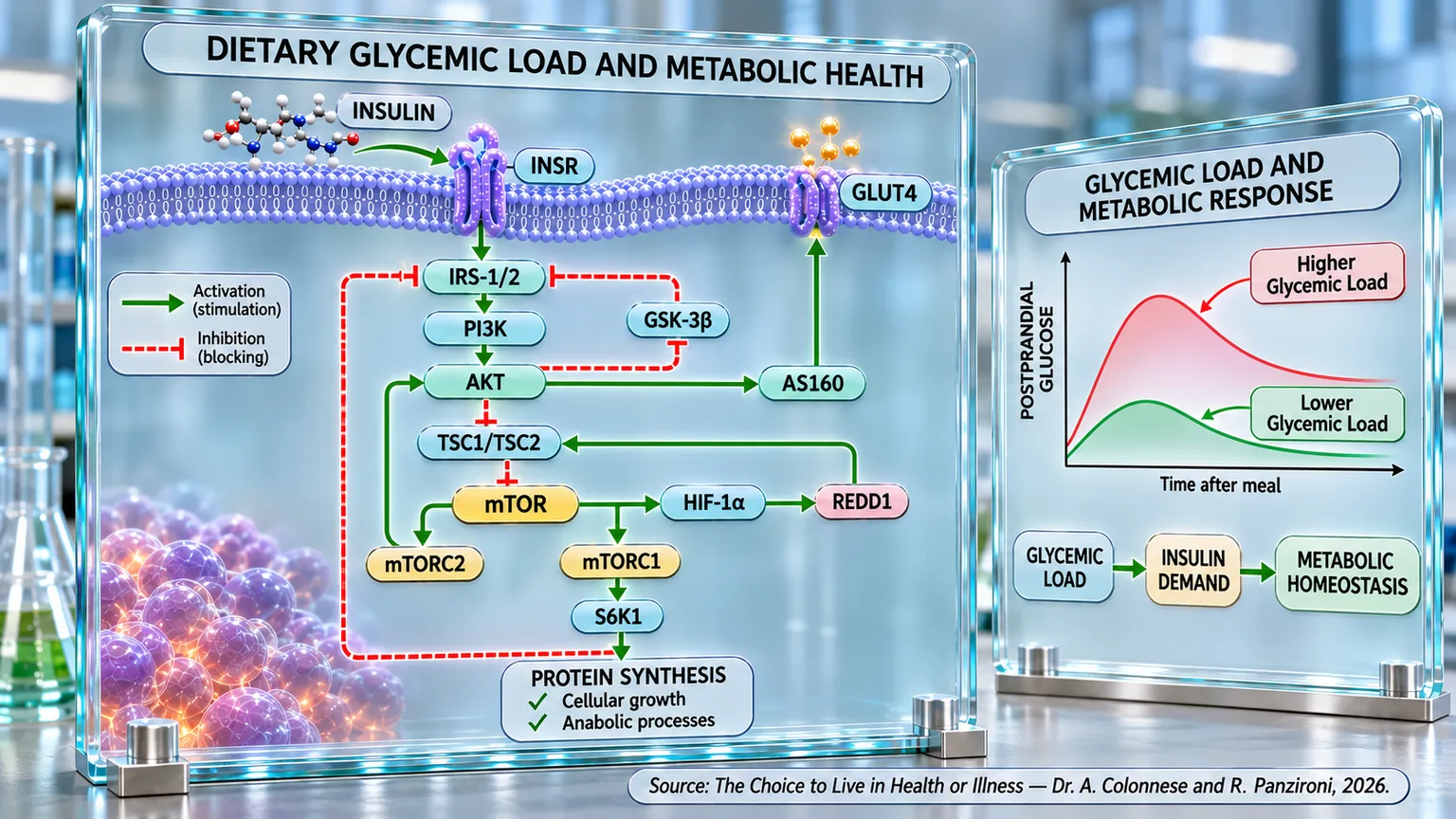
Infographic on cell membrane and insulin signaling, accompanied by postprandial curves for higher and lower glycemic load.
Diagram of the metabolic response to glycemic load: insulin activates INSR, IRS-1/2, PI3K, and AKT, linking mTOR, protein synthesis, and GLUT4 translocation. The graph compares high and low postprandial glycemia and summarizes the sequence of "glycemic load," insulin demand, and metabolic homeostasis.

ABSTRACT

Nutrition influences metabolic risk through glycemic and insulin responses that repeat over time. In the book "The Choice to Live in Health or Disease", Dr. A. Colonnese and R. Panzironi examine the relationships between glycemic index, glycemic load, the insulinemic potential of the diet, and the development of chronic diseases, distinguishing between epidemiological associations and clinical findings.

Large prospective studies associate diets characterized by a high glycemic or insulinemic impact with higher overall, cardiovascular, and oncological mortality. The rapid absorption of carbohydrates leads to glycemic excursions and increased insulin demand; repeated exposure can be accompanied by a deterioration in metabolic regulation. Meta-analysis link high glycemic indices and loads to a higher incidence of type 2 diabetes and, in prediabetes, to a higher probability of progression.

On the cardiovascular side, the associations include coronary heart disease, carotid atherosclerosis, stroke, and small vessel disease of the brain. Oxidative stress, inflammation, and endothelial dysfunction constitute possible pathophysiological links. Prospective studies and neuroimaging investigations also associate dietary glycemic exposure with dementia, Alzheimer's, β-amyloid deposition, and cortical changes, with differences also linked to APOE ε4. In oncology, the associations concern specific neoplasms and sometimes survival; hyperinsulinemia, IGF-1, and PI3K/AKT/mTOR represent plausible mechanisms, not proof of causality. The insulin alterations observed in some autoimmune diseases suggest further interactions, without demonstrating preventive effects of glycemic restriction.

In clinical studies, diets with a low glycemic index and load can improve insulinemia, HOMA-IR, and some inflammatory markers, even independently of weight loss. Low carb diets show possible benefits for glycemia, triglycerides, weight, steatosis, and diabetic control, conditioned by food quality, duration, and adherence. The evaluation of the overall meal remains essential to correctly interpret individual responses over time. Overall, the quality and quantity of carbohydrates contribute to the metabolic response: understanding their effects can guide personalized nutritional choices, without transforming observational associations into preventive certainties.

Nutrition and mortality

Nutrition is one of the main determinants of human health and, at the same time, one of the most modifiable risk factors. Every day, through our dietary choices, the body receives not only energy and nutrients but also metabolic signals capable of influencing the functioning of cells, organs, and the regulatory systems of the entire organism. A poor diet does not exclusively coincide with a caloric excess or weight gain. Even people of normal weight can follow a diet characterized by highly refined foods, rich in rapidly absorbable carbohydrates, which can cause continuous fluctuations in glycemia and insulin secretion. Over time, these repeated metabolic stresses can promote the establishment of biological processes that accelerate the aging of the organism and increase the probability of developing numerous chronic diseases. For this reason, in recent years, scientific research has progressively shifted its focus from the simple quantity of carbohydrates to their metabolic quality, evaluated through parameters such as the glycemic index, glycemic load, and, more recently, the insulinemic potential of the diet. These indicators allow us to estimate how intensely a given dietary pattern is able to stimulate glycemia and insulin secretion after meals, providing information that goes well beyond the simple carbohydrate content of foods. The available evidence now shows increasingly consistently that a diet characterized by a high glycemic index, high glycemic load, or high insulinemic potential is associated with an increase in overall mortality and mortality from specific causes, suggesting that the metabolic quality of the diet represents a fundamental determinant of longevity (Jenkins et al., 2024) [1].

The hypothesis that the quality of carbohydrates can influence the risk of death has a solid physiological basis. Foods with a high glycemic index, in fact, cause a rapid entry of glucose into the bloodstream, causing sharp increases in glycemia. The body reacts by producing large amounts of insulin to quickly bring glycemia back within physiological values. If this mechanism is repeated several times a day, for years or even decades, cells are exposed to a chronic state of hyperinsulinemia and continuous metabolic oscillations that promote oxidative stress, low-grade inflammation, the formation of advanced glycation end-products (substances that form from the prolonged glycation of proteins or lipids), endothelial dysfunction, and progressive insulin resistance. It is a process comparable to that which occurs in a car forced to accelerate and brake continuously in city traffic: the engine continues to run, but the wear and tear on its components increases much more rapidly compared to a regular and constant pace. Similarly, a metabolism continuously subjected to rapid glycemic swings tends to accumulate damage that, in the long term, favors the development of major chronic diseases (Kim & Je, 2023) [2]; (Zhao et al., 2022) [3].

One of the most authoritative confirmations of this relationship comes from the recent meta-analysis coordinated by Jenkins and collaborators, which considered exclusively large prospective cohorts comprising at least one hundred thousand participants, from different geographical areas and analyzed with particularly rigorous methodological criteria. The analysis demonstrated that people belonging to the groups with the highest dietary glycemic index show an 8% increase in the risk of all-cause mortality compared to those who follow a low glycemic index diet. Although an 8% increase may appear modest at an individual level, it assumes enormous importance when related to the entire world population, considering that billions of people consume highly refined foods daily. The same study also highlighted how a high glycemic index simultaneously increases the risk of type 2 diabetes, cardiovascular diseases, and diabetes-related cancers, suggesting that the greater mortality observed is likely the consequence of the cumulative effect exerted on multiple chronic diseases rather than on a single organ or system (Jenkins et al., 2024) [1].

A prospective meta-analysis conducted on over 527,000 participants and nearly 49,000 deaths associated a high glycemic index with a 10% increase in all-cause mortality. The relationship does not appear linear: beyond a certain glycemic index threshold, the risk increases more markedly. A high glycemic index or load was also found to be associated with higher mortality from stroke. Postprandial hyperglycemia can, in fact, promote oxidative stress, endothelial dysfunction, arterial stiffness, and the progression of atherosclerosis, contributing in the long term to the appearance of cerebrovascular events and an increase in mortality risk (Kim & Je, 2023) [2].

The evidence emerging from meta-analyses is also confirmed by large prospective studies conducted in different populations, an element that significantly strengthens the reliability of the conclusions. An example is the Japan Public Health Center-based Prospective Study, which followed over 72,000 Japanese adults for more than twenty years, accumulating over 1.24 million person-years of observation. During this long period, more than twelve thousand deaths were recorded, allowing researchers to evaluate with high precision the association between the quality of carbohydrates consumed and the risk of death: the results showed that subjects belonging to the quartile (division of data into four groups of equal size) with the highest glycemic index had a 14% higher risk of overall mortality compared to those who followed a diet characterized by a lower glycemic index. Even more marked were the associations with the main causes of cardiovascular death: the risk of mortality from circulatory system diseases increased by 28%, that for heart disease by 33%, and that for cerebrovascular diseases by 32%. The study also highlighted a 45% increase in mortality from respiratory diseases, suggesting that the effects of a diet characterized by continuous glycemic spikes can extend well beyond the cardiovascular system, involving multiple organs through common mechanisms of chronic inflammation and oxidative stress (Huang et al., 2021) [4].

Comparable results were also observed in the international PURE study, one of the largest epidemiological investigations ever conducted on the subject, which involved over 137,000 adults from five continents characterized by deeply different dietary traditions, economic conditions, and lifestyles. This aspect is of particular importance because it allows us to verify whether the observed associations are limited to specific populations or represent a universal biological phenomenon. After nearly ten years of follow-up (a period of monitoring and observation over time), the researchers documented over eight thousand deaths and more than eight thousand major cardiovascular events. Participants who habitually consumed foods with a high glycemic index showed a significant increase in the risk of the composite endpoint (an indicator that combines multiple clinical results into a single study outcome) consisting of cardiovascular death, myocardial infarction, stroke, heart failure, and all-cause mortality. The association was evident both in subjects already affected by cardiovascular diseases, in whom the risk increased by 51%, and in apparently healthy people, who still showed a 21% increase. This indicates that the unfavorable effects of a high glycemic index diet do not only concern those who already have a pathology, but begin to act many years earlier, contributing to the development of the disease itself (Jenkins et al., 2021) [5].

While the studies described so far have focused primarily on the glycemic index and glycemic load, a further perspective was offered by the Nurses' Health Study and the Health Professionals Follow-up Study, which introduced the concept of the insulinemic potential of the diet. This parameter does not only evaluate the glycemic response of foods, but directly estimates their ability to stimulate chronic insulin secretion through the Empirical Dietary Index for Hyperinsulinemia (EDIH). Analyzing over 106,000 healthcare professionals followed for thirty years, the researchers observed more than 38,000 deaths, documenting a linear relationship between the increase in the insulinemic potential of the diet and the risk of mortality. Participants belonging to the quintile with the most insulinemic diet had a 33% higher risk of all-cause death, a 37% increase in cardiovascular mortality, and a 20% increase in cancer mortality compared to those who followed a diet with lower insulin stimulation (Wan et al., 2022) [6].

Overall, the evidence from meta-analyses, large prospective cohorts, and international studies outlines an extremely consistent picture. Populations from different continents, with different dietary traditions and followed for very long periods, show the same trend: a diet characterized by a high glycemic index, high glycemic load, or high insulinemic potential is systematically associated with an increase in mortality. In this view, the quality of carbohydrates and the ability of the diet to limit continuous glycemic fluctuations play a central role in strategies for preventing premature mortality, confirming that longevity depends not only on the amount of food consumed, but above all on how that food interacts daily with our metabolism.

Mortality, however, represents only the final outcome of pathological processes that can develop and progress over many years. To fully understand the significance of these associations, it is therefore necessary to take a further step: from mortality to the risk of developing specific pathologies. In the following paragraphs, we will analyze separately the evidence linking the glycemic index, glycemic load, and insulin response of the diet with the incidence of diabetes, cardiovascular diseases, neurodegenerative diseases, cancers, and autoimmune diseases. The goal will be to understand how and to what extent repeated exposure to glycemic and insulin stimuli can represent a common element capable of inserting itself, through different mechanisms, into the natural history of conditions that are apparently very distant from each other.

Diabetes

Type 2 diabetes, which we covered in great detail in the chapter dedicated to it, represents one of the most significant health challenges of our time. Its prevalence has increased steadily over the last few decades, in parallel with the transformation of dietary habits and the growing availability of highly refined foods. For many years, attention focused almost exclusively on caloric excess and obesity as the primary drivers of the disease. Although these factors remain central, scientific research has progressively demonstrated that the metabolic quality of carbohydrates also exerts a decisive influence on the onset of diabetes. Not all carbohydrates, in fact, are handled by the body in the same way. Some release glucose slowly, allowing for a gradual insulin response; others, however, cause a rapid increase in glycemia, forcing the pancreas to perform intense secretory work. If this phenomenon is repeated daily for many years, the system responsible for glucose control can progressively lose efficiency, first favoring insulin resistance and subsequently the functional exhaustion of pancreatic β-cells. It is a process that resembles a pump forced to operate constantly at its maximum capacity: initially, it manages to meet the demand, but over time, wear and tear inevitably compromises its performance. The most recent scientific evidence indicates that this continuous exposure to high glycemic and insulin spikes represents one of the main links between diet and the development of type 2 diabetes (Jenkins et al., 2024) [1].

One of the most solid confirmations comes from the recent meta-analysis by the Richard Doll Consortium, which included exclusively large prospective cohorts comprising at least one hundred thousand participants. The choice to limit the analysis to such large-scale studies allowed for a significant reduction in the risk of random errors and the achievement of extremely robust results. The researchers observed that people who habitually consumed diets characterized by a high glycemic index had a 27% higher risk of developing type 2 diabetes compared to those who followed a low glycemic index diet. A high glycemic load was also associated with a significant increase in risk, confirming that it is not only the speed at which glucose enters the blood that matters, but also the total amount the body must manage after each meal. A particularly interesting aspect of the study concerns the comparison with other dietary patterns considered healthy. The authors observed that the benefits obtained by reducing the glycemic index and glycemic load were substantially comparable to those derived from a high consumption of dietary fiber and whole grains. This suggests that a portion of the protective effects traditionally attributed to these foods derives precisely from their ability to slow down glucose absorption, attenuate glycemic spikes, and reduce the postprandial insulin demand (the amount of insulin required by the body after a meal) (Jenkins et al., 2024) [1].

The conclusions of the meta-analysis are confirmed by one of the largest international prospective studies ever conducted on the subject, the Prospective Urban Rural Epidemiology (PURE) study, which involved over 127,000 adults from twenty countries across five continents. This study is of particular importance because it demonstrates that the association between carbohydrate quality and diabetes is not an exclusive characteristic of Western populations, but a phenomenon observable in extremely different dietary cultures. After nearly twelve years of observation, during which over seven thousand new cases of diabetes were diagnosed, it emerged that subjects in the quintile with the highest glycemic index had a 15% higher risk compared to those with the lowest values, while a high glycemic load increased the risk by 21%. Even more interesting is the fact that the association was significantly more pronounced in people with a high body mass index. Excess adipose tissue makes cells less sensitive to the action of insulin; consequently, when a high glycemic index diet is combined with obesity, the pancreas is forced to produce even greater quantities of the hormone to keep glycemia stable. This creates a vicious cycle in which insulin resistance, hyperinsulinemia, and poor-quality nutrition feed each other, accelerating the onset of the disease (Miller et al., 2024) [8].

Another original contribution to the understanding of this phenomenon comes from the Tehran Lipid and Glucose Study, which expanded the concept of the metabolic quality of the diet by introducing, alongside the glycemic index and glycemic load, the insulin index and insulin load. The latter describe the ability of foods to directly stimulate insulin secretion, regardless of their carbohydrate content. The study, conducted on adults initially free of diabetes and followed for over eight years, demonstrated that all four of these indicators are independent predictors of the development of the disease. However, the most relevant data concerns the glycemic load and the insulin load, which proved to be the indicators with the greatest predictive power. Participants in the tertile with the highest glycemic load had a risk of developing diabetes more than three times higher than those with the lowest glycemic load. Similarly, a high insulin load was also strongly associated with the incidence of the disease, suggesting that the continuous secretory stimulus imposed on the pancreas represents a fundamental element in the pathophysiology of type 2 diabetes (Teymoori et al., 2021) [7].

Continuing the analysis of the available evidence, a particularly relevant aspect emerges: the relationship between carbohydrate quality and diabetes is not a simple statistical association, but meets the main criteria used in epidemiology to define a causal relationship. To address this issue, Livesey and collaborators applied the nine Bradford-Hill criteria, which have been considered the methodological reference for decades to establish whether a specific factor directly contributes to the development of a disease. The analysis integrated data from prospective studies, clinical trials, pathophysiological research, and meta-analyses, reaching a particularly significant conclusion: both the glycemic index and the glycemic load meet all the criteria required to be considered authentic causal factors in the development of type 2 diabetes. In other words, the available evidence does not simply indicate that people who follow a high glycemic index diet develop diabetes more frequently, but suggests that this type of diet directly contributes to the onset of the disease (Livesey et al., 2019) [10].

The authors highlighted that the association between glycemic index, glycemic load, and diabetes is reproducible in different populations and follows a dose-response relationship: as the glycemic index and glycemic load increase, the risk of disease grows progressively. The relationship also presents pathophysiological plausibility, since repeated glycemic spikes favor hyperinsulinemia, oxidative stress, inflammation, reduced insulin sensitivity, and deterioration of pancreatic β-cells. Intervention studies also support this interpretation, showing that low glycemic index diets improve glycemic control, glycated hemoglobin, and insulin sensitivity. Overall, this evidence reinforces the role of carbohydrate quality in metabolic evolution (Livesey et al., 2019) [10].

The same line of research produced another particularly rigorous meta-analysis, in which the authors addressed one of the main criticisms leveled at previous epidemiological studies: the quality of the tools used to assess diet. By limiting the analysis exclusively to studies that used previously validated and methodologically reliable dietary questionnaires, the statistical heterogeneity was almost completely reduced and the associations became even more robust. It emerged that every ten-unit increase in the glycemic index increased the risk of diabetes by 27%, while an increase of 80 grams per day in the glycemic load resulted in a 26% increase in risk. Even more impressive are the dose-response analyses: comparing people with the lowest dietary exposures to those characterized by the highest glycemic index or glycemic load values, the overall risk of developing diabetes was nearly doubled. This data demonstrates how the deterioration of glucose metabolism is not the result of a sudden threshold, but the consequence of a progressive process that accompanies the increase in metabolic exposure over the years (Livesey et al., 2019) [9].

The practical implications of these results become particularly evident when analyzing people who are in the intermediate phase between normality and overt diabetes. The prospective study conducted by He and collaborators followed 640 subjects with prediabetes for five years, a condition in which glucose regulation is already altered but metabolic damage may still be reversible. During the observation period, both new cases of diabetes and numerous subjects who regained normal glycemic regulation were recorded. The results showed with great clarity that the glycemic load of the diet represents one of the main determinants of this evolution. Participants in the group with the highest glycemic load had an 85% higher risk of progression to diabetes compared to those who followed a low glycemic load diet. In parallel, the chances of returning to normal glucose homeostasis were reduced by approximately 35%, demonstrating that the quality of carbohydrates influences not only the onset of the disease but also the possibility of reversing the pathological process in its initial stages (He, 2018) [11].

This study conveys an extremely important message from a clinical perspective as well. Prediabetes is not a condition inevitably destined to evolve into overt diabetes. On the contrary, nearly two hundred and fifty participants managed to regain normal glycemic regulation during the follow-up, demonstrating that the natural history of the disease can be modified through targeted lifestyle interventions. Among these, reducing the glycemic load emerges as one of the most effective strategies. Limiting the consumption of highly refined foods, sugary drinks, and products rich in rapidly available starches, while favoring foods naturally rich in dietary fiber and characterized by a more gradual glycemic response, allows for the reduction of the daily metabolic stress to which the pancreas and peripheral tissues are subjected. In other words, improving the quality of carbohydrates does not simply mean controlling glycemia after a single meal, but progressively modifying the metabolic environment in which the disease develops.

Taken together, the evidence from meta-analyses, international prospective studies, causality assessments, and research conducted on subjects with prediabetes converges toward an extremely solid conclusion: type 2 diabetes does not depend exclusively on excess carbohydrates or total energy intake, but also on the metabolic quality of the foods consumed and their ability to repeatedly stimulate glycemia and insulin secretion. The glycemic index, glycemic load, and insulinemic potential of the diet describe different but complementary aspects of the same biological phenomenon, namely the metabolic load imposed daily on the body. Reducing this load means limiting continuous glycemic excursions, preserving pancreatic β-cell function for longer, maintaining better insulin sensitivity, and preventing progression toward diabetes. The knowledge available today suggests, therefore, that the quality of carbohydrates should be considered one of the fundamental pillars of type 2 diabetes prevention, on par with body weight control and physical activity.

Cardiovascular diseases

Cardiovascular diseases continue to be the leading cause of death worldwide and are the result of a pathological process that develops slowly over many years. Although risk factors such as high blood pressure, dyslipidemia, smoking, and diabetes have long been recognized as fundamental determinants of cardiovascular disease, the role played by the metabolic quality of diet has emerged with increasing clarity over the last few decades. In particular, the glycemic index and glycemic load of the diet have proven to be important indicators of the ability of foods to induce repeated glycemic and insulin excursions which, over time, contribute to vascular damage. In fact, every episode of postprandial hyperglycemia represents a genuine stressor for the endothelium, the thin layer of cells that lines the inside of all blood vessels and regulates their proper functioning. If such stimuli are repeated daily for years, the endothelium progressively loses its ability to maintain vascular tone, counteract inflammation, and prevent the adhesion of inflammatory cells to the arterial wall. This creates the ideal environment for the onset of atherosclerosis, a chronic process in which inflammation, oxidative stress, and metabolic alterations feed into each other, favoring the appearance of ischemic heart disease, arterial stenosis, and cerebrovascular diseases (Livesey and Livesey, 2019) [12].

One of the most solid demonstrations of this relationship comes from the dose-response meta-analysis conducted by Livesey and colleagues, which included exclusively prospective studies characterized by high methodological quality and previously validated dietary assessment tools. By analyzing populations from Europe, North America, and East Asia, with an average follow-up of about eleven years, the authors observed that every 65-gram-per-day increase in glycemic load was associated with a 44% increase in the risk of developing coronary heart disease, while a ten-unit increase in the glycemic index resulted in a 24% increase in risk. Even more significant was the behavior observed along the entire range of dietary exposure. Through dose-response analysis, it emerged that cardiovascular risk increases progressively as the glycemic index and glycemic load increase, without showing a real safety threshold. This means that cardiovascular damage does not appear suddenly above a certain value, but increases gradually as a function of chronic metabolic exposure, just as it does for other important risk factors such as blood pressure or LDL cholesterol (Livesey and Livesey, 2019) [12].

Particularly relevant is the fact that the authors subjected these results to the Bradford-Hill criteria, which are universally used to evaluate the probability of a causal relationship between an exposure and a disease. All the main criteria were satisfied. The association was strong, consistent across different studies, observed exclusively after dietary exposure, characterized by a clear dose-response relationship, and supported by solid pathophysiological mechanisms. Furthermore, nutritional interventions aimed at reducing the glycemic index had already been shown to improve numerous cardiovascular risk factors, including body weight, glycated hemoglobin, waist circumference, and lipid profile. Even the pharmacological analogy was consistent: drugs such as acarbose, which slow the intestinal absorption of carbohydrates by reducing the postprandial glycemic load, have been associated with a decrease in the incidence of cardiovascular events. The set of these evidences therefore suggests that the quality of carbohydrates represents not only an epidemiological marker, but a true biological determinant of ischemic heart disease (Livesey and Livesey, 2019) [12].

Atherosclerosis constitutes the main mechanism through which these effects translate into clinical events. Traditionally, it was believed that this process depended almost exclusively on the accumulation of atherogenic lipoproteins in the arterial wall. Today, however, it is clear that postprandial hyperglycemia and chronic hyperinsulinemia actively participate in the formation and progression of atherosclerotic plaque. The study conducted by Peng represents one of the first direct demonstrations of this phenomenon. By analyzing 669 patients hospitalized for acute ischemic stroke, the authors evaluated the presence of carotid atherosclerotic stenosis using CT angiography (a CT scan that allows for detailed observation of arteries and veins) and related it to the quality of the habitual diet. The results showed that subjects belonging to the quartile with the highest glycemic index had a more than double probability of developing significant carotid stenosis compared to those with the lowest glycemic index. Similarly, a high glycemic load increased the probability of having atherosclerotic stenosis by about 80%. This is a particularly important finding because it demonstrates that the metabolic quality of the diet does not only influence the risk of final cardiovascular events, but is directly associated with the presence of the anatomical lesion responsible for arterial obstruction (Peng et al., 2020) [14].

The consequences of chronic exposure to a high glycemic response are not limited to the large arteries, but also affect the delicate cerebral vascular system. The prospective EPICOR study, conducted within the Italian EPIC cohort, provided one of the most solid demonstrations of this association by analyzing over 44,000 men and women followed for about eleven years. During the follow-up, 355 cases of stroke were recorded, allowing for a precise evaluation of the relationship between carbohydrate quality and cerebrovascular risk. The results showed that subjects belonging to the quintile with the highest glycemic load had a risk of stroke more than twice as high as those with the lowest glycemic load. A similar association was observed for carbohydrates from high-glycemic index foods, while those from low-glycemic index foods showed no significant increase in risk. This finding is particularly relevant because it highlights that the problem is not represented by carbohydrates themselves, but by their ability to cause rapid and repeated glycemic excursions. In other words, foods containing similar amounts of carbohydrates can exert profoundly different effects on the vascular system depending on the speed at which glucose is absorbed and the resulting insulin response (Sieri et al., 2013) [13].

Detailed analysis of cerebrovascular events also highlighted that glycemic load and carbohydrates from high-glycemic index foods significantly increased the risk of both ischemic stroke and hemorrhagic stroke. In particular, high-glycemic index carbohydrates were associated with an approximately 92% increase in the risk of ischemic stroke, while for hemorrhagic stroke, the risk was more than three times higher compared to subjects with the lowest exposure. These observations suggest that the effect of a metabolically unfavorable diet is not limited to the progression of atherosclerosis, but also involves the stability of the vascular wall and the integrity of the cerebral microcirculation (Sieri et al., 2013) [13].

Further confirmation comes from the large Shanghai Women's Health Study, which followed over 64,000 Chinese women for a period of ten to twelve years. During the follow-up, nearly three thousand strokes and over six hundred related deaths were documented, making this research one of the most extensive ever conducted on the relationship between carbohydrate quality and cerebrovascular diseases. In this population as well, characterized by a high consumption of white rice and refined grains, a clear association emerged between high glycemic index, high glycemic load, and an increased risk of total, ischemic, and hemorrhagic stroke. Perhaps the most interesting aspect of the study concerns the distinction between the quantity and quality of carbohydrates. Contrary to what one might hypothesize, the total intake of carbohydrates showed no significant relationship with the risk of stroke. Instead, the risk increased when these carbohydrates came primarily from highly refined foods, such as white rice, white bread, and refined flours. This result further reinforces the concept that the main determinant is not represented by the total quantity of carbohydrates ingested, but by their ability to generate rapid oscillations in glycemia and insulinemia (Yu et al., 2016) [15].

The alterations, however, do not only concern the large cerebral arteries. The study by Song and colleagues demonstrated that a high dietary glycemic load is also closely associated with the presence and severity of small vessel disease of the brain, a condition frequently responsible for lacunar strokes (small strokes due to the occlusion of a small cerebral blood vessel), cognitive decline, and vascular dementia. By analyzing patients hospitalized for a first ischemic stroke and undergoing brain MRI, the authors observed that subjects in the quartile with the highest glycemic load had a more than three-fold risk of developing extensive white matter lesions (a collection of nerve fibers that transmit signals between different areas of the nervous system) and cerebral microbleeds, as well as a significant increase in the frequency of silent lacunar infarcts and alterations of perivascular spaces (spaces around cerebral vessels involved in fluid circulation). Once again, glycemic load proved to be a more powerful indicator than the glycemic index alone, probably because it simultaneously considers both the quality and quantity of the carbohydrates actually consumed. According to the authors, repeated glycemic excursions promote the glycation of proteins, increase the production of free radicals, compromise the endothelial function of small vessels, and alter the integrity of the blood-brain barrier (a selective filter that protects the brain from potentially harmful substances), creating the conditions for the progression of cerebral microvascular damage (Song et al., 2018) [16].

Taken together, these findings outline an extremely consistent picture. Large meta-analyses, prospective population studies, and research conducted on patients with cardiovascular disease converge on the same conclusion: a diet characterized by a high glycemic index and high glycemic load promotes the progression of atherosclerosis, increases the risk of coronary heart disease, accelerates carotid stenosis, and significantly increases the incidence of ischemic stroke, hemorrhagic stroke, and small vessel disease of the brain. These effects are biologically plausible and are explained by the interaction between postprandial hyperglycemia, chronic hyperinsulinemia, endothelial dysfunction, systemic inflammation, oxidative stress, and alterations in vascular function. Once again, it emerges clearly that it is not sufficient to consider only the total quantity of carbohydrates present in the diet: what determines cardiovascular risk is above all their metabolic quality and the ability to generate continuous glycemic and insulin stress. Reducing daily exposure to such oscillations therefore represents a fundamental nutritional strategy not only for the prevention of diabetes, but also for preserving the integrity of the entire cardiovascular system over time.

Neurodegenerative diseases

The brain accounts for only about 2% of body weight, yet it consumes over 20% of the energy produced by the body daily. To ensure the proper functioning of neural networks, it requires a constant supply of glucose and an extremely efficient system capable of regulating its use. When this delicate balance is disrupted, the consequences are not limited to energy metabolism but involve synaptic plasticity (the ability of connections between neurons to strengthen or weaken over time), memory, learning, and neuronal survival mechanisms. In recent years, the idea that many neurodegenerative diseases are closely linked to alterations in glucose metabolism has emerged with increasing clarity. Cerebral insulin resistance, chronic hyperinsulinemia, and repeated glycemic spikes are now considered important modifiable factors capable of promoting the onset of cognitive decline and Alzheimer's disease. It is no coincidence that the latter is increasingly defined as "type 3 diabetes," precisely to emphasize the central role of the reduced response of neurons to insulin. In this context, the quality of carbohydrates consumed in the diet takes on an importance that goes well beyond simple glycemia control, directly influencing some of the main biological processes involved in neurodegeneration (Novau-Ferré et al., 2025) [17].

One of the most authoritative confirmations comes from a recent prospective analysis conducted within the UK Biobank, which involved over 202,000 adults initially free of dementia and followed for many years. The goal was to understand whether the glycemic index and glycemic load of the diet could influence the risk of developing dementia and Alzheimer's disease. The results showed a clear relationship between the metabolic quality of carbohydrates and brain health; a low glycemic index was progressively associated with a reduction in the risk of dementia up to a threshold value of about 49, while a glycemic load higher than about 111 caused a progressive increase in risk. Beyond this threshold, every further increase in glycemic load was associated with an approximately 15% increase in the risk of developing dementia. Even more interesting is the fact that the same associations were evident for both Alzheimer's disease and vascular dementia (loss of cognitive abilities due to damage to the brain's blood vessels), suggesting that the quality of carbohydrates influences different forms of neurodegeneration through partially common biological mechanisms (Novau-Ferré et al., 2025) [17].

That these processes can manifest many years before the clinical onset of the disease is demonstrated by a study conducted at the University of Kansas on cognitively normal elderly people who underwent positron emission tomography (PET) with Florbetapir for the direct measurement of cerebral amyloid plaques. Despite the absence of cognitive symptoms, over a quarter of the participants already showed significant accumulation of β-amyloid (a protein fragment that, when it accumulates in the brain, can form aggregates and amyloid plaques, typical of Alzheimer's). Analyzing dietary habits, it emerged that subjects with greater amyloid deposition consumed higher amounts of sugars, carbohydrates, and foods characterized by a high glycemic load. After statistically adjusting the results for age, sex, and education level, the high-glycemic-load dietary pattern remained significantly associated with both global amyloid deposition and accumulation in the main brain regions involved in the pathophysiology of Alzheimer's. Total consumption of sugars and carbohydrates also showed a positive correlation with amyloid load, suggesting that diet-induced metabolic alterations may contribute to the initiation of the disease many years before the appearance of the first memory disorders (Taylor et al., 2017) [18].

Further confirmation came from the same research group through a longitudinal study that followed 102 cognitively normal elderly people for twelve months who underwent repeated brain PET scans. Unlike the previous work, this investigation was not limited to evaluating amyloid deposition at a single moment but analyzed its rate of progression over time. The results showed that greater adherence to a diet characterized by a high glycemic index was significantly associated with a more rapid accumulation of β-amyloid in the precuneus, one of the first brain regions involved in Alzheimer's disease. Similarly, higher consumption of sugars and carbohydrates was correlated with the progression of amyloid deposition. The association became even more evident in subjects who already showed initial amyloid accumulation at baseline: in these individuals, the high-glycemic-index diet accelerated the deposition of the peptide even in the posterior cingulate gyrus and the lateral temporal cortex, areas belonging to the so-called Default Mode Network, a brain network characterized by high metabolic activity and particularly vulnerable to neurodegeneration (Taylor et al., 2021) [19].

Alterations in glucose metabolism also seem to exert a particularly marked effect in people genetically predisposed to Alzheimer's disease: the Three-City prospective study, which followed over 2,500 elderly people initially free of dementia for twelve years, evaluated the interaction between the glycemic index of different meals of the day and the presence of the APOE ε4 allele, the main genetic risk factor for Alzheimer's disease. The results showed that in carriers of the ε4 allele, an afternoon snack characterized by a high glycemic index was associated with a more rapid deterioration of visual memory, episodic memory, and global cognitive function, while this relationship was not observed in non-carriers. This difference suggests that genetic makeup may amplify the brain's vulnerability to the metabolic effects of a diet rich in rapidly absorbable carbohydrates. According to the authors, APOE ε4 carriers already present reduced cerebral glucose metabolism, lower mitochondrial efficiency, and alterations in insulin signaling under physiological conditions; chronic exposure to repeated glycemic and insulin spikes could therefore further aggravate this energy deficit, accelerating neurodegeneration processes (Gentreau et al., 2020) [20].

The same study highlighted a particularly interesting observation. A moderately higher glycemic index during lunch was sometimes associated with better performance in some tests of attention and executive function. The authors interpret this data in light of the overall dietary context. In the French population, lunch is in fact generally a complete meal, in which bread or grains are consumed together with vegetables, legumes, proteins, and healthy fats. The presence of these foods slows down the absorption of glucose, attenuating the actual glycemic response despite the theoretical value of the glycemic index. This observation underscores a fundamental concept: the metabolic behavior of a food depends not only on its intrinsic characteristics but also on the overall composition of the meal and the interactions between different nutrients (Gentreau et al., 2020) [20].

Neurodegenerative alterations do not seem to be limited to the accumulation of β-amyloid, but also affect the anatomical structure of the brain: a recent prospective study conducted on over 107,000 participants in the UK Biobank introduced an innovative indicator of carbohydrate quality, the Carbohydrate-to-Fiber Ratio (CFR), which expresses the balance between total carbohydrates and dietary fiber. After a median follow-up of nearly twelve years, during which about 2,000 new cases of dementia were recorded, it emerged that a progressive increase in the CFR was associated with a significant increase in the risk of developing dementia. Even more interesting was the contribution of neuroimaging investigations carried out on over 14,000 subjects using brain magnetic resonance imaging. A high carbohydrate-to-fiber ratio was in fact associated with thinning of the entorhinal cortex, the medial orbitofrontal cortex, the frontal pole, and the rostral middle frontal cortex, brain regions closely involved in memory, executive functions, and higher cognitive processes. No significant differences were observed in the volume of the hippocampus (a brain area fundamental for memory and learning), suggesting that cortical alterations may represent very early events compared to the hippocampal volumetric loss typical of the more advanced stages of the disease (Lee et al., 2026) [21].

From a biological point of view, the authors propose a set of mechanisms perfectly consistent with the evidence already described. A diet characterized by a high carbohydrate-to-fiber ratio generally reflects an abundant consumption of refined grains, simple sugars, and ultra-processed foods, responsible for repeated glycemic spikes and chronic hyperinsulinemia; a particularly interesting result concerns the fact that the simple absolute quantity of fiber was not associated with the risk of dementia, while the ratio between carbohydrates and fiber showed a clear predictive capacity. This suggests that it is not enough to increase fiber intake, but that it is necessary to improve the overall balance of the diet, simultaneously reducing the consumption of highly refined carbohydrates (Lee et al., 2026) [21].

An additional piece of the puzzle was added by a study that directly evaluated plasma biomarkers of Alzheimer's disease. Analyzing 377 elderly people belonging to the French Three-City cohort, the researchers observed that a high glycemic load at lunch was associated with a significant reduction in the plasma concentration of Aβ42 and the Aβ42/Aβ40 ratio, two biomarkers considered among the most sensitive indicators of cerebral β-amyloid deposition in the preclinical stages of the disease. The associations were independent of age, sex, adherence to the Mediterranean diet, and even the presence of the APOE ε4 allele, indicating that the quality of carbohydrates exerts an autonomous effect on the pathological processes of Alzheimer's (Gentreau et al., 2022) [22].

Finally, one of the most interesting pieces of evidence comes from Mendelian randomization, a methodology that uses genetic variants to distinguish simple statistical associations from potentially causal relationships. Analyzing the genetic data of over 350,000 participants in the UK Biobank, Mason and collaborators observed that a genetic predisposition to high blood glucose values two hours after an oral glucose load was associated with a 69% increase in the risk of developing Alzheimer's disease. Conversely, fasting glycemia and insulinemia did not show significant associations with brain volume, hippocampal volume, white matter lesions, or the risk of overall dementia. While requiring further confirmation, these results suggest that the main harmful factor for the brain is not represented by stable fasting hyperglycemia, but by repeated postprandial glycemic excursions. According to the authors, such oscillations could early promote the accumulation of β-amyloid, the hyperphosphorylation of the tau protein (a protein that helps maintain the internal structure of neurons stable and functional), synaptic dysfunction, and neuroinflammation, long before the structural alterations detectable with common neuroimaging techniques become evident (Mason et al., 2026) [23].

Taken together, this evidence outlines a surprisingly consistent picture. Prospective studies, longitudinal investigations with brain PET, plasma biomarkers, neuroimaging analyses, and Mendelian randomization studies all converge toward the same conclusion: a diet characterized by a high glycemic index, high glycemic load, and a prevalence of refined carbohydrates promotes cerebral insulin resistance, accelerates the accumulation of β-amyloid, fuels neuroinflammation, alters the structure of cortical regions involved in memory, and increases the risk of dementia and Alzheimer's disease. Conversely, limiting postprandial glycemic oscillations through a reduced quantity and better quality of carbohydrates represents a nutritional strategy potentially capable of preserving cerebral energy metabolism and slowing down neurodegenerative processes already in their earliest stages.

Cancer diseases

Tumors are the result of a complex process in which genetic predisposition, environmental factors, and lifestyle interact for many years before the disease becomes clinically evident. Among modifiable determinants, diet plays a leading role not only for its contribution to body weight control but also for the direct effects it exerts on cellular metabolism. In recent decades, research has progressively demonstrated that the quality of carbohydrates is one of the most relevant nutritional aspects in the regulation of processes involved in carcinogenesis (the process of tumor formation and development). A diet characterized by a high glycemic index and high glycemic load causes repeated spikes in glycemia and insulin secretion, creating a metabolic environment favorable to the growth of neoplastic cells. Chronic hyperinsulinemia increases the bioavailability of insulin-like growth factor 1 (IGF-1), while simultaneously reducing the hepatic production of proteins that normally limit its biological activity. The result is increased stimulation of insulin and IGF-1 receptors, with consequent activation of intracellular pathways such as PI3K/AKT/mTOR, already described in previous chapters as one of the main regulatory nodes of cell proliferation, protein synthesis, angiogenesis (formation of new blood vessels), and the inhibition of apoptosis (programmed cell death). Added to these mechanisms are chronic inflammation, oxidative stress, the formation of advanced glycation end-products, and increased glucose availability for the glycolytic metabolism typical of tumor cells, creating a biological context favorable to both the initiation and progression of neoplastic transformation (Turati et al., 2015) [24].

One of the most comprehensive evaluations available on the subject is the systematic review with meta-analysis conducted by Turati and colleagues, which included 75 observational studies for a total of over 147,000 cancer cases. By jointly analyzing prospective and case-control studies, the authors observed that a diet characterized by a high glycemic index and high glycemic load is associated with a moderate but consistent increase in the risk of numerous neoplasms. The most marked associations concern tumors of the digestive system and hormone-dependent cancers. In particular, squamous cell carcinoma of the esophagus represents the neoplasm with the strongest association, with a 46% increase in risk for diets with a high glycemic index. Significant increases were also observed for stomach, colorectal, liver, endometrial, and ovarian cancer, while for breast and prostate carcinoma, the associations are more contained but still consistent across different studies. Although the magnitude of the risk is generally between 5% and 20%, such increases are of considerable public health relevance considering the worldwide prevalence of diets rich in refined carbohydrates and foods with a high glycemic impact (Turati et al., 2015) [24].

The biological plausibility of these results is further reinforced by prospective population studies. Within the Italian EPIC cohort, which followed over 45,000 men and women for nearly fifteen years, more than 5,000 new cancer cases were recorded, allowing for a highly precise assessment of the influence of carbohydrate quality on oncological risk. The results showed that a diet with a high glycemic index is associated with a significant increase in the risk of colon and bladder carcinoma, while a high glycemic load increases the risk of colon cancer and the set of neoplasms closely related to type 2 diabetes. A particularly interesting finding concerns the source of carbohydrates: subjects who primarily consumed carbohydrates derived from high-glycemic index foods had a significantly higher risk of developing colon cancer and diabetes-related cancers, while a high consumption of carbohydrates from low-glycemic index foods was associated with a reduced risk of colon carcinoma. This suggests that the determining factor is not the absolute quantity of carbohydrates introduced through the diet, but rather their metabolic quality and their ability to generate repeated glycemic and insulin fluctuations (Sieri et al., 2017) [25].

These observations are also confirmed in a large French prospective cohort, which involved over 103,000 adults followed for nearly eight years. During the follow-up, more than 3,100 new tumors were diagnosed. The analysis highlighted that subjects in the quintile with the highest glycemic index had a 25% higher risk of developing a tumor compared to those with the lowest values. The association was particularly evident for breast carcinoma in postmenopausal women, in whom the highest glycemic load was associated with a 64% increase in risk. In parallel, a higher proportion of energy derived from low-glycemic index foods was associated with a significant reduction in overall oncological risk, while a higher percentage of calories from medium or high-glycemic index foods increased the risk of total cancer and breast carcinoma. It emerges, therefore, that the main determinant is not the simple presence of carbohydrates in the diet, but their ability to repeatedly stimulate the insulin–IGF-1 axis, favoring cell proliferation, angiogenesis, chronic inflammation, and greater glucose availability for the metabolism of tumor cells (Debras et al., 2022) [26].

A particularly significant example of the role of carbohydrate quality in carcinogenesis is breast carcinoma, one of the most frequently studied neoplasms in relation to alterations in glucose metabolism. Within the Italian EPIC cohort, which prospectively followed thousands of women for about eleven years, 879 cases of breast carcinoma were diagnosed. The analysis highlighted that participants in the quintile with the highest dietary glycemic load had a 45% higher risk of developing the disease compared to those with the lowest glycemic load. It is interesting to observe that neither the glycemic index alone nor the total quantity of carbohydrates was significantly associated with the risk, indicating that the most relevant parameter is the overall glycemic effect of the diet, determined by the interaction between the quality and quantity of carbohydrates consumed. Furthermore, the association remained substantially unchanged regardless of menopausal status and body mass index, suggesting that glycemic load exerts a relatively autonomous effect compared to other risk factors traditionally involved in breast carcinogenesis. From a biological point of view, these results are consistent with the hypothesis that repeated exposure to high levels of glucose and insulin increases the bioavailability of IGF-1, promotes the proliferation of breast cells, and reduces the physiological apoptosis mechanisms that limit the expansion of transformed cells (Sieri et al., 2013) [27].

The influence of the metabolic quality of the diet does not seem to be limited to the onset of the tumor, but continues to play an important role even after diagnosis. One of the largest prospective analyses available on the subject evaluated nearly 9,000 women with early-stage breast carcinoma belonging to the US Nurses' Health Study cohorts, followed for up to thirty years with repeated dietary assessments over time. During the follow-up, over 2,500 deaths were recorded, of which more than a thousand were directly attributable to breast cancer. The results showed that patients in the quintile with the highest glycemic load after diagnosis had a 33% increase in breast cancer-specific mortality and a 26% increase in overall mortality compared to women with the lowest glycemic load. A high glycemic index, a high insulin index, and a high insulin load were also associated with worse overall survival. The associations remained independent of body mass index, estrogen receptor expression, and even insulin receptor expression in tumor cells. This suggests that the metabolic effects of the diet act through systemic mechanisms, influencing the tumor microenvironment in addition to the specific biological characteristics of the neoplasm. According to the authors, two main mechanisms are involved. On one hand, a high-glycemic load diet increases the availability of circulating glucose, providing tumor cells with an energy substrate particularly favorable to their metabolism, characterized by a preference for glycolysis even in the presence of oxygen, a phenomenon known as the Warburg effect. On the other hand, the increased insulin secretion resulting from repeated glycemic spikes stimulates the activation of the PI3K/AKT/mTOR pathway, increasing cell proliferation, favoring angiogenesis, and reducing apoptosis. These are the same molecular pathways described in previous chapters as central elements of cell growth and tumor progression, confirming the close connection between metabolic alterations and cancer biology (Farvid et al., 2021) [28].

Alterations in glucose metabolism also seem to intervene in the very early stages of carcinogenesis, even before the appearance of invasive tumors. A case-control study conducted in South Korea evaluated for the first time the association between glycemic index, glycemic load, and the development of cervical intraepithelial neoplasia, a precancerous lesion closely related to persistent human papillomavirus (HPV) infection. Analyzing over 1,300 women, the researchers observed that participants in the quintile with the highest glycemic load had an almost tripled risk of developing low-grade cervical lesions (CIN1) compared to those with the lowest glycemic load. The association was even more evident in normal-weight, premenopausal, and HPV-positive women, suggesting that glucose metabolism may act as a cofactor capable of amplifying the oncogenic effect of viral infection. Conversely, no significant associations emerged with more advanced forms of dysplasia or invasive carcinoma, indicating that carbohydrate quality might primarily influence the initial stages of cellular transformation (Sreeja et al., 2020) [29].

Taken together, the evidence from meta-analyses, large prospective cohorts, and clinical studies outlines an extremely consistent picture. A diet characterized by a high glycemic index, high glycemic load, and a prevalence of rapidly absorbable carbohydrates favors the emergence of a metabolic environment marked by chronic hyperinsulinemia, increased activity of the insulin–IGF-1 axis, activation of the PI3K/AKT/mTOR pathway, systemic inflammation, oxidative stress, and greater glucose availability for neoplastic cells. These mechanisms are involved in both the initiation and progression of numerous forms of cancer, particularly tumors of the digestive system, breast, endometrium, ovary, and diabetes-related neoplasms. Conversely, a diet rich in low-glycemic index foods, whole grains, legumes, vegetables, and other sources of complex carbohydrates appears capable of attenuating glycemic and insulin excursions, helping to create a metabolic environment less favorable to tumor growth. The quantity and quality of carbohydrates thus emerge as one of the main modifiable nutritional determinants in oncological prevention and, in some contexts, also in the prognosis after a diagnosis of the disease.

Autoimmune diseases

Autoimmune diseases represent a heterogeneous group of conditions characterized by the loss of immunological tolerance toward one's own tissues. Under physiological conditions, the immune system is able to distinguish with extreme precision what belongs to the body from what is foreign, activating a defensive response only when necessary. When this balance is altered, lymphocytes and other immune cells progressively begin to recognize components of the body itself as targets, giving rise to chronic inflammation that can affect virtually any organ or tissue. For many years, research focused primarily on the genetic and immunological factors responsible for this process; however, in recent decades, it has become increasingly clear that energy metabolism also plays a fundamental role in modulating the autoimmune response. Insulin, in fact, as we have seen in previous chapters regarding autoimmune diseases, is not just the hormone responsible for controlling glycemia, but exerts profound influences on the function of lymphocytes, macrophages, dendritic cells (immune system cells), and glial cells (cells that support and protect neurons), regulating numerous processes involved in inflammation and the immune response. A condition of chronic hyperinsulinemia and insulin resistance creates a metabolic environment characterized by an increase in pro-inflammatory cytokines, oxidative stress, alterations in cellular metabolism, and immune dysfunction—all elements that can promote the onset or accelerate the progression of autoimmune diseases. In this context, the quantity and quality of carbohydrates introduced through the diet take on particular importance, as they are the primary determinants of the continuous glycemic and insulin fluctuations to which the body is exposed daily.

Multiple sclerosis is probably one of the clearest examples of this interaction between nutrition, metabolism, and autoimmunity. Traditionally considered an exclusively immune-mediated disease of the central nervous system, it is increasingly interpreted today as a condition in which neuroinflammation and metabolic alterations influence each other. One of the most recent confirmations comes from a large prospective study conducted in the UK Biobank, which followed over 210,000 adults for a median period of more than thirteen years, during which 495 new cases of multiple sclerosis were diagnosed. The analysis showed that a higher consumption of total carbohydrates, sugars, glucose, fructose, and, unexpectedly, even dietary fiber was associated with a significant increase in the risk of developing the disease. For every increase of one interquartile range in carbohydrate intake, the risk increased progressively, outlining a clear dose-response relationship. The associations were particularly evident in women, a population already characterized by greater susceptibility to multiple sclerosis, suggesting a possible interaction between metabolism, hormonal status, and regulation of the immune response (Yuan et al., 2025) [30].

The metabolic alterations observed at the epidemiological level are also reflected in clinical studies conducted directly on patients. A systematic review with meta-analysis including eighteen datasets has in fact demonstrated that subjects affected by multiple sclerosis present significantly higher values of both the HOMA-IR index, indicative of insulin resistance, and plasma insulin levels compared to healthy controls. The increase in insulin resistance was particularly marked in cohorts including progressive forms of the disease, suggesting that metabolic deterioration may intensify with clinical evolution. According to the authors, reduced insulin sensitivity contributes to increasing oxidative stress, mitochondrial dysfunction, the production of reactive oxygen species, and the activation of microglia (immune cells that monitor and protect the central nervous system), promoting the secretion of pro-inflammatory cytokines such as TNF-α, IL-6, and IL-1β. Since the brain possesses a high density of insulin receptors located in the hippocampus, cerebral cortex, and hypothalamus, persistent insulin resistance can directly compromise synaptic plasticity, neuronal survival, myelination, and cerebral energy metabolism, thus contributing to the progression of neurodegeneration (Sepidarkish et al., 2024) [31].

A particularly interesting aspect concerns the timing of when these metabolic alterations appear. A study conducted on patients with newly diagnosed multiple sclerosis, who had never undergone pharmacological treatment and had minimal neurological disability, demonstrated that reduced insulin sensitivity is already present in the early stages of the disease. Despite substantially normal glycemia, the oral glucose tolerance test revealed marked postprandial hyperinsulinemia and a significant reduction in dynamic indices of insulin sensitivity. Even more relevant is the fact that these alterations were independent of the main markers of systemic inflammation, such as IL-6, TNF-α, and C-reactive protein. This suggests that metabolic dysregulation does not simply represent a consequence of neuroinflammation or reduced physical activity, but may constitute an early and intrinsic component of the pathophysiology of multiple sclerosis. The pancreas, at this stage, still manages to maintain normal glycemia by increasing insulin secretion, but this compensation progressively exposes the central nervous system to the effects of persistent hyperinsulinemia, promoting the desensitization of neuronal insulin receptors and the deterioration of cerebral energy metabolism (Penesova et al., 2015) [32].

The role of insulin resistance in autoimmune diseases, as seen in previous chapters, is not limited to multiple sclerosis. An equally significant example is systemic lupus erythematosus (SLE), a systemic autoimmune condition characterized by persistent immune activation and a marked increase in cardiovascular risk. For a long time, this increased risk was attributed almost exclusively to chronic inflammation and the effects of corticosteroid therapy; more recent studies have instead shown that insulin metabolism represents a fundamental element of the disease's pathophysiology. In a clinical study conducted on women with SLE, Tso and colleagues observed significantly higher levels of fasting insulin, HOMA-IR index, and HOMA-β index (two indices that measure insulin resistance and β-cell function) compared to healthy controls, indicating the simultaneous presence of reduced peripheral insulin sensitivity and a compensatory response of pancreatic β-cells. A particularly interesting aspect concerns the fact that these alterations were present independently of both the clinical activity of the disease and the presence of anticardiolipin antibodies (autoantibodies that recognize components associated with phospholipids), suggesting that insulin resistance represents a stable metabolic characteristic of lupus rather than a simple consequence of flare-up phases (Tso et al., 2004) [33].

Type 1 diabetes mellitus is probably the most emblematic model of the interaction between autoimmunity and metabolism. Traditionally interpreted as a disease determined exclusively by the autoimmune destruction of pancreatic β-cells, it is now considered the result of the interaction between the progressive loss of β-cell mass and the increased functional demand for insulin imposed by insulin resistance; one of the first prospective studies to demonstrate this concept followed first-degree relatives of patients with type 1 diabetes who tested positive for anti-islet autoantibodies. During a median follow-up of about four years, the subjects destined to develop the disease already presented at the beginning of the study a HOMA-R/FPIR ratio (ratio between insulin resistance and the pancreas's early insulin response capacity) significantly higher than non-progressors, despite glycemic values still within the normal range. Multivariate analysis showed that every doubling of this ratio increased the risk of developing clinical diabetes more than twofold, making it the most powerful metabolic predictor of disease progression (Fourlanos et al., 2004) [34].

This result profoundly modifies the traditional pathophysiological interpretation of type 1 diabetes: the residual quantity of β-cells is not, in fact, sufficient on its own to determine the moment of clinical onset of the disease. With the same level of autoimmune damage, an individual characterized by high insulin sensitivity requires less insulin production and is therefore able to compensate for the loss of β-cells for longer. Conversely, when insulin resistance appears, even a modest increase in insulin requirements forces the surviving β-cells into intense secretory work that accelerates their functional exhaustion (Fourlanos et al., 2004) [34].

These observations were subsequently confirmed by the Diabetes Prevention Trial–Type 1, one of the most important prospective studies conducted on genetically predisposed subjects who were positive for pancreatic autoantibodies. By analyzing 356 first-degree relatives of patients with type 1 diabetes, Xu and colleagues demonstrated that the HOMA-IR index represents an independent predictor of progression toward diabetes in both moderate-risk and high-risk subjects. In parallel, the FPIR/HOMA-IR ratio, which integrates β-cell function with the degree of insulin sensitivity, proved even more accurate in predicting the onset of the disease (Xu et al., 2007) [35].

The clinical implications of this evidence are particularly relevant. If insulin resistance represents a modifiable factor capable of accelerating the progression of autoimmune diabetes, interventions aimed at improving insulin sensitivity could help preserve residual β-cell function for longer. Regular physical activity, body weight control, and, above all, a diet characterized by a low glycemic load allow for a reduction in the secretory demand imposed on the pancreas, limiting chronic hyperinsulinemia and the resulting metabolic stress on β-cells. Although further interventional studies are needed, these results suggest that strategies traditionally considered useful in the prevention of type 2 diabetes may also play a complementary role in the preclinical phases of autoimmune diabetes, modifying the speed of disease progression rather than the autoimmune process itself (Xu et al., 2007) [35]; (Fourlanos et al., 2004) [34].

Taken together, this evidence outlines an extremely coherent picture. From multiple sclerosis to systemic lupus erythematosus, and up to type 1 diabetes mellitus, it emerges clearly that alterations in insulin metabolism do not represent a simple consequence of chronic inflammation, but actively participate in the pathophysiology of autoimmune diseases. Hyperinsulinemia and insulin resistance fuel the production of pro-inflammatory cytokines, promote immune dysfunction, compromise cellular energy metabolism, and contribute to the progression of tissue damage. In this context, nutrition plays a central role: a diet characterized by a high glycemic index and high glycemic load favors continuous glycemic and insulin fluctuations that amplify these mechanisms, while a dietary pattern capable of reducing the metabolic load imposed on the body can help preserve better insulin sensitivity and limit the pro-inflammatory environment that sustains autoimmunity. While not the only determinant of these pathologies, the metabolic quality of the diet thus emerges as one of the main modifiable factors through which to intervene to reduce the burden of immunometabolic alterations associated with autoimmune diseases.

Insulin resistance

Insulin resistance represents one of the main pathophysiological hubs of modern metabolic diseases. Long before type 2 diabetes or overt hyperglycemia appear, skeletal muscle, the liver, and adipose tissue begin to respond progressively less effectively to the action of insulin. To compensate for this reduced sensitivity, the pancreas increases the production of the hormone, establishing a phase of compensatory hyperinsulinemia that can last for many years. During this period, glycemia may remain apparently normal, inducing a false perception of metabolic health, while in reality, numerous pathological processes are already underway. Chronic hyperinsulinemia, in fact, promotes the accumulation of visceral adipose tissue, increases hepatic lipogenesis (the process of fat formation in the body), alters the lipid profile, promotes a state of chronic inflammation, and accelerates the deterioration of pancreatic β-cell function. For this reason, insulin resistance is not just a consequence of obesity, but constitutes one of the main mechanisms through which numerous cardiometabolic diseases begin to develop. In recent years, research has progressively demonstrated that one of the most important determinants of this process is the quality of carbohydrates introduced through the diet: foods characterized by a high glycemic index and high glycemic load cause repeated excursions in glycemia and insulinemia, imposing a continuous compensatory workload on the pancreas and peripheral tissues; conversely, a diet based on low glycemic index foods reduces such oscillations and helps to preserve insulin sensitivity over time (Yu et al., 2025) [36].

One of the most solid demonstrations of this concept comes from the recent systematic review with meta-analysis published in 2025, which analyzed exclusively randomized clinical trials conducted on non-diabetic adults. A total of six controlled trials were included, with 192 participants with an average age of over fifty, directly comparing low glycemic index diets with high glycemic index diets. The primary outcome was the variation in the HOMA-IR index, one of the most reliable markers of insulin resistance. The results showed that low glycemic index diets lead to a significant reduction in HOMA-IR compared to high glycemic index diets. The effect remained statistically significant even after excluding the study with the shortest follow-up, drastically reducing heterogeneity between the works and confirming the robustness of the conclusions. Although the effect size may appear moderate, the authors emphasize that even small improvements in insulin sensitivity in the early stages of metabolic dysfunction can translate into a substantial reduction in the future risk of developing type 2 diabetes and cardiovascular complications (Yu et al., 2025) [36].

These results are confirmed in one of the largest meta-analyses dedicated to the effects of low glycemic index diets in overweight and obese subjects. Analyzing fourteen long-term randomized controlled clinical trials, Schwingshackl and Hoffmann observed that diets characterized by a low glycemic index and low glycemic load lead to a significant reduction in fasting insulin and C-reactive protein, one of the main biomarkers of chronic systemic inflammation. It is interesting to note that these metabolic benefits occurred even in the absence of greater weight loss compared to high glycemic index diets. In fact, no significant differences emerged for body weight, body mass index, fat mass, or waist circumference. This finding profoundly changes the way we interpret the efficacy of a nutritional intervention: the improvement in insulin sensitivity does not depend exclusively on weight loss, but above all on the metabolic quality of the foods consumed. Reducing chronic hyperinsulinemia means decreasing the lipogenic stimulus, limiting the activation of inflammatory pathways, and interrupting one of the main mechanisms that lead to the development of metabolic syndrome and type 2 diabetes (Schwingshackl and Hoffmann, 2013) [37].

Further confirmation comes from the large European multicenter DIOGenes study, designed to evaluate the role of carbohydrate quality during the delicate weight maintenance phase after significant weight loss. Over nine hundred overweight or obese adults were initially placed on a low-calorie diet; subsequently, those who had lost at least 8% of their body weight were randomized to different combinations of protein content and glycemic index. After six months of follow-up, it emerged that the diet characterized by low protein content and high glycemic index led to a significant increase in HOMA-IR, indicating a worsening of insulin sensitivity. Conversely, the combination of high protein intake and low glycemic index produced a marked reduction in insulinemia during the oral glucose tolerance test, accompanied by better glycemic control documented by the reduction of fructosamine (an indicator of average glycemic control over the last few weeks). The authors interpret these results as proof that the quality of carbohydrates continues to play a decisive role even after weight loss has been achieved, directly influencing the risk of the recurrence of insulin resistance and associated metabolic alterations (Goyenechea et al., 2011) [38].

Experimental evidence is fully consistent with that observed in large epidemiological cohorts. One of the most important studies in this field is the Framingham Offspring Study, which analyzed over 2,800 men and women, simultaneously evaluating carbohydrate quality, insulin sensitivity, and the prevalence of metabolic syndrome. The results showed that a higher consumption of cereal fibers and whole grains is associated with significantly lower HOMA-IR values, indicative of better insulin sensitivity. Participants in the quintile with the highest consumption of cereal fibers showed a 38% reduction in the probability of developing metabolic syndrome, while high consumption of whole grains was associated with a 33% risk reduction. Conversely, a high dietary glycemic index increased the prevalence of metabolic syndrome by 41%. A particularly significant finding concerns the absence of associations between the simple total quantity of carbohydrates consumed and the presence of insulin resistance. Once again, it emerges that the main determinant is not the total amount of carbohydrates introduced through the diet, but rather their metabolic quality, fiber content, and the speed at which they are absorbed (McKeown et al., 2004) [39].

From a pathophysiological point of view, these results find an extremely plausible explanation. The insoluble fiber present in whole grains slows down the intestinal absorption of glucose, attenuating postprandial glycemic and insulin spikes. In parallel, the fermentation of fiber by the gut microbiota leads to the production of short-chain fatty acids, bioactive molecules that improve insulin sensitivity, modulate the inflammatory response, and promote the integrity of the intestinal barrier. Conversely, a diet characterized by highly refined foods with a high glycemic index induces repeated glycemic excursions that force the pancreas into continuous insulin hypersecretion. Over time, this chronic stimulation promotes the desensitization of insulin receptors, the ectopic accumulation of lipids in the liver and muscle, and the establishment of the typical compensatory hyperinsulinemia that precedes type 2 diabetes. The Framingham study therefore demonstrates that simple qualitative modifications of carbohydrate sources can substantially influence the pathophysiology of insulin resistance (McKeown et al., 2004) [39].

The overall quality of the diet also seems to exert an even broader influence when considered together with the antioxidant capacity of foods. Within the scope of the Spanish FLiO (Fatty Liver in Obesity) study, conducted on overweight or obese subjects with non-alcoholic fatty liver disease, Galarregui and collaborators simultaneously evaluated three nutritional indicators: total antioxidant capacity of the diet (TAC), glycemic index, and glycemic load. The results highlighted that participants with the highest dietary antioxidant capacity had significantly lower insulin concentrations and lower HOMA-IR values, indicating better insulin sensitivity. In parallel, subjects characterized by a high glycemic index and high glycemic load showed higher levels of insulin resistance. A particularly interesting aspect concerns the strong inverse correlation observed between the antioxidant capacity of the diet and the glycemic index/load: diets richer in fruit, vegetables, legumes, and other foods naturally rich in antioxidant compounds were also those characterized by the lowest overall glycemic impact (Galarregui et al., 2018) [40].

The available evidence has been further consolidated by a recent network meta-analysis that compared twelve different nutritional strategies in patients with type 2 diabetes. Analyzing eighteen randomized clinical trials including nearly 1,700 patients, the authors observed that there is no single dietary model superior for all metabolic goals, but rather different approaches capable of excelling on specific clinical parameters. Low glycemic index diets were found to be the most effective in improving postprandial glycemia and, above all, insulin resistance; the combination of low glycemic index and low glycemic load proved to be the most effective strategy for improving the lipid profile and reducing body mass index, while personalized nutritional therapy was superior in controlling fasting glycemia. These results confirm that limiting glycemic excursions represents one of the most effective tools for reducing the metabolic stress imposed on pancreatic β-cells and progressively improving peripheral insulin sensitivity (Liu et al., 2025) [41].

Taken together, the evidence from epidemiological studies, randomized trials, traditional meta-analyses, and network meta-analyses converges toward an extremely solid conclusion: insulin resistance does not depend exclusively on caloric excess or increased body weight, but is strongly influenced by the metabolic quality of the diet. Foods characterized by a high glycemic index and high glycemic load cause repeated exposure to hyperinsulinemia, progressively favoring the loss of peripheral tissue sensitivity to the action of insulin. Conversely, a diet rich in low glycemic index foods, whole grains, fiber, and foods naturally rich in antioxidant compounds attenuates glycemic oscillations, reduces chronic inflammation and oxidative stress, improves insulin sensitivity, and helps preserve pancreatic β-cell function. It follows that the prevention of insulin resistance should not focus exclusively on reducing energy intake, but above all on improving the quality of the carbohydrates consumed, intervening early on one of the main pathophysiological mechanisms responsible for the development of type 2 diabetes and its complications.

Glycemic load and insulin resistance

Glycemic load is likely the nutritional parameter that most closely reflects the body's actual metabolic response after a meal. While the glycemic index, as we explored in depth in chapter 2, describes exclusively the speed at which carbohydrates in a food increase glycemia, the glycemic load also incorporates the quantity actually consumed, providing a much more complete measure of the glycemic and insulin stimulus to which the body is subjected. Two foods can, in fact, have the same glycemic index but cause profoundly different metabolic effects if the amount of carbohydrates present is different. For this reason, glycemic load is a particularly useful tool for understanding the relationship between diet and insulin resistance. A diet characterized by a high glycemic load exposes the body to repeated and marked increases in glycemia, to which the pancreas responds with intense insulin secretion. When this mechanism is repeated daily for years, typical hyperinsulinemia sets in, progressively causing a loss of sensitivity to the hormone in peripheral tissues. It therefore becomes clear that it is not enough to limit the total consumption of carbohydrates; it is also necessary to consider their metabolic quality and their overall impact on the insulin response.

Experimental evidence from recent years has confirmed this concept with increasing conviction: a recent systematic review with meta-analysis conducted exclusively on randomized clinical trials evaluated the effects of low glycemic index and low glycemic load diets in overweight and obese adults. Analyzing ten controlled studies, the authors observed that, while not resulting in significantly greater weight loss in the overall population, these nutritional strategies produce a consistent improvement in glucose metabolism. In subjects with obesity, the benefit became even more evident, with significantly greater weight loss compared to high glycemic index and high glycemic load diets. Even more relevant is the fact that low glycemic load diets significantly reduced both fasting glycemia and fasting insulinemia, indicating an improvement in insulin sensitivity as early as the initial phases of the nutritional intervention. According to the authors, these benefits derive mainly from the reduction of postprandial glycemic excursions, lower insulin secretion, reduced lipogenesis, and better appetite control—effects that are particularly advantageous in subjects already characterized by obesity and metabolic alterations (Perin et al., 2022) [42].

The importance of glycemic load emerges even more clearly when long-term effects are analyzed: a systematic review with meta-analysis including fourteen randomized clinical trials demonstrated that low glycemic index and low glycemic load diets lead to a significant reduction in fasting insulin and C-reactive protein, one of the main biomarkers of low-grade chronic inflammation. A particularly interesting aspect is that these metabolic benefits occurred even in the absence of significant differences in body weight, body mass index, or fat mass compared to high glycemic index diets. This suggests that the improvement in insulin sensitivity is not simply a consequence of weight loss, but a direct effect of the better metabolic quality of the carbohydrates consumed. By reducing chronic insulin secretion, a low glycemic load diet limits lipogenesis, attenuates the activation of pro-inflammatory pathways, and helps break the vicious cycle that links obesity, inflammation, and insulin resistance (Schwingshackl and Hoffmann, 2013) [37].

These observations are also confirmed in the pediatric population, where insulin resistance represents one of the first signs of future metabolic syndrome. A meta-analysis including nine randomized studies and over a thousand overweight or obese children and adolescents demonstrated that low glycemic index and low glycemic load diets lead to a significant reduction in the HOMA index, a widely used indicator of insulin sensitivity. In parallel, a clinically relevant reduction in serum triglycerides was observed, another important early marker of cardiometabolic risk. Conversely, no significant differences emerged regarding body weight, BMI, body composition, glycemia, or fasting insulinemia. In this case, too, the most interesting finding is that the metabolic improvement precedes the anthropometric one (relating to human body measurements). According to the authors, limiting glycemic and insulin oscillations early in childhood could help reduce the risk of developing type 2 diabetes and cardiovascular diseases in later years, by acting directly on one of the main pathophysiological mechanisms of metabolic syndrome (Schwingshackl et al., 2015) [43].

A narrative review dedicated to the metabolic effects of low glycemic index diets further expands this pathophysiological picture. The authors describe how foods with a high glycemic index and glycemic load induce repeated spikes in glucose and insulin that promote visceral fat accumulation, an increase in free fatty acids, lipid deposition in the liver and muscle, and progressive alteration of GLUT4 translocation, a fundamental mechanism for glucose utilization by cells. Conversely, a low glycemic load diet progressively interrupts this vicious cycle by reducing hyperglycemia, hyperinsulinemia, glucotoxicity, and lipotoxicity, with an improvement in pancreatic β-cell function and peripheral insulin sensitivity (Radulian et al., 2009) [44].

Experimental evidence is even more convincing when analyzing intervention studies in which glycemic load is the main nutritional variable modified. A six-month randomized trial conducted on overweight and obese subjects directly compared a low glycemic load diet with a high glycemic load diet while maintaining a substantially similar energy intake. Despite the caloric difference between the groups being modest, the results highlighted metabolic benefits that were clearly superior in the group following the low glycemic load regimen. After six months, participants had achieved significantly greater weight loss, accompanied by a 10% reduction in fat mass percentage, a decrease of approximately 4.3 kg of adipose tissue, and a more marked reduction in waist circumference; even more relevant was the improvement in the HOMA index, which decreased by 10% exclusively in the low glycemic load group, while no significant variation in insulin sensitivity was observed in the high glycemic load group. The lipid profile was also more favorable, with a significant reduction in total cholesterol, whereas an increase in LDL cholesterol was even observed in the high glycemic load group. These results demonstrate how the metabolic quality of carbohydrates can profoundly modify the effects of a nutritional program even when caloric restriction is substantially comparable, suggesting that simple calorie reduction is not sufficient to optimize metabolic health (Armendáriz-Anguiano et al., 2011) [45].

The importance of controlling glycemic load also emerges in the delicate phase of body weight maintenance after weight loss. The European DIOGenes project, one of the largest multicenter studies dedicated to the prevention of weight regain, analyzed 744 overweight or obese adults initially subjected to a low-calorie diet and subsequently randomized to different nutritional strategies for over thirty weeks. Among all the combinations studied, the diet characterized by high protein content and low glycemic index proved to be the most effective in maintaining the weight loss obtained in the initial phase. The most interesting aspect, however, concerns the behavior of the TyG index (Triglyceride-Glucose Index), now considered one of the most reliable surrogate markers of insulin resistance. Participants who showed a greater reduction in the TyG index during the first weeks were also those who managed to better maintain weight loss in the following months. Conversely, an increase in the TyG index was strictly associated with the tendency to regain lost weight, indicating that the worsening of insulin resistance represents one of the main determinants of the long-term failure of weight-loss programs (Vidal-Ostos et al., 2022) [46].

The authors emphasize that the observed benefit does not depend exclusively on the higher protein share of the diet, but on the synergistic combination of high protein intake and low glycemic index. Proteins, in fact, increase the sense of satiety, preserve muscle mass, and increase dietary thermogenesis, while the low glycemic index reduces glycemic oscillations and limits the chronic stimulus to hyperinsulinemia. The consequent reduction of the TyG index is associated with better metabolic flexibility, greater fat oxidation, and lower hepatic lipogenesis—conditions fundamental for preventing weight regain. This study therefore introduces a concept of particular clinical interest: weight maintenance does not depend only on the quantity of calories consumed, but also on the diet's ability to preserve good insulin sensitivity over time. Monitoring the TyG index could also represent a simple and inexpensive tool to identify early those subjects most exposed to the risk of weight regain and the reappearance of insulin resistance (Vidal-Ostos et al., 2022) [46].

Taken together, the evidence from randomized studies, systematic reviews, meta-analyses, and large multicenter trials converges toward an extremely consistent conclusion. Glycemic load represents one of the main nutritional determinants of insulin sensitivity because it describes the actual metabolic impact of meals with greater precision than the glycemic index alone. A diet characterized by a low glycemic load reduces postprandial glycemic and insulin excursions, improves insulin resistance indices such as HOMA and TyG, limits lipogenesis, promotes fat oxidation, and contributes to the maintenance of weight loss in the long term. These benefits are observable in adults, children, and adolescents, in overweight and obese subjects, and in people already exposed to high cardiometabolic risk, confirming that glycemic load control constitutes one of the most important nutritional interventions to break the vicious cycle between chronic hyperinsulinemia and insulin resistance early on. More than a simple characteristic of foods, glycemic load therefore represents a true indicator of the metabolic pressure exerted on the body daily, making its reduction one of the fundamental objectives for the prevention of type 2 diabetes and the main associated chronic pathologies.

Low carb diet and results

Insulin resistance represents the primary pathophysiological mechanism through which a diet rich in refined carbohydrates, characterized by a high glycemic index and glycemic load, contributes to the development of numerous chronic diseases. While previous sections highlighted how the quality of carbohydrates directly influences glucose and insulin metabolism, another question naturally arises: what happens when the carbohydrate intake in the diet is significantly reduced? Over the last twenty years, this question has given rise to a growing number of clinical studies, systematic reviews, and meta-analyses dedicated to low carbohydrate diets (LCD). The biological rationale for this approach is relatively simple: since carbohydrates represent the main physiological stimulus for insulin secretion, reducing their intake leads to a decrease in postprandial glycemia and, consequently, the amount of insulin required to maintain it within physiological values. Over time, this allows for the reduction of chronic hyperinsulinemia, lightens the functional load on pancreatic β-cells, and promotes a progressive recovery of insulin sensitivity. It is important to specify, however, that the term "low carb diet" encompasses very different nutritional models. Generally, these are defined as diets that provide less than 26% of total energy in the form of carbohydrates, or less than 130 grams per day, while very low carbohydrate diets reduce this amount further, frequently inducing nutritional ketosis. Not all these strategies, however, produce the same results, and much of the difference depends not only on the quantity of carbohydrates eliminated but, above all, on the foods used to replace them.

One of the most comprehensive syntheses of the available literature is the recent systematic review with meta-analysis published by Feng and colleagues, which included 149 randomized clinical trials for a total of over 9,100 adults from twenty-eight countries. The analysis demonstrates in an extremely convincing manner that carbohydrate restriction leads to a simultaneous improvement in numerous metabolic biomarkers. In subjects undergoing low carb diets, significant reductions in fasting glycemia, insulinemia, and the HOMA-IR index are observed, indicating a recovery of insulin sensitivity. At the same time, various endocrine and metabolic indicators also improve, including leptin (a hormone produced by adipose tissue that helps regulate satiety), the reduction of which suggests an improvement in the leptin resistance frequently present in obese subjects. A particularly interesting element is that these benefits are observable in both hypocaloric and isocaloric diets (which provide the same total amount of calories), suggesting that the improvement in metabolism does not depend exclusively on weight loss, but constitutes a direct consequence of the reduction in glycemic load and lower chronic exposure to insulin. The best results are obtained when carbohydrates are replaced simultaneously with high-quality proteins and fats, rather than with just one of the two macronutrients (Feng et al., 2025) [47].

These observations are confirmed by the meta-analysis conducted by Zheng and colleagues on over 3,800 patients suffering from metabolic syndrome, a condition in which visceral obesity, hypertension, dyslipidemia, and alterations in glucose metabolism represent different manifestations of the same disorder dominated by insulin resistance. The authors demonstrated that low carbohydrate diets lead to a significant reduction in body weight, body mass index, and waist circumference, accompanied by an improvement in blood pressure, glycated hemoglobin (an indicator of the average trend of glycemia over time), and triglycerides, as well as an increase in HDL cholesterol. From a pathophysiological point of view, these results are perfectly consistent with the reduction of chronic hyperinsulinemia: lower insulin concentrations reduce hepatic lipogenesis, promote lipolysis, increase fatty acid oxidation, and limit the accumulation of visceral adipose tissue, progressively breaking the vicious cycle that links obesity, chronic inflammation, and progression toward type 2 diabetes (Zheng et al., 2025) [48].

Substantially similar results also emerge from the landmark systematic review and meta-analysis published by Santos and colleagues, which analyzed 17 independent clinical trials comprising a total of 1,141 obese subjects. Carbohydrate restriction led to an average weight loss of over 7 kg, accompanied by a reduction of approximately 6 cm in waist circumference, indicative of a substantial decrease in visceral fat. At the same time, an improvement in blood pressure, a reduction of nearly 30 mg/dL in triglycerides, an increase in HDL cholesterol, and a significant decrease in glycated hemoglobin and plasma insulinemia were observed. This last piece of data is of particular importance, as it testifies to a reduction in the secretory demand placed on the pancreas and an improvement in insulin sensitivity. Contrary to the concerns historically associated with high-fat diets, the meta-analysis did not show any statistically significant increase in LDL cholesterol or alterations in renal function during the observed period, suggesting that a well-planned carbohydrate restriction can simultaneously improve numerous cardiovascular risk factors without causing unfavorable metabolic effects (Santos et al., 2012) [49].

A further area in which carbohydrate reduction has shown particularly promising results is metabolic dysfunction-associated steatotic liver disease (MASLD). In this condition, the excessive availability of glucose and insulin stimulates de novo lipogenesis, promoting the progressive accumulation of triglycerides within hepatocytes (cells that make up the majority of the liver). By reducing the glycemic load of the diet, the insulin stimulus decreases, the activation of the main transcription factors involved in lipid synthesis is attenuated, the activity of AMPK (the cell's energy sensor that activates when available energy decreases) increases, and peripheral glucose uptake via GLUT4 improves, leading to a significant reduction in steatosis and hepatic insulin resistance (Pi et al., 2025) [50].

Reducing the glycemic load seems to exert favorable effects even when hepatic steatosis is already clinically manifest. A recent meta-analysis including sixteen randomized clinical trials and over one thousand patients with MASLD demonstrated that low carbohydrate diets lead to a significant reduction in glycated hemoglobin, body weight, body mass index, and triglycerides, accompanied by an improvement in insulin resistance. When carbohydrate intake was reduced below 26% of total energy, the benefits were even more marked, including a decrease in the HOMA-IR index, waist circumference, and blood pressure. The authors emphasize that these results are attributable to the reduction of hepatic lipogenesis, the improvement of insulin sensitivity, and the progressive recovery of metabolic flexibility, i.e., the body's ability to efficiently use both glucose and fatty acids as an energy source. A particularly reassuring aspect is that no significant increase in LDL cholesterol or total cholesterol was observed, especially when the lipid portion of the diet was derived primarily from foods rich in monounsaturated and polyunsaturated fatty acids (Pi et al., 2025) [50].

Similar results also emerge from the most recent meta-analysis dedicated to metabolic dysfunction-associated fatty liver disease (MAFLD). Analyzing nine randomized trials, Chu and colleagues observed that low carbohydrate diets lead to a significant reduction in body weight, waist circumference, fasting glycemia, and the HOMA-IR index, accompanied by a significant decrease in triglycerides. In protocols characterized by more marked carbohydrate restriction, such as very low carbohydrate ketogenic diets, improvements in glycated hemoglobin and insulin sensitivity were even more pronounced. The authors highlight, however, that these benefits depend heavily on the quality of the fats introduced: when carbohydrates are replaced primarily with unsaturated fats and minimally processed foods, the cardiometabolic profile improves significantly; conversely, a replacement based primarily on saturated fats and highly processed foods can attenuate some of the observed benefits. This confirms that an effective low carb diet does not consist of simply eliminating carbohydrates, but in building a qualitatively balanced dietary model (Chu et al., 2026) [51].

The efficacy of carbohydrate restriction has also been evaluated in the treatment of type 2 diabetes. One of the most authoritative systematic reviews published in recent years, including twenty-three randomized clinical trials and nearly 1,400 patients, demonstrated that low carb diets significantly increase the probability of diabetes remission in the first six months compared to control diets. At the same time, clinically relevant reductions in glycated hemoglobin, fasting glycemia, body weight, and triglycerides are observed, accompanied by a substantial reduction in the need for hypoglycemic pharmacological therapy. Although the advantage tends to decrease after twelve months, mainly due to the difficulty of maintaining high dietary adherence in the long term, the study demonstrates that intervening directly on insulin secretion represents one of the most effective strategies to modify the natural history of type 2 diabetes, especially in the early stages of the disease (Goldenberg et al., 2021) [52].

The implications of carbohydrate restriction seem to extend to the chronic complications of diabetes as well. A review dedicated to diabetic cardiomyopathy (damage and alteration of the heart muscle associated with diabetes) highlights how a low carbohydrate diet can act on multiple mechanisms involved in myocardial damage. By reducing chronic hyperglycemia and hyperinsulinemia, the formation of ROS (advanced glycation end-products), oxidative stress, mitochondrial dysfunction, and inflammation—all processes directly involved in cardiac remodeling—are decreased. Furthermore, the mild nutritional ketosis induced by carbohydrate restriction increases the availability of ketone bodies as an energy substrate for the myocardium, improving the efficiency of ATP production and cardiac contractile function. Although long-term clinical studies are still needed, the available evidence suggests that a low carb diet may represent a promising complementary strategy in the prevention of cardiovascular complications of diabetes (Kleissl-Muir et al., 2022) [53].

An aspect of particular interest concerns the effects of these dietary models on long-term survival. In a large prospective cohort including 5,677 adults with type 2 diabetes, Wan and colleagues observed that a moderately low carbohydrate diet was associated with a significant reduction in total mortality. However, the most important result concerns the quality of the foods used to replace carbohydrates. The greatest benefits were observed when the reduction in carbohydrate intake was accompanied by an increase in the consumption of plant proteins, polyunsaturated fats, nuts, legumes, and other high-quality nutritional foods. It is particularly significant that the isocaloric replacement of just 2% of energy derived from carbohydrates with plant proteins or polyunsaturated fatty acids was associated with a reduction in mortality of between 23% and 37%, demonstrating that the benefit depends on the overall quality of the dietary model rather than simple carbohydrate restriction (Wan et al., 2022) [54].

The same concept emerges from the landmark prospective NIPPON DATA80 study, which followed over nine thousand Japanese adults for twenty-nine years. In a population traditionally characterized by high carbohydrate consumption, a moderate reduction in their intake, accompanied by a higher intake of good-quality proteins and fats, was associated, in women, with a 40% reduction in cardiovascular mortality and a 26% reduction in total mortality. Overall, this study represents one of the longest prospective pieces of evidence available and demonstrates that a moderate restriction of carbohydrates, when included in a balanced dietary model rich in minimally processed foods, is not only compatible with high long-term safety but can also contribute to the reduction of cardiovascular mortality (Nakamura et al., 2014) [55].

Taken together, the available evidence outlines an extremely consistent picture. Low carbohydrate diets act directly on the main pathophysiological mechanism that links obesity, metabolic syndrome, type 2 diabetes, hepatic steatosis, and most chronic diseases connected to chronic hyperinsulinemia and progressive insulin resistance. By reducing the glycemic load of the diet, insulin secretion, hepatic lipogenesis, glucotoxicity, lipotoxicity, and metabolic inflammation decrease, while insulin sensitivity, glycemic control, liver function, and numerous cardiovascular risk indicators improve. The most recent literature teaches, however, that the maximum benefit does not derive from the simple elimination of carbohydrates, but from their replacement with high-quality nutritional foods, rich in proteins, predominantly unsaturated fats, and minimally processed foods. The low carb diet therefore emerges not as a rigid dietary model, but as a metabolic tool aimed at reducing chronic insulin pressure on the body, intervening on the main common denominator of the chronic pathologies analyzed in this chapter.

Conclusions

The scientific research analyzed in this chapter shows how nutrition influences health far beyond body weight control. Every meal produces metabolic responses that, when repeated over the years, can contribute to the development of chronic diseases. Our journey began with mortality, examining large prospective studies conducted in different populations. The evidence associates a high glycemic index, a high glycemic load, and a greater insulinemic potential of the diet with an increase in all-cause, cardiovascular, and cancer-related mortality. These associations raise a fundamental question: through what processes can the quality of carbohydrates influence lifespan?

A first answer emerges from studies on type 2 diabetes. Rapidly absorbed foods cause spikes in glycemia, accompanied by an increased demand for insulin. When these stresses are repeated, they can contribute to the deterioration of metabolic balance. Meta-analysis show associations between high glycemic indices, glycemic loads, and a higher incidence of diabetes. Even in people with prediabetes, a high glycemic load is associated with a greater probability of progression. Conversely, a more metabolically favorable diet can accompany the recovery of normal glycemic regulation.

However, the consequences do not concern the pancreas alone. Cardiovascular research links high-glycemic-impact diets to coronary heart disease, carotid atherosclerosis, and stroke. Repeated glycemic excursions can promote oxidative stress, inflammation, and endothelial dysfunction. These processes progressively compromise the protection of blood vessels. Studies also show associations with alterations in small cerebral vessels, broadening the potential involvement of the vascular system.

The brain itself represents the next step. Prospective investigations associate higher dietary glycemic exposure with the risk of dementia and Alzheimer's. Studies using PET, magnetic resonance imaging, and biomarkers have also identified relationships with β-amyloid deposition and cortical alterations. Genetic predisposition, such as the presence of the APOE ε4 allele, can modify these associations. Although they do not prove that diet directly causes neurodegeneration, these results reinforce the importance of cerebral metabolic balance.

A similar connection emerges in cancer. Numerous studies associate high glycemic indices and loads with the risk of specific neoplasms. Possible mechanisms include hyperinsulinemia, the insulin–IGF-1 axis, and PI3K/AKT/mTOR signaling. These pathways regulate cell growth and survival. Some studies also observe associations between diet quality and survival after an oncological diagnosis, without demonstrating a universal therapeutic benefit.

The relationship between metabolism and disease continues in autoimmunity. In multiple sclerosis and lupus, alterations in insulin sensitivity have been documented. In subjects predisposed to type 1 diabetes, greater insulin resistance can anticipate the clinical onset of the disease. This evidence suggests an interaction between insulin demand, inflammation, and immune system function, although it does not prove that reducing glycemic load prevents autoimmune diseases.

All these links lead to insulin resistance, one of the main meeting points between nutrition and metabolism. Clinical studies show that low glycemic index and low glycemic load diets can improve HOMA-IR, insulinemia, and certain inflammatory markers, even without greater weight loss. The glycemic load is particularly important because it considers both the quality and quantity of the carbohydrates consumed.

Finally, research on low carb diets shows potential benefits for glycemia, triglycerides, body weight, hepatic steatosis, and type 2 diabetes control. However, the effects depend on the duration, adherence, and quality of the substitute foods.

The central conclusion is therefore that it is not only what we eat that matters, but how foods influence our metabolism daily through their qualitative characteristics.

References

[1] Association of glycemic index and glycemic load with type 2 diabetes, cardiovascular disease, cancer, and all-cause mortality: a meta-analysis of mega cohorts of more than 100,000 participants.

Jenkins et al., 2024

The Lancet Diabetes & Endocrinology. 2024;12(2):107-118.

[2] Dietary glycemic index, glycemic load and all-cause and cause-specific mortality: a meta-analysis of prospective cohort studies.

Kim e Je, 2023

Clinical Nutrition. 2023;42(10):1827-1838.

[3] Dietary glycemic index, glycemic load and cause-specific mortality: two population-based prospective cohort studies.

Zhao et al., 2022

European Journal of Clinical Nutrition. 2022;76(8):1142-1149.

[4] Dietary glycemic index, glycemic load, and mortality: a prospective study in Japan Public Health Center-based cohorts.

Huang et al., 2021

European Journal of Nutrition. 2021;60:4607-4620.

[5] Glycemic Index, Glycemic Load, and Cardiovascular Disease and Mortality.

Jenkins et al., 2021

New England Journal of Medicine. 2021;384(14):1312-1322.

[6] Dietary Insulinemic Potential and Risk of Total and Cause-Specific Mortality in the Nurses' Health Study and Health Professionals Follow-up Study.

Wan et al., 2022

Diabetes Care. 2022;45(2):451-459.

[7] Association between dietary insulin and glycemic indices and the risk of type 2 diabetes.

Teymoori et al., 2021

Clinical Nutrition. 2021;40(4):2138-2144.

[8] Associations of glycaemic index and glycaemic load with type 2 diabetes in 127,594 people from 20 countries (PURE): a prospective cohort study.

Miller et al., 2024

The Lancet Diabetes & Endocrinology. 2024;12(5):330-338.

[9] Dietary Glycemic Index and Glycemic Load and Risk of Type 2 Diabetes: Updated Systematic Review and Dose-Response Meta-analysis of Prospective Cohort Studies.

Livesey et al., 2019

Nutrients. 2019;11(6):1280.

[10] Dietary Glycemic Index and Glycemic Load and the Risk of Type 2 Diabetes: Assessment of Causal Relations.

Livesey et al., 2019

Nutrients. 2019;11(6):1436.

[11] Low glycaemic index diets favourably affect the progression and regression of prediabetes: a prospective cohort study.

He, 2018

Journal of Human Nutrition and Dietetics. 2018;31(3):292-300.

[12] Coronary Heart Disease and Dietary Carbohydrate, Glycemic Index, and Glycemic Load: Dose-Response Meta-analyses of Prospective Cohort Studies.

Livesey e Livesey., 2019

Mayo Clinic Proceedings: Innovations, Quality & Outcomes. 2019;3(1):52-69.

[13] Dietary Glycemic Load, Glycemic Index and Risk of Cerebrovascular Disease in the EPICOR Cohort.

Sieri et al., 2013

PLoS One. 2013;8(5):e62625.

[14] Dietary Glycemic Index and Glycemic Load in Relation to Atherosclerotic Stenosis of the Carotid Arteries and Cardiovascular Risk Factors in Patients with Ischemic Stroke.

Peng et al., 2020

Journal of Atherosclerosis and Thrombosis. 2020;27(11):1152-1159.

[15] Dietary Glycemic Index, Glycemic Load, and Refined Carbohydrates Are Associated with Risk of Stroke: A Prospective Cohort Study in Urban Chinese Women.

Yu et al., 2016

American Journal of Clinical Nutrition. 2016;104(5):1345-1351.

[16] High Dietary Glycemic Load Was Associated with the Presence and Severity of Cerebral Small Vessel Diseases in Acute Ischemic Stroke Patients.

Song et al., 2018

Nutrition Research. 2018;51:93-101.

[17] Glycemic index, glycemic load and dementia risk: a prospective analysis within the UK Biobank cohort

Novau-Ferré et al., 2025

International Journal of Epidemiology, 2025, 54(6):dyaf182.

[18] A high-glycemic diet is associated with cerebral amyloid burden in cognitively normal older adults

Taylor et al., 2017

The American Journal of Clinical Nutrition, 2017, 106(6):1463-1470.

[19] A high-glycemic diet is associated with cerebral amyloid accumulation over one year in the preclinical stage of Alzheimer’s disease

Taylor et al., 2021

Frontiers in Nutrition, 2021, 8:741534.

[20] High glycemic load is associated with cognitive decline in apolipoprotein E ε4 allele carriers

Gentreau et al., 2020

Nutrients, 2020, 12(12):3619.

[21] Association between high dietary carbohydrate-to-fiber ratio and dementia risk in older adults: an analysis from the UK Biobank

Lee et al., 2026

BMC Neurology, 2026, 26:33.

[22] Dietary glycemic load and plasma amyloid-β biomarkers of Alzheimer’s disease

Gentreau et al., 2022

Nutrients, 2022, 14(12):2485.

[23] Unravelling the relationship between glucose, insulin and brain health: a UK Biobank study

Mason et al., 2026

Diabetes, Obesity and Metabolism, 2026, 28(3):1741-1749.

[24] High glycemic index and glycemic load are associated with moderately increased cancer risk: A meta-analysis of observational studies.

Turati et al., 2015

Molecular Nutrition & Food Research. 2015;59(7):1384-1394.

[25] Dietary glycemic index, glycemic load, and cancer risk: results from the EPIC-Italy study.

Sieri et al., 2017

Scientific Reports. 2017;7:9757.

[26] Dietary glycemic index, glycemic load, and cancer risk: results from the prospective NutriNet-Santé cohort.

Debras et al., 2022

International Journal of Epidemiology. 2022;51(1):250-264.

[27] High glycemic diet and breast cancer occurrence in the Italian EPIC cohort.

Sieri et al., 2013

Nutrition, Metabolism and Cardiovascular Diseases. 2013;23(7):628-634.

[28] Postdiagnosis Dietary Glycemic Index, Glycemic Load, Dietary Insulin Index, and Insulin Load and Breast Cancer Survival.

Farvid et al., 2021

Cancer Epidemiology, Biomarkers & Prevention. 2021;30(2):335-343.

[29] Associations between Dietary Glycemic Index, Glycemic Load, Carbohydrate, and the Risk of Cervical Intraepithelial Neoplasia and Cervical Cancer: A Case-Control Study.

Sreeja et al., 2020

Nutrients. 2020;12(12):3742.

[30] Association between dietary carbohydrate intake and multiple sclerosis risk: a large-scale cohort study

Yuan et al., 2025

Frontiers in Nutrition. 2025;12:1654538.

[31] Association between insulin resistance and multiple sclerosis: a systematic review and meta-analysis

Sepidarkish et al., 2024

Metabolic Brain Disease. 2024;39(5):1015–1026.

[32] Hyperinsulinemia in newly diagnosed patients with multiple sclerosis.

Penesova et al., 2015

Metabolic Brain Disease. 2015;30(4):895–901.

[33] Clinical evaluation of insulin resistance and β-cell function by homeostasis model assessment in patients with systemic lupus erythematosus.

Tso et al., 2004

Clinical Rheumatology. 2004;23(5):416-420.

[34] Insulin resistance is a risk factor for progression to type 1 diabetes.

Fourlanos et al., 2004

Diabetologia. 2004; 47(10):1661–1667.

[35] Role of insulin resistance in predicting progression to type 1 diabetes.

Xu et al., 2007

Diabetes Care. 2007;30(9):2314-2320.

[36] Effect of dietary glycemic index on insulin resistance in adults without diabetes mellitus: a systematic review and meta-analysis.

Yu et al., 2025

Frontiers in Nutrition. 2025;12:1458353.

[37] Long-term effects of low glycemic index/load vs. high glycemic index/load diets on parameters of obesity and obesity-associated risks: a systematic review and meta-analysis.

Schwingshackl e Hoffmann, 2013

Nutrition, Metabolism and Cardiovascular Diseases. 2013;23(8):699-706.

[38] Effect of different protein content and glycemic index of ad libitum diets on diabetes risk factors in overweight adults: the DIOGenes study.

Goyenechea et al., 2011

Diabetes/Metabolism Research and Reviews. 2011;27(7):705-716.

[39] Carbohydrate nutrition, insulin resistance, and the prevalence of the metabolic syndrome in the Framingham Offspring Cohort.

McKeown et al., 2004

Diabetes Care. 2004;27(2):538-546.

[40] Dietary total antioxidant capacity, glycemic index and glycemic load are associated with insulin resistance in subjects at cardiometabolic risk.

Galarregui et al., 2018

International Journal of Molecular Sciences. 2018;19(11):3662.

[41] Effects of 12 nutritional interventions on type 2 diabetes: a systematic review and network meta-analysis of randomized controlled trials.

Liu et al., 2025

Nutrition & Metabolism. 2025;22:94.

[42] Low glycaemic index and glycaemic load diets in adults with excess weight: Systematic review and meta-analysis of randomised clinical trials

Perin et al., 2022

Journal of Human Nutrition and Dietetics. 2022;35(6):1124–1135.

[43] Effects of low glycaemic index/load diets on body weight and associated risk factors in overweight/obese children and adolescents: a systematic review and meta-analysis.

Schwingshackl et al., 2015

Nutrition Journal. 2015;14:87.

[44] Metabolic effects of low glycaemic index diets.

Radulian et al., 2009

Nutrition Journal. 2009;8:5.

[45] Effect of a low glycemic load on body composition and Homeostasis Model Assessment (HOMA) in overweight and obese subjects.

Armendáriz-Anguiano et al., 2011

Nutrición Hospitalaria. 2011;26(1):170-175.

[46] Dietary protein and glycemic index manage insulin resistance within a nutritional program for weight loss maintenance: results from the DIOGenes study.

Vidal-Ostos et al., 2022

Nutrition & Metabolism. 2022;19(1):71.

[47] Carbohydrate-restricted diet types and macronutrient replacements for metabolic health in adults: A meta-analysis of randomized trials

Feng et al., 2025

Clinical Nutrition. 2025;54:27–41.

[48] Are low-carbohydrate dietary interventions beneficial for metabolic syndrome and its components? A systematic review and meta-analysis of randomized controlled trials.

Zheng et al., 2025

International Journal of Obesity. 2025;49:1252-1263.

[49] Systematic review and meta-analysis of clinical trials of the effects of low carbohydrate diets on cardiovascular risk factors.

Santos et al., 2012

Obesity Reviews. 2012;13(11):1048-1066.

[50] Low-carbohydrate diets reduce cardiovascular risk factors in patients with metabolic dysfunction-associated steatotic liver disease: a systematic review and meta-analysis of randomized controlled trials.

Pi et al., 2025

Frontiers in Nutrition. 2025;12:1626352.

[51] Efficacy and safety of low-carbohydrate dietary patterns for metabolic dysfunction-associated fatty liver disease: evidence from randomized controlled trials with severity analysis.

Chu et al., 2026

Nutrition & Metabolism. 2026;23(1):10.

[52] Efficacy and safety of low and very low carbohydrate diets for type 2 diabetes remission: systematic review and meta-analysis of published and unpublished randomized trial data.

Goldenberg et al., 2021

The BMJ. 2021;372:m4743.

[53] Low-carbohydrate diets for diabetic cardiomyopathy: a hypothesis.

Kleissl-Muir et al., 2022

Frontiers in Nutrition. 2022;9:865489.

[54] Association Between Moderate Low-Carbohydrate Diets and Mortality Among Adults With Type 2 Diabetes: A Prospective Cohort Study.

Wan et al., 2022

The Journal of Clinical Endocrinology & Metabolism. 2022;107(7):e2702-e2709.

[55] Low-Carbohydrate Diets and Cardiovascular and Total Mortality in Japanese: A 29-Year Follow-Up of NIPPON DATA80.

Nakamura et al., 2014

British Journal of Nutrition. 2014;112(6):916-924.