


Piperine and bioavailability: how the absorption of certain substances in the body changes
Research shows that piperine can change the bioavailability of certain substances. The effect primarily concerns molecules that the body absorbs with difficulty or metabolizes quickly. The most robust data concerns curcumin, but results vary between formulations. Piperine should therefore be viewed as a selective modulator, useful for understanding pharmacokinetics (the path of substances through the body). It is not, however, a valid enhancer in every case.
- Published 26/10/2026
- Updated 30/10/2026
- Reviewed 30/10/2026
- Article history
ABSTRACT : WHAT THE SCIENCE SAYS
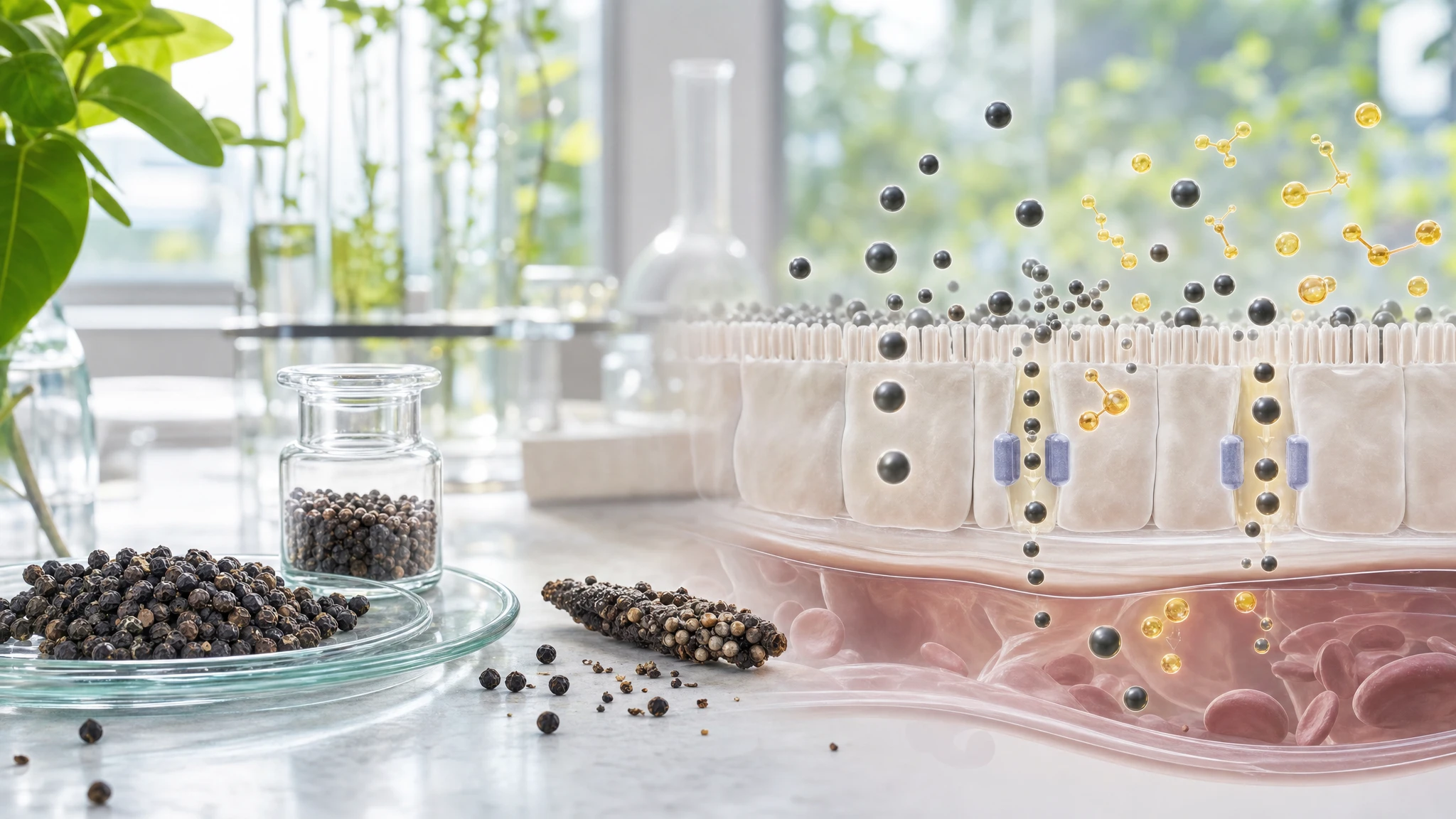
Piperine, the main alkaloid in black pepper, is studied in both nutrition and pharmacology. Studies are testing its potential effect on bioavailability (the portion that enters the bloodstream after intake). This topic is important because the body does not absorb all the molecules we ingest in the same way. Some struggle to cross the intestinal barrier, while enzymes quickly transform others. Membrane transporters (proteins that move substances between cells) expel others.
In this field, piperine is a bioenhancer (a substance that can make another compound more available). The idea is simple, but many processes come into play and act in different ways. The effect changes depending on the compound used, the formulation, and the context in which it is used. Therefore, this effect does not always appear and can vary from one case to another.
This article explains how piperine acts in the gut and on the body's metabolism. It also clarifies why curcumin is the most studied example and which limitations help in evaluating the evidence. In summary, here are the key points that the rest of the article examines in greater depth:
- What bioavailability means and why it is important
- How piperine can change absorption and metabolism
- Why membrane transporters can influence the result
- Why curcumin is the most studied case
- When the effect of piperine cannot be extended to other cases
What bioavailability means and why it matters for piperine
When discussing piperine and bioavailability, what matters is how much of the substance the body can actually use, not just the dose taken. This figure depends on intestinal absorption, the first-pass effect in the liver, and the formulation—that is, how the compound is prepared. These aspects help explain why some combinations work better than others.
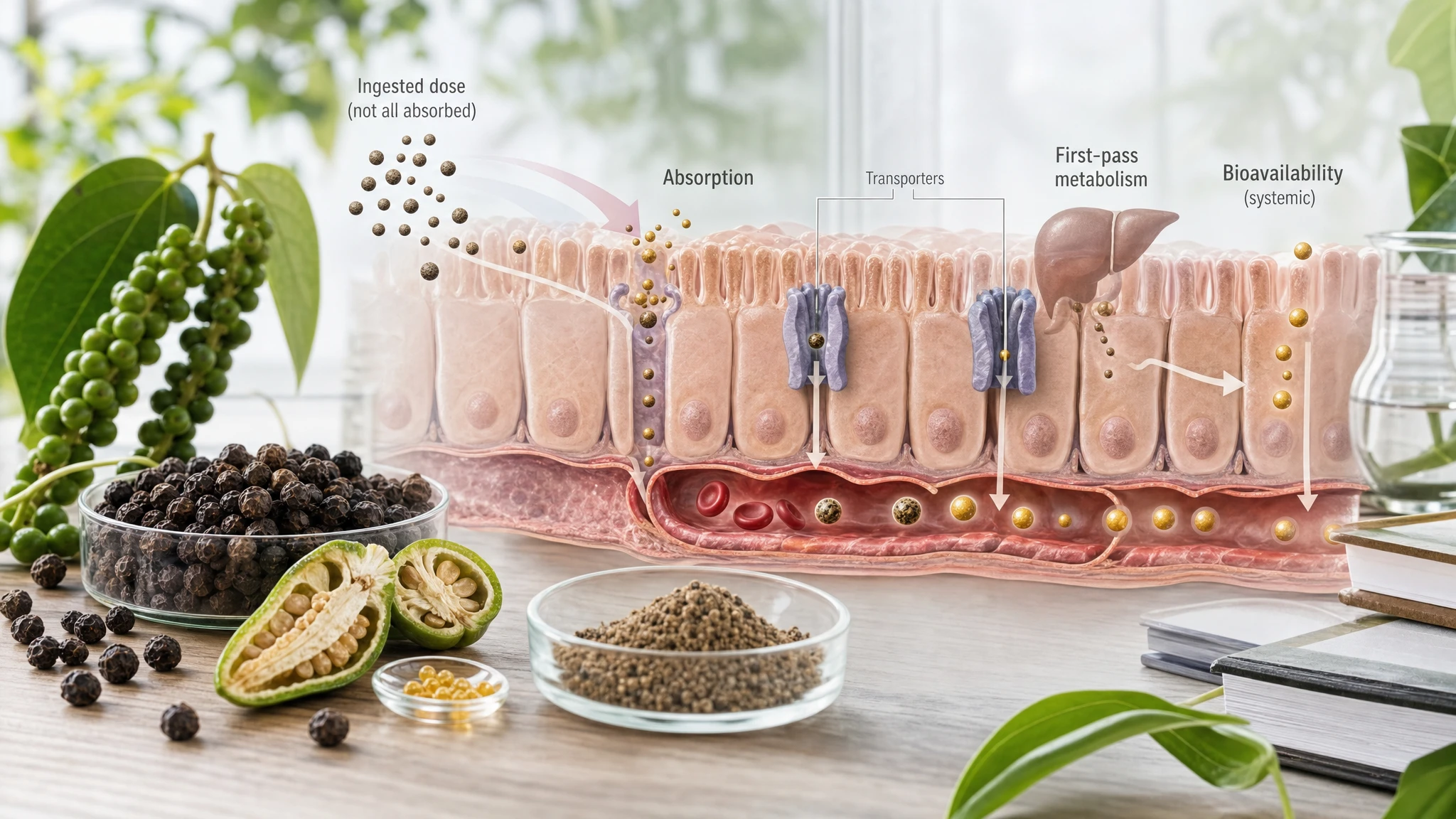
Bioavailability indicates how much of an ingested substance reaches the systemic circulation (the blood in the body). This portion can be used by the body and does not always coincide with the dose taken. Factors such as intestinal absorption, passage through the intestinal wall, and modifications before reaching the blood all play a role. Therefore, two compounds taken at the same dose can yield different results.
In other words, the relationship between piperine and bioavailability involves multiple biological steps and cannot be reduced to a single figure. This distinction is necessary when comparing substances or formulations, i.e., different ways of preparing a compound. A low level in the blood may depend on poor absorption, rapid modifications, or both processes.
Piperine can influence the biological availability of other substances, not just the amount consumed. To understand the effect, it is useful to distinguish the steps that regulate the available portion:
- The ingested portion that manages to overcome the barriers posed by the intestine.
- The portion that remains available after the first pass through the liver.
- The role of membrane transporters (proteins that move substances into cells).
- The potential action of piperine as a selective bioenhancer (a substance that promotes the use of certain compounds).
The following sections clarify what bioavailability measures and the limitations of studies on absorption and piperine.
What the bioavailability of a substance really indicates
Bioavailability is the proportion of a substance that, after intake, reaches the blood in a usable form. It describes not only intestinal absorption, but also what happens before and after this process. The compound may degrade in the intestine, cross the epithelium (the layer of cells in the wall), and undergo further modifications. For this reason, two molecules taken at the same dose can produce different outcomes.
Piperine is of interest as a potential bioenhancer (a substance that increases the available amount) of another compound. It does not ensure total absorption, but it can act on certain steps that limit the quantity used by the body. Dietary guidelines and public documents include spices in a healthy eating pattern. However, their use to alter the pathway of other substances in the body requires a separate evaluation [1][2]. Reviews indicate that studies focus on absorption, modifications in the body, and toxicity, rather than a guaranteed increase in efficacy [3][4]. On this basis, it is necessary to understand the role played by the intestine.
Recent reviews on piperine, absorption, and limitations of the literature
The most extensive reviews study this molecule in relation to absorption, changes in the body, and formulation. However, the response changes depending on the compound it is paired with. Its action as a bioenhancer therefore appears selective and does not apply equally to every substance. This data explains why there are numerous hypotheses regarding the mechanisms, but fewer direct clinical trials.
The clearest point remains the meaning of bioavailability: it is a concrete biological measure, not a marketing slogan. A 2021 review summarized studies on chemical properties, absorption, metabolism, bioavailability, and toxicity. Another publication from the same year also examined new delivery systems and differences in the absorbed amount [5][6]. A 2026 review noted bioenhancing activity. However, poor water solubility, varying individual responses, and the limitations of clinical trials hinder general use [7]. The current picture helps to understand the topic, but does not yet allow for definitive conclusions.
Recent research and updates
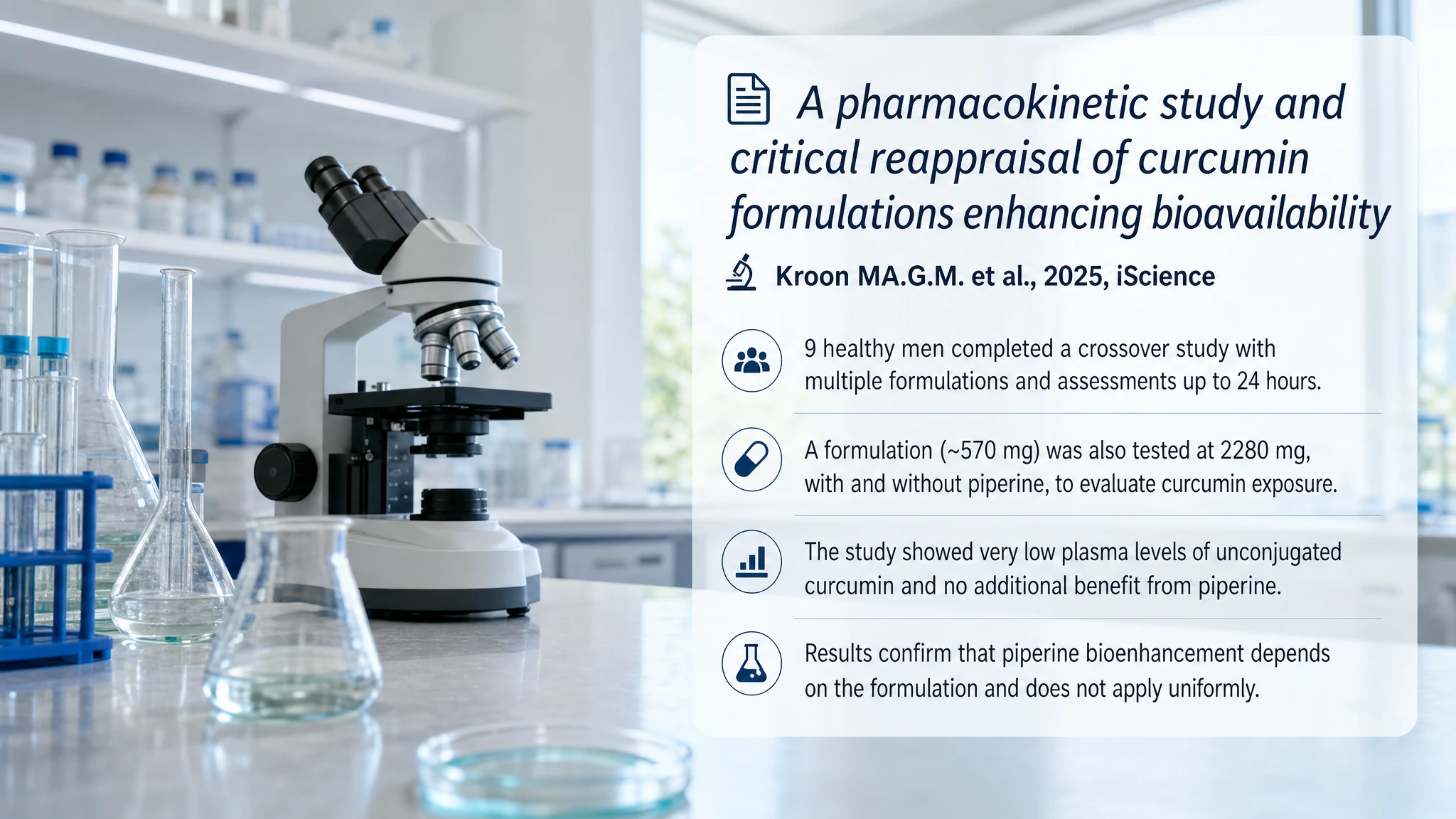
In 2025, Italian researcher Maurice A.G.M. Kroon and colleagues published a study in the journal iScience. They studied a formulation of curcumin, a plant-based substance with poor bioavailability, both alone and with piperine. This black pepper compound is known for its potential bioenhancement (increasing exposure to another substance). The study showed that the benefit is not automatic, but depends on the preparation used. After intake, the researchers directly measured blood levels and elimination.
A pharmacokinetic study and critical reappraisal of curcumin formulations enhancing bioavailability
- 9 healthy men participated in the crossover study (each person tried multiple options). The researchers repeated the measurements and observed the participants for up to 24 hours.
- A formulation of approximately 570 mg was also tested at 2280 mg, with and without piperine. The goal was to measure the bioavailability of the curcumin.
- The study found very low plasma levels of unconjugated curcumin. Furthermore, it found no additional benefit from piperine.
- The result confirms that the bioenhancement provided by piperine depends on the formulation. Therefore, it does not apply equally to all preparations.
How piperine can modify intestinal absorption and metabolism
The bioavailability of piperine depends primarily on two phases: intestinal absorption and first-pass metabolism. In this second phase, the body transforms a substance before it reaches the bloodstream. The molecule can act as a bioenhancer (a substance that increases absorption). However, the effect varies based on the compound, the formulation, and the type of use.
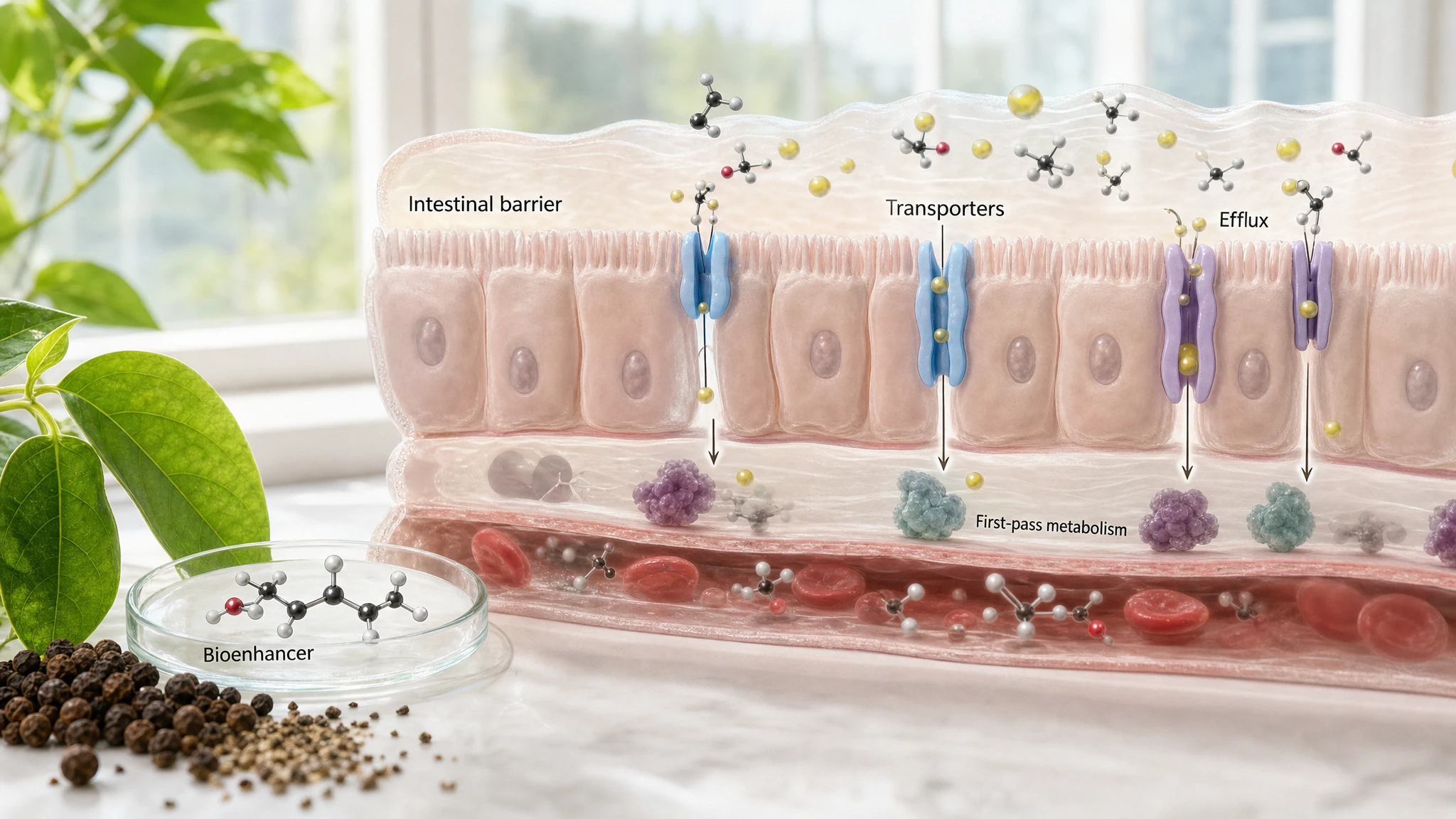
In the intestine, a substance must cross the cellular barrier and encounter membrane transporters. These proteins either facilitate or hinder the passage of molecules into the bloodstream. Piperine can act during these stages and increase bioavailability, which is the portion that enters the blood. However, the effect is not the same for everyone: it changes based on the compound, the dose, and the formulation.
Piperine is therefore a potential bioenhancer (a substance that increases absorption) for two reasons. It can hinder the return of certain substances into the intestinal lumen (the internal space of the intestine). It can also change how they are transformed before they pass into the blood.
This does not automatically increase the effect of every compound. The response varies between molecules and also depends on how the product is made. Both the entry through the intestinal wall and the speed at which the body transforms the substance matter.
To understand where it can act, it is necessary to distinguish a few key steps:
- how certain intestinal transporters can hinder the entry of molecules
- how efflux (return to the intestine) can reduce absorption
- why first-pass metabolism reduces the amount present in the blood
- which metabolic enzymes piperine can act upon
The two central steps are the entry through the intestinal wall and the initial transformation within the body. The following sections explain how piperine can act on both. The effects, however, vary depending on the molecule.
Membrane transporters and absorption: where piperine can intervene
Membrane transporters are proteins that regulate the passage of molecules through intestinal cells. They are located on the wall of the cells lining the intestine. Some facilitate the entry of substances into the bloodstream. Others limit their accumulation by pushing them back toward the intestinal lumen. This second mechanism is called efflux. It reduces the amount of substance that remains inside the cell. In this context, piperine has been studied as a potential modulator of these systems. The underlying idea is simple: if it can curb efflux, the substance remains in the intestinal cell for longer. This can promote the intracellular retention of certain substances. This increases the likelihood that they will reach the bloodstream. This does not mean it happens every time, nor with every molecule.
A 2025 review describes piperine as a natural bioenhancer capable of inhibiting cytochrome P450 enzymes, particularly CYP3A4, and efflux transporters such as P-gp [8]. This data is useful for explaining the mechanism, but it is not enough to predict the actual effect in every person or with every formulation. The next hurdle is first-pass metabolism, which can further reduce the available amount.
First-pass metabolism: why it can reduce systemic exposure
First-pass metabolism transforms a substance in the intestine and liver before it enters the bloodstream. If this phase is rapid, a smaller amount may reach the tissues. This reduces systemic exposure (the quantity present in the blood and available to the body). Piperine is studied because, in some models, it appears to act on this phase for specific compounds: it does not seem to block all metabolism indiscriminately.
In a study on rats, pretreatment caused some changes within 6 hours. In the liver, the expression (gene activity) of UGT1A6, UGT1A8, SULT1A1, and SULT1A3 changed. In the colon, that of UGT1A6 varied. Values returned toward initial levels at 8 hours. The variations occurred alongside changes in exposure to curcumin [9]. The result indicates a possible mechanism, but it comes from animals and shows a temporary effect: it is therefore not a rule applicable to every substance, product, or person.
Why curcumin is the most studied example with piperine
The case of curcumin is the most studied because it combines two substances with different roles. Piperine is used as a bioenhancer (a substance that can promote the absorption of a compound). This pair helps us understand how intestinal absorption, bodily utilization, and systemic exposure (the amount that reaches the blood and tissues) change.
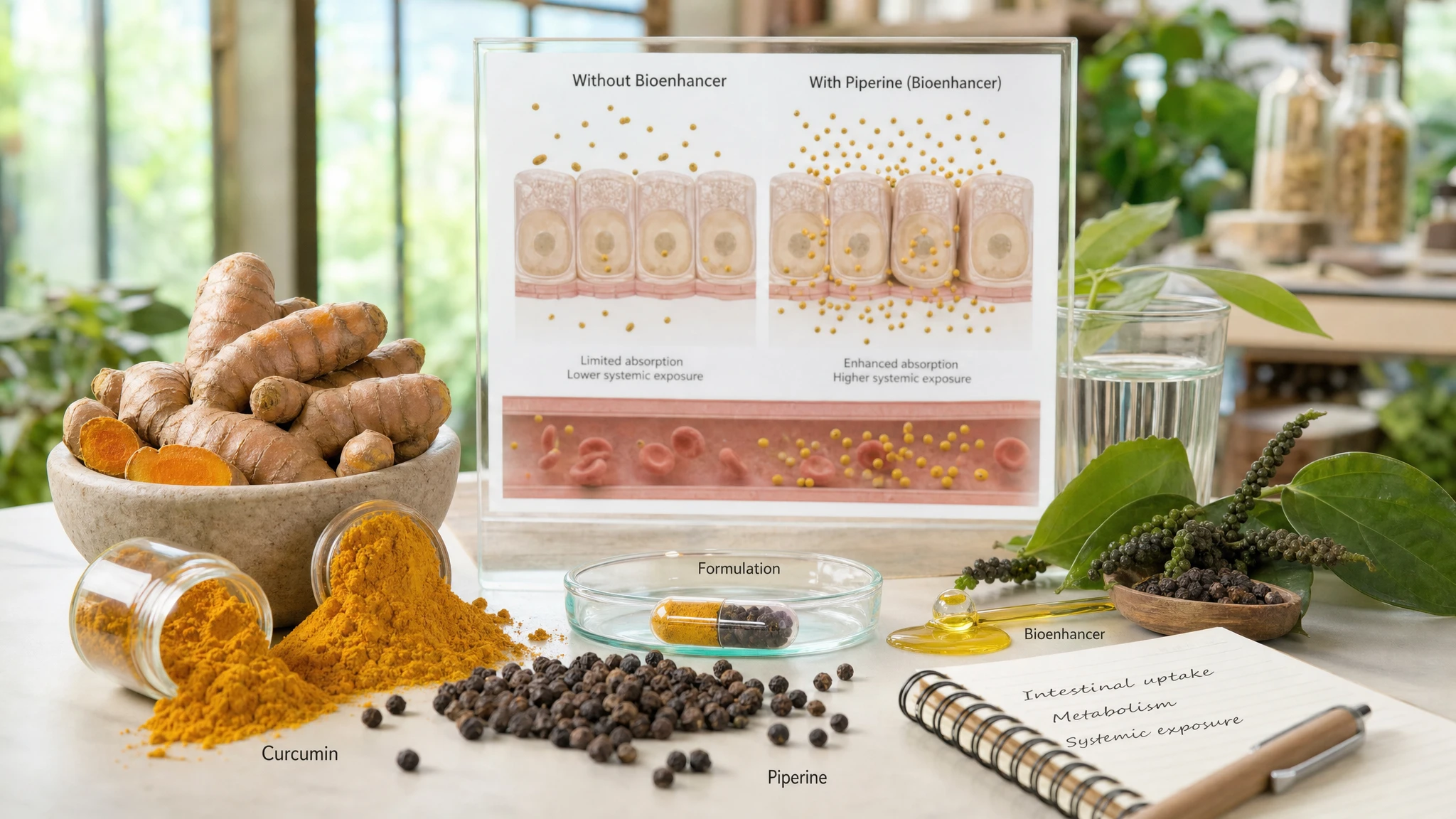
In studies on piperine bioavailability, curcumin is the most frequently cited case. This substance has low biological availability, meaning only a small amount enters the bloodstream. Furthermore, many studies have tested it in products containing other compounds.
This pair is therefore a good starting point for studying absorption and bodily utilization. When comparing products, however, it is not enough to simply determine whether an effect exists. It is also necessary to evaluate how much it depends on the formula and whether it applies to other ingredients.
Piperine therefore helps us understand whether a bioenhancer can increase the absorbed amount and the time it remains in the body. This case clearly demonstrates the link between product type, intestinal absorption, and bodily utilization. In fact, the same dose can yield different results if the method of administration changes. The key points are as follows:
- curcumin is poorly absorbed without a suitable product
- piperine can change the amount that reaches the blood and tissues
- the most well-known results depend on the doses and the type of test
- studies on humans provide useful signals, but they are not always consistent
Curcumin allows us to distinguish a measurable pharmacokinetic effect from an overly broad hypothesis. Pharmacokinetics studies how the body absorbs, uses, and eliminates a substance. We will first look at why this pair has attracted interest, followed by clinical data and cases where benefits are not clear.
Curcumin and piperine: why this combination attracts research
This pair is a study model because it brings together two substances with different roles. One enters the bloodstream poorly, while the other can change its pathway in the body. After consumption, curcumin is poorly absorbed and rapidly metabolized. For this reason, researchers are evaluating whether a different formula can increase its bioavailability (the portion that reaches the blood).
A study on rats and 12 human volunteers compared two preparations. The first contained 2 g of curcumin alone; the second added piperine at 20 mg/kg. Biological availability increased by 154% in rats and 2000% in humans. The time to reach the peak also increased, while elimination decreased [10]. The data is strong, but the human group was small and the test followed a very specific plan. The result, therefore, applies to this specific case and not to all products containing these compounds.
Curcumin and piperine in clinical trials: useful but inconsistent signals
In clinical trials, researchers have also studied the visible effects on people. A trial is a study that evaluates an intervention in a group of volunteers or patients. In a randomized study on patients with COVID-19, the product provided 525 mg of curcumin and 2.5 mg of piperine twice a day. The pair was therefore tested in a clinical setting, not just in pharmacokinetic studies [11].
A meta-analysis that combined 20 randomized trials brought together groups ranging from 8 to 117 people. The studies lasted from 1 to 12 weeks and used doses between 5 and 15 mg per day and between 500 and 1500 mg per day. In 15 out of 20 cases, CRP, hs-CRP, and IL-6 (indices related to inflammation) decreased [12]. However, the groups, objectives, and products were different. The signal is therefore useful, but it does not apply uniformly. The pair appears promising, without becoming a rule valid for every use.
When piperine adds no benefit to curcumin
The most recent evidence is useful because it prevents describing piperine as an always-effective enhancer. In an independent crossover study on 9 healthy men, using 3 formulations of approximately 570 mg and tests up to 2280 mg with and without piperine, the addition of the molecule did not lead to an appreciable advantage and plasma levels of unconjugated curcumin remained very low [13]. This data shows that the enhancing effect is not automatic. The body's response depends on many factors, such as the dose and the form of the product.
Another in vitro study compared the curcumin-piperine combination with turmeric rhizomes to show how the delivery vehicle can change the formulation and therefore the final response [14]. In practice, the result depends on the context: simply adding piperine is not enough to automatically obtain greater bioavailability. These data do not refute positive studies, but they serve as a reminder that bioenhancement is possible only under certain conditions and should not be extended without caution to other ingredients or to all preparations.
When the effect of piperine should not be generalized
Not all combinations with piperine yield the same result. The associated substance, the dose, the type of product, and the context of use all matter. In some cases, it increases systemic exposure, meaning the amount that reaches the bloodstream. In others, the effect remains minimal or difficult to predict.
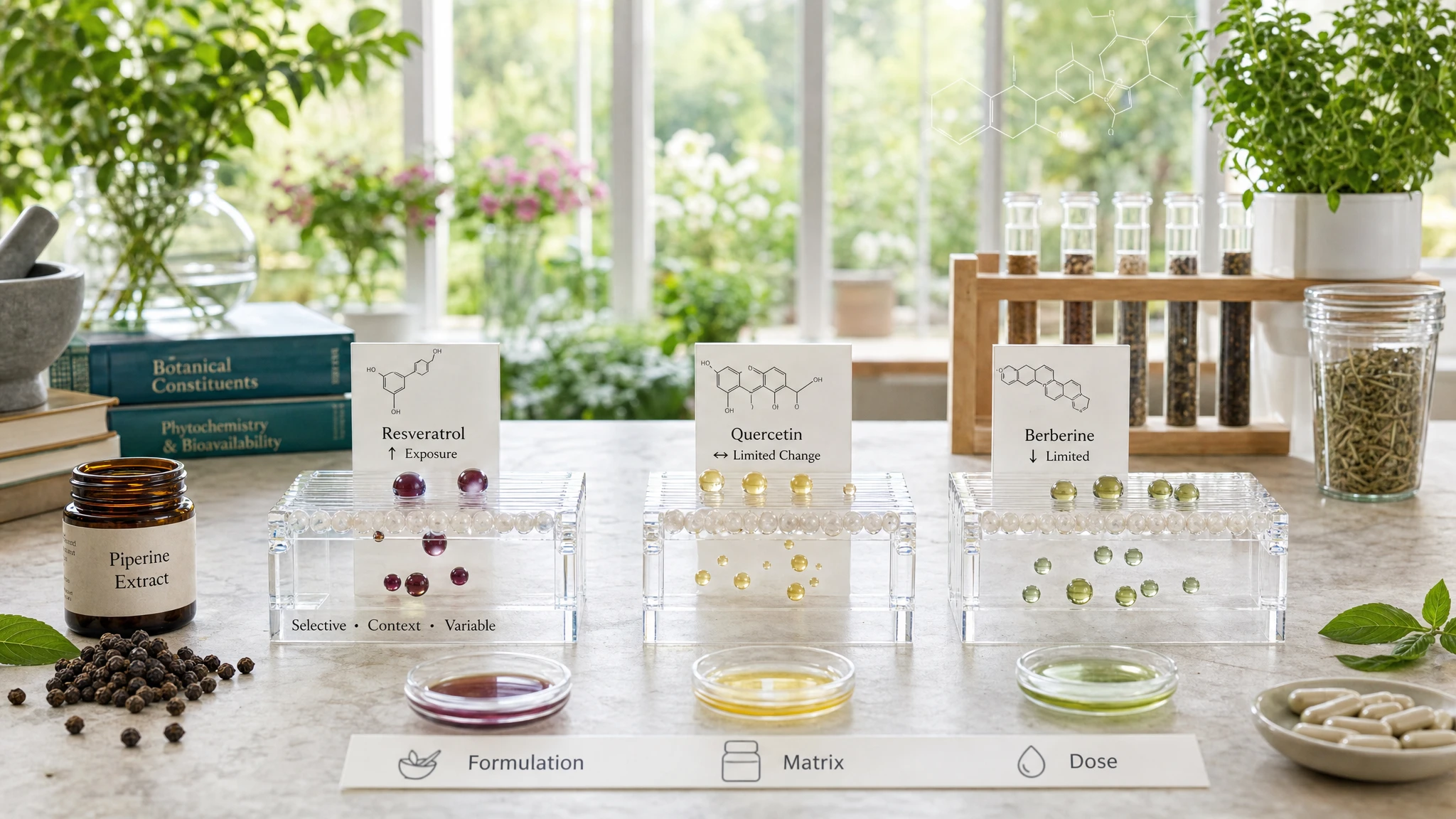
Piperine does not act as a universal booster. Its effect depends on the associated substance, the dose, the product, and the pathway the body uses to process it. For this reason, two similar supplements can produce different results, even if they contain the same spice or extract.
Piperine should therefore be viewed as a selective modulator, not as an automatic solution. This is especially true for nutraceutical combinations, i.e., substances used in supplements.
Greater systemic exposure can occur, but it is not always useful. Furthermore, it does not guarantee a concrete benefit for every person or product.
Increased intestinal absorption may therefore apply to some nutrients or plant compounds, but not all. Before applying a result to all supplements, it is necessary to understand when a bioenhancer (a substance that can promote the availability of other compounds) can act:
- The response changes based on the chemical structure of the substance.
- The formulation can promote or limit biological availability.
- Greater exposure does not always ensure a better clinical effect.
- The context of use matters just as much as the presence of piperine.
The following points explain why piperine does not act the same way with every substance. They also clarify how the type of product can change the result. In fact, some combinations are useful in study models but not always in practice.
Why not all substances respond to piperine in the same way
The response to piperine depends not only on its presence but also on how a substance is absorbed and processed. Some compounds may benefit from the modulation of membrane transporters or reduced passage through metabolic enzymes. Others follow different pathways and remain almost unchanged. Piperine can inhibit enzymes such as CYP3A4 and P-glycoprotein, which act as gates in the intestine and liver. When these gates close, more of the molecule enters the bloodstream.
However, if a substance does not use those gates, the effect of piperine is negligible. This is why the concept of a bioenhancer is useful, but not uniform: the same strategy may help one molecule while leaving another unaffected. In other words, the mechanism exists, but its application depends on the substance, the dose, and the formulation. The point is not whether piperine “works,” but for which compounds, under what conditions, and with what predictability.
The role of formulation: why the product changes the result
Formulation is the way in which an ingredient is made absorbable: capsules, tablets, extracts, and delivery systems can change the amount that actually reaches the body. This is decisive for piperine, because the same molecule can yield different results if the vehicle changes. A capsule that dissolves slowly releases its contents gradually. A poorly compressed tablet may not disintegrate completely. Particle size and the presence of excipients also matter.
When the main issue is incomplete release or poor solubility, increasing the dose is not enough to achieve better bioavailability. The message is clear: the product's behavior cannot be deduced from the label, but from the way the mixture is constructed and tested. The limitation is that the results of one formulation cannot be automatically transferred to all others, even when the active ingredient is the same.
Interactions with other compounds: useful in the model, not always in practice
Piperine is interesting precisely because it interacts with other compounds, making it a good model of nutraceutical synergy. However, this same characteristic also complicates its practical use: a combination can modify systemic exposure in a favorable way, or it can make the result less predictable. When two substances act together, the effect of one may be amplified, but it can also generate variability between individuals. Factors such as the gut microbiota and transit speed can play a role.
For this reason, "enhancing" does not automatically mean improving, especially when moving from the laboratory to daily supplementation. In rats and 12 human volunteers, 2 g of curcumin with 20 mg/kg of piperine increased systemic exposure by 154% in rats and 2000% in humans, with an increase in the time required to reach peak blood levels and a longer residence time of the substance in the body. The limitation is precisely this: a strong result for one combination does not authorize extending it to all compounds or all products.
Summary of scientific evidence
This summary brings together the sources from the bibliography and indicates where the evidence is most robust. It also shows when results depend on the type of study or the formulation used.
| Publication year | Area studied | What the studies indicate |
|---|---|---|
| 1998 | Curcumin and piperine in animals and human volunteers | evidence indicates a strong increase in curcumin exposure after use combined with piperine [10] |
| 2017 | Conjugation enzymes and curcumin bioavailability | studies indicate that piperine acts selectively on intestinal and hepatic enzymes [9] |
| 2020 | Dietary context and spice use | evidence indicates that the spice is part of the diet and not a pharmacological intervention [1] |
| 2021 | Biological properties, absorption, and metabolism of piperine | results vary and confirm that data on mechanisms are useful, but not definitive [3] |
| 2021 | Bioavailability and delivery systems of piperine | data show a role as a modulator, but the response remains selective and linked to the formulation [4] |
| 2023 | Interactions between plant compounds and drugs | results vary and require caution, because the effect depends on the molecule, dose, and context [2] |
| 2025 | Bioenhancement and membrane transporters | studies indicate that piperine can interfere with CYP3A4 and P-gp and potentially change biological availability [8] |
| 2026 | Analysis combining 20 trials on curcumin-piperine | researchers examined 20 trials with different doses and a possible favorable effect on some inflammation markers [12] |
Editorial review of the evidence
In the studies I reviewed for this article, I found consistent mechanisms. Piperine can change the absorption of certain substances and their pathway in the body. This happens especially when the initial compound has low bioavailability. Curcumin remains the most studied example in this field. Some experimental and clinical studies show increased exposure, but the results vary between formulations. The most recent research therefore points to a selective effect, which is useful for explaining bioenhancement. However, this effect does not apply in every case.
The main limitations I encountered are the differences between studies, dosages, and formulations, along with often small sample sizes. Many studies also use surrogate outcomes (indirect values instead of actual health effects). Furthermore, they often measure the quantity in the blood without proving a stable clinical benefit. Therefore, caution is needed when extending the results to other cases. Known mechanisms make the effect of piperine possible. However, I have observed that the result varies significantly depending on the associated compound and the type of study.
Conclusions and editorial summary
Piperine demonstrates how a food compound can change the fate of other substances in the body. The central point is not the spice itself, but the molecule's action on absorption, transporters, and first-pass metabolism. The most solid evidence I have found concerns curcumin, but the response changes with formulation and study type. Therefore, caution is needed: piperine can change bioavailability, but the effect is not always valid. Furthermore, higher bioavailability does not ensure greater efficacy.
This reading connects diet, metabolism, and biological availability, without oversimplifying the complexity of the data. The boundary between diet and pharmacokinetics (the study of how substances move through the body) remains useful for new research.
Final critical note
The evidence I have reviewed describes a possible mechanism, but does not allow me to measure its effect in every situation. The results are consistent on a biological level, but less clear when comparing different products. Small sample sizes and dissimilar clinical contexts also make comparison more difficult.
Piperine, therefore, cannot become a standard solution for increasing the absorption of every substance. The main limitation I identified remains the gap between experimental data and their practical use. In fact, greater exposure does not always produce a concrete and measurable advantage.
References
[1] Dietary Guidelines for Americans 2020-2025
[2] Herb-Drug Interactions: What the Science Says
[3] Piperine: A review of its biological effects
[4] A review on the bioavailability, bio-efficacies and novel delivery systems for piperine
[6] Preparation, pungency and bioactivity transduction of piperine from black pepper (Piper nigrum L.): A comprehensive review
[7] A pharmacokinetic study and critical reappraisal of curcumin formulations enhancing bioavailability
[8] Metabolic Insights into Drug Absorption: Unveiling Piperine's Transformative Bioenhancing Potential
[9] Selective reduction in the expression of UGTs and SULTs, a novel mechanism by which piperine enhances the bioavailability of curcumin in rat
[10] Influence of Piperine on the Pharmacokinetics of Curcumin in Animals and Human Volunteers
[11] Oral Curcumin With Piperine as Adjuvant Therapy for the Treatment of COVID-19: A Randomized Clinical Trial
[12] Curcumin-piperine supplementation modulates inflammation, oxidative stress, and cardiometabolic risk: a systematic review of randomized controlled trials
[13] Investigating Bioavailability of Curcumin and Piperine Combination in Comparison to Turmeric Rhizomes: An in vitro Study
Editorial note
Artificial Intelligence was used solely as a tool to support editorial and documentary work. All content, interpretations, bibliographic citations and conclusions have been verified, reviewed and approved by the author, who assumes full scientific responsibility for them.
The manuscript was also subject to independent peer review prior to publication.
To ensure maximum transparency, the article's complete history — including the dates of submission, review, acceptance and publication, as well as information on the peer review process — is available on the dedicated Article History page.