
Scientific Book

Magnesium and the functioning of metabolic reactions

Magnesium is an essential mineral involved in hundreds of enzymatic reactions, which are fundamental for energy production, nerve transmission, and muscle contraction. It also participates in glucose metabolism, blood pressure regulation, and the processes necessary for the activation of vitamin D. In the book "The Choice to Live in Health or Disease," Dr. A. Colonnese and R. Panzironi explore the role of magnesium in metabolic health and the scientific evidence regarding deficiency conditions and supplementation.

Cite this article
Colonnese, A. & Panzironi, R. (2026). Magnesium and the functioning of metabolic reactions. The Choice to Live in Health or in Disease. https://lifesciencehub.info/en/la-scelta-di-vivere-in-salute-o-in-malattia/magnesium-and-the-functioning-of-metabolic-reactions
The Choice to Live in Health or in Disease · ISBN 979-12-82692-03-8

DOI lsh.en.libro.29

  • Published 05/11/2026
  • Updated 05/11/2026
  • MAGNESIUM
  • INSULIN RESISTANCE
  • HOMA-IR
  • AMPK
  • MTOR
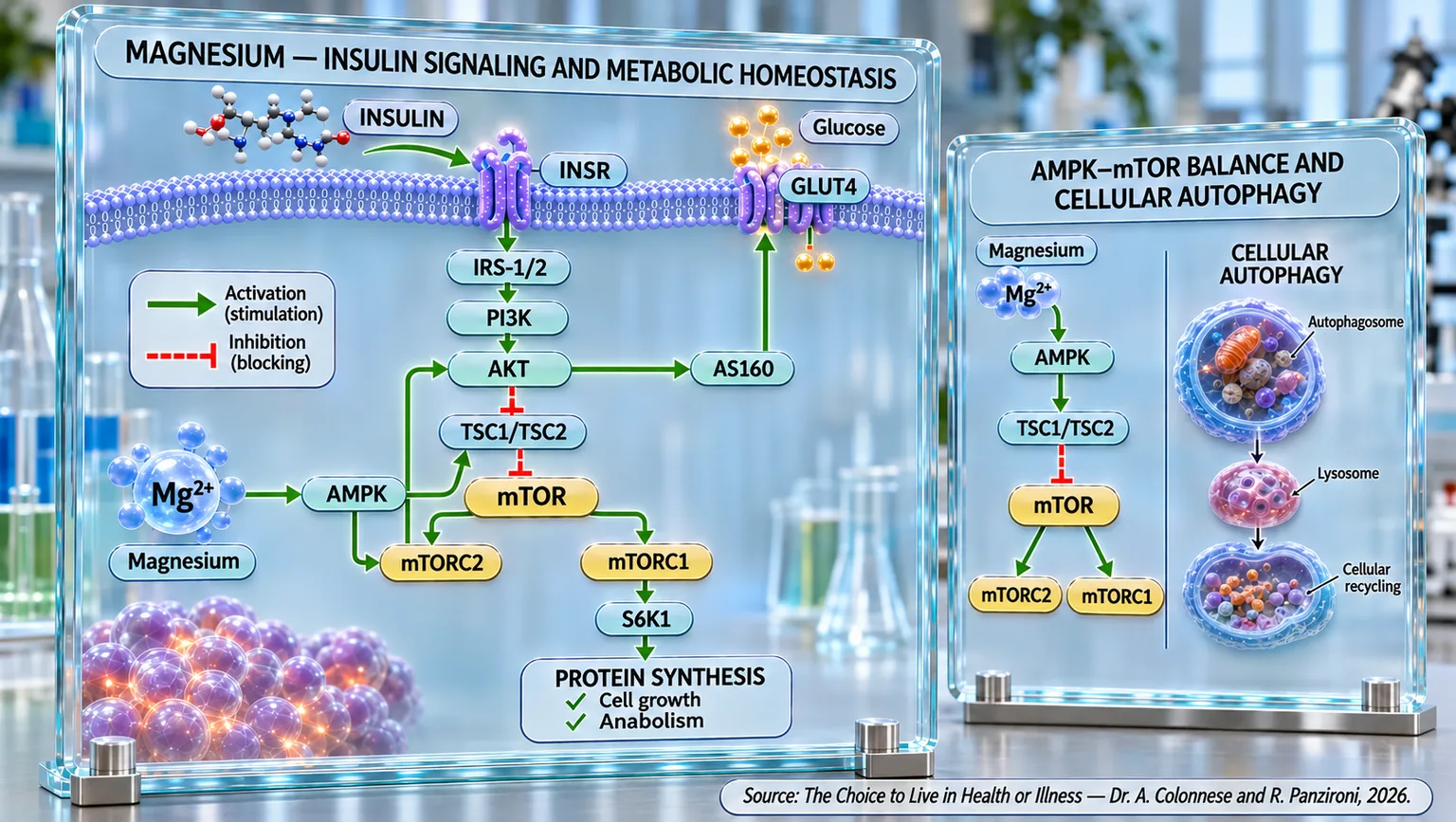
Two transparent panels depicting cell membranes, receptors, activation and inhibition arrows, and the stages of autophagy.
Diagram of the role of Mg²⁺ in metabolic homeostasis: insulin signaling proceeds through INSR, IRS-1/2, PI3K, AKT, and AS160 to GLUT4 and glucose; in parallel, the AMPK–TSC1/TSC2–mTORC1/2 axis links magnesium to protein synthesis, cell growth, autophagosome, lysosome, and cellular recycling.

ABSTRACT

Magnesium participates in enzymatic reactions involved in energy production, nerve transmission, muscle function, and cardiovascular regulation. In the book "The Choice to Live in Health or Disease", Dr. A. Colonnese and R. Panzironi examine its role in metabolic homeostasis, also considering its contribution to vitamin D activation processes. This functional integration highlights how the availability of this mineral can influence different and interdependent biological systems.

In glucose regulation, magnesium is involved in insulin receptor activity and the transmission of intracellular signals necessary for glucose utilization. Insufficient availability can compromise insulin sensitivity, while metabolic alterations can be accompanied by further losses of the mineral. Experimental studies indicate a possible modulation of the balance between AMPK, involved in energy adaptation, and mTOR, associated with cell growth. Under certain conditions, this regulation promotes autophagy, a process of recycling damaged components, with implications observed in bone tissue and hepatic lipid metabolism.

Meta-analyses and randomized clinical trials report improvements in HOMA-IR and certain glycemic parameters following supplementation, especially in the presence of prediabetes, diabetes, or deficiency. Moderate reductions in blood pressure are also documented, particularly in hypertensive subjects or those with reduced availability of the mineral. Other studies suggest effects on muscle recovery, anxiety and depressive symptoms, sleep, and cognitive performance in selected populations. Epidemiological associations between higher dietary intake and lower risk of atherosclerosis, stroke, type 2 diabetes, and cardiovascular mortality do not demonstrate causality. In tumor models, the effects of autophagy do not constitute evidence of clinical anticancer efficacy.

Overall, magnesium contributes to the coordination between energy metabolism, insulin signaling, and cellular maintenance. A balanced diet is the standard for ensuring its intake, while supplementation requires an individual assessment of deficiencies and clinical conditions. Further studies are needed to distinguish the effects of nutritional correction from the therapeutic potential suggested by experimental models.

Its properties and supplementation

Magnesium is one of those minerals that, while almost never taking center stage, works continuously behind the scenes. We can imagine it as a silent technician that allows many of the body's systems to function in an orderly fashion: it participates in energy production, supports muscle contraction and relaxation, contributes to the transmission of nerve signals, intervenes in the regulation of blood pressure, interacts with vitamin D metabolism, and influences certain aspects of sleep, mood, and cognitive function. It does not act as a “stimulant” in the common sense of the term, but rather as a regulator: it helps cells work with greater stability, preventing certain processes from becoming excessive, disordered, or inefficient.

From a physiological standpoint, magnesium is one of the most abundant minerals in the human body, and a substantial portion of its reserves is found in the bone, while only a minimal amount circulates in the blood. This aspect is important because an apparently normal serum value does not always accurately reflect the overall body magnesium status. It is like observing the water in a small faucet and thinking that, from that single measurement, you know the amount contained in the entire tank. Precisely because of this predominantly intracellular and bone distribution, the clinical assessment of magnesium can be more complex than it seems. Its importance also stems from the fact that it participates in hundreds of enzymatic reactions, many of which are linked to ATP production, neuromuscular function, glucose metabolism, brain activity, and cardiovascular regulation (Tarsitano et al., 2024) [1]; (Argeros et al., 2025) [2]; (Lopresti and Smith, 2026) [3].

When talking about magnesium supplementation, the first mistake to avoid is considering it a universal strategy, equally valid for everyone. The available evidence suggests a more refined picture: magnesium seems to offer greater benefits when there is an increased requirement, a deficiency, a specific metabolic condition, or a physiological system already under stress. This emerges clearly in studies on blood pressure. In a meta-analysis of 38 randomized clinical trials, including 2709 participants, oral magnesium supplementation, with a median dose of 365 mg per day for a median duration of 12 weeks, significantly reduced both systolic and diastolic blood pressure compared to placebo. The average effect in the general population was moderate, but it became more evident in hypertensive subjects on pharmacological therapy and in participants with hypomagnesemia. In normotensive subjects, however, no statistically significant reductions were observed, confirming the idea that magnesium does not “lower blood pressure” indiscriminately, but rather tends to correct an imbalance when it is present (Argeros et al., 2025) [2].

This observation is very useful for understanding the biological role of magnesium. The mineral does not behave like a classic antihypertensive drug, but as a modulator of the metabolic and vascular terrain. When reserves are insufficient, sympathetic activity (the action of the nervous system that prepares the body to react to stress or danger), peripheral vascular resistance, oxidative stress, and inflammation can increase; furthermore, the balance between sodium and potassium, which is fundamental for the proper functioning of muscle and vascular cells, can be altered. In this context, restoring adequate magnesium availability can help vessels recover a better capacity for relaxation, much like restoring elasticity to a tube stiffened by excessive tension. However, the meta-analysis did not identify a clear dose-response relationship, suggesting that simply increasing the dose does not automatically guarantee a greater benefit. What likely counts more is the person's profile, the initial magnesium status, the presence of hypertension, the potential use of medications, and the bioavailability of the formulation used (Argeros et al., 2025) [2].

The link between magnesium and cardiometabolic health becomes even more interesting when observing its interaction with vitamin D. Vitamin D, in fact, is not just a vitamin introduced or produced through sun exposure: to become biologically useful, it must be transformed through metabolic steps involving the liver and kidneys. Magnesium participates as a cofactor for the enzymes responsible for these conversions and also contributes to the functioning of the protein that transports vitamin D in the blood. In a randomized, placebo-controlled, double-blind study conducted on 95 overweight or obese subjects, the combination of magnesium and vitamin D resulted in a greater increase in serum 25-hydroxyvitamin D concentrations compared to vitamin D alone. This result suggests that, in some people, supplementing vitamin D without considering magnesium status can be like putting fuel into an engine that does not have all the gears necessary to use it optimally (Cheung et al., 2022) [4].

Another area where magnesium shows a concrete role is that of physical activity and muscle recovery. During intense or prolonged exercise, the muscle consumes energy, produces metabolites, modifies the electrolyte balance, and can undergo physiological micro-damage. In this scenario, magnesium participates in ATP production, intracellular calcium regulation, and neuromuscular function. A systematic review dedicated to physically active individuals collected four studies for a total of 73 participants, including resistance training practitioners, long-distance runners, elite basketball players, and professional cyclists. The evidence indicated that magnesium supplementation can reduce post-exercise muscle soreness, improve the perception of recovery, and contribute to better management of metabolic stress induced by physical activity (Tarsitano et al., 2024) [1].

The data becomes physiologically plausible if one considers that, during intense exercise, a reduction in magnesium reserves can compromise energy production and favor a greater accumulation of lactate. Lactate should not be interpreted simply as a “bad” substance, because it also represents an important metabolic intermediate; however, when energy management becomes less efficient, the accumulation of metabolites and local stress can contribute to the sensation of pain and fatigue. In simple terms, magnesium seems to help the muscle not only to contract but also to recover after exertion, limiting some of the biochemical signals that indicate distress or tissue damage (Tarsitano et al., 2024) [1].

The nervous system represents another territory where magnesium exerts profound functions. At the neuronal level, it contributes to signal transmission, the regulation of excitability, the modulation of the NMDA receptor (a protein present on the membrane of neurons that, when activated by glutamate, allows the entry of calcium into the cell), and the balance of intracellular calcium. When these mechanisms lose stability, the neuron can become more vulnerable to excessive stimulation, like an electrical circuit crossed by a current that is too intense. In a randomized crossover clinical trial conducted on adults with mild-to-moderate depression, daily supplementation with 248 mg of elemental magnesium in the form of magnesium chloride for six weeks produced a clinically significant reduction in depressive and anxious symptoms (Tarleton et al., 2017) [5].

This study is particularly interesting because it suggests a rapid, well-tolerated effect that is potentially useful even in real-world clinical practice. The efficacy was found to be independent of age, sex, initial severity of depression, baseline magnesium levels, and concomitant use of antidepressants. From a biological point of view, magnesium could contribute to mood regulation through multiple pathways: by limiting glutamatergic hyperactivation, modulating the entry of calcium into neurons, reducing low-grade inflammatory processes, and influencing the neuroendocrine axis (Tarleton et al., 2017) [5].

The relationship between magnesium and the nervous system also emerges in studies on sleep. Sleep is not a simple shutdown of the body, but an active process regulated by nervous, hormonal, and metabolic signals. In patients with diabetes mellitus and insomnia, a randomized controlled clinical trial evaluated the effects of supplementation with magnesium, potassium, and their combination. After two months, the groups treated with magnesium, potassium, and especially with the combination of the two minerals showed a reduction in the severity of insomnia, accompanied by a decrease in serum cortisol and an increase in melatonin; in diabetic patients, this aspect takes on particular significance because diabetes is often associated with metabolic alterations, chronic inflammation, and endocrine dysregulation, all factors that can interfere with sleep. The study reinforces the hypothesis that magnesium may have a complementary role in the management of insomnia associated with metabolic conditions (Khalid et al., 2024) [6].

In a randomized, placebo-controlled, double-blind study, 100 adults between 18 and 45 years old with perceived unsatisfactory sleep took 2 grams per day of Magtein®, equivalent to 145 mg of elemental magnesium, or a placebo for six weeks. The treated group showed a significantly greater improvement in the NIH composite cognitive score, working memory, and visuo-motor reaction time. The analysis of cognitive scores suggested a reduction in estimated cognitive age of approximately 7.5 years compared to the placebo, a suggestive finding that should be interpreted as a functional indicator of the tests used and not as a real biological rejuvenation of the brain (Lopresti and Smith, 2026) [3].

Taken together, this evidence outlines an image of magnesium that is very different from that of a simple supplement “for cramps.” Magnesium appears rather as a cross-cutting regulator, capable of intervening in different but interconnected systems: muscle, brain, blood vessels, energy metabolism, vitamin D, sleep, and mood. Its efficacy does not seem to depend on a single action, but on the ability to support fundamental cellular balances. It helps the muscle manage energy and contraction, the nervous system contain excessive excitability, the cardiovascular system regulate vascular tone, vitamin D metabolism function more efficiently, and the sleep-wake cycle regain better hormonal modulation.

At the same time, the available literature invites us not to turn magnesium into a generic solution for any ailment. Studies show more convincing benefits in specific conditions: hypertension, hypomagnesemia, overweight or obesity with suboptimal vitamin D status, intense physical activity, insomnia in a diabetic context, unsatisfactory sleep with subjective impairment, and mild-to-moderate depression. This means that supplementation should be reasoned and personalized. The most correct question is not simply whether magnesium “works,” but in which person, with what goal, with what formulation, at what dose, for how long, and in the presence of what physiological need.

Magnesium and prevention

The second major theme emerging from the literature on magnesium concerns its potential ability to contribute to reducing the risk of developing some of the main chronic diseases that characterize the modern world. While in the previous section we saw how this mineral can influence sleep, cognitive function, blood pressure, muscle recovery, and psychological well-being, more recent research suggests that its role could also extend to the prevention of cardiovascular, cerebrovascular, and metabolic diseases. Naturally, it is important to emphasize that most of the available evidence comes from observational and cohort studies, which do not allow for the demonstration of a definitive causal relationship. However, when similar results are observed repeatedly in different populations, followed for many years and including hundreds of thousands of individuals, the picture that emerges deserves particular attention.

To understand the possible preventive role of magnesium, it is useful to remember that many of the most widespread chronic diseases share some fundamental biological mechanisms. Low-grade chronic inflammation, oxidative stress, endothelial dysfunction, impaired glucose metabolism, and the loss of insulin sensitivity are, in fact, common elements that link atherosclerosis, type 2 diabetes, heart attack, and stroke. Magnesium is involved in all these processes, which is why its availability could influence not only a single organ or function, but the entire metabolic homeostasis of the organism. (Song et al., 2024) [7]; (Fang et al., 2016) [11]

One of the most interesting aspects to emerge from the literature concerns the fact that atherosclerosis, the pathology underlying most cardiovascular events, begins long before the appearance of symptoms. When a person suffers a heart attack or stroke, the pathological process that led to the event often began decades earlier. For this reason, studies evaluating risk factors in young adulthood are of particular importance. In a large analysis conducted on 7,244 young US adults aged between 20 and 34, researchers examined the relationship between dietary magnesium intake and the risk of future atherosclerotic lesions using the PDAY score, a validated tool capable of estimating long-term cardiovascular risk.

The results showed a clear inverse association between magnesium consumption and cardiovascular risk. Subjects in the group with the highest magnesium intake had a significantly lower probability of showing a high PDAY score compared to those who consumed smaller amounts. More importantly, the analysis highlighted a dose-response relationship: the risk decreased progressively as magnesium intake increased, suggesting that the benefit was not limited exclusively to subjects with a severe deficiency, but could extend across a broad spectrum of intake (Song et al., 2024) [7].

Particularly interesting was also the association observed with the lipid profile. Participants who consumed more magnesium showed a lower probability of presenting non-HDL dyslipidemia, one of the main risk factors for the progression of atherosclerosis. Although the study did not find statistically significant associations with hypertension, diabetes, or obesity within the population examined, the overall picture suggests that an adequate magnesium intake can help create a metabolic environment less favorable to the development of atherosclerotic lesions.

From a biological point of view, this observation appears plausible. Magnesium exerts multiple effects on the vascular wall. It acts as a physiological antagonist of calcium, helping to limit arterial calcification; it participates in the regulation of vascular tone by promoting vasodilation; it reduces the production of pro-inflammatory mediators and contributes to the maintenance of endothelial function. To understand the importance of these mechanisms, one can imagine the endothelium as the inner lining of the arteries. When this lining remains intact and functional, blood flows with greater fluidity; when, on the other hand, it is continuously damaged by inflammation, hyperglycemia, high blood pressure, or oxidative stress, the probability of developing the alterations that will lead to the formation of atherosclerotic plaque increases (Song et al., 2024) [7].

The same considerations become particularly relevant when analyzing the risk of stroke. Stroke is one of the leading causes of death and disability in the world and is often the final consequence of pathological processes that have involved the vascular system for many years. Several studies have sought to clarify whether magnesium intake can influence the probability of developing this pathology, and the results show surprising consistency.

One of the largest investigations available was conducted using data from two large prospective US female cohorts, comprising a total of over 180,000 women followed for periods reaching thirty years. During the follow-up, nearly 4,000 cases of stroke were recorded. By analyzing the participants' dietary habits, researchers observed that women in the group with the highest total magnesium intake had a significantly lower risk of stroke compared to those with the lowest consumption (Adebamowo et al., 2015) [8].

Even more interesting was the updated meta-analysis carried out by the same authors. Combining the results of the available prospective studies, it emerged that every 100 mg per day increase in magnesium was associated with an average reduction in stroke risk of approximately 13%. This data again suggests the existence of a relatively stable dose-response relationship, in which the progressive increase in intake is accompanied by a progressive decrease in cerebrovascular risk (Adebamowo et al., 2015) [8].

A particularly innovative aspect of the study was the use of a combined nutritional score that integrated the intake of magnesium, potassium, and calcium. Women in the highest quintile of this score showed a 28% reduction in total stroke risk and a 22% reduction in ischemic stroke risk. This result suggests that the observed benefit does not necessarily depend on the isolated action of a single nutrient, but on the overall dietary context in which it is consumed. In other words, magnesium seems to express its maximum potential when it is part of a dietary pattern rich in vegetables, legumes, whole grains, and other foods naturally rich in micronutrients (Adebamowo et al., 2015) [8].

The results observed in the large female cohorts were subsequently confirmed in a vast analysis conducted on data from the National Health and Nutrition Examination Survey (NHANES) 2007-2018, including 29,653 US adults. In this study, participants with the highest dietary magnesium intake had a 44% lower risk of stroke compared to those in the quartile with the lowest consumption. Once again, the dose-response analysis highlighted a linear trend: as magnesium intake increased, the risk decreased progressively, with no evidence of thresholds beyond which the benefit stopped (Sun et al., 2023) [9].

An element of particular interest that emerged from this research concerns the differences between population subgroups. The protective association was particularly evident in women and in the 40 to 59 age group. Although the reasons for these differences are not yet fully clarified, the authors hypothesize that hormonal, metabolic, and nutritional factors may influence the role of magnesium in cerebrovascular health. It is also possible that middle age represents a critical phase in which cardiovascular risk factors begin to accumulate and in which an adequate magnesium intake can exert a particularly relevant preventive effect (Sun et al., 2023) [9].

From a physiological point of view, the results appear consistent with what has already been observed in cardiovascular studies. Magnesium contributes to the regulation of blood pressure, promotes endothelium-dependent vasodilation, improves insulin sensitivity, and helps contain low-grade chronic inflammation. All these factors participate directly in the pathogenesis of stroke. One can imagine the vascular system as a complex network of roads that must remain clear, elastic, and well-maintained. When inflammation, oxidative stress, and metabolic alterations begin to accumulate, these roads become progressively more vulnerable; magnesium seems to help slow down this deterioration process (Sun et al., 2023) [9].

The evidence becomes even more significant when analyzing people who have already experienced a cerebrovascular event. In medicine, there is a fundamental distinction between primary prevention and secondary prevention. Primary prevention aims to prevent a disease from manifesting; secondary prevention, on the other hand, seeks to improve the prognosis of those who have already been affected. In this context, a cohort study conducted on 917 stroke survivors provided particularly interesting results; during a median follow-up of over five years, 277 deaths occurred. After adjustment for numerous confounding factors, subjects in the highest quartile of total magnesium intake showed a 40% reduction in all-cause mortality risk compared to those with the lowest intake. In other words, in patients who had already suffered a stroke, an adequate magnesium intake was associated with a significantly higher probability of long-term survival (Wang et al., 2023) [10].

One of the most surprising aspects of the study concerns the frequency of nutritional deficiency. Over 70% of participants did not reach levels considered adequate for magnesium intake. This data suggests that magnesium insufficiency may represent a much more widespread problem than generally perceived, especially in populations at high cardiovascular risk.

The authors also proposed several mechanisms capable of explaining the possible benefit observed. Magnesium exerts neuroprotective effects through the inhibition of excitotoxicity mediated by NMDA receptors, acts as a physiological antagonist of calcium, promotes cerebral vasodilation, and helps improve the perfusion of nervous tissues. Added to these effects are platelet anti-aggregation activity, the reduction of oxidative stress, and the containment of systemic inflammatory processes. Taken together, these mechanisms could contribute to improving the body's resilience after a major cerebrovascular event (Wang et al., 2023) [10].

If stroke represents one of the most serious consequences of cardiovascular disease, type 2 diabetes constitutes one of the main factors that favor its development. For this reason, the relationship between magnesium and glucose metabolism has attracted increasing attention from the scientific community. A vast systematic review and meta-analysis including 25 prospective studies, 637,922 participants, and 26,828 incident cases of diabetes allowed this association to be evaluated with high precision; the results showed that subjects with the highest dietary magnesium intake had a 17% lower risk of developing type 2 diabetes compared to those with the lowest consumption. The risk reduction was 19% in women and 16% in men, confirming remarkable consistency across different population groups (Fang et al., 2016) [11].

Once again, a linear dose-response relationship emerges. Every 100 mg per day increase in dietary magnesium was associated with a reduction in diabetes risk between 8% and 13%. This trend is particularly important because it suggests that the benefit does not depend exclusively on the correction of a severe deficiency, but could manifest progressively as intake increases over a wide range of values.

The biological plausibility of these results appears very solid. Magnesium participates directly in the activation of the insulin receptor and in the intracellular signal transduction that allows cells to respond correctly to insulin. Furthermore, numerous enzymes involved in glycolysis and energy production require the presence of this mineral. When magnesium becomes insufficient, the cells' ability to use glucose tends to deteriorate progressively, favoring the onset of insulin resistance, one of the central steps in the development of type 2 diabetes (Fang et al., 2016) [11].

At this point, an important consideration emerges. Atherosclerosis, stroke, and diabetes are often considered distinct diseases, but in reality, they share many common biological mechanisms. Chronic inflammation, endothelial dysfunction, insulin resistance, and oxidative stress represent a common thread that connects these conditions. It is therefore possible that magnesium exerts part of its protective effects not by acting on a single disease, but by helping to keep the physiological systems that regulate the overall metabolic balance of the organism more efficient.

This interpretation finds further confirmation in a vast prospective cohort composed of 91,891 adults followed for a median period of fifteen years. In this study, researchers did not limit themselves to evaluating individual magnesium intake, but analyzed adherence to an overall dietary pattern rich in foods that are natural sources of it, defined as a Magnesium-Rich Diet. This dietary pattern included whole grains, legumes, nuts, vegetables, fruit, coffee, and tea; the results were particularly relevant. Participants in the quartile with the highest adherence to this dietary pattern showed a 26% reduction in total cardiovascular mortality, a 26% reduction in mortality from heart disease, and a 33% reduction in cerebrovascular mortality compared to subjects with the lowest adherence. Dose-response analyses also showed a progressive reduction in risk as adherence to the magnesium-rich diet increased (Lei et al., 2025) [12].

One of the most innovative aspects of the study concerns the analysis of the possible mechanisms responsible for these benefits. Researchers observed that approximately 18.5% of the association between a magnesium-rich diet and reduced cardiovascular mortality could be explained by the improvement of the body's oxidative balance. In simple terms, a significant part of the protective effect would seem to derive from the ability to counteract the damage caused by free radicals and oxidative processes that contribute to vascular aging and the progression of atherosclerosis (Lei et al., 2025) [12].

Taken together, these findings outline an extremely consistent picture. Magnesium does not appear simply as a mineral involved in muscle contraction or energy production, but as one of the main regulators of cardiometabolic balance. The associations observed with the risk of atherosclerosis, stroke, diabetes, and cardiovascular mortality suggest that maintaining an adequate magnesium intake throughout life can help reduce the probability of developing many of the chronic pathologies that today represent the leading causes of death and disability. While it is not possible to attribute the exclusive responsibility for such effects to a single nutrient, the body of available evidence indicates that magnesium occupies a central position within nutritional strategies aimed at the prevention of chronic diseases and the promotion of longevity.

Magnesium and insulin resistance

If there is one area where the role of magnesium has gained increasing relevance over the last few decades, it is certainly that of insulin resistance. This condition represents one of the main pathophysiological hubs of modern metabolic diseases and constitutes the biological terrain upon which prediabetes, type 2 diabetes, metabolic syndrome, fatty liver disease, and numerous cardiovascular pathologies develop. Understanding the relationship between magnesium and insulin resistance therefore means exploring one of the most central mechanisms of contemporary metabolic medicine.

Insulin can be imagined as a key that allows glucose to enter cells. When insulin sensitivity is normal, this key easily opens the cellular door, allowing glucose to be used as an energy source. In insulin resistance, however, the lock becomes progressively less efficient. To achieve the same result, the pancreas is forced to produce ever-increasing amounts of insulin, establishing a state of compensatory hyperinsulinemia that can persist for years before the onset of overt diabetes.

In this context, magnesium occupies a particularly important position. Numerous studies have shown that this mineral participates directly in the phosphorylation of the insulin receptor, the activity of its tyrosine kinase, intracellular signal transduction, and glucose transport in peripheral tissues. When intracellular magnesium levels decrease, the efficiency of these processes tends to progressively decline, favoring the development of insulin resistance (Simental-Mendía et al., 2016) [13].

This relationship is particularly interesting because it appears to be bidirectional. On one hand, magnesium deficiency can contribute to the development of insulin resistance; on the other, the chronic hyperinsulinemia typical of the initial phases of metabolic disease increases urinary magnesium excretion, further aggravating the deficiency. This creates a true vicious cycle in which the reduction of magnesium favors insulin resistance, and insulin resistance accelerates the loss of magnesium.

Clinical evidence supporting this hypothesis has become particularly robust in recent years. One of the largest available meta-analyses evaluated the effects of oral magnesium supplementation on diabetic and non-diabetic subjects, analyzing dozens of randomized clinical trials in total. The aggregated analysis highlighted a significant improvement in the HOMA-IR index, one of the main markers used to quantify insulin resistance (Simental-Mendía et al., 2016) [13].

A particularly important aspect that emerged from this research concerns the time factor. The most evident effects did not appear immediately but tended to manifest especially in studies with a duration of four months or longer. In longer protocols, significant improvements were observed in both HOMA-IR and fasting glycemia, suggesting that the restoration of magnesium homeostasis requires a relatively prolonged period before translating into clinically appreciable changes in glucose metabolism (Simental-Mendía et al., 2016) [13].

This observation also helps to understand why some short-term studies have produced apparently conflicting results. If the main biological target of magnesium is insulin sensitivity, it is plausible that the improvement of traditional glycemic markers, such as fasting glycemia and glycated hemoglobin, requires more time than the correction of the cellular mechanisms that determine them.

Further confirmation comes from a vast systematic review and meta-analysis that examined 25 randomized controlled trials including both diabetic patients and subjects at high metabolic risk. The results showed that magnesium supplementation leads to a significant reduction in fasting glycemia in patients with type 2 diabetes and simultaneously improves post-load glycemia and HOMA-IR in populations characterized by prediabetes or insulin resistance (Veronese et al., 2021) [14].

Particularly interesting is the fact that the meta-regression highlighted a correlation between the increase in serum magnesium levels and the improvement of metabolic parameters. In other words, subjects who most effectively corrected their magnesium deficiency also tended to show the greatest benefits in glycemic control and insulin sensitivity. This data further reinforces the hypothesis that magnesium does not simply represent a marker of metabolic status, but an active participant in the mechanisms that regulate insulin action (Veronese et al., 2021) [14].

The biological basis for these results appears extremely solid. Magnesium is essential for the activation of the insulin receptor tyrosine kinase and for the correct intracellular signal transduction that allows the transfer of GLUT transporters (proteins present in the cell membrane that allow glucose to enter them) toward the cell membrane. Reduced magnesium availability therefore compromises the cell's ability to respond adequately to insulin, favoring lower glucose uptake and a progressive increase in insulin resistance (Veronese et al., 2021) [14].

Added to these mechanisms are the effects of magnesium on low-grade chronic inflammation and oxidative stress. Both represent central elements in the pathophysiology of insulin resistance today. Persistent inflammation, in fact, alters insulin signal transduction through the anomalous phosphorylation of various intracellular proteins, while oxidative stress damages the systems that regulate cellular energy metabolism. The ability of magnesium to contribute to the control of these processes could therefore represent one of the main mechanisms through which the mineral exerts its metabolic effects (Veronese et al., 2021) [14].

The set of these findings suggests that the relationship between magnesium and insulin resistance is not limited to a simple epidemiological association. On the contrary, the image emerges of a mineral deeply integrated into the systems that regulate insulin sensitivity, energy metabolism, and the body's glucose homeostasis.

If meta-analyses allow us to observe the general picture, randomized clinical trials allow us to understand how these effects manifest concretely in individual subjects. One of the most important studies in this area was conducted by Guerrero-Romero and colleagues on subjects with prediabetes and documented hypomagnesemia, a particularly interesting population because it represents a very early phase of metabolic disease, in which pathophysiological processes are already present but overt diabetes has not yet developed (Guerrero-Romero et al., 2015) [15].

The study involved 116 men and women with newly diagnosed prediabetes and low serum magnesium levels. Participants were randomized to receive either a placebo or 382 mg per day of elemental magnesium in the form of magnesium chloride for four months. At the end of the intervention, significant improvements emerged in numerous metabolic parameters. Subjects treated with magnesium showed a reduction in fasting glycemia, a decrease in post-load glycemia, and an improvement in the HOMA-IR index compared to the placebo group. In parallel, a reduction in triglycerides, an increase in HDL cholesterol, and a normalization of serum magnesium concentrations were observed. Particularly impressive was the data regarding the clinical evolution of prediabetes. More than half of the subjects treated with magnesium showed a regression of the prediabetic state, while in the placebo group, this phenomenon affected only a small minority of participants. This result suggests that the correction of hypomagnesemia can directly influence the evolutionary trajectory of metabolic disease, intervening in a phase in which pathophysiological mechanisms are still potentially reversible (Guerrero-Romero et al., 2015) [15].

These observations take on even greater relevance when considering that prediabetes is often a silent condition. Many individuals can live for years with a progressive loss of insulin sensitivity without manifesting obvious symptoms. In this phase, the identification and correction of modifiable factors such as magnesium deficiency could help to slow down or even interrupt the path that leads to type 2 diabetes mellitus.

Similar results were also observed in a more recent study that evaluated the use of mineral extracts derived from deep sea water naturally rich in magnesium in subjects with impaired glucose tolerance. After twelve weeks of treatment, the treated participants showed significant improvements in fasting insulin, C-peptide, HOMA-IR, HOMA-β, and the QUICKI and Stumvoll insulin sensitivity indices (Ham et al., 2024) [16].

A particularly interesting aspect of this study concerns the fact that the observed improvements involved insulin sensitivity indices more than classic glycemic markers. The authors also emphasized how magnesium participates in numerous steps of insulin physiology, including the activation of the insulin receptor tyrosine kinase, the autophosphorylation of the receptor's β subunits, muscle energy metabolism, and the reduction of oxidative stress and inflammation. In other words, magnesium does not act on a single molecular target, but intervenes simultaneously on multiple nodes of the metabolic network that regulates insulin sensitivity (Ham et al., 2024) [16].

The body of available evidence was further synthesized by a recent meta-analysis dedicated specifically to subjects with prediabetes. Analyzing five randomized controlled trials including a total of 384 participants, the authors observed that oral magnesium supplementation significantly improves post-load glycemia, reduces HOMA-IR, decreases triglycerides, and increases HDL cholesterol. Here, too, a consistent message emerges. The most robust effects concern insulin sensitivity and glucose management after a glycemic load, while the effects on fasting glycemia and glycated hemoglobin tend to be more modest. This suggests that magnesium may primarily influence the body's ability to handle daily metabolic challenges, improving the response to meals and reducing the workload imposed on pancreatic β-cells (Basit et al., 2026) [17].

The clinical relevance of these effects becomes even more evident when observing patients with already diagnosed type 2 diabetes mellitus. In a prospective, randomized, placebo-controlled study conducted on one hundred diabetic patients, magnesium supplementation for three months led to significant improvements in all major glycemic parameters. Glycated hemoglobin was reduced by nearly 10%, fasting glycemia decreased by over 19%, and postprandial glycemia was reduced by over 26%. Conversely, the placebo group showed no significant improvement; the authors attributed these benefits to the central role of magnesium in the activation of the insulin receptor tyrosine kinase, intracellular glucose transport, and the reduction of oxidative stress. Particularly relevant was the reduction in postprandial glycemia, now considered one of the main determinants of vascular damage associated with diabetes and one of the factors most closely correlated with cardiovascular risk (Dalal et al., 2025) [18].

Looking at all this evidence together, a surprisingly consistent picture emerges. Regardless of the population studied—healthy subjects at high risk, individuals with prediabetes, people with hypomagnesemia, or patients affected by type 2 diabetes—magnesium shows a constant ability to improve insulin sensitivity. The differences observed between studies concern primarily the magnitude of the benefit and the speed with which it becomes evident, not the direction of the effect.

From a pathophysiological point of view, this result appears perfectly plausible. Insulin resistance does not arise suddenly when diabetes appears, but represents the final product of progressive alterations involving the insulin receptor, intracellular signal transduction, energy metabolism, inflammation, and oxidative stress. Magnesium participates in each of these processes. When its availability is reduced, the overall efficiency of the system tends to progressively deteriorate; when, instead, the deficiency is corrected, the insulin response can recover part of its functionality.

In this sense, magnesium should not be considered simply a supplement intended to correct a nutritional deficiency. The available evidence suggests that it represents one of the main modulators of the body's insulin sensitivity and one of the nutrients most closely involved in preventing the progression from prediabetes to type 2 diabetes mellitus.

Magnesium, AMPK and mTOR

If in the previous paragraphs we observed magnesium as a regulator of sleep, cardiovascular function, and metabolic risk, to fully understand its importance, we must delve even deeper, down to the systems that control the cell's energy destiny. In this context, as we have discussed multiple times in previous chapters, two fundamental protagonists emerge: AMPK and mTOR. These two proteins can be imagined as the main command centers of cellular metabolism. AMPK acts as a sensor of energy scarcity, while mTOR functions as a growth sensor. When available energy decreases, AMPK tends to activate to promote energy conservation, ATP production, and the recycling of cellular components. Conversely, when nutrients and energy are abundant, mTOR activity prevails, promoting growth, protein synthesis, and cell proliferation.

For many years, magnesium was considered primarily an enzymatic cofactor essential for ATP production. Today, we know that its role is much broader. Numerous pieces of evidence indicate that magnesium participates directly in the mechanisms that allow the cell to sense its own energy state and adapt to environmental variations. One of the most fascinating studies in this field demonstrated the existence of a sophisticated molecular system capable of detecting intracellular magnesium variations and transforming them into a coordinated metabolic response (Hardy et al., 2019) [19].

This phenomenon appears closely linked to AMPK activity. The reduction of intracellular magnesium leads to a decrease in biologically active ATP, as the energy-usable form of ATP is bound to magnesium. When ATP-Mg reserves are reduced, the cellular energy ratio changes, and AMPK is activated. Once activated, this protein initiates a profound metabolic reorganization aimed at restoring energy balance.

This concept is particularly important because it shows how magnesium is not simply a passive element necessary for energy production, but represents an integral component of the system that controls metabolism itself. In a sense, the cell uses magnesium as one of the indicators of its energy availability. When magnesium decreases, AMPK interprets this condition as a signal of metabolic stress and activates a response aimed at preserving cellular survival (Hardy et al., 2019) [19].

One of the main effects of AMPK activation is the inhibition of mTOR. This relationship is well known in cellular physiology: when AMPK senses an energy deficit, it reduces mTOR activity to limit energy-expensive processes such as protein synthesis and cell proliferation. Simultaneously, it promotes the activation of autophagy, a process through which the cell degrades and recycles damaged or unnecessary components to recover energy and raw materials.

Autophagy can be compared to a sophisticated internal recycling system. When a city goes through a period of resource scarcity, recovering existing materials becomes more efficient than producing new ones. Similarly, the cell uses autophagy to dismantle damaged structures and recover reusable molecules. This process takes on particular importance in conditions of metabolic stress, chronic inflammation, and cellular aging.

Experimental evidence suggests that magnesium is able to directly influence this delicate balance between AMPK, mTOR, and autophagy. In mesenchymal stem cells cultured on surfaces containing magnesium, an increase in AMPK phosphorylation was observed, associated with a reduction in mTOR activity and significant activation of autophagy. This effect was accompanied by greater osteogenic differentiation and improved cellular maturation.

The authors observed that exposure to magnesium led to a reduction in intracellular ATP levels, likely linked to a reorganization of energy metabolism. This change activated AMPK, which in turn suppressed mTOR and promoted autophagic flux. The final result was a greater capacity of the cells to differentiate toward the osteoblastic phenotype, suggesting that autophagy does not represent only a survival mechanism, but also a tool through which the cell can acquire new specialized functions (Wang et al., 2022) [20].

These results are particularly interesting because they show how magnesium can act as a modulator of one of the most important metabolic switches in the body. It does not limit itself to providing a substrate for energy reactions, but contributes to deciding whether the cell should invest energy in growth or conserve and recycle it through autophagy.

The influence of magnesium on the AMPK-mTOR axis does not seem to be limited to bone tissue. One of the fields in which this relationship has been studied with the greatest interest concerns hepatic metabolism. The liver represents one of the main energy regulation centers of the body and one of the first structures to be affected by metabolic imbalances associated with obesity and insulin resistance. In conditions of caloric excess, hepatocytes tend to progressively accumulate triglycerides in the form of intracellular lipid droplets. This phenomenon constitutes the first step of metabolic dysfunction-associated steatotic liver disease, a condition that today affects over a quarter of the world's adult population.

In this context, autophagy takes on a particularly important function. A specialized form of it, called lipophagy, allows hepatocytes to degrade and recycle the lipid droplets accumulated in the cytoplasm. When this mechanism works correctly, the cell manages to maintain a balance between fat accumulation and utilization; when, instead, autophagy is reduced, lipids tend to accumulate progressively, favoring the evolution toward steatohepatitis, fibrosis, and chronic liver damage (Chen et al., 2023) [21].

To understand the possible role of magnesium in this process, Chen and collaborators developed a cellular model of hepatic steatosis using human hepatocytes exposed to high concentrations of free fatty acids. The results showed that magnesium supplementation significantly reduced intracellular lipid accumulation. This effect was accompanied by a decrease in the expression of SREBP1 and FASN, two of the main regulators of fatty acid synthesis, and an increase in the expression of lipoprotein lipase, involved in the utilization of triglycerides. Simultaneously, magnesium activated AMPK, inhibited mTOR, and increased markers of cellular autophagy.

These observations suggest that magnesium can influence hepatic metabolism through a dual strategy. On one hand, it reduces the production of new lipids; on the other, it increases the cell's ability to eliminate those already accumulated. In practical terms, it is as if it intervened simultaneously on the tap that fills a tank and on the drain that empties it. The final result is a reduction in intracellular lipid load and an improvement in metabolic homeostasis (Chen et al., 2023) [21].

The activation of autophagy mediated by magnesium takes on even more interesting characteristics when observed in the tumor context. Under normal conditions, autophagy represents a survival mechanism that allows the cell to adapt to metabolic stress. However, in some pathological contexts, intense and prolonged activation can turn into a process that favors cell death. This phenomenon was observed in a study dedicated to osteosarcoma, the most common primary malignant bone tumor in young adults (Wei et al., 2021) [22].

Using porous scaffolds (three-dimensional structures rich in small spaces, which support cell growth and favor the formation of new tissues) made of titanium coated with magnesium, researchers observed that the controlled release of Mg2+ ions reduced the proliferation and migration of tumor cells, simultaneously increasing both autophagy and apoptosis. Molecular analysis demonstrated that this effect was mediated by the activation of the AMPK/mTOR/ULK1 cascade. The increase in AMPK phosphorylation indeed led to the suppression of mTOR and the activation of ULK1, a protein considered the main molecular switch that initiates the autophagic process.

Particularly significant was the fact that pharmacological inhibition of autophagy also reduced magnesium-induced apoptosis. This result suggests that, at least in the context of osteosarcoma, autophagy does not represent a simple phenomenon associated with cell death, but constitutes one of the mechanisms responsible for the elimination of neoplastic cells. The authors therefore proposed that magnesium can contribute to creating a metabolic environment unfavorable to tumor survival through the coordinated activation of the AMPK/mTOR/ULK1 axis (Wei et al., 2021) [22].

A study conducted on mice with hyperglycemia demonstrated that magnesium isoglycyrrhizinate (MgIG), a compound derived from licorice, protects the liver from damage caused by paracetamol. The treatment reduced inflammation and oxidative stress, promoting autophagy. These effects involve the liver's immune cells, called Kupffer cells, through the regulation of the AMPK/AKT, mTOR, and ULK1 pathways (Bu et al., 2026) [23].

These results allow us to understand how magnesium can influence apparently very different processes—osteogenesis, hepatic metabolism, tumor response, and liver protection—through a common biological principle. In all these experimental models, the same pattern emerges: activation of AMPK, reduction of mTOR activity, increase in autophagy, and improvement of the cell's ability to adapt to metabolic stress conditions.

Through the modulation of the AMPK-mTOR axis, magnesium contributes to determining whether the cell should invest energy in growth, conserve its resources, activate repair programs, or initiate intracellular recycling processes; in this sense, the relationship between magnesium, AMPK, and mTOR probably represents one of the deepest mechanisms through which this mineral exerts its effects on health. Behind apparently very different benefits, from the reduction of cardiometabolic risk to liver protection, from the control of lipid accumulation to the support of bone function, a common biological denominator emerges: the ability of magnesium to communicate with the cell's main energy sensors and orient its metabolic response toward greater efficiency and resilience.

Conclusions

The journey through this chapter has allowed us to understand how magnesium is much more than a mineral involved in muscle contraction. Its presence is fundamental for hundreds of enzymatic reactions, from energy production to nerve transmission, and even cardiovascular regulation. Research also shows that magnesium participates in vitamin D metabolism, contributing to the processes necessary for its activation. This variety of functions highlights a fundamental principle: magnesium does not act on a single organ, but supports numerous interconnected biological systems.

Starting from these properties, we analyzed the potential benefits of supplementation. Clinical studies document moderate reductions in blood pressure, especially in hypertensive subjects or those with low magnesium levels. Other research suggests benefits for muscle recovery after physical activity, depressive and anxiety symptoms, and certain sleep parameters. Improvements in cognitive performance have also been observed in specific populations. However, these results do not indicate universal efficacy: benefits depend on individual conditions, the initial availability of the mineral, and the characteristics of the intervention.

From these observations, the potential role of magnesium in the prevention of chronic diseases emerges. Large epidemiological studies have associated a higher dietary intake with a lower risk of atherosclerosis, stroke, and type 2 diabetes. Other research has observed lower cardiovascular mortality in people who follow dietary patterns rich in magnesium. These associations do not necessarily prove a causal relationship, but they suggest the importance of a balanced diet in maintaining cardiometabolic health.

The link between these pathologies becomes clearer when observing the mechanisms they share. Chronic inflammation, oxidative stress, vascular alterations, and insulin resistance contribute to their progression. The latter, in particular, represents one of the areas where magnesium takes on significant relevance. The mineral participates in the activation of the insulin receptor and the intracellular signals necessary to correctly utilize glucose. Insufficient availability can compromise these processes, favoring a progressive reduction in insulin sensitivity.

Meta-analyses and randomized clinical trials have shown that supplementation can improve the HOMA-IR index and certain glycemic parameters, especially in subjects with prediabetes, diabetes, or magnesium deficiency. These results suggest that correcting an insufficiency may help break the vicious cycle between altered insulin response and the loss of the mineral.

But through which cellular mechanisms do these effects develop? The answer leads us to AMPK and mTOR, two fundamental regulators of energy balance. AMPK promotes adaptation to energy scarcity, while mTOR supports cell growth and synthesis. Experimental research shows that magnesium can influence this balance, favoring, in certain contexts, the activation of AMPK, the reduction of mTOR activity, and the initiation of autophagy.

This process allows cells to eliminate and recycle damaged components. The studies described have highlighted potential benefits in bone formation, liver fat metabolism, and cellular protection. In specific tumor models, the activation of autophagy has also been associated with the death of neoplastic cells, without this demonstrating anti-tumor efficacy in humans.

Thus, the central message of the chapter emerges: maintaining adequate magnesium availability means supporting the mechanisms that regulate energy, metabolism, and cellular functionality. Its supplementation must respond to individual needs, while a balanced diet remains the primary starting point for ensuring an adequate intake.

References

[1] Effects of Magnesium Supplementation on Muscle Soreness in Different Type of Physical Activities: A Systematic Review

Tarsitano et al., 2024

Journal of Translational Medicine, 2024, 22:629.

[2] Magnesium Supplementation and Blood Pressure: A Systematic Review and Meta-Analysis of Randomized Clinical Trials

Argeros et al., 2025

Hypertension, 2025, 82(11):1844-1856.

[3] The Effects of Magnesium L-Threonate (Magtein®) on Cognitive Performance and Sleep Quality in Adults: A Randomized, Double-Blind, Placebo-Controlled Trial

Lopresti e Smith, 2026

Frontiers in Nutrition, 2026, 12:1729164.

[4] The Effect of Combined Magnesium and Vitamin D Supplementation on Vitamin D Status, Systemic Inflammation, and Blood Pressure: A Randomized Double-Blind Controlled Trial

Cheung et al., 2022

Nutrition, 2022, 99-100:111674.

[5] Role of Magnesium Supplementation in the Treatment of Depression: A Randomized Clinical Trial

Tarleton et al., 2017

PLoS One, 2017, 12(6):e0180067.

[6] Effects of Magnesium and Potassium Supplementation on Insomnia and Sleep Hormones in Patients with Diabetes Mellitus

Khalid et al., 2024

Frontiers in Endocrinology, 2024, 15:1370733.

[7] Association Between Magnesium Intake and Predicted Atherosclerotic Lesions and Cardiovascular Risk in Young Adults Based on the PDAY Score: A Cross-Sectional Study

Song et al., 2024

BMC Public Health. 2024;24(1):3232.

[8] Magnesium, Potassium, and Calcium Intakes and Risk of Stroke in Two Cohorts of US Women and Updated Meta-Analyses

Adebamowo et al., 2015

American Journal of Clinical Nutrition. 2015;101(6):1269-1277.

[9] Association Between Dietary Magnesium Intake and Stroke Risk in American Adults

Sun et al., 2023

International Heart Journal. 2023;64(6):1002-1009.

[10] Magnesium Intake and All-Cause Mortality After Stroke: A Cohort Study

Wang et al., 2023

Nutrition Journal. 2023;22(1):54.

[11] Dietary Magnesium Intake and Risk of Type 2 Diabetes Mellitus: A Meta-Analysis of Prospective Cohort Studies

Fang et al., 2016

Nutrients. 2016;8(11):739.

[12] Mediating Role of Oxidative Balance Score in the Association Between Magnesium-Rich Diet and Cardiovascular Mortality: Results From the PLCO Cohort Study

Lei et al., 2025

Atherosclerosis. 2025;410:120528.

[13] A Systematic Review and Meta-Analysis of Randomized Controlled Trials on the Effects of Magnesium Supplementation on Insulin Sensitivity and Glucose Control

Simental-Mendía et al., 2016

Pharmacological Research. 2016;111:272-282.

[14] Oral Magnesium Supplementation for Treating Glucose Metabolism Parameters in People with Diabetes or at Risk of Diabetes: A Systematic Review and Meta-Analysis of Double-Blind Randomized Controlled Trials

Veronese et al., 2021

Nutrients. 2021;13(11):4074.

[15] Oral Magnesium Supplementation Improves Glycaemic Status in Subjects with Prediabetes and Hypomagnesaemia: A Double-Blind Placebo-Controlled Randomized Trial

Guerrero-Romero et al., 2015

Diabetes & Metabolism. 2015;41(3):202-207.

[16] Deep-Sea Water Mineral Extract Supplementation Improves Insulin Sensitivity in Subjects with Impaired Glucose Tolerance: A Randomized Double-Blind Placebo-Controlled Trial

Ham et al., 2024

Medicina (Kaunas). 2024;60(8):1265.

[17] Impact of Oral Magnesium Supplementation on Glycemic and Cardiometabolic Outcomes in Prediabetic Adults: A Systematic Review and Meta-Analysis

Basit et al., 2026

Journal of Diabetes & Metabolic Disorders. 2026;25(1):45.

[18] Role of Magnesium Supplementation on Glycaemic Control in Patients with Type 2 Diabetes Mellitus: A Prospective, Double-Blind, Placebo-Controlled Study

Dalal et al., 2025

International Journal of Advances in Medicine. 2025;12(4):371-375.

[19] A Magnesium-Sensitive Upstream ORF Controls PRL Phosphatase Expression to Mediate Energy Metabolism

Hardy et al., 2019

Proceedings of the National Academy of Sciences of the United States of America, 2019, 116(8):2925-2934.

[20] The AMPK/mTOR Pathway Is Involved in Magnesium-Containing TiO2 Surface-Induced Autophagy to Promote Osteogenic Differentiation of Bone Marrow Mesenchymal Stem Cells

Wang et al., 2022

Journal of Functional Biomaterials, 2022, 13(4):221.

[21] Magnesium Supplementation Stimulates Autophagy to Reduce Lipid Accumulation in Hepatocytes Through the AMPK/mTOR Pathway

Chen et al., 2023

Biological Trace Element Research, 2023, 201(7):3311-3322.

[22] Magnesium-Coated Ti6Al4V Scaffolds Promote Autophagy-Dependent Apoptosis in Osteosarcoma Through Activation of the AMPK/mTOR/ULK1 Signaling Pathway

Wei et al., 2021

Materials Today Bio, 2021, 12:100147.

[23] Magnesium Isoglycyrrhizinate Attenuates Acetaminophen-Induced Acute Liver Injury With Hyperglycemia by Modulating Autophagy and Oxidative Stress in Kupffer Cells

Bu et al., 2026

Frontiers in Pharmacology, 2026, 17:1744099.