
Scientific Book

Micronutrients and nutritional adequacy

Vitamin deficiencies can compromise numerous biological processes, from energy production to immune regulation, and even the protection of cells from oxidative stress. Each vitamin performs specific functions, and insufficient intake can lead to different consequences depending on the severity of the deficiency and individual conditions. In the book "The Choice to Live in Health or Disease," Dr. A. Colonnese and R. Panzironi explore the importance of micronutrients, their bioavailability, and nutritional balance.

Cite this article
Colonnese, A. & Panzironi, R. (2026). Micronutrients and nutritional adequacy. The Choice to Live in Health or in Disease. https://lifesciencehub.info/en/la-scelta-di-vivere-in-salute-o-in-malattia/micronutrients-and-nutritional-adequacy
The Choice to Live in Health or in Disease · ISBN 979-12-82692-03-8

DOI lsh.en.libro.24

  • Published 05/11/2026
  • Updated 05/11/2026
  • MICRONUTRIENT DEFICIENCIES
  • HIDDEN HUNGER
  • INSULIN RESISTANCE
  • HOMA-IR
  • OXIDATIVE STRESS
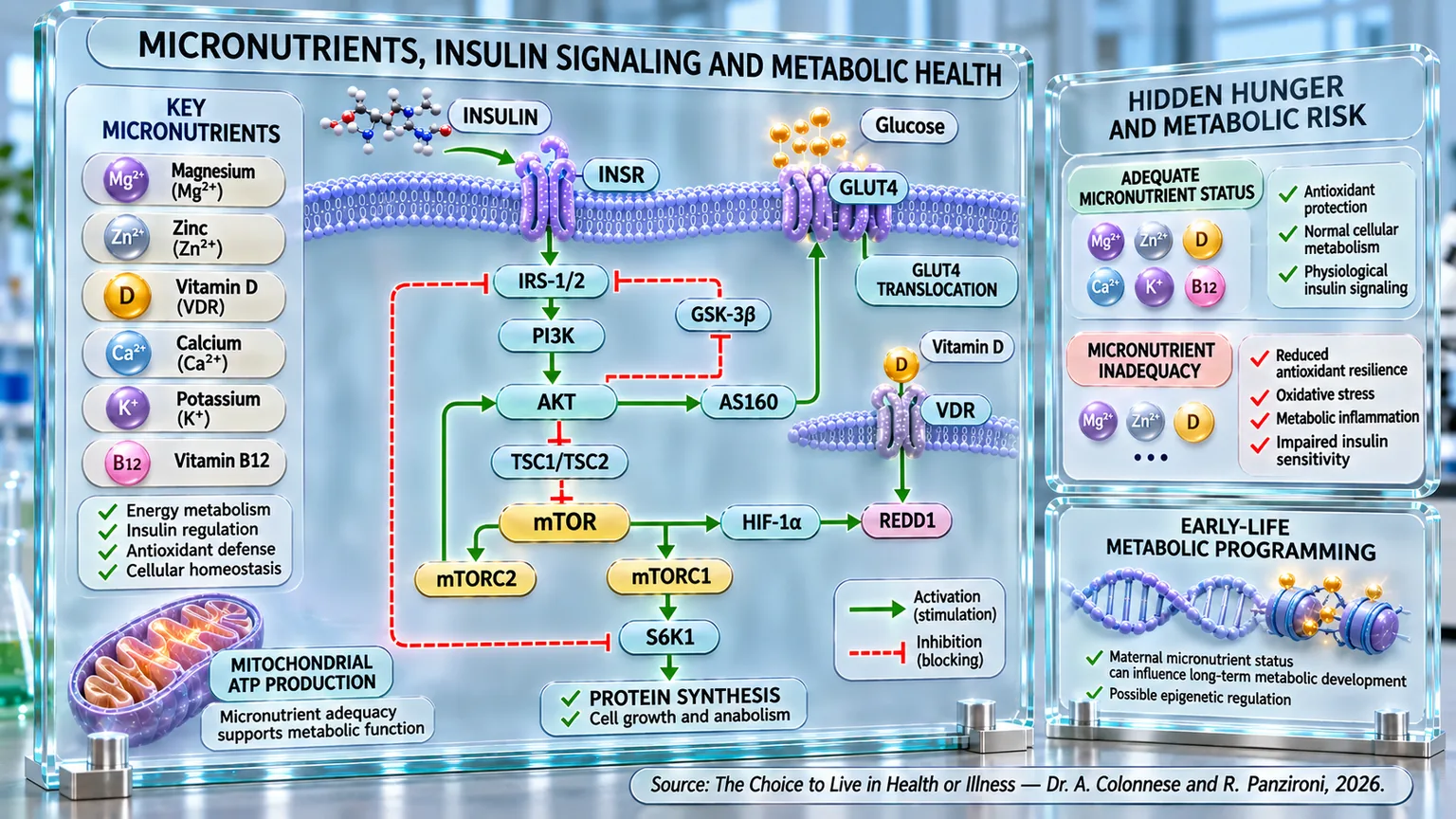
Molecular diagram with cell membrane, receptors, activation and inhibition arrows, mitochondria, and panels on metabolic risk and epigenetics.
Infographic of the micronutrients magnesium, zinc, vitamins D and B12, calcium, and potassium in insulin signaling: from the INSR receptor to the IRS–PI3K–AKT–mTOR pathways and GLUT4 translocation. Adequacy and deficiency are associated, respectively, with metabolic homeostasis or oxidative stress, inflammation, and reduced insulin sensitivity, with potential effects on early metabolic programming.

ABSTRACT

The availability of micronutrients contributes to energy production, immune system function, DNA repair, and antioxidant defense. In the book "La scelta di Vivere in Salute o in Malattia" (The Choice to Live in Health or Disease), Dr. A. Colonnese and R. Panzironi analyze how vitamin and mineral deficiencies can coexist with an adequate or excessive caloric intake. Observational studies based on the Composite Dietary Antioxidant Index associate better micronutrient quality with lower all-cause, cardiovascular, and cancer mortality, without establishing a causal relationship.

Nutritional adequacy depends on the availability of nutrients, not just on the calories consumed. Supplementation is particularly relevant when it corrects documented insufficiencies or addresses increased requirements. During pregnancy, iron, folate, and multi-micronutrient formulations can improve maternal-fetal outcomes; food fortification helps reduce various deficiencies. Conversely, in individuals who are already adequately nourished, there is no consistent benefit from indiscriminate supplementation. Even favorable changes in biomarkers in oncology and pediatrics require cautious interpretation.

The link with insulin metabolism involves magnesium, zinc, calcium, potassium, and vitamin D, which are involved in hormone secretion, ATP production, mitochondrial function, and GLUT4 translocation. Lower availability of micronutrients is associated with a higher HOMA-IR and poorer glycemic control. In type 2 diabetes, deficiencies in vitamin D, magnesium, and vitamin B12 are frequent, but the causal direction of these associations remains uncertain. This condition describes so-called hidden hunger, which is also possible in childhood overweight.

Maternal micronutrient status can also influence pancreatic development, epigenetic regulation, and insulin sensitivity in offspring. Experimental studies suggest that early deficiencies may precede manifest metabolic alterations and that timely interventions are more effective than late corrections; possible interactions with the gut microbiota and mineral metabolism also emerge. Overall, food quality and variety are central elements of nutritional prevention. The priority remains to identify and correct deficiencies, distinguishing between epidemiological associations, experimental results, and demonstrated clinical benefits.

Mortality risk

Micronutrient deficiency is often associated with severe malnutrition, but today it represents a much more common condition even in industrialized countries. A diet rich in calories but poor in fresh and minimally processed foods can, in fact, provide an adequate energy intake without meeting the requirements for essential vitamins, minerals, and trace elements. Unlike macronutrients (carbohydrates, proteins, and lipids), which provide energy and building materials, micronutrients regulate thousands of biological reactions essential for the proper functioning of the body. They participate in cellular energy production, support the immune system, promote DNA repair, contribute to the synthesis of enzymes and hormones, and protect cells from oxidative stress. The body could be compared to an engine: fuel allows it to run, but it is the oil and lubricants that prevent the wear and tear of its components. Similarly, a micronutrient deficiency does not immediately stop metabolism, but it progressively accelerates its deterioration, increasing vulnerability to chronic diseases.

In recent years, it has emerged that the risk depends not only on the deficiency of a single nutrient but above all on the overall quality of the diet's micronutrient profile. Vitamins, minerals, and antioxidants work as an integrated network: some directly neutralize reactive oxygen species, others regenerate oxidized antioxidants, and others act as enzymatic cofactors or regulate the expression of genes involved in the inflammatory response. When this network is depleted, oxidative stress increases, endothelial function is impaired, and a state of low-grade chronic inflammation is established, which is common to most cardiovascular, metabolic, and degenerative diseases.

One of the most solid demonstrations of this concept comes from a large analysis conducted on over 16,700 adults with hypertension, followed for more than eight years as part of the NHANES study. The researchers used the Composite Dietary Antioxidant Index (CDAI), an index that simultaneously considers the intake of vitamin A, vitamin C, vitamin E, carotenoids, zinc, and selenium, offering an assessment of the overall antioxidant capacity of the diet. Subjects with the highest CDAI showed a significant reduction in all-cause mortality, cancer mortality, and a favorable trend for cardiovascular mortality as well. The most interesting aspect was the dose-response relationship: the risk decreased progressively with the improvement of the diet's antioxidant quality until reaching a level beyond which the benefit tended to stabilize. This suggests that the main advantage derives from correcting a state of nutritional insufficiency rather than from consuming ever-increasing amounts of micronutrients (Qin et al., 2024) [1].

The same message also emerges in patients with already diagnosed cardiovascular diseases. Analyzing nearly 1,400 subjects from the same NHANES database, it was observed that a higher dietary intake of vitamin C, vitamin E, zinc, and a high CDAI were associated with a significant reduction in total and cardiovascular mortality. The authors emphasize that the benefit does not depend on the action of a single micronutrient, but on their synergistic activity. Vitamin C limits the oxidation of LDL lipoproteins, vitamin E protects cell membranes from lipid peroxidation, while zinc supports numerous enzymes involved in antioxidant defense and contributes to the maintenance of endothelial function. The final effect is a reduction in oxidative stress and systemic inflammation, with a consequent improvement in prognosis (Hu et al., 2025) [2].

The importance of the micronutrient quality of the diet does not exclusively concern cardiovascular diseases. An analysis conducted on over 35,000 subjects with osteoarthritis showed that a higher CDAI is associated with a significant reduction in all-cause mortality. The authors explain that the excessive production of free radicals does not only contribute to the degeneration of articular cartilage but fuels a systemic inflammatory environment that promotes the development of type 2 diabetes, metabolic syndrome, and cardiovascular diseases. In this study, too, the benefit increased progressively with the improvement of the diet's antioxidant quality until an adequate nutritional status was reached, confirming that a diet rich in vitamins, minerals, and antioxidant phytochemicals exerts protective effects well beyond the single organ or system involved (Jiang et al., 2024) [3].

Continuing these observations, further confirmation comes from a large prospective analysis conducted on over 16,000 adults with hypertension, in which both the Composite Dietary Antioxidant Index and the contribution of individual antioxidant micronutrients were evaluated. In this population as well, subjects with the highest overall antioxidant intake had a significantly lower risk of mortality compared to those with the lowest levels. Among all the nutrients analyzed, vitamin E and selenium emerged as the main contributors to the protective effect. Vitamin E, the body's main fat-soluble antioxidant, limits the peroxidation of membrane lipids and protects LDL lipoproteins from oxidation, while selenium is essential for the synthesis of selenoproteins, including glutathione peroxidase, which are fundamental for neutralizing peroxides (oxidizing substances that, if present in excess, can damage cells) and preserving cellular redox homeostasis. The authors also highlight that a selenium deficiency can promote the activation of molecular pathways involved in the progression of hypertension, further strengthening the link between nutritional status and cardiovascular risk (Zhao et al., 2025) [4].

The same principle emerges by observing the role of essential trace elements. A recent study conducted on over 10,000 subjects with cardiovascular-renal-metabolic syndrome evaluated the association between the dietary intake of iron, zinc, copper, and selenium and the risk of mortality. All these minerals participate in essential biological functions, including mitochondrial energy production, DNA synthesis, regulation of the immune system, and the functioning of antioxidant systems. The analysis showed a common relationship for all trace elements: the risk of death decreased rapidly by correcting a deficiency condition, while beyond a certain level, the benefit tended to stabilize. Iron contributed to the maintenance of cellular respiration and energy production; zinc supported numerous enzymes involved in antioxidant protection and DNA repair; copper was an essential component of Cu/Zn superoxide dismutase, one of the main enzymes responsible for neutralizing free radicals; and selenium once again confirmed its role in maintaining redox homeostasis. Taken together, these results indicate that the correction of micronutrient deficiencies can be an important determinant of survival (Yi et al., 2026) [5].

A further perspective was offered by a study that analyzed nearly 7,000 elderly people with hypertension, evaluating not the single nutrient but different patterns of nutritional deficiency. Through a Latent Class Analysis (a statistical method that identifies groups of subjects with common characteristics), the authors identified different dietary profiles characterized by specific combinations of vitamin, mineral, and fiber insufficiencies. It emerged that the risk of mortality increased progressively with the worsening of the overall nutritional status. Particularly interesting was the observation that even a deficiency apparently limited to dietary fiber, magnesium, and vitamin E was associated with a significant increase in cardiovascular and total mortality. This suggests that severe malnutrition is not necessary for clinically relevant consequences to appear: even more modest alterations, when they involve fundamental nutrients, can compromise the body's metabolic balance (Sun et al., 2024) [6].

Taken together, these studies outline an extremely consistent picture. The quality of the micronutrient status represents a determinant of survival regardless of the pathology considered. Whether it is hypertension, cardiovascular disease, osteoarthritis, or cardiovascular-renal-metabolic syndrome, the message remains essentially the same: a reduced availability of vitamins, minerals, and trace elements promotes oxidative stress, fuels chronic inflammation, compromises cellular function, and increases the risk of premature death. Conversely, a diet naturally rich in micronutrients helps to preserve the integrity of the endothelium (the inner lining of blood vessels), support mitochondrial function, keep antioxidant systems efficient, and modulate the immune response. Scientific literature therefore suggests that prevention should not be limited to controlling caloric intake or macronutrients, but must also consider the micronutrient quality of the diet, since the greatest benefit seems to derive not from the excessive intake of individual nutrients, but from reaching and maintaining an adequate nutritional balance.

Supplementation

The mere availability of a supplement does not automatically imply a health benefit. Over the last few decades, the nutritional supplementation market has grown exponentially, fueled by the belief that vitamins and minerals can improve health status, prevent diseases, or slow down aging. Although these molecules are essential for the proper functioning of the body, the most recent scientific evidence paints a much more complex picture. The effectiveness of supplementation actually depends on the clinical context, initial nutritional status, age, physiological conditions, and the presence of any documented deficiencies. In other words, supplements cannot be considered a universal solution, but rather represent therapeutic tools that are truly useful when they correct a deficit or meet an increased physiological requirement.

This principle emerges with particular clarity during pregnancy, a phase of life in which the requirement for vitamins and minerals increases considerably to support fetal growth, placental development, and the mother's metabolic adaptation. Two of the largest systematic reviews published on the subject have analyzed a total of 72 clinical trials and over 450,000 pregnant women, comparing different vitamin-mineral supplementation strategies. The results show that traditional supplementation with iron and folic acid significantly reduces the risk of maternal anemia and contributes to decreasing the incidence of low birth weight. However, the greatest benefits were observed with supplements containing multiple micronutrients (Multiple Micronutrient Supplements, MMN), which proved superior in reducing the risk of low birth weight, small-for-gestational-age infants, and stillbirths, while also improving some indicators of infant development and the newborn's nutritional status (Oh et al., 2020) [7] (Keats et al., 2021) [8].

A particularly interesting aspect concerns the composition of the supplements. Formulations containing a higher number of vitamins and minerals produced better results than those consisting of only a few nutrients, suggesting that during pregnancy, proper fetal development depends on the interaction of numerous simultaneous biological processes, such as DNA synthesis, mitochondrial energy production, placental angiogenesis (the formation of blood vessels in the placenta), and nervous system development. None of these mechanisms depends on a single micronutrient, but rather on their coordinated action. It is important to emphasize that these benefits were obtained without any increase in maternal, neonatal, or infant mortality, confirming the good safety profile of multiple supplementation when used in populations characterized by a high risk of nutritional deficiencies (Oh et al., 2020) [7]; (Keats et al., 2021) [8].

The same logic has also been observed in public health interventions aimed at the entire population. A Cochrane review (which rigorously analyzes the results of multiple scientific studies on the same topic) analyzed 43 studies and nearly 20,000 participants, evaluating the effects of food fortification with multiple micronutrients. Compared to non-fortified foods, this strategy resulted in a marked reduction in anemia, iron-deficiency anemia, and deficiencies of iron, vitamin A, vitamin B2, vitamin B6, and vitamin B12, confirming how the simultaneous correction of multiple nutritional deficits can significantly improve the population's nutritional status. This highlights how the improvement of nutritional biomarkers does not automatically translate into a measurable clinical benefit and underscores the need for longer-term prospective studies (Das et al., 2019) [9].

The most recent evidence also suggests that the very concept of nutritional deficiency should be re-evaluated. For many years, international programs have focused almost exclusively on preventing deficiencies of iron, iodine, vitamin A, folates, and zinc. A recent review promoted by the Micronutrient Forum instead draws attention to at least nine other frequently overlooked micronutrients, including thiamine, riboflavin, niacin, vitamins B6 and B12, vitamin D, vitamin K, calcium, and selenium. The authors emphasize that so-called "hidden hunger" represents one of the main global nutritional emergencies today and that the scarcity of epidemiological data for many of these nutrients should not be interpreted as an absence of the problem, but rather as a consequence of the limited nutritional surveillance available. According to this view, the future of prevention should be based on a broader approach, capable of assessing the individual's entire micronutrient profile rather than focusing exclusively on a few vitamins or minerals (Brown et al., 2025) [10].

Interest in nutritional supplementation concerns not only the prevention of deficiencies but also the possible role of vitamins and minerals in improving the prognosis of already diagnosed pathologies. In oncology, for example, many patients spontaneously resort to supplements with the goal of supporting the body during treatments or reducing the risk of recurrence. A systematic review with meta-analysis that evaluated the available studies suggests that some micronutrients may indeed be associated with favorable outcomes, while still calling for a cautious interpretation of the results.

In particular, calcium intake after a cancer diagnosis was found to be associated with a reduction in total mortality and cancer-specific mortality, while vitamin D was correlated with an improvement in overall survival. Furthermore, in women with breast cancer, vitamin C, vitamin E, and multivitamin preparations were associated with a lower risk of recurrence and better survival. However, the authors emphasize that most of the evidence comes from observational studies, in which it is difficult to distinguish the effect of the supplement from that of an overall healthier lifestyle. For this reason, although these are promising results, supplementation cannot be recommended indiscriminately to all cancer patients, but should be personalized based on nutritional status, the type of neoplasm, ongoing therapies, and any documented deficiencies (Kanellopoulou et al., 2021) [11].

A similar message also emerges in the prevention of melanoma. A recent review highlighted how various micronutrients participate in the regulation of biological processes involved in carcinogenesis, including immune response, DNA repair, control of oxidative stress, and cell proliferation. Among all, vitamin D is supported by the most solid epidemiological evidence: low serum levels have been associated with a higher risk of developing melanoma, more aggressive tumors, and a worse prognosis. Vitamins A, C, and E, along with selenium, zinc, and copper, also play important antioxidant and immunomodulatory functions. However, the review highlights a fundamental concept: the effect of some micronutrients is strongly dose-dependent. Vitamin C and selenium, for example, can exert favorable effects when correcting a deficiency, but excessive dosages could alter the cellular redox balance, producing different biological effects depending on the clinical and genetic context. It follows that the principle that "more is better" has no scientific foundation in vitamin supplementation. Correcting a deficiency represents a rational intervention, while the indiscriminate use of high doses currently lacks sufficient evidence to be recommended as a melanoma prevention strategy (Pec et al., 2026) [12].

The same cautious approach also characterizes the literature regarding the pediatric age. A systematic review that analyzed the use of supplements in major chronic childhood diseases shows that many products are biologically active, but not always capable of producing relevant clinical benefits. Probiotics, omega-3, vitamins, minerals, and other supplements have been shown to modulate the gut microbiota, reduce some inflammatory markers, and improve specific metabolic parameters in children affected by autism spectrum disorders, cystic fibrosis, type 1 diabetes mellitus, gastrointestinal diseases, and juvenile idiopathic arthritis.

However, these biological modifications have only rarely translated into consistent and reproducible clinical improvements. The most promising evidence concerns probiotics in cystic fibrosis and in some subgroups of children with autism spectrum disorders, while for many other conditions, the available studies are still too small and heterogeneous to allow for definitive recommendations (Inchingolo et al., 2026) [13].

Taken together, this evidence outlines a common principle. Nutritional supplementation should not be considered an alternative to a balanced diet nor a preventive intervention to be applied indiscriminately to the entire population. The most consistent benefits emerge when it is used to correct documented deficiencies, meet increased physiological needs, such as during pregnancy, or support specific clinical conditions where there are solid biological bases and adequate scientific evidence. Conversely, in people with good nutritional status, the indiscriminate intake of vitamins and minerals has not shown consistent benefits. Supplementation should therefore be interpreted as a tool of personalized nutritional medicine, guided by the clinical and laboratory assessment of the individual rather than by the idea that a higher intake of micronutrients is always synonymous with better health.

Insulin resistance

The onset of insulin resistance is traditionally attributed to caloric excess, obesity, and a sedentary lifestyle. Although these are determining factors, an additional element capable of influencing glucose metabolism has emerged in recent years: the body's micronutrient status. Vitamins and minerals do not merely play a supportive role; they participate directly in the mechanisms that regulate insulin secretion, insulin receptor signal transduction, ATP production, mitochondrial function, and defense against oxidative stress. When one or more of these micronutrients are deficient, numerous enzymatic reactions lose efficiency, and the entire metabolic response to insulin tends to deteriorate progressively. It is a phenomenon comparable to a gear mechanism missing several small components simultaneously: each one, taken individually, might seem unimportant, but their combined absence compromises the functioning of the entire system.

For a long time, research focused on the role of individual micronutrients, such as magnesium or vitamin D. Today, however, it is becoming increasingly clear that nutritional deficiencies rarely occur in isolation. More frequently, multiple deficits coexist and influence each other, making it more realistic to evaluate the overall micronutrient profile rather than a single nutrient. This shift in perspective was confirmed by a study conducted on patients with type 2 diabetes, in which circulating levels of magnesium, zinc, calcium, potassium, and vitamin D were analyzed simultaneously. Through an analysis of nutritional profiles, the authors identified two different patterns of micronutrient distribution, both closely associated with metabolic control. Subjects in the quartiles with the lowest concentrations had a nearly fourfold higher risk of poor glycemic control and high insulin resistance compared to those with more favorable nutritional profiles. Particularly significant is the fact that these associations primarily concerned glycated hemoglobin and the HOMA-IR index, indicators of chronic metabolic control and insulin sensitivity, while they were not evident for fasting glycemia. This suggests that micronutrient deficiencies exert a progressive effect over time, contributing more to the deterioration of the insulin response than to acute glycemic fluctuations (Santos et al., 2024) [14].

From a physiological standpoint, these results are consistent with the functions performed by the main micronutrients involved. Magnesium is an essential cofactor for hundreds of enzymes and is indispensable for insulin receptor activity, ATP production, and the translocation of the GLUT4 transporter to the cell membrane. Zinc participates in the synthesis, storage, and secretion of insulin, in addition to protecting pancreatic β-cells from oxidative damage. Calcium is involved in insulin exocytosis and intracellular signal transduction, while potassium regulates the membrane potential of pancreatic β-cells, influencing hormone release. Finally, vitamin D acts through its receptor expressed in the pancreas, skeletal muscle, liver, and adipose tissue, contributing to the modulation of chronic inflammation and insulin sensitivity (Santos et al., 2024) [14]. Taken together, these mechanisms explain why the concomitant reduction of multiple micronutrients can compromise the efficiency of the entire glucose regulation system.

A second aspect that has recently emerged concerns the overall quality of the diet. For many years, the prevention of insulin resistance focused primarily on reducing caloric intake. However, research conducted on women of childbearing age at high metabolic risk has shown that it is not only important how much one eats, but above all the nutritional density of the foods consumed. The authors also evaluated the achievement of recommended requirements for vitamins and minerals and adherence to a correct energy intake, observing that many participants consumed sufficient or even excessive calories without meeting the requirements for numerous essential micronutrients. This phenomenon, now defined as "hidden hunger," describes a condition in which the body receives energy in abundance but remains deficient in nutrients essential for the proper functioning of metabolism (Piyathilake et al., 2022) [15].

Among all the micronutrients analyzed, the most interesting results concerned folates and vitamin C. Women who reached the recommended levels of these nutrients within an energetically balanced diet had a significantly lower probability of developing insulin resistance compared to those with inadequate intake. However, this association did not emerge when vitamin requirements were met through an excessively caloric diet. This suggests that energy excess may attenuate or even nullify the favorable metabolic effects of micronutrients. These results introduce a particularly relevant concept: the nutritional quality of the diet can be just as important as the amount of energy introduced and represents a fundamental element in the prevention of metabolic alterations that precede type 2 diabetes (Piyathilake et al., 2022) [15].

The observations emerging from clinical studies are also confirmed by population analyses. The largest systematic review available to date, including 132 studies and over 52,000 patients with type 2 diabetes, demonstrates that nearly one in two subjects has at least one clinically significant micronutrient deficiency. The most frequent deficiencies concerned vitamin D, magnesium, and, in patients treated with metformin, vitamin B12. This data is particularly relevant when considering that these nutrients are involved in fundamental processes for glucose metabolism, including insulin secretion, insulin receptor phosphorylation, ATP production, mitochondrial function, and antioxidant defense systems. The review also highlights that deficiencies are even more frequent in women and in patients already suffering from diabetic complications, suggesting that micronutrient status may influence not only the onset of the disease but also its progression (Mangal et al., 2025) [16].

These results do not allow us to establish whether deficiencies represent a cause or a consequence of diabetes, but they reinforce the hypothesis that so-called "hidden hunger" contributes to fueling a vicious cycle in which chronic inflammation, oxidative stress, and insulin signaling alterations reinforce each other. For this reason, the authors suggest that the assessment of micronutrient status should become part of the clinical management of the diabetic patient, with particular attention to levels of vitamin D, magnesium, and vitamin B12, especially in subjects on chronic metformin therapy (Mangal et al., 2025) [16].

If micronutrient deficiency represents a possible risk factor, a question arises: can their correction improve glucose metabolism? An interesting answer comes from one of the most innovative precision nutrition studies conducted in recent years. Through a multi-micronutrient intervention containing twelve vitamins and five minerals, followed for two years using genomic, metabolomic, and proteomic technologies (studying genes, proteins, and metabolic products), it was possible to observe how supplementation at physiological dosages is capable of simultaneously modifying numerous metabolic processes. In children with a poor-quality diet, the intervention resulted in a reduction of fasting glycemia and LDL cholesterol, accompanied by an increase in circulating levels of numerous B vitamins and vitamin E. In parallel, changes in lipid metabolism, inflammatory response, and the expression of proteins involved in energy homeostasis were observed.

One of the most innovative aspects of the study, however, concerns the marked individual variability of the response. Not all participants obtained the same benefits, and the main predictor of the intervention's efficacy was the initial level of the biomarker: the greatest improvements were observed in subjects who had the most marked deficiencies. This result reinforces the concept of personalized nutrition, according to which the efficacy of a nutritional intervention depends on the biological characteristics of the individual and cannot be considered identical for the entire population (Kaput and Monteiro, 2024) [17].

Despite this evidence, it is important to interpret the role of micronutrients with balance. A recent meta-analysis evaluated the overall association between multiple micronutrient deficiencies and glycemic control in type 2 diabetes, observing that this relationship, while statistically significant, has a relatively modest magnitude. Among all the nutrients analyzed, magnesium was the one most associated with both glycated hemoglobin and the HOMA-IR index, confirming its central role in insulin receptor phosphorylation, ATP metabolism, and GLUT4 transporter translocation. Vitamin D showed significant associations with fasting glycemia, post-prandial glycemia, and glycated hemoglobin, while for zinc, iron, and vitamin B12, the correlations were much weaker (Mangal et al., 2026) [18].

Taken together, these findings outline a coherent picture. Micronutrients are not merely accessory elements of the diet, but essential components of the biological networks that regulate insulin sensitivity, pancreatic β-cell function, energy metabolism, and defense against oxidative stress. Multiple deficiencies are frequent in patients with type 2 diabetes and are associated with poorer metabolic control, especially when they involve nutrients such as magnesium and vitamin D. At the same time, research demonstrates that the efficacy of nutritional interventions depends on the clinical context and individual nutritional status, confirming that the prevention of insulin resistance cannot be limited to simple calorie control, but must also consider diet quality and the adequacy of micronutrient intake. In this light, nutritional assessment becomes an integral part of a truly personalized approach to the prevention and management of metabolic diseases.

Offspring and children

An individual's metabolic health does not depend solely on dietary habits adopted in adulthood. Scientific evidence from recent years shows that a significant portion of the risk of developing obesity, insulin resistance, and type 2 diabetes is determined long before the appearance of the first symptoms, during pregnancy, breastfeeding, and the first years of life. These phases represent a true "critical biological window," during which the body is particularly sensitive to nutritional stimuli. During this period, vitamins and minerals do not only support growth, but also participate in the formation of organs, the development of the endocrine system, the maturation of the pancreas, the regulation of energy metabolism, and the definition of numerous mechanisms that will accompany the individual for the rest of their life.

This concept is the basis of the Developmental Origins of Health and Disease (DOHaD) theory, according to which the nutritional environment encountered during fetal development and in the first years of life can "program" the body's metabolism, influencing the risk of developing chronic diseases even many decades later. While in the past the focus was primarily on the mother's caloric and protein intake, it is now increasingly evident that micronutrients also play a decisive role: vitamins and minerals participate in DNA synthesis, epigenetic regulation (control of which genes are activated or deactivated, without modifying the DNA), cell differentiation, the maturation of pancreatic β-cells, insulin secretion, insulin sensitivity, and antioxidant defense systems. Their insufficient availability during pregnancy can therefore permanently alter the development of metabolic organs and predispose the child to obesity, metabolic syndrome, and type 2 diabetes in adulthood (Wu et al., 2021) [19].

Among the most innovative aspects emerging from this research is the role of epigenetics. Epigenetic modifications do not alter the DNA sequence, but regulate gene activity through processes such as DNA methylation, histone modifications (proteins that organize DNA and help control gene expression), and the action of microRNAs. In other words, maternal nutrition can leave a sort of "biological memory" that conditions the functioning of genes involved in the regulation of glucose metabolism, inflammation, and lipid metabolism. Experimental studies show, for example, that a maternal magnesium deficiency compromises the offspring's insulin sensitivity, while alterations in the intake of calcium, chromium, zinc, vitamin D, vitamin A, vitamin B12, and folates can modify pancreatic function, insulin response, and the child's body composition (Wu et al., 2021) [19].

Experimental observations concretely confirm these theoretical principles. In a study conducted on Wistar rats (rats specifically bred as an experimental model in scientific research), a chronic restriction of maternal vitamin intake initiated before conception and maintained during pregnancy and lactation did not change the offspring's birth weight, but induced profound metabolic alterations during growth. The pups developed an increase in fat mass, a reduction in lean mass, higher concentrations of triglycerides, and a marked increase in oxidative stress, despite maintaining apparently normal glycemia and insulinemia values in the first months of life. These results suggest that metabolic programming precedes the appearance of clinically evident alterations by many years. Insulin resistance was not yet manifest, but the biological terrain was already favorable to its development. Particularly significant was the observation that restoring an adequate vitamin intake immediately after birth corrected most of the metabolic alterations, while a later nutritional intervention produced much more limited benefits. This confirms the existence of a time window in which nutrition exerts a particularly profound influence on future metabolic health (Venu et al., 2004) [20].

The consequences of multiple micronutrient deficiencies do not seem to be limited to the body's tissues, but also involve the gut microbiota, now recognized as one of the main regulators of energy metabolism. To better understand these mechanisms, an innovative experimental model of multiple micronutrient deficiencies was developed that faithfully reproduces the situation observed in malnourished children. Animals fed a diet poor in vitamins and minerals showed profound alterations in glucose and lipid metabolism, accompanied by a significant functional reorganization of the gut microbiota. In addition to the reduction of the micronutrients provided by the diet, deficiencies in copper, selenium, and molybdenum appeared unexpectedly, along with alterations in the balance of other minerals, demonstrating how micronutrient metabolism constitutes a highly integrated network in which the deficit of one element can modify the availability of many others.

At the same time, a persistent reduction in glycemia, modifications in fatty acid metabolism, and a lower capacity of the microbiota to mature correctly were observed, maintaining characteristics typical of the earliest stages of development. According to the authors, these alterations could represent one of the mechanisms through which childhood malnutrition increases the risk of obesity, metabolic syndrome, and type 2 diabetes in adulthood (Littlejohn et al., 2023) [21].

The repercussions of micronutrient deficiencies are particularly evident during childhood, a period in which body growth, brain development, and immune system maturation proceed with extreme rapidity. A narrative review highlights how so-called "hidden hunger" represents one of the most widespread forms of pediatric malnutrition today and can also affect children of normal weight or even those who are overweight. Iron, vitamin A, vitamin D, and zinc are the micronutrients that most frequently result in being insufficient. The consequences do not exclusively concern the appearance of anemia or growth alterations, but include cognitive deficits, reduced learning capacity, greater susceptibility to infections, and an increased risk of developing obesity, type 2 diabetes, osteoporosis, and cardiovascular diseases over the course of life. The authors emphasize how these deficits rarely occur in isolation: in most cases, multiple deficiencies coexist and reinforce each other, making it even more important to promote a varied and nutritionally complete diet from the first months of life. Breastfeeding, the correct introduction of complementary foods, and the limitation of ultra-processed foods represent the most effective preventive tools, which can be supplemented by targeted supplementation programs in at-risk populations (Weffort and Lamounier, 2024) [22].

A particularly interesting aspect concerns the so-called "childhood obesity paradox." Although these children often consume amounts of energy exceeding their requirements, they frequently present multiple micronutrient deficiencies, configuring a form of qualitative malnutrition. A diet rich in ultra-processed foods, sugary drinks, and refined products guarantees a caloric excess but a reduced intake of vitamins, minerals, and dietary fiber. Added to this dietary component are the chronic inflammatory state typical of obesity, alterations in intestinal absorption, and changes in the distribution of nutrients within the body. The most frequently observed deficiencies concern iron, vitamins A, C, D, E, B-group vitamins, folic acid, zinc, and copper. These deficits do not represent a simple consequence of obesity, but actively contribute to the appearance of insulin resistance, endothelial dysfunction, oxidative stress, and chronic inflammation.

Among all the alterations, iron deficiency is one of the best documented. Chronic inflammation stimulates the production of hepcidin, a hormone that reduces intestinal iron absorption and limits its release from body stores, causing a functional deficiency even when stores appear normal. The consequences are particularly significant during the developmental age, as they compromise cognitive development, memory, learning, concentration capacity, and the immune response. Similarly, reduced availability of vitamin D, also favored by sequestration in adipose tissue and less sun exposure, has been associated with greater insulin resistance and a worse cardiometabolic profile. Antioxidant vitamins, folates, vitamin B12, and zinc are also frequently reduced and contribute to increasing oxidative stress, hyperhomocysteinemia, and the deterioration of metabolic function (Calcaterra et al., 2023) [23].

Taken together, this evidence shows that the prevention of metabolic diseases must begin long before adulthood. The mother's nutritional status, the quality of nutrition during the first thousand days of life, and childhood dietary habits profoundly influence the development of metabolic organs, gut microbiota function, epigenetic regulation, and insulin sensitivity. Multiple micronutrient deficiencies do not only compromise the child's growth and neurological development, but can leave a true "metabolic memory" capable of increasing the risk of obesity, type 2 diabetes, and other chronic pathologies many years later. For this reason, the prevention of hidden hunger should not be considered exclusively a nutritional goal, but a public health strategy aimed at improving the health of future generations through a balanced maternal diet, the promotion of breastfeeding, adequate nutritional education, and the monitoring of micronutrients in the most vulnerable subjects.

Conclusions

Taken together, the scientific evidence analyzed shows that micronutrient deficiency is not exclusively a consequence of severe malnutrition, but can also develop in the presence of adequate or excessive caloric intake. Vitamins, minerals, and trace elements are, in fact, involved in energy production, immune system function, DNA repair, and antioxidant protection. Studies based on the Composite Dietary Antioxidant Index show that a better micronutritional quality of the diet is associated with lower all-cause mortality and, in different populations, lower cardiovascular and cancer-related mortality. The benefit appears to be primarily linked to the correction of insufficiency, while it tends to stabilize once an adequate nutritional status is reached.

From this principle follows the second step: supplementation does not necessarily mean obtaining a benefit. Evidence shows that supplementation is more relevant when it corrects documented deficiencies or addresses increased requirements. During pregnancy, iron, folate, and multimicronutrient formulations can improve specific maternal-fetal outcomes, while multiple fortification reduces various nutritional deficiencies. Conversely, in individuals who are already adequately nourished, there is no consistent advantage to the indiscriminate intake of vitamins and minerals. Even in oncology and pediatrics, the results require caution: favorable changes in biomarkers do not necessarily equate to clinical benefits. Supplementation must therefore be contextualized and personalized.

The path then leads to insulin resistance. Magnesium, zinc, calcium, potassium, and vitamin D participate directly in insulin secretion, ATP production, mitochondrial function, insulin receptor signaling, and GLUT4 translocation. Profiles characterized by lower availability of multiple micronutrients are associated with higher HOMA-IR and poorer glycemic control. Thus, the concept of hidden hunger emerges: a diet can provide excess energy but be metabolically poor. Multiple deficiencies are also frequent in type 2 diabetes, especially for vitamin D, magnesium, and vitamin B12, although the evidence does not allow us to establish in every case whether they represent a cause or a consequence of the disease.

The final step further broadens the perspective, showing how micronutritional status can influence health even before birth; the maternal nutritional environment can modify pancreatic development, insulin sensitivity, energy metabolism, and epigenetic regulation in offspring. Deficiencies during pregnancy and breastfeeding can therefore leave a true "biological memory," predisposing individuals to subsequent metabolic alterations.

Experimental studies also show that maternal vitamin deficiencies can long precede the onset of manifest insulin resistance, while early nutritional correction produces greater effects compared to late interventions. Gut microbiota and mineral metabolism are also involved. Finally, in childhood, overweight and obesity can paradoxically coexist with multiple deficiencies, linking caloric excess, oxidative stress, inflammation, and insulin dysfunction.

Overall, a coherent sequence emerges: reduced micronutritional quality → weakening of antioxidant and metabolic defenses → oxidative stress and inflammation → alteration of insulin secretion and sensitivity → greater metabolic vulnerability, with effects that can begin as early as fetal life. Prevention, therefore, cannot be based solely on calories and macronutrients: it must consider the quality, variety, and micronutritional adequacy of the diet, prioritizing the correction of real deficiencies over indiscriminate supplementation.

References

[1] Association of composite dietary antioxidant index with mortality in adults with hypertension: evidence from NHANES

Qin et al., 2024

Frontiers in Nutrition. 2024;11:1371928.

[2] Association of independent dietary antioxidant intake, and CDAI level with risks of all-cause and cardiovascular-cause death among population with cardiovascular disease

Hu et al., 2025

BMC Public Health. 2025;25:1327.

[3] Association between the composite dietary antioxidant index and all-cause mortality in individuals with osteoarthritis via NHANES data

Jiang et al., 2024

Scientific Reports. 2024;14(1):30387.

[4] Joint and Independent Associations Between Dietary Antioxidant Intake and All-Cause and Cardiovascular Mortality Among Hypertensive Patients: A Population-Based Cohort Study

Zhao et al., 2025

Nutrition Journal. 2025;24(1):14.

[5] Dietary Trace Element Intake and All-Cause and Cardiovascular Mortality Risk in Adults With Cardiovascular-Kidney-Metabolic Syndrome Stages 0–3: A Cohort Study

Yi et al., 2026

BMC Public Health. 2026;26:1779.

[6] Nutrient deficiency patterns and all-cause and cardiovascular mortality in older adults with hypertension: a latent class analysis

Sun et al., 2024

BMC Public Health. 2024;24(1):1551.

[7] Vitamin and Mineral Supplementation During Pregnancy on Maternal, Birth, Child Health and Development Outcomes in Low- and Middle-Income Countries: A Systematic Review and Meta-Analysis

Oh et al., 2020

Nutrients. 2020;12(2):491.

[8] Effects of Vitamin and Mineral Supplementation During Pregnancy on Maternal, Birth, Child Health and Development Outcomes in Low- and Middle-Income Countries: A Systematic Review

Keats et al., 2021

Campbell Systematic Reviews. 2021;17(2):e1127.

[9] Multiple Micronutrient Fortification of Foods and Condiments and Health Outcomes in the General Population

Das et al., 2019

Cochrane Database of Systematic Reviews. 2019;12:CD011400.

[10] Neglected Micronutrients: Considering a Broader Set of Vitamins and Minerals in Global Public Health Nutrition Programs

Brown et al., 2025

American Journal of Clinical Nutrition. 2025;122(3):680-694.

[11] Dietary Supplement Use After Cancer Diagnosis in Relation to Total Mortality, Cancer Mortality and Recurrence: A Systematic Review and Meta-Analysis

Kanellopoulou et al., 2021

Nutrition and Cancer. 2021;73(1):16-30.

[12] The Role of Vitamins and Micronutrients in Melanoma Prevention: A Review of Current Evidence

Pec et al., 2026

International Journal of Molecular Sciences. 2026;27(3):1428.

[13] Oral Dietary and Complementary Supplements for the Management of Chronic Diseases in Children: A Systematic Review

Inchingolo et al., 2026

Frontiers in Pediatrics. 2026;13:1710200.

[14] Association Between Circulating Micronutrient Profile, Glycemic Control and Insulin Resistance in Type 2 Diabetes Mellitus

Santos et al., 2024

Biometals. 2024;37:527-537.

[15] Micronutrient Intake in Relation to Caloric Intake and Risk of Insulin Resistance

Piyathilake et al., 2022

Nutrition, Metabolism and Cardiovascular Diseases. 2022;32(6):1385-1391.

[16] Burden of Micronutrient Deficiency in Patients With Type 2 Diabetes: A Systematic Review and Meta-Analysis

Mangal et al., 2025

BMJ Nutrition, Prevention & Health. 2025.

[17] Human Nutrition Research in the Age of Data: Results From 11 Studies of a Multimicronutrient Intervention

Kaput e Monteiro, 2024

Nutrients. 2024;16(2):188.

[18] A Systematic Review and Meta-Analysis Evaluating the Effect of Hidden Hunger on Glycemic Control in Patients With Type 2 Diabetes Mellitus

Mangal et al., 2026

Scientific Reports. 2026;16:1936.

[19] The Effect and Potential Mechanism of Maternal Micronutrient Intake on Offspring Glucose Metabolism: An Emerging Field

Wu et al., 2021

Frontiers in Nutrition. 2021;8:763809.

[20] Maternal dietary vitamin restriction increases body fat content but not insulin resistance in WNIN rat offspring up to 6 months of age

Venu et al., 2004

Diabetologia. 2004;47(9):1493-1501.

[21] Multiple Micronutrient Deficiencies Alter Host Energy Metabolism and Gut Microbiome in an Early-Life Murine Model

Littlejohn et al., 2023

Frontiers in Nutrition. 2023;10:1151670.

[22] Hidden Hunger: A Narrative Review

Weffort e Lamounier, 2024

Jornal de Pediatria (Rio J). 2024;100(Suppl 1):S10-S17.

[23] Micronutrient Deficiency in Children and Adolescents with Obesity: A Narrative Review

Calcaterra et al., 2023

Children. 2023;10(4):695.