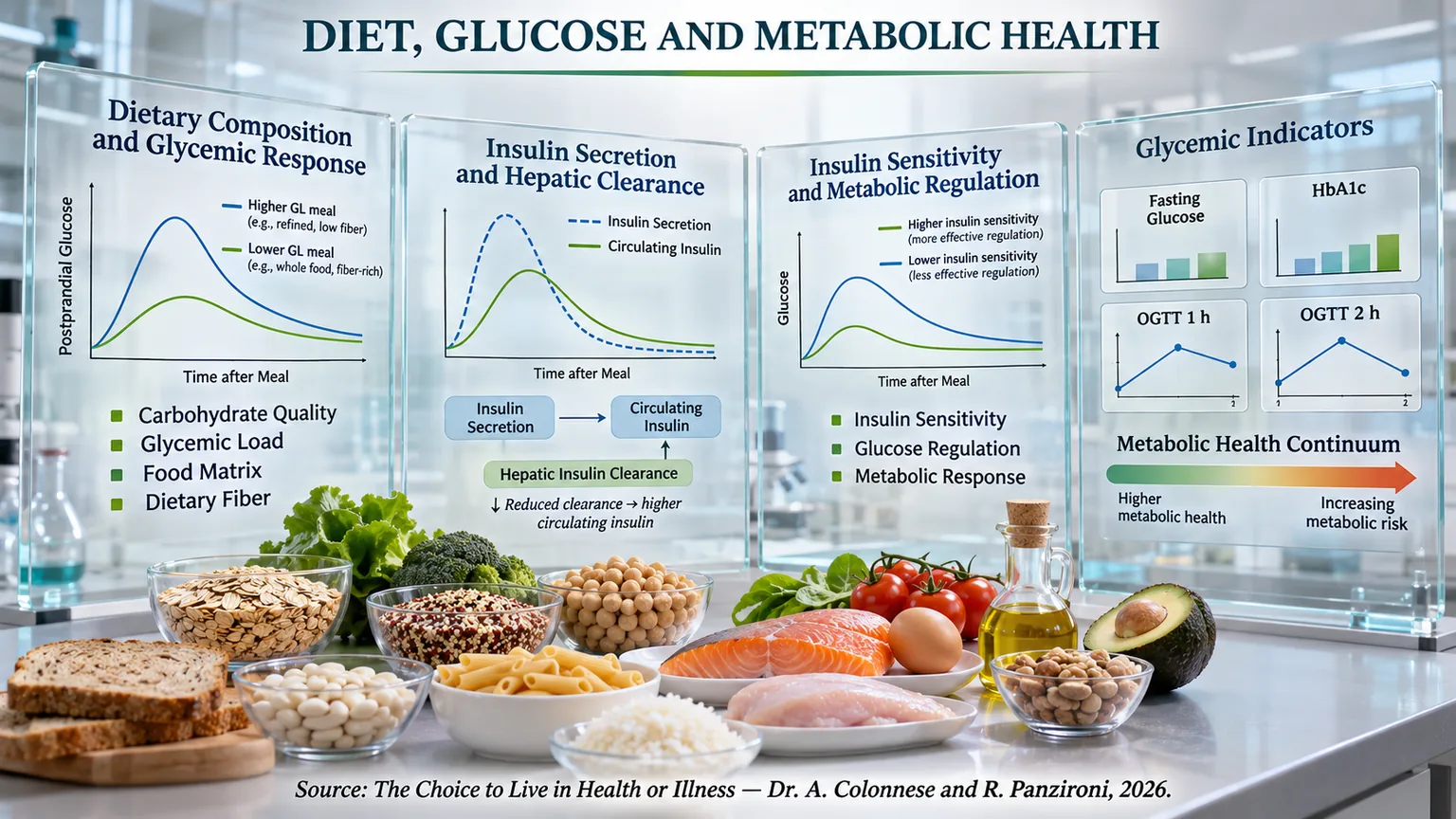
When consuming a food containing carbohydrates, the body initiates a complex series of processes designed to transform these nutrients into glucose, the primary energy source for cells. Once absorbed in the intestine, glucose enters the bloodstream, causing an increase in glycemia—a completely physiological phenomenon known as the postprandial glycemic response. However, not all carbohydrate-rich foods cause the same increase in glycemia. Two meals containing an apparently similar amount of carbohydrates can, in fact, produce profoundly different metabolic responses, both in terms of speed and intensity. This observation, now widely confirmed by scientific research, has profoundly changed the way we interpret the relationship between nutrition and glucose metabolism, shifting the focus from the quantity of carbohydrates alone to their metabolic quality (Esfahani et al., 2009) [1].
For many years, the nutritional assessment of carbohydrates focused almost exclusively on their quantitative content. It was believed, in essence, that the glycemic response depended primarily on the grams of carbohydrates ingested. Over time, it emerged that this interpretation was incomplete. The speed at which starches are digested, the physical structure of the food, fiber content, the degree of refining, the presence of proteins and fats, the food matrix, and the methods of processing the food itself can profoundly change the speed at which glucose reaches the blood. Consequently, foods that provide the same amount of carbohydrates can cause very different glycemic increases (Esfahani et al., 2009) [1].
From these observations, the concept of the glycemic index (GI) was born—a tool developed to classify carbohydrate-containing foods based on the speed at which they increase glycemia compared to a reference food (50g of pure glucose equal to GI=100). The glycemic index, therefore, does not measure how many carbohydrates a food contains, but describes the metabolic behavior of those carbohydrates once ingested. In other words, it represents a measure of their physiological quality rather than their simple quantity (Esfahani et al., 2009) [1].
In subsequent years, the validity of the glycemic index was the subject of intense scientific debate. Some authors questioned its reliability, arguing that the glycemic response was too variable to be summarized by a single parameter. To clarify, the International Carbohydrate Quality Consortium gathered a group of international experts in Stresa in 2015, who critically reviewed all available literature. The consensus reached was extremely clear: the glycemic index represents a standardized, reproducible, and scientifically valid methodology for classifying carbohydrate-rich foods. Furthermore, the working group concluded that postprandial glycemia is one of the main determinants of metabolic health and that reducing the magnitude of glycemic spikes after meals helps improve insulin sensitivity, limit oxidative stress, reduce low-grade chronic inflammation, and decrease the risk of developing type 2 diabetes and cardiovascular disease (Augustin et al., 2015) [2].
The glycemic index therefore represents a huge step forward in understanding metabolism, but on its own, it is not enough to fully describe what happens after a meal. A food may have a high glycemic index and be consumed in a very small quantity, producing a relatively modest metabolic impact. Conversely, a food with an intermediate glycemic index may be consumed in large portions and result in significantly higher glucose exposure. It is evident, therefore, that the glycemic response depends on the interaction between two elements: the speed at which glucose is absorbed and the total amount of available carbohydrates introduced with the meal.
To overcome this limitation, the concept of glycemic load (GL) was introduced, obtained by combining the glycemic index of the food with the actual amount of carbohydrates present in the portion consumed. The glycemic load therefore integrates the quality and quantity of carbohydrates, providing an estimate much closer to the actual metabolic impact of the meal (Bao et al., 2011) [4].
The importance of this parameter has been confirmed by particularly significant experimental studies. In a crossover study conducted on women with obesity, researchers compared meals characterized by high or low glycemic index, prepared in both small and large portions. The results demonstrated that high-glycemic index meals cause significantly greater increases in glycemia and insulin, but above all, they highlighted how the glycemic load was the parameter most correlated with the magnitude of the metabolic response. When different meals had a similar glycemic load, they produced surprisingly overlapping glycemic and insulin responses, even if they differed in composition or glycemic index. This shows that the overall effect of a meal does not depend exclusively on the speed of carbohydrate absorption, but also on their total quantity (Galgani et al., 2006) [3].
This observation was further reinforced by a 2011 study, which analyzed over one hundred individual foods and numerous mixed meals in healthy subjects. In this case, too, the glycemic load proved to be the best predictor of both the glycemic response and the insulin response, clearly outperforming the simple counting of available carbohydrates. The authors observed that the glycemic load explained much of the variability in postprandial glycemia and a significant portion of the insulin response, while the quantity of carbohydrates alone was much less accurate in predicting the actual metabolic behavior of the body. This means that two meals containing identical amounts of carbohydrates can require different insulin responses simply because the quality of the carbohydrates is different (Bao et al., 2011) [4].
The evolution of these concepts subsequently led to the development of a further measure, defined as glycemic impact, expressed through Glucose Glycemic Equivalents (GGE). Unlike the glycemic index, which describes a relative characteristic of carbohydrates, and the glycemic load, which also integrates the quantity consumed, the glycemic impact directly expresses the effect that a specific portion of food exerts on glycemia, translating it into the amount of pure glucose required to produce an equivalent response. This approach allows for the evaluation of the real glycemic potential of the food in the portion actually consumed and could represent a future evolution of the tools used in personalized nutritional planning (Monro and Shaw, 2008) [5].
The evolution of research in the field of glycemic response has not been limited to the development of new quantitative indicators, but has progressively highlighted how glucose metabolism is influenced by numerous factors related not only to the composition of the meal, but also to the way and time in which it is consumed. Postprandial glycemia, in fact, represents the result of the interaction between digestion, intestinal absorption, insulin secretion, peripheral tissue sensitivity, and hepatic glucose production. Modifying even one of these elements can lead to significant differences in the overall metabolic response (Papakonstantinou et al., 2022) [6].
In recent years, the concept of food sequencing within the same meal has aroused particular interest. Traditionally, attention has always been paid primarily to what to eat, whereas it has emerged that the order in which foods are consumed can also influence the kinetics of glucose absorption. A systematic review conducted by some researchers analyzed numerous clinical studies dedicated to this topic, highlighting how starting the meal with fiber-rich, protein-rich, or fat-rich foods and consuming carbohydrates only afterwards results in a significant reduction in glycemic spikes and the postprandial insulin response. This effect seems to depend mainly on the slowing of gastric emptying, more gradual starch digestion, and greater secretion of intestinal incretins (hormones produced mainly by the intestine in response to nutrient ingestion), which physiologically modulate insulin secretion. The authors also emphasize that this dietary strategy is simple to apply in daily practice and could represent a particularly useful complementary tool both in the prevention and management of glucose metabolism disorders (Papakonstantinou et al., 2022) [6].
At the same time, numerous pieces of evidence have shown that the overall quality of carbohydrates habitually introduced through the diet produces effects that go far beyond the glycemia observed in the two hours following the meal. The postprandial response represents, in fact, a stimulus that repeats itself several times every day and which, over the years, can contribute to causing profound metabolic changes. It is precisely this chronic exposure to repeated glycemic excursions that has shifted the attention of researchers from the acute effects of individual meals to the long-term consequences of different dietary habits (Brand-Miller et al., 2009) [7].
In this context, a 2009 study highlighted how a diet characterized by a low glycemic index is associated with better overall glycemic control, a reduction in glycemic variability during the day, and a lower insulin requirement in subjects with glucose metabolism disorders. The review also shows that these benefits do not derive exclusively from the reduction in the magnitude of glycemic spikes, but also from the decrease in the body's overall exposure to glycemic oscillations, a phenomenon now considered one of the main determinants of oxidative stress and vascular damage. Maintaining more stable glycemia means reducing the stimuli that favor the formation of reactive oxygen species, the activation of inflammatory pathways, and the progressive deterioration of endothelial function (Brand-Miller et al., 2009) [7].
The importance of carbohydrate quality has been further confirmed by other researchers, who critically analyzed the main evidence available on the use of the glycemic index in clinical practice. The authors conclude that the glycemic index should not be interpreted as an isolated parameter, but as a tool to be integrated within an overall balanced dietary model. A diet rich in whole grains, legumes, vegetables, whole fruit, and other foods naturally rich in fiber tends to have a lower average glycemic index and is consistently associated with better metabolic control, a reduction in the risk of type 2 diabetes, and a lower incidence of cardiovascular complications. At the same time, the authors remind us how the degree of food ripeness, cooking methods, industrial processing, and the combination of different ingredients can significantly modify the glycemic response, making it necessary to interpret the glycemic index in the context of the entire meal rather than the individual food (Vlachos et al., 2020) [8].
A further aspect of particular interest concerns the effects of postprandial glycemia on functions seemingly far from energy metabolism, such as cognitive abilities. The brain represents one of the organs most dependent on the continuous availability of glucose and is particularly sensitive to both rapid increases and sharp reductions in glycemia. A 2021 systematic review highlighted how meals characterized by a low glycemic index are frequently associated with greater stability of cognitive functions, in particular attention, working memory, and executive functions, especially in the hours following the meal. The authors hypothesize that a more constant availability of glucose for the central nervous system allows for maintaining more stable brain metabolism, avoiding the rapid energy oscillations that can follow high-glycemic index meals (Sünram-Lea et al., 2021) [9].
These observations further reinforce the concept that the quality of carbohydrates does not exclusively influence glycemia or the risk of diabetes, but exerts systemic effects that involve numerous organs and systems. Each meal represents a metabolic stimulus capable of simultaneously activating endocrine (mechanisms by which the body produces and releases hormones into the blood to regulate the activity of organs and tissues), nervous, immune, and vascular processes. For this reason, the choice of food should not be evaluated exclusively in terms of caloric intake, but also by considering the physiological response it induces in the body.
Finally, an element often underestimated concerns the time of day when carbohydrates are consumed. Glucose metabolism follows a marked circadian rhythm. Throughout the day, insulin sensitivity, the ability of pancreatic β-cells to secrete insulin, hepatic glucose production, and the ability of peripheral tissues to use circulating glucose vary. Consequently, the exact same meal can produce different glycemic responses depending on the time it is consumed. Some researchers have shown that meals eaten in the evening hours generally result in a higher glycemic response compared to the same meals consumed in the morning, highlighting how the synchronization between nutrition and circadian rhythms represents a further determinant of metabolic health (Camps et al., 2017) [10].
Taken together, these findings demonstrate that the postprandial glycemic response is the result of the interaction of multiple factors: quality and quantity of carbohydrates, food structure, meal composition, order of food intake, preparation methods, time of day, and individual metabolic characteristics. Understanding these mechanisms allows for a more complete interpretation of the relationship between nutrition and glucose homeostasis (the set of mechanisms by which the body maintains the concentration of glucose in the blood within a physiological range) and provides concrete tools to reduce glycemic excursions which, if repeated over time, can contribute to the development of metabolic dysfunction. However, the increase in glycemia represents only the first phase of the physiological response to the meal. To maintain the glucose concentration within limits compatible with the correct functioning of the body, the intervention of a second protagonist, closely linked to glycemia itself, is necessary: insulin, whose release and postprandial dynamics constitute the subject of the next paragraph.
Postprandial insulin response
The postprandial insulin response is one of the primary mechanisms through which the body maintains glucose homeostasis after a meal. Although it is commonly associated with the rise in glycemia following carbohydrate ingestion, we now know that insulin release is the result of a much more complex regulatory network. Glucose remains the primary physiological stimulus for insulin secretion, but amino acids, fatty acids, other energy substrates, and numerous non-nutritional factors also participate in modulating the response of pancreatic β-cells. These signals converge on shared intracellular mechanisms, resulting in highly dynamic and adaptable insulin secretion. Furthermore, the insulin response exhibits significant variability both between individuals and among the same pancreatic islets, reflecting differences in sensitivity to metabolic stimuli and in the secretory capacity of the β-cells themselves. This heterogeneity may help explain the varying individual susceptibility to the development of hyperinsulinemia, insulin resistance, and diabetes. Genetic, environmental, and pharmacological factors, food additives, and lifestyle habits can also modify insulin secretion, sometimes independently of glucose concentration, confirming that the postprandial response does not depend exclusively on glycemia but on the integration of multiple physiological signals (Kolic et al., 2026) [11].
For many years, the assessment of the insulin response was attributed almost exclusively to the amount of carbohydrates ingested. More recent evidence shows that this interpretation is incomplete. The parameter that most accurately describes the extent of insulin secretion after a meal is the glycemic load, as it simultaneously integrates the quality of carbohydrates, expressed by the glycemic index, and their actual consumed quantity. In a study conducted on over one hundred foods belonging to different categories and subsequently validated on mixed meals, the glycemic load proved to be the best predictor of both postprandial glycemia and insulinemia, explaining a significantly higher portion of variability compared to simple carbohydrate content. While the latter maintains a fair predictive capacity for individual foods, it loses much of its accuracy when foods are consumed within complex meals, in which proteins, fats, and fibers modify the digestion and absorption of nutrients. The glycemic load, by contrast, continues to maintain a significant association with the insulin response even in mixed meals, confirming itself as a physiologically more representative indicator of the body's actual insulin demand (Bao et al., 2011) [12].
These observations have been further reinforced by experimental studies in which meals characterized by different glycemic indices and different amounts of carbohydrates were compared under controlled conditions. It emerged that high-glycemic index foods produce increases in glycemia and insulinemia nearly double those of low-glycemic index foods when compared at the same quantity. However, when different meals are designed to have a similar glycemic load, the glycemic and insulin responses are surprisingly overlapping, despite significant differences in food composition and portion sizes. This indicates that the insulin response depends primarily on the combined effect of carbohydrate quality and quantity rather than the glycemic index alone (Galgani et al., 2006) [13].
A further step forward in understanding the postprandial insulin response comes from the development of the Food Insulin Index (FII), an index designed to directly estimate the insulin demand of foods. By analyzing a database including 147 common foods, it was observed that the glycemic load represents the best individual predictor of the food insulin index, followed by the glycemic index and the available carbohydrate content. Fats, proteins, and sugars also contribute to the insulin response, but to a significantly lesser extent. Even more interesting is the fact that the nutritional composition of foods alone can explain only about half of the variability in the insulin response, while the integration of glycemic response, sugar content, and proteins allows for explaining about 78% of the observed variability. This confirms that insulin secretion is the result of the interaction between multiple characteristics of the food and not just the amount of carbohydrates introduced (Bell et al., 2016) [12].
In overweight subjects with impaired glucose tolerance, higher postprandial insulin concentrations were observed after the consumption of both high- and low-glycemic index meals, suggesting a greater secretory demand on β-cells to maintain glycemic control. Despite these individual differences, low-glycemic index meals continue to result in a significantly lower insulin response compared to high-glycemic index meals in all categories of participants, demonstrating that carbohydrate quality maintains a decisive role even in the presence of pre-existing metabolic alterations (Perälä et al., 2011) [13].
The overall composition of the meal, such as the amount of fiber present, represents another determining element: in fact, in patients with type 2 diabetes, a breakfast characterized by both a high glycemic index and low fiber content produced the highest insulin response among all combinations studied, while increasing the fiber content significantly attenuated insulinemia even when the glycemic index remained unchanged. In parallel, low-glycemic index breakfasts resulted in greater suppression of ghrelin (a hormone involved in appetite regulation) without significantly changing the subjective perception of hunger. These results suggest that carbohydrate quality and fiber content act in a complementary manner in modulating the postprandial insulin response (Silva et al., 2015) [14].
Similar results have also been observed in the long term. After ten weeks of a low-glycemic index diet, healthy women continued to show lower peaks of glycemia and insulin compared to subjects fed a high-glycemic index diet, with no differences in energy expenditure or gastric emptying. The favorable effect therefore seems to depend primarily on the modulation of the glycemic and insulin response rather than on changes in energy metabolism. Furthermore, participants fed a low-glycemic index diet reported greater satiety and a lower desire for fat-rich foods, suggesting a possible benefit for appetite control as well (Krog-Mikkelsen et al., 2011) [15].
Therefore, the favorable effects of reducing the glycemic index or carbohydrate content do not seem to be limited to a single meal, but can extend to the entire day's intake. In a crossover study conducted under strictly controlled metabolic conditions, all nutritional strategies that involved a reduction in the glycemic index, carbohydrate content, or both resulted in a significant decrease in overall glucose and insulin exposure over the following twelve hours compared to a high-glycemic index, high-carbohydrate diet. The combination of a low glycemic index and low carbohydrate content produced the greatest reduction in the daily insulin response, while no significant differences emerged in subjective feelings of hunger or satiety. These observations confirm that intervening in the quality and quantity of carbohydrates represents an effective strategy for attenuating postprandial insulin stimulation throughout the day, potentially contributing to reducing the functional load imposed on pancreatic β-cells (Liu et al., 2012) [16].